South African Air Cargo Security Systems receive International thumbs up!

Cargo Screening [www.aircargonews.net]

Cargo Screening [www.aircargonews.net]

Both the European Union (EU) as well as the United States’ Transport Security Administration (TSA) have approved South African air cargo security systems.

Poppy Khoza , The South African Civil Aviation Authority (SACAA) director, says, “The two affirmations place South Africa in a unique position, making the country the only one on the continent with such recognition and agreements in place.”

“This essentially means that, following audits by the European Union and the United States, South Africa is acknowledged as one of the countries where the level of aviation security is regarded as robust and reliable. This will benefit air carriers operating between South Africa and the two regions.”

In the case of the US, the TSA carries out yearly assessments of South Africa’s aviation security regime with the last audit conducted in June 2014.

The results of the audit indicate that South Africa did not attract any findings or observation and in some instances, the standards were found to be higher than in previous years.

“The TSA audit comes after almost a year since the SACAA and the TSA concluded a recognition agreement on air cargo security programmes, thus acknowledging that South African systems are on par with the stringent requirements of the USA.”

“This agreement also enhances air cargo security measures and initiatives between the two countries. Most significantly, the agreement enables quicker facilitation of goods between the two countries, and helps eradicate duplicative or redundant measures while still ensuring the highest levels of security that both the TSA and the SACAA require.”

The EU recognition means that South Africa has been included in the list of third countries where air carriers are exempted from the application of the ACC3 (Air cargo and mail carrier operation into the EU from a third country airport) regime of which the requirements are viewed as stringent to operators from countries outside the EU.

In terms of the ACC3 process, carriers wishing to carry cargo into the EU have to request an ACC3 status, and this process requires rigorous screening of air cargo or the existence of a properly functioning and secure air cargo system.

As from July this year, cargo operators flying to the EU destinations must therefore either hold a valid EU validation report, proving that they have adequate security measures in place, or in the absence of such assurance, cargo operators will have to use the services of EU validators to pronounce their cargo as secured.

“The services of EU validators are not free and come at a cost to air carriers, but it does acknowledge that security measures applied in South Africa and the EU are equivalent.”

“This recognition by the EU is a significant milestone for the country and South African carriers, as this means that they can now benefit from an exemption from the ACC3 regime, provided that the level of risk remains similarly low, commensurate with a robust oversight system being in place.”

Source: SAnews.gov.za
Port Expansion Africa 2014 – increasing capacity of East African Ports

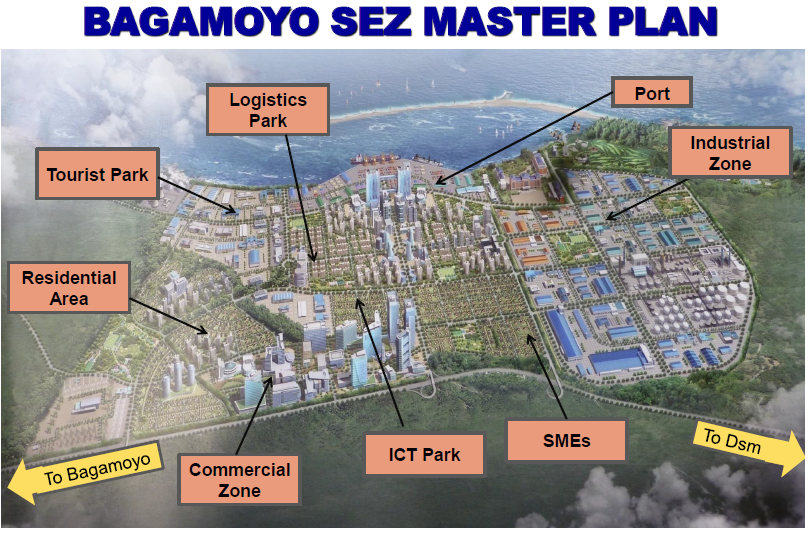
Artist's impression of the Bagamoyo SEZ Masterplan - Source: http://www.ansaf.or.tz/Investment%20...0(%20EPZA).pdf

Artist’s impression of the Bagamoyo Port and SEZ Masterplan – Source: http://www.ansaf.or.tz/Investment%20…0(%20EPZA).pdf

Growing volumes of cargo at all African ports has forced port authorities and operators to increase capacity, analyse operations to increase efficiency, and employ measures to allow bigger ships into their ports. The East Africa Region has various projects underway. The new Lamu Port in Kenya costing $5.3 billion (Reuters.com) and the Bagamoyo port in Tanzania costing $11 billion (The East African) are examples of countries preparing for the ever-growing port capacity needs. When completed in 2017, Bagamoyo will become the biggest container terminal in Africa: with a planned cargo of 20 million TEU a year; it will be 20 times larger than the port at Dar-es- Salaam and likely to rank in the top 10 terminals in the world in terms of volume capacity.

Reconfiguring port layout, and increasing berths at existing ports and conducting dredging more often, have been other strategies that numerous ports have employed to meet this need. Port of Maputo will be undertaking dredging to increase its channel depth from 11 meters to 14 meters this year, to allow larger vessels entry (Dredgingtoday.com). Tanzania will invest $523 million for new berths 13 and 14 to more than double its container capacity at Dar es Salaam Port (Tradeinvestafrica.com).

Source: portexpansioneastafrica.com

Related articles

New CTU Code – IMO Approves Container Weight Verification Requirement

containerThe Maritime Safety Committee (MSC) of the IMO has approved changes to the Safety of Life at Sea (SOLAS) convention that will require verification of container weights as a condition for loading packed export containers aboard ships.

Misdeclared container weights have been a long-standing problem for the transportation industry and for governments as they present safety hazards for ships, their crews, and other cargo on board, workers in the port facilities handling containers, and on roads. Misdeclaration of container weights also gives rise to customs concerns. The approved changes to the convention will enter into force in July 2016 upon final adoption by the MSC in November 2014. In order to assist supply chain participants’ and SOLAS contracting governments’ implementation of the container weight verification requirement, MSC also issued a MSC Circular with implementation guidelines.

MSC also approved a new Code of Practice for the Packing of Cargo Transport Units (CTUs), including intermodal shipping containers. The new CTU Code, which will replace the current IMO/ILO/UNECE Guidelines for packing of CTU, has already been approved by the UNECE (United Nations Economic Commission for Europe) and will now go to the International Labour Organization (ILO) for approval. The CTU Code provides information and guidance to shippers, packers and other parties in the international supply chains for the safe packing, handling and transport of CTUs.

Of particular interest for regulatory authorities is Chapter 4 – “Chains of responsibility and information” which deals with the parties responsible for the provision of information and other security and regulatory requirements concerning containers as they are transported across the supply chain.

The World Shipping Council (WSC), whose members represent about 90 percent of global containership capacity, has been a leading advocate for the container weight verification requirements and has worked cooperatively with the IMO for over seven years to see them materialize. WSC has also participated in the group of experts that developed the new CTU Code.

“In taking these decisions, the IMO has demonstrated its continuing leadership in trying to ensure the safe transportation of cargo by the international shipping industry,” said WSC President & CEO, Chris Koch. “We congratulate the IMO Secretary General and the IMO member governments for developing and approving these measures that, when properly implemented and enforced, should provide for long-needed improvement to maritime safety. The SOLAS amendments and related implementation guidelines regarding container weight verification represent a collaborative effort that we were pleased to be a part of and we look forward to final adoption of the amendments in November 2014.”

The new CTU and supporting material can be accessed at the UNECE website here. Also See the World Shipping Councils webpage here for chronological information about the container weighing issue. Source: Maritime Executive

New Publication – Africa Corridors Handbook

Africa_Road_Corridors_HandbookAs countries across Africa gear themselves towards growing and stimulating inter-regional trade, the transport corridors being developed across the continent are important passageways for the movement of freight.

Though the growth and development of rail across Africa is in the pipeline over 80 percent of all freight being transported is on road.

Transporting goods on trucks is an expensive business. Africa can be challenging at the best of times due to non-tariff barriers even though governments across the continent are trying to make it easier for the flow of goods from one country to another.

The logistics of transporting freight can be a harrowing and expensive exercise.Especially if a transport manager is not armed with key and pertinent information – regarding the route, border posts, costs, relevant documentation required at borders, waiting times at the border posts, location of wellness centres,road conditions and where the tolls and weighbridges are situated.

3S Media in association with FESARTA have released the Africa Corridors Handbook which gives transport and logistics managers all the key information they need before drivers embark on a journey.

Having the correct information on hand is critical for every transport operator that is moving freight across Africa and now it is available in one concise handbook. Click the following hyperlink to purchase the book.

Congestion Besets Botswana’s Tlokweng Border Post

botswanaMap showing border posts between Botswana and South Africa, with No.7 being the Tolkweng and No.4 the Martins Drift posts.

The temporary closure of the Martin’s Drift border post due to recent floods in the Tswapong area has resulted in the congestion of cargo trucks at Tlokweng border post.

Approaching the border from the Botswana side, there is a queue of these trucks awaiting declaration. The situation is made worse by shortage of parking space for the trucks, which at times lead to some trucks blocking way for others, hence the delay.

In an interview, the principal customs officer, Ms Monkgogi Makwati said they started receiving a large number of trucks on transit on Saturday (22 March 2014).

She said most of the trucks were from Kazungula on their way to South Africa. Ms Makwati also said trucks from South Africa were a challenge as the customs office was faced with a lot of work as goods were cleared in large quantities from that side.

She noted that Tlokweng border had always been the busiest in the country, but the current situation had made it more busy than usual. She also said the delay at the border was due to the electronic clearance system used by South Africa compared to the manual one used by Botswana, thus when the system is down, services from that side halt.

Ms Makwati, however, noted that trucks carrying perishables and goods such as medicines, gas and petrol among others were given special clearance and they do not take long at the border.

The traffic jam has not only affected services at the border, but also facilities such as toilets have started to experience some blockage while others are running out of water due to high number of people who are frequenting them.

Some truck drivers expressed dissatisfaction on the South African service of clearing noting that they had been at the border for four days without bathing. Source: Daily News Botswana

11 Million cigarettes wash up on Devonshire coast

The container ship Svendborg Maersk was battered by hurricane winds as it crossed the northern stretch of the Bay of Biscay on February 14th. Battling 30-foot waves and working through winds of 60 knots the ship arrived only to find that a large chunk of her cargo had been swept overboard. The ship was originally heading from Rotterdam to Sri Lanka.

The shipping giant initially reported that only 70 containers had been lost in the storms. However, last Wednesday this number skyrocketed to 517 – the largest recorded loss of containers overboard in a single incident. Countless more are supposed to have been damaged when six of the bays tilted over.

Maersk have suggested that almost 85 percent of the containers were empty, with the rest containing mostly dry goods and frozen meats. They also reinforced the fact that none of the containers were carrying harmful substances and that many had sunk in the turbulent seas.

Nevertheless, French authorities have been on the lookout for floating containers, which can be hugely problematic for other shipping vessels, alongside a huge environmental risk. According to New Zealand marine insurer Vero Marine, a 20-foot container can float for up to two months, whilst a 40-foot container may float up to three times longer.

Already, containers have been surfacing as far away as the coast of East Devon, United Kingdom. The 40-foot container washed up at Axmouth, near Seaton and is estimated to contain 14 tonnes of cigarettes. Police were immediately called in to cordon off the area and scare away any would-be smokers hoping to make a steal and sneak off with a portion of the 11 million cigarettes (refer to picture gallery).

As of yet, there has never been a requirement for shipping lines to report container loses to the International Maritime Organisation (IMO)or any other international body. In 2011, the World Shipping Council estimated that around 675 containers were lost at sea, whilst the Through Transport Club, which insures 15 of the top 20 container lines, has suggested that the number is closer to 2,000.

However, other sources suggest that this is nowhere near the true number, with some citing as many as 10,000 lost at sea each year. Analysts have suggested that one of the reasons such loses can occur are due to the lack of accuracy when weighing containers before transit. Some shippers have been found to understate the weight of containers in order to reduce shipping costs. Such misinformation can lead to uneven strain on a vessel as it transverses the seas.

One of the most notable incidents occurred in 2007 when the MSC Napoli ran aground off the English coast, breaking up and spilling 103 containers worth of toxic cargo, polluting five miles of the South Western coast. The UK marine accident investigation board ruled that the accident was due to cargo being loaded in such a way that it exceeded the baring weight of the hull girders, resulting in a structural failure across the ship. The report concluded that if such loses are to be prevented, it is essential that containers be weighed before embarkation. Source: Port Technology

Customs Bill gets escape clause – fallback to old system

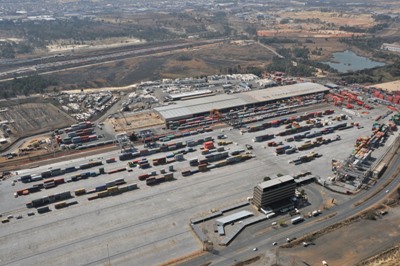
City Deep Container Terminal (Transport World Africa)

City Deep Container Terminal (Transport World Africa)

The controversial Customs Control Bill adopted by Parliament’s finance committee on Wednesday includes a “fallback” provision allowing for a return to the current customs control system should the new one fail.

A similar clause was included in the law that introduced value-added tax in 1991, allowing for a legal alternative to be implemented quickly if things do not work out as planned.

The committee also adopted the Customs Duty Bill and the Customs and Excise Amendment Bill as part of a total revamp by the South African Revenue Service (SARS) of the customs system. Visit this link for access to the Bills and submissions to the parliamentary committee.

The Customs Control Bill has been highly contentious as it will fundamentally change the way imported goods are cleared and released. The Democratic Alliance and Business Unity SA (Busa) opposed the original proposals on the grounds that doing away with manifests in the operations of City Deep would threaten the inland terminal in Johannesburg. SARS disputed this but nevertheless amended the bill.

Busa’s Laurraine Lotter yesterday welcomed the inclusion of the fallback clause but said she would have to see the details of the amendments introduced by SARS before commenting.

The fallback provision — which will automatically lapse five years after the effective date of the legislation — was included to be on the safe side, although SARS does not expect the proposed system to fail. It consulted widely on the bill, sought legal opinions about the legality of its amended proposals and ultimately secured the support of ship operators and agents, freight forwarders and Transnet for the amendments.

Implementation could be delayed by 12 months to allow the trade sufficient time to prepare.

SARS chief legal and policy officer Kosie Louw assured the committee this week the existence of City Deep would not be jeopardised. He urged adoption of the new system of customs control, saying the authorities needed more detailed information about incoming cargo to clamp down on fraud and illegal imports.

In terms of the bill, the submission by shipping lines of a manifest that provides only a general description of cargo will be replaced by a clearance declaration. This must contain information on the tariff, value and origin of the goods, and be submitted by the importer (which can be held accountable for its veracity) three calendar days before arrival at the first place of entry into South Africa.

Penalties will be levied only if the clearance is not submitted within three working days after the arrival of the goods. Containers will be provisionally released before arrival of the goods at the first place of entry and finally released at the first point of entry. To allow for seamless movement of goods, shipping lines will still issue multimodal contracts and through bills of lading.

“The revised proposal provides certainty and predictability to role players in the supply chain regarding the movement of goods,” Mr Louw said.

He said the new system would allow customs officials to undertake documentary inspections earlier, mitigating delays. High-risk containers would be identified before arrival, detained on arrival and held at the inland terminal for inspection. Containers with no risk would be able to move “seamlessly” to the inland terminals.

Mr Louw submitted that the objections to the proposal — that it would require traders to change their sale contracts; that sellers would be reluctant to sell under the new terms; that importers would be affected; that carriers would no longer issue a bill of lading to internal terminals; and that it would give rise to delays and congestion at ports — were found to lack foundation by international trade law expert Prof Sieg Eiselen and two advocates.

He said the proposed system would lay a solid and predictable framework for a modernised system of customs control that balanced the need for trade facilitation with the need to prevent imports of illicit goods. The current system was governed by an outdated, 1960s law. Source: Business Day

Related articles

South Africa Economic Update – Focus on Export Competitiveness

WB-South Africa-Export CompetitivenessThe report, South Africa Economic Update 5: Focus on Export Competitiveness, examines the performance of South Africa’s export firms against that of peers in other emerging markets— and analyzes the challenges. It assesses South Africa’s economic prospects in the context of the global economic environment and prospects.

With this Economic Update, we hope to enrich the on-going debate on growing a sector critical for South Africa’s economic growth. As with previous editions, this report is intended not to be prescriptive but to offer evidence-based analysis that will help bring South Africa’s policymakers, researchers, and export stakeholders closer to finding innovative and sustainable ways to grow the sector. The report highlights opportunities for growth, particularly with Sub-Saharan Africa being the largest market for non-mineral exports. It also explores strategic directions that can ignite export growth and help South Africa realize its goals of creating jobs and reducing poverty and inequality.

The report identifies three areas that present opportunities to promote the competitiveness and spur the growth in South Africa’s export sector:

  • Boosting domestic competition would increase efficiency and productivity. By opening local markets to domestic and foreign entry, South Africa would enable new, more productive firms to enter and place downward pressure on high markups. This would lower input costs and tip incentives in favor of exporting by reducing excess returns in domestic markets. Competition would also stimulate investment in innovation and, over time, condition the market to ensure that firms entering competitive global markets have reached the productivity threshold to support their survival and growth.
  • Alleviating infrastructure bottlenecks, especially in power, and removing distortions in access to and pricing of trade logistics in rail, port, and information and communication technologies would reduce overall domestic prices and further enhance competitiveness. It would be especially beneficial for small and medium-size exporters and non-traditional export sectors, which these costs tend to hit harder.
  • Promoting deeper regional integration in goods and services within Africa would generate the right conditions for the emergence of Factory Southern Africa, a regional value chain that could feed into global production networks. South Africa could play a central role in such a chain, leveraging the scale of the regional market, exploiting sources of comparative advantage across Africa to reduce production costs, and providing other countries in the region a  platform for reaching global markets. Progress on all three fronts would help catapult South Africa toward faster-growing exports, allowing it to realize the higher, more inclusive, job-intensive growth articulated in the National Development Plan.

Source: World Bank

Rapid progress on City Deep Container Terminal upgrade

Rapid progress is being made on a multimillion rand contract awarded by Transnet Capital Projects to Concor Civils for the construction of new concrete paving, civil services and electrical lighting at its City Deep Container Terminal. The terminal is currently being upgraded as part of Transnet’s rolling capital investment programme.

The container terminal at City Deep is known to be the largest “dry port” in the world and the City Deep area has been declared an IDZ (Industrial Development Zone) by the Gauteng government. (?)

The contract is scheduled for completion in May 2014 and includes the removal of 36 500 m3 of existing concrete paving, 110 000 m3 of earthworks, the installation of a new drainage system and all service ducting and manholes for lighting, fire mains, CCTV equipment, 360 t of mesh reinforcing and the placing of approximately 146 000 m2 of concrete paving.

The Concor Civils team is making use of as many emerging contractors as possible to supply services such as pipe laying, ducting and manholes and has undertaken to employ about 90 general workers at peak from the local community at a cost of some R10 million. These temporary workers will be given on the job training in basic technical skills, as well as in life skills. Source: Transport World Africa

SA Government to Prioritise and Pass Customs Bills

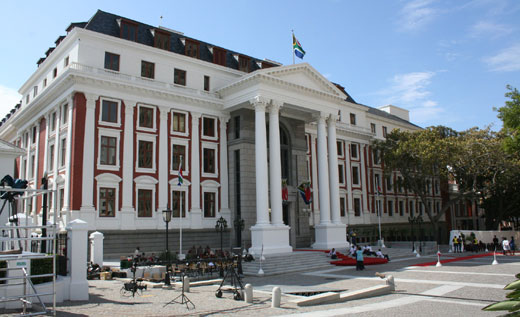
Parliment, Cape Town (Eye Witness News)

Parliament, Cape Town (Eye Witness News)

Government has decided to prioritise the passage of eight bills through Parliament. The bills deal with land restitution, labour relations, and customs and excise.

There are currently 42 bills before the National Assembly and the National Council of Provinces. With the fourth Parliament set to be dissolved ahead of looming general elections, Members of Parliament (MPs) are unlikely to deal with all 42 bills.

A statement just released by the ANC’s office in Parliament to the media states –

“The African National Congress in Parliament has taken note of the huge parliamentary workload which the institution has to process in the next few months before the expiry of the current five-year term of parliament. In terms of the Constitution, the current term of Parliament is set to end ahead of the 2014 national elections. The workload confronting the institution includes committee oversights, constituency programmes, adoption of committee reports, debates on the state of the nation address and the budget, and finalisation and adoption of Bills.”

“Currently, there are 24 Bills before the National Assembly (NA) and 18 currently before the National Council of Provinces (NCOP) – which is a total of 42 Bills the institution must pass before the elections. Our view is that all these Bills are important and therefore the institution should spare neither strength nor effort in ensuring they are processed qualitatively and thoroughly to ensure that they are converted into laws within the stipulated period. We are however alive to the possibility that not all these Bills may be passed in the next few remaining months of parliament.”

“We have therefore sought to prioritise the following Bills, which we believe Parliament should give special attention to ensure they are passed into laws. In terms of the rules of Parliament, Bills that are not passed within the current term of Parliament may be resuscitated in the next parliamentary term. This will be done for those Bills that might not be passed during this term.”

“In determining priority Bills, we have looked at criteria such as complexity, contentiousness, technicality, effect on provinces, and requirement for exhaustive consultation. [Three of the eight bills relate to Customs and Excise]

  1. Customs Control Bill of 2013 – The Customs Control Bill is intended to replace certain provisions of the Customs and Excise Act of 1964 relating to customs control of all means of transport, goods and persons entering or leaving South Africa. The Bills aims to ensure that taxes imposed by various other laws on imported or exported goods are collected and that various other laws regulating imports and exports of goods are complied with. To ensure effective implementation of customs control, the Bill provides for elaborate systems for customs processing of goods at places of entry and exit such as seaports, airports and land border posts;
  2. Customs Duty Bill of 2013 – The Customs Duty Bill is intended to replace certain provisions of the Customs and Excise Act of 1964 which relates to the imposition and collection of imports and export duties. The Bill primarily aims to provide for the levying, payment and recovery of import and export duties on goods imported or exported from South Africa. The Bill will be dealt with in terms of Section 77 of the Constitution; and
  3. Customs and Excise Amendment Bill of 2013 – The Customs and Excise Amendment Bill seeks to amend the provisions of the Customs and Excise Act of 1964 and to remove from the Act all the provisions that have now been incorporated into both the Customs Control Bill and the Customs Duty Bill. Essentially, because the Customs and Excise Amendment Act of 1964 strongly reflected rigidity reminiscent of the apartheid era controls, which are unsuitable to the current modern control systems, it has been split into both the Customs Control Bill and the Customs Duty Bill. The Customs and Excise Amendment Act of 1964 will for now be retained in an amended form for the continued administration of excise duties and relevant levies until it is completely replaced with a new law in future (i.e. Excise Duty Bill).”

Source: Excerpt of a press statement of the Office of the Chief Whip of the ANC, Parliament.

Comesa chips in with $1,4m for ZIM dry port in Nambia

Walvis Bay - making headway (www.transportworldafrica.co.za)

Walvis Bay – making headway (www.transportworldafrica.co.za)

The Common Markets for Eastern and Southern Africa has agreed to avail US$1,4 million for phase one of the construction of the country’s Walvis Bay dry port. The government of Namibia in September 2009 granted Zimbabwe 19 000 square metres of land to construct its own dry port that is expected to boost the country’s trade. The project is being spearheaded by the Road Motor Services, a subsidiary of the National Railways of Zimbabwe.

In an interview, RMS managing director Mr Cosmos Mutakaya said the Ministry of Industry and Commerce last month held a consultative meeting with Comesa to strategise on how to fund the project.

“Comesa is looking at funding projects with a regional integration element that countries within the Southern African Development Community would benefit from. In the last meeting we held, Comesa indicated their willingness to finance the first phase of the facility which will cost US$1,4 million,” he said.

He said all the relevant documentation had been submitted and they are now waiting for a response from Comesa.

Mr Mutakaya said construction of the dry port would be done in two phases. The first phase involves the civil works which includes construction of the drive-in weighbridge, storage shades, palisade fencing as well as installation of electric catwalks. Phase two involves the putting up of administration blocks. He said once phase one is completed, then the dry port operations will start.

“We are now waiting for the unlocking of funds from Treasury and Comesa for us to start construction. The Namibian contractor, Namport, will also start working on the port once the funds are made available. According to the contractor, phase one of the project is going to take five working months to complete,” Mr Mutakaya said.

He said the project, which was supposed to have been completed by May this year, had been stalled by the lack of funding.

An official at the Namibian desk office in the Foreign Affairs Ministry confirmed that operations at the port had stopped for a while due to a lack of funding. “Government has been facing challenges in making payments to the Walvis Bay Corridors Group, responsible for the construction at the port and operations had to be stopped for some time pending clearance of some outstanding fees by Government,” he said.

Trade for Zimbabwe via Walvis Bay has increased for the past few years and a large percentage of commodities are transported along this corridor. Zimbabwe’s trade volumes through the Port of Walvis Bay have grown significantly to more than 2 500 tonnes per month.

In a related development, the Namibian Ports Authority is also working on expanding Walvis Bay port and recently secured a US$338 million loan from the African Development Bank to finance the construction of a new container terminal at Port of Walvis Bay. The Namibian government also received US$1,5 million for logistics and capacity building complementing the port project loan. Source: The Herald (Zimbabwe)

Port of Santos’ new 1.2 million TEU capacity container terminal

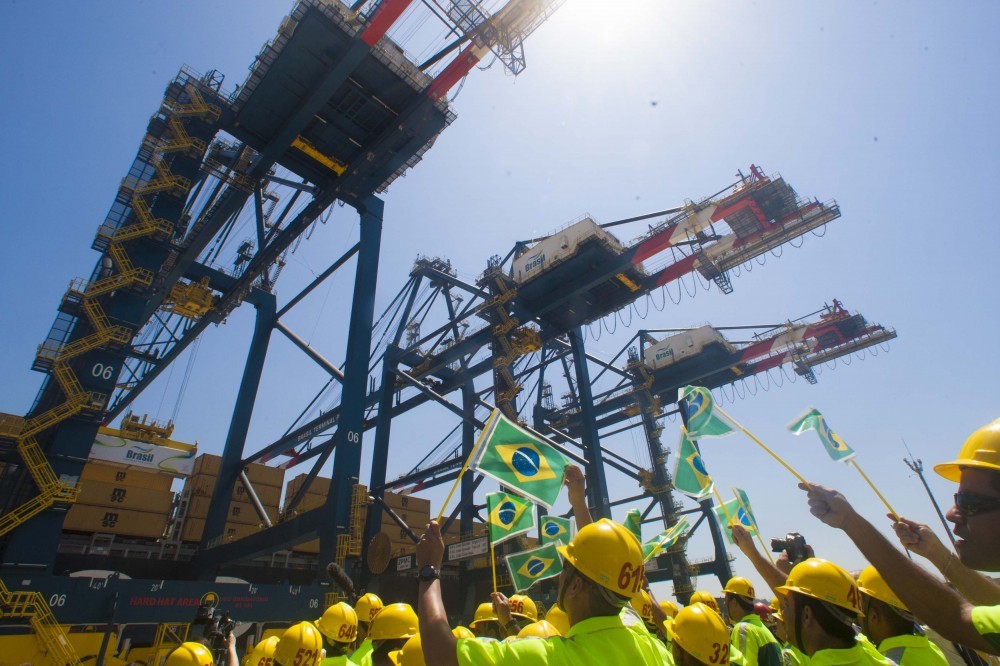
A gala ceremony was held last week to celebrate the official opening of BTP in Santos, Brazil, last week. (Image: APM Terminals)

A gala ceremony was held last week to celebrate the official opening of BTP in Santos, Brazil, last week. (Image: APM Terminals)

“Another BRIC in the Wall” – Brasil Terminal Portuário (BTP) was officially opened last week with a gala ceremony held at the Port of Santos’ new 1.2 million TEU capacity container terminal.

The development of BTP began back in 2007, with APM Terminals acquiring a 50 percent share from Terminal Investment Limited (TIL) in 2010. APM Terminals will operate the terminal alongside TIL for a 20-year period, whilst investing over US$20 billion into the project during this time span.

Although fully equipped and operational since March, commercial operations at BTP could not commence until the terminal was issued International Ship and Port Facility Security (ISPS) Certification in April, and granted an operating license from the Brazilian Institute of Environmental and Renewable Natural resources in July.

The first commercial vessel call took place in August, and with scheduled dredging having been completed in October, BTP has become fully operational with 1,108 metres of quay and a 15 metre depth, capable of serving three 9,200 TEU capacity vessel calls simultaneously.

The Port of Santos, the busiest container port in South America, handled 3 million TEU during the 2012 calendar year. Source: Port Technology International


SAAFF Accredited to Award FIATA Diploma

SAAFFFreight & Trade Weekly reports that the South African Association of Freight Forwarders (SAAFF) has been accredited to present and award the internationally recognised FIATA Higher Diploma in Supply Chain Management. “The industry  body was accredited following presentations to the FIATA Advisory Board on Vocational  Training at the FIATA Congress in Singapore at the end of October this year,” says Tony d’ Almeida, director at SAAFF responsible for education, training and development.

He said SAAFF was effectively one of only 14 professional bodies around the world accredited to offer this industry leading qualification. “SAAFF will be the custodian of the Higher Diploma which is pitched  at NQF level 7, two levels higher than the FIATA Diploma in Freight Forwarding which SAAFF is also entitled to award in South Africa, and which has already produced 22 graduates,” says d’Almeida. He notes that the minimum requirement for consideration for entry into this Higher Diploma is a relevant university degree, or a national diploma or the FIATA Diploma in Freight Forwarding.

“All accredited SAAFF  training providers may offer this  programme to suitably qualified students,” d’ Almeida states. He says this qualification is “very relevant” to the freight forwarding industry. “SAAFF therefore made the strategic decision to apply for accreditation to help alleviate the current critical shortage of skilled people who not only know the process of supply chain, but can also apply their expertise in innovative ways that add value to the entire process,” he says. D’ Almeida adds that aspects relating to global supply chains are constantly evolving, making it vital for every player to be at the forefront and fully aware of these trends.

“Added to this, the industry has to come to grips with rapidly evolving technology in our everyday business practices that is coming at frightening speed. Being able to ratify skills against global standards  and benchmarks brings enormous value to the business, the client and the individual,” he says. Source: Freight & Trade Weekly.

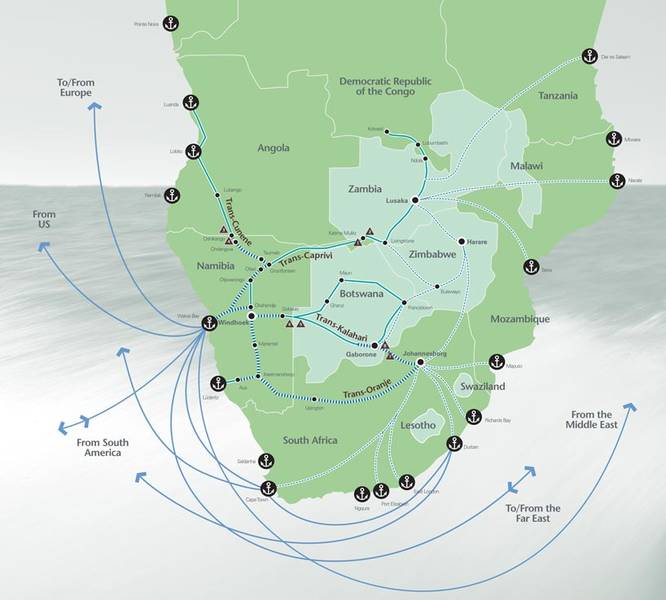
Walvis Bay Container Terminal – AfDB and Namibia sign loan agreement

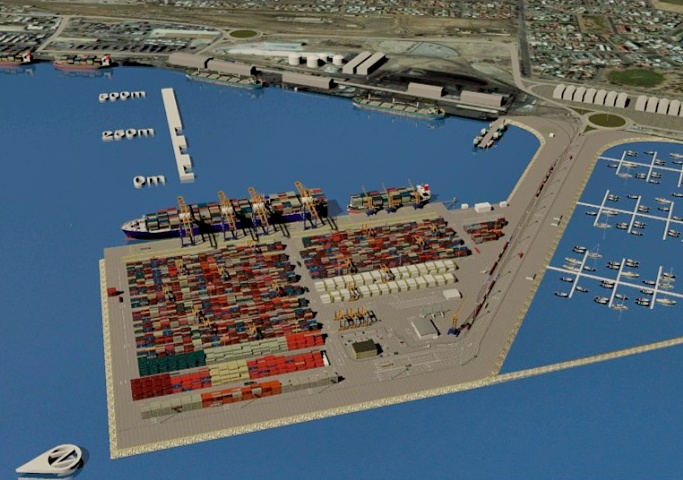
NamPort ExpansionThe African Development Bank Group (AfDB) and Namibia on Friday, November 8, 2013 signed a ZAR 2.9 billion (US $338 million) sovereign guaranteed loan to the Nambian Ports Authority (Namport) to finance the construction of the new container terminal at Port of Walvis Bay and a UA 1.0 million grant (US $1.5 million) to the Government of Namibia for logistics and capacity building complementing the port project loan. The project was approved by the AfDB Group in July 2013.

The project is expected to enable Namport to triple the container-handling capacity at the Port of Walvis Bay from 350,000 TEUs to 1,050,000 TEUs per annum. It will also finance the purchase of up-to-date port equipment and the training of pilots and operators for the new terminal. The grant component will fund the preparation of the National Logistics Master Plan study, technical support and capacity-building for the Walvis Bay Corridor Group and training of freight forwarders.

According to the AfDB Director of Transport and ICT, Amadou Oumarou: “Through this project which potentially serves up to seven major economies in the SADC region, the Bank is assisting in the diversification and distribution of port facilities on the southwest coast of Africa, and provides the much-needed alternative for the region’s landlocked countries.”

The project will stimulate the development and upgrade of multimodal transport corridors linking the port to the hinterland while improving the country’s transport and logistics chains. It will also boost competition among the ports and transport corridors in the region with the ripple effect on reductions in transportation costs and increased economic growth.

The projected project outcomes include improvement in port efficiency and increase in cargo volumes by 70% in 2020 as a result of increased trade in the region. The benefits of the project will include among others, the stimulation of inter-regional trade and regional integration, private sector development, skills transfer and most importantly employment creation, leading to significant economic development and poverty reduction in Namibia, and the SADC region. Source: African Development Bank

Related articles

What Optimisation means for Terminals and Ports

Container terminal (CT1) with Nordschleuse in ...

Container terminal (CT1) with Nordschleuse in the foreground, Bremerhaven (Photo credit: Wikipedia)

Port Technology International’s article is perhaps poignant to current logistics developments in South Africa. Optimisation at the terminal does not only mean improving productivity and reducing operational costs. Optimisation represents a new approach to managing container terminals; it is the most significant driving factor in changing the traditional operational approach and methodology applied at container terminals. It also allows terminals to have a focus on efficiency which needs to address the trade-off between vessel service time, terminal capacity, and cost per move.

In terms of the marine shipping industry, one of the most accurate definitions of optimisation is: “The act of making a system, design or decision as effective or functional as possible.” Optimisation as a discipline is an ancient science best illustrated over time.

The history of optimisation

Greek mathematicians used to solve optimisation problems related to geometrical studies. After the invention of calculus, mathematicians were then able to address more complex optimisation problems. Following the start of the World War II and the advent of the operations research field, the concept and practice of optimisation began to develop and received significant academic and industrial focus. Mr J. Von Neumann, a leading individual behind the development of operations research, contributed substantially to the field of algorithmic research. And in the 60s and 70s, complexity analysis began to further support the use of optimisation. Then, in the 80s and 90s as computers became more efficient, algorithms for global optimisation with the purpose of solving large-scale problems began to gain momentum and credibility.

Considering the present

The continual advancements in technology with respect to computing power along with significant research in applied mathematics and computer science have solidified the value of optimisation to the industry and the end user. This has enabled advanced theory to be applied in a way that has sometimes invisibly improved our lives during last 20 years. The progress is amazing. Today, companies such as UPS and Federal Express utilise complex routing algorithms for resource allocation and supply chain distribution to deliver an item to our door with seamless efficiency. Their results have in turn changed the way millions of us find information, shop, and even do our jobs.

Today, many industries use optimisation as a more general term that covers areas from manufacturing process efficiency to improved distribution techniques. The core objective of optimisation is improving and controlling the process – whatever it may be – and allowing people with responsibilities in those areas to make better decisions. Operations research, for example, is a discipline that deals with the application of advanced analytical methods to help make better decisions at the right time and within the time constraints of a live operation.

As with other industries, the shipping and container space is currently going through its own step change to achieve new levels of operational productivity in response to mega-trends, such as globalisation and sustainable operations. To compete, ports and terminals have decided they need to adapt to their changing demands by optimising their activities in areas such as berthing allocation, vessel planning, fleet size optimisation, shift resource planning and equipment scheduling. All of these areas are critical for minimising the cost per move factors and maximising overall terminal performance and throughput.

Optimisation also provides the intelligence and the tools to support this changing industry, but it is not meant to be a black box. A container terminal is a very complex system with many unpredictable variables. Those focused on achieving optimisation will need to be able to control, monitor and configure the behaviour of this intelligence behind the machine and systems, filling any critical gaps between the planning and execution.

Containerised cargo makes up about 60 percent of all dry cargo trade in the world; since the advent of the cargo container more than 50 years ago, this number continues to grow. The appeal of containerised cargo is well known – cargo can be seamlessly transported from origin to destination via a variety of modes without the need to unload and reload its contents. The marine container terminal is at the junction of water, rail and truck transport modes. And as a consequence, marine container terminals are some of the most essential, yet challenging, links in the global supply chain. Source: Port Technology International