Call to Develop Zim-RSA Transport and Trade Links

zim-rsaZimbabwe needs to further develop transport and trade infrastructure links with South Africa to maintain Africa’s biggest economy as its single most important trading partner, recent research findings have shown.

This came from preliminary findings of a research study carried out by Dr Medicine Masiiwa who was commissioned by the Ministry of Regional Integration and International Co-operation to undertake the study on trade and transport. The World Bank funded the study to assess the need to facilitate transport and trade in Zimbabwe. The findings form part of preliminary desk research ahead of a more detailed second phase.

Dr Masiiwa presented the initial findings from the desk research to stakeholders at a workshop in Harare. Preliminary findings of the study show that since economic and political stability, key for trade competitiveness of Zimbabwe is now in place, the country’s trade was bound for significant growth, making a trade and transport facilitation measure critical to support this growth.

“A major implication of having South Africa as Zimbabwe’s single most significant trading partner is that the transport and trade infrastructure between the two countries should be further developed,” he said.

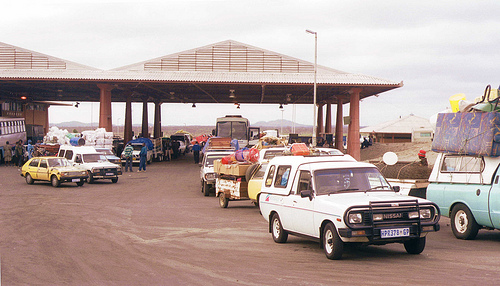
Development options include expanding the current border post to accommodate more traffic or to construct a new border post altogether. Sound transport and trade infrastructure between Zimbabwe and South Africa is critical as more than 34 percent of local imports go to South Africa while Zimbabwe imports more than 60 percent of basic commodities from that country.

But the state of the main trunk road, on the Zimbabwe side, has remained in poor state despite also being the main link between the north and south. Increased trade with China implies that Zimbabwe, in collaboration with its regional partners, needs to further develop the Beira and Limpopo transport corridors, which link Zimbabwe with the ports on the east coast.

“It is also interesting to note that trade with the EU and other Western countries is on the rebound; meaning transport corridors linking western gateways also need to be further developed,” said Dr Masiiwa.

The major problem facing Zimbabwe is that the quality of infrastructure is deteriorating and therefore acting as an impediment to trade. A study by the World Bank showed that in the 1990s, the proportion of primary roads in “good” condition was about 90 percent, but this dropped to 85 percent in 2009. Roads with the worst conditions are secondary roads, where about 45 per cent of paved and 50 percent of the unpaved secondary roads are in poor condition. Source: Zimbabwe Herald
Johburg Chamber to meet Parliment over Customs Bill

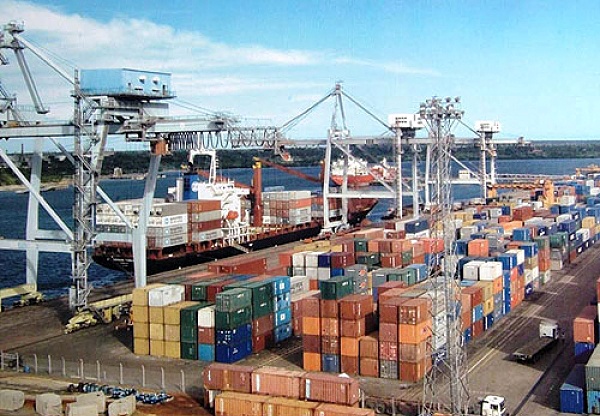
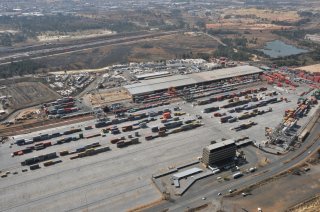
City Deep Container Terminal, Johannesburg

City Deep Container Terminal, Johannesburg

Online media company Engineering News reports that the Chamber of Commerce and Industry Johannesburg (JCCI) would take its objections of certain aspects of the recently tabled Customs Control Bill to Parliament and called on South African business and interested stakeholders to provide input as well.

The South African Revenue Services’ (Sars’) newly drafted Customs Control Bill, which, in conjunction with the Customs Duty Bill, would replace the current legislation governing customs operations, declared that all imported goods be cleared and released at first port of entry.

“The Customs Bill, cancelling the status of inland ports as a point of entry, will be before Parliament very soon, and only a short notice period for comment is expected,” JCCI former president Patrick Corbin said.

While all other comments and suggestions relating to the Bill were adequately dealt with, this remained the one disagreement that had not been satisfactorily resolved, he stated.

Corbin invited all parties to voice their concerns to ensure “all areas of impact and concern were captured”, adding further weight to the JCCI’s presentation. The implementation of the new Bill would directly impact the City Deep container terminal, which had been operating as an inland port for the past 35 years, alleviating pressure from the already-constrained coastal ports.

Despite customs officials assuring the chamber that the operations and facilities at City Deep/Kaserne would retain its licence as a container depot, Corbin stated that the Bill had failed to recognise the critical role City Deep played as an inland port and the impact it would have on the cost of doing business, the country’s road-to-rail ambitions, the coastal ports and ease of movement of goods nationally and to neighbouring countries.

“The authorities do not accept the fact that by moving the Customs release point back to the coast, a vessel manifest will terminate at the coastal port. There will not be the option of a multimodal Bill of Lading and seamless inland movements, as all boxes or the unpacked contents will remain at the coast until cleared and released by the line before being reconsigned,” he explained.

Citing potential challenges, Corbin said that only the containers cleared 72 hours prior to arrival would be allocated to rail transport and that those not cleared three days before arrival would be pushed onto road transport to prevent blocking and delaying rail operations.

This would also result in less rail capacity returning for export from Johannesburg, leading to increased volumes moving by road from City Deep to Durban.

He warned of the Durban port becoming heavily congested with uncleared containers, causing delays and potential penalties, while hampering berthing movements and upsetting shipping lines’ vessel schedules.

The release of the vessel manifest at the coastal port also placed increased risk on the shipping operators delivering cargo to Johannesburg following the clearance of goods at customs and required reconsignment at the country’s shores.

However, Transnet remained committed to investing R900-million for upgrading the City Deep terminal and the railway sidings, while Transnet CEO Brian Molefe had accepted the assurances from customs that “nothing would change and the boxes would still be able to move seamlessly once cleared”.

The Gauteng Department of Roads and Transport Department had allocated R122-million for the roadworks surrounding the inland port, while Gauteng MEC for Roads and Transport Dr Ismail Vadi said the department’s focus this year would narrow to the expansion and development opportunities at City Deep/Kaserne.

The department was also progressing well with the development of a second inland port, Tambo Springs Inland Port and Logistics Gateway, expected to be completed by 2017.

Vadi recently commented that the Gauteng Department of Roads and Transport, which was currently developing a terminal master plan for the project, would link the freight hub through road and rail transport to and from South Africa’s major freight routes and other freight hubs, including City Deep, which was about 33 km away.

The National Economic Development and Labour Council, under which the Bill had been drafted during a three-year development process, had agreed to fund an impact assessment study, led by Global Maritime Learning Solutions director Mark Goodger. The study was “close to completion” and would be presented alongside JCCI’s objections in Parliament. Source: Engineering News

Chinese President has sealed Tanzania’s Bagamoyo ‘mega-port’ project

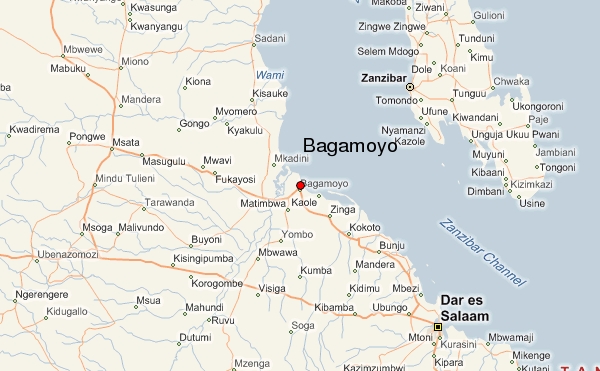
bagamoyo-mapThe Chinese President has sealed Tanzania’s Bagamoyo project. Tanzania has laid down its claim for a future large slice of regional trade through a deal with China to build the new port of Bagamoyo in its Mbegani area, north west of Dar es Salaam, at a total cost of $10bn.

The deal was announced by the President of China, Xi Jinping, while recently visiting Dar es Salaam and forms part of a major investment by the China in the infrastructure of the Mbegani area and East African seaboard – a project to be completed by 2028 with the expectation that Bagamoyo port will supersede Dar es Salaam port as the country’s main port and container handling centre.

The new port will be built with a draft sufficient to accommodate higher capacity container vessels up to 10,000 teu and beyond, as well as possess specialised roll-on roll-off berths and other cargo berths.

The overall scale of the planned development is such that it will provide a highly competitive solution to Kenya’s port expansion plans in Mombasa and Lamu which, as well as catering for national trade, are focused on meeting the needs of surrounding landlocked countries such as Uganda, Rwanda and Burundi.

Kenya has ground out plans for a new deep water container terminal in Mombasa – now under construction – and has embarked upon major new port development at Lamu, but the Bagamoyo port plan has a stronger profile and coherence to it. The money is down and in the background are new offshore gas discoveries for Tanzania which promise to play their part in promoting a strong and enduring relationship with China.

The first-phase development of Bagamoyo port is expected to be in operation by 2017 with construction undertaken by China Merchant Holdings of Hong Kong.

There has been no discussion to-date of whether the new port will feature cargo handling terminals operated by the private or public sector. As in Kenya, this subject remains something of a ‘hot potato’ with some Tanzania Port Authority executives suggesting it was a mistake to introduce the private sector as the operator of the Dar es Salaam Container Terminal. As in Mombasa, there is a belief that the public sector could have done as well as private interests in seeking to achieve efficient container terminal operation.

This belief persists in certain circles despite the TPA taking steps to raise the calibre of executives in its organisation through the introduction of executives from the private sector and a greater overall focus on human resources.

Dar es Salaam currently handles over 9m tons of cargo per year which is equivalent to about 95% of all Tanzania’s import and export volumes. In container trade alone, growth has been over 12% per annum since 2000. Despite this, the cost of shipping to Tanzania is about 25% higher than rates to the larger competing ports in southern Africa. This is mostly attributable to port inefficiencies brought about by inadequate investment in port infrastructure.

These costs are compounded when the effects of congestion and delay are added to the total freight bill, which can account for between 20%-70% of the total delivered price, inflating the price of imports and undermining global and regional export competitiveness.

The rationale for the introduction of major new port capacity in Tanzania is self-evident – demand is outstripping available capacity. It is to be hoped, however, that new capacity will be introduced supported by a modern port management model and institutional arrangements to facilitate optimum use of this capacity at the lowest cost. Source: PortTechnology.com

Freight-forwarder liability at a glance

services_import_SnapseedActually, this is a view from the Ukraine. In modern practice, the organisation of the transport process often necessitates direct international multimodal transportation, in which case the freight forwarder carries out the contract of carriage as a multimodal transport operator, even if it does not directly own any vehicles. However, a trend has arisen in which the functions of the carrier and forwarder are combined. Under this model, traditional carriers diversify their activities by creating a forwarding unit within their companies, or forwarding agents acquire vehicles or create dependent carriers. Furthermore, forwarders often hire subcontractors to undertake the shipment; as a result, cases of loss or shortage of goods and claims against forwarding agents can become quite complicated. 

General provisions

Ukrainian legislation does not provide detailed rules governing freight-forwarding activities. The Law on Freight-Forwarding Activities, the Civil Code and the Economic Code stipulate only the general regulations of freight forwarding.

In accordance with Clause 1 of the Law on Freight Forwarding Activities, the contract of freight forwarding is a contract in which the freight forwarder agrees, at the client’s behest, to perform or arrange for the performance of certain contract work related to the transportation of goods. The forwarding agent is entitled to engage other parties for the execution of certain work under the contract (eg, transportation, storage, loading and unloading).

The law includes only general provisions under which the freight forwarder may be held liable to the customer (unless provided otherwise in the contract) for:

  • the number of packages;
  • the weight of the packages (if the weighing was conducted in the presence of the carrier and confirmed with its signature); and
  • packaging requirements under the related shipping documents (signed by a representative of the carrier).

Issues regarding the forwarder’s liability are also governed by the general provisions of the Civil Code, which provides for liability for breach of obligations under the contract. Thus, Article 623 of the code provides that a debtor in breach of its obligations must compensate the creditor for losses caused.

Where the freight forwarder engages third parties to fulfil its obligations under the contract of freight forwarding, the forwarding agent will be held fully responsible for the actions and omissions of the third parties.

Ukrainian law lacks specific rules that directly limit the freight forwarder’s liability to the client. Detailed rules governing the forwarding agent’s liability to the customer, as well as grounds and limitations of such liability, are fixed by the parties in the contract of freight forwarding.

At the same time, Ukrainian legislation contains general rules that allow for the release of the freight forwarder from liability. In accordance with Clause 614 of the Civil Code, a party that has violated its obligations will be held responsible only if found guilty (intently or negligently), unless otherwise agreed in the contract. Disputes in connection with claims against freight forwarders for loss of cargo in transit are common in Ukraine, so there is ample case law in the area. However, since Ukrainian legislation provides only general provisions on the freight forwarder’s liability, court practice for such disputes is often ambiguous and contradictory. In particular, there have been separate cases with similar circumstances in which the court variously found the freight forwarder both liable and not liable for cargo loss in transit. Continue reading →

SADC launches National Customs Business Forums

The SADC Sub-Committee on Customs Cooperation (SCCC) emphasizes great importance in strengthening cooperation between Customs and the private sector in order to give Customs Administrations in the SADC region an opportunity to offer a more efficient and effective customs service to their clients. The overall purpose of Customs to business partnerships is to ensure a partnership and dialogue structure of key stakeholders in the trading chain that contributes to trade facilitation, improvements in customs operations and higher compliance by the trading community.

The SCCC during its 20th meeting made the recommendation to establish National Customs Business Forums (NCBF) in all SADC Member States. Recently National Customs Business forums were established and launched in Malawi (September 2012), Zambia (April 2013) and Namibia (May 2013).  The NCBFs are meant to facilitate a stronger partnership between Customs and business at national level, promoting a regular and results oriented dialogue, and taking action on existing challenges in the supply chain of goods.

The Zambia Customs to Business Forum (ZCBF) was launched on April 26th, 2013 by the Deputy Minister of Commerce Trade & Industry in the presence of Commissioner General of the Zambia Revenue Authority (ZRA), Commissioner Customs (ZRA) and several public sector and business representative organizations which are important players in the Trading chain. In his keynote address, the Minister said “As a minister responsible for trade, i am profoundly delighted at seeing such initiatives being brought to the fore as this will help in improving the ease of doing business in Zambia. Furthermore, it is important to state that such initiatives are in line with best practices as stipulated under both multilateral organisations namely; the World customs organisation and the World trade organisation”.

The Namibia Customs Business Forum was launched by the Finance Minister Saara Kuugongelwa-Amadhila on the 22nd May 2013 in Windhoek, Namibia. The forum is envisaged to become “a bi-annual dialogue forum that brings together public and private sector [actors] in the trading chain to continually assess and adopt measures that promote effective trade facilitation, as well as enhance customs operations and higher compliance,” a statement from the Finance Ministry says.

In May 2013, the SCCC endorsed a Private Sector involvement strategy which additionally recommends the establishment of a Regional Customs Business Forum (between Customs and its stakeholders) in a bid to facilitate the implementation of the SADC Protocol on Trade. Source: SADC Secretariat.

Global market research and business opportunities with Passport

Passport is a global market research database providing statistics, analysis, reports, surveys and breaking news on industries, countries and consumers worldwide. Passport connects market research to your company goals and annual planning, analyzing market context, competitor insight and future trends impacting businesses worldwide. And with 90% of our clients renewing every year, companies around the world rely on Passport to develop and expand business opportunities, answer critical tactical questions and influence strategic decision making.
Passport offers and examines:

  • Detailed analysis of consumer and industrial markets around the world across 781 cities, 210 countries, and 27 industries with historic data from 1997 and forecasts through 2020. Passport data is completely cross-country comparable.
  • Industry analysis across fast moving consumer goods and services, including market performance, market size, company and brand shares and profiles of leading companies and brands
  • Industrial makeup of the world’s largest economies, examining business to business economic influences and the forces behind strategy development, production and supply chains, economic modeling and forecasting, econometrics, data mining, scenario planning, urban economics and wealth distribution.
  • Data and analysis on consumer lifestyles, population trends, and socioeconomic analysis for every country, lifestyle and consumer type down to the city level
  • Timely commentary on factors influencing the global, regional and local business environment.
  • Surveys exploring consumer opinions, attitudes and behaviours.

Source: Euromonitor.com

Ethiopia Becomes World’s Fourth Largest Flower Exporter

Revenues from flower exports have grown from $27.9 million dollars in 2002-03 to $178.3 million dollars in 2010-11. Photo Chellelek Files

Revenues from flower exports have grown from $27.9 million dollars in 2002-03 to $178.3 million dollars in 2010-11. Photo Chellelek Files

Indian-owned firms in Ethiopia are making flowers the country’s third-largest export earner after coffee and khat, a kind of chewable cannabis. In the last five years, the Ethiopian floriculture industry has become the second largest flower exporter in Africa (after Kenya) and fourth largest flower exporter in the world. According to one estimate, the export value earned by the country is expected to rise up to $550 million by 2016.

Ethiopia has a comparative advantage in the production of roses, especially with favourable climate conditions and availability of labour. The Ethiopian Government also offered incentives to investors. Ethiopia has the ideal climate, appropriate conditions and stable, year-round temperature that can ensure better production and quality flowers. The region is acknowledged as one of the best flower growing areas. Source: india.nydailynews.com

Nigeria to Change from FOB to CIF

Trade policy - a balancing actThe Federal Government of Nigeria is set to change its trade policy from the present Free on Board (FOB) to Cost, Insurance and Freight (CIF) which most countries across the world use because of its economic benefits, before the end of the year. FOB makes it mandatory for the buyer to determine who ships and insures the goods to his port of destination while the CIF ensures that the seller determines who ships and who insures the goods brought from him. Presently, goods bought from Nigeria are on FOB basis while Nigerian trade with other nations is on a CIF basis.

Disclosing the position of the federal government to Vanguard in Houston, Texas at the ongoing Offshore Technology Conference (OTC), Leke Oyewole, Special Adviser to President Goodluck Jonathan, said work has been completed on the document for a change in policy so as to help indigenous operators. (?)

The Economic Management Team (EMT) is to take a final look at the policy before returning it to the President for it to be signed into law.

Asked whether the policy would be reversed before the end of the year, the Special Adviser to the President said, ” I am hopeful, am very hopeful, but you also know that if today the President signs the policy into law, Nigerians would not begin by tomorrow. We need to give time sufficient enough for Nigerians to acquire vessels to begin to carry.”

He noted that the country presently “operates on FOB, in which case, as soon as we put cargo onboard the ship, foreign funds are released to Nigeria. When we go on CIF, it will mean waiting until delivery of cargo, before the money will come into Nigeria. There will be a gap, that gap most not be too wide otherwise it will hamper the national funding because we get most of our revenue from these products (petroleum products). Source: Vanguard, Lagos.

Mozambique Could Drive the Need for 35 More LNG Carriers

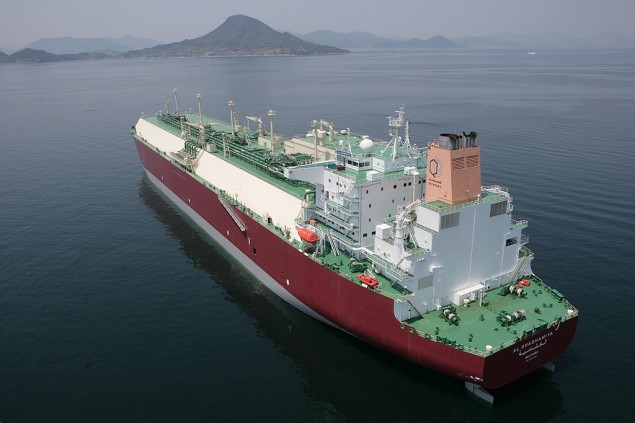
Image credit: Nakilat

Image credit: Nakilat

With soaring energy costs, Japan appears to have a pretty uniform goal, to invest as much as possible in other sources of energy and energy supply chains around the world. Many others like Qatar and Saudi Arabia are following suit and hedging themselves for what is turning out to be a reversal of their business model. Even the Louisiana Offshore Oil Port, which connects the world’s largest oil tankers with over half of the United States’ refining capacity is readjusting its business model for the changing flow of energy. With the eventual opening of the Liquefied Natural Gas (LNG) flood gates from the US however, coupled with Free Trade Agreements to places such as Japan, American energy firms and tax payers stand to cash in on the huge price gap that exists between the price of gas in the U.S. versus that which exists overseas.

At the moment, there’s a fairly good balance between supply and demand when it comes to the supply of ships and the demand for LNG product to be carried. Qatar, for example, uses 54 LNG carriers to transport their 77 million metric tons per year of LNG. Qatar also has a 70% stake in the Golden Pass LNG terminal in Texas. Additional exports from the US Gulf Coast will directly equal increased demand for more LNG carriers.

While regulators in the US trudge through the LNG export approval process, energy firms like Anadarko charge ahead with an ambitious LNG agenda offshore Mozambique in a field which was recently found to have at least 65 trillion cubic feet of recoverable reserves. Places like Mozambique, and offshore Israel, have the potential to really change the LNG marketplace given the sheer size of their fields and their proximity to the Asian and European markets respectively.

In Mozambique, two 5 million metric tons per annum (mtpa) LNG trains are currently under construction to support the huge conventional gas finds located 25 miles offshore. Their partners on the project include Mozambiquan state oil company, Empresa Nacional de Hidrocarbonetos, E.P., India’s state-owned Bharat PetroResources Ltd, Indian private equity firm Videocon Hydrocarbon Holdings, Ltd, Thailand’s PTT Exploration & Production, and Mitsui & Co. Considering the partners involved, their target market will predominantly be India and Japan. First LNG production is planned for 2018 and their plans are to eventually ramp up production to 50 million mtpa, or 2/3rds of the current production of Qatar.

What does that mean for LNG shipping? A lot more ships. To handle 50 million mtpa, upwards of 35 LNG carriers may be needed for transportation if you compare the ratio between Qatar’s fleet size and their total LNG exports. Source: gcaptain.com

Airport Cities – a view to a different trading environment for South Africa?

ace_skyscraper_237x352aerotropolisThis past week witnessed the first Airport Cities Convention in South Africa. It came at the timely announcement of the country’s first aerotropolis earmarked for development around Oliver Tambo International airport (ORTIA) and the surrounding industrial complex. While the City of Ekurhuleni gets prized possession of the ‘aerotropolis’ (in title) by virtue of the location of ORTIA, Johannesburg is set to benefit perhaps more greatly due to it being the epi-centre of South African commerce and trade. This represents significant ‘hinterland’ development which bodes well for future multi-modal transport and shipping activity for the Gauteng region and the country as a whole.

In support of government’s National Infrastructure Plan, is Strategic Integrated Project (SIPs) 2, otherwise known as the Durban-Free State-Gauteng logistics and industrial corridor. Infrastructure upgrades are already occurring to road and rail networks linking to the key cargo and distribution hub, City Deep. While the express purpose of an inland port, terminal or logistics hub is to provide relief for congested seaports, it likewise creates possibilities and opportunities to synergise with other transport forms. This serves to maximise capacity through integration offering local suppliers and foreign customers a host of trade, shipment and logistics options.

Foremost, an inland port is a hub designed to move international shipments more efficiently and effectively from maritime ports inland for distribution throughout the heartland. Think of the logistics of inbound freight as a barbell. At one end, inbound containers flood into a seaport, spreading across local storage facilities as they are unloaded. If they aren’t moved quickly enough from the port, they create a bottleneck that bogs down the entire distribution cycle as containers wait longer to get off ships, to get into warehouses, and to get back out and onto trucks and trains for final shipment. The Emergence of the Inland Port (credit: Jones, Lang, LaSalle)

In a world of increasing global integration, focussing more on global distribution of goods and services, it behoves our country to understand the dynamics of global trade and what in fact makes commerce tick. Today’s number 1 spot is not going to remain intact without continuous re-evaluation and innovation. It would indeed be arrogant (if not suicidal) of us to think that our current prominence and strength in the sub-saharan region will remain without innovation for the future. At the same time South Africa should welcome increased competition from its neighbours, both immediate as well as further north in Africa. The latest fDI 2013 Report indicates a decrease in foreign direct investment in South Africa (-5%) and Kenya (-9%), while at the same time a significant increase in foreign investment in Nigeria (+20%) and Egypt (+20%), respectively. True, the latter countries are far removed from South Africa’s immediate ‘playing field’, however do we fully understand the drivers which cause the named countries to attract FDI at such an increasing rate – are they capitalising somehow on our deficiencies, shortcomings, or lack of opportunism?

The National Infrastructure Plan can only be seen as a single cog in the machinery to keep South Africa competitive. And, while it is encouraging to witness these developments, a corresponding economic and commercial enterprise on both government and private sector is required to maximise these developments. Some smidgen of hope could lie in the Department of Trade and Industry’s economic principles which support Industrial Policy Action Plan (IPAP) and Special Economic Zones (SEZs), for example, however, several business commentators have already voiced concerns on exactly how these support the Infrastructure Plan. A further question lies in our country’s ability to facilitate trade, not only at our ports, but more importantly the ‘hinterland’ of our country and the neighbouring regions. Do our existing and future laws adequately provide for expeditious and facilitative procedures in the treatment of import and export goods? Are we sure that we are addressing all real and potential trade barriers?

Anyone desiring more information on the ‘aerotropolis’ concept should find some interest at the following websites – Aerotropolis.com, and the City of Ekurhuleni

Singapore and China’s Mutual Recognition Becomes a Reality

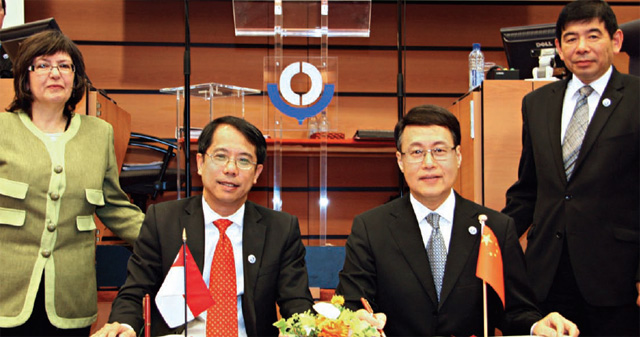
Director-General of Singapore Customs Fong Yong Kian and Vice Minister of the General Administration of China Customs Sun Yibiao (both seated), signed the China-Singapore MRA at the WCO Council Sessions in June 2012. The signing was witnessed by Chairperson of the WCO Council and Chairman of the Revenue Commissioners of Ireland, Josephine Feehily and WCO Secretary-General   Kunio Mikuriya.

Director-General of Singapore Customs Fong Yong Kian and Vice Minister of the General Administration of China Customs Sun Yibiao (both seated), signed the China-Singapore MRA at the WCO Council Sessions in June 2012. The signing was witnessed by Chairperson of the WCO Council and Chairman of the Revenue Commissioners of Ireland, Josephine Feehily and WCO Secretary-General Kunio Mikuriya.

General Administration of Customs of Singapore has announced that the Mutual Recognition Arrangement (MRA), signed with Customs of the People’s Republic of China went into effect on March 15, 2013.  Following the effective date, both Singapore’s STP-Plus companies and China’s Class AA accredited companies will be recognized as Authorized Economic Operators (AEOs) of the respective countries.

This recognition as AEOs allows Customs from both countries to grant clearance facilitation for accredited AEOs such as lower examination rates, priority inspections, and priority handling of customs clearance documents at each country’s port.  Included in the announcement were specific instructions for how importers in both Singapore and China should fill out customs forms when receiving exported goods from one of their respective AEOs.

For goods exported directly to Singapore from a Chinese Class AA company, the Chinese exporter would need to provide the Singapore importer with the 10-digit Customs Registration Code to place on their import declarations to Singapore along with inputting the “AEO code” into the portal for mutual recognition purposes and benefits of AEO.  The AEO code is comprised of “AEO”, “CN” and the 10-digit Customs Registration Code.

For goods exported to China from a Singapore STP-Plus company, the Chinese importer must fill in the “AEO code” of the Singapore’s exporter in the “remark column” in their import declarations to receive mutual recognition benefits.  The format for the AEO code is as follows:  “AEO (written in English half-width characters and capital letters)” plus “<” plus “SG” plus “12-digit AEO code” plus “>”.  For instance, if the AEO code of one Singapore STP-Plus company is AEOSG123456789012, then the remark column filled in by the Chinese importer would read as “AEO”.

The MRA signed between China and Singapore is but one example of several security programs in different countries making it easier for trusted traders to move goods through the supply chain. Other countries that also participate in MRAs include:

  • US Customs & Trade Partnership Against Terrorism (C-TPAT) which has MRAs in place with Canada’s Partners in Protection (PIP), New Zealand’s Secure Export Scheme Program (SES), Jordan’s Golden List Program (GLP), Japan’s Authorized Economic Operator Program (AEO), Korea’s AEO, and the European Union’s ( EU) AEO
  • European Union (EU) AEO which has MRAs in place with Canada’s PIP, Japan’s AEO, Australia’s AEO, New Zealand’s SES, and US C-TPAT
  • Japan Customs has MRAs in place with New Zealand’s SES, EU’s AEO, Canada’s PIP, Korea’s AEO, and Singapore’s STP-Plus
  • Singapore Customs has signed MRAs in place with Canada’s PIP, Korea’s AEO, Japan’s AEO, and China’s Class AA

Part of participating in any security program is the ability to assess and manage risk across the supply chain.  This includes soliciting and analysing information received from every partner within the supply chain to corrective actions and best practices.  While are security programs are still voluntary in nature, companies that take advantage of them are reaping benefits such as faster customs clearance and less inspections. Source: Integration Point

Serious Regional Competition – China to build Africa’s largest port

Port of Dar es Salaam, Tanzania, West Africa. Image credit: TPA

Port of Dar es Salaam, Tanzania, West Africa. Image credit: TPA

China has announced plans for a new US$10 billion mega port in the Tanzanian town of Bagamoyo.

The new port, boasting an annual capacity of 20 million TEU, will not only become Africa’s largest box facility but will also rival the major ports of the Persian Gulf.

Dwarfing Tanzania’s current largest port in Dar es Salaam, which handles an estimated 800,000 TEU a year, the new port, northwest of the capital, will be used as a transhipment hub for raw materials coming in and out of landlocked Malawi, Zambia, Congo, Burundi, Rwanda,and Uganda.

China will also help to establish new road and rail networks in the area, whilst contributing to the upgrade of existing links. Source: Port Technology International.

Storm in a Teacup – South Africa to apply “the system” to protect Rooibos

South African rooibos (Afrikaans for red bush) is caffeine-free, high in anti-oxidants and minerals, and traditionally grown in the Cederberg region, 250 kilometres to the north of Cape Town. Credit: John Fraser/IPS

South African rooibos (Afrikaans for red bush) is caffeine-free, high in anti-oxidants and minerals, and traditionally grown in the Cederberg region, 250 kilometres to the north of Cape Town. Credit: John Fraser/IPS

A trademark system which is used to protect Europe’s finest wines, cheeses and hams could soon brew up benefits for a humble tea from a remote region of South Africa.

The trade protection system called Geographic Indications (GIs), which is highly favoured by the eurocrats of Brussels, could be used to protect a South African red tea, locally known as rooibos (Afrikaans for red bush) as French firm Compagnie de Trucy is trying to secure the exclusive rights to market it in France.

GIs are increasingly important in the global trade arena, although it is wrong to think they offer enormous bulk trade opportunities. This form of food copyright already applies widely to specialty products, which can be linked to a specific region – such as French champagne, Parma ham and many types of cheese.

They (GIs) open-up niche markets for increased value add products, which taken together can total something significant. In addition, they involve cutting-edge frontiers in trade that largely rely on intellectual property rights for value, and are also linked to trade issues regarding brands and logos.

South African rooibos is caffeine-free, high in anti-oxidants and minerals, and traditionally grown in the Cederberg region, 250 kilometres to the north of Cape Town. It is growing in popularity worldwide due to its healthy properties, which helps to explain Compagnie de Trucy’s move to obtain marketing rights.

The issue has been elevated to diplomatic level between the European Union and South Africa at a time when both parties hope to finally conclude negotiations on updating their wide-ranging trade framework, after more than a decade of discussion. The GI system has enabled EU countries to clinch niche markets for brands such as champagne, which have enormous growth potential on a global basis.

While China as a country is South Africa’s biggest trading partner, the EU as a bloc is more important in value terms, and there are powerful arguments that both sides should expand GIs in their future relations. Soekie Snyman, the spokeswoman for the South African Rooibos Council, which represents rooibos producers, told IPS that the red tea needed to receive official trademark status in South Africa itself before it could qualify as a GI.

Rooibos, Aspalathus linearis (N.L.Burm.) R.Dah...

Rooibos, Aspalathus linearis (N.L.Burm.) R.Dahlgr., Clanwilliam, Western Cape, South Africa (Photo credit: Wikipedia)

The EU supports the protection of indigenous crops, with one of the main requirements being that the product must be protected in its country of origin, and we are nearly ready to file for trademark protection in South Africa. Rooibos is a unique plant, coming from the Cederberg mountain area. It is a caffeine-free beverage.

The EU ambassador in Pretoria, Roeland van de Geer, confirmed in a news release in March that he received a request from South Africa’s Minister of Trade and Industry Rob Davies “for the protection of South African food product names as Geographic Indications in the EU.

As well as rooibos, there have been requests for Honeybush, which is another type of tea, and for lamb from the Karoo desert region. The development of a GI system for South African farmers will reinforce the uniqueness and quality of South African products. South African wine makers have used the GI system for many years and have found it an effective way to protect famous names like Paarl and Stellenbosch.

There is a range of other South African products that might also be eligible for GI protection, such as ostrich and springbok meat, and the marula fruit from which the Amarula liquor is made. Meanwhile, the same criteria could apply to produce from other countries of the Southern African region – such as Mozambican prawns, Botswana beef and Namibian oysters. Source: AllAfrica.com

China was trading with East Africa Before Europeans arrived?

The coin is made of copper and silver and has a square hole in the center so it could be worn on a belt. Scientists say it was issued by Emperor Yongle of China who reigned from 1403-1425 during the Ming Dynasty (AP Photo/Courtesy The Field Museum, John Weinstein)

The coin is made of copper and silver and has a square hole in the center so it could be worn on a belt. Scientists say it was issued by Emperor Yongle of China who reigned from 1403-1425 during the Ming Dynasty (AP Photo/Courtesy The Field Museum, John Weinstein)

Scientists have found a rare, 600-year-old Chinese coin on the Kenyan island of Manda that rewrites the history books on international trading. Researchers say the copper coin, which has a square hole in the center so it could be worn on a belt, proves trade existed between China and eastern Africa decades before European explorers set sail. Scientists say it was issued by Emperor Yongle of China who reigned from 1403-1425 during the Ming Dynasty, and his name is written on the coin.

The island of Manda, off the northern coast of Kenya (marked with a red dot, below), was home to an advanced civilization from about 200AD to 1430AD, when it was abandoned and never inhabited again. Trade played an important role in the development of Manda, and this coin may show trade’s importance on the island dating back to much earlier than previously thought.

A joint expedition of scientists led by Chapurukha Kusimba of The Field Museum and Sloan Williams of the University of Illinois at Chicago found the  600-year-old Chinese coin on the Kenyan island of Manda. Scientists from Kenya, Pennsylvania and Ohio also participated in the expedition. They also found human remains and other artifacts predating the coin.

Manda in Kenya, now a popular holiday destination, was home to an advanced civilization from about 200AD to 1430AD, when it was abandoned and never inhabited again - Image by © Keith Levit/Design Pics/Corbis

Manda in Kenya, now a popular holiday destination, was home to an advanced civilization from about 200AD to 1430AD, when it was abandoned and never inhabited again – Image by © Keith Levit/Design Pics/Corbis

Emperor Yongle, who started construction of China’s Forbidden City, was interested in political and trade missions to the lands that ring the Indian Ocean and sent Admiral Zheng He, also known as Cheng Ho, to explore those shores. That relationship stopped soon after Emperor Yongle’s death when later Chinese rulers banned foreign expeditions, allowing European explorers to dominate the Age of Discovery and expand their countries’ empires, the researchers say.

The Portuguese were the first Europeans to explore the region of current-day Kenya, Vasco da Gama having visited Mombasa in 1498. The coast of East Africa was a valuable foothold in the eastern trade routes, and Mombasa was a key port for ivory. Modern European exploration of Kenya wasn’t initiated until 1844 when two German missionaries, Johan Ludwig Krapf and Joahnnes Rebmann ventured into the interior from Mombasa in an attempt to introduce Christianity.

The island of Manda, off the northern coast of Kenya, was home to an advanced civilization from about 200AD to 1430AD, when it was abandoned and never inhabited again. Trade played an important role in the development of Manda, and this coin may show trade’s importance on the island dating back to much earlier than previously thought. Source: dailymail.co.uk

Why 2013 Is the Time to Adopt e-Invoicing

e-Invoicing INTTRA

Rod Agona, Managing Director, Electronic Invoicing, INTTRA explains three reasons why it is time for ocean carriers and shippers to say goodbye to paper. This follows the recent announcement by IATA on the introduction of its eAWB initiative.

In a digital age where a delay of seconds or one human error can be the cause of lost revenue, wasted resources or unhappy customers, good technology becomes critical to run a business.

Twelve years after the ocean shipping industry adopted e-commerce tools that resulted in an average savings of $100,000 per year and hundreds of thousands of labor hours per week, the final step in the shipping process – invoicing and payment – are still catching up. Surprisingly, invoices are still largely processed by hand in the ocean shipping sector. Considered the most tedious and costly step in the shipping process, manual invoicing can take days to complete and is often riddled with disputes and errors. And the amount of time it takes to manage disputes is more than anyone is comfortable admitting – knowing each delayed payment impacts carrier cash flow and creates dissatisfied shipping customers.

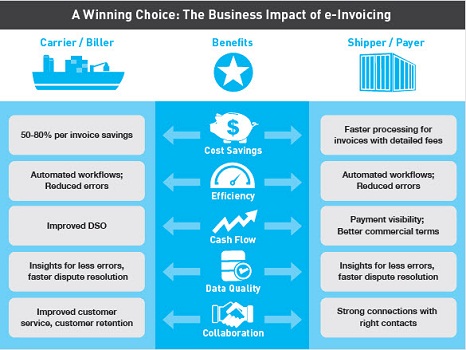
With electronic invoicing (e-Invoicing), there is a potential 50-80 percent cost savings according to the E-Invoicing/E-Billing 2012 Report from the international e-billing firm, Billentis, and the payment process is significantly shortened with DSO (days sales outstanding) typically decreasing by up to 10 days. Error rates are also greatly reduced, and customer satisfaction increased.

Although e-Invoicing as a trend has picked up rapidly in government and commercial sectors in the past three years (growing at a rate of 20 percent last year, according to the Billentis report), many in the ocean shipping sector are just catching wind of the benefits. Popularity among players is expected to grow this year – both on the biller and payer sides. Three reasons for the industry’s recent e-Invoicing surge are:

1. Demand Is at a Record High

At least 81 percent of the world’s largest shippers are requesting electronic invoices from their carriers in 2013, says a 2012 global shipping study conducted by INTTRA, the world’s largest ocean shipping network. The demand to move away from paper invoicing has never been greater, with shippers claiming to be “ready now and actively seeking e-Invoicing from their business partners.”

2. Proven to Lower Costs and Speed Internal Operations

Shippers’ biggest complaints with paper invoicing are 1) managing disputes, 2) the time and costs required to process invoices, and 3) correcting invoice inaccuracies. e-Invoicing is proven to alleviate these concerns by streamlining the entire settlement process, improving accuracy, and reducing the costs and labor required to process manual invoices. Payers end up happier as a result, receiving faster and improved communications and lowering the true total cost of doing business. For carriers, e-Invoicing is proven to cut costs and improve cash flow and working capital – and investments are often gained back within six months.

Both shippers and carriers want a solution to better manage high-volume transactions. Imagine spending millions of dollars on a global SAP (or equivalent) rollout and still manually keying in a half-million invoices per year. There is a better way.

3. It May Soon Be Mandatory (if it isn’t already)

Shipping companies are trying to keep up with rapidly changing local and international trade regulations, and e-commerce shipping is the smart way to stay compliant. Countries like Mexico, Brazil, Norway, Sweden, Finland and Denmark have already made electronic invoicing mandatory for all business-to-government transactions. Most others in Europe, North America and Australia are increasingly adopting electronic invoicing due to its cost-saving benefits.

Companies that act today put themselves at a competitive advantage as they are able to put their savings back to work and redirect employees engaged in manual processing to higher value tasks.

Looking Forward – 2013 and Beyond

The tipping point for when a technology ‘best practice’ becomes a ‘must have’ is never clear-cut – until an industry struggles as much as ours has. Change is hard, but for an industry with few proven solutions to remove costs, e-Invoicing is a viable, must-have solution.

2013 is a critical year for the ocean shipping industry. It is expected to be a year of major change in the way carriers and shippers do business. Competition is growing fiercer, and the industry continues to consolidate. e-Invoicing is one way to cut costs and reallocate dollars to where they are needed most in today’s challenging environment. Source: Maritime-Executive.com

For information, visit http://www.inttra.com/e-invoicing.