China leads shake-up in distribution methods

Out of respect for copyright, I would encourage all logistics followers to visit this link to learn more about a significant shift occurring in the distribution of containerized goods. Some food for thought considering local conditions in South Africa which currently appear to marginalize (if not discourage) inland localisation and multi-modal distribution of goods between the hinterland and major air and sea ports in Southern Africa. Source: FT.com

Related Article

New Models for addressing supply chain and transport risk

Trends such as globalization, lean processes, mass travel and the geographical concentration of production have made supply chain and transport networks more efficient, but have also changed their risk profile. This World Economic Forum report, produced in collaboration with Accenture, calls for new models to address supply chain and transport risks. It highlights the urgent need to review risk management practices to keep pace with rapidly changing contingencies facing the supply chain, transport, aviation and travel sectors. Download the full report here! Source: Creamer Media

Aircargoshop – a revelation for shippers

The following piece suggests that the realisation of AEO obligations on shippers is real and will be augmented by support systems that may marginalise the highly competitive freight forwarding industry.  While there is a suggestion of cost savings due to non-reliance of shippers on traditional forwarding agents, I believe this is a short-sited view as the ‘real challenge’ lies in whether or not shippers are up to the task in meeting these obligations given their unfamiliarity with customs and transport requirements. I see many shippers having to recruit experienced customs and forwarding experts to maximise their compliance given the burgeoning obligations materializing in international shipping!

In October 2011, Aircargoshop an online booking portal provided shippers the possibility to book their own airfreight without involvement of the traditional shipping agent via the online portal Aircargoshop. This is a development that might have important consequences for the closed airfreight industry. As a consequence the online booking portal offers a lower-priced, more efficient and more transparent process for aircargo booking.

Founder Paul Parramore of Rhenus Logistics suggests that this system will bring down the cost of airfreight by as much as 50%. The Dutch Shipping Council EVO, gave the system the thumbs up and said that it will revolutionise the manner in which the freight business is currently being conducted.

Joost van Doesburg, a consultant with EVO said that in the long run restructuring of the industry is necessary in order to meet the challenges of the 21st century. Many of the forwarders will lose out, but the system is geared towards cost effectiveness and being competitive. He also added that if the forwarder is to add value to the supply chain, then he has to comply to adapting to the system rather than working against it.

On the home front, a recent article featured on the website Freight into Africa reports that the South African Cross Border Transporters Association (SACBTA) will be introducing a similar system which is currently under development for the cross border road freight industry. It will be called “ROAFEonline” or shortened form of Road Freight online which will allow the customer to book directly his freight with accredited SACBTA members hence cutting out the middleman and brokers.

All payments can and will be done online and this system will integrate with SARS EDI (Would like to hear more on this!). The consignor will only have to ensure that his goods are loaded onto the truck, the rest will be done by the system. The cost per transaction to the customer will be a paltry R100.00 in relation to a few thousand Rands normally swallowed up by the middlemen.

Based on our estimations a regular consignor can save up to R3-5 million Rands per annum which hopefully will be passed onto the consumer. With the looming integration of the SADC countries towards one stop clearing, it makes sense to further integrate the system. So whether you are in Dar es Salaam or Lubumbashi, you can now book your freight from Cape Town without having to go through a string of brokers. You also have the assurance that your cargo will be loaded by an accredited SACBTA transporter who complies to the standards set out by SACBTA. It will facilitate consolidations as any accredited transporter will at any given time be able to see what cargo is available. If Transporter A has only 20 tons, he can check which other transporter on the system has another 8 tons to Dar es Salaam for example. The transporters can then consolidate a load on the system which will happen in a shorter period of time than say for instance waiting a month to fill a tri axle.

This system will have many other functionalities that have been incorporated like online tracking, bar coding, which will give the consignor and consignee piece of mind knowing at any given time where their cargo is. It will also be accessible to border agents and customs officials who will be in a position to extract vital information on any consignment long before it actually gets to a border.

The system will go into testing around March of this year and if all goes well should be ready for implementation by the latter part of 2012 or early 2013. We hope that this will go a long way towards restructuring the industry for the better. It has long been the desire of SACBTA to allow industry players to come on board to create a better industry. However, there has been very little interest shown in transforming the industry and we feel this system will by virtue of its nature, transform the industry whether industry players are willing participants or not. Source: Freight into Africa and various own sources.

Burden of proof – cross-border data exchange

The continuous development in international communication media together with the never ending expansion of the global trade arena have impacted both positively and negatively on international contractual dispute resolution. It is common cause that once a dispute has been characterised as of a contractual nature and the lex fori has been established, the next step is to ascertain which law is the lex causa or so called “Proper Law” of the agreement.

This article is focused on the assertion of the proper law of an agreement, after it has been established that the lex fori is South African law, in situations where parties  electronically concluded an agreement and whilst doing so omitted to exercise their autonomy to record the law which they are intent on governing the agreement, alternatively in situations where one cannot establish whether the parties contemplated and tacitly implied that a specific legal system would govern the agreement at the time when their agreement was concluded when the lex fori was already established as South African law. Read the full paper here!

Ports back campaign to weigh all export containers

The International Association of Ports and Harbours (IAPH) has joined the World Shipping Council (WSC) and International Chamber of Shipping (ICS) in urging the International Maritime Organization (IMO) to establish an international legal requirement that all loaded containers be weighed at the marine port facility before they are stowed aboard a vessel for export. In what has been a much publicized issue since 2008 in the maritime industry, much the same view is taken by customs administrations. Like many other changes in the supply chain, it is a lot easier said than done. Modern ports are designed and developed taking into account requirements for weight bridges, radiation portal monitors, networks to monitor vehicle and container movements in and around port precincts, and inland transportation routes. While the expense and budget for these are usually borne by the relevant port authority, would it not indeed be good if those responsible for the packing/stuffing of containers took it upon themselves to ensure the correct weight, quantity and content are properly declared?

Refer to the joint WSC/ICS paper on “Solving the Problem of Overweight Containers” as well as the ICS’s “Safe Transport of Containers by Sea”. Both are self explanatory and short enough so as not to be considered laborious. In the South African context the question of who packed the box is often unanswered given that a variety of entities could be involved in this activity. In some instances it could be a container depot operator or a freight forwarding and consolidation agent; depending on how ‘safety and compliant conscious’ the shipper wants to be. While it will still take some time before the entire supply chain becomes properly regulated and monitored, now’s the time for ‘operators’ to take stock of what might in future be a new standard. New standards mean more capital outlay with pass-on costs for which the shipper ultimately carries the can.

Freight forwarders’ liability is being boosted by expanding supply chains

TT Club, the international transport liability insurer, is warning that freight forwarders and other transport intermediaries face increasingly significant liability risk, particularly in emerging markets, as they take on additional supply chain services for their customers. TT Club specialises in the insurance of liabilities and equipment for multi-modal operators.

Traditional freight forwarders, who have seen the opportunity to offer extended warehousing, packaging, delivery fulfilment and even purchasing functions for shippers are not always fully aware of the liabilities for cargo loss and third-party damages that these additional tasks are opening them up to, according to Andrew Kemp, European regional director of the TT Club.

He told the Cargo and Freight Insurance Annual Conference in Moscow that as supply chains continue to develop to supply emerging markets, where the cargo owners are not always willing to invest in distribution infrastructure, the out-sourcing of such tasks will proliferate.

This could bring significant new business opportunities to companies, which had previously limited their service offerings to freight forwarding and the organisation of international transport, but these additional procedures could be complex.

“A typical new type of activity would be the packaging, for the local retail market of an item with a sales promotion attached (price discount or two for one offer). This task is straightforward in itself but brings with it risks of errors and possible damage to the items. This would be something not experienced by transport operators in the past,” he said. Source: Logisticsmanager.com

Non-declaration of hazardous containers

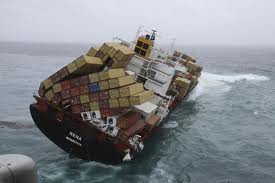
MV Rena off New Zealand Coast of TaurangaIn this age of heightened security it remains remarkable how carriers still willfully take custody and/or load ‘goods’ for which the contents thereof are unclear. True, carriers and intermediaries (fowarders/brokers) will correctly point at the ‘shipper’ (exporter) for not disclosing the details correctly. It also needs be mentioned that the cargo handler (packer of the container) is really key in all of this. It is this entity who has knowledge of what is being stuffed into the container. There is much debate on this matter, and a whole lot more work to be done in ultimately pinning down the responsible party. Given this state of affairs, most Customs administrations are happy to lay the responsibility and liability for lawful clearance on the party responsible for cargo reporting, i.e. the entity which ‘cuts’ the manifest. I dare say that the terms of sale (incoterms) also have an influence in terms of risk and liability here which adds some complexity to decision-making in time of misfortune. Take for instance the recent grounding of the M/V Rena off New Zealand earlier this month, where it has recently come to light that the wreck contains at least 21 containers which were not properly recorded on the ship’s manifest. Read articles below.

Upgrades and Downgrades

GNU-FDL, selbst fotografiert

Image via Wikipedia

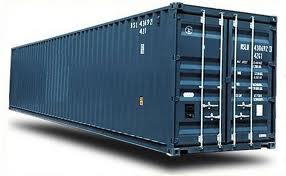
The global shortage of intermodal shipping containers is making the companies that lease them rich. In a year that will probably go down as the worst in shipping history, a small group of companies is making a fortune. These are the companies that buy and then lease to major shipping lines the humble “box,” or intermodal shipping container. You know, those ugly rust- or gray-colored containers that sit atop 18-wheelers and block your view of the road and cause massive congestion and beaucoup emissions? And I bet you can’t name a single one of these companies. I couldn’t, until I started researching this article. They’re not exactly household names, but they should be for any investor worth his or her salt. Read the full article here! Source: The Maritime Executive

Reminder: People Run the Supply Chain

doesn’t this just sound so familiar? What a fine article by Chris Kane, Chief Strategy Officer of a family owned third-party logistics provider (3PL).

As the U.S. economy continues to struggle and unemployment remains high, our industry has focused on cost cutting through automation. Technology has undoubtedly helped us move more products more quickly and less expensively than ever before, but have we focused so much on automation and technology that we’ve neglected to identify how they affect the people in our supply chain?

I’m a distribution guy, so I’m the first to admit that technology provides visibility into our operations that makes my life much easier. A single report can tell me exactly where a specific load for any one of our customers is located in real-time. What it doesn’t tell me is how our people in the distribution center hustled to get the trailer loaded, even after a forklift problem, so that the driver didn’t miss his delivery window. Or how the driver’s skills helped her avoid an accident that would have destroyed the customer’s product. If I just look at that report, I miss the most important aspect of our business: the dedication of our people. When things go wrong (as they inevitably do), technology will only get us so far.

Is our industry fast paced? Absolutely. Do we need to utilize the technology available to be more efficient, more cost-effective and more competitive? Of course. But if we pursue those options exclusively, with little regard for the people running our operations, we’ve failed. Because at the end of the day, it’s the efforts of the people in the supply chain that get the product to its destination.

Port Community Systems – a voyage of discovery

Port Community SystemSince the mid-1980’s the concept of port community systems have abounded in various guises. Portnet (now Transnet Port Terminals / National Ports Authority) initiated a drive around this time as well, however the maturity of B-2-B e-commerce, at the time, was in its infancy and there were simply not enough ‘takers’ due to the unknowns such as ‘cost’ and ‘what’s in it for me’. Similarly, the air cargo community – in Europe especially – operated what was called ‘cargo community systems’ (CCS), most of which were operated by a value added network operator who provided the infrastructure and together with an ‘industry/community’ project team developed all the necessary transaction interchanges to facilitate data exchange between participating trade and logistics entities. Some of these CCS’s interfaced with Customs, but mainly serviced the forwarding and cartage community. Towards the end of 1998, South Africa established its very own known as ZA-CCS. Like Portnet’s endeavour, it was perhaps ahead of its time with very few participants to support the anchor sponsor, being the South African Airways. Two years later SARS implemented its EDI programme, and so developed a new era in information exchange for the customs clearing fraternity. The number of service providers also increased to support a burgeoning need for ICT capability. Mainframe systems gave way to thin client and PC-based solutions making it all the more affordable and accessible to the greater trading community.

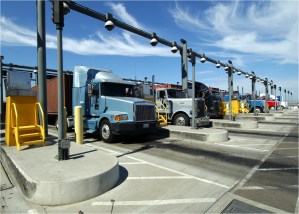
In the US, Los Angeles has spent considerably more installing security cameras than ports have spent in other countries on setting up a Port Community System. However these have yet to prove their worth in the lucrative US market. Much like the voyages of discovery to the New World 500 years ago, Port Community Systems are taking their time to spread beyond Asia and Europe. In the US, they are virtually unknown outside their uses in security and safety.

European ports have undoubtedly benefitted from PCS in varying forms. An outstanding system is Portbase, linking Rotterdam and Amsterdam in virtually every activity. So far, 40 different services are offered, with Notification of Dangerous Goods next in line. The big test in extending Portbase lies in fitting the programme into less homogenous conditions elsewhere.

At Gothenburg in Sweden, the most significant aspect was integrating with the government systems, regulations and requirements – especially in areas such as control of dangerous goods and waste disposal. The single window application is a key to success. Based on a module approach, three sub-programs – the Vessel Clearance System, Marine Service System, and Cargo Management System – cover the spectrum of operations linking port customers, users, management and government authorities.

In developed countries the differences are marginal when new systems are set up, because every port is already heavily computerised. In emerging markets even the most basic computer system can mean a huge step forward. It’s also a big plus when free trade agreements are signed. Customs administrations will zero in on the most efficient port as the designated Trade Zone or bonded manufacturing facility. The more efficient a port, the more likely that it will be used as a trade lane.

In the US, the focus of information exchange is almost solely on safety and security, a consequence of the 2001 terrorist attacks. Commercial and operational information sharing is almost non-existent, and the reason is the extremely competitive culture that pervades business.

The universal opinion is that terminal operators and port authorities jealously guard their business models and details from rivals. It’s all a case of ‘you jump in first’. There is a total refusal to be the first to set up a system – the competitors would be only too happy to plunder the information without giving anything back in return. In complete contrast, the approach to security and safety is “the more the better“. (In South Africa we refer to it as a ‘data rich’ environment). These are undoubtedly interesting times we live in. Source: PortStrategy.com.

Exports – Dispelling a fallacy

Following my previous post on ’empty container depots’, its time to dispel a long time myth basically perpetuated to safeguard the cargo handler’s imagined responsibility that goods delivered to be packed for export must be first cleared through Customs. There is no current law, rule or policy which supports this notion, and neither is there any liability on stuffers, consolidators, container depot, transit shed operators, empty container depot operators to ensure that goods they receive under instruction to pack for export have been pre-cleared with Customs.

Let’s first consider what a Customs export declaration implies. Generally, a declaration for export is lodged with Customs subsequent to the conclusion of a sales agreement between a local supplier and a foreign buyer via the commercial bank. The forwarding agent will arrange foreign shipment with a carrier, obtain commercial documents (pro forma invoice, required regulatory permits/certificates, etc.) and prepare a declaration for submission to Customs on behalf of the exporter.

The acceptance, by Customs, of an export declaration is no more than a formal notification of an exporter’s intention to exportnothing more. It is therefore untrue that an ‘approval to export’ or ‘release for export’ notification is the last word from Customs. Moreover, it is also incorrect to reason that Customs has no right to intervene in a ‘transaction’ subsequent to clearance. In essence the notion of an export ‘consignment’ only materialises once the goods are packed, sealed and ready for delivery to the point of international cartage ; or, more accurately, when the ‘secured goods’ are reported for delivery to the place/port of export. Only at this point can risk be evaluated in all its dimensions and a final decision by Customs (load/no-load) be pronounced.

The advent of advance information, post 9/11 and subsequent proliferation of ‘secure export’ initiatives means that ‘risk’ in relation to international cargo movements encompasses three key areas – information, conveyance and cargo. To merely accept whats declared on the export is insufficient for Customs. Other potential risks involving a multitude of people with a lesser liability, little appreciation for accuracy, and little or no sensitivity towards the safety and security of goods in their custody may compromise the ‘compliant’ intent of the exporter and clearance broker at time of initial customs clearance.

It is therefore plain to see why SARS Customs is modernising not only its procedures and systems, but also its enabling legislation.  A new export clearance and cargo reporting dispensation is envisaged, to be accompanied by the licensing of cargo handlers and their premises and the implementation of a seal integrity programme.

Empty container depots adding to industry’s costs?

FTW published an article recently in regard to ‘empty container depots’ and their apparent negative impact on cost and response to industry needs. It was duly noted that while so much focus was accorded to Port delays, little is said about the additional costs caused by empty container depots. Many of these in fact hold, clean and distribute empty containers on behalf of shipping lines some of whom are not equipped to service the industry due to ill-equipped facilities.

Shipping lines complain about the turnaround of their vessels at the port, but take little interest in ensuring a quick turnaround of vehicles at their appointed container depots. The report continues: “Transporters are delayed for hours at major depots while waiting for containers to be turned in, cleaned and then released for export cargo. Most of these depots do not work 24 hours in line with the port and transporters, which further limits the ability of transporters and industry to perform”. I think this deserves some further thought and consideration, and for this I’ll provide a customs-slanted view.

Firstly, in other parts of the world, the same mentality prevails whenever a port or customs system is replaced or upgraded – an avalanche of vitriolic sentiment, followed by line operators threatening to institute port delay surcharges and the like. To place matters into true perspective – yes, the port and customs services are there for the benefit and support of the supply chain, and should run and be maintained to offer efficient operation even in the event of catastrophe or a burgeoning logistics market demanding increased capacity and responsiveness. 9/11 provided a catalyst for Customs Inc. to initiate an unheard of demand on trade to increase its internal security mechanisms and even provide information in advance of the lading of a vessel at a foreign port. The US lines were the first to climb on the band wagon in support of heightened security and quickly acted to ensure that their regional offices were able to assist foreign shippers in supplying the required ‘advanced information’ at a nominal charge – varying between $25 and $60 per bill of lading. Sure, this was the cost necessary to ensure lines met their new stringent reporting requirements to the US Homeland Security to obviate possible penalties of $5,000 and up. Nonetheless, the same lines, when asked to provide the local authorities the same courtesy, recoil and look for all sorts of excuses to avoid the subject. Sure, it is understood that only the US has the right to make such demands, not any anyone else. I have followed most other advance cargo reporting requirements with similar amusement.

You see, lines were prepared to make suitable arrangements for US-bound containers such as pre-booking empty containers. Now when the requirement is extended to other parts of the world there is an immediate issue. Simply, and as the article correctly deduces, supply chain security implies that everyone changes – even the empty container depots.

As the local port authorities and your customs service are spending millions in upgrades to meet the demands of the future, so too is the same required of trade. Unlike commercial entities, your customs service remains one of the few who in the world that has not instituted a customs service fee. Certain traders and intermediaries in the industry might complain that recent developments at SARS have seen their costs increase due to new transactional requirements, for example the electronic supporting document issue. This I will discuss on its own in a separate post. The bottom line is that the FTW article is an important cue for those container depots concerned to get their act together. The heat will undoubtedly be turned up on them once SARS introduces its new export clearance and cargo reporting requirements. South Africa needs smaller to medium enterprises offering dedicated services. Perhaps it’s time for the lines (those who operate such facilities) to consider outsourcing these activities to more dedicated enterprises. Read the FTW article here!

Cargo Dwell Time in Durban

An acquaintance in the forwarding industry brought this working paper to my attention. Titled “Cargo Dwell Time in Durban“, it is very useful reading for logistics operators, Customs and government agencies, and policy makers. The object of the working paper attempts to identify the main reasons why cargo dwell time in Durban port has dramatically reduced in the past decade to a current average of between 3 and 4 days. A major customs reform; changes in port storage tariffs coupled with strict enforcement; massive investments in infrastructure and equipment; and changing customer behavior through contractualization between the port operator and shipping lines or between customs, importers, and brokers have all played a major role. The main lesson for Sub-Saharan Africa that can be drawn from Durban is that cargo dwell time is mainly a function of the characteristics of the private sector, but it is the onus of public sector players, such as customs and the port authority, to put pressure on the private sector to make more efficient use of the port and reduce cargo dwell time. The Working Paper is the product of the World Bank’s Africa Region, Transport Unit, being part of a larger effort  to provide open access to its research and make a contribution to development policy discussions around the world. Policy Research Working Papers are also posted on the Web at http://econ.worldbank.org

Related articles

Durban Dugout – more about Transnet’s thought process

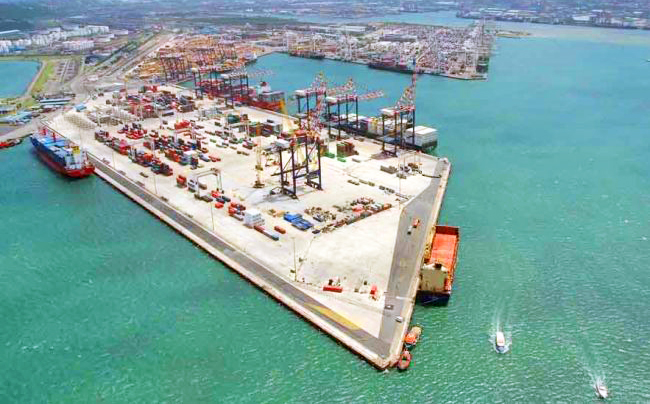
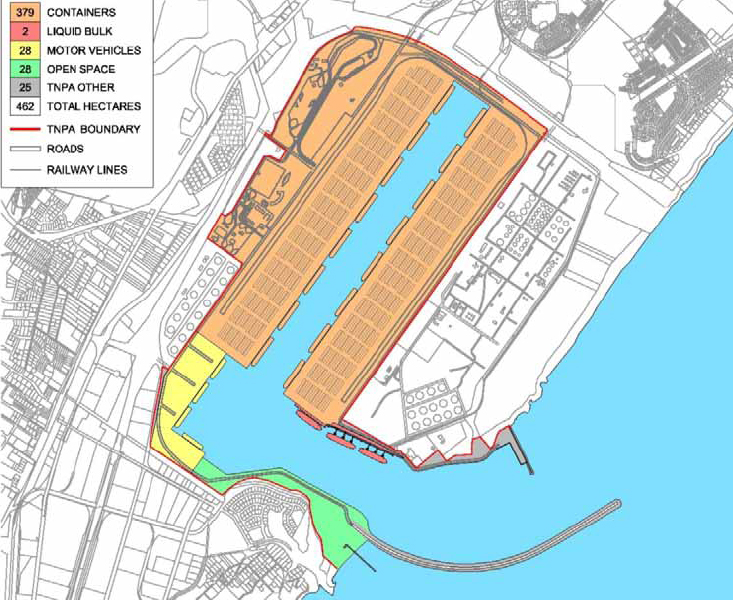
Durban DugoutWhile the ‘bean counters’ at ACSA and Transnet continue to finalise the sale of the old Durban airport, its good to  understand  Transnet’s alternative options in so far as port expansion on the eastern seaboard is concerned. I came across the following document which not only details the current ‘dugout site’, but also includes designs for an equally  impressive container terminal at Richards bay.  Click here!

Logistics Performance Index (LPI)

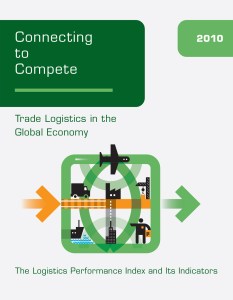
Customs and logistics users will in particular find the featured survey of interest, if not important. International Logistics encompasses an array of essential activities — from transport, warehousing, cargo consolidation, and border clearance to in country distribution and payment systems, involving a variety of public and private agents. The Logistics Logistics Performance IndexPerformance Index (LPI) and its indicators are a joint venture of the World Bank, logistics providers, and academic partners.The  LPI is a comprehensive index created to help countries identify the challenges and opportunities they face in trade logistics performance. 

The 2010 LPI points to modest but positive trends in key areas such as customs, use of information technologies for trade, and investment in private services. The LPI is a multidimensional assessment of logistics performance, rated on a scale from one (worst) to five (best). It uses more than 5,000 individual country assessments made by nearly 1,000 international freight forwarders to compare the trade logistics profiles of 155 countries. Germany and Singapore receive the highest ratings in the 2010 LPI with scores over 4.08. South Africa ranks 28th on the list with a score of 3.46, one position behind China (3.49), but 11 and 18 places better than Brazil (3.20) and India (3.12), respectively.

The LPI covers the performance of countries in six areas that capture the most important aspects of the current logistics environment:

  • Efficiency of the customs clearance process.
  • Quality of trade and transport-related infrastructure.
  • Ease of arranging competitively priced shipments.
  • Competence and quality of logistics services.
  • Frequency with which shipments reach the consignee within the scheduled or expected time.

One of the features of the LPI includes indicators of border procedures is the time taken to complete trade transactions.  Although this  is a relatively small fraction of total import time, such time increases significantly when goods are physically inspected. Core customs procedures converge strongly across all performance groups, but physical inspection—and even multiple inspections of the same shipment by different agencies—are much more common in low performance countries. The report moreover suggests that border agencies other than Customs tend to constrain the clearance process and ultimately the costs imposed on the private sector.