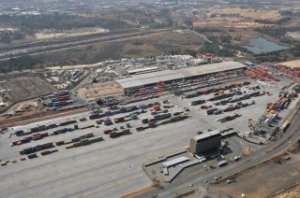
Rapid progress on City Deep Container Terminal upgrade

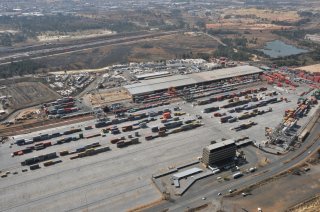
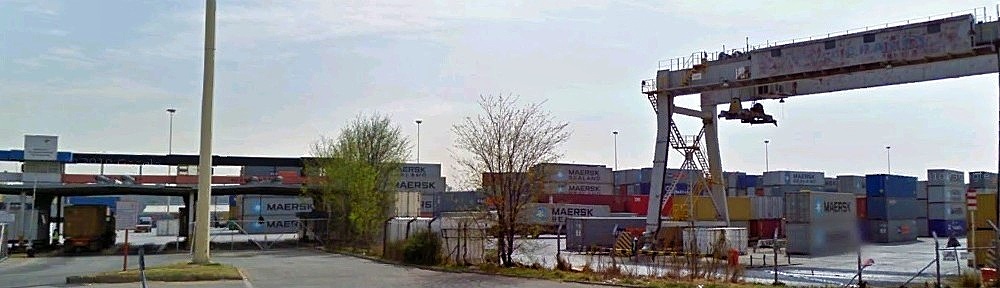
Rapid progress is being made on a multimillion rand contract awarded by Transnet Capital Projects to Concor Civils for the construction of new concrete paving, civil services and electrical lighting at its City Deep Container Terminal. The terminal is currently being upgraded as part of Transnet’s rolling capital investment programme.

The container terminal at City Deep is known to be the largest “dry port” in the world and the City Deep area has been declared an IDZ (Industrial Development Zone) by the Gauteng government. (?)

The contract is scheduled for completion in May 2014 and includes the removal of 36 500 m3 of existing concrete paving, 110 000 m3 of earthworks, the installation of a new drainage system and all service ducting and manholes for lighting, fire mains, CCTV equipment, 360 t of mesh reinforcing and the placing of approximately 146 000 m2 of concrete paving.

The Concor Civils team is making use of as many emerging contractors as possible to supply services such as pipe laying, ducting and manholes and has undertaken to employ about 90 general workers at peak from the local community at a cost of some R10 million. These temporary workers will be given on the job training in basic technical skills, as well as in life skills. Source: Transport World Africa

SA Government to Prioritise and Pass Customs Bills

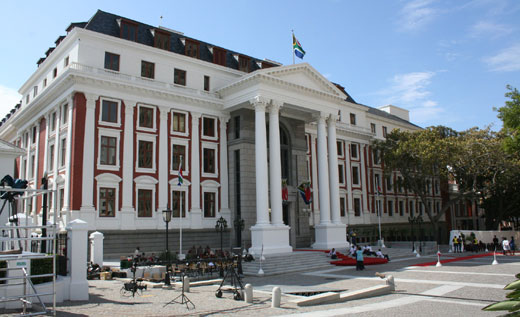
Parliment, Cape Town (Eye Witness News)

Parliament, Cape Town (Eye Witness News)

Government has decided to prioritise the passage of eight bills through Parliament. The bills deal with land restitution, labour relations, and customs and excise.

There are currently 42 bills before the National Assembly and the National Council of Provinces. With the fourth Parliament set to be dissolved ahead of looming general elections, Members of Parliament (MPs) are unlikely to deal with all 42 bills.

A statement just released by the ANC’s office in Parliament to the media states –

“The African National Congress in Parliament has taken note of the huge parliamentary workload which the institution has to process in the next few months before the expiry of the current five-year term of parliament. In terms of the Constitution, the current term of Parliament is set to end ahead of the 2014 national elections. The workload confronting the institution includes committee oversights, constituency programmes, adoption of committee reports, debates on the state of the nation address and the budget, and finalisation and adoption of Bills.”

“Currently, there are 24 Bills before the National Assembly (NA) and 18 currently before the National Council of Provinces (NCOP) – which is a total of 42 Bills the institution must pass before the elections. Our view is that all these Bills are important and therefore the institution should spare neither strength nor effort in ensuring they are processed qualitatively and thoroughly to ensure that they are converted into laws within the stipulated period. We are however alive to the possibility that not all these Bills may be passed in the next few remaining months of parliament.”

“We have therefore sought to prioritise the following Bills, which we believe Parliament should give special attention to ensure they are passed into laws. In terms of the rules of Parliament, Bills that are not passed within the current term of Parliament may be resuscitated in the next parliamentary term. This will be done for those Bills that might not be passed during this term.”

“In determining priority Bills, we have looked at criteria such as complexity, contentiousness, technicality, effect on provinces, and requirement for exhaustive consultation. [Three of the eight bills relate to Customs and Excise]

  1. Customs Control Bill of 2013 – The Customs Control Bill is intended to replace certain provisions of the Customs and Excise Act of 1964 relating to customs control of all means of transport, goods and persons entering or leaving South Africa. The Bills aims to ensure that taxes imposed by various other laws on imported or exported goods are collected and that various other laws regulating imports and exports of goods are complied with. To ensure effective implementation of customs control, the Bill provides for elaborate systems for customs processing of goods at places of entry and exit such as seaports, airports and land border posts;
  2. Customs Duty Bill of 2013 – The Customs Duty Bill is intended to replace certain provisions of the Customs and Excise Act of 1964 which relates to the imposition and collection of imports and export duties. The Bill primarily aims to provide for the levying, payment and recovery of import and export duties on goods imported or exported from South Africa. The Bill will be dealt with in terms of Section 77 of the Constitution; and
  3. Customs and Excise Amendment Bill of 2013 – The Customs and Excise Amendment Bill seeks to amend the provisions of the Customs and Excise Act of 1964 and to remove from the Act all the provisions that have now been incorporated into both the Customs Control Bill and the Customs Duty Bill. Essentially, because the Customs and Excise Amendment Act of 1964 strongly reflected rigidity reminiscent of the apartheid era controls, which are unsuitable to the current modern control systems, it has been split into both the Customs Control Bill and the Customs Duty Bill. The Customs and Excise Amendment Act of 1964 will for now be retained in an amended form for the continued administration of excise duties and relevant levies until it is completely replaced with a new law in future (i.e. Excise Duty Bill).”

Source: Excerpt of a press statement of the Office of the Chief Whip of the ANC, Parliament.

Comesa chips in with $1,4m for ZIM dry port in Nambia

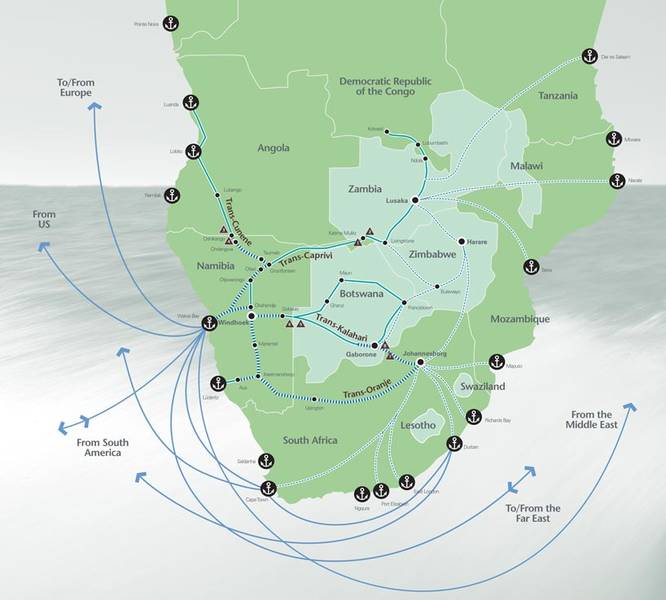
Walvis Bay - making headway (www.transportworldafrica.co.za)

Walvis Bay – making headway (www.transportworldafrica.co.za)

The Common Markets for Eastern and Southern Africa has agreed to avail US$1,4 million for phase one of the construction of the country’s Walvis Bay dry port. The government of Namibia in September 2009 granted Zimbabwe 19 000 square metres of land to construct its own dry port that is expected to boost the country’s trade. The project is being spearheaded by the Road Motor Services, a subsidiary of the National Railways of Zimbabwe.

In an interview, RMS managing director Mr Cosmos Mutakaya said the Ministry of Industry and Commerce last month held a consultative meeting with Comesa to strategise on how to fund the project.

“Comesa is looking at funding projects with a regional integration element that countries within the Southern African Development Community would benefit from. In the last meeting we held, Comesa indicated their willingness to finance the first phase of the facility which will cost US$1,4 million,” he said.

He said all the relevant documentation had been submitted and they are now waiting for a response from Comesa.

Mr Mutakaya said construction of the dry port would be done in two phases. The first phase involves the civil works which includes construction of the drive-in weighbridge, storage shades, palisade fencing as well as installation of electric catwalks. Phase two involves the putting up of administration blocks. He said once phase one is completed, then the dry port operations will start.

“We are now waiting for the unlocking of funds from Treasury and Comesa for us to start construction. The Namibian contractor, Namport, will also start working on the port once the funds are made available. According to the contractor, phase one of the project is going to take five working months to complete,” Mr Mutakaya said.

He said the project, which was supposed to have been completed by May this year, had been stalled by the lack of funding.

An official at the Namibian desk office in the Foreign Affairs Ministry confirmed that operations at the port had stopped for a while due to a lack of funding. “Government has been facing challenges in making payments to the Walvis Bay Corridors Group, responsible for the construction at the port and operations had to be stopped for some time pending clearance of some outstanding fees by Government,” he said.

Trade for Zimbabwe via Walvis Bay has increased for the past few years and a large percentage of commodities are transported along this corridor. Zimbabwe’s trade volumes through the Port of Walvis Bay have grown significantly to more than 2 500 tonnes per month.

In a related development, the Namibian Ports Authority is also working on expanding Walvis Bay port and recently secured a US$338 million loan from the African Development Bank to finance the construction of a new container terminal at Port of Walvis Bay. The Namibian government also received US$1,5 million for logistics and capacity building complementing the port project loan. Source: The Herald (Zimbabwe)

Parliament Postpones Customs Bills

Thaba Mufamadi, chairman of Parliament’s finance committee. Picture - Financial Mail

Thaba Mufamadi, chairman of Parliament’s finance committee. Picture – Financial Mail

Parliment’s standing committee on finance (SCoF) has decided to postpone its deliberations on two draft customs-related bills until next year to allow importers and the freight-forwarding industry more time to comment on the proposals which threaten the status of City Deep as an inland port. This followed an appeal by the South African Association of Freight Forwarders that it had had insufficient time to consider the substantially revised draft Customs Control Bill and Customs Duty Bill, which required that imported goods would have to be cleared at the first point of entry.

The association, supported by a range of other business organisations, including the Johannesburg Chamber of Commerce and Industry, warned that the bills could be challenged on constitutional grounds if the process of consultation was deficient. All political parties supported the proposal by finance committee chairman Thaba Mufamadi on Wednesday that the deliberations on the bills be postponed until next year. He instructed stakeholders to make their submissions to the South African Revenue Service (SARS) by December 15.

Mr Mufamadi also took cognisance of concerns raised by Business Unity South Africa that parliamentary processes did not allow sufficient time to comment, for example, on the medium-term budget policy statement. Industry has warned of port delays and trade disruption if the proposals were to be adopted. The Customs Control Bill proposes that goods be cleared at the first port of entry into South Africa. This will mean that inland ports such as City Deep in Johannesburg would no longer be designated places of entry or exit for customs purposes. In the past, containerised cargo could move directly to inland ports on arrival in the country under cover of a manifest. A new declaration — of the nature, value, origin and duty payable on the goods — would replace the manifests.

SARS said these did not provide sufficient information to undertake a risk assessment. Another bone of contention for industry was the “extremely severe” penalties proposed in the draft Customs Duty Bill. Following the uproar about the proposals SARS offered a compromise earlier this week as a way out of the impasse. Instead of a clearance at the port of entry, a mandatory advance customs clearance of the goods three days before their arrival at the first port of entry would be required. Goods consigned to inland terminals such as City Deep would be released conditionally. The system would be tested for the whole of next year to iron out any problems.

An alternative option would be for the goods to undergo a lesser form of clearance at the first point of entry. This would still entail providing customs authorities with the same level of information on the tariff, value and origin of goods, which would be submitted by electronic data interchange. The importer would be held accountable for the information that was provided. SARS official Kosie Louw said that because this document would not have the formal status of a clearance certificate, it would not disrupt existing legal contractual arrangements, as claimed. The goods would still move CIF (cost insurance and freight) from the port to City Deep. SARS has also proposed softening the penalty provisions so that errors not resulting in any prejudice to customs revenue will be subject to penalties only after three warnings. These penalties will be discretionary and applied leniently in the first 12 months of the bill coming into force to allow business time to properly prepare for the change. An appeal process has been included. Source: Business Day Live. 

Namibia – Dry Port for Keetmashoop

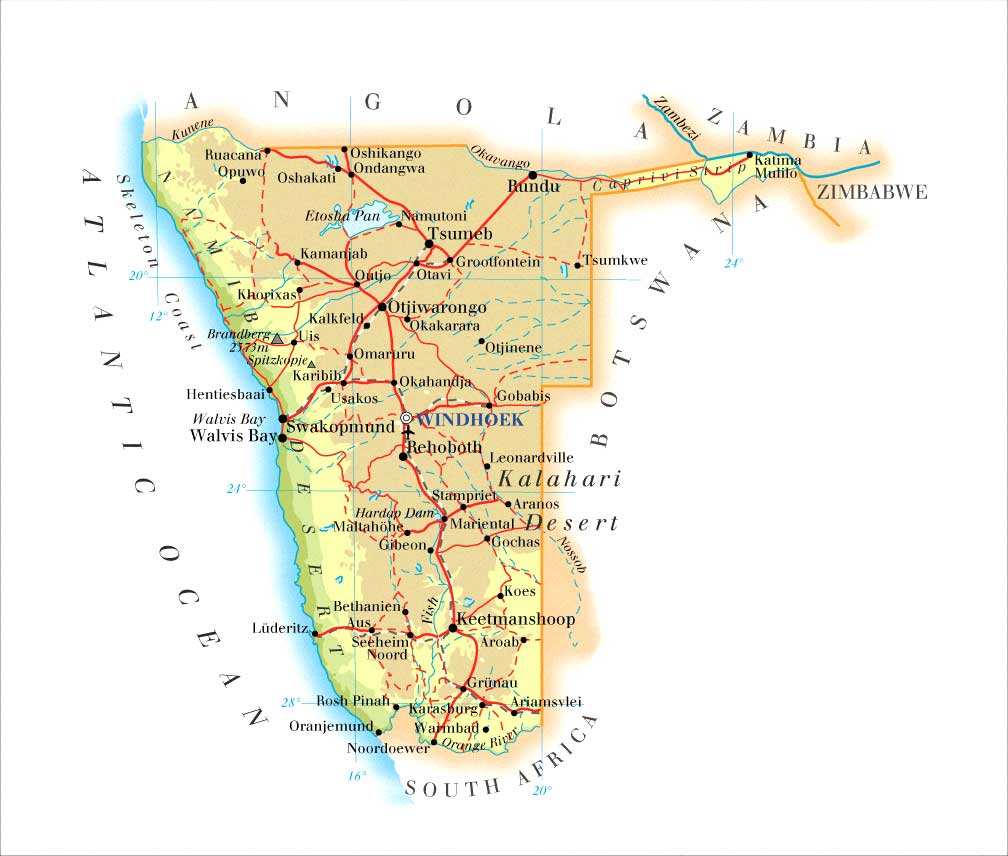
Namibia Map (www.fao.org)

Namibia Map (www.fao.org)

Namibia – Plans by Governor of the Karas Region, Bernardus Swartbooi, to establish a dry port facility at Keetmanshoop have been hailed as a “brilliant idea” by experts who are in unison that the idea is overdue. (Maybe it is just plain common sense! Will be interesting to see how the Namibian Revenue Authority facilitate the inland movement of transit containers from Walvis Bay.)

Swartbooi presented his proposal to change the face of Keetmanshoop by making it the pivot of trade between Namibia, South Africa and possibly the rest of Africa at the Annual Logistic and Transport Workshop last week.

According to him the new venture, estimated at roughly N$10million, will see Keetmanshoop linked directly by sea, rail and road with Namibia’s capital Windhoek, Africa’s largest economy, South Africa, and the rest of the Southern African Development Community in the form of a central north-south transport corridor.

Keetmanshoop is the only town in Namibia with eight border posts and has a working relationship with the North Cape Province in South Africa.

Swartbooi said the second phase of this development will stream into the creation of a free trade zone on the eastern side of Keetmanshoop that will not only attract foreign investors but create a wealth of jobs that will significantly reduce the country’s unemployment statistics.

He also mentioned that with a free trade zone the region can eventually venture into light manufacturing that will bring about positive spin-offs for the region and the entire Namibia as a whole.

“We fight against a trend that the south was left out.. If you close down the Walvis Bay port today we will feel it later, but if Lüderitz port is to be closed today the effect will be felt within hours. There is no argument about our strategic location. No-one can compete against our land availability,” he enthused.

Twenty hectares of serviced land have so far been secured for the project that will include two weighbridges, offload facilities and accommodation facilities for truck drivers and recreation.

“We are looking at enhancing road safety and to cut down on driver fatigue,” he explained adding that key stakeholders have not yet been identified and anchor participants are being sought.. “We are looking at a private public equity where we can give someone a lease of ninety years,” he stated.

According to the Director for the Namibia German Centre for Logistics, Neville Mbai, Keetmanshoop as a regional hub is a brilliant idea and will not only serve as a buffer during labour strikes in South Afica, but will surely ease the burden on Walvis Bay port and corridors.

“It is absolutely brilliant. Kharas is adjacent to the great Gauteng region, the breadbasket of Southern Africa if not the whole of Africa. What we want to see is a shorter road from Johannesburg to Namibia. Look at the road infrastructure of Walvis Bay, if we are to add more that road will be in trouble,” he said adding that with Keetmanshoop providing a hub Namibia will no longer be severely impacted by labour strikes in South Africa, as goods can be stored to cater for the Namibian market.

“The idea must be to have a concentration of logistics hubs scattered across the country and with the port of Lüderitz and the quantity of fish production the region certainly is deserving of a hub,” he noted.

At least 1 600 trucks pass through Keetmanshoop on a monthly basis with 80 percent of Namibia’s goods being are transported through this route.

Operations Manager for Logistics Support Services Quintin Simon argues that this is indeed a positive idea and with Keetmanshoop located in the centre, distribution will become easier and faster. Source: www.newera.com

Major Multimodal Logistics Hub in Belgium

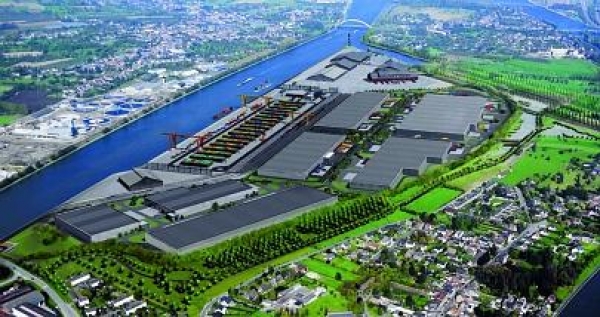
Liege Trilogiport is scheduled to open for business in the final half of 2015 (Picture: Liege Ports Authority)

Liege Trilogiport is scheduled to open for business in the final half of 2015 (Picture: Liege Ports Authority)

Work is underway on a major multimodal logistics hub project in Belgium. Piloted by the inland port of Liège, it is designed to serve as an “extended gateway” to the seaports of Rotterdam, Antwerp and Zeebrugge.

The project will attract around €45 million of public funding from the Belgian authorities and the European Union to finance infrastructure requirements, while initial investment from the private sector is estimated at approximately €115 million.

Located on a 120 hectare site on the banks of the Canal Albert, the Trilogiport project is scheduled to be operational in the second half of 2015. It is expected to create more than 2,000 direct or indirect jobs.

Described as “a tri-modal (river, rail and road) logistics village,” it will comprise a 15ha container terminal, with 1,850 metres of quayside, operated by Luxembourg-based Euroports and its partner, DP World.

Provision is made too to build a rail freight terminal with 700 metres of track to connect Trilogiport with the national rail network. Construction of a road bridge is also planned to provide access to the motorway system around Liège.

Trilogiport will also incorporate 200,000 sq metres of warehousing and distribution space at full build-out. Source: Porttechnology.com


SARS to address Stakeholders on Customs Control proposals

SARS chief officer of legal and policy Kosie Louw (Picture: Robert Botha/Business Day Live)

SARS chief officer of legal and policy Kosie Louw (Picture: Robert Botha/Business Day Live)

The South African Revenue Service (SARS) has committed itself to further engagements with importers of all sizes in a bid to improve its proposals to transform the customs control regime.

Consultations have already taken place with organised business on the proposed Customs Duty Bill and the Customs Control Bill, and the process would now be taken to the level of traders to find out whether the proposals presented them with any problems. Amendments have also been proposed to the Customs and Excise Act to provide for the transition to the new system.

“We want to understand the situation at a micro level. We will sit around the table until we find a solution which will guarantee to us that we get the information we require but which will also facilitate trade.

“We do not want to clog up the ports,” SARS chief officer of legal and policy Kosie Louw said in an informal briefing on the proposals to Parliament’s standing committee on finance on Wednesday.

The customs bills are mainly concerned with improving the information about imported and exported goods so that customs officials can exercise greater control.

Business has expressed concern that the requirement of the Customs Control Bill that they submit a national in-transit declaration of goods at the first port of entry before they are sent to internal terminals, or depots such as City Deep, would cause delays.

The new declaration — of the nature, value, origin and duty payable on the goods — would replace the limited manifest used to declare goods and would include information on the tariff, value and origin of goods.

Business has argued that the manifest allowed goods to move seamlessly from the exporting country to the inland port or depot, and would change the contractual relationships between exporter and importer in terms of when duty is paid.

However, Mr Louw did not believe the provision would cause delays and had obtained legal advice that the contractual relationships and method of payment of duties would not change. The problem with manifests, he said, was that they provided very limited information and did not allow SARS to prevent the inflow of unwanted goods. Nevertheless, he said that SARS would discuss the matter with traders.

Mr Louw said the proposed system would “improve SARS’s ability to perform risk assessment and intervene in respect of potentially high risk, prohibited and restricted consignments at the ports”.

The bills have been in the pipeline for about four years and have been extensively canvassed with the Southern African Customs Union and business. They were needed, Mr Louw said, so that South Africa kept pace with global trends in trade, international conventions and advances in technology.

Anti-avoidance provisions have also been introduced into the bill which sets out the offences and associated penalties for noncompliance and attempts to avoid paying customs duties.

SARS group executive for legislative research and development Franz Tomasek said the Customs Control Bill would introduce a new advance cargo loading notice for containerised cargo to prevent the loading of prohibited or restricted goods on board vessels bound for South Africa. However, to reduce the administrative burden on carriers, information submitted in advance will no longer be required on arrival or prior to departure. Source: Business Day Live


Rotterdam – The signficance of ‘hinterland’ container services

Picture1BILK (Budapest Intermodal Logistics Center) Kombiterminál has become the first Hungarian terminal to join the InlandLinks network, comprising of nearly 40 terminals across the Netherlands, Belgium, Germany, Poland, Italy and Hungary.

InlandLinks, an initiative of the Port of Rotterdam Authority which was developed two years ago in cooperation with VITO (Dutch Inland Container Terminal Organisation), is an online platform for container terminals in the hinterland, offering intermodal services to and from the Port Rotterdam – Europe’s largest port complex

Rotterdam expects to see container flows triple over next 25 years in line with growth in world trade and the increasing size of container vessels. Of the 30 million TEU anticipated to be handled by the Dutch port in 2035, approximately 2 million are expected to be shipped in and out using smaller vessels from and to European ports. Some 18 million TEU will travel to and from the hinterland via intermodal transport, and the Port of Rotterdam hopes that InlandLinks will help to provide greater insight into better and more sustainable connections for this projected flow of cargo.

BILK, located in a suburb in the southeast of Budapest, consists of a railway station/marshalling yard, a bi-modal terminal for combined traffic, and a 70-hectare logistics centre. The terminal has the capacity to handle an annual traffic of 220,000 TEU. Source: Porttechnology.org


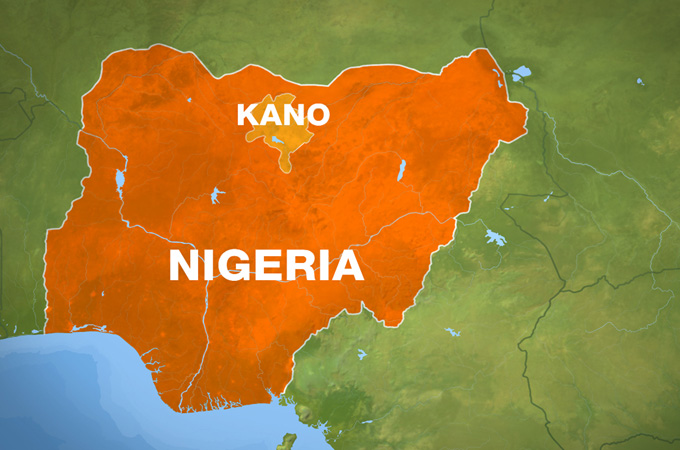
Nigerian Inland Port, Kano to Begin Operations This Year

201215124949311580_20Kano Inland Container Port is scheduled to commence operations by the end of this year, Chairman Governing Board Nigerian Shippers Council, Lieutenant General Salihu Ibrahim (Rtd) has said.

According to him, all gray areas that cause the delay in the processing and documentation of Kano port which affects the commencement of operations has been resolved.

Speaking during an interactive dinner session organized by Nigerian Shippers Council, North West zone, the chairman stressed that the council is all out to ease some of the transaction difficulties faced by shippers in Nigeria. He added that commencing operation at the inland ports will absolutely ensure reduction of about 90% in the expenses incurred during shipments of goods. According to him, all things being equal, Kano inland port is hoped to be fully operational at the end of 2013. Source: Daily Trust (Nigeria)

Port-to-Hinterland…gearing up for growth?

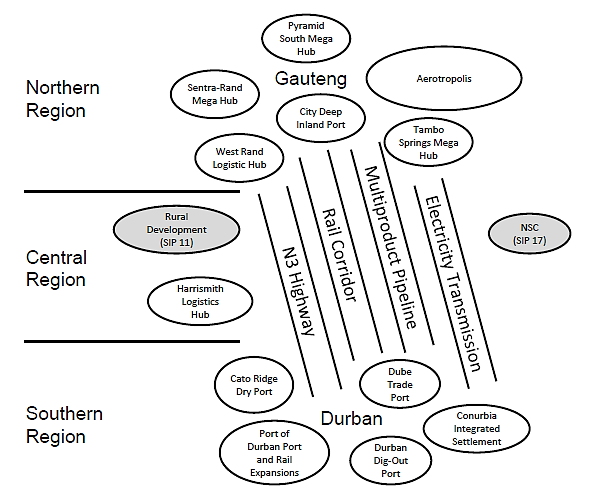
Proposed Durban-Free State-Gauteng Logistics and Industrial Corridor Plan (SIP2)

Proposed Durban-Free State-Gauteng Logistics and Industrial Corridor Plan (SIP2)

Notwithstanding on-going discontent amongst industry operators in regard to proposed legislative measures mandating customs clearance at first port of entry, the South African government (GCIS) reports that work has already commenced on a massive logistics corridor stretching between Durban and the central provinces of the Free State and Gauteng. Most of the projects that form part of the second Strategic Infrastructure Project (SIP 2), also known as the Durban-Free State-Johannesburg Logistics and Industrial Corridor, are still in the concept or pre-feasibility stage, but construction has already started on several projects.

These include:

  • the building of a R2,3 billion container terminal at City Deep
  • a R3,9 billion project to upgrade Pier 2 at the Port of Durban
  • R14,9 billion procurement of rolling stock for the rail line which will service the corridor.

Work has also started on the R250 million Harrismith logistics hub development to set up a fuel distribution depot, as well as on phase one of the new multi-product pipeline which will run between Johannesburg and Durban and transport petrol, diesel, jet fuel and gas.

The aim of these projects and others which form part of SIP 2, is to strengthen the logistics and transport corridor between South Africa’s main industrial hubs and to improve access to Durban’s export and import facilities. It is estimated that 135 000 jobs will be created in the construction of projects in the corridor. Once the projects are completed a further 85 000 jobs are expected to be created by those businesses that use the new facilities. Source: SA Government Information Service

Interested in more details regarding South Africa’s infrastructure development plan? Click here!

Johburg Chamber to meet Parliment over Customs Bill

City Deep Container Terminal, Johannesburg

City Deep Container Terminal, Johannesburg

Online media company Engineering News reports that the Chamber of Commerce and Industry Johannesburg (JCCI) would take its objections of certain aspects of the recently tabled Customs Control Bill to Parliament and called on South African business and interested stakeholders to provide input as well.

The South African Revenue Services’ (Sars’) newly drafted Customs Control Bill, which, in conjunction with the Customs Duty Bill, would replace the current legislation governing customs operations, declared that all imported goods be cleared and released at first port of entry.

“The Customs Bill, cancelling the status of inland ports as a point of entry, will be before Parliament very soon, and only a short notice period for comment is expected,” JCCI former president Patrick Corbin said.

While all other comments and suggestions relating to the Bill were adequately dealt with, this remained the one disagreement that had not been satisfactorily resolved, he stated.

Corbin invited all parties to voice their concerns to ensure “all areas of impact and concern were captured”, adding further weight to the JCCI’s presentation. The implementation of the new Bill would directly impact the City Deep container terminal, which had been operating as an inland port for the past 35 years, alleviating pressure from the already-constrained coastal ports.

Despite customs officials assuring the chamber that the operations and facilities at City Deep/Kaserne would retain its licence as a container depot, Corbin stated that the Bill had failed to recognise the critical role City Deep played as an inland port and the impact it would have on the cost of doing business, the country’s road-to-rail ambitions, the coastal ports and ease of movement of goods nationally and to neighbouring countries.

“The authorities do not accept the fact that by moving the Customs release point back to the coast, a vessel manifest will terminate at the coastal port. There will not be the option of a multimodal Bill of Lading and seamless inland movements, as all boxes or the unpacked contents will remain at the coast until cleared and released by the line before being reconsigned,” he explained.

Citing potential challenges, Corbin said that only the containers cleared 72 hours prior to arrival would be allocated to rail transport and that those not cleared three days before arrival would be pushed onto road transport to prevent blocking and delaying rail operations.

This would also result in less rail capacity returning for export from Johannesburg, leading to increased volumes moving by road from City Deep to Durban.

He warned of the Durban port becoming heavily congested with uncleared containers, causing delays and potential penalties, while hampering berthing movements and upsetting shipping lines’ vessel schedules.

The release of the vessel manifest at the coastal port also placed increased risk on the shipping operators delivering cargo to Johannesburg following the clearance of goods at customs and required reconsignment at the country’s shores.

However, Transnet remained committed to investing R900-million for upgrading the City Deep terminal and the railway sidings, while Transnet CEO Brian Molefe had accepted the assurances from customs that “nothing would change and the boxes would still be able to move seamlessly once cleared”.

The Gauteng Department of Roads and Transport Department had allocated R122-million for the roadworks surrounding the inland port, while Gauteng MEC for Roads and Transport Dr Ismail Vadi said the department’s focus this year would narrow to the expansion and development opportunities at City Deep/Kaserne.

The department was also progressing well with the development of a second inland port, Tambo Springs Inland Port and Logistics Gateway, expected to be completed by 2017.

Vadi recently commented that the Gauteng Department of Roads and Transport, which was currently developing a terminal master plan for the project, would link the freight hub through road and rail transport to and from South Africa’s major freight routes and other freight hubs, including City Deep, which was about 33 km away.

The National Economic Development and Labour Council, under which the Bill had been drafted during a three-year development process, had agreed to fund an impact assessment study, led by Global Maritime Learning Solutions director Mark Goodger. The study was “close to completion” and would be presented alongside JCCI’s objections in Parliament. Source: Engineering News

Airport Cities – a view to a different trading environment for South Africa?

ace_skyscraper_237x352aerotropolisThis past week witnessed the first Airport Cities Convention in South Africa. It came at the timely announcement of the country’s first aerotropolis earmarked for development around Oliver Tambo International airport (ORTIA) and the surrounding industrial complex. While the City of Ekurhuleni gets prized possession of the ‘aerotropolis’ (in title) by virtue of the location of ORTIA, Johannesburg is set to benefit perhaps more greatly due to it being the epi-centre of South African commerce and trade. This represents significant ‘hinterland’ development which bodes well for future multi-modal transport and shipping activity for the Gauteng region and the country as a whole.

In support of government’s National Infrastructure Plan, is Strategic Integrated Project (SIPs) 2, otherwise known as the Durban-Free State-Gauteng logistics and industrial corridor. Infrastructure upgrades are already occurring to road and rail networks linking to the key cargo and distribution hub, City Deep. While the express purpose of an inland port, terminal or logistics hub is to provide relief for congested seaports, it likewise creates possibilities and opportunities to synergise with other transport forms. This serves to maximise capacity through integration offering local suppliers and foreign customers a host of trade, shipment and logistics options.

Foremost, an inland port is a hub designed to move international shipments more efficiently and effectively from maritime ports inland for distribution throughout the heartland. Think of the logistics of inbound freight as a barbell. At one end, inbound containers flood into a seaport, spreading across local storage facilities as they are unloaded. If they aren’t moved quickly enough from the port, they create a bottleneck that bogs down the entire distribution cycle as containers wait longer to get off ships, to get into warehouses, and to get back out and onto trucks and trains for final shipment. The Emergence of the Inland Port (credit: Jones, Lang, LaSalle)

In a world of increasing global integration, focussing more on global distribution of goods and services, it behoves our country to understand the dynamics of global trade and what in fact makes commerce tick. Today’s number 1 spot is not going to remain intact without continuous re-evaluation and innovation. It would indeed be arrogant (if not suicidal) of us to think that our current prominence and strength in the sub-saharan region will remain without innovation for the future. At the same time South Africa should welcome increased competition from its neighbours, both immediate as well as further north in Africa. The latest fDI 2013 Report indicates a decrease in foreign direct investment in South Africa (-5%) and Kenya (-9%), while at the same time a significant increase in foreign investment in Nigeria (+20%) and Egypt (+20%), respectively. True, the latter countries are far removed from South Africa’s immediate ‘playing field’, however do we fully understand the drivers which cause the named countries to attract FDI at such an increasing rate – are they capitalising somehow on our deficiencies, shortcomings, or lack of opportunism?

The National Infrastructure Plan can only be seen as a single cog in the machinery to keep South Africa competitive. And, while it is encouraging to witness these developments, a corresponding economic and commercial enterprise on both government and private sector is required to maximise these developments. Some smidgen of hope could lie in the Department of Trade and Industry’s economic principles which support Industrial Policy Action Plan (IPAP) and Special Economic Zones (SEZs), for example, however, several business commentators have already voiced concerns on exactly how these support the Infrastructure Plan. A further question lies in our country’s ability to facilitate trade, not only at our ports, but more importantly the ‘hinterland’ of our country and the neighbouring regions. Do our existing and future laws adequately provide for expeditious and facilitative procedures in the treatment of import and export goods? Are we sure that we are addressing all real and potential trade barriers?

Anyone desiring more information on the ‘aerotropolis’ concept should find some interest at the following websites – Aerotropolis.com, and the City of Ekurhuleni

City Deep Inland Terminal [port] to be hit hard by Customs Bill

Trucks at Transnet Freight Rail's City Deep Terminal (Engineering News)

Trucks at Transnet Freight Rail’s City Deep Terminal (Engineering News)

Following up on last year’s meeting (click here!) of the minds, convened by the JCCI, a recent meeting in Johannesburg placed fresh emphasis on the dilemma which impending changes contemplated in Customs Draft Control Bill will have for the import and logistics industry in particular. The following report carried by Engineering News highlights trade’s concerns which are by no means light weight and should be addressed with some consideration before the Bills come into effect. Gauging from the content below, there is a clear disconnect between business and policy makers.

The closure of Johannesburg’s inland port seemed to be a “done deal” as Parliament deliberated the recently tabled Customs Control Bill that would leave the City Deep container depot invalid, Chamber of Commerce and Industry Johannesburg (JCCI) former president Patrick Corbin said on Friday.

The promulgation of the South African Revenue Services’ (Sars’) newly drafted Customs Control Bill, which, in conjunction with the Customs Duty Bill, would replace the current legislation governing customs operations, would have a far-reaching impact on the cost and efficiencies of doing business in South Africa and other fellow Southern African Customs Union (Sacu) countries, he added.

The Bill, which was the product of a three-year development process within the National Economic Development and Labour Council, declared that all imported goods be cleared and released at first port of entry. This was part of efforts by customs officials and government to root out any diversion and smuggling of goods, ensure greater control of goods moving across borders and eliminate risks to national security.

Speaking at the City Deep Forum, held at the JCCI’s offices in Johannesburg, Corbin noted, however, that City Deep had operated as an inland port for the past 35 years, easing the load on the country’s coastal ports, which were already strained to capacity. Despite customs officials assuring the chamber that the operations and facilities in City Deep/Kaserne would retain its licence as a container depot, he believed customs had failed to recognise the critical role City Deep had played in lowering the cost of business, easing the burden on South Africa’s ports and ensuring ease of movement of goods to neighbouring countries. As customs moved full responsibility of container clearances to the ports, port congestion, inefficiencies, shipping delays and costs would rise, and jobs would be lost and import rail volumes decreased, he noted.

Economist Mike Schussler added that the closure of the City Deep inland port operations would add costs, increase unreliability and induce “hassles”, as the Durban port did not have the capacity to handle the extra volumes and its productivity and efficiencies were “questionable” compared with other ports.

“The volume of containers going to overstay or being stopped for examination in City Deep [will] need to be handled by [the coastal] ports. If they can’t cope with the volume at the moment, how are they going to handle increased volumes,” Iprop director Dennis Trotter questioned. He noted that only the containers cleared 72 hours prior to arrival would be allocated to rail transport. Those not cleared three days before arrival would be pushed onto road transport to prevent blocking and delaying rail operations.

This, Schussler said, would also contribute – along with port tariffs and the cost of delays – to higher costs, as road transport was more expensive than rail.

He pointed out that South Africa was deemed third-highest globally in terms of transport pricing. It would also result in less rail capacity returning for export from Johannesburg, further leading to increased volumes moving by road from City Deep to Durban.

Sacu countries, such as Botswana, would also be burdened with higher costs as they relied on City Deep as an inland port. Trotter noted that the region would experience loss of revenue and resultant job losses. Over 50% of South Africa’s economy was located closer to Gauteng than the coastal ports. Johannesburg alone accounted for 34% of the economy, said Schussler, questioning the viability of removing the option of City Deep as a dry port.

However, unfazed by the impending regulations, Transnet continued to inject over R1-billion into expansion and development opportunities at City Deep/Kaserne. Corbin commented that Transnet had accepted the assurances from customs that “nothing would change and the boxes would still be able to move seamlessly once cleared.” The City of Johannesburg’s manager of transport planning Daisy Dwango said the State-owned freight group was ramping up to meet forecast demand of the City Deep/Kaserne depot.

The terminal’s capacity would be increased from the current 280 000 twenty-foot equivalent units (TEUs) a year, to 400 000 TEUs a year by 2016, increasing to 700 000 TEUs a year by 2019. Transnet aimed to eventually move to “overcapacity” of up to 1.2-million TEUs a year. Dwango said projections have indicated that by 2021, the City Deep/Kaserne terminals would handle between 900 000 and one-million TEUs a year. Source: Engineering News
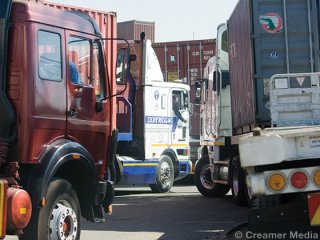
Debate or Mitigate?

City Deep1_SnapseedBrowsing my various sources of news I came across this article featured in the FTW Online a few weeks ago. It prompted me to post it as an item for some detailed discussion in a follow-up post. Many followers have enquired what happened to my discussion on Inland Ports and the National Transit procedure. I guess it’s now time to respond, but not just yet – perhaps after what materializes at the event below.

What will be the impact of the new Customs Bill on City Deep’s inland port status?
This is the issue to be debated at a JCCI event scheduled for March 15. “The Johannesburg Chamber has been closely involved with City Deep, our international gateway for containerised cargo, for the past 36 years,” says the JCCI’s Pat Corbin. “We have actively promoted the benefits for traders of a combined transport (multi-modal) bill of lading allowing seamless movement through the coastal ports.

“But diametrically opposed developments are taking place which could have far-reaching impact on not just the future of the dry port, the supporting logistical suppliers and local employment, but also the coastal ports and the transport mode for inland movement.”

The event will examine Transnet’s major investments in City Deep and the Durban corridor, SACD’s expanded facilities and services, and the Customs Bill – with its intended removal of inland port status. Source: FTW Online

Aerotropolis for Gauteng…stuff’s about to happen

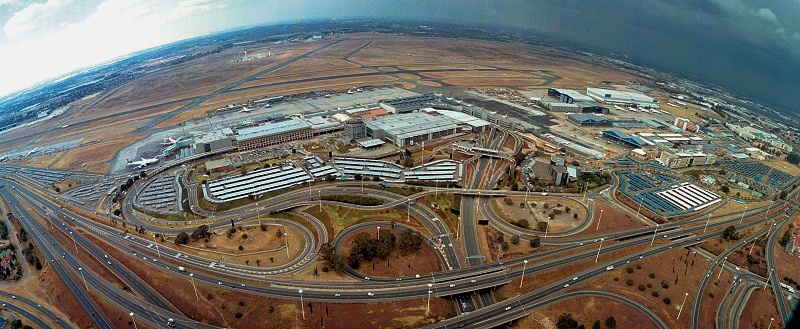
Oliver Reginald Tambo International Airport (east of Johannesburg) to become Africa's first aerotropolis

Oliver Reginald Tambo International Airport (east of Johannesburg) to become Africa’s first aerotropolis

The Gauteng Provinicial government has announced that Africa’s busiest airport, OR Tambo International Airport is set to become the location for the continent’s first aerotropolis. Work on the development of the aerotropolis, centred at OR Tambo International Airport, seeks to leverage public and private sector investment at the airport and surrounding areas. In supporting industrial development in this precinct, approval has been granted for the creation of an Industrial Development Zone (IDZ) in the area surrounding the airport. Heard this all before, but what’s different this time around?

An aerotropolis is an urban plan in which the layout, infrastructure, and economy is centered around an airport, existing as an airport city. It is similar in form and function to a traditional metropolis, which contains a central city core and its commuter-linked suburbs.The term was first proposed by New York commercial artist Nicholas DeSantis, whose drawing of a skyscraper rooftop airport in the city was presented in the November 1939 issue of Popular Science.The term was revived and substantially extended by academic and air commerce expert Dr. John D. Kasarda in 2000, based on his prior research on airport-driven economic development. Wikipedia

Jack van der Merwe, who successfully oversaw the development of the Gautrain project, has been appointed to lead the initiative of developing the aerotropolis. The proposal for the airport to become a terminal city with air, rail and road networks fuelling economic development. It is envisaged to include a commercial component, hotel, conferences, exhibitions and a residential component.

One of the key initiatives of the national government is the e-Thekwini-Free State-Gauteng freight and logistics corridor, known as the Strategic Infrastructure Project 2 (SIP2), which seeks to improve the movement of goods from the Durban port to Gauteng, and to business enterprises nationally as well as in southern Africa.

City Deep/Kazerne cargo terminals and the planned Tambo-Springs Freight and Logistics Hub are to be the focal points for the movement of goods for the export market. Phase 1 of the City Deep/Kazerne Terminal expansion and roads upgrade was underway at the continent’s largest and busiest in-land container terminal. This includes a redesign and upgrading of the roads network in and around the City Deep Terminal to provide for better flow of freight traffic and linkages with the national highways – the cost of the road works would amount to R122 million. At some point the issue of non-tariff barriers to import/export trade will need to be discussed…..and overcome.

Transnet has completed the first phase in the actual improvements of the terminal. It will be investing R900 million in upgrading the terminal. A detailed road design work, including feasibility studies and the development of a master plan, are underway for the Tambo-Springs Inland Port. Now, we’re talking…….

Gauteng  Province is to get 2 484 new modern trains as part of the Passenger Rail Agency of South Africa (PRASA) rolling stock for fleet recapitalisation and refurbishment programme.

The province will be making major investments in road infrastructure in the coming financial year and these include reconstruction and upgrading of the R55 (Voortreker Road) to a dual carriageway road between Olievenhoutbosch and Pretoria West; rehabilitation of the remaining section between Main Road and Maunde Street in Atteridgeville; reconstruction and upgrading of William Nicol Drive (K46) between Fourways and Diepsloot as well as reconstruction and improvement of the remaining section of the Old Pretoria to Cullinan Road between the Chris Hani Flats and Cullinan, among others. Wow, and the toll fees?

The department has been allocated a budget of R4.77 billion for the 2013/14 financial year. Of this amount R1.4 billion has been earmarked for roads maintenance and upgrading, R1.7 billion for public transport operations and R802 million for the running cost of the Gautrain Management Agency. Source: EngineeringNews

So, all-in-all, the above together with other recent noises of incentives and benefits for foreign and local investors in SEZs, the future holds some promise and interest…..