Cloud Computing update

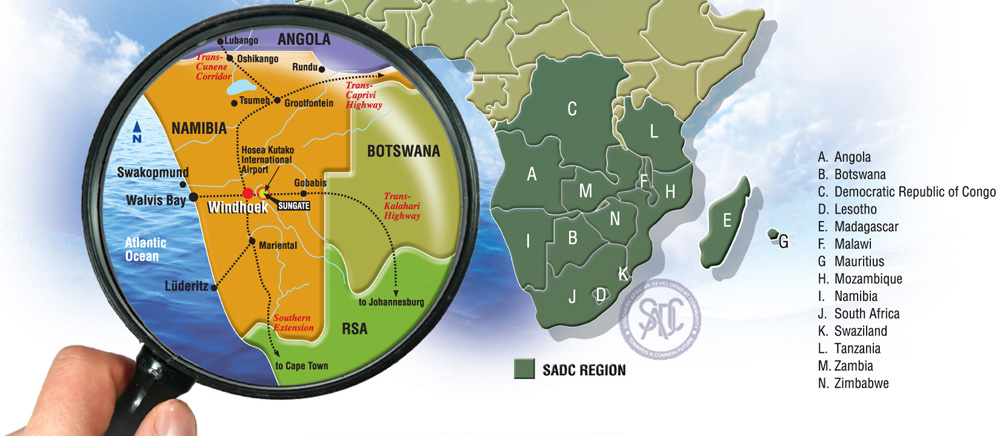
Cliffe Dekker Hofmeyr offers an appraisal on the Working Paper on Cloud Computing – Privacy and Data Issues, recently published by International Working Group on Data Protection in Telecommunications. Although the guidelines detailed in the Working Paper are not mandatory, it appears that the intended approach to data protection in the cloud is one of uniformity, with a view to ultimately developing best practice based processing of personal information. It would be interesting to understand to what extent S ATrade Hub  and Microsoft, in conjunction with the Customs of Namibia and Botswana, considered any such guideline in regard to their cloud computing initiative on the Trans-Kalahari Corridor?

The recommendations under the Working Paper highlight some of the risks and complexities associated with cloud computing. The overreaching nature of the Working Paper will serve to ensure that there is no lowering of general data protection standards for processing personal data in the cloud. The Working Paper specifically advocates the following general recommendations:

  • Carrying out privacy impact and risk assessments prior to embarking on cloud computing projects.
  • Development of practices by cloud service providers to ensure greater transparency, security and accountability regarding information on potential data breaches; and also more balanced contractual clauses to promote data portability and data control by cloud users.
  • Research, third-party certification, standardisation, privacy by design technologies and other related schemes in order to achieve a desired level of trust in cloud computing.
  • Legislative reassessment of the adequacy of existing legal frameworks allowing cross border transfer of personal information and consideration of additional privacy safeguards.
  • Accounting for independent audit trails with regards to the location of the personal information. Continuity in the provision of information by data controllers to privacy and data protection authorities. These recommendations are aligned to the general principles set out in the European Union and Safe Harbor data privacy frameworks.

The Working Paper also provides more specific recommendations, on ‘best practice’, ‘controllers’, ‘cloud service providers’ and ‘auditing’. These specific recommendations contemplate the implementation of technical measures that can be used to determine the exact physical location where personal information is held and stored, with an audit trail specifying any copying and/or deletion of personal information. In addition, the Working Paper includes a suggestion for encryption of all personal information (both at rest and in transit) and also recommends the conclusion of agreements between data controllers and cloud service providers to expressly designate and limit the physical locations where personal information will be processed. The Working Paper specifically provides that the cloud service provider should not be entitled to use personal information in the cloud for its own purposes.

It is likely that significant steps will need to be taken by cloud service providers in order to comply with the recommendations under the Working Paper and/or applicable data protection laws, which may potentially require substantial financial resources, including for procuring and implementing the appropriate technology required to give effect to the recommendations and/or laws.

In the South African context, the principles under the current draft of the Protection of Personal Information Bill(PPI) (in particular, the provisions which relate to the conditions for lawful processing of personal information and transborder information flows) can be aligned to the recommendations under the Working Paper. The real test for cloud service providers and their customers will however be in the practical implementation of the principles under PPI. Many of the recommendations under the Working Paper will serve to provide guidance in this respect, particularly in the measures which need to be implemented to maintain a level of transparency in the supply chain of personal information in the cloud. Source: www.cliffedekkerhofmeyr.com

RELATED ARTICLES

2012 WCO IT Conference and Exhibition opens in Estonia

The World Customs Organization (WCO) announced the successful opening of its 2012 IT Conference and Exhibition in Tallinn, Estonia which will run from 6-8 June 2012 with the theme: ” IT Transforms Core Business for Customs and its Stakeholders”.

The VIP opening ceremony included a special video welcoming speech by the President of the Republic of Estonia, H.E. Toomas Hendrik Ilves, and addresses by the Secretary General of the WCO, Kunio Mikuriya, and the Director General of the Estonian Tax and Customs Board, Marek Helm, co-hosts of the event.

This 11th WCO IT Conference and Exhibition which dates back to 2002 is the most important IT event on the international Customs calendar, allowing senior Customs executives from over 100 countries to meet with top trade representatives and solution providers in order to consider today’s business challenges as well as modern IT developments.

Gathering over 500 delegates together, the 2012 Conference will focus on “the Customs administration of the future” and includes a wide range of leading speakers from the Government and private sectors who will expand on the main theme of the event.

A dynamic IT exhibition complements the Conference, enabling various global systems aimed at maximum effectiveness and efficiency in modern Customs innovation to be displayed and demonstrated to participants.Source: WCO

TKC Pilot – linking regional Customs systems through the “Cloud”

FTW Online recently published an update on recent developments occurring along the Trans-Kalahari Corridor (TKC). It suggests that customs systems throughout the SADC region could soon be talking to each other through the Internet, if the pilot project between Namibia and Botswana is successful. During July 2011, the Southern African Trade Hub unveiled a plan to initiate a pilot programme to link the ASYCUDA systems of Namibia and Botswana via Microsoft’s Cloud Computing technology. Both Microsoft and USAID are partners in this initiative seeking to enable the two customs systems to communicate with each other through a secure portal. View the keynote presentation at the 2011 World Customs Organization IT Conference and Exhibition – Seattle, Ranga Munyaradzi (SATH) and Namibian Customs Commissioner, Bevan Simataa, were invited on-stage to elaborate on this initiative – click here!

According to Oscar Muyatwa, executive director of the Trans-Kalahari Corridor Secretariat, the initiative holds the prospect of opening up African opportunities in the United States for exports, as it is being supported by USAID as part of the African Growth and Opportunities Act (AGOA). Both Namibian and Botswana Customs officials are to be trained in Cape Town over the next few months. The TKC Secretariat believe this initiative will bring about its vision of a ‘automated corridor’. Further ahead the TKCs envisages the establishment of One Stop Border Posts (OSBPs) to reduce border dwell and transit times. Muyatwa says ‘The ‘cloud’ will maintain vast volumes of transit data that will assist future planning along the corridor as well as revenue and budgeting forecasts’. Source: FTW Online.

Comment: lest there be any confusion amongst Customs users, traders and carriers, the concept of cloud computing in the Customs sphere is very ‘clouded’ at this point. What needs to be considered is the ‘ownership’, rights to ‘access’ and ‘integrity of use’ of such information. Furthermore, as this is a first-of-its-kind initiative (in Africa at least); it would be highly recommended that the participants and developers ‘share’ details of the approach with other SACU members in order to better understand the programme. Up to this point it is very unclear how the developer has gone about the integration of customs information, for instance, since ‘users’ have not been fully involved in the scope, proof-of-concept or design of the system. 

Related articles

USCBP and EU sign C-TPAT Mutual Recognition

U.S. Customs and Border Protection (CBP) and the European Union (EU) signed today a Mutual Recognition Decision between CBP’s Customs-Trade Partnership Against Terrorism (C-TPAT) program and the EU’s Authorized Economic Operator (AEO) program.

U.S. Customs and Border Protection Acting Commissioner David V. Aguilar and European Union Taxation and Customs Union Directorate Director-General Heinz Zourek sign the Mutual Recognition Decision between CBP’s Customs-Trade Partnership Against Terrorism program and the EU’s Authorized Economic Operator Program.

CBP Acting Commissioner David V. Aguilar and Director-General Heinz Zourek, European Union Taxation and Customs Union Directorate (TAXUD) signed the decision, which recognizes compatibility between the EU and the U.S. cargo security programs.

“Today’s decision on the mutual recognition of the EU and U.S. trade partnership programmes is a win-win achievement: It will save time and money for trusted operators on both sides of the Atlantic while it will allow customs authorities to concentrate their resources on risky consignments and better facilitate legitimate trade,” said Director-General Zourek.

C-TPAT is a voluntary government-business initiative to build cooperative relationships that strengthen and improve overall international supply chain and U.S. border security. C-TPAT recognized that U.S. Customs and Border Protection can provide the highest level of cargo security only through close cooperation with the ultimate owners of the international supply chain such as importers, carriers, consolidators, licensed customs brokers, and manufacturers. Source: US CBP

Related article

GNC – not just another acronym, but the latest Customs buzz-word

WCO - Globally Networked Customs

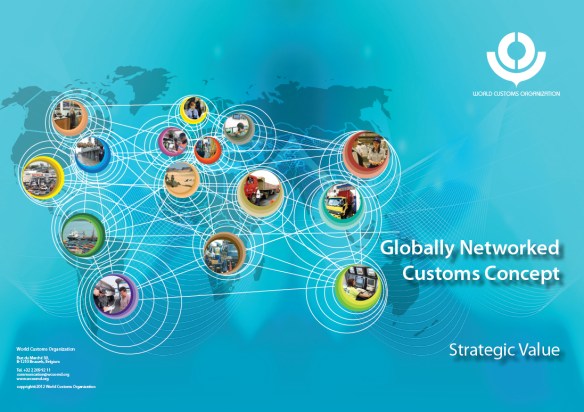
With the WCO Council Sessions later in June this year, it is opportune to discuss perhaps one of the single most important developments in Customs Inc, the “Globally Networked Customs (GNC)” concept which aims to realize connectivity, data exchange, and cooperative work amongst the world’s customs administrations.

GNC is set to play a very important role in promoting trade facilitation, enhancing trade efficiency and safeguarding trade security; it will also greatly influence international rules and the development of the customs end-to-end operational process. By and large the SAFE Framework, WCO Data Model and the Revised Kyoto Convention provide specific standards for the development and implementation of national customs legal, procedural and automated systems. It is the GNC that will in future “industrialise” and harmonise Customs-2-Customs (C2C) information exchange requirements which underpin a country’s bilateral and multilateral trade agreements.

Briefly the need for GNC arises from the exchanges of information underpinning International Agreements in the commercial domain. These take time and are costly to implement. They are all different from each other creating diversity both for Members and trade. This is because each one of these agreements is built anew, handcrafted and tailor-made to meet the needs at hand. This approach will not scale up and countries broking an increasing number of International Customs Agreements are already encountering difficulty to maintain their delivery plan in line with their international policy ambitions. Below you will find links to 2 documents explaining the GNC. More information on the GNC will be provided once approved by the WCO’s Policy Commission later on in June 2012. Source: WCO.

Related articles

Advancing the argument for sealing cargo and tracking conveyances

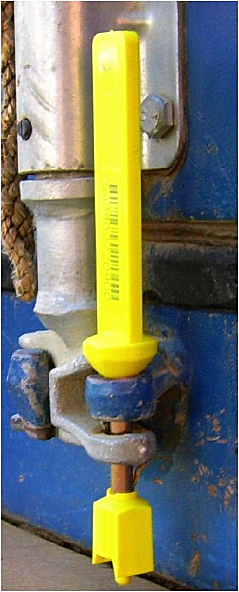
South African Customs law provides for a seal integrity regime. This consists in provisions for the sealing of containerised sea cargo as well as sealable vehicles and trailers. These requirements have, however, not been formally introduced into operation due to the non-availability (until recently) of internal systems and cross-functional procedures that would link seal integrity to known entities. To explain this in more layman’s terms, it is little use implementing an onerous cargo sealing program without systems to perform risk assessment, validation of trader profiles and information exchange. It’s  like implementing non-intrusive inspection (X-ray scanning) equipment without backward integration into the Customs Risk Management  and Inspection environment and systems. It has often been stated that a customs or border security programme is a layered approach based on risk mitigation. None of the individual elements will necessarily address risk, and automation alone will likewise not accomplish the objective for safe and secure supply chains. Moreover, neither will measures adopted by Customs or the Border Agency succeed without due and necessary compliance on the part of entities operating the supply chain. It therefore requires a holistic strategy of people, policy, process and technology.

In the African context, it is surmised that the business rationale will be best accomplished with a dual approach on IT connectivity and information exchange. Under the political speak there are active attempts within SACU, SADC, COMESA and the EAC to establish electronic networks to facilitate and safeguard transit goods. Several African states are landlocked and are not readily accessible, some requiring multiple transit trips through countries from international discharge in the continent to place of final destination. National laws of each individual country in most instances provide obstacles to carriers achieving cost effective means in delivering cargoes. Over and above the laws, there exists (regrettably) the need to ‘grease palms’ without which safe passage in some instances  will not be granted. Notwithstanding the existence of customs unions and free trade areas, internal borders remain the biggest obstacle to facilitation.

Several African logistics operators already implement track and trace technology in the vehicle and long-haul fleets. This has the dual purpose of safeguarding their assets as well as the cargoes of their clients which they convey. Since 9/11, a few customs administrations have formally adopted ISO PAS 17712 within their legislation to regulate the use of high security seals amongst cargo handlers and carriers. In most cases this mandates the use of high security ‘mechanical’ bolt seals. However, evidence suggests there is a growing trend to adopt electronic seals. Taiwan Customs for one has gone a significant way in this regard. Through technological advances and increased commercial adoption of Radio Frequency Identification (RFID) technology the costs are reducing significantly to warrant serious consideration as both a viable and cost-effective customs ‘control’ measure.

Supply chain custody using RFID as an identifier and physical security audit component – as provided for in ISO 17712 – is characterized by the following:

  • it uniquely identifies seals and associates them with the trader.
  • the seal’s unique identity and memory space can be used to write a digital signature, unique to a trader on the seal, and associating that seal with a customs declaration.
  • using customs trader registration/licensing information, together with infrastructure to read seal information at specified intervals along a route to create a ‘bread-crumb’ audit trail of the integrity of the cargo and conveyance.
  • using existing fleet management units installed in trucks to monitor seal integrity along the high risk legs of a cargo’s transit.
  • record the seal’s destruction at point of destination.

Looking forward to the future, it is not implausible for customs and border authorities to consider the use of RFID:

  • as a common token between autonomous customs systems.
  • to verify and audit that non-intrusion inspections have taken place en-route, and write that occurrence to the seal’s memory with the use of an updated digital signature issued to the customs inspection facility.
  • to create a date and time stamp of the cargo’s transit for compliance and profile classification – to confirm that transit goods have actually left the country as well as confirm arrival at destination (to prevent round tripping).
  • Lastly to archive a history of carrier’s activities for forensic and/or trend analysis.
This is a topic which certainly deserves more exposure in line with current regional developments on IT-connectivity and information exchange. A special word of thanks to Andy Brown for his contribution and insight to this post.
Related articles

WCO News – February 2012 Edition

WCONews Edition February 2012Herewith a link to the latest edition of WCO News, providing a wealth of customs news and developments from across the globe. This edition focuses almost entirely on regional initiatives involving C-2-C information exchange. On pages 20 to 22 you’ll read about new developments emerging on customs inter-connectivity and information exchange in the Southern African Region. At this time, a conference lead by the WCO, involving representatives from UNCTAD, SACU, SADC and COMESA and SARS is taking place in Pretoria to establish a firm framework for introduction of customs information exchange. I will devote a dedicated article on these developments shortly, as this has implications for the business community as well. Also, don’t miss the feature on South Africa’s modernisation developments, pages 29 and 30. Besides the usual editorials this edition includes –

  • WCO Secretary General launches Year of Connectivity.
  • Evolving technology landscape and its impact on Customs.
  • Latest developments in Latin America, Southern Africa and Europe.
  • West Africa implements airport task forces to fight drug trafficking.
  • South Africa to roll out mobile Customs controls.
  • Operation “Short Circuit” successes and challenges.
  • WCO Tariff and Trade Affairs Directorate

SAD Story – Part 2

What is clear in regard to modern day business is the fact that ‘harmonisation’ in the international supply chain is essentially built around ‘data’. E-commerce has been around for decades, plagued by incompatibilities in messaging standards, and computer software, network and hardware architecture. However, one of the key inhibitors has been organisations and administrations having to adhere to domestic ‘dated’ legislation and so-called standard operating procedures – seemingly difficult to change, and worst of all suggesting that law has to adapt!

A lot has had to do with the means of information presentation (format) and conveyance (physical versus electronic) rather than the actual information itself. Standards such as the UN Layout key sought to standardise or align international trade and customs documentation with the view to simplifying cross-border trade and regulatory requirements. In other words, each international trade document being a logical ‘copy and augmentation’ of a preceding document.  This argument is still indeed valid. The generally accepted principle of Customs Administrations is to maximise its leverage of latent information in the supply chain and augment this with national (domestic) regulatory requirements – within a structured format.

The Single Administrative Document (SAD) was itself borne out of this need. The layout found acceptance with UNCTAD’s ASYCUDA which used it as a marketing tool (in the 1990’s) in promoting ‘What-You-See-Is-What-You-Get’ (WYSIWYG). It certainly provided a compelling argument for under-developed countries seeking first-time customs automation. Yet, the promise of compatibility with other systems and neighbouring customs administrations has not lived up to this promise.

Simultaneous to document harmonisation, we find development of the Customs data model, initially the work of the Group of 7 (G7) nations at the United Nations. Its mandate was to simplify and standardize Customs procedures Customs procedures. In 2002, the WCO took over this responsibility and after further refinement the G7 version became version 1 of the WCO Customs Data Model. Once more a logical progression lead to the inclusion of security and other government regulatory requirements. This has culminated in the recent release of WCO Data Model 3. Take note the word “Customs” is missing from the title, indicating that Version 3 gives effect to its culminating EDI message standard – Government Cross Border Regulatory (GOVCBR) message – an all inclusive message standard which proposes to accommodate ALL government regulatory reporting requirements.

Big deal! So what does this mean? The WCO’s intent behind GOVCBR is as follows –

  • Promoting safe and secure borders by establishing a common platform for regulatory data exchange enabling early sharing of information.
  • Helping co-operating export and import Customs to offer authorized traders end end-to to- end premium procedures and simple integrated treatment of the total transaction.
  • Contributing to rapid release.
  • Elimination redundant and repetitive data submitted by the carrier and the importer.
  • Reducing the amount of data required to be presented at time of release.
  • Reducing compliance costs.
  • Promoting greater Customs Co-operation.

Undertaking such development is no simple matter, although a decision in this direction is a no brainer! Over a decade’s work in the EDI space in South Africa is certainly not lost. Most of the trade’s electronic goods declaration and cargo reporting requirements remain intact, all be they require re-alignment to meet Data Model 3 standard. Over and above this, the matter of government regulatory requirements (permits, certificates, prohibitions and restrictions, letters of authority, etc.) will require more ‘political will’ to ensure that all authorities administering regulations over the importation and exportation of goods are brought into the ‘electronic space’. Some traction is already evident here largely thanks to ITAC and SA Reserve Bank willingness and capability to collaborate. In time all remaining authorities will be brought on board to ensure a true ‘paperless’ clearance process.

So, I digress somewhat from the discussion on the SAD. However, the bottom line for all customs and border authorities, traders and intermediaries is that ‘harmonisation’ of the supply chain operation follows the principal and secondary data required to administer ALL controls via a process of risk assessment, to facilitate release including any intervention required to ensure the compliance of import and export goods. As such even legislative requirements need to enable ‘harmonisation’ to occur otherwise we end up with a non-tariff barrier, uncertainty in decision-making, and a business community unable to capitalise on regional and international market opportunities. Positively, the draft SA Customs Control Bill makes abundant reference to reporting – of the electronic kind.

In Part 3, I will discuss regional ‘integration’ and the desire for end-to-end transit clearance harmonisation.

Burden of proof – cross-border data exchange

The continuous development in international communication media together with the never ending expansion of the global trade arena have impacted both positively and negatively on international contractual dispute resolution. It is common cause that once a dispute has been characterised as of a contractual nature and the lex fori has been established, the next step is to ascertain which law is the lex causa or so called “Proper Law” of the agreement.

This article is focused on the assertion of the proper law of an agreement, after it has been established that the lex fori is South African law, in situations where parties  electronically concluded an agreement and whilst doing so omitted to exercise their autonomy to record the law which they are intent on governing the agreement, alternatively in situations where one cannot establish whether the parties contemplated and tacitly implied that a specific legal system would govern the agreement at the time when their agreement was concluded when the lex fori was already established as South African law. Read the full paper here!

WCO – 2012 is the year of Connectivity

WCO 60 Years AnniversarySecretary General of the WCO, Kunio Mikuriya, is pleased to announce that 2012 will be dedicated to promoting connectivity, including enhanced cooperation and communication, under the slogan “Borders divide, Customs connects”.

“Connectivity encompasses people-to-people, institutional, and information linkages that underpin and facilitate the achievement of Customs’ main goals,” said the Secretary General. “This theme is particularly relevant as the WCO prepares to commemorate its 60th anniversary in 2012,” he added.

The Year of Connectivity will be launched on International Customs Day, celebrated annually by the global Customs community on 26 January in honour of the inaugural session of the Customs Co-operation Council (CCC) which took place on 26 January 1953.

In 1994, the CCC adopted the informal working name “World Customs Organization” to better reflect its worldwide growth in membership which now totals 177 Customs administrations.

Customs and its stakeholders are urged to be innovative and creative in taking forward the connectivity theme in all its facets throughout 2012. The WCO invites the Customs community to diarise 26 January. Source WCO.

Insight behind the WCO Data Model

WCODMV3 Technical BrochureGovernments around the world have realized that rapid economic growth cannot be achieved in an environment where international trade processes are inefficient and cumbersome. Over the past two decades, serious attention has been devoted to the modernization of international trade and cross-border regulatory procedures. Countries have committed substantial resources to national projects in the areas of customs automation and Electronic Data Interchange (EDI) infrastructure.

Electronic ‘Single Window’ services delivery is now being demanded in several countries. Based on the principle of joined-up government services, the ‘Single Window’ environment has the potential to deliver transformational advantages to business by simplifying and unifying touch-points between members of the trade and the different government departments involved in cross-border regulatory procedures. In addition, new demands on supply chain security and facilitation have emerged, leading to the establishment of the WCO SAFE Framework of Standards.

This booklet provides a brief introduction to WCO Data Model Version 3.0. It explains the scope of the Model, its relationship with other international instruments such as the Revised Kyoto Convention, and its alignment with widely used international standards. The booklet is aimed at project leaders and Information Technology architects from Customs administrations and other cross-border regulatory agencies. The World Customs Organization hopes that this booklet will create a proper understanding of the value of the WCO Data Model as an indispensable instrument in projects that address modernization of regulatory agencies including Customs. Source: WCO.

Please visit: http://wcoomdpublications.org/data-model-3.html for pricing and conditions of online WCO Data Model usage and support. Available for Customs administrations and Trade Practitioners.

Related article

U.S. Customs may get more involved with export security

A top U.S. Customs and Border Protection (CBP) official said the agency is considering expanding its role to include verifying U.S. exporters’ security compliance, with any future program likely to be modeled after the agency’s Customs-Trade Partnership Against Terrorism (C-TPAT) program. C-TPAT sets security standards for imports and verifies compliance with those standards.

“The idea is being noodled around now” at CBP’s headquarters in Washington, said Dan Baldwin, executive director for cargo and conveyance security in CBP’s Office of Field Operations, during a Nov. 3 presentation at the Coalition of New England Companies for Trade (CONECT) 10th Annual Northeast Cargo Symposium in Foxborough, Mass.

The impetus for adding export security to CBP’s portfolio comes partly from the Obama Administration’s push to increase exports as a means of strengthening the U.S. economy. But much of the motivation traces back to exporters themselves.

Large exporters have been asking for a program that would verify their compliance with foreign governments’ cargo security programs, some of which are based on C-TPAT, Baldwin said. CBP plans to sign an agreement with the European Union regarding coordination between C-TPAT and the EU’s Authorised Economic Operator (AEO) security program by the end of this year, he said.

CBP already has some involvement with export security, notably on the U.S. borders with Mexico and Canada. The agency could play a bigger role than it currently does in enforcing limits on technology and licensed goods, Baldwin said.

“I think … the same process we use on the import side should be emulated on the export side,” he concluded. “I don’t think that’s going to be a heavy lift.”  Source: DCVelocity.com Comment: not likely if it means the CBP has to condescend to adapt its system to those of a foreign sovereignty!

Related articles

Port Community Systems – a voyage of discovery

Port Community SystemSince the mid-1980’s the concept of port community systems have abounded in various guises. Portnet (now Transnet Port Terminals / National Ports Authority) initiated a drive around this time as well, however the maturity of B-2-B e-commerce, at the time, was in its infancy and there were simply not enough ‘takers’ due to the unknowns such as ‘cost’ and ‘what’s in it for me’. Similarly, the air cargo community – in Europe especially – operated what was called ‘cargo community systems’ (CCS), most of which were operated by a value added network operator who provided the infrastructure and together with an ‘industry/community’ project team developed all the necessary transaction interchanges to facilitate data exchange between participating trade and logistics entities. Some of these CCS’s interfaced with Customs, but mainly serviced the forwarding and cartage community. Towards the end of 1998, South Africa established its very own known as ZA-CCS. Like Portnet’s endeavour, it was perhaps ahead of its time with very few participants to support the anchor sponsor, being the South African Airways. Two years later SARS implemented its EDI programme, and so developed a new era in information exchange for the customs clearing fraternity. The number of service providers also increased to support a burgeoning need for ICT capability. Mainframe systems gave way to thin client and PC-based solutions making it all the more affordable and accessible to the greater trading community.

In the US, Los Angeles has spent considerably more installing security cameras than ports have spent in other countries on setting up a Port Community System. However these have yet to prove their worth in the lucrative US market. Much like the voyages of discovery to the New World 500 years ago, Port Community Systems are taking their time to spread beyond Asia and Europe. In the US, they are virtually unknown outside their uses in security and safety.

European ports have undoubtedly benefitted from PCS in varying forms. An outstanding system is Portbase, linking Rotterdam and Amsterdam in virtually every activity. So far, 40 different services are offered, with Notification of Dangerous Goods next in line. The big test in extending Portbase lies in fitting the programme into less homogenous conditions elsewhere.

At Gothenburg in Sweden, the most significant aspect was integrating with the government systems, regulations and requirements – especially in areas such as control of dangerous goods and waste disposal. The single window application is a key to success. Based on a module approach, three sub-programs – the Vessel Clearance System, Marine Service System, and Cargo Management System – cover the spectrum of operations linking port customers, users, management and government authorities.

In developed countries the differences are marginal when new systems are set up, because every port is already heavily computerised. In emerging markets even the most basic computer system can mean a huge step forward. It’s also a big plus when free trade agreements are signed. Customs administrations will zero in on the most efficient port as the designated Trade Zone or bonded manufacturing facility. The more efficient a port, the more likely that it will be used as a trade lane.

In the US, the focus of information exchange is almost solely on safety and security, a consequence of the 2001 terrorist attacks. Commercial and operational information sharing is almost non-existent, and the reason is the extremely competitive culture that pervades business.

The universal opinion is that terminal operators and port authorities jealously guard their business models and details from rivals. It’s all a case of ‘you jump in first’. There is a total refusal to be the first to set up a system – the competitors would be only too happy to plunder the information without giving anything back in return. In complete contrast, the approach to security and safety is “the more the better“. (In South Africa we refer to it as a ‘data rich’ environment). These are undoubtedly interesting times we live in. Source: PortStrategy.com.

SARS experiments with QR Barcodes

With growing adherents to the smart phone and tablet market, the number of technology apps seems endless. Also, as most of us are continually on the move it makes sense to be able to access important documents or files without having to lug around the laptop computer. Both Apple and Android have a vast library of downloadable QR barcode applications – most of them free of charge! While up until recently, many magazines and the like carried the URL for an advertisement or article, it is now possible to scan a QR barcode in any publication/print media merely using the onboard camera on your tablet or smart phone. The software deciphers the barcode and will automatically open up the file, video clip, or other media contained within the URL.

Visit http://www.mobile-barcodes.com where you will find links for readers and software for virtually all available smart phones. Who knows, one day you may be able to download your customs status and release information without having to be at your desktop. It seems that with some innovation and thought such a seemingly simple application can become a powerful information and decision-making tool. Try out the QR-code.