Kuehne + Nagel introduces ‘industry-leading’ sea freight carbon calculator

imagesCAQOK2YRKuehne + Nagel has introduced what it claims is the freight forwarding industry’s most advanced environmental emissions calculator tool, providing “exact data” on sea freight and intermodal shipments.

K+N said it had been “continuously enhancing its CO2 emission calculating capabilities and is the first to offer its customers exact data instead of estimations”. The Global Seafreight Carbon Calculator (GSCC) allows calculations of CO2, SOx and NOx emissions for container and LCL movements from door-to-door.

Built upon the European Standard EN 16258, it said the GSCC is a planning support tool that helps customers to calculate and model complex supply chains. The underlying methodology of the programme is based on the Clean Cargo Working Group standards for CO2 emissions, whereby an individual trade lane-based CO2 footprint per gramme/TEU/km can be obtained. Additionally the GSCC features detailed information about SOx.

K+N said the GSCC also provides: real-time CO2 emissions; a calculation model for strategic carbon footprint simulation; a high-level overview of CO2 emissions for sea and intermodal transport; carrier-based CO2 emissions reports.

On request, Kuehne + Nagel can also provide customer-specific CO2 emission reports with its advanced Global Transport Carbon Calculator. This tool is designed to monitor carbon emissions from specific transport activities and the reports include actual ocean carrier emissions data provided by individual carriers.

K+N said the data was fully integrated into the KN Login platform and allows scalable reports per trade lane, region, country, mode of transport and carrier. Source: http://www.kn-portal.com

Global platform for young freight forwarder

SAAFFAs the winner of the Region Africa Middle East phase of the Young Freight Forwarder of the Year competition, Fortunate Mboweni of Bidvest Panalpina Logistics is now off to compete on a global platform.

Fortunate’s prize is to attend and participate in the FIATA World Congress in Istanbul in October this year. At this Congress Fortunate and the three other regional winners representing the Americas, Asia Pacific and Europe will compete to become the global winner.

The global winner will receive a total of five weeks training in New York and London, as well as at one of the IATA major centres, with all expenses paid by competition sponsors, the Transit Trade Club and International Air Transport Association. The competition was developed to encourage training in the freight forwarding industry and to further develop the professionalism of young people.

Winners were chosen from dissertations on how they handle all aspects of the international movement of goods that are not the usual run of the mill cargo. Fortunate’s dissertation was called ‘Multimodal transport operations in practice: radio actives and abnormals from and to South Africa.’

Fortunate is a channel controller at BPL and she is currently studying for the Generic Management NQF level 5 qualification. Source: http://www.transportworldafrica.com

Forwarders – losing out on new business due to out-dated back-end systems

Losing-Business-On-Social-MediaOn March 13th, 2014, Sean Day, a Chicago-based wholesaler, called up the Italian branch of a leading global freight forwarder and requested a price quote for a door-to-door air freight shipment from a Rome-based apparel supplier, to his own warehouse in Chicago, IL. Within 37 minutes, he received pricing for two out of the three legs – from the Rome address to Rome’s airport, and from there to Chicago’s O’Hare airport. If that doesn’t impress you, consider that prompt price quotes for international freight shipments, are rather like four-leaf clovers. A spot quote in 37 minutes seemed too good to be true.

It was. Sean only received the final quote, including delivery to his Chicago address, four days later, on May 17th. Yes, four days.

Bear in mind that this was an air freight quote. Sean was willing to pay a substantial premium to fly his precious cargo by air, because he needed it urgently. What’s the point of splashing out on air freight, you might wonder, if you wait four days just for the price quote? Sean wondered the same thing.

At least he would have wondered, if he actually existed. In fact, our company, Freightos, created Sean, a fictional employee working at an imaginary company, as well as multiple whimsical competitors, in order to collect data on the sales process, and customer experience, of procuring international freight forwarding services. Over the course of two months, we requested dozens of air, ocean and ground quotes from five of the top fifteen freight forwarders in the world (after, of course, receiving permission from the companies). Each time, we identified ourselves as a new customer with potential for repeat business in the future.

Sean’s quoting experience was no exception. Due primarily to the archaic back-end systems so prevalent in the industry, and the lack of data sharing between fiefdoms, the average quote time was approximately 62 hours, with some quotes taking as long as a week. The quoting process was rife with other problems, ranging from vague quotations to blatant inaccuracies. In some freight forwarders, each office, or even individual sales staff, used their own price quote templates. Many forwarders had inactive contact numbers on their website. Worst of all, a staggering 43% of quote requests were simply ignored. Some way to capture new customers!

If these quotes were frustrating for the customers, they were also expensive for the vendors. We estimate a person-hour went into each. In developed countries that’s about $40. And forwarders often do five quotes for every secured order. That’s $200 wasted. For a smallish spot order, $200 is the entire profit! Click here to continue reading the full article… Source: LloydsLoading.com

SAAFF names top young freight forwarder

From-the-left-are-Maria-du-Preez-Fortunate-Mboweni-and-James-Reddy-from-Bidvest-Panalpina-LogisticsFortunate Mboweni of Bidvest Panalpina Logistics has been named South Africa’s Young International Freight Forwarder of the Year. According to David Logan, CEO at the South Africa Association of Freight Forwarders (SAAFF), the award was based on her submission on the challenges of super abnormal loads and the complexities associated with the handling of ultra-sensitive cargo.

Says Logan: “Mboweni wrote a well-researched paper on two topical subjects: the shipping of highly sensitive material and the management of project (large, abnormal) cargo. The delivery of work was of a high standard and she can be proud of her efforts, which, in my opinion, stands a good chance of winning-at least the RAME [Region Africa Middle East] round.”

“She will now write a dissertation in order to compete in the regional round of the competition, and if she is successful, will be entered as a global finalist into the ‘Final Four’, which will be decided in Istanbul at this year’s Fiata Global Congress.”

The competition was initiated by its lead sponsor, the TT Club, in 1999 and its objectives are the encouragement of training and development in the industry as well as the elevation of professional standards .

Entrants who are brave enough to take up the challenge are obliged to write a dissertation on a topic that is set by SAAFF. This topic allows the entrant to write about current and often challenging issues and to demonstrate their knowledge and expertise on export and import forwarding and clearing matters.

SAAFF’s judging panel carefully adjudicates each entry in order to identify a winner, whose name is then submitted as the candidate for the regional round. As the competition is supported by FIATA (The International Association of Freight Forwarding Associations), it is adjudicated globally through its regional structures, which under FIATA nomenclature is RAME.

The winner of this round then goes through to the finals comprising the three other regional winners and the global winner is announced at the FIATA Global Congress each year.

Logan concludes: “The status attached to this competition is enormous and reflects positively on both the individual and the company for whom they work. Naturally, only freight forwarders may enter.”

In 2012, SAAFF’s entrant, Daniel Terbille, won the global competition and Logan says they have faith in Mboweni doing well in this international event. Source: Trans World Africa

Angola – Freight Forwarder’s Role given a boost

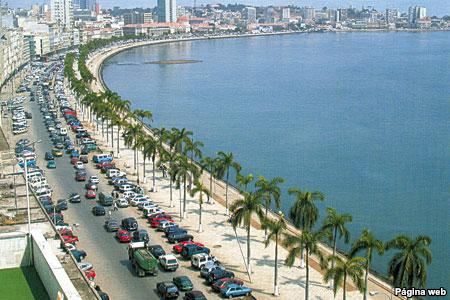
Avenida Marginal, Luanda, Angola

Avenida Marginal, Luanda, Angola

The current activity conducted by forwarding agents is not only limited to inter-mediating the foreign trade or deal with the clearance of goods at customs ports, said Tuesday the economist Osvaldo Luis da Silva.

Speaking to ANGOP on the role of forwarding agents in domestic economy, the economist spoke of the need for the agent to know the entire services chain of operators with whom they work. He stressed that the forwarding agents facilitate, through the service they provide, the relationship of importers and exporters with customs, tax offices, notaries, banks and other entities.

It is also their responsibility to observe and enforce the administrative requirements and law. On the other hand, said the expert, the forwarding agent is a guide or customs consultant for operators, who acts in the field of import and export and plays an important role in the economy.

He noted that these professionals have contributed to the increase in customs revenue and encourage the observance of customs procedures by operators engaged in import and export activity. Osvaldo Luis da Silva underlined that the Angolan Government updated the Customs Tariff to promote domestic production and sustainable economic development of the country.

The entry into force of this law does not cause any inconvenience to the work performed by the forwarding agents, he said. On the other hand, added the economist, the law has come at a good time and is satisfactorily facilitating their work. Source: Angola Press Agency

Related articles

Africa – Strange Deliveries by DHL in 2013

Gorilla-weekinbrief-bigAn unusual cargo list has been released by DHL Express Sub-Saharan Africa of their 2013 deliveries.

In Kenya live human eyes are transported frequently. Sumesh Rahavendra, head of marketing for DHL Express Sub-Saharan Africa, said: “The corneas have an extremely short lifespan and are therefore highly perishable, which possess a significant challenge to us.

“What adds to the complexity is the fact that the recipient is booked and prepped for surgery while the cornea is in transit.

“The successes of these deliveries rely on prior customs releases, dedicated delivery vehicles and a passionate team of certified international specialists on the ground.

“When there is no margin for error and the result could affect another person’s opportunity for sight, every stop is pulled out from pickup to delivery.”

Rahavendra continued: “One unique shipment to mention is a 32kg consignment of Haggis which was moved from the UK to Tanzania for an event.

“The Scottish delicacy was swiftly transported through Customs and delivered in time for the prestigious event.”

For conservation, there was a transport of butterfly larvae in Kenya. Rahavendra said: “Any delay in the transport process would result in the premature hatching of the butterflies, from which they would not have survived. Following a similar operational process as the transport of the corneas previously mentioned, another successful, yet another unique delivery was completed.”

Another astonishing delivery was 1.7 tons of fresh flowers sent from Johannesburg to Douala in Cameroon for a wedding.

This personal request came from a customer whose two sons were getting married on the same day,” said Rahavendra.

“Fast forward a few short hours, and a splendor of colour was delivered to the event in time for the all-important nuptials.”

Other strange and prompt delivery requests included transporting nine gorillas across two continents, a specific heart internal defibrillator, the Rugby World Cup Webb Ellis trophy, and a customer’s laundry from the UK to South Africa for dry cleaning!

Rahavendra said. “Although sometimes challenging and stressful, such requests certainly help bring a smile to our faces on a busy day.” Source: APO (African Press Organization)

China ‘VAT’ Syndrome – Uncertainty for International Forwarders

VAT-TAXGreg Knowler, of maritimeprofessional.com reports, “Whenever there is uncertainty in a particular trade, the container lines resolutely stick with the “shipper pays” principle. That’s understandable considering the state of the industry, but not exactly fair on their customers”.

For the last couple of decades shippers have been complaining that the host of extras they are charged – more than 100, according to the HK Shippers’ Council – should be built into the freight rates that are negotiated between them and the lines.

From this month [August 2013] there will be another charge levied – a six percent VAT charge on top of all charges payable in China, according to Lloyd’s List. Many of the major carriers have informed their customers, but the news has not been received with much enthusiasm.

China is changing its tax system from a turnover tax on companies’ gross revenue to a VAT, which is levied on the difference between a commodity’s pre-tax price and its cost of production.

Beijing rolled out a VAT pilot programme to test the market and iron out the bumps, starting in Shanghai in January last year. In September Beijing was included followed by a gradual nationwide rollout before the new system kicks in tomorrow.

But there is still major uncertainty in this new tax regime, and that is providing great consternation for shippers and the carriers. International shipping is not liable for VAT, so why should carriers impose a six percent VAT levy on customers, asks Sunny Ho of the HK Shippers’ Council.

The problem is that international container lines are not sure whether they are exempt from VAT or not. All the carriers have China offices and as that is where the billing of mainland shippers originates, so they fear Beijing may treat them as agents instead of international shipping services, which means their business will be eligible for the tax.

Maersk Line has decided to wait until mid-August before levying the six percent VAT on mainland charges to see how the situation unfolds. That is a welcome gesture and one that should be followed by all the international shipping lines.

With so much uncertainty surrounding the nationwide rollout of the new tax regime, how can carriers justify slapping customers with a VAT levy before the actual impact of that VAT can be measured?

It is a grasping approach that the lines instinctively default to when faced with the possibility of rising costs. It may serve to protect the bottom line, but it continues to reinforce the traditional unhealthy and antagonistic relationship between them and their customers.

The lines should wait until the costs of China’s VAT have been established and those costs should then be built into the freight rates. Surely that is the only reasonable approach. Source: www.maritimeprofessional.com

South Africa’s New Integrated Customs Border Management Solution

Amidst diverse expectations and feelings of excitement, anxiety and anticipation, the South African Revenue Service (SARS) migrated to its new integrated Customs and Border Management solution over the weekend of 17 August 2013. A new modern electronic solution Interfront can now rightfully claim some success even if it is an unseen component within a multi-layered, multi-technology solution of which South African Customs is now the proud owner. After 9 months of rigorous parallel testing between old and new, and a period of dedicated external testing with Service Providers of the customs business community, the decision to implement was formally agreed with trade a fortnight ago.

Interfront Customs and Border Solution (iCBS) replaces several key legacy systems, one of which has served South Africa for more than 30 years. The vast business and technical competence and skills which faithfully maintained and supported the old systems are to some extent in the wilderness now, but will hopefully find place within the new technology environment. While technology nowadays is particularly agile, and human physical placement at the coal face is under threat, organisations like SARS will always require customs technical business and policy competence to maintain the cutting edge.

There still remains an enormous amount of work to do regarding the alignment of the new clearance system with the specific guidelines, standards and principles of the WCO. With regional integration becoming more prominent on the sub-Saharan African agenda, the matter of ‘facilitation’ and ‘non-tariff barriers’ will inevitably become more prominent discussion points. Other salient features of the SAFE Framework of Standards such as Authorised Economic Operators and IT connectivity have already emerged as key developmental goals of a number of regional customs and border authorities. The timely introduction of Interfront places SARS in a pivotal position to influence and enable the required electronic linkages, crucial for the establishment of bi-lateral and multilateral trade agreements, transport corridors, and, support for ‘seamless’ multi-modal movement of cargo from port of discharged to its place of manifestation with limited intervention, based on the principles of risk management. Enjoy the Interfront video feature.


Hurdles before trans-border trade facilitation

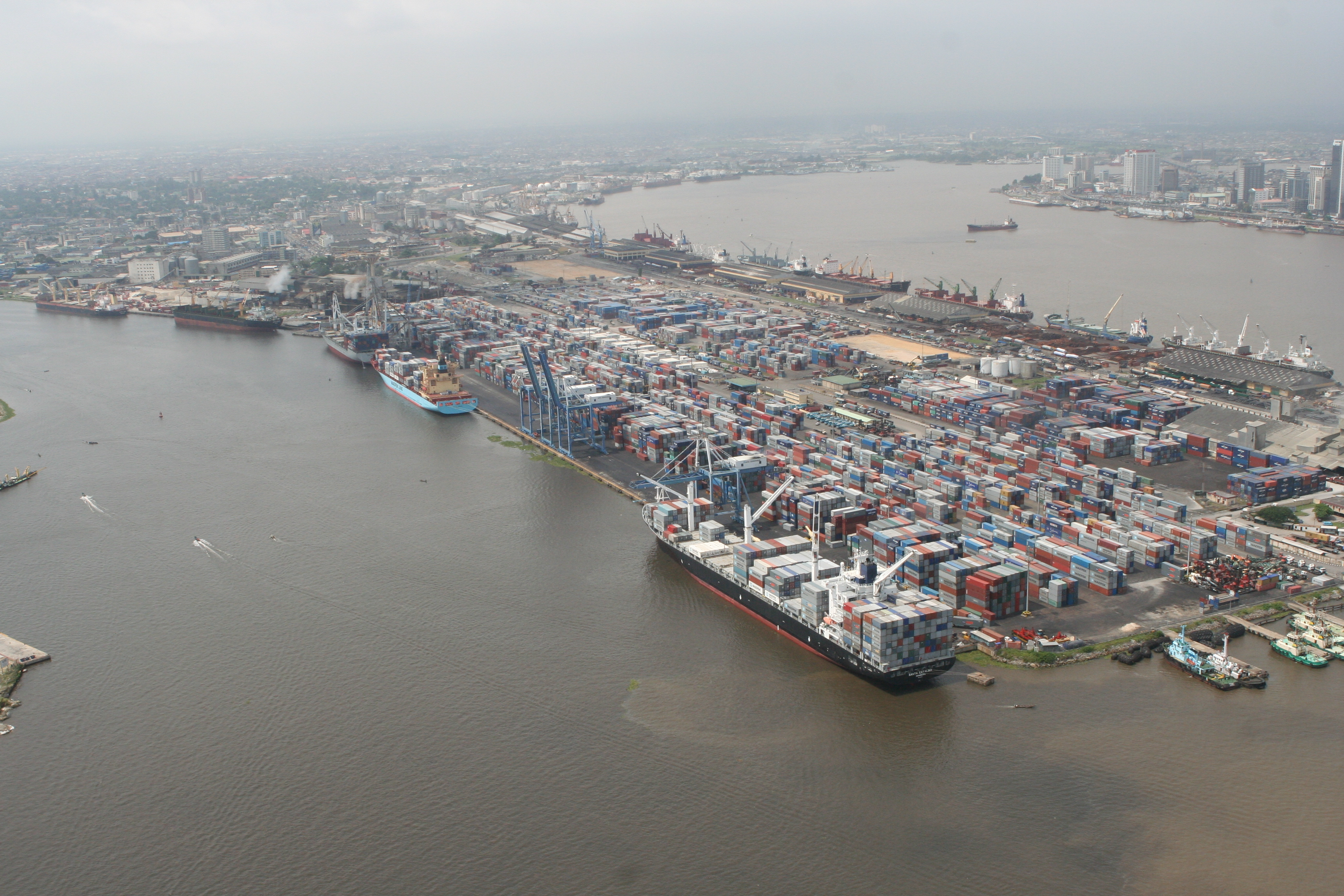
Port of Lagos, Nigeria

Port of Lagos, Nigeria

The following article, allbeit long, provides a good overview of trade facilitation developments in Nigeria. I doubt that there is a single country on the African continent that cannot draw some parallel experience contained in this article.

Trade across borders is not a new phenomenon. But the World Trade Organization is now championing the concept of trade facilitation among nations, which has been defined as simplication , harmonization, standardization and modernization of trade procedures.

Trade facilitation seeks to reduce trade transaction between businesses and government. This concept is receiving unprecedented attention globally and it is at the heart of numerous initiatives within the customs world.

The United Nations Centre for Trade facilitation and Electronic business (UN/CEFACT) in its recommendation No 4 of 1974, said trade facilitation programme ought to be guided by simplication, harmonization and standardization (of trade procedures) so that transaction becomes easier, quicker and more economical than before.

According to the body, there was need to eliminate duplication in formalities, process and procedures; align all national formalities, procedures operation and documentation with international conventions, standard and practices to develop international agreed format for practices, procedures, documentation and information in international trade.

Proponent of trade facilitation believed that if transaction cost in international trade is reduced, there could be creation of wealth, especially in developing countries where red-tapism and other procedural barriers to trade tend to be pronounced.

The organization for Economic Cooperation and Development (OECD) estimated recently that even one per cent reduction in such “hidden cost” would boost the global economy by $40 billion with most of these benefits going to the developing world. Trade facilitation therefore encourages, or perhaps requires countries to adopt means such as publishing their imports and export procedures, reducing the number of forms that importers and exporters are required to complete, allowing forms to be submitted on-line, and checking corruption at border post.

Nigeria, though a signatory to Kyoto 1974 and other convention on trade facilitation, is far from embracing the ideals of the global concept.

The president of the council of Managing Directors of Customs licensed Agents, Mr. Lucky Amiwero, said that although Nigeria was yet to comply with all the provisions of trade facilitation, it has the tools to facilitate international trade, such as the scanning machines and the e-platform.

“In Nigeria, the real cost of doing business is an impediment to trade facilitation. We have no good procedure for goods on transit to Niger and Chad. That has been taken over now by our neighboring countries. One of the key component of trade facilitation is charges which must be tied to services. We have shortcoming in that area. We are still working at cross purposes when other countries are busy harmonizing their import and export procedures”, he said.

In Nigeria, there is no one stop shop process for goods clearance as we have over 10 agencies superintending goods clearing procedure at the nation’s gateways.

“This is very bad and constitute hindrance to trade. The regulatory process is supposed to have been harmonized with other agencies to have a one stop procedures. Procedures are not published and not in line with WTO article which has to do with publication, regulation and administration of procedures. Our trading regime are expensive, our procedures are cumbersome. When others are simplifying and synchronizing their process of import and exports, our import and export procedures are lengthy. We have not been able to harmonise process and procedures and that is where we have a problem. If you still have to go through 100 per cent examination when we have the scanners, that is an impediment to trade,” Amiwero said; adding that the time spent to conclude business in Nigerian ports and border post is much higher than anywhere in the West African sub-region.

The level of corruption at the port border post is high and making them the most expensive business environment in Africa; as un-receipted charges far outweigh the official charges in the process of good clearing. Importers are still submitting hard documents instead of making use of e-devices, and going through the cumbersome process of clearing and receiving of consignments. Continue reading →

Port-to-Hinterland…gearing up for growth?

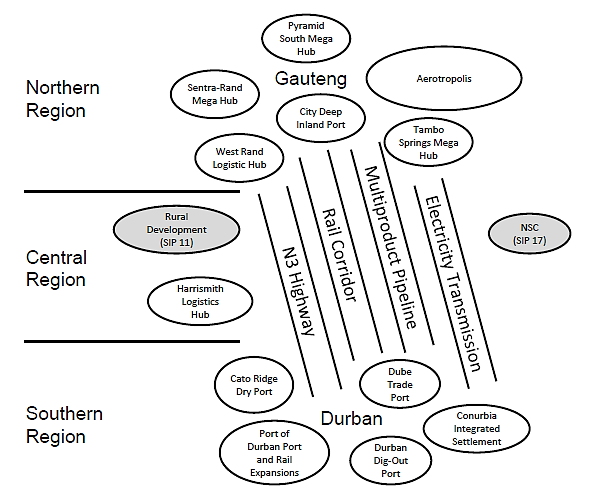
Proposed Durban-Free State-Gauteng Logistics and Industrial Corridor Plan (SIP2)

Proposed Durban-Free State-Gauteng Logistics and Industrial Corridor Plan (SIP2)

Notwithstanding on-going discontent amongst industry operators in regard to proposed legislative measures mandating customs clearance at first port of entry, the South African government (GCIS) reports that work has already commenced on a massive logistics corridor stretching between Durban and the central provinces of the Free State and Gauteng. Most of the projects that form part of the second Strategic Infrastructure Project (SIP 2), also known as the Durban-Free State-Johannesburg Logistics and Industrial Corridor, are still in the concept or pre-feasibility stage, but construction has already started on several projects.

These include:

  • the building of a R2,3 billion container terminal at City Deep
  • a R3,9 billion project to upgrade Pier 2 at the Port of Durban
  • R14,9 billion procurement of rolling stock for the rail line which will service the corridor.

Work has also started on the R250 million Harrismith logistics hub development to set up a fuel distribution depot, as well as on phase one of the new multi-product pipeline which will run between Johannesburg and Durban and transport petrol, diesel, jet fuel and gas.

The aim of these projects and others which form part of SIP 2, is to strengthen the logistics and transport corridor between South Africa’s main industrial hubs and to improve access to Durban’s export and import facilities. It is estimated that 135 000 jobs will be created in the construction of projects in the corridor. Once the projects are completed a further 85 000 jobs are expected to be created by those businesses that use the new facilities. Source: SA Government Information Service

Interested in more details regarding South Africa’s infrastructure development plan? Click here!

A South African RFID/GPS cross-border logistics and customs solution

Inefficiency of road freight transport is one of the primary factors that hamper the economy of sub-Saharan Africa. Long delays experienced at border posts are the single biggest contributor towards the slow average movement of freight. Cross-border operations are complicated by the conflicting security objectives of customs and border authorities versus efficiency objectives of transport operators. It furthermore suffers from illegal practices involving truck drivers and border officials. In theory the efficiency of cross-border operations can be improved based on the availability of more accurate and complete information – the latter will be possible if different stakeholders can exchange data between currently isolated systems.

Cross-border trade basically comprises 3 distinct but interlinked layers –

An information layer – in which various trade documentation (purchase order, invoice), cargo and conveyance information (packing list, manifest), customs and government regulatory data (declaration, permits) are exchanged between various supply chain entities and the customs authority. These primarily attest to the legal ownership, contract of carriage, reporting and compliance with customs and other regulatory authority formalities (export and import), and delivery at destination.

A logistics layer – for the collection, consolidation, sealing and conveyance of physical cargo from point of despatch via at least two customs control points (export and import), to deconsolidation and delivery at point of destination.

A financial layer – which refers to the monetary exchange flow from buyer (importer) to seller (exporter) according to the terms and conditions of the sale (INCOTERMS). Hmm… no, this does not include ‘bribe’ money.

All three layers are inter-linked and prone to risk at any point of a given transaction. There is also no silver bullet solution to secure supply chains. Moreover, it is a fallacy that Customs and Border Agencies will ever conquer cross-border crime – simply because there are too many angles to monitor. Furthermore, in order to set up cross—border information exchange and joint enforcement operations it is both legally and politically time-consuming. Criminal elements are not hampered by these ‘institutions’, they simply spot the gaps and forge ahead.

One of the areas requiring customs attention is that of chain of custody. In short this implies the formal adoption of the World Customs Organisation’s SAFE Framework principles. Each party with data that needs to be filed with the government for Customs and security screening purposes has responsibilities. Those responsibilities include –

  • Protecting the physical goods from tampering, theft, and damage.
  • Providing appropriate information to government authorities in a timely and accurate manner for security screening purposes.
  • Protecting the information related to the goods from tampering and unauthorized access. This responsibility applies equally to times before, during and after having custody of the goods.

Tenacent RFID Tag

Tenacent RFID Tag

Security seals are an integral part of the chain of custody. The proper grade and application of the security seal is addressed below. Security seals should be inspected by the receiving party at each change of custody for a cargo-laden container. Inspecting a seal requires visual check for signs of tampering, comparison of the seal’s identification number with the cargo documentation, and noting the inspection in the appropriate documentation. More recently the emergence of certain e-seals and container security devices (CSDs) contribute even further to minimizing the amount of ‘physical’ verification required, as they are able to electronically notify the owner of the goods or government authority in the event of an incidence of tampering.

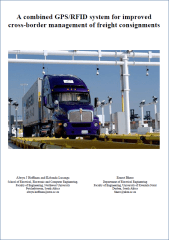
White Paper - GPS-RFID systems for cross-border management of freight consignments

White Paper – GPS-RFID systems for cross-border management of freight consignments

A group of South African specialist engineers have been working closely with transport authorities, logistics specialists, defense experts and customs authorities across the globe. Their e-seal is patented in no less than 16 high volume countries. It is produced in Singapore, China and Indonesia depending on politics, free-trade agreements and demand. May move some to Brazil and US in time. Proof of concept (POC) initiatives are currently underway in Brazil for rail cargo, US Marine Corps for their p-RFID program and other Department of Defense divisions in the USA, and will shortly be included in one of the GSA agreements making it available to any government department in the US. Further adrift, the e-seal is also currently enjoying interest in Guatemala, Mexico, Canada, Panama, Jordan, Italy, Spain, and Malaysia. Here, in South Africa, a POC was conducted at the 1st autogate at Durban Container Terminal, funded by the North West University, and overseen with successfully achieved objectives by Transnet Port Terminals. For technical details of the RFID seal, click here!

With much anticipated success abroad, how much support will this product attain in the local and sub-Saharan African scene? Government authorities, as well as logistics and supply chain operators are therefore encouraged to study the enclosed ‘white paper’ – Click Here!. It firstly quantifies the size of the problem and estimates the potential economic benefits that will be created by improved cross-border operations. It then proposes a combined GPS/RFID system that can provide the required level of visibility to support improved operational management, resulting in a simultaneous increase in the security and efficiency of cross-border freight operations. A brief cost-benefits analysis is performed to show that the expected benefits from such a system will by far exceed the costs of implementation. Source: Tenacent & iPico

TT Club – Container packing standards must be improved

TT ClubThe TT Club, has called for higher levels of training to maintain and improve the expertise of those employed by shippers, consolidators, warehouses and depots to pack containers properly.

The insurance organisation said it is no surprise that the correct packing of containers is high on the agenda for industry bodies, regulators and insurers, as the consequences of unsafe and badly secured cargo are serious. According to freight transport insurer TT Club’s claims, some 65 per cent feature cargo loss or damage, of which over one-third result from poor packing.

It is timely that TT Club and Exis Technologies have come together to develop CTUpack e-learning, an online training tool for those involved in the loading and unloading of containers or Cargo Transport Units.

Designed and produced by Exis Technologies on the initiative of the TT Club, and with its financial investment, the CTUpack e-learning(tm) course is aligned with IMO/ILO/UN ECE guidelines for packing containers. Beginning with the foundation course, which will be launched later this year, it will comprise modules that include topics such as cargo or transport and elements equivalent to lessons, covering areas like forces and stresses.

In future the course will evolve to reflect developments and updates to the ILO guidelines and there is a capacity for additional modules to incorporate cargo specific and more advanced training elements. Source: Seanews.com

Freight Forwarding Event – South Africa

The fifth annual congress of the South African Association of Freight Forwarders (SAAFF) takes place on 8-9 October 2013 at the Hilton, Sandton.

David Logan - SAAFF

David Logan – SAAFF

David Logan, CEO of SAAFF says, “The freight forwarding market has been a major beneficiary of an increasingly globalised world economy. The significant year-on-year growth in international trade volumes has driven the evolution of the freight forwarder, inherently linked to the success of global trade and the development of new markets.  Against this backdrop, it hardly seems surprising that the congress continues to grow and attract robust debate from key players in the market.  This year’s event also receives the endorsement and support of the South African Express Parcel Association (SAEPA), which represents the multi-billion Rand South African courier industry, another major role player in facilitating global business.”

“Having long-abandoned the image of transport intermediaries, today’s freight management logistics providers manage an array of complex functions and issues, being responsible for an entire array of services within the supply chain. The two-day congress will highlight and debate many of the pressing issues from customs modernization, security, piracy, supply chain efficiencies, trade credit, risk management, political risk, legislation, FAIS, economic trading factors, transformation, training and in-demand skills and more.”

“Our industry is also in a unique position to tap into the incredible growth currently shaping the African continent where some of the fastest growing economies reside.  Added to this the rapid reconstruction and development projects taking place throughout the continent will rely heavily on the services of freight forwarders.  Africa’s abundance of commodities is estimated to generate about a third of Africa’s growth.  All this requires trusted partners in the movement of goods to facilitate global trade, and the forwarders best positioned to capitalise on this are those that have robust infrastructures, global capability, solid expertise and a deep understanding of trade in African countries, which is not without its fair share of risk,” adds David.

“Global pressures on world markets are impacting on our members and the congress is an ideal platform to really get to grips with the realities and challenges of our current trading environment.  It’s an ideal platform for sponsors and suppliers to engage directly with the senior decision makers of freight forwarding companies, government, suppliers and policy makers,” he concludes.

Running alongside the congress will be a two-day industry supplier exhibition as well as a one day training and education workshop on Tues 8 October covering important issues regarding skills development, industry qualifications, talent management, training, BBBEEand more – all critical issues for HR managers and directors in the freight forwarding industry. For more information about the congress or to book your seats contact the congress organisers, Teresa Settas Communications on (011) 894 2767 or e-mail nadine@tscommunications.co.za. Source: transportworldafrica.co.za

Freight-forwarder liability at a glance

services_import_SnapseedActually, this is a view from the Ukraine. In modern practice, the organisation of the transport process often necessitates direct international multimodal transportation, in which case the freight forwarder carries out the contract of carriage as a multimodal transport operator, even if it does not directly own any vehicles. However, a trend has arisen in which the functions of the carrier and forwarder are combined. Under this model, traditional carriers diversify their activities by creating a forwarding unit within their companies, or forwarding agents acquire vehicles or create dependent carriers. Furthermore, forwarders often hire subcontractors to undertake the shipment; as a result, cases of loss or shortage of goods and claims against forwarding agents can become quite complicated. 

General provisions

Ukrainian legislation does not provide detailed rules governing freight-forwarding activities. The Law on Freight-Forwarding Activities, the Civil Code and the Economic Code stipulate only the general regulations of freight forwarding.

In accordance with Clause 1 of the Law on Freight Forwarding Activities, the contract of freight forwarding is a contract in which the freight forwarder agrees, at the client’s behest, to perform or arrange for the performance of certain contract work related to the transportation of goods. The forwarding agent is entitled to engage other parties for the execution of certain work under the contract (eg, transportation, storage, loading and unloading).

The law includes only general provisions under which the freight forwarder may be held liable to the customer (unless provided otherwise in the contract) for:

  • the number of packages;
  • the weight of the packages (if the weighing was conducted in the presence of the carrier and confirmed with its signature); and
  • packaging requirements under the related shipping documents (signed by a representative of the carrier).

Issues regarding the forwarder’s liability are also governed by the general provisions of the Civil Code, which provides for liability for breach of obligations under the contract. Thus, Article 623 of the code provides that a debtor in breach of its obligations must compensate the creditor for losses caused.

Where the freight forwarder engages third parties to fulfil its obligations under the contract of freight forwarding, the forwarding agent will be held fully responsible for the actions and omissions of the third parties.

Ukrainian law lacks specific rules that directly limit the freight forwarder’s liability to the client. Detailed rules governing the forwarding agent’s liability to the customer, as well as grounds and limitations of such liability, are fixed by the parties in the contract of freight forwarding.

At the same time, Ukrainian legislation contains general rules that allow for the release of the freight forwarder from liability. In accordance with Clause 614 of the Civil Code, a party that has violated its obligations will be held responsible only if found guilty (intently or negligently), unless otherwise agreed in the contract. Disputes in connection with claims against freight forwarders for loss of cargo in transit are common in Ukraine, so there is ample case law in the area. However, since Ukrainian legislation provides only general provisions on the freight forwarder’s liability, court practice for such disputes is often ambiguous and contradictory. In particular, there have been separate cases with similar circumstances in which the court variously found the freight forwarder both liable and not liable for cargo loss in transit. Continue reading →

SADC launches National Customs Business Forums

The SADC Sub-Committee on Customs Cooperation (SCCC) emphasizes great importance in strengthening cooperation between Customs and the private sector in order to give Customs Administrations in the SADC region an opportunity to offer a more efficient and effective customs service to their clients. The overall purpose of Customs to business partnerships is to ensure a partnership and dialogue structure of key stakeholders in the trading chain that contributes to trade facilitation, improvements in customs operations and higher compliance by the trading community.

The SCCC during its 20th meeting made the recommendation to establish National Customs Business Forums (NCBF) in all SADC Member States. Recently National Customs Business forums were established and launched in Malawi (September 2012), Zambia (April 2013) and Namibia (May 2013).  The NCBFs are meant to facilitate a stronger partnership between Customs and business at national level, promoting a regular and results oriented dialogue, and taking action on existing challenges in the supply chain of goods.

The Zambia Customs to Business Forum (ZCBF) was launched on April 26th, 2013 by the Deputy Minister of Commerce Trade & Industry in the presence of Commissioner General of the Zambia Revenue Authority (ZRA), Commissioner Customs (ZRA) and several public sector and business representative organizations which are important players in the Trading chain. In his keynote address, the Minister said “As a minister responsible for trade, i am profoundly delighted at seeing such initiatives being brought to the fore as this will help in improving the ease of doing business in Zambia. Furthermore, it is important to state that such initiatives are in line with best practices as stipulated under both multilateral organisations namely; the World customs organisation and the World trade organisation”.

The Namibia Customs Business Forum was launched by the Finance Minister Saara Kuugongelwa-Amadhila on the 22nd May 2013 in Windhoek, Namibia. The forum is envisaged to become “a bi-annual dialogue forum that brings together public and private sector [actors] in the trading chain to continually assess and adopt measures that promote effective trade facilitation, as well as enhance customs operations and higher compliance,” a statement from the Finance Ministry says.

In May 2013, the SCCC endorsed a Private Sector involvement strategy which additionally recommends the establishment of a Regional Customs Business Forum (between Customs and its stakeholders) in a bid to facilitate the implementation of the SADC Protocol on Trade. Source: SADC Secretariat.