Ambitious Port Plan for Walvis Bay


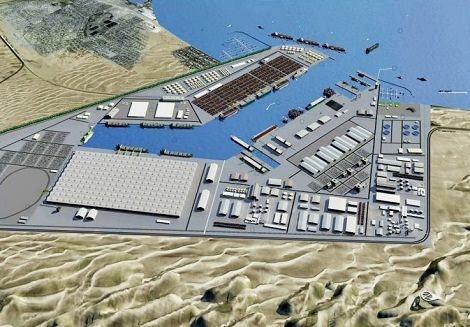
Computer-generated imagery of what the Walvis Bay North Port will look like when built. Image courtesy Namport.

Computer-generated imagery of what the Walvis Bay North Port will look like when built. Image courtesy Namport.

Far from simply developing a new container terminal, Namport could be bringing forward plans to build an ambitious new port at Walvis Bay to accommodate an expected increase in container and other traffic in the near future.

Originally intended as a long-term proposal for the Port of Walvis Bay, the plans may have to be brought forward and, coupled with finance that could come from China, the Namibian port is set to become a real rival for business in the southern and central African region.

According to reports in The Namib Times the cabinet has discussed and in principle given the go-ahead to create a new harbour on the northern side of the existing port. It said the new harbour is part of Namport’s strategy of positioning Walvis Bay as the premier port in the region. The plans will require dredging of a deep entrance channel and excavating the land to clear space for the new deepwater basin along with 10 kilometres of quayside for ships to berth.

If it was necessary to have proof that this development has the potential of shaking up the southern African region, it came in the form of a warning given yesterday by Transnet Chief Executive Brian Molefe at a community briefing session in Durban, in which he said, while justifying the need for the Durban dig-out port to go ahead, that if it was delayed or not built then Durban would lose out to other African ports. As an example he cited Walvis Bay where he said ambitious plans to build a large container port had been given the go-ahead. Source: Ports.co.za

Airport Cities – a view to a different trading environment for South Africa?

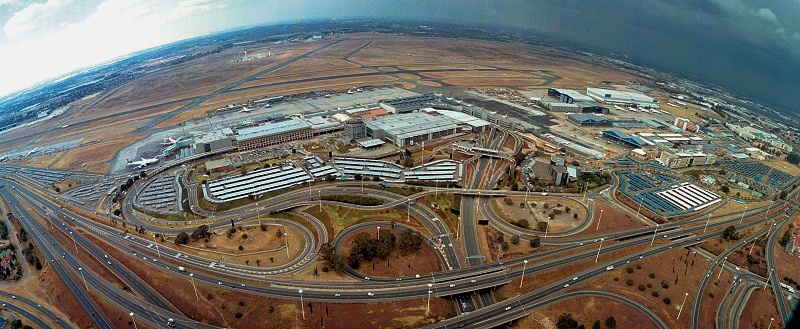
ace_skyscraper_237x352aerotropolisThis past week witnessed the first Airport Cities Convention in South Africa. It came at the timely announcement of the country’s first aerotropolis earmarked for development around Oliver Tambo International airport (ORTIA) and the surrounding industrial complex. While the City of Ekurhuleni gets prized possession of the ‘aerotropolis’ (in title) by virtue of the location of ORTIA, Johannesburg is set to benefit perhaps more greatly due to it being the epi-centre of South African commerce and trade. This represents significant ‘hinterland’ development which bodes well for future multi-modal transport and shipping activity for the Gauteng region and the country as a whole.

In support of government’s National Infrastructure Plan, is Strategic Integrated Project (SIPs) 2, otherwise known as the Durban-Free State-Gauteng logistics and industrial corridor. Infrastructure upgrades are already occurring to road and rail networks linking to the key cargo and distribution hub, City Deep. While the express purpose of an inland port, terminal or logistics hub is to provide relief for congested seaports, it likewise creates possibilities and opportunities to synergise with other transport forms. This serves to maximise capacity through integration offering local suppliers and foreign customers a host of trade, shipment and logistics options.

Foremost, an inland port is a hub designed to move international shipments more efficiently and effectively from maritime ports inland for distribution throughout the heartland. Think of the logistics of inbound freight as a barbell. At one end, inbound containers flood into a seaport, spreading across local storage facilities as they are unloaded. If they aren’t moved quickly enough from the port, they create a bottleneck that bogs down the entire distribution cycle as containers wait longer to get off ships, to get into warehouses, and to get back out and onto trucks and trains for final shipment. The Emergence of the Inland Port (credit: Jones, Lang, LaSalle)

In a world of increasing global integration, focussing more on global distribution of goods and services, it behoves our country to understand the dynamics of global trade and what in fact makes commerce tick. Today’s number 1 spot is not going to remain intact without continuous re-evaluation and innovation. It would indeed be arrogant (if not suicidal) of us to think that our current prominence and strength in the sub-saharan region will remain without innovation for the future. At the same time South Africa should welcome increased competition from its neighbours, both immediate as well as further north in Africa. The latest fDI 2013 Report indicates a decrease in foreign direct investment in South Africa (-5%) and Kenya (-9%), while at the same time a significant increase in foreign investment in Nigeria (+20%) and Egypt (+20%), respectively. True, the latter countries are far removed from South Africa’s immediate ‘playing field’, however do we fully understand the drivers which cause the named countries to attract FDI at such an increasing rate – are they capitalising somehow on our deficiencies, shortcomings, or lack of opportunism?

The National Infrastructure Plan can only be seen as a single cog in the machinery to keep South Africa competitive. And, while it is encouraging to witness these developments, a corresponding economic and commercial enterprise on both government and private sector is required to maximise these developments. Some smidgen of hope could lie in the Department of Trade and Industry’s economic principles which support Industrial Policy Action Plan (IPAP) and Special Economic Zones (SEZs), for example, however, several business commentators have already voiced concerns on exactly how these support the Infrastructure Plan. A further question lies in our country’s ability to facilitate trade, not only at our ports, but more importantly the ‘hinterland’ of our country and the neighbouring regions. Do our existing and future laws adequately provide for expeditious and facilitative procedures in the treatment of import and export goods? Are we sure that we are addressing all real and potential trade barriers?

Anyone desiring more information on the ‘aerotropolis’ concept should find some interest at the following websites – Aerotropolis.com, and the City of Ekurhuleni

First BRICS Heads of Customs Meeting

Delegates who attended the first BRICS Customs Heads of Customs Meeting [SARS]

Delegates who attended the first BRICS Customs Heads of Customs Meeting [SARS]

At a meeting hosted by the Commissioner near Bela Bela, South Africa from 7 to 8 March 2013, delegations from the Customs Administrations of Brazil, Russia, India, China and South Africa (BRICS) met for the first time. The BRICS Customs administrations exchanged experience and ideas in a spirit of openness so as to identify areas for cooperation so that they can most effectively and efficiently facilitate legitimate trade and combat illicit trade and Customs fraud. From 27 to 28 March, South Africa will also host the BRICS Summit in Durban, to be attended by various Ministers and the BRICS Heads of State.

Key points of discussion, focus and future cooperation –

Customs cooperation
The Heads of Customs committed themselves to consolidating and building on the cooperation that has already been established so that they can collectively curb Customs offences, safeguard the international supply chain and achieve effective enforcement of Customs legislation, while facilitating legitimate trade,both among BRICS countries and also globally.

Capacity building
As part of their cooperation to build Customs capacity in relation to human resources, technologies and procedures,the administrations would look into various practical and innovative solutions and endeavour to share their resources, knowledge and best practices with each other.

Cooperation at multilateral forums
A BRICS Customs mechanism will be established, including attachés networks based in Brussels and other strategic places, to identify issues of common interest, develop common responses and ensure regular engagement and interaction, including before important multilateral meetings.

Customs Mutual Administrative Assistance and the Exchange of Customs Information
The administrations also agreed to ensure that there is an enabling legal basis between them to support intra-BRICS Customs mutual administrative assistance and the exchange of Customs information. Such assistance and exchange will assist in combating illicit trade and protecting revenues and societies.

Facilitation of legitimate trade between BRICS countries
To further facilitate trade and reduce the Customs administrative burden on both trade and the administrations themselves, the administrations will exchange information in various areas of common interest and concern, including on the simplification of Customs procedures and the use of modern technologies and techniques.

The administrations will also work towards possible solutions for achieving mutual recognition of Customs controls and of trader management programs aligned to the Authorised Economic Operator (AEO) concept of the World Customs Organization (WCO), establishing Customs interconnectivity and supporting the WCO’s work on developing the Globally Networked Customs (GNC) model.

Opportunities for enforcement cooperation will also be explored, including possible joint actions, information sharing and other enforcement assistance. The use of international instruments developed by the WCO, including Conventions, Recommendations, Decisions and Declarations that support Customs trade facilitation, compliance and enforcement will be actively promoted.

Governance issues
A Governance Framework aligned to the overall BRICS commitments will be established. An annual BRICS Customs Heads meeting has been proposed whose deliberations would be informed to other BRICS forums, including in particular the Summit. Such a BRICS Customs Heads Meeting would be supported by a Customs working group under the guidance of the BRICS Heads of Customs. Source: SARS

Aerotropolis for Gauteng…stuff’s about to happen

Oliver Reginald Tambo International Airport (east of Johannesburg) to become Africa's first aerotropolis

Oliver Reginald Tambo International Airport (east of Johannesburg) to become Africa’s first aerotropolis

The Gauteng Provinicial government has announced that Africa’s busiest airport, OR Tambo International Airport is set to become the location for the continent’s first aerotropolis. Work on the development of the aerotropolis, centred at OR Tambo International Airport, seeks to leverage public and private sector investment at the airport and surrounding areas. In supporting industrial development in this precinct, approval has been granted for the creation of an Industrial Development Zone (IDZ) in the area surrounding the airport. Heard this all before, but what’s different this time around?

An aerotropolis is an urban plan in which the layout, infrastructure, and economy is centered around an airport, existing as an airport city. It is similar in form and function to a traditional metropolis, which contains a central city core and its commuter-linked suburbs.The term was first proposed by New York commercial artist Nicholas DeSantis, whose drawing of a skyscraper rooftop airport in the city was presented in the November 1939 issue of Popular Science.The term was revived and substantially extended by academic and air commerce expert Dr. John D. Kasarda in 2000, based on his prior research on airport-driven economic development. Wikipedia

Jack van der Merwe, who successfully oversaw the development of the Gautrain project, has been appointed to lead the initiative of developing the aerotropolis. The proposal for the airport to become a terminal city with air, rail and road networks fuelling economic development. It is envisaged to include a commercial component, hotel, conferences, exhibitions and a residential component.

One of the key initiatives of the national government is the e-Thekwini-Free State-Gauteng freight and logistics corridor, known as the Strategic Infrastructure Project 2 (SIP2), which seeks to improve the movement of goods from the Durban port to Gauteng, and to business enterprises nationally as well as in southern Africa.

City Deep/Kazerne cargo terminals and the planned Tambo-Springs Freight and Logistics Hub are to be the focal points for the movement of goods for the export market. Phase 1 of the City Deep/Kazerne Terminal expansion and roads upgrade was underway at the continent’s largest and busiest in-land container terminal. This includes a redesign and upgrading of the roads network in and around the City Deep Terminal to provide for better flow of freight traffic and linkages with the national highways – the cost of the road works would amount to R122 million. At some point the issue of non-tariff barriers to import/export trade will need to be discussed…..and overcome.

Transnet has completed the first phase in the actual improvements of the terminal. It will be investing R900 million in upgrading the terminal. A detailed road design work, including feasibility studies and the development of a master plan, are underway for the Tambo-Springs Inland Port. Now, we’re talking…….

Gauteng  Province is to get 2 484 new modern trains as part of the Passenger Rail Agency of South Africa (PRASA) rolling stock for fleet recapitalisation and refurbishment programme.

The province will be making major investments in road infrastructure in the coming financial year and these include reconstruction and upgrading of the R55 (Voortreker Road) to a dual carriageway road between Olievenhoutbosch and Pretoria West; rehabilitation of the remaining section between Main Road and Maunde Street in Atteridgeville; reconstruction and upgrading of William Nicol Drive (K46) between Fourways and Diepsloot as well as reconstruction and improvement of the remaining section of the Old Pretoria to Cullinan Road between the Chris Hani Flats and Cullinan, among others. Wow, and the toll fees?

The department has been allocated a budget of R4.77 billion for the 2013/14 financial year. Of this amount R1.4 billion has been earmarked for roads maintenance and upgrading, R1.7 billion for public transport operations and R802 million for the running cost of the Gautrain Management Agency. Source: EngineeringNews

So, all-in-all, the above together with other recent noises of incentives and benefits for foreign and local investors in SEZs, the future holds some promise and interest…..

Boost for Intra-African, BRICS Trade

BRICS-logoSouth African companies, including foreign companies based in South Africa, stand to benefit from relaxed cross-border financial regulations and tax requirements, Finance Minister Pravin Gordhan announced in Cape Town on Wednesday.

Delivering his 2013 National Budget speech in Parliament, Gordhan said that outward investment reforms that applied as part of a new set of “gateway to Africa” reforms would also apply to companies seeking to invest in countries outside of Africa, including in the BRICS (Brazil, Russia, India and China) countries

Boost for cross-border trade

These reforms include the relaxation of cross-border financial regulations and tax requirements on companies in South Africa, as well as reforms making it easier for banks and other financial institutions in South Africa to invest and operate in other countries.

Brand South Africa welcomed these moves as being in line with South Africa’s National Development Plan (NDP), which acknowledges the global shift of economic power from West to East, while also highlighting the rise of Africa.

“This is an important step to enabling trade and supporting regional integration,” Brand South Africa CEO Miller Matola said in a statement following Wednesday’s Budget speech.

Gordhan said Africa now accounts for 18 percent of South Africa’s exports, including nearly a quarter of its manufactured exports, and that the SA Reserve Bank had approved over 1 000 large investments into 36 African countries over the last five years.

Southern Africa development projects

South Africa is also helping to fund several development projects in the wider southern African region, with the Development Bank of Southern Africa (DBSA) accelerating investment into neighbouring countries, particularly in the field of electricity generation and transmission and road transport.

Added to this, South Africa’s Industrial Development Corporation (IDC) last year funded 41 projects in 17 countries to the tune of R6.2-billion. Most of these projects were in industrial infrastructure, agro-processing and tourism.

State company Eskom was also now considering investing in several regional generation and transmission projects outside South Africa. (Comment: I would have thought Eskom would ensure the money was spent on the local South African electrical grid! After having its expected 16% tariff increase halved last week, its quite incredible that such a notion can be in the cards. The South African public are truely being kept in the dark!!!)

Gordhan said there was a proposal to pool the foreign exchange reserves of the five BRICS member countries, with the idea of using this to support one another in times of balance of payments or currency crisis. Brazil, Russia, India, China and South Africa collectively hold reserves of US$4.5-trillion.

He said work was under way to create a trade and development insurance risk pool, with the aim of setting up a sustainable and alternative insurance and reinsurance network for BRICS members. Source: SA News.gov.za

Government heeds the call – Tax Holidays for SEZs

Minister Pravin Gordhan and his 'budget team' on their way to parliment [Picture credit-SARS]

Minister Pravin Gordhan and his ‘budget team’ on their way to parliament [Picture credit – SARS]

After more than a decade of fruitless marketing and billions spent on capital investment, Budget 2013 brings some hope of a turn-around and better fortunes for economic development zones in South Africa.

Minister of Finance, Pravin Gordhan announced, what is an unprecedented move. to bolster support for government’s Special Economic Zone (SEZ)programme. Investors in such zones are expected to qualify for a 15% corporate tax rate, and in addition, a further tax deduction for companies employing workers earning less than R60,000 per year.

This is a significant development in that the previous dispensation under the Industrial Development Zone (IDZ) programme only afforded prospective investors a duty rebate and VAT exemption on imported goods for use in the Customs Controlled Area (CCA) of an IDZ. The reality is that these benefits were simply not enough to woo foreign company’s to set up shop in our back yard, let alone existing big business in South Africa to relocate to these zones. Mozambique, next door, has had much success as are other African countries through the offering of company tax holidays with the introduction of export-focussed special manufacturing facilities.

The SEZ (so it would seem) differs little from the IDZ approach save the fact that the former does not require the location of the economic zone at an international airport, seaport or border crossing. As such, an existing IDZ may ‘house’ a special economic zone, thus maximizing return on investment.

Recent developments in SA Customs realise a provision permitting foreign entities to register as importers or exporters under the ‘foreign principal’ clause in the Customs and Excise Act. Approval of such is dependant on the foreign principal establishing a business relationship with a South African ‘Agent’. This ‘agent’ is required to be registered with the SA Revenue Service as the party representing a ‘foreign principal’ in customs affairs. At this point, the provision is being applied to business entities in BLNS countries who import or move bonded goods into or from South Africa.

Future global application of this provision could boost the possibilities of a broader range of investor to favourably consider SEZ opportunities in South Africa. This option will, no doubt, not go unnoticed by the big audit firms seeking to broker ‘cross-border’ customs facilities for their multi-national clients. I perceive that more introspection is still required concerning ‘non-resident’ banking facilities and transfer pricing issues to enable the global application of the foreign principal concept. But after all this seems a good case for trade liberalisation. Add to this the forthcoming launch of Customs new integrated declaration processing system that will (in time) offer simplified electronic clearance and expedited release facilities for future SEZ clients.

Chinese investment allows Mozambique to become a car manufacturer

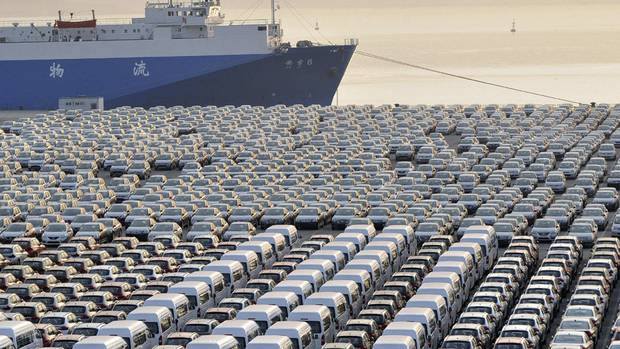
Chinese cars wait to be exported at a port in Dalian, Liaoning province. (China Daily/Reuters)

Chinese cars wait to be exported at a port in Dalian, Liaoning province. (China Daily/Reuters)

With the new APDP programme ably supporting the local South African vehicle manufacturing industry, the possibility of Chinese investment in Mozambique should have little impact on the local vehicle cartel. However, the possibility of competition for the local industry is just what is needed to create competitiveness in the region.

Mozambique is expected to become a car manufacturing and exporting country this year following an investment by China Tong Jian Investment, which is also attracting other companies in the sector to Mozambique. Danilo Nalá, the director general of the Office for Economic Areas with Accelerated Development (Gazeda), told Mozambican newspaper Correio da Manhã that investors from Saudi Arabia and Bahrain were interested in investing in tyre manufacturing in the city of Matola, on the outskirts of Maputo.

The tyre factory, which will be part of the project for the car assembly plant in Matola funded by Chinese investors, as of April 2013, may either involve acquisition of the technically bankrupt company Mabor or setting up a new unit from scratch. According to the newspaper, “there is a lot of interest from Asia in re-launching the tyre industry,” in Mozambique. (Comment: This could be an area of contention for the local market though).

Construction of the China Tong Jian Investment factory, costing an estimated US$200 million, is the result of an agreement the Mozambican government signed with the company in 2010. The agreement outlines that, at an initial stage, the facility should produce around 10,000 vehicles per year, 30 percent of which for the Mozambican market and the remainder for export.

Production is then outlined to be increased to 30,000 units per year and, later, to 100,000 units.

The factory, which is located in the Machava area of Matola, in the former workshops of Mozambican state port and rail manager Portos e Caminhos de Ferro de Moçambique, will produce buses and light passenger vehicles of the Matchedje brand. Matchedje is the name of the village in the Sanga district of Niassa province, which hosted the 2nd Congress of the Mozambique Liberation Front (Frelimo), which is the political party currently in power in the country.

China Tong Jian Investment is based in Shanghai and its largest shareholder is New Zealand’s Morgan Foundation and its business focuses on promoting China-Africa relations. Source: Shippingnews.co.zw

Will Nigeria Overtake South Africa as Africa’s Powerhouse?

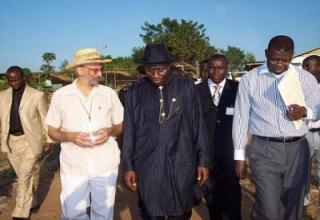
Is Nigerian's President Goodluck Jonathan on the road to success?  - Photograph by IITA Image Library

Is Nigerian’s President Goodluck Jonathan on the road to success? – Photograph by IITA Image Library

Posted with special permission and credit to Think Africa Press. Projections that Nigeria’s economy will be more important than South Africa’s by 2020 underplay serious instabilities in Nigeria’s economy, political systems and surrounding region.

Following Nigeria’s announcement that calculations of its Gross Domestic Product (GDP) may have been underestimated over the last two decades, the country’s economy has been portrayed much more optimistically by mainstream media. The Financial Times headline ‘Nigeria: No 1 in Africa by 2014?’ in its special edition on emerging markets, Beyond Brics, is a case in point. Similarly, headlines such as ‘Nigerians optimistic about economic prospects’ or ‘Nigeria wins ratings upgrade for tight fiscal policy’ from The Guardian and Reuters, respectively, capture the media‘s changing attitude towards Africa’s most populous nation.

And Nigeria’s economic performance has not only caught the attention of the media. The traditionally cautious business community, major global players such as the International Monetary Fund (IMF), World Bank, and influential private institutions such as Goldman Sachs, have warmly embraced this favourable analysis, setting the scene for more positive depictions of Nigeria’s economy. It appears academia, too, has joined the chorus in praising Nigeria’s apparatchiks for supposedly bringing in reforms that have resulted in “unprecedented” growth.

Several commentators are now asserting that Nigeria’s economy will be more important to Africa than South Africa’s by 2020. These analyses in particular require a closer look.

South Africa vs. Nigeria

There is little doubt that the Nigerian economy, simply in terms of size, will reach the top rung by 2020, if not earlier. By some measures, it could already be seen as the biggest economy in Africa. Its massive population has seen its economy grow at speeds unimaginable not long ago. But does that mean Nigeria will automatically become a more dynamic and important regional economy than that of South Africa?

Measured analysis is less convincing, and show that such predictions focus heavily on Nigeria’s current high growth rates at the expense of serious weaknesses and instabilities in its economy, political systems and region. In comparison to South Africa, Nigeria is still confronted by numerous challenges.

First, Nigeria’s high growth rates have been driven by consistently high crude oil prices. Indeed, the story about Nigeria’s growth is predominantly about oil. The primary engine for such high oil prices on the world market has been demand from BRICS countries: Brazil, Russia, India, China and South Africa. However, since the 2008 global financial crisis, BRICS countries have been showing signs of struggling, with growth forecasts for this year cut by almost half. If oil demand continues to weaken due to their sluggish economic performance, Nigeria’s economy could prematurely plateau in a manner analogous to Japan. On the other hand, South Africa’s economy is more diversified, and as a result, its growth rate, though more measured, is likely to be steady.

Second, Nigeria has, in comparative terms, a smaller entrepreneurial community than South Africa. Dependency on oil appears to have profoundly discouraged would-be innovators and entrepreneurs from other sectors, such as the ‘smart’ industries of finance or telecommunications. With the exception of well–established conglomerates such as the Dangote Group, Nigeria also struggles with internationalising its companies. Indeed, there is a sense that Nigerian entrepreneurs have more interest in accumulation than in global expansion. The Nigerian economy needs to reach out to international markets if it wants to sustain the momentum initiated by high GDP growth rates.

South Africa, on the other hand, has shown that it has the ability to take advantage of regional and international markets, with its companies such as Nandos Restaurants, MTN Multinational and Stanbic Bank, amongst many, showing the potential to become global brands. In a manner akin to the US, South Africa has also successfully ‘exported’ its currency, with the rand being used as official currency in Zimbabwe, Botswana, Namibia, Lesotho and Swaziland, a move that has boosted trade with its neighbours.

Third, Nigeria struggles to retain skills and continues to see an outflow of its best minds to London, New York and Johannesburg. For the past 30 years, it has been a country exporting future engineers, economists and doctors. With its workforce, Nigeria will be hard pressed to keep up with the mature knowledge of South Africa, a country whose dynamic economy continues to see it attract some of the best people in Africa. South Africa’s top industries and universities are manned by highly qualified and some of the most sought after professionals in the region, including Nigerians. For the foreseeable future, human capital will remain South Africa’s comparative advantage.

Fourth, intractable corruption in Nigeria is a formidable barrier to sustained growth. Corruption is pervasive and the problem is compounded by the fact that Nigeria lacks the political will and effective institutions to address it. To be a dynamic economy, Nigeria needs to demonstrate interest in countering corruption by building the trust of its own people and investors. In contrast, South Africa has comparatively stronger institutions for tackling corruption, including an effective judiciary system, the very elements that are missing in Nigeria today.

Fifth, Nigeria lags behind South Africa in terms of infrastructure. Its infrastructural systems are not fully competitive, nor do they resemble 21st century standards, with its rail and road networks requiring serious attention. Nigeria needs to invest in infrastructure that will better connect its regions to each other and the country to the rest of the world. More of everything, from ports and bridges to airports and industrial clusters, is required for trade with its neighbours, along with extensive broadband internet connections. The same is not true of South Africa, which has the region’s most extensive infrastructural development.

Sixth, for an economy to grow sustainably, its immediate periphery must be stable and prosperous enough for trade. In West Africa, Nigeria is in the middle of a rough neighbourhood, with social unrest in the Ivory Coast and the unpredictable politics of Mali and Chad, amongst others, posing a threat to regional stability. South Africa benefits from its relatively peaceful immediate region, with the ‘Post–Apartheid Regional System’ having seen increased stability in Southern Africa over the past 15 years.

Last but not least, Nigeria is confronted by religious violence that poses an ‘existential’ threat to its state, and relentless socio-ethnic tensions. In the predominantly Muslim North, for example, the activities of groups such as militant Islamists Boko Haram threaten security and political order – public goods upon which dynamic economic activity is dependent. The former head of state, General Abdulsalami Abubakar recently expressed concern at the deteriorating security situation, admitting that insecurity was constraining Nigeria’s potential.

South Africa has its problems too

So far South Africa has been looked at as a stable entity. However, it’s important to continue this analysis from the opposite direction: the sustainability of South Africa’s stability. Indeed, the real threat to South Africa’s leadership of the Africa region is not Nigeria, but its increasingly tense social atmosphere, undermining its fragile stability. Despite the promise that its economy shows, incidents such as the Marikana massacre give a strong sense that South Africa’s post–apartheid society still faces serious problems. Concise definition of these problems, though, has appeared difficult, with even some of the most incisive voices struggling to provide convincing explanations of what is haunting the Rainbow Nation.

South Africa’s state elites and the civil and business communities need to urgently explore the causes of such a tense social atmosphere, and confront them head on. The 2000 crisis across the Limpopo River in Zimbabwe is a stern reminder that an insecure social atmosphere bodes ill. It may only be, though, when South Africa faces a crisis of ‘Zimbabwean’ proportions, which may not be impossible, that Nigeria gains that precious title of being the regional powerhouse. Otherwise, the continental economic order is likely to look the same come 2020.

For original article Click Here!
Port Natal – Durban Harbour 40s, 50s and 60s

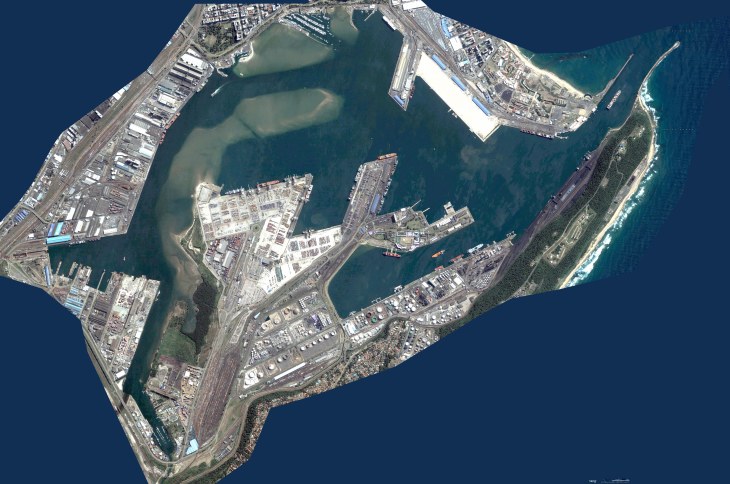
Durban_Harbour_Photo Hi-ResA tad of nostalgia? No, this is relevant and historic. Look what Africa’s busiest seaport looked like 60 (or more) years ago. I am very grateful to Lois Crawley and Cecil Gaze (fellow customs colleagues in Durban) for sharing these historic gems. For purposes of contrast see the modern-day harbour (above). Real estate in the harbour area is in short-supply and significant operational expansion over the last 10 years has placed huge strain on the road and rail networks and the surrounding industrial areas. In recent times the expansion of containerised handling facilities has radically affected the traffic flows, even in nearby residential areas such as the Bluff. With increasing demand for premium containerised port handling facilities, the old Durban airport has been sited for development of a new port, perhaps the biggest and most ambitious construction project yet in South Africa. While one can marvel at the development over what is a relatively short period of time (a generation), spare a moment and view the seemingly archaic slideshow of Durban harbour purportedly between 1940 and 1960 – which some amongst us can even remember. Enjoy!

This slideshow requires JavaScript.

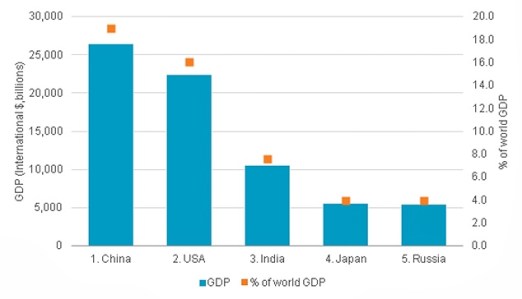
The Top 5 Largest Economies in 2020

Source: Euromonitor International from national statistics/Eurostat/OECD/UN/International Monetary Fund (IMF), International Financial Statistics (IFS)Note: Purchasing Power Parity has been used as this is a method of measuring the relative purchasing power of different countries' currencies over the same types of goods and services, thus allowing a more accurate comparison of living standards.

Source: Euromonitor International from national statistics/Eurostat/OECD/UN/International Monetary Fund (IMF), International Financial Statistics (IFS)Note: Purchasing Power Parity has been used as this is a method of measuring the relative purchasing power of different countries’ currencies over the same types of goods and services, thus allowing a more accurate comparison of living standards.

By 2020, three of the world’s five largest economies will be emerging countries, accounting for 30.4% of global GDP in PPP terms. Advanced economies are being displaced by emerging market superpowers, notably the BRIC countries, which has been accelerated by the seismic effects of the global economic downturn of 2008-2009. Euromonitor International predicts that China will become the world’s largest economy in PPP terms in 2017.

Additionally, Russia will overtake Germany as the fifth largest economy in 2016. These shifts will influence global politics, business environments and investment flows while consumer markets in developing countries will rise in importance as the middle class expands.

1. China: Set to become world’s largest economy in 2017

A large manufacturing base, cheap labour costs, the world’s largest population and economies of scale have resulted in unprecedented economic growth in China. Although growth is slowing, the delayed recovery in advanced economies from the global economic downturn means China will overtake the USA as the world’s biggest economy in 2017, and account for 19.0% of global GDP in PPP terms by 2020. Challenges loom large, however, including rising labour costs, pollution, a potential real estate bubble and rapid ageing arising from the government’s one child policy. Euromonitor predicts that China’s working age population (aged 15-64) will decline from 2014.

2. USA: End of the American dream?

The USA will lose its position as the world’s number one economy in 2017. In 1990, the USA accounted for a quarter of global GDP in PPP terms but we forecast this to plummet to 16.0% by 2020. The country was where the global financial crisis began in 2008 and it has failed to recover to its potential while also slipping in global competitiveness rankings. Although the government avoided the “fiscal cliff” in 2012, one of the biggest challenges remains a budget deficit reduction strategy, without the ensuing political gridlock. Nevertheless, the USA retains advantages, namely as the world’s largest consumer market and a leader of technological innovation.

3. India: Demographic dividend to benefit country beyond 2020

India overtook Japan as the world’s third largest economy in PPP terms in 2011 and its demographic advantage means the country could become the world’s biggest economy in the coming decades. India has a young population where it is benefitting from its demographic dividend (when there are more people of working age and the proportion of the child population declines). Euromonitor forecasts that India will become the world’s largest population by 2025 and that its working-age population will increase by 11.6% in 2013-2020 compared to -3.1% in China. However, India lags in major indicators including educational attainment and infrastructure development.

4. Japan: Paying the price for decades of economic stagnation

Structural problems beset Japan, with decades of weak economic growth and deflation while it has totalled the highest proportion of public debt in the world at 235% of GDP in 2012. Although the country has not yet suffered a eurozone-style sovereign debt crisis, as the majority of its debt is domestically-owned, an increase of foreign debt could trigger a Japanese debt crisis. It has the oldest population globally (mean age of 44.7 in 2012) and a shrinking labour force which will add considerable strain on government finances, while a strong currency makes its exports uncompetitive. Yet Japan’s location within Asia means it can take advantage of cheaper production costs in the region and growing demand for its high-tech products from a burgeoning Asian middle class. Like the USA, it is a global technological leader, giving it a competitive edge over its emerging neighbours.

5. Russia: Overtakes Germany as fifth largest economy in 2016

Russia will become the world’s fifth largest economy in 2016 in PPP terms, driven by its energy sector, as one of the top oil and natural gas producers worldwide. It also offers potential in its rapidly expanding consumer market, which Euromonitor forecasts will be the ninth largest globally in real terms in 2020. Its accession to the World Trade Organisation in August 2012 further cements its integration into the global economy. The lack of economic diversification and modernisation remain key long-term challenges with government policy aiming to tackle this, for example, by investing in the Skolkovo Innovation Centre Project, Russia’s equivalent to Silicon Valley. Corruption, state control and bureaucracy also hamper the business environment in Russia. Like elsewhere in Eastern Europe, the Russian working-age population is in decline (-4.5% in 2013-2020) despite a short-term baby boom, which will pose a demographic challenge to sustaining non-oil economic growth. Source: Euromonitor.com

Jamaica plans global logistics hub

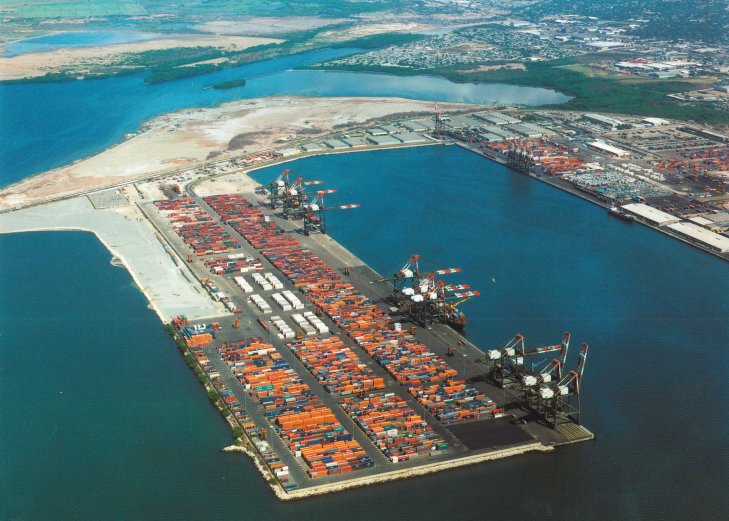
The Port of Kingston – ripe for development

The Port of Kingston – ripe for development

The Government of Jamaica has revealed ambitious plans to turn the Caribbean island in to a global logistics hub – and high level talks have already begun with the aim of increasing volumes of sea cargo.

Projects under discussion include developing the Port of Kingston ahead of the expansion of the Panama Canal and the development of a new commodity port to be built in eastern Jamaica which will specifically handle petroleum products, coal, minerals and grain.

At the same time, there is talk of constructing an air cargo airport to help with increased volume of boxes and the construction of large scale ship repair docks to service the increasing volume of post-panamax vessels.

Dr Eric Deans, chairman of the Logistics Task Force, said a market of 800 million people, including the USA and Brazil, can be accessed readily from Jamaica. He said trade opportunities are due to “burst wide open with the expansion of the Panama Canal scheduled to be completed in 2015; the multi-billion stimulus package by Brazil for World Cup 2014 and Olympics 2016; and the growing middle class in Latin America.”

He added that a critical aspect of the global logistics hub initiative is the broadening of bilateral collaborations with Jamaica’s global partners, and encouraging private sector investment and financing through private-public partnerships (PPPs).

Talks regarding the set-up of special economic zones are already underway with local and foreign investors.

The Jamaica Ministry of Industry, Investment and Commerce, which is spearheading the initiative, says that it will help give the country a global logistics supply chain that is able to compete with the likes of Singapore, Dubai and Rotterdam.

Perhaps this initiative could spur on our local authorities to actually move on ‘logistics hubs’ here in South Africa. While the huge expansion plans for our existing harbours, railroads are pursued, it is high time that the likes of Tamboekiesfontein, for instance, and other privately initiated transit hubs are taken seriously, and in an integrated manner to benefit commerce and trade in the Southern African region.

 Related articles

Nigeria – Maximizing Opportunities in Free Trade Zones

Lagos Free Trade Zone

Lagos Free Trade Zone

So how come FTZs, IDZs, EPZs, etc are working in other African countries and not here in South Africa? This Day Live (Nigeria) offers some of the critical success factors which delineate such zones from the normal economic operations in a country. Are we missing the boat? The extent of economic and incentive offering can vary substantially between the different economic and trade zone models – some extremely liberal while others tend to the conservative. Obviously the more liberal and free the regulations are the more stringent the ‘guarantees’ and controls need to be. However, in today’s e-commercial world, risk to revenue can more than adequately be mitigated and managed with through risk management systems. Manufacturing and logistical supply chain operations are likewise managed in automated fashion. I guess the real issue lies in governments appetite for risk and more particularly its willingness to relax tax and labour laws within such zones. Furthermore, a sound economic roadmap demonstrating backward linkages to the local economy and outward linkages to international markets must be defined. Herein lies some of the difficulties which have plagued South African attempts at such economic offerings – no specific economic (export specific) goals. Limited financial/tax incentives for investors, and poor cooperation between the various organs of state to bring about a favourable investment climate.

Free Trade Zones (FTZs) are at the crux of the growth attributed to emerging markets. All the BRIC nations have used the FTZs as a buffer to economic meltdown particularly in the wake of the most recent financial and economic crises. The “great recession” of 2007 – 2009 saw the BRIC nations growing at the rates of 7% to 13%. Consequently, the importance of FTZs as well as maximizing opportunities therein cannot be over-emphasized. The literature defining FTZs vary, but they all have the following characteristics in common:

  • A clearly delimited and enclosed area of a national customs territory, often at an advantageous geographical location, with an infrastructure suited to the conduct of trade and industrial operations and subject to the principle of customs and fiscal segregation.
  • A clearly delineated industrial estate, which constitutes a free trade enclave in the customs and trade regime of a country, and where foreign manufacturing firms, mainly producing for export, benefit from a certain number of fiscal and financial incentives.
  • Industrial zones with special incentives set up to attract foreign investors, in which imported materials undergo some degree of processing before being re-exported.
  • Fulfilling their roles in having a positive effect on the host economy, regulators look at FTZs from a nationalist perspective. Inevitably, they seek the following benefits:
    • Creating jobs and income: one of the foremost reasons for the establishment of FTZs is the creation of employment.
    • Generating foreign exchange earnings and attracting foreign direct investment (FDI): measures designed to influence the size, location, or industry of a FDI investment project by affecting its relative cost or by altering the risks attached to it through inducements that are not available to comparable domestic investors are incentives to promoting FDI. Implicit in this statement lies the definition of FTZ. Other traits that are recognizable when discussing FDI’s include specially negotiated fiscal derogations, grants and soft loans, free land, job training, employment and infrastructure subsidies, product enhancement, R&D support and ad hoc exceptions and derogations from regulations. In addition to FDI, by promoting non-traditional exports, increased export earnings tend to have a positive impact on the exchange rate.
    • Transfer of technology: trans-national corporations (TNCs) are a dominant source of innovation and direct investment by them is a major mode of international technology transfer, possibly contributing to local innovative activities in host countries. It is a government’s primary obligation to its citizenry to provide attractive technology, innovative capacities and mastering, upgrading, and diffusing them throughout the domestic economy. Nevertheless, through national policies, international treaty making, market-friendly approaches, a host country gravitates from providing an enabling environment to stronger pro-innovation regimes that perpetually encourage technology transfer.

FTZs can be both publicly (i.e. government) and or privately owned and managed. Governments own the more traditional older zones, which tend to focus more on policy goals that are primarily socio-economic. They emphasize industry diversification, attracting FDI, job creation and the like. Privately-owned FTZs have the advantage of eliminating government bureaucracy, are more flexible, and are better prepared to deal with technological changes. The global trend towards privatization has made privately-run zones more popular and a number are highly successful. The role of government in the case of privately-run zones is to provide a competitive legal framework with attractive incentive packages that meet the World Trade Organization (WTO) requirements.

FTZ Operations in Nigeria

FTZs were established in 1991 in order to diversify Nigeria’s export activity that had been dominated by the hydrocarbon sector. By 2011, there were nine operational zones; ten under construction; and three in the planning stages. The governing legislation includes the Nigeria Export Processing Zones Act (NEPZA) and the Oil and Gas Export Free Zone Act (OGEFZA). Zones may be managed by public or private entities or a combination of both under supervision of the Authority. For the full article go to – This Day Live

Want to help? Shut up and listen!

The subject of “Aid” is perhaps the hottest topic on the African continent, but for a variety of reasons. I came across the following video clip which I believe hits the nail on the head when it comes to international donor aid. No doubt there will be many out there who will denounce the presenter, Ernest Sirolli’s message, but as an African myself I can attest to the many examples of wasted opportunity and bullying which has occurred and continues (till this day) by NGO’s who believe they know better than any what is good for this continent. Thanks to the egotism of most politicians it is easy for such NGO’s to bulldoze their way into lucrative contracts which in most instances never see the light of day, or are so poorly implemented by outsiders, that the target country inevitably has to start all over again at its own cost. Anglo-Saxon involvement and meddling is a particular case in point … brazenly advancing the argument of ‘saving Africa from the Africans!’ I have experienced this several times in the last 15 years. Africa to donors has become little more than a box of Lego – where handpicked consultants experiment – upending all the coloured blocks and after 5 years or more leave a pile of blocks in no better arrangement than what they found when they first arrived. Sadly, the ‘developed nations’ have gotten the whole world into a financial mess and, now more than ever, will apply pressure on African governments into newer and more lucrative deals, because there are no more opportunities in their own back yards. The methods are the same, even the players are the same, just the stakes are now higher. Why, because China and the East are now the new ‘trading partners’ with a bit more bargaining power. Enjoy the video!

About the speaker

Ernesto Sirolli is a noted authority in the field of sustainable economic development and is the Founder of the Sirolli Institute, an international non-profit organization that teaches community leaders how to establish and maintain Enterprise Facilitation projects in their community. The Institute is now training communities in the USA, Canada, Australia, England and Scotland.

In 1985, he pioneered in Esperance, a small rural community in Western Australia, a unique economic development approach based on harnessing the passion, determination, intelligence, and resourcefulness of the local people. The striking results of “The Esperance Experience” have prompted more than 250 communities around the world to adopt responsive, person-centered approaches to local economic development similar to the Enterprise Facilitation® model pioneered in Esperance. Source: TED.com

Related Article

Saldanha Bay IDZ?

Its difficult not to be cynical…..after several failed and half-baked attempts at IDZs whats different about this one? Have the labour and tax issues changed?

A 60 day public consultation period for the designation of an Industrial Development Zone (IDZ) in Saldanha Bay has begun. Members of the public can make use of this opportunity to voice their opinions on the proposed vision for Saldanha Bay as presented in the Application for IDZ Designation and Operator Permit for the Saldanha Bay IDZ document gazetted earlier last week. View the document here!

Collaboration between government, citizens and business is necessary to build a Western Cape that is a better place to invest, to do business, get a job and earn a living, for everyone. Saldanha Bay has long been acknowledged as an important resource for the sustainable growth and development of the West Coast region, and indeed, the whole of the Western Cape.

All indicators show that an Industrial Development Zone in Saldanha Bay would be to the benefit of the Western Cape, South Africa and the African continent as a whole in creating a functional, self-sustaining industry that contributes to economic development and sustainable employment. The Saldanha Bay Feasibility Study published in October 2011, found that there was sufficient non-environmentally sensitive land upon which an IDZ development could take place.

After a process of consolidation into an attainable business plan focussing on the Oil & Gas and Marine Repair Cluster, the socio-economic impacts were found to be that after 20 years, an IDZ in Saldanha Bay developed around these industries, would generate a minimum annual return of R11 billion for the economy and create over 25 000 sustainable jobs nationally.

The total contribution to GDP for the IDZ is expected to amount to R3.4 billion in the first year, increasing to nearly R6 billion in the second year. In the third year the contribution is expected to be slightly lower at R5.5 billion due to a decrease in capital spend, but then increasing by the twentieth year with a total annual contribution to GDP amounting to R11 billion.

Total direct and indirect jobs in the Western Cape are expected to amount to 4 492 in the first year, 8 094 in the second year, 7 274 in the third year, 10 132 in the fourth year and 14 922 in the fifth year. From the seventh year around 14 700 direct and indirect jobs would be sustained in the province as a result of the IDZ.

Saldanha Bay is an ideal location for the development of an Oil & Gas and Marine Repair Cluster. The Port of Saldanha Bay is also competitively located between the oil and gas developments on the West Coast of Africa, as well as the recent gas finds on the East Coast of Africa. South Africa is a significant industrial economy in the sub Saharan region and is logistically well connected to the region. It is therefore a natural location for providing repair and maintenance services, warehousing and logistics and professional/technical services where proximity to end location is an advantage. Source: Western Cape Minister of Finance, Economic Development & Tourism

Beitbridge to be Zim’s first economic zone?

The Chronicle (Zimbabwe) reports that the Ministry of Economic Planning and Investment Promotion and South Africa’s Department of Trade and Industry are creating economic zones in their respective countries to boost investment. Economic zones are areas where local and foreign investors or companies who invest there are given preferential benefits like low tax and low rentals.

Speaking during the 4th Investment and Trade Initiative between visiting South African business delegates and Bulawayo business people, the Deputy Minister of Economic Planning and Investment Promotion Dr Samuel Undenge said the Bilateral Investment Promotion and Protection Agreement signed in 2010 by the Zimbabwean and South African Governments would help in the creation of the economic zones.

South Africa’s Deputy Director General responsible for Enterprise and Development Mr Sipho Zikode said they were busy crafting a special document to guide the 12 identified economic zones in South Africa. “Messina is one of the chosen economic zones in South Africa and we also want to create linkages with Beitbridge as they are close to each other,” said Mr Zikode. Dr Undenge said there was need for countries to work together to boost economies on the continent. The business seminar was held to achieve mutual economic growth and development through outward investment facilitation, infrastructure development and trade liberalisation between Zimbabwe and South Africa.