Feature – Côte d’Ivoire Single Electronic Window for Trade

Ivory Coast SEW2As Customs and Border regulatory authorities ramp up their commitment to international agreements, such as the WCO Revised Kyoto Convention, SAFE Framework of Standards and the more recent WTO Trade Facilitation Agreement, more countries will offer a single point of entry through which traders, international carriers and logistics providers can access and comply with the resident customs and other government regulatory regimes.

The concept of a Single Window is borne out of the fact that traditional import/export and related regulatory requirements pose a barrier to market entry for international goods. There are many derivatives of Single Window in operation globally. Perhaps the best resource for this can be found on the UNECE’s interactive Trade Facilitation Implementation Guide webpage. One can navigate to the case studies page to read up on a country-by-country experience on various trade reforms including Single Window developments.

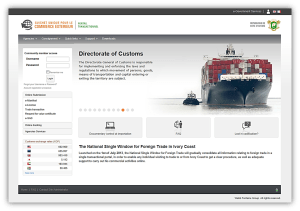
Côte d’Ivoire (Ivory Coast) is one of many African countries who have introduced Single Window as a facilitation measure whereby international trade can interface with Customs in a number of ways. It consists of a web-based trade portal (operated by Webb Fontaine) which interfaces with AsycudaWorld (AW), Côte d’Ivoire Customs’ management system. The portal allows traders to key-in advance import/export information within an electronic document called TVF (Trade Virtual Folder). Customs declarations are then subjected to tariff classification  and valuation, thereafter routed for commercial/risk assessment and revenue accounting on AsycudaWorld, or Sydam World as it is known in Côte d’Ivoire.

Commercial banks use the TVF within the Single Window to endorse the settlement of each import; the Ministry of Commerce subsequently authorizes the overall transaction through the system.

The Single Window provides an entry point for traders and supply chain operators to accomplish various Customs formalities such as –

  • Customs Declaration processing – allowing importers and exporters to electronically file clearances.
  • Manifest operations – used by all carriers to upload their XML manifests and register the same through the trade portal directly into AsycudaWorld. The facility also allows the amendments of waybills (e.g. excess and shortages) and automatically synchronizes the operations with the AW system. The Port Authority IT systems, including the Port of Abidjan and the Port of San Pedro, automatically receive and integrate the manifests submitted by carriers.
  • License module – allows traders to request import/export licenses (regulatory permits) that are later on approved online by the relevant ministries. Each license comprises a list of regulated products, quota allowable amount based on a predefined scheme (gross mass, net mass, FOB, Unit of measurement or unlimited quota). Further developments will include the automatic write-off of license quota by declarations using the Declaration module.

Source: Webb Fontaine

Dubai Customs arrests South African carrying cocaine

cocaineDubai customs arrested a woman who was trying to smuggle 2.3 kilograms cocaine in her shorts at Dubai International Airport. Customs officers stopped the 31-year-old South African passenger when she arrived at the airport’s transit terminal.

One of the officers suspected the woman passenger and took her inside a private search room as she seemed perplexed. She was reportedly found to be smuggling 16 pouches of cocaine that were secretly stitched inside her mini-shorts.

The Dubai Court of First Instance convicted the South African of smuggling cocaine in transit and jailed her for 10 years. When she appeared in court, the defendant admitted that she smuggled the substance in her clothes but maintained that she did not know that she carried a banned substance.

She confessed that she agreed to carry the substance for money [the amount was not specified] but did not realize that she was carrying cocaine. The passenger claimed in court that she had intended to take the substance to her homeland and not to Dubai. The court fined her Dh50,000 (US$13, 000) and will be deported after serving her punishment. The defendant was cited confessing to prosecutors that she smuggled the drugs via Dubai in transit. Source: customstoday.com.pk

Zimbabwean Customs seizes 48kg illicit South African gold worth R20m

goldZimbabwean Customs (ZIMRA) seized 48 kg illicit gold worth R 20 million and arrested 46 people for initial investigations. Forged gold serial-number stamps, specially designed armoured vehicles, clandestine refineries, fake customs clearance papers and documents with links to the black market.

These and other pieces of evidence are the keys that the Hawks believe link a Zimbabwean and South African gold-smuggling syndicate to scores of buyers in Europe masquerading as dealers in precious metals. For two years police have been zeroing in on the syndicate, whose roots are in illegal gold mining in Zimbabwe. Inside were 48kg of gold bars valued at R20-million.On Friday, they acted. In the early hours teams from the Hawks, the Special Task Force and Crime Intelligence raided luxury homes and farms across Gauteng and the North West.

In one of the raids police discovered a walk-in vault at a warehouse outside OR Tambo International Airport. Inside were 48kg of gold bars valued at R20-million. They were being prepared for stamping with official South African gold serial numbers designating that the metal had been officially mined and refined in the country. Police sources say the gold was to have been flown to at least three European countries at the weekend before being smelted, re-refined and distributed.

A source with knowledge of the investigation has revealed the inner workings of the syndicate, from how and where the gold is mined to how corrupt customs and mining officials facilitate the metal’s passage across borders.(Now should’nt this prompt some serious cause for concern, if true?)

“The amount this syndicate has handled is immeasurable. We have known about them for two years and in that short time we have recovered R40-million,” he said.

“They have operated both in South Africa and Zimbabwe as well as other SADC [Southern African Development Community] countries for years, well before we even discovered them”

Illegal miners in Zimbabwe supplied the syndicate. “With the instability and corruption there [South Africa?] it’s dangerous but easy. Once they have the gold, runners take it to the border where, through corrupt officials, it is smuggled across disguised as things such as household products.”

The gold was taken to farms in and around Modimolle in Limpopo where illicit refineries smelted and refined it, the source said. With the help of South African mining officials, gold clearance documentation and special serial and insignia stamps were sourced.

“Once stamped you would never know the difference. We have placed it next to legitimate bars and it looks and feels the same.” He said the gold was distributed through legitimate channels in Europe.

“Those running the syndicate know what they are doing. They are well-connected and influential businessmen with ties to Africa, Europe, the US and Asia”.

“They are linked to the gold powerhouses of the world. These are not ‘mickey-mouse’ people. They are immensely powerful and extremely well connected to some of the world’s top legal firms. Within hours of Friday’s raids lawyers were arriving at their clients’ homes and businesses.”

He said police seized hundreds of official gold clearance documents, serial stamps and other paperwork with links to mines and importers and exporters. Source and picture: CustomsToday.com

Contraband Cigarettes – 3 Zimbabweans and a South African arrested

cigarettes1Three Zimbabweans and a South African were arrested in Limpopo province for allegedly teaming up and smuggling cigarettes worth $200,000 into the neighbouring country. The Zimbabwean trio, Takuzo Mutswiro, 22, Tatenda Nyamhunga, 31, Joseph Mhembwe, 27 and Gilbert Mamburu, 54, a South African from Tshiozwi village in Limpopo province, were arrested last week at Tshilwavhusiku near Thohoyandou after police intercepted a truck they were using to transport the cigarettes.

Limpopo provincial spokesperson Colonel Ronel Otto, in a statement, said police followed up on information they received about suspicious activities at Mamburu’s house. Upon arrival at the scene, the three Zimbabweans attempted to run away, but were apprehended. Cigarettes with an estimated value of more than R2 million were found hidden in a small truck as well as a light delivery truck. It is suspected the cigarettes were smuggled from Zimbabwe, however their origin and destination is still being investigated.

Lately there has been an increase in the number of cigarette smugglers being arrested in the neighbouring country. Some of the cigarettes are smuggled out of the country through undesignated entry points along the crocodile-infested Limpopo River while others find their way into South Africa through Beitbridge Border Post despite the presence of Zimbabwe Revenue Authority (ZIMRA) scanners.The machines are able to detect concealed goods hidden in sealed containers.

The South Africa reportedly charges high rates on cigarette imports, which has resulted in a marked increase in cases of smuggling between Zimbabwe and South Africa. Most of these cigarettes are repackaged when they get to South Africa before being shipped to either Europe or Asia.

According to the South African Revenue Services (SARS), Beitbridge Border Post accounts for 70 percent of the cigarettes which are smuggled into that country. A recent statement from the South African Police Service said cigarette smuggling from Zimbabwe was being prioritised after it emerged the country supplied 55 to 70 percent of the 10 billion cigarettes reaching the neighbouring country’s black market. Source: The Chronical (Zimbabwe) & Customstoday.com

WCO News – February 2015 Edition

WCO News - Coordinated Border Management Feb 2015Check out the latest WCO News – per usual a wealth of interesting customs and supply chain information:

  • WCO launches IRIS, an application exploiting open source information
  • Harmonized System amendments effective from 1 January 2017
  • Beginning the CBM process: the Botswana experience
  • Inter-institutionality – a distinctive feature of the Colombian AEO model
  • WCO Data Model: the bridgehead to connectivity in international trade
  • Implementing New Zealand’s Joint Border Management System

and a whole lot more…

Source: WCO

Its Annual Budget time – Tobacco, Tax and the Black Market

Cigarettes+XXX+smokingThe nation awaits the 2015 Budget Speech with trepidation to know if income taxes will rise. But there is unanimous certainty there will, as per usual, be an increase in ‘Specific Excise Duties’. The only question is by how much? Taxation of cigarettes and tobacco products appears to be the path of least resistance for tax-collectors. It receives little backlash from the wider public (unlike e-tolls) and even support in some quarters.

The imposition of the so-called “sin taxes” on cigarettes and liquor products, in addition to generating significant fiscal revenues, does serve an economic purpose. Unlike normal goods and “necessity” products, cigarettes are not an essential good which people need to survive. As far back as the 1700s, Adam Smith averred “Sugar, rum, and tobacco, are commodities which are nowhere necessaries of life … are therefore extremely proper subjects of taxation.” Again, the notion of the importance of tobacco to the fiscal basket is exemplified in utmost simplicity and honesty – if a politician, or an emperor in this case can be believed –

This vice brings in one hundred million francs in taxes every year. I will certainly forbid it at once – as soon as you can name a virtue that brings in as much revenue [Napoleon III (1800s) – reply when asked to ban smoking]

Despite all the furore over public health and governments efforts to decrease the demand for cigarettes, South Africa is no different to other nations – annual tobacco revenues to the state coffers amounts to around R10 Billion! Another round of sin tax increases in the upcoming budget appears inevitable, and these increases are spawning a range of unintended (but not unexpected) consequences – the illicit trade. Source: Polity.org / DNA Economics.

International Customs Day – 2015

For more information about Co-ordinated Border Management visit the WCO website.

Kenya Single Window Agency accuses KRA of Sabotage

KentradeThe Kenya Trade Network Agency, operator of the National Electronic Single Window System, has refuted claims by some clearing agents that the platform is lapsing. KenTrade has instead blamed slow integration of its system on the continued parallel use of the Kenya Revenue Authority’s systems – the Orbus and Simba. Currently, importers are using both systems to process documents such as import permits.
Project director Amos Wangora said there is need to retire Orbus system for agents to embrace the Single Window System, particularly in filing Import Declaration Forms. Kentrade accused KRA officials of avoiding the Single Window System.

“We don’t have any problem in the use of the Single Window System. It’s only people who don’t want to embrace the new system. Those using it are doing good only for some KRA officials who still want to use the Orbus system,” said Wangora in an interview on Friday.

KenTrade is the state agency tasked with facilitating cross-border trade through the Single Window System.

Wangora said only three modules remain for the Single Window System to be completed fully – include on declaration submission, bonds and exemption. Testing of the declaration submission module is on and is expected to be completed by 20 January 2015.

A section of clearing agents had raised concerns over delays in cargo clearance at the port of Mombasa under the Single Window System. Yesterday, the Kenya International Freight and Warehousing Association, Mombasa chapter, said KRA officials prefer their own system, which “lacks transparency”.

A clearing agent told the Star that one has to personally push for services, which involves handouts, under the KRA system. Kentrade has since written to KRA commissioner-general to halt the Orbus system on January 31.

The Single Window System integrates about 24 government agencies’ functions, offering a one-stop shop for processing import and export permit documents.  More than 6,000 imports and exports permits were issued under the new system last year, including permits from Kenya Bureau of Standards and Ministry of Health’s veterinary and pharmaceutical departments.

About 1,200 clearing agents, shipping agents, consolidators and partner government agencies will be trained on the remaining modules. Kentrade targets to have the system fully embraced by all stakeholders by July, with the country set to go paperless by 2015. Source: The Star (Kenya)

China’s Second Continent – the new colonisation of Africa

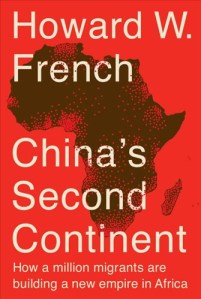
chinas-second-continent-howard-frenchFormer US Diplomat Brooks Spector takes a look at this important book (Daily Maverick) that should be on every economic policy maker’s reading list. Howard French’s China’s Second Continent, offers a very different – and provocative – perspective on China’s economic future, with special attention on Africa. Building on years of experience in both China and Africa, and following months of personal inquiry across the continent to search for answers to the questions of what China really wants in Africa, and how it is going to get there, French has effectively turned these questions on their head.

Instead of writing about China’s international economic policies in the language of the think tanks, of Wall Street and The City, or government councils in Whitehall or Washington, French has focused instead on what a million individual Chinese have done – or are now doing – throughout Africa, almost without regard to what the Chinese government may have planned or been thinking. In tackling the topic through this optic, French has given this vast Chinese movement into and across Africa crucial human dimensions. For the full review please visit this hyperlink. China’s Second Continent is available in hardcopy and electronic publication from online book stores. Source: Daily Maverick

ZIMRA Custom Warehouse in Beitbridge destroyed by fire

Zimbabwe temporarily shut down its border with South Africa in Beitbridge yesterday after a Zimbabwe Revenue Authority (Zimra) warehouse caught fire. Impounded goods worth millions of dollars went up in flames in the inferno. The blaze exposed Beitbridge’s lack of fire preparedness with officials having to ask South Africa to help. Beitbridge town has no fire engines. To view Video of Customs Warehouse on fire in Beitbridge – click here!

Second Southern African border post inferno in a week.

The fire started shortly after 5PM and caused a power outage at the busy border post, Zimbabwe’s gateway to its biggest trade partner, South Africa. The warehouse was used to keep smuggled goods such as television sets, electrical gadgets, blankets and groceries whose customs duty value was estimated at just over $1 million by the spokesperson for the Beitbridge Civil Protection Unit, Talent Munda.

Munda said the cause of the fire was yet to be established although it was suspected that it could have been caused by an electrical fault.

“The fire destroyed property worth $5 million and the cause is not known for now. When the incident occurred, there was no-one inside and it was locked. Most of the goods that went up in smoke were smuggled goods and those impounded by Zimra and nothing was recovered as everything was burnt to ashes,” said Munda.

Stanbreck Horita, a Harare truck driver who witnessed the incident, said the blaze resulted in border authorities temporarily suspending movement of travellers.

“I had parked my truck at the Zimra yard waiting for my vehicle to be cleared when fire started and everyone was scurrying for cover as the raging fire started spreading. It destroyed the entire building,” said Horita.

Another witness, Dumisani Mudau, a clearing agent, said: “I was busy processing papers for my clients when I heard people raising alarm and the next thing everyone was rushing to the scene where there was a huge fire at the Zimra warehouse. The fire was spreading fast such that even when fire fighters arrived at the scene they could not contain it.”

Buses carrying travellers who were bound for either South Africa or Zimbabwe were delayed as a result of the fire. Beitbridge town secretary Loud Ramakgapola said they had to collaborate with the National Oil Company of Zimbabwe (NOCZIM) who sent their fire trucks to the border post.

“We tried to send our tenders to the border post but unfortunately our fire fighters could not contain the fire because it was too strong. The other problem is that there are no fire hydrants at the border making it difficult to deal with such disasters,” said Ramakgapola.

Fire fighters from South Africa’s Musina Fire Station arrived shortly and teamed up with their local counterparts in trying to put out the fire to no avail. Ramakgapola said Beitbridge had no fire station and the local authority relied heavily on Musina Municipality (South Africa) in the event of similar disasters.

“Beitbridge is a very busy border post which handles a huge influx of travellers especially as we approach the festive season. We therefore need a proper fire station in Beitbridge so that we’re able to deal with such situations. This is wake up call and we need to look into that issue as a matter of urgency,” said Ramakgapola.

Beitbridge border post is the busiest inland port of entry in sub-Saharan Africa, handling an average of 10,000 travellers daily and the number doubles during peak periods such as the festive season. Source: southafricalatestnews.co.za

Related articles

SADC Customs Training Course on NTBs in cooperation with the WCO

SADC organizes a Customs Training of Trainers Course on NTBs in cooperation with the WCO [SADC]

SADC organizes a Customs Training of Trainers Course on NTBs in cooperation with the WCO [SADC]

The Southern African Development Community (SADC) organized a Training Course under its Customs Training of Trainers (TOT) Programme between 17 to 20 November 2014 at its Headquarters (Gaborone, Botswana). The training was conducted in collaboration with the World Customs Organization (WCO), the WCO Regional Office for Capacity Building (ROCB) for the Eastern and Southern Africa Region, and the Deutsche Gesellschaft für Internationale Zusammenarbeit (GIZ). Forty-two senior Customs officers from 13 of SADC’s 15 Member States, many of whom are active in their administrations’ training departments, participated in the Training Course.

The main objective of the TOT Programme is to provide technical and professional support, particularly in view of the contribution by Customs administrations to the consolidation of the SADC Free Trade Area and the successful implementation of the SADC Protocol on Trade. This will be achieved through the TOT Course on Non-Tariff Barriers (NTBs), which continue to be major stumbling blocks to trade in the region and many of which are Customs-related (or perceived as such). Participants who complete the Training Course will disseminate the knowledge gained, at national level, to relevant stakeholders including Customs officers from their own administrations.

Participants learnt the basic principles and definition of Non-Tariff Measures and NTBs, covering the World Trade Organization (WTO) Agreement on the Application of Sanitary and Phytosanitary Measures (SPS Agreement) and inter-regional initiatives such as the online NTB monitoring mechanism and national monitoring committees. They also gained an overview of the Agreement on Trade Facilitation (TFA) recently concluded under the auspices of the WTO. The WCO gave an introduction to its tools and instruments for applying trade facilitation measures and to the Revised Kyoto Convention (RKC). Particular emphasis was placed on the new Transit Handbook and the TFA Implementation Guidance.

The course was highly interactive and participants shared their views on the importance of global standards to facilitate regional integration and various trade facilitation measures. They discussed how they could promote Coordinated Border Management (CBM) and increase public-private dialogue at national and regional level. Source: WCO

Truck Explosion at Kasumbalesa Border Post

There are unconfirmed reports of five drivers burnt to death at the Kasumbalesa border post in Zambia. According to a report from FESARTA the incident occurred at around 17:00 Zambian time on Monday, 24 November. To watch the Truck inferno which killed two Zimbabweans (Video) – click here!

Two Zimbabwean truckers are believed to be among the four dead at Kasumbalesa Border Post, linking Zambia and the Democratic Republic of Congo

Unconfirmed reports allege a petrol tanker was leaking and the petrol spread to an area where drivers were cooking. In the ensuring fire and explosion unconfirmed reports allege a 100 trucks were affected.

The area does not have a dedicated fire department and unconfirmed reports claim the fire lasted until the early hours of Tuesday, 25 November.

It is unknown how many drivers were injured in this explosion.Source & pictures: Glen Tancott, TransportWorldAfrica

Update! FESARTA update on fire in Kasumbalesa DCDG (Transport World Africa)

FIATA urges Forwarders to challenge ‘unjustified’ shipping line surcharges

international%20shipping%20surcharges-resized-600The international trade association that represents the world’s freight forwarders and logistics service providers, FIATA, has called on container shipping lines to provide greater clarity on the ever increasing variety of surcharges that they apply.
Robert Keen, chairman of FIATA’s Multimodal Transport Institute, said in a statement that forwarders were accustomed to currency and fuel surcharges, but needed more transparency for many of the other surcharges, “often with questionable names and purposes”, that are levied on freight forwarders.

“In the past, we have seen administration fees, peak season surcharges, or ISPS-add on surcharges,” Keen said. “Of late, we have had examples of container cleaning fees and container sealing fees, without any evidence of the expense actually being incurred.”

It is a recurring complaint among forwarders and shippers that have long accused the carriers of using surcharges as revenue streams rather than the cost recovery mechanisms for which they are purportedly imposed.

“It is time for freight forwarders to stop accepting at face value opaque and unjustified surcharges,” said Keen, who is also director general of the British International Freight Association (BIFA).

Keen highlighted the congestion that is currently plaguing many ports around the world.

“There have also been recent examples of port congestion surcharges caused by labour unrest; and haulage surcharges resulting from HGV driver shortages, which is difficult to understand as there is no explanation and little justification for an additional charge for a service that the container line is finding difficult to provide,” he said.

The Hong Kong Shippers’ Council has also taken a dim view of the surcharges being levied on shippers using the Kwai Chung container terminals. Willy Lin, chairman of the council, said the port congestion surcharge introduced by shipping lines in the intra-Asia trade on October 19 was “unacceptable and unjustifiable.” Sources: Lloyds and JOC

nCEN goes live in Botswana

nCEN goes live in BotswanaThe WCO launched its national Customs Enforcement Network (nCEN) application in Botswana in October 2014. Following the pilot projects in Mauritius and Kenya, the nCEN is already operational in Namibia, Swaziland, and the Seychelles, providing these countries crucial opportunities for regional cooperation in the enforcement field.

After an official meeting in Gaborone with the Executive Management Committee as well as with the General Managers of Botswana Unified Revenue Service, the WCO delegation conducted an eight-day nCEN Workshop intended to provide local officers with the necessary knowhow about the nCEN application, with an ultimate goal of improving the operational efficiency and analytical possibilities of their Administration. The workshop also touched upon the other WCO applications, giving valuable insight on the additional data mining and information exchange potential of the CEN suite.

The launch of the nCEN application in the region is financially supported by the Finish government as a component of the WCO project “Building Trade Capacity through Customs Modernization in the East and Southern Africa Region”, aiming at providing Customs Administrations with the necessary hardware and software as well as related knowledge and skills to implement simplified and improved customs procedures with modern customs operational techniques.

The nCEN application consists of three independent databases (a seizure database, a suspect database, and a company database), as well as a communication component. The core database of national seizures and offences comprises data required for analysis, including means of conveyance, routes, and the possibility to view photos depicting exceptional concealment methods. Two supplementary databases contain information on suspected persons and offending business entities, facilitating a structured investigation process.

The nCEN software is a free application for all WCO Members. The costs of the hardware needed to run the nCEN application, the costs associated with the training, and possible costs for modifications to the local IT infrastructure (if applicable), are however the responsibility of the implementing Customs Administration. Source: WCO

Surge in Car Imports at ZIM/RSA Border as Dealers Panic

The Herald - Surge in new car imports between ZIM-RSAThere is a drastic increase in motor vehicle imports through Beitbridge border post as dealers are rushing to buy cars before the proposed 20 percent customs duty increase on imported motor vehicles comes into effect on November 1.

Finance and Economic Development Minister Patrick Chinamasa announced recently the Government intendeds to increase duty of motor vehicles which he said contributed 10 percent of the import bill in the first half of this year.

He proposed an increase in customs duty on single cab of a payload more than 800kgs from 20% to 40%, buses of carrying capacity of 26 passengers and above from 0% to 40%, double cab trucks from 40% to 60%, and passenger motor vehicles of engine capacity below 1500cc from 25% to 40%.

Customs duty for vehicles with engines above 1500cc has not been changed from 86 percent inclusive of VAT and Surtax. The development has raised anxiety among most Zimbabweans who are now rushing to buy second hand cars from Japan some of which come through South Africa.

Zimbabwe Revenue Authority (Zimra) is processing an average of 170 car imports at the border post per day since the beginning of October. Prior to the announcement Zimra used to process between 60 and 70 car imports per day. ZIMRA officers at the border said in separate interview yesterday that they were battling to clear the vehicles at Manica Transit Shed where 300 new cars arrive per day.

“We used to get 100 to 150 cars per day , but now the number has doubled and is ever increasing,” said one of the officers.

A sales manager at Wright Cars on the South African border, Mr Clemence Mabidi said the demand of cars with small engines such as Nissan March, Honda Fit, Toyota Vitz, Toyota Corolla, Toyota Raum and Fun Cargo had increased.

“We used to sell around 20 cars per day but now the number has increased to 40 and we have a backlog in deliveries to Zimbabwe.

“We are now hiring other car carriers to take the vehicles across the border,” he said.

Mr Mabidi said even the small car dealers who used to sell between 5 and 10 cars per day were now selling up to 20 vehicles. Some dealers have also reduced prices while others are increasing the prices because of the demand. A modest vehicle costs between $2500 and $3000 at these dealerships. Source: The Herald