Lesotho Revenue Authority launches Trade Portal

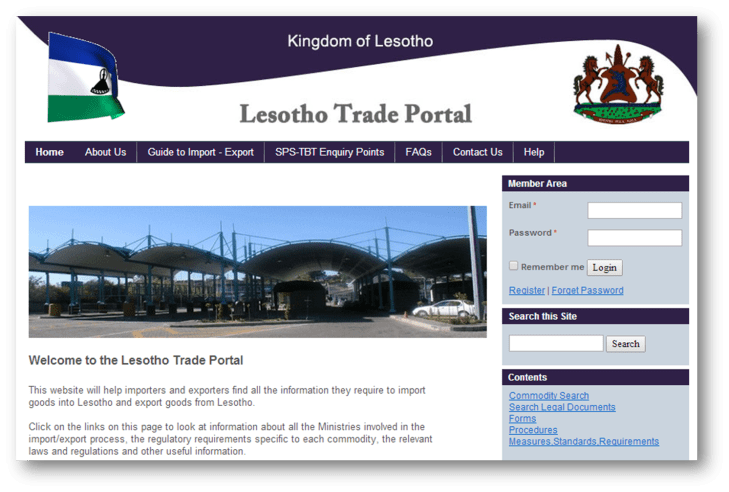
LRA Trade PortalThe Lesotho Revenue Authority (LRA) has undertaken an extensive Customs Modernisation Programme aimed at simplifying the processes and reducing the costs of ‘doing business’ at the border. Earlier this week, the LRA launched the Lesotho Trade Portal as an introduction of the first portion of these reforms which brings a commitment to transparency for all border users on expectations and procedures.  The launch of the portal will be followed by an introduction of simplified border procedures supported by the implementation of modern computerised systems using ASYCUDA World.

The LRA has been reorganising its structure the past year aligning it with organisational strategy, and alongside that as a result of the modernisation, there will be extensive restructuring to promote efficiency and professionalism in customs and across the LRA. Staff members are undergoing extensive training to prepare for the introduction of the new systems.

To facilitate legitimate trade and enhance compliance LRA will introduce risk based controls to enable legitimate trade to pass more freely through the border posts and following the recent pilot project, there will be a full introduction of a ‘Preferred Trader Scheme’ offering additional facilitation benefits to compliant traders.

Through use of modern technology LRA will speed up the inspection process as they will be coordinated and organised from dedicated inspection areas. There will eventually be an introduction of inland clearance to improve service delivery and clearance time.

To protect legitimate trade and reduce market distortion, there will be targeted anti-smuggling activities. This will be for deterrence of illicit and illegal goods as well as to protect the nation from prohibited importation of goods.

The Lesotho Business Partnership Forum has also voiced its unanimous approval of the Lesotho Trade Portal. It believes this milestone represents a major breakthrough in the relationship between business and government. It reveals a level of transparency in procedures and processes which business can only welcome as a sign of a more constructive and open approach to the management of government affairs.

Similarly, the traders and general public will participate in an extensive publicity campaign with announcement in the media as to how to get involved and benefit from the reforms.  A key tool in this process to keep everyone on the loop, will be the News section of Lesotho Trade Portal itself. This will be supported by an extensive communications programme and an education programme targeted at regular border users. Source: Lesotho Revenue Authority

No cash! No problem!

banner4Transport Forex, created by Inter Africa Bureau de Change, a registered bureau de change with the South African Reserve Bank has created an unique online banking system for the transport industry.

With branches at all of South African border posts, the company has expanded operations into Namibia, Botswana, Zimbabwe, Mozambique, Zambia, the DRC and Tanzania with offices on all the major border posts between these countries.

Transport Forex is an online ordering system where the transport manager can deposit money in South Africa into the relevant account therefore ensuring when drivers arrive at the relevant border posts there is enough money for them to pay the relevant duties. At the same time, this ensures enough cash is in the account for drivers to purchase fuel at key petrol stations or even pay for a service on-route in one of the partner countries.

Once the monies have been deposited into the account, an order number is sent via SMS to the driver who then presents it at the relevant Transport Forex office to draw the necessary funds required.

In the same way you can book and pay for diesel for your truck on any of the major transport routes in Namibia, Botswana, Zimbabwe, Mozambique, Zambia, the DRC and Tanzania. Transport Forex has negotiated with partner fuel suppliers for better prices and passes this discount directly to the transport company.

A new Payment Service was introduced in 2013 for clients. Should additional unforeseen funds be required for an emergency while the driver is on the road then monies can be made available for drivers almost immediately. This prevents valuable time from being lost.

Transport Forex is also in negotiations with several government institutions so relevant duties and taxes for operators’trucks can also be paid through the system in advance.

To join Transport Forex simply log onto www.transportforex.co.za, and click on “Create Account”. Registration is free, and there are no monthly charges.

Congestion Besets Botswana’s Tlokweng Border Post

botswanaMap showing border posts between Botswana and South Africa, with No.7 being the Tolkweng and No.4 the Martins Drift posts.

The temporary closure of the Martin’s Drift border post due to recent floods in the Tswapong area has resulted in the congestion of cargo trucks at Tlokweng border post.

Approaching the border from the Botswana side, there is a queue of these trucks awaiting declaration. The situation is made worse by shortage of parking space for the trucks, which at times lead to some trucks blocking way for others, hence the delay.

In an interview, the principal customs officer, Ms Monkgogi Makwati said they started receiving a large number of trucks on transit on Saturday (22 March 2014).

She said most of the trucks were from Kazungula on their way to South Africa. Ms Makwati also said trucks from South Africa were a challenge as the customs office was faced with a lot of work as goods were cleared in large quantities from that side.

She noted that Tlokweng border had always been the busiest in the country, but the current situation had made it more busy than usual. She also said the delay at the border was due to the electronic clearance system used by South Africa compared to the manual one used by Botswana, thus when the system is down, services from that side halt.

Ms Makwati, however, noted that trucks carrying perishables and goods such as medicines, gas and petrol among others were given special clearance and they do not take long at the border.

The traffic jam has not only affected services at the border, but also facilities such as toilets have started to experience some blockage while others are running out of water due to high number of people who are frequenting them.

Some truck drivers expressed dissatisfaction on the South African service of clearing noting that they had been at the border for four days without bathing. Source: Daily News Botswana

How SA can save R18bn – by playing hard ball

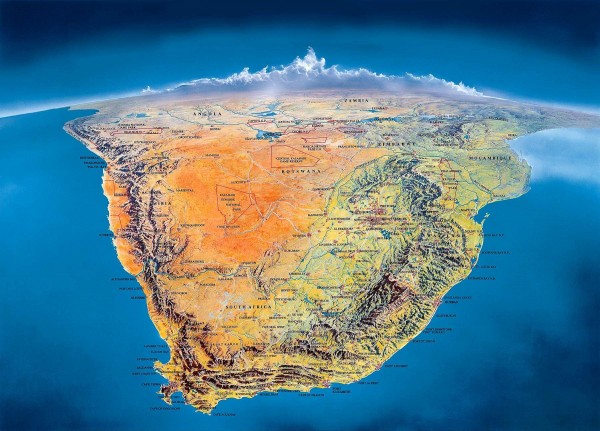
Southern_Africa_Panorama_MapSouth Africa is a member of the Southern African Customs Union (Sacu), which consists of Botswana, Lesotho, Namibia and Swaziland (BLNS), the oldest customs union in Africa but apart from this prestige, is Sacu worth the time?

In an article by Professor Roman Grynberg, he asked whether Sacu is a “dead man walking?” and I wish to follow-up on this. A recent article appearing on the World Bank’s website states that even if poor countries are neighbours, it is often more difficult for them to trade with each other than it is for them to trade with distant countries that are wealthy.

The Sacu agreement is principally about the issue of distributing customs revenue earned by the five members on their international trade with other countries. The distribution of this revenue is based on each country’s share of intra-Sacu imports and so favours the smaller members.

South Africa, for example, imports very little from within the region and so ends up paying the BLNS about R15bn to R18bn per year more than it would if Sacu did not exist.

If we are paying R15bn to R18bn per annum to be in a union with questionable benefits, why do we not exit the agreement?

For one, the SADC free trade agreement which was implemented in 2008, gives South Africa a “get out of jail free card” through providing South African exports similar but not identical market access to that available under Sacu.

We could thus “walk away from Sacu at any moment, save R15bn to R18bn and South African exports would still continue to flow across the Limpopo basin in more or less the same uninterrupted way.” (Grynberg, 2014).

Another reason, according to Grynberg, is that an “economic catastrophe” may result if South Africa exits. Swaziland and Lesotho are between 60% to 70% dependent on the Sacu for revenues, Botswana and Namibia are somewhat less dependent at 30% to 40%.

I feel though that this may be the very same reason that there will not be a major reform of the revenue-sharing formula. Would you want to cede even a third of your income?

So what should South Africa do? I think it is firstly important to note that of our SADC neighbours, South Africa earns the most from its exports to Zambia, Zimbabwe and Mozambique – none of which is in the Sacu.

This is perhaps not surprising when considering the findings of the World Bank and realising that nearly all of South Africa’s top trading partners are in the northern hemisphere.

The BLNS countries, interestingly enough, fall in the bottom 5 of our SADC trade partners and so should we worry so much about an “economic catastrophe” in the BLNS when they don’t buy our goods in any case?

What it comes down to, I feel, is that South Africa needs to play hard ball. By this I mean South Africa needs to be committed to actually exiting the Sacu agreement because it is only when the BLNS realise that we are serious and that there is the real threat of them losing 30% to 70% of their revenue that they will agree to a new revenue-sharing formula. After all, something is better than nothing. Source: Fin24

Related ‘must read’ articles

African States urged to begin prioritising economic transformation

2014 Africa Transformation ReportThe inaugural Africa Transformation Report ranks Mauritius as the most economically transformed country out of 21 sub-Saharan African countries measured in its African Transformation Index, which takes account of a country’s economic diversification, export competitiveness, productivity, state of technology upgrading and human wellbeing.

The continent’s largest economy, South Africa, ranks second and Côte d’Ivoire third, while Nigeria, Burundi and Burkina Faso prop up the index.

The ranking has been included within a larger 207-page study, which cautions that, while many African economies are growing strongly, most economies are not transforming sufficiently to support a sustainable reduction in poverty, inequality and unemployment.

Six of the world’s fastest growing economies are currently in Africa, including Angola, Nigeria, Ethiopia, Chad, Mozambique and Rwanda, while several others are expanding at growth rates of over 6% a year. However, much of this grow is still premised on the extraction and export of natural resources and is not being broadly spread, leaving more than 80% of the continent’s labour force employed in low-productivity farming, or informal urban business activities.

Compiled over a three-year period by Ghana’s African Centre for Economic Transformation (ACET) in partnership with South Africa’s Mapungubwe Institute for Strategic Reflection (Mistra), the study urges African governments to position economic transformation ahead of growth at the centre of their economic and development policies.

Speaking at a launch in Johannesburg, lead author and ACET chief economist Dr Yaw Ansu said growth was “good” and had arisen as a result of macroeconomic reforms, better business environments and higher commodity prices.

“But economic transformation requires much more,” Ansu stressed, arguing that countries needed to diversify their production and exports, become more competitive and productive, while upgrading the technologies they employed in production processes.

ACET president Dr KY Amoako said the transformation narrative had already been accepted by the African Union in its Vision 2063, as well as by the African Development Bank and the United Nations Economic Commission for Africa. He added that the African Transformation Index provided policymakers with a quantitative measure for assessing their transformation performance and for guiding future strategies.

Mistra executive director Joel Netshitenzhe argued that to turn growth into an “actual lived experience” for Africa’s citizens there was the urgent need to form national social compacts between government, business and civil society to support transformation.

Finance Minister Pravin Gordhan emphasised the same point in his recent Budget address, when he highlighted the work being done to secure a social compact to reduce poverty and inequality and raise employment and investment. Gordhan stressed this could not be a “pact amongst elites, a coalition amongst stakeholders with vested interests. Nor can it be built on populist slogans or unrealistic promises”.

“Our history tells us that progress has to be built on a vision and strategy shared by leaders and the people – a vision founded on realism and evidence,” the Minister stressed.

Netshitenzhe also highlighted the report’s emphasis on coupling growth with social development. “In fact, rather than merely being a consequence of economic growth, a reduction in poverty and general human development can be part of the drivers of economic growth.”

The report highlights key transformation drivers as being:

  • Fostering partnerships between governments and the private sector to facilitate entrepreneurship, investment and technology upgrading.
  • Promoting exports, particularly outside of the natural resources sector.
  • Building technical knowledge and skills.
  • And, pushing ahead with regional integration.

Four transformation pathways are also highlighted, including labour-intensive manufacturing; kick-starting agroprocessing value chains, improving the management of oil, gas and minerals; and boosting tourism.

“It’s good that we are growing – we are no longer the hopeless continent. We can transform this hope into reality, but to do that governments must put transformation at the top of their agendas,” Ansu asserted.

He also called on African citizens to begin to demand transformation. “Ask your government, how come we are not diversifying? How come our productivity remains stuck? How come our technological levels and our exports are not growing?” Source: Engineering News

What drives regional economic integration? Lessons from Maputo Development Corridor and North-South Corridor

ECDPM - SAIIAThis study is part of the ECDPM-SAIIA project on the Political Economy of Regional Integration in Southern Africa (PERISA). The PERISA project aims to inform and facilitate dialogue on the political economy drivers of regional integration in Southern Africa. It focuses particularly on the role of South Africa in this process with a view to better informing relations between the European Union and South Africa. Regional economic integration is essential for Africa’s development. While integration is taking place across the continent, it is not happening at the pace and the scope that the institutional architects in the Regional Economic Communities and their member states have agreed upon. Southern Africa is no exception. In looking for answers as to what obstructs or what drives regional integration, this study focuses on one particular type of integration process: cross-border transport corridors.

All Regional Economic Communities in Southern Africa have embraced transport corridors (also referred to as Spatial Development Initiatives) as key development tools. Adopting a corridor approach means engaging with a wide range of actors with different interests and influence along key transport routes that link neighbouring countries and ports. This includes the full range of government agencies that control borders for security, revenue collection, and regulatory purposes as well as infrastructure, transport, trade and economic ministries as well as a range of private sector actors from small-scale informal traders and producers to transporters and major international investors as well as port, rail and road operators.

The analysis focuses on the North-South Corridor and the Maputo Development Corridor. The North-South Corridor links Dar es Salaam in Tanzania to Durban in South Africa through Zambia, Zimbabwe and Botswana. The Maputo Development Corridor links Gauteng Province in South Africa to Maputo in Mozambique. The analytical focus is on South Africa and Mozambique, while from the multi-country North-South Corridor the focus in this paper is on Zambia, a potential key beneficiary of the initiative. Source: ECDPM.org

Operation “Warehouse” – Joint Customs Operation prevents losses to the EU States

OLAFAlmost 45 million smuggled cigarettes, nearly 140.000 litres of diesel fuel and about 14.000 litres of vodka were seized during a major Joint Customs Operation (JCO). The Operation code-named “Warehouse” was carried-out in October 2013 by the Lithuanian Customs Service and the Lithuanian Tax Inspectorate in close cooperation with the European Anti-Fraud Office (OLAF), and with the participation of all 28 EU member states. As a result of Operation “Warehouse”, a significant potential loss to the budgets of the European Union and its Member States was prevented. According to preliminary estimates, this would have amounted to about € 9 million in the form of evaded customs duties and taxes. The final results of the Operation were discussed by the participants last week at a debriefing meeting in Vilnius and were made public today across Europe.

Algirdas Šemeta, Commissioner for taxation, customs, anti-fraud and audit, welcomed the very good results of the operation. “The fight against the smuggling of excise goods is one of our political priorities and we have launched a number of initiatives to better equip Europe against such harmful practices being run by organised criminal networks. JCO Warehouse is a good example of how the EU and Member States’ authorities can cooperate effectively to protect their revenue. Joint Customs Operations safeguard the EU’s financial interests and also protect our citizens and legitimate businesses”, he said. “Such Operations also highlight the added-value of OLAF in helping facilitate the exchange of information between our partners across Europe and in providing effective operational support.”

Operation “Warehouse” focused on cargo movement by road transport. It targeted the smuggling and other forms of illegal trade of excise goods such as mineral oil, tobacco products and alcohol throughout Europe. By using several complex scenarios in multiple EU Member States, fraudsters lawfully import goods into the EU but request a VAT and excise exemption by declaring the goods as subject to tax and duty exemption regimes (e.g. declaring the goods to be in transit). The trace of the goods is then lost through the fictitious disappearance of the traders or through a fictitious export. Fraudsters avoid paying VAT and excise duties, but the goods remain in the internal market, causing a substantial loss to the EU’s and Member States’ revenues.

JCO “Warehouse” was the first Operation carried-out in close cooperation with tax authorities to target excise and VAT fraud specifically, besides customs fraud. For the first time, customs and tax authorities cooperated on a European scale in a JCO. This is a significant achievement since the different competences and legal regimes applicable at national and EU level make it difficult to address complex fraud schemes with uniform measures. In this Operation, customs and tax authorities joined their expertise, resources and shared intelligence to prevent losses to the EU’s and Member States’ budget.

Eight seizures were made during the Operation. Among these, authorities seized 6.617.400 cigarettes in Sweden and Lithuania; 135.831 litres of diesel in Poland and the United Kingdom, and 14.025,6 litres of vodka in United Kingdom alone. Overall, 44.957.160 cigarettes were seized.

During the entire Operation “Warehouse”, OLAF provided organisational, logistical, financial and technical support to allow for an exchange of information and intelligence in real-time. This was coordinated from the Physical Operational Coordination Unit (P-OCU) at the OLAF premises in Brussels which facilitated direct communication with the national contact points. A group of liaison officers from some Member States representing all the participating 28 EU countries, worked from here during the Operation and experts from the Commission’s Directorate-General for Taxation and Customs Union provided support.

EUROPOL participated as an observer in the Operation. A representative of the office was present at the P-OCU during the operational phase of the operation. It was also possible to make direct cross-checks of suspect individuals and companies appearing during the JCO with EUROPOL via a secure internet connection. Source: EU Commission

UNCTAD – LDCs face challenges in reaping benefits from Cloud Computing

Picture1There is nothing nebulous about the “cloud”, especially as it applies to developing countries, a new UNCTAD report says. For businesses and governments in poorer nations to benefit from cloud computing’s increasingly rapid and more flexible supply of digitized information – the sort of thing that enables online marketers to rapidly scale up their information systems in tune with fluctuations in demand – massive, down-to-earth data processing hardware is required. Also needed is extensive broadband infrastructure, as well as laws and regulations that encourage the investment needed to pay for advanced information and communication technology (ICT) facilities and to protect users of cloud services.

UNCTAD’s Information Economy Report 2013, subtitled The Cloud Economy and Developing Countries, was released on 3 December 2013.

Referring to cloud computing, United Nations Secretary-General Ban Ki-moon states in the preface to the report: “This has considerable potential for economic and social development, in particular for our efforts to achieve the Millennium Development Goals and to define a bold agenda for a prosperous, sustainable and equitable future.”

The report shows that cloud computing offers the potential for enhanced efficiency. For example, cloud provisioning may enable small enterprises to outsource some of the information technology (IT) skills that they would otherwise have to provide internally. Companies can benefit from greater storage and computing capacity, as well as the expertise of cloud service providers in areas such as IT management and security.

But the study notes that options for cloud adoption in low- and middle-income countries look very different from those in more advanced countries. While free cloud services such as webmail and online social networks are already widely used in developing nations, the scope for cloud adoption in low- and middle-income economies is much smaller than it is in more advanced economies. In fact, the gap in availability of cloud-related infrastructure between developed and developing countries keeps widening. Access to affordable broadband Internet is still far from satisfactory in developing nations, especially in the least developed countries (LDCs). In addition, most low-income countries rely on mobile broadband networks that are characterized by low speed and high latency and therefore not ideal for cloud service provision.

The report recommends that governments “welcome the cloud but tread carefully”. Within the limits of their resources, infrastructure such as costly data centres must be constructed; at present, developed economies account for as much as 85 per cent of all data centres offering co-location services.

The cloud’s pros and cons

In simple terms, cloud computing enables users to access a scalable and elastic pool of data storage and computing resources, as and when required. Rather than being an amorphous phenomenon in the sky, cloud computing is anchored on the ground by the combination of the physical hardware, networks, storage, services and interfaces that are needed to deliver computing as a service.

The shift towards the cloud has been enabled by massively enhanced processing power and data storage, and higher transmission speeds. For example, some central processing units today are 4,000 times faster than their equivalents from four decades ago, and consumer broadband packages are almost 36,000 times faster than the dial-up connections used when Internet browsers were introduced in 1993.

The potential advantages of cloud computing include reduced costs for in-house equipment and IT management, enhanced elasticity of storage/processing capacity as required by demand, greater flexibility and mobility of access to data and services, immediate and cost-free upgrading of software, and enhanced reliability and security of data management and services.

But there are also potential costs or risks associated with cloud solutions. The UNCTAD report mentions costs of communications (to telecom operators/Internet service providers) and for migration and integration of new cloud services into companies’ existing business processes, reduced control over data and applications, data security and privacy concerns, risks of services being inaccessible to targeted users, and risks of “lock-in” with providers in uncompetitive cloud markets.

Policymakers should waste no time in exploring how the cloud computing trend may affect their economies and societies, UNCTAD recommends. Countries need to assess carefully how best to reap gains from this latest stage in the evolving information economy. In principle, UNCTAD sees no general case for government policy and regulation to discourage migration towards the cloud. Rather, governments should seek to create an enabling framework for firms and organizations that wish to migrate data and services to the cloud, so that they can do so easily and safely. But government policies should be based on a careful assessment of the pros and cons of cloud solutions, and should recognize the diversity of business models and services available. The report underlines that there are multiple ways of making use of cloud technology, including public, private or hybrid clouds, at national, regional and global levels. Source: UNCTAD

SACU – the Day of Reckoning has Arrived

South Africa has been courting major player Botswana’s support for changes to SACU.

South Africa has been courting major player Botswana’s support for changes to SACU. (Mail & Guardian)

The Mail & Guardian reveals that South Africa has requested an urgent meeting with members of the Southern African Customs Union (SACU) for as early as ­February next year in what could be a make-or-break conference for the struggling union.

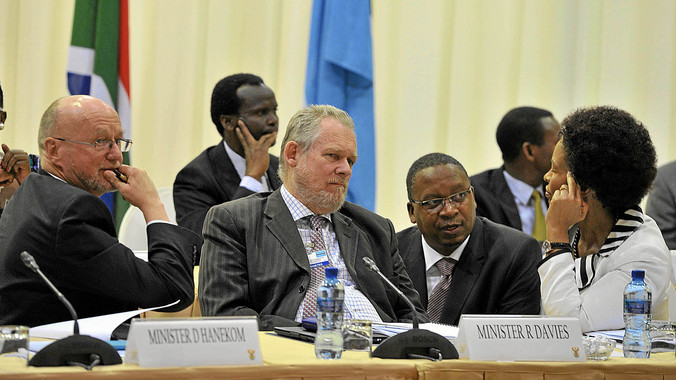
In July this year, a clearly frustrated Trade and Industry Minister Rob Davies told Parliament that there had been little progress on a 2011 agreement intended to advance the region’s development integration, and it was stifling its real ­economic development.

South Africa’s payments to SACU currently amount to R48.3-billion annually – a substantial amount, considering the budget deficit is presently R146.9-billion, an estimated 4.5% of gross domestic product.

In the past, South Africa has had some room to reposition itself, but as Finance Minister Pravin Gordhan has pointed out, the South African fiscus has come under a lot of pressure as a result of factors such as the global slowdown, reduction in demand from countries such as China for commodities, and reduced demand from trade partners such as the European Union.

South Africa, which according to research data, last year contributed 1.26% of its GDP, or about 98% of the pool of customs and excise duties that are shared between union countries including Swaziland, Botswana, Lesotho and Namibia, wants a percentage of this money to be set aside for regional and industrial development.

The four countries receive 55% of the proceeds, and are greatly dependent on this money, which makes up between 25% and 60% of their budget revenue. South Africa has very little direct benefit, except when it comes to exporting to these countries. It receives few imports.

Changing the revenue-sharing arrangement

Efforts to change the revenue-sharing arrangement so that money can be set aside for regional development would result in less money going into the coffers of these countries.

It would also mean that a portion of the revenue that South Africa’s SACU partners now receive with no strings attached would in future include restrictions on how it is spent.

A source close to the department said adjustments to the revenue-sharing arrangement and the promotion of regional and industrial development were issues on which the South African government was not willing to budge.

So seriously is South Africa viewing the lack of progress on the 2011 agreement, a document prepared for Cabinet discussion includes pulling out of SACU as one of its options, a source told the Mail & Guardian.

This could not be confirmed by the government, but two senior sources said South Africa was very aware of the dependence of its neighbours on income from the customs union, in particular Swaziland and Lesotho, and the impact its collapse could have on these economies.

Professor Jannie Rossouw of the University of South Africa’s department of economics believes a new revenue-sharing arrangement is essential for the long-term sustainability of SACU countries.

South Africa’s contribution

He also said that South Africa’s contribution as it presently stands should be recognised as development aid and treated as such by the international community.

Between 2002 and 2013, total transfers amounted to 0.92% of South Africa’s GDP, which exceeds the international benchmark of 0.7% set by the Organisation for Economic Co-operation and Development, he said in his research.

“It is noteworthy that South Africa transfers nearly all customs collections to SACU countries. Total collection since 2002 amounted to about R249-billion, while transfers to SACU were about R242-billion,” Rossouw said. The South African Revenue Service (SARS) recognises that inclusion of trade with Sacu would have a substantial impact on South Africa’s ­official trade balance.

South Africa’s total trade deficit for 2012 was R116.9-billion and, according to SARS, had trade with the union been included, it would have been much reduced to R34.6-billion.

South Africa has budgeted to increase its allocation to SACU from R42.3-billion in the 2012-2013 financial year to R43.3-billion this financial year and in the 2014/2015 financial year.

In 2002, the SACU agreement was modified to include higher allocations for the most vulnerable countries, Swaziland and Lesotho, and it established a council of ministers, which introduced a requirement for key issues to be decided jointly. In 2011, a summit was convened by President Jacob Zuma in which a five-point plan was established to advance regional integration.

Review of the revenue-sharing arrangement

This involved a review of the revenue-sharing arrangement; prioritising regional cross-border industrial development; making cross-border trade easier; developing SACU ­institutions such as the National Bodies (entrusted with receiving requests for tariff changes) and a SACU tariff board that would eventually take over the functions of South Africa’s International Trade Administration Commission (ITAC); and the development of a unified approach to trade negotiations with third parties.

Davies told Parliament that there had been little progress in the past three years on these five issues.

Xavier Carim, the director general of the international trade division of the department of trade and industry, said there had been positive developments regarding agreements on trade negotiations, such as those with the European Union and India on trade, and progress had been made on the development of SACU institutions, but progress was slow on the other issues.

Davies told Parliament it was difficult to develop common policy among countries that varied dramatically in economic size, ­population and levels of economic, legislative and institutional development.

He cited differences over approaches to tariff settings as an example.

“South Africa views tariffs as tools of industrial policy, while for other countries tariffs are viewed as a source of revenue,” Davies said.

A proposal that cause all the problem

“A key problem that led to differences was the proposal by one member for lower tariffs to import goods from global sources that were cheapest, which ultimately undermined the industry of another member. This was primarily an issue of countries who viewed themselves as consumers rather than producers.”

The South African government is trying diplomacy as its first option. A senior government source said issues around SACU made up a large part of talks last week between Botswana and South Africa on the establishment of co-operative agreements on trade, transport and border co-operation.

Catherine Grant of the South African Institute of International Affairs said Botswana had long been considered the leader of the four countries. It would make sense for South Africa to bring Botswana on board before the meeting.

Grant said the SACU agreement needed to be re-examined and modernised.

“There needs to be a review of the revenue-sharing formula that is less opaque and is easier to understand. The present system is complicated, making it hard to work out exactly how much countries are getting. It’s clear that Rob Davies feels hamstrung by SACU and has done for some time, because decisions cannot be made without the agreement of all five members, who have different needs and requirements.”

The trade balance is one of the elements that resulted in South Africa’s current account, which has recorded significant deficits in recent months, coming in as high as 6.5% of GDP in the second quarter of 2013.

Trade between South Africa and SACU has always been recorded, but for historical reasons it has been kept separate from official international trade statistics. Source: Mail & Guradian
 

Beira – Zimbabwe road to be rebuilt by China

A truck leaves the border post at Machipanda to drive down the Beira Corridor, which links the port of Beira to Zimbabwe. This has always been a strategically crucial route for trade in Southern Africa. (The Guardian)

The Mozambican government intends to invest $400 million in the full rehabilitation of the road from the port of Beira to Machipanda, on the border with Zimbabwe.

Minister of Public Works, Cadmiel Muthemba, announced the rehabilitation of the road, which is about 300 kilometres long, will begin in February 2014. The finance is a loan from the Chinese export-import bank (Exim Bank).

Muthemba said that the road will be substantially widened. Along its entire length the road will be at least a four-lane highway, and in places, such as the approaches to Beira, it will have six lanes.

“The road will have roundabouts at particularly busy areas, such as the Inchope crossroads (where the road meets Mozambique’s main north-south highway), Chimoio city, and the towns of Gondola and Manica”, said the Minister.

Along some stretches the road will be elevated, notably along the Pungue flats. This is where the current road runs alongside the Pungue River. When the Pungue bursts its banks, which happens frequently during Mozambican rainy seasons, the road is swamped, and sometimes the flooding is serious enough to interrupt traffic to and from Zimbabwe.

Raising the road above the level of the river will be expensive, but will ensure that traffic flows in all weathers.

The Beira-Zimbabwe road will be farmed out for maintenance to a private company, which will charge motorists through toll gates.

So far, the only major road in the country with toll gates is the Maputo-South Africa motorway, operated by the South African company Trans-Africa Concessions (TRAC).

At the moment, the Beira-Zimbabwe road is in a poor and dangerous condition. In order to avoid gaping potholes, motorists frequently cross into the opposite lane, risking collisions with vehicles gong in the other direction. Emergency repairs between Beira and Inchope, which should have been finished in mid-April, are months behind schedule, and the Sofala provincial government is considering cancelling the contracts with the companies concerned.

The road is of key importance to the trade, not only of Zimbabwe, but of other landlocked southern African countries, including Zambia, Malawi and even parts of the Democratic Republic of Congo.

The road that branches off the Beira-Zimbabwe highway at Tica and leads to the district of Buzi, will be tarred, Muthemba announced. This is budgeted at $150 million, and the money will come from the Indian Eximbank. Work on the Tica-Buzi road will begin this year.

But Muthemba lamented that there was no money available to rehabilitate the road from Inchope to Caia, on the south bank of the Zambezi. This is a key part of the north-south highway, and it needs thorough rehabilitation.

“We aren’t sitting back with arms crossed”, said Muthemba. “With the few financial resources we have, we are working on the most critical sections, until we find the money for a complete rehabilitation”.

However, a complete rehabilitation of this road was carried out less than a decade ago. Indeed, in May 2007, the then Minister of Industry and Trade, Antonio Fernando, boasted in the Mozambican parliament, the Assembly of the Republic, that the Inchope-Caia road, “used to be a nightmare”, but had been rebuilt to such a high standard that it resembled a racing track. Source: Mozambique News Agency


SA-Mozambique One Stop Border, one step closer

ressano-garcia_snapseedParliment’s standing committee on finance (SCoF) on Wednesday finally adopted a bilateral agreement between South Africa and Mozambique that brings the creation of a one-stop border post between the two countries a step closer.

The move has been six years in the making. The facility is expected to expedite the movement of goods and people, reduce congestion and delays, and lower the cost of cross-border trade.

Members of Parliment heard on Wednesday that the World Bank estimated that a one-day reduction in inland travel time in sub-Saharan Africa could result in a 7% increase in exports. Further, reducing export costs 10% through greater efficiency could increase exports 4.7%.

Parliament is in the process of ratifying the bilateral legal framework for the one-stop border post between South Africa and Mozambique at Lebombo-Ressano Garcia. It is the first bilateral framework of its kind for South Africa and is likely to be replicated in other parts of the Southern African Development Community (SADC).

The facility is expected to expedite the movement of goods and people, reduce congestion and delays, and lower the cost of cross-border trade

SADC has made a commitment to implementing such bilateral agreements throughout the region.

South Africa is in discussion with Zimbabwe about having a one-stop border post at Beitbridge, which is notorious for its congestion and long delays. The committee heard from Department of Home Affairs officials that a single visa for the region was also planned once systems have been integrated and secured.

The one-stop border post facility and access roads to Lebombo-Ressano Garcia have already been built and were just awaiting the go-ahead from the South African and Mozambican governments to begin operating. Each country would have a designated area in the combined facility for customs control but housing them in one unit would mean that goods would only have to be offloaded and loaded back onto trucks once for inspection.

South African Revenue Service senior executive Kosie Louw said the benefits of one-stop border posts were reduced border crossing times and reduced logistics costs. Further, they simplified and harmonised border control and administration, and integrated risk and information management.

A reduction in corruption and illegal imports was another benefit, Mr Louw said. Frequent travellers will be processed speedily through the use of fingerprints. A key element of the agreement is to provide for extraterritorial jurisdiction at the commonly held border posts and to deal with arrest, detention and seizure of goods. Both parties will be entitled to apply their own domestic customs laws within the common control zone.

The formal agreement for the project was signed between the two countries in September 2007 and the Cabinet gave its approval in August 2011 for the bilateral legal framework to be finalised and presented to Parliament. Source: BDlive.co.za

Will Africa’s Leaders Finally ‘WALK’ the Talk?

Kenya's capital Nairobi, September 23, 2011. The road, which is being built by China Wuyi, Sinohydro and Shengeli Engineering Construction group, is funded by the Kenyan and Chinese government and the African Development Bank (AFDB). The project will cost 28 billion Kenyan shillings ($330million), according to the Chinese company. AfDB has cut the expected economic growth rate for Kenya in 2011 to 3.5-4.5 percent from an earlier forecast of 4.5-5 percent due to high inflation and a volatile exchange rate, the bank's country economist for Kenya said on Friday. REUTERS/Thomas Mukoya

Kenya’s capital Nairobi, September 23, 2011. The road, which is being built by China Wuyi, Sinohydro and Shengeli Engineering Construction group, is funded by the Kenyan and Chinese government and the African Development Bank (AFDB). REUTERS/Thomas Mukoya

The citizens of the African continent have been introduced to one grand vision of development after the other – from OAU to AU. However, there is a tendency by some of the member countries to retreat from fulfilling regional treaty commitments, which, in some cases, would entail losing a degree of sovereignty.

What is the biggest stumbling block to achieving the African Integration Vision?

But after more than 50 years of solemn regional integration declarations these rhetorical and symbolic efforts still haven’t made the regional integration schemes any more inclusive. For example, when analysing the ‘inclusiveness’ trends as measured by Poverty and Income Distribution Indicators, most Sub-Saharan African countries won’t achieve the MDG target of reducing extreme poverty rates by half ahead of the 2015 deadline. This is despite the increasing total merchandise export as well as within most of the regional economic communities (RECs).

Some have tried to absolve policy-makers of the lack of progress with regards to achieving the milestones of the “linear” integration model based on the European experience and advocated by the Abuja Treaty. They propose an alternative non-trade oriented approach; the so-called functional regional cooperation. This perspective focuses on setting standards for transport such as the SADC recognized driving license; construction of a new regional corridors; an African identity etc. This less ambitious but perhaps more realistic perspective could lead to failure in removal of trade barriers, while at the same time presenting a much more positive outlook of regional integration than what international economic data would otherwise show.

The AfDB is attempting to get to the bottom of this regional integration – inclusive growth conundrum in its 2013 African Development Report, currently under preparation. But we might already get some good answers to this question through an ongoing research project entitled ‘PERISA‘. Led by the ECDPM & SAIIA, it intends to look deeper into what regional integration/cooperation really entails and what the underlying drivers/factors and specific bottlenecks are. In July, we got a hint on what to expect from the research project from a very enriching Dialogue on the Drivers and Politics of Regional Integration in Southern Africa.

National versus Regional

South Africa has developed a ‘2030 vision’ and national strategic plan. It includes some proposals to reposition South Africa hegemon in the region. However, very few of the National Development Plans (NDP) in Southern Africa even mention regional integration. Mauritius being an exception as it benefits from the support of the Regional Integration Support Mechanism (RISM), which is disbursed directly into the budget of the government as untargeted financial assistance. Notwithstanding this support and the disbursement to the nine other Member States of the Common Market for Eastern and Southern Africa (COMESA) and additional donor-supported initiatives in other RECs, there is still a flagrant absence of alignment between commitments taken at the regional level and the actual planning process at the national level.

This discrepancy between the regional and national level is a matter of concern because if these Regional Trade Agreement (RTA) commitments do not feature amongst the country’s national priorities then there is an even greater risk that they will not be implemented in practice. This latent risk perhaps goes a long way in explaining the relative poor record when it comes to the level of domestication of regional integration legal instruments, implementation of trade and regionalintegration-related budgets, implementation of Council of Ministers’ trade-related decisions, which the AfDB will seek to capture through its forthcoming system to measure regional integration in Africa.

During the meeting a call for a community of practice among national planning agencies was made which could assist and drive the integration process through the convening of regular meetings between regional and strategic national planners. It is positive to observe that Southern African countries seem to have warmed up to this idea of an informal community of practice outside the formal institutional structure.

What can Development Finance Institutions do about this inertia?

In addition to the supply-driven collection of regional integration statistics, Multilateral Development Banks (MDBs) could also lend technical and financial support to the formation of Regional Planning entities’ process. Amongst others this could include providing support to the above-mentioned community of practice of national development planners interacting with regional planners. This could eventually ensure that regional integration gets fully mainstreamed within the national planning policy instruments as illustrated in Mauritius’ latest 2013 budget, whose overarching theme rests on six main objectives, including fast-tracking regional integration.

There seems to be a consensus that the RECs must have technical capacity to facilitate the RTA negotiation process and decision-making process. Both the UK Department for International Development (DFID) through its TMSA programme and the AfDB through its forthcoming 2014-2016 Tripartite Capacity Building Programme are attempting to address this deficiency in a coordinated manner in line with fundamental principles of the Paris Declaration on Aid Effectiveness. Source: ECDPM
website (An analysis by Christian Kingombe, Chief Regional Integration & Infrastructure Officer at the AfDB).


Border Management in Southern Africa: Lessons with respect to Policy and Institutional Reforms

The folk at Tralac have provided some welcomed insight to the challenges and the pains in regard to ‘regionalisation’. No doubt readers in Member States will be familiar with these issues but powerless within themselves to do anything due to conflict with national imperatives or agendas. Much of this is obvious, especially the ‘buzzwords’ – globally networked customs, one stop border post, single window, cloud computing, and the plethora of WCO standards, guidelines and principles – yet, the devil always lies in the details. While the academics have walked-the-talk, it remains to be seen if the continent’s governments have the commitment to talk-the-walk!

Regional integration is a key element of the African strategy to deal with problems of underdevelopment, small markets, a fragmented continent and the absence of economies of scale. The agreements concluded to anchor such inter-state arrangements cover mainly trade in goods; meaning that trade administration focuses primarily on the physical movement of merchandise across borders. The services aspects of cross-border trade are neglected. And there are specific local needs such as the wide-spread extent of informal trading across borders.

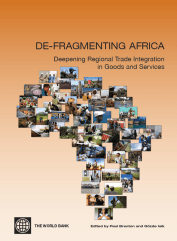
Defragmenting Africa WBThis state of affairs calls for specific governance and policy reforms. Effective border procedures and the identification of non-tariff barriers will bring major cost benefits and unlock huge opportunities for cross-border trade in Africa. The costs of trading remain high, which prevents potential exporters from competing in global and regional markets. The cross-border production networks which are a salient feature of development in especially East Asia have yet to materialise in Africa.

Policy makers have started paying more attention to trade-discouraging non-tariff barriers, but why does the overall picture still show little progress? The 2012 World Bank publication De-Fragmenting Africa – Deepening Regional Trade Integration in Goods and Services shows that one aspect needs to be singled out in particular:  that trade facilitation measures have become a key instrument to create a better trading environment.

The main messages of this WB study are:

  • Effective regional integration is more than simply removing tariffs – it is about addressing on-the-ground constraints that paralyze the daily operations of ordinary producers and traders.
  • This calls for regulatory reform and, equally important, for capacity building among the institutions that are charged with enforcing the regulations.
  • The integration agenda must cover services as well as goods……services are critical, job-creating inputs into the competitive edge of almost all other activities.
  • Simultaneous action is required at both the supra-national and national levels. Regional communities can provide the framework for reform, for example, by bringing together regulators to define harmonised standards or to agree on mutual      recognition of the qualification of professionals……. but responsibility for implementation lies with each member country.

African governments are still reluctant to implement the reforms needed to address these issues. They are sensitive about loss of ‘sovereign policy space’ and are not keen to establish supra-national institutions. They are also opposed to relaxing immigration controls. The result is that border control functions have been exercised along traditional lines and not with sufficient emphasis on trade facilitation benefits. This is changing but specific technical and governance issues remain unresolved, despite the fact that the improved border management entails various technical aspects which are not politically sensitive.

The required reforms involve domestic as well as regional dimensions. Regional integration is a continental priority but implementation is compounded by legal and institutional uncertainties and burdens caused by overlapping membership of Regional Economic Communities (RECs). The monitoring of compliance remains a specific challenge. Continue reading →

SACU’s Choice – ‘Common policy or irrelevance’

imagesCA31PQJGThe Minister of Trade and Industry, Dr Rob Davies briefed the Parliamentary Portfolio Committee on Trade and Industry regarding the progress on the implementation of the five-point plan in Cape Town. This is a work programme which was approved by the 2nd Southern Africa Customs Union (SACU) Summit convened by President Zuma in 2011 premised on the following pillars;

  1. Work programme on cross-border industrial development;
  2. Trade facilitation;
  3. Development of SACU institutions;
  4. Unified engagement in trade negotiations and
  5. The review of the revenue sharing arrangement.

The five-point plan emerged from realization by SACU Member States of a need to move SACU beyond an arrangement held together only by the common external tariffs and the revenue sharing arrangement to an integration project that promotes real economy development in the region.

Minister Davies noted that progress on the implementation of pillars of the five- point plan is uneven. SACU has registered good progress on trade facilitation and there is greater unity of purpose in negotiations with third parties (Economic Partnership Agreement (EPA), SACU-India and Tripartite Free Trade Area).

However, there is limited progress on the review of the revenue sharing arrangement and hence lack of adequate financial support for the implementation of cross-border industrial and infrastructure development projects. The SACU revenue pool is raised by South Africa from customs and excise duties. Mr Davies told MPs that in 2013-14 the total disbursement from the revenue pool would be about R70bn of which the BLNS countries would receive about R48bn. There is also lack of progress on the development of SACU institutions as a result of divergences in policy perspectives and priorities of Member States.

Enabling provisions provide for the establishment of National Bodies and a SACU Tariff Board. The SACU Tariff Board will make recommendations to Council on tariffs and trade remedies. Davies added that, until these institutions are established, functions are delegated to the International Trade Administration Commission (ITAC) in SA.

The minister warned that the lack of agreed policies would hinder effective decision-making on regional integration and industrialisation, which had made little progress since the 2011 summit convened by President Jacob Zuma. South Africa believes SACU needs to move “firmly towards a deeper development and integration”.

Minister Davies said SACU risked becoming “increasingly irrelevant” as an institution if it did not develop beyond operating a common external tariff, and a “highly redistributive” revenue-sharing arrangement. The lack of progress in developing new SACU institutions was primarily due to policy and priority differences among members. “Against this background South Africa needs to reassess how best to advance development and integration in SACU.”

Among the disagreements on tariff setting between South Africa and its neighbours highlighted by Mr Davies, was that South Africa saw tariffs as a tool of industrial policy while they regarded them as a means of raising revenue. For example, the other Sacu members wanted to include the revenue “lost” on import tariff rebates offered by South Africa into the revenue pool.

The pool provides these countries with a major source of their national budget. Rebates were seen as revenue foregone for which additional compensation should be sought. South Africa, on the other hand, argues that the rebates (for example on automotive imports) are part of its total tariff package and serve to attract investment and boost imports and therefore, contribute to expanding the revenue pool, not diminishing it.

He emphasised the development of a common approach on trade and industrial policy as the prerequisite for establishing effective SACU institutions in future.

He highlighted that a discussion on appropriate decision-making procedures on sensitive trade and industry matters that takes into account SACU-wide impacts is required. Source: The Department of Trade & Industry, and BD Live.

East African Single Customs Territory Will Cut Delays

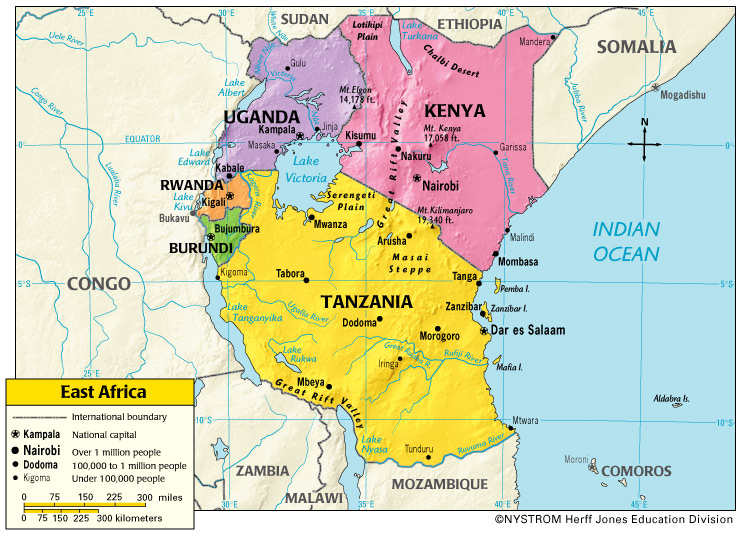
East%20Africa%20mapIn the spirit of stronger East African integration, the revenue authorities of Kenya, Uganda and Rwanda have started preparations for the implementation of a Single Customs Territory. The Commissioners’ General of the three East African countries deliberated on the mechanisms to operationalize the decisions of the heads of state who have continuously called for its fast tracking.

On June 25, 2013 at the Entebbe State House in Uganda, a Tripartite Summit involving the three heads of state issued a joint communiqué directing among other things the collection of customs duties by Uganda and Rwanda before goods are released from Mombasa. The leaders also agreed that traders with goods destined for warehousing should continue executing the general bond security.

During the meeting, the Commissioners’ General of the three countries put in place joint technical committees on ICT, Business Process, enforcement, change management, legal and human resource to discuss the implementation road map.

In a statement signed by the three Commissioners’ General, they said that the development of a Single Customs Territory will positively impact on the trading activities of the three countries as it will ensure that assessment and collection of taxes is done at the country of destination before cargo moves out of the port.

“As a result, the East African Community Customs Union will join the ranks of other Customs Union such as South African Customs Union and the European Union among others. Under this arrangement, restrictive regulations are eliminated as the corridor is now considered for customs purposes. For clarity, circulation of goods will happen with no or minimal border controls,” reads the statement in part.

Kenya said it would cut red tape holding up millions of dollars of imports into its landlocked neighbours Rwanda and Uganda, by letting the countries collect customs on goods as they arrive in its port at Mombasa. Goods can currently face long delays as agents process the paperwork to release cargoes from warehouses at east Africa’s biggest port, and later make separate arrangements to pay import duties at Kenya’s borders with Uganda and Rwanda.

Officials said the new system, due to be introduced in August, would clear inefficiencies and blockages seen as a major barrier to trade in the region. But clearing agents in Kenya said it could also cost thousands of jobs in warehouses, freight firms and almost 700 clearing and forwarding companies operating in the country.

Kenya, Uganda and Rwanda, together with Burundi and Tanzania, are members of the regional East African Community trade bloc, with a joint gross domestic product of $85 billion.

Kenyan tax officials said the new system would allow a “seamless flow of goods” and make it easier to stop goods getting through the system without customs payments. “Once cleared at the port, there will be no stoppages at borders and checkpoints along the corridor,” the Kenya Revenue Authority’s commissioner of customs, Beatrice Memo, told a news conference.

Under the system, Rwandan and Ugandan clearing agents and customs officials would be able to set up their own offices to clear cargo and collect taxes directly at the port. The Kenya International Freight and Warehousing Association said that meant up to half a million jobs could be lost to Uganda and Rwanda. “The Government has not consulted us … and we totally reject it,” said  Association chairman Boaz Makomere. Sources: East African Business Week (Kenya) & The New Vision (Uganda).