WCO Workshop on Inland Depots in Lao PDR

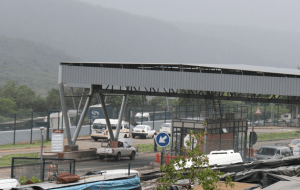
inland-port-7The World Customs Organization (WCO) organized a National Workshop on Inland Depots under the sponsorship of the Customs Cooperation Fund (CCF)/Japan and the Japan International Cooperation Agency (JICA). It was held from 20 to 22 September 2016 in Savannakhet Province, Lao People’s Democratic Republic.

Twenty six Customs officers from the Lao Customs Administration participated in the workshop, along with guest Customs experts from The Former Yugoslav Republic of Macedonia, Japan and JICA. Mr. Somphit Sengmanivong, Deputy Director General of the Lao Customs Administration, opened the workshop. He highlighted the importance of Inland Depots as a national strategy to secure his country’s economic growth and sought participants’ active participation in the discussions on this topic.

Presently, there is no clear definition of “Inland Depot” and many similar terms, such as Dry Port, Inland Terminal, Free Trade Zone and Special Economic Zones, are used in the international logistics. During the three-day workshop, participants discussed the functions and a possible definition of Inland Depot from a Customs perspective.

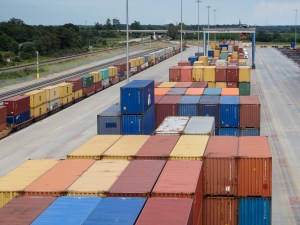
AmatiComment – Inland container terminals serve as important hubs or nodes for the distribution and consolidation of imported and export destined cargoes. There are 16 Landlocked countries in Africa, which signifies the importance of hinterland logistics development and its consequential impact on regional trade groupings. Consequentially, it behooves governments to understand and support the logistics supply chain industry in maximizing inland transportation (multi-modal) infrastructures to achieve a common and mutually beneficial economic environment. Furthermore, the more facilitative these arrangements, the better opportunity there is for success and longer-term economic sustainability.

The WCO Secretariat made presentations on international standards for relevant procedures, including Customs warehouses, free zones, Customs transit, inward processing, clearance for home use and temporary admission. Experts from The Former Yugoslav Republic of Macedonia and Japan described their national and regional experience of Customs warehousing, and Customs transit procedures. The JICA expert presented the bonded procedures applied by neighbouring countries to Lao People’s Democratic Republic. Lao Customs administration explained their national system for Inland Depots and a logistics company of Lao PDR shared its expectations on inland depots.

On the last day, participants discussed the challenges and possible solutions to enhance the functional and efficiency of Lao’s Inland Depots. Possible solutions, such as the use of modern information technology, further cooperation with the private sector, clear regulations on relevant procedures, coordinated border management and international cooperation were considered. Source: WCO

Recommended reading

ZIMRA Warehouse Burns Amid Protests

Zimbabweans protesting against restrictions on imports of basic goods from South Africa have forced the closure of the border post between Zimbabwe and South Africa on Friday.

On June 17, the Zimbabwean government said that it was suspending imports of products including bottled water, furniture, building materials, steel products, cereals, potato crisps and dairy products, most of which arrive from South Africa. A Statutory Instrument No. 64 of 2016 which effectively tightens the screws on the import of these products is purportedly intended to target businesses and not ordinary travellers buying goods for personal consumption. However, Zimbabwean Revenue Authority (ZIMRA) officials continued to demand permits and confiscate the listed goods, sparking the chaos.

A warehouse owned by ZIMRA for the storing of illicit goods seized from people crossing the border was set alight by the protesters on Friday, 1 July 2016.

More than 85% of working age Zimbabweans have no formal job and many make a living by buying goods in South Africa to sell in Zimbabwe. Source: New Zimbabwean/ Reuters.

BMA – to be first order of business when Parliment re-opens

Lebombo+border+postA “Unified border guard and authority” will be one of the first orders of business when Parliament opens for the third quarter of the year.
On the agenda for the portfolio committee on home affairs is “processing the Border Management Authority Bill — which‚ a statement noted‚ is a modified name as “the authority was called the agency in the former draft of the bill”‚ it said at the weekend.

It was necessitated by “inefficiencies resulting from having many government departments co-ordinating, and often duplicating, the securing of SA’s land‚ sea and air borders,” which “have contributed to the porous 5,244km border”.

“The bill and related authority aim to centralise the border-related responsibilities of‚ amongst others‚ the Department of Home Affairs‚ the South African National Defence Force and Police Service‚ Customs of the South African Revenue Service as well as aspects of the Departments of Agriculture‚ Environment and Health‚” the committee said in the statement.

After briefings‚ public hearings and written submissions‚ it is “likely to be finalised in the last quarter of 2016 or early in 2017”.

Also on the committee’s plate is “reliable higher bandwidth network services” needed by the Department of Home Affairs “to facilitate the expanded roll-out of technology-driven service delivery improvements”.

“These include paperless applications for more secure smart identification cards and passports as well as online visa and permits processes. The Department of Home Affairs has experienced challenges with the network services provided by the State Information Technology Agency and is in the process of seeking alternatives.” Source: Buisness Day Live

Historic Economic Partnership Agreement between EU and SADC

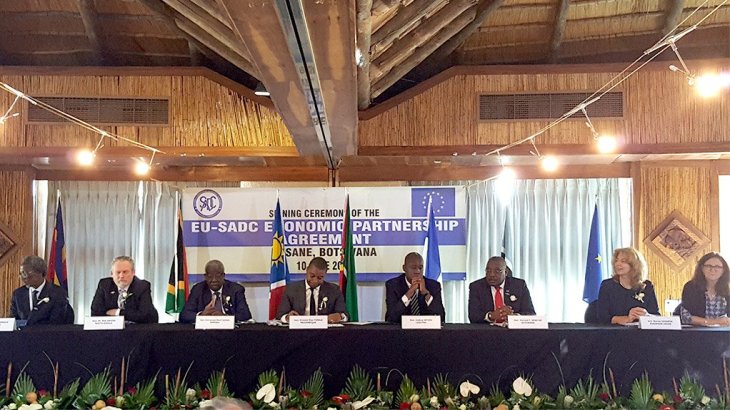
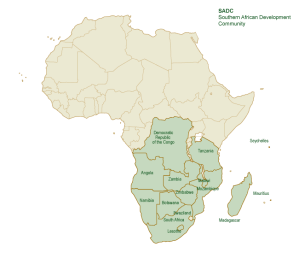
EU SADC EPAThe EU has signed an Economic Partnership Agreement (EPA) on 10 June 2016 with the SADC EPA Group comprising Botswana, Lesotho, Mozambique, Namibia, South Africa and Swaziland. Angola has an option to join the agreement in future.

The other six members of the Southern African Development Community region – the Democratic Republic of the Congo, Madagascar, Malawi, Mauritius, Zambia and Zimbabwe – are negotiating Economic Partnership Agreements with the EU as part of other regional groups, namely Central Africa or Eastern and Southern Africa.

For specific details on the key envisaged benefits of the agreement click here!

The EU-SADC EPA is the first EPA signed between the EU and an African region, with an East African agreement expected to follow in a few months, but with the West African agreement having met fresh resistance. EU Trade Commissioner Cecilia Malmström stressed at the signing ceremony the developmental bias in the agreement, which extended duty- and quota-free access to all SADC EPA members, except South Africa. Africa’s most developed economy has an existing reciprocal trade framework known as the Trade and Development Cooperation Agreement, which came into force in 2000.

South Africa, meanwhile, had secured improved access to the EU market on a range of agricultural products, as well as greater policy space to introduce export taxes. EU statistics show that bilateral trade between South Africa and the EU stood at €44.8-billion in 2015, with the balance tilted in favour of European exports to South Africa, which stood at €25.4-billion. This improved access had been facilitated in large part by South Africa’s concession on so-called geographical indications (GIs) – 252 European names used to identify agricultural products based on the region from which they originate and the specific process used in their production, such as Champagne and Feta cheese. In return, the EU has agreed to recognise over 100 South African GIs, including Rooibos and Honeybush teas, Karoo lamb and various wines.Sources: EU Commission and Engineering News


Transnet Seeks Private Sector Participation for new Inland Terminal

Tambo SpringsSouth Africa’s freight and logistics company Transnet this week launched its massive drive to bring private sector operators into the country’s freight system.

The company has issued a request for proposals inviting suitably qualified global logistics service providers to design, build, operate, maintain and eventually hand over its proposed inland container terminal in Tambo Springs, East of Johannesburg – a 630ha site located on land originally known as Tamboekiesfontein farm.

The concession will be over a 20-year period and will be Transnet’s biggest private sector participation project to date.

The proposed terminal is in line with Transnet’s drive to migrate rail friendly cargo off the country’s road network.

The terminal is expected to be in operation by 2019 and will have an initial capacity of 144 000 TEUs per annum, with an option to ramp it up to 560 000 TEUs, depending on demand.

The project entails the following:

  • Arrival and departure yard for handling cargo trains
  • Terminal infrastructure;
  • Terminal equipment;
  • Stacking area;
  • Warehousing space
  • Distribution centre
  • Inland Reefer facilities

Transnet Freight Rail will be responsible for the operation of the arrival and departure yard required to service the terminal.

The operator will be responsible for loading and offloading of containers and marketing of the facility. The winning bidder is expected to introduce new entrants – particularly black players – must have demonstrated technical expertise, a minimum of level 4 BBBEE status with a commitment to reach level 2 by the third year of operation.

Transnet currently operates 5 inland terminals in Gauteng, including the City Deep Container Terminal in Johannesburg, Africa’s largest inland port.

The proposed terminal is an integral part of the Presidential Infrastructure Co-ordinating Committee’s SIP 2, aimed at unlocking the country’s industrial development while boosting export capability. It is designed to complement Transnet’s container-handling capacity in the province.

This is the culmination of years of hard work and a demonstration of cooperative governance between Transnet, representing the national competence, and both the Gauteng Provincial Government and the Ekurhuleni Municipality.

The Tambo Springs terminal is one of three mega terminals that Transnet is planning to build in Gauteng over the next 20 years. It will be located in Ekurhuleni along the N3, just off the Natal Corridor.

The project is expected to create 50 000 jobs, and has stringent requirements for supplier development and skills transfer. Source: Transnet

UNODC-WCO Container Control Programme – 2015 Annual Report online

Container Control ProgrammeThe year 2015 has been the most active one ever for this joint WCO – UNODC initiative, which tackles illicit trade in containerized transport.

A number of new countries joined the Container Control Programme (CCP), more than 130 training events, private sector meetings and study visits were implemented and significant seizures of drugs, counterfeit goods, cigarettes etc. were made by the Port Control Units established in the framework of this programme.

The 2015 CCP Annual Report also contains interviews with the Directors General of Georgia and Azerbaijan Customs as well as several statements by Customs’ and Private Sector stakeholders. Source: WCO

SA – Hub for computerised Regional Integration?

AfricaFrom time to time it is nice to reflect on a good news story within the local customs and logistics industry. Freight & Trade Weekly’s (2015.11.06, page 4) article – “SA will be base for development of single customs platform” provides such a basis for reflection. The article reports on the recent merger of freight industry IT service providers Compu-Clearing and Core Freight and their plans to establish a robust and agile IT solution for trade on the African sub-continent.
In recent years local software development companies have facilitated most of the IT changes emerging from the Customs Modernisation Programme. Service Providers also known as computer bureaus have been in existence as far back as the early 1980’s when Customs introduced its first automated system ‘CAPE’. They have followed and influenced Customs developments that have resulted in the modern computerised and electronic communication platforms we have today. For those who do not know there are today at least 20 such service providers bringing a variety of software solutions to the market. Several of these provide a whole lot more than just customs software, offering solutions for warehousing, logistics and more. As the FTW article suggests, ongoing demands by trade customers and the ever-evolving technology space means that these software solutions will offer even greater customization, functionality, integration and ease of use for customers.

What is also clear is that these companies are no longer pure software development houses. While compliance with Customs law applies to specific parties required to registered and/or licensed for Customs purposes, the terrain on which the software company plays has become vital to enable these licensees or registrants the ‘ability to comply’ within the modern digital environment. This means that Service Providers need to have more than just IT skills, most importantly a better understanding of the laws affecting their customers – the importers, exporters, Customs brokers, freight forwarders, warehouse operators, etc.

Under the new Customs Control Act, for instance, the sheer level of compliance – subject to punitive measures in the fullness of time – will compel Service Providers to have a keen understanding of both the ‘letter of the law’ as well as the ability to translate this into user-friendly solutions that will provide comfort to their customers. Comfort to the extent that Customs registrants and licensees will have confidence that their preferred software solutions not only provide the tools for trading, but also the means for compliance of the law. Then, there is also the matter of scalability of these solutions to keep pace with ongoing local, regional and global supply chain demands.

The recent Customs Modernisation Programme realised significant technological advances with associated benefits for both SARS and trade alike. For the customs and shipping industry quantification of these benefits probably lies more in ‘improved convenience’ and ‘speed’ of the customer’s interaction with SARS than cost-savings itself. My next installment on this subject will consider the question of cross-border trade and how modern customs systems can influence and lead to increased regional trade.

WCO supported Sub – Saharan Africa Customs Modernization Programmes – 3rd Newsletter

WCO Capacity Building Magazine 3rd Edition.ashxThe WCO – Sub – Saharan African Customs Modernization Programme funded by the government of Sweden comprises four projects, namely the WCO- EAC CREATe , the WCO– SACU Connect, the WCO– WACAM and the WCO– INAMA Projects. In their totality, the projects support regional Customs Unions in Africa in their mission to facilitate trade without compromising the security of their country and the safety of their citizens. The newsletter will appear quarterly and will inform on ongoing tasks as well as give an overview of future activities. Source: WCO

An interesting take on SADC developments and the lack of progress

AfricaMap_SADCThe following article titled ‘Cross-border projects dependent on cost’ was recently published by Transport World Africa. It deals essentially with cross border logistics and provides an insight into regional infrastructure and logistics projects – successes, failures and their impact on transport logistics. It emphasizes the need for greater and closer public and private partnerships, but alas sovereign states appear to be more focused inwardly on their domestic affairs. 

Implementers of projects have the knack of focusing on what they know very well, often leaving out what they do not know. Usually, this comes back to bite them. An example is in the integration of leadership. Countries in the Southern African Development Community (SADC) region compete with each other for demand and capacity provision, which results in the inflated cost of logistics.

Rather, countries should work together. Integrating ports and funding is relatively easy. What is not available is integrated leadership in the region (excluding heads of various states), agreeing that SADC is ‘one country’. Logistics planning is still done at the country level, which is not practical, because then supply chains are being developed that are competing with each other. The sector should be cautious about acceleration, and about what is funded. One example is Transnet, whose plans should fit into regional plans, but right now they do not.

The softer issues in project development often go ignored, but they are at times the most important. There should be a halt to focusing mainly on mega-projects, since they take time and money, as well as resulting in complications (excluding Grand Inga). Despite this, mega projects do create a common vision for a region. Do sponsors have the capacity to support these projects? Institutional capacity is certainly needed. At the political level, southern Africa has done well, top–down approaches are there, but things go off course when there is the attempt to get others to plug-in to this.

One-stop border posts are very important. It was cautioned that the region must be careful not to follow the architecture of colonial extraction, which means focusing on intra-Africa trade rather than too great a focus on ports and exports. Government and private sector must both drive natural winners and losers in markets. There is sufficient funding and policies, but project preparation is limited. What is needed is to decide how to make hubs of excellence, and decide who is going to do what.

The high-level work has been done, but now the sector is facing an implementation challenge. Governments do not do regional integration very well. The private sector does the regional integration, and they suffer most when it does not work. Regional infrastructure will not happen unless there is public support for it. The most successful cross-border project was a PPP: the M4 toll road. This had a large economic impact.

Also, the Port of Maputo has been successful in generating income. Ports without land side integration are useless. Projects need a soft-issue mediator; otherwise there are great ideas, but no implementation. The private sector should not see itself as a messiah, but should rather have a sense of responsibility for developing supply chains. There needs to be a clear understanding of soft issues, clear legal and policy understanding, and communication. SADC has been driving the implementation of harmonisation of vehicle load management for twenty years. A mediator between the public and private sector (such as Maputo Corridor Logistics Initiative (MCLI) is absolutely necessary.

It is a stark reality how little intra-African trade there is. To address this there should be a clear target for development in future. In Namibia, there are efforts to focus on the positives in regards to transport development, even with limited resources. Namibia has been independent for 25 years; 15 years ago the Walvis Bay Corridor was created as a focus on regional integration and regional development. There are 2.2 million people in Namibia, which means a small economy.

There is no real choice but to take into consideration the region and recognise the value Namibia can add. In regards to planning, in 1995 it developed its first transport master plan, and in 2014 it developed its second transport master plan (this was twenty years apart). In February 2015, it developed a logistics master plan to develop Namibia into a logistics hub in the region. It has focused on transport modes because it has a port emphasis. It started roads development.

Currently, Namibia is building its first dual-carriage road (65 km), which is a big step for such a small economy. It would like to do more with sufficient funding. Namibia is also looking into what to do with aviation. As a whole, the country is trying to develop as an alternative trade route for southern Africa. Five to seven years ago, Walvis Bay was just a fishing port, but now R500 million is coming into Namibia’s economy through this post (from zero rand 10 years ago). Namibia is trying to create a better alternative in the SADC region. Now it is looking to focus on developing the manufacturing sector. Namibia is working with South Africa to develop partnerships (excluding transport corridors to production corridors). Continue reading →

Is the Latest FTA Another Booby Prize for Africa?

COMESA-SADC-EAC-TripartiteAround 2008, most Southern African countries began to realise that the great ambition found on the SADC website at that time of moving from a SADC free trade area to a customs union by 2012 was not going to happen.

The SADC website had a very EU-like regional integration agenda.

This is not surprising given that the great sugar daddy in Brussels basically funds the entire organisation. SADC wanted to replicate the EU linear model – first a free trade area where the countries trade freely among themselves; then a customs union where the members agree to a common tariff; and then a common market where all goods, services, capital and labour flow freely. Finally, SADC was to complete the copy of the EU by creating a monetary union.

This flattering imitation of the EU was obvious – the Brussels paymaster pays and we all happily follow their model into Kwame Nkrumah’s vision of a united Africa. But the ugly problem was, as ever, African history.

The less than subtle British also wanted a customs union in Africa. So, in 1910 they just created one – the Southern African Customs Union (SACU), which, like the proverbial bicycle without any pedals, still manages to stand because it is padded with money.

When the British implemented SACU after the Anglo-Boer War, there was no need for polite and time consuming subtleties of contemporary African consensus building. The Union of South Africa and the British high commissioner signed on behalf of the protectorates of Basutoland, Bechuanaland and Swaziland – not a black person in sight unless they were serving the tea.

Almost a century later those who designed the EU-like agenda for SADC’s integration conveniently forgot their history and somehow assumed that a customs union could be readily grafted on the SADC free trade area which was already in existence.

But there cannot be two external tariffs and, therefore, either SACU or SADC as a customs union had to go. And the difficulty that SADC faced with creating a customs union is that no one is ready to sacrifice national interests for a broader common good.

Free trade areas are relatively easy, they can be easily fudged, but customs unions are hard work because all the countries that are members have to agree to the external tariff.

In the meantime, the apartheid regime in Pretoria realised that it desperately needed to buy friends and influence enemies and so in 1969 it changed SACU from a regular customs union to one where the share of revenue from customs was derived from share of regional trade.

Normally, customs unions divide the revenue poll based on what economists call the ‘destination principle’. This meant that countries get the revenue depending on what imports were destined for that country. So if 5% of imports were destined for, say, Botswana, it would get 5% of the revenue.

But the SACU formula was purposely designed by South Africa to make the BLS (Botswana, Lesotho and Swaziland as members) completely dependent upon transfers from Pretoria by basing the formula on the share of intra-SACU trade and not external trade.

The oddity was that with the end of apartheid, things actually got even worse after the 2002 SACU re-negotiations because Pretoria agreed to a formula that made Botswana, Lesotho, Swaziland and newly independent Namibia get their share of customs revenue from SACU based on the share of intra-SACU imports.

SA imports almost nothing from SACU countries and the BLNS countries import almost everything from SA and so they get a huge amount of revenue. Many officials in Pretoria deeply resent the subsidies in SACU.

When the other SADC members saw how much money the BLNS countries were getting from Sacu, whenever the issue of a SADC customs union came up their response was – ‘me too please, we want the same formula!’

So, a SADC customs union would have eaten into the massive transfers (about N$20 billion per year) that Namibia and the rest of the BLNS states get each year from Pretoria and there was no way they were going to agree, and so the SADC customs union was not a realistic possibility.

After the obvious end of the SADC negotiations for a customs union, African negotiators began to look around for something that would keep them off the unemployment lines. The infamous African ‘spaghetti junction’ of the East African Community, Comesa and SADC with its overlapping membership became the next target. If you can’t form a customs union then just get a bigger FTA (free trade area).

Now this year, finally, an FTA has been signed but it has also been fudged. Few really want to give the highly competitive Egyptian producers free trade access to their African markets.

Ostensibly, we are moving to negotiate a continental free trade area which will finally begin the process of fulfilling of Nkrumah’s dream of a united Africa. But instead, what we have is Cecil John Rhodes’s dream of a market from Cape to Cairo – almost; no deepening of the African economic relationship into a customs union; just a widening to the north and west.

Free trade areas are a nice step forward but they normally require no real sacrifice of economic interests.

Europeans are guilty of many cruelties in Africa but none so absurd or spiteful as the ridiculous lines they drew on the map of the African continent in 1884 at the Berlin Conference when they divided up the continent. The Belgian barbarism in the Congo may fade from human memory and the wounds of apartheid may heal over time but African leaders will struggle to completely eliminate those economic and political lines from the map of Africa.

It is those lines and some petty “sovereign” economic interests that are the main reason why a billion dynamic people in Africa with such incredible natural resources continue to live in poverty. The Namibian (An opinion piece by Roman Grynberg, professor of economics at the University of Namibia.)

TFA – Africa is on the move! Why not go faster?

WTO LogoThe following article is published with the kind permission of the author, Tapia Naula who is Principal Transport Economist at African Development Bank, based in the Ivory Coast. He is an international project manager and transport economist with experience in logistics business, research and trade facilitation. This article is a must for anyone associated with or working on the TFA on the African sub-continent, and a bit of a wake up call to those countries who have as yet done little or nothing to progress their participation.
In the World TFA Cup Asia is leading Africa 72 – 35. The first scores of the WTO Trade Facilitation Agreement are out as member countries submit their Category A notifications. Initial results of the African first series are somewhat unfulfilling. Some teams are playing defensive even if attacking tactic is the only way to win.

In December 2013, WTO members concluded negotiations on a Trade Facilitation Agreement (TFA) at the Bali Ministerial Conference, as part of a wider “Bali Package”. Among trade facilitation practitioners the Agreement was received with great enthusiasm: finally there was a legal instrument, which is concrete enough to make a difference! TFA will enter into force once two-thirds of members have completed their domestic ratification process. Section I contains substantive provisions in 12 main Articles. The members are required to categorize and notify each provision of the Agreement as either A, B or C Category. The A Category commits a country to implement the provision upon entry into force of the TFA, or one year after for LDC’s. For B-Category there will be a transitional period. C-Category provisions are allowed a transitional period, technical assistance and capacity building.

First, let it be said loud and clear: the WTO TFA is an excellent collection of modern trade and transport facilitation instruments in one folder. In developing countries its implementation would mean reforms that would save time, money and efforts for regular business people and consumers. These reforms may be painful but the countries that can do it, will be the future winners of their regional competition and they will be the ones that will most benefit from joining the global value chains. TFA is the best vehicle for poverty reduction invented so far and that is why it is so important.

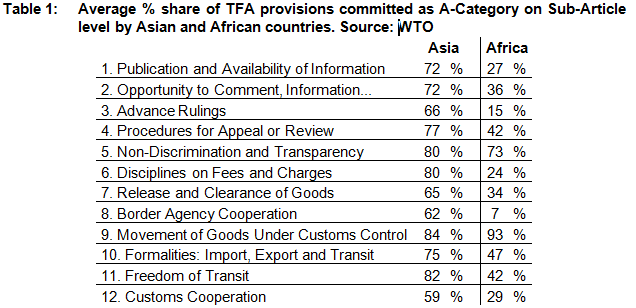
In August, 2015, 14 African countries and 25 Asian countries had submitted notifications for category A provisions. Asian countries had “accepted” 72 % of all the provisions as A-Category commitments on average where the respective share of the African countries is only 35 %. On Article-level African countries lag behind on every Article except one (Table 1).

In addition to the low overall share of category A-notifications, the African notifications generally look like “random picks” of sub-paragraphs, compared to many Asian members that have commonly chosen the strategy of basically accepting the whole Agreement and making exceptions for certain few paragraphs according to their particular needs.

Were African governments well-informed of the impact and substance of each paragraph – or are they just being cautious, perhaps trying to delay the final commitment? The patterns between African and Asian countries are in any case different.

Table 1

TFA includes also “low hanging fruit” – sections that require little technical expertise to be implemented. At least some of these should have been easy for member countries to accept. “Publication and Availability of Information” is one of those sections. Access to information through internet is routine and affordable. It should not require transition periods or particular technical assistance. Donors are even competing to assist governments with such low cost and high-return activities. Still, less than one third of the African Governments notified this Article.

Here are some other peculiar findings:

  • Out of 14 African countries only Morocco accepted “Border Agency Cooperation” as A –Category provision. Three of the others countries that did not notify it are landlocked countries;
  • Only four out of 14 African countries had fully notified “Freedom of Transit.” Transit challenges in Africa are probably the single most significant source of inefficiency in trade logistics;
  • One of the foundations of modern customs management is the introduction of Risk Management. Only 3 out of 14 African countries had notified this provision;
  • Only Morocco notified Trade Facilitation Measures for Authorized Economic Operators (AEO), which gives certain privileges to traders and transport operators, who show high level of compliance to regulations. One wonders why Kenya, Uganda, Rwanda, Burundi and Tanzania did not notify it as we know that an AEO program is being piloted in the East African Community;
  • Only Senegal notified the sub-Article on Single Window, which is probably the most important one of the whole Agreement. Senegal perhaps deserves this honor – being the first truly African-based single window country – and also representing the good practice of SW management. Yet, according to the African Alliance for e-Commerce, currently there are at least 16 other single windows either already operational or under development in Africa. Why weren’t these developments recognized?

Despite the above “peculiarities” the African situation is fortunately nowhere near as somber as the A-Category notifications indicate. There are plenty of trade and transport facilitation initiatives under implementation – and Africa is indeed “on the Move.” We should on one hand side make sure that the valuable TFA Agreement is not becoming a separate formal process alongside the practical actions on the ground, but rather a framework for coaching governments in climbing up the stairs toward greater competitiveness. On the other hand, the countries should not ignore the existing achievements. A lot has been achieved in Africa in recent years and this process should go on and gain speed. Some sub-regions, which have been less successful in this field need  benchmarks, encouraging and coaching. This is where African and international organizations can play a role.

Although the direct cost of TFA implementation is relatively low, the indirect cost may be extremely high. The indirect cost concerns existing structures, which generate income for organizations and individuals, who often greatly benefit from the status quo. Some governments have entered into concessions outsourcing critical government functions such as pre-customs clearance operations and processing and submissions of declarations to customs. Western firms have efficiently seized the opportunity and negotiated deals, which guarantee profits for in many cases for decades to come. Single Windows in certain countries are good examples for these. In an unnamed Southern African country for example, humanitarian aid is exempt from taxes and duties in import. If however a UN agency for example imports a container of pharmaceuticals worth five million USD, it will have to pay for a Single Window fee of 42,500 USD! Such Ad Valorem fee arrangements are against the TFA. Such concessions are often built inside structures, which profit from the concessions and in exchange – protects its operations and continuity. This is why they are difficult to tackle. This is an example of the problematics that African policy makers must deal with when taking a position in committing in TFA provisions. It may be a whole lot more complicated than what it looks like.

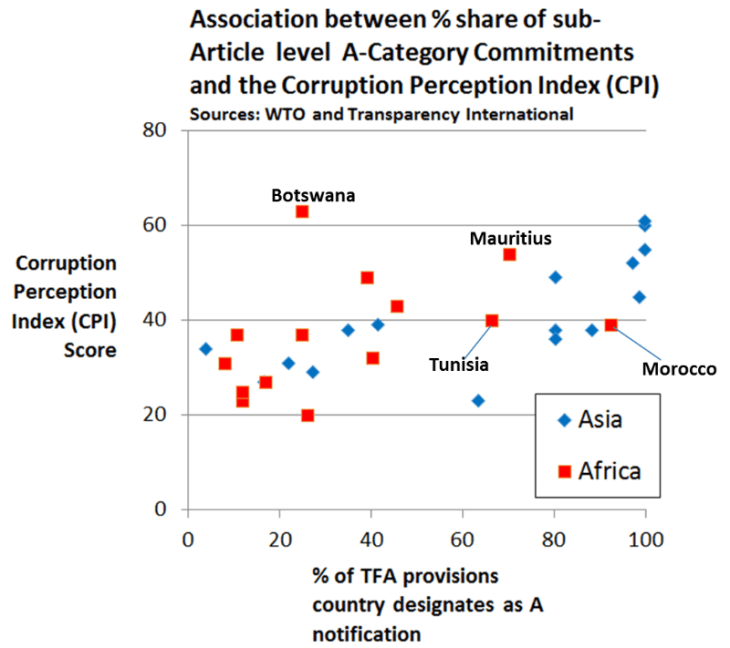
Association between % Share of Sub-Article Level A-Category Commitments and the Corruption Perception Index Score (CPI). Sources: WTO and transparency International.

The diagram above shows the association of share of the provisions that have been covered by A-Category notifications and the Corruption Perception Index (CPI) score of the countries. For African countries the correlation is moderate (correlation co-efficient: 0.42) but for Asian countries the association is strong (correlation co-efficient: 0.73). The association of the two variables is understandable: the less corruption a country has (the higher the CPI rank is), the more reforms the government is in liberty to conduct (the higher coverage of TFA as A-category Notifications).

We need to better understand the underlying reasons why policymakers cannot let reforms take off. Traditions, corruption and outdated structures are usually the biggest obstacles. These cannot be overcome by merely providing short-term technical assistance and bench-marking the world best practices but only strong political leadership can make the change. Developing partners should raise this topic on the highest political level and “live together” through the reforms with the counterparts.

The Northern Corridor (Kenya, Uganda, Rwanda) provides an encouraging example how multiple reforms can be carried out in very short time. Only two years ago it took staggering 27 days to transport a container from Mombasa Port and deliver it in Kigali, Rwanda. Today it takes only seven days. The improvement was enabled by series of reforms, which were championed by the Heads of States of the Corridor member countries. The example proves that major improvements can indeed be achieved in very short time. On the other hand, even with the most sophisticated instruments, reforms will not succeed if there the high-level ownership is not there. Author: Tapio Naula

BMA – This one is not implementable!

[Picture Credit: John Moore - Getty Images]

Border between South Africa and Zimbabwe [Picture Credit: John Moore – Getty Images]

The SA government is forging ahead with plans for a border management agency to handle all aspects of border control, from security to customs and plant and animal inspection – but MPs have said it can’t be done.

Home Affairs Minister Malusi Gigaba and his defence counterpart Nosiviwe Mapisa-Nqakula launched Operation Pyramid – a transitional arrangement to improve interdepartmental co-ordination – on Friday, while a draft bill to create the legal framework for the agency was tabled at a workshop in Pretoria earlier in the week.

But there are serious concerns about the ability of one entity to manage the diverse requirements of border control, which would require a huge single body that may prove unwieldy, while it would also need to assume some of the functions of the police and defence force. This would put it in conflict with the constitution, which provides for a single police service and defence force.

Section 199.2 of the constitution states the defence force is the “only lawful military force in the Republic”. Establishing a border management agency performing security functions in parallel with the police and SANDF would thus require a constitutional amendment, but this is just one among many challenges.

The need for such an agency arose in the first place because numerous national intelligence estimates had said the lack of co-ordination in the border environment resulted in “significant weaknesses, threats and challenges”.

Briefing Parliament’s police oversight committee this week, Brigadier David Chilembe, head of border policing, outlined steps that had been taken to get the agency off the ground, six years after President Jacob Zuma ordered it to be done.

The Department of Home Affairs, the lead agent in the project, had established a project office to oversee implementation, heads of affected departments had signed a multiparty agreement and sat on a committee together to co-ordinate their efforts, while an interministerial committee ironed out the policy questions.

The Government Technical Advisory Centre in the Treasury was working on the business case for the agency, Chilembe said.
The plan was to set up the agency in stages and identify the legal and operational implications at each stage so they could be addressed.

But a follow-up briefing on concerns raised by MPs after an oversight visit to the Lebombo border post near Komatipoort in Mpumalanga opened a window into the difficulties the agency will face.

The committee wrote a damning report on the Lebombo border post after a visit earlier this year, when MPs found the ceiling was collapsing because air-conditioning ducts dripped on to it, the door was shattered and the gate jammed, meaning it was possible to drive or walk through it without stopping.

Police complained they had to stand unprotected in the sun or rain and had to make their own travel arrangements from town.
Lieutenant-General Kehla Sithole said the problems originated in a 1998 agreement between Mozambique and South Africa for the post to be established as a “one-stop” facility, with officials sitting back-to-back under one roof.

Mozambique later said it had expected South Africa to pay for its construction, but the Treasury balked at this.The resulting limbo meant new facilities could not be built and neither could the existing ones be refurbished because the Public Works Department refused to upgrade buildings earmarked for demolition.

There were perceptions that the SA Revenue Service, which was the lead agency in the Border Control Operational Co-ordinating Committee – the body charged with harmonising the environment since 2001 – looked after its own interests first, leaving the SAPS short-changed in accommodation and office space.

MPs were shocked to hear an 80-room residential complex for SAPS personnel stood empty because police were expected to pay for it themselves but, unlike SARS officials, did not receive an accommodation allowance. As a result, they preferred to rent a shack in town and travel to the border post daily.

There was also no scanner at the border post, meaning truck cargos, for instance, could only be inspected manually. Opposition DA spokeswoman on police Dianne Kohler Barnard said this almost certainly meant the majority of vehicles went through the post unchecked, meaning it could easily be used for child trafficking, for example.

Sithole said the lack of a scanner was the result of a Treasury instruction for departments represented at the post to make a joint proposal for one to be procured, instead of each asking for their own – at a cost of millions a unit.

A “scanner committee” had been established in the late 1990s but, because one was provided for in the plans for the one-stop concept, it had yet to be bought.

Committee chairman Francois Beukman said MPs weren’t interested in the history of the problem, but rather in what would be done to get a scanner in place.

ANC MP Jerome Maake, supported by Leonard Ramatlakane, said after the presentation it was clear the border management agency couldn’t work. If it was established as a government department – one of three options on the table – this would create a “super department” that would reach into the functions of the others. This would confuse lines of accountability.

If it was established as a government component under an executive authority, or as a public entity, the other two options, it would run into the constitutional challenges related to the police and defence functions.

“All I see here is problems and I don’t see how they can be solved,” Maake said.

“Maybe you’re just afraid of telling the president, this animal can’t be implemented and you’re moving around it, on the periphery, afraid to just say, no – can we come up with something new?

“This one is not implementable.”

Source: Independant On Line (IOL)

Xenophobia Backlash – Mozambique/South African Border closed

Lebombo border post has been closed until further notice Friday17 April 2015 after an unruly mob barricaded the N4 near Ressano Garcia, targeting trucks with South African registration numbers [Picture: Sowetan]

Lebombo border post has been closed until further notice Friday17 April 2015 after an unruly mob barricaded the N4 near Ressano Garcia, targeting trucks with South African registration numbers. [Picture: Sowetan]

The border post between South Africa and Mozambique has been closed until further notice Friday after an unruly mob barricaded the N4 near Ressano Garcia, targeting trucks with South African registration numbers.

This also came just as immigration officials from Mozambique early in the morning began the blocking of all vehicles coming from South Africa under unexplained circumstances. Witnesses told ZimEye.com the situation at the border is both shocking and desperate with drivers voicing their frustration at the hands of Mozambican border officials.

Lebombo border post has been closed until further notice Friday17 April 2015 after an unruly mob barricaded the N4 near Ressano Garcia, targeting trucks with South African registration numbers..

“Trucks with South African registration plates have been stoned in Mozambique. A volatile crowd of about 200 Mozambicans has barricaded the N4 about four kilometres east of the Resano Garcia border post, where there is a truck stop,” reported Corridor Gazette on Friday.

“It is suspected that this action in related to the Xenophobic attacks which have erupted in various areas of KwaZulu-Natal and Gauteng this week.”

Trac, a company which is responsible for the 570km of the road between Solomon Mahlangu off-ramp in Tshwane and the Port of Maputo in Mozambique, placed a warning on the protest action on its website.

A traveller who en route to Nelspruit from Maputo at around 9:30 on Friday morning told the website that: “The crowd let us pass because we had a Mozambican-registered car.

South Africa and Zimbabwe sign milestone Customs Mutual Assistance Agreement

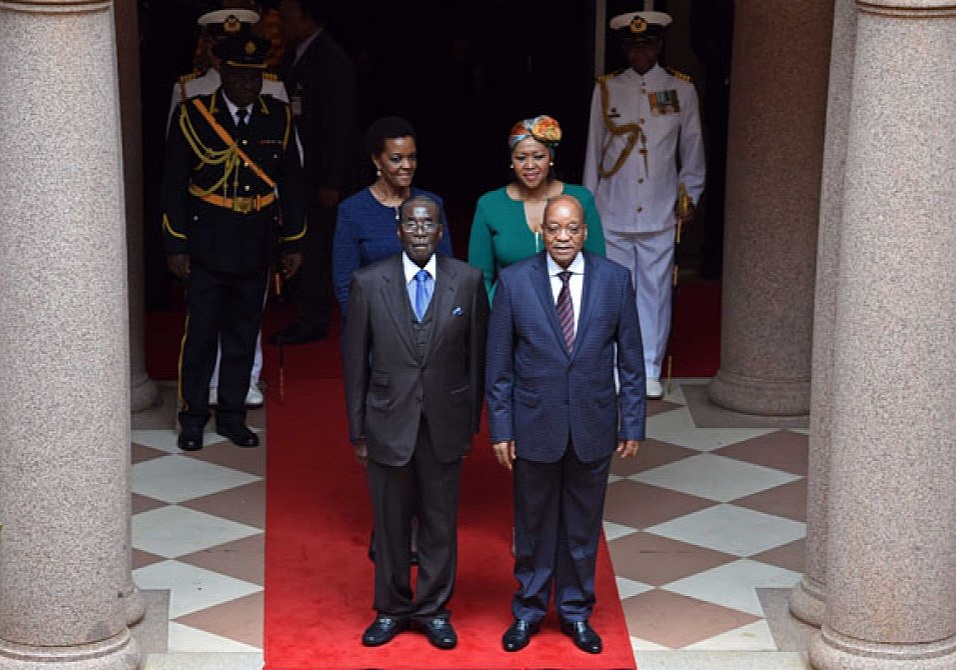
robertmugabejacobzuma2015govtza_SnapseedSouth Africa and Zimbabwe have elevated bilateral relations with the signing of five agreements set to benefit both countries. The agreements were signed on Wednesday during President Robert Mugabe’s state visit to South Africa at the invitation of President Jacob Zuma. An agreement regarding mutual assistance between customs administrations between the two countries was also signed, which will further cooperation towards the establishment of a one-stop border post. This is viewed as a crucial milestone.

Zimbabwe tightens border controls on imported goods

Zimbabwe-flagZimbabwe has introduced custom-control measures aimed at reducing the inflow of smuggled and inferior goods, and boosting its revenue from customs duty. Goods being exported to Zimbabwe will have to undergo consignment verification from May 16.

The government’s customs officials are also tightening up inspections at the Beitbridge border post to stem the flow of cheap, illegal goods, which Zimbabwean companies blame for their financial woes.

Executive chairman of the European Union Chamber of Commerce and Industry of Southern Africa Stefan Sakoschek said on Thursday that “the general idea is for Zimbabwe to protect its borders from substandard goods, as well as from undervaluation”.

Mr Sakoschek said the consignment-based conformity assessment programme fell within the framework of the World Trade Organisation’s technical barriers to trade as well as the regulations of the General Agreement on Tariffs and Trade.

Exporters and clearing agents have been informed of the new consignment verification measures, which will ensure conformity to standards and the value of goods declared. A certificate will be issued for the consignments for presentation to customs officials on arrival in Zimbabwe. Goods without a certificate will be refused entry.

Targeted products include food and agricultural goods, building and civil engineering products, timber and timber products, petroleum and fuel, packaging materials, electrical and electronic appliances, body care products, automotive and transportation goods, clothing and textiles, engineering equipment, mechanical appliances and toys.

Trade Law Chambers director Rian Geldenhuys said the pre-shipment verification process would entail additional costs but should not contribute to further delays in shipment. Consignment verification was widely practised especially in developing countries as a way to ensure the collection of customs duty revenue, Mr Geldenhuys said.

“Underinvoicing is a huge problem throughout the world, especially least developed and developing countries which Zimbabwe is one of,” he said.

Trade Law Centre researcher Willemien Viljoen also said the assessments would entail additional costs. Much of the effect would depend on how the conformity assessments were implemented and the standards that would be applied, Ms Viljoen said.

The Zimbabwean government has appointed well-recognised French company Bureau Veritas as the conformity assessment company for verification purposes, and has given the assurance that “compliant exporters will be able to benefit from fast-track procedures reducing systematic intervention on their frequent exports to Zimbabwe.”

Zimbabwean Industry and Commerce Minister Mike Bimha was quoted by the Zimbabwean press as saying that Zimbabwe was being “flooded with sub-standard imports which do not meet quality, safety, health and environmental standards”.

These goods had a negative effect on the country’s economic development and the competitiveness of its industries, Mr Bimha said.

In terms of its four-year agreement with Bureau Veritas the Zimbabwean government will receive monthly royalty fees equivalent to 5% of all monies received for its services. This arrangement will eventually lapse when the Zimbabwe Standards Regulatory Authority is established to monitor and control imports, exports and local goods to ensure compliance with quality, health, safety and environmental standards. Bureau Veritas operates in 140 countries and offers pre-shipment services to SA, Ethiopia, Kenya, Somalia, Uganda and Côte d’Ivoire. Source: BDLive (Reporter: Linda Ensor)

Read also the following articles, published in Zimbabwean Situation – Govt moves to tighten border controls (September 2014) as well as Zim mulls one-stop border post (November 2014) which might suggest that entry arrival procedures at Zimbabwean ports of entry may not be that expeditious given a prominent focus on revenue collection.