Africa and the War on Drugs

Co-authored by Neil Carrier - a researcher based at the African Studies Centre, Oxford and Gernot Klantschnig - a lecturer in International Studies at the University of Nottingham, Ningbo, China.

Co-authored by Neil Carrier – a researcher based at the African Studies Centre, Oxford and Gernot Klantschnig – a lecturer in International Studies at the University of Nottingham, Ningbo, China.

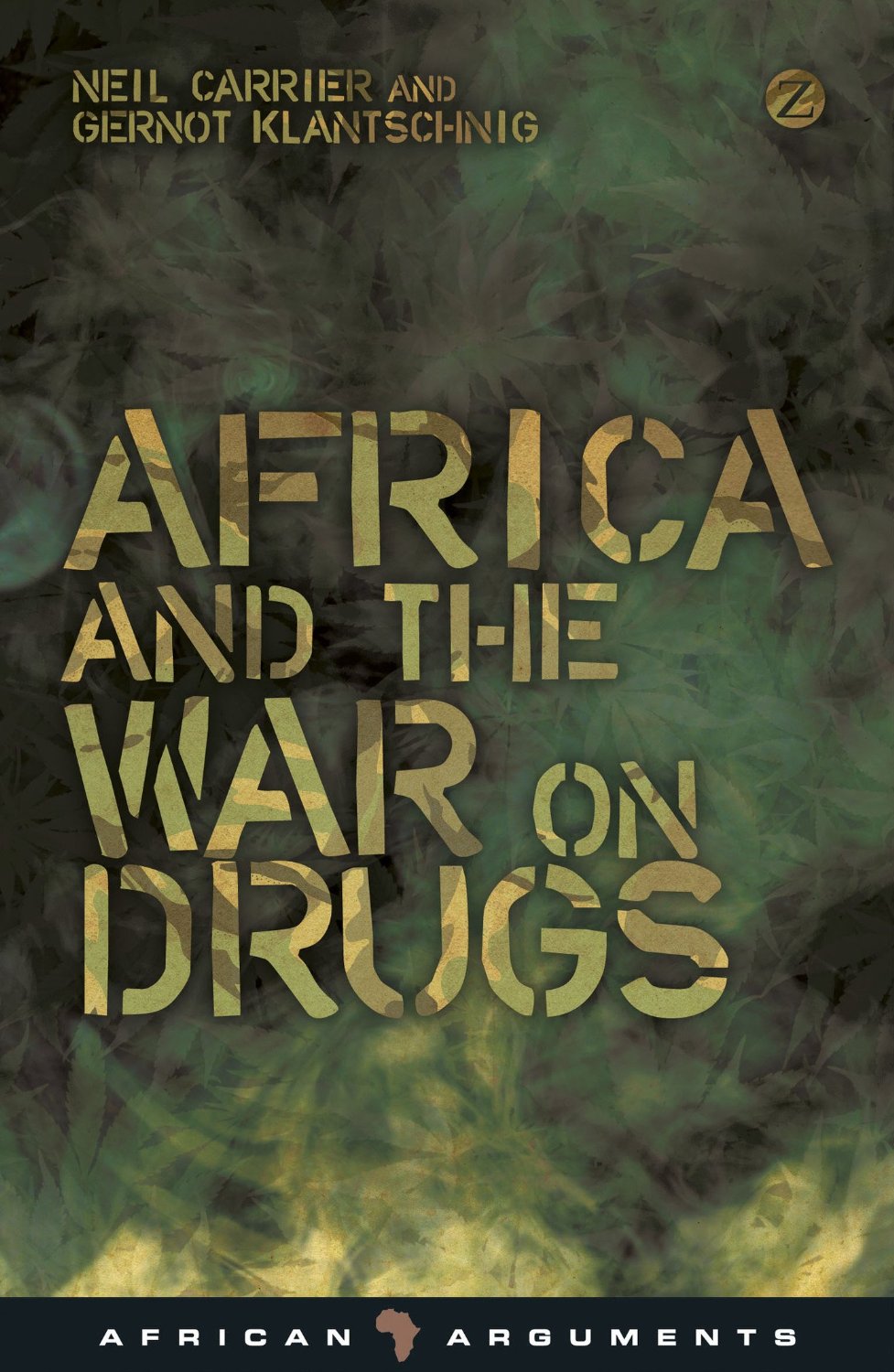
Given the much over-stated phrase ‘the war on drugs’, enforcement and security agents alike will find the following book of immense value, especially in that it provides a continental view of the problem in Africa. Nigerian drug lords in UK prisons, khat-chewing Somali pirates hijacking Western ships, crystal meth-smoking gangs controlling South Africa’s streets and the Bissau-Guinean state captured by narco-traffickers. These are some of the vivid images surrounding drugs in Africa which have alarmed policymakers, academics and the general public in recent years. In this revealing and original book, the authors weave these aspects into a provocative argument about Africa’s role in the global trade and control of drugs. In doing so, they show how foreign-inspired policies have failed to help African drug users who require medical support, while strengthening the role of corrupt and brutal law enforcement officers who are tasked with halting the export of heroin and cocaine to European and American consumer markets.

‘A fresh, ambitious, and critical survey of drug use and trafficking in Africa, where globalization has added cocaine, heroin, and methamphetamine to local staples like beer, khat, and cannabis. Carrier and Klantschnig explore the continent’s changing drug ecologies, the mixed implications for development, and policy responses that have ranged from more drug wars to state complicity in the traffic.’ David T. Courtwright, Presidential Professor,Department of History, University of North Florida

‘Reliable data on the use of drugs in Africa is notoriously hard to find, and this is a topic which tends to attract sensationalism and political opportunism rather than rational commentary and debate. In this readable and thorough book, Carrier and Klantschnig offer a calm and reasoned review of the existing evidence and develop an effective critique of the “war on drugs” approach. Picking apart many common assumptions about psycho-active substances in Africa, they effectively challenge the value of supply-side regulatory approaches and attempts at prohibition, and argue for policies based on harm-reduction. This book will be essential reading for anyone interested in drugs policy in Africa.’ Justin Willis, Durham University

Reviews: courtesy Amazon.com

Freight companies to pay $18.9 million for price-fixing

BackhanderTwo Japanese freight forwarders have agreed to pay a total of $18.9 million in criminal fines for their role in a price-fixing scheme, according to the Department of Justice (DOJ).

Over the course of at least five years, Yusen Logistics Co. and “K” Line Logistics Ltd. conspired to fix freight forwarding fees, including security fees and fuel surcharges, on air cargo shipments from Japan to the U.S., the Department of Justice (DOJ) said. The two are just the latest in a string of 16 freight forwarding companies that have agreed to plead guilty to price-fixing and pay criminal fines totaling more than $120 million.

“Consumers were forced to pay higher prices on the goods they buy every day as a result of the noncompetitive and collusive service fees charged by these companies,” Bill Baer, Assistant Attorney General of the DOJ’s Antitrust Division said in a statement. “Prosecuting these kinds of global, price-fixing conspiracies continues to be a top priority of the Antitrust Division.”

The DOJ seems to have been successful in pursuing that priority. In the 2012 fiscal year, the antitrust division collected a record-breaking $1.35 billion in criminal fines, nearly 60 percent of which came from Asia-Pacific-based companies. Source: Insidecounsel.com

Inside track to the local Tobacco ‘Cabal’

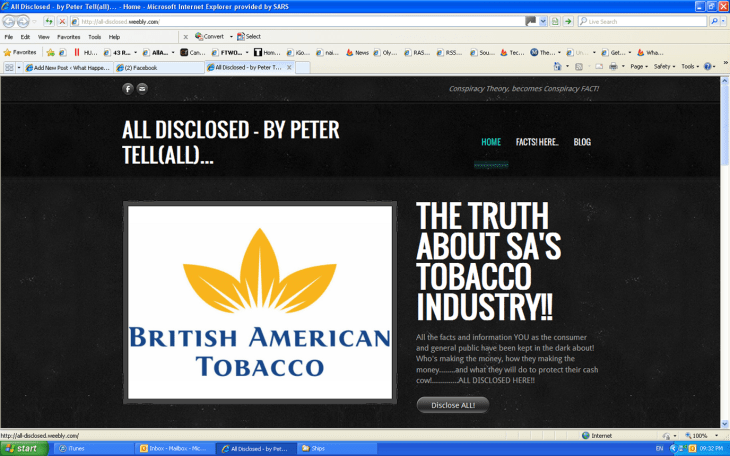
Peter Tell-AllWith much international focus on tobacco and tobacco products its great to read something outside of the mainstream media. Evidently this guy has some real insight in the tobacco industry and he sure is passionate about his views. This is a fine example of ‘Social Media’ providing what your average Google search-and-hit will never reveal. Conspiracy theory or not, this is a site dedicated to one thing – exposing the ‘Anglo-American tobacco cabal’. Aptly titled “All Disclosed by Peter Tell(all)” he invites you………

…………… to browse, interact and explore my website dedicated to the exposure of facts, truths and the responsible sharing of the information contained within these pages, about South Africa’s Tobacco Industry! The compilation of articles and also unpublished fact sheets about how this very lucrative and secretive industry operates has up until now been a very dark and well-kept secret! Why would all this information be kept from us? Why would they not want us to know how much money is being made? Why does the Government play both sides of the fence? Who pulls the strings of the authorities? THESE ARE THE QUESTIONS WE SHOULD BE ASKING!!

Systematic corruption found at Brazilian ports

Brazilian ports have been tarnished by corruption

Brazilian ports have been tarnished by corruption

An investigation by Brazil’s federal police has uncovered endemic corruption at ports in Rio, Itaguai, Vitória and Santos, with claims of bribes paid to employees of the Inland Revenue Service and to Customs brokers as a means of expediting the entry of illegal goods.

While the detail of the investigations has not been made public, it is clear that 13 people have been indicted, of which four are businessmen. Politicians may be implicated, too.

Investigations, which first started in the Port of Vitória in 2009, have so far led to six cases being sent to the Federal Court in Rio and Espirito Santo. These involve auditors being asked to delete information from a database, the deliberate falsification of information and turning a blind eye in respect of the importation of explosives. All of the companies implicated in the various prosecutions deny any illegal activity took place. Source: Portstrategy.com

Corruption persists at Customs and Border Protection

A CBP vehicle patrols the border in Arizona in 2010. (Matt York/AP file photo)

A CBP vehicle patrols the border in Arizona in 2010. (Matt York/AP file photo)

Nearly 150 Customs and Border Protection officers were arrested or indicted for corruption over the last eight years, a new report has found. A majority of the officers were stationed along the Southwest border, the Government Accountability Office determined. An additional 2,170 were arrested for misconduct in the same time period. GAO cited CBP’s lack of review and oversight of its employees and monitoring processes as complicit in allowing corruption to fester within the agency. (Readers please bear in mind that CBP has over 50,000 members)

Incidents of corruption included fraud, harboring aliens, selling immigration documents and allowing loads of narcotics through a port or checkpoint. Of the 144 corruption incidents, 103 — more than 70 percent — were considered “mission-compromising.” CBP even reported some instances of “infiltrators” seeking and gaining employment at the agency for the sole purpose of engaging in mission-compromising activity. For example, an officer stationed in El Paso, Texas, was arrested in 2007 for conspiring to import 5,000 pounds of marijuana each month into the United States. Less than 1 percent of arrests for misconduct, however, were related to CBP’s mission.

GAO recommended CBP — part of the Homeland Security Department — better track which pre-employment screens assist in identifying unacceptable job applicants. CBP currently conducts background investigations and polygraph examinations for potential hires, but does not monitor which tactics are the most effective. GAO also suggested CBP assess the feasibility of expanding the polygraph program to include occasional tests for current employees. Additionally, the auditors said the agency should improve the quality assurance of its screenings and set a timetable to complete a comprehensive employee-integrity strategy. CBP concurred with all of GAO’s recommendations, saying while an overwhelming majority of its employees are honest and hardworking, there is little room for error. “Any act of employee corruption interferes with the agency’s mission to secure the nation’s borders against all threats and facilitate legitimate travel and trade,” Jim Crumpacker, DHS’ chief liaison to GAO, wrote in a letter to the auditors. Source: www.govexec.com