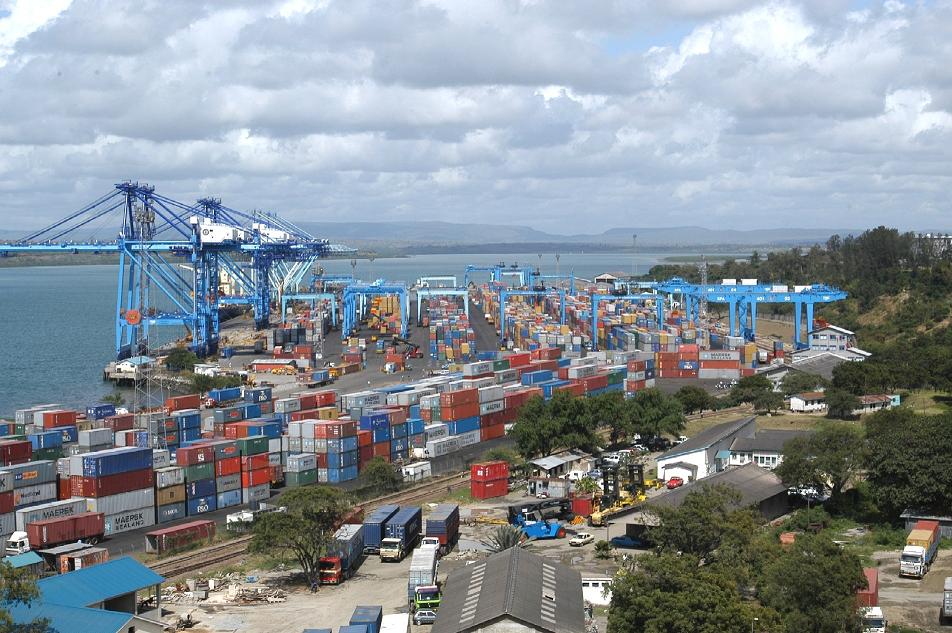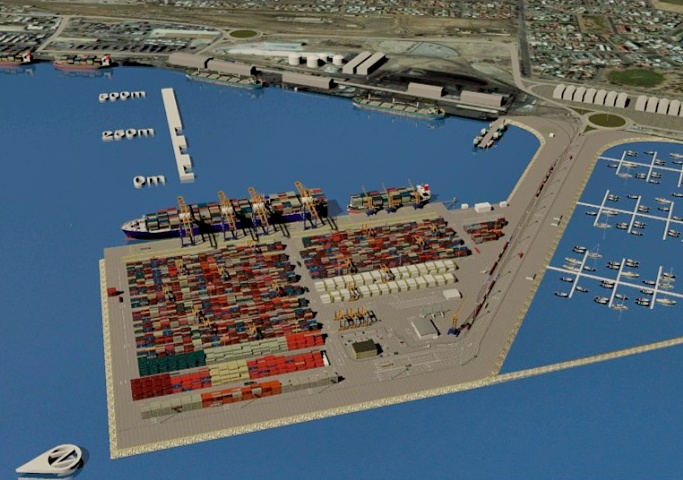
Earlier this year Reuters featured a series of excellent photographs by Singapore-based photographer Edgar Su, who spent time documenting working life in and around the Port of Singapore. Connected to more than 600 ports in some 120 countries, Singapore is one of the world’s busiest shipping hubs, and is often called the gateway to Asia. It plans to increase its total capacity dramatically as it competes with other massive ports in the region such as Shanghai, Hong Kong and Shenzhen in China and Busan in South Korea. Source: Reuters
Category / Containerization
New CTU Code – IMO Approves Container Weight Verification Requirement
The Maritime Safety Committee (MSC) of the IMO has approved changes to the Safety of Life at Sea (SOLAS) convention that will require verification of container weights as a condition for loading packed export containers aboard ships.
Misdeclared container weights have been a long-standing problem for the transportation industry and for governments as they present safety hazards for ships, their crews, and other cargo on board, workers in the port facilities handling containers, and on roads. Misdeclaration of container weights also gives rise to customs concerns. The approved changes to the convention will enter into force in July 2016 upon final adoption by the MSC in November 2014. In order to assist supply chain participants’ and SOLAS contracting governments’ implementation of the container weight verification requirement, MSC also issued a MSC Circular with implementation guidelines.
MSC also approved a new Code of Practice for the Packing of Cargo Transport Units (CTUs), including intermodal shipping containers. The new CTU Code, which will replace the current IMO/ILO/UNECE Guidelines for packing of CTU, has already been approved by the UNECE (United Nations Economic Commission for Europe) and will now go to the International Labour Organization (ILO) for approval. The CTU Code provides information and guidance to shippers, packers and other parties in the international supply chains for the safe packing, handling and transport of CTUs.
Of particular interest for regulatory authorities is Chapter 4 – “Chains of responsibility and information” which deals with the parties responsible for the provision of information and other security and regulatory requirements concerning containers as they are transported across the supply chain.
The World Shipping Council (WSC), whose members represent about 90 percent of global containership capacity, has been a leading advocate for the container weight verification requirements and has worked cooperatively with the IMO for over seven years to see them materialize. WSC has also participated in the group of experts that developed the new CTU Code.
“In taking these decisions, the IMO has demonstrated its continuing leadership in trying to ensure the safe transportation of cargo by the international shipping industry,” said WSC President & CEO, Chris Koch. “We congratulate the IMO Secretary General and the IMO member governments for developing and approving these measures that, when properly implemented and enforced, should provide for long-needed improvement to maritime safety. The SOLAS amendments and related implementation guidelines regarding container weight verification represent a collaborative effort that we were pleased to be a part of and we look forward to final adoption of the amendments in November 2014.”
The new CTU and supporting material can be accessed at the UNECE website here. Also See the World Shipping Councils webpage here for chronological information about the container weighing issue. Source: Maritime Executive
State-of-Art Port Control Centre opens in Cape Town
South Africa’s first maritime port of entry control centre represents a milestone in the country’s journey to secure, modernise and control its borders, Finance Minister Pravin Gordhan said at the opening of the centre at Cowrie Port in Cape Town harbour last week on Friday.
The centre puts all the government departments and agencies involved in immigration and border control under one roof. These include the departments of home affairs, health, agriculture and fisheries, the SA Police Service (border police and crime intelligence), and the SA Revenue Service (Customs). The state-of-the-art centre would not only improve security and immigration issues, but would also serve to enhance trade and South Africa’s status as a logistical gateway to Africa, Gordhan said.
Trade
The rationale behind the centre was in line with the National Development Plan, the minister said. Among other things, the NDP aims to stimulate growth by lowering the cost of doing business in South Africa, improving the country’s competitiveness and exports, and linking local products with other emerging markets. Gordhan said the fast-growing markets of Africa represented important new markets, and the NDP was committed to increasing South Africa’s trade with its regional neighbours from 15% to 30%.
‘Complex borders’
Home Affairs Minister Naledi Pandor, also speaking at Friday’s opening, said the centre had been designed “to accommodate in one spot not only customs, excise and immigration, but also health, safety and intelligence.
“Ports are complex borders to manage. Cowrie Place will provide the space and facilities to manage passengers and cargoes more efficiently than before.” Pandor said the government hoped to establish a border management agency by the end of 2016, taking advantage of the lessons learnt from Cowrie Place. A flagship feature of Cowrie Place is the co-ordination monitoring centre, where the data and information will be fed, assimilated and made available to all government department and agencies involved in the maritime border management.
“For the bona fide tourist or member of the trade community, this will mean better service,” Gordhan said. “For those who intend to challenge the laws of our country, be warned, as we intend to raise the bar of compliance by an order of magnitude.”
Important port
Cape Town’s port is oldest in South Africa, but despite changes to its maritime culture brought by air travel and containerisation, it is still an important point of entry. The port processes more than 870 000 containers as well as nearly 730 000 tons of dry bulk per annum, Pandor said.
A total of 6 173 commercial vessels and 55 passenger vessels entered and/or left the port in 2013, while more than 62 000 people entered and/or departed from Cape Town harbour. Pandor said E-berth at the harbour would be developed into a fully fledged passenger liner terminal to complement Cowrie Place.
19,000 TEU boxships – thats the capacity for now say Ship Owners
![According to observers, some of the ships that appear in the table above (Alphaliner) with a flow rate of 19 official thousand TEUs could in fact could also load a thousand more. [http://www.lagazzettamarittima.it/]](https://mpoverello.com/wp-content/uploads/2014/04/alphaliner-2-2014g.jpg?w=300&h=180)
According to observers, some of the ships that appear in the table above (Alphaliner) with a flow rate of 19 official thousand TEUs could in fact could also load a thousand more. [http://www.lagazzettamarittima.it/]
Containership capacity growth appears to have reached a plateau for now, with no owners or operators looking to go beyond 19,000 teu. Nevertheless, technical experts expect larger containerships to eventually enter service, once infrastructure constraints have been overcome.
At the moment, though, the biggest ships in the pipeline are for China Shipping, with CSCL Globe due for delivery in November reported to have a nominal capacity of 19,000 teu. United Arab Shipping Co has 18,800 teu vessels on order; Mediterranean Shipping Co will soon be receiving 18,400 teu ships, while Maersk’s Triple-Es have a nominal intake of 18,270 teu. CMA CGM has recently upgraded ships on order, which will now be around 17,800 teu. What they all have in common is their length, just under 400 m, which is regarded as the practical maximum for now, according to Marcus Ihms, containership expert at classification society DNV GL.
Beam is another potential limiting factor, with cranes needed to handle broader ships, and the greater rolling forces of a very wide vessel making it inadvisable to load cargo on deck. Where designers can obtain additional capacity within those limitations is through the siting of the engine room or accommodation block. Moving the engine room, for example, can create as much as 250 teu of extra cargo space.
What is clear, he told the Containerisation International-Lloyd’s List Global Liner Shipping conference in Hamburg, are the economies of scale of the larger ships that are now being delivered. The slot costs of, say, a 21,000 teu ship, are as much as 10% lower than for a 14,000 teu vessel.
An 18,000 teu ship would still have cheaper slot costs than a 14,000 teu vessel even at 90% rather than 100% utilisation. Although ship designers have been talking about vessels of up to 24,000 teu, Mr Ihms told delegates that no carriers were thought to be looking beyond 19,000 teu right now.
However, ships of more than 400 m have been built in the past, most notably the 564,650 dwt ultra large crude carrier Jahre Viking, which was 458 m long. ER Schiffahrt chief executive Hermann Klein told Containerisation International that he expected ship sizes to continue growing, albeit not as rapidly as in recent years Dr Klein, the former head of Germanischer Lloyd and one of the first in the world to predict the arrival of 18,000 teu ships, anticipates that containerships will eventually exceed 400 m in length and so go beyond 19,000 teu. “There is no technical limitation,” he said.
But first, the ports need to be ready to handle the next generation of containerships. That will require larger cranes, dredging, higher bridges in some cases, and other infrastructure investments. Source: Lloydsloadinglist.com
Change on the Horizon – 2014 Container Shipping Outlook
The 2014 outlook for the container shipping industry appears bleak. According to AlixPartners’ 2014 Container Shipping Outlook, the industry as a whole remains buried under a growing mountain of debt amid continued market turbulence. And this is hardly breaking news. With few exceptions, the industry has struggled for the better part of the past decade. What is new is the impact that that widespread financial distress is finally having on carriers and other key stakeholders: we are now seeing a number of profound structural changes to the industry—changes that may result in broad-ranging impacts on the major market participants.
For detailed analysis download the full report from AlixPartner’s website. Source: alixpartners.de
Outlook and reliability of African ports in question
The reliability of African ports for import and export traffic is likely to deteriorate before getting better, according to Portoverview.com which advises importers, exporters and traders in planning their supply chain to and from the continent.
Speaking earlier this week at the Cool Logistics Conference in Cape Town, Africa. Portoverview.com’s Victor Shieh said almost 2,000 incidents were recorded on its portal over the last 16 months, with an average of one weather-related incident per day for South Africa alone.
Current congestion issues will remain a problem whilst port infrastructure is renewed over the next years. However, we see African hinterland connections beyond the terminal gates as the biggest challenge facing shippers,” Shieh emphasised.
In a study presented at the conference, road and rail construction as well as investment in port infrastructure were identified as the main positive developments recorded on the portal.
Greenfield sites along the African coast are cited as having the greatest potential to improve cargo efficiency. Projects such as the 2.5 million teu site at Lekki in Nigeria and the 5 million teu expansion at Tangier-Med, in Morocco, will require similar investments on the intermodal leg to succeed.
Recent research by SeaIntel Maritime Analysis, which is co-owner of the portal, revealed that African exporters have no more than an average 60% chance that their containers will arrive on time in Asia with the percentage falling to 55% for Europe.
“For shippers – especially ones who produce and distribute perishable products – that’s a real challenge” commented Morten Berg Thomsen, a shipping analyst at SeaIntel.
Helen Palmer, director, Sutcliffe’s Maritime, a UK-based shipping agent told Lloyd’s Loading List.com that as far as ro-ro traffic was concerned she was not aware of any serious congestion and delays into African ports
“I can’t speak for box traffic but in the case of ro-ro into ports such as Mombasa, in East Africa, transit is extremely smooth with trucks waiting on the quayside as soon as the ship’s ramp comes down. Dar es Salaam, is perhaps a little less straightforward but certainly nothing major,” she said. Source: Lloydsloaddinglist.com
Art Container brings shipping into the mainstream with #ArtBoxNZ
Art project commissioned by Ports of Auckland and Maersk to shed light on shipping industry. A 40-foot container emblazoned with artwork by famous street artists began its journey round the world.
The Art Container began its voyage at the Port of Auckland, filled with New Zealand Greenshell mussels on board the Maersk Bratan, bound for Philadelphia.
Commissioned by shipping giants Maersk Line and the Ports of Auckland, The Art Container project plans to promote the importance of the shipping industry.
The container features designs by famous street artists’ Askew1 and Trust Me. One side of the container features a reworked version of Trust Me’s famous ‘Greetings from Aotearoa’, originally found in Ponsonby. Askew One has supplied an original piece, titled ‘Gigi’ that covers the other.
OP Columbia’s Andrew Selby said that they were proud to be part of the venture and supply the container for its first part of the voyage: “The Art Container is a great opportunity to raise awareness of container shipping and we’re delighted to start the container off on its global journey with an export shipment of Coromandel’s finest Greenshell mussels.”
According to Aquaculture NZ, the Port of Auckland came up with the idea after the BBC described container shipping as an “invisible industry which brings you 90 percent of everything”.
In an attempt to break into the public sphere, port of Auckland’s head of communication is turning to social networking site Twitter through the #ArtBoxNZ.
Whilst the container journeys the globe, people are encouraged to photograph the colourful container and share their respective images with Maersk Line and Ports of Auckland using the hashtag #ArtBoxNZ as well as #MaerskLine and #PortsofAuckland.
Given Maersk’s impressive 111,000 Twitter followers the project should be in good hands. You can also track the progress of the container by entering the container number: MNBU3380910 at the link here. Source: Port Technology
11 Million cigarettes wash up on Devonshire coast
The container ship Svendborg Maersk was battered by hurricane winds as it crossed the northern stretch of the Bay of Biscay on February 14th. Battling 30-foot waves and working through winds of 60 knots the ship arrived only to find that a large chunk of her cargo had been swept overboard. The ship was originally heading from Rotterdam to Sri Lanka.
The shipping giant initially reported that only 70 containers had been lost in the storms. However, last Wednesday this number skyrocketed to 517 – the largest recorded loss of containers overboard in a single incident. Countless more are supposed to have been damaged when six of the bays tilted over.
Maersk have suggested that almost 85 percent of the containers were empty, with the rest containing mostly dry goods and frozen meats. They also reinforced the fact that none of the containers were carrying harmful substances and that many had sunk in the turbulent seas.
Nevertheless, French authorities have been on the lookout for floating containers, which can be hugely problematic for other shipping vessels, alongside a huge environmental risk. According to New Zealand marine insurer Vero Marine, a 20-foot container can float for up to two months, whilst a 40-foot container may float up to three times longer.
Already, containers have been surfacing as far away as the coast of East Devon, United Kingdom. The 40-foot container washed up at Axmouth, near Seaton and is estimated to contain 14 tonnes of cigarettes. Police were immediately called in to cordon off the area and scare away any would-be smokers hoping to make a steal and sneak off with a portion of the 11 million cigarettes (refer to picture gallery).
As of yet, there has never been a requirement for shipping lines to report container loses to the International Maritime Organisation (IMO)or any other international body. In 2011, the World Shipping Council estimated that around 675 containers were lost at sea, whilst the Through Transport Club, which insures 15 of the top 20 container lines, has suggested that the number is closer to 2,000.
However, other sources suggest that this is nowhere near the true number, with some citing as many as 10,000 lost at sea each year. Analysts have suggested that one of the reasons such loses can occur are due to the lack of accuracy when weighing containers before transit. Some shippers have been found to understate the weight of containers in order to reduce shipping costs. Such misinformation can lead to uneven strain on a vessel as it transverses the seas.
One of the most notable incidents occurred in 2007 when the MSC Napoli ran aground off the English coast, breaking up and spilling 103 containers worth of toxic cargo, polluting five miles of the South Western coast. The UK marine accident investigation board ruled that the accident was due to cargo being loaded in such a way that it exceeded the baring weight of the hull girders, resulting in a structural failure across the ship. The report concluded that if such loses are to be prevented, it is essential that containers be weighed before embarkation. Source: Port Technology
Rapid progress on City Deep Container Terminal upgrade
Rapid progress is being made on a multimillion rand contract awarded by Transnet Capital Projects to Concor Civils for the construction of new concrete paving, civil services and electrical lighting at its City Deep Container Terminal. The terminal is currently being upgraded as part of Transnet’s rolling capital investment programme.
The container terminal at City Deep is known to be the largest “dry port” in the world and the City Deep area has been declared an IDZ (Industrial Development Zone) by the Gauteng government. (?)
The contract is scheduled for completion in May 2014 and includes the removal of 36 500 m3 of existing concrete paving, 110 000 m3 of earthworks, the installation of a new drainage system and all service ducting and manholes for lighting, fire mains, CCTV equipment, 360 t of mesh reinforcing and the placing of approximately 146 000 m2 of concrete paving.
The Concor Civils team is making use of as many emerging contractors as possible to supply services such as pipe laying, ducting and manholes and has undertaken to employ about 90 general workers at peak from the local community at a cost of some R10 million. These temporary workers will be given on the job training in basic technical skills, as well as in life skills. Source: Transport World Africa
Port of Santos’ new 1.2 million TEU capacity container terminal

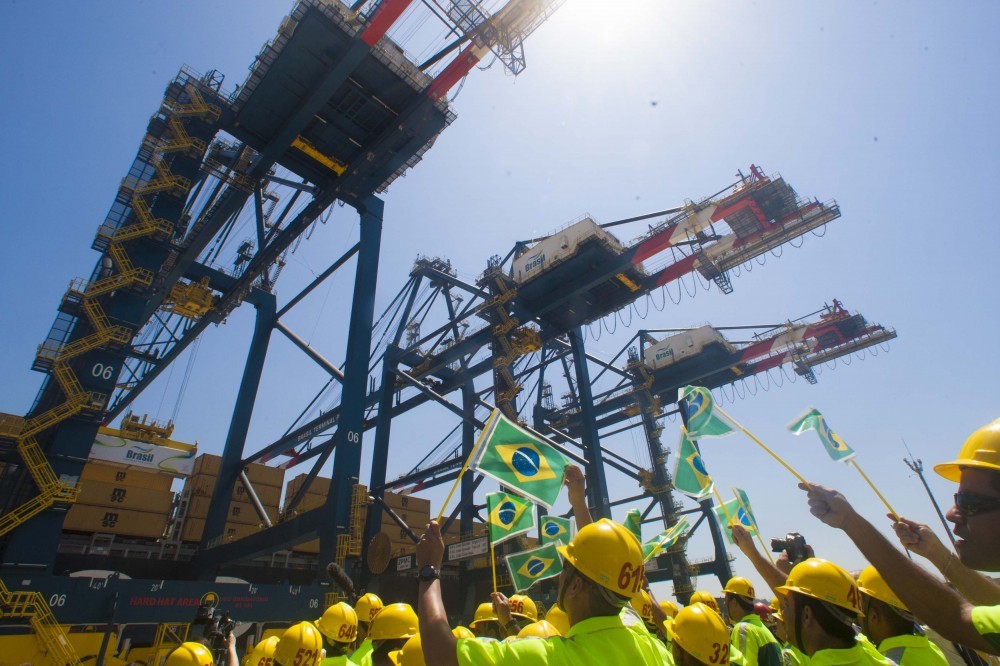
A gala ceremony was held last week to celebrate the official opening of BTP in Santos, Brazil, last week. (Image: APM Terminals)
“Another BRIC in the Wall” – Brasil Terminal Portuário (BTP) was officially opened last week with a gala ceremony held at the Port of Santos’ new 1.2 million TEU capacity container terminal.
The development of BTP began back in 2007, with APM Terminals acquiring a 50 percent share from Terminal Investment Limited (TIL) in 2010. APM Terminals will operate the terminal alongside TIL for a 20-year period, whilst investing over US$20 billion into the project during this time span.
Although fully equipped and operational since March, commercial operations at BTP could not commence until the terminal was issued International Ship and Port Facility Security (ISPS) Certification in April, and granted an operating license from the Brazilian Institute of Environmental and Renewable Natural resources in July.
The first commercial vessel call took place in August, and with scheduled dredging having been completed in October, BTP has become fully operational with 1,108 metres of quay and a 15 metre depth, capable of serving three 9,200 TEU capacity vessel calls simultaneously.
The Port of Santos, the busiest container port in South America, handled 3 million TEU during the 2012 calendar year. Source: Port Technology International
Container Cleaning Business for Sale
Within a decade the number of containers being shipped throughout the world is expected to double from 30 to 60 million containers. To facilitate this level of trade there will be many challenges ahead for our industry. One challenge that is often overlooked is keeping every single container clean after and before transit.
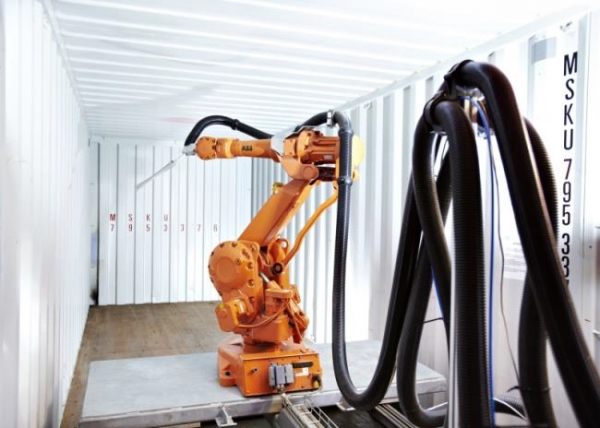
However, Swedish start-up IBC Robotics believes it has the technology to meet this challenge through its new IBA system. This breakthrough product is an environment friendly and automated cleaning solution for ship containers and a far cry from today’s manual, time consuming and often dangerous cleaning methods.
IBC was founded in 2010, based on an invention by Kerstin Eriksson, founder and still majority shareholder of the company. IBC Robotics has in a close collaboration with a.o. the Robot Valley in Västerås, Sweden, and academic technology institutions in Stockholm and Örebro, developed and technically verified the IBA system. IBC Robotics has already been granted patent rights for the IBA system in key countries like USA, China, Singapore, Germany, Netherlands, France, Denmark and Sweden.
This is where the IBA system comes in offering an automated and environment friendly cleaning solution to all involved in the handling of ship containers i.e.. The key benefits of IBA are the high grade of automation; the environment and health friendliness; the high capacity and high quality cleaning and last but not least the cost effectiveness!
When exposed to the IBA system the response from the target audience (shipping companies, ports, port service providers, goods importers and exporters) has been overwhelming and thus confirmed the significant market interest for the system. Though not available for sale the pre-launch activities have generated an impressive number of industry contacts, prospects and sales leads.
Final technical adaptation and verification of the system at customer locations are now being finalised. The IBA system is ready for market launch.
To ensure a successful market entry the present owners now have decided to sell the IBA system business to a company in the field willing to put relevant competence and resources behind a full market launch of IBA. For an investor/industrial company in the actual field the IBA system represents a business opportunity with significant international revenue potential.
For further information please contact Kent R Olsson – kent.olsson@exitpartner.se.
Source: Port Technology International
Walvis Bay Container Terminal – AfDB and Namibia sign loan agreement
The African Development Bank Group (AfDB) and Namibia on Friday, November 8, 2013 signed a ZAR 2.9 billion (US $338 million) sovereign guaranteed loan to the Nambian Ports Authority (Namport) to finance the construction of the new container terminal at Port of Walvis Bay and a UA 1.0 million grant (US $1.5 million) to the Government of Namibia for logistics and capacity building complementing the port project loan. The project was approved by the AfDB Group in July 2013.
The project is expected to enable Namport to triple the container-handling capacity at the Port of Walvis Bay from 350,000 TEUs to 1,050,000 TEUs per annum. It will also finance the purchase of up-to-date port equipment and the training of pilots and operators for the new terminal. The grant component will fund the preparation of the National Logistics Master Plan study, technical support and capacity-building for the Walvis Bay Corridor Group and training of freight forwarders.
According to the AfDB Director of Transport and ICT, Amadou Oumarou: “Through this project which potentially serves up to seven major economies in the SADC region, the Bank is assisting in the diversification and distribution of port facilities on the southwest coast of Africa, and provides the much-needed alternative for the region’s landlocked countries.”
The project will stimulate the development and upgrade of multimodal transport corridors linking the port to the hinterland while improving the country’s transport and logistics chains. It will also boost competition among the ports and transport corridors in the region with the ripple effect on reductions in transportation costs and increased economic growth.
The projected project outcomes include improvement in port efficiency and increase in cargo volumes by 70% in 2020 as a result of increased trade in the region. The benefits of the project will include among others, the stimulation of inter-regional trade and regional integration, private sector development, skills transfer and most importantly employment creation, leading to significant economic development and poverty reduction in Namibia, and the SADC region. Source: African Development Bank
Related articles
Preparing for legislation on verification of container weights
Port Technology International – The work by the Maritime Safety Committee (MSC), within the auspices of the International Maritime Organization (IMO), on the verification of container weights prior to loading on to a ship is progressing. Currently, expectations are that legislation will come into force in 2017 at the latest, and possibly in 2016.
Many terminal operators are concerned about how to comply with the upcoming legislation, and how it will impact on logistic flows in terminals.
One of the challenges facing terminals is how to weigh containers with little or no impact on operations. Transferring containers to separate weighing stations will affect productivity. Terminals are likely to need additional space and transportation capacity to cope effectively.
Solutions that weigh containers as part of existing logistic flows and operations will therefore deliver significant advantages for terminal operators.
Weighing alternatives
This article outlines technologies that are available for managing weighing or verifying weight. It should be noted that requirements for weight accuracy is not included in the current draft text from the IMO and will likely put further constraints on available options. The discussion here indicates what level of accuracy can be expected from the various options available.
Three different types of weighing or load measurement devices will be discussed: commonly available weigh bridges; load sensing devices in cranes and other lifting equipment and load sensing devices fitted to, or integrated into spreader twistlocks.
Weigh bridges
The first system that comes to mind when looking at weighing a container is the weigh bridge. Weigh bridges are a longestablished and recognised technology to measure the weight of a vehicle. When the weight of the container being carried by a vehicle is of interest, the tare weight of the vehicle must be deducted. The measuring accuracy of the weigh bridge is very high but the tare weight deduction process either introduces additional inaccuracies or becomes complicated and time consuming.
If a standard vehicle tare weight is used, the inaccuracy comes from such things as variations in fuel level, driver weight and the weight of miscellaneous materials also loaded in the vehicle. These may seem like minor aspects when considering a truck carrying a 40ft container, but it easily adds up to a few hundred kilos, thereby significantly affecting the accuracy of the container weighing process. The alternative to using a standard tare weight is to include weighing of the unloaded vehicle in the process. This will give an accurate vehicle tare weight and ultimately, an accurate container weight, but it adds steps to the process which takes time and uses terminal resources.
Using weigh bridges to weigh containers is likely to result in changes to the internal logistics of most existing terminals. All containers entering terminals by road would have to pass through the weighing station. The most critical factor in this scenario would be to have sufficient weigh bridges to avoid the bottlenecks and resulting congestion.
Containers arriving by train or sea (for transhipment) would have to be sent to a weighing station, a step which is uncommon in terminal logistics today. This additional step would tie transporting vehicles to specific containers for longer periods of time ultimately resulting in additional resources being needed to handle the same container volumes. Sufficient resources in terms of weigh bridges and transportation space therefore need to be allocated to avoid congestion
and delays.
Another situation which would require a specific process to be in place is where vehicles arrive at the terminal gate with two twenty-foot containers loaded. Weigh bridges can only determine combined weight. Because containers have to be weighed separately, this would imply a relatively complicated process involving not only the truck carrying the equipment but also terminal resources to facilitate the loading and unloading of the containers.
Load sensing devices in cranes or other lifting equipment
The second type of load measuring device is, in effect, several devices with common features. This group includes load sensors and devices on ship-to-shore (STS) cranes; rubber-tyred gantry (RTG) cranes; railmounted gantry (RMG) cranes; mobile harbour cranes; reach stackers; straddle carriers and so on. Most of the load sensing devices in this group are used for safety and/or stability systems, but the information is available to provide weight information with some limitations as outlined below.
The biggest question mark related to these systems is accuracy. Will the accuracy of these systems meet the requirements to come? The answer is most probably no, but until the requirements are defined, this option should be mentioned. Sensors in these devices are typically fitted to rope and chain anchors, in trollies or on booms. Distance from the container, and the dynamic effect this introduces adds to inaccuracy. These systems will typically have a measuring accuracy of plus or minus five percent. Source: Port Technology International
What Optimisation means for Terminals and Ports
Port Technology International’s article is perhaps poignant to current logistics developments in South Africa. Optimisation at the terminal does not only mean improving productivity and reducing operational costs. Optimisation represents a new approach to managing container terminals; it is the most significant driving factor in changing the traditional operational approach and methodology applied at container terminals. It also allows terminals to have a focus on efficiency which needs to address the trade-off between vessel service time, terminal capacity, and cost per move.
In terms of the marine shipping industry, one of the most accurate definitions of optimisation is: “The act of making a system, design or decision as effective or functional as possible.” Optimisation as a discipline is an ancient science best illustrated over time.
The history of optimisation
Greek mathematicians used to solve optimisation problems related to geometrical studies. After the invention of calculus, mathematicians were then able to address more complex optimisation problems. Following the start of the World War II and the advent of the operations research field, the concept and practice of optimisation began to develop and received significant academic and industrial focus. Mr J. Von Neumann, a leading individual behind the development of operations research, contributed substantially to the field of algorithmic research. And in the 60s and 70s, complexity analysis began to further support the use of optimisation. Then, in the 80s and 90s as computers became more efficient, algorithms for global optimisation with the purpose of solving large-scale problems began to gain momentum and credibility.
Considering the present
The continual advancements in technology with respect to computing power along with significant research in applied mathematics and computer science have solidified the value of optimisation to the industry and the end user. This has enabled advanced theory to be applied in a way that has sometimes invisibly improved our lives during last 20 years. The progress is amazing. Today, companies such as UPS and Federal Express utilise complex routing algorithms for resource allocation and supply chain distribution to deliver an item to our door with seamless efficiency. Their results have in turn changed the way millions of us find information, shop, and even do our jobs.
Today, many industries use optimisation as a more general term that covers areas from manufacturing process efficiency to improved distribution techniques. The core objective of optimisation is improving and controlling the process – whatever it may be – and allowing people with responsibilities in those areas to make better decisions. Operations research, for example, is a discipline that deals with the application of advanced analytical methods to help make better decisions at the right time and within the time constraints of a live operation.
As with other industries, the shipping and container space is currently going through its own step change to achieve new levels of operational productivity in response to mega-trends, such as globalisation and sustainable operations. To compete, ports and terminals have decided they need to adapt to their changing demands by optimising their activities in areas such as berthing allocation, vessel planning, fleet size optimisation, shift resource planning and equipment scheduling. All of these areas are critical for minimising the cost per move factors and maximising overall terminal performance and throughput.
Optimisation also provides the intelligence and the tools to support this changing industry, but it is not meant to be a black box. A container terminal is a very complex system with many unpredictable variables. Those focused on achieving optimisation will need to be able to control, monitor and configure the behaviour of this intelligence behind the machine and systems, filling any critical gaps between the planning and execution.
Containerised cargo makes up about 60 percent of all dry cargo trade in the world; since the advent of the cargo container more than 50 years ago, this number continues to grow. The appeal of containerised cargo is well known – cargo can be seamlessly transported from origin to destination via a variety of modes without the need to unload and reload its contents. The marine container terminal is at the junction of water, rail and truck transport modes. And as a consequence, marine container terminals are some of the most essential, yet challenging, links in the global supply chain. Source: Port Technology International
SARS to address Stakeholders on Customs Control proposals
The South African Revenue Service (SARS) has committed itself to further engagements with importers of all sizes in a bid to improve its proposals to transform the customs control regime.
Consultations have already taken place with organised business on the proposed Customs Duty Bill and the Customs Control Bill, and the process would now be taken to the level of traders to find out whether the proposals presented them with any problems. Amendments have also been proposed to the Customs and Excise Act to provide for the transition to the new system.
“We want to understand the situation at a micro level. We will sit around the table until we find a solution which will guarantee to us that we get the information we require but which will also facilitate trade.
“We do not want to clog up the ports,” SARS chief officer of legal and policy Kosie Louw said in an informal briefing on the proposals to Parliament’s standing committee on finance on Wednesday.
The customs bills are mainly concerned with improving the information about imported and exported goods so that customs officials can exercise greater control.
Business has expressed concern that the requirement of the Customs Control Bill that they submit a national in-transit declaration of goods at the first port of entry before they are sent to internal terminals, or depots such as City Deep, would cause delays.
The new declaration — of the nature, value, origin and duty payable on the goods — would replace the limited manifest used to declare goods and would include information on the tariff, value and origin of goods.
Business has argued that the manifest allowed goods to move seamlessly from the exporting country to the inland port or depot, and would change the contractual relationships between exporter and importer in terms of when duty is paid.
However, Mr Louw did not believe the provision would cause delays and had obtained legal advice that the contractual relationships and method of payment of duties would not change. The problem with manifests, he said, was that they provided very limited information and did not allow SARS to prevent the inflow of unwanted goods. Nevertheless, he said that SARS would discuss the matter with traders.
Mr Louw said the proposed system would “improve SARS’s ability to perform risk assessment and intervene in respect of potentially high risk, prohibited and restricted consignments at the ports”.
The bills have been in the pipeline for about four years and have been extensively canvassed with the Southern African Customs Union and business. They were needed, Mr Louw said, so that South Africa kept pace with global trends in trade, international conventions and advances in technology.
Anti-avoidance provisions have also been introduced into the bill which sets out the offences and associated penalties for noncompliance and attempts to avoid paying customs duties.
SARS group executive for legislative research and development Franz Tomasek said the Customs Control Bill would introduce a new advance cargo loading notice for containerised cargo to prevent the loading of prohibited or restricted goods on board vessels bound for South Africa. However, to reduce the administrative burden on carriers, information submitted in advance will no longer be required on arrival or prior to departure. Source: Business Day Live
Related articles
- South Africa’s New Integrated Customs Border Management Solution (mpoverello.com)

!['Gigi' by Askew One. [Image courtesy of Aquaculture NZ.]](https://mpoverello.com/wp-content/uploads/2014/03/artbox_nz.jpg?w=300&h=199)

You must be logged in to post a comment.