Singapore Builds Transshipment Capacity

PSA Singapore Terminals

Two new container berths capable of serving large container ships will be operated by COSCO-PSA Terminal in Singapore in 2017.

COSCO-PSA Terminal (CPT), a joint venture company formed by COSCO Pacific Limited and PSA Corporation, is investing in the new berths, and will move from its current two-berth terminal to three new mega berths as part of a Pasir Panjang Terminal expansion project.

A few of the planned 15 berths in Phases 3 and 4 of the Pasir Panjang Terminal are already operational. The rest of the S$3.5 billion ($2.6 billion) project is scheduled to be completed by the end of 2017, pushing Singapore’s annual container handling capacity to 50 million TEUs.

All the new berths at Pasir Panjang Terminal are designed to be able to handle container ships with capacities larger than 10,000 TEUs.

PSA Singapore currently operates 57 berths at its container terminals in Tanjong Pagar, Keppel, Brani and Pasir Panjang. The terminals at Pasir Panjang are PSA’s most advanced. The berths at Pasir Panjang Phases 3 and 4 are up to 18 meters deep and equipped with quay cranes able to reach across 24 rows of containers to serve the world’s largest container ships. They also feature the latest port innovations such as a zero-emission, fully-automated electric yard crane system.

Singapore is the world’s second busiest container port after Shanghai in China, which took over Singapore in 2010. Source: Maritime Executive

US goes its own way on container weighing

World Cargo News reports  – While the Coast Guard maintains the US will be compliant with the SOLAS amendment on container weighing, US Shippers are interpreting guidance from US Coast Guard Rear Admiral Paul Thomas as confirmation they can continue with existing practice to declare the weight of their goods rather than weigh containers.

Following to the fallout over his comments at the Trans Pacific Maritime conference in Long Beach this month, Rear Admiral’s Thomas issued further guidance on the SOLAS amendment that requires containers to have a Verified Gross Mass before they are loaded on a vessel from 1 July.

The US Coast Guard (USCG) has since confirmed that SOLAS is binding on US shippers, but stated that how shippers work with carriers to obtain and report a VGM is a commercial matter for those parties to determine.

Some US shippers, including the US Agriculture Transport Coalition (ATC), have made it known it is not practical for them to supply, and be responsible for anything other than the weight of the cargo, as they do today. The Coast Guard appears to be facilitating this approach, and the ATC last month told its members it “received confirmation” from USCG that shippers can continue to verify the weight of the goods they own, while lines remain responsible for the weight of the container.

On March 14 some 49 groups and associations representing US primary producers, manufacturers, importers and shipper groups wrote to Coast Guard Commandant Paul Zukunft saying they support its “interpretation” of the SOLAS amendment, as presented by Rear Admiral Tomas in his blog.

“Specifically, we support the Admiral’s view that if the shipper provides the cargo mass weight, to which the carrier adds the weight of the container, then the intent of SOLAS is achieved. In fact, several ocean carrier executives have advised that such a process would be practical.”

Some carriers, however, have rightly pointed out that this does not meet the SOLAS requirement, as the letter then notes: “The reason for our concern, and appreciation of Admiral Thomas’ guidance, is that some ocean carriers, citing this SOLAS amendment, are demanding that the shipper certify both the cargo and the carrier’s container. This is contrary to the practical realities of our US export maritime commerce and fundamentally flawed conceptually. (It would be similar to demanding that a soybean shipper certify to the railroad the weight of the railcar itself.)”

The groups maintain that they “fully understand our responsibility to accurately disclose the weights of cargo tendered to the ocean carriers. In fact, advance submission of accurate gross cargo weight is a well-established practice mandated by US Customs and Border Protection, by numerous intermodal (trucking and rail) weight requirements, and presently found in Shipper’s Instructions to carriers to meet so-called “no doc, no load” cargo cutoffs for entry into marine terminals. In addition, an Occupational Safety and Health Administration (OSHA) Rule, in place since 1983, assures that the accurate weight of combined cargo and container be known to the carrier prior to loading.”

Despite SOLAS, the shipper groups do not see a need to weigh individual containers and suggest other solutions can be found: “for instance, shippers are willing to provide to their carriers an annual written confirmation in the service contract (or other mutually-agreed document) that our cargo weights are accurate”.

One of the major concerns is liability, in particular the requirement that someone now sign a VGM document. Shippers say carrier demands for this are being rejected. Many US Corporations will not allow their employee to certify the weight of and assume liability for equipment that the corporation does not own, manage, control and in fact may not even see.”

The Coast Guard, for its part, does not appear to be pushing the issue of current practice not meeting the new SOLAS requirements.

In his testimony at the US House Committee on Transport and Infrastructure’s hearing for the Coast Guard’s 2017 Budget request Admiral Paul F. Zukunft, Commandant, USG made the following statement: “Foreign carriers are pretty much all in compliance today. When I was at the container terminal in Long Beach a month and half ago all the containers that come on to that yard are already weighed before they go in. So I am not seeing a sky is falling panacea playing out around us, but we need to make sure that there aren’t unintended consequences. That is why we are continuing to reach out with the many exporters…that container shows up on a manifest before it is loaded on a ship. What is needed is that final weight, but by and large most of these manifests already have that weight filled in in that column.”

The US, it appears, intends to continue to follow current practice where the shipper provides a declared weight of the cargo, leaving it to the carrier to determine the final weight of the container. Source: World Cargo News

Africa to Get First Automated Container Terminal

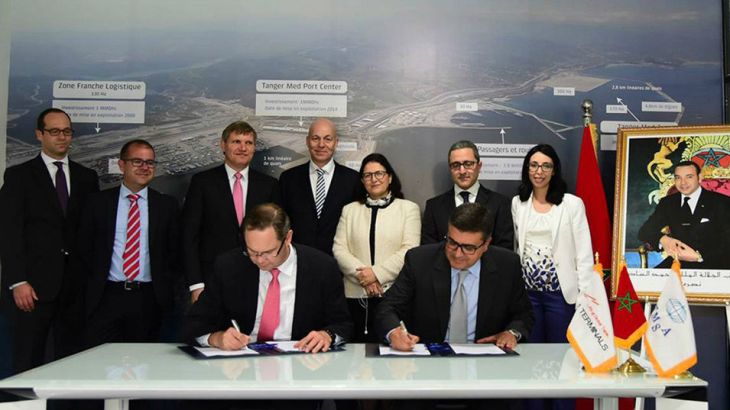
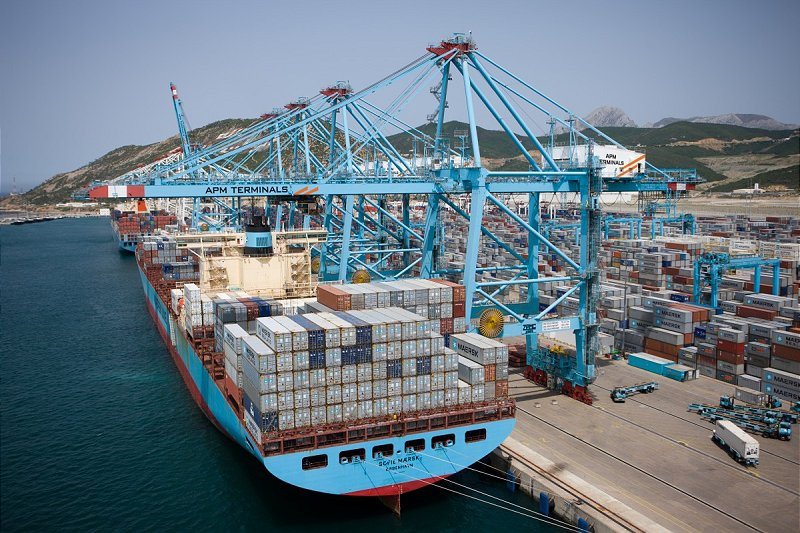
MarEx APM Tangier 2016Maritime Executive reports that the world’s third largest port operator APM Terminals said it will invest 758 million euros ($858.3 million) in a new transhipment terminal in Tangier, Morocco, that will be the first automated terminal in Africa.

APM Terminals, a unit of Denmark’s shipping and oil group A.P. Moller-Maersk, has been named as the operator of the new container transshipment terminal at the Tanger Med 2 port complex. The group already operates the APM Terminals Tangier facility at Tanger Med 1 port, which started operations in July of 2007 and handled 1.7 million TEUs in 2015. The new terminal will have annual capacity of five million TEUs.

Maersk Line, also a part A.P. Moller-Maersk, will be an important customer of the new terminal. The new terminal is scheduled to open in 2019, under the terms of a 30-year concession agreement with the Tanger Med Special Agency (TMSA), which has responsibility for the development and management of the Tanger Med port complex.

The Tanger-Med port complex is strategically located on Africa’s northwest coast near the mouth of the Mediterranean Sea on the Strait of Gibraltar, where the Atlantic Ocean and Mediterranean Sea meet. Tanger-Med is the second-busiest container port on the African continent after Port Said, Egypt. The new APM Terminals MedPort Tangier terminal will increase the port’s total annual throughput capacity to over nine million TEUs.

APM Terminals MedPort Tangier will have up to 2,000 meters of quay length and will feature the technology pioneered at the APM Terminals Maasvlakte II Rotterdam terminal which opened in 2015.

For APM Terminals the Western Mediterranean is an important market. APM Terminals Algeciras, on the Spanish side of the Strait of Gibraltar, operates in tandem with APM Terminals Tangier as an integrated Western Mediterranean transshipment hub. APM Terminals Algeciras handled more than 3.5 million TEUs in 2015, and has completed a major upgrading of its cranes and quay infrastructure to accommodate ultra-large container Ships of 18,000 TEU capacity and above.

The location of the Tangier and Algeciras facilities provide a natural transshipment location for cargoes moving on vessels to and from Africa from Europe and the Far East on the primary East/West shipping route through the Mediterranean Sea; over 200 cargo vessels pass through the Strait of Gibraltar daily on major liner services linking Asia, Europe, the Americas and Africa.

While African ports at present account for only 4.5 percent of global port throughput (including transshipment cargoes), the United Nations 2015 World Population Prospects Report projects that more than half of the world’s population growth between 2015 and 2050 will occur in Africa, with the African population more than doubling from 1.1 billion to 2.4 billion over the next three and a half decades.

Significant investment in port and transportation infrastructure will be required to meet the anticipated needs of the expanding African population and corresponding economic growth.

APM Terminals is the largest port and terminal operating company in Africa by equity-weighted container volume, with 12 facilities operating in 10 countries and three more terminals under construction. Source: Maritime Executive

Dutch Customs awards Rotterdam World Gateway AEO Certification

RWG-terminalRotterdam World Gateway says it is the first deep sea container terminal with minimal customs presence in the European Union. Ronald Lugthart, Managing Director of Rotterdam World Gateway,has received the definitive customs permit and AEO certificate for RWG, handed over by Anneke van den Breemer, Regional Director of customs at the port of Rotterdam.

Lugthart said: “Due to the high degree of automation at RWG, the introduction of a 100% pre-announcement procedure for containers and cargo via Portbase and the implementation of simplified customs procedures, over 95% of the administrative process is now completely digitised.

“This means that the administrative process can operate independently of the logistic process at the terminal, enabling fast and reliable handling.”Anneke van den Breemer commented: “As Dutch customs, our goal is to minimise any disruption to the logistic process caused by the required customs formalities. RWG and customs have recently been collaborating intensively.

“At the RWG terminal, optimal use is now being made of the simplified customs procedures. This is in the best interest of all parties: not just of the terminal and customs, but of freight forwarders and hauliers as well.”

By applying these simplified customs procedures, RWG is able to implement a fully automated gate process for road hauliers. This has great benefits for hauliers because no physical customs handling has to take place at the RWG terminal and thus no stop has to be made.

RWG adds that it is the first terminal in the port of Rotterdam to act as an Authorised Consignee, which means the customs transit will be automatically ended upon arrival at the terminal. This gives parties involved extra assurance that this transit has been cleared properly.

In addition to simplified customs procedures, constructive cooperation between customs and RWG has resulted in the establishment of a new scanning facility that is fully integrated into the terminal’s automated logistic process and operates 24/7.

Furthermore, nuclear radiation detection takes place for all truck and rail handling, and a high percentage of the containers arriving and departing by barge will be inspected as well.  Source: WorldCargoNews

US will not delay weighing rule

Verified Gross MassThe US Coast Guard has told American shippers that it will not delay implementation of the SOLAS Chapter VI amendment requiring containers to have a verified gross mass before they can be shipped.

The US Agriculture Transportation Coalition (AgTC), representing most of the country’s agricultural and forestry products exporters and thus accounting for a huge slice of US shipping exports, argued that confusion over the VGM could lead to business being lost and threatened supply chain turmoil.

It called for a one-year delay in implementation of the new rules, due to take effect on 1st July, to allow time for government and industry to work together to solve the problems. AgTC cited SOLAS Article VIII(b)(vii)(2), which allows for a Competent Authority [in this case the USCG] to give notice to the IMO of an intention to delay implementation of any SOLAS regulation for up to one year at any point before the entry into force.

However, at a special public meeting convened on 18th February at the offices of the Federal Maritime Commission in Washington, DC, Rear Admiral Paul Thomas, the USCG’s Assistant Commandant for Prevention Policy, said a delay to implementation would not be entertained.

Thomas pointed out that that the VGM is not a US regulation or law, but arises out of international agreement within IMO. As such it will be enforced by flag states, where ships are registered, and any signal that the US was unready or unwilling to comply with the new rule would be interpreted by flag state authorities to mean that loading US export containers on their ships is unsafe. He added that most US exports are carried on foreign flag ships.

This should be the end of the matter. However, the IMO mechanisms allow the US (or any other IMO member-state) to give notice any time up to 30th June. The US could also introduce an “AOB” paper at the next IMO MSC meeting scheduled for May.

At the meeting last week, shippers were reassured that if they used “Method 2” (VGM by calculation), they are legally entitled to rely on the container’s CSC plate as providing an accurate empty tare weight. Source: World Cargo News

Felixstowe to offer Container Weighing Service

Container_crane_and_spreader

Picture: Wikipedia

The Port of Felixstowe has confirmed that it will offer a container weighing service to ensure UK shippers are able to comply with the new SOLAS regulations that come into effect on 1 July 2016

The new SOLAS Chapter VI regulation requiring the shipper (or other named party in the Bill of Lading – normally a freight forwarder/NVOCC) – to supply the shipping line with a verified gross mass (VGM) declaration before the container can be loaded aboard the ship comes into force on 1st July. As widely reported, there is widespread concern that shippers will not be ready.

Commenting on the new service that Felixstowe will provide, Stephen Abraham, the port’s COO, said: “We have met with many customers and from their feedback it is clear that there is still a lot of uncertainty amongst exporters about the new rules.

“The rules have the potential to cause significant disruption to export supply chains. To help avoid this, we have decided to provide a service where export containers can be weighed at the port before being loaded. We will provide further details about how the weighing service will work in good time to ensure all exporters can be compliant by the time the new rules come into force.”

The service at the port will be available to containers arriving either by road or rail. This is important as, through its railheads, Felixstowe is the UK’s largest intermodal rail terminal; 40% of all laden export containers arrive at the port by rail.

To provide the weighing service, Felixstowe will use a spreader twistlock-based system, although the supplier of the system and the number of RTG and intermodal RMG spreaders that will be equipped with it has not been confirmed.

The UK Maritime and Coastguard Agency (MCA), which is the responsible authority for the VGM as regards UK containerised export shipments, requires all weighing equipment used to provide a VGM, whether by Method 1 or Method 2, to be calibrated to within +/- 0.1% of the true mass of the loaded container (Method 1) or by calcuation based on the sum weights of the individual cargo items being packed and associated dunnage, lashing chains, etc (Method 2).

When, at the end of 2010, the International Chamber of Shipping first launched its campaign for all containers to be weighed before ocean carriage, it was assumed that the weighing would take place in ports – naturally, as ports are where most container lifting equipment is based.

However, port operators – including, and not least, Felixstowe – successfully resisted this, which ultimately resulted in IMO formulating Method 2. While the road to IMO arriving at Method 1 and Method 2 is “history,” the key point is that port operators, freed of a legal obligation to weigh loaded export containers, are thereby free to offer a Method 1 weighing service on a commercial basis.

Irrespective of the technology employed, there are several issues around port weighing. What happens if, for example, when the port [any port, not just Felixstowe] weighs the export container for the purpose of providing the VGM and finds that the weight made the container illegal for road carriage to the port? Does the port have a legal obligation to inform the road traffic authorities [the police in the UK]; or is the onus on the shipping line, whose customer the “offending” shipper/NVOCC is?

That information is also “historic,” in the sense that in order to weigh the overloaded container in the port, it must be assumed that the truck arrived safely at the port, and that particular (unique) illegal truck trip to the export port has gone forever. The remaining problem, however, is that the VGM provided by the port may indicate that the weight of the container makes it illegal for on-carriage by road or rail in the port of unloading.

Asked to comment on this by WorldCargo News, Paul Davey, Head of Corporate Affairs, Hutchison Ports (UK), made a crucial point. “As regards legality for road carriage in all possible overseas destinations, we [at Felixstowe] would not know, for example, whether the container will leave the port of destination or is unstuffed in the port. If it leaves the port [without being unstuffed] we won’t know whether the on-carriage would be by road, rail or any other mode, so there is nothing we could do.”

This is key as it throws the real responsibility for enforcing the VGM on the carriers, who demanded compulsory weighing in the first place. They will be under a legal obligation not to accept a loaded container unless it has VGM documentation.

It follows logically that carriers know the VGM mass of all loaded containers they ship. If, on the way to destination from the port of import, due to gross overloading of the container, the truck jackknifes or overturns, with all the safety risks that entails, the carrier could be liable and open to criminal prosecution.

Thus, there can be no question of “shipper appeasement,” but it could end up in a lawyer’s free-for-all involving anyone providing the VGM if it transpires that the VGM data were incorrect. Suppose, for example, the carrier relied on VGM data provided on a commercial basis by the port of export and it transpired, following a road accident investigation in the country of import that the real weight exceeded the VGM and likely caused the accident.

As to the commercial possibilities for ports providing a VGM service, Felixstowe has not given any information on the price it will charge, but (by way of example) Yarimca in Turkey is advertising US$12 to weigh a container, according to its tariff notice.

Policy responses by port operators will vary enormously according to local context and assessment of risk and benefit. In New York/New Jersey – where loaded containers are mosly imports – Maher Terminals has advised customers that loaded export containers will not be accepted after the July 1st deadline whitout a VGM in advance, as part of the booking process.

PSA Antwerp, which is also offering a VGM service, has stated that it may, at its discretion, “strip and restuff a container so that it complies with the SOLAS requirements. The customer will pay an appropriate compensation to PSA for any such stripping/restuffing of a container and/or determining its VGM.”

The new SOLAS Ch VI imposes no obligation on terminals to weigh containers they unload. All the same, as regards imports, PSA Antwerp says: “If PSA loads a container onto a truck, it can never be held liable for additional expenses and/or fines associated with the (excess) weight of the container/truck combination.

“Any such additional expenses and/or fines will never be borne by PSA and the customer will pay an appropriate compensation to PSA for any such additional expenses and/or fines incurred by it and/or for determining the weight of the container/truck combination.” Source: WorldCargoNews

Related articles

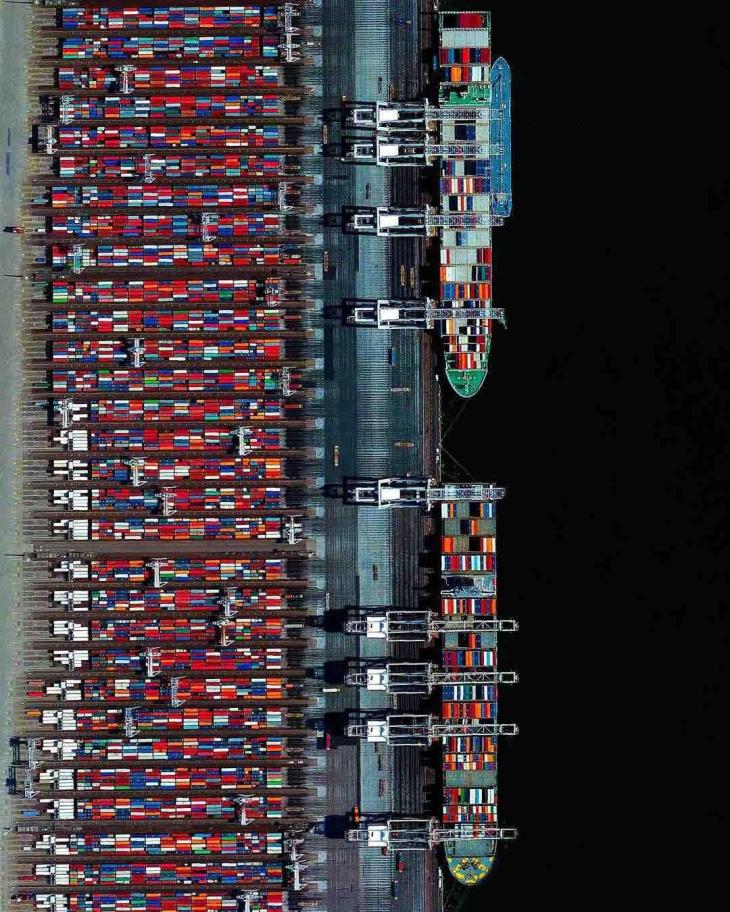
Aerial view of Rotterdam Container Terminal

Aerial view of Rotterdam Container Terminal

The Port of Rotterdam, Netherlands, is the largest port in Europe covering 105 square kilometers. (Picture: Benjamin Grant/Google Earth/Digital Globe)

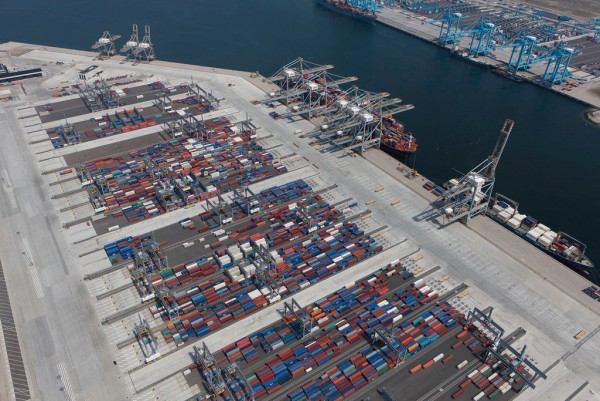
Rotterdam Maasvlakte II – World’s first Remote-Controlled Container Port

APM Terminals has released drone footage of its Rotterdam Maasvlakte II terminal. The terminal set a loading record last month on the Madison Maersk with 17,152 TEU loaded, including ten high above deck stowage.

The facility launches the world’s first container terminal to utilize remotely-controlled ship-to-shore (STS) gantry cranes. The cranes move containers between vessels and the landside fleet of 62 battery-powered Lift-Automated Guided Vehicles (Lift-AGVs) which transport containers between the quay and the container yard, including barge and on-dock rail facilities.

The Lift-AGV’s also represent the world’s first series of AGV’s that can lift and stack a container. A fleet of 54 Automated Rail-Mounted Gantry Cranes (ARMGs) then positions containers in the yard in a high-density stacking system. The terminal’s power requirements are provided by wind-generated electricity, enabling terminal operations, which produce no CO2, emissions or pollutants, and which are also considerably quieter than conventional diesel-powered facilities.

The facility, constructed on land entirely reclaimed from the North Sea, has been designed as a multi-modal hub to reduce truck traffic in favor of barge and rail connections to inland locations.

Construction began in May 2012, with the first commercial vessel call in February 2015.

2015 and 2016 are the years of ramping up operations and refining the terminal operating system. The 86 hectare (212 acre) deep-water terminal features 1,000 meters of quay, on-dock rail, and eight fully-automated electric-powered STS cranes, with an annual throughput capacity of 2.7 million TEU.

At planned full build-out, the terminal will cover 180 hectares (445 acres) and offer 2,800 meters of deep-sea quay (19.65 meters/64.5 feet depth), with an annual throughput capacity of six million TEUs. Source: Maritime Executive

Have Mega Containerships reached their Size Limit?

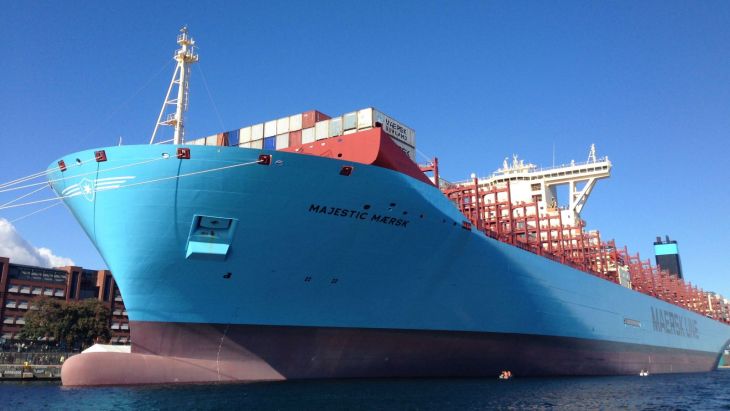
Majestic MaerskContainer shipping lines are poised to take delivery of a new generation of “megaships” over the next two years, just as the growth of world trade is slowing down, contributing to massive overcapacity in the market.

Megaships, which can be up to 400 meters long, seem to be here to stay, not least because so many more are already on order, the product of high fuel costs and low interest rates.

But the trend towards larger vessels is not without problems especially for other businesses in the transport system, and the trend could be nearing its limit as the economies of scale associated with megaships decline.

Container shipping capacity has doubled every seven years since the turn of the millennium and will reach nearly 20 million TEU in 2015 up from five million TEUs in 2000.

But since the financial crisis, container capacity has continued to grow rapidly, even as the growth in freight volumes has slowed, creating a massive overhang in shipping capacity and pressuring freight rates.

Capacity growth is being driven by the trend towards larger vessels. The size of container ships has been growing faster than for any other ship type according to the OECD’s International Transport Forum.

Between 1996 and 2015, the average carrying capacity of container ships increased 90 percent, compared with a 55 percent increase for dry bulk carriers and 21 percent for tankers.

The growth in container ship size has been accelerating. It took 30 years for the average container ship size to reach 1,500 TEU but just one decade to double from 1,500 to 3,000 TEU.

Between 2001 and 2008, the average size of newly built ships hovered around 3,400 TEU but then jumped to 5,800 TEU between 2009 and 2013, and hit 8,000 TEU in 2015.

Megaships
Both the average size of new container ships and the maximum size are set to continue growing over the next five years. Shipping lines have already taken ownership of 20 megaships with a capacity of more than 18,000 TEU each and another 52 are on order, according to the OECD.

The largest ship so far delivered has a capacity of 19,200 TEU, but carriers with capacity up to 21,100 have been ordered and will be in service by 2017.

Megaships are being introduced into service between the Far East and North Europe, the world’s largest route by volume, where potential economies of scale are greatest, but are having a cascade effect on other routes.

Large ships that formerly plied the Far East-North Europe route are being displaced into Trans-Pacific service, and former Trans-Pacific carriers are moving to the Trans-Atlantic route.

The new generation of ultra-efficient megaships is credited with cutting the cost of shipping even further and lowering greenhouse gas emissions.

But researchers for the OECD question whether megaships are contributing to unsustainable overcapacity and imposing unintended costs on shippers, port operators, freight forwarders, logistics firms and insurers.

Fuel Costs
The new generation of megaships is the lagged effect of the era of high oil prices between 2004 and 2014 and low interest rates since the financial crisis in 2008.

Costs in the shipping industry can be divided into the capital costs associated with the construction of new vessels, operating costs, and voyaging costs primarily related to fuel consumption.

Construction costs increase more slowly than ship size. Increasing a container ship from 16,000 TEU to 19,000 TEU cuts the annual capital cost per TEU-slot by around $69 according to the OECD.

Larger ships are slightly more operationally efficient than smaller ones, with an annual saving of perhaps $50 per slot on a 19,000 TEU ship compared with a 16,000 TEU vessel.

But the real savings are on the fuel bills. Megaships are “astonishingly fuel efficient” and actually consume less fuel on a voyage than 16,000 TEU carriers, according to the OECD.

With overwhelming cost advantages, especially on fuel, and cheap finance readily available, the upsizing decision appears to have been a straightforward one for shipping lines.

Slow Steaming
The new generation of megacarriers has been optimized to save fuel by voyaging much more slowly than previous container vessels.

Fuel consumption is related to the cube of speed. If a vessel travels twice as fast it will consume eight times as much fuel. The cube-rule has important implications for the economics of the shipping industry.

When fuel prices are high, it makes sense to voyage slowly to cut fuel bills, even if it means operating more ships to move the same amount of cargo. When fuel prices are low, it makes sense to travel faster and use fewer ships.

During the period of soaring oil prices, container lines instructed captains to cut speed in order to conserve fuel.

The new ships ordered were specifically designed to operate most efficiently at slower speeds to take advantage of slow steaming economies. In fact some carriers are so large they cannot operate at higher speeds.

Crucially, slow steaming has now been designed into the new generation of vessels entering container service, so it will not be easily reversed, even though fuel prices have plunged since 2014.

According to the OECD, most of the voyaging cost reductions in the new generation of megaships come from their optimization for slow steaming rather than from increased size.

“Between 55 and 63 percent (at least) of the savings per TEU when upgrading the vessel size from an early 15,000 TEU design to a modern 19,000 TEU design are actually attributable to the layout for lower operation speeds,” the OECD estimated.

“Cost savings are decreasing as ships become bigger,” the OECD concluded. “A large share of the cost savings was achieved by ship upsizing to 5,000 TEU, which more than halved the unit costs per TEU, but the cost savings beyond that capacity are much smaller.”

Unintended Costs
The consolidation of container volumes into fewer, larger megaships is creating challenges for other firms in the freight business.

Insurers are worried about the costs if a megaship sinks or develops mechanical problems. Insurer Allianz has warned the industry must prepare for losses of more than $1 billion, or even up to $2 billion in the event of a collision between two megaships.

Economies of scale depend on megacarriers being loaded close to maximum capacity and spending as much time as possible at sea rather than in port.

The need to fill megaships is one reason that the industry is consolidating into an alliance network.

Shipping lines are also adopting the hub-and-spoke system employed by airlines to ensure their ultra-large container vessels sail nearly full.

Shipping schedules for the megacarriers have been consolidated into fewer sailings each week from fewer ports (about six in North Europe and eight in Asia).

Containers for other destinations must be transhipped, either on a smaller container vessel or by road, rail and barge. Schedule consolidation is not necessarily favored by shippers and freight forwarders who prefer regular and reliable service (fewer sailings can mean more concentrated risk).

Port operators, too, have been forced to invest heavily to attract and handle the new megacarriers. Port channels must be dredged to greater depths to handle the deeper drafts of the megaships. Quaysides must be raised and strengthened to handle the increased forces when a megaship is tied up.

The biggest problem comes from the scramble to unload a megacarrier quickly so it can put to sea again. The average turnaround time for a container ship is now just one day, and less in Asia.

The arrival of fewer vessels but with larger numbers of containers is creating intense peak time pressure on the ports.
Ports need more cranes, more highly skilled staff to operate them fast, more space in the yard, and the ability to handle more trucks, railcars and barges to move the containers inland.

The OECD estimates megaships are increasing landside costs by up to $400 million per year (one third for extra equipment, one third for dredging, and one third for port infrastructure and hinterland costs). Source: Maritime Executive/Reuters.

Nigeria – APMT’s Biggest Ever Port Investment

APM Terminals 2The Maersk-owned company APM Terminals has revealed it is investing about 14 billion kroner (US$2 billion dollars) into a new port in Bagadry, Nigeria, in what will be its biggest ever investment. The port will become the second-largest port in Africa – only surpassed by Port Said in Egypt – and is a clear signal that the Danish shipping giant’s terminal operator sees the African continent as a long-term hotbed for economic growth.

“We are currently purchasing property from the state and will start construction later this year. The port is scheduled to be completed in 2019,” David Skov, the managing director for APM Terminals in Nigeria, told Børsen business newspaper.

“Globally, it will be APM Terminal’s largest ever investment and marks a strategic shift to multi ports. It means we will supplement our own experience in container ports with the establishment of a free zone, an oil port and a bulk port, so in other words a complete port.”

APMT recently acted on its decision to invest $1.5 billion on the Port of Tema in Ghana, Africa, with the establishment of a Greenfield port outside of the existing facility and upgrades to the adjacent road network.

EU fighting Customs Fraud – JRC research leads to new legislation

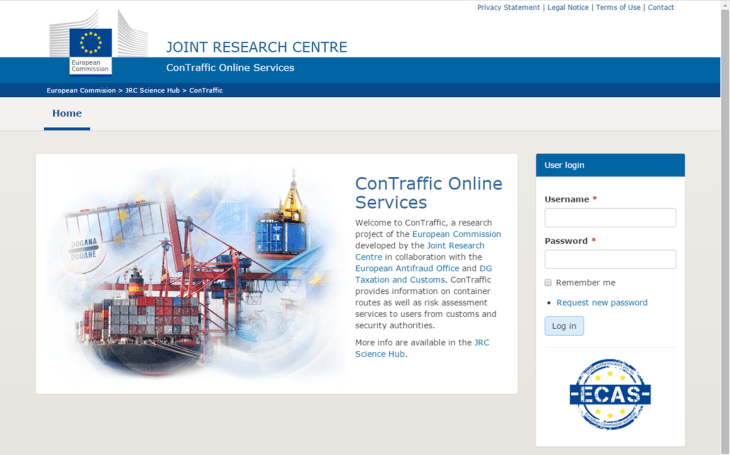
ConTraffic HomepageA new regulation adopted by the European Parliament and the Council will allow customs to access information to track the origins and routes of cargo containers arriving in the EU to support the fight against customs fraud both at EU and national level. The Joint Research Centre (JRC) has been instrumental in the conception and adoption of this legislation as it provided the scientific evidence on the importance of analysing the electronic records on cargo container traffic.

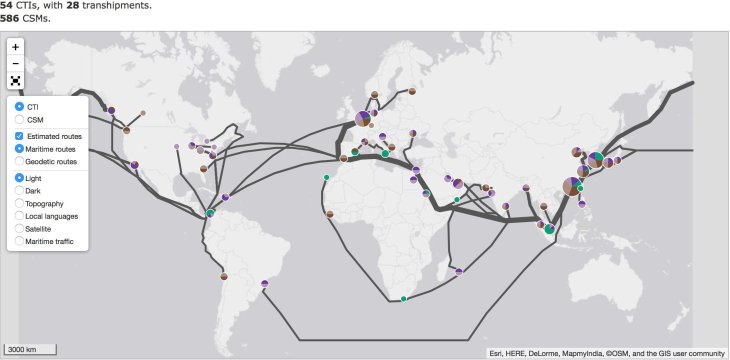
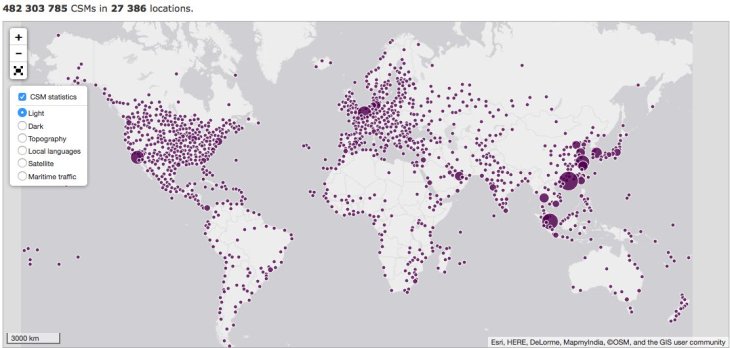
The EU customs authorities have been long aware that information on the logistics and actual routes of cargo containers arriving in Europe is valuable for the fight against customs fraud. However, they had very limited ways to obtain such information and no means to systematically analyse cargo container traffic both for fraud investigations as well as for risk analysis. On the other hand, the ocean carriers that transport the cargo containers, as well as their partners and clients, have easy on-line access to the so-called Container Status Messages (CSM): electronic records which describe the logistics and the routes followed by cargo containers.

jrc-cargo-container-routes-world-mapIn collaboration with the European Anti-Fraud Office (OLAF), the JRC has worked extensively on how to exploit CSM data for customs anti-fraud purposes. The JRC proposed techniques, developed the necessary technology, and ran long-term experiments involving hundreds of EU customs officers to validate the usefulness of using CSM data. The results of this research led the Commission to bring forward a legislative proposal that would enable Member States and OLAF to systematically use CSM data for these anti-fraud purposes. It also served to convince Member States of the value of the proposed provisions.
The financial gains from the avoidance of duties, taxes, rates and quantitative limits constitute an incentive to commit fraud and allow the capacity to properly investigate in cases, such as mis-declaration of the origin of imported goods. The information extracted from the CSM data can facilitate the investigation of some types of false origin-declarations. With the new legislation an importer will no longer be able to declare – without raising suspicions – country X as dispatch/origin of goods if these were transported in a cargo container that started in country Z (as indicated by the CSM data).

jrc-csm-dataset-world-map (1)The technologies, know-how and experience in handling CSM data, developed by the JRC through its experimental ConTraffic platform, will be used by OLAF to set up the system needed to implement this new legislation applicable as from 1 September 2016. The JRC will continue to analyse large datasets of CSM records (hundreds of millions per year) as these are expected to be made available through the new legislation and will continue to support not only this new regulation but to exploit the further uses of this data notably for security and safety and real-time operations. Its focus will be on data mining, new automated analysis techniques and domain-specific visual analytics methods. Source and Images: EU Commission
Freight Forwarders and 3PL’s to bear the burden of IMO Box Weighing Rules

Container weighingThe responsibility for verifying the gross weight of loaded containers under next year’s new box-weighing rules will in many cases rest with freight forwarders, logistics operators or NVOCCs, according to freight transport insurance specialist TT Club.
Welcoming the initiative of the World Shipping Council (WSC) in its recent publication of guidelines to the industry in relation to implementing the SOLAS requirements that become mandatory on 1 July 2016, TT Club noted that unlike the CTU Code, which forensically seeks to identify the chain of responsibility for everyone involved in the movement of freight, the amendment to the Safety of Life at Sea Convention (SOLAS) mandating the verification of gross mass of container overtly only names the ‘shipper’, the ‘master’ and the ‘terminal representative’, and – by implication – the competent authorities.

TT Club said the complex nature of logistics means that the term ‘shipper’ may encompass a range of people involved in the contracting, packing and transporting of cargo. However, as stated in the WSC guidance, it said the key commercial relationship in question is with the person whose name is placed on the ocean carrier’s bill of lading.

“Thus, in many cases, the responsibility for actual ‘verified’ declaration will rest with a freight forwarder, logistics operator or NVOC. This means that often reliance will have to be placed on others to have adequate certified methods to provide verified gross mass – particularly for consolidation business,” TT Club said.

It noted that of course many suppliers of homogenous shipments will already have advanced systems, which merely require some form of national certification, adding: “Apart from having a sustainable method by which the gross mass is verified, the shipper also needs to communicate it (‘signed’ meaning that there is an accountable person) in advance of the vessel’s stow plan being prepared.

“The information will be sent by the shipper to the carrier, but with joint service arrangements there may be a number of carriers involved, with one taking responsibility to consolidate the manifest information, in addition to communication with the terminal.”
It said the ‘master’ comprises a number of functions within the carrier’s organisation.

“Implicit in the SOLAS amendment is that the carrier sets in place processes that ensure that verified gross mass is available and used in planning the ship stow,” TT Club said. “Arguably, each carrier will need to amend systems and processes to capture ‘verified’ information.

“However, the simplest might be to amend the booking process, so that the gross mass information is left blank in the system until ‘verified’ data are available. This will be effective if it is clearly understood by all partner lines and terminals with whom the line communicates.”

TT Club said the explicit obligation of the master was simply that he shall not load a container for which a verified gross mass is not available. “This does not mean that one with a verified gross mass is guaranteed to be loaded, since that would derogate from the traditional rights of a master,” the insurance specialist added.

Recognising the pivotal nature of the port interface, it noted that the ‘terminal representative’ has been drawn into the new regulation as a key recipient of information for ship stow planning “and, critically, in a joint and several responsibility not to load on board a ship if a verified gross mass is not available”.

It added: “There has been considerable debate as to whether terminals need to position themselves to be able to weigh containers, not least because of the cost of creating appropriate infrastructure, and amending systems and procedures, with uncertain return on investment. In addition there are commonly incidences of containers packed at the port, in which case the terminal activities could include assisting the shipper in producing the verified gross mass.

“The SOLAS amendment places responsibility on national administrations to implement appropriate standards for calibration and ways of certifying. The overtly named parties rely on this to work smoothly and, preferably, consistently on a global basis.”
TT Club said clarity of such processes needed to be matched by consistency in enforcement. “Talk of ‘tolerances’ is disingenuous,” it said. “SOLAS calls for accuracy. Everyone appreciates that some cargo and packing material may be hygroscopic, thereby potentially increasing mass during the journey, but that need not mask fraudulent activity, nor entice over-zealous enforcement.”

It said the UK Marine Guidance Note may be instructive here, stating that enforcement action will only be volunteered where the difference between documented and actual weight exceeds a threshold. TT Club concluded: “It is suggested that key measures of success of the revised SOLAS regulation will include not only safety of containerised movements, but also free movement of boxes through all modes of surface transport, and a shift in behaviour and culture throughout the unit load industry.”

Customs Non-Intrusive Inspection affects trade costs

DBN Relocatable ScannerThe following article suggests the need for greater consultation and collaboration between all supply chain parties. While the associated costs relating to supply chain movements is not the purview of SARS, these should be considered as part of the overall impact assessment in the lead up to such an implementation. For all intents and purposes this is an unintended consequence. Stakeholders should also note that the SA government has not imposed any fee for the scanning of cargoes to re-coup costs. Non-intrusive inspection (NII) capability is a tenet of international customs control intended to mitigate security threats and incidents of cargo misdeclaration, even legitimate cargo that can be used to mask harmful products stowed in vehicles/containers. The issue of increased cost of compliance has unfortunately been a trait of many international customs developments ever since the advent of ‘heightened security’ – post 9/11 and seems destined to remain a ‘challenge’ as we supposedly move into an era of increased trade facilitation.Joint collaboration between all parties not only assists in better understanding of the broader supply chain landscape but can also contribute to positive measures on the ‘ease of doing business’.
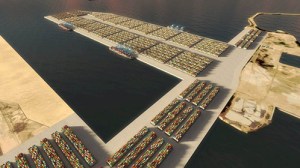
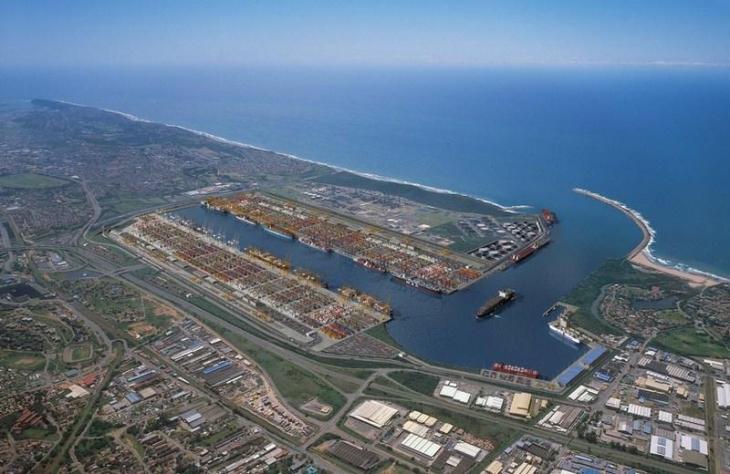
Freight & Trade Weekly (issue no. 2158, 10 July 2015) reports that Industry has called on customs to look into processes around its cargo scanners which they say are currently driving up costs.

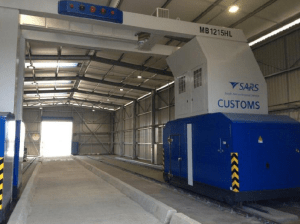
Two state-of-the art scanners are currently operational at the Port of Durban and Cape Town and are part of South African Revenue Service’s (Sars) countrywide approach to risk management that aims for less intrusive inspections at ports and border entries.

The scanners were introduced in order to improve efficiency, with stopped containers being released more speedily than has been the case to date.

“It has however in some cases increased costs because it has resulted in double handling of containers,” said Dave Watts, a maritime consultant for the SA Association of Freight Forwarders (Saaff).

Before the introduction of the scanners all stopped containers were moved by shipping lines to licensed depots for examination by Sars. Once the inspection was concluded and the container released the importer or his agent could collect it using their own transport.

The new process however sees the stopped container transported by the shipping line to the scanner where it is either released or has to be moved for a physical inspection to a depot.

If released at the scanner the container is however still on the shipping line’s appointed truck and not that of the importer or its agent’s nominated haulier.

There are no facilities to move it from one truck to the other at the scanners which means carrier haulage moves it to a depot anyway.

“The extra cost comes in simply because of the double handling,” explained Watts.

In Durban, where the new technology scanner was introduced just over a year ago, several importers maintain it is cheaper to just have their stopped containers taken to the depot for unpacks rather than going through the scanner and not unpacking.

According to Mike Walwyn, chairman of the Port Liaison Forum, the issue of carrier choice also comes into play as the importer now has to use carrier haulage for delivery as opposed to his or her own transport.

Whilst the Cape Town scanner has only been operational for a week, some very real challenges are foreseen and increased cost is one of them.

“The issue is not necessarily around the scanner,” says Watts, “but the rules and regulations around the customs act that stipulates all containers remain the liability of the shipping line until released by customs. In other words it has to be taken to the scanner by the carrier.”

It has been suggested that instead of doubling the handling of containers the carrier should just make the final delivery of the container, but it is generally accepted that carrier cartage rates are much higher than contracted cartage rates. In some cases the cost is said to be four times higher.” Source: FTW

New Singapore Mega Port Will Have 20 Deep Water Berths

TArtist's Illustration -DEME Grouphe Maritime and Port Authority of Singapore (MPA) has signed a milestone contract for the construction of the first phase of a new $1.82 billion mega port in Singapore.

The contract was awarded to a joint venture between the Dredging International Asia Pacific Ltd., a subsidiary of Belgium’s DEME Group, and South Korea’s Daelim.

The project, formally known as the Tuas Terminal Phase 1 Reclamation, Wharf Construction and Dredging Project, entails the construction of a new port terminal with 20 deep-water berths having a total capacity of 20 million twenty-foot equivalent units (TEUs) per annum. The Joint Venture will be responsible for the construction of an 8.6-kilometer quay wall and its foundation, the dredging of the fairway and basins, as well as the reclamation of 294 hectares of new land.

This major project is expected to complete within six years, and has been awarded to the Joint Venture for a Contract value of SGD 2.42 billion (or approximately US $1.82 billion).

Beginning in 2030, the Government of Singapore will start to consolidate its container port facilities at Tuas. New technology will be introduced at the greenfield site to create a hypermodern, innovative and largely automated logistics hub. The consolidation will also free up existing port land near the city centre for future urban redevelopment.

The Tuas Terminal Project is anticipated to ensure that Singapore’s leading global hub port continues to have sufficient capacity in the long term to meet industry demand.

Singapore ranks as the world’s second busiest container port handling 33.9 million 20-foot containers in 2014, according to the MPA. The Port of Shanghai ranks as number 1 with 35.2 million TEU in 2014. Source: Gcaptain.com

Durban dig-out port – expert cautions ‘think again’

Artistic impression - Durban Dig-out Port

Artistic impression – Durban Dig-out Port

An international ports expert has expressed serious reservations about Durban’s proposed dig-out port. He said plans for a dig-out port should be put on hold, with efforts rather directed at maximising the existing facilities and potential at Durban Harbour.

International adviser and expert on port development Jamie Simpson, of Canada, has warned Transnet and the eThekwini Municipality against pursuing the dig-out port, saying the current port has to “keep going”. Simpson was a guest speaker at a ports and cities dialogue with Durban businesses, hosted by the municipality’s Edge (Economic Development and Growth eThekwini) at the Moses Mabhida Stadium yesterday. His point of view was supported by two other speakers.

However, Transnet group strategy general manager Irvindra Naidoo was adamant that the parastatal was forging ahead with the project, saying Durban was “running out of capacity” and had to expand.

Naidoo said: “The question was: ‘Okay, do we now go off somewhere else and develop a new maritime cluster around Richards Bay or somewhere else, or do we try to embed or strengthen the cluster… (by extending) the Durban port?’ That’s what this dig-out port really is about. It’s an extension of an existing cluster.”

The port, the continent’s busiest, caters for 2.6 million TEU (twenty-foot equivalent units) a year. These result in about 8 000 daily container-related heavy vehicle movements around the Bayhead area. Transnet has repeatedly said that the port will battle to provide the capacity for future demand.

Naidoo said with a dig-out port at the old Durban International Airport site, the containers could reach 8.2 million TEU by 2040, resulting in about 17 500 heavy vehicle movements daily in the South Durban Basin.

Simpson told the panel that the move “might not be a very good solution”. He said: “In view of the likely availability of financing – a lot of uncertainty – I think the port has to keep going and develop a capital investment plan and operational improvement plans to meet demand in the next five to 10 years.”

From there, he said, the parastatal could “weigh up” whether a bigger port “makes sense in view of market conditions… and availability of finance at the time”.

The first phase of construction of the dig-out port was expected to start between 2021 and 2025. A pre-feasibility study started in 2013. To read the full article click here! Source: iol.co.za