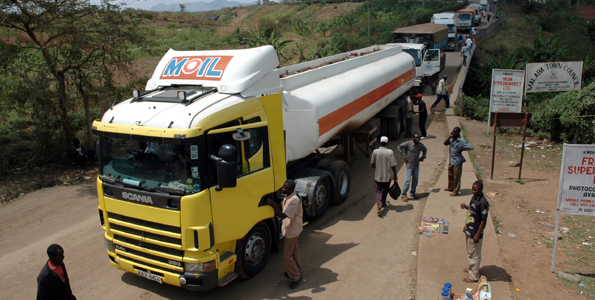
 East African tax authorities have launched an online system to share customs cargo information in the region. The system, RADDEx 2.0 (Revenue Authorities Digital Data Exchange), will enable the tax authorities to instantly know what is in transit in the region. Uganda Revenue Authority says RADDEx 2.0 is web-based, has more “functionality and better performance” and will be used by clearing agents. If cargo destined to Uganda poses any risk, notifications will be sent via e-mail so that authorities can plan action prior to arrival of the cargo. All data on cargo will be sent to a central server at the East African Community headquarters in Arusha, Tanzania. Any East Africa partner state that needs data about expected cargo will interrogate the system, which will automatically provide feedback. The system was developed by IT and customs expert staff from Uganda, Kenya, Tanzania, Rwanda and Burundi and sponsored by USAID/COMPETE (Competitiveness and Trade Expansion Programme). Source: The New Vision, Uganda
Category / Cargo Reporting
Revisiting the national transit procedure – Part 2
 You will recall a recent challenge by trade to SARS’ proposed implementation of mandatory clearance of national transit goods inland from port of initial discharge – refer to Revisiting the national transit procedure – Part 1.
First, some background
Now lets take a step back to look at the situation since the inception of containerisation in South Africa – some 30 years ago. Customs stance has always been that containerised goods manifested for onward delivery to a designated inland container terminal by rail would not require clearance upon discharge at initial port of entry. Containers were allowed to move ‘against the manifest’ (a ‘Through Bill’) to its named place of destination. This arrangement was designed to expedite the movement of containers from the port of discharge onto block trains operated by Transnet Freight Rail, formerly the South African Railways and Harbours (SAR&H) to the inland container terminal at City Deep. Since SAR&H operated both the national railway and the coastal and inland ports, the possibility of diversion was considered of little import to warrant any form of security over the movement of containers by rail. Moreover, container terminals were designed to allow the staging of trains with custom gantry cranes to load inland manifested containers within a ‘secure’ port precinct.
Over the years, rail freight lost market share to the emergence of cross-country road hauliers due to inefficiencies. The opening up of more inland terminals and supporting container unpack facilities, required Customs to review the matter. It was decided that road-hauled containers moved ‘in bond’ by road would lodge a customs clearance (backed with suitable surety) for purposes of national transit. Upon arrival of the bonded freight at destination, a formal home use declaration would be lodged with Customs. Notwithstanding the surety lodged to safeguard revenue, this has the effect of deferring payment of duties and taxes.
Diversification of container brokering, stuffing and multi-modal transport added to the complexity, with many customs administrations failing to maintain both control and understanding of the changing business model. Equally mystifying was the emergence of a new breed of ‘players’ in the shipping game. Initially there were so-called ‘approved container operators’ these being ocean carriers who at the same time leased containers. Then there were so-called non-approved container operators who brokered containers on behalf of the ocean carrier. These are more commonly known as non-vessel operating common carriers or NVOCCs. In the early days of containerisation there were basically two types of container stuffing – full container load (FCL) and less container load (LCL). The NVOCCs began ‘chartering’ space of their containers to other NVOCCs and shippers – this also helped in knocking down freight costs. This practice became known as ‘groupage’ and because such containers were filled to capacity the term FCL Groupage became a phenomenon. It is not uncommon nowadays for a single FCL Groupage container to have multiple co-loaders.
All of the above radically maximised the efficiency and distribution of cost of the cellular container, but at the same time complicated Customs ‘control’ in that it was not able to readily assess the ‘content’ and ownership of the goods conveyed in a multi-level groupage box. It also became a phenomenon for ‘customs brokers/clearing agents’ to enter this niche of the market. Customs traditionally licensed brokers for the tendering of goods declarations only. Nowadays, most brokers are also NVOCCs. The law on the other hand provided for the hand-off of liability for container movements between the ocean carrier, container terminal operator and container depot operator. Nowhere was an NVOCC/Freight Forwarder held liable in any of this. A further phenomenon known as ‘carrier’ or ‘merchant’ haulage likewise added to the complexity and cause for concern over the uncontrolled inland movements of bonded cargoes. No doubt a disconnect in terms of Customs’ liability and the terms and conditions of international conveyance for the goods also helped create much of the confusion. Lets not even go down the INCOTERM route.
Internationally, customs administrations – under the global voice of the WCO – have conceded that the worlds administrations need to keep pace and work ‘smarter’ to address new innovations and dynamics in the international supply chain. One would need to look no further than the text of the Revised Kyoto Convention (RKC) to observe the governing body’s view on harmonisation and simplification. However, lets now consider SARS’ response in this matter.
SARS response to the Chamber of Business
Right of reply was subsequently afforded by FTW Online to SARS.
Concerns over Customs’ determination to have all goods cleared at the coast – expressed by Pat Corbin, past president of the Johannesburg Chamber of Commerce and Industry in last week’s FTW – have been addressed by SA Revenue Service. “One of the main objectives of the Control Bill is the control of the movement of goods across South Africa’s borders to protect our citizens against health and safety risks and to protect the fiscus. “In order to effectively determine risk, SARS has to know the tariff classification, the value and the origin of imported goods. This information is not reflected on a manifest, which is why there is a requirement that all goods must be cleared at the first port of entry into the Republic.“It appears that Mr Corbin is under the impression that the requirement of clearance at the first port of entry has the effect that all goods have to be consigned to that first port of entry or as he puts it “to terminate vessel manifests at the coastal ports in all cases”. This is incorrect. “The statutory requirement to clear goods at the first port of entry and the contract of carriage have nothing to do with one another. Goods may still be consigned to, for example, City Deep or Zambia (being a landlocked country), but they will not be released to move in transit to City Deep or Zambia unless a declaration to clear the goods, containing the relevant information, is submitted and release is granted by Customs for the goods to move. The release of the goods to move will be based on the risk the consignment poses to the country.“It is definitely not the intention to clog up the ports but rather to facilitate the seamless movement of legitimate trade. If the required information is provided and the goods do not pose any risk, they will be released.”
So, where to from here?
The issue at hand concerns the issue of the ‘means’ of customs treatment of goods under national transit. In Part 3 we’ll consider a rational outcome. Complex logistics have and always will challenge ‘customs control’ and procedures. Despite the best of intentions for law not to ‘clog up the port’, one needs to consider precisely what controls the movement of physical cargo – a goods declaration or a cargo report? How influential are the guidelines, standards and recommendations of the WCO, or are they mere studies in intellectual theories?
Related articles
- Revisiting the national transit procedure – Part 1 (mpoverello.com)
- Multimodal inland hubs to add to Gauteng’s container capacity (mpoverello.com)
- Freeing up the containers (portstrategy.com)
- Cargo Owners, 3PLs, Carriers and Ports Stress Need for Genuine Interaction to Improve Container Supply Chain Performance (maritime-executive.com)
- 12 acres in SEZ to be denotified (thehindu.com)
Revisiting the national transit procedure – Part 1
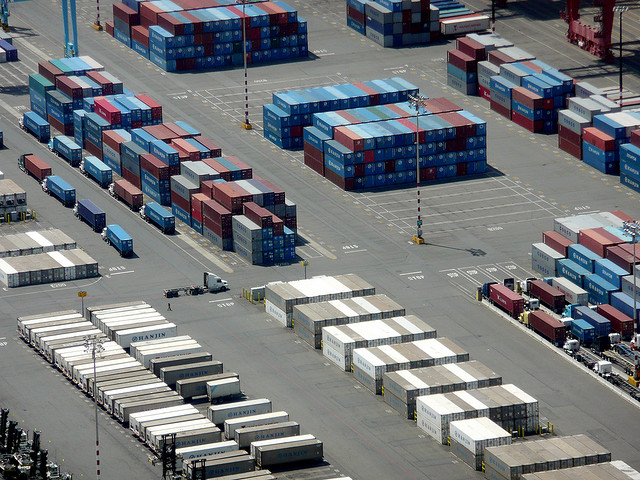 FTW Online last week ran an interesting article in response to a proposed change in Customs’ policy concerning the national transit movement of containers from coastal ports to inland container terminals and depots. In February 2011, I ran an article Customs Bill – Poser for Cargo Carriers, Handlers and Reporters alluding to some of the challenges posed by this approach. The following article goes a step further, providing a trade reaction which prompts a valid question concerning the practicality and viability of the proposed change given logistical concerns. I believe that there is sufficient merit in the issues being raised which must prompt closer collaboration between the South African Revenue Service and trade entities. For now it is sufficient to present the context of the argument – for which purpose the full text of the FTW article is presented below. In Part 2, I will follow-up with SARS’ response (published in this week’s edition of the FTW) and elaborate on both view points; as well as consider the matter on ‘raw’ analysis of the ‘cargo’ and ‘goods declaration’ elements which influence this matter. Furthermore, one needs to consider in more detail what the Revised Kyoto Convention has to say on the matter, as well as how other global agencies are dealing and treating the matter of ‘security versus facilitation’.
Customs’ determination to have all goods cleared at the coast does not bode well for the South African trade environment, Pat Corbin, past president of the Johannesburg Chamber of Commerce and Industry (JCCI), said. Speaking at the Transport forum in Johannesburg Corbin said the Customs Bills have been on the cards for several years now and while consensus had been reached on most issues in the Nedlac process, the determination of Customs to not allow for any clearing to take place at inland ports will only add more pressure to the already overburdened ports in the country. “Customs maintains that despite the changes they propose it will be business as usual. We disagree. We have severe reservations about their intention to terminate vessel manifests at the coastal ports in all cases and have called for further research to be undertaken in this regard,” said Corbin. “By terminating the manifest at the coast it has severe ramifications for moving goods from road to rail. International experience has shown when you have an inland port and you have an adequate rail service where the vessel manifest only terminates at the inland port, up to 80% of the boxes for inland regions are put on rail while only 12% land on rail if the manifest terminates at the coastal port.” Corbin said the congestion at both the port and on the road would continue and have an adverse impact on quick trade flows. “It also raises issues around the levels of custom security and control at inland ports and then the general implications on the modernisation project.” According to Corbin, government’s continued response has been that no provision exists for inland ports and that goods must be cleared at the first port of entry. “They maintain that it is about controlling goods moving across our borders and thus the requirement that all goods must be cleared at the first port of entry. The security of the supply chain plays an important role to avoid diversion or smuggling of goods,” said Corbin. “Government says that the policy change will not clog up the ports or prohibit the seamless movement of trade. Labour organizations and unions seem to agree with them.” But, Corbin said, the Johannesburg Chamber of Commerce differs and is worried about the ramifications of this dramatic change to the 35-year-old option of clearing goods at an inland port or terminal. “With this policy change all containers will have to be reconsigned after not only Customs clearance on copy documents but also critically, completion of shipping lines’ requirements ie, payment of freight, original bill of lading presentation and receiving delivery instructions prior to their issuing a delivery order.” Corbin said the issue had been addressed directly with Transnet CEO Brian Molefe on two occasions, but that he had said he accepted Customs’ assurance that nothing would change and the boxes would still be able to move seamlessly once cleared. “It is not understood that the manifest will terminate at the coast where all boxes will dwell until they can be reconsigned,” said Corbin. Source: FTW Online – “New Customs Bill ruling will put pressure on port efficiency.”
Related articles
- Customs Bill – Poser for Cargo Carriers, Handlers and Reporters (mpoverello.com)
- Dry Ports – their growing role in international trade (mpoverello.com)
- Freeing up the containers (portstrategy.com)
Border Posts, Checkpoints and Intra-African Trade
 You may recall earlier this year the African Development Bank and the WCO agreed to a partnership to advance the economic development of African countries by assisting Customs administrations in their reform and modernization efforts.
The AfDB’s regional infrastructure financing and the WCO’s technical Customs expertise will complement each other and improve the efficiency of our efforts to facilitate trade which includes collaboration in identifying, developing and implementing Customs capacity building initiatives by observing internationally agreed best practice and supporting Customs cooperation and regional integration in Africa.
In addition, the partnership will seek to promote a knowledge partnership, including research and knowledge sharing in areas of common interest, as well as close institutional dialogue to ensure a coherent approach and to identify comparative advantages as well as complementarities between the WCO and AfDB. Customs professionals, trans-national transporters and trade practitioners will find the featured article of some interest. It provides a synopsis of the key inhibitors for trade on the continent, and will hopefully mobilise “African expertise” in the provision of solutions and capacity building initiatives.
Related articles
- WCO/SACU – IT Connectivity and Data Exchange (mpoverello.com)
- African Bank and WCO create partnership to strengthen customs administrations (mpoverello.com)
Advancing the argument for sealing cargo and tracking conveyances

South African Customs law provides for a seal integrity regime. This consists in provisions for the sealing of containerised sea cargo as well as sealable vehicles and trailers. These requirements have, however, not been formally introduced into operation due to the non-availability (until recently) of internal systems and cross-functional procedures that would link seal integrity to known entities. To explain this in more layman’s terms, it is little use implementing an onerous cargo sealing program without systems to perform risk assessment, validation of trader profiles and information exchange. It’s like implementing non-intrusive inspection (X-ray scanning) equipment without backward integration into the Customs Risk Management and Inspection environment and systems. It has often been stated that a customs or border security programme is a layered approach based on risk mitigation. None of the individual elements will necessarily address risk, and automation alone will likewise not accomplish the objective for safe and secure supply chains. Moreover, neither will measures adopted by Customs or the Border Agency succeed without due and necessary compliance on the part of entities operating the supply chain. It therefore requires a holistic strategy of people, policy, process and technology.
In the African context, it is surmised that the business rationale will be best accomplished with a dual approach on IT connectivity and information exchange. Under the political speak there are active attempts within SACU, SADC, COMESA and the EAC to establish electronic networks to facilitate and safeguard transit goods. Several African states are landlocked and are not readily accessible, some requiring multiple transit trips through countries from international discharge in the continent to place of final destination. National laws of each individual country in most instances provide obstacles to carriers achieving cost effective means in delivering cargoes. Over and above the laws, there exists (regrettably) the need to ‘grease palms’ without which safe passage in some instances will not be granted. Notwithstanding the existence of customs unions and free trade areas, internal borders remain the biggest obstacle to facilitation.
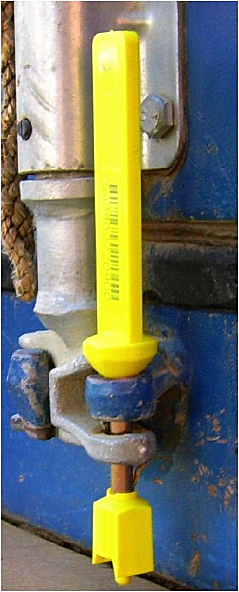 Several African logistics operators already implement track and trace technology in the vehicle and long-haul fleets. This has the dual purpose of safeguarding their assets as well as the cargoes of their clients which they convey. Since 9/11, a few customs administrations have formally adopted ISO PAS 17712 within their legislation to regulate the use of high security seals amongst cargo handlers and carriers. In most cases this mandates the use of high security ‘mechanical’ bolt seals. However, evidence suggests there is a growing trend to adopt electronic seals. Taiwan Customs for one has gone a significant way in this regard. Through technological advances and increased commercial adoption of Radio Frequency Identification (RFID) technology the costs are reducing significantly to warrant serious consideration as both a viable and cost-effective customs ‘control’ measure.
Supply chain custody using RFID as an identifier and physical security audit component – as provided for in ISO 17712 – is characterized by the following:
- it uniquely identifies seals and associates them with the trader.
- the seal’s unique identity and memory space can be used to write a digital signature, unique to a trader on the seal, and associating that seal with a customs declaration.
- using customs trader registration/licensing information, together with infrastructure to read seal information at specified intervals along a route to create a ‘bread-crumb’ audit trail of the integrity of the cargo and conveyance.
- using existing fleet management units installed in trucks to monitor seal integrity along the high risk legs of a cargo’s transit.
- record the seal’s destruction at point of destination.
Looking forward to the future, it is not implausible for customs and border authorities to consider the use of RFID:
- as a common token between autonomous customs systems.
- to verify and audit that non-intrusion inspections have taken place en-route, and write that occurrence to the seal’s memory with the use of an updated digital signature issued to the customs inspection facility.
- to create a date and time stamp of the cargo’s transit for compliance and profile classification – to confirm that transit goods have actually left the country as well as confirm arrival at destination (to prevent round tripping).
- Lastly to archive a history of carrier’s activities for forensic and/or trend analysis.
This is a topic which certainly deserves more exposure in line with current regional developments on IT-connectivity and information exchange. A special word of thanks to Andy Brown for his contribution and insight to this post.
Related articles
- Where Does the Chain of Custody Begin? (mpoverello.com)
- Adoption of container tracking will accelerate in the coming years (mpoverello.com)
- RFID – its application at the Customs border (mpoverello.com)
- Importance of Seal Integrity for Customs (mpoverello.com)
- Customs seal reporting requirements (Andre Landman – SARS)
Where Does the Chain of Custody Begin?
 Here follows an article, published by Dr. James Giermanski, an internationally renowned expert in container and supply chain security, international transportation and trade issues. It deals with a crucial but mostly forgotten/unknown aspect of international supply chains – who packed the cargo?
Tracking, tracing, and custody are all generally accepted concepts involving the control of movement. All these concepts have in their fundamental cognitive structure the idea of path, corridor, multiple parts, flow, and coordination.
However, what is often omitted or overlooked is the fundamental sine qua non core principle of “beginning”. What is the beginning of a chain of custody? This article focuses on this core concept and the role it plays as the beginning of the connective custody and control process. Specifically, it addresses the significance of cargo stuffing, the concept of authorized or trusted agent, the means of connectivity, the legal role of the authorized agent, and the consequences of a connected and visible supply chain.
Cargo stuffing
Establishing and maintaining cargo integrity begins with stuffing the container at origin. A chain of custody – chronological documentation or paper trail – involves “the movement and location of physical evidence from the time it is obtained until the time it is presented in court.” As in a criminal case comparison, a supply chain “chain of custody” needs three types of essential assertions:
-
That the cargo is what it purports to be and in the quantity stated;
-
That the cargo was in the continuous possession or control by the carrier who took charge of the cargo from the time it was loaded in the container at origin until the time it is delivered at final destination; and
-
That there is evidence of the identify of each person or entity who had access to it during its movement, and that the cargo remained in the same condition from the moment it was sealed in the container for transfer to the carrier that controlled possession until the moment it released the cargo into the receipted custody of another.
Trusted partner
It is imperative that the initial point of a connectivity process begins at the beginning! Loading cannot take place without a human agent. The agent could be the company’s forklift driver, the dispatcher, the loading dock supervisor, or even an authorizing manager who has a specific duty to verify the cargo and its quantity. It could even be a third party hired by the shipper, for instance, companies that currently provide inspection services around the world.
Various Customs programs discuss, in one way or the other, the concept that supply chain security begins at “stuffing”: the Secure Export Scheme Program (New Zealand); the Partners in Protection Program (Canada); the Golden List Program (Jordan); the Authorized Economic Operator Program (Japan); the Authorized Economic Operator Program (Korea); the Secure Trade Partnership Plus Program (Singapore); and the Authorized Economic Operator.
Establishing ‘connectivity’
Maintaining connectivity depends on the security program, software and hardware utilized. While no system is 100% effective, and one cannot depend on technology alone, there are ‘off-the-shelf’ container security devices (CSDs) that provide connectivity through a sophisticated, comprehensive chain of custody system that begins with loading the container at origin, monitoring it, and reporting on its integrity at the end of the global supply chain path, i.e. at final destination.
CSDs can include the identity of the trusted agent verifying the cargo at loading and the agent’s counterpart at destination. Both parties are electronically connected by a unique identifier to the smart container system along with bill of lading or booking information, or data needed by Customs authorities. Therefore, when the CSD is activated, the accountable party becomes the initiating element in the smart container security system.
Consequences of chain of custody – standards, laws and litigation
If a smart container is opened at destination by an equally accountable person and cargo is missing, and there were no breaches detected, recorded or reported, the accountable person at origin can face either disciplinary, or worse, criminal action by appropriate authorities.
This ESI becomes a source of evidence, should legal action follow. The concept of custody and control from origin to destination also supports Incoterms 2010, a publication of the International Chamber of Commerce (ICC) which provides the playbook of international rules involving international sales of goods. These new terms now contain security requirements for the shipper, making a chain of custody system essential for compliance. There are also changes coming for shippers, consignees, and vessel carriers with respect to carriage of goods by sea: the new Rotterdam Rules.
According to the UN General Assembly, the Rotterdam Rules are a “…uniform and modern global legal regime governing the rights and obligations of stakeholders in the maritime transport industry under a single contract for door-to-door carriage” (cf. American Shipper). The new door-to-door liability places the vessel carrier directly in a chain of custody. Instead of the vessel carrier filing what the shipper said is in the container, the vessel carrier will be automatically and really responsible for knowing what is in the container.
What are the benefits?
The shipper, the consignee, the carrier, and control and regulatory authorities all benefit from a chain of custody system that begins with the loading of the container at origin. CSDs incorporating the identity of the trusted agent at stuffing would assist law enforcement officials to comply with international security and trade standards, solve transhipment problems, impair illegal access to the cargo conveyance, improve supply chain efficiencies, aid in securing hazardous materials and other dangerous cargo movement, reduce counterfeiting, eliminate the in-bond problem of unauthorized container access, and improve bottom line revenue generation for the firms using them. Source: Supply Chain Digest.
Related articles
- US and EU one step closer to Mutual Recognition agreement (mpoverello.wordpress.com)
- Freight forwarders’ liability is being boosted by expanding supply chains (mpoverello.com)
- Weaknesses in the supply chain: who packed the box?
(David Hesketh)
Customs Modernisation Release 3 – SACU
 Saturday 11 February 2012 sees the implementation of new modernised customs procedures and formalities at South Africa’s first SACU land frontier office – Kopfontein – border between South Africa and Botswana. While enhancements are slanted more in terms of internal SARS customs procedure, SACU traders will no doubt experience some anxiety with the transition. For the first time SARS Customs Modernisation impacts directly on traders and neighbouring Botswana Customs operational procedures in a significant way, which will fashion operations at all remaining inland border posts of the Customs Union. Over the last few months SARS has worked with trade, the Botswana customs authority as well as the business chamber in Botswana concerning the intended changes and their impact on stakeholders. The implementation ushers in cross-cutting changes for customs staff operationally, new technology as well as legal and policy changes. In the case of the latter, a further element of the draft Customs Control Bill is introduced whereby foreign business operators (importers, exporters and road carriers) must be registered with SARS to perform customs transactions in South Africa. This is perhaps the single issue which has had ramifications for parties who regularly cross the border between Botswana and South Africa. Hopefully recent iterations of notices and explanations have helped clarify the SARS requirements. (See the SARS Customs Modernisation webpage).
Other modifications and changes include –
Elimination of paper clearance documents – this is a significant departure from traditional SACU processing where all member countries have relied on the Single Administrative Document (SAD) to facilitate intra-SACU clearance. With the bulk of clearances expected to be electronic, SARS will now only print a customs notification (CN1) which will specify the status and outcome for each clearance. This the trader will use in support of customs clearance in Botswana. SARS will therefore no longer stamp and authorise hardcopy SAD500 clearance documents. Of course, there is nothing which stops a trader printing the SAD500 for cross border purposes, only SARS will no longer attest these. As concerns SARS VAT requirements, arrangements will be made for traders to submit the CN1 for purposes of VAT returns. Details on this to follow.
Electronic supporting documents – already tried and tested at sea and airports across South Africa, traders no longer need to carry on their person hard copy clearance supporting documentation , i.e. invoices, worksheets and packing lists. These are only required should SARS indicate via electronic message that a consignment requires further scrutiny. Customs brokers and traders using EDI will in most cases have the SARS e@syScan facility available on their computer systems which makes it relatively simple and easy to scan, package and submit to SARS. In the event a trader cannot perform this electronically, he may approach any of the 4 Customs Hubs (Alberton, Cape Town, Durban, and Doringkloof) across the country, to have these scanned and uploaded by SARS. Alternatively, these can of course be delivered to the border post for manual processing and finalisation of a customs intervention. Supporting documents are linked to a unique case number which SARS notifies to the trader in the event of a risk.
Clearance processing – SARS has centralised its backend processing of clearances where goods declarations are now processed off-site at one of the 4 Hubs. No longer are clearances processed at customs branch office. All goods declarations – whether electronically submitted or manually captured – are routed to a central pool for validation, verification and assessment if flagged by the risk engine. In the case of land borders all clearances once successfully processed will receive a ‘Proceed-to-border’ message implying that the road carrier may commence delivery to the border. A key feature of the new clearance process is the availability of Customs Status Codes. These codes are initiated by the customs system at specified points in the process to alert the declarant of the status of his/her transaction. These status’s also indicate the follow-up required of the declarant to bring the transaction to a state of finality.
Automated Cargo Management (ACM) – All road carriers are now required to submit their road manifests electronically, via EDI, to the Customs ACM system. For now, SARS will not electronically match the manifest against the declaration, but will monitor compliance and data quality of electronic manifest for a period of time before initiating real-time matching and acquittal. This will invoke a significant responsibility on both trader and road remover to ensure that they both provide credible data to customs otherwise delays will occur. Upon arrival of the cargo at the border, the driver presents a printout of his electronic manifest. The manifest number is ‘checked in’ by a customs official which in seconds brings up all associated goods declarations linked to the manifest number on the system. The customs officer is able to determine the overall risk status of the vehicle. Where no risks are present a status notification (CN1) is printed for each goods declaration, and a gate pass (CN2) is handed to the driver permitting him to exit the customs controlled area. The future real-time matching will comprise a combined risk assessment of both manifest and declaration information that will result in a single risk outcome. Such risk assessment will include both fiscal and security compliance features thereby bringing SARS in line with international supply chain security standards. Going forward, risk assessment will accommodate ‘all-of-government’ requirements ensuring that all regulatory measures and associated risks are administered in a single instance obviating the need for successive, time-consuming inspections and costly delays.
Automated Customs Inspection – Following its recent introduction at the Beit Bridge border post, the new hand-held inspection tool, conveniently developed on an iPod, allows the customs border control official to electronically access, capture and upload an inspection outcome to the central customs system. This significantly improves the efficiency for this time-intensive activity where the officer can initiate a status up date electronically at the inspection site, where previously the declarant would have to wait for the outcome of the manual inspection report and release note. What’s more, the customs officer has access to the underlying clearance data and can even activate the camera function and capture visuals of suspect cargo which can be appended to an inspection case for verification by higher authority or historical reference value.
There are additional features and functionality to be introduced at Kopfontein and all remaining border posts over the next few months. These relate to improved revenue accounting, new trader registration and licensing system offering online application and approval, and a new traveller and temporary import/export processing. More about this in a future post. For traders, the benefits of the new solution at SACU land borders aim to remove random and unwarranted intervention by customs. All activities are risk driven via a secure ‘get next’ selection function ensuring that internal integrity is maintained and only ‘risk-related’ consignments/transactions are dealt with. Please visit the SARS Modernisation webpage for all the latest updates and notices on modernisation releases.
Related articles
- Mobile Customs Control – Great minds think alike (mpoverello.wordpress.com)
- SARS “Trusted Trader” programme under the spotlight (mpoverello.wordpress.com)
Adoption of container tracking will accelerate in the coming years
According to a new research report from Berg Insight, the number of active remote container tracking units deployed on inter-modal shipping containers was 77,000 in Q4-2011. Growing at a compound annual growth rate (CAGR) of 66.9 percent, this number is expected to reach 1.0 million by 2016. The penetration rate of remote tracking systems in the total population of containers is estimated to increase from 0.4 percent in 2011 to 3.6 percent in 2016. Berg Insight’s definition of a real-time container tracking solution is a system that incorporates data logging, satellite positioning and data communication to a back-office application.
The market for container tracking solutions is still in its early stage. Aftermarket solutions mounted on high value cargo and refrigerated containers will be the first use cases to adopt container tracking. Orbcomm has after recent acquisitions of Startrak and PAR LMS emerged as the largest vendor of wireless container tracking devices with solutions targeting refrigerated containers. Qualcomm, ID Systems and Telular are prominent vendors focusing on inland transportation in North America, which is so far the most mature market for container tracking solutions. PearTrack Systems, Honeywell Global Tracking, EPSa and Kirsen Global Security are examples of companies offering dedicated solutions targeting the global end-to-end container transport chain.
Ever since the events of 9/11, there have been a lot of activities to bring container tracking solutions to the market according to the report. Only now technology advancement, declining hardware prices and market awareness are starting to come together to make remote container tracking solutions attractive. Container telematics can help supply chain operators to comply with regulations and meet the high demands on security, information visibility and transportation efficiency that comes with global supply chains. Source: Berg Insight
New Zealand releases trade implementation guidelines for GOVCBR
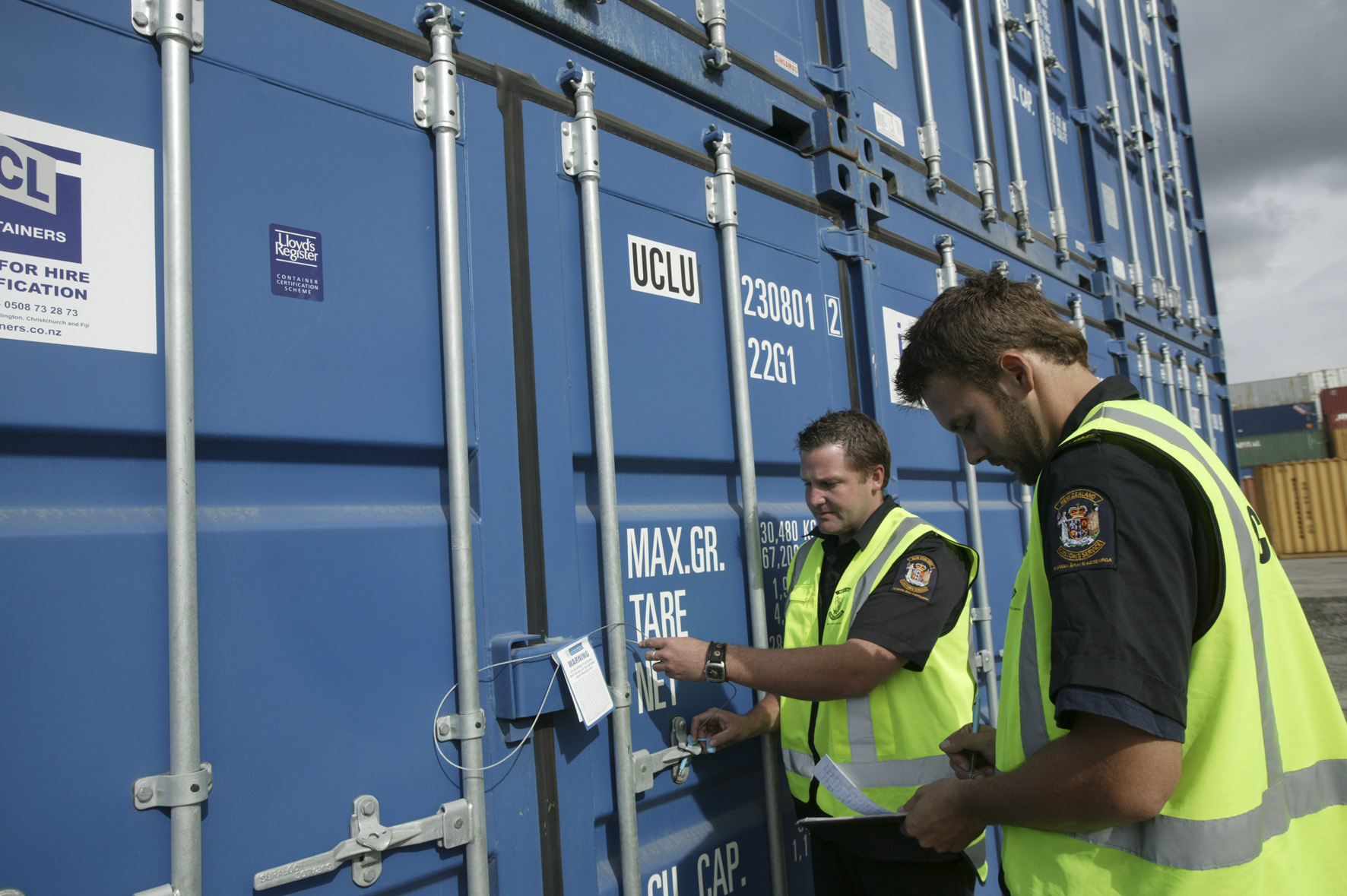 The New Zealand Customs Service has recently released draft guidelines for it’s Trade Single Window (TSW), which is currently under development. This will require all potential users to be able to send and receive electronic messages. The introduction of the TSW therefore means that organisations will need to submit lodgement messages that meet the WCO3 data model. Current message format for import entries, export entries, inward and outward cargo reports, will be accepted for 18 months after TSW is introduced (likely to be in the first quarter of 2013). However, following that 18-month period, all users of TSW will need to have adopted the new NZ WCO version 3 data model for messages.
New Zealand Customs expects that some users of TSW may adopt the new messages earlier to take advantage of the benefits, which include the ability to submit cargo manifest and Customs data in one message.To understand the new messages, a draft set of message implementation guidelines is now available for consultation and feedback from software developers and companies intending to use the TSW on the following draft messages:
- Advance Notice of Arrival
- Advance Notice of Departure
- Cargo Report Export
- Excise Declaration
- Inward Cargo Report
- Import Declaration
- Outward Cargo Report
- Border Agency Response Message.
Message implantation guidelines for the new export declaration is still be drafted, and will be made available as soon as possible.
Five main government agencies operate at the border – the Customs Service, the Ministry of Agriculture and Forestry, the Department of Labour, the Ministry of Transport, and the Department of Internal Affairs. With the participation of almost 20 other associated agencies, they work to prevent the traffic of prohibited goods and materials in and out of the country. They also collect government revenue, promote travel and trade, support New Zealand’s national interests, and uphold international laws and agreements. Now, as the border sector grows more complex and volumes of goods and travellers increase, a new era of inter-agency collaboration aims for more control, easier flows, and greater efficiency. Source – New Zealand Customs Service
Related articles
- Insight behind the WCO Data Model (mpoverello.wordpress.com)
- Korea to implement Advance Manifest System (mpoverello.wordpress.com)
Non-declaration of hazardous containers
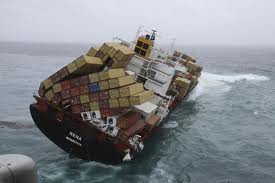 In this age of heightened security it remains remarkable how carriers still willfully take custody and/or load ‘goods’ for which the contents thereof are unclear. True, carriers and intermediaries (fowarders/brokers) will correctly point at the ‘shipper’ (exporter) for not disclosing the details correctly. It also needs be mentioned that the cargo handler (packer of the container) is really key in all of this. It is this entity who has knowledge of what is being stuffed into the container. There is much debate on this matter, and a whole lot more work to be done in ultimately pinning down the responsible party. Given this state of affairs, most Customs administrations are happy to lay the responsibility and liability for lawful clearance on the party responsible for cargo reporting, i.e. the entity which ‘cuts’ the manifest. I dare say that the terms of sale (incoterms) also have an influence in terms of risk and liability here which adds some complexity to decision-making in time of misfortune. Take for instance the recent grounding of the M/V Rena off New Zealand earlier this month, where it has recently come to light that the wreck contains at least 21 containers which were not properly recorded on the ship’s manifest. Read articles below.
Related articles
Korea to implement Advance Manifest System
The Korea Customs Service (KCS) will introduce an Advance Manifest System in accordance with WCO standards as well as fulfill its own responsibilities as a governmental agency of duties for collection and border protection. This follows other major trading partners such as the U.S., Canada, EU and China who have already already adopted the Advance Manifest reporting. Known as KAMS, the new system will be implemented by KCS from 1st December, 2011. For more information click the hyperlink to download Korea Customs Advance Manifest System guideline.
Who’s data is it, anyway?
What with increased automation and the plethora of services becoming available to brokers, traders and specialist duty/tax recovery consultants, it would seem that the virtual nature of business has overlooked some key criteria which is cardinal for trader compliance with Customs. Lets deal with one of these – customs clearance (goods declaration) and cargo reporting (cargo manifest) information. Before I forget, as of June 2011, this also includes supporting documents. South African Customs law prescribes an obligation on traders to maintain documents (which includes any electronic transcription/version thereof) for a statutory period of 5 years. This applies to all customs’ registrants and licensees.
While service providers (computer bureaus) provide a vital service in the provision and maintenance of software, hardware and communication services to the trade, site should not be lost of the fact that at any point in time, the trader may need to access, produce or submit documentation to support a claim or proof of their compliance in any customs matter. As one ‘provider’ recently exclaimed – since the inception of SARS’ electronic supporting document facility E@syScan, ‘gigabytes’ are now being transmitted over the internet. No doubt SARS endeavours have (or are) making service providers more profitable, but these also require a fair measure of support and ongoing maintenance to ensure such facility work at optimum performance. But, I’m digressing somewhat.
My point is that traders must have full rights, access and ownership of such data, including so-called product libraries. SARS has not imposed any view or directive on this matter, and has left it to the terms and conditions of the commercial agreement between the trader, broker and the service provider. Should a broker/trader wish to terminate his/her relationship with a service provider, the agreement should provide for a transfer of ‘customs transactional data’ from the service provider to the trade entity. There are no doubt instances of breach of contract which may cause either or both parties to sever the commercial relationship under a cloud. Nonetheless, my advice to the trader/broker is to ensure that their contractual agreement includes a clause which provides for the availability or transfer of ‘data’ to the trading entity in the event of a termination of the agreement. A ‘can’ of worms? Speak to me!
Empty container depots adding to industry’s costs?
FTW published an article recently in regard to ‘empty container depots’ and their apparent negative impact on cost and response to industry needs. It was duly noted that while so much focus was accorded to Port delays, little is said about the additional costs caused by empty container depots. Many of these in fact hold, clean and distribute empty containers on behalf of shipping lines some of whom are not equipped to service the industry due to ill-equipped facilities.
Shipping lines complain about the turnaround of their vessels at the port, but take little interest in ensuring a quick turnaround of vehicles at their appointed container depots. The report continues: “Transporters are delayed for hours at major depots while waiting for containers to be turned in, cleaned and then released for export cargo. Most of these depots do not work 24 hours in line with the port and transporters, which further limits the ability of transporters and industry to perform”. I think this deserves some further thought and consideration, and for this I’ll provide a customs-slanted view.
 Firstly, in other parts of the world, the same mentality prevails whenever a port or customs system is replaced or upgraded – an avalanche of vitriolic sentiment, followed by line operators threatening to institute port delay surcharges and the like. To place matters into true perspective – yes, the port and customs services are there for the benefit and support of the supply chain, and should run and be maintained to offer efficient operation even in the event of catastrophe or a burgeoning logistics market demanding increased capacity and responsiveness. 9/11 provided a catalyst for Customs Inc. to initiate an unheard of demand on trade to increase its internal security mechanisms and even provide information in advance of the lading of a vessel at a foreign port. The US lines were the first to climb on the band wagon in support of heightened security and quickly acted to ensure that their regional offices were able to assist foreign shippers in supplying the required ‘advanced information’ at a nominal charge – varying between $25 and $60 per bill of lading. Sure, this was the cost necessary to ensure lines met their new stringent reporting requirements to the US Homeland Security to obviate possible penalties of $5,000 and up. Nonetheless, the same lines, when asked to provide the local authorities the same courtesy, recoil and look for all sorts of excuses to avoid the subject. Sure, it is understood that only the US has the right to make such demands, not any anyone else. I have followed most other advance cargo reporting requirements with similar amusement.
You see, lines were prepared to make suitable arrangements for US-bound containers such as pre-booking empty containers. Now when the requirement is extended to other parts of the world there is an immediate issue. Simply, and as the article correctly deduces, supply chain security implies that everyone changes – even the empty container depots.
As the local port authorities and your customs service are spending millions in upgrades to meet the demands of the future, so too is the same required of trade. Unlike commercial entities, your customs service remains one of the few who in the world that has not instituted a customs service fee. Certain traders and intermediaries in the industry might complain that recent developments at SARS have seen their costs increase due to new transactional requirements, for example the electronic supporting document issue. This I will discuss on its own in a separate post. The bottom line is that the FTW article is an important cue for those container depots concerned to get their act together. The heat will undoubtedly be turned up on them once SARS introduces its new export clearance and cargo reporting requirements. South Africa needs smaller to medium enterprises offering dedicated services. Perhaps it’s time for the lines (those who operate such facilities) to consider outsourcing these activities to more dedicated enterprises. Read the FTW article here!
Related articles
- Cargo Dwell Time in Durban (mpoverello.wordpress.com)
- Mandatory reporting of Cargo Carrier Code (mpoverello.wordpress.com)
Confidentiality of manifest information – tips for US importers and consignees
South African shippers take heart, this is a worldwide phenomenon. Check out the article below on how US shippers are addressing the issue.
Is there a foolproof method for importers or consignees to maintain confidentiality of identifying information listed on shipping manifests? Unfortunately, the short answer is “no.” While an importer or consignee may request that US Customs treat its identifying information as confidential, the infinite number of variations of this information (e.g., spelling of company name) precludes confidentiality for each possible variation.
There are, however, steps that importers and consignees can take to minimize risk in this area. Under federal law, the public may collect manifest data at every port of entry. Moreover, reporters may collect and publish names of importers from vessel manifest data unless an importer/shipper requests confidentiality. Specifically,
[a]n importer or consignee may request confidential treatment of its name and address contained in inward manifests, to include identifying marks and numbers. In addition, an importer or consignee may request confidential treatment of the name and address of the shipper or shippers to such importer or consignee. 19 CFR 103.31.As many importers and consignees have learned, however, confidentiality is not assured even CBP grants such a request. A bill of lading may often contain a variant of a company name, and if that variant is not included on the confidentiality request, confidentiality will likely not apply to the information on that particular manifest. For example, if the John Smith Corporation requests confidentiality for its corporate name, and a manifest lists “J. Smith Corporation” or “John Smith Corp., Inc.”, confidentiality would not technically apply since these names were not within the scope of the confidentiality request. Nevertheless, the trade may take steps to mitigate this. To ensure the broadest confidentiality exemption, an importer or consignee may consider including in the confidentiality application:
-
Every variation of the names that has been used previous shipping documents
-
Likely variations of the name
-
Misspellings of the company name
-
Any D/B/A or A/K/A previously used
-
Names of sister companies, including those in other countries
-
All company addresses
Even if an importer or consignee diligently follows these suggestions, confidentiality is not 100% guaranteed. One incorrect keystroke by someone entering data in a document somewhere in the supply chain can result in a “new” variation of a company name that is not covered by a grant of confidentiality.
US Customs and the trade have had discussions about the shortcomings in this process. Perhaps that is why CBP has for the time being disabled an online form used to make confidentiality requests (NOTE: requests can still be mailed to CBP as specified in the regulations). To tighten up this process, one possible solution is to leverage IRS/EIN numbers instead of relying on guessing at spelling of names. Source: CustomsNow Blog
Mandatory reporting of Cargo Carrier Code
On Sunday, 31 July 2011, SARS will implement a stepping stone towards full cargo/declaration matching and acquittal. All goods declarations must reflect a valid cargo carrier code as part of the house waybill number data field. The requirement was implemented successfully in the sea cargo environment some years ago with the launch of the old Manifest Acquittal System; the challenge now lies largely within the air cargo community.
The ‘House Waybill” data field comprises two parts – The first part must reflect the Cargo Carrier Code (Eight-digit Alpha Numeric Code). This is the code assigned by the Automated Cargo Management (ACM) system to the entity who issued the House Bill of Lading e.g. the Groupage Operator or his appointed agent in the Republic. The second part must reflect the actual number of the transport document.
By way of faciliatory gesture to legitimate importers who may be blissfully unaware of the non-compliance of their forwarding agent / carrier, SARS will allow the insertion of a specific code “ZZZ99999” for non-compliant cargo reporters. This code must only be used in the event the cargo reporter is not registered with SARS for submission of cargo reports to ACM. The facility is a temporary measure which will be withdrawn after a short period.
In the event a declarant inserts the aforementioned code, the associated declaration will be selected by the customs system for scrutiny by a customs official. In order to remedy any delay to an otherwise legitimate import, the unregistered cargo reporter must immediately identify themselves to SARS by way of disclosing their company name and contact details to enable SARS to expedite registration of the entity for ACM compliance. The sooner this is accomplished the quicker the importer can obtain release if there is no further outstanding impediment.
Subsequent registration of the non-compliant carrier could also result in the imposition of a penalty against the entity concerned. Therefore as of 31 July 2011, declarants will need to be more vigilant concerning the status/standing of their local forwarding agent in regard to compliance with SARS reporting requirements. Once the temporary dispensation above is withdrawn, the effect of a customs intervention will directly impact on the release of an importer’s goods.
Freight forwarders, Customs Brokers and Service Providers are urged to make their clients and business partners aware of the new developments to mitigate disappointment. For more information refer to the SARS Modernisation webpage.
Related articles
- Penalties for non-compliant Cargo Reporters (mpoverello.wordpress.com)
 What Happened to the Portcullis?
You must be logged in to post a comment.