SARS to address Stakeholders on Customs Control proposals

SARS chief officer of legal and policy Kosie Louw (Picture: Robert Botha/Business Day Live)

SARS chief officer of legal and policy Kosie Louw (Picture: Robert Botha/Business Day Live)

The South African Revenue Service (SARS) has committed itself to further engagements with importers of all sizes in a bid to improve its proposals to transform the customs control regime.

Consultations have already taken place with organised business on the proposed Customs Duty Bill and the Customs Control Bill, and the process would now be taken to the level of traders to find out whether the proposals presented them with any problems. Amendments have also been proposed to the Customs and Excise Act to provide for the transition to the new system.

“We want to understand the situation at a micro level. We will sit around the table until we find a solution which will guarantee to us that we get the information we require but which will also facilitate trade.

“We do not want to clog up the ports,” SARS chief officer of legal and policy Kosie Louw said in an informal briefing on the proposals to Parliament’s standing committee on finance on Wednesday.

The customs bills are mainly concerned with improving the information about imported and exported goods so that customs officials can exercise greater control.

Business has expressed concern that the requirement of the Customs Control Bill that they submit a national in-transit declaration of goods at the first port of entry before they are sent to internal terminals, or depots such as City Deep, would cause delays.

The new declaration — of the nature, value, origin and duty payable on the goods — would replace the limited manifest used to declare goods and would include information on the tariff, value and origin of goods.

Business has argued that the manifest allowed goods to move seamlessly from the exporting country to the inland port or depot, and would change the contractual relationships between exporter and importer in terms of when duty is paid.

However, Mr Louw did not believe the provision would cause delays and had obtained legal advice that the contractual relationships and method of payment of duties would not change. The problem with manifests, he said, was that they provided very limited information and did not allow SARS to prevent the inflow of unwanted goods. Nevertheless, he said that SARS would discuss the matter with traders.

Mr Louw said the proposed system would “improve SARS’s ability to perform risk assessment and intervene in respect of potentially high risk, prohibited and restricted consignments at the ports”.

The bills have been in the pipeline for about four years and have been extensively canvassed with the Southern African Customs Union and business. They were needed, Mr Louw said, so that South Africa kept pace with global trends in trade, international conventions and advances in technology.

Anti-avoidance provisions have also been introduced into the bill which sets out the offences and associated penalties for noncompliance and attempts to avoid paying customs duties.

SARS group executive for legislative research and development Franz Tomasek said the Customs Control Bill would introduce a new advance cargo loading notice for containerised cargo to prevent the loading of prohibited or restricted goods on board vessels bound for South Africa. However, to reduce the administrative burden on carriers, information submitted in advance will no longer be required on arrival or prior to departure. Source: Business Day Live


CINS reveals cargo mis-declaration and packing issues

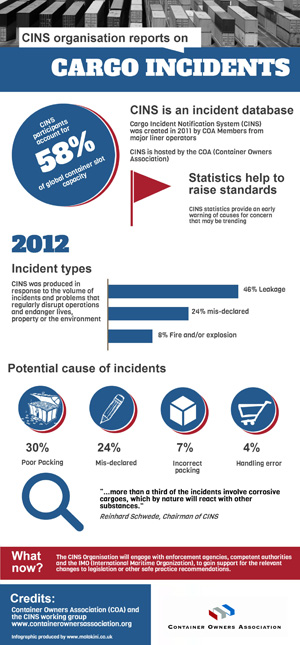
CINS Cargo Incident Visual GraphicPoor or incorrect packing accounts for 37 per cent of cargo incidents in the supply chain, according to data released by the Cargo Incident Notification System (CINS).

And 24 per cent of incidents cases are due to mis-declaration of the cargo, it found. The organisation is managed by the Container Owners Association (COA), and was set up by members from five of the COA’s top 20 liner operators; CMA CGM, Evergreen Line, Hapag-Lloyd, Maersk Line and the Mediterranean Shipping Company.

It was created to capture key data, after an increase in incidents that regularly disrupt operations and endanger lives, property or the environment.

CINS’ analysis revealed that 80 per cent of substances involved in cargo incidents are dangerous goods, with half relating to leakage and a further quarter announced mis-declared.

It also showed that incidents relating to mis-declared cargo have increased significantly within the first four months of 2013, compared to the previous 18 months, which the company says has led it to aspire to identify ways to make the supply chain safer.

“We have identified that 24 per cent of all incidents involve mis-declaration and this is probably the first time that this ‘iceberg’ risk has been quantified, said Reinhard Schwede, chairman of CINS.

“Poor or incorrect packaging are persistent causes, accounting for almost 40 per cent of incidents over nearly two years. This is all the more concerning when we recognise that more than a third of the incidents involve corrosive cargoes, which by nature will react with other substances.

“With these findings, the CINS Organisation will engage with enforcement agencies, competent authorities and the IMO to gain support for the relevant changes to legislation or other safe practice recommendations.” Source: Container Owner Association

Port-to-Hinterland…gearing up for growth?

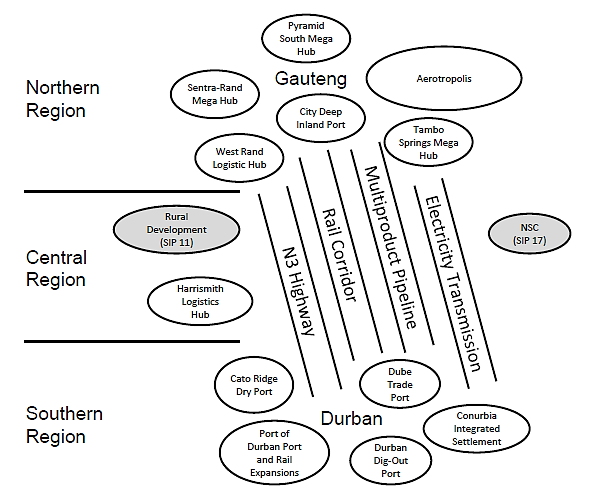
Proposed Durban-Free State-Gauteng Logistics and Industrial Corridor Plan (SIP2)

Proposed Durban-Free State-Gauteng Logistics and Industrial Corridor Plan (SIP2)

Notwithstanding on-going discontent amongst industry operators in regard to proposed legislative measures mandating customs clearance at first port of entry, the South African government (GCIS) reports that work has already commenced on a massive logistics corridor stretching between Durban and the central provinces of the Free State and Gauteng. Most of the projects that form part of the second Strategic Infrastructure Project (SIP 2), also known as the Durban-Free State-Johannesburg Logistics and Industrial Corridor, are still in the concept or pre-feasibility stage, but construction has already started on several projects.

These include:

  • the building of a R2,3 billion container terminal at City Deep
  • a R3,9 billion project to upgrade Pier 2 at the Port of Durban
  • R14,9 billion procurement of rolling stock for the rail line which will service the corridor.

Work has also started on the R250 million Harrismith logistics hub development to set up a fuel distribution depot, as well as on phase one of the new multi-product pipeline which will run between Johannesburg and Durban and transport petrol, diesel, jet fuel and gas.

The aim of these projects and others which form part of SIP 2, is to strengthen the logistics and transport corridor between South Africa’s main industrial hubs and to improve access to Durban’s export and import facilities. It is estimated that 135 000 jobs will be created in the construction of projects in the corridor. Once the projects are completed a further 85 000 jobs are expected to be created by those businesses that use the new facilities. Source: SA Government Information Service

Interested in more details regarding South Africa’s infrastructure development plan? Click here!

Easing customs formalities – using ‘e-Manifest’

European union concept, digital illustration.The European Commission has set out plans to ease customs formalities for ship but it’s as yet unclear as to how the changes are likely to affect EU ports.

Known as the Blue Belt, the proposals aim to create an area where ships can operate freely within the EU internal market with minimum administrative burden when it comes to safety, security, the environment and taxes.

Although free movement of goods is a basic freedom under EU law the Commission says that it’s not yet a reality for the maritime sector which needs to play more of a part in getting more trucks off congested roads.

Siim Kallas,Vice-President, European Commission, said: “We are proposing innovative tools to cut red tape and help make the shipping sector a more attractive alternative for customers looking to move goods around the EU.”

The new proposals will require amending the existing Customs Code Implementing Provisions (CCIP).

Under the new proposals Regular Shipping Services procedures will be made shorter and more flexible. The consultation period for Member States will be shortened from 45 days to 15 and companies will be able to apply in advance for an authorisation from countries they intend to do business with to save time.

The Commission also proposes putting in place a system which can distinguish EU goods on board a ship (which could be fast tracked through customs) from non-EU items, which would need to go through the appropriate customs procedures.

This new “e-Manifest” system would allow the shipping company to relay all goods information in advance to customs officials.

The Commission expects to make the Blue Belt proposal a reality by 2015. Source: PortStrategy.com

A South African RFID/GPS cross-border logistics and customs solution

Inefficiency of road freight transport is one of the primary factors that hamper the economy of sub-Saharan Africa. Long delays experienced at border posts are the single biggest contributor towards the slow average movement of freight. Cross-border operations are complicated by the conflicting security objectives of customs and border authorities versus efficiency objectives of transport operators. It furthermore suffers from illegal practices involving truck drivers and border officials. In theory the efficiency of cross-border operations can be improved based on the availability of more accurate and complete information – the latter will be possible if different stakeholders can exchange data between currently isolated systems.

Cross-border trade basically comprises 3 distinct but interlinked layers –

An information layer – in which various trade documentation (purchase order, invoice), cargo and conveyance information (packing list, manifest), customs and government regulatory data (declaration, permits) are exchanged between various supply chain entities and the customs authority. These primarily attest to the legal ownership, contract of carriage, reporting and compliance with customs and other regulatory authority formalities (export and import), and delivery at destination.

A logistics layer – for the collection, consolidation, sealing and conveyance of physical cargo from point of despatch via at least two customs control points (export and import), to deconsolidation and delivery at point of destination.

A financial layer – which refers to the monetary exchange flow from buyer (importer) to seller (exporter) according to the terms and conditions of the sale (INCOTERMS). Hmm… no, this does not include ‘bribe’ money.

All three layers are inter-linked and prone to risk at any point of a given transaction. There is also no silver bullet solution to secure supply chains. Moreover, it is a fallacy that Customs and Border Agencies will ever conquer cross-border crime – simply because there are too many angles to monitor. Furthermore, in order to set up cross—border information exchange and joint enforcement operations it is both legally and politically time-consuming. Criminal elements are not hampered by these ‘institutions’, they simply spot the gaps and forge ahead.

One of the areas requiring customs attention is that of chain of custody. In short this implies the formal adoption of the World Customs Organisation’s SAFE Framework principles. Each party with data that needs to be filed with the government for Customs and security screening purposes has responsibilities. Those responsibilities include –

  • Protecting the physical goods from tampering, theft, and damage.
  • Providing appropriate information to government authorities in a timely and accurate manner for security screening purposes.
  • Protecting the information related to the goods from tampering and unauthorized access. This responsibility applies equally to times before, during and after having custody of the goods.

Tenacent RFID Tag

Tenacent RFID Tag

Security seals are an integral part of the chain of custody. The proper grade and application of the security seal is addressed below. Security seals should be inspected by the receiving party at each change of custody for a cargo-laden container. Inspecting a seal requires visual check for signs of tampering, comparison of the seal’s identification number with the cargo documentation, and noting the inspection in the appropriate documentation. More recently the emergence of certain e-seals and container security devices (CSDs) contribute even further to minimizing the amount of ‘physical’ verification required, as they are able to electronically notify the owner of the goods or government authority in the event of an incidence of tampering.

White Paper - GPS-RFID systems for cross-border management of freight consignments

White Paper – GPS-RFID systems for cross-border management of freight consignments

A group of South African specialist engineers have been working closely with transport authorities, logistics specialists, defense experts and customs authorities across the globe. Their e-seal is patented in no less than 16 high volume countries. It is produced in Singapore, China and Indonesia depending on politics, free-trade agreements and demand. May move some to Brazil and US in time. Proof of concept (POC) initiatives are currently underway in Brazil for rail cargo, US Marine Corps for their p-RFID program and other Department of Defense divisions in the USA, and will shortly be included in one of the GSA agreements making it available to any government department in the US. Further adrift, the e-seal is also currently enjoying interest in Guatemala, Mexico, Canada, Panama, Jordan, Italy, Spain, and Malaysia. Here, in South Africa, a POC was conducted at the 1st autogate at Durban Container Terminal, funded by the North West University, and overseen with successfully achieved objectives by Transnet Port Terminals. For technical details of the RFID seal, click here!

With much anticipated success abroad, how much support will this product attain in the local and sub-Saharan African scene? Government authorities, as well as logistics and supply chain operators are therefore encouraged to study the enclosed ‘white paper’ – Click Here!. It firstly quantifies the size of the problem and estimates the potential economic benefits that will be created by improved cross-border operations. It then proposes a combined GPS/RFID system that can provide the required level of visibility to support improved operational management, resulting in a simultaneous increase in the security and efficiency of cross-border freight operations. A brief cost-benefits analysis is performed to show that the expected benefits from such a system will by far exceed the costs of implementation. Source: Tenacent & iPico

Ready for Another 24-Hour Rule?

logoLast month (May 2013), the Nippon Automated Cargo and Port Consolidated System (NACCS) released an updated version of guidelines for filing under the Japan 24-hour rule. As the main system for the online processing and procedures related to the new 24-hour rule, NACCS has been updating the guidelines and holding informational sessions across Europe, North America and China since early 2013.

Scheduled to go into force March 2014, Japan Customs and NACCS is encouraging shippers to begin looking at requirements and working towards compliance now. Penalties include Do Not Loads (DNLs) and fines up to 500 thousand JPY.

The NACCS has provided several good resources for the trade to use in familiarizing themselves with the Japan 24-hour Rule:

Therefore, South African shippers, exporters, and carriers of goods to Japan have a few more months to get their systems and processes in order to meet Japanese advance reporting requirements. For those already meeting US, Canadian and EU advance manifest reporting requirements this should not pose too much of a problem.

Source: Integrationpoint.com

CBP initiation date for liquidated damages for 10+2 non-compliance

isfU.S. Customs and Border Protection (CBP) has announced that on July 9, 2013, it will begin full enforcement of Importer Security Filing (ISF or 10+2), and will start issuing liquidated damages against ISF importers and carriers for ISF non-compliance.

According to the CBP release, “in order to achieve the most compliance with the least disruption to the trade and to domestic port operations, it has been applying a “measured and commonsense approach” to Importer Security Filing (ISF or 10+2) enforcement.

The Importer Security Filing (ISF) system—also referred to as the “10+2” data elements—requires both importers and carriers to transmit certain information to CBP regarding inbound ocean cargo 24 hours prior to lading that cargo at foreign ports. These rules are intended to satisfy certain requirements under the Security Accountability for Every (SAFE) Port Act of 2006 and the Trade Act of 2002, as amended by the Maritime Transportation Security Act of 2002.

Under the ISF, the following 10 data elements are required from the importer:

  1. Manufacturer (or supplier) name and address
  2. Seller (or owner) name and address
  3. Buyer (or owner) name and address
  4. Ship-to name and address
  5. Container stuffing location
  6. Consolidator (stuffer) name and address
  7. Importer of record number/foreign trade zone applicant identification number
  8. Consignee number(s)
  9. Country of origin
  10. Commodity Harmonized Tariff Schedule number

From the carrier, 2 data elements are required:

  1. Vessel stow plan
  2. Container status messages

Source: CBP.gov

Johburg Chamber to meet Parliment over Customs Bill

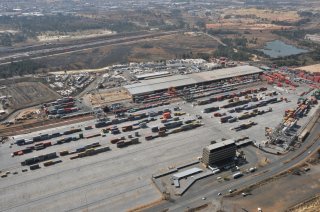
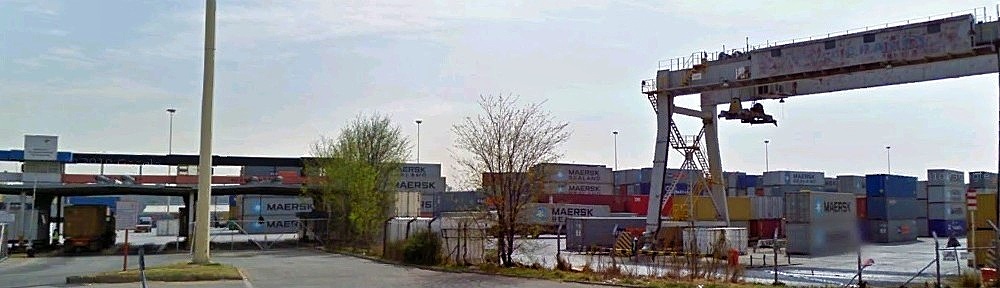
City Deep Container Terminal, Johannesburg

City Deep Container Terminal, Johannesburg

Online media company Engineering News reports that the Chamber of Commerce and Industry Johannesburg (JCCI) would take its objections of certain aspects of the recently tabled Customs Control Bill to Parliament and called on South African business and interested stakeholders to provide input as well.

The South African Revenue Services’ (Sars’) newly drafted Customs Control Bill, which, in conjunction with the Customs Duty Bill, would replace the current legislation governing customs operations, declared that all imported goods be cleared and released at first port of entry.

“The Customs Bill, cancelling the status of inland ports as a point of entry, will be before Parliament very soon, and only a short notice period for comment is expected,” JCCI former president Patrick Corbin said.

While all other comments and suggestions relating to the Bill were adequately dealt with, this remained the one disagreement that had not been satisfactorily resolved, he stated.

Corbin invited all parties to voice their concerns to ensure “all areas of impact and concern were captured”, adding further weight to the JCCI’s presentation. The implementation of the new Bill would directly impact the City Deep container terminal, which had been operating as an inland port for the past 35 years, alleviating pressure from the already-constrained coastal ports.

Despite customs officials assuring the chamber that the operations and facilities at City Deep/Kaserne would retain its licence as a container depot, Corbin stated that the Bill had failed to recognise the critical role City Deep played as an inland port and the impact it would have on the cost of doing business, the country’s road-to-rail ambitions, the coastal ports and ease of movement of goods nationally and to neighbouring countries.

“The authorities do not accept the fact that by moving the Customs release point back to the coast, a vessel manifest will terminate at the coastal port. There will not be the option of a multimodal Bill of Lading and seamless inland movements, as all boxes or the unpacked contents will remain at the coast until cleared and released by the line before being reconsigned,” he explained.

Citing potential challenges, Corbin said that only the containers cleared 72 hours prior to arrival would be allocated to rail transport and that those not cleared three days before arrival would be pushed onto road transport to prevent blocking and delaying rail operations.

This would also result in less rail capacity returning for export from Johannesburg, leading to increased volumes moving by road from City Deep to Durban.

He warned of the Durban port becoming heavily congested with uncleared containers, causing delays and potential penalties, while hampering berthing movements and upsetting shipping lines’ vessel schedules.

The release of the vessel manifest at the coastal port also placed increased risk on the shipping operators delivering cargo to Johannesburg following the clearance of goods at customs and required reconsignment at the country’s shores.

However, Transnet remained committed to investing R900-million for upgrading the City Deep terminal and the railway sidings, while Transnet CEO Brian Molefe had accepted the assurances from customs that “nothing would change and the boxes would still be able to move seamlessly once cleared”.

The Gauteng Department of Roads and Transport Department had allocated R122-million for the roadworks surrounding the inland port, while Gauteng MEC for Roads and Transport Dr Ismail Vadi said the department’s focus this year would narrow to the expansion and development opportunities at City Deep/Kaserne.

The department was also progressing well with the development of a second inland port, Tambo Springs Inland Port and Logistics Gateway, expected to be completed by 2017.

Vadi recently commented that the Gauteng Department of Roads and Transport, which was currently developing a terminal master plan for the project, would link the freight hub through road and rail transport to and from South Africa’s major freight routes and other freight hubs, including City Deep, which was about 33 km away.

The National Economic Development and Labour Council, under which the Bill had been drafted during a three-year development process, had agreed to fund an impact assessment study, led by Global Maritime Learning Solutions director Mark Goodger. The study was “close to completion” and would be presented alongside JCCI’s objections in Parliament. Source: Engineering News

What’s In Store for ACE?

ACE_image_csonLast week, the National Customs Brokers & Forwarders Association of America, Inc. (NCBFAA) hosted a conference in Baltimore, MD targeting software developers interested in obtaining more information about US Customs and Border Protection’s (CBP’s) Automated Commercial Environment (ACE) and upcoming technical changes related to the PGA Message Set, Entry Summary Edits, Automated Corrections/Cancellations and AES Re-Engineering/Manifest Baseline development. During the conference, CBP made two important announcements which were heard and noted first hand from an Integration Point representative. These two announcements included:

  • CBP announced that it plans to mandate the use of manifest and cargo release in ACE by December 31, 2015 and mandate the use of ACE by December 31, 2016. CBP also provided a tentative release schedule for seven deployments that will lead up to this mandate.  Each deployment will consist of one or two increments, and each increment will span over a period of twelve to thirteen weeks. On this road map, CBP announced some exciting functionalities to be released in the near future such as automated cancellation and/or correction of entries, integration of simplified entry with other modes of transport and certifying simplified entry through summary. In addition to the enhanced simplified entry process, CBP also gradually plans to include the validations that were not initially included in ACE entry summaries.
  • CBP is also working on the reengineering of AES and pilot programs of entry data collection for various Participating Government Agencies such as the US Environmental Protection Agency (EPA) and US Food Safety and Inspection Service (FSIS) and CBP plans to deploy this later on in 2013 and early in 2014.

Now there is relevance in all of this. It reinforces the growing importance of Customs’ focus on “cargo management”.  Far too much emphasis is placed on the goods declaration alone. This is not only short-sighted but demonstrates an ignorance of the global supply chain. Without the ‘cargo report’ (manifest) the goods declaration is little more than a testament of what is purported to have been imported and exported.

The trouble with Safety Sheets

The TT Club says that the abuse of safety data sheets (SDS) for cargo bookings is “uncomfortably frequent” leading to the view that shipping executives feel “surrounded by criminals”.

The following expose is no less pertinent to Customs risk-profilers.

A recent TT Club claim relating to a fire onboard a ship highlighted a number of issues. The insurance expert argues that differing global format standards and the ease of creating “viable” SDS are only serving to make cargo screening more difficult.

What’s really in the box asks the TT Club.  Photo: Port of Hamburg (Credit - Port Strategy)

What’s really in the box asks the TT Club. Photo: Port of Hamburg (Credit – Port Strategy)

In the claim, a cargo was booked, packed, declared and documented by a shipper as ‘Hookah burner (C.Tablets)’. When the ship caught fire at sea, significant costs were incurred by the ship because of mis-declared cargo, which was in fact activated carbon/charcoal.

Worryingly, when this was investigated further, the shipper had produced two safety data sheets – one was correct, but the other suggested that activated carbon was not considered to be a dangerous good.

TT Club argues that the situation is made far more difficult by the lack of consistency between the various governments about when SDS should be reviewed – Australia stipulates every five years, Canada every three and the EU Regulation recommends checking at “regular intervals”.

Peregrine Storrs-Fox, risk management director, TT Club, told Port Strategy: “We’ve identified two [problem]areas – firstly at the point of booking/contracting with a carrier and secondly post event. Conversations with a number of liner shipping companies confirm that the information given at the time of booking/contracting is frequently suspect. In one instance a single SDS had been presented for about 50 different cargoes over a period.”

Although this is an issue between shipper and carrier, which includes forwarders/logistics operators, there is wider issue here for port operators. During an incident, the port may be supplied with SDS in order to respond appropriately – so there is a risk associated with that too.

The advice to freight forwarders, operators and carriers from the Club is to “Be constantly vigilant and question anything that seems strange or suspicious”. The penalties for non-compliance can be severe. Source: PortStrategy.com

City Deep Inland Terminal [port] to be hit hard by Customs Bill

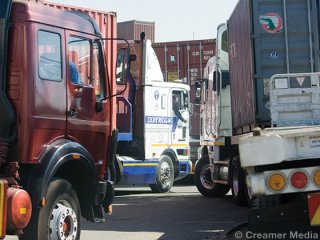
Trucks at Transnet Freight Rail's City Deep Terminal (Engineering News)

Trucks at Transnet Freight Rail’s City Deep Terminal (Engineering News)

Following up on last year’s meeting (click here!) of the minds, convened by the JCCI, a recent meeting in Johannesburg placed fresh emphasis on the dilemma which impending changes contemplated in Customs Draft Control Bill will have for the import and logistics industry in particular. The following report carried by Engineering News highlights trade’s concerns which are by no means light weight and should be addressed with some consideration before the Bills come into effect. Gauging from the content below, there is a clear disconnect between business and policy makers.

The closure of Johannesburg’s inland port seemed to be a “done deal” as Parliament deliberated the recently tabled Customs Control Bill that would leave the City Deep container depot invalid, Chamber of Commerce and Industry Johannesburg (JCCI) former president Patrick Corbin said on Friday.

The promulgation of the South African Revenue Services’ (Sars’) newly drafted Customs Control Bill, which, in conjunction with the Customs Duty Bill, would replace the current legislation governing customs operations, would have a far-reaching impact on the cost and efficiencies of doing business in South Africa and other fellow Southern African Customs Union (Sacu) countries, he added.

The Bill, which was the product of a three-year development process within the National Economic Development and Labour Council, declared that all imported goods be cleared and released at first port of entry. This was part of efforts by customs officials and government to root out any diversion and smuggling of goods, ensure greater control of goods moving across borders and eliminate risks to national security.

Speaking at the City Deep Forum, held at the JCCI’s offices in Johannesburg, Corbin noted, however, that City Deep had operated as an inland port for the past 35 years, easing the load on the country’s coastal ports, which were already strained to capacity. Despite customs officials assuring the chamber that the operations and facilities in City Deep/Kaserne would retain its licence as a container depot, he believed customs had failed to recognise the critical role City Deep had played in lowering the cost of business, easing the burden on South Africa’s ports and ensuring ease of movement of goods to neighbouring countries. As customs moved full responsibility of container clearances to the ports, port congestion, inefficiencies, shipping delays and costs would rise, and jobs would be lost and import rail volumes decreased, he noted.

Economist Mike Schussler added that the closure of the City Deep inland port operations would add costs, increase unreliability and induce “hassles”, as the Durban port did not have the capacity to handle the extra volumes and its productivity and efficiencies were “questionable” compared with other ports.

“The volume of containers going to overstay or being stopped for examination in City Deep [will] need to be handled by [the coastal] ports. If they can’t cope with the volume at the moment, how are they going to handle increased volumes,” Iprop director Dennis Trotter questioned. He noted that only the containers cleared 72 hours prior to arrival would be allocated to rail transport. Those not cleared three days before arrival would be pushed onto road transport to prevent blocking and delaying rail operations.

This, Schussler said, would also contribute – along with port tariffs and the cost of delays – to higher costs, as road transport was more expensive than rail.

He pointed out that South Africa was deemed third-highest globally in terms of transport pricing. It would also result in less rail capacity returning for export from Johannesburg, further leading to increased volumes moving by road from City Deep to Durban.

Sacu countries, such as Botswana, would also be burdened with higher costs as they relied on City Deep as an inland port. Trotter noted that the region would experience loss of revenue and resultant job losses. Over 50% of South Africa’s economy was located closer to Gauteng than the coastal ports. Johannesburg alone accounted for 34% of the economy, said Schussler, questioning the viability of removing the option of City Deep as a dry port.

However, unfazed by the impending regulations, Transnet continued to inject over R1-billion into expansion and development opportunities at City Deep/Kaserne. Corbin commented that Transnet had accepted the assurances from customs that “nothing would change and the boxes would still be able to move seamlessly once cleared.” The City of Johannesburg’s manager of transport planning Daisy Dwango said the State-owned freight group was ramping up to meet forecast demand of the City Deep/Kaserne depot.

The terminal’s capacity would be increased from the current 280 000 twenty-foot equivalent units (TEUs) a year, to 400 000 TEUs a year by 2016, increasing to 700 000 TEUs a year by 2019. Transnet aimed to eventually move to “overcapacity” of up to 1.2-million TEUs a year. Dwango said projections have indicated that by 2021, the City Deep/Kaserne terminals would handle between 900 000 and one-million TEUs a year. Source: Engineering News

Hi-tech shippers switch from air to ocean

sea_freight_trackingCargo traditionally sent by air is increasingly switching to sea as shippers capitalise on the mode’s lower transport costs – a trend expected to continue over the coming years.

Lloyds List reports that several leading freight forwarders reported in their full-year results that certain cargo types — particularly hi-tech and telecoms — switched from air freight to sea freight last year.

DHL Global Forwarding CEO Roger Crook said the switch was the result of a price difference of 10 times between the two modes of transport. He said: “Obviously many companies are under cost pressure and looking to reduce total supply chain costs. Therefore, they are buying and moving by ocean freight, and particularly it is happening in the technology sector.”

Panalpina chief operating officer Karl Weyeneth said he expected the trend to continue. “There is a maximum shift you can achieve, depending on what industry you are talking about,” he said.

“But I believe that now supply chains are used to working with more ocean freight, this impact will stay for at least a couple of years, until the economy has really recovered, then it will start to shift back again.”

“We really see this as an important factor in our market for the next two to three years.”

Kuehne+Nagel (KN) chief executive Reinhard Lange said the decision on whether cargo was suitable to be switched from air to sea partly came down to the weight of the shipment. He said that if two products had the same market value, but one weighed less than the other, the overall cost impact of flying was less for the lighter cargo because air cargo costs were based on weight. He said this explained why hi-tech products had transferred to ocean freight while lighter products, such as pharmaceuticals, had, in the main, continued to utilise air freight.

The forwarders said the impact of the switch from air to ocean freight was partly to blame for a decline in air freight volumes last year, while container volumes continued to grow. In its full-year results, Panalpina saw air freight volumes decline 6% last year while ocean freight volumes grew by the same amount. Meanwhile, DHL Global Forwarding’s air freight volumes slipped 5.3% in 2012 with ocean freight increasing 4.3%, while KN saw its air freight volumes grow by 2% while ocean freight increased 6% year on year. Source: LloydsList

eAWB – Biggest achievement in standard-setting in air freight in 20 years

freightStandardization of the format for the e-AWB is expected to accelerate the industry’s move toward paperless transportation. Before this, Leger says, carriers were confronted with signing hundreds or even thousands of separate bilateral agreements with individual forwarders. He went on to describe e-AWB “the biggest achievement in standard-setting in air freight in 20 years.”

Following a year-long development process culminating in three months of trials that involved 15 carriers and eight forwarders, the IATA/FIATA Consultative Council (IFCC) endorsed the multilateral e-AWB agreement in February with some minor amendments. IATA formally adopted the agreement as its new Resolution 672 at the 35th Cargo Services Conference (CSC/35) in Doha, immediately ahead of the World Cargo Symposium. Click Here! to view the new Resolution.

The agreement was this week filed with governments, from whom IATA is seeking expedited approval in 30 days. “We hope to go live before mid-year,” Leger says. “We see e-Freight as essential for the future competitiveness of air cargo, and the e-AWB is the cornerstone of e-Freight. Agreeing the multilateral e-AWB is a game changer, and should go a long way toward reaching our target of the 20 percent e-AWB adoption rate we have set as our target for 2013.”

While early adopters in the airline community, including Cathay Pacific, Singapore Airlines, Korean Air and Singapore Airlines, overcame the logistical obstacles, they commented that having to draft separate bilaterals with forwarders would prevent wider implementation and delay the e-Freight objective.

“The standard bilateral that we initially developed, which allowed forwarders to make their own amendments, still left the industry facing extra costs but rapidly proved the concept,” Leger says. “Cathay adopted it in 2011 and then, in the middle of last year, we started work on the multilateral agreement.

“There were long discussions between carriers and forwarders as we tried to come up with an acceptable formula. This did not concern technical or operational aspects, but was more to do with what the governing law should be. Each nationality wanted to follow its own jurisdiction and consensus was necessary.”

As soon as trials began in October, Leger says the participants could see the value of the multilateral agreement. IATA hopes it will acts as the springboard for its ultimate target of 100 percent conversion to e-AWB by 2015. Source: Air Cargo World News

Debate or Mitigate?

City Deep1_SnapseedBrowsing my various sources of news I came across this article featured in the FTW Online a few weeks ago. It prompted me to post it as an item for some detailed discussion in a follow-up post. Many followers have enquired what happened to my discussion on Inland Ports and the National Transit procedure. I guess it’s now time to respond, but not just yet – perhaps after what materializes at the event below.

What will be the impact of the new Customs Bill on City Deep’s inland port status?
This is the issue to be debated at a JCCI event scheduled for March 15. “The Johannesburg Chamber has been closely involved with City Deep, our international gateway for containerised cargo, for the past 36 years,” says the JCCI’s Pat Corbin. “We have actively promoted the benefits for traders of a combined transport (multi-modal) bill of lading allowing seamless movement through the coastal ports.

“But diametrically opposed developments are taking place which could have far-reaching impact on not just the future of the dry port, the supporting logistical suppliers and local employment, but also the coastal ports and the transport mode for inland movement.”

The event will examine Transnet’s major investments in City Deep and the Durban corridor, SACD’s expanded facilities and services, and the Customs Bill – with its intended removal of inland port status. Source: FTW Online

Keeping manifest information confidential

confidentialAn interesting and pertinent issue has been raised in the social media area on the ‘confidentiality’ of carrier information submitted to Customs. In this particular regard it relates to the practice of the US Customs and Border Protection Agency. One blogger commented “It’s kind of ironic in the U.S. for example that importers/consignees are required to submit a request to customs to opt-in to keep manifest information confidential.”

CustomsNow, a direct filing solution for US traders relates “As a common practice, importers and consignees may submit a request to US Customs, pursuant to 19 CFR 103.31, to keep manifest information confidential.  Our previous blog post on this topic  includes several tips to ensure these requests result in the broadest degree of confidentiality.”

Recently, importers and consignees who have submitted confidentiality requests have complained to CBP that confidential shipping data — party/shipper/consignee name and address — for ocean freight have nevertheless been disclosed to the public.  After reviewing the matter, Customs has determined that “improper data entry” was the cause.  To avoid this, CBP advises in a recent CSMS publication, when filing e-Manifests in ACE, “the commercial party name fields must ONLY contain commercial party name data.”  Otherwise, “…the name of the party stored in the ACE database is corrupted because it includes address data. This inaccurate party name data fails the confidentiality edits resulting in confidential business information being shared publicly. This inadvertent disclosure is tied directly to the way in which data is transmitted by users.” Additional information can be found in CBP’s CSMS #13-000064.

In South Africa, and I’m sure a great many other countries too, one just has to accept that the Customs authorities will secure such information, because they say its safe. Read the link below – cause for concern.