France – Customs in High School Education

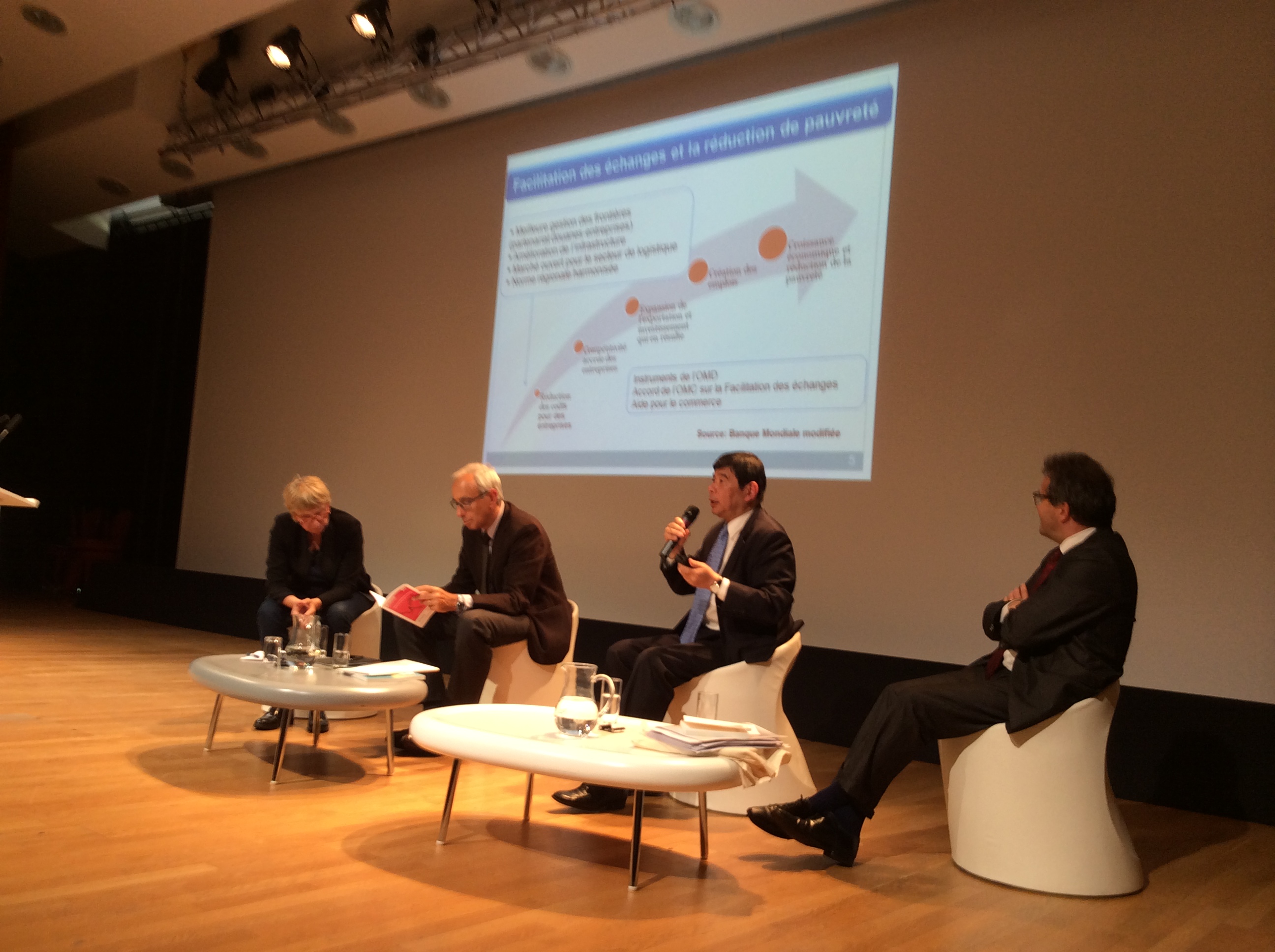
20140827%20154452At the invitation of the “Institut de l’Entreprise” in the framework of its programme “Entretiens Enseignants-Entreprises”, WCO Secretary General Kunio Mikuriya spoke at the Summer University’s conference entitled “La croissance en question(s)” (growth into question(s)) in the Veolia Campus, Jouy-le-Moutier, France on 27 August 2014.

Supported by the French ministry of Education and the Council of Economic Analysis, this forum gives the opportunity to high school teachers in economics and social sciences to exchange views with the business world. It also provides them with an opportunity to update their knowledge on current economic issues benefiting from the attendance of renowned economists and prominent business leaders.

260 High school teachers participated in the event and listened to a panel session on poverty reduction during which Secretary General Mikuriya explained the contribution of Customs through enhancing connectivity at the borders to secure and facilitate global supply chain. They were eager to understand how the WCO and Customs could play a significant role in trade facilitation to convey the messages to their classrooms. Source: WCO

First WCO ESA Regional Workshop on Resource Mobilization

First WCO ESA Regional Workshop on Resource Mobilization

First WCO ESA Regional Workshop on Resource Mobilization

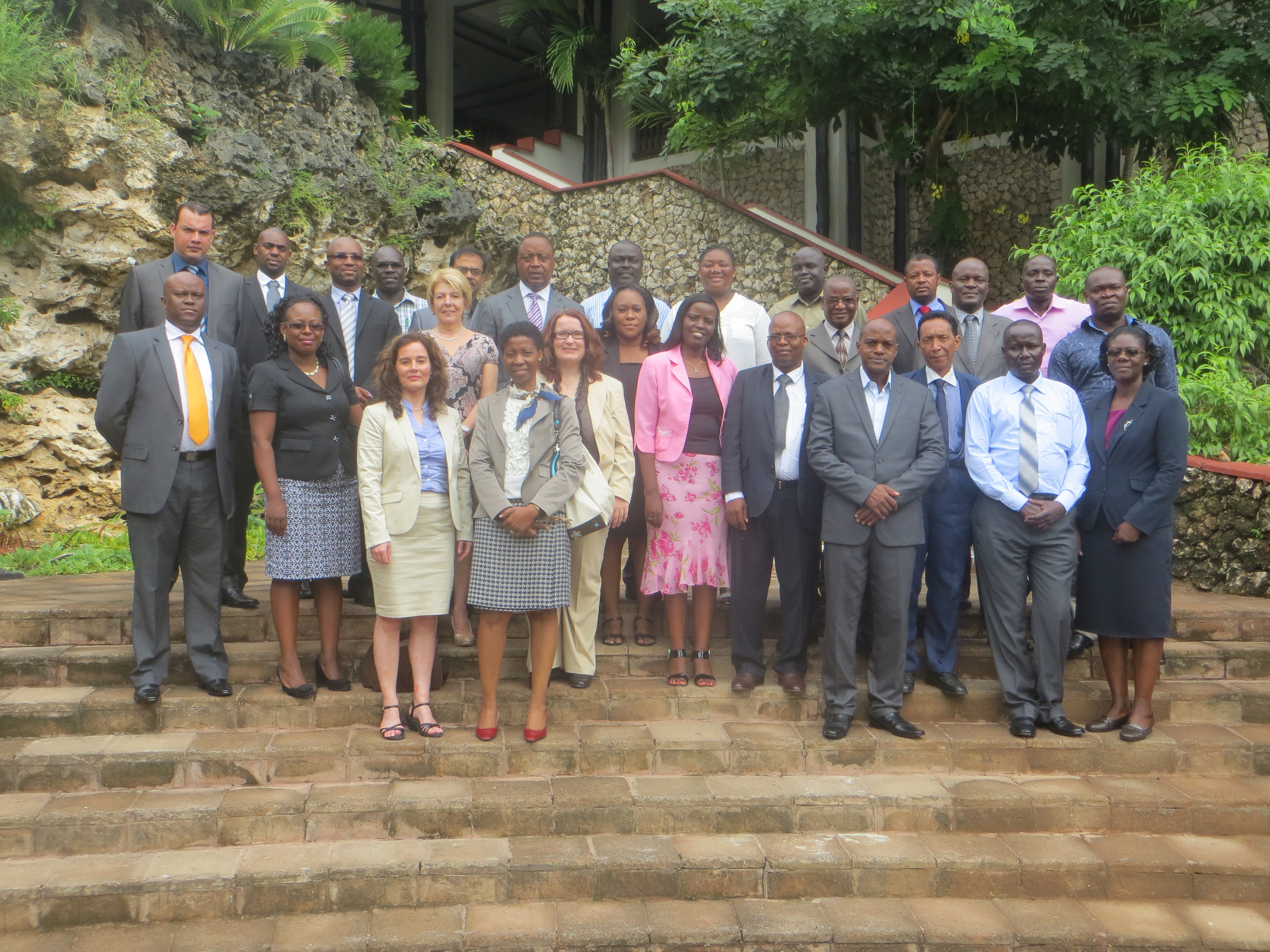
The WCO and the ESA Regional Office for Capacity Building (ROCB ESA), in cooperation with the Kenyan Revenue Authority, organized the first WCO ESA Regional Workshop on Resource Mobilization in Mombasa, Kenya from 19 to 23 May 2014. This workshop was one of the regional key activities in 2014 under the WCO-ESA Project ‘Building Trade Capacity through Customs Modernization in the East and Southern Africa” funded by the Finnish Government.

This workshop was also part of the ongoing efforts of the WCO and the ROCB ESA in supporting Customs Administrations to enhance engagement with development partners for their reform and modernization programmes. Previously, the WCO and the ROCB ESA had organized the first Regional Meeting on Donor Engagement in March 2012 in Mauritius, which provided Members in the ESA region with the opportunity to enhance their understanding of partnership with development partners. The workshop in Kenya was a follow-up on the event in 2012, enabling participating Members to address needs in the field of Resource Mobilization which are essential for subsequent Capacity Building / Customs Reform and Modernization processes at regional and national level. The workshop was facilitated by Ms. Heike Barczyk, WCO Deputy Director Capacity Building, Ms. Sigfridur Gunnlaugsdottir, WCO expert from Iceland Customs, and Ms. Riitta Passi, Project Manager within the Finnish-funded project.

A total of 25 participants from 17 ESA regional members took part in the workshop. Participants developed first draft business cases/project proposals that could in the future lead to potential real Capacity Building projects. Reflecting on the current Customs environment, the workshop equally addressed the WTO Agreement on Trade Facilitation (ATF), potential interest from development partners in supporting countries with its implementation and how to best reflect this in respective interaction with those partners including how to address the respective alignment in the different steps towards developing a written project proposal. The workshop is expected to further enhance the collaboration between Customs administrations and development partners for the successful implementation of Customs reform and modernization.

The WCO, the ROCB ESA and participating Members agreed to continue to work together in this regard. Source: WCO – article provided by Ms. Riitta Passi, Project Manager, Nairobi.

SAAFF names top young freight forwarder

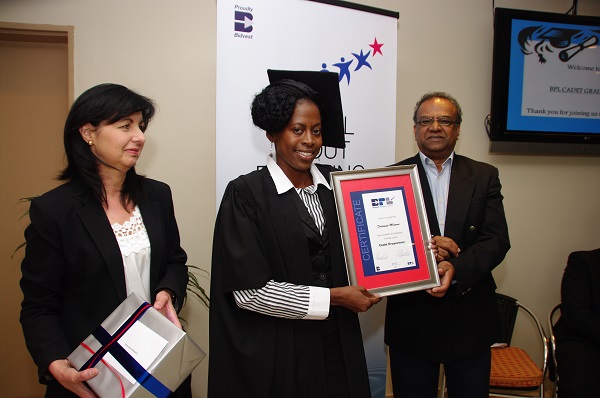
From-the-left-are-Maria-du-Preez-Fortunate-Mboweni-and-James-Reddy-from-Bidvest-Panalpina-LogisticsFortunate Mboweni of Bidvest Panalpina Logistics has been named South Africa’s Young International Freight Forwarder of the Year. According to David Logan, CEO at the South Africa Association of Freight Forwarders (SAAFF), the award was based on her submission on the challenges of super abnormal loads and the complexities associated with the handling of ultra-sensitive cargo.

Says Logan: “Mboweni wrote a well-researched paper on two topical subjects: the shipping of highly sensitive material and the management of project (large, abnormal) cargo. The delivery of work was of a high standard and she can be proud of her efforts, which, in my opinion, stands a good chance of winning-at least the RAME [Region Africa Middle East] round.”

“She will now write a dissertation in order to compete in the regional round of the competition, and if she is successful, will be entered as a global finalist into the ‘Final Four’, which will be decided in Istanbul at this year’s Fiata Global Congress.”

The competition was initiated by its lead sponsor, the TT Club, in 1999 and its objectives are the encouragement of training and development in the industry as well as the elevation of professional standards .

Entrants who are brave enough to take up the challenge are obliged to write a dissertation on a topic that is set by SAAFF. This topic allows the entrant to write about current and often challenging issues and to demonstrate their knowledge and expertise on export and import forwarding and clearing matters.

SAAFF’s judging panel carefully adjudicates each entry in order to identify a winner, whose name is then submitted as the candidate for the regional round. As the competition is supported by FIATA (The International Association of Freight Forwarding Associations), it is adjudicated globally through its regional structures, which under FIATA nomenclature is RAME.

The winner of this round then goes through to the finals comprising the three other regional winners and the global winner is announced at the FIATA Global Congress each year.

Logan concludes: “The status attached to this competition is enormous and reflects positively on both the individual and the company for whom they work. Naturally, only freight forwarders may enter.”

In 2012, SAAFF’s entrant, Daniel Terbille, won the global competition and Logan says they have faith in Mboweni doing well in this international event. Source: Trans World Africa

Implementing the WTO Agreement on Trade Facilitation

WTO Agreement on Trade Facilitation

Click on the image to download the Infogram

It is anticipated that most Customs and Border Authorities have at least one common item on their national capacity building agenda’s for 2014 – the Agreement on Trade Facilitation. Many countries, being members of the WCO, would have already acceded to a level of commitment to the Revised Kyoto Convention (RKC). This requires of them to introduce, at an agreed time, the principles of WCO standards and policies according to the level of their sovereign commitment.

The General Annex to the RKC is the bare minimum a country would be expected to implement in order to for it to be considered compliant with the RKC. From a trade perspective, this also indicates the extent to which your country’s leaders have committed itself towards ‘global integration’.

What the recent Trade Facilitation Agreement (ATF) in Bali does is bind member states to a compendium of requirements necessary for the enactment of certain conditions and obligations as set out in the various articles contained in the agreement. Countries should also note that certain of the ATF provisions include items under the Specific Annexes to the RKC. For a quick reference to see how the RKC and other WCO standards and conventions stack up to the ATF, refer to the WTO Trade Facilitation Toolkit by clicking the hyperlink.

In addition to this, the ATF also makes provision for ‘special and differential treatment’ in regard to developing and least developed countries (Refer to Section II to the WTO ATF).

In essence this allows those countries and opportunity of identifying their (capacity building) needs and setting themselves realistic targets for implementation and compliance to the ATF. To this end 3 Categories are identified for national states to consider in the event they are not at present in a position to accede to some or all of the ATF conditions.

The WCO has also prepared various tools which aim at assisting its members in assessing their national position in regard to the ATF. Members are likewise encouraged to regularly visit the WCO website for updates in this regard.

The following working papers are available from the WCO website and, for ease of access, are listed below together with their hyperlink to the WCO site –

Other related Trade Facilitation documentation can be found at the following link – WTO Trade Facilitation Negotiations

Text of the WTO Free Trade Agreement

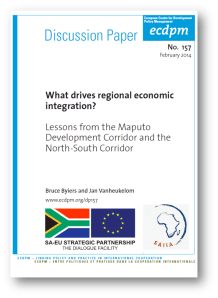
What drives regional economic integration? Lessons from Maputo Development Corridor and North-South Corridor

ECDPM - SAIIAThis study is part of the ECDPM-SAIIA project on the Political Economy of Regional Integration in Southern Africa (PERISA). The PERISA project aims to inform and facilitate dialogue on the political economy drivers of regional integration in Southern Africa. It focuses particularly on the role of South Africa in this process with a view to better informing relations between the European Union and South Africa. Regional economic integration is essential for Africa’s development. While integration is taking place across the continent, it is not happening at the pace and the scope that the institutional architects in the Regional Economic Communities and their member states have agreed upon. Southern Africa is no exception. In looking for answers as to what obstructs or what drives regional integration, this study focuses on one particular type of integration process: cross-border transport corridors.

All Regional Economic Communities in Southern Africa have embraced transport corridors (also referred to as Spatial Development Initiatives) as key development tools. Adopting a corridor approach means engaging with a wide range of actors with different interests and influence along key transport routes that link neighbouring countries and ports. This includes the full range of government agencies that control borders for security, revenue collection, and regulatory purposes as well as infrastructure, transport, trade and economic ministries as well as a range of private sector actors from small-scale informal traders and producers to transporters and major international investors as well as port, rail and road operators.

The analysis focuses on the North-South Corridor and the Maputo Development Corridor. The North-South Corridor links Dar es Salaam in Tanzania to Durban in South Africa through Zambia, Zimbabwe and Botswana. The Maputo Development Corridor links Gauteng Province in South Africa to Maputo in Mozambique. The analytical focus is on South Africa and Mozambique, while from the multi-country North-South Corridor the focus in this paper is on Zambia, a potential key beneficiary of the initiative. Source: ECDPM.org

WCO expert provides Customs Valuation training assistance

WCO expert Ian Cremer (centre, back row) with SARS staff involved in valuation training project.

WCO expert Ian Cremer (centre, back row) with SARS staff involved in valuation training project.

The SARS Academy is reviewing and packaging its training material so as to align its curriculum to international standards. It has embarked on a process of benchmarking its training material, kick-starting the process in the School of Customs and Excise.

WCO facilitator Ian Cremer recently visited the Academy at Waterkloof House in Pretoria to provide assistance with the strengthening of their valuation training programme. A group of trainers, curriculum developers and valuation specialists from business worked with the WCO valuation expert in the development of the new training material.

Training modules will be developed at the following levels: Basic, Intermediate and Advanced, and will be aligned to the WCO’s own valuation training modules.

Further work will now be conducted on developing a delivery strategy. This will ensure that key staff are trained to the necessary level and are able to conduct their duties in a professional level, meeting the dual requirements of fair and efficient revenue collection and the facilitation of compliant trade. Source: SARS

WCO to develop Implementation Tool for WTO ATF

WCO and WTO leaders meet in Geneva (WCO)

WCO and WTO leaders meet in Geneva (WCO)

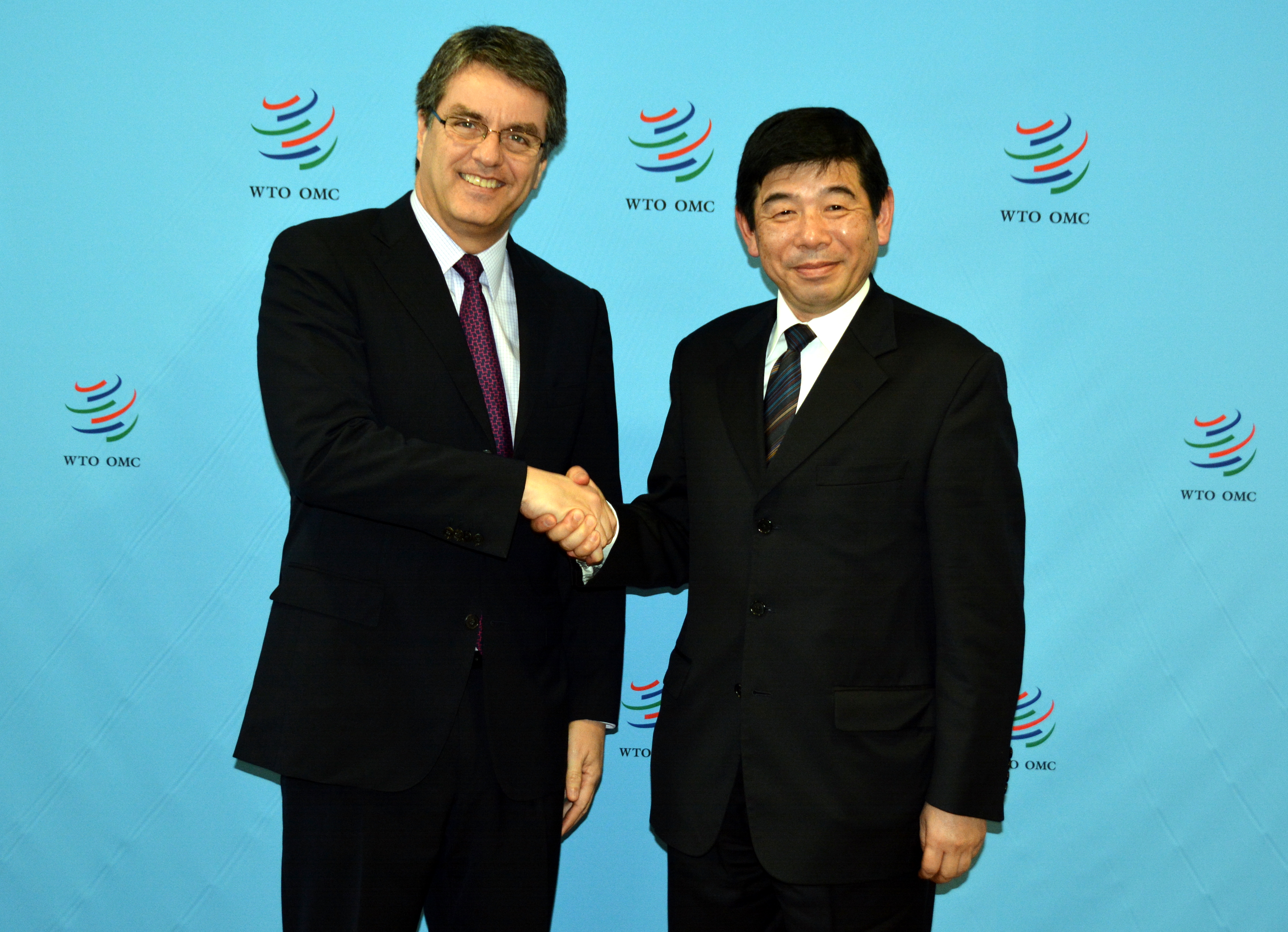
At the invitation of WTO Director General Roberto Azevedo, WCO Secretary General Kunio Mikuriya met with Mr. Azevedo at WTO headquarters in Geneva, Switzerland on 20 January 2014. They agreed that close cooperation between the two organizations is vital for successful implementation of the WTO Agreement on Trade Facilitation (ATF).

Secretary General Mikuriya emphasized the consistent and complementary nature between the ATF and the WCO Revised Kyoto Convention (RKC). He also described how the WCO Economic Competitiveness Package, that includes the RKC and all other Customs trade facilitation instruments, guidelines and best practices, will support implementation of ATF. Mr. Mikuriya also confirmed his readiness to involve other international organizations, development banks, donors and other stakeholders at a WCO forum to contribute to cooperation in support of the ATF.

Director General Azevedo was pleased to hear that the WCO was planning to publish an implementation tool to connect each provision of the ATF to WCO tools as well as a briefing document enabling Customs administrations to communicate with trade ministries. He expressed his willingness to leverage WCO expertise and experts for the WTO Preparatory Committee on Trade Facilitation as well as ATF needs assessment and implementation. Mr. Azevedo also suggested that the ATF provides another opportunity for the two organizations to enhance the good working relations that already exist in many areas beyond trade facilitation.

The two leaders also discussed how multilateral institutions could work on regional integration matters and agreed on the importance of adopting global standards and best practices to ensure connectivity at borders. Source: WCO

Business Guide for Developing Countries – WTO Trade Facilitation Agreement

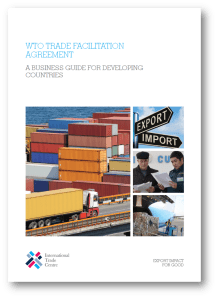
Picture2The International Trade Centre has prepared a guide to help businesses take advantage of the WTO Trade Facilitation Agreement. The agreement simplifies customs procedures, allowing businesses to become more competitive. This jargon-free guide explains the provisions with a focus on what businesses need to know to take advantage of the agreement. It will also help policy makers identify their needs for technical assistance to implement and monitor it. To download the guide – click the following link: http://www.intracen.org/wto-trade-facilitation-agreement-business-guide-for-developing-countries/.

For instance, the guide explains how the article on ‘Advance rulings’ aims to address problems with inconsistent classification of goods by customs officials and the uncertainty it creates for traders. ‘Advance rulings are binding decisions by customs…on the classification and origin of the goods in preparation for importation or exportation. Advance rulings facilitate the declaration and consequently the release and clearance process, as the classification has already been determined in the advance ruling and is binding to all customs officers for a period of time,’ the guide explains. It goes on to list in jargon-free language the obligations and the procedure imposed on customs authorities related to advance rulings.

Reducing the on-the-spot decision making authority of individual customs agents thanks to advance rulings will also reduce bribery, the guide says. Corruption continues to be a key problem for developing-country exporters, who identified it as a major constraint on exports in a recent survey conducted by ITC.

The last chapter of the guide describes how the agreement will be implemented, including the special and differential treatment provisions that developing countries may invoke. Developing countries will be able to link the implementation of the commitments to technical assistance and support from donors. WTO member states will have to explicitly apply for delays for each commitment, which will need to be approved by the WTO and the implementation schedule published.

Source: International Trade Centre

WCO Capacity Building visit to the youngest country in the world

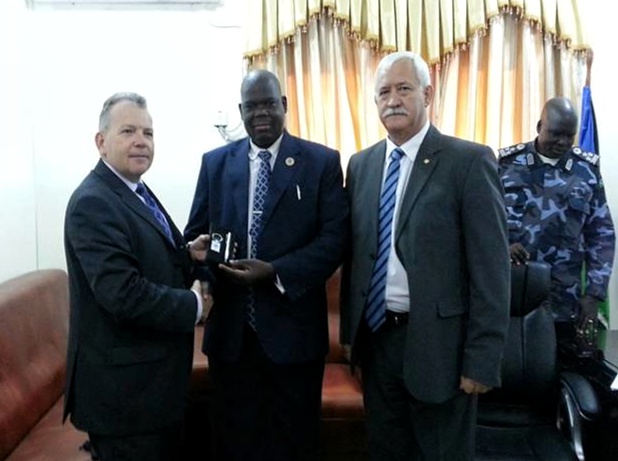
Capacity Building visit to South Sudan - SARS' representative Fanie Versveld (right).

Capacity Building visit to South Sudan – SARS’ representative Fanie Versveld (right).

End of November to beginning of December 2013, following a request from the then Customs Director-General, a small WCO expert team travelled to South Sudan to undertake a Phase 1 Diagnostic Mission under the auspices of the WCO Columbus Programme. The needs analysis was conducted by a colleague of the WCO Capacity Building Directorate along with an expert from the South African Revenue Service.

South Sudan gained its independence as recently as July 2011 and is still the youngest country in the world. Until recently it was also the newest Member country of the WCO.

It was during the course of the visit that the WCO team learnt that the Customs Director General had been replaced. A meeting was held with the new Director General and after outlining the work of the WCO and the purpose and benefit of its Capacity Building Programme it was agreed that the mission should proceed as planned.

The diagnostic team visited the Customs Headquarter in the capital city of Juba, Juba International Airport and Nimule Border Crossing Point on the border with Uganda. The team had the opportunity to meet and speak with a wide variety of motivated people from within the South Sudan Customs Service and also held informative discussions with a number of key stakeholders from the public sector, trade representatives and donor agencies.

The South Sudan Customs Service is just starting out on the road of Reform and Modernization. The diagnostic team made a series of recommendations that will help them in this regard but also identified some “quick win” activities that will assist them in building organisational confidence and commitment to the whole development process. The WCO looks forward to working with the South Sudan Customs Service again in the near future. Source: WCO


What is the value of a slick customs service?

Cahir Castle Portcullis by Kevin King

Cahir Castle Portcullis by Kevin King

The traditional symbol of customs and borders services is the portcullis – the fortification through which a ship used to enter a port. But as developing countries are increasingly asked to recognise the benefits of liberalised trade to the detriment of their import duty revenue, how can they be helped to raise the portcullis? And is it really in their interests to do so?

With world trade growth expanding more than twice as rapidly as gross domestic product (GDP) over the past decade, says Steve Brady, director, Customs and Trade Facilitation for development consultancy Crown Agents, the potential rewards from participating in world trade are significant. “According to figures from WTO, in 2011 world merchandise exports and imports in real terms grew by over 5%. As a result, each reached over $1.8tn, the highest level in history.”

The major players working with developing country governments to help them benefit from this increase in trade include the World Bank, ICC, World Customs Organisation (WCO), IMF, UN Conference on Trade and Development (Unctad), development banks and specialist intermediaries such as Crown Agents.

A number of countries have improved their capacity as a result of international and domestic efforts, yet some are still hesitant to do so. The Centre for Customs and Excise Studies (CCES) at the University of Canberra finds that many developing country governments are heavily dependent on the revenue from import duties – in some cases this can be as high as 70% of a country’s total revenue base. The desire to protect this is understandably strong. Yet this same desire can be used to drive forward modernisation efforts, explains Professor David Widdowson, CEO of CCES. “Revenue leakage resulting from commercial fraud, poor customs and border procedures and corruption represents a major impediment to poverty reduction.”

Similarly time-consuming manual processing systems, over-regulation, or outright corruption, will discourage trade and investment and further undermine a country’s development. “In the worst cases up to 20 signatures are required to obtain customs clearance of goods, all of which require ‘informal payments’,” says Widdowson. “I have also seen examples of 15 different government agencies playing some role at the border, all acting independently.”

Guidelines or blueprints to modernise such customs and borders processes are available, for example, via the revised Kyoto convention (extolling the basic principles of automation, simplification, responsiveness to the regulation, consistency and co-ordination); the “Framework of standards to secure and facilitate global trade” developed by the WCO; and its “Columbus programme.”

Turkey is cited by Sandeep Raj Jain, economic affairs officer at the United Nations Economic and Social Commission for Asia and the Pacific (Escap), as a case study for the successful modernisation of customs systems, having consolidated 18 previously autonomous border gates and introduced a single IT clearance system, leading to an increase in tax revenues and a decrease in clearance time to the benefit of incoming and outgoing trade. Angola increased receipts sixteen-fold from $215.45m in 2000 (£148m) to $3,352m in 2011 through an improved National Customs Service and the introduction of an automated entry processing system and customs clearance Single Administrative Document.

The African Development Bank also supported post-conflict Liberia with the extension of an automated system for customs data, helping to reduce the time to clear goods at the port from 60 days to less than 10 days and increase revenue collection at three ports from about $4m a month to $10m-$12m. This, Ellen Johnson Sirleaf, president of Liberia has said, given the government additional scarce revenues to invest in the projects to improve the livelihoods of people.

Horror stories also abound of revenue loss, acting as a cautionary tale for leaving outdated customs processes untouched. A World Bank report, for example, finds that in Algeria smuggling caused a loss to the public exchequer rising from DA18bn in 2006 ($237m) to over DA61bn in 2011.

The message from the international community is that improved, automated and transparent customs services not only help eradicate theft and corruption, but also increase revenue through increased trade. Any fall in revenue from import tariffs due to signing up to bilateral free trade agreements can also be offset, says Bijal Tanna of Ernst & Young LLP: “One only has to look at the take-up of VAT by countries since the 1980s to understand that there is a consumer tax outlet to offset any loss of revenue from customs duty reductions. Back in the late 1980s, approximately 50 countries had VAT, now it is in place in over 150 countries.”

However, these arguments don’t always reach an appreciative audience. “In my experience”, says Widdowson, “economies may give lip service to the trade facilitation agenda, including entering into free trade agreements, but still expect their customs administration to collect traditional levels of duty. For example, with the introduction of free trade arrangements – hence falling duty rates – and a downturn in international trade, the Philippines continues to increase the ‘revenue targets’ of its bureau of customs, the derivation of which appears to be devoid of any analytical rigour.” (emphasis – mine)

Tanna also points to the collapse of the Doha round of the WTO negotiations heralding a breakdown in efforts to find a single global platform to drive a uniform approach to trade liberalisation. Perhaps it is the obligation of the international community to renew such efforts, alongside projects to improve customs systems in-country. Source: Original article by Tim Smedley of The Guardian
Mauritius – Customs Training of Trainers Course on SADC Rules Of Origin

The SADC Rules of Origin are the cornerstone of the SADC intra-trade and serve to prevent non-SADC members benefiting from preferential tariffs. The determination of the eligibility of products to SADC origin and the granting of preferential tariffs to goods originating in the Member States is an important process in the implementation of the SADC Protocol on Trade and regional integration. Annex I of the SADC Protocol on Trade provide that goods shall be accepted as eligible for preferential treatment within the SADC market if they originate in the member States, and the qualification of such products shall be as provided in Appendix I of Annex I of the Protocol on Trade.

The 2nd Customs Training of Trainer Course was held on the SADC Rules of Origin at the World Customs Organization (WCO) Multilingual Regional Training Centre, Mauritius Revenue Authority from the 25th -30th November 2013. The objective of the training course is to establish a pool of trainers on the SADC Rules of Origin who can provide guidance and train on the subject at national level to Customs officials and relevant Stakeholders.

During his opening address, Mr Sudamo Lall, Director General of the Mauritius Revenue Authority, laid emphasis on the critical importance of the ‘Rules of Origin’ as it has ‘great impact on the duties to be collected, as businesses increasingly locate the different stages of their activities in a way that optimizes their value-addition chain’. On the other hand Mr James Lenaghan Director Customs mentioned that ‘the Rules of Origin in any Free Trade Area are of prime importance as they serve to determine which goods can benefit from preferential tariffs. This enables member states of a particular Free Trade Area to benefit from the tariffs advantages inherent to the Protocol of trade agreed within that Free Trade Area. Since Customs is the controlling agency for preferential origin, it is vital that our officers are trained to correctly apply the SADC Rules of Origin’.

During their short visit at the training workshop, the Executive Secretary ,Dr Stergomena Tax and the WCO Secretary General, Mr Kunio Mukiriya addressed the group on the importance of rules of origin as the basis for regional integration. Dr. Tax also urged the participants from all SADC Member States to cascade the knowledge gained at the Centre to their respective countries.

The SADC Customs Training of Trainers programme is being implemented in collaboration with the World Customs Organization (WCO), the Regional Office for Capacity Building (ROCB), the WCO Regional Training Centres and GIZ (Deutsche Gesellschaft für Internationale Zusammenarbeit (GIZ). Source: SADC Secretariat

Mauritius Revenue Authority – Launch of the WCO Multilingual Regional Training Centre

This slideshow requires JavaScript.

The SADC region is now equipped with a third World Customs Organization accredited Regional Training Centre in addition to the South African and Zimbabwean Regional Training Centre. The Regional Training Centres are excellent platforms for Customs to advance capacity building and to share information and best practices.

The Mauritius Revenue Authority (MRA) has been selected by the WCO to host the RTC as part of the WCO initiative to optimise resources in the region and in line with government’s objective of making of Mauritius a Knowledge Hub. The RTC represents the 25 of its kind adding to the existing Centres across the world and is the fourth one in the WCO ESA region.

The Centre will enable the WCO achieve its mission of enhancing Customs administrations in the WCO ESA region thereby helping these Customs administrations to make an important contribution to the development of international trade and to the socio-economic well-being of their country.

Under the WCO strategy the RTC has four main objectives namely: development of regionally relevant training; maintenance of specialist trainer pools; provision of specialist training at a regional level; and development and support of the WCO’s blended learning programme. Moreover, it has as task to develop and maintain annual training plans and work in partnership with the private sector to maintain effective relationships between Customs and economic operators as well as assist Member countries in their training needs.

The Mauritius RTC is equipped with English, French and Portuguese language facilities as well as an e-learning platform. The Vice-Prime Minister and Minister of Finance and Economic Development, Mr. Xavier Luc Duval, formally opened the RTC on the 25th November 2013. In his opening address, Secretary General Mikuriya commended the leadership and continued engagement of Mauritius, previously as WCO Vice-Chair for the East and Southern Africa (ESA) Region from 2011 to 2013, and now as host of an RTC. He hoped that this RTC would serve to share knowledge and strengthen the human resource network for Customs cooperation and regional integration.


SAAFF Accredited to Award FIATA Diploma

SAAFFFreight & Trade Weekly reports that the South African Association of Freight Forwarders (SAAFF) has been accredited to present and award the internationally recognised FIATA Higher Diploma in Supply Chain Management. “The industry  body was accredited following presentations to the FIATA Advisory Board on Vocational  Training at the FIATA Congress in Singapore at the end of October this year,” says Tony d’ Almeida, director at SAAFF responsible for education, training and development.

He said SAAFF was effectively one of only 14 professional bodies around the world accredited to offer this industry leading qualification. “SAAFF will be the custodian of the Higher Diploma which is pitched  at NQF level 7, two levels higher than the FIATA Diploma in Freight Forwarding which SAAFF is also entitled to award in South Africa, and which has already produced 22 graduates,” says d’Almeida. He notes that the minimum requirement for consideration for entry into this Higher Diploma is a relevant university degree, or a national diploma or the FIATA Diploma in Freight Forwarding.

“All accredited SAAFF  training providers may offer this  programme to suitably qualified students,” d’ Almeida states. He says this qualification is “very relevant” to the freight forwarding industry. “SAAFF therefore made the strategic decision to apply for accreditation to help alleviate the current critical shortage of skilled people who not only know the process of supply chain, but can also apply their expertise in innovative ways that add value to the entire process,” he says. D’ Almeida adds that aspects relating to global supply chains are constantly evolving, making it vital for every player to be at the forefront and fully aware of these trends.

“Added to this, the industry has to come to grips with rapidly evolving technology in our everyday business practices that is coming at frightening speed. Being able to ratify skills against global standards  and benchmarks brings enormous value to the business, the client and the individual,” he says. Source: Freight & Trade Weekly.

Africa’s first regional Customs – Trade Forum

On the 8th of November 2013 in Maseru, Lesotho, the Southern African Customs Union (SACU) launched the first regional Customs – Trade Forum in Africa. The theme of the historical event was “Government and Business: partners for economic development through regional trade”. At the launch, the Minister of Finance and Chairperson of the SACU Council Leketekete V. Ketso and Minister of Trade and Industry, Cooperatives and Marketing, Sekhulumi P. Ntsoaole addressed the attendees as well as Director Capacity Building Erich Kieck from the WCO. Both ministers mentioned the funding from the Swedish International Development Cooperation Agency as a big contributor to undertake this event.

More than 30 representatives from the private sector in the SACU region attended the forum together with the five Heads of Customs and one delegate from each Member’s private sector presented their expectations on the continuous work within the Forum framework. The first working meeting of the Forum is tentatively scheduled to be held in April 2014. The event was acknowledged also by media and representatives from Lesotho Revenue Authority would discuss its importance in papers, radio and TV.

On the previous day, the 7th of November, the Steering Committee for the SACU – WCO Customs Development Program held its ninth meeting, providing guidance to the project. All project components, Interconnectivity, Risk Management/Enforcement, Legislation and Trade Partnerships were on the agenda. Source: World Customs Organisation

Nigeria Customs Service – Organically Developing The National Single Window

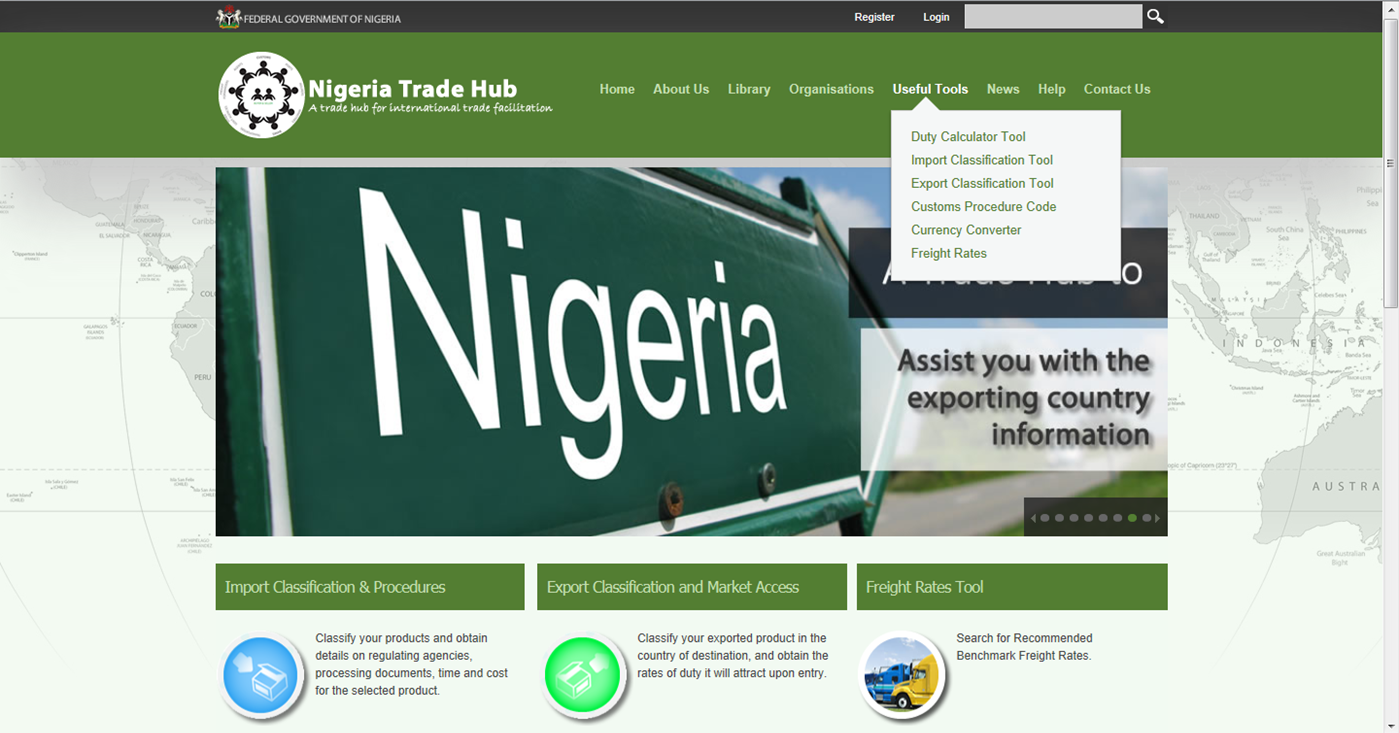
Nigeria Trade Hub 2The WCO Single Window Experts Accreditation Workshop took place on 23rd – 27th September, 2013 at Customs Border Control Training Centre (CBCTC), Seoul, Korea. The objectives of the workshop included:

  • Promoting the work of Single Window
  • Developing expertise meant for executive management
  • Developing different expertise in other technical areas of Single Window.

Developing this expertise brought about the WCO Data Model and SW accreditation Workshop as there are several areas where experts can emerge, including areas of Business processes, Legal, Data Model etc. The past efforts in capacity building served as a guide to developing the program for the workshop. The expectation included shaping assistance and building capacity in the areas of Single Window.

The participants included representatives from Nigeria, Mauritius, Chile, Singapore, Tanzania, Mexico, United Arab Emirates, Russia Federation, Saudi Arabia and Korea. Three out of the ten participants (Nigeria, Singapore, Mauritius) were accredited Co-Facilitator Status for the World Customs Organization at the end of the workshop. This demonstrates that Nigeria is certainly moving in the right direction and aligning to International Standards. Source: Nigeria Trade Hub