Sniffing out trouble at SA ports

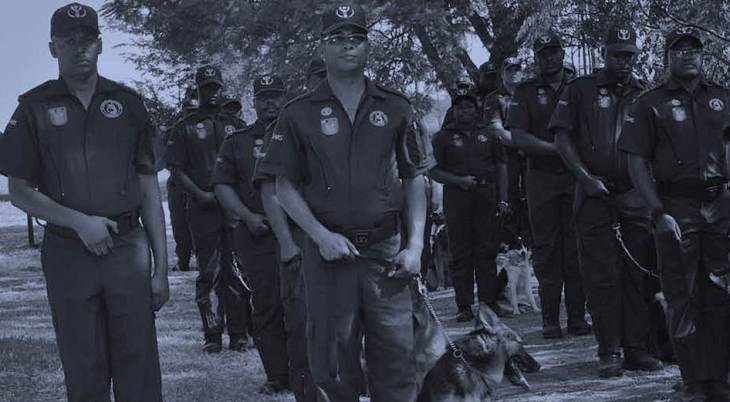
SARS DDU2A gruelling four months of training came to an end during May 2015 as 33 Customs officers and their detector dogs graduated from the SARS Detector Dog Training Academy. A graduation ceremony was held in Pretoria. It was the culmination of a training course where officers were, together with their canine charges, were trained in the finer aspects of the detection of illegal substances and goods in vehicles, vessels, aircraft, containers, cargo, mail, rail, luggage and buildings.

“The substances that they would be able to detect are explosives, firearms and ammunition in addition to narcotics such as cocaine, heroin, cannabis, mandrax, crystal meth and ecstasy,” states Hugo Taljaard, Senior Manager for the Detector Dog Unit (DDU). “They will also be able to find rhino horn, ivory, wet or dry abalone, crayfish and lion bones. This also extends to currency, tobacco products, copper wire and cell phones,” he added.

The training began in January 2015 and covered both practical and physical aspects. The following modules were accomplished during the development programme:

  1. Bonding and socialisation phase with the dog.
  2. Imprinting of substances.
  3. Paramilitary Drill – Salute and Compliment.
  4. Practical search and detect training on vehicles, vessels, aircraft, containers, cargo, mail, rail, luggage and buildings
  5. Physical training – dog and handling – Theoretical training on identification and handling of narcotics and endangered species; Dog conditioning process; Basic animal behavior; and General dog care.
  6. Change of environment training at land ports of entry.
  7. Formal assessment.

After this training, detector dog units will be established in Mpumalanga (Lebombo Detector Dog Unit), Northern Cape (Nakop Detector Dog Unit), and Northern Cape (Vioolsdrif Detector Dog Unit) to support SARS’ strategic objective to increase customs compliance at ports of entry.

Currently, all SARS DDU recruitment is sourced from within the organisation.

Visit the Servamus website (a community-based safety and security website and magazine) for an article published on Customs Detector Dog Unit – “Sniffing out trouble at SA ports” (May 2015 Edition). Source: SARS and Servamus.co.za

Related articles

WCO 2015 Photo Competition

WCO

Sudan Customs administration – “Border ahead” The photo shows goods trucks ready to cross the border between Sudan and Egypt. Since April 2015, the Askeit border post is the first and only border crossing point in Sudan benefiting from a Single Window environment, with all relevant authorities gathered under one roof. The volume of trade exchange between Sudan and Egypt through this post amounts to about 185 million US dollars per year, a figure which is expected to increase twofold, or even threefold, over the next few years. [Click on the photo to see all the entries]

French Customs seizes massive 136 kilos of ivory

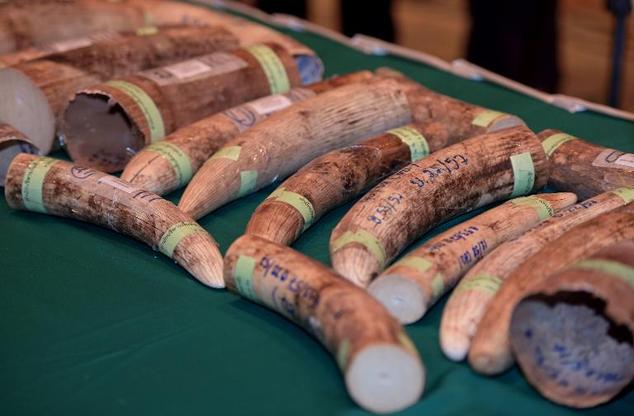
Illicit IvoryFrench customs officials said they had intercepted 136 kilos of ivory shipped from the Democratic Republic of Congo en route to Vietnam — the biggest haul in nearly a decade.

Officials at Paris’s main Charles de Gaulle airport found a dozen elephant tusks chopped into 37 pieces hidden in cases under aluminium plates, possibly to confuse scanners.

The haul is the biggest seized by French customs officials since December 2006, when 600 kilos of “white gold” was uncovered.

“This is a sadly typical case,” said airport customs official Sebastien Tiran. There’s one thing that never goes out of fashion and that’s ivory,” he told AFP.

There were “several criteria” that alerted officials to the possibility of smuggling, he explained. “The route, what is declared, documents linked to the declaration.”

Ivory ornaments are coveted in Asian countries like Vietnam, Thailand and China, and activists say Africa’s wild elephants are being pushed to extinction by the trade. Source: Customs Today

Africa losing $40bn in illegal cigarette trade

ContrabandA tobacco body has urged African governments to stamp out illegal tobacco trade, as their economies are losing billions of dollars in taxes annually. Tobacco Institute of Southern Africa (TISA) revealed that governments in the region are losing between US$20 billion and US$40 billion annually in taxes as a result of illegal tobacco trade, hence the need for collaboration among stakeholders to curb the vice.

This is contained in a statement issued by KPR Consulting Limited on Friday. “The size of the global illegal tobacco trade ranges between 330 and 660 billion cigarettes a year. These are cigarettes that are either smuggled, counterfeited or where tax is being evaded. “This equates to around six and 12 percent of global consumption, which deprives governments of between US$20 [billion] and US$40 billion a year in taxes,” the statement reads.

TISA, which is a regional body that represents tobacco traders, growers and processors, estimates illicit tobacco trade incidences in Zambia being between 20 and 30 percent. South Africa is rated among the top five countries globally when it comes to the trade in illegal cigarettes, with industry research estimating that around 23 percent of all cigarettes consumed in South Africa in 2014 were illegal. Commenting on the issue, British American Tobacco Zambia managing director Clara Mlambo cited weak penalties for criminals, poor border controls, low arrest rates and tobacco taxes creating intra-regional disparities as contributing factors.

Zimbabwe tightens border controls on imported goods

Zimbabwe-flagZimbabwe has introduced custom-control measures aimed at reducing the inflow of smuggled and inferior goods, and boosting its revenue from customs duty. Goods being exported to Zimbabwe will have to undergo consignment verification from May 16.

The government’s customs officials are also tightening up inspections at the Beitbridge border post to stem the flow of cheap, illegal goods, which Zimbabwean companies blame for their financial woes.

Executive chairman of the European Union Chamber of Commerce and Industry of Southern Africa Stefan Sakoschek said on Thursday that “the general idea is for Zimbabwe to protect its borders from substandard goods, as well as from undervaluation”.

Mr Sakoschek said the consignment-based conformity assessment programme fell within the framework of the World Trade Organisation’s technical barriers to trade as well as the regulations of the General Agreement on Tariffs and Trade.

Exporters and clearing agents have been informed of the new consignment verification measures, which will ensure conformity to standards and the value of goods declared. A certificate will be issued for the consignments for presentation to customs officials on arrival in Zimbabwe. Goods without a certificate will be refused entry.

Targeted products include food and agricultural goods, building and civil engineering products, timber and timber products, petroleum and fuel, packaging materials, electrical and electronic appliances, body care products, automotive and transportation goods, clothing and textiles, engineering equipment, mechanical appliances and toys.

Trade Law Chambers director Rian Geldenhuys said the pre-shipment verification process would entail additional costs but should not contribute to further delays in shipment. Consignment verification was widely practised especially in developing countries as a way to ensure the collection of customs duty revenue, Mr Geldenhuys said.

“Underinvoicing is a huge problem throughout the world, especially least developed and developing countries which Zimbabwe is one of,” he said.

Trade Law Centre researcher Willemien Viljoen also said the assessments would entail additional costs. Much of the effect would depend on how the conformity assessments were implemented and the standards that would be applied, Ms Viljoen said.

The Zimbabwean government has appointed well-recognised French company Bureau Veritas as the conformity assessment company for verification purposes, and has given the assurance that “compliant exporters will be able to benefit from fast-track procedures reducing systematic intervention on their frequent exports to Zimbabwe.”

Zimbabwean Industry and Commerce Minister Mike Bimha was quoted by the Zimbabwean press as saying that Zimbabwe was being “flooded with sub-standard imports which do not meet quality, safety, health and environmental standards”.

These goods had a negative effect on the country’s economic development and the competitiveness of its industries, Mr Bimha said.

In terms of its four-year agreement with Bureau Veritas the Zimbabwean government will receive monthly royalty fees equivalent to 5% of all monies received for its services. This arrangement will eventually lapse when the Zimbabwe Standards Regulatory Authority is established to monitor and control imports, exports and local goods to ensure compliance with quality, health, safety and environmental standards. Bureau Veritas operates in 140 countries and offers pre-shipment services to SA, Ethiopia, Kenya, Somalia, Uganda and Côte d’Ivoire. Source: BDLive (Reporter: Linda Ensor)

Read also the following articles, published in Zimbabwean Situation – Govt moves to tighten border controls (September 2014) as well as Zim mulls one-stop border post (November 2014) which might suggest that entry arrival procedures at Zimbabwean ports of entry may not be that expeditious given a prominent focus on revenue collection.

Zimbabwean Customs seizes 48kg illicit South African gold worth R20m

goldZimbabwean Customs (ZIMRA) seized 48 kg illicit gold worth R 20 million and arrested 46 people for initial investigations. Forged gold serial-number stamps, specially designed armoured vehicles, clandestine refineries, fake customs clearance papers and documents with links to the black market.

These and other pieces of evidence are the keys that the Hawks believe link a Zimbabwean and South African gold-smuggling syndicate to scores of buyers in Europe masquerading as dealers in precious metals. For two years police have been zeroing in on the syndicate, whose roots are in illegal gold mining in Zimbabwe. Inside were 48kg of gold bars valued at R20-million.On Friday, they acted. In the early hours teams from the Hawks, the Special Task Force and Crime Intelligence raided luxury homes and farms across Gauteng and the North West.

In one of the raids police discovered a walk-in vault at a warehouse outside OR Tambo International Airport. Inside were 48kg of gold bars valued at R20-million. They were being prepared for stamping with official South African gold serial numbers designating that the metal had been officially mined and refined in the country. Police sources say the gold was to have been flown to at least three European countries at the weekend before being smelted, re-refined and distributed.

A source with knowledge of the investigation has revealed the inner workings of the syndicate, from how and where the gold is mined to how corrupt customs and mining officials facilitate the metal’s passage across borders.(Now should’nt this prompt some serious cause for concern, if true?)

“The amount this syndicate has handled is immeasurable. We have known about them for two years and in that short time we have recovered R40-million,” he said.

“They have operated both in South Africa and Zimbabwe as well as other SADC [Southern African Development Community] countries for years, well before we even discovered them”

Illegal miners in Zimbabwe supplied the syndicate. “With the instability and corruption there [South Africa?] it’s dangerous but easy. Once they have the gold, runners take it to the border where, through corrupt officials, it is smuggled across disguised as things such as household products.”

The gold was taken to farms in and around Modimolle in Limpopo where illicit refineries smelted and refined it, the source said. With the help of South African mining officials, gold clearance documentation and special serial and insignia stamps were sourced.

“Once stamped you would never know the difference. We have placed it next to legitimate bars and it looks and feels the same.” He said the gold was distributed through legitimate channels in Europe.

“Those running the syndicate know what they are doing. They are well-connected and influential businessmen with ties to Africa, Europe, the US and Asia”.

“They are linked to the gold powerhouses of the world. These are not ‘mickey-mouse’ people. They are immensely powerful and extremely well connected to some of the world’s top legal firms. Within hours of Friday’s raids lawyers were arriving at their clients’ homes and businesses.”

He said police seized hundreds of official gold clearance documents, serial stamps and other paperwork with links to mines and importers and exporters. Source and picture: CustomsToday.com

South Africa leads the Continent in Illicit Cigarette Trade

illicit cigarettesSouth Africa leads Africa in the illicit trade in tobacco and is listed among the top five illicit markets globally, according to the Tobacco Institute of Southern Africa, which represents tobacco growers, leaf merchants, processors, manufacturers, importers and exporters of tobacco products in SA.

More than R20bn in tax revenue has been lost in SA since 2010 due to the illicit trade in tobacco, the institute’s CEO, Francois van der Merwe, said on Wednesday. The problem is severe in SA, but Zambia, Namibia and Swaziland have estimated incidences of well above the global average of between 10% and 12%.

Mr van der Merwe said efforts to combat the illicit trade in tobacco were complicated by the links that the business had with transnational organised crime syndicates, some of which funded terrorism.

“The problem runs far deeper than enormous losses of fiscal income that could have been put to good use to bolster government efforts in education, infrastructure development and poverty alleviation,” said Mr van der Merwe.

He was speaking ahead of a meeting later in November of global, regional and local law enforcement, along with revenue and customs agencies in Cape Town, who will seek better ways to collaborate in addressing the illicit tobacco trade in sub-Saharan Africa.

“We have seen first hand what effective focus on combating illicit trade by government can achieve,” said Mr van der Merwe, ascribing a decrease in the illicit tobacco trade, from 31% to 23% this year, to better collaboration.

“This is in the most part due to the excellent efforts by the various law enforcement, customs and revenue, Treasury and defence departments in the South African government.”

Mr Van der Merwe said that although the declining numbers in SA were encouraging, this did not bode well for the rest of the region as organised crime was a moving target prone to shifting its focus to “easier” markets when it was under attack.

He claimed that those who traded in illicit products, whether cigarettes, alcohol, textiles or DVDs, or committed environmental crimes such as rhino poaching or abalone smuggling were most often also involved in other serious crimes and even the funding of terrorism and money laundering. Source: BDLive.co.za

Relate articles

Surge in Car Imports at ZIM/RSA Border as Dealers Panic

The Herald - Surge in new car imports between ZIM-RSAThere is a drastic increase in motor vehicle imports through Beitbridge border post as dealers are rushing to buy cars before the proposed 20 percent customs duty increase on imported motor vehicles comes into effect on November 1.
Finance and Economic Development Minister Patrick Chinamasa announced recently the Government intendeds to increase duty of motor vehicles which he said contributed 10 percent of the import bill in the first half of this year.

He proposed an increase in customs duty on single cab of a payload more than 800kgs from 20% to 40%, buses of carrying capacity of 26 passengers and above from 0% to 40%, double cab trucks from 40% to 60%, and passenger motor vehicles of engine capacity below 1500cc from 25% to 40%.

Customs duty for vehicles with engines above 1500cc has not been changed from 86 percent inclusive of VAT and Surtax. The development has raised anxiety among most Zimbabweans who are now rushing to buy second hand cars from Japan some of which come through South Africa.

Zimbabwe Revenue Authority (Zimra) is processing an average of 170 car imports at the border post per day since the beginning of October. Prior to the announcement Zimra used to process between 60 and 70 car imports per day. ZIMRA officers at the border said in separate interview yesterday that they were battling to clear the vehicles at Manica Transit Shed where 300 new cars arrive per day.

“We used to get 100 to 150 cars per day , but now the number has doubled and is ever increasing,” said one of the officers.

A sales manager at Wright Cars on the South African border, Mr Clemence Mabidi said the demand of cars with small engines such as Nissan March, Honda Fit, Toyota Vitz, Toyota Corolla, Toyota Raum and Fun Cargo had increased.

“We used to sell around 20 cars per day but now the number has increased to 40 and we have a backlog in deliveries to Zimbabwe.

“We are now hiring other car carriers to take the vehicles across the border,” he said.

Mr Mabidi said even the small car dealers who used to sell between 5 and 10 cars per day were now selling up to 20 vehicles. Some dealers have also reduced prices while others are increasing the prices because of the demand. A modest vehicle costs between $2500 and $3000 at these dealerships. Source: The Herald

US Customs launches new Passenger Control App

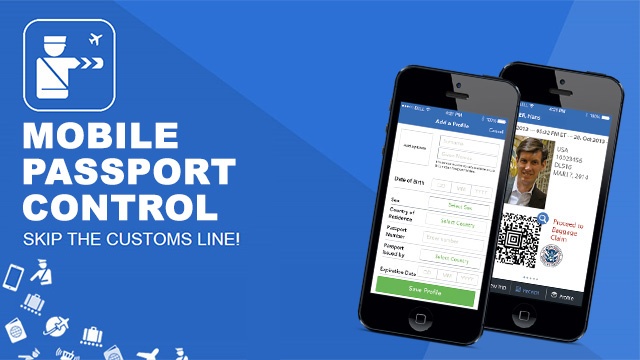
mobile-passport-control-app-by-cbpU.S. Customs and Border Protection (CBP) today announced the launch of the first authorized app to expedite a traveler’s entry process into the United States. Mobile Passport Control (MPC) will allow eligible travelers to submit their passport information and customs declaration form via a smartphone or tablet prior to CBP inspection. This first-of-its-kind app was developed by Airside Mobile and Airports Council International-North America (ACI-NA) in partnership with CBP as part of a pilot program at the Hartsfield-Jackson Atlanta International Airport. IPhone and iPad users can download the app for free from Apple’s App Store.

Eligible travelers arriving at Hartsfield-Jackson Atlanta International Airport will be able to use the app beginning Aug. 13. MPC is expected to expand to more airports later this year and to Android smartphone users in the future.

“CBP continues to transform the international arrivals experience for travelers by offering new and innovative ways to expedite entry into the United States, while maintaining the highest standards of security” said CBP Commissioner R. Gil Kerlikowske. “By offering this app to passengers, we hope to build upon the success we have already experienced with Automated Passport Control, which has resulted in decreases in wait times as much as 25-40 percent, even with continued growth in international arrivals.”

MPC currently offers U.S. citizens and Canadian visitors a more efficient and secure in-person inspection between the CBP officer and the traveler upon arrival in the United States. Much like Automated Passport Control, the app does not require pre-approval, is free-to-use and does not collect any new information on travelers. As a result, travelers will experience shorter wait times, less congestion and faster processing.

“Mobile Passport exemplifies the forward-thinking commitment CBP and airports have to improving the passenger experience when entering the United States,” said ACI-NA President and CEO Kevin M. Burke. “This partnership between CBP and ACI-NA also represents an outstanding example of industry and government working together to find smart, cost-effective solutions. We look forward to continuing our collaboration with CBP as Mobile Passport begins its roll-out at U.S. airports later this year.”

There are five easy steps to MPC:

  • Download the Mobile Passport Control App from the Apple App Store prior to arriving
  • Create a profile with your passport information
  • Complete the “New Trip” section upon arrival in the United States
  • Submit your customs declaration form through the app to receive an electronic receipt with an Encrypted Quick Response (QR) code. This receipt will expire four hours after being issued
  • Bring your passport and smartphone or tablet with your digital bar-coded receipt to a CBP officer

ACI-NA contracted with Airside Mobile in MPC’s technical development. Information about Mobile Passport, including how to download, user eligibility and other frequently asked questions, is available on the Travel section of the CBP.gov website and the Airside Mobile website.

MPC is just one part of CBP’s resource optimization strategy which is transforming the way CBP does business in land, air and sea environments. As part of its commitment to innovation, CBP last year rolled out Automated Passport Control, which is now available in 22 locations, and automated the I-94 form. CBP has also enrolled more than two million travelers in trusted traveler programs such as Global Entry, NEXUS and SENTRI. These programs allow CBP officers to process travelers safely and efficiently while enhancing security and reducing operational costs. Source: USCBP

U.S. and Kenya sign Customs Mutual Assistance Agreement

kenya-usa-flagThe U.S. signed a Customs Mutual Assistance Agreement (CMAA) with Kenya marking a significant milestone in collaboration on security and trade facilitation between the two countries. U.S. Customs and Border Protection (CBP) Deputy Commissioner (Acting) Kevin McAleenan signed the agreement on behalf of CBP and U.S. Immigration and Customs Enforcement (ICE) and Minister of the Treasury Henry Rotich signed the agreement on behalf of Kenya.

“Customs Mutual Assistance Agreements are valuable tools in the enforcement of our laws as they facilitate information sharing between international partners,” said Deputy Commissioner (Acting) Kevin McAleenan. “This agreement will expand our efforts to combat illicit cross-border activities and will enable us to continue our work to prevent, detect and investigate customs offenses.”

“Today’s signing represents the United States and Republic of Kenya’s joint commitment to elevate cooperation to safeguard our borders through the exchange of information and mutual assistance to combat customs law violations,” said ICE Principal Deputy Assistant Director Thomas S. Winkowski. “U.S. Immigration and Customs Enforcement, together with our partners at CBP, looks forward to future cooperative enforcement efforts with the Kenya Revenue Authority.”

The U.S. has now signed 71 CMAAs with other customs administrations across the world. CMAAs are bilateral agreements between countries and enforced by their respective customs administrations. They provide the legal framework for the exchange of information and evidence to assist countries in the enforcement of customs laws, including duty evasion, trafficking, proliferation, money laundering, and terrorism-related activities. CMAAs also serve as foundational documents for subsequent information sharing arrangements, including mutual recognition arrangements on authorized economic operator programs.

The U.S. – Kenya CMAA was signed at CBP headquarters as part of the U.S. – Africa Leadership Summit in Washington, D.C. The Summit included meetings between President Obama and 51 African heads of state. Source: GSN Magazine

Maputo Corridor “held ransom” by new RSA Immigration border crossing requirements

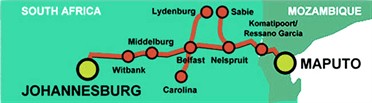
maputo_corridorSouth African authorities implemented legislation requiring all travellers from Mozambique to prove they hold enough funds to cover their visit, either by showing R3000 minimum or by providing a credit card with a bank statement, the Maputo Corridor Logistics Initiative (MCLI) said in a statement today. This led to considerable delays for freight, tourists, business and informal traders, which was worsened when a riot and blockade broke out at the Lebombo/Ressano Garcia border post.

Following the blockade the requirements were withdrawn, allowing traffic to pass through the border.

In their statement the MCLI declared they will directly contact the Minister of Home Affairs to settle the issue. “This requirement takes us back to the pre 2005 era where similar requirements were implemented”, the statement says, “and [it] is in direct conflict with the regional integration policy of SADC which expressly seeks to promote the ease of movement of people and goods through our borders.”

The statement calls the implementation for this legislation discriminatory towards informal traders who move through the border on a daily basis, and warns the long term impact on the region’s economy could be “dire”. Source: Club of Mozambique

New drug analyser to save New Zealand Customs time and money

New Zealand Customs Minister Nicky Wagner says the introduction of a new state of the art drug analyser will free up hundreds of hours a year for more enforcement work at the border.

The handheld device, a Thermo Scientific FirstDefender RM, shoots a laser beam into an unknown substance, accurately identifying it in a matter of seconds.  Customs purchased it with money recovered under the Proceeds of Crime (Recovery) Act.

“The device will drastically reduce the number of substances that have to be sent away for expensive testing, with savings expected to pay for it in less than six months.

“Its effectiveness will allow Customs officers to spend at least 520 more hours each year on frontline border work because they can make decisions quickly on what investigative action, if any, is required.

In addition to the drug analyser, Customs is building a laboratory in Auckland to test unidentified chemical samples.

“The enhanced capability will help to achieve outcomes sought in the government’s Methamphetamine Action Plan and allow Customs to identify an increasing number of new psychoactive substances stopped at the border,” Ms Wagner says.

More than 11,000 substances can be identified almost instantly by the FirstDefender analyser.  It can penetrate through certain types of packaging, so opening a packet or bottle may not be necessary, which also means a safer working environment for officers. Source: New Zealand Customs (contributed by Mogen Reddy)

Mexico – Recognising WCO Policies and Standards in the wake of Organised Crime

Port of Lazaro Cardenas Mexico [www.puertolazarocardenas.com.mx]

Port of Lazaro Cardenas Mexico [www.puertolazarocardenas.com.mx]

At the beginning of May the Mexican authorities detained the 73,700 dwt Jian Hua with this following on from the earlier seizure of 119,000 tonnes of iron ore in storage at the port.

At the end of April the Mayor of Lazaro Cardenas was arrested and accused of kidnapping, extortion and links to organised crime and in November last year federal troops took over the security and customs functions at the port of Lazaro Cardenas and remain in charge today.

The main aim of these measures is to eradicate the influence of the violent criminal organisation the Knights Templar, whose base of operations is the south western state of Michoacan where the port of Lazaro Cardenas is located.

Knights Templar, through the corruption of customs and other officials, has been using the port of Lazaro Cardenas for the extensive import and export of illegal drugs. The iron cargoes are one of many ‘business diversifications’ by the cartel but as the Jian Hua shipment proves are illegal in that the documentation associated with this cargo showed production at a mine that is not yet authorised for legal operation.

For years the state of Michoacan has basically been lawless and the area around the port of Lazaro Cardenas has been a battleground between the various drug gangs with the Knights Templar being in ascendancy since 2010.

Since, however, the entry of federal agencies into the state, and notably the Mexican navy into the port of Lazaro Cardenas, the influence of Knights Templar has gone into severe decline. The cartel has basically lost control of its biggest business. They have also felt the wrath of a public uprising, the sharp end of which are armed vigilantes backed by federal forces.

The optimistic view is that the port of Lazaro Cardenas will become ‘clean’ again with the demise of Knights Templar and the arrangements it had with other drug cartels. The negative view is that another cartel will step into Knight Templar’s shoes and the port will again find itself under external control and home to illegal activities.

Short steps

The lesson here, as independent organisations such as Control Risks emphasise, is that it is a few relatively short steps before a major port gateway can be comprehensively penetrated by criminal organisations. The conditions that created an opening for Knights Templar are not unusual in Latin America in Control Risks’ view.

For these reasons, and many others associated with port efficiency, it is very important to have secure and professional agencies active in ports that are specialists in security and border management. It is also important to realise in this context that considerable assistance is available from external agencies such as the World Customs Organisation (WCO) to establish the proper controls and security checks. Further, that it is often only by the use of independent agencies or organisations that comprehensive experience and know-how can be deployed to achieve this – the arms’ length approach which can circumvent internal corruption.

If corrupt elements are in place there will inevitably be resistance to change but an external agency forcing the pace of change, based on global experience, will play a major part in overcoming such elements.

Taking the WCO as an example, among other things it functions as a forum for dialogue and exchange of experiences between national Customs delegates. The WCO offers its members a range of conventions and other international instruments, as well as technical assistance and training services provided either directly by the secretariat, or with its participation. The secretariat also actively supports its members in their endeavours to modernise and build capacity within their respective national Customs administrations.

The WCO’s efforts to combat fraudulent activities are also recognised internationally. The partnership approach championed by the WCO is one of the keys to building bridges between Customs administrations and all the stakeholders in the transport chain. Source: Port Strategy

Mauritius orders military hardware for Customs, Police and Coast Guard

The Mauritius Coast Guard flagship MCGS Vigilant [www.defenceweb.co.za]

The Mauritius Coast Guard flagship MCGS Vigilant [www.defenceweb.co.za]

The island nation of Mauritius has ordered a 50 metre fast patrol vessel from India, as well as machineguns, ammunition, body armour and interceptor boats in a major re-equipment drive.

The government of Mauritius said the order for the $20.5 million fast patrol vessel for the Mauritius Police Force/Coast Guard was signed on May 7 in Port Louis by the Senior Chief Executive of the Prime Minister’s Office and the Chairman and Managing Director of Goa Shipyard Ltd, Shekhar Mital.

The fast patrol vessel will be 50.44 metres long with a speed of 35 knots. It will be used for defence and protection work, surveys, pollution control, coastal patrol, anti-smuggling, anti-poaching, search and rescue, fisheries protection and monitoring of foreign chartered trawlers, amongst other duties. On the same occasion, an addendum valued at $1.4 million was also signed for arms, ammunitions, bullet proof jackets and helmets and medium/heavy machine guns for 10 Interceptor boats.

The contract for the design, construction and delivery of these ten boats was signed on April 9 this year and is worth $6 million. The 14.5 metre long boats will have a cruising speed of 20 knots and a top speed of 35 knots. Furthermore, another contract for the design, construction and delivery of one additional interceptor boat for the Mauritius Revenue Authority (MRA), at a cost of $600 000, was also signed on May 7. This boat will be used by the MRA to carry out harbour/anchorage and coastal patrols. Source: www.defenceweb.co.za

More Border Patrol Gadgets – ‘R-Bat’ unmanned helicopter

Northrop Grumman and Yamaha Motor Corporation, USA, are teaming up to develop a small, unmanned autonomous helicopter system. The Rotary-Bat (R-Bat) is aimed at a range of applications in both urban and rural areas, including search and rescue, power line inspection, border patrol and forest fire observation.

Although Yamaha might be better known for outboard motors and ground-based transportation of the two-wheeled variety, it has been producing remotely-piloted unmanned helicopters for over 25 years. Its RMAX unmanned helicopters have been dusting Japanese crops for over 20 years and have recently been studied for potential use in US agriculture.

It is Yamaha’s RMAX platform that the R-Bat helicopter will be based upon, while Northrop Grumman will supply the aircraft’s autonomous control systems and sensors. Its name signals that it will join the ranks of Northrop Grumman’s existing line of Bat unmanned aircraft systems (UAS) that are used for tactical intelligence, surveillance and reconnaissance applications.

Neither company has released technical details of the R-Bat, but being based on the RMAX it should follow that vehicle’s measurements of 2,750 mm (9 ft) long (3,630 mm (11.9 ft) with the rotor), 730 mm (2.4 ft) wide and 1,080 mm (3.5 ft) high.

A test flight of the R-Bat unmanned helicopter system can be seen in the following video. Source: Northrop Grumman