WCO Regional Workshop on Coordinated Border Management, Single Window and the Data Model

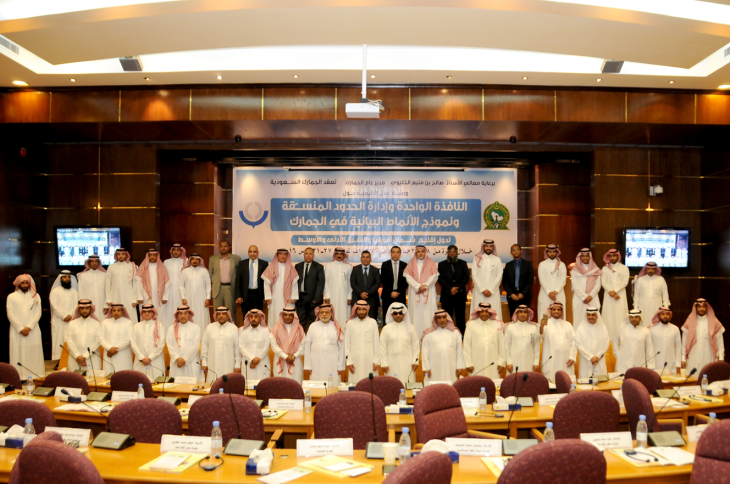
Wco CBM & Single Window WorkshopThe World Customs Organization (WCO), with the financial support of the Customs Administration of Saudi Arabia, successfully held a Regional Workshop on Coordinated Border Management (CBM), Single Window and the WCO Data Model in Riyadh, Saudi Arabia from 27 to 31 March 2016. Thirty seven middle management officials of the Customs Administrations from the MENA Region, namely Saudi Arabia, Egypt, Lebanon, Jordan, Morocco, Tunisia, Sudan, Bahrain and the United Arab Emirates participated in the Workshop. In addition, twelve officials of Customs’ Partner Agencies and two representatives from the private sector attended the event.

Mr. Abdulah AlMogehem, the Deputy Director General of the Customs Administration of Saudi Arabia in his opening remarks highlighted the importance of Single Window development by governments to simplify cross-border trade regulatory procedures which will reduce inefficiency and redundancy of border management processes.

The event highlighted the importance of CBM principles as the basis for the development of a Single Window Environment to enable coordination and cooperation between all relevant government agencies involved in border management. The Workshop also focused on the importance of strategic planning and formal governance structures in establishing a Single Window Environment. SA Revenue Service’s Intikhab Shaik incidentally facilitated the session and discussion on Single Window.

Other important topics included Business Process Re-engineering as well as Data Harmonization, using the WCO Data Model as the inter-operability framework to lay the foundation for CBM and Single Window. Source: WCO

Australia seizes $900m of liquid meth hidden in bra inserts

Aus-drug-bustAustralian law enforcement agencies have seized methylamphetamine worth AUS$1.26bn in the country’s largest-ever haul of the illicit drug in its liquid form, officials said Monday.

Four Hong Kong passport holders were arrested in Sydney last month over the import from China of 720 liters of the drug hidden in boxes of silicon bra inserts and art supplies, police said in a statement

The liquid could have made about 500kg of high-grade crystal meth, commonly known in Australia as ice, Australian Federal Police Commander Chris Sheehan said.

Officials also seized 2kg of the crystalized form of the drug.

Justice Minister Michael Keenan said the operation used information gathered through new cooperation between Australian Federal Police and China’s National Narcotics Control Commission. The Australian and Chinese agencies established a joint task force in November to investigate criminal syndicates trafficking methamphetamine.

“This largest seizure of liquid methylamphetamine to date is the result of organized criminals targeting the lucrative Australian ice market from offshore,” Keenan told reporters.

The four will appear in a Sydney court next month charged with importing and manufacturing commercial quantities of illegal drugs. Each suspect faces a potential life sentence if convicted.

Keenan said the seizure was one the largest hauls of illicit drugs in Australian history. Source: Perth News

SA Customs lends Detector Dog support to Mozambique

The SARS Customs Detector Dog Unit (DDU) recently deployed two trained detector dog handlers and dogs on foreign soil in Maputo, Mozambique. This forms part of a Customs co-operation agreement between the governments of South Africa and Mozambique.

The capacity-building programme provides for the training of at least eight detector dog handlers and dogs for Mozambique in over a period of 14 weeks followed by a ‘Train-the-Trainer’ programme for purposes of sustainability.

The deployment of SARS Detector Dog Handlers and dogs trained to interdict endangered species and narcotics in Maputo will promote and strengthen a  cross-border intergovernmental approach in the prevention and detection of smuggling of illicit, illegal goods or substances via ports of entry between Mozambique and South Africa.

The programme is designed to capacitate Mozambique Customs in the establishment of its own canine unit that will further enhance its current non-intrusive scanning enforcement capability at ports of entry and exit. Source and pictures: SARS

Authorities discover Sophisticated ‘Super’ Drug Tunnel between California and Mexico

Authorities on both sides of the US-Mexico border have shut the 10th drug-smuggling tunnel to San Diego in more than a decade, a passageway Mexican authorities on Thursday attributed to the cartel of fugitive kingpin Joaquin “El Chapo” Guzman.

A sophisticated, super tunnel was discovered by federal officials Wednesday night near San Diego, leading to the arrest of 22 people and confiscation of 12 tons of marijuana estimated at $6 million.

The tunnel, originating from the Mexican border city of Tijuana, is about eight football fields in length, with the last quarter-mile crossing US territory before ending beneath a carpet warehouse in the busy Otay Mesa industrial district of San Diego, US and Mexican officials said.

The tunnel was uncovered through intelligence gathered by US federal agents who infiltrated a Mexican drug-smuggling ring during the past six months, according to Laura Duffy, the US Attorney in San Diego.

It marked the 10th subterranean passageway from Mexico to Otay Mesa discovered since 2002. Like those and dozens of others found along the nearly 3 200km border in the last decade, the latest tunnel was equipped with lighting, ventilation and a rail system for moving goods, authorities said.

Two Mexican government security officials, speaking on condition of anonymity, told Reuters the latest passage belonged to the Guzman-led Sinaloa drug cartel.

Duffy said US officials were less certain that Sinaloa was behind the new tunnel, based on the comparatively unfinished, dangerous nature of the tunnel shaft on the US side.

“We usually see ladders going down and staircases,” she said.

“This particular tunnel drops 32 to 35 feet straight down.”

Duffy said US federal agents moved to seize control of the tunnel on its north end on Wednesday after a shipment of 2 tons of marijuana arrived there, and six men were arrested, two of whom were to be arraigned on federal drug-smuggling charges on Thursday.

Mexican agents seized 10 tons of marijuana awaiting shipment through the passage at the Tijuana side, and authorities expect to find more contraband when a thorough search of the tunnel is made, Duffy said.

Guzman, the world’s most wanted drug trafficker, escaped in July from a Mexican maximum-security prison through a mile-long tunnel that surfaced right inside his cell.

His escape sparked a massive manhunt, and Mexico’s government said on Friday that Guzman had suffered injuries to his face and leg after recently beating a hasty retreat from security forces. Source: IOL

Border Management Agency (BMA) Bill introduced into Parliment

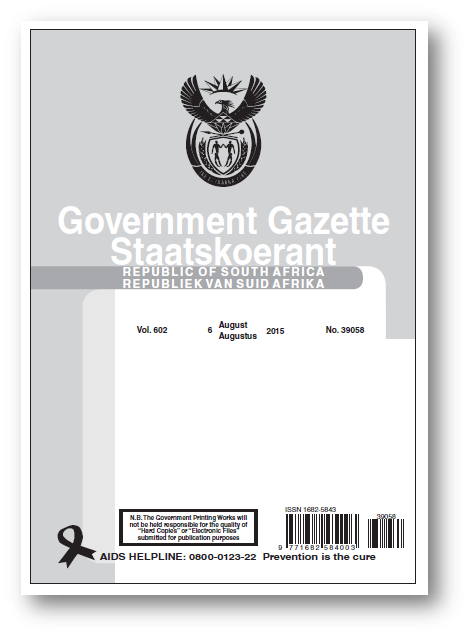
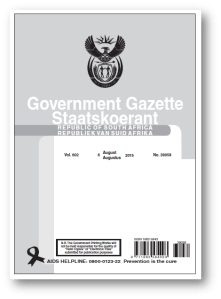
The BMA Bill No.39058Cabinet [has] approved the introduction of the Border Management Agency (BMA) Bill, 2015 into Parliament. The Bill aims to establish the BMA, which will balance secure cross-border travel, trade facilitation and national security imperatives within the context of South Africa’s regional, African and international obligations. This single authority for border law enforcement provides the potential for more cost-effective services, enhanced security and better management of the border environment. Source: Statement on the Cabinet meeting of 23 September 2015 (SA Government)

Kenya – Drugs Found on Auto Carrier in Port of Mombasa

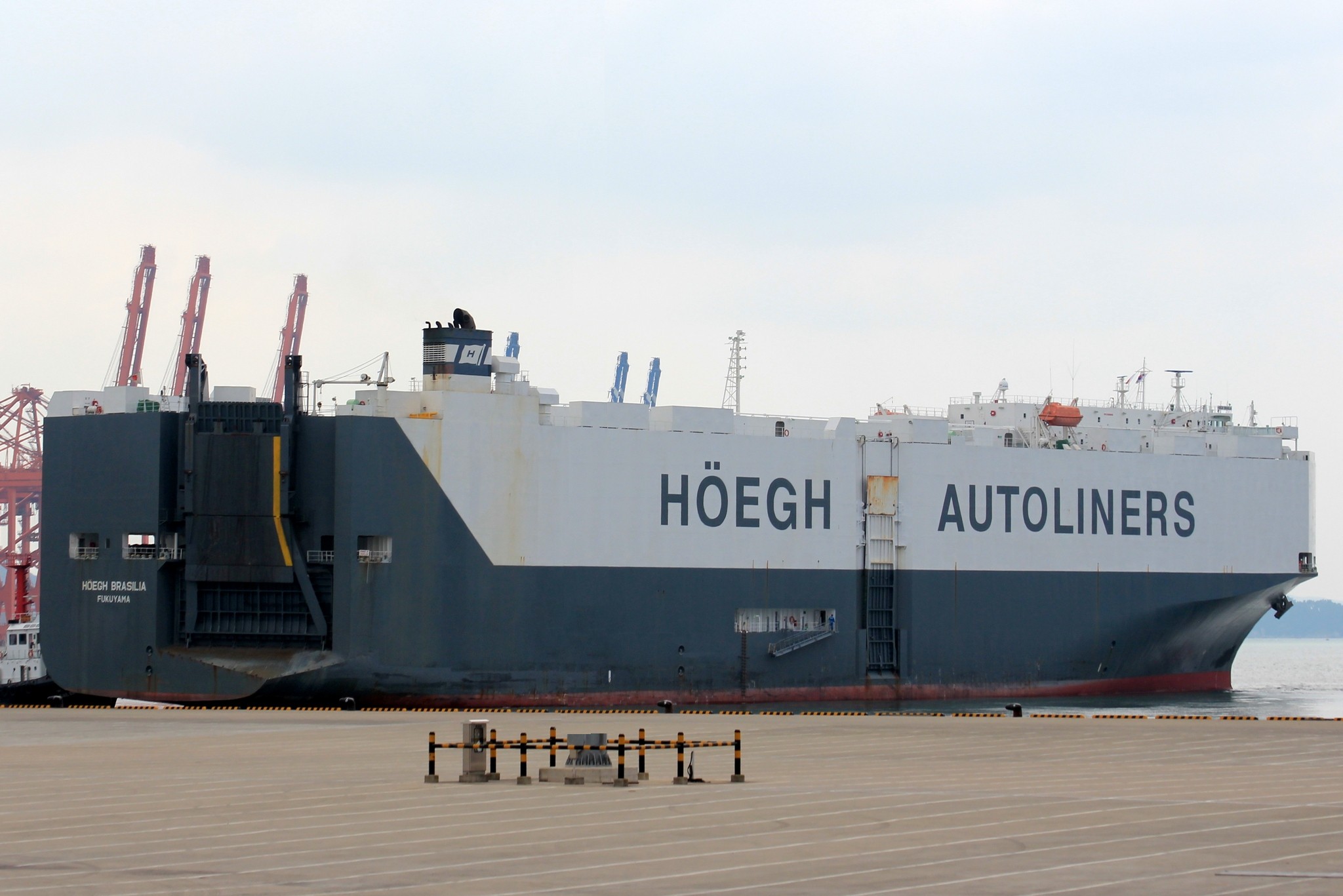
hoeghKenyan and U.S. authorities found drugs aboard the Höegh Autoliners “Pure Car/Truck Carrier” (PCTC), which was detained at Port Mombasa on September 17. The crew of the ship has been arrested and currently being questioned by authorities.

According to authorities, cocaine was found inside the tires of three military trucks aboard the Hoegh Transporter, a Singapore-flagged car carrier.

Kenyan officials raided the vessel after receiving a tip from the U.S. Federal Bureau of Investigation (FBI) that the vessel had been loaded with the coke at India’s Port of Mumbai.

Kenyan soldiers and security personnel shut down the port for hours before seizing the ship and halting operations. Mombasa, which is Africa’s largest port, serves as the main gateway for imports and exports in the region.

East Africa is a major shipping route for Afghan narcotics bound for Europe. Maritime forces have been unable to curb the flow of drug transport in the region.

The Höegh Transporter was built in 1999 and was transporting nearly 4,000 vehicles, including about 250, which are to be used for peacekeeping missions in South Sudan. Source: Maritime Executive

SARS R78 million Airport Cash Bust

Johannesburg – They [smugglers] had cash stashed in 11 pieces of luggage including four backpacks – R78 million destined for the United Arab Emirates.

But eagle-eyed customs officials at OR Tambo International Airport were on to them and confiscated the bags with R23m and $3.775m in notes.

On the same day, R50m worth of cocaine stashed in hair product bottles was seized at the same airport, in one of the biggest crime-busting days at OR Tambo.

On Monday, SA Revenue Service (Sars) officials said five people had been arrested after being caught with the undeclared cash as they were about to leave South Africa.

“Risk profiling earlier by Sars custom officials identified the passengers, and led to their apprehension as they boarded the aircraft at 9.45pm.

“Upon noticing the officials, the passengers retreated and headed back to the entrance of the boarding gate. At this point, officials closed the boarding gate door and the passengers were compelled to wait for the Sars officials,” Sars said.

When asked whether they had any currency, one of the passengers apparently said he had R100 000 and that the other members of the group had currency with them.

“The five individuals were escorted back to immigration at international arrivals, booked back into South Africa and escorted to customs.”

Sars spokesperson Luther Lebelo said the bags with the cash had been handed over to the SA Reserve Bank.

“The matter has been handed over to the SA Reserve Bank for further investigations. Once the bank is satisfied that there is an element of criminality, they can take the matter to the police,” he said.

The arrests on Friday – details of which were released on Tuesday – followed a R50m drug bust at the airport. National police spokesman Brigadier Vishnu Naidoo said the consignment of cocaine, weighing about 143kg, was one of the largest drug recoveries at a South African port of entry.

“The drugs were hidden in 147 hair products bottles and were found during a routine inspection at the cargo section. The consignment arrived from Brazil, and information displayed on the cargo indicated it was in transit to Cotonou, Benin, in West Africa,” he said.

Other drug busts at OR Tambo over the past month include:

  • The confiscation of 60 000 Viagra tablets with a street value of R6m at the airport’s mailing centre.
  • Cocaine weighing 3.46kg and valued at R993 020, found in the backpack of a passenger in transit from Sao Paulo and headed for Lagos, Nigeria.
  • Sixty-five packages of crystal meth valued at R4.2m, confiscated while being loaded into a bakkie in the cargo area.
  • Heroin valued at R201 810 destined for Spain and Ireland, discovered along with 2kg of cannabis at the airport’s mailing centre.

Source: The Star

US Customs seizes fake Gucci and Louis Vuitton handbags

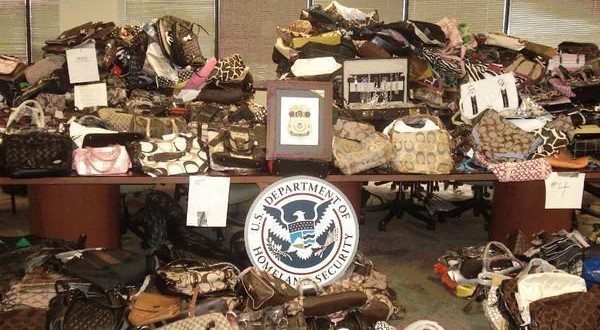
USCP Counterfeit stuffThousands of counterfeit designer handbags have been uncovered by federal officers in a shipping container at Miami’s seaport.

Customs and Border Protection officials say a recent review confirmed there were 1,200 fake Gucci handbags and 1,195 Louis Vuitton handbags in the container. The bags were initially seized Aug. 19 in a shipment from China.

Authorities say the handbags are worth more than $1 million if sold as legitimate.

Investigators began examining cartons containing the handbags after noting that they were not declared on any import documents. The shipment included 825 other cartons of clothes, shoes and similar apparel.

Last year CBP seized more than 23,000 counterfeit items nationally worth about $1.2 billion.

CBP Launches “Know the Facts” Awareness Campaign

Know the FactsU.S. Customs and Border Protection Commissioner R. Gil Kerlikowske formally rolled out the “Know the Facts” campaign today. The campaign, launched on July 20 in Mexico, El Salvador, Guatemala, and Honduras, encourages those considering attempts to illegally enter the U.S., to “Know the Facts” and avoid embarking on the dangerous trek north only to be returned to their country.

“This campaign is designed to educate would-be travelers in Central America and Mexico about the realities of the journey north human smugglers have no regard for human life,” said CBP Commissioner R. Gil Kerlikowske. “It is critical that they are aware of the facts behind U.S. immigration policies before risking their lives. There are no ‘permisos.’”

The campaign is designed to increase awareness of U.S. immigration policies and enhanced enforcement on the U.S. border, clearly and simply stating the facts behind U.S. immigration policies. Source: USCBP

The BMA Bill – a little more for stakeholders to ponder over

The BMA Bill No.39058In recent months ‘Joe Public’ has witnessed developments relating to new visa requirements regarding international travel to and from South Africa. Tourism and the hospitality industry have been impacted in no small way while government has now established a committee to investigate the claims to the effect that the country’s tourism industry has been severely impacted.

It is now commercial trade’s time to consider the next set of legal requirements emanating from the Department of Home Affairs which, in the main, affect legislation under other departments and organ’s of state – in particular SARS Customs. Interested parties can find/download the document by clicking the link http://www.gpwonline.co.za/ and searching for eGazette No.39058.

In essence function of the Border Management Agency (BMA) Bill is – To provide for the establishment, organisation, regulation and control of the Border Management Agency; to provide for the transfer, assignment, and designation of law enforcement border related functions to the Border Management Agency; and to provide for matters connected thereto.

Be sure to digest the content of the Schedules to the Bill which contain the extent of the ‘meat’ and authority which the proposed Border Management Agency will exert if, or once approved. The Department of Home Affairs (DHA) invites comments to the draft Bill which must reach DHA no later than 14 September 2015.

French Customs seizes un-exportable Picasso’s art work worth €25m

Picasso, Head of a Young WomanA painting by Pablo Picasso estimated at more than €25 million (CHF26.5 million) and considered “unexportable” by the Spanish authorities has been seized by French customs officials on a boat moored in the French island of Corsica.

“An attempt to export to Switzerland a picture by Picasso, Head of a Young Woman, through the customs office of Bastia [a town in Corsica] last Thursday attracted the attention of French officials,” customs agents said in a statement to French news agency AFP on Tuesday.

On Friday, customs officials from the Corsican town of Calvi “boarded the ship which was moored in the marina at Calvi and demanded the documents relating to the painting which it was transporting”. According to the statement, the captain was able to produce only one document assessing the painting plus a ruling, in Spanish, from May 2015 made by the Audienca Nacional, a Spanish high court which has jurisdiction over all Spanish territory and international crimes which come under the competence of Spanish courts. This ruling confirmed that the painting was a Spanish national treasure which could never leave Spain. Source: CustomsToday

New life for Legacy Software as NZ Customs Border Project falters

Customs 175 Years Seal

Customs 175 Years Seal

A new NZ$140 million border management system was supposed to replace and retire twenty year old software but New Zealand’s Customs Service is now describing the legacy CusMod system as “suitable for continued use” after server and software upgrades.

In a hearing on Budget estimates before Parliament’s Foreign Affairs, Defence and Trade committee, Customs was unable to set a date for retirement of the old system even after having spent NZ$104 million so far on its replacement.

In 2007, Customs said there was a significant risk CusMod couldn’t continue to respond to changes in global trade and travel, continue to manage emerging risks such as international crime or meet revenue collection objectives.

Eight years later, the agency is told Parliament “very large” amounts of information are still stored in CusMod, it is still considered an important tool and will be retained “for the time being”.

The hearing also revealed the planned second tranche of the Joint Border Management System (JBMS) project, focusing on risk and intelligence, will not proceed as planned and is being replaced with modular implementations with no specified delivery date.

Customs also explained that “legal discussions” were required to manage the agency’s relationship with vendor IBM and to recast the original JBMS contract.

The first tranche of the JBMS started life with a budget of just NZ$75.9 million and was to be completed by the end of 2012, but Customs Minister Nicky Wagner is denying suggestions of a budget blowout.

Wagner said the project was within budget, and additional funding was not expected to be sought.

“The minister commented that the combined cost for tranche one and two was originally planned to total NZ$140 million, and NZ$104 million has been expended so far,” the committee’s report says.

Customs assured the committee the completed JBMS would meet the aspirations of functionality set out in 2011. The project is expected to be completed by 2015/16. Source: ZDnet.com

Customs Non-Intrusive Inspection affects trade costs

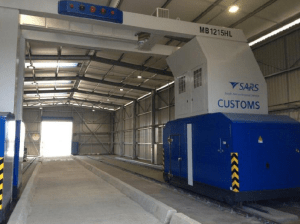
DBN Relocatable ScannerThe following article suggests the need for greater consultation and collaboration between all supply chain parties. While the associated costs relating to supply chain movements is not the purview of SARS, these should be considered as part of the overall impact assessment in the lead up to such an implementation. For all intents and purposes this is an unintended consequence. Stakeholders should also note that the SA government has not imposed any fee for the scanning of cargoes to re-coup costs. Non-intrusive inspection (NII) capability is a tenet of international customs control intended to mitigate security threats and incidents of cargo misdeclaration, even legitimate cargo that can be used to mask harmful products stowed in vehicles/containers. The issue of increased cost of compliance has unfortunately been a trait of many international customs developments ever since the advent of ‘heightened security’ – post 9/11 and seems destined to remain a ‘challenge’ as we supposedly move into an era of increased trade facilitation.Joint collaboration between all parties not only assists in better understanding of the broader supply chain landscape but can also contribute to positive measures on the ‘ease of doing business’.

Freight & Trade Weekly (issue no. 2158, 10 July 2015) reports that Industry has called on customs to look into processes around its cargo scanners which they say are currently driving up costs.

Two state-of-the art scanners are currently operational at the Port of Durban and Cape Town and are part of South African Revenue Service’s (Sars) countrywide approach to risk management that aims for less intrusive inspections at ports and border entries.

The scanners were introduced in order to improve efficiency, with stopped containers being released more speedily than has been the case to date.

“It has however in some cases increased costs because it has resulted in double handling of containers,” said Dave Watts, a maritime consultant for the SA Association of Freight Forwarders (Saaff).

Before the introduction of the scanners all stopped containers were moved by shipping lines to licensed depots for examination by Sars. Once the inspection was concluded and the container released the importer or his agent could collect it using their own transport.

The new process however sees the stopped container transported by the shipping line to the scanner where it is either released or has to be moved for a physical inspection to a depot.

If released at the scanner the container is however still on the shipping line’s appointed truck and not that of the importer or its agent’s nominated haulier.

There are no facilities to move it from one truck to the other at the scanners which means carrier haulage moves it to a depot anyway.

“The extra cost comes in simply because of the double handling,” explained Watts.

In Durban, where the new technology scanner was introduced just over a year ago, several importers maintain it is cheaper to just have their stopped containers taken to the depot for unpacks rather than going through the scanner and not unpacking.

According to Mike Walwyn, chairman of the Port Liaison Forum, the issue of carrier choice also comes into play as the importer now has to use carrier haulage for delivery as opposed to his or her own transport.

Whilst the Cape Town scanner has only been operational for a week, some very real challenges are foreseen and increased cost is one of them.

“The issue is not necessarily around the scanner,” says Watts, “but the rules and regulations around the customs act that stipulates all containers remain the liability of the shipping line until released by customs. In other words it has to be taken to the scanner by the carrier.”

It has been suggested that instead of doubling the handling of containers the carrier should just make the final delivery of the container, but it is generally accepted that carrier cartage rates are much higher than contracted cartage rates. In some cases the cost is said to be four times higher.” Source: FTW

BMA – This one is not implementable!

[Picture Credit: John Moore - Getty Images]

Border between South Africa and Zimbabwe [Picture Credit: John Moore – Getty Images]

The SA government is forging ahead with plans for a border management agency to handle all aspects of border control, from security to customs and plant and animal inspection – but MPs have said it can’t be done.

Home Affairs Minister Malusi Gigaba and his defence counterpart Nosiviwe Mapisa-Nqakula launched Operation Pyramid – a transitional arrangement to improve interdepartmental co-ordination – on Friday, while a draft bill to create the legal framework for the agency was tabled at a workshop in Pretoria earlier in the week.

But there are serious concerns about the ability of one entity to manage the diverse requirements of border control, which would require a huge single body that may prove unwieldy, while it would also need to assume some of the functions of the police and defence force. This would put it in conflict with the constitution, which provides for a single police service and defence force.

Section 199.2 of the constitution states the defence force is the “only lawful military force in the Republic”. Establishing a border management agency performing security functions in parallel with the police and SANDF would thus require a constitutional amendment, but this is just one among many challenges.

The need for such an agency arose in the first place because numerous national intelligence estimates had said the lack of co-ordination in the border environment resulted in “significant weaknesses, threats and challenges”.

Briefing Parliament’s police oversight committee this week, Brigadier David Chilembe, head of border policing, outlined steps that had been taken to get the agency off the ground, six years after President Jacob Zuma ordered it to be done.

The Department of Home Affairs, the lead agent in the project, had established a project office to oversee implementation, heads of affected departments had signed a multiparty agreement and sat on a committee together to co-ordinate their efforts, while an interministerial committee ironed out the policy questions.

The Government Technical Advisory Centre in the Treasury was working on the business case for the agency, Chilembe said.
The plan was to set up the agency in stages and identify the legal and operational implications at each stage so they could be addressed.

But a follow-up briefing on concerns raised by MPs after an oversight visit to the Lebombo border post near Komatipoort in Mpumalanga opened a window into the difficulties the agency will face.

The committee wrote a damning report on the Lebombo border post after a visit earlier this year, when MPs found the ceiling was collapsing because air-conditioning ducts dripped on to it, the door was shattered and the gate jammed, meaning it was possible to drive or walk through it without stopping.

Police complained they had to stand unprotected in the sun or rain and had to make their own travel arrangements from town.
Lieutenant-General Kehla Sithole said the problems originated in a 1998 agreement between Mozambique and South Africa for the post to be established as a “one-stop” facility, with officials sitting back-to-back under one roof.

Mozambique later said it had expected South Africa to pay for its construction, but the Treasury balked at this.The resulting limbo meant new facilities could not be built and neither could the existing ones be refurbished because the Public Works Department refused to upgrade buildings earmarked for demolition.

There were perceptions that the SA Revenue Service, which was the lead agency in the Border Control Operational Co-ordinating Committee – the body charged with harmonising the environment since 2001 – looked after its own interests first, leaving the SAPS short-changed in accommodation and office space.

MPs were shocked to hear an 80-room residential complex for SAPS personnel stood empty because police were expected to pay for it themselves but, unlike SARS officials, did not receive an accommodation allowance. As a result, they preferred to rent a shack in town and travel to the border post daily.

There was also no scanner at the border post, meaning truck cargos, for instance, could only be inspected manually. Opposition DA spokeswoman on police Dianne Kohler Barnard said this almost certainly meant the majority of vehicles went through the post unchecked, meaning it could easily be used for child trafficking, for example.

Sithole said the lack of a scanner was the result of a Treasury instruction for departments represented at the post to make a joint proposal for one to be procured, instead of each asking for their own – at a cost of millions a unit.

A “scanner committee” had been established in the late 1990s but, because one was provided for in the plans for the one-stop concept, it had yet to be bought.

Committee chairman Francois Beukman said MPs weren’t interested in the history of the problem, but rather in what would be done to get a scanner in place.

ANC MP Jerome Maake, supported by Leonard Ramatlakane, said after the presentation it was clear the border management agency couldn’t work. If it was established as a government department – one of three options on the table – this would create a “super department” that would reach into the functions of the others. This would confuse lines of accountability.

If it was established as a government component under an executive authority, or as a public entity, the other two options, it would run into the constitutional challenges related to the police and defence functions.

“All I see here is problems and I don’t see how they can be solved,” Maake said.

“Maybe you’re just afraid of telling the president, this animal can’t be implemented and you’re moving around it, on the periphery, afraid to just say, no – can we come up with something new?

“This one is not implementable.”

Source: Independant On Line (IOL)
SA Man uses cats as cover to smuggle £1.2m drugs at Heathrow Airport

A man who used pet cats as a cover to smuggle drugs valued at £1.2m into the country through Heathrow Airport has been jailed. A London-born dual national, Scott Parker, living in Benoni, Gauteng in South Africa, was handed a seven-and-a-half year prison sentence for smuggling heroin, when he appeared at Isleworth Crown Court on June 18, according to the National Crime Agency (NCA).

The 43-year-old, who worked for a company which transports animals, pleaded guilty to attempting to import a class A drug, the NCA added.

He was arrested by the NCA on November 21 last year, at the Heathrow Animal Reception Centre, after staff alerted the Border Force of a crate used to transport animals from Johannesburg which was unusually heavy when empty.

Officers examined the crates and found compartments containing packages of the class A drug in the base, the NCA said. Forensic tests showed the packages consisted of around 9k of high purity heroin, which if cut and sold in the UK would have a street vale of around £1.2m.

The cats were reunited with their owners, who were completely unaware their animals had been used as a front for smuggling.
Ian Truby, from the NCA’s Border Investigation Team at Heathrow, said: “This was a highly unusual attempt to bring a substantial quantity of class A drugs into the UK.

“Parker thought he would avoid our attention. But the Heathrow Animal Reception Centre staff were vigilant and our investigation showed that he knew the drugs were there. Source: Customs Today