Transit – Addressing the plight of Landlocked Countries

AmatiThirty-one countries belong currently to the Group of Landlocked Developing Countries: 15 are located in Africa, 12 in Asia, 2 in Latin America and 2 in Central and Eastern Europe. The lack of territorial access to the sea poses persistent challenges to growth and development of these countries and has been the main factor hindering their ability to better integrate in the global trading system. The transit of export and import goods through the territory of at least one neighboring State and the frequent change of mode of transport result in high transaction costs and reduced international competitiveness.

For more details on LLDCs visit – Landlocked Developing Countries (LLDCs)

The 2003 Almaty Programme of Action highlighted the link between the ability of LLDCs to harness their trade potential and the state of the transport infrastructure and the efficiency of trade facilitation measures in neighboring transit countries and called for international support in favor of LLDCs. The United Nations General Assembly in its resolution 66/214 of 22 December 2011 and resolution 67/222 of 3 April 2013 decided to hold a Comprehensive Ten-Year Review Conference of the Almaty Programme of Action in 2014 with a view to formulating and adopting a renewed development partnership framework for LLDCs for the next decade.

It is expected that the ten-year review will provide an opportunity for: (i) assessing progress made in establishing efficient transit transport systems in landlocked developing countries since the adoption of APoA in August 2003, and particularly after the midterm review of 2008; and (ii) agreeing on actions needed to sustain achievements and address challenges in overcoming the special problems of landlocked developing countries around the world.

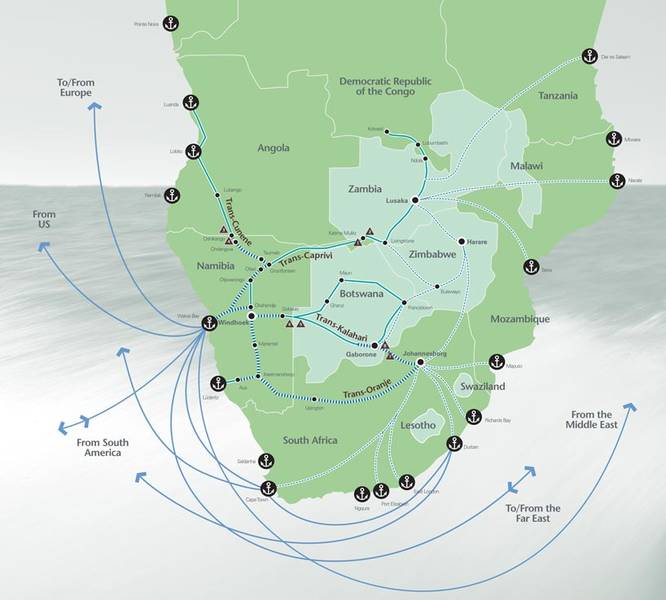
It would appear that this programme very much supports the creation of inland ports connected to the seaports by means of secure and bonded facilities – within the ambit international law, i.e. WTO (Trade Facilitation Agreement) and the WCO (Revised Kyoto Convention). The question arises as to whether an inland port located in Botswana, Zimbabwe or any adjoining country be able to demand such rights where a ‘corridor’ country or country providing international seaport access to LLDCs does not observe or accept international transit principles?

Related articles

Mugabe family linked to illicit SA cigarette trade

Pacific Blue_SnapseedRelatives of President Robert Mugabe are being linked to illegal tobacco smuggling networks suspected of bringing more than $48 million in contraband through South Africa’s borders, reports NewZimbabwe.com.

Harare-based Savanna Tobacco is owned by a prominent Zimbabwean businessman, Adam Molai, who is married to Sandra Mugabe, one of Mugabe’s nieces. Molai has previously worked with Sandra as co-director of the Zimbabwe Tobacco Growing Company. Savanna has allegedly moved tons of illegal tobacco into South Africa.

The company’s main brand, Pacific cigarettes, has been found in concealed consignments by police in South Africa and abroad, according to two private investigators who track tobacco busts and work for the industry to counter the trade in illicit tobacco. The products have been linked to a huge tobacco smuggling operation whose base in South Africa was shut down in 2010 by the South African Revenue Service (SARS), which is engaged in a crackdown on the country’s illegal tobacco markets.

Images taken at the scene of two busts in South Africa and one in Zimbabwe show the extent of the smuggling operation. SARS has refused to confirm or deny whether it is investigating Savanna, citing the confidentiality requirements of the Tax Administration Act.

The frequency of the busts, the methods used and the quantities of illegal Pacific cigarettes found have led sources close to the investigations to claim that Savanna has been centrally involved for at least four years. It also increases suspicions that Zimbabwe is using smuggling to keep its economy afloat. Mugabe has openly supported Savanna. A year ago, he accused rival British American Tobacco (BAT) of spying on Savanna and hijacking its trucks. “If this is what you are doing in order to kill competition and you do it in a bad way, somebody will answer for it,” Mugabe warned.

Boxes of cigarettes that can be made for as little as R1.50 are easy to slip into the local market to avoid the R13 tax a box. Whereas popular brands of cigarettes can retail at R35 a pack, illegal cigarettes sell for between R4 and R12 a pack. With margins approaching 1000%, the illicit trade has become one of the largest elements in organised crime in South Africa.

According to research commissioned by the Tobacco Institute of South Africa, which is predominantly funded by BAT, 9.5billion illegal cigarettes with a street value of about R4-billion were smoked locally last year.

Savanna has captured almost 10% of this market, according to the institute, with about 700 million of its illegal cigarettes smoked last year. Pacific’s illegal cigarettes are sold mostly on the streets of Cape Town.

In one of the biggest busts in October, 1.6million Pacific cigarettes were found hidden on a train in Plumtree. Pacific cigarettes have also been seized at the Beitbridge border post near Musina and in Boksburg, on the East Rand, during busts in November. Trucks were found carrying Pacific cigarettes in concealed compartments.

This month, a consignment of Pacific cigarettes was found hidden behind electronic goods on a truck in the Western Cape. Similar busts have been made in Mozambique and at a border post between Zambia and Namibia, according to private investigators.

Evidence from the Plumtree train bust showed that the smuggling route had its origin as Savanna’s factory in Zimbabwe and South Africa’s black market as its destination. In the Plumtree bust on October 12, Zimbabwean police confiscated 40 tons of illicit Pacific cigarettes that had come from Bulawayo. The train was said to be carrying gum poles.

Records reveal that between September 2012 and August 2013 at least 23 shipments with 44 wagons of “gum poles” had followed the same route. A number of these consignments appear to have arrived at the South African business PFC Integration. According to an investigator who has studied the operation, PFC is “not into the gum pole business at all”.


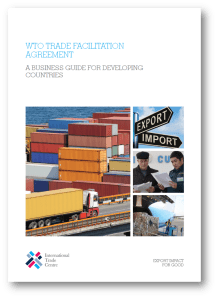
Business Guide for Developing Countries – WTO Trade Facilitation Agreement

Picture2The International Trade Centre has prepared a guide to help businesses take advantage of the WTO Trade Facilitation Agreement. The agreement simplifies customs procedures, allowing businesses to become more competitive. This jargon-free guide explains the provisions with a focus on what businesses need to know to take advantage of the agreement. It will also help policy makers identify their needs for technical assistance to implement and monitor it. To download the guide – click the following link: http://www.intracen.org/wto-trade-facilitation-agreement-business-guide-for-developing-countries/.

For instance, the guide explains how the article on ‘Advance rulings’ aims to address problems with inconsistent classification of goods by customs officials and the uncertainty it creates for traders. ‘Advance rulings are binding decisions by customs…on the classification and origin of the goods in preparation for importation or exportation. Advance rulings facilitate the declaration and consequently the release and clearance process, as the classification has already been determined in the advance ruling and is binding to all customs officers for a period of time,’ the guide explains. It goes on to list in jargon-free language the obligations and the procedure imposed on customs authorities related to advance rulings.

Reducing the on-the-spot decision making authority of individual customs agents thanks to advance rulings will also reduce bribery, the guide says. Corruption continues to be a key problem for developing-country exporters, who identified it as a major constraint on exports in a recent survey conducted by ITC.

The last chapter of the guide describes how the agreement will be implemented, including the special and differential treatment provisions that developing countries may invoke. Developing countries will be able to link the implementation of the commitments to technical assistance and support from donors. WTO member states will have to explicitly apply for delays for each commitment, which will need to be approved by the WTO and the implementation schedule published.

Source: International Trade Centre

WCO Capacity Building visit to the youngest country in the world

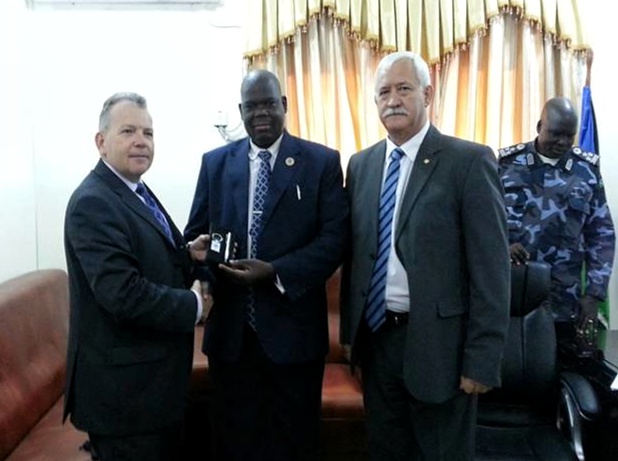
Capacity Building visit to South Sudan - SARS' representative Fanie Versveld (right).

Capacity Building visit to South Sudan – SARS’ representative Fanie Versveld (right).

End of November to beginning of December 2013, following a request from the then Customs Director-General, a small WCO expert team travelled to South Sudan to undertake a Phase 1 Diagnostic Mission under the auspices of the WCO Columbus Programme. The needs analysis was conducted by a colleague of the WCO Capacity Building Directorate along with an expert from the South African Revenue Service.

South Sudan gained its independence as recently as July 2011 and is still the youngest country in the world. Until recently it was also the newest Member country of the WCO.

It was during the course of the visit that the WCO team learnt that the Customs Director General had been replaced. A meeting was held with the new Director General and after outlining the work of the WCO and the purpose and benefit of its Capacity Building Programme it was agreed that the mission should proceed as planned.

The diagnostic team visited the Customs Headquarter in the capital city of Juba, Juba International Airport and Nimule Border Crossing Point on the border with Uganda. The team had the opportunity to meet and speak with a wide variety of motivated people from within the South Sudan Customs Service and also held informative discussions with a number of key stakeholders from the public sector, trade representatives and donor agencies.

The South Sudan Customs Service is just starting out on the road of Reform and Modernization. The diagnostic team made a series of recommendations that will help them in this regard but also identified some “quick win” activities that will assist them in building organisational confidence and commitment to the whole development process. The WCO looks forward to working with the South Sudan Customs Service again in the near future. Source: WCO


What Does the WCO think of the WTO Trade Facilitation Agreement?

The Dublin Resolution, which was issued at the conclusion of the Policy Commission meeting in Dublin, Ireland on 11 December 2013, welcomes the WTO Agreement On Trade Facilitation (the “Trade Facilitation Agreement”), as embodied in the Bali Package’s Ministerial Decision, adopted at the WTO’s Ninth Ministerial Conference in Bali, Indonesia from 3 to 7 December 2013, under the framework of the Doha Development Agenda.

The Dublin Resolution emphasises the commitment of the WCO to the efficient implementation of the Trade Facilitation Agreement.

The WCO Secretary General, Kunio Mikuriya, said that he was very pleased with the timely and affirmative action of Policy Commission, which reflects the determination to drive forward the global Customs trade facilitation agenda.

Posted by Simon Lester for http://worldtradelaw.typepad.com


What is the value of a slick customs service?

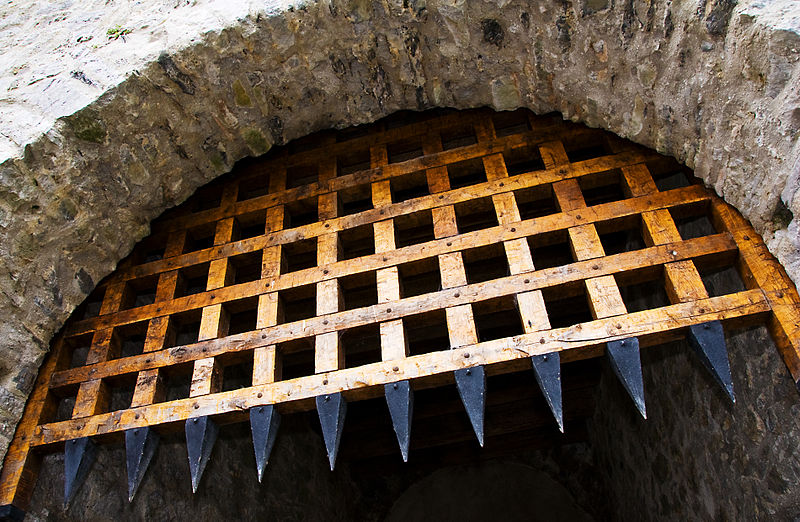
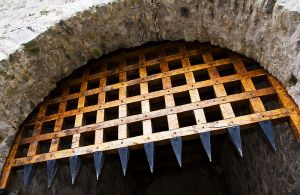
Cahir Castle Portcullis by Kevin King

Cahir Castle Portcullis by Kevin King

The traditional symbol of customs and borders services is the portcullis – the fortification through which a ship used to enter a port. But as developing countries are increasingly asked to recognise the benefits of liberalised trade to the detriment of their import duty revenue, how can they be helped to raise the portcullis? And is it really in their interests to do so?

With world trade growth expanding more than twice as rapidly as gross domestic product (GDP) over the past decade, says Steve Brady, director, Customs and Trade Facilitation for development consultancy Crown Agents, the potential rewards from participating in world trade are significant. “According to figures from WTO, in 2011 world merchandise exports and imports in real terms grew by over 5%. As a result, each reached over $1.8tn, the highest level in history.”

The major players working with developing country governments to help them benefit from this increase in trade include the World Bank, ICC, World Customs Organisation (WCO), IMF, UN Conference on Trade and Development (Unctad), development banks and specialist intermediaries such as Crown Agents.

A number of countries have improved their capacity as a result of international and domestic efforts, yet some are still hesitant to do so. The Centre for Customs and Excise Studies (CCES) at the University of Canberra finds that many developing country governments are heavily dependent on the revenue from import duties – in some cases this can be as high as 70% of a country’s total revenue base. The desire to protect this is understandably strong. Yet this same desire can be used to drive forward modernisation efforts, explains Professor David Widdowson, CEO of CCES. “Revenue leakage resulting from commercial fraud, poor customs and border procedures and corruption represents a major impediment to poverty reduction.”

Similarly time-consuming manual processing systems, over-regulation, or outright corruption, will discourage trade and investment and further undermine a country’s development. “In the worst cases up to 20 signatures are required to obtain customs clearance of goods, all of which require ‘informal payments’,” says Widdowson. “I have also seen examples of 15 different government agencies playing some role at the border, all acting independently.”

Guidelines or blueprints to modernise such customs and borders processes are available, for example, via the revised Kyoto convention (extolling the basic principles of automation, simplification, responsiveness to the regulation, consistency and co-ordination); the “Framework of standards to secure and facilitate global trade” developed by the WCO; and its “Columbus programme.”

Turkey is cited by Sandeep Raj Jain, economic affairs officer at the United Nations Economic and Social Commission for Asia and the Pacific (Escap), as a case study for the successful modernisation of customs systems, having consolidated 18 previously autonomous border gates and introduced a single IT clearance system, leading to an increase in tax revenues and a decrease in clearance time to the benefit of incoming and outgoing trade. Angola increased receipts sixteen-fold from $215.45m in 2000 (£148m) to $3,352m in 2011 through an improved National Customs Service and the introduction of an automated entry processing system and customs clearance Single Administrative Document.

The African Development Bank also supported post-conflict Liberia with the extension of an automated system for customs data, helping to reduce the time to clear goods at the port from 60 days to less than 10 days and increase revenue collection at three ports from about $4m a month to $10m-$12m. This, Ellen Johnson Sirleaf, president of Liberia has said, given the government additional scarce revenues to invest in the projects to improve the livelihoods of people.

Horror stories also abound of revenue loss, acting as a cautionary tale for leaving outdated customs processes untouched. A World Bank report, for example, finds that in Algeria smuggling caused a loss to the public exchequer rising from DA18bn in 2006 ($237m) to over DA61bn in 2011.

The message from the international community is that improved, automated and transparent customs services not only help eradicate theft and corruption, but also increase revenue through increased trade. Any fall in revenue from import tariffs due to signing up to bilateral free trade agreements can also be offset, says Bijal Tanna of Ernst & Young LLP: “One only has to look at the take-up of VAT by countries since the 1980s to understand that there is a consumer tax outlet to offset any loss of revenue from customs duty reductions. Back in the late 1980s, approximately 50 countries had VAT, now it is in place in over 150 countries.”

However, these arguments don’t always reach an appreciative audience. “In my experience”, says Widdowson, “economies may give lip service to the trade facilitation agenda, including entering into free trade agreements, but still expect their customs administration to collect traditional levels of duty. For example, with the introduction of free trade arrangements – hence falling duty rates – and a downturn in international trade, the Philippines continues to increase the ‘revenue targets’ of its bureau of customs, the derivation of which appears to be devoid of any analytical rigour.” (emphasis – mine)

Tanna also points to the collapse of the Doha round of the WTO negotiations heralding a breakdown in efforts to find a single global platform to drive a uniform approach to trade liberalisation. Perhaps it is the obligation of the international community to renew such efforts, alongside projects to improve customs systems in-country. Source: Original article by Tim Smedley of The Guardian
Mauritius – Customs Training of Trainers Course on SADC Rules Of Origin

The SADC Rules of Origin are the cornerstone of the SADC intra-trade and serve to prevent non-SADC members benefiting from preferential tariffs. The determination of the eligibility of products to SADC origin and the granting of preferential tariffs to goods originating in the Member States is an important process in the implementation of the SADC Protocol on Trade and regional integration. Annex I of the SADC Protocol on Trade provide that goods shall be accepted as eligible for preferential treatment within the SADC market if they originate in the member States, and the qualification of such products shall be as provided in Appendix I of Annex I of the Protocol on Trade.

The 2nd Customs Training of Trainer Course was held on the SADC Rules of Origin at the World Customs Organization (WCO) Multilingual Regional Training Centre, Mauritius Revenue Authority from the 25th -30th November 2013. The objective of the training course is to establish a pool of trainers on the SADC Rules of Origin who can provide guidance and train on the subject at national level to Customs officials and relevant Stakeholders.

During his opening address, Mr Sudamo Lall, Director General of the Mauritius Revenue Authority, laid emphasis on the critical importance of the ‘Rules of Origin’ as it has ‘great impact on the duties to be collected, as businesses increasingly locate the different stages of their activities in a way that optimizes their value-addition chain’. On the other hand Mr James Lenaghan Director Customs mentioned that ‘the Rules of Origin in any Free Trade Area are of prime importance as they serve to determine which goods can benefit from preferential tariffs. This enables member states of a particular Free Trade Area to benefit from the tariffs advantages inherent to the Protocol of trade agreed within that Free Trade Area. Since Customs is the controlling agency for preferential origin, it is vital that our officers are trained to correctly apply the SADC Rules of Origin’.

During their short visit at the training workshop, the Executive Secretary ,Dr Stergomena Tax and the WCO Secretary General, Mr Kunio Mukiriya addressed the group on the importance of rules of origin as the basis for regional integration. Dr. Tax also urged the participants from all SADC Member States to cascade the knowledge gained at the Centre to their respective countries.

The SADC Customs Training of Trainers programme is being implemented in collaboration with the World Customs Organization (WCO), the Regional Office for Capacity Building (ROCB), the WCO Regional Training Centres and GIZ (Deutsche Gesellschaft für Internationale Zusammenarbeit (GIZ). Source: SADC Secretariat

Mauritius Revenue Authority – Launch of the WCO Multilingual Regional Training Centre

This slideshow requires JavaScript.

The SADC region is now equipped with a third World Customs Organization accredited Regional Training Centre in addition to the South African and Zimbabwean Regional Training Centre. The Regional Training Centres are excellent platforms for Customs to advance capacity building and to share information and best practices.

The Mauritius Revenue Authority (MRA) has been selected by the WCO to host the RTC as part of the WCO initiative to optimise resources in the region and in line with government’s objective of making of Mauritius a Knowledge Hub. The RTC represents the 25 of its kind adding to the existing Centres across the world and is the fourth one in the WCO ESA region.

The Centre will enable the WCO achieve its mission of enhancing Customs administrations in the WCO ESA region thereby helping these Customs administrations to make an important contribution to the development of international trade and to the socio-economic well-being of their country.

Under the WCO strategy the RTC has four main objectives namely: development of regionally relevant training; maintenance of specialist trainer pools; provision of specialist training at a regional level; and development and support of the WCO’s blended learning programme. Moreover, it has as task to develop and maintain annual training plans and work in partnership with the private sector to maintain effective relationships between Customs and economic operators as well as assist Member countries in their training needs.

The Mauritius RTC is equipped with English, French and Portuguese language facilities as well as an e-learning platform. The Vice-Prime Minister and Minister of Finance and Economic Development, Mr. Xavier Luc Duval, formally opened the RTC on the 25th November 2013. In his opening address, Secretary General Mikuriya commended the leadership and continued engagement of Mauritius, previously as WCO Vice-Chair for the East and Southern Africa (ESA) Region from 2011 to 2013, and now as host of an RTC. He hoped that this RTC would serve to share knowledge and strengthen the human resource network for Customs cooperation and regional integration.


WCO Classification Decisions (2013)

RACThe World Customs Organisation (WCO) has published the classification decisions taken at the last Session of the Harmonized System Committee (52nd Session) in September 2013 : the Classification Rulings, the Amendments to the Explanatory Notes and to the Compendium of Classification Opinions. You can locate the decisions via the following links:

Classification Rulings – HS Committee 52nd Session

Amendments to the Compendium of Classification Opinions – HS Committee 52nd Session

Amendments to the Harmonized System Explanatory Notes  – HS Committee 52nd Session

Source: WCO


Bali Package has grievous implications for Africa’s people

Africa Trade Network, comments that: “Whatever the expectations with which African countries came to Bali, they are leaving virtually empty-handed. There is hardly anything of substance in the just adopted Bali package that addresses Africa’s developmental imperatives….We will expect our States to wake up, go back to the drawing board, take the negotiations seriously as having grievous implications for their people…”

Read Africa Trade Network’s conclusions in full.


Comesa chips in with $1,4m for ZIM dry port in Nambia

Walvis Bay - making headway (www.transportworldafrica.co.za)

Walvis Bay – making headway (www.transportworldafrica.co.za)

The Common Markets for Eastern and Southern Africa has agreed to avail US$1,4 million for phase one of the construction of the country’s Walvis Bay dry port. The government of Namibia in September 2009 granted Zimbabwe 19 000 square metres of land to construct its own dry port that is expected to boost the country’s trade. The project is being spearheaded by the Road Motor Services, a subsidiary of the National Railways of Zimbabwe.

In an interview, RMS managing director Mr Cosmos Mutakaya said the Ministry of Industry and Commerce last month held a consultative meeting with Comesa to strategise on how to fund the project.

“Comesa is looking at funding projects with a regional integration element that countries within the Southern African Development Community would benefit from. In the last meeting we held, Comesa indicated their willingness to finance the first phase of the facility which will cost US$1,4 million,” he said.

He said all the relevant documentation had been submitted and they are now waiting for a response from Comesa.

Mr Mutakaya said construction of the dry port would be done in two phases. The first phase involves the civil works which includes construction of the drive-in weighbridge, storage shades, palisade fencing as well as installation of electric catwalks. Phase two involves the putting up of administration blocks. He said once phase one is completed, then the dry port operations will start.

“We are now waiting for the unlocking of funds from Treasury and Comesa for us to start construction. The Namibian contractor, Namport, will also start working on the port once the funds are made available. According to the contractor, phase one of the project is going to take five working months to complete,” Mr Mutakaya said.

He said the project, which was supposed to have been completed by May this year, had been stalled by the lack of funding.

An official at the Namibian desk office in the Foreign Affairs Ministry confirmed that operations at the port had stopped for a while due to a lack of funding. “Government has been facing challenges in making payments to the Walvis Bay Corridors Group, responsible for the construction at the port and operations had to be stopped for some time pending clearance of some outstanding fees by Government,” he said.

Trade for Zimbabwe via Walvis Bay has increased for the past few years and a large percentage of commodities are transported along this corridor. Zimbabwe’s trade volumes through the Port of Walvis Bay have grown significantly to more than 2 500 tonnes per month.

In a related development, the Namibian Ports Authority is also working on expanding Walvis Bay port and recently secured a US$338 million loan from the African Development Bank to finance the construction of a new container terminal at Port of Walvis Bay. The Namibian government also received US$1,5 million for logistics and capacity building complementing the port project loan. Source: The Herald (Zimbabwe)

ZRA Border Scanners will increase revenue – Commissioner

ZRA scanner commissioned at Kazungula border post (Picture: mwebantu.com)

ZRA scanner commissioned at Kazungula border post (Picture: mwebantu.com)

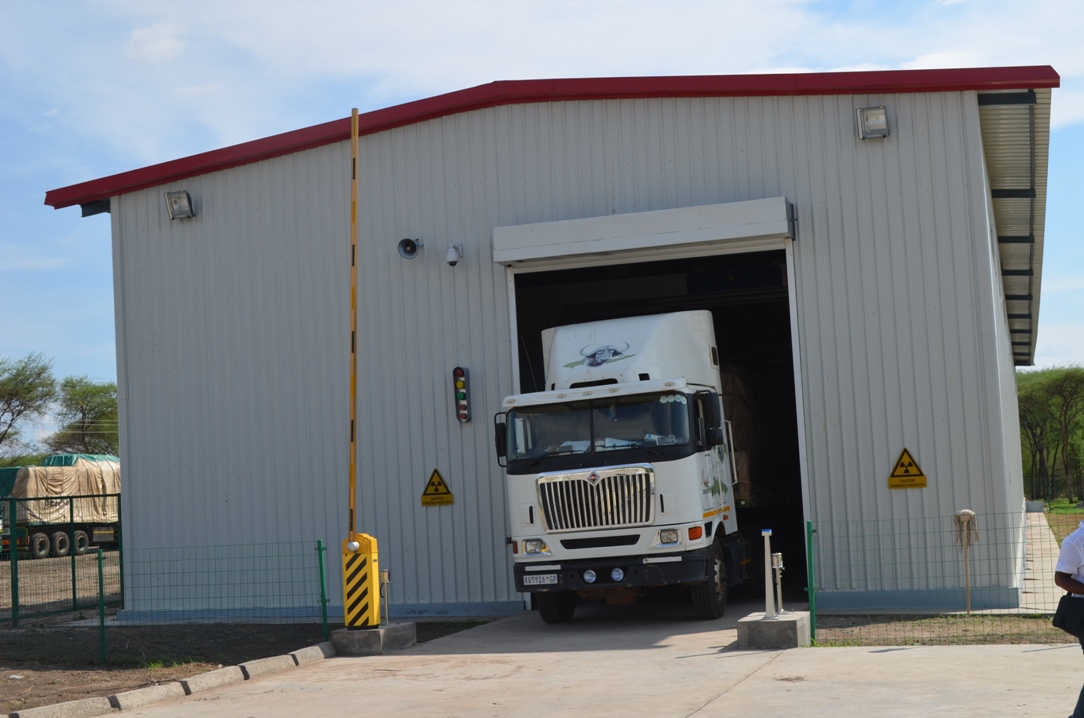
Zambia Revenue Authority (ZRA) Commissioner General, Berlin Msiska, says the investment of scanners in borders will help yield additional revenue for government. And ZRA Commissioner for Customs, Dingani Banda, says the introduction of the scanner will enable the authority to take five minutes only to inspect a truck, not five hours as was the case in the past. Commissioning a non-intrusive inspection equipment or scanner at Chanida border on Tuesday, Msiska said the equipment would help in facilitating trade.

He said instead of carrying out several physical inspections as was the case previously, ZRA would now be using a scanner.

“Through the use the scanner, we might get possible concealment in the trucks, but what we now intend to do, which we have always done as ZRA is that where we find that goods are being smuggled into the country, we are going to take stern action against those in borders. This will include an aspect of prosecution. Now, we have also intensified operations inland in that we have established a mobile compliance unit to deal with the inland enforcement of certain smuggled commodities,” Msiska said.

He said the scanner would also enable ZRA to carryout risk-based scanning services. He said the equipment would help expedite the process of clearing at the border. Msiska said the equipment whose total investment was US$5.2 million was set up by Nuctech, a Chinese firm.

And Banda said the implementation of the scanner at Chanida border would help ZRA in a number of ways. He said previously, if they suspected that a truck could be carrying goods that might require physical inspection, they would take an average of five hours to do the inspection.

“Now, with the scanning technology, it takes less five minutes for us to do a physical inspection of a truck and for a station like Chanida where we have an average of 40 to 50 trucks coming in and going out of the country on a daily basis, this will help us in terms of the turnaround in the inspection and it will enhance our inefficiencies,” Banda said.

He said ZRA already had similar infrastructure at Chirundu, Katimamulilo and Kazungula borders. Banda said ZRA was also expecting rail scanners at both Kapiri-Mposhi and Kasumbalesa. Comment – Seems like another ‘juicy’ deal for the Chinese – Nuctech?

He also said other scanners were under construction at Mwami and Nakonde borders. Chanida border post is the main gateway to neighbouring Mozambique. Source: The Post Online (Zambia)


UNCTAD – LDCs face challenges in reaping benefits from Cloud Computing

Picture1There is nothing nebulous about the “cloud”, especially as it applies to developing countries, a new UNCTAD report says. For businesses and governments in poorer nations to benefit from cloud computing’s increasingly rapid and more flexible supply of digitized information – the sort of thing that enables online marketers to rapidly scale up their information systems in tune with fluctuations in demand – massive, down-to-earth data processing hardware is required. Also needed is extensive broadband infrastructure, as well as laws and regulations that encourage the investment needed to pay for advanced information and communication technology (ICT) facilities and to protect users of cloud services.

UNCTAD’s Information Economy Report 2013, subtitled The Cloud Economy and Developing Countries, was released on 3 December 2013.

Referring to cloud computing, United Nations Secretary-General Ban Ki-moon states in the preface to the report: “This has considerable potential for economic and social development, in particular for our efforts to achieve the Millennium Development Goals and to define a bold agenda for a prosperous, sustainable and equitable future.”

The report shows that cloud computing offers the potential for enhanced efficiency. For example, cloud provisioning may enable small enterprises to outsource some of the information technology (IT) skills that they would otherwise have to provide internally. Companies can benefit from greater storage and computing capacity, as well as the expertise of cloud service providers in areas such as IT management and security.

But the study notes that options for cloud adoption in low- and middle-income countries look very different from those in more advanced countries. While free cloud services such as webmail and online social networks are already widely used in developing nations, the scope for cloud adoption in low- and middle-income economies is much smaller than it is in more advanced economies. In fact, the gap in availability of cloud-related infrastructure between developed and developing countries keeps widening. Access to affordable broadband Internet is still far from satisfactory in developing nations, especially in the least developed countries (LDCs). In addition, most low-income countries rely on mobile broadband networks that are characterized by low speed and high latency and therefore not ideal for cloud service provision.

The report recommends that governments “welcome the cloud but tread carefully”. Within the limits of their resources, infrastructure such as costly data centres must be constructed; at present, developed economies account for as much as 85 per cent of all data centres offering co-location services.

The cloud’s pros and cons

In simple terms, cloud computing enables users to access a scalable and elastic pool of data storage and computing resources, as and when required. Rather than being an amorphous phenomenon in the sky, cloud computing is anchored on the ground by the combination of the physical hardware, networks, storage, services and interfaces that are needed to deliver computing as a service.

The shift towards the cloud has been enabled by massively enhanced processing power and data storage, and higher transmission speeds. For example, some central processing units today are 4,000 times faster than their equivalents from four decades ago, and consumer broadband packages are almost 36,000 times faster than the dial-up connections used when Internet browsers were introduced in 1993.

The potential advantages of cloud computing include reduced costs for in-house equipment and IT management, enhanced elasticity of storage/processing capacity as required by demand, greater flexibility and mobility of access to data and services, immediate and cost-free upgrading of software, and enhanced reliability and security of data management and services.

But there are also potential costs or risks associated with cloud solutions. The UNCTAD report mentions costs of communications (to telecom operators/Internet service providers) and for migration and integration of new cloud services into companies’ existing business processes, reduced control over data and applications, data security and privacy concerns, risks of services being inaccessible to targeted users, and risks of “lock-in” with providers in uncompetitive cloud markets.

Policymakers should waste no time in exploring how the cloud computing trend may affect their economies and societies, UNCTAD recommends. Countries need to assess carefully how best to reap gains from this latest stage in the evolving information economy. In principle, UNCTAD sees no general case for government policy and regulation to discourage migration towards the cloud. Rather, governments should seek to create an enabling framework for firms and organizations that wish to migrate data and services to the cloud, so that they can do so easily and safely. But government policies should be based on a careful assessment of the pros and cons of cloud solutions, and should recognize the diversity of business models and services available. The report underlines that there are multiple ways of making use of cloud technology, including public, private or hybrid clouds, at national, regional and global levels. Source: UNCTAD

WTO Bali – Trade Facilitation Agreement

WTO-globalvoices_org__au_The draft text relating to the outcome on a Trade Facilitation Agreement at 9th Ministerial Conference of the WTO can be located here!   It reveals some significant impact and far-reaching implications for the Customs administrations, but to a great extent it will probably be welcomed by the world’s trading community. In the South African context, readers may find Article 11 on “Freedom of Transit” extremely interesting, if not controversial by some members of the establishment. In essence it’s all about being transparent! Source: World Trade Organisation.

Finance Ministry approves transition of destination inspection service from scanning providers to Nigeria Customs Service

NigerianCustoms-BadgeThis is a landmark and very brave decision by the Nigerian Government. All countries operating Build Operate Transfer (BOT) X-ray cargo scanning services should watch this development with interest.

Following the expiration of the Destination Inspection Contract Agreements between the Federal Government of Nigeria and Scanning Service Providers (SSPs), the President, Commander in Chief of the Armed Forces has directed the transition of Destination Inspection Service from contracted SSPs to the Nigeria Customs Service.

Accordingly, effective from 1st December 2013, Nigeria Customs Service has taken over full processing of all import transactions to Nigeria in accordance with the amended Import Guidelines of the Destination Inspection Scheme. Pursuant to this, all Scanning Service Providers (Cotecna, SGS and Global Scan) shall cease to approve new Form M, issue Risk Assessment Report (RAR) or perform Scanning operations for goods imported into Nigeria.

In international trade several destination countries require Pre-shipment inspection. Pre-shipment inspection, also called preshipment inspection or PSI, is a part of supply chain management and an important and reliable quality control method for checking goods’ quality while clients buy from the suppliers.

After ordering a number of articles, the buyer lets a third party control the ordered goods before they are dispatched to him. Normally an independent inspection company is assigned with the task of the PSI, as it is in the interest of the buyer that somebody not connected with the deal in any way verifies the amount and quality. This way the buyer makes sure, he gets the goods he paid for. Wikipedia

The SSPs shall handover all valid Form Ms and existing Valuation Database to the Nigeria Customs Service. However, the contract for provision of ICT infrastructural back up for the scheme currently being executed by Webb Fontaine is extended for a period of 18 months to ensure a smooth takeover by NCS.

As we enter this era, the Federal Ministry of Finance urges stakeholders and all Nigerians to give the Comptroller General of Customs and his team all the support necessary to manage a smooth and successful takeover. While no effort was spared in the build up to this process, we should all bear it in mind that transitions of this magnitude may throw up some implementation challenges. It will require the understanding of all Stakeholders to manage whatever initial challenges that may arise before the process fully stabilizes.

As part of the take-over plans, Help Desks and Dedicated Hotlines have been provided to enable Stakeholders and the general public channel complaints, observations and suggestions on the process to the Nigeria Customs Service. Help Desks are provided at Customs Headquarters, Abuja and other Commands across the Country. Such feedback can also be channeled directly through the following dedicated numbers: 09 4621597, 09 4621598 and 09 4621599.

The Ministry will like to convey the appreciation of Mr. President and all Nigerians to the Scanning Service Providers for services rendered to the Nation since the beginning of the Destination Inspection scheme in 2006.

Source: Businessnews.com.ng