What Does the WCO think of the WTO Trade Facilitation Agreement?

The Dublin Resolution, which was issued at the conclusion of the Policy Commission meeting in Dublin, Ireland on 11 December 2013, welcomes the WTO Agreement On Trade Facilitation (the “Trade Facilitation Agreement”), as embodied in the Bali Package’s Ministerial Decision, adopted at the WTO’s Ninth Ministerial Conference in Bali, Indonesia from 3 to 7 December 2013, under the framework of the Doha Development Agenda.

The Dublin Resolution emphasises the commitment of the WCO to the efficient implementation of the Trade Facilitation Agreement.

The WCO Secretary General, Kunio Mikuriya, said that he was very pleased with the timely and affirmative action of Policy Commission, which reflects the determination to drive forward the global Customs trade facilitation agenda.

Posted by Simon Lester for http://worldtradelaw.typepad.com


What is the value of a slick customs service?

Cahir Castle Portcullis by Kevin King

Cahir Castle Portcullis by Kevin King

The traditional symbol of customs and borders services is the portcullis – the fortification through which a ship used to enter a port. But as developing countries are increasingly asked to recognise the benefits of liberalised trade to the detriment of their import duty revenue, how can they be helped to raise the portcullis? And is it really in their interests to do so?

With world trade growth expanding more than twice as rapidly as gross domestic product (GDP) over the past decade, says Steve Brady, director, Customs and Trade Facilitation for development consultancy Crown Agents, the potential rewards from participating in world trade are significant. “According to figures from WTO, in 2011 world merchandise exports and imports in real terms grew by over 5%. As a result, each reached over $1.8tn, the highest level in history.”

The major players working with developing country governments to help them benefit from this increase in trade include the World Bank, ICC, World Customs Organisation (WCO), IMF, UN Conference on Trade and Development (Unctad), development banks and specialist intermediaries such as Crown Agents.

A number of countries have improved their capacity as a result of international and domestic efforts, yet some are still hesitant to do so. The Centre for Customs and Excise Studies (CCES) at the University of Canberra finds that many developing country governments are heavily dependent on the revenue from import duties – in some cases this can be as high as 70% of a country’s total revenue base. The desire to protect this is understandably strong. Yet this same desire can be used to drive forward modernisation efforts, explains Professor David Widdowson, CEO of CCES. “Revenue leakage resulting from commercial fraud, poor customs and border procedures and corruption represents a major impediment to poverty reduction.”

Similarly time-consuming manual processing systems, over-regulation, or outright corruption, will discourage trade and investment and further undermine a country’s development. “In the worst cases up to 20 signatures are required to obtain customs clearance of goods, all of which require ‘informal payments’,” says Widdowson. “I have also seen examples of 15 different government agencies playing some role at the border, all acting independently.”

Guidelines or blueprints to modernise such customs and borders processes are available, for example, via the revised Kyoto convention (extolling the basic principles of automation, simplification, responsiveness to the regulation, consistency and co-ordination); the “Framework of standards to secure and facilitate global trade” developed by the WCO; and its “Columbus programme.”

Turkey is cited by Sandeep Raj Jain, economic affairs officer at the United Nations Economic and Social Commission for Asia and the Pacific (Escap), as a case study for the successful modernisation of customs systems, having consolidated 18 previously autonomous border gates and introduced a single IT clearance system, leading to an increase in tax revenues and a decrease in clearance time to the benefit of incoming and outgoing trade. Angola increased receipts sixteen-fold from $215.45m in 2000 (£148m) to $3,352m in 2011 through an improved National Customs Service and the introduction of an automated entry processing system and customs clearance Single Administrative Document.

The African Development Bank also supported post-conflict Liberia with the extension of an automated system for customs data, helping to reduce the time to clear goods at the port from 60 days to less than 10 days and increase revenue collection at three ports from about $4m a month to $10m-$12m. This, Ellen Johnson Sirleaf, president of Liberia has said, given the government additional scarce revenues to invest in the projects to improve the livelihoods of people.

Horror stories also abound of revenue loss, acting as a cautionary tale for leaving outdated customs processes untouched. A World Bank report, for example, finds that in Algeria smuggling caused a loss to the public exchequer rising from DA18bn in 2006 ($237m) to over DA61bn in 2011.

The message from the international community is that improved, automated and transparent customs services not only help eradicate theft and corruption, but also increase revenue through increased trade. Any fall in revenue from import tariffs due to signing up to bilateral free trade agreements can also be offset, says Bijal Tanna of Ernst & Young LLP: “One only has to look at the take-up of VAT by countries since the 1980s to understand that there is a consumer tax outlet to offset any loss of revenue from customs duty reductions. Back in the late 1980s, approximately 50 countries had VAT, now it is in place in over 150 countries.”

However, these arguments don’t always reach an appreciative audience. “In my experience”, says Widdowson, “economies may give lip service to the trade facilitation agenda, including entering into free trade agreements, but still expect their customs administration to collect traditional levels of duty. For example, with the introduction of free trade arrangements – hence falling duty rates – and a downturn in international trade, the Philippines continues to increase the ‘revenue targets’ of its bureau of customs, the derivation of which appears to be devoid of any analytical rigour.” (emphasis – mine)

Tanna also points to the collapse of the Doha round of the WTO negotiations heralding a breakdown in efforts to find a single global platform to drive a uniform approach to trade liberalisation. Perhaps it is the obligation of the international community to renew such efforts, alongside projects to improve customs systems in-country. Source: Original article by Tim Smedley of The Guardian

Mauritius – Customs Training of Trainers Course on SADC Rules Of Origin

The SADC Rules of Origin are the cornerstone of the SADC intra-trade and serve to prevent non-SADC members benefiting from preferential tariffs. The determination of the eligibility of products to SADC origin and the granting of preferential tariffs to goods originating in the Member States is an important process in the implementation of the SADC Protocol on Trade and regional integration. Annex I of the SADC Protocol on Trade provide that goods shall be accepted as eligible for preferential treatment within the SADC market if they originate in the member States, and the qualification of such products shall be as provided in Appendix I of Annex I of the Protocol on Trade.

The 2nd Customs Training of Trainer Course was held on the SADC Rules of Origin at the World Customs Organization (WCO) Multilingual Regional Training Centre, Mauritius Revenue Authority from the 25th -30th November 2013. The objective of the training course is to establish a pool of trainers on the SADC Rules of Origin who can provide guidance and train on the subject at national level to Customs officials and relevant Stakeholders.

During his opening address, Mr Sudamo Lall, Director General of the Mauritius Revenue Authority, laid emphasis on the critical importance of the ‘Rules of Origin’ as it has ‘great impact on the duties to be collected, as businesses increasingly locate the different stages of their activities in a way that optimizes their value-addition chain’. On the other hand Mr James Lenaghan Director Customs mentioned that ‘the Rules of Origin in any Free Trade Area are of prime importance as they serve to determine which goods can benefit from preferential tariffs. This enables member states of a particular Free Trade Area to benefit from the tariffs advantages inherent to the Protocol of trade agreed within that Free Trade Area. Since Customs is the controlling agency for preferential origin, it is vital that our officers are trained to correctly apply the SADC Rules of Origin’.

During their short visit at the training workshop, the Executive Secretary ,Dr Stergomena Tax and the WCO Secretary General, Mr Kunio Mukiriya addressed the group on the importance of rules of origin as the basis for regional integration. Dr. Tax also urged the participants from all SADC Member States to cascade the knowledge gained at the Centre to their respective countries.

The SADC Customs Training of Trainers programme is being implemented in collaboration with the World Customs Organization (WCO), the Regional Office for Capacity Building (ROCB), the WCO Regional Training Centres and GIZ (Deutsche Gesellschaft für Internationale Zusammenarbeit (GIZ). Source: SADC Secretariat

Mauritius Revenue Authority – Launch of the WCO Multilingual Regional Training Centre

This slideshow requires JavaScript.

The SADC region is now equipped with a third World Customs Organization accredited Regional Training Centre in addition to the South African and Zimbabwean Regional Training Centre. The Regional Training Centres are excellent platforms for Customs to advance capacity building and to share information and best practices.

The Mauritius Revenue Authority (MRA) has been selected by the WCO to host the RTC as part of the WCO initiative to optimise resources in the region and in line with government’s objective of making of Mauritius a Knowledge Hub. The RTC represents the 25 of its kind adding to the existing Centres across the world and is the fourth one in the WCO ESA region.

The Centre will enable the WCO achieve its mission of enhancing Customs administrations in the WCO ESA region thereby helping these Customs administrations to make an important contribution to the development of international trade and to the socio-economic well-being of their country.

Under the WCO strategy the RTC has four main objectives namely: development of regionally relevant training; maintenance of specialist trainer pools; provision of specialist training at a regional level; and development and support of the WCO’s blended learning programme. Moreover, it has as task to develop and maintain annual training plans and work in partnership with the private sector to maintain effective relationships between Customs and economic operators as well as assist Member countries in their training needs.

The Mauritius RTC is equipped with English, French and Portuguese language facilities as well as an e-learning platform. The Vice-Prime Minister and Minister of Finance and Economic Development, Mr. Xavier Luc Duval, formally opened the RTC on the 25th November 2013. In his opening address, Secretary General Mikuriya commended the leadership and continued engagement of Mauritius, previously as WCO Vice-Chair for the East and Southern Africa (ESA) Region from 2011 to 2013, and now as host of an RTC. He hoped that this RTC would serve to share knowledge and strengthen the human resource network for Customs cooperation and regional integration.


WCO Classification Decisions (2013)

RACThe World Customs Organisation (WCO) has published the classification decisions taken at the last Session of the Harmonized System Committee (52nd Session) in September 2013 : the Classification Rulings, the Amendments to the Explanatory Notes and to the Compendium of Classification Opinions. You can locate the decisions via the following links:

Classification Rulings – HS Committee 52nd Session

Amendments to the Compendium of Classification Opinions – HS Committee 52nd Session

Amendments to the Harmonized System Explanatory Notes  – HS Committee 52nd Session

Source: WCO


Africa’s first regional Customs – Trade Forum

On the 8th of November 2013 in Maseru, Lesotho, the Southern African Customs Union (SACU) launched the first regional Customs – Trade Forum in Africa. The theme of the historical event was “Government and Business: partners for economic development through regional trade”. At the launch, the Minister of Finance and Chairperson of the SACU Council Leketekete V. Ketso and Minister of Trade and Industry, Cooperatives and Marketing, Sekhulumi P. Ntsoaole addressed the attendees as well as Director Capacity Building Erich Kieck from the WCO. Both ministers mentioned the funding from the Swedish International Development Cooperation Agency as a big contributor to undertake this event.

More than 30 representatives from the private sector in the SACU region attended the forum together with the five Heads of Customs and one delegate from each Member’s private sector presented their expectations on the continuous work within the Forum framework. The first working meeting of the Forum is tentatively scheduled to be held in April 2014. The event was acknowledged also by media and representatives from Lesotho Revenue Authority would discuss its importance in papers, radio and TV.

On the previous day, the 7th of November, the Steering Committee for the SACU – WCO Customs Development Program held its ninth meeting, providing guidance to the project. All project components, Interconnectivity, Risk Management/Enforcement, Legislation and Trade Partnerships were on the agenda. Source: World Customs Organisation

WCO News – October 2013 Edition

wco news 2013The latest edition of WCO News reflects on the Secretary General’s thoughts on what the WCO has done, what it will be doing, and what will impact on its work in the coming months. The WCO will actively focus its energies on it’s four strategic packages concentrating on revenue, compliance and enforcement, economic competitiveness and organizational development. Together, these packages support the adoption and application of modern Customs practices and raise awareness on the vital role of Customs in international trade.

Featured articles include –

  • From borders to boundless: the digital dilemma in Customs – it discusses two questions – How does an industry traditionally focused on physical borders remake itself for digital commerce, which inherently circumvents such borders? and, Why must Customs agencies transform to address the rise in digital goods and services?
  • Intercepting next generation threats

    For those responsible for the security of our borders, transit networks, VIPs and high-profile sites, the threat posed by more creative adversaries is compounded by the increasing frustrations of passengers and visitors, when subjected to existing security checks. The article discusses a range of ingenuity which technology nowadays provides to these adversaries, and the elements of new Terahertz imaging equipment to assist border agencies in the combat thereof.

  • Beyond the Single 

    Window (SW) – In the 20-plus years since they first opened in Singapore and Sweden, SWs have remained a central focus of border clearance strategies, even though the majority of Customs administrations have not implemented them. Although design plans vary considerably, most SW systems support an electronic data exchange model which allows for (i) Single submission of data and information; (ii) Single and synchronous processing; and (iii) Single decision-making for release and clearance. This article considers 4 best practices which governments should consider when implementing Single Window programs.

The publication also includes country case study’s on Single Window featuring Nigeria and New Zealand, Sri Lanka Customs 20 years of dedication towards conservation, a feature on Argentine Customs and many other interesting articles. To access the publication – click here! Source: WCO

SACU prepares for launch of regional preferred trader scheme

handshakeThe Southern African Customs Union (SACU) consisting of Botswana, Lesotho, Namibia, South Africa and Swaziland collaborates with the World Customs Organization (WCO) in a trade facilitation initiative funded by the Swedish International Development Cooperation Agency (Sida). The initiative in which also the SACU Secretariat participates, aims among others at developing a regional Preferred Trader (PT) scheme.

From 30th of September to 4th of October a core team consisting of National Project Managers, audit experts, PT-experts and site managers met in Windhoek, Namibia, with WCO experts to further prepare for the launch of the PT-scheme by developing regional processes to be applied related to the benefits selected and designed for the SACU regional PT.

The selected pilot operators have been engaged, and in the near future also the relevant cross border regulatory agencies and Customs officials at the selected border posts will be sensitized on the regional PT-scheme.

During the intense working week, all participants actively contributed to the preparations for the launch of the PT-scheme, planned for the first half of 2014. Source: www.4-traders.com

Visiting the WCO’s Strategic Plan

Reality Check

The ongoing global financial and economic crisis affects governments,  organisations and citizens in different ways. It would seem that no individual or any organisation has the proverbial ‘silver bullet’ to normalise the situation either. Today, probably most Customs and Border agencies are undergoing ‘modernisation’ or some form of restructuring. Modernisation in itself implies automation or digitization of information changing the lives of the average customs (border) official as well as the expectations and predictability of service to traders and trade intermediaries around the world. 9/11 forever changed the role of Customs and for most of governments, border regulatory authorities as well. Changes in Customs have since been focussed on alignment to policy, standards and guidelines as advocated by the WCO.

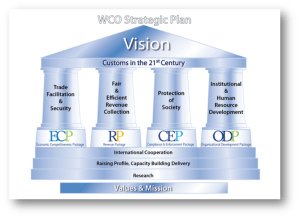
WCO Startegic PlanNational adoption of these remains the foremost critical step in establishing a country’s ability to ‘connect’ with the world. A national administration should seek inclusivity of its trading community lest its modernisation be regarded as self-serving. Simultaneously, regional economic communities also seek radical change, albeit on a regionalisation level. Pressures on national (sovereign) nations develop given high-level political commitment to regionalisation, often without taking into account their respective countries’ state of readiness. This creates a false sense of commitment which results in regional failures. Behind such regional initiatives are normally a host of sponsors, purportedly with the right experts and solutions to rectify the ‘barriers’ which prevent a national state from integrating with its neighbours and global partners. Sound familiar? If so, it wouldn’t do national representatives any harm to refresh themselves with the under mentioned WCO tools and validate this in relation to the direction which their organisation is headed. These form part of the WCO’s Customs’ in the 21st Century Agenda. It is also recommended reading for the various regional economic communities (RECs) – here I refer to the African continent – who are not always au fait or fully appraised on the ‘readiness’ landscape of the member states they represent.

The Economic Competitiveness Package (ECP) (Click the hyperlink for more information) is currently a matter of high priority at the World Customs Organization (WCO). Economic competitiveness starts with trade facilitation and Customs administrations undeniably play an important role in this respect. Indeed, facilitating trade is one of the WCO’s key objectives and the Organization has contributed, through its tools and instruments as well as through technical assistance, to increasing the economic competitiveness and growth of Members.

The Revenue Package (RP) (Click the hyperlink for more information) was developed by the World Customs Organization (WCO) in response to WCO Members’ concerns in regard to falling revenue returns in the light of the global financial crisis and declining duty rates.

Significant progress has been made since the adoption of the WCO Capacity Building Strategy in 2003. However, new and emerging key strategic drivers impact on international trade and the roles and responsibilities of Customs administrations. This requires that all our capacity building efforts remain responsive and needs-driven to ensure beneficiary Customs administrations can obtain the support they need to pursue their reform and modernization. This Organisational Development Package (ODP) (Click the hyperlink for more information) outlines the basic approach of the WCO towards organizational development. It provides a simple and accessible overview of the texts, tools and instruments that relate to this topic. It refers and offers access to these resources but does not purport to capture all knowledge and practices within this extensive area.

The Compliance and Enforcement Package (CEP) (Click the hyperlink for more information) has been developed in order to assist Members to address the high-risk areas for Customs enforcement. The Customs in the 21st Century Strategy calls on Customs administrations to implement modern working methods and techniques. In this context, Customs should be equipped with the necessary tools that allow it to effectively manage supply chain risks and enforce laws and regulations in cases of non-compliance. In discharging this mandate, the WCO, in close co-operation with Members, has created an extensive library of instruments, tools, guidance materials and operational co-ordination activities to support Customs compliance and enforcement actions. These tools new form part of the CEP.


Nigeria Customs Service – Organically Developing The National Single Window

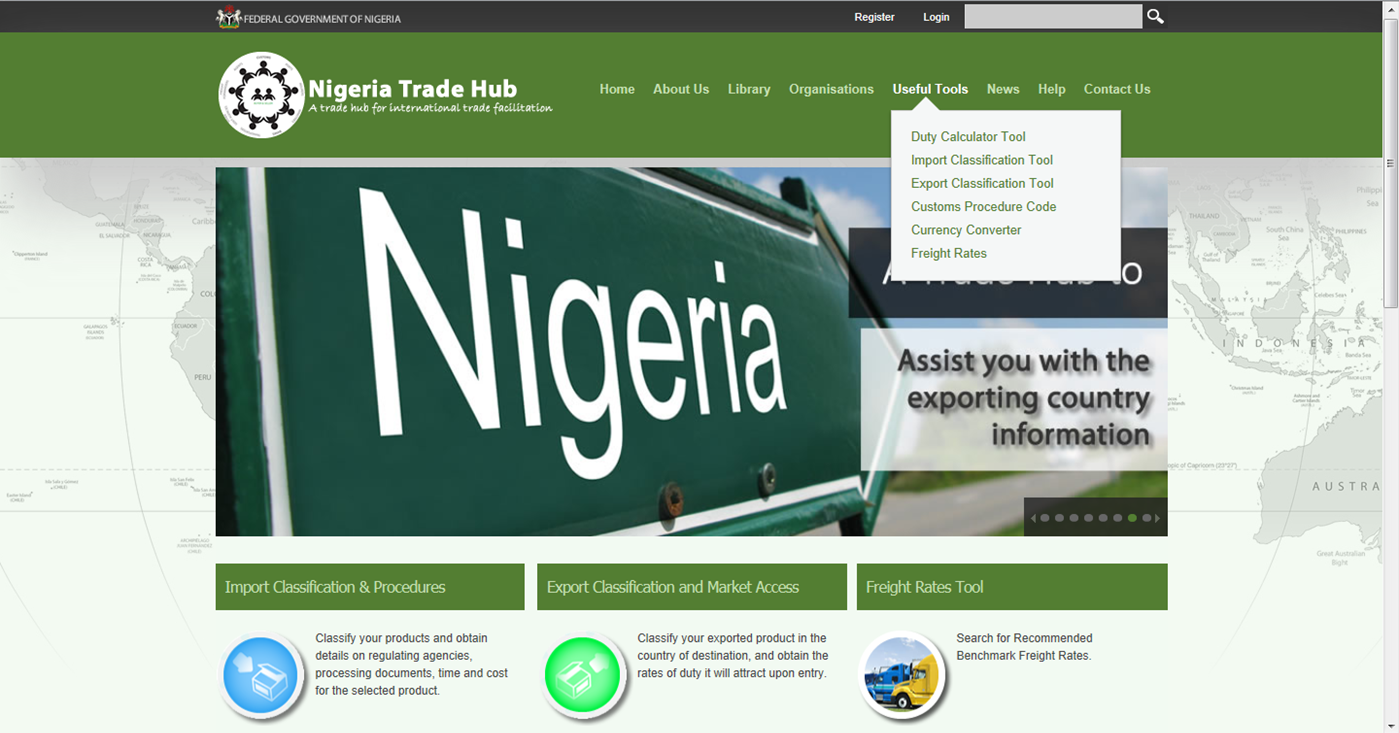
Nigeria Trade Hub 2The WCO Single Window Experts Accreditation Workshop took place on 23rd – 27th September, 2013 at Customs Border Control Training Centre (CBCTC), Seoul, Korea. The objectives of the workshop included:

  • Promoting the work of Single Window
  • Developing expertise meant for executive management
  • Developing different expertise in other technical areas of Single Window.

Developing this expertise brought about the WCO Data Model and SW accreditation Workshop as there are several areas where experts can emerge, including areas of Business processes, Legal, Data Model etc. The past efforts in capacity building served as a guide to developing the program for the workshop. The expectation included shaping assistance and building capacity in the areas of Single Window.

The participants included representatives from Nigeria, Mauritius, Chile, Singapore, Tanzania, Mexico, United Arab Emirates, Russia Federation, Saudi Arabia and Korea. Three out of the ten participants (Nigeria, Singapore, Mauritius) were accredited Co-Facilitator Status for the World Customs Organization at the end of the workshop. This demonstrates that Nigeria is certainly moving in the right direction and aligning to International Standards. Source: Nigeria Trade Hub

Border Management in Southern Africa: Lessons with respect to Policy and Institutional Reforms

The folk at Tralac have provided some welcomed insight to the challenges and the pains in regard to ‘regionalisation’. No doubt readers in Member States will be familiar with these issues but powerless within themselves to do anything due to conflict with national imperatives or agendas. Much of this is obvious, especially the ‘buzzwords’ – globally networked customs, one stop border post, single window, cloud computing, and the plethora of WCO standards, guidelines and principles – yet, the devil always lies in the details. While the academics have walked-the-talk, it remains to be seen if the continent’s governments have the commitment to talk-the-walk!

Regional integration is a key element of the African strategy to deal with problems of underdevelopment, small markets, a fragmented continent and the absence of economies of scale. The agreements concluded to anchor such inter-state arrangements cover mainly trade in goods; meaning that trade administration focuses primarily on the physical movement of merchandise across borders. The services aspects of cross-border trade are neglected. And there are specific local needs such as the wide-spread extent of informal trading across borders.

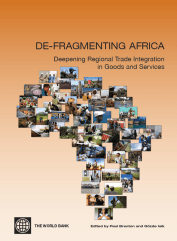
Defragmenting Africa WBThis state of affairs calls for specific governance and policy reforms. Effective border procedures and the identification of non-tariff barriers will bring major cost benefits and unlock huge opportunities for cross-border trade in Africa. The costs of trading remain high, which prevents potential exporters from competing in global and regional markets. The cross-border production networks which are a salient feature of development in especially East Asia have yet to materialise in Africa.

Policy makers have started paying more attention to trade-discouraging non-tariff barriers, but why does the overall picture still show little progress? The 2012 World Bank publication De-Fragmenting Africa – Deepening Regional Trade Integration in Goods and Services shows that one aspect needs to be singled out in particular:  that trade facilitation measures have become a key instrument to create a better trading environment.

The main messages of this WB study are:

  • Effective regional integration is more than simply removing tariffs – it is about addressing on-the-ground constraints that paralyze the daily operations of ordinary producers and traders.
  • This calls for regulatory reform and, equally important, for capacity building among the institutions that are charged with enforcing the regulations.
  • The integration agenda must cover services as well as goods……services are critical, job-creating inputs into the competitive edge of almost all other activities.
  • Simultaneous action is required at both the supra-national and national levels. Regional communities can provide the framework for reform, for example, by bringing together regulators to define harmonised standards or to agree on mutual      recognition of the qualification of professionals……. but responsibility for implementation lies with each member country.

African governments are still reluctant to implement the reforms needed to address these issues. They are sensitive about loss of ‘sovereign policy space’ and are not keen to establish supra-national institutions. They are also opposed to relaxing immigration controls. The result is that border control functions have been exercised along traditional lines and not with sufficient emphasis on trade facilitation benefits. This is changing but specific technical and governance issues remain unresolved, despite the fact that the improved border management entails various technical aspects which are not politically sensitive.

The required reforms involve domestic as well as regional dimensions. Regional integration is a continental priority but implementation is compounded by legal and institutional uncertainties and burdens caused by overlapping membership of Regional Economic Communities (RECs). The monitoring of compliance remains a specific challenge. Continue reading →

Indonesia paves the way for ATA System implementation

ATA-Carnet_sourceAs part of Indonesia’s move towards globalization, Indonesian Customs, jointly with ICC Indonesia and the Indonesian Chamber of Commerce and Industry, is preparing the implementation of the ATA System in Indonesia.

They aim to announce Indonesia’s ratification of the Convention on the temporary admission of goods (the so-called Istanbul Convention) at the World Trade Organization Ministerial Conference, being held in Bali in December, as well as to implement the ATA Carnet System for the temporary duty and tax-free import and export of goods in Indonesia in early 2014.

Indonesia features among the 10 priority target countries where businessmen from countries already operating the system would like to be able to use their ATA Carnets. To meet these expectations, Indonesian governmental authorities and business organizations invited Ms Lee Ju Song, Director of ICC Asia, to conduct a two-day workshop and series of meetings in Jakarta on 1-5 July 2013 to understand the technical intricacies of the ATA System operation. They benefited from very practical and technical training, as well as from guidance on steps they should take to finalize their affiliation to the ATA Chain.

The ATA Carnet System – celebrating its 50th anniversary in 2013 – is jointly administered by the World Customs Organization, holding the international conventions on the temporary admission of goods, and the ICC World Chambers Federation (WCF), acting as the administrator of the ATA International Guarantee Chain. This chain comprises the chambers of commerce and other similar business organizations appointed in their respective countries to guarantee and issue Carnets.

ATA Carnets remove the need for exporters to provide Customs authorities with the otherwise necessary guarantees required for goods to cross borders. In the 73 countries where they are currently accepted, Carnets allow all kinds of goods to be temporarily transported. This usually pertains to professional equipment, commercial samples and material for trade fairs and exhibitions. Some examples of note include: a prototype solar car, World Cup yachts, Giorgio Armani apparel, McLaren Grand Prix cars, Munich Symphony Orchestra instruments, Australian Olympic horses, Harley Davidson motorcycles and equipment for the Bolshoi Ballet, Cirque du Soleil, BBC and CNN. More than 175,000 ATA Carnets are issued yearly for thousands of customs transactions worth over US$ 25 billion. Source: International Chamber of Commerce


South Africa’s New Integrated Customs Border Management Solution

Amidst diverse expectations and feelings of excitement, anxiety and anticipation, the South African Revenue Service (SARS) migrated to its new integrated Customs and Border Management solution over the weekend of 17 August 2013. A new modern electronic solution Interfront can now rightfully claim some success even if it is an unseen component within a multi-layered, multi-technology solution of which South African Customs is now the proud owner. After 9 months of rigorous parallel testing between old and new, and a period of dedicated external testing with Service Providers of the customs business community, the decision to implement was formally agreed with trade a fortnight ago.

Interfront Customs and Border Solution (iCBS) replaces several key legacy systems, one of which has served South Africa for more than 30 years. The vast business and technical competence and skills which faithfully maintained and supported the old systems are to some extent in the wilderness now, but will hopefully find place within the new technology environment. While technology nowadays is particularly agile, and human physical placement at the coal face is under threat, organisations like SARS will always require customs technical business and policy competence to maintain the cutting edge.

There still remains an enormous amount of work to do regarding the alignment of the new clearance system with the specific guidelines, standards and principles of the WCO. With regional integration becoming more prominent on the sub-Saharan African agenda, the matter of ‘facilitation’ and ‘non-tariff barriers’ will inevitably become more prominent discussion points. Other salient features of the SAFE Framework of Standards such as Authorised Economic Operators and IT connectivity have already emerged as key developmental goals of a number of regional customs and border authorities. The timely introduction of Interfront places SARS in a pivotal position to influence and enable the required electronic linkages, crucial for the establishment of bi-lateral and multilateral trade agreements, transport corridors, and, support for ‘seamless’ multi-modal movement of cargo from port of discharged to its place of manifestation with limited intervention, based on the principles of risk management. Enjoy the Interfront video feature.


A new instrument of the Technical Committee on Customs Valuation

wco - valuationA new instrument of the Technical Committee on Customs Valuation has recently been published. Advisory Opinion 4.15 provides guidance on a case where royalties have been paid to a third party licensor (in other words, the licensor is not the seller of the goods) and determines whether or not it is appropriate to include the royalty fee in the Customs value of the imported goods. Available from WCO Online Bookshop.

WCO/SACU Regional IT Connectivity Conference 2013

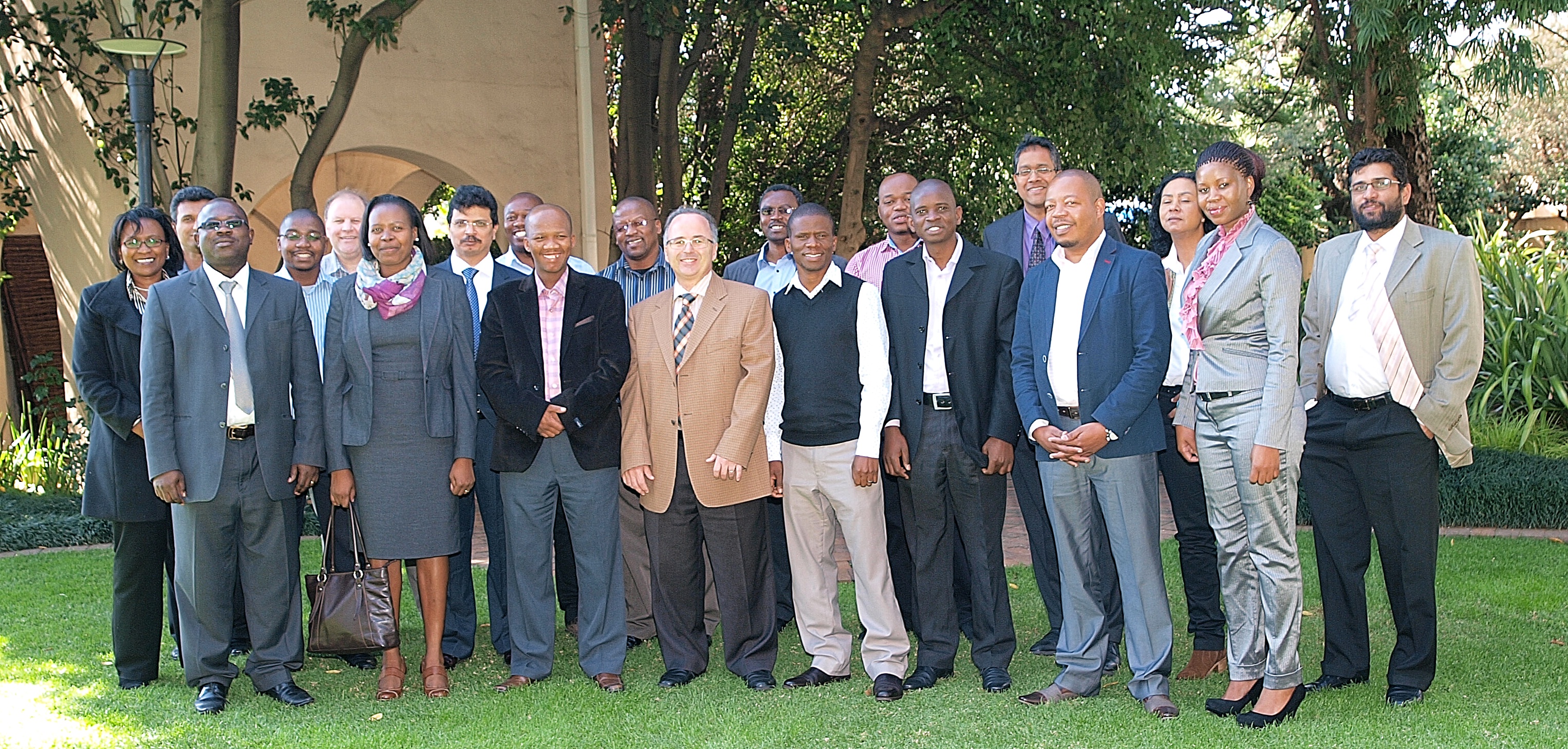
Delegates attending the WCO/SACU IT Connectivity Conference - May 2013

Delegates attending the WCO/SACU IT Connectivity Conference – May 2013

Representatives of the SACU member states recently met in Johannesburg to progress developments concerning IT Connectivity and Customs-to-Customs data exchange in the region. The session served as a follow up to the session held last year in February 2012 in Pretoria. The conference was convened by the SACU secretariat under the sponsorship of the Swedish International Development Agency (SIDA), and was once again pleased to have SP Sahu, senior technical expert from the World Customs Organisation, to facilitate the work session over 3 days. Representatives of UNCTAD ASYCUDA were also in attendance to observe developments. UNCTAD currently supports three (soon to be four) of the five SACU Customs administrations. The session provided an opportunity for delegates to progress this work as well as develop a terms of reference for an independent assessment of the two connectivity pilot projects that are currently being pursued between Botswana-Namibia and South Africa-Swaziland, respectively.

IT Connectivity serves as a catalyst for various customs-to-customs cooperation initiatives seeking to bring about a seamless end-to-end flow of information between point of departure and destination. Some examples include export/transit data exchange, approved economic operator, commercial fraud, eATA and at least 5 other key areas of customs mutual exchange.  The concept is driven out of the newly establish WCO model known as Globally Networked Customs (GNC). GNC was formally adopted by the WCO Council in June 2012 where a capacity building approach based on protocols, standards and guidelines (PSG) using utility blocks was recognised to provide the most realistic means to achieve efficiency gains, and a more effective way to manage the negotiation of international agreements between customs administrations.

There exist several pilot projects across the globe wherein customs agreements are being piloted under the GNC approach. Development of a Utility Block and supporting data clusters for interconnectivity within SACU and the broader Southern Africa sub-region already commenced at last year’s session. The concept gained sufficient traction and was soon adopted by both SACU and SADC  member states as the means to implementing IT connectivity within the respective regions.

A review of the Utility Block and data clusters was conducted to ensure alignment of customs data requirements across the member states. The resulting product now provides a standard ‘data set’ which members agree as the minimum data required to facilitate data exchange and advance risk management needs. It covers export and transit declaration requirements. Two important criteria exist for successful data exchange and data matching. The first being the availability of appropriate legal provision for two countries to exchange data. The second requires the use of an agreed unique identifier. The identifier is important for Customs as well as the trade community.

Delegates were also presented with current and future developments occurring at the WCO, in particular the on-going work being done to formalise standards for the “My Information Package” concept as well as the WCO Data Model, currently at version 3.3. Another interesting on-going development involves a unique Trader ID.  

Member states involved in respective pilot programmes are now preparing themselves for an up-coming evaluation, later this year.