Hi-tech shippers switch from air to ocean

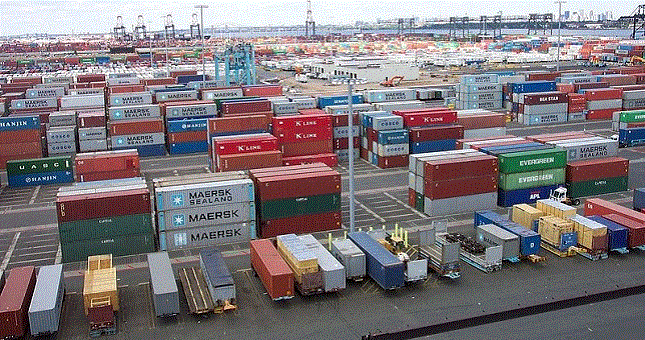
sea_freight_trackingCargo traditionally sent by air is increasingly switching to sea as shippers capitalise on the mode’s lower transport costs – a trend expected to continue over the coming years.

Lloyds List reports that several leading freight forwarders reported in their full-year results that certain cargo types — particularly hi-tech and telecoms — switched from air freight to sea freight last year.

DHL Global Forwarding CEO Roger Crook said the switch was the result of a price difference of 10 times between the two modes of transport. He said: “Obviously many companies are under cost pressure and looking to reduce total supply chain costs. Therefore, they are buying and moving by ocean freight, and particularly it is happening in the technology sector.”

Panalpina chief operating officer Karl Weyeneth said he expected the trend to continue. “There is a maximum shift you can achieve, depending on what industry you are talking about,” he said.

“But I believe that now supply chains are used to working with more ocean freight, this impact will stay for at least a couple of years, until the economy has really recovered, then it will start to shift back again.”

“We really see this as an important factor in our market for the next two to three years.”

Kuehne+Nagel (KN) chief executive Reinhard Lange said the decision on whether cargo was suitable to be switched from air to sea partly came down to the weight of the shipment. He said that if two products had the same market value, but one weighed less than the other, the overall cost impact of flying was less for the lighter cargo because air cargo costs were based on weight. He said this explained why hi-tech products had transferred to ocean freight while lighter products, such as pharmaceuticals, had, in the main, continued to utilise air freight.

The forwarders said the impact of the switch from air to ocean freight was partly to blame for a decline in air freight volumes last year, while container volumes continued to grow. In its full-year results, Panalpina saw air freight volumes decline 6% last year while ocean freight volumes grew by the same amount. Meanwhile, DHL Global Forwarding’s air freight volumes slipped 5.3% in 2012 with ocean freight increasing 4.3%, while KN saw its air freight volumes grow by 2% while ocean freight increased 6% year on year. Source: LloydsList

Federal spending cuts will delay box inspections, warns US Customs

"Uncertain Times" - U.S. Homeland Security Secretary Janet Napolitano said earlier this week that her department would be slashing 5,000 border-patrol agents when the cuts go through, which would ultimately slow some of the busiest crossings between Canada and the U.S.

“Uncertain Times” – U.S. Homeland Security Secretary Janet Napolitano said earlier this week that her department would be slashing 5,000 border-patrol agents when the cuts go through, which would ultimately slow some of the busiest crossings between Canada and the U.S.

Is this a process of auto-destabilisation in the USA? At least terrorists aren’t being blamed for this……will be interesting to see what instructions are fed to CBP (US Customs) Field Operations in foreign countries where the Megaports and CSI initiatives are in operation. Besides being grave times , I’d say these are interesting times…

Lloyds reports that the US Customs and Border Protection (CBP) is warning of major delays for incoming containers and other cargo at seaports because of sequestration, but early reports suggest that business is operating normally on arterial waterfronts, at least for now.

In a letter to cargo and travel industry groups after automatic cuts to federal spending, known as sequester cuts or sequestration, went into effect at the weekend, CBP deputy commissioner David Aguilar said the agency faced “furloughs, reductions in overtime and a hiring freeze, [which] would equate to the loss of up to several thousand CBP officers at our ports of entry, in addition to significant cuts to our operating budgets and programmes”.

Describing the current phase as an “uncertain time”, Aguilar warned of major disruption for travellers and cargo.

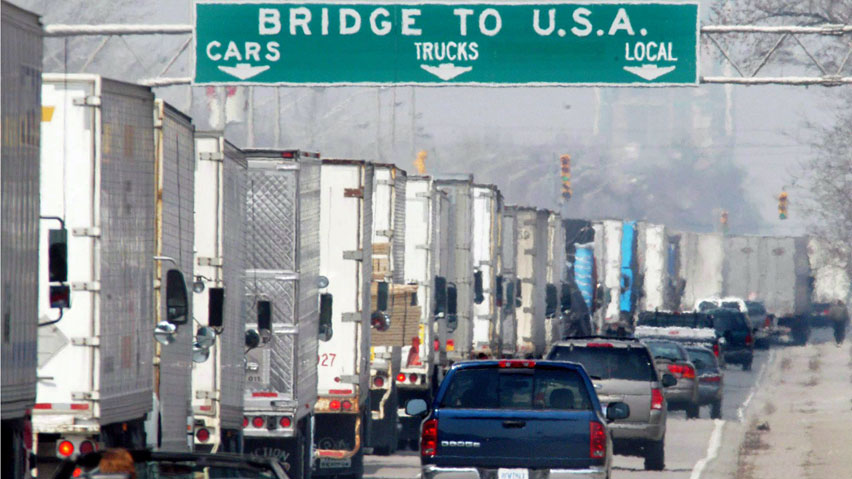
For the latter, sequestration could result in “decreased service levels in our cargo operations, including increased and potentially escalating delays for container examinations of up to five days or more at major seaports, and significant daily back-ups at land border ports of entry”.

CBP also issued a set of “cargo priorities under sequestration”, which vowed that security would not be compromised, but said that “CBP has redirected resources toward only the most critical, core functions and discontinued or postponed certain important but less critical activities in an effort to reduce budget expenditures”.

The agency said it would hold weekly conference calls to update the industry about the situation.

Shippers and cargo interests agreed that five-day delays could cause major bottlenecks at container ports, and would cost shippers extra money during an already challenging economic time.

The only consolation would be that individual ports or shippers would not have to worry about rival ports siphoning business away, because every US port would be up against the same problem.

The Port Authority of New York and New Jersey reported normal operations and said in a statement that it continued to monitor the situation.

New Jersey governor Chris Christie appeared unimpressed with the threat attributed to sequestration.

“I do not think sequestration at one cent on the dollar is going to have grave effect, or anybody is going to notice it all that much, except for some federal employees who will be furloughed,” He told a press conference.

The sequester cuts $85 billion, or 2.4% of the annual federal budget of $3.6 trillion, to be spread over seven months to September 30.

Roughly half the sum involves defence, and there appears to be discretion in where precisely the cuts are administered.

Nevertheless, the shipping industry is taking the matter seriously. Other than cargo delays, the maritime sector is factoring in reduced maintenance dredging and a degradation of some US Coast Guard functions, including search and rescue, as possible effects of the sequester cuts. Source: LloydsList

Radiation Scare Disrupts Port Elizabeth

The Maher Terminal at Port Elizabeth has been cleared for danger after a radiation scare prompted a security response.

The Maher Terminal at Port Elizabeth has been cleared for danger after a radiation scare prompted a security response.

Misleading? No its Port Elizabeth – USA! Customs officials had suspicion about a shipping container that they were examining. An abnormally high radiation reading was detected, but CBP, FBI, the Port Authority of NY/NJ and other law enforcement officials initiated protocols to isolate and verify the source of the alarm.

According to New Jersey’s Star-Ledger, a Port Authority official said the container was filled with recycled paper, and a metal wire that bound the paper was the source of a positive reading for Caesium-137, a radioactive isotope formed during nuclear fission.

After review and confirmation from CBP’s Laboratories & Scientific Services, the container was deemed safe. The situation was resolved in less than two hours. Customs officials took control of the container and were moving it to a secure location.  Lengthy lines of trucks were at a standstill waiting to exit the port facility as the investigation was underway. At least 15 emergency response vehicles were on scene, along with various officers. Source: Maritime-Executive.com

Jamaica plans global logistics hub

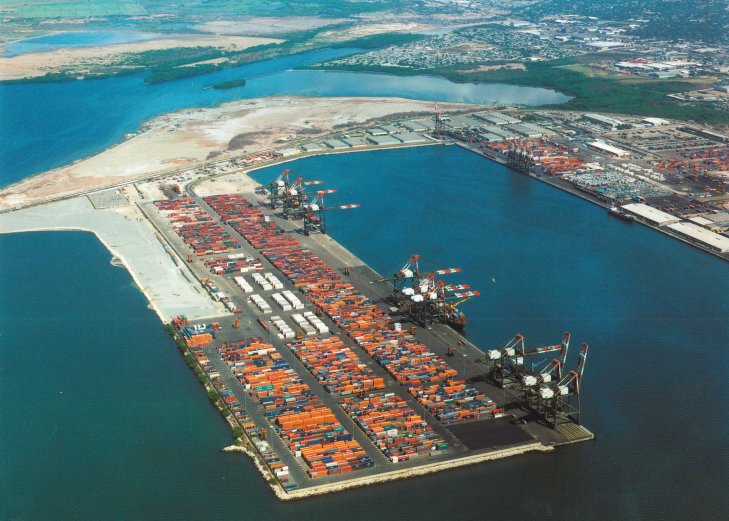
The Port of Kingston – ripe for development

The Port of Kingston – ripe for development

The Government of Jamaica has revealed ambitious plans to turn the Caribbean island in to a global logistics hub – and high level talks have already begun with the aim of increasing volumes of sea cargo.

Projects under discussion include developing the Port of Kingston ahead of the expansion of the Panama Canal and the development of a new commodity port to be built in eastern Jamaica which will specifically handle petroleum products, coal, minerals and grain.

At the same time, there is talk of constructing an air cargo airport to help with increased volume of boxes and the construction of large scale ship repair docks to service the increasing volume of post-panamax vessels.

Dr Eric Deans, chairman of the Logistics Task Force, said a market of 800 million people, including the USA and Brazil, can be accessed readily from Jamaica. He said trade opportunities are due to “burst wide open with the expansion of the Panama Canal scheduled to be completed in 2015; the multi-billion stimulus package by Brazil for World Cup 2014 and Olympics 2016; and the growing middle class in Latin America.”

He added that a critical aspect of the global logistics hub initiative is the broadening of bilateral collaborations with Jamaica’s global partners, and encouraging private sector investment and financing through private-public partnerships (PPPs).

Talks regarding the set-up of special economic zones are already underway with local and foreign investors.

The Jamaica Ministry of Industry, Investment and Commerce, which is spearheading the initiative, says that it will help give the country a global logistics supply chain that is able to compete with the likes of Singapore, Dubai and Rotterdam.

Perhaps this initiative could spur on our local authorities to actually move on ‘logistics hubs’ here in South Africa. While the huge expansion plans for our existing harbours, railroads are pursued, it is high time that the likes of Tamboekiesfontein, for instance, and other privately initiated transit hubs are taken seriously, and in an integrated manner to benefit commerce and trade in the Southern African region.

 Related articles

WCO announces the passing of Bill Nolle – proponent of the WCO Data Model

Australian Customs hosted visits from three international experts on trade data harmonisation - Bill Nolle, Dietmar Jost and Eric Sunstrum.

Australian Customs hosted visits from three international experts on trade data harmonisation – Bill Nolle, flanked by Dietmar Jost and Eric Sunstrum of the WCO.

It is with sadness we [WCO] learnt that our former colleague, the former Chairperson of the DMPT passed away on 29 December 2012 after a brief period of illness. He was fighting a very aggressive cancer.

Bill Nolle was a fabulous contributor to our [WCO] area of work and he has left his imprint in many aspects of our work at the Data Model Project Team and the Information Management Sub Committee. Version 3.0 of the WCO Data Model owes its richness and quality thanks to Bill’s splendid contribution. Bill authored the WCO Single Window Data Harmonization Guidelines/ UN/CEFACT Recommendation 34.  We [WCO] owe it to Bill the methodology of Gather-Define-Analyze-Reconcile for data simplification and harmonization. Bill brought passion to his work. His speeches and interventions were always intense and engaging and he will be missed in his professional environment.

His legacy includes an eLearning module in which you can hear him explain how data harmonization was carried out in Jordan. The module remains a favorite for the professional users and trainers alike.

Bill retired from US Customs and Border Protection where he worked for 30 years. He and his wife moved to the Outer Banks from Frederick, MD in 2009, to be near the beach that he loved. At the time of his death he was employed by Nathan Associates Incorporated and Crown Agents as a consultant. Bill travelled extensively during his tenures with US Customs and Border Protection, Nathan Incorporated, and Crown Agents, making friends on each continent in the world.

The following obituary was posted by a colleague in Jordan –

Bill has been a breath of fresh air that visited our country (Jordan), every once in a while as Customs Consultant. He was an inspiration and a driving force to all,  giving advice when needed, and always willing to help. A proud husband, father and (Opa), that we felt his family was our own, Not to forget, a professional Pita Bread baker,  we were hoping to someday try. One would think, God loved him so,  and wanted him closer more. Bill will always be in our hearts,  a father figure, a teacher, and a colleague holding one of the greatest hearts I’ve known. My deepest condolences to his loving family, and may he rest in peace.   Posted by: Juliette Najjar – Amman – Jordan – Friend / Colleague   Jan 17, 2013.

Sources: WCO, Gallup Funeral Services, and www.tributes.com

Corruption persists at Customs and Border Protection

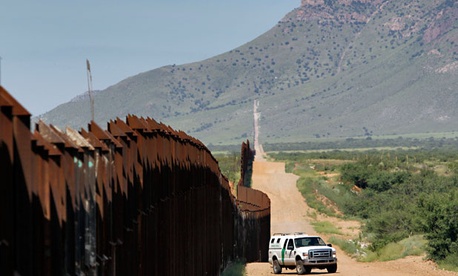
A CBP vehicle patrols the border in Arizona in 2010. (Matt York/AP file photo)

A CBP vehicle patrols the border in Arizona in 2010. (Matt York/AP file photo)

Nearly 150 Customs and Border Protection officers were arrested or indicted for corruption over the last eight years, a new report has found. A majority of the officers were stationed along the Southwest border, the Government Accountability Office determined. An additional 2,170 were arrested for misconduct in the same time period. GAO cited CBP’s lack of review and oversight of its employees and monitoring processes as complicit in allowing corruption to fester within the agency. (Readers please bear in mind that CBP has over 50,000 members)

Incidents of corruption included fraud, harboring aliens, selling immigration documents and allowing loads of narcotics through a port or checkpoint. Of the 144 corruption incidents, 103 — more than 70 percent — were considered “mission-compromising.” CBP even reported some instances of “infiltrators” seeking and gaining employment at the agency for the sole purpose of engaging in mission-compromising activity. For example, an officer stationed in El Paso, Texas, was arrested in 2007 for conspiring to import 5,000 pounds of marijuana each month into the United States. Less than 1 percent of arrests for misconduct, however, were related to CBP’s mission.

GAO recommended CBP — part of the Homeland Security Department — better track which pre-employment screens assist in identifying unacceptable job applicants. CBP currently conducts background investigations and polygraph examinations for potential hires, but does not monitor which tactics are the most effective. GAO also suggested CBP assess the feasibility of expanding the polygraph program to include occasional tests for current employees. Additionally, the auditors said the agency should improve the quality assurance of its screenings and set a timetable to complete a comprehensive employee-integrity strategy. CBP concurred with all of GAO’s recommendations, saying while an overwhelming majority of its employees are honest and hardworking, there is little room for error. “Any act of employee corruption interferes with the agency’s mission to secure the nation’s borders against all threats and facilitate legitimate travel and trade,” Jim Crumpacker, DHS’ chief liaison to GAO, wrote in a letter to the auditors. Source: www.govexec.com

Is Google moving into box tracking?

container-trackingThe US Patent and Trademark Office has granted Internet search giant Google a patent on a system for securing, monitoring and tracking containers. According to United States Patent 8284045, it describes a two-way communication system, supported by an electronic bolt seal, a network gateway, a web-based platform, and a mobile device, that allows containers to be networked for the transfer of data. Shipping containers are networked for transferring data between the shipping containers. The shipping containers include sensors for detecting conditions associated with the shipping containers. The conditions sensed by any shipping container whether transported by rail or ship is transmitted from an ad hoc network, via a gateway configured for satellite or cellular communications for example, to a container-tracking application server or equivalent computer system. The computer system is remotely located to the shipping container for central compilation, analysis, and/or display of data regarding the shipping containers.

The system describes an environmental sensor that can travel with a product within a carrier’s logistics network. The environmental sensor being configured to sense an environmental condition capable of affecting the product to generate product environment data. The system includes a scanner configured to read product environment data from the environmental sensor. The system also includes a hub control unit configured to communicate with the scanner and receive the product environment data from the scanner and determines whether the product environment data transcends a limit of exposure of the product to an environmental condition. The hub control unit is also configured to generate a transporting instruction to redirect transport of the product to an alternate destination different from its original destination if the hub control unit determines that the product environment data indicates the environmental condition of the product has transcended the limit of exposure. What a mouthful! I dare say that there are people out there that can decipher the patent content and relate to its various diagrams. If you are interested in this topic, please visit the following link – http://www.archpatent.com/patents/8284045. Also visit the Patent Buddy for similar information. Hopefully as the business case for this patent unfolds things may become a bit more clearer – and perhaps a little sinister too for some!

Africa – China’s Export Route to the U.S.?

AGOA_W1The Africa Growth and Opportunity Act intends to support African exports to US markets. It is helping savvy Chinese companies too. US-Africa trade received a boost with the signing of the African Growth and Opportunity Act (AGOA) back in May 2000, which enabled African countries to export over 4,000 products, including apparel, quota-free and duty-free to the US.

Geared to support the integration of African countries into global markets, AGOA has enjoyed broad cross-party support in a usually fraught US legislature – especially on issues of foreign trade – and has been renewed several times. Helping Africa, it seems, is something everyone can agree on.

But they might, unwittingly, have been helping China too. Research by Lorenzo Rotunno and colleagues at the Centre for the Study of African Economies, Oxford University, suggests that savvy Chinese companies have set up shop in Africa as a route to get their products into the US with all the AGOA benefits.

The entrepreneurs’ logic is impeccable. Not only could an Africa platform get them duty free access to US markets, they could also avoid heavy quotas on China’s exports to the US, imposed through previous protectionist measures by the rich world, such as the Multi-Fiber Agreement.

Because AGOA did not contain ‘rules of origin’ provisions, the door is wide open for such creative thinking. “Restrictive quotas on Chinese apparel exports in the US and preferential treatment for African exports resulted in quota-hopping transhipment from China to the US via AGOA countries” the researchers say.

Chinese and Taiwanese producers are now said to comprise the bulk of a textile “diaspora” in Lesotho, Madagascar and Kenya. In one Kenyan processing zone, 80% of the 34 garment plants had Asian owners. While some outfits doubtless have in-country assembly – and therefore generate jobs and incomes for Africans – a number are little more than transporting docks for foreign-sourced, fully assembled goods ready to go to their final destination, tax free.

Chinese entrepreneurs made no bones about it. In one survey, they gave ‘taking advantage of international trade agreements’ in their top five list of motives for investing and operating in Africa. Source: AllAfrica.com 

Big Brother – Robot Mosquito Spy Drones

Reports indicate that the US military has poured huge sums of money into surveillance drone miniaturization and is developing micro aircraft which now come in a swarm of bug-sized flying spies.

According to various internet sources, a team of researchers at the Johns Hopkins University in conjunction with the US Air Force Office of Scientific Research at Wright-Patterson Air Force Base in Arlington, Virginia, is helping develop what they are calling a micro aerial vehicle (MAV) that will undertake various espionage tasks.

The robotic insect can effortlessly infiltrate urban areas, where dense concentrations of buildings and people, along with unpredictable winds and other obstacles make it impractical.

It can be controlled from a great distance and is equipped with a camera and a built-in microphone.The new device has the capability to land precisely on human skin, use its super-micron sized needle to take DNA samples and fly off again at speed. All people feel is the pain of a mosquito bite without the burning sensation and the swelling of course. The hard-to-detect surveillance drone can also inject a micro radio frequency identification (RFID) tracking device right under skin, and can be used to inject toxins into enemies during wars.

As early as in 2007, the US government was accused of secretly developing robotic insect spies when anti-war protesters in the United States saw some flying objects similar to dragonflies or little helicopters hovering above them. The US is not alone in miniaturizing drones that imitate nature: France, the Netherlands and Israel are also developing similar devices.France has developed flapping wing bio-inspired micro drones. The Netherlands BioMAV (Biologically Inspired AI for Micro Aerial Vehicles) has also built Parrot AR drones.

Meanwhile, Israel Aerospace Industries (IAI) has produced a butterfly-shaped drone, weighing just 20 grams, which can gather intelligence inside buildings.
The insect drone, with its 0.15-gram camera and memory card, is managed remotely with a special helmet. Putting on the helmet, the operator finds themselves in the “butterfly’s cockpit” and virtually sees what the butterfly sees in real time.Source: http://www.theintelhub.com


CBP Maritime Operations resume after hurricane ‘Sandy’

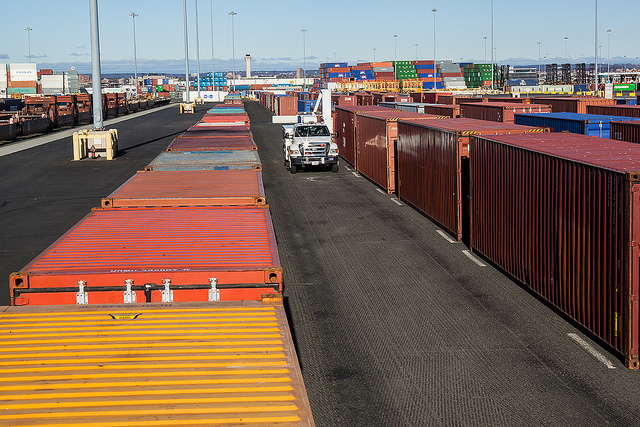
A U.S. Customs & Border Protection Mobile Radiation Portal Monitor (MRPM) drives down a row of containers checking them for radiation.The truck will drive down an entire row of containers, scan one side of them and then it will drive down and scan the other side of them.

U.S. Customs and Border Protection’s maritime mission is now back on-line with today’s processing of cargo vessels and containers. “In the aftermath of Hurricane Sandy the people of New York and New Jersey have faced great adversity, the men and women of CBP have been with them each step of the way,” said Robert E. Perez, CBP’s Lead Field Coordinator for CBP in FEMA Region II. “Today’s processing of cargo ships into the Port of New York/Newark marks the next step in CBP restoring its maritime operations here in the greater New York City area and returning to business as usual.”

CBP personnel are on site today processing 161 expected international flights with approximately 31,500 passengers at JFK and 92 expected international flights with approximately 14,500 passengers at Newark International Airport.

To facilitate the flow of goods into the New York area, CBP officers conducted cargo container inspections this morning at the Port of New York/Newark for the first time since Hurricane Sandy battered the New York/New Jersey area. CBP import and entry specialists were back to work as soon as their facility opened last week, processing merchandise to help facilitate the flow of much needed supplies and supporting the United States economy.

CBP worked very closely with the U. S. Coast Guard and the NY/NJ Port Authority to lift waterway restrictions and open marine terminals to cargo vessels. Officers were on site and ready to process shipments as soon as cargo was off loaded. CBP deployed officers to JFK and Newark Liberty International Airport from other parts of the country to assist with the processing of international passengers. Source: FEMA

The Case for Screening-as-a-Service

In an interview with The Maritime Executive, Peter Kant, executive vice president for Rapiscan Systems informed that the primary business of a port is serving as a hub for water-borne commerce and all of the logistics that entails, with each port competing for the business of shippers and container operators. Every investment made by a port authority, from a crane to a dredge to a security checkpoint, must be based on how this activity will not only position the port to current customers, but how it will affect the attraction of future customers.

Increasingly, however, these investments are including more and more security needs, from container scanning equipment to operator training to security architectures. Security, and in particular security screening, is not the core business of a ports authority, but compliance with national and international guidelines demands that certain security standards be met, or losing customers will be the last of a port authority’s worries.

But even though security screening is an absolute necessity, many ports are looking to get out of the security game altogether. But will the departure from security make ports less secure…or could it actually enhance cargo scanning operations?

The Heavy Burden of Screening
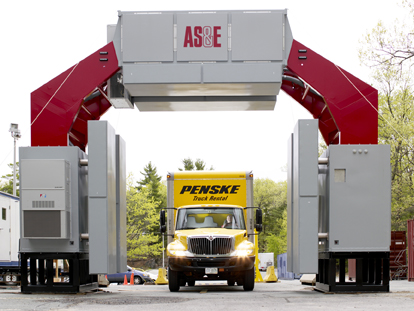
As mentioned earlier, port authorities are not experts when it comes to security, especially a task as granular as cargo screening. It’s not just about a “mean guard and a magnet” when it comes to screening anymore, and this especially holds true to the world of maritime cargo. First, the right technology must be installed, a solution that can effectively analyze cargo for potential contraband or threats, both conventional and radioactive. Then, a port authority must determine the best location for the screening checkpoint, and oversee the construction of the location, both in terms of port impact and traffic optimization.

Next come the installation and calibration of the scanning technology, as well as the hiring and training of security operators. The authority must also establish a workflow for what happens when a container is flagged – what requires a manual inspection? Who approves such an operation? What remediation must take place after the fact?

The fact of the matter is, cargo scanning isn’t just about putting containers through an X-ray machine. It’s much, much more than that, and consumes enough time that establishing and running a checkpoint can adversely affect port business.

But there is an easier way to run cargo screening operations. Port authorities are experts in maritime commerce, so why shouldn’t they turn to experts in security screening to run cargo scanning operations?

Cargo Scanning-as-a-Service
Rather than trying to become cargo screening experts overnight, port authorities can take advantage of a major trend in the overall security world: security-screening-as-a-service. Essentially, port operators form a partnership with an experienced security screening solutions provider, tasking the provider, not the port, with the onus of establishing and running a cargo scanning checkpoint.

Other than the obvious benefit of freeing the port authority from the security logistics headache, why turn to cargo screening as a service? For one, 100 percent screening in the United States has not gone away…at least not yet. But even if the requirements on cargo entering the USA are loosened, port screening for contraband is not going to decrease – in this economic climate, governments want to ensure that everything that can be taxed is taxed. This is a nightmare scenario for port authorities to deal with, but one with which screening solutions provider are comfortable. With their experience in the field, these providers can find the right equipment and checkpoint set-up to be as thorough and detailed as needed when it comes to cargo scanning, ensuring that not only are potential threats detected, but any contraband can be swiftly dealt with by the appropriate authorities.

Going with an experienced screening partner can also add radiation detection capabilities, a growing problem in the world of maritime commerce. Radioactive materials, either improperly labeled or being shipped as contraband, can shut ports down for days and are impossible to detect via conventional cargo screening technologies. By utilizing screening-as-a-service, however, port authorities can place this additional burden on the solutions provider, which has the experience and the right capabilities to detect radiation alongside conventional contraband and threats.

Training of security operators is another headache that cargo scanning as a service eliminates for the port. The difference between a major international incident and millions of dollars in fines can hinge entirely on the competency of a security screening operator. Do port authorities really want to be responsible for the skills of these professionals, especially when it’s in a field far outside of their comfort zones?

With cargo scanning as a service, training falls into the lap of the solutions provider, a task with which they are well familiar. Because they have built, installed and maintained the security technologies selected, these organizations best understand how to train professionals on the ins-and-outs of analyzing scanned images and detecting potential threats and contraband.

The service also gives ports a major competitive advantage, as a well-designed, specially-staff cargo scanning checkpoint makes the entire security process far easier for customers to deal with. Throughput is often increased, meaning that cargo makes it to its end destination more quickly and with fewer roadblocks, a paramount concern for shippers everywhere. Even a few hours delay can be costly, especially when perishable goods like imported produce are involved.

The Real World
Perhaps most importantly, cargo-scanning-as-a-service is not a pipe dream or some theoretical solution for ports. It’s already in practice and being used by some of the largest customs and port operations in the world.

The Ports Authority of Puerto Rico, for example, utilizes cargo-screening-as-a-service from a customs perspective, ensuring that no contraband is entering the island through its major ports. By enlisting an outside, specialized security solutions provider, the Port has increased throughput without sacrificing the integrity of its customs or security operations.

The Mexican Customs Authority has also turned to a wide-ranging cargo-screening-as-a-service solution for their operations, both land-locked and maritime. The major project has just recently been undertaken, but ultimately the vast majority of Mexican ports will soon be turning to screening-as-a-service when it comes to cargo, freeing the ports to focus on the business, not contraband detection.

Detecting threats and contraband via maritime cargo is not going to get any easier. If anything, smugglers, criminals and terrorist organizations are becoming more and more clever when it comes to getting illicit goods, weapons and hazardous materials across national borders. Port authorities trying to stay one step ahead of these issues are in for a struggle, as other aspects of the port business suffer.

Keep the port operator’s attention where it belongs (on the port) and let specialized experts handle the cargo scanning burden. It’s proven, it works, and it’s the best way forward to maritime prosperity and safety. Source: The Maritime Executive

US Customs – $100 million customs fraud uncovered


The article below has been doing the rounds over various social media the last few days. The ‘standout’ issue for me is the fact that such an alleged crime occurred in the USA. With the focus of the customs world nowadays so much on the anti-terror campaign, could it be that one of the single biggest enforcement agencies in the world is not as sharp on traditional customs fraud activities? With the boundless focus on ‘safety and security’ it often seems as though the traditional customs crimes have given way to ‘globally networked syndicates’ using every means of technology to by-pass sovereign authorities. Yet, when you read the brief below, it all boils down to the human factor. To what extent the outcome of this case will attest to the Customs and Border Protection Agency’s risk management capability and moreover the extent to which such campaigns as CT-PAT really give the agency the edge in better ‘knowing’ its customers remains to be seen. A successful border agency must still do the basic things right, as dated as they may seem in the modern world. This case therefore proves how important it is for any national customs and border management agencies to invest in customs-skills training with lesser emphasis on the technology side of things. It is so unfortunate that most countries see Customs Capacity Building as an investment in technology. At this rate with no investment in customs technique, who is going to be able to properly interpret risk indicators if all the agency employs are statisticians and university post-graduates?

SAN DIEGO, CA – A complaint charging eight individuals and three corporations with operating a ring that illegally imported hundreds of millions of dollars in foreign goods into the United States though the Long Beach Port-of-Entry and evaded millions of dollars in import taxes was unsealed today, announced United States Attorney for the Southern District of California Laura E. Duffy.

According to the complaint, the defendants’ scheme focused on purchasing large, commercial quantities of foreign-made goods and importing them without paying import taxes or A Customs duties. As alleged in the charging documents, wholesalers in the United States would procure commercial shipments of, among other things, Chinese-made apparel and Indian-made cigarettes, and arrange for them to be shipped by ocean container to the Port of Long Beach, California. Before the goods entered   States, the defendants generated paperwork and database entries indicating that the goods were not intended to enter the commerce of the United States, but instead would be transshipped “in-bond” to another country, such as Mexico.

As noted in the complaint, this in-bond process is a routine feature of international trade. Goods that travel in-bond through the territory of the United States do not formally enter the commerce of the United States, and so are not subject to Customs duties.By claiming that the goods would be transshipped in-bond to another country, the defendants falsely represented that no Customs duties applied.

According to the complaint, instead of completing the in-bond transshipment, the defendants would hire truck drivers to haul the shipments to warehouses throughout Southern California. After generating the false paperwork and database entries, the goods would then be diverted back to Los Angeles and other destinations for shipment throughout the United States. As the conspirators had now effectively imported the goods tax-free, they could in turn sell more merchandise at cheaper prices and reap greater profits than their law-abiding competitors, including domestic American manufacturers of the same goods.

The complaint alleges that in addition to harming lawful domestic businesses, the defendants deprived the United States of the Customs duties that it was owed on these diverted shipments. To date, the government has already identified more than 90 commercial shipments of Chinese-made apparel, foreign-made cigarettes and other goods that were illegally imported in this manner. Altogether, these shipments were worth at least $100 million and resulted in more than $10 million in lost Customs duties, taxes and other revenue.

According to United States Attorney Duffy, “The charges announced today underscores our commitment to ensure that no one exploits the import process for personal gain. Not only does such illegal conduct present a significant danger to the American people, but it deprives law-abiding companies of a level playing field resulting in the potential loss ofbillions of dollars in revenue.”

“This investigation pulled back the curtain on a potentially costly fraud scheme operating in one of the world’sbusiest commercial centers,” said ICE Director John Morton. “Instead, HSI, aided by our law enforcement partners, exposed and dismantled this criminal ring and now those responsible will be held accountable.”
“Every day, U.S. Customs and Border Protection officials work to protect the U.S. and interdict fraudulent goods from entering the country. I commend the work of our officers for their instinct and diligence, and recognize the seamless coordination across government agencies,” said David V. Aguilar, Acting Commissioner, U.S. Customs and Border Protection. “Joint efforts such as this are crucial to maintaining our nation’seconomic security and competitiveness.”

“The FDA-Office of Criminal Investigations is fully committed to investigating and supporting the prosecution of those who may endanger the public’s health and safety by importing unsafe and potentially life-threatening products. We commend the U.S.Attorney’s Office in the Southern District of California for their diligence,”said Lisa Malinowski, Acting Special Agent in Charge, U.S. Food and Drug Administration’s Office of Criminal Investigations, Los Angeles Field Office. As alleged in the complaint,defendant Gerardo Chavez is President of the San Diego Customs Brokers Association and a licensed Customs broker. Using his Customs license, Chavez, his employees and his companies—including defendants Tecate Logistics, LLC and International Trade Consultants, LLC—generated the fraudulent Customs paperwork that was integral to the scheme. Similarly, Chavez and his companies would make false entries into Customs databases, in order to create the false appearance that in-bond shipments of foreign-made goods had been lawfully transshipped to Mexico. As part of this effort, Chavez, Joel Varela and others would also forge official Customs markings to make it appear as if a United States Customs official had certified various shipments as having been transshipped to Mexico.

Charging documents also allege that Chavez had several dedicated customers who were part of the conspiracy. For example, defendant Sunil Mirwani, a citizen of the United Kingdom, received dozens of shipments of illegally imported Chinese-made apparel at warehouses throughout the Los Angeles area. Mirwani marketed and sold the apparel using hiscompany, defendant M Trade Inc. Similarly, defendant Rene Trahin and other co-conspirators distributed various shipments of illegally imported “gray market” cigarettes ranging from Indian-made to German-made brands to warehouses, self-storage areas and a residence in San Diego, Los Angeles and parts between.

The complaint alleges that the defendants also imported produce infected by Salmonella Agona. Often called simply “Salmonella,” this pathogen is a potentially life-threatening infectious bacteria. On one occasion, after a shipment of nopal cactus (also known as prickly pear) tested positive for Salmonella,co-conspirator changed the description of the nopal cactus’ grower for subsequent shipments, for the purpose of evading future Food and Drug Administration (“FDA”) inspections. Similarly, defendant Elizabeth Sandoval and Varela conspired to import Mexican snack foods that were mislabeled and adulterated with a prohibited dye. The remaining defendants named in the complaint are employees and agents of Customs brokers, wholesalers and transport companies who are alleged to have knowingly aided the conspiracy.

This case is being prosecuted in federal court in San Diego by Assistant United States Attorney Timothy C. Perry and is being investigated by the Department of Homeland Security, Immigration and Customs Enforcement Homeland Security Investigations, and United States Customs and Border Protection, the Internal Revenue Service, the Food and Drug Administration, and the Alcohol and Tobacco Tax and Trade Bureau. A complaint is a formal charging document and defendants are presumed innocent until the Government meets its burden in court of proving guilt beyond a reasonable doubt. Source: US Department of Justice


Homeland Security’s App for Smartphones and PC’s

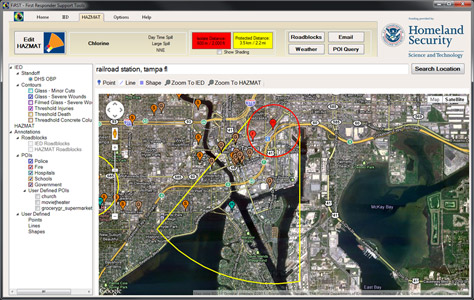
The U.S. Department of Homeland Security‘s Science and Technology Directorate and its public and private sector partners have developed a must-have “app”: the First Responder Support Tools (FiRST) for computers and smartphones.

At approximately 6:30 pm on Saturday, May 1, 2010, a smoking SUV in Times Square was reported by alert street vendors. Acting quickly, NYPD evacuated vast stretches on 7th and 8th Avenues, including Broadway theatres and several other buildings and hotels in the area. The entire area was barricaded. Times Square on a Saturday evening before the shows is teaming with people, and the terrorist knew that. The bomb failed, but had it detonated, it would have killed and wounded many, according to NYPD.

In the first chaotic moments after suspicion of a bomb threat, first responders have a myriad of questions, assessments, and decisions to make, all at once, and all the while the scene could be changing rapidly. Is the bomb real? How large is the potential blast radius? Where will we evacuate people? Are there any critical infrastructure or special-needs population centers in the vicinity? Any schools, hospitals nearby? What roads should be closed? Which roads should stay open for evacuees? And on and on….What if they could get all this information in one place?

Now they can: The U.S. Department of Homeland Security’s (DHS) Science and Technology Directorate (S&T) and its public and private sector partners have developed a must-have “app”: the First Responder Support Tools (FiRST) for computers and smartphones.

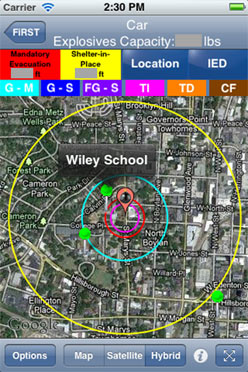
Users start by entering what they know about the (possible) bomb, including its geographical location. The app will then advise them on factors such as the distance around the bomb that should be cordoned off, the best locations for road blocks, what buildings should be evacuated or serve as shelter sites, and what some of the local “areas of concern” are – places such as schools, for instance, or other areas where large numbers of people are at risk. It will also estimate what to expect in the way of structural damage and injuries, should the bomb go off.

Because no two bomb threat scenarios are identical, there are many opportunities for users to provide information on their own unique situation, so the output of the app will be custom-tailored to them. Maps of the area can then be labelled by the user, and shared by email with other personnel.

The app can also be used in the event of toxic substance spills, as it includes information on the handling of over 3,000 hazardous materials. Using its weather feature, users can additionally determine the likely route that airborne substances will be carried by prevailing winds, and then warn or evacuate people accordingly. FiRST works on iOS and Android devices, along with PCs. It is available to first responders only, at a price of US$12 for the mobile version, or $100 for the desktop. Source: U.S. Department of Homeland Security and gizmag.com

Dumb, dumber’er, or just plain downright stubborn?

A US statutory requirement to scan all incoming containers at foreign ports will take effect at the beginning of July, a date thrown into sharp relief as the House of Representatives homeland security committee approved a revamped bill that retains the clause.

The draft bill gave the industry minor cause for cheer for unrelated reasons, as it will postpone the requirement for workers to renew their transportation worker identification cards in the absence of Department of Homeland Security regulations on biometric card readers. But the 100% scanning requirement has proved its resilience yet again.

Since 2006 shippers, spearheaded by associations that include the National Retail Federation, have been campaigning to get the requirement eliminated on grounds that it is impractical and costly and could trigger foreign government retaliation against cargoes originating from the US. US homeland security secretary Janet Napolitano has pointed out the impracticality of the law and proposed a two-year postponement.

These calls went unheeded in the house, as the homeland security committee on Wednesday approved the Securing Maritime Activities through Risk-based Targeting for Port Security Act, known as the Smart Port Security Act. The Smart Port Security Act reauthorises the Security and Accountability for Every Port Act, known as the Safe Port Act, which became law in 2007.

The Safe Port Act implements the 9/11 Commission’s recommendations, including the contentious provision that all US-bound containers will be scanned at origin from July 2012. A fig leaf in the Safe Port Act allows the homeland security secretary to grant waivers to individual ports, under conditions that are somewhat vague. Last year, a Safe port reauthorisation draft in the Senate proposed a broad waiver of the 100% scanning requirement.

With the clock now ticking to July 1, shippers were particularly anxious to get the house bill to remove the 100% scanning clause permanently.

The homeland security committee passed a version that allows DHS to recognise other countries’ trusted shipper programmes and allows the US Coast Guard to recognise other governments’ port security threat assessments, but stops short of jettisoning the 100% scanning clause.

Republican congresswoman Candice Miller, chair of the subcommittee on border and maritime security, hailed the new bill, saying: “Securing our waterways is an essential component of a layered approach to security.

“This bill enhances risk-based security measures overseas before the threat reaches our shores, emphasising a stronger collaborative environment between customs and border protection and the US Coast Guard in sharing port security duties and leveraging the maritime security work of our trusted allies.”

Comment: Huh!, to whom does this refer? Such a statement flies in the face of its own C-TPAT program and bilateral overtures with foreign ports (supposedly based on risk). Perhaps its time for the ‘trusted allies’ to deport CSI teams who have not necessarily endeared themselves to their respective host nations.

Source: Lloydslist.com

USCBP and EU sign C-TPAT Mutual Recognition

U.S. Customs and Border Protection (CBP) and the European Union (EU) signed today a Mutual Recognition Decision between CBP’s Customs-Trade Partnership Against Terrorism (C-TPAT) program and the EU’s Authorized Economic Operator (AEO) program.

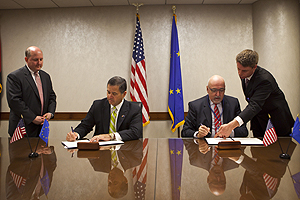
U.S. Customs and Border Protection Acting Commissioner David V. Aguilar and European Union Taxation and Customs Union Directorate Director-General Heinz Zourek sign the Mutual Recognition Decision between CBP’s Customs-Trade Partnership Against Terrorism program and the EU’s Authorized Economic Operator Program.

CBP Acting Commissioner David V. Aguilar and Director-General Heinz Zourek, European Union Taxation and Customs Union Directorate (TAXUD) signed the decision, which recognizes compatibility between the EU and the U.S. cargo security programs.

“Today’s decision on the mutual recognition of the EU and U.S. trade partnership programmes is a win-win achievement: It will save time and money for trusted operators on both sides of the Atlantic while it will allow customs authorities to concentrate their resources on risky consignments and better facilitate legitimate trade,” said Director-General Zourek.

C-TPAT is a voluntary government-business initiative to build cooperative relationships that strengthen and improve overall international supply chain and U.S. border security. C-TPAT recognized that U.S. Customs and Border Protection can provide the highest level of cargo security only through close cooperation with the ultimate owners of the international supply chain such as importers, carriers, consolidators, licensed customs brokers, and manufacturers. Source: US CBP

Related article