Mozambique – Huge Heroin Seizure with South African Connection

00013ee0-314The Mozambican police claims that it has seized almost 600 kilos of heroin, at Namoto, in the northern province of Cabo Delgado, on the border with Tanzania.

The drugs were found on Sunday in the possession of two citizens of Guinea-Conakry, who are now under detention in the Cabo Delgado, provincial capital, Pemba. The drugs are being stored in the warehouses of the provincial attorney’s office.

According to Malva Brito, the spokesperson of the provincial police command, cited in Wednesday’s issue of the Maputo daily “Noticias”, the final destination of the heroin was South Africa.

Brito said the drug was concealed in an otherwise empty seven tonne pick-up truck. The Guineans had improvised a type of hold within the truck’s bodywork. But alerted by a strange smell and the odd size of the stowage area, the police searched the truck, and found the heroin in 118 plastic bags of about five kilos each (which is a total of 590 kilos).

When the heroin was found, the Guineans first claimed that it was fertilizer that they were taking to South Africa. When that didn’t work, they tried to bribe the frontier guards, offering them 60,000 US dollars. The bribe was not accepted.

The Guineans had started their journey in the Kenyan capital, Nairobi, last Friday, and crossed Tanzania before entering Mozambique. The Toyota pick-up bore a number plate from the Democratic Republic of Congo, and supposedly belongs to a Congolese named Sidiki Sano, who is resident in Mozambique. The owner of the heroin is believed to live in Johannesburg.

If the police figures are accurate, this is an enormous drugs bust. According to the United Nations, heroin was selling in South Africa in 2012 for 35 dollars a gram. So 590 kilos would sell in Johannesburg for 20.65 million dollars. Source: Mozambique News Agency (Agência de Informação de Moçambique).

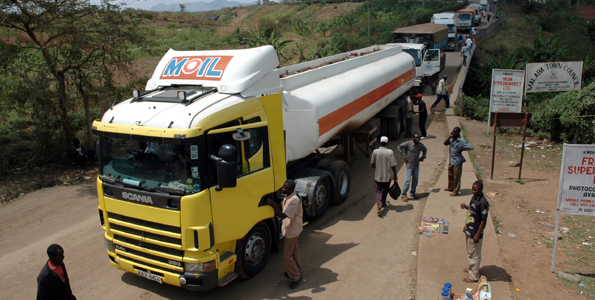
Bribery along the corridor

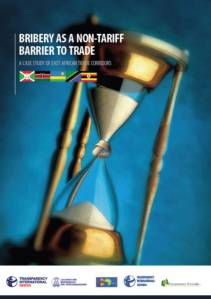
Notwithstanding efforts to minimize collusion, bribery and corruption through increased use of technology, the underlying fact remains that human intervention cannot be completely removed from nodes within the supply chain.Identifying the causes and parties involved in such activity is only the start (yet minuscule) aspect of a problem entrenched in the distrust of government officials and border authorities in particular. Integrity is based on trust. If trust is the placement of hordes of incompetence in public jobs to secure votes, then you will not need to look very far to understand that “the bribe” epitomizes the ultimate enterprise of individuals either bent on extortion, or to avail their services (like prostitutes  to the crooked trader. The following article “Bribery as a non-tariff barrier to trade” (click hyperlink to download) takes account of a wide-spread of role players as to their views and attitudes on the matter. In my view it is a template for what actually occurs at every border across the continent. 

Transparency International (Kenya) and Trade Mark (East Africa) have collaborated in the publication of a review on the subject of bribery in the EAC region. The executive summary elucidates the context – 

The East African Common Market Protocol that came into force in 2010 provides for the free flow of goods, labour, services and capital across the EAC bloc. To achieve this, members undertook to remove all tariff and non-tariff barriers to trade. While progress has been made on the removal of the former, doing away with the Non-tariff barriers along the main transport corridors of the region has remained a challenge.

Taking cognizance of this, Transparency International-Kenya, Uganda, Rwanda and Burundi in conjunction with the Transparency Forum in Tanzania conducted a survey along EAC‘s main corridors — the Northern and Central corridors- that form a vital trade link in the region between August and November 2011. The survey objectives were to measure the impact of bribery practices and create public awareness on the vice.

In determining the size of bribe payable, negotiations came top. The value of consignment and the urgency were some of the other factors sighted by the respondents. According to the survey, truck drivers have devised various means of accounting for bribery expenses to their employers. The most common is road trip expense’. These are anticipated regular amounts given prior to the start of a journey and ad hoc miscellaneous expenses. In the transporters’ books of accounts, the bribes are normally disguised either as anticipated regular amounts or as ad hoc miscellaneous expenses. Source: Transparency International and Trade Mark

“Blood Ivory” – Huge seizure of Illegal Ivory in Hong Kong

An emperor, faced with the task of selecting a successor, devises a test: he lays out an array of valuable artifacts — items of gold, jade and ivory — and asks each of his sons to choose one treasure. One prince ponders his options for a while, before selecting an ivory scepter. The emperor is pleased. Ivory is valuable, he says, and also imbued with wisdom. The son with the scepter will rule. This, of course, is merely a fable. But the tale of the emperor and his son hints at ivory’s enduring lure in China. For millennia, it has been seen as a symbol of wealth, a source of wisdom and a sign of nobility. This helps explain why more than 20 years after an international ban on the trade of elephant ivory, the business is booming. “With more disposable income in mainland China, many people are flaunting their wealth, and ivory is seen as a luxury product that confers status,” says Tom Milliken of the Wildlife Trade Monitoring Network. “We are seeing the worst poaching of elephants and the worst illegal trade in ivory over the last 23 years.”

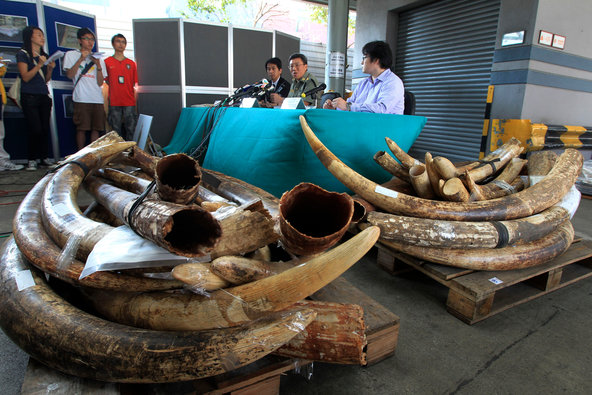
Authorities in Hong Kong have intercepted one of the largest shipments of illegal ivory in history – 1,209 elephant tusks and ivory ornaments weighing more than 8,400 pounds. The Hong Kong Customs and Excise Department announced the seizure on Saturday of 3,813 kilograms of ivory hidden inside two containers shipped from Tanzania and Kenya. One container was labeled as carrying plastic scrap, the other was marked as dried beans.

It was the largest-ever seizure of contraband ivory in Hong Kong. Even within the context of soaring wildlife poaching, the numbers are staggering: the equivalent of more than 600 dead elephants. So lucrative is the ivory trade now that well-armed mafias have gotten in on the act. Hong Kong officials estimated the value of the seizure at 26.7 million Hong Kong dollars, or just under $3.5 million.

The customs agency, which said in a statement that it had “smashed” the ivory smuggling case, reported no arrests. But the South China Morning Post reported that seven people in China were arrested in connection with the seizure. Demand from an increasingly affluent Asia, improved international transport and trade links, and weak enforcement and feeble penalties (in many countries) have caused wildlife poaching to jump over the past decade or two.

More than 300 elephants were killed in Cameroon alone early this year. A video from the World Wildlife Fund shows some of that grim slaughter. In this article, published in September, Jeffrey Gettleman reported that ivory — like blood diamonds from Sierra Leone or plundered minerals from Congo — is now a “conflict resource,” used to help finance conflicts across the African continent.

“Some of Africa’s most notorious armed groups, including the Lord’s Resistance Army, the Shabab and Darfur’s janjaweed,” he wrote, “are hunting down elephants and using the tusks to buy weapons and sustain their mayhem.” Members of some of the African armies backed by the U.S. government, Jeffrey reported, also have been implicated in poaching elephants and dealing in ivory. Source: New York Times

Related Articles

Car importers slam KRA transit vehicles rule

Is the time for a regional transit bond nigh? Given prevailing draconian measures to ensure security and surety, the message is clear that customs brokers, freight forwarders or clearing agents need to demonstrate financial security over and beyond what they are accustomed to. Question – is the transit business lucrative for agents? Why not refuse the business – its just not worth the risk.

A requirement by the Kenya Revenue Authority demanding that all imported transit vehicles above 2000cc be cleared against cash bonds or bank guarantees has been opposed by clearing agents in Mombasa. The agents, under their umbrella Kenya International Freight and Warehousing Association, have threatened not to pay taxes if the regulations are not withdrawn by the tax collector. The agents said that the stringent measures by KRA may stifle trade in the region and may also see the port of Mombasa losing some foreign importers to the port of Dar es Salaam in Tanzania. “We as clearing agents cannot pay the bonds for the importers”.

On August 31, KRA directed all clearing agents that with effect from September 1, all transit vehicles exceeding 2000cc would be cleared against a cash bond or bank guarantees paid by the agents. The forwarders also said that Uganda, Rwanda and DR Congo business class was considering ditching Kenya as an import avenue for Dar es Salaam port. Source: The Star (Nairobi)

EAC authorities share cargo data online

East African tax authorities have launched an online system to share customs cargo information in the region. The system, RADDEx 2.0 (Revenue Authorities Digital Data Exchange), will enable the tax authorities to instantly know what is in transit in the region. Uganda Revenue Authority says RADDEx 2.0 is web-based, has more “functionality and better performance” and will be used by clearing agents. If cargo destined to Uganda poses any risk, notifications  will be sent via e-mail so that authorities can plan action prior to arrival of the cargo. All data on cargo will be sent to a central server at the East African Community headquarters in Arusha, Tanzania. Any East Africa partner state that needs data about expected cargo will interrogate the system, which will automatically provide feedback. The system was developed by IT and customs expert staff from Uganda, Kenya, Tanzania, Rwanda and Burundi and sponsored by USAID/COMPETE (Competitiveness and Trade Expansion Programme). Source: The New Vision, Uganda

Tanzania slams US/ EU non-tariff barriers replacing tariffs

Tariff barriers against African exports have fallen, but European and American non-tariff barriers, exacting high standards of compliance, have replaced them, blocking products and produce, Tanzanian deputy trade minister Gregory Teu told the National Assembly.

“American markets are open, but the standards that our products have to meet are too high for our producers to meet,” Teu said in his response to a question from parliamentarian Rita Mlaki who asked what was being done to exploit the two markets under the African Growth and Opportunity Act (AGOA) and Everything but Arms (EBA) arrangements.

He said the government, through the Exports Processing Zones Authority (EPZA), was pursuing strategies to promote exports by local and foreign investors, but said the markets are practically inaccessible due to the stringent standards set. Tanzanian exports are chiefly coffee, cotton, sisal, tea, tobacco, cashew nuts and pyrethrum. Seems it should be called “Pain for Trade” not “Aid for Trade” Source: AllAfrica.com

Why Tanzanians are afraid of the Regional Federation

The following article by Tony Zakaria is a candid look at the socio-economic environment of the Tanzanian people. Enjoy.

Why is Tanzania so afraid of the EAC political federation? We seem to shy away from signing any significant document that commits Tanzania to a marriage with Kenya, Uganda, Rwanda and Burundi. Have we been using land and security issues as a way to hide other fears unmentionable?

Some Tanzanians fear Kenyan women for being too aggressive and well educated. Those madams drive flashy Mercedes Benz cars and have no shortage of vijisenti or spare change. Upon federation country borders will be wide open and then anything can happen. These macho gals may move over to grab available single or bonded men from the land of the Kilimanjaro to play football in Kenya like all those African football stars in Europe for Man U and C, Chelsea FC, Marseille and Real Madrid clubs. Tanzanian men are among the most handsome in Africa.

If you don’t believe me, take a fresh look at Tanzanian men today. From top bosses in government to ordinary farmers in villages they ooze with quiet charm. A little smile from Bongo men can charm an eagle chick off a tree branch in Limuru. Nairobi and Kampala ladies will not be able to resist.

So why are men in the nation of Serengeti and Zanzibar resistant to political and economic union when they could conquer the whole territory? Tanzanian gals may be among the prettiest on planet Earth alongside the Abyssinians in the former kingdom of Jah Haille Selasie but would be no match for slender necked, doe-eyed Banyarwanda mademoiselles.Bongoland women worry their men might start an African exodus to Kigali if we become the United States of East Africa.

Surviving the 1994 genocide elevated Rwandese women to be among the strongest-willed in Africa. Tanzanian madams have enjoyed easier lives and eternal peace from womb to tomb. Can they compete effectively with Hutu and Tutsi damsels? Tanzanian madams will their wealth too; given away to those more willing to use their talents profitably.

 When borders cease to exist, Muheza and Bombo farmers will not only be losing fruits from their shambas to more enterprising Kenyan traders, they will be losing Eves, Aminas and Marias from their Garden of Eden.Nairobi will be a local bus trip away and Ketepa tea will be universally available at village markets in Bagamoyo and Kilombero at a fraction if its current cost, not a gourmet item in selected supermarkets.

Who knows what else may transpire? Investors from the current Kenya would set up factories to extract and package affordable branded juice from fruit grown in Tanga, Dodoma and Iringa. Mwanza and Dar-es-Salaam residents will enjoy Bongo flavour orange and apple juice passionately, knowing it is made in East Africa instead of Africa south of the Zambezi River.

I can’t see local traders dancing with joyful abandon to celebrate the entry of other bulls in the business kraal. Traders make profits regardless of the origin of traded goods. Manufacturers want to enjoy monopoly in a market protected by import, sales and other taxes and tariffs.Take for example juice made in Kenya using fruits sourced from Tanzania. From Tanzania the fruits are VAT and export taxed. The packed juice is taxed in Kenya for sale and importation. Those taxes only hurt the final consumer, making it unaffordable for ordinary folks.

Why do male-female relationships work fine during the courtship period and marriages fall into boring routines? The possibility of losing a mate to a competitor is such a strong incentive to keep being at a person’s best behaviour, appearance and treatment of a mate. That is when relationships are conducted with business-like efficiency.

Tanzanian businesses fear competition from a supposedly more powerful Kenyan business fraternity. Enterprising Kenyan operators buy tomatoes and onions from Arusha during the day. By evening they are delivered in Kenya factories. At night the veggies are sorted, graded, cleaned, packed and labelled.

By the following morning, the veggies are awaiting airlift to destinations in the Middle East. With added value, Kenyan entrepreneurs make huge profits. Vegetables, fruits and fresh flowers could be processed in Arusha and airlifted straight from Kilimanjaro airport instead of Nairobi.

After federation Arusha, Kilimanjaro and Tanga natives would freely move agricultural produce to what is now Kenya and Uganda while making good money from goods sales and transportation. Wachagga, Waarusha and Meru men and women are pretty aggressive businesswise. They can beat Kenyans at their own game.

Having made mega profits, some Tanzanian traders can entice nice looking Gikuyu and Akamba chicks to settle permanently on the slopes of Mount Meru or the Kilimanjaro Mountain of greatness. Tourists can visit the snow-capped mountain near the Equator in East Africa without crossing the border twice. Some amorous traders can fully practice family planning by spacing their children between Moshi, Arusha, Nairobi and Entebbe. They will just strategically place mothers in each city.

Tanzanians fear their Any Time Cancelled wings of the Kilimanjaro with one borrowed plane will be swallowed whole by the bigger Kenya airways. The pride of Africa has already spread its wings from Lagos to Beijing. This is genuine fear arising from fake premises. If we are one block, the stronger airline will belong to all of us.

The federal states will pool pilots, cabin and ground crew, airports, buildings, planes and vehicles to create the strongest airline in Africa like the old East African Airways that was a real pride for Africa.We have to overcome our genuine and misplaced fears and take the needed steps to make EAC a reality. Uniting our many resources is the only way our grandchildren can survive in the competitive global village. Source: Daily News (Tanzania)

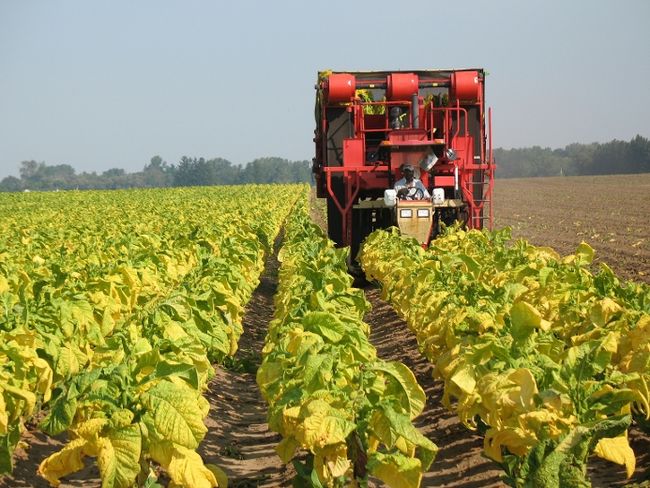
WHO Tobacco Proposal – Threatened farmers slam ‘outreagous recommendations’

FTW Online recently reported that representatives of hundreds of thousands of African tobacco farmers are gathering at the International Tobacco Growers Association Africa Regional Meeting this week to discuss what they see as outrageous recommendations being developed by international regulators that they believe would destroy their livelihoods.

Farmer leaders attending the meeting from Kenya, Malawi, South Africa, Tanzania, Zambia, and Zimbabwe will focus on the recommendations provided by the Framework Convention on Tobacco Control (FCTC) working group on Articles 17 & 18. The FCTC originally recommended that governments of these countries should help tobacco farmers find viable economic alternative crops, assuming that tobacco demand will decline.

Very little research on alternative, economically viable crops has been undertaken and as the group recognizes, any future research will require lengthy time trials. “However, the FCTC has now put forward unreasonable and absurd measures to phase out tobacco production, without offering the vast African farming community any viable fall-back solutions,” the farmers claim.

Numerous countries, such as Malawi, Zimbabwe, Zambia and Tanzania now face the prospect of seeing millions of jobs lost and a huge decline in the export of tobacco. Tobacco cultivation is critical for the economy in these countries and one of the few agricultural activities to have remained buoyant during the recent worldwide economic crisis. The latest guidelines drafted by bureaucrats in Geneva threaten to undo that for no clear benefit.

“These guidelines are just plain wrong whichever way you look at them. Nobody has explained to me how banning some cigarette products and ignoring others will have any benefit for people’s health,” said Roger Quarles, President of the International Tobacco Growers Association (ITGA). “It will just be a disaster for those growers who grow leaf for traditional blended products.” The ITGA represents more than thirty million tobacco growers across Africa, Asia, Europe, North America and South America. “We call on governments all over the world to support growers by adopting a common sense approach and discarding these irrational and potentially economically devastating guidelines.”

The Case of Malawi

The association says switching from tobacco in Malawi to other crops is unrealistic as it would require huge investments, pointing out that tobacco is by far cheaper to produce and benefits more people than most of the next best alternatives. “For example, investment required for a farmer in Malawi to grow two hectares of flowers is equivalent to the investment required to grow 1 000 hectares of burley tobacco. The difference is that 1 000 hectares of burley tobacco provides a livelihood for 500 farmers. So, given that the average farmer in Malawi only has two hectares at his disposal, switching to flowers is simply unrealistic”.

ITGA says one crop that has been recognised as being more profitable than tobacco in Malawi and other tobacco-growing countries is paprika. But the association says world demand for paprika is only 120 000 tonnes. “A single country like Zimbabwe could cope with this demand but the result would be overproduction of paprika and the impact on exiting paprika growers would be catastrophic,” it says. The association also argues that a farmer that grows burley tobacco cannot switch to Virginia tobacco because Virginia tobacco has an industrial curing process requiring huge investment and needs a much greater area than burley “in order to be profitable.”

Tobacco is Malawi’s most important cash crop, accounting for nearly 60 percent of total export earnings and makes up 13 percent of the country’s gross domestic product (GDP). It is also the single largest employer, with more than two million people directly or indirectly relying on the crop. With such an influence, paralysing the industry could cripple the economy in a way that may take the country decades to recover. Sources: FTW Online, TIMSA, and Buisness Wire.

 Related articles