Regional Blocs seek to remove Trade Barriers

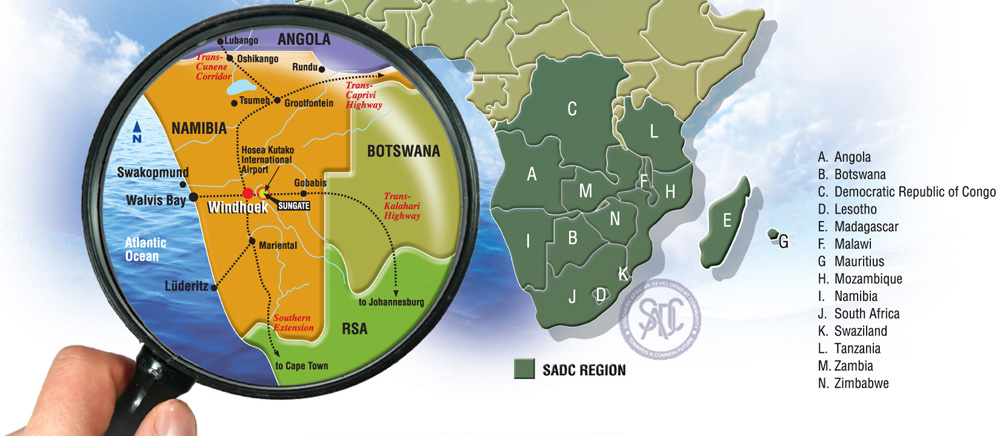
THREE regional economic communities (Recs) have taken the lead as Africa seeks to remove trade barriers by 2017. The establishment of a Continental Free Trade Area (CFTA) was endorsed by African Union leaders at a summit in January to boost intra-Africa trade. Sadc, Common Market for Eastern and Southern Africa (Comesa) and the East African Community (EAC) have combined forces to establish a tripartite FTA by 2014.

Willie Shumba, a senior programmes officer at Sadc, told participants attending the second Africa Trade Forum in Ethiopia last week that the tripartite FTA would address the issue of overlapping membership, which had made it a challenge to implement instruments such as a common currency. “…overlapping membership was becoming a challenge in the implementation of instruments, for example, common currency. The TFTA is meant to reduce the challenges,” he said.

Countries such as Zimbabwe, Tanzania and Kenya have memberships in two regional economic communities, a situation that analysts say would affect the integration agenda in terms of negotiations and policy co-ordination. The TFTA has 26 members made up of Sadc (15), Comesa (19) and EAC (5). The triumvirate contributes over 50% to the continent’s US$1 trillion Gross Domestic Product and more than half of Africa’s population. The TFTA focuses on the removal of tariffs and non-tariff barriers such as border delays, and seeks to liberalise trade in services and facilitation of trade and investment.

It would also facilitate movement of business people, as well as develop and implement joint infrastructure programmes. There are fears the continental FTAs would open up the economies of small countries and in the end, the removal of customs duty would negatively affect smaller economies’ revenue generating measures.

Zimbabwe is using a cash budgeting system and revenue from taxes, primarily to sustain the budget in the absence of budgetary support from co-operating partners. Finance minister Tendai Biti recently slashed the budget to US$3,6 billion from US$4 billion saying the revenue from diamonds had been underperforming, among other factors.

Experts said a fund should be set up to “compensate” economies that suffer from the FTA. Shumba said the Comesa-Sadc-EAC FTA would create a single market of over 500 million people, more than half of the continent’s estimated total population. He said new markets, suppliers and welfare gains would be created as a result of competition. Tariffs and barriers in the form of delays have been blamed for dragging down intra-African trade.

Stephen Karingi, director at UN Economic Commission for Africa, told a trade forum last week that trade facilitation, on top on the removal of barriers, would see intra-African trade doubling. “The costs of reducing remaining tariffs are not as high; such costs have been overstated. We should focus on trade facilitation,” he said.

“If you take 11% of formal trade as base and remove the remaining tariff, there will be improvement to 15%. If you do well in trade facilitation on top of removing barriers, intra-African trade will double,” Karingi said. He said improving on trade information would save 1,8% of transaction costs. If member states were to apply an advance ruling on trade classification, trade costs would be reduced by up to 3,7%.He said improvement of co-ordination among border agencies reduces trade costs by up to 2,4%.Karingi called for the establishment of one-stop border posts.

Participants at the trade forum resolved that the implementation of the FTA be an inclusive process involving all stakeholders.They were unanimous that a cost-benefit analysis should be undertaken on the CFTA to facilitate the buy-in of member states and stakeholders for the initiative. Source: allAfrica.com

Regional IT inter-connectivity takes another step

Delegates from at least 20 African Customs Administrations met in Pretoria, South Africa between 13 and 15 August to advance developments towards a common framework and approach to IT inter-connectivity and information exchange in the region. Convened by the SADC secretariat in consultation with COMESA and Trademark Southern Africa (TMSA), the three day work session focussed on uniform acceptance of the WCO‘s Globally Networked Customs (GNC) methodology, regional awareness of customs developments in the Southern and East African region, as well as joint agreement on customs data to be exchanged between the member states.

Mauritius Revenue Authority (MRA) shared its experience with delegates on the launch of its Customs Enforcement Network (CEN). Kenya Revenue Authority will soon be sharing enforcement information with its MRA counterpart. At least 22 African countries are expected to link up with the CEN network over a period of time. Customs enforcement information is the second pillar of the WCO’s GNC information exchange methodology; the first pillar being Customs information exchange. The latter provides for a holistic approach to the dissemination of common customs data derived from supply chain exchanges, for example declaration information, cargo information, and AEO information to name but a few. This information is vital for trading countries to administer advance procedures and better validate the information being provided by the trade.

Rwanda Revenue Authority introduced it’s RADDex programme which is a web-based IT solution for the exchange of cargo manifest information between participating states in the East African Community (EAC) – see related article below.

SADC and COMESA are rallying their members to participate in the initiative. At the current juncture, various member states have expressed keen interest to participate. While the regional intention is the linking of all customs administration’s electronically, initial developments envisage bi-lateral exchanges between Customs administrations which are ready to engage. The importance of the adoption of the GNC methodology is to ensure that customs connectivity and information exchange is harmonised and consistent across the Southern and East African region irrespective of whether countries are ‘early adopters’ or not.

TKC Pilot – linking regional Customs systems through the “Cloud”

FTW Online recently published an update on recent developments occurring along the Trans-Kalahari Corridor (TKC). It suggests that customs systems throughout the SADC region could soon be talking to each other through the Internet, if the pilot project between Namibia and Botswana is successful. During July 2011, the Southern African Trade Hub unveiled a plan to initiate a pilot programme to link the ASYCUDA systems of Namibia and Botswana via Microsoft’s Cloud Computing technology. Both Microsoft and USAID are partners in this initiative seeking to enable the two customs systems to communicate with each other through a secure portal. View the keynote presentation at the 2011 World Customs Organization IT Conference and Exhibition – Seattle, Ranga Munyaradzi (SATH) and Namibian Customs Commissioner, Bevan Simataa, were invited on-stage to elaborate on this initiative – click here!

According to Oscar Muyatwa, executive director of the Trans-Kalahari Corridor Secretariat, the initiative holds the prospect of opening up African opportunities in the United States for exports, as it is being supported by USAID as part of the African Growth and Opportunities Act (AGOA). Both Namibian and Botswana Customs officials are to be trained in Cape Town over the next few months. The TKC Secretariat believe this initiative will bring about its vision of a ‘automated corridor’. Further ahead the TKCs envisages the establishment of One Stop Border Posts (OSBPs) to reduce border dwell and transit times. Muyatwa says ‘The ‘cloud’ will maintain vast volumes of transit data that will assist future planning along the corridor as well as revenue and budgeting forecasts’. Source: FTW Online.

Comment: lest there be any confusion amongst Customs users, traders and carriers, the concept of cloud computing in the Customs sphere is very ‘clouded’ at this point. What needs to be considered is the ‘ownership’, rights to ‘access’ and ‘integrity of use’ of such information. Furthermore, as this is a first-of-its-kind initiative (in Africa at least); it would be highly recommended that the participants and developers ‘share’ details of the approach with other SACU members in order to better understand the programme. Up to this point it is very unclear how the developer has gone about the integration of customs information, for instance, since ‘users’ have not been fully involved in the scope, proof-of-concept or design of the system. 

Related articles

Zimbabwe: Dependence on SA Imports ‘Risky’

ZIMBABWE’S export trade promotion body, ZimTrade, has warned against over-reliance on South African imports, stressing that Harare could plunge into a serious economic crisis should its southern neighbour experience unexpected production and supply challenges. South African producers of basic commodities, automobile services, chemicals, agricultural inputs and farm produce have taken advantage of a significant weakness in Zimbabwean firms’ capacity to service the domestic market, which has triggered widespread shortages of locally manufactured goods.

South Africa and Zimbabwe have intensified trade relations, but the balance of trade has always been in favour of South Africa, Africa’s largest economy. In March, South Africa’s Deputy Minister of the Trade and Industry, Elizabeth Thabethe, flew into Zimbabwe with a delegation of 45 businesspeople to intensify the hunt for new markets for her country’s companies north of the Limpopo. The business delegation comprised companies in the infrastructure (rail, telecommunication and energy), manufacturing, agriculture and agro-processing, mining and mining capital equipment, as well as information and communication technology.

Zimbabwe labour unions are reportedly facing tremendous pressure from workers to campaign against an overflow of South African products into Zimbabwe to allow for the resuscitation of local industries to create jobs, have said Harare had “turned into a supermarket” for South African products. (Huh? strange since so many of the eligible working Zimbabweans have gainful employment in South Africa. Sounds more like labour union politicking)

If South Africa, for example, is to experience a supply hitch, this will be transmitted directly into Zimbabwe’s production and consumption patterns. The appreciation of the rand in the second quarter of 2011, for instance, resulted in price increases on the domestic market.In other words, heavy dependency on imports will leave an economy susceptible to world economic shocks, according to ZimTrade.

Statistics provided by the Department of Trade and Industry (dti) of South Africa in March, indicated that exports to Zimbabwe increased to R15,5 billion in 2011, from R15,1 billion in 2010, while Zimbabwe’s exports to that country increased to R2,9 billion in 2011, from R1,3 billion in 2010. The statistics indicate that South Africa imported US$1 billion worth of goods and services from the Southern African Development Community trade bloc, with 37 percent of the imports coming from Zimbabwe. The dti said imports from South Africa represented 45 percent of Zimbabwe’s total imports. Therefore, according to ZimTrade, “A growing trade deficit could increase the country’s risk of imported inflation and a direct transmission of shocks into the economy.

South Africa has also been Zimbabwe’s major source market for industrial inputs. The United States, Kuwait, China, Botswana and Zambia were Zimbabwe’s other major trading partners in 2011.However, the dti statistics indicated that Harare had narrowed its trade deficit with Africa’s largest economy in 2011 to R12,6 billion, from R13,7 billion in 2010. This translates to about US$12 million and US$13 million respectively

The dti deputy minister, Thabethe acknowledges that “South Africa and Zimbabwe are not only geographical neighbours. The two countries share historical and cultural linkages. Furthermore, South Africa’s economy is inextricably linked to Zimbabwe’s economy due to its geographical proximity to Zimbabwe whose political and economic welfare has a direct impact on South Africa”. Source: The Herald (Zimbabwe)

How to resolve regional transport problems?

The Freight-Intra Africa Trade Conference in Pretoria, this week, has featured several news articles in the local media, and no doubt some foreign tabloids as well. The Minister of Transport has cleared up the cause of the ills plaguing cross border and regional transport. At least we are now fully informed that [historical] design issues and operational inefficiencies at South Africa’s landborders, and Beit Bridge in particular, are the fundamental causes of under-performance in intra-Africa trade.

“In most cases, the delays at the borders are caused by operational inefficiencies, which result in the duplication of processes. This is a serious cost to the economies of the countries that conduct their trade through such border posts,” the Minister said.

One has to seriously question who advises the minister which leads to such statements, and whether or not these advisers have visited any land borders in recent months.

Now the remedy – Government has budgeted and approved R845-billion for infrastructure development over the medium-term, with a significant proportion, about R262-billion of this investment being earmarked for transport infrastructure and logistics projects. Can anyone question government’s commitment in this respect? Not really. However, the Minister was quick to point out government would resolve inefficiencies at the borders by establishing a mechanism that will bring all border entities under a single command and control structure to address the fragmentation in border operations. “The ultimate vision is to create one-stop border operations to facilitate legitimate trade and travel across the borders”.

The proliferation of border management agencies (integration of enforcement and regulatory authorities under one umbrella) – which has seen the demise of many customs administrations over the last decade – has not proven an effective vehicle to manage cross border travel and trade. It is difficult to see how facilitation procedures can co-exist under a command and control environment. What the situation does create is the opportunity to consolidate a budget for security expenditure. Various Sources: Engineering News, Business Live, Fin24.com and personal opinion.

SACU now a liability – telling it as it is

Windhoek:  The century-old five-member Southern African Customs Union is a stumbling block to the region’s economic integration agenda and has become a liability whose continued existence is no longer sustainable, analysts say.  They add that SACU, which comprises Botswana, Lesotho, Namibia, Swaziland and South Africa (the major contributor to the revenue pool), can best serve the region if it is integrated into the Southern African Development Community.

The Southern Times understands that the dominant feeling in the South Africa and BLNS governments is that SACU’s structural weaknesses prohibit it from advancing long-term regional strategic interests.  South Africa doles out billions of rand to BLNS under a revenue sharing agreement.

However, authorities in South Africa realise that the wider SADC market offers greater economic and strategic interests than the SACU enclave. South Africa has also apparently realised that economically and politically, its interests are better advanced through SADC than SACU. 

These are some of the findings of a study by Dr Sehlare Makgetlaneng, the head of governance and democracy research at Pretoria-based think-tank, Africa Institute of South Africa (AISA).

The Southern Times is in possession of an advance copy of the 2011 study in which key decision-makers in member states voiced their opinions on the usefulness of SACU to regional integration, economic development within the BLNS and South Africa’s weakening interest in the customs union.

The AISA study raises pertinent questions on what BLNS would do if SACU were disbanded. The over-dependence on SACU revenue ‑ vis-à-vis BLNS’s failure to come up with viable alternative revenue sources, lack of manufacturing capacity and a captive market for South African products ‑ also raises pertinent questions on BLNS’s future economic strategies.

That SACU has failed to address strategic economic interests of BLNS is bluntly captured by Namibia’s deputy Trade and Industry Deputy Minister Tjekero Tweya.  He says, “Namibia has been insane for 21 years of independence without a production capacity to produce even a toothpick. The same reason why we import toothpicks from China is because we need them, so we need to work on our production capacity and improve ways of collecting revenue.”

AISA lauds Namibia for establishing strategic partnerships within SADC to advance its economic and political interests.

According to the study, South Africa’s view is that SACU does not serve the regional economic powerhouse’s interests and even without the arrangement, trade with BLNS will continue under the aegis of SADC. Pretoria regards Zimbabwe, Mozambique, Zambia, Malawi, the DRC and Angola as more strategic to its economic goals.

“SACU may become a liability in the advancement of South Africa’s interests in the region and the continent particularly if South Africa is not able to effectively and structurally transform it to serve the popular interests of the region,” the AISA study says.

SACU’s mission is to “serve as an engine for regional integration and development, industrial and economic diversification and expansion of intra-regional trade and investment” among other things. For SACU, the issue is its transformation into SADC. South Africa’s contribution to Southern African regional integration is best and effective through SADC, not SACU. SACU is largely a revenue sharing and trade facilitation organisation. It is not the organisation through which to advance Southern African regional integration,” the research says.

AISA dismisses long-held suggestions that SACU could be used as a platform to establish a SADC customs union.  The customs union’s structural weaknesses make it an undesirable model for regional integration.  The research points out that if other SADC members want to join SACU, they have to address their tariff schedules and international obligations under the World Trade Organisation.

SACU’s present revenue-sharing formula also presents a challenge to admitting new members.

AISA says the formula is structured for a win-win situation among members but does not encourage a win-win solution to problems inherent in the contribution to the revenue pool and the way the pool is shared.

“It is a zero sum game in terms of the way it is shared. It is a definite pool. If one member gets more, another member gets less. If two SADC members who trade more with other SACU members are admitted, their membership will have a significant revenue change within SACU. The revenue sharing formula is determined on the basis of SACU intra-trade,” AISA’s Makgetlaneng says.

The revenue sharing formula is the obstacle to admitting other SADC members into the bloc.  South Africa contributes 98 percent to the revenue pool, which is then shared according to intra-SACU trade or imports.  The more South Africa trades with its partners in the region and beyond, the more the revenue pool grows.

“BLNS import more from South Africa and when the distribution formula is applied these countries get the average of 90 percent of customs revenue. In other words, South Africa compensates them for buying more from itself.”

His sentiments dovetail with previous suggestions from South Africa to establish a development fund in which revenue is ring-fenced and used to finance infrastructural projects that benefit SADC.  The study says that this view is strongly opposed by Botswana and Namibia, which claim entitlement to SACU revenue and have argued that as independent nations, they should spend it as they wish.

But AISA argues that since South Africa has a trade surplus with BLNS, it sets the tariffs within the customs bloc, clearly depriving the BLNS policy room to determine tariffs.

“This study has proved that SACU currently serves as a stumbling block to Southern African regional integration. Its revenue-sharing formula is the obstacle to the admission of other SADC countries as its members. The position that it is bound to absorb other SADC countries and even COMESA countries as its members is opposed by SACU officials, scholars and researchers interviewed by the author.

“They maintain that it is not possible for SACU to absorb other SADC countries as its members. Their position is that BLNS are structurally opposed to the admission of other countries as SACU members. As SACU revenue sharing is currently structured, they (BLNS) have no material interests to see other countries joining SACU as members,” Makgetlaneng says.

AISA maintains that SACU’s interests do not serve the region’s long-term socio-political, economic and security interests and implores South Africa to oversee integration of the union into SADC.

“The reality that SADC takes primacy in terms of importance in Southern Africa is such that SACU cannot be sustained in the long-term. Preparations should be made for it to no longer serve as a sub-group within SADC. It should be integrated into SADC. South Africa should prepare itself for SACU’s integration into SADC. It should strategically and tactically ensure that SACU is integrated into SADC. This will be the qualitative step forward towards the reduction and elimination of the weak links in SADC’s chain driving regional integration,” AISA’s chief researcher, Makgetlaneng, suggests. Original source: Southern Times

Free Trade talks to kick continent into the future

The first round of negotiations to establish a free trade area covering 27 countries in southern and east Africa will kick off on December 8, in Nairobi. It is envisaged that the negotiations will be completed in 36 months. (Really?)

The three trade blocs involved – the Southern African Development Community (SADC), the East African Community (EAC) and the Common Market for Eastern and Southern Africa (COMESA) – decided in October 2008 in Kampala to move towards a free trade agreement.

The intention is to boost intra-regional trade because the market will be much bigger, there will be more investment flows, enhanced competitiveness and the development of cross-regional infrastructure.

Industrialisation, making goods to sell instead of selling primary products, is a possible and also necessary spin-off. Competition with older established and also bigger emerging economies might be a stumbling block initially, but the huge new market may make it possible for locally manufactured goods to compete with those imported from outside the FTA.

Close to 600 million people live in the FTA with a gross domestic product of $1 trillion – suddenly we are boxing in the same weight division as China, India, Russia, Brazil, the US and the EU. Source: All Africa.com.

BriberyComment: Heard all of this before?  It could be hoped that some positive developments will materialise from more talkshops with promises to alleviate poverty and increase Africa’s slice of the international market. While the retail and telecommunications industries have made significant inroads into Africa, manufacturing remains a moot point. Does Africa have the political will to take risks? Removing internal border controls for instance are not high priority for sovereign governments. Neither for that matter is the question of the integrity of officials who man these borders. And, neither is the matter of removing one of the key contributors to cross border fraud – the “paper customs declaration”. Nonetheless, attempts are still being made to redress these ills. Recent developments within SACU indicate a genuine move towards customs-2-customs information exchange based on the ‘Customs Inter-connectivity’ concept. More on this shortly.

SADC Free Trade Area requires Integrated Border Management

At least two articles have surfaced within the last week calling for greater urgency towards the development of free trade areas in Africa. How much time, money and effort seem to be expended in futile trade discussions that – to the man in the street – are meaningless. One such article, appearing in the Freight & Trade Weekly (FTW) relates to a speech delivered by the South African Transport Minister imploring SADC members to fast-track an integrated border management framework to enable ‘free flow’ of trade in the region. Before pressurizing foreign countries to embrace such change it should at least be properly considered at home. For more than 15 years, South Africa has failed to implement any meaningful integrated border management of its own. Forget about the so-called economic protectionism amongst individual African countries. We have – on our own soil –an inter-departmental ‘protectionism’ which cares little for free flow of legitimate goods. Admittedly there are moves to ‘integrate’ certain frontline functions such as customs border control and immigration. This, however, still does not mitigate interference from other government agencies in tampering with ‘legitimate trade’. Each department seems hell-bent on enforcing its respective mandate regardless of consequential overlaps in activity, oblivious to the detrimental effect this has for legitimate trade. So what is ‘integrated border management’? In the context of a sovereign state it could imply one of two things:

  • A cooperative inter-departmental approach where ‘individual’ government departments perform combined interventions (according to their respective legal mandate) on people, cargo and conveyances according to a structured operational procedure and workflow; or
  • A Border Management Agency (being a single government entity) comprising the capacity to effect all immigration, customs and border control/security functions at ports of entry and exit.

Secondly, integrated border management at external borders can be further extended to include a streamlined import/export or entry/exit process to facilitate the movement of legitimate travellers, goods, and conveyances in a single transaction. This is described as a ‘one stop border’. A critical success factor here is the ability of two country’s border authorities to be able to co-locate with one another and affect a common clearance/passenger movement process. Theoretically these things are all easy to understand, but a whole lot more difficult to implement – more about this another time.

Therefore, before a successful SADC FTA can ever hope to materialise, the concept of proper risk-based inter-departmental control must be embedded and administered within a home country before attempting a bi- or multilateral initiative. The article “SADC must implement integrated border management” can be found on page 17, of the 28 October 2011 issue of the FTW.