New Edition – World Customs Journal

A much-awaited edition of the World Customs Journal has been published and is available on their website follow this link. In his editorial, Professor David Widdowson reflects on the recent WCO conference on Excise Administration and Enforcement.  “An important subject for discussion at the Excise Summit was the increasing incidence of illicit international trade, particularly in relation to alcohol and tobacco products, and we are pleased to provide a useful overview of the topic in Section 3 of this edition of the World Customs Journal”, states Professor Widdowson (World Customs Journal, vol. 6, no. 2, p. v).  It is not often that the subject of Excise attracts much or any real conference publicity, so it is all the more a treat to have such a bumper edition on the subject with papers and articles from academics and practitioners.

In South Africa, the subject is somewhat subdued given the emphasis and prominence accorded to the Customs Modernisation Programme. Of late there have been determined efforts within the SARS administration to initiate some focus on Excise. This is only right since many of the so-called excise manufacturers and supporting industries play a significant role not only towards their contribution to the South African fiscus, but likewise have linkages with the import and export logistics supply chain. For this reason alone, the WCJ September 2012 Edition comes at a fortuitous time. I would also encourage you to read the article by Elizabeth Allen (a collaborator on my blog) titled – The Illicit Trade in Tobacco Products and How to Tackle It. 

Ready for a cock-fight?

Brazil has taken the first legal step at the World Trade Organisation to challenge South Africa’s use of anti-dumping measures on shipments of Brazilian poultry meat, the global trade body said in a statement on Friday. Brazil has “requested consultations” with South Africa over South Africa’s accusation that Brazilian imports were “dumped”, or sold at an unfairly low price that damaged South Africa’s own poultry sales, the WTO said. If the consultations fail to resolve the issue, in 60 days’ time Brazil could ask the WTO to set up a panel to adjudicate.

The statement did not give any more details, but South Africa’s International Trade Administration Commission (ITAC) has imposed anti-dumping duties on frozen chickens and chicken meat imported from Brazil after investigating suspected dumping in 2008-2010. In 2010, Brazil accounted for 94.2% of South Africa’s total 26,916 tonnes of boneless chicken imports and 44.6% of the total 29,039 tonnes of whole chicken imports, ITAC’s investigation report said in January.

After calculating the extent of the unfair competition, South Africa put a provisional anti-dumping duty of 62.93% on whole chickens and 46.59% on boneless cuts from Brazil, except for boneless cuts from Aurora Alimentos, which would incur a duty of 6.26%.  The dispute is the first between Brazil and any African country and only the fourth brought against South Africa at the WTO.

All of the previous three cases, brought by India, Indonesia and Turkey, also concerned South Africa’s use of anti-dumping measures to protect its market from unwanted imports. None of those three disputes advanced to the panel stage. India and Turkey did not press their cases and Indonesia withdrew its challenge after South Africa withdrew its anti-dumping measures. Source: News24

Mozambique – Single Window and other Customs developments

The Single Electronic Window (JUE) is a modern system of clearance of goods. After the revision of the whole legislation to allow the implementation of the JUE, the pilot project began in September 2011 in the port of Maputo. Here follows an interview with Kekobad Patel, the President of the Working Group On Tax Policy, Customs and International Trade of the CTA.

What was the adherence of international traders?

“We hoped more adherence of all concerned traders, unfortunately, very few participated in the pilot phase. During this period, both systems (manual and electronic) coexisted. There is always some resistance to change.”

When did the use of the JUE become mandatory?

“The use of JUE became mandatory on April 9, 2012 in the port of Maputo,on April 23 in the port of Beira, early May in the port of Nacala. The city of Tete is now also covered by the system because of the current requirements due to the establishment of large enterprises in the region.”

How many organizations have used the JUE?

“Since its entry into force until 15th of June 2012, over 7,000 import entries were submitted. We still do not deal with export declarations, transit, or special arrangements. These processes are handled manually.”

What are the next areas to be covered by the JUE?

“The second phase will begin in July 2012 and will focus on automotive, multi-modal and road terminals in Maputo, as well as the land borders of Goba, Namaacha (Swaziland) and Ressano Garcia (South Africa) that have received the equipment to begin operations. At the end of the year, the port of Pemba and the land borders of the province of Manica and Tete will be also covered. It will also be possible to treat the other procedures for export and transit. This is crucial, given the geographical location of Mozambique and its relations with the countries of the hinterland. Meanwhile, three Ministries will be electronically linked to award the import licenses: the ministries of Health, Industry and Commerce, and Agriculture. We should not forget that banks are also involved in the JUE. The BCI bank has supported the JUE since the pilot phase. Other banks have joined in recent months: Millenium BIM, Mozabanco and Standard Bank. We expect the membership of other banks.”

What is the biggest challenge of the JUE?

“The implementation of the JUE has led to a change of mentality: “paperless” in the country: less buffer, less paper. The government itself is also involved in the process of e-taxation that ensures that taxpayers should pay their taxes electronically. We still have problems to solve. For example, when a ministry inspects companies, papers are asked for… We need to think about alternatives. The castle must be built stone by stone to ensure it is strong and other sectors such as the public one and banking, are also involved.We believe that the entry into force of the JUE shows how to modernize the country.”

Is the JUE to eliminate the clearing agents?

“The law allows companies to make their own clearance process, but many of them are not prepared. In other countries such as Singapore, the most advanced country in terms of customs, clearing agents continue to exercise thanks to their perfect knowledge of the system.” Source: allAfrica.com

Other news – Mozambique accedes to the WCO’s Revised Kyoto Convention

On 11 July 2012, the Embassy of the Republic of Mozambique to Belgium deposited Mozambique’s instrument of accession to the International Convention on the Simplification and Harmonization of Customs Procedures (Revised Kyoto Convention) with the World Customs Organization. The Convention is regarded as a blueprint for effective and modern Customs procedures, and will enter into force in Mozambique on 11 October 2012. Mozambique becomes the 82nd signatory to the Convention. Some of the Convention’s key elements include the application of simplified Customs procedures in a predictable and transparent environment, the maximum use of information technology, the utilization of risk management, a strong partnership with the trade and other stakeholders, and a readily accessible system of appeals. Will be interesting to see how Mozambique Customs treats the national transit procedure?
WCO Annual Report

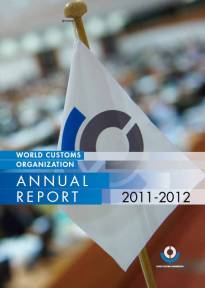
To celebrate the 60th anniversary of the World Customs Organization (WCO), the Organization published a new Annual Report that takes stock of where the WCO has been, where it is now, and where it is going, in addition to serving as a window on the many successes of the WCO, its Members and Customs’ external partners.

The Annual Report contains two major sections: the first includes a summary of the WCO’s mission, history, strategies, current activities and organizational arrangements; and the second comprises profiles of current Members, such as information on the Customs administration, the Director General and contact details, as well as data related to the administration’s operations.

Of particular note is the fact that the WCO’s 177 Member Customs administrations collectively employ approximately 800,000 staff and contribute an average of 33% of their Governments’ total tax revenue, while processing over 98% of all international trade.

The WCO’s role as the steward of global Customs standards is reflected in the Annual Report, which also presents information on how the WCO continues to assist Customs authorities to achieve their objectives, especially the effective application of controls while efficiently facilitating legitimate trade. Source: wcoomd.org

If you thought trade in Africa is bad, consider this!

On January 10 2012 the Argentine tax authorities passed General Resolution 3252/2012, requiring importers to file an advance import affidavit before the definitive import of any type of goods. The affidavit is analysed by the tax authorities and by any other relevant government agency; only once approval has been granted may the import be carried out  The resolution applies to all types of product definitively imported into the country as from February 1 2012.

Under the resolution, importers must file an affidavit (through the tax authority’s website) before issuing a purchase order or similar document. The authority will inform importers (through its online application) of any news regarding the status of their petition and, if applicable, the reasons for any objections made and the government agencies where importers can remedy those objections. Importers must enter the affidavit number in the authority’s María Information System when the goods enter customs clearance. The customs clearance process will be automatically stopped if this number is not entered.

The tax authority has a 72-hour period (from the date on which the affidavit is filed by the importer) to make any comments. This time period may be extended by up to 10 calendar days in “those cases in which the specific activities of the agency in charge so requests”. Once the above periods have elapsed with no comments being made, the import operation may continue. Otherwise, the comments should be dealt with by the importer with the agency that raised them.

Import operations that already have an open irrevocable letter of credit (or similar document) or that have been prepaid (in both cases dating from before February 1 2012) are exempt from the obligation to obtain an affidavit. However, there are some contradictions in the text of the resolution that may create problems at the time of applying this exemption. The following import operations, among others, are exempt from the obligation to obtain an affidavit:

  • imports made under the courier or sample regimes;
  • imports that relate to turnkey projects (provided that they were approved before February 1 2012); or
  • imports that are sent in different shipments (provided that they were approved before February 1 2012).

At present, the foreign trade sector of Argentina is almost paralysed, with no clear sense of direction. Only time will tell whether the affidavit system starts processing requests relatively smoothly, or if the paralysis will result in an increase in litigation by desperate importers. Source: taken from the article: “Argentina’s foreign trade paralysis continues” – International Law Office.

Burden of proof – cross-border data exchange

The continuous development in international communication media together with the never ending expansion of the global trade arena have impacted both positively and negatively on international contractual dispute resolution. It is common cause that once a dispute has been characterised as of a contractual nature and the lex fori has been established, the next step is to ascertain which law is the lex causa or so called “Proper Law” of the agreement.

This article is focused on the assertion of the proper law of an agreement, after it has been established that the lex fori is South African law, in situations where parties  electronically concluded an agreement and whilst doing so omitted to exercise their autonomy to record the law which they are intent on governing the agreement, alternatively in situations where one cannot establish whether the parties contemplated and tacitly implied that a specific legal system would govern the agreement at the time when their agreement was concluded when the lex fori was already established as South African law. Read the full paper here!

WCO – 2012 is the year of Connectivity

WCO 60 Years AnniversarySecretary General of the WCO, Kunio Mikuriya, is pleased to announce that 2012 will be dedicated to promoting connectivity, including enhanced cooperation and communication, under the slogan “Borders divide, Customs connects”.

“Connectivity encompasses people-to-people, institutional, and information linkages that underpin and facilitate the achievement of Customs’ main goals,” said the Secretary General. “This theme is particularly relevant as the WCO prepares to commemorate its 60th anniversary in 2012,” he added.

The Year of Connectivity will be launched on International Customs Day, celebrated annually by the global Customs community on 26 January in honour of the inaugural session of the Customs Co-operation Council (CCC) which took place on 26 January 1953.

In 1994, the CCC adopted the informal working name “World Customs Organization” to better reflect its worldwide growth in membership which now totals 177 Customs administrations.

Customs and its stakeholders are urged to be innovative and creative in taking forward the connectivity theme in all its facets throughout 2012. The WCO invites the Customs community to diarise 26 January. Source WCO.

Another WCO resource for the Customs and Trade Professional

The WCO developed the Revenue Package in response to Members’ concerns in regard to falling revenue returns in the light of the global financial crisis and declining duty rates.

Revenue PackageCollection of revenue has historically been the cornerstone of a Customs administration’s responsibilities. For a number of years, Customs has been actively involved in protection of society and trade facilitation initiatives. More recently, the role of Customs has expanded; issues such as the fight against counterfeiting, counter-terrorism activities and the protection of the environment have featured high on the agenda of international Customs work programmes. Alongside these important topics, revenue collection continues to be an area of concern for Customs administrations. The global financial crisis has led to a downturn in international trade which has inevitably hit government revenues. Additionally, the global trend in the reduction of Customs duty rates, through unilateral, regional, and multilateral trade liberalizations, can potentially have the same effect.
The Revenue Package currently consists of all available tools and instruments relevant to revenue collection. This includes, inter alia, formal instruments and Conventions, guidance notes and training material. Members are encouraged to consult the Package to ensure that necessary requirements have been met and that all relevant material has been obtained by the administration and is being utilized as appropriate.

The Revenue Package is divided into six topics :

  • Topic 1. Facilitation and Procedures
  • Topic 2. Customs Valuation
  • Topic 3. Harmonized System/Nomenclature
  • Topic 4. Origin
  • Topic 5. Compliance and Enforcement
  • Topic 6. Capacity Building and Training

Under each topic, the prime text is referenced, where appropriate. For example, for Topic 1 (Facilitation and Procedures), the Revised Kyoto Convention is the prime text. This is followed by a list of supporting instruments and tools for that topic, providing information on content and availability. Web links are included to provide convenient access to the relevant material, which is either freely available to download or available for purchase from the WCO’s Online Bookshop. Source: WCO.

Exports – Dispelling a fallacy

Following my previous post on ’empty container depots’, its time to dispel a long time myth basically perpetuated to safeguard the cargo handler’s imagined responsibility that goods delivered to be packed for export must be first cleared through Customs. There is no current law, rule or policy which supports this notion, and neither is there any liability on stuffers, consolidators, container depot, transit shed operators, empty container depot operators to ensure that goods they receive under instruction to pack for export have been pre-cleared with Customs.

Let’s first consider what a Customs export declaration implies. Generally, a declaration for export is lodged with Customs subsequent to the conclusion of a sales agreement between a local supplier and a foreign buyer via the commercial bank. The forwarding agent will arrange foreign shipment with a carrier, obtain commercial documents (pro forma invoice, required regulatory permits/certificates, etc.) and prepare a declaration for submission to Customs on behalf of the exporter.

The acceptance, by Customs, of an export declaration is no more than a formal notification of an exporter’s intention to exportnothing more. It is therefore untrue that an ‘approval to export’ or ‘release for export’ notification is the last word from Customs. Moreover, it is also incorrect to reason that Customs has no right to intervene in a ‘transaction’ subsequent to clearance. In essence the notion of an export ‘consignment’ only materialises once the goods are packed, sealed and ready for delivery to the point of international cartage ; or, more accurately, when the ‘secured goods’ are reported for delivery to the place/port of export. Only at this point can risk be evaluated in all its dimensions and a final decision by Customs (load/no-load) be pronounced.

The advent of advance information, post 9/11 and subsequent proliferation of ‘secure export’ initiatives means that ‘risk’ in relation to international cargo movements encompasses three key areas – information, conveyance and cargo. To merely accept whats declared on the export is insufficient for Customs. Other potential risks involving a multitude of people with a lesser liability, little appreciation for accuracy, and little or no sensitivity towards the safety and security of goods in their custody may compromise the ‘compliant’ intent of the exporter and clearance broker at time of initial customs clearance.

It is therefore plain to see why SARS Customs is modernising not only its procedures and systems, but also its enabling legislation.  A new export clearance and cargo reporting dispensation is envisaged, to be accompanied by the licensing of cargo handlers and their premises and the implementation of a seal integrity programme.