Container Cleaning Business for Sale

IBC_Robotics-600x0Within a decade the number of containers being shipped throughout the world is expected to double from 30 to 60 million containers. To facilitate this level of trade there will be many challenges ahead for our industry. One challenge that is often overlooked is keeping every single container clean after and before transit.

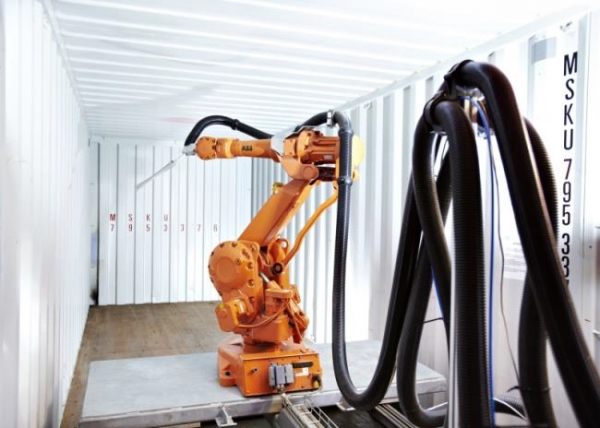
However, Swedish start-up IBC Robotics believes it has the technology to meet this challenge through its new IBA system. This breakthrough product is an environment friendly and automated cleaning solution for ship containers and a far cry from today’s manual, time consuming and often dangerous cleaning methods.

IBC was founded in 2010, based on an invention by Kerstin Eriksson, founder and still majority shareholder of the company. IBC Robotics has in a close collaboration with a.o. the Robot Valley in Västerås, Sweden, and academic technology institutions in Stockholm and Örebro, developed and technically verified the IBA system. IBC Robotics has already been granted patent rights for the IBA system in key countries like USA, China, Singapore, Germany, Netherlands, France, Denmark and Sweden.

This is where the IBA system comes in offering an automated and environment friendly cleaning solution to all involved in the handling of ship containers i.e.. The key benefits of IBA are the high grade of automation; the environment and health friendliness; the high capacity and high quality cleaning and last but not least the cost effectiveness!

When exposed to the IBA system the response from the target audience (shipping companies, ports, port service providers, goods importers and exporters) has been overwhelming and thus confirmed the significant market interest for the system. Though not available for sale the pre-launch activities have generated an impressive number of industry contacts, prospects and sales leads.

Final technical adaptation and verification of the system at customer locations are now being finalised. The IBA system is ready for market launch.

To ensure a successful market entry the present owners now have decided to sell the IBA system business to a company in the field willing to put relevant competence and resources behind a full market launch of IBA. For an investor/industrial company in the actual field the IBA system represents a business opportunity with significant international revenue potential.

For further information please contact Kent R Olsson – kent.olsson@exitpartner.se.

Source: Port Technology International

China ‘VAT’ Syndrome – Uncertainty for International Forwarders

VAT-TAXGreg Knowler, of maritimeprofessional.com reports, “Whenever there is uncertainty in a particular trade, the container lines resolutely stick with the “shipper pays” principle. That’s understandable considering the state of the industry, but not exactly fair on their customers”.

For the last couple of decades shippers have been complaining that the host of extras they are charged – more than 100, according to the HK Shippers’ Council – should be built into the freight rates that are negotiated between them and the lines.

From this month [August 2013] there will be another charge levied – a six percent VAT charge on top of all charges payable in China, according to Lloyd’s List. Many of the major carriers have informed their customers, but the news has not been received with much enthusiasm.

China is changing its tax system from a turnover tax on companies’ gross revenue to a VAT, which is levied on the difference between a commodity’s pre-tax price and its cost of production.

Beijing rolled out a VAT pilot programme to test the market and iron out the bumps, starting in Shanghai in January last year. In September Beijing was included followed by a gradual nationwide rollout before the new system kicks in tomorrow.

But there is still major uncertainty in this new tax regime, and that is providing great consternation for shippers and the carriers. International shipping is not liable for VAT, so why should carriers impose a six percent VAT levy on customers, asks Sunny Ho of the HK Shippers’ Council.

The problem is that international container lines are not sure whether they are exempt from VAT or not. All the carriers have China offices and as that is where the billing of mainland shippers originates, so they fear Beijing may treat them as agents instead of international shipping services, which means their business will be eligible for the tax.

Maersk Line has decided to wait until mid-August before levying the six percent VAT on mainland charges to see how the situation unfolds. That is a welcome gesture and one that should be followed by all the international shipping lines.

With so much uncertainty surrounding the nationwide rollout of the new tax regime, how can carriers justify slapping customers with a VAT levy before the actual impact of that VAT can be measured?

It is a grasping approach that the lines instinctively default to when faced with the possibility of rising costs. It may serve to protect the bottom line, but it continues to reinforce the traditional unhealthy and antagonistic relationship between them and their customers.

The lines should wait until the costs of China’s VAT have been established and those costs should then be built into the freight rates. Surely that is the only reasonable approach. Source: www.maritimeprofessional.com

East African Single Customs Territory Will Cut Delays

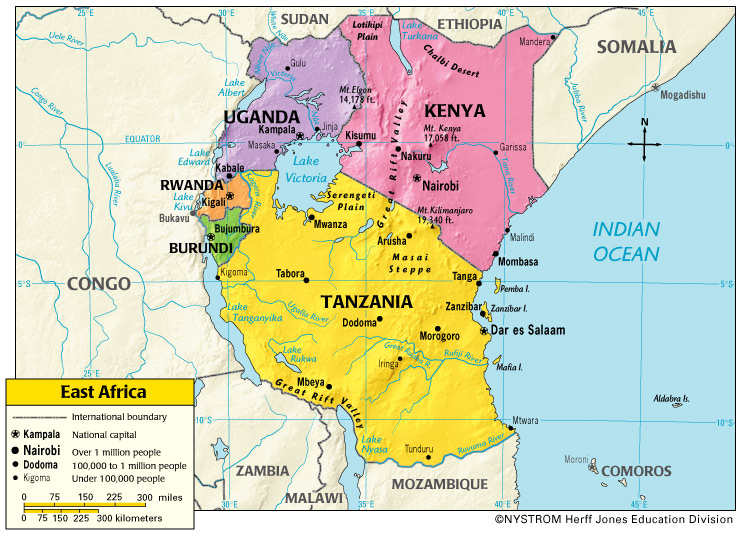
East%20Africa%20mapIn the spirit of stronger East African integration, the revenue authorities of Kenya, Uganda and Rwanda have started preparations for the implementation of a Single Customs Territory. The Commissioners’ General of the three East African countries deliberated on the mechanisms to operationalize the decisions of the heads of state who have continuously called for its fast tracking.

On June 25, 2013 at the Entebbe State House in Uganda, a Tripartite Summit involving the three heads of state issued a joint communiqué directing among other things the collection of customs duties by Uganda and Rwanda before goods are released from Mombasa. The leaders also agreed that traders with goods destined for warehousing should continue executing the general bond security.

During the meeting, the Commissioners’ General of the three countries put in place joint technical committees on ICT, Business Process, enforcement, change management, legal and human resource to discuss the implementation road map.

In a statement signed by the three Commissioners’ General, they said that the development of a Single Customs Territory will positively impact on the trading activities of the three countries as it will ensure that assessment and collection of taxes is done at the country of destination before cargo moves out of the port.

“As a result, the East African Community Customs Union will join the ranks of other Customs Union such as South African Customs Union and the European Union among others. Under this arrangement, restrictive regulations are eliminated as the corridor is now considered for customs purposes. For clarity, circulation of goods will happen with no or minimal border controls,” reads the statement in part.

Kenya said it would cut red tape holding up millions of dollars of imports into its landlocked neighbours Rwanda and Uganda, by letting the countries collect customs on goods as they arrive in its port at Mombasa. Goods can currently face long delays as agents process the paperwork to release cargoes from warehouses at east Africa’s biggest port, and later make separate arrangements to pay import duties at Kenya’s borders with Uganda and Rwanda.

Officials said the new system, due to be introduced in August, would clear inefficiencies and blockages seen as a major barrier to trade in the region. But clearing agents in Kenya said it could also cost thousands of jobs in warehouses, freight firms and almost 700 clearing and forwarding companies operating in the country.

Kenya, Uganda and Rwanda, together with Burundi and Tanzania, are members of the regional East African Community trade bloc, with a joint gross domestic product of $85 billion.

Kenyan tax officials said the new system would allow a “seamless flow of goods” and make it easier to stop goods getting through the system without customs payments. “Once cleared at the port, there will be no stoppages at borders and checkpoints along the corridor,” the Kenya Revenue Authority’s commissioner of customs, Beatrice Memo, told a news conference.

Under the system, Rwandan and Ugandan clearing agents and customs officials would be able to set up their own offices to clear cargo and collect taxes directly at the port. The Kenya International Freight and Warehousing Association said that meant up to half a million jobs could be lost to Uganda and Rwanda. “The Government has not consulted us … and we totally reject it,” said  Association chairman Boaz Makomere. Sources: East African Business Week (Kenya) & The New Vision (Uganda).

The trouble with Safety Sheets

The TT Club says that the abuse of safety data sheets (SDS) for cargo bookings is “uncomfortably frequent” leading to the view that shipping executives feel “surrounded by criminals”.

The following expose is no less pertinent to Customs risk-profilers.

A recent TT Club claim relating to a fire onboard a ship highlighted a number of issues. The insurance expert argues that differing global format standards and the ease of creating “viable” SDS are only serving to make cargo screening more difficult.

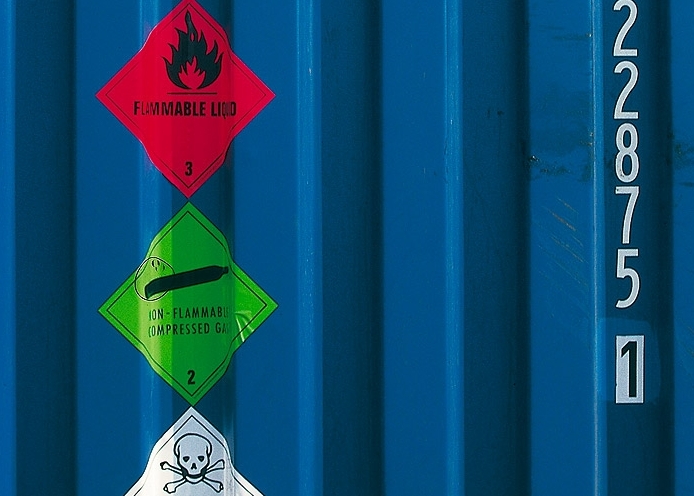
What’s really in the box asks the TT Club.  Photo: Port of Hamburg (Credit - Port Strategy)

What’s really in the box asks the TT Club. Photo: Port of Hamburg (Credit – Port Strategy)

In the claim, a cargo was booked, packed, declared and documented by a shipper as ‘Hookah burner (C.Tablets)’. When the ship caught fire at sea, significant costs were incurred by the ship because of mis-declared cargo, which was in fact activated carbon/charcoal.

Worryingly, when this was investigated further, the shipper had produced two safety data sheets – one was correct, but the other suggested that activated carbon was not considered to be a dangerous good.

TT Club argues that the situation is made far more difficult by the lack of consistency between the various governments about when SDS should be reviewed – Australia stipulates every five years, Canada every three and the EU Regulation recommends checking at “regular intervals”.

Peregrine Storrs-Fox, risk management director, TT Club, told Port Strategy: “We’ve identified two [problem]areas – firstly at the point of booking/contracting with a carrier and secondly post event. Conversations with a number of liner shipping companies confirm that the information given at the time of booking/contracting is frequently suspect. In one instance a single SDS had been presented for about 50 different cargoes over a period.”

Although this is an issue between shipper and carrier, which includes forwarders/logistics operators, there is wider issue here for port operators. During an incident, the port may be supplied with SDS in order to respond appropriately – so there is a risk associated with that too.

The advice to freight forwarders, operators and carriers from the Club is to “Be constantly vigilant and question anything that seems strange or suspicious”. The penalties for non-compliance can be severe. Source: PortStrategy.com