Update – Important Clues to MOL Comfort’s Demise

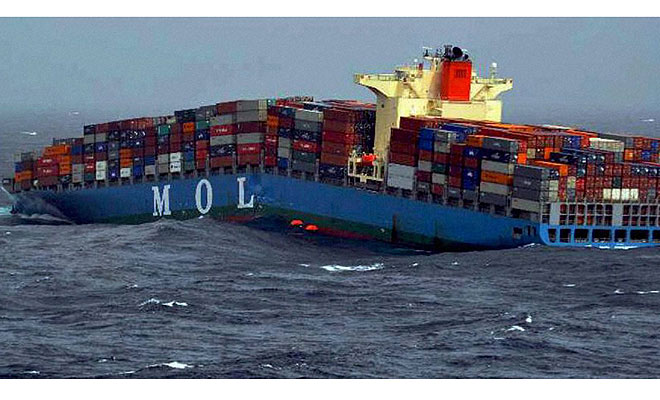
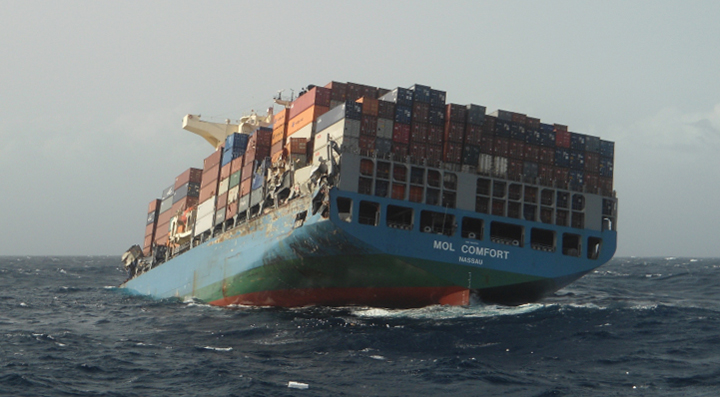
MOL-ComfortMany may recall the shocking pictures of MOL Comfort’s last voyage last year – images of a huge crack in the fully laden container ship on the high sea.

While conducting research for her PhD thesis at the Technical University of Denmark, Ingrid Marie Vincent Andersen, PhD had found clues prior to this incident suggesting the possibility of catastrophic failure was more real than previously thought.

Digging deep into the hydro-elastic structural response of container ships similar to the MOL Comfort, she had discovered some very interesting details.

Clearly, the ship had broken up when the hull girders failed, but what led to that failure was not so obvious. She, like many others, say it very likely had a lot to do with the cargo loading condition of the ship, but the full answer was quite a bit more complicated than that.

Anderson says the MOL Comfort and her sister vessels were simply under engineered by naval architects that didn’t fully account for enormous additional loads which were being placed on the ship.

“It is believed that the hydro-elastic effects and the effect of hull girder flexibility are capable of significantly amplifying the hull girder stresses and thus contribute to fatigue damage as well as to the extreme hull girder loading in container ships,” Andersen notes in her PhD thesis.

In her research, she studied ships in the 8000-9000 TEU range and discovered, “the hull girder vibrations due to hydro-elastic effects is capable of doubling the stress response amidships in some cases – also in the extreme loading cases.” Click here to witness a video of stress experienced on a container ship.

“I don’t think the incident was fatigue-related, but it could be due to under-estimation of the hydro-elastic effects on the wave-induced vertical bending moment at the design stage. The major uncertainty at the design stage is related to estimation of the wave loads,” notes Anderson.

Research published by Lloyd’s Register (LR) engineers Nigel White and Zhenhong Wang support Andersen’s research.

LR notes the principle design challenge inherent to large and ultra-large container ships is the combined effects of whipping, springing and warping/distortion of the hatch openings.

Until recently, Andersen notes that hydro-elastic effects have not been directly taken into account for in the classification societies’ design rules for container ships. In 2014, LR updated their design rules to reflect the discovery of much higher loadings inside the structure of container ships.

Andersen, White and Wang all cite strain data captured aboard a 2006-built CMA CGM 9,600 TEU container ship over a four-year period showing severe spikes in the vertical bending moment as wave strikes on the bow resonate down the ship.

Anderson notes that due to a large uncertainty around sea state conditions a vessel will encounter, maximum wave loading is subsequently uncertain. Wave loading is compounded by container ships that opt for greater cargo space forward, and thus greater bow flare such as on the MOL Comfort and the ultra-large 14,000 TEU+ sized vessels that are currently in operation.

These bending moments, according to their research can be upwards of 300 percent the traditionally calculated wave bending moment using linear ship motion codes – the ones that ships have traditionally been built to. The traditional codes have a realized safety factor of around 200 percent.

Anderson notes that due to a large uncertainty around sea state conditions a vessel will encounter, maximum wave loading is subsequently uncertain. Wave loading is compounded by container ships that opt for greater cargo space forward, and thus greater bow flare such as on the MOL Comfort and the ultra-large 14,000 TEU+ sized vessels that are currently in operation.

“The high strength steel used for the construction of the ship will result in a slightly lower natural frequency and possibly, together with the pronounced bow flare, making the vessel more susceptible to whipping vibrations,” adds Anderson.

Since the MOL Comfort sinking, all of the sister vessels to the MOL Comfort have been retrofitted with additional structural steel, but certainly other ships in that size range have not.

Considering the step changes being made in container ship design, logic would dictate that additional study and consideration be taken when designing and operating such vessels, including the installation of strain gauges to properly measure what is happening inside the ship. Source: gCaptain.com
Triple-E Leaves Port of Algeciras with World Record Load

Triple-E-full-loaded

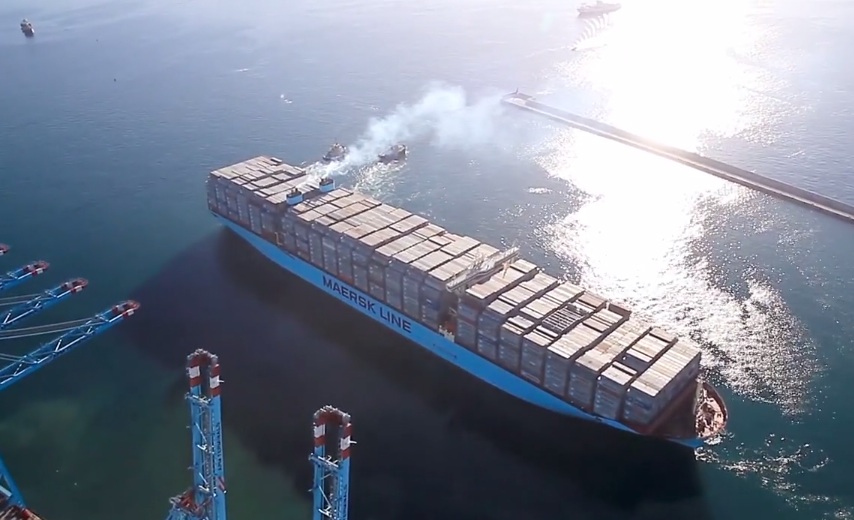
MV Mary Maersk departed Algeciras, Spain fully laden [Gcaptain.com]

On July 21, 2014, the MV Mary Maersk departed Algeciras, Spain with a world record 17,603 twenty-foot equivalent units (TEU), the most TEU’s ever loaded onto a single vessel.

MV Mary Mearsk is the third vessel in Maersk Line’s Triple-E class, which have nominal capacity of 18,270 TEU, although port restrictions have prevented the vessels from reaching full capacity.

“Algeciras has been preparing for full utilisation of the Triple-E for more than a year,” says Carlos Arias, head of the South Europe Liner Operations Cluster. “This included the upgrading of four existing cranes and the arrival of four new Triple-E cranes.”

After departing Algeciras, the vessel was bound for Tanjung Pelepas, Malaysia, which included a trip through the Suez Canal. Arias added that similar upgrades needed to be made at the port of Tanjung Pelepas, and this was the first occasion where both ends were ready. Source: Gcaptain.com

Port of Singapore – Gateway to Asia

Earlier this year Reuters featured a series of excellent photographs by Singapore-based photographer Edgar Su, who spent time documenting working life in and around the Port of Singapore. Connected to more than 600 ports in some 120 countries, Singapore is one of the world’s busiest shipping hubs, and is often called the gateway to Asia. It plans to increase its total capacity dramatically as it competes with other massive ports in the region such as Shanghai, Hong Kong and Shenzhen in China and Busan in South Korea. Source: Reuters

11 Million cigarettes wash up on Devonshire coast

The container ship Svendborg Maersk was battered by hurricane winds as it crossed the northern stretch of the Bay of Biscay on February 14th. Battling 30-foot waves and working through winds of 60 knots the ship arrived only to find that a large chunk of her cargo had been swept overboard. The ship was originally heading from Rotterdam to Sri Lanka.

The shipping giant initially reported that only 70 containers had been lost in the storms. However, last Wednesday this number skyrocketed to 517 – the largest recorded loss of containers overboard in a single incident. Countless more are supposed to have been damaged when six of the bays tilted over.

Maersk have suggested that almost 85 percent of the containers were empty, with the rest containing mostly dry goods and frozen meats. They also reinforced the fact that none of the containers were carrying harmful substances and that many had sunk in the turbulent seas.

Nevertheless, French authorities have been on the lookout for floating containers, which can be hugely problematic for other shipping vessels, alongside a huge environmental risk. According to New Zealand marine insurer Vero Marine, a 20-foot container can float for up to two months, whilst a 40-foot container may float up to three times longer.

Already, containers have been surfacing as far away as the coast of East Devon, United Kingdom. The 40-foot container washed up at Axmouth, near Seaton and is estimated to contain 14 tonnes of cigarettes. Police were immediately called in to cordon off the area and scare away any would-be smokers hoping to make a steal and sneak off with a portion of the 11 million cigarettes (refer to picture gallery).

As of yet, there has never been a requirement for shipping lines to report container loses to the International Maritime Organisation (IMO)or any other international body. In 2011, the World Shipping Council estimated that around 675 containers were lost at sea, whilst the Through Transport Club, which insures 15 of the top 20 container lines, has suggested that the number is closer to 2,000.

However, other sources suggest that this is nowhere near the true number, with some citing as many as 10,000 lost at sea each year. Analysts have suggested that one of the reasons such loses can occur are due to the lack of accuracy when weighing containers before transit. Some shippers have been found to understate the weight of containers in order to reduce shipping costs. Such misinformation can lead to uneven strain on a vessel as it transverses the seas.

One of the most notable incidents occurred in 2007 when the MSC Napoli ran aground off the English coast, breaking up and spilling 103 containers worth of toxic cargo, polluting five miles of the South Western coast. The UK marine accident investigation board ruled that the accident was due to cargo being loaded in such a way that it exceeded the baring weight of the hull girders, resulting in a structural failure across the ship. The report concluded that if such loses are to be prevented, it is essential that containers be weighed before embarkation. Source: Port Technology

Cape Town – Container Ship Crew Battles Blaze

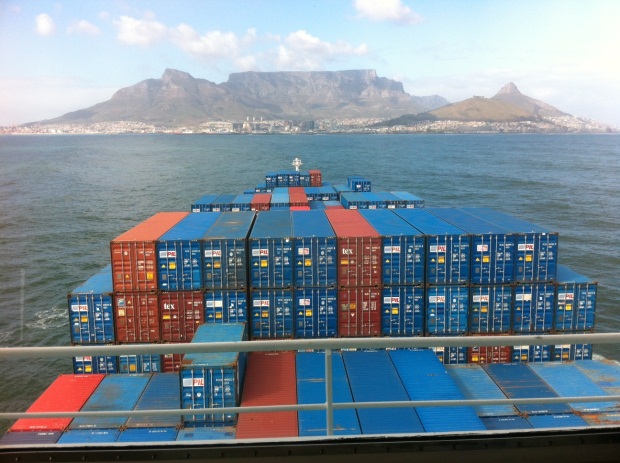
Container vessel outside the Port of Cape Town

Container vessel outside the Port of Table Bay, Cape Town, South Africa. (Picture and article – Maritime-Executive)

A Port Control ships Pilot was set to be airlifted by helicopter to the ship and the ship will be moved to the Container Docks in the Port of Table Bay where they will be met by Cape Town Fire and Rescue Services who will board the ship to fight the blaze.

A (National Sea Rescue Institute) NSRI rescuer, Gavin Kode, was transferred onto the ship to make an evaluation and confirmed that no crew are injured and that they are The 222 meter fully laden container ship LILAC reported a fire in one of their holds, 1 nautical mile off the Port of Table Bay in South Africa on 28 September, with a total of 21 onboard.

The ship’s captain reported that his crew was fighting to contain the fire, and that at this stage he was not declaring an emergency. A ship’s officer reported that they were fighting the blaze with Co2 fire equipment.

The National Sea Rescue Institute (NSRI) deployed 4 rescue vessels, and remained close to the ship as a precautionary measure. On their arrival, light white smoke could be observed coming from the ship.

LILAC confirmed to the JOC (Joint Operations Control at the Transnet National Ports Authority) to allow an NSRI rescuer and a Cape Town Fire and Rescue Services engineer onboard the ship to make an assessment. Transnet National Ports Authority is requesting that the type of blaze be identified, any chemical fall out risk to be identified and then to assess the feasibility of having the ship brought to a mooring at Port where Fire and Rescue teams can board the ship to take over fighting the blaze and to contain the situation. Source: Maritime-Executive


100% Scanning – Have all the Options been considered?

Port of Oakland - VertiTainer's  crane mounted scanner solution employs advanced passive scanning technology and sophisticated identification algorithms to detect and identify gamma and neutron sources in shipping containers as they are loaded or discharged from a container ship.

Port of Oakland – VertiTainer’s crane mounted scanner solution employs advanced passive scanning technology and sophisticated identification algorithms to detect and identify gamma and neutron sources in shipping containers as they are loaded or discharged from a container ship.

While the question of mandatory weighing of containers features high on the International Maritime Organisations’ (IMO) list of priorities, a recent post “Container Weighing – industry solution on the horizon“, reminded me of a solution which has been around for some time now, but for various reasons would appear to have been overlooked by authorities – or so it would appear. Readers and followers of this blog may well already have viewed the feature on VeriTainer’s gantry crane mounted radiation detection and identification system, called the VeriSpreader® – refer to the New generation NII technology page of this Blog.

The spreader is a device used for lifting containers and unitized cargo. The spreader used for containers has a locking mechanism at each corner that attaches the four corners of the container. A spreader can be used on a container crane, a straddle carrier and with any other machinery to lift containers. (Wikipedia)

The recent maritime disaster involving the breaking-in-half, and eventual sinking of the MOL Comfort gave rise to the question of overloaded container boxes. While government and international security-minded organisations have pursued methods to address breaches in the supply chain, it would seem that little ‘innovation’ has been applied to the problem – specifically in regard to minimizing the time and cost of routing containers via purpose-built inspection facilities.

At least three known radiation incidents have hit the headlines in recent times – namely Port of Genoa (2010), Port Elizabeth, New Jersey (Feb, 2013), and the most recent in the Port of Voltri (July, 2013). Each of these incidents warranted an emergency response from authorities with a consequential impact on Port Operations.  Unfortunately, advanced risk management systems and other security safeguards did not alert suspicion, allowing these ‘threats’ into the heart of the port, not to mention the radiation threat to port workers?

It could be argued that since the inception of government-led supply chain security, 2002 onwards, many of the world’s supply chains have built in ‘possible inspection’ into their export lead times. A trip to a purpose-built inspection facility will normally require diverting transport from its predestined journey to a land border crossing or seaport. Moreover, lack of predictability often causes delays with possible loss of business where ‘security’ measures delay the movement of cargo.

Several Customs and Border authorities have instituted ‘export-led’ compliance programmes which seek to create better regulatory awareness and expectation for shippers. While not without merit, these still impose an inherent cost to trade where in some instances, shipper’s are compelled to institute ISO-type security standards which for some require dedicated and skilled experts to entrench and maintain these throughout the organisation. So, while the development of increasing levels of compliance amongst supply chain operators will occur over time, what of government ‘Non-Intrusive’ inspection capability?

Port Technology International‘s Feb 2013 article – Future X-Ray Inspection Equipment to be based on Industry Standards – opined that “future developments in cargo screening are likely to follow a common innovation trajectory that is fostered by market needs and new technology, while being strengthened by existing intellectual property and evolving industry standards. Innovation is often perceived as a circular path beginning with customer needs that are identified by a technology developer. The developer then creates application technology in the form of products to meet those needs”.

Land and rail-based cargo screening technology has improved immensely over the last 10 years with improved safety (shielding), throughput (speed) and portability. Engineers have likewise realized the need to ‘fuse’ imaging and radiation threat detection technologies, all offering a more cost-effective package to the end-user. These are by and large the Customs and Border authorities worldwide who protect our territorial waters and ports. Yet, the approach remains ‘modality driven’ which has ensured a period of predictability for designers and manufacturers, not to mention their revenue streams. Given the container weighing – port radiation threats discussed earlier, perhaps it is time now for transport and enforcement authorities to consider technologies as developed by VeriTainer and Lasstec and define a specification for “100%” needs – could this be uniform? Not unlike Lasstec’s container-weighing solution that allows the weighing of containers during the loading cycle so not to disrupt the work flow, Veritainer’s VeriRAD solution uses a gantry crane ‘spreader’ to house its unique solution with specific emphasis to mitigate the threat of a ‘dirty bomb’.


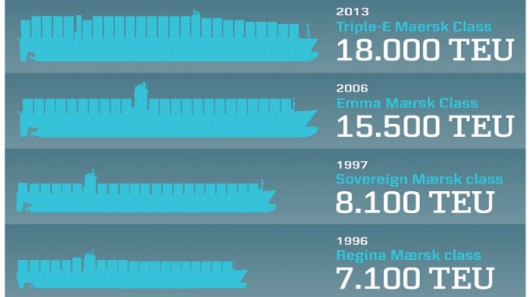
Mega ships: positive asset or terminals’ worst nightmare?

triple-e-maersk-worlds-largest-shipA Financial Times article reported Maersk’s Triple E Class (18,000 TEU) to be 26 percent more cost efficient than the current E class (15,000 TEU). – Wright, R (2011), Financial Times. ‘Big Ships: Container lines reach for scale’. Recent research into supply chain costs indicates that this is not obvious for the entire supply chain – Streng, M. (2012). Slow steaming: an economic assessment of lowering sailing speeds on a supply chain level’, Master Thesis Urban, Port and Transport Economics, Erasmus University Rotterdam.

The capital cost per TEU moved has increased even considering the increase in slot size of newer larger vessels. Due to the increase in transportation duration, the capital costs and insurance of goods transported have gone up. Further cost increase could be accounted for in the increase in time to market. Fast moving goods (such as consumer electronics) that need longer to get from the world’s production centres to the markets is also a cost. Shipping lines are demanding ever shorter port stays in order to make the economies of scale work. The bigger the ship, the greater the cost of hours lost in port, and an increased port stay is a diseconomy of scale.  Port Technology have published the following article which should be useful for shippers, freight forwarders, port planners in better understanding the economics of international shipping and logistics – Mega ships: positive asset or terminals’ worst nightmare?.

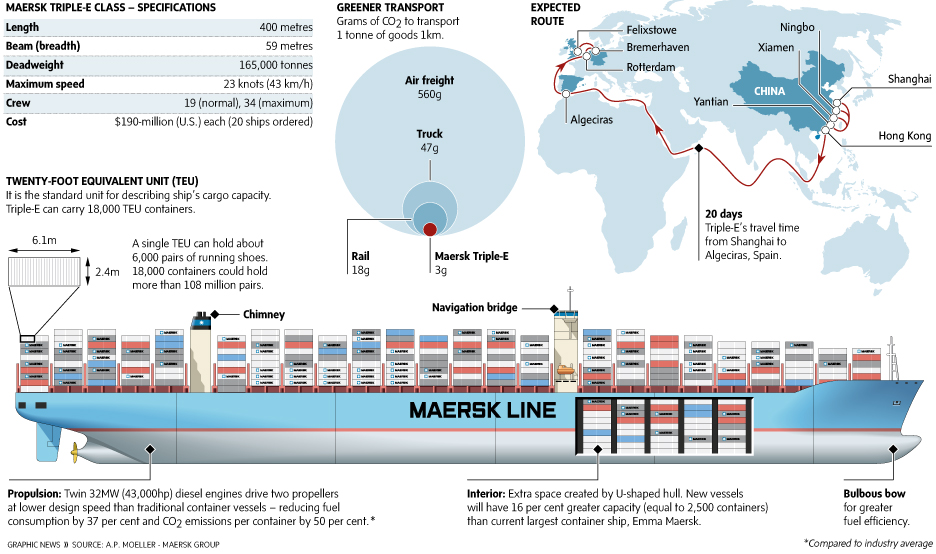
Triple E Class Specifications - (AP Moeller/MAERSK Group)

Triple E Class Specifications – (AP Moeller/MAERSK Group) [Click to Enlarge]

MOL Comfort – off to Davey Jone’s Locker!

Ironically, nature always has the last say. Mitsui OSK Lines has confirmed that the fore section of MOL Comfort has sunk in the Indian Ocean despite salvage and coastguard teams battling for seven days to contain a blaze that broke out on board after the vessel split in heavy seas.

MOL Comfort sank in high seas near 19º56’N and 065º25’E in waters around 3,000 metres deep at about 0400 hrs Japan standard time on 11 July, MOL said in a statement .

Mitsui has reported this fact to the flag state of Bahamas, Indian authorities and parties concerned, and will keep the salvage team at the scene to monitor if there is any oil leakage and floating containers. The salvage team comprises Smit Salvage, which was overseeing the operation from Singapore, and Nippon Salvage.

The Indian Coast Guard sent a patrol vessel with firefighting capability two days go to help put out the fire.

The 2008-built, 8,110 TEU ship ruptured on 17 June off the coast of Yemen while en route from Singapore to Jeddah with some 4,372 boxes on board. It split in two the following morning and the stern section sank after drifting for 10 days.

Tugs reached the forward section, which still had much cargo intact, on 24 June, which slipped free from its tow wire on 1 July, but was reattached on 3 July. Adverse weather has hampered the salvage operation since it began. Source: Mitsui. Pictures courtesy gCaptain.com

Cold COMFORT – Industry expert suggests ‘Container Weight’ is an issue

w20130617_581636_51bf7444348dFollowing up on the unvelievable events which saw the MOL COMFORT split in two, see previous post “Container Ship Breaks in Half and Sinks“,  Michael Grey (former Editor of Lloyd’s List and Fairplay, currently the London Correspondent of BIMCO and holder of a British FG Master’s Certificate) writes “How on earth does a 5 year old 90,000 ton containership, built by one of Japan’s finest shipyards and operated by a tip-top liner company, come to be floating in two bits 19 miles apart? Was it the Weather, Welding,  or perhaps one of those 100 year waves the Met. Offices are warning us about are rather more frequent?”

He goes on to maintain that the smart money must surely be on the stresses induced by under-declared container weights, which shippers routinely refuse to take with any seriousness whatsoever.

Always supposing that there is a good run through the IMO, it has been suggested that it could be another three or four years before SOLAS Regulation VI/2, which provides for the “verification” of container weights, comes into effect. As the distinguished delegates undertake their deliberations on this matter, a huge picture of the after part of the MOL Comfort sitting forlornly in the Arabian Gulf might usefully be displayed on the Council Chamber screens to help focus their minds.

It is now more than six years since the emergency in the English Channel when the MSC Napoli nearly sank through an ingress of water.

It is worth underlining the views of the UK Marine Accident Investigation Branch, which painstakingly required all the boxes retrieved from the wreck to be weighed, and note its suggestion that overweight boxes contributed to the loss of that ship.

Wheels often grind slowly in marine safety mills, but there have surely been enough warnings about excessive container weights to wake everyone up. Feeders have been regularly rolling over, fortunately in shallow water or against the quay. This clearly expensive incident which has put 25 lives and more than 4000 containers at risk ought to clarify the issues.

But we shouldn’t bet on it.

Shippers’ organisations, which have been defending their flawed position on container weights for forty years or more will still be arguing about the responsibilities for verification until the bitter end. If the salvors manage to save this ship, let us hope that every one of those boxes retrieved is weighed, and compared with the manifested declaration.

Sources: article posted in gCaptain.com with original credit to the Clay Maitland blog

Maersk Triple-E conducts sea trials

The following ship photos come courtesy via Shipspotting, where one of their faithful users caught Maersk’s first Triple-E and the world’s largest ship, the M/V Mærsk Mc-Kinney Møller, during her 7th day of sea trials. The photos offer a first glimpse of the Triple-E underway. Despite the iconic blue color scheme and company logo Maersk does not own her just yet. Until the sea trials are completed and the vessel has been accepted by Maersk, she is the property of the yard and is under the command of the yard’s Captain.

The enormous ship, due for launch on June 28, is the world’s biggest. A behemoth even in a world of behemoths, and the first sibling in a new fleet of 19 sisterships. The vessel will have the ability to carry 18,000 TEU containers and will weigh-in at 165,000 metric tons, the equivalent mass of all the gold ever mined.

Sheer size is her most distinguishing feature. At 400 meters, the M/V Maersk Mc-Kinney Møller, as she’ll be called, is significantly longer than any aircraft carrier or even the Titanic, and only slightly shorter than the Empire State Building is high. Standing on her bridge is like peering over the rim of the Grand Canyon. From her highest deck, shipyard workers resemble overgrown ants and officers needing to walk the bridge’s width, wing-to-wing, will wish they had packed roller skates. Sources: gCaptain.com and Shipspotting.com

Finding the best solution for 100% container weight verification

Bromma load verification sensing technology (www.bromma.com)

Bromma load verification sensing technology (www.bromma.com)

The International Association of Ports and Harbours (IAPH) has helped the container handling industry to put focused attention on the issue of container weight verification. The IAPH and the International Shipping Organization have called for near 100 per cent container weight verification as a standard industry ‘best practice’. IAPH has recognised the value of container weight verification for both safety and operational reasons. Accurate container weights can help guide critical plans regarding stowage, and verifiable load data also serves to ensure worker safety. Lifting containers within an acceptable weight range also prevents accelerated stress on the spreader, thus extending equipment life.

The issue that organisations such as IAPH and the World Shipping Council have raised is not merely an academic one, studies of container weight indicate that there is often significant variation between listed and actual container weight. The problem is a familiar one: not everyone tells the truth about their weight, as the consequences of inaccurate weight can include equipment damage in ports, injury to workers and collapsed container stacks, among others.

The question is ‘how’, not ‘should’?

The general consensus has grown that universal container weight verification is a worthy standard, the key question has quickly begun to shift from whether we should we have a universal requirement to how we can best implement this commitment. Along these lines three general approaches might be possible.

The container crane option

The first possible approach is to utilise container cranes to meet the weighing requirement. The advantage of weight verification by cranes is that weighing occurs during the normal course of handling operations. The disadvantage of a crane-based approach is that weighing accuracy is only approximately 90-95 per cent, and cranes cannot distinguish between the weights of two containers when lifting in twin-mode. Since many terminals load and unload container ships using twin-lift/twin-20 foot spreaders, the actual weight of each of these individual containers will remain in doubt if there is a reliance on container cranes to yield this data. Also, with the emergence of the mega-ship era, more and more terminals will be looking for productivity solutions that enable more containers to be handled in each lift cycle, and so twin-handling of 40 and 20 foot containers is likely to expand in the future, thus adding to the number of containers with an uncertain weight.

The weigh bridge option

A second option for terminals would be to meet the container weight requirement through the use of weigh bridges. Unfortunately, there are multiple weaknesses in this approach.Containers can be weighed from the weigh bridge, but driving every container onto a weigh bridge will obviously add another operational step, and slow productivity. It also requires, especially at larger and busier transhipment terminals, that considerable land and transit lanes be set aside for weighing activities. In addition, there are two weight variables on the weigh bridge – the variable weight of up to 300 litres of truck fuel and the weight of the driver. Further, as with a container crane, a weigh bridge cannot distinguish between the weights of two containers, and so the weight of each individual container will always be inexact. The only way to gain a precise weight is to weigh one container at a time, and to adjust for fuel weight and driver weight variables.

The spreader twist lock option

The third option is to ascertain container weight from the spreader twist locks. For container terminals, a spreader-based weighing approach has several key advantages. Firstly, weighing from the spreader twist locks yields much more accurate information, as container weight precision is greater than 99 per cent. Secondly, unlike weigh bridges or crane-based container weighing, spreaders weigh each container separately when operating in twin-lift mode. When a Bromma spreader lifts two 20 foot containers or two 40 foot containers at a time, the spreader can provide highly accurate data on the weight of each separate container, and without any of the variables (fuel, driver) associated with the weigh bridge approach.

In addition, with a spreader-based approach you weigh containers from the spreader twist locks without adding any extra operational steps or requiring any extra space or transit lanes. Terminals simply log container weights in the normal course of lifting operations – with a warning system alerting the terminal to overloaded and eccentric containers. Container weight verification during the normal course of terminal operations is a way to accomplish the weighing mission without impairing terminal productivity, and especially at busy transhipment terminals. To read the full report, Click Here!

Source: www.porttechnology.org

Box Innovation – More Volume and Higher Payloads

A revolutionary new container design is set to change the economics of shipping palletised cargo, allowing cargo owners and consolidators to increase significantly the volume of cargo shipped at any one time.

A revolutionary new container design is set to change the economics of shipping palletised cargo, allowing cargo owners and consolidators to increase significantly the volume of cargo shipped at any one time.

Maritime-Executive.com recently featured the following article. UK-based container design company Container Group Technology (CGT) Ltd has announce the availability of the 20-20 SeaCell Container. From the outside the patented ‘20-20’ looks little different from a conventional ISO 20ft shipping container. However, subtle innovations on the outside and inside of the container enable the unit to provide for 36% greater pallet space.

In practical terms, this means that for each tier, 15 Euro-pallets (1200mm x 800mm) can be loaded into the container instead just 11 Euro-pallets in a standard ISO 20ft dry container. With standard ISO pallets (1200mm x 1000mm), the 20-20 can load 12 units, two more than in a conventional 20ft container (see graphic).

And by using 100% of the floor area, pallets fit snugly together inside the container making the 20-20 ideal for using lightweight slip-sheets or paper pallets, thereby reducing costs and increasing useable volume and payload at the same time.

The 20-20 SeaCell Container achieves this feat by being exactly 20ft (6096mm) in length and 2426mm wide internally. Standard 20ft containers are, in fact, 19ft 10½ ins (6058mm) long x 7ft 7¾ ins (2330mm) wide internally. Thus the internal length of the 20-20 allows it to accommodate the additional four Euro-pallets or two ISO pallets per tier. The door opening width is 2408mm which allows fork-lift trucks to load pallets two or three at a time.

However, the innovation does not stop there. Two 20-20 containers can be easily locked together from the outside with no special tools to make a 40ft container, but again with significantly greater internal volume than standard. Two 20-20 containers will carry six more pallets than one standard 40ft container. It is also possible to mix Euro & Standard pallets in the same 20-20 and still have 100% pallet utilisation.

The 20-20 is fitted with larger corner castings of the type typically used in flat rack containers, enabling them to be lifted by standard 20ft or 40ft spreaders, loaded singly or as a pair into a container ship’s 40ft cells or onto any current road chassis and rail wagon.

An integral locking mechanism in the corner casting is activated from the outside of the container. In just a few minutes, the two 20-20 containers can be securely locked together and lifted as a single ‘40ft’ unit. In the standard configuration, two 20-20s are joined at the front ends, i.e., with the doors accessible at each end of the combined containers. However, if requested CGT can also position the locking mechanism at the door-end corner castings so that the two 20-20 units are effectively sealed until reaching their final destination. This is an important feature for high value or sensitive cargoes.

Lifting two 20ft containers together has been made possible in the past decade by innovations in container lifting technology, and it has become increasingly popular with shipping lines and container port terminals as a way of loading and discharging ships faster and more efficiently.

However, it is only now, with the introduction of the 20-20 SeaCell Container, that the ability to lock and lift two 20ft containers and handle them as a single 34 ton maximum gross weight (MGW) unit has been made possible. The benefits of this innovation are numerous, including:

  • It can significantly reduce ship loading times and the time needed to lash containers on deck.
  • Estimates suggest it could reduce handling and transportation costs by 25% to 35%.
  • The fact that 20-20 containers can be linked or unlinked at any stage of the logistics’ chain should also reduce the need for empty repositioning, thereby optimising each container’s usage.

Prototypes of the 20-20 container have been built and fully tested in China, and the new design is being made available for sale or lease.

Pandora’s Box – Missiles in a shipping container

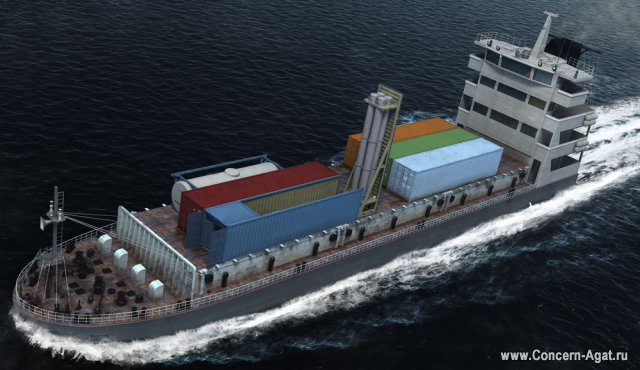
Artistic impression of the Club K Missile System

Artistic impression of the Club K Missile System

Critical Logistics, an informative blog, reported an interesting if not disturbing article on the development of a new weapon’s system which uses the ubiquity of shipping containers as it is housed in a 40-footer. It is known as the Club-K Container Missile System.

An article by concerned commentator, Lajos F. Szaszdi, (The Heritage Network) raises several valid concerns in his article “The Club-K: A Deadly “Pandora’s Box” of Cruise Missiles”, which are summarised in the following paragraphs.

[…] Fittingly, the marketing name given to the system is “Pandora’s Box.” The container-looking weapon system can be fired from a container ship, a train cart, or a container truck. By appearing externally as a simple container, the Club-K can be positioned covertly, ready to unleash a surprise attack, probably firing simultaneously from more than one container.

[…] Container ships carrying the Club-K system could be used to attack commercial shipping, particularly in choke points like the Straits of Hormuz and Malacca. These container ships would be acting like Germany’s auxiliary cruisers of the First and Second World Wars, which were armed merchant ships used for commerce raiding. Cargo ships armed with the Club-K could be equipped with Unmanned Aerial Vehicles to provide airborne Intelligence, Surveillance, Target Acquisition and Reconnaissance (ISTAR).

Even though use by Hezbollah is a possibility, the greatest potential threat could come from China, which reportedly was already interested in acquiring Club missiles for its submarines of the Type 041 Yuan class, the nuclear-powered Type 093 Shang class, and Russian-made Kilo class subs. China could load container ships with land-attack missiles, with E-Bombs for a surprise attack against Taiwan, and armed with nuclear warheads and E-Bombs to strike the port facilities used by the U.S. Navy in Singapore, the U.S. West Coast, the Panama Canal, etc. Chinese missiles could be launched from container trucks sent secretly to Mexico mixed with legitimate containers. India, another customer of the SS-N-27, could use the Club-K system against Pakistan or China as a first or second strike weapon. Iran could be another customer for the Club-K, once U.N. sanctions are lifted.

The Club-K is a highly destabilizing weapon system. Due to the nature of international trade, with millions of containers being shipped worldwide, transported by train and particularly by trucks, it would be very hard to detect, and an attack could happen at any time on any day without warning. The military and intelligence services of the U.S. and its allies must keep a close watch on this Pandora’s Box, to make sure it will never be opened in anger against them.

A promotional video of the system by (oddly named) manufacturer Concern Agat appears below. http://

For more details on the system visit their website – http://www.concern-agat.com/products/defense-products/81-concern-agat/189-club-k

Durban awaiting arrival of 11, 660 TEU container ship

Ports.co.za reports that  the largest ever container ship to enter a South African port on 1 July 2012 to work cargo will arrive in the Port of Durban, vindicating the recent widening and deepening of the harbour entrance.

The ship is the MSC SOLA (131,771-gt, built 2008) which is arriving from Port Louis and the Far East. Although she will not be fully laden the arrival of the 364 metre long ship becomes another justification for the recent harbour entrance channel project, which saw it widened by an additional 100m to a minimum width of 222m and deepened to a working draught of -16.5m. Once work on deepening at least one of the container terminal berths on Pier 2 has been completed ships of this size will be able to arrive or sail fully laden.