NRA/BURS – Customs Connectivity Passes Test

TKCThe first live demonstration of an end-to-end customs connectivity solution was successfully completed in Windhoek, Namibia on December 12, 2012. Customs Connectivity enables customs administrations from different countries to share information seamlessly and instantly across borders: reducing processing time and improving access to reliable, real-time trade statistics.

The demonstration was witnessed by the Commissioners of Botswana (BURS) and Namibia Customs (NRA), senior managers and operational teams. The demonstration involved moving information from an ASYCUDA++ entry in Botswana via the Cloud-based User Portal to an ASYCUDA++ entry in Namibia, and vice-versa from Namibia to Botswana. It demonstrated how clearing agents/traders would manage the flow of their information via the secure online User Portal.

The demonstration marked a “watershed moment” in turning Customs Connectivity into reality. The next steps for the pilot project include full system testing and documentation before end-user training commences. Full implementation is scheduled to take place during the first half of 2013.

Customs Connectivity offers countries in the region a historic opportunity to engage cutting-edge technology and modern tools to facilitate trade throughout Southern Africa, enhancing economic growth and promoting food security. The pilot project is being implemented by Botswana and Namibia, supported by the USAID Southern Africa Trade Hub. Source: SATH

Request – Perhaps some of the TKC clearing agents, NRA and BURS customs staff would like to comment on their experience thus far? 

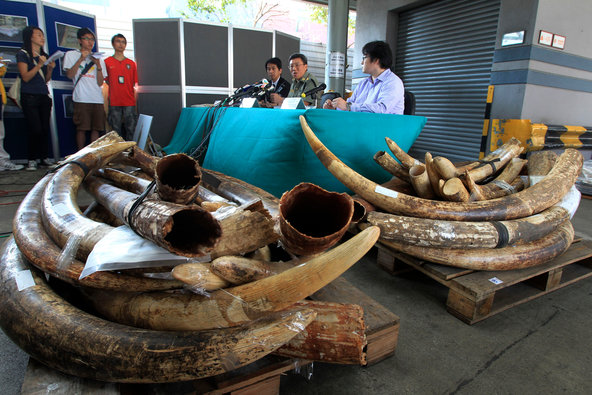
Malaysian Customs Ivory Bust in pictures

1,500 pieces of tusks seized at the Royal Malaysian Customs were hidden in wooden crates, purpose-built to look like stacks of sawn timber! The following pictures illustrate the Malaysian Customs ivory bust in progress. Pictures courtesy of WWF Singapore (their Facebook Page) – . Also see full report at  http://www.traffic.org/home/2012/12/11/massive-african-ivory-seizure-in-malaysia.html.

Related articles

Africa – China’s Export Route to the U.S.?

AGOA_W1The Africa Growth and Opportunity Act intends to support African exports to US markets. It is helping savvy Chinese companies too. US-Africa trade received a boost with the signing of the African Growth and Opportunity Act (AGOA) back in May 2000, which enabled African countries to export over 4,000 products, including apparel, quota-free and duty-free to the US.

Geared to support the integration of African countries into global markets, AGOA has enjoyed broad cross-party support in a usually fraught US legislature – especially on issues of foreign trade – and has been renewed several times. Helping Africa, it seems, is something everyone can agree on.

But they might, unwittingly, have been helping China too. Research by Lorenzo Rotunno and colleagues at the Centre for the Study of African Economies, Oxford University, suggests that savvy Chinese companies have set up shop in Africa as a route to get their products into the US with all the AGOA benefits.

The entrepreneurs’ logic is impeccable. Not only could an Africa platform get them duty free access to US markets, they could also avoid heavy quotas on China’s exports to the US, imposed through previous protectionist measures by the rich world, such as the Multi-Fiber Agreement.

Because AGOA did not contain ‘rules of origin’ provisions, the door is wide open for such creative thinking. “Restrictive quotas on Chinese apparel exports in the US and preferential treatment for African exports resulted in quota-hopping transhipment from China to the US via AGOA countries” the researchers say.

Chinese and Taiwanese producers are now said to comprise the bulk of a textile “diaspora” in Lesotho, Madagascar and Kenya. In one Kenyan processing zone, 80% of the 34 garment plants had Asian owners. While some outfits doubtless have in-country assembly – and therefore generate jobs and incomes for Africans – a number are little more than transporting docks for foreign-sourced, fully assembled goods ready to go to their final destination, tax free.

Chinese entrepreneurs made no bones about it. In one survey, they gave ‘taking advantage of international trade agreements’ in their top five list of motives for investing and operating in Africa. Source: AllAfrica.com 

Beitbridge congestion – Travellers tear-gassed by SA police

border-lines

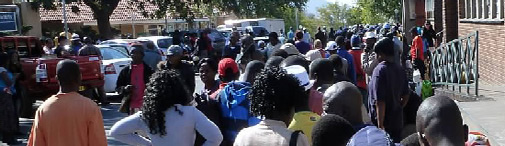
Zimbabwean Police are set to meet their South African counterparts following an incident in which the South African officers used tear gas to control travellers at their side of the border last Friday morning. The majority of the travellers were Zimbabweans, with others coming from countries north of the Zambezi.

The South African Police Services (SAPS) used tear smoke to control travellers at around 9am as the number of human traffic started increasing at Beitbridge Border Post.

No one was injured in the incident which lasted for about 15 minutes when people started showing their discontent with the slow way they were being cleared by immigration officials from that country.

Some travellers started jumping queues after they had spent between three and four hours waiting to gain passage into South Africa. Police officer commanding Beitbridge district Chief Superintendent Lawrence Chinhengo said yesterday that the incident was a great cause for concern.

“This was a very unfortunate incident. We are not happy with the method our counterparts used to control queues and have since communicated to them that we need to have an urgent bilateral meeting to iron out the issue. There are better ways to manage people rather than the tear smoke. It is of paramount importance that we meet and find better ways to control crowds during this festive season,” he said. Source: Bulawayo24.com

For more insight also read “Zim travellers stranded at border post” on zoutnet.co.za.

Beit Bridge – ZIMRA and Immigration gear up for congestion

beitbridge

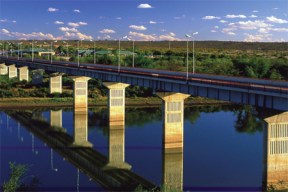
Beitbridge – crossing the Limpopo river

The Department of Immigration in Beitbridge has put in place mechanisms aimed at dealing with congestion at the country’s busiest border post in anticipation of an increase in the volume of traffic during the festive period. Assistant regional immigration manager in charge of Beitbridge Border Post, Mr Charles Gwede, said they have since held a series of meetings with key stakeholders and their South African counterparts to address congestion at the border.

“We have started preparing for the festive period in anticipation of a huge influx of travellers and all necessary strategies are now in place to help speed up the clearance of people during the festive period,” he said. “We are suspending leave and off-days for staff between 15 December and 16 January next year.

“As part of our decongestion drive we will scramble our shifts to maximise on manpower during the normal and extra peak days. In fact, starting from 15 December we expect a huge influx of travellers hence between 14 and 17 December, 21 and 24 December and 4 to 7 January, we will dissolve our shifts to ensure that we have more officers per shift who would effectively manage the queues and speed up the clearance process,” he said.

Mr Gwede said they were expecting 20 officers from other stations to beef up the local staff and ensure that all check points and counters were adequately manned. Beitbridge Border Post has a staff complement of 47 officers and support staff.

“As border stakeholders, we held several inter-border meetings with our South African counterparts to discuss and explore ways and strategies aimed at dealing with congestion during extra peak periods.

As part of their decongestion strategy, Mr Gwede said they would categorise travellers and create more counters to reduce queues. According to statistics, immigration officials at the border handled 73 825 travellers between Monday and Wednesday on both arrival and departure sides.

The Zimbabwe Revenue Authority (Zimra) spokesperson, Mr Canisio Mudzimu, said they would deploy relief officers to Beitbridge Border Post to beef up the local staff and help speed up the customs clearance process. “We are geared up in terms of facilitating the smooth movement of both human and vehicular traffic passing through Beitbridge Border Post during the festive season. We will deploy extra officers from less busy stations to Beitbridge Border Post during the festive period and to assist in border operations,” he said.

Beitbridge Border Post requires at least 247 customs officers to man it. The border post, which is the country’s busiest inland port of entry, has an establishment 141 officers. Mr Mudzimu said they would create separate traffic lanes to cater for tourists, returning residents, private motorists, commercial, buses and pedestrians to speed up the flow of traffic and reduce congestion.

Touts and bogus clearing agents continue to find their way into the customs yard where they would swindle unsuspecting travellers of their money under the guise of offering assistance. Beitbridge is the busiest inland port of entry in sub-Saharan Africa, which handles a huge volume of both human and vehicular traffic passing though daily. Commercial trucks destined for East and Central African countries such as Tanzania, the Democratic Republic of Congo and Zambia also pass through the border post.

On a normal day, the border handles between 6 000 and 8 000 travellers daily with the figures rising to 20 000 during the peak period. Source: Bulawayo24.com

Dead Aid

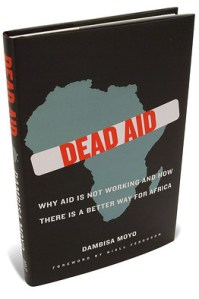
Dead Aid - Dambisa MoyoFollowing my recent post – Want to Help? Shut up and listen! – I thought it appropriate to share a link to the referenced book “Dead Aid” by Zambian born economist Dambisa Moyo.

In Dead Aid, Dambisa Moyo describes the state of postwar development policy in Africa today and unflinchingly confronts one of the greatest myths of our time: that billions of dollars in aid sent from wealthy countries to developing African nations has helped to reduce poverty and increase growth. In the past fifty years, more than $1 trillion in development-related aid has been transferred from rich countries to Africa. Has this assistance improved the lives of Africans? No. In fact, across the continent, the recipients of this aid are not better off as a result of it, but worse—much worse.

In fact, poverty levels continue to escalate and growth rates have steadily declined—and millions continue to suffer. Provocatively drawing a sharp contrast between African countries that have rejected the aid route and prospered and others that have become aid-dependent and seen poverty increase, Moyo illuminates the way in which overreliance on aid has trapped developing nations in a vicious circle of aid dependency, corruption, market distortion, and further poverty, leaving them with nothing but the “need” for more aid.

Debunking the current model of international aid, Moyo offers a bold new road map for financing development of the world’s poorest countries that guarantees economic growth and a significant decline in poverty—without reliance on foreign aid or aid-related assistance. Dead Aid is an unsettling yet optimistic work, a powerful challenge to the assumptions and arguments that support a profoundly misguided development policy in Africa. And it is a clarion call to a new, more hopeful vision of how to address the desperate poverty that plagues millions. Source: www.dambisamoyo.com

Want to help? Shut up and listen!

The subject of “Aid” is perhaps the hottest topic on the African continent, but for a variety of reasons. I came across the following video clip which I believe hits the nail on the head when it comes to international donor aid. No doubt there will be many out there who will denounce the presenter, Ernest Sirolli’s message, but as an African myself I can attest to the many examples of wasted opportunity and bullying which has occurred and continues (till this day) by NGO’s who believe they know better than any what is good for this continent. Thanks to the egotism of most politicians it is easy for such NGO’s to bulldoze their way into lucrative contracts which in most instances never see the light of day, or are so poorly implemented by outsiders, that the target country inevitably has to start all over again at its own cost. Anglo-Saxon involvement and meddling is a particular case in point … brazenly advancing the argument of ‘saving Africa from the Africans!’ I have experienced this several times in the last 15 years. Africa to donors has become little more than a box of Lego – where handpicked consultants experiment – upending all the coloured blocks and after 5 years or more leave a pile of blocks in no better arrangement than what they found when they first arrived. Sadly, the ‘developed nations’ have gotten the whole world into a financial mess and, now more than ever, will apply pressure on African governments into newer and more lucrative deals, because there are no more opportunities in their own back yards. The methods are the same, even the players are the same, just the stakes are now higher. Why, because China and the East are now the new ‘trading partners’ with a bit more bargaining power. Enjoy the video!

About the speaker

Ernesto Sirolli is a noted authority in the field of sustainable economic development and is the Founder of the Sirolli Institute, an international non-profit organization that teaches community leaders how to establish and maintain Enterprise Facilitation projects in their community. The Institute is now training communities in the USA, Canada, Australia, England and Scotland.

In 1985, he pioneered in Esperance, a small rural community in Western Australia, a unique economic development approach based on harnessing the passion, determination, intelligence, and resourcefulness of the local people. The striking results of “The Esperance Experience” have prompted more than 250 communities around the world to adopt responsive, person-centered approaches to local economic development similar to the Enterprise Facilitation® model pioneered in Esperance. Source: TED.com

Related Article

Nigerian Customs to host Single Window Feasibility Conference

Single-Window-SystemThe Nigeria Customs Service (NCS) has concluded plans to hold a conference on Single Window feasibility study findings where the national single window roadmap, implementation plan and key recommendations will be analysed.

The conference will occur in Lagos from 11 to 12 December, 2012, during which organisational, financial and cost benefit analysis for the proposed single window solution will also be analysed. The conference will address issues in areas such as business process, data harmonisation, ICT readiness of stakeholders, legislation, stakeholder relations and change management.

Feedback from all stakeholders is also expected to be collected and validated at the forum for the conclusion of the feasibility study. Furthermore, the conference is designed for policy makers, government officials, business managers, analysts, service providers, representatives of international agencies working in the field of trade facilitation, members of the academia as well as experts in trade and e-business. Source: Leadership (Abuja)

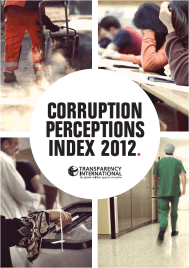
Corruption Perceptions Index 2012

Corruption Perceptions Index 2012Twelve African countries are ranked among the 75 least corrupt nations in the world, according to the 2012 index published Wednesday by Transparency International. Published annually, the Corruption Perceptions Index draws upon a range of data sources to determine how corrupt countries’ public sectors are perceived to be. On a scale from 100 (highly clean) to 0 (highly corrupt), two-thirds of all countries scored below 50.

The top eight in sub-Saharan Africa (SSA) in 2012 also led the list in 2011, with approximately the same global rankings, ranging from 65 to 43. Liberia – at number 11 in sub-Sahara with a score of 41 – saw its global ranking rise 16 points – from number 91 last year to 75 in 2012.

Botswana, Cape Verde, Mauritius, Rwanda, Namibia, Ghana and Lesotho led the SSA rankings, along with South Africa, which dropped two places this year – to nine from seven. Gambia, which was ninth last year, dropped this year to 21 in SSA and 105 globally. Tunisia, which is grouped with Middle East and North Africa (MENA) countries, is tied with Liberia at 75 on the global rankings. Crowding the bottom among the most corrupt in the world are Chad, Sudan and Somalia. For more information visit – www.cpi.transparency.org

African lament – regional integration too slow

National Planning Commission Minister - Trevor Manual

National Planning Commission Minister – Trevor Manual

South African Minister in the Presidency in charge of the National Planning Commission Trevor Manuel says Africa has a lot to learn from the ongoing European economic crisis in order to avoid making the same mistakes. Delivering a presentation under the theme “Africa and the European Financial Crisis — Opportunities and Risks” at the AMH Conversations dinner in Harare on Monday, Manuel said while the European Union (EU) moved at a fast speed towards convergence “we in Africa have been rather painfully too slow about convergence”.

“In fact, it’s so bad for us as Africans that 21 years after the Abuja Treaty was adopted and set out exactly what we need to do if we want to get to an African common market…we still need to focus on regional building blocks,” he said.

“We aren’t building blocks, I am afraid that we are just pebbles without mortar to hold us together. Its not about EU, not about the US (United States), not about the IMF (International Monetary Fund) and World Bank, its about us and the way we relate to each other, and in this context it is fundamentally important that we talk to each other as Africans about some of the hard truths that confront us.”

The former South Africa Finance minister said regional integration required hard work, honesty and convergence, adding that in a global economy, African countries would not be able to survive as individual entities. “As individual countries, we will not make it in the world. We will be picked off and become markets for the rest,” he said.

“So we can’t look to the rest of the world. We have to look to each other in our neighbourhood and understand that’s where change will be driven from. As we learn from Europe we look at ourselves in understanding what we should not do.”

He said institutions mattered both in good times and during a crisis, adding that it mattered for Africa to understand the speed at which countries develop as it builds regional institutions. Manuel said the Lisbon accord brought everybody together in a short space of time without ensuring that each country in the EU was moving at the same rate.

Meanwhile, speaking at the same event, Finance minister Tendai Biti described regional integration as imperative. “For me, with great respect to our principals and leaders, my great disappointment is with the structure of our regional bodies,” he said.

“If you go into the main summit of a SADC meeting, we spend 90% of the time discussing Madagascar, Zimbabwe, Lesotho and now the Democratic Republic of Congo. The actual reports from key ministers like Ministries of finance, regional integration and trade are basically footnotes that Head of States just sift through.” Source: Newsday (Zimbabwe).

Comment: The sad reality of it all is that it is Africa’s politicians which drive this process – they preside over the regional secretariat’s. Its time to provide the necessary guidance to the regional bodies. Moreover, if the ultimate goal is an African Union, why are multiple (overlapping) regional economic unions being promoted?

Bribery along the corridor

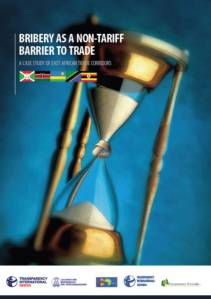
Notwithstanding efforts to minimize collusion, bribery and corruption through increased use of technology, the underlying fact remains that human intervention cannot be completely removed from nodes within the supply chain.Identifying the causes and parties involved in such activity is only the start (yet minuscule) aspect of a problem entrenched in the distrust of government officials and border authorities in particular. Integrity is based on trust. If trust is the placement of hordes of incompetence in public jobs to secure votes, then you will not need to look very far to understand that “the bribe” epitomizes the ultimate enterprise of individuals either bent on extortion, or to avail their services (like prostitutes  to the crooked trader. The following article “Bribery as a non-tariff barrier to trade” (click hyperlink to download) takes account of a wide-spread of role players as to their views and attitudes on the matter. In my view it is a template for what actually occurs at every border across the continent. 

Transparency International (Kenya) and Trade Mark (East Africa) have collaborated in the publication of a review on the subject of bribery in the EAC region. The executive summary elucidates the context – 

The East African Common Market Protocol that came into force in 2010 provides for the free flow of goods, labour, services and capital across the EAC bloc. To achieve this, members undertook to remove all tariff and non-tariff barriers to trade. While progress has been made on the removal of the former, doing away with the Non-tariff barriers along the main transport corridors of the region has remained a challenge.

Taking cognizance of this, Transparency International-Kenya, Uganda, Rwanda and Burundi in conjunction with the Transparency Forum in Tanzania conducted a survey along EAC‘s main corridors — the Northern and Central corridors- that form a vital trade link in the region between August and November 2011. The survey objectives were to measure the impact of bribery practices and create public awareness on the vice.

In determining the size of bribe payable, negotiations came top. The value of consignment and the urgency were some of the other factors sighted by the respondents. According to the survey, truck drivers have devised various means of accounting for bribery expenses to their employers. The most common is road trip expense’. These are anticipated regular amounts given prior to the start of a journey and ad hoc miscellaneous expenses. In the transporters’ books of accounts, the bribes are normally disguised either as anticipated regular amounts or as ad hoc miscellaneous expenses. Source: Transparency International and Trade Mark

Exposing the Illegal Rhino Horn Trade

Author and investigative journalist Julian Rademeyer has recently launched his book “Killing for Profit’ A terrifying true story of greed, corruption, depravity and ruthless criminal enterprise.

On the black markets of Southeast Asia, rhino horn is worth more than gold, cocaine and heroin. This is the story of a more than two-year-long investigation into a dangerous criminal underworld where merciless syndicates will stop at nothing to attain their prize. It is a tale of greed, folly and corruption, and of an increasingly desperate battle to save  rhinos – which have existed for more than 50 million years – from extinction.

Killing for Profit is a meticulous, devastating and revelatory account of one of the world’s most secretive trades. It exposes poachers, scoundrels, gangsters, conmen, mercenaries, killers, gun-runners,  diplomats, government officials and kingpins behind the slaughter. And it follows the bloody trail from the frontlines of the rhino wars in South Africa, Zimbabwe and Mozambique to the medicine markets of Vietnam and the lair of a wildlife-trafficking kingpin on the banks of the Mekong River in Laos …

For more information visit – http://killingforprofit.com/the-book/

To purchase the book online visit – Kalahari.com

Building hard and soft infrastructure to minimise regional costs

I post this article given it ties together many of the initiatives which I have described in previous articles. The appears to be an urgency to implement these initiatives, but the real question concerns the sub-continent’s ability to entrench the principles and maintain continuity. At regional fora its too easy for foreign ministers, trade practitioners and the various global and financial lobbies to wax lyrical on these subjects. True there is an enormous amount of interest and ‘money’ waiting to be ploughed into such programs, yet sovereign states battle with dwindling skills levels and expertise. Its going to take a lot more than talk and money to bring this about.

South Africa is championing an ambitious integration and development agenda in Southern Africa in an attempt to advance what Trade and Industry Minister Rob Davies describes as trade and customs cooperation within the Southern African Customs Union (SACU), the Southern African Development Community (SADC) and other regional trade organisations.

Central to pursuing this intra-regional trade aspiration are a series of mechanisms to combine market integration and liberalisation efforts with physical cross-border infrastructure and spatial-development initiatives. Also envisaged is greater policy coordination to advance regional industrial value chains. “Trade facilitation can be broadly construed as interventions that include the provision of hard and soft infrastructure to facilitate the movement of goods, services and people across borders, with SACU remaining the anchor for wider integration in the region,” Davies explains.

This approach is also receiving support from the US Agency for International Development (USAid), which recently hosted the Southern African Trade Facilitation Conference, held in Johannesburg.

Trade programme manager Rick Gurley says that virtually every study on trade in sub- Saharan Africa identifies time and cost factors of exporting and importing as the most significant constraints to regional trade potential. Limited progress has been made by SADC member States and SACU partners to tackle the factors undermining trade-based growth, limiting product diversification and increasing the price of consumer goods, including of foodstuffs. However, far more would need to be done to realise the full potential of intra-regional trade.

Regional Alliance
One high-profile effort currently under way is the Tripartite Free Trade Area (T-FTA), which seeks to facilitate greater trade and investment harmonisation across the three existing regional economic communities of the SADC, the Common Market of Eastern and Southern Africa and the East African Community.

The existing SADC FTA should be fully implemented by the end of the year, with almost all tariff lines traded duty-free and, if established, the T-FTA will intergrate the markets of 26 countries with a combined population of nearly 600-million people and a collective gross domestic product (GDP) of $1-trillion. At that size and scale, the market would be more attractive to investors and could launch the continent on a development trajectory, Davies avers. It could also form the basis for a later Africa-wide FTA and a market of some $2.6-trillion.

However, as things stand today, intra- regional trade remains constrained not merely by trade restrictions but by a lack of cross-border infrastructure, as well as poor coordination and information sharing among border management agencies such as immigration, customs, police and agriculture.Cross-national connectivity between the customs management systems is also rare, often requiring the identical re-entry of customs declarations data at both sides of the border, causing costly and frustrating delays.

USAid’s regional economic growth project, the Southern African Trade Hub, is a strong proponent of the introduction of several modern trade-facilitation tools throughout the SADC – a number of which have already been successfully pioneered. These tools, endorsed by the World Customs Organisation (WCO) Framework of Standards, which offers international best-practice guidelines, are aimed at tackling the high costs of exporting and importing goods to, from, and within Southern Africa, which has become a feature of regional trade and discouraged international investment.

Bringing up the Rear
A country’s competitiveness and the effec- tiveness of its trade facilitation regime are measured by its ranking on World Bank indices and, with the exception of Mozambique, Southern African States perform poorly – with most in the region settling into the lowest global quartile of between 136 and 164, out of a total of 183. “Our transaction costs in Africa across its borders are unacceptably high and inhibit trade by our partners in the private sector,” says WCO capacity building director Erich Kieck. “We need our States to develop good ideas and policies, but the true test lies in their ability to implement them,” he notes.

He adds that not only does trade facilitation require efficient customs-to-customs connectivity, but also demands effective customs-to-business engagement, adding that, while customs units are responsible for international trade administration, they are not responsible for international trade. “The private sector is the driver of economic activity and international trade, and government’s responsibility is to understand the challenges faced by the business community and develop symbiotic solutions,” Kieck notes.

Despite the establishment of regional trade agreements and regional economic communities in Southern Africa, many partner- ships have failed to deliver on their full potential to increase domestic competitiveness.

In a report, African Development Bank (AfDB) senior planning economist Habiba Ben Barka observes that, despite the continent’s positive GDP growth record – averaging 5.4% a year between 2005 and 2010 – it has failed to improve its trading position or integration into world markets. In 2009, Africa’s contribution to global trade stood at just under 3%, compared with nearly 6% for Latin America and a significant 28% for Asia.

“Since 2000, a new pattern of trade for the continent has begun to take centre stage, as Africa has witnessed an upsurge in its trade with the emerging Brazil, Russia, India and China economies. Overall, Africa is trading more today than in the past, but that trade is more with the outside world than internally,” says Ben Barka. She adds that while many African regional economic communities have made some progress in the area of trade facilitation, much greater effort is required to harmonise and integrate sub-regional markets.

To address enduring trade barriers, consensus among business, government and trade regulators appears to lean towards the adoption of one or a combination of five facilitation tools. These include the National Single Window (NSW), the One-Stop Border Post (OSBP), cloud-based Customs Connectivity, Coordinated Border Management (CBM) and Customs Modernisation Tools.

A National Single Window
NSWs connect trade-related stakeholders within a country through a single electronic-data information-exchange platform, related to cross-border trade, where parties involved in trade and transport lodge standardised trade-related information or documents to be submitted once at a single entry point to fulfil all import, export and transit-related regulatory requirements.Mauritius was the first SADC country to implement the NSW and consequently improved its ranking on the ‘Trading Across Borders Index’ to 21 – the highest in Africa. It was closely followed by Ghana and Mozambique, which have also reported strong improvements.

Developed in Singapore, the benefits of government adoption include the reduction of delays, the accelerated clearance and release of goods, predictable application, improved application of resources and improved transparency, with several countries reporting marked improvement in trade facilitation indicators following the NSW implementation.

In South Africa, the work on trade facili-tation is led by the South African Revenue Service (SARS), which focuses on building information technology (IT) connectivity among the SACU member States, and strengthen- ing risk-management and enforcement measures. However, SARS’ approach to the NSW concept remains cautious, Davies explains. “SARS has considered the viability of this option as a possible technological support for measures to facilitate regional trade, but considers that this would fall outside the scope of its current approach and priorities in the region,” he said.

One-Stop Border Posts
As reported by Engineering News in December last year, effective OSBPs integrate the data, processes and workflows of all relevant border agencies of one country with those of another, which culminates in a standardised operating model that is predictable, trans- parent and convenient. An OSBD success story in Southern Africa is the Chirundu border post, where a collaboration between the Zambia and Zimbabwe governments has culminated in a single structure, allowing officers from both States to operate at the same location, while conducting exit and entry procedures for both countries.

Launched in 2009, this OSBP model is a hybrid of total separation, joint border operations and shared facilities in a common control zone. Implementation of the model has reduced clearance times to less than 24 hours, significantly reduced fraudulent and illegal cross-border activity, enabled increased information sharing between border agencies and reduced the overall cost of export and import activities in the area.

Earlier this year, former South African Transport Minister Sibusisu Ndebele indicated that Cabinet was looking into establishing a mechanism that would bring all border entities under a single command and control structure to address the fragmentation in the country’s border operations, particularly at the high-traffic Beitbridge post between South Africa and Zimbabwe. “The ultimate vision is to create one-stop border operations to facilitate legitimate trade and travel across the borders,” he said.

Customs Connectivity and Data Exchange
Improved connectivity between customs limbs in sub-Saharan Africa has perhaps made the most indelible strides in the region, with improved IT connectivity between States identified as a priority by Sacu.

This includes customs-to-customs inter- connectivity, customs-to-business inter- connectivity and interconnectivity between customs and other government agencies. SACU members have agreed to pursue the automation and interconnectivity of their customs IT systems to enable the timely electronic exchange of data between administrations in respect of cross-border movement of goods. “As a consequence of this acquiescence, we have identified two existing bilateral connectivity programmes as pilot projects to assess SACU’s preferred connectivity approach, cloud computing between Botswana and Namibia and IT connectivity between South Africa and Swaziland,” says SACU deputy director for trade facilitation Yusuf Daya. He adds that a regional workshop was recently convened to explore business processes, functions, data clusters and the application of infrastructure at national level to improve and develop intra-regional links.

Coordinated Border Management
The SADC has been a strong proponent of CBM efforts in the region, which promotes coordination and cooperation among relevant authorities and agencies involved in, specifically, the protection of interests of the State at borders. “The union has drafted CBM guidelines for its members on implementation, based on international best practice, and has received indications of interest from several member States,” explains SADC Customs Unit senior programme officer Willie Shumba.He adds that CBM is a key objective of regional integration, enabling the transition from an FTA to a customs union and, eventually, to a common market, through effective controls of the internal borders.

Customs Modernisation
South Africa’s customs modernisation initiative is well advanced and came about following Sars’ accession to the WCO’s revised Kyoto Convention in 2004, which required customs agencies to make significant changes to it business and processing models. These changes included the introduction of simplified procedures, which would have fundamental effects on and benefits for trade and would require a modern IT solution.

Since its inception, the SARS Customs Modernisation Programme has gained tremendous momentum, with amendments to the Passenger Processing System and the replacement of SARS’s Manifest Acquittal System in the Automated Cargo Management system. Further adjustments were made to enable greater ease of movement of goods, faster turnaround times and cost savings, as well as increased efficiency for SARS. This phase included the introduction of an electronic case-management system, electronic submission of supporting documents, the centralisation of back-end processing in four hubs and an electronic release system and measures to enhance the flow of trucks through borders – in particular at the Lebombo and Beitbridge borders.

Proper Planning
AfDB’s Ben Barka warns that, prior to the implementation of any border improvement efforts by countries in Southern Africa, a thorough analysis and mapping of each agency’s existing procedures, mandate and operations should be undertaken.“Based on these findings, a new set of joint operational procedures need to be agreed upon by all involved agencies and must comply with the highest international standards,” she says.

Development coordination between States is essential, as the largest disparity among regional groupings, in terms of intra-regional trade, is clearly attributable to their differentiated levels of progress in various areas, including the removal of tariffs and non-tariff barriers, the freedom of movement of persons across borders and the development of efficient infrastructure. Source: Engineering News.
Customs Modernisation – positive impact on Doing Business in South Africa!

South Africa ranks 39th out of 185 countries surveyed in the latest International Finance Corporation (IFC)-World Bank ‘Doing Business’ report, which was published on Tuesday.Last year, South Africa ranked 35 out of 183 countries assessed.

The country is placed above Qatar and below Israel in the Doing Business 2013 report, which covers issues such as starting a business, dealing with construction permits, getting electricity, registering property, accessing credit, protecting investors, paying taxes, trading across borders, enforcing contracts and resolving insolvency.

Singapore remains at the top of the ease-of-doing-business ranking for the seventh consecutive year, followed by Hong Kong and New Zealand. Poland improved the most in making it easier to do business, by implementing four regulatory reforms in the past year.

South Africa led the pack in terms of improving in the ease of trading across borders through its customs modernisation programme, which reduced the time, cost and documents required for international trade. “We hope that through the streamlining of procedures, we will see the growth of commerce in the country,” said coauthor of the report Santiago Croci Downes.

The Doing Business 2013 report stated that improvements in South Africa have effects throughout Southern Africa. “Since overseas goods to and from Botswana, Lesotho, Swaziland and Zimbabwe transit through South Africa, traders in these economies are also enjoying the benefits,” it stated.

Another 21 economies also implemented reforms aimed at making it easier to trade across borders in the past year. Trading across borders remains the easiest in Singapore, while it is the most difficult in Uzbekistan.

Out of the 185 economies assessed in the 2013 report, South Africa ranked 53rd for starting a business, 39th for dealing with construction permits, 79th for registering property, 10th for protecting investors, 32nd for paying taxes, 82nd for enforcing contracts and 84th for resolving insolvency.

The country ranked low, at 150, for ease of access to electricity, while it tied at the top with the UK and Malaysia for ease of access to credit. Croci Downes added that it was still too early to tell whether the recent labour unrest in the mining and transport industries would have an impact on South Africa’s ranking or on foreign direct investment .

Meanwhile, the IFC and World Bank reported that of the 50 economies making the most improvement in business regulation for domestic firms since 2005, 17 were in sub-Saharan Africa.

From June 2011 to June 2012, 28 of 46 governments in sub-Saharan Africa implemented at least one regulatory reform making it easier to do business – a total of 44 reforms.

Mauritius and South Africa were the only African economies among the top 40 in the global ranking. World Bank global indicators and analysis director Augusto Lopez-Claros said Doing Business was about smart business regulations, not necessarily fewer regulations. “We are very encouraged that so many economies in Africa are among the 50 that have made the most improvement since 2005 as captured by the Doing Business indicators.”

IFC human resources director Oumar Seydi added that lower costs of business registrations encouraged entrepreneurship, while simpler business registrations translated to greater employment opportunities in the formal sector.

“Business reforms in Africa will continue to have a strong impact on geopolitical stability. We encourage governments to go beyond their rankings. Ranking does matter, and competition is important, but that is not all that counts. What truly matters is how reforms are positively impacting growing economies,” he said.

African economies that have improved the most since 2005 include Rwanda, Burkina Faso, Mali, Sierra Leone, Ghana, Burundi, Guinea-Bissau, Senegal, Angola, Mauritius, Madagascar, Mozambique, Côte d’Ivoire, Togo, Niger, Nigeria, and São Tomé and Príncipe. Source: http://www.polity.org.za

“Blood Ivory” – Huge seizure of Illegal Ivory in Hong Kong

An emperor, faced with the task of selecting a successor, devises a test: he lays out an array of valuable artifacts — items of gold, jade and ivory — and asks each of his sons to choose one treasure. One prince ponders his options for a while, before selecting an ivory scepter. The emperor is pleased. Ivory is valuable, he says, and also imbued with wisdom. The son with the scepter will rule. This, of course, is merely a fable. But the tale of the emperor and his son hints at ivory’s enduring lure in China. For millennia, it has been seen as a symbol of wealth, a source of wisdom and a sign of nobility. This helps explain why more than 20 years after an international ban on the trade of elephant ivory, the business is booming. “With more disposable income in mainland China, many people are flaunting their wealth, and ivory is seen as a luxury product that confers status,” says Tom Milliken of the Wildlife Trade Monitoring Network. “We are seeing the worst poaching of elephants and the worst illegal trade in ivory over the last 23 years.”

Authorities in Hong Kong have intercepted one of the largest shipments of illegal ivory in history – 1,209 elephant tusks and ivory ornaments weighing more than 8,400 pounds. The Hong Kong Customs and Excise Department announced the seizure on Saturday of 3,813 kilograms of ivory hidden inside two containers shipped from Tanzania and Kenya. One container was labeled as carrying plastic scrap, the other was marked as dried beans.

It was the largest-ever seizure of contraband ivory in Hong Kong. Even within the context of soaring wildlife poaching, the numbers are staggering: the equivalent of more than 600 dead elephants. So lucrative is the ivory trade now that well-armed mafias have gotten in on the act. Hong Kong officials estimated the value of the seizure at 26.7 million Hong Kong dollars, or just under $3.5 million.

The customs agency, which said in a statement that it had “smashed” the ivory smuggling case, reported no arrests. But the South China Morning Post reported that seven people in China were arrested in connection with the seizure. Demand from an increasingly affluent Asia, improved international transport and trade links, and weak enforcement and feeble penalties (in many countries) have caused wildlife poaching to jump over the past decade or two.

More than 300 elephants were killed in Cameroon alone early this year. A video from the World Wildlife Fund shows some of that grim slaughter. In this article, published in September, Jeffrey Gettleman reported that ivory — like blood diamonds from Sierra Leone or plundered minerals from Congo — is now a “conflict resource,” used to help finance conflicts across the African continent.

“Some of Africa’s most notorious armed groups, including the Lord’s Resistance Army, the Shabab and Darfur’s janjaweed,” he wrote, “are hunting down elephants and using the tusks to buy weapons and sustain their mayhem.” Members of some of the African armies backed by the U.S. government, Jeffrey reported, also have been implicated in poaching elephants and dealing in ivory. Source: New York Times

Related Articles