EAC Traders Encouraged to Grab AEO Business Opportunities

EACThe EAC business community has been asked to take advantage of the Authorized Economic Operator (AEO) scheme that seeks to cut down costs of doing business in the East African member states.

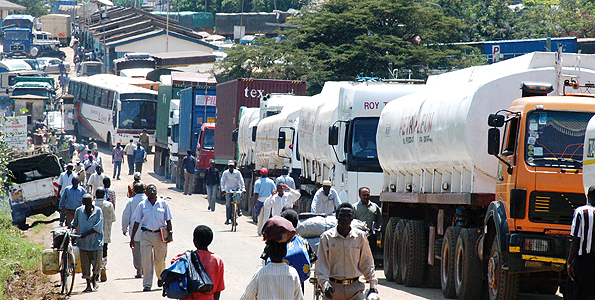
The AEO programme, launched in Dar es Salaam on Wednesday, is an entity involving importers, clearing agents, transport companies authorized to import and move cargo within the EAC region with minimal inspections and other customs interventions at checkpoints.

The Permanent Secretary in the Ministry of East African Cooperation Dr Stergomena Tax, launching the World Customs Organisation (WCO)-AEO pilot programme said, “The AEO status can provide companies with significant competitive advantages in terms of supply chain certainty and reduced import costs and finally to the final consumer.”

Apart from reduced transport costs, Dr Tax said the programme would also pull down storage charges because of minimal customs border inspections as well as few checkpoints or road blocks for transit goods.

The Swedish Ambassador to Tanzania Mr Lennarth Hjelmåker said the AEO scheme is a broader compliance strategy to reward compliant traders with simplification benefits which are concrete and predictable.

“Regional integration and cooperation are factors which are important for development, including creation of favourable conditions under which private sector can operate and provide for economic growth with focus on sustainability,” he said.

Sweden, through the Swedish International Development Cooperation (SIDA), has been supporting the work carried out by the WCO-EAC-AEO programme since 2008. Speaking on behalf of the Tanzania Revenue Authority (TRA) Commissioner General Mr Saleh Mshoro, the revenues body’s Finance Director said efficiency and effectiveness of customs procedures can significantly boost the nation’s economic competitiveness.

The launching of AEO programme marks the beginning of a journey between the region’s revenues authorities and the business communities in facilitating smooth and win win trading activities. Source: Tanzania Daily News

Serious Regional Competition – China to build Africa’s largest port

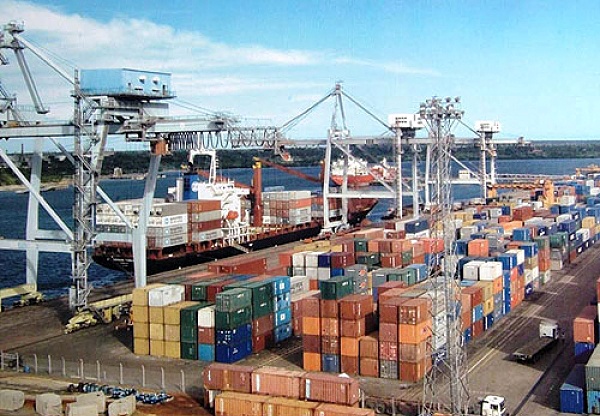
Port of Dar es Salaam, Tanzania, West Africa. Image credit: TPA

Port of Dar es Salaam, Tanzania, West Africa. Image credit: TPA

China has announced plans for a new US$10 billion mega port in the Tanzanian town of Bagamoyo.

The new port, boasting an annual capacity of 20 million TEU, will not only become Africa’s largest box facility but will also rival the major ports of the Persian Gulf.

Dwarfing Tanzania’s current largest port in Dar es Salaam, which handles an estimated 800,000 TEU a year, the new port, northwest of the capital, will be used as a transhipment hub for raw materials coming in and out of landlocked Malawi, Zambia, Congo, Burundi, Rwanda,and Uganda.

China will also help to establish new road and rail networks in the area, whilst contributing to the upgrade of existing links. Source: Port Technology International.

Supply Chain Foresight – a Perspective on BRICS and the South African Supply Chain

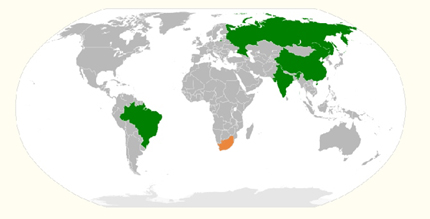
To reap the benefits of its recent membership of BRICS, South African businesses are looking at gaining a competitive edge through achieving global-standard supply chain performance, according to Supply Chain Junction, Manhattan Associates' Geo Partner in South Africa.

To reap the benefits of its recent membership of BRICS, South African businesses are looking at gaining a competitive edge through achieving global-standard supply chain performance, according to Supply Chain Junction, Manhattan Associates‘ Geo Partner in South Africa.

To reap the benefits of its recent membership of BRICS, South African businesses are looking at gaining a competitive edge through achieving global-standard supply chain performance, reports Supply Chain Junction, Manhattan Associates’ Geo Partner in South Africa. Unlike many other countries, South Africa was cushioned from the full impact of the world financial crisis thanks to the strict pre-existing credit controls it had in place. There were some knock on affects from close trading economies but over the last 15 months South Africa has enjoyed a growth economy. The International Monetary Fund (IMF) say this group will account for 61 per cent of global growth in three years time.

While South Africa’s economy (£506.91bn GDP) is dwarfed by those of the original BRIC constituents, the country is seen as the gateway to the continent of Africa, which as a whole has an equivalent sized economy ($2,763bn GDP), a population of one billion and rich resources. This has all made it a valued investment region for China in particular.

However, there are many cultural, logistical and geographical challenges the further one travels North from South Africa towards the Sahara. As an example, while there is 24,487 km of rail track in South Africa, there is just 259 km in Uganda; there are 92 mobile phones per 100 people in South Africa but just two per 100 in Eritrea. However, there is a great deal of raw potential, especially in countries such as Angola and Nigeria.

Participation in BRICS will drive a new competitiveness for South Africa and a key factor will be developing world-class supply chain management. Unlike in Europe, the US and Australia, few supply chain directors in South Africa sit on the board, which makes it harder for them to demonstrate how effective management of the supply chain can deliver competitive advantage. But this is likely to change as companies realise that they must align their supply chain and business strategies. If the recession failed to drive home the need for this, then the presence of Chinese companies in Africa will create significant pressure to do so.

This was an observation of the 2011 Supply Chain Foresight survey, conducted by Frost & Sullivan, which annually samples the opinions of South African supply chain executives. It found that while over three quarters of the respondents feel that the supply chain and business strategies of their companies are aligned, less than a third felt that the supply chain and logistics operations are fully optimised. Businesses are looking at how to optimise their distribution networks through building new facilities, streamlining existing processes or collaboration between trading partners. This has seen a lot of current activity surrounding warehouse management systems, forecasting, planning, replenishment and collaboration technologies, in particular.

Two thirds of respondents are considering investment in technology to enable collaboration with service providers. With the recession claiming many key suppliers the environment is changing from one where major companies squeeze suppliers on cost to one where they adopt a more collaborative approach. Cost reduction was the focus of the past recession, but now the objective is to satisfy customer expectations and to deliver value. Just over half of respondents to the Supply Chain Foresight survey cited customer service as the top supply chain objective. Reducing waste and improving efficiency in the supply chain are the perennial shorter term challenges with companies looking for better forecasting and planning tools to bring down inventory and shorten lean times. One interesting aspect of South African supply chain technology is the large number of in-house designed legacy systems, which is a consequence of the country’s isolation during the times of Apartheid. A propensity towards in-house designed systems remains today.

In terms of industry sectors, retail dominates but it remains firmly entrenched in the traditional channels. While some retailers have online retail websites, online and multi-channel is by no means a significant part of the current retail picture. Internet use is still quite low compared to other countries there are 4.42 million internet users in a population of 49 million and this figure is expected to remain low for some time yet. A further obstacle to the expansion of online sales is a high crime rate which leads to security issues in delivering goods to customers.

Wholesale distribution is quite small in size and complexity so the supply chain challenges tend not to be too complicated. There remain companies that feel they have been reasonably successful – being self-sufficient – and want to maintain that approach, along with a general tendency to look within, when it comes to benchmarking supply chains. However, a growing number of companies in South Africa recognise that there are other organizations across the globe doing similar things, but perhaps, a lot more efficiently.

Supply chain managers within these businesses are evolving a mindset focused on global best practice and the means of achieving it. These South African companies want to be best in their class. By building knowledge, benchmarking and improving against those benchmarks the win for this retailer is a supply chain that gives competitive advantage. As in other countries, companies looking to benefit from external expertise and a reduction in their capital costs will often outsource their logistics to third party logistics (3PL) operators. South Africa has numerous small local players and a handful of large lead logistics providers who tend to drive innovation. It is a small but highly competitive market. Logistics infrastructure and skills shortage in the supply chain continue to be huge issues in South Africa. The Supply Chain Foresight survey found that to deal with the skills shortage, in almost all areas companies either expose employees to new jobs through rotation, or development programs, or mentoring. These are generally in-house driven schemes. South Africa is an emerging market that is growing fast and offers a tremendous wealth of opportunities. In fact, the country has a great many successful businesses, and while many talk about becoming world class, many have already achieved it. Source: Supply Chain Junction

Aerotropolis for Gauteng…stuff’s about to happen

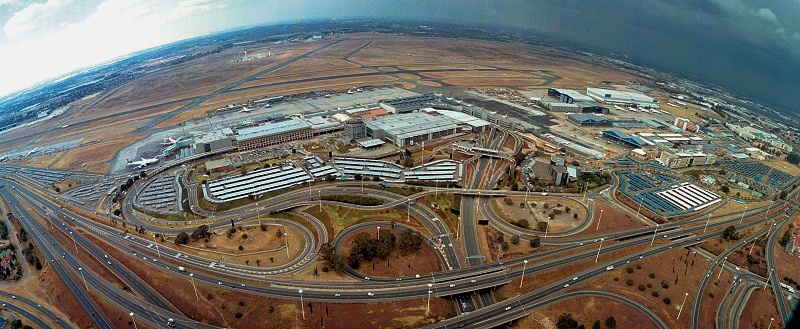
Oliver Reginald Tambo International Airport (east of Johannesburg) to become Africa's first aerotropolis

Oliver Reginald Tambo International Airport (east of Johannesburg) to become Africa’s first aerotropolis

The Gauteng Provinicial government has announced that Africa’s busiest airport, OR Tambo International Airport is set to become the location for the continent’s first aerotropolis. Work on the development of the aerotropolis, centred at OR Tambo International Airport, seeks to leverage public and private sector investment at the airport and surrounding areas. In supporting industrial development in this precinct, approval has been granted for the creation of an Industrial Development Zone (IDZ) in the area surrounding the airport. Heard this all before, but what’s different this time around?

An aerotropolis is an urban plan in which the layout, infrastructure, and economy is centered around an airport, existing as an airport city. It is similar in form and function to a traditional metropolis, which contains a central city core and its commuter-linked suburbs.The term was first proposed by New York commercial artist Nicholas DeSantis, whose drawing of a skyscraper rooftop airport in the city was presented in the November 1939 issue of Popular Science.The term was revived and substantially extended by academic and air commerce expert Dr. John D. Kasarda in 2000, based on his prior research on airport-driven economic development. Wikipedia

Jack van der Merwe, who successfully oversaw the development of the Gautrain project, has been appointed to lead the initiative of developing the aerotropolis. The proposal for the airport to become a terminal city with air, rail and road networks fuelling economic development. It is envisaged to include a commercial component, hotel, conferences, exhibitions and a residential component.

One of the key initiatives of the national government is the e-Thekwini-Free State-Gauteng freight and logistics corridor, known as the Strategic Infrastructure Project 2 (SIP2), which seeks to improve the movement of goods from the Durban port to Gauteng, and to business enterprises nationally as well as in southern Africa.

City Deep/Kazerne cargo terminals and the planned Tambo-Springs Freight and Logistics Hub are to be the focal points for the movement of goods for the export market. Phase 1 of the City Deep/Kazerne Terminal expansion and roads upgrade was underway at the continent’s largest and busiest in-land container terminal. This includes a redesign and upgrading of the roads network in and around the City Deep Terminal to provide for better flow of freight traffic and linkages with the national highways – the cost of the road works would amount to R122 million. At some point the issue of non-tariff barriers to import/export trade will need to be discussed…..and overcome.

Transnet has completed the first phase in the actual improvements of the terminal. It will be investing R900 million in upgrading the terminal. A detailed road design work, including feasibility studies and the development of a master plan, are underway for the Tambo-Springs Inland Port. Now, we’re talking…….

Gauteng  Province is to get 2 484 new modern trains as part of the Passenger Rail Agency of South Africa (PRASA) rolling stock for fleet recapitalisation and refurbishment programme.

The province will be making major investments in road infrastructure in the coming financial year and these include reconstruction and upgrading of the R55 (Voortreker Road) to a dual carriageway road between Olievenhoutbosch and Pretoria West; rehabilitation of the remaining section between Main Road and Maunde Street in Atteridgeville; reconstruction and upgrading of William Nicol Drive (K46) between Fourways and Diepsloot as well as reconstruction and improvement of the remaining section of the Old Pretoria to Cullinan Road between the Chris Hani Flats and Cullinan, among others. Wow, and the toll fees?

The department has been allocated a budget of R4.77 billion for the 2013/14 financial year. Of this amount R1.4 billion has been earmarked for roads maintenance and upgrading, R1.7 billion for public transport operations and R802 million for the running cost of the Gautrain Management Agency. Source: EngineeringNews

So, all-in-all, the above together with other recent noises of incentives and benefits for foreign and local investors in SEZs, the future holds some promise and interest…..

Mozambique – Huge Heroin Seizure with South African Connection

00013ee0-314The Mozambican police claims that it has seized almost 600 kilos of heroin, at Namoto, in the northern province of Cabo Delgado, on the border with Tanzania.

The drugs were found on Sunday in the possession of two citizens of Guinea-Conakry, who are now under detention in the Cabo Delgado, provincial capital, Pemba. The drugs are being stored in the warehouses of the provincial attorney’s office.

According to Malva Brito, the spokesperson of the provincial police command, cited in Wednesday’s issue of the Maputo daily “Noticias”, the final destination of the heroin was South Africa.

Brito said the drug was concealed in an otherwise empty seven tonne pick-up truck. The Guineans had improvised a type of hold within the truck’s bodywork. But alerted by a strange smell and the odd size of the stowage area, the police searched the truck, and found the heroin in 118 plastic bags of about five kilos each (which is a total of 590 kilos).

When the heroin was found, the Guineans first claimed that it was fertilizer that they were taking to South Africa. When that didn’t work, they tried to bribe the frontier guards, offering them 60,000 US dollars. The bribe was not accepted.

The Guineans had started their journey in the Kenyan capital, Nairobi, last Friday, and crossed Tanzania before entering Mozambique. The Toyota pick-up bore a number plate from the Democratic Republic of Congo, and supposedly belongs to a Congolese named Sidiki Sano, who is resident in Mozambique. The owner of the heroin is believed to live in Johannesburg.

If the police figures are accurate, this is an enormous drugs bust. According to the United Nations, heroin was selling in South Africa in 2012 for 35 dollars a gram. So 590 kilos would sell in Johannesburg for 20.65 million dollars. Source: Mozambique News Agency (Agência de Informação de Moçambique).

Boost for Intra-African, BRICS Trade

BRICS-logoSouth African companies, including foreign companies based in South Africa, stand to benefit from relaxed cross-border financial regulations and tax requirements, Finance Minister Pravin Gordhan announced in Cape Town on Wednesday.

Delivering his 2013 National Budget speech in Parliament, Gordhan said that outward investment reforms that applied as part of a new set of “gateway to Africa” reforms would also apply to companies seeking to invest in countries outside of Africa, including in the BRICS (Brazil, Russia, India and China) countries

Boost for cross-border trade

These reforms include the relaxation of cross-border financial regulations and tax requirements on companies in South Africa, as well as reforms making it easier for banks and other financial institutions in South Africa to invest and operate in other countries.

Brand South Africa welcomed these moves as being in line with South Africa’s National Development Plan (NDP), which acknowledges the global shift of economic power from West to East, while also highlighting the rise of Africa.

“This is an important step to enabling trade and supporting regional integration,” Brand South Africa CEO Miller Matola said in a statement following Wednesday’s Budget speech.

Gordhan said Africa now accounts for 18 percent of South Africa’s exports, including nearly a quarter of its manufactured exports, and that the SA Reserve Bank had approved over 1 000 large investments into 36 African countries over the last five years.

Southern Africa development projects

South Africa is also helping to fund several development projects in the wider southern African region, with the Development Bank of Southern Africa (DBSA) accelerating investment into neighbouring countries, particularly in the field of electricity generation and transmission and road transport.

Added to this, South Africa’s Industrial Development Corporation (IDC) last year funded 41 projects in 17 countries to the tune of R6.2-billion. Most of these projects were in industrial infrastructure, agro-processing and tourism.

State company Eskom was also now considering investing in several regional generation and transmission projects outside South Africa. (Comment: I would have thought Eskom would ensure the money was spent on the local South African electrical grid! After having its expected 16% tariff increase halved last week, its quite incredible that such a notion can be in the cards. The South African public are truely being kept in the dark!!!)

Gordhan said there was a proposal to pool the foreign exchange reserves of the five BRICS member countries, with the idea of using this to support one another in times of balance of payments or currency crisis. Brazil, Russia, India, China and South Africa collectively hold reserves of US$4.5-trillion.

He said work was under way to create a trade and development insurance risk pool, with the aim of setting up a sustainable and alternative insurance and reinsurance network for BRICS members. Source: SA News.gov.za

Government heeds the call – Tax Holidays for SEZs

Minister Pravin Gordhan and his 'budget team' on their way to parliment [Picture credit-SARS]

Minister Pravin Gordhan and his ‘budget team’ on their way to parliament [Picture credit – SARS]

After more than a decade of fruitless marketing and billions spent on capital investment, Budget 2013 brings some hope of a turn-around and better fortunes for economic development zones in South Africa.

Minister of Finance, Pravin Gordhan announced, what is an unprecedented move. to bolster support for government’s Special Economic Zone (SEZ)programme. Investors in such zones are expected to qualify for a 15% corporate tax rate, and in addition, a further tax deduction for companies employing workers earning less than R60,000 per year.

This is a significant development in that the previous dispensation under the Industrial Development Zone (IDZ) programme only afforded prospective investors a duty rebate and VAT exemption on imported goods for use in the Customs Controlled Area (CCA) of an IDZ. The reality is that these benefits were simply not enough to woo foreign company’s to set up shop in our back yard, let alone existing big business in South Africa to relocate to these zones. Mozambique, next door, has had much success as are other African countries through the offering of company tax holidays with the introduction of export-focussed special manufacturing facilities.

The SEZ (so it would seem) differs little from the IDZ approach save the fact that the former does not require the location of the economic zone at an international airport, seaport or border crossing. As such, an existing IDZ may ‘house’ a special economic zone, thus maximizing return on investment.

Recent developments in SA Customs realise a provision permitting foreign entities to register as importers or exporters under the ‘foreign principal’ clause in the Customs and Excise Act. Approval of such is dependant on the foreign principal establishing a business relationship with a South African ‘Agent’. This ‘agent’ is required to be registered with the SA Revenue Service as the party representing a ‘foreign principal’ in customs affairs. At this point, the provision is being applied to business entities in BLNS countries who import or move bonded goods into or from South Africa.

Future global application of this provision could boost the possibilities of a broader range of investor to favourably consider SEZ opportunities in South Africa. This option will, no doubt, not go unnoticed by the big audit firms seeking to broker ‘cross-border’ customs facilities for their multi-national clients. I perceive that more introspection is still required concerning ‘non-resident’ banking facilities and transfer pricing issues to enable the global application of the foreign principal concept. But after all this seems a good case for trade liberalisation. Add to this the forthcoming launch of Customs new integrated declaration processing system that will (in time) offer simplified electronic clearance and expedited release facilities for future SEZ clients.

Chinese investment allows Mozambique to become a car manufacturer

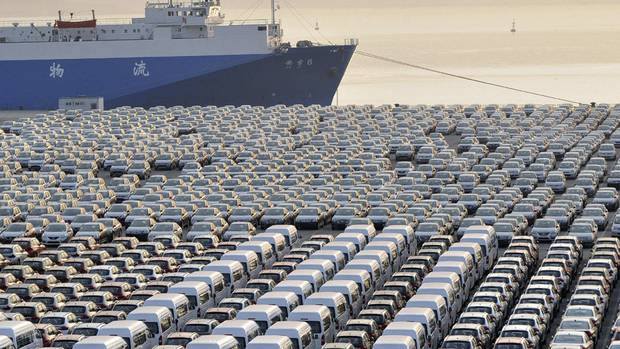
Chinese cars wait to be exported at a port in Dalian, Liaoning province. (China Daily/Reuters)

Chinese cars wait to be exported at a port in Dalian, Liaoning province. (China Daily/Reuters)

With the new APDP programme ably supporting the local South African vehicle manufacturing industry, the possibility of Chinese investment in Mozambique should have little impact on the local vehicle cartel. However, the possibility of competition for the local industry is just what is needed to create competitiveness in the region.

Mozambique is expected to become a car manufacturing and exporting country this year following an investment by China Tong Jian Investment, which is also attracting other companies in the sector to Mozambique. Danilo Nalá, the director general of the Office for Economic Areas with Accelerated Development (Gazeda), told Mozambican newspaper Correio da Manhã that investors from Saudi Arabia and Bahrain were interested in investing in tyre manufacturing in the city of Matola, on the outskirts of Maputo.

The tyre factory, which will be part of the project for the car assembly plant in Matola funded by Chinese investors, as of April 2013, may either involve acquisition of the technically bankrupt company Mabor or setting up a new unit from scratch. According to the newspaper, “there is a lot of interest from Asia in re-launching the tyre industry,” in Mozambique. (Comment: This could be an area of contention for the local market though).

Construction of the China Tong Jian Investment factory, costing an estimated US$200 million, is the result of an agreement the Mozambican government signed with the company in 2010. The agreement outlines that, at an initial stage, the facility should produce around 10,000 vehicles per year, 30 percent of which for the Mozambican market and the remainder for export.

Production is then outlined to be increased to 30,000 units per year and, later, to 100,000 units.

The factory, which is located in the Machava area of Matola, in the former workshops of Mozambican state port and rail manager Portos e Caminhos de Ferro de Moçambique, will produce buses and light passenger vehicles of the Matchedje brand. Matchedje is the name of the village in the Sanga district of Niassa province, which hosted the 2nd Congress of the Mozambique Liberation Front (Frelimo), which is the political party currently in power in the country.

China Tong Jian Investment is based in Shanghai and its largest shareholder is New Zealand’s Morgan Foundation and its business focuses on promoting China-Africa relations. Source: Shippingnews.co.zw

Will Nigeria Overtake South Africa as Africa’s Powerhouse?

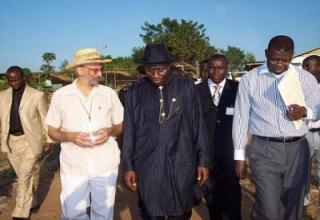
Is Nigerian's President Goodluck Jonathan on the road to success?  - Photograph by IITA Image Library

Is Nigerian’s President Goodluck Jonathan on the road to success? – Photograph by IITA Image Library

Posted with special permission and credit to Think Africa Press. Projections that Nigeria’s economy will be more important than South Africa’s by 2020 underplay serious instabilities in Nigeria’s economy, political systems and surrounding region.

Following Nigeria’s announcement that calculations of its Gross Domestic Product (GDP) may have been underestimated over the last two decades, the country’s economy has been portrayed much more optimistically by mainstream media. The Financial Times headline ‘Nigeria: No 1 in Africa by 2014?’ in its special edition on emerging markets, Beyond Brics, is a case in point. Similarly, headlines such as ‘Nigerians optimistic about economic prospects’ or ‘Nigeria wins ratings upgrade for tight fiscal policy’ from The Guardian and Reuters, respectively, capture the media‘s changing attitude towards Africa’s most populous nation.

And Nigeria’s economic performance has not only caught the attention of the media. The traditionally cautious business community, major global players such as the International Monetary Fund (IMF), World Bank, and influential private institutions such as Goldman Sachs, have warmly embraced this favourable analysis, setting the scene for more positive depictions of Nigeria’s economy. It appears academia, too, has joined the chorus in praising Nigeria’s apparatchiks for supposedly bringing in reforms that have resulted in “unprecedented” growth.

Several commentators are now asserting that Nigeria’s economy will be more important to Africa than South Africa’s by 2020. These analyses in particular require a closer look.

South Africa vs. Nigeria

There is little doubt that the Nigerian economy, simply in terms of size, will reach the top rung by 2020, if not earlier. By some measures, it could already be seen as the biggest economy in Africa. Its massive population has seen its economy grow at speeds unimaginable not long ago. But does that mean Nigeria will automatically become a more dynamic and important regional economy than that of South Africa?

Measured analysis is less convincing, and show that such predictions focus heavily on Nigeria’s current high growth rates at the expense of serious weaknesses and instabilities in its economy, political systems and region. In comparison to South Africa, Nigeria is still confronted by numerous challenges.

First, Nigeria’s high growth rates have been driven by consistently high crude oil prices. Indeed, the story about Nigeria’s growth is predominantly about oil. The primary engine for such high oil prices on the world market has been demand from BRICS countries: Brazil, Russia, India, China and South Africa. However, since the 2008 global financial crisis, BRICS countries have been showing signs of struggling, with growth forecasts for this year cut by almost half. If oil demand continues to weaken due to their sluggish economic performance, Nigeria’s economy could prematurely plateau in a manner analogous to Japan. On the other hand, South Africa’s economy is more diversified, and as a result, its growth rate, though more measured, is likely to be steady.

Second, Nigeria has, in comparative terms, a smaller entrepreneurial community than South Africa. Dependency on oil appears to have profoundly discouraged would-be innovators and entrepreneurs from other sectors, such as the ‘smart’ industries of finance or telecommunications. With the exception of well–established conglomerates such as the Dangote Group, Nigeria also struggles with internationalising its companies. Indeed, there is a sense that Nigerian entrepreneurs have more interest in accumulation than in global expansion. The Nigerian economy needs to reach out to international markets if it wants to sustain the momentum initiated by high GDP growth rates.

South Africa, on the other hand, has shown that it has the ability to take advantage of regional and international markets, with its companies such as Nandos Restaurants, MTN Multinational and Stanbic Bank, amongst many, showing the potential to become global brands. In a manner akin to the US, South Africa has also successfully ‘exported’ its currency, with the rand being used as official currency in Zimbabwe, Botswana, Namibia, Lesotho and Swaziland, a move that has boosted trade with its neighbours.

Third, Nigeria struggles to retain skills and continues to see an outflow of its best minds to London, New York and Johannesburg. For the past 30 years, it has been a country exporting future engineers, economists and doctors. With its workforce, Nigeria will be hard pressed to keep up with the mature knowledge of South Africa, a country whose dynamic economy continues to see it attract some of the best people in Africa. South Africa’s top industries and universities are manned by highly qualified and some of the most sought after professionals in the region, including Nigerians. For the foreseeable future, human capital will remain South Africa’s comparative advantage.

Fourth, intractable corruption in Nigeria is a formidable barrier to sustained growth. Corruption is pervasive and the problem is compounded by the fact that Nigeria lacks the political will and effective institutions to address it. To be a dynamic economy, Nigeria needs to demonstrate interest in countering corruption by building the trust of its own people and investors. In contrast, South Africa has comparatively stronger institutions for tackling corruption, including an effective judiciary system, the very elements that are missing in Nigeria today.

Fifth, Nigeria lags behind South Africa in terms of infrastructure. Its infrastructural systems are not fully competitive, nor do they resemble 21st century standards, with its rail and road networks requiring serious attention. Nigeria needs to invest in infrastructure that will better connect its regions to each other and the country to the rest of the world. More of everything, from ports and bridges to airports and industrial clusters, is required for trade with its neighbours, along with extensive broadband internet connections. The same is not true of South Africa, which has the region’s most extensive infrastructural development.

Sixth, for an economy to grow sustainably, its immediate periphery must be stable and prosperous enough for trade. In West Africa, Nigeria is in the middle of a rough neighbourhood, with social unrest in the Ivory Coast and the unpredictable politics of Mali and Chad, amongst others, posing a threat to regional stability. South Africa benefits from its relatively peaceful immediate region, with the ‘Post–Apartheid Regional System’ having seen increased stability in Southern Africa over the past 15 years.

Last but not least, Nigeria is confronted by religious violence that poses an ‘existential’ threat to its state, and relentless socio-ethnic tensions. In the predominantly Muslim North, for example, the activities of groups such as militant Islamists Boko Haram threaten security and political order – public goods upon which dynamic economic activity is dependent. The former head of state, General Abdulsalami Abubakar recently expressed concern at the deteriorating security situation, admitting that insecurity was constraining Nigeria’s potential.

South Africa has its problems too

So far South Africa has been looked at as a stable entity. However, it’s important to continue this analysis from the opposite direction: the sustainability of South Africa’s stability. Indeed, the real threat to South Africa’s leadership of the Africa region is not Nigeria, but its increasingly tense social atmosphere, undermining its fragile stability. Despite the promise that its economy shows, incidents such as the Marikana massacre give a strong sense that South Africa’s post–apartheid society still faces serious problems. Concise definition of these problems, though, has appeared difficult, with even some of the most incisive voices struggling to provide convincing explanations of what is haunting the Rainbow Nation.

South Africa’s state elites and the civil and business communities need to urgently explore the causes of such a tense social atmosphere, and confront them head on. The 2000 crisis across the Limpopo River in Zimbabwe is a stern reminder that an insecure social atmosphere bodes ill. It may only be, though, when South Africa faces a crisis of ‘Zimbabwean’ proportions, which may not be impossible, that Nigeria gains that precious title of being the regional powerhouse. Otherwise, the continental economic order is likely to look the same come 2020.

For original article Click Here!
Port Natal – Durban Harbour 40s, 50s and 60s

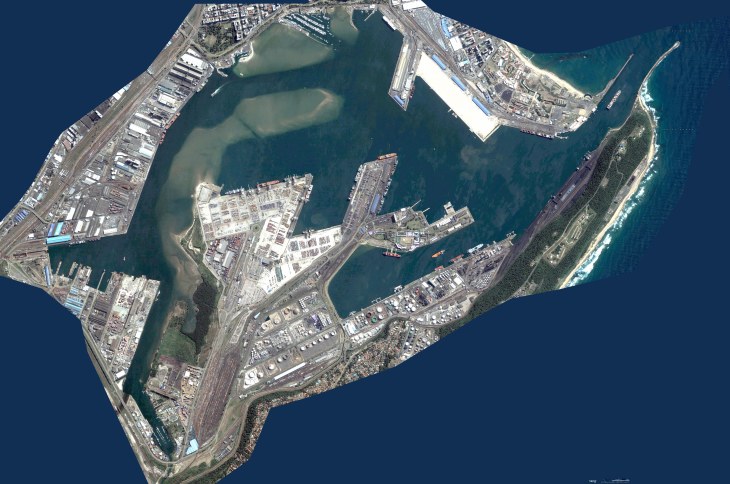
Durban_Harbour_Photo Hi-ResA tad of nostalgia? No, this is relevant and historic. Look what Africa’s busiest seaport looked like 60 (or more) years ago. I am very grateful to Lois Crawley and Cecil Gaze (fellow customs colleagues in Durban) for sharing these historic gems. For purposes of contrast see the modern-day harbour (above). Real estate in the harbour area is in short-supply and significant operational expansion over the last 10 years has placed huge strain on the road and rail networks and the surrounding industrial areas. In recent times the expansion of containerised handling facilities has radically affected the traffic flows, even in nearby residential areas such as the Bluff. With increasing demand for premium containerised port handling facilities, the old Durban airport has been sited for development of a new port, perhaps the biggest and most ambitious construction project yet in South Africa. While one can marvel at the development over what is a relatively short period of time (a generation), spare a moment and view the seemingly archaic slideshow of Durban harbour purportedly between 1940 and 1960 – which some amongst us can even remember. Enjoy!

This slideshow requires JavaScript.

TRALAC – What has happened since customs duties on 124 clothing tariff lines were increased in 2009?

I really enjoy TRALAC’s Newsletter – their analysis is always concise and down-to-earth. This Hot Seat Comment is no exception. One often wonders about the impact and nett result of tariff changes and trade remedies. Here we get some insight.

The clothing and textile industry has a long history in South Africa and is still a very important source of employment, especially for women and in poorer communities. The industry is geographically bound to specific provinces, including the Western Cape, KwaZulu-Natal, the Free State and Gauteng. In many rural areas the clothing and textile sector is often the only source of formal employment. Since about 2002 the Rand appreciated substantially and South African exports became less competitive in the global market. Coupled with the trade liberalisation, in terms of South Africa’s WTO offer, the clothing and textile industry has experienced sustained import competition due mostly from Asian imports. In order to try and remedy large-scale factory closures and employment losses in the industry the Southern Africa Clothing and Textile Workers Union (SACTWU) applied for an increase in the import tariffs of 124 clothing tariff lines to the WTO bound rates of 45 percent in 2009. These clothing tariff lines are classified under Chapter 61 and 62 of the South African Tariff Book and include various clothing items, including men’s woven and knitted shirts, jackets and trousers; babies’ garments; and women’s woven and knitted jackets, skirts, dresses and trousers. Although the retailers objected to an increase in import duties the International Trade Administration Commission (ITAC) granted the application and general customs duties on 121 clothing tariff lines were increased from 40 percent to 45 percent, while the general customs duties on three tariff lines (hosiery) was increased from 20 percent to 45 percent.

imagesIn its application SACTWU stated three reasons for the application: there has been a significant increase in imports under these 124 tariff lines flowing into South Africa; market disruptions in the SACU industry which have resulted in factory closures and retrenchments warranted increased protection for the domestic industry; and increased tariffs will provide both relief and show increased confidence in the industry. The retail industry objected to the application on the following grounds: the loss of business in the manufacturing industry can not only be attributed to price competition, but also inefficiency in the local industry; increased duties will have an inflationary effect impacting the ability of consumers to buy clothing at competitive prices; and increased duties will have a punitive effect on the rail sector and the end consumers. In its decision the Commission found the declining rate of investment and employment in the clothing sector coupled with increased imports a disturbing trend. The Commission decided that an increase in customs duties will enable manufacturers to protect existing jobs, increase market penetration and price competition and growth the domestic manufacturing sector in the export market. However, the question of whether the increase in these customs duties have been successful in reaching its goal of decreased imports and increased domestic production, sales and exports still remain.

Import and export data sourced from the World Trade Atlas (2013) and production and sales data sourced from Statistics South Africa (2013) show the following patterns in the clothing industry between 2009 and 2012:

  • Over the time period imports of the 124 clothing tariff lines increased by 15 percent, from approximately US$ 834 million in 2009 to approximately US$ 1.2 billion in 2012.
  • The top five importing countries were China, Mauritius, India, Madagascar and Bangladesh, accounting for 89 percent of the total imports of these clothing articles into South Africa over the time period.
  • China mainly exported men’s, boy’s, women’s and girl’s cotton trousers; knitted sweaters and pullovers; cotton and knitted t-shirts; and knitted babies’ garments to South Africa between 2009 and 2012.
  • South Africa’s exports of these clothing tariff lines increased by 6 percent, from approximately US$ 71 million in 2009 to approximately US$ 84 million in 2012.
  • These clothing articles were mainly exported to African countries, including Zambia, Mozambique and Zimbabwe.
  • The production index of the physical volume of production (base year is 2005) show there has been a significant decrease in the volume of production of knitted and crocheted articles and wearing apparel in South Africa. The index decreased from an average of 108.11 in 2009 to an average of 79.82 in 2012.
  • The sales of knitted and crocheted articles and wearing apparel also declined over the time period. Actual value of sales declined by 3 percent, from approximately US$ 18 billion in 2009 to approximately US$ 16 billion in 2012.

Although there has not been a significant lapse of time since the increase of import tariffs the data gives the short term response of imports, exports, and production to the change in import duties in November 2009. Immediately after the increase in tariffs there was an initial decrease in exports, production and sales.  However, exports recovered by the end of 2012, while production and sales are still significant lower than pre-2009 levels. SACTWU has also recently indicated that employment in the clothing, textiles and leather sector seems to be more stable over the last two years. However, one of the main objectives of the increase in import duties, to deter lower priced imports mainly from Asia, has not been accomplished. Source and content credit – Willemien Viljoen, TRALAC Researcher.

SARS Customs launches its Water Wing

SARS Customs Waterwing

SARS plans to operate jet skis (such as pictured above) along its vast river borders. [Picture – SARS]

Last week four Customs officers received their qualifications from the South African Maritime Safety Authority (SAMSA) after having successfully completed their written and practical examinations. The officers who hail from the Northern Cape region will commence active patrol and enforcement operations along the northern border between South Africa and Namibia.

The SARS Water Wing skippers received their SAMSA category R certificates after completing a four-day training course at the Van Rhyn Dam in Benoni.

The officers will from next week begin patrolling the Orange River, the border between South Africa and Namibia, where there are suspected illegal trans-border transactions taking place, especially in abalone, diamonds, narcotics and rhino horn.

“These officials are now qualified skippers with category R licences which will enable them to patrol inland waters such as rivers, dams and harbours. The success of this pilot programme now enables us to actively assist in enforcing the Customs and Excise Act without being totally dependent on other departments,” said Hugo Taljaard, Senior Manager: Detector Dog Unit (Oversight).

He said that although the two jet skis will mostly be used in the Nakop area, they will also be utilised as far as Cape Town harbour in the small craft side of the harbour. There are plans to expand the unit. Customs’ first water wing boat is currently being constructed and more details about its deployment will be communicated in due course.  The jet skippers all agreed that it was quite exciting to be part of this pilot programme. “I never in my wildest dreams thought that one day I would be doing something like this,” remarked one candidate.  “Having jet skis will increase our visibility and this will serve as a deterrent to illegal trans-border traders,” added another.

Over the last 6 years SARS has steadily been increasing its visible policing and enforcement capability across the country’s vast land and sea borders. The hugely successful Detector Dog programme has attracted much national and regional attention. SARS also has plans to increase its existing non-intrusive inspection (NII) capability. Currently Durban, South Africa’s sole CSI port, is the only port with a dedicated X-ray scanning facility. Source: SARS Communications Division and self.

AU considers continental Customs Connectivity

500px-Emblem_of_the_African_Union_svgThe African Union (AU) Technical Working Group on Interconnectivity has developed a ‘draft’ Strategy and Roadmap for Customs-2-Customs IT Connectivity on the continent. This strategy will effectively guide the process of the continental Interconnectivity of Computerized Customs Clearance and Information Systems in Africa. The ‘draft’ Roadmap envisages that the process of interconnectivity will take a period of 11 years with a total of four stages.

Stage 1 – by 2014, National states should have engaged one another (within their respective regions) on the matter of Customs connectivity.

Stage 2 – between 2013 and 2017, the AU has an extremely ambitious expectation that national Customs Administrations would have (at least commenced) if not completed Customs ‘connectivity’ within the various Regional Economic Communities (RECs) in Africa.

Stage 3 – between 2017 and 2020, the suggestion that Customs interconnectivity will be occurring between RECs across the African continent – North Africa: AMU; West Africa: ECOWAS and UEMOA; Central Africa: ECCAS and CEMAC; East Africa: COMESA, EAC, IGAD; and South Africa: SADC and SACU.

Stage 4 – between 2020 and 2025, consolidation of Customs IT-Connectivity across the RECs.

The ‘draft’ Strategy spells out the strategic objectives and activities at the national, regional and continental level that will need to be taken for this to be realized. The strategy also indicates the roles of all the major stake holders in the process.  This comes in the wake of several regional and bi-lateral initiatives to bridge the ‘cross-border divide’ through electronic exchange of structured customs information.

All in all an ambitious plan structured to meet the equally ambitious deadlines of the coming into being of an African Union. The real challenge in all of this lies with the Member States in being able to set aside and commit to regional and continental ambitions, over and above the already pressing and complex national agenda’s of their respective sovereign countries. In context of the African Union, the multiplicity of RECs in themselves add a layer of duplication…..is an “integrated Customs Union” in Africa going to continue to permit the existence of the respective RECs or will they be absorbed into the African Union? Member states need to begin speaking up on this issue otherwise accept being swamped by onerous commitments. No doubt the ‘international donor agencies’ wait eagerly in the wings to capitalise on Africa’s deficiencies.

How the Groenewald Gang made millions off illicit wildlife trafficking

rhino-1Dawie Groenewald of South Africa and 11 conspirators were arrested in September of 2010 on 1,872 counts of racketeering, including illegal trade of rhino horns. Among those arrested are two veterinarians, Karel Toet and Manie Du Plessis, as well as several professional hunters. This case is one of the biggest wildlife cases seen in South Africa and has been postponed several times since 2010. It is currently scheduled for early May 2013.

Groenewald owns a big game farm in Polokwane, South Africa as well as Out Of Africa Adventurous Safaris. A burial site of over a dozen horn-less rhinos was found on his property in 2010. Investigators show that these rhinos are thought to have been purchased from the South African National Parks in 2007-2010. In order to increase his profit margin, Groenewald decided to slaughter the rhinos after removing their horns; thus eliminating any upkeep costs associated with live rhinos.

Rhino horns are worth up to $60,000 per kilo in parts of East Asia, namely China and Vietnam. They are thought to possess medicinal value, including curing cancer and small ailments such as fevers and headaches.  Rhino poaching in South Africa has been rising steadily over the past several years. According to South Africa’s Department of Environmental Affairs, approximately 588 rhinos were poached in 2012. One could point to China and Vietnam’s increased affluence as having increased this demand.

Investigators have so far seized $6.8 million in assets from Groenewald, Toet, and Du Plessis. They also uncovered Valinor Trading CC, a “closed company” Groenewald used to launder money. However, this was not Groenewald’s first run in with the law. Groenewald is a former police officer and was discharged because of his ties to a car smuggling ring allegedly outfitted by ZANU PF, the ruling party of Zimbabwe’s notorious Robert Mugabe. Groenewald was arrested in Alabama in April 2010 for importing an unlawfully hunted leopard trophy. He was banned from the U.S. and ordered to pay a $30,000 fine as well as a $7,500 fee to the buyer in Alabama.

There is some evidence that the Groenewald Gang is part of a bigger international syndicate of illegal wildlife trafficking headed by high-ranking officials in Zimbabwe.

Groenewald and his associates are out of business, but many more like them remain. Poaching is a big business, and like any illicit business only exists at the scale it does because of the global shadow financial system. Money that Valinor Trading CC conceals becomes an illicit financial flow, and eventually must be deposited in a financial institution somewhere. Authorities have frozen $6.8 million of Groenewald’s assets, but who knows how much more is hiding behind a shell company’s bank account in some far-off tax haven.

It makes no sense that while Western countries work to protect endangered and threatened species from people like Groenewald and his clients, they simultaneously undermine these same policy goals by allowing money to be easily concealed. Article by Regina Morales who is a Policy Intern at Global Financial Integrity.

Nigeria – Maximizing Opportunities in Free Trade Zones

Lagos Free Trade Zone

Lagos Free Trade Zone

So how come FTZs, IDZs, EPZs, etc are working in other African countries and not here in South Africa? This Day Live (Nigeria) offers some of the critical success factors which delineate such zones from the normal economic operations in a country. Are we missing the boat? The extent of economic and incentive offering can vary substantially between the different economic and trade zone models – some extremely liberal while others tend to the conservative. Obviously the more liberal and free the regulations are the more stringent the ‘guarantees’ and controls need to be. However, in today’s e-commercial world, risk to revenue can more than adequately be mitigated and managed with through risk management systems. Manufacturing and logistical supply chain operations are likewise managed in automated fashion. I guess the real issue lies in governments appetite for risk and more particularly its willingness to relax tax and labour laws within such zones. Furthermore, a sound economic roadmap demonstrating backward linkages to the local economy and outward linkages to international markets must be defined. Herein lies some of the difficulties which have plagued South African attempts at such economic offerings – no specific economic (export specific) goals. Limited financial/tax incentives for investors, and poor cooperation between the various organs of state to bring about a favourable investment climate.

Free Trade Zones (FTZs) are at the crux of the growth attributed to emerging markets. All the BRIC nations have used the FTZs as a buffer to economic meltdown particularly in the wake of the most recent financial and economic crises. The “great recession” of 2007 – 2009 saw the BRIC nations growing at the rates of 7% to 13%. Consequently, the importance of FTZs as well as maximizing opportunities therein cannot be over-emphasized. The literature defining FTZs vary, but they all have the following characteristics in common:

  • A clearly delimited and enclosed area of a national customs territory, often at an advantageous geographical location, with an infrastructure suited to the conduct of trade and industrial operations and subject to the principle of customs and fiscal segregation.
  • A clearly delineated industrial estate, which constitutes a free trade enclave in the customs and trade regime of a country, and where foreign manufacturing firms, mainly producing for export, benefit from a certain number of fiscal and financial incentives.
  • Industrial zones with special incentives set up to attract foreign investors, in which imported materials undergo some degree of processing before being re-exported.
  • Fulfilling their roles in having a positive effect on the host economy, regulators look at FTZs from a nationalist perspective. Inevitably, they seek the following benefits:
    • Creating jobs and income: one of the foremost reasons for the establishment of FTZs is the creation of employment.
    • Generating foreign exchange earnings and attracting foreign direct investment (FDI): measures designed to influence the size, location, or industry of a FDI investment project by affecting its relative cost or by altering the risks attached to it through inducements that are not available to comparable domestic investors are incentives to promoting FDI. Implicit in this statement lies the definition of FTZ. Other traits that are recognizable when discussing FDI’s include specially negotiated fiscal derogations, grants and soft loans, free land, job training, employment and infrastructure subsidies, product enhancement, R&D support and ad hoc exceptions and derogations from regulations. In addition to FDI, by promoting non-traditional exports, increased export earnings tend to have a positive impact on the exchange rate.
    • Transfer of technology: trans-national corporations (TNCs) are a dominant source of innovation and direct investment by them is a major mode of international technology transfer, possibly contributing to local innovative activities in host countries. It is a government’s primary obligation to its citizenry to provide attractive technology, innovative capacities and mastering, upgrading, and diffusing them throughout the domestic economy. Nevertheless, through national policies, international treaty making, market-friendly approaches, a host country gravitates from providing an enabling environment to stronger pro-innovation regimes that perpetually encourage technology transfer.

FTZs can be both publicly (i.e. government) and or privately owned and managed. Governments own the more traditional older zones, which tend to focus more on policy goals that are primarily socio-economic. They emphasize industry diversification, attracting FDI, job creation and the like. Privately-owned FTZs have the advantage of eliminating government bureaucracy, are more flexible, and are better prepared to deal with technological changes. The global trend towards privatization has made privately-run zones more popular and a number are highly successful. The role of government in the case of privately-run zones is to provide a competitive legal framework with attractive incentive packages that meet the World Trade Organization (WTO) requirements.

FTZ Operations in Nigeria

FTZs were established in 1991 in order to diversify Nigeria’s export activity that had been dominated by the hydrocarbon sector. By 2011, there were nine operational zones; ten under construction; and three in the planning stages. The governing legislation includes the Nigeria Export Processing Zones Act (NEPZA) and the Oil and Gas Export Free Zone Act (OGEFZA). Zones may be managed by public or private entities or a combination of both under supervision of the Authority. For the full article go to – This Day Live