South African Supply Chain – a shift in the balance of power?

The Customs Modernisation Programme has engaged supply chain stakeholders for just on a year and 3 months now. What has been seen as an unprecedented approach to Customs/Stakeholder co-creation has no doubt also revealed some significant developments in the industry which prompt some observation and comment.

It is an understatement that the modernisation development impinges upon an individual or company’s ability to modernise on the one hand, while maintaining a constant focus and commitment to their day-to-day operational dealings with clients.

It serves well to take a step back a few years – not quite to the days of antiquity – but far enough back to when declarations were framed ‘manually’ by an entry clerk and assessed ‘manually’ by a customs officer. In both instances the clearing agent and Customs required a level of capability and skills in the specific areas of tariff and valuation. This did not stop at clearances but was a well established trait at most customs branch offices, and indeed clearance brokers, where skills in all specialised areas were generally in abundance. Companies in those days had the capacity to deal with just about any kind of customs and trade issue through their in-house knowledge base and proven track record.

In short, over the last 18 years or so, the ‘skills’ and knowledge base has gradually dwindled where in most cases only the larger companies have been able to maintain top-dollar skills on a fulltime basis. The introduction of systems has to large extent negated the need for knowledgeable (highly paid) entry clerks. A lot of these ‘skills’ landed up at one or other ‘audit firm’, and if collar-and-tie was not the desired work attire, they established their own specialised consultancies.

Automation and EDI have allowed a number of smaller players to enter the fray, but the once established methods of in-house training no longer exist. True, there are reputable learning institutions offering dedicated training, but it is widely acknowledged that mentorship within the organisation was always the best form of knowledge transfer. Some local and international organisations offer highly specialised technical e-learning offerings with ‘accredited’ diplomas or degrees. Yet, one has to question seriously how companies, and Customs for that matter, ensure a return on investment on the knowledge attained? Moreover, staff retention (attrition rather) questions the motive for training, i.e. are staff only interested in training for their personal development, or are companies not focussed enough to ensure staff is retained for a reasonable period to ensure sustainable benefit?

This brings me to the point of this post. The modernisation programme will undoubtedly offer significant benefits to trade. The first release allowed ALL traders and service providers to progress at a common pace with implementation occurring only once all were fully tested and ready. This, itself, extended to joint training programmes between SARS and the trade. The forthcoming release will however reveal the competitive edge for traders whose service providers have their act together versus those who are not quite there. Is this the desired state envisaged by SARS? No. However, equal opportunity is afforded to all involved. True, a large company can dedicate more time and resource to such developments. This is a painful trade-off for some. The reality is therefore brutally clear – to stay with the game, companies must take some pain. It is quite apparent that the pace at which change is occurring is unexpected by some members of the supply chain.

A trend amongst certain service providers has been to recruit so-called customs experts. This is both a strategic and competitive move in that service providers, today more than ever before, require a more intimate understanding of customs procedure. However, while this evolution is silently occurring it needs be mentioned that there exists a fine line in terms of the manner by which these ‘experts’ operate. Bureaus need to be cognisant of this point and their real role in the industry. If such ‘expertise’ goes beyond systems development it may require them having to license with SARS to ensure parity in the industry. These developments are not going unnoticed.

The Customs Modernisation Programme has provided an environment for radical re-structuring where the ‘fit’ will survive and thrive. Unfortunately, nostalgia and novelty are no longer a criteria.

Southern Africa: Eyeing the Money, Not Development

A new revenue sharing formula in the Southern African Customs Union (SACU) is intended to boost development but has met with resistance from the governments of poorer states in the sub-region that are interested in “just getting the money”. Differences over the economic partnership agreements (EPAs) with the EU nearly tore the customs union apart in 2010; now the issue of the revenue sharing formula has become equally contentious.

The South African Treasury Department wants a revision of the formula.

Smaller member states Botswana, Lesotho, Namibia and Swaziland (BLNS) argue that SACU’s common external tariff (CET) gives South Africa an instrument to protect its own industry, while the level playing field in the union makes it hard for the peripheral countries to build their own industrial bases and compete with their much larger neighbour’s products and services. For this they deserve to be compensated, they argue.

A lot of time was spent on working out the formulation of a new mechanism, but nothing definite was decided on.

Certain trade commentators warned against an “unrealistic” perception of the balance of power in SACU. South Africa feels that it cannot be expected to receive less than what it’s due. At the same time within the BLNS countries there is a shocking lack of understanding of the realities. The South African Treasury is frustrated over having to hand over so much money, without having control over it. It is proposed that South Africa should top up the revenues for reasons of political stability and economic policy but the formula shouldn’t just focus on trade, rather stimulate development.

The current revision of the SACU agreement is mainly inspired by the recession and a couple of years of experience with the current revenue formula, which South Africa now wants to renegotiate. Such changes are not significant enough to drive the process. A leaked draft report on the proposed changes to the formula has caused an outcry in the BLNS, being pitted heavily in favour of South Africa. Countries are still studying the report with a final decision expected in April 2011.

One of the options on the table is to increase the development component of the pool with funds, for instance, going to regional infrastructure projects instead of state coffers. It is however doubtful that countries like Swaziland and Lesotho will be keen on that. For them, it is more important than anything else to get the money.

It is therefore obvious that the current one sided focus, where South Africa compensates the SACU states for their inability to improve their economic plight or maintain domestic fiscal discipline will remain a burden on ‘big brother of the south’ unless some lessons of ‘tough love’ are brought bear on the region. It makes one wonder how on earth SADC let alone an African Union can ever materialize under such mentality.

Original article dated 28 March 2011 featured on allAfrica.com

Useful Incoterms Online Resource

Incoterms 2010A fundamental aspect of any sale of goods transaction is costing the product accurately. I found this website which I believe is useful for any would be importer/exporter or trade practitioner in the understanding of INCOTERMS. Who is responsible for those charges under the new Incoterms 2010?  See: Incoterms® 2010 Freight and Associated Charges—Part 1: Just who is Responsible?

I received another useful tool from Bill Paul of Freight Match Services, Inc., Roselle, Illinois 60172, USA, who has kindly allowed the publication of his Incoterms 2010 Quick Reference Chart for followers and visitors to this blog.

Harmonised System 2012

HS Tariff booksBelow you will find the link to the WCO-published HS amendments to enable an early start for all IT service providers, importers and compliance practitioners out there. 5 years seems a very short time since the last major revision in 2007. The volume of amendments within, for instance, Chapter 3, for the separate identification of certain species of fish and crustaceans, molluscs and other aquatic invertebrates, is noticeable. The modifications aim at improving the quality and precision of trade data in these commodities.

New subheadings have been created for the separate identification of certain edible vegetables, roots and tubers, fruit and nuts, as well as cereals. HS 2012 also features new subheadings for specific chemicals controlled under the Rotterdam Convention and ozone-depleting substances controlled under the Montreal Protocol.

Other amendments resulted from changes in international trade patterns. These include deleting more than 40 subheadings due to the low volume of trade in specific products, separately identifying certain commodities in either existing or new headings, and reflecting advances in technology where possible. Finally, a number of amendments aim to clarify texts to ensure uniform application of the HS Nomenclature.

Refer to the following link: http://www.wcoomd.org/files/1.%20Public%20files/PDFandDocuments/HarmonizedSystem/HS%20Overview/NG0163B1.pdf

Want to find out more on what HS 2012 means, then join Jeff Bensing with Mercor Consulting and Angela Chamberlain with Integration Point, for a one-hour webcast to discuss:

* What HS chapters are impacted by the WCO changes
* How could this affect an organization’s importing and exporting processes
* What an organization can do now to prepare for the 2012 HS changes
* Best practices to consider for an overall improved classification strategy

This webcast will be held on Thursday, March 29, 2011 at 1:00 p.m. EST. Don’t miss the chance to know the latest changes to he HS to make them work for you! For more information and to register, go to:

https://integrationpoint.webex.com/integrationpoint/onstage/g.php?t=a&d=661096485&SourceID=li

New Screening Technology for Air Cargo

I have added a new link which will be of interest to Customs Border Control officers and cargo handlers in the airfreight industry. Read all about the new screening technology recently installed at Schiphol Airporthttp://www.diag-nose.com/rascargo.html. You will also find interesting posts in regard to the use of detector dogs in the combatting narcotics and explosives.

DBWeb – An Alternative to the World Wide Web in the making…

There is now an alternative to the World Wide Web. It’s called DBWeb. Unfortunately, it only runs on Microsoft Windows XP SP3, Vista, and Windows 7 operating systems. You can see it, learn about it, and play with it by downloading DBWeb.zip from www.TheDBWeb.org.

Read article on i-Newswire

Update – DTI’s early warning system for exporters

The DTI, through the SA Bureau of Standards has formally launched an early warning system has been launched by government to help ensure South African export companies are aware of technical changes to export regulations. The system allows exporters to join a mailing list where weekly notifications on changes are sent to subscribers on Mondays. Companies can register on the SABS website:

https://www.sabs.co.za/forms/standards/wtomailsubscribe.php.

Source: www.ports.co.za – DTI launches system for South African exporters – 2011.03.07

Increase in Passenger Allowances

SARS Customs Duty-free allowances for travellers is increased from R3 000 to R5 000 and for crew members from 500 to R700. The flat rate allowance for travellers is increased from R12 000 to R20 000, whilst that of crew members will remain the same at R2 000. These amendments will be published in the Government Gazette and come into effect on 1 March 2011.  Current forms DA331, DA305, DA307, DA308, and DA341 will be replaced by a ‘new’ DA331. Refer to SARS Modernisation web page for full details – http://www.sars.gov.za/Tools/Documents/DocumentDownload.asp?FileID=66678

Border Management Agency – Government promises finalisation by 2014

Lebombo border lineIt must be over a decade since the South African government entertained the notion of a border management agency (BMA). Initial attempts were made along the lines of a collaborative departmental approach to securing and administering the plethora of controls. None of the attempts has had any success in meshing together a workable solution. Perhaps the best essay on the subject remains Jonny Steinberg’s “An overview of South African border control: 1994-2004“.  

A recent article by Leon Engelbrecht, editor of DefenceWeb, suggests that the ‘thought process’ behind the establishment of a BMA has not moved beyond the pre-democracy stance of a military emphasis at the countries border posts and borderlines. Unlike other parts of the world where ‘border security’ retains a customs and immigration character – if only just – details of this country’s endeavours appear to favour military and police type controls which bodes little hope for intra SACU/SADC trade developments. Unless a strong leader, having an acute understanding of both trade and security, heads up such BMA, there is little hope that the initaitve will ever materialise. Lets just wait and see.

Southern and Eastern Africa – Report non-tariff barriers online

An online mechanism is available for parties to report and monitor non-tariff barriers (NTBs) that have been encountered in SADC, Comesa and the EAC. Members of the public, including economic operators and academic researchers, can register as users on the website to submit and track complaints. After a complaint is submitted it is reviewed by the system administrator which will either accept or reject the complaint as a valid NTB. If it is valid the National Focal Point is assigned to resolve the complaint through bilateral consultations with the member state against which the complaint was reported.

Traders in the different member states, public and private sector, can also submit a written complaint to the National Focal Point of that state. Traders in South Africa, for instance, need to forward their complaint notification forms to either the Department of Trade and Industry [DTI – public sector focal point] or Business Unity South Africa [BUSA -private sector focal point] depending on the sector to which the trader belongs. The member states will then address the complaint through bilateral consultations.

Access the Online facility at URL: www.tradebarriers.org

Modernisation Release 2 – Industry testing to commence

Just 3 months since the first release, SARS and Customs stakeholders together with their service providers will commence testing the second phase of the Customs Modernisation Programme. The scope of this release offers some significant opportunity for improved efficiencies benefitting both customs and trade.

There are 3 key pillars for this implementation:

  1. A new case management and inspection solution will support an automated workflow between customs assessment officers and inspectors, eliminating the current manual stop and inspection process. A modern user interface has been developed and integrated with Customs’ legacy declaration processing systems. For Release 2, this interface will allow the customs officer to initiate a case, where goods are automatically risk profiled for an intervention. A ‘case’ is an electronic stop notice where the officer is able to capture inspection outcomes, as well as view supporting documents electronically submitted by traders in mitigation of a stop or detention. In addition, the system will interface with an electronic inspection booking system which aims at expediting the customs inspection process. The outcome of each stage of an inspection triggers a response to the trader advising of the status of the consignment or inspection outcome. This is a significant step forward and SARS intends that the efficiency benefits derived will directly translate into cost savings for trade.
  2. Customs E@sySCAN and E@syPACKER software solutions. Soon traders will no longer have to hand-deliver clearance supporting documents to customs manually. SARS and service providers have collaborated for over a year developing a functionality that will radically improve efficiencies and response times in regard to ‘stopped/detained’ cargoes. It will enable a customs broker, importer or exporter to upload any required trade document which customs may require in the finalisation of a customs inspection. SARS’ ‘E@sy’ software has been made free of charge to service providers for integration into their trade applications. This forms part of SARS’ overall contribution to keeping cost of compliance to a minimum. For traders not using EDI, SARS will also be offering walk-in scanning facilities at its bulk capturing centres across the country. 
  3. A new cargo management system will replace the existing Manifest Acquittal System (MAS). Cargo operators are already working with SARS to improve the level of data cleanliness. Once the level of data integrity meets an accepted level it is SARS intention to perform the matching of import and export clearance declarations against consignment level transport document information in real time. Mismatches occurring will trigger a customs case which may either take the form of a documentary check, and if necessary a physical inspection. The automatic data matching and acquittal will obviate the need for cargo reporters to print and deliver paper manifests to customs. It will also remove the obligation on reporters to submit paper manifest acquittal documents. Similarly, significant cost savings are envisaged for trade.

It is worth mentioning that some of these innovations are a world first in customs processing, and paves the way for future enhancements in support of the new Customs Duty and Control Bills.

Withdrawal of ‘Transfer of Liability’ Clearance Declarations

Prior to 1 November 2010, SARS provided for the importation of goods (by a registered importer) which could be cleared under ‘transfer of liability’ (Purpose Code TIR) to a third party who is registered to process or manufacture goods under the conditions of Schedule 3 (Industrial Rebate).

In effect this allowed an importer, having no entitlement to rebate (duty relief), to clear and deliver goods to a rebate registrant for purposes of manufacture/assembly, receive the finished product and dispose of commercially.

The Customs Modernisation approach has put into motion a means by which previous clearance procedures (Purpose Codes, prior to November 2010) could be aligned with the new Customs Procedure Codes (CPCs) introduced subsequent to 1 November. Moving forward, the treatment of such goods under the new dispensation will require that the importer of the goods be licensed to operate a home use processing premises. No allowance is made for transfer of liability to a third party at time of primary importation into the Republic. Provision is however made to allow subsequent sub-contracting of the process of manufacture/assembly.

Given the aforementioned, SARS has approached ITAC regarding the economic justification of the stance permitting transfer of liability.

Manufacturers and importers must therefore take note of this matter and consider the impact to their current business models. The basic principle is that unless an importer is properly registered or licensed (as the case may be) he/she may not be entitled to import goods under certain customs procedures, specifically ‘home use processing’ and ‘inward processing’.

Customs Bill – Poser for Cargo Carriers, Handlers and Reporters

MultimodalThe introduction of new clearance and release formalities in terms of customs procedures has a significant impact on all cargo operators, vessel’s agents, freight forwarders, ground handlers etc. Current provisions in the prevailing Customs and Excise Act, no. 91 of 1964, and its associated rules provide for the ‘clearance-free’ movement of uncleared bonded cargo from place/port of discharge to an inland terminal against the carrier’s manifest. This will not be possible once the new Customs Control and Duty Acts come into being.

Cargo manifested for inland ports will need to be removed under the National Transit procedure, implying the submission of a clearance declaration (formerly an RIB) for each consignment moved. It still needs to be determined if a groupage container can move against a single national transit clearance or if each consignment within such container must be declared for national transit. This could become an onerous burden on the controlling operator of such consol with surety implications. The alternative is for all such cargo to be cleared for ‘home use’ or other permissible procedure (other than national transit) at place/port of discharge. For consolidated cargo, can available de-grouping and depot storage facilities at sea ports manage the volumes?

Similarly transhipment cargo will also require a customs clearance declaration (bill of entry); a further consideration for carriers and agents of carriers – do they have the capacity and expertise to transact ‘national transit’ and ‘transhipment’ clearances electronically to customs? Most probably not. Notwithstanding, Customs Brokers (Clearing Agents) are also eligible to act on behalf of a carrier/cargo reporter to clear goods for transhipment.

These are but a few critical considerations which all cargo reporters need to bear in mind for the future.

Mandatory EDI Submission – SARS engages Cargo Manifest Providers

Some 8 years since the initial implementation of the Manifest Acquittal System (MAS), SARS has recently engaged cargo manifest providers with a fresh urgency to prepare themselves for the impending mandatory requirements for the filing of cargo reports to Customs. The legislation has been in place for several years and a fully revamped cargo management system has since been developed by SARS. Cargo Reporters (shipping lines, airlines, ships agents, terminal operators, freight forwarders, consolidation/deconsolidation agents, depot operators, ground handling agents) are now called upon to ensure that their systems are able to meet the cargo reporting requirements of SARS. (The EDI Mapping requirements for CUSCAR is now available on the SARS website).

The first imperative is to ensure the integrity of data reported to SARS. Once this is at a satisfactory level, SARS will commence the matching of cargo and customs clearance information. Not unlike other customs jurisdictions, the availability of ‘clean data’ from both cargo reporters and declarant’s is imperative to facilitate manifest matching, risk assessment and the release of goods.

A further phase will thereafter introduce measures to ensure that South Africa meets its obligations in terms of the WCO SAFE Framework of Standards. This may require some modification to

  • Data reporting requirements via EDI,
  • Some changes to legislation,
  • Introduction of formal licensing of cargo operators, and
  • Introduction of a seal integrity programme as part of the aforementioned licensing arrangement.

SARS has prioritized air and sea modalities (imports only) for initial implementation, with rail and road modes to follow. The priority not only includes cargo reporting (manifest) requirements but also other reports such as vessel call notifications and advices, discharge lists, gate-in and gate out reports, and cargo outturn reports.

SARS cargo management system will be available for test purposes to all cargo reporters as of 1 March 2011. A period of at least 2 months has been contemplated for such testing, with live implementation occurring in May 2011.

Importance of Seal Integrity for Customs

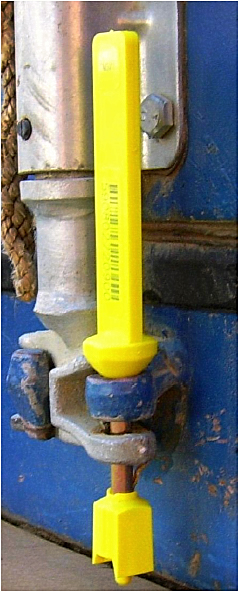
RFID SealSupply chain security in the maritime environment is underpinned by the need for seal integrity. The road to paperless trade eliminates much of the paperwork traditionally required for customs clearance and cargo reporting. The movement of ‘containerised’ import and export cargo does, however, require physical validation of the ‘integrity’ of cargo from its point of dispatch to point of delivery at destination. This is not wholly a customs requirement but at the same time one which any legitimate trader would expect in respect of the safe and secure transportation of his/her cargo.

Technology developments in the logistics industry see many forms of automated gate controls and inventory management. However, if this technology does not support a mechanism to ensure the validity of means of transport, conveyance equipment and seal, then there exists a risk of a breach in the movement of such goods.

From a customs perspective, all parties in the supply chain are both vulnerable and responsible for maintaining such integrity. For this reason, the introduction of Authorised Economic Operator (AEO) programmes and security programmes require a customs administration to implement seal integrity. SARS already contemplated the need for this through provision in the Revenue Laws Amendment Act, introducing Section 11A – Seals and sealing of containers and sealing of packages and vehicles. Formal promulgation of this has not occurred due to the fact that it is dependent on the licensing of logistics operators, its self a modernisation deliverable.

To illustrate at a practical and operational level the import of seal integrity, please refer to an article, authored by Andre Landman (SARS), place under “Downloads”, titled “Seal Reporting Requirements for Containerised Goods“.