‘State of Logistics’ survey – SA’s progress revealed

The 8th Annual State of Logistics Survey, a joint project by Imperial Logistics, the University and Stellenbosch and the CSIR reveals good news for South Africa. Logistics costs – as a percentage of GDP – have dropped to the lowest level ever at 12.7%. The in-depth report, which is available online at http://www.csir.co.za/sol/, provides some fascinating insights from some of the industry’s logistics thought leaders.

Transport costs are singled out as the most significant factor impacting the country’s logistics costs, comprising 53.2% of the logistics bill. “The marked impact of the 11% fuel price increase between 2009 and 2010 is no surprise considering the fuel price is the primary transport cost driver,” says Zane Simpson of the University of Stellenbosch. “Had the fuel price remained as it was in 2009, total transport costs in 2010 would have been R5.8billion less, consequently putting logistics costs as a percentage of GDP at an even more favourable 12.5%.” Transport costs as a percentage of total logistics costs would then have been 52% instead of 53%.

Globally, transport costs as a percentage of logistics costs are less than 40% which makes South Africa’s percentage relatively high. “For logistics to become a competitive weapon for South Africa, change is required,” said Cobus Rossouw, chief integration officer of Imperial Logistics. “South Africa is a leader in complex, dynamic logistics and has achieved success despite geographical impediments, severe skills shortages and lack of economies of scale “South Africans need to recognise that we are and can be counted among the best in logistics. And while we will always have much to learn from others, we need to recognise that we also have a lot to offer.” Source: CargoInfo.co.za

Open Borders and Integrated Supply Chains break down Global Trade Barriers

East Asian economies have recorded marked improvements in their ability to enable trade, while traditional frontrunners Singapore and Hong Kong retain a clear lead at the top of the global rankings, according to the Global Enabling Trade Report 2012, released today by the World Economic Forum.

The report, which is published every two years, also confirms strong showings for Europe’s major economies, with Finland and the United Kingdom both advancing six places to 6th and 11th, respectively, and Germany and France remaining stable at 13th and 20. Other large economies fare less well: the US continues its decline to 23rd, as does China (56th) and India (100th). Among emerging economies, Turkey (62nd) and Mexico (65th) remain stable while Chile (14th), Saudi Arabia (27th) and South Africa (63rd) climb in the ranking. ASEAN members Thailand (57th), Indonesia (58th) and the Philippines (72nd) also improve. Perhaps the proponents of OSBPs and a BMA in South Africa have not read this or have deeper insight into the matter.

As well as ranking nations’ trade openness, the report finds that traditional notions of trade are increasingly outdated as global value chains require new measurements, policies and cooperation. The report also finds that security, quality and trade can be mutually reinforcing through supply chain integrity efforts, but a knowledge gap in identifying buyers remains an important barrier. The biennial report, covering 132 economies worldwide, measures the abilities of economies to enable trade and highlights areas where improvements are most needed. A widely used reference, it helps countries integrate global value chains and companies with their investment decisions.

At the core of the report is the Enabling Trade Index, which measures institutions, policies and services facilitating the free flow of goods over borders and to destination. It breaks the enablers into four issue areas: market access, border administration, transport and communications infrastructure, and business environment. The Index uses a combination of data from publicly available sources, as well as the results of the Executive Opinion Survey, a comprehensive annual survey conducted by the World Economic Forum with its network of partner research institutes and business organizations in the countries included in the report. The 2012 results demonstrate that the ASEAN Trade in Goods Agreement has facilitated trade since its entry into force in 2010. This year, the report also directly captures the most important obstacles to exporting and importing in each country, and notes the strong links between import and export success. Source: AllAfrica.com / WEF

TKC Pilot – linking regional Customs systems through the “Cloud”

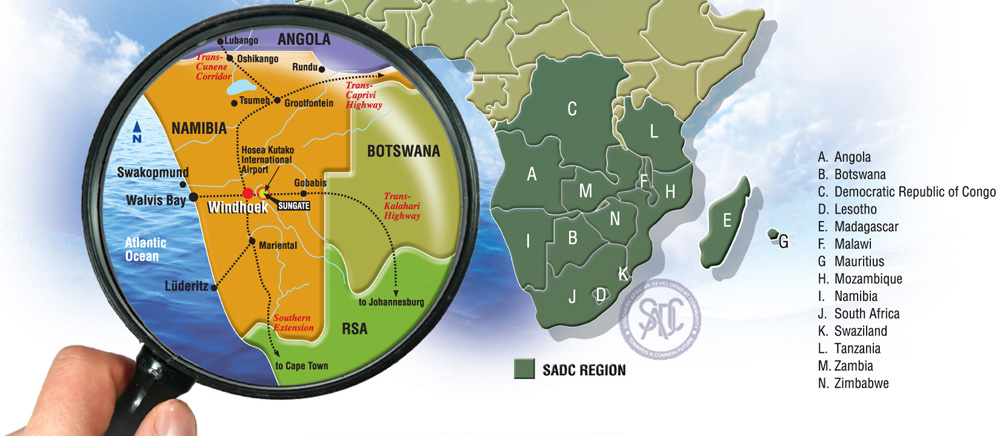
FTW Online recently published an update on recent developments occurring along the Trans-Kalahari Corridor (TKC). It suggests that customs systems throughout the SADC region could soon be talking to each other through the Internet, if the pilot project between Namibia and Botswana is successful. During July 2011, the Southern African Trade Hub unveiled a plan to initiate a pilot programme to link the ASYCUDA systems of Namibia and Botswana via Microsoft’s Cloud Computing technology. Both Microsoft and USAID are partners in this initiative seeking to enable the two customs systems to communicate with each other through a secure portal. View the keynote presentation at the 2011 World Customs Organization IT Conference and Exhibition – Seattle, Ranga Munyaradzi (SATH) and Namibian Customs Commissioner, Bevan Simataa, were invited on-stage to elaborate on this initiative – click here!

According to Oscar Muyatwa, executive director of the Trans-Kalahari Corridor Secretariat, the initiative holds the prospect of opening up African opportunities in the United States for exports, as it is being supported by USAID as part of the African Growth and Opportunities Act (AGOA). Both Namibian and Botswana Customs officials are to be trained in Cape Town over the next few months. The TKC Secretariat believe this initiative will bring about its vision of a ‘automated corridor’. Further ahead the TKCs envisages the establishment of One Stop Border Posts (OSBPs) to reduce border dwell and transit times. Muyatwa says ‘The ‘cloud’ will maintain vast volumes of transit data that will assist future planning along the corridor as well as revenue and budgeting forecasts’. Source: FTW Online.

Comment: lest there be any confusion amongst Customs users, traders and carriers, the concept of cloud computing in the Customs sphere is very ‘clouded’ at this point. What needs to be considered is the ‘ownership’, rights to ‘access’ and ‘integrity of use’ of such information. Furthermore, as this is a first-of-its-kind initiative (in Africa at least); it would be highly recommended that the participants and developers ‘share’ details of the approach with other SACU members in order to better understand the programme. Up to this point it is very unclear how the developer has gone about the integration of customs information, for instance, since ‘users’ have not been fully involved in the scope, proof-of-concept or design of the system. 

Related articles

Enhancing South Africa’s and Africa’s development through Regional and Continental Integration

Hardly a week goes by without some or other African politician waxing lyrical about continental integration, continental trade diversification, and a wholesome analysis of the ‘barriers’ which prevent the African continent  from reaching its full economic potential. No doubt I’m a bit biased in relaying the recent ‘public lecture’ of our deputy President Kgalema Motlanthe at the University of Finlandread the full speech here! Plenty of insight clearly delineating a plethora of barriers; yet, are we African’s so naive not to have identified these barriers before? Evidently yes.

In recent weeks, on the local front, we have learnt that One Stop Border Posts (OSBPs) is the solution to non-tariff barriers. This topic was drilled amongst the press till it got boring. The focus soon thereafter shifted to the implementation of a border management agency (BMA) – all of government under one roof – so simple. The reality is that there is no silver-bullet solution to African continental integration. Of this, affected business, Customs administrations and the international donor community is acutely aware. While the WTO and the multitude of trade lawyers will ‘yadder’ on about ‘diversification’ in trade, the reality is that Africa’s raw materials are even more sought after today than at an any time before. Certainly those countries which contain vast resources of oil and strategic minerals are about to reap the benefits. So why would African countries be concerned about diversification when the petro-dollars are rolling in? Perhaps greed or lack of foresight for the medium to long-term well-being of countries and their citizens? The fact remains, without homegrown industries producing goods from raw materials, most of  Africa’s eligible working class will continue to be employed by foreign mineral moguls or the public service.

Several customs and infrastructure solutions have over the last few years emerged with the usual credential of “WCO or WTO compliant”. Africa has been a guinea pig for many of these solutions – ‘experiments’ if you prefer. Literally millions of dollars are being spent every year trying out so-called ‘best-of-breed’ technology which users unfortunately accept without much questioning. The cart is being placed before the horse. Why? because the underlying route cause/s are not being identified, understood (sufficiently) and prioritized. Insofar as there exists no silver bullet solution, neither is there a single route cause in most cases. Unfortunately, donor aid often comes with its own pre-conceived outcomes which don’t necessarily tie in with those of the target country or the well-being of the continent.

While governments like to tout the ‘big-hitting’ projects, there are several ‘less exciting’ (technical) areas which countries can address to kick-start the process. One of these has even been recognised by the likes of the World Bank and OECD notwithstanding capital-intensive programs which promised much and have not delivered fully on their promise.  The issue at hand is the harmonisation of customs data. It might at first sound irrelevant or trivial, yet it is the key enabler for most Customs Modernisation initiatives. While there is still much anticipation in regard to the forthcoming deliberation and outcome of the WCO’s Globally Networked Customs (GNC) initiative at June’s WCO Policy Commission session in Brussels, there is significant support for this approach on the African continent. The momentum needs to be maintained.

 Related articles

Hong Kong Customs Moves Forward With E-Lock Plans

The Hong Kong Customs and Excise Department (C&ED) reports that RFID-based container locks can effectively improve the security, convenience and visibility of the customs process for cargo entering the airport. In November 2011, C&ED began testing three types of electronic locks (e-locks) in order to speed up the process of performing customs checks on containers filled with cargo. The solution, known as the Intermodal Transhipment Facilitation Scheme (ITFS), was implemented as a way to streamline the clearance of cargo passing through customs at Hong Kong International Airport for cargo destined for areas both domestic and outside of Hong Kong. The installation and consulting services were provided by the Hong Kong R&D Center for Logistics and Supply Chain Management Enabling Technologies (LSCM), according to Frank Tong, LSCM’s director of research and technology development.

An electronic lock with an active RFID tag is being used to secure freight passing through
customs and Hong Kong International Airport, ensuring that the cargo remains tamper-free,
while also expediting the clearance process.

The Hong Kong C&ED estimates that the system reduces the amount of time required for clearing each container through customs, from two to three hours down to five minutes, since customs officials can now be assured that the containers have not been opened between their inspection at the border control point and their arrival at the airport. What’s more, the agency can now collect a digital record of where each container has been, along with when it was inspected.

Cargo is loaded into freight containers or directly onto trucks—such as those operated by United Parcel Service (UPS)—in Mainland China, and is then transported to a customs control point located at the border with Hong Kong, where C&ED officials inspect the cargo and clear it for entry into Hong Kong. Following that clearance, the shipment continues on to Hong Kong International Airport’s cargo terminal, where the goods are unloaded from the container or vehicle, and are placed into an air cargo container. Once this has occurred, the cargo is moved through another customs control point at the airport, where C&ED again inspects and approves or rejects its passage.

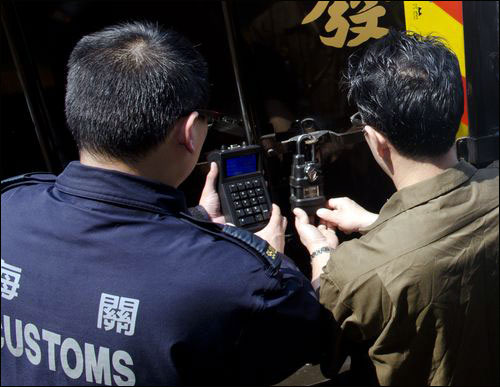
To speed up this process, the R&D Center implemented the use of an e-lock for the customs agency, consisting of a physical lock activated by a built-in active RFID tag, designed to receive a transmission from an RFID reader that allows the lock to be opened or closed. Three types of e-locks are currently being used, provided by three different vendors: Long Sun Logistics Development Ltd, CIMC Intelligent Technology Co. and CelluWare Research Laboratory. Each of the three products employs a different frequency—433 MHz, 315 MHz and 2.4 GHz—but all comply with the ISO 17712 standard for mechanical seals designed for freight containers.

LSCM has installed fixed RFID readers (provided by the three e-lock vendors) at two border control points—Lok Ma Chau and Shenzhen Bay—as well as at Hong Kong International Airport. When a shipment first arrives at either border control point, C&ED’s staff attaches an e-lock, reads the ID number encoded on its built-in RFID tag via a handheld reader, and links that ID with the vehicle registration number of the truck transporting the container. The transporting company must pre-register each vehicle with the Hong Kong C&ED prior to its arrival; the truck’s ID number is listed in the agency’s database, and the customs official can confirm that the vehicle is, in fact, the one expected.

That data, along with the specific cargo being transported, is then stored on the Hong Kong C&ED’s integrated tracking software platform, developed by LSCM, which collects and processes the data and then displays it for customs officials when necessary. The system stores the e-lock ID number linked to the vehicle ID, and transmits instructions to the e-lock, along with a password, thereby causing it to lock. The device also requires a physical key, which remains in the driver’s possession. In this way, two actions must be completed before the container or vehicle can be unlocked: The e-lock must be electronically unlocked via a password from a customs official, and the driver must use a key to physically open the padlock.

The shipment is then transported approximately 42 kilometers (26 miles) to the airport. The e-lock comes with a built-in GPS device that tracks the vehicle’s location as it moves. In that way, the e-lock stores a record of where the vehicle has been. When the lock is later read at the airport, the back-end software compares the actual GPS data against the container’s expected route. The system can issue alerts in circumstances in which an e-lock is found to have lost a GPS signal, or, based on GPS data, the truck appears to have deviated from the intended route.

At Hong Kong International Airport, a C&ED official either selects the container for inspection, or simply instructs the system to issue an unlocking command with the matching password; the container is then brought to a site where the cargo is removed and then loaded onto an aircraft, says Steve Wai-chiu Chan, a C&ED special duties officer. If the container is selected for inspection, the e-lock remains locked. In this scenario, a truck driver would be instructed to await a C&ED officer, and would be unable to unlock the container without providing the proper password. The C&ED officer, upon arrival, would then use a handheld device to read the e-lock, instructing it to unlock by providing the necessary password.

LSCM installed a total of 38 readers at the two land border control points, five logistic hubs at the airport and a marine control point known as the Kwai Chung Customhouse, for items arriving by sea (at the Marine Cargo Terminal located at the airport). Altogether, by February of this year, 109 containers had been equipped with the e-lock device. An average of 100,000 consignments pass through the border daily, and the ITFS e-lock system is utilized for about 17 percent of that cargo.

The solution has enabled a faster customs clearance process, as well as providing a digital record of what was unlocked, and thus inspected, and when this occurred. The system also improves security, since only officers who know the proper password can access the container. Ultimately, Chan says, “it enhances the Hong Kong logistic industry’s competency and reinforces Hong Kong’s position as a world-class logistics hub.” Source: RFID Journal and a word of thanks to Andy Brown (Tenacent) for bringing the article to my attention.

South Africa – Cyber thunder in the clouds

The following article is very pertinent to any organisation or group considering cloud computing. Soft-marketing tends to delude would-be users into believing they will have full control over their data, and as such, is fully secure. Even in the international Customs and Border Management space there is lots of talk on this subject, yet very little substance. Unfortunately, organisations and individuals are slaves to the technology they use which fashions not only their work ethic but attitudes as well. It is no longer true that technology is a ‘tool’. More time and money is spent these days on technology choice than on training and education. In fact technology is so important it influences law-making and business operations, rendering human discretion obsolete in many instances. Therefore it is imperative that organisations involve business and legal experts in their systems development. 

The recent spate of hackings and electronic security breaches serves to highlight the endemic threat and associated cost of cyber crime. Globally, organisations are forced to reconsider their cyber security measures as cyber criminals become more audacious and technologically innovative. Crimes can take place in both the physical and the electronic medium, with the possibility of technology infrastructure being used as both a “subject” and an “object” of a crime.

The criminal justice system faces a number of challenges in the successful prosecution of cyber crimes. While the Electronic Communications and Transactions Act of 2002 does create a framework for criminalising cyber crimes, including hacking, it does not provide any concrete preventative measures to combat cyber crime. The technical and often remote nature of cyber crimes, including multi-jurisdictional issues where cyber criminals are operating abroad, often prevents prosecutors from being able to present viable cases and bring cyber criminals to book.

Fortunately, the South African government has acknowledged that more proactive measures are required to address the scourge of cyber crime. Cabinet has recently approved a National Cyber Security Policy published by the Department of Communication. The policy creates, among other things, a platform for the creation of a number of structures that would be responsible for analysing and responding to the threat of cyber crime with the ultimate objective of mitigating the effects of cyber crime in South Africa. The State Security Agency has been tasked with responsibility and accountability for the implementation of cyber security measures. It is hoped that this policy and the measures it intends to implement results in the prevalence of cyber crime in South Africa being effectively addressed and countered. Organisations should, in addition to any measures being taken by government, continue to carefully assess their cyber security measures proactively, including by implementing robust systems, particularly in instances where personal data is processed (which includes the collection, recording, transferring or storing of such personal information). The Protection of Personal Information Bill requires the implementation of “appropriate” security safeguards where an individual’s personal information is processed. What will be considered appropriate will need to be determined on a case by case basis and with reference to steps taken in foreign jurisdictions, which may provide guidance in interpreting this requirement.

On account of the fact that there is no way to precisely document the far reaching effects of cyber crime, individuals, organisations and government must ensure that a more cautious and prudent approach is adopted to manage security in any electronic environment. Source: SAPA

America – shees verry beeeeg!

Publication of the latest USCBP Border Patrol Strategic Plan reflects and builds on the transformation of the United States’ relationships with Mexico and Canada, particularly in the areas of border management and security. The joint Declaration of Principles for the 21st-century border represents an enhanced and strengthened commitment to fundamentally restructure the way we manage our shared border. The depth and breadth of cooperation that occurs now between the United States and Mexico was unthinkable even a few years ago. Similarly, the Beyond the Border declaration between Canada and the United States has an equally significant potential in what is already our historically extraordinary relationship with Canada. These developments have created unprecedented opportunities with both Mexico and Canada, in which DHS and CBP will play a defining role, to improve our security and economic competitiveness – and CBP will play a defining role in taking advantage of those opportunities. The Border Patrol in turn is key to advancing CBP’s security agendas with Mexico and Canada, working with its law enforcement counterparts in each country to identify and mitigate threats.

The U.S. Border Patrol is a premier law enforcement organization, recognized around the world for expertise, capabilities, and professionalism. CBP’s officers and agents are the frontline, the guardians of the Nation’s borders. We honor and are proud of them, and we thank them for everything that they do to protect America and the American people. Source: CBP.gov

So there you have it – for a real dose of commercialized Customs and what it can do for the good folks in America, and anywhere else in the world for that matter, check out the strategic plan by clicking here! You’ll be forgiven if you thought you were reading an edition of Jane’s Defense & Security Intelligence & Analysis. Most customs and border management agencies around the world can only dream about such impressive kit! 

Related items

What westerners don’t understand about modern economy

Why is the Chinese economy thriving while that of the West is in crisis? The answer is of great relevance to Africans who have for decades embraced development models created in the boardrooms of Western capitals. Source: AllAfrica.com

Social dumping, unfair competition, undervaluation of the Chinese currency, the Yuan … these is some of the blame that most Western economists and politicians are laying on China. What about if this small beautiful world was off-target?

The growth of China and its strategic position as the first world emerging power have caused unprecedented disarray among the former powerful nations and a consistent visual navigation among Western economists and politicians who were undeniably a few years ago a reference for the success of their economic model which seemed to be irreplaceable. There was a state of complete disarray over 10 years in developed countries struggling to find a compass to better guide their ideas and understand where the position of the East is over the 21st century.

WHAT WOULD HAPPEN IF COMPETITIVENESS TOOK A NEW FACE?

It is disconcerting to see Western economists take childish considerations to explain their lack of competitiveness with China and saying that a huge industrial desert seems to have comfortably established itself in the West and arguing that employees are low wage-earners in China. It is not true. This assertion is wrong because wages are twice lower in Africa and South America than in China, although these two regions of the world do not attract the same amount of investments. The real reasons lie elsewhere.

1. There is a strong state in China exercising influence in almost all the economic process with clear and visible objectives to help millions of Chinese out of poverty.

2. In the make-up of product cost, labour accounts for about 2 to 4 percent or 10 percent at most. It is absurd that in the West, people use the issue of alleged high wages as an excuse to justify non-competitiveness of businesses. If an Italian producer put an item in the market for 100 Euros, whereas his/her Chinese rival is able to sell the same item for 25 Euros, the 200 percent difference cannot be justified as 10 percent of labour cost.

Even if wage cost was granted for free to Europeans producers, there will always be a 190 percent gap to be filled. Focusing on the value, the West will possibly find an initial solution to its current economic crisis which is, unfortunately, at its beginning; a solution to the costs of industrial architecture in the country, purchase of raw materials, the quality of vocational training and logistics to capture the customers who are at the other side of the world. We will review this issue below.

3. State purchased raw materials: Each manufacturer in the West has to find inputs on his own throughout the world, but China is using other methods through state giants to combine all purchases and, therefore enabling the country to be more successful and enjoy the best purchase conditions than a private Western individual waging a humanitarian war.

4 State semi-finished products: A car manufacturing company, for example, in the West has to get supplies from sub-contractors, but in China the government provides necessary stuff and bike manufacturers, for instance, will buy state-provided parts.

It is the same case for air-conditioner manufacturers and other key economic sectors; where an Italian manufacturer has to ensure alone the whole production, his Chinese counterpart, with whom he will be competing in the market, will only deal with a part of the production process, very often, when it comes to assembling and selling items. The parts that Chinese assemble in their factories are donated by their government in need of more revenues by creating more jobs with a view of revitalizing the national economy.

5. Energy is not sold in the opinion of the Chinese. In terms of stock exchange capitalisation, according to the news article published in the magazine Fortune Global for 2010, among the seven largest companies in the world, six of them are dealing with energy: American, British and Dutch companies and the three others are Chinese.

But the most interesting thing is the gap between Western and Chinese companies regarding the profits made by the former; they are higher than for the latter. For example, oil company Shell with 97,000 employees makes $20.116 billion in profits; Exxon Mobile with 103,000 employees generated a net profit of $30.40 billion. The Chinese company Sinopec seems to lag behind; with its 640,000 employees it made only $7.63 billion while its counterpart China National Petroleum, employing 1.5 million people, made just a profit of $14.37 billion.

According to conventional assessments in the West, Shell and Exxon are to be praised for their good job. However, in the pragmatic view of the Chinese, high profits are an indicator of impediment to nation to remain competitive. Chinese authorities consider that business competitiveness begins with energy cost. Companies operating in the energy sector should make profits to conduct their own market research and to explore potential customers, whereas in the West, generating huge profits will delight shareholders, because their names will be on the list of richest individuals in the world.

This different view on the economy was even more acute in 2008 during the crisis marked by a rapid rise in crude oil prices in the markets enabling all Western oil companies to make historically high profits. Exxon Mobile, for example, says there has been an 11 percent increase in its profits last year, $45 billion compared with 2007’s figures in France.

During the same year, the French company Total said that its profits were $22 billion (17 billion Euros), but its Chinese rival, Petrochina, a leader in terms of quantity of petroleum products, lost money because, I think, a very smart political decision made by Beijing government on freezing fuel prices led to a drastic drop of 22 percent in the net income in order to allow Chinese companies to remain always the most competitive in the world.

It is obvious that many petroleum products, such as plastic toys, car accessories, and packaging materials are made in China. Labour costs are not cheaper in the country, but the government expects real benefits at the end of the production line in terms of job creation, accumulating foreign currencies and trade surplus. China is not speculating foolishly in everything that moves, because it can cause a hard blow to the economy following the current situation of the West. China has set a clear objective to distribute generated wealth, to contribute to help millions of people out of poverty, and not to praise the glory of people whose names are on the annual list of the world billionaires in Forbes news.

In terms of petroleum products in Europe, it seems that those in power want to have their cake and eat it at the same time. We want business competitiveness, but at the same time put a 77 percent tax on energy products, accounting for nearly 40 percent in the make-up of the cost of finished products to be transported to the shop and delivered; even the travelling cost incurred by the buyer can also be taken into consideration.

The rise in oil prices is similar to this, but it is even worse in the electricity sector in China, which is almost free of charge. In 2010, power company State Grid Beijing Corporation, the top in the world, with its 1,564,000 employees and hundreds of millions of subscribers, made only $4.56 billion in profits, that is to say less than $5 billion generated by EDF, the French Power company, in 2009 (before it plummeted to 74 percent in 2010 due to setbacks suffered in foreign markets). This company has 158,000 employees, 10 times less people working for its Chinese rival and the number of its subscribers as well is 20 times fewer. The truth is that EDF, a state-owned company’s subscribers are like pigeons that need to be plucked with increases at the beginning of each year by using various pretexts, such as approval is to be obtained for a change in the oil price when it rises.

LOGISTICS AS A GEOSTRATEGIC TOOL FOR POWER

China has got sea behemoths that determine very often political prices. It is not dumping, but operators are just charged at cost price. For example, China Ocean Shipping Company (COSCO), owner of 201 container ships equivalent of 900,000 20-feet average size of a container, allowing freight forwarders to charge 20-40 feet containers from China for delivery in any port in Europe at incredibly low prices, in line with the goals the Chinese government wants to achieve in terms of export. It means that COSCO, a state-owned company, is not looking for profits for itself but looking for benefits of the whole Chinese nation. It is a very powerful geostrategic instrument contributing to the achievement of objectives, winning potential markets in order to bring the Chinese coasts closer to the rest of the world. So, the paradoxical thing is that the cost of land transport within Europe is often four times more expensive than a 30-day maritime transport from China to Europe. We know that 75 percent of trades in Europe are done between European countries and it is easy to guess that this represents an opportunity for China in the coming years if nothing is done by European economists to find a long-term solution to the current economic situation.

On 7 June, 2010, Cosco purchased parcels of land for 1.90 billion Yuan sold by Shanghai local authorities, meaning that this area will become in 10 years the first financial centre in the world. The real estate business is still under the Chinese government control. In fact, out of 11 parcels of land offered for sale, nine were purchased at auction by state-owned companies and only two were purchased by Chinese private companies.

The image of Cosco reflects the versatility of Chinese state-owned giant companies controlling almost everything in the industrial sector, ranging from port management ($ 3.4 billion to handle containers in the port of Piraeus in Greece in 2008) to real estate through the construction of ships and manufacture of containers.

This type of business provides the company with great advantages relating to competitiveness of Chinese businesses while their rivals have to go through a wide range of specializations, let’s say, to make as much profit as possible, according to the capitalist development model. For example, the French branch of COSCO, headquartered in Paris, has been operating in all the French port cities, primarily as a shipping company in the field of consignment, ship repair and air freight in order to achieve the same objective as a new product out of a Chinese factory and it should reach every destination without suffering any penalties regarding transportation or logistics.

In June 2011, 52 Airbus A320 were built in a new plant in Tianjin, China. Once again COSCO acted as a major contractor to execute programmes of Tianjin Airbus Company and was responsible for shipping heavy pieces from Europe to Tianjin, especially barge, inland and maritime transportation of containers, including domestic air transport to the unit in Tianjin.

Once again, the choice of a Chinese state-owned company is not made by chance, but it is the result of a geostrategic decision carefully thought out. In fact, COSCO has been chosen to conduct the same operation, but in the opposite direction, from China to Africa, for assembling an aircraft called XIAN MA-60, with which China pledged to replace the bad habits of Africans who buy only old airplanes from the West. This type of airplanes have been proved as real flying coffins over Africa and are paradoxically more expensive than the new ones built in China. The Chinese company, Xia MA-60, has already been providing equipment to Zimbabwe, Burkina, Burundi and South African airlines.

The Chinese People Daily newspaper of May 25, 2011 said that British Caledonian and Laos Airline and Sri Lankan Air-Force are serving about a hundred destinations and several companies in Asia, Africa and South America. Some indiscreet sources in Beijing report that COSCO will shortly transport aircraft pieces from Chinese coasts to Africa, in the port city of Kribi in Cameroon, where a deep water port is being built to dock large boats.

When the European Aeronautic and Defence Space (EADS) was installed in China, the Chinese government required this company to purchase a large number of its aircraft, but the country is planning to build airplanes for Africa to be used on African soil. Chinese economists and strategists are showing that they understand what Western economists are still struggling to understand about modern economy. The West cannot persist to be successful alone while everything goes perfectly. It’s the right time to help them build new partnerships with other countries to help them when tough times come, because you can provide them with means and opportunity to find a way out.

DEMOCRATIC WEAKNESS

If the democracy of universal suffrage was something so wonderful, there’s no doubt that the West would prefer to keep it or even hide it as a military secret with a view of using its advantage over the rest of the world. If democracy of universal suffrage could allow the development of a nation, it is obvious that the West would not commit itself to back ad hoc opposition groups in such countries to help them become redoubtable rivals in terms of industrial and intellectual production. The truth is quite different and much bitterer. The West understands that one reason for its decline is universal suffrage democracy which brought to power the most mediocre personalities, provided that they are supported by rich people who rarely serve public interest.

The mediocrity of politicians was accompanied by economists trapped over the alleged unwavering superiority of ultra-liberalism. We saw famous economists in Spain, Greece, Portugal, France and Italy arguing that Germany should provide financial assistance to European countries in crisis, because they believe that Germany has been generating huge revenues from the sale of large saloon cars in those countries.

This kind of reasoning betrays the state of collapse of the economists who are unable to understand that Germany cannot afford to save itself and the beginning of its economic crisis is a matter of time; all Western countries seem to be unaffected by this situation because they are governed by the same economic models. The worst is that, the same nations are planning to compete with China. How can they achieve if they refuse to do the easiest exercise in order to share profits generated by Germany, and they have to wonder if they can manage to sell their items in Germany, the first marketplace in the European Union?

The truth is that these economists have already surrendered themselves and given up fighting for lack of ideas. They are moving on to the secondary plan saying that the West would become a tourist destination for people coming from developing countries. President Barack Obama revealed on January 18, 2012 at a tourist park in Florida that he wants to make the United States the first tourist destination in the world in order to boost employment. Mr. Obama does not know that tourism has never helped a country to develop.

He is challenging France as the first tourist destination in the world with 77 million visitors in 2010 (against 59 million in the United States, the second), but the country would not have faced the current financial crisis if tourism was a magic wand. Western economists who believe they have found a miraculous plan to end the crisis by predisposing infrastructure to house rich people from China, India and Brazil, will ask themselves why the French Riviera, the prestigious place for tourist attraction in Paca region where the number of poor people is paradoxically the highest than in the rest of the country.

No country will be able to fight poverty if some people refuse to be in the production trade. Even the richest tourist in the world is not going to consume alone food for five people and if he has to import it to meet his needs, he will return to the starting point, regardless of the difficulty he will encounter to become a specialist on rich people. As some Western paedophiles visited Thailand, the Mauritius government fearing the spread of sex tourism in the country decided to promote luxury tourism.

Unfortunately, 30 years later, drugs are being smuggled into the capital Port Louis by luxury yachts and private jet aircraft, which are not controlled by the authorities who do not want to offend the rich. Nevertheless, we wonder if the current crisis in the West can transform institutional racism because only white people could enter the United States without a visa. The keen interest of the American president in tourism will be a progress for the world, primarily Taiwan, a long-standing US ally, will be the first country to benefit from it. The truth is that the North in crisis is no longer attracting many people, even the poor from the South.

INTELLECTUAL COMPETITION

According to an article by Christine Murris published in Valeurs Actuelles, a French magazine, dated 19 January 2012, in France only 14,700 students enrolled at engineering schools out of 16,800 seats available in 2011. The worst thing happened to graduate engineers in 2010: only 42 percent of them have been able to create wealth. The others have been hired by job speculators in the financial sector. Before students’ graduation, several insurance companies and banking institutions are interested in their mathematical skills to make them earn more money without making any efforts.

At the same time, nine universities out of 11 in Tianjin, the third largest city in China, provide engineering education. In the West, political power is held by people who studied law or literature, whereas in Chine political power is in the hands of engineers. So, we can now understand why Chinese and Western young people are keenly interested in a wealth creating profession. However, both parties are competing with each other. It is surprising to see that all measures taken against industrial desertification in the West will not affect the true values of the whole society.

Today, there is a real intellectual competition among nations. A nation will develop if it has the ability to be ahead of the competition by making sure that sufficient numbers of people are trained and are available to work for factories where they can imagine and create things.

The West believed for over two centuries that intelligence was related to the DNA of so-called white Caucasians. The West is unable to take up a huge challenge represented by the East; that is to say engineers’ competition. A computer and a phone get old after three months of use, that’s the challenge. Symbols are not going to change things.

NATIONALLY COMMUNIST AND INTERNATIONALLY CAPITALIST

In the 2011-2012 report of the forum of 1600 European companies operating in China, it is said that China is a communist country on the national level and capitalistic abroad. This severe report says that ‘it must be particularly good for China to practice the most unbridled export-oriented economic liberalism policy while building up fundamentals of state-controlled economic system in the domestic market following the examples of the Soviet.’ This 338-page report signed by the chairman of European Union Chamber of Commerce, Davide Cucino, and his general secretary, Dirk Moens, reflects the frustration of all Western entrepreneurs operating in China in the hope of getting a billion Chinese consumers. They have no choice other than exporting from China to their native countries.

We are all concerned by this and we need to review thoroughly any economic theories of the two previous centuries taking no consideration of a country’s possibility to play two roles simultaneously: A communist system practiced within the country and unbridled capitalism abroad. Without this rewriting, there is no solution to competitiveness of Western businesses. It may even reduce to nothing the labour cost in the West and will not change significantly the path of the race towards the wall when the issue is vitiated by an uncontrolled variable, such as the role played by the state in modern economy.

WHAT LESSONS FOR AFRICA?

Mandatory privatisation urged by the International Monetary Fund and the World Bank are monumental blunders not be made. For example, the privatisation of the state-owned power company, SONEL, in Cameroon taken over by AES, a US private company, was a strategic mistake of great importance because not only electricity cuts continued but also in a country that intends to develop from its industries, the energy price, especially for electricity, should be determined in comprehensive policy measures to ensure that businesses remain competitive and are better prepared to operate and increase their shares in the international market.

The recipe that Western-educated Africans applied providing that tax should be levied on everything that moves is another strategic mistake that leads straight to failure.

The urgency for Africa is to produce wealth and the government should make sure that production is effective on a large-scale and distributing it will be easier if there is something to share. Africa must export its finished products in order to get foreign currencies necessary to the welfare of its people. The strategic energy prices (gas, diesel, electricity) are more important than the low cost of labour. Taxing people trading at the edge of paved roads may give the illusion of alleviating the state financial burden in Africa. This is a wrong revenue economic system in the West that impedes African competitiveness.

The issue Westerners are faced with is the morality of their system. African economists must endeavour to draft their own economic theories that take into consideration the African interests and realities, instead of being in a permanent standby in order to occupy a subordinate position in Western institutions .In my opinion, what is needed is the courage and independence of African economists to distance themselves from the formulas developed by bureaucrats in Washington to find their own way through new African variables. These variables modified in the context of the 21st century would do a great honour to intellectuals who have the ambition to be creators of a new Africa.

So, an international institution acting against the interest of Africa but dedicated to defend the interest of the West will be created. Africans must ask themselves why the European Union failed to prevent China from investing in Africa. Why the US administration, as well, failed to slow Chinese investment in Africa. Regardless of this, everybody wants to work in the future for Western institutions. How is it that Africa will be out of poverty with Chinese investment than the International Monetary Fund (IMF) turning everything upside down by taking a stand?

In early August 2011 in Nouakchott, Mauritania, the African Caucus was held, a meeting of African countries and their creditors, led by the IMF director. What can be remembered from the meeting is the excitement about a thousand billion dollars that China had drawn from its reserves to inject into the African economy (as a comparison, the famous Marshall Plan worth of $100 billion, is 10 times lower than the former).

There was astounding news from Burundian authorities, very happy for signing contracts with China, they feared reprisals from the IMF. On December 21, 2010 in virtue of a decree, the US President Barak Obama excluded the Democratic Republic of Congo from the list of African countries eligible for the AGOA project and no duty-free export to the United States from the country was possible, because of massive Chinese investments in DR Congo, even if the official reasons for this were the decline of democracy in the country.

Paradoxically, while taking advantage of AGOA and exporting finished products to the United States, authorities in Congo really needed someone to invest in their country to set up processing plants. How can we blame them for accepting Chinese funds?

African municipalities must compete in a smart way to create wealth and therefore create jobs for their own people. Ninety percent of the Bibles used by many religious groups in the United States are printed in China. Most of those printers are owned by local governments deriving income from this business to pave new roads and create more jobs. Municipalities are able to create resources that can ensure the emergence of a strong state in a position to resist and stop the selfish and individualist force. Otherwise, it is not excluded that the continent will free itself from the yoke of the West and to see an internal yoke of a few clans who cheerfully install a revenue economy, exactly the same model that is leading the West into a wall.

Jean-Paul Pougala, a Cameroonian, is director of the Institute of Geostrategic Studies in Geneva, Switzerland.
Importers and Exporters may see doubled freight rates by 2015

Get ready for a crazy roller coaster ride…As is already well known, the current situation in the shipping world is that there is a large lack of demand against the current overall supply of container space. Today, the current fleet capacity is around 15.5 million TEUs. Since 2005, the total capacity has roughly doubled – literally.

Because of the imbalance of supply/demand, carriers are losing blood and even declaring a negative balance sheet for end of 2012. This situation pushes them to the dilemma of getting bigger or getting smaller. Getting bigger means buying new, larger ships. These ships allow carriers to improve their cost effectiveness, work with smaller crews and lower their capital costs. On the other hand, some carriers are getting smaller; serving more niche markets where larger vessels will not call since that will reduce the efficiency of the vessel. You can imagine that a 15,000 TEU ship will not make 3 ports in the same country – if that country is not China.

These are the things we see and hear everyday. However a more important game is being played behind the scenes which has a crucial effect on the whole industry. According to Bloomberg; DNB ASA, the world’s largest arranger of shipping loans, expects the shipping industry to have a funding gap of $100 billion by 2015, as European banks are reducing their support to maritime transport. Even if US and Asian banks have an increased interest on maritime loans; EU banks account for 90% of the global ship lending. Considering net shipping loan losses at Nordea Bank AB (NDA), the world’s No. 4 shipping lender, tripled to 135 million euros ($179 million) last year because of “weak market conditions” and “a general decline in vessel values”, everyone will be thinking twice before granting a loan. In addition to that, since there will be less vessel orders with reduced prices, it will be forcing some yards to close in the following 12 to 18 months.

How is this going to affect exporters/importers? That’s our major question of course. Considering several factors; the EU Crisis, US getting out of recession, Arab spring is over; it will take another couple of years to get on track for sure. According to HSBC Global Connections, despite the current climate, the overall trend for international trade is positive with growth acceleration sooner than expected from 2014, than 2015. Over the next 5 years an annualized growth rate of %3.78 is forecasted for international trade. The main countries that will be carrying the growth are China and India, and China is expected to have an annualized growth of 6.60% in imports and 6.61% on exports; while India is expected to have 6.81% growth in imports and 7.60% in their exports from 2012 to 2016.

Now, according to 2010 stats, worldwide container traffic reached 560 million TEUs – an all-time high. China & Hong Kong Ports handle close to 169 milllion TEUs, 18% of this traffic. We need to keep in mind though, this is not only China exports/imports but also transshipped cargo that goes via those ports to other Asian nations.

With that in mind, if we take the growth rate with an average 6% for that region and multiply this with 169 million, we come up with a possible increase of 30 million TEUs annually and 500,000 TEUs weekly basis increase only in the region that handles %18 of global trade.Now, lets go back to the supply side. The major banks will be reducing loans, there will be less ship orders and there will be less ship yards to build new ships. How is this going to affect the years 2014-15 and later?

Can Fidan believes very tough years will come for exporters/importers in the sense of shipping costs and finding available space. Prepare to see more of the complaints from exporters not being able to find space and getting asked to pay very high freight charges like we were seeing in 2010. However, this time the difference will be, there won’t be any idle vessels sitting in Singapore or any new ordered vessels to come in and let everyone breath. Considering today, this sounds improbable… Well? the facts are out there and they show that the roller coaster ride we are on will just get crazier. Source: Can Fidan, MTS Logistics

Prototype gun which can peek through walls

Believe it or not, devices used to see through walls are far from revolutionary. Reportedly, Physical Optics Corporation has concocted a prototype gun that utilizes the same method of viewing that a lobster does to see what’s ahead in murky waters. The LEXID (Lobster Eye X-ray Imaging Device) functions by “radiating objects with tiny amounts of X-ray energy,” subsequently allowing its user to see behind steel, wood or concrete. According to David Throckmorton, a project manager in Homeland Security’s Science and Technology division, the resulting images are beamed on a small screen and aren’t exactly drool-worthy, but they do allow one to make out a stash of weapons or a crouching enemy.

The price is unknown as it’s still a prototype, but the creators hope to make it cheap enough for exterminators and contractors to purchase and use. Note, the capability of seeing through walls is not necessarily just for use on weapons. It’s got some useful commercial applications such as pest control, where it can be built into a gun for shooting pesticide instead of a bullet. For the Customs and Border official, no doubt, there are equally varying applications of use. One could just imagine students getting into all sorts of trouble if one of these floated into the locker room.

Mafikeng IDZ fails!

A state-owned enterprise, the Mafikeng Industrial Development Zone (MIDZ), once mooted as an industrialisation solution and economic booster for the province, has been dissolved. The failure of the industrial development zone was confirmed at the weekend following a review by the provincial government of state-owned enterprises in the North West. Established in 2000, the development zone was said to have the potential to industrialise the North West, starting in Mafikeng with a staggering R7bn turnover, once the entity was operational.

However, it got off to a rocky start and has for the past several years been dormant despite having millions of rands pumped into its coffers. But it turned into a white elephant.Provincial government spokesperson Lesiba Kgwele said: “The decisive resolve to wind down the development zone was taken because the organisation was technically insolvent as its liabilities had exceeded its assets.”

He pointed out that an administrator had been appointed and former MIDZ CEO Tebogo Kebotlhale’s contract had recently been terminated. After the appointment of a caretaker administrator on January 18, the contract of its former CEO, who had been on suspension from April 2011, was terminated on February 29. The provincial government had noted that besides the completion of the first phase of the development amounting to R126m, the entity has not achieved any of its strategic intents.The entity was intended to design, build, operate and manage a world-class industrial development zone from the Mafikeng Airport. It was supposed to establish viable investment opportunities and recruit potential public and private investors, but the entity failed.

As part of the winding down process, assets belonging to the zone, irregular payments, verification of past salary adjustments and overpayments to staff are to be recovered. For instance, a bio-diesel project started on the outskirts of Mafikeng was a huge flop as the jatropha plants never left the nursery and the site currently resembles a wasteland.

Democratic Alliance provincial leader Chris Hattingh said the MIDZ was a waste from its inception. “The entity should never have been started and should have been closed at least six years ago. It received millions for nothing and has only succeeded in downgrading a Grade 7 airport to Grade 1 standards, making it equal to a farm airstrip,” he said. Source: The New Age

Related articles

SA auto industry to gain from 2013 policy shift

Trade remedies are by their very nature complex and most often ill-thought-out. This is said not so much from an entity whom gains to benefit from such an incentive scheme but more from an administrative and compliance perspective. These schemes require more than your average customs and trade consultant; someone who in fact not only knows  customs and trade law very well, but the motor industry as well. Similarly, on the side of the administrating authority an equally adept and experienced team is required to audit this process. I would like to believe that every attempt has been made to ensure that clear legal and procedural guidelines are in the offing, compared to the current MIDP process. On the other side of the coin, exactly how will the local community benefit from the ‘auto cartel’s’ new fortune? Based on SARS recent publication of its Compliance Programme it is noted that the tobacco and textile industries are singled out for scrutiny. Has the motor industry been purposely overlooked?

The SA motor industry stands to benefit from the introduction of a new programme next year, which will affect firm-level strategies, according to Standard Bank research analyst, Shireen Darmalingam. The Automotive Production Development Programme (APDP) aims to raise volumes to 1.2 million vehicles produced per annum by 2020, and to diversify and deepen the components supply chain. The new programme replaces the Motor Industry Development Programme (MIDP), which has been in existence since 1995. The soon-to-be phased out programme centred, among other things, on encouraging motor vehicle and component exports by allowing duty-free imports or reduced import tariffs, depending on the level of local content of exports.

Darmalingam said the replacement of the MIDP should not be viewed as a failure but rather as a point from which to move on and encourage further development of the SA motor industry. She said the APDP would offer the local automotive industry a sense of certainty through to 2020, which should encourage further growth.

“Whether the APDP will benefit certain industries more than others is still a contested question. Indeed, it appears that some benefits may be in favour of larger firms. Nonetheless, all firms are in line to benefit from the new APDP programme.” She said there was a concern that multinational companies were choosing to source leather products from suppliers closer to the major markets. She added that there was a further concern that the APDP, which aimed to provide a production incentive rather than an export incentive, might impact negatively on export-orientated component companies such as those in the leather sector.
However, she said sectors that supplied the aftermarket should benefit from the shift in policy, from MIDP to APDP, due to be implemented from January next year. Source: Business Live


South Africa to introduce Smartcard ID

The South African government has reaffirmed that the green barcoded identity (ID) book will be phased out and replaced with a new smartcard ID after Cabinet endorsed a Department of Home Affairs (DHA) pilot project to test the hardware and software used to produce the cards. The new card would be phased in over a period of about four years and would embrace a contactless chip, which Cabinet said was based on international trends and standards.

The smartcard solution would also be integrated with the deployment of a new National Identity System that would digitally capture biometric and biographical details of all South Africans and foreign nationals living inside South Africa. Home Affairs Minister Dr Nkosazana Dlamini Zuma reported recently that the integrated system would be linked to systems for movement control, permitting, as well as asylum seeker and refugee management.

The DHA planned to issue some 2 000 smartcard ID’s during the pilot phase, which was unveiled to lawmakers earlier in the month. The pilot phase would prioritise people applying for IDs for the first time and was likely to cost about R5-million.

The first issue of the smartcard would be free of charge, with the cost implications for reissuance yet to be determined.The test phase would enable the department to test its systems and enable government to procure the required machinery to produce the volume of cards that will be required to phase out the green barcoded ID books. No indication was given as to when a tender would be issued for the procurement of the full-scale system, or what the solution was likely to cost.

The department would collaborate with the Departments of Transport, Health and Social Development to integrate the smartcard with other official documents, such as drivers and firearm licences, social grants and those that would be associated with access to the proposed National Health Insurance scheme. Source: Creamer Media

South Africa – Considering Rhino Horn Trade

South Africa is considering whether to approach the international community with a proposal to trade in rhino horn, Environment Minister Edna Molewa told MPs on Wednesday. Opening debate in the National Assembly on her department’s budget, she said this included engaging “major role players, including international and regional partners [and] potential consumer states”.

Molewa’s remarks come 10 months ahead of the 16th congress of the Convention on International Trade in Endangered Species (Cites), set to take place in Bangkok, Thailand, in March next year. According to reports, South Africa is sitting on an estimated 20-ton stockpile of rhino horn; some of it in private hands, some stored by conservation authorities. The price of the horn, should the Cites moratorium on trade be lifted, has been estimated at more than R500,000 a kilogram.

Molewa has declined to say how much rhino horn is held by government-managed parks and reserves.”Due to security risks, the department cannot publicly announce the amount of stocks being held by these agencies”. On Wednesday, she said her department was involved in an “extensive” preparatory process ahead of the Cites congress.

“This will include discussions on whether or not to approach the international community with a proposal to trade in rhino horn.” On the rhino poaching crisis in South Africa, Molewa said 199 rhino had been killed so far this year. “We are very, very deeply concerned,” she told the House. Earlier, briefing journalists at Parliament, Molewa said South Africa would not table a document at the next Cites meeting calling for the rhino horn trade moratorium to be lifted.

“No, not this time around. We are still considering all options, as well as probabilities towards that direction. We have not decided yet. Let it be clear. “We are still doing some very serious work in analysing whether we need to move in that direction or not.”

Among the things that needed to be done before trade could be resumed was “to ensure we get to know who the partners are on the other side”.Policies had to be in place “that do not allow any shenanigans to operate in the system,” Molewa said. “There are just too many things to do before we can place the discussion before the conference of parties. We are not yet there.”

Hmmmm! Would seem that the temptation for monetary profit is so compelling – R500,000/kg. Given the frequent outbursts at incidence of poaching and the horror pictures which normally accompany such reports how about burning the rhino horn reserves? That will send a clear message on government’s concern and intent.There exists a similar parallel where the importation of second-hand motor vehicles are banned in South Africa, but condoned because certain neighbouring countries want them. The old adage – ‘laws are meant to be broken’ comes to mind.  Source: SAPA

USCBP and EU sign C-TPAT Mutual Recognition

U.S. Customs and Border Protection (CBP) and the European Union (EU) signed today a Mutual Recognition Decision between CBP’s Customs-Trade Partnership Against Terrorism (C-TPAT) program and the EU’s Authorized Economic Operator (AEO) program.

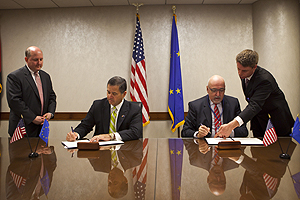
U.S. Customs and Border Protection Acting Commissioner David V. Aguilar and European Union Taxation and Customs Union Directorate Director-General Heinz Zourek sign the Mutual Recognition Decision between CBP’s Customs-Trade Partnership Against Terrorism program and the EU’s Authorized Economic Operator Program.

CBP Acting Commissioner David V. Aguilar and Director-General Heinz Zourek, European Union Taxation and Customs Union Directorate (TAXUD) signed the decision, which recognizes compatibility between the EU and the U.S. cargo security programs.

“Today’s decision on the mutual recognition of the EU and U.S. trade partnership programmes is a win-win achievement: It will save time and money for trusted operators on both sides of the Atlantic while it will allow customs authorities to concentrate their resources on risky consignments and better facilitate legitimate trade,” said Director-General Zourek.

C-TPAT is a voluntary government-business initiative to build cooperative relationships that strengthen and improve overall international supply chain and U.S. border security. C-TPAT recognized that U.S. Customs and Border Protection can provide the highest level of cargo security only through close cooperation with the ultimate owners of the international supply chain such as importers, carriers, consolidators, licensed customs brokers, and manufacturers. Source: US CBP

Related article