Massive SADC Gateway port for Namibia

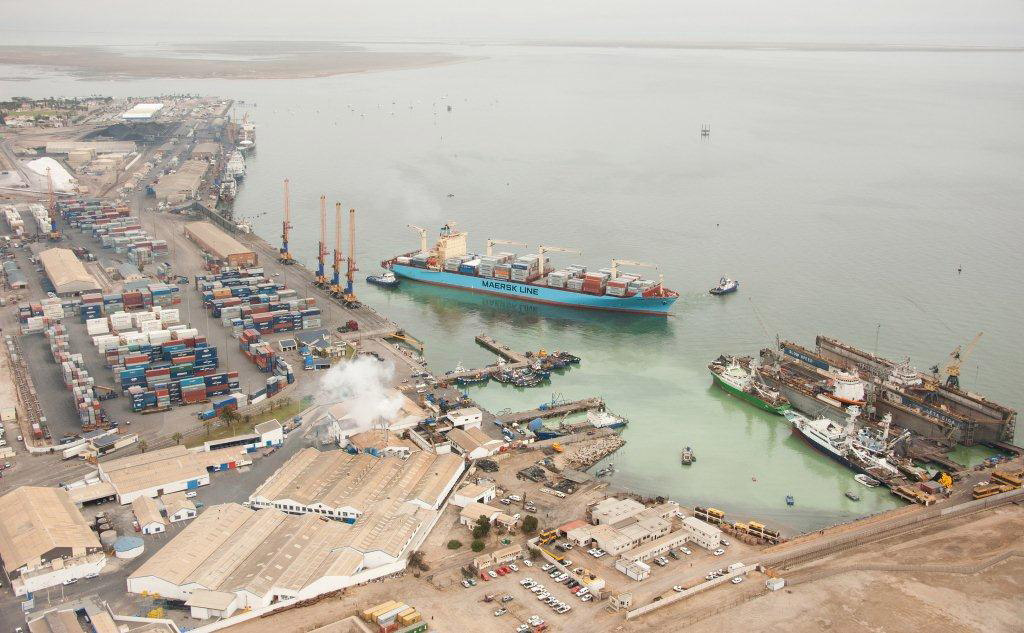
An aerial view of the port of Walvis Bay. NamPort is seeking a green light from Cabinet to spend over N$3 billion on the expansion of the harbour (Namibian Sun)

An aerial view of the port of Walvis Bay. NamPort is seeking a green light from Cabinet to spend over N$3 billion on the expansion of the harbour (Namibian Sun)

NamPort has recently commenced a massive N$3 billion construction project to build a new container terminal, but plans even more extravagant expansion in the years to come, according to its executive for marketing and strategic business development, Christian Faure. He expanded on the planned multi-billion dollar Southern Africa Development Community (SADC) Gateway Terminal envisioned for the area between Swakopmund and Walvis Bay this week.

“The SADC Gateway terminal is still in the concept phases,” stressed Faure. “This development was considered the long term plan for the Port of Walvis Bay’s expansion, but plans have been brought forward mainly due to the construction of the new fuel tanker berth facility and the Trans-Kalahari railway line initiative for the export of coal from Botswana. This development is not to be confused with the new container terminal currently under construction at the port,” he said.

Already NamPort has completed pre-feasibility studies and is currently busy with geo-technical evaluations to determine the structure of the ground in the area to be dug out, he said. NamPort is also positively engaging the Municipality of Walvis Bay on the land itself, and other role players that may be impacted, he said. “This is a massive development and to put it into perspective, the current port is 105 hectares in size. The SADC Gateway port is 10 times that with a size of 1 330 hectares. The new container terminal will add 40 hectares,” said Faure.

With Namibia’s reach to more than 300 million potential consumers in the SADC region, the port of Walvis Bay is ideally positioned as the preferred route to emerging markets in Botswana, Zambia, Zimbabwe, Angola, Malawi and the Democratic Republic of Congo.

Faure explained that several mega projects have surfaced in the last few years that will not be feasible without the SADC Gateway terminal, including the Trans-Kalahari Railway Line, Botswana coal exports through Namibia, mega logistics parks planned in NDP4, the budding crude oil industry, large scale local mining product exports, as well as magnetite, iron ore and coal exports from Namibia.

The SADC Gateway Port project (also sometimes called the North Port) will extend the existing harbour to the north of Walvis Bay between Bird Island and Kuisebmond. It will cover a total for 1330 hectares of port land with 10 000 meters of quay walls and jetties providing at least 30 large berths. The new port will also feature world class ship and rig repair yards, and oil and gas supply base, more than 100 million tons worth of under cover dry bulk terminal, a car import terminal and a passenger terminal, he explained.

The SADC Gateway Port will also feature a liquid bulk terminal for very large crude carriers, dry ports and backup storage areas, break bulk terminals, small boat marinas and a new high capacity rail, road, pipeline and conveyor link to the area behind Dune 7. Source: Informate, Namibia
Communication: Sharing Information for Better Communication

WCO Customs Theme 2014Following a theme of logical progression over the past few years, the WCO has introduced “Communication” as this year’s theme for the 170+ Customs Administrations around the world. Last year’s theme “Innovation” set the platform for the introduction of innovative ideas and business practices, new partnerships, as well as new solutions and technologies.

While still very much in its infancy, the WCO’s Globally Networked Customs (GNC) philosophy will undoubtedly gain more and more traction as administrations iron out their national and regional aspirations and objectives.

The recent agreement on Trade Facilitation at the WTO’s conference in Bali adds further credence to the importance of the principles of the Revised Kyoto Convention (RKC). For the first time we see an attempt to fuse customs principles into a package of binding requirements.

Now, more than ever, Customs needs to work ‘collaboratively’ with all stakeholders.

With Customs and Border Agencies etching out new legal requirements, as well as organisational structures and plans, trade practitioners will likewise have to keep a watchful eye on these developments. Sometimes, not necessarily just for their own needs and obligations in their domestic markets, traders need to ensure that they keep apace with ‘destination’ Customs requirements which in these modern times are all too frequent. By opening its door to the business community, the WCO plays an ever-increasing overarching role in providing the private sector a ‘window’ to its thinking and ideology.

UN launches global campaign targeting the criminal counterfeit trade

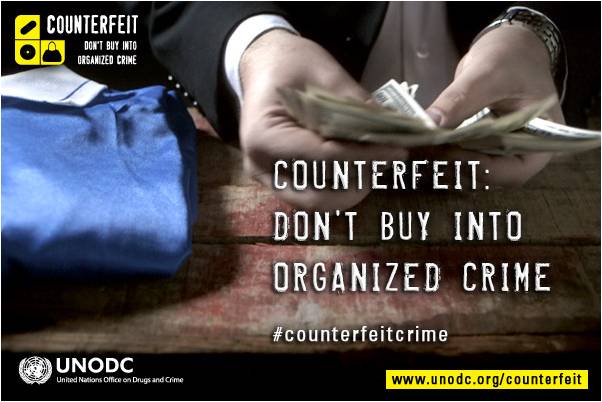
UNODC Anti-Counterfeit ImageThe World Customs Organization (WCO) welcomes the new global campaign launched by the United Nations (UN), under the auspices of the UN Office on Drugs and Crime (UNODC), to raise awareness among consumers on the dangers of counterfeit goods and their link to organized crime.

The campaign – ‘Counterfeit: Don’t buy into organized crime’ – is centred around a Public Service Announcement, entitled ‘Look Behind(click hyperlink to view), which will be shown on the NASDAQ screen in New York’s Times Square and will be aired on several international television stations, starting from 14 January.

With the aim of urging consumers to consider who and what lie behind the production of counterfeit goods, the campaign is a bid to boost understanding of the multi-faceted repercussions of this illicit trade, which according to the UNODC is worth 250 billion US dollars a year.

UNODC Executive Director, Yury Fedotov, noted that, “In comparison to other crimes such as drug trafficking, the production and distribution of counterfeit goods present a low-risk/high-profit opportunity for criminals.”

Fedotov further noted that, “Counterfeiting feeds money laundering activities and encourages corruption, and there is also evidence of some involvement or overlap with drug trafficking and other serious crimes.”

Counterfeiting is a crime that affects us all, from exploited labour being used to produce counterfeits, through to the harmful and potentially deadly dangers attached to these goods, and the links that these illicit goods have in potentially funding cross-border criminal and organized crime activities.

“With a long history of fighting counterfeiting and piracy at the national, regional and international level, the global Customs community is ready to support its United Nations partners in their efforts to raise awareness about this illicit trade activity,” said WCO Secretary General, Kunio Mikuriya.

Mikuriya further stressed that, “The WCO is firmly committed to countering the relentless attack on consumers by criminals involved in counterfeiting, as their illicit and even dangerous goods which are flooding markets across the globe pose a huge risk to public health and safety.”

Fraudulent medicines also present a serious health risk to consumers, as criminal activity in this area is big business, with the UNODC reporting that the sale of fraudulent medicines from East Asia and the Pacific to South-East Asia and Africa alone amounts to some 5 billion US dollars per year.

Criminals use similar routes and modi operandi to move counterfeit goods as they do to smuggle illicit drugs, firearms and people; in 2013, the joint UNODC/WCO Container Control Programme detected counterfeit goods in more than one-third of all seized maritime containers.

The WCO expends enormous resources on combating the counterfeit trade using a variety of means, including the organization of global enforcement operations and the introduction of IPM, a WCO tool which promotes cooperation and the sharing of information between Customs and rights holders.

Of particular relevance to the campaign is the WCO’s theme for 2014 which highlights the importance of communication and the sharing of information for better cooperation, which is highly instrumental in the fight against counterfeits in tandem with the Organization’s public and private sector partners.

Concluding, Secretary General Mikuriya took the opportunity to commend the UNODC on its latest initiative, offered his full support for the UN campaign, and urged WCO Members and Customs’ stakeholders to continue raising awareness about the perils of buying and trading counterfeit goods. For more information visit the WCO Website. Source: WCO

Philippine Customs Launches Transparency Portal

bocBigLogoBureau of Customs (BOC) unveiled a new website called “Customs ng Bayan” (Customs of the Nation) as part of newly-appointed Customs Commissioner John Phillip Sevilla’s initiatives to “uproot” the agency from its long history of institutionalised corruption.  “We are publishing reports of almost every importation into the Philippines in December 2013. Going forward, we intend to publish this list every month,” Sevilla said in an official statement.

Each item in the list represents a specific quantity (measured by weight) of a specific item that was imported by a specific importer on a specific day. The list – 88,006 items in December 2013 alone – is organised by major product groups, using the Harmonised Standard (HS) Code classification system.

“For each item, we include information such as a description of the item imported, its HS code number and standard HS code description, what country the item came from, its value and the amount of duties and taxes collected on that item.”

The Bureau of Customs, for the past years, has been one of the country’s most prominent faces of corruption in the government. According to Sevilla, all of that is about to change as they make drastic shifts in leadership, personnel and processes. In particular, he highlighted the importance of leveraging ICT to support the administration’s reform agenda.

“We need to improve the capacity of our IT systems to comply with needed reforms,” he said, adding that the Bureau is now studying the feasibility of implementing a single IT platform for all transactions, which involves improving the planned Php 442.3 million (US$9.8 million) National Single Window (NSW) project.

The NSW will facilitate trade through efficiencies in the Customs and authorisation processes. It will allow single submission and accelerated processing of applications for licenses, permits and other authorisations required prior to undertaking a trade transaction.Source: www.futuregov.asia

Related Articles

SAPPI to export to Asia via port of Maputo

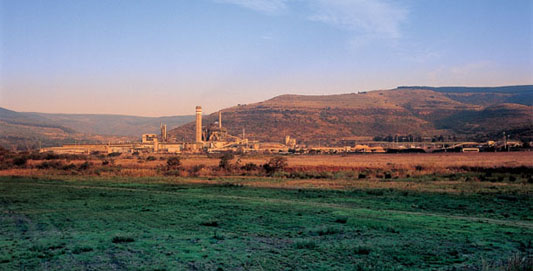
Ngodwana Mill, situated in the province of Mpumalanga (South Africa). It is a fully integrated kraft mill producing pulp for own consumption as well as newsprint and containerboard. (Sappi)

Ngodwana Mill, situated in the province of Mpumalanga (South Africa) is a fully integrated kraft mill producing pulp for own consumption as well as newsprint and containerboard. (Sappi)

The Sappi group, one of the world’s largest manufacturer of gloss paper, plans to use the port of Maputo, in Mozambique to export to Asian markets a group official told financial news agency Bloomberg. Alex Thiel, who is responsible for the group’s business in Southern Africa, said that in October an agreement was reached with Dubai-based port operator DP World, which together with South African logistics group Grindrod and state company Portos e Caminhos de Ferro de Moçambique, is a partner in Maputo port company Empresa de Desenvolvimento do Porto de Maputo.

The Sappi group, which is also one of the world’s largest producers of dissolving wood pulp, plans to ship 10,000 containers per year via the port of Maputo as it is just 250 kilometres from the group’s factory in the South African province of Mpumalanga.

“We have decided to export via the port of Maputo in order to save money as the second-closet port, in Durban, is 650 kilometres from the factory,” said Thiel.

The Mpumalanga factory, which starting producing dissolving wood pulp at the end of July, has already reached 75 percent of its installed capacity of 210,000 tons per year, and is expected to achieve maximum production in February 2014. The wood pulp will be exported via the port of Maputo to China, India and Indonesia, where it will be used to make thread for the textile industry. Source: http://www.macauhub.com

Construction of Bagamoyo port to commence – January 2014

An aerial view of Dar es Salaam port, whose limitations stakeholders hope the new Bagamoyo port will replace. (Tanzania Daily News)

An aerial view of Dar es Salaam port, whose limitations stakeholders hope the new Bagamoyo port will replace. (Tanzania Daily News)

Construction of Bagamoyo port is expected to commence early this month, the government has revealed.

Scheduled for completion in 2017, the Bagamoyo port will have the capacity to handle twenty times more cargo that of Dar es Salaam Port, which is currently the country’s largest port.

This was revealed recently in Dar es Salaam by the Permanent Secretary in the Ministry of Finance, Dr Servacius Likwelile during the signing of two framework agreements and two exchanges of letters between the government of Tanzania and the People’s Republic of China which granted 89bn/- to finance implementation of various projects in the country.

“The construction of Bagamoyo port will commence on January 6, this year after the signing of the construction agreement between Tanzania and China on that same day,” noted Dr Likwelile.

The construction of Bagamoyo port comes almost in time as Tanzania is losing a lot of trade and commerce opportunities because of inefficiency of the Dar es Salaam port.

According to Tanzania’s Ambassador to China Philip Marmo, the over USD10 bn/- Bagomoyo port project will add to the economy as the port will have the capacity to handle 20 million containers a year compared to the Dar es Salaam port which handles only 800,000 containers a year.

“The Bagamoyo port construction project will entail the building of a 34 kilometre road joining Bagamoyo and Mlandizi and a 65 kilometres of railway connecting Bagamoyo with the Tanzania-Zambia Railway (TAZARA) and Central Railway. The port will be of high standard. We are building a fourth generation port,” said Marmo.

According to Marmo, the Chinese stand to gain from Tanzania’s future Bagamoyo port because it will facilitate China-bound shipments of minerals from Zambia, Zimbabwe and the Democratic Republic of Congo (DRC) via the Indian Ocean.

The construction of the Bagamoyo port is among the 16 recently signed development projects agreement between Tanzania and China, orchestrated by President Jakaya Kikwete and Chinese President Xi Jinping during Xi’s state visit to Dar es Salaam in March last year.

Speaking of the recently 89bn/- Chinese financial aid for implementation of various projects in the country, Likwelile said it involved the first framework agreement on economic and technical cooperation between Tanzania and China under which a gratuitous aid amounting to 52bn/- will be provided to support implementation of projects that will be agreed upon by the two governments at a later stage.

“Under the second framework agreement, the government of China will make available to the Tanzanian government an interest free loan amounting to 26bn/ to support implementation of projects also to be agreed upon by the two governments,” he added.

He further mentioned the Chinese donation of furniture and equipment worth 1.3bn/- to the Mwalimu Nyerere International Convention Centre as well as equipment worth 400m/- donated to the Prevention and Combating of Corruption Bureau (PCCB) office.

During the signing function, the Chinese government also donated to the ministry of Foreign Affairs and International Cooperation 91 vehicles worth 9bn/- including 45 limousines and 46 buses. Source: The Guardian & ippmedia.com

Related articles

Angola delays entry into SADC Free Trade Zone

aoAngola’s minister for trade, Rosa Pacavira states that Angola may only join the SADC Free Trade Zone only in 2017.

The minister said that joining the Free Trade Zone would only happen when Angola had finished its membership road map, which is currently being drawn up, but noted that Angola’s entry “remains on the government’s agenda as part of its regional integration policy.”

“We are drawing up a road map and we will see if, by 2017, Angola manages to join the Free Trade Zone, but for that we will have to create industry and internal capacity so that Angola can compete with other countries that are already part of the zone,” said Pacavira.

“If we open up the market now we will stop producing a lot of things that we need to produce, because if Angola joins up now we will have the whole of the SADC selling products here and we will not be producing them,” she said.

The SADC Free Trade Area was set up in Johannesburg in August 2007, at the 28th SADC summit, and currently includes South Africa, Botswana, Lesotho, Malawi, Mauritius, Mozambique, Namibia, Swaziland, Tanzania, Zambia, Zimbabwe and Madagascar. The SADC countries that did not join are Angola, the democratic Republic of Congo and the Seychelles. Source: www.macauhub.com

Crossing the SACU bridge

600px-Flag_of_Swaziland.svgMartin Gobizandla Dlamini, the new Minister of Finance, is aware of the challenges of the country’s economy in case South Africa pulls out of the Southern African Customs Union (SACU).

However, the minister warned against pressing the panic button. He said there were no pellucid pointers that South Africa might pull out of the union.

Asked what measures were in place to sustain the country economically if South Africa pulled out or reviewed the revenue sharing formula to the negative, he said: “Let us cross the bridge when we get there. I am aware that South Africa calls for changes in the revenue sharing formula. This is a matter that has been on the table for quite some time.”

“I can’t comment now on how to survive with or without SACU receipts but I can mention that we are a sovereign state.” He did not expand on the sovereignty of Swaziland. Dlamini said SACU member states would meet in February 2014 for a strategic session.

These are South Africa, Namibia, Swaziland and Lesotho. “We were to meet in February in the first place, to discuss strategies on how to modernise SACU and make it relevant to our needs. It’s not like we are going there for shocks or breaking news about South Africa’s position on SACU,” said Dlamini, the former Governor of the Central Bank of Swaziland.

The country’s Gross Domestic Product (GDP) stands at E37 billion for 2012 while that of South Africa is E3.8 trillion as at 2012. In the absence of SACU, Swaziland is left with a few companies that add value to the economy in terms of taxes. They include among others Conco Swaziland which is understood to be contributing 40 per cent to the GDP, which translates to E14.9 billion and the sugar belt companies; Royal Swaziland Sugar Corporation (RSSC) which makes a turnover in excess of E1 billion and Illovo Group’s subsidiary Ubombo Sugar Limited (USL). Illovo Sugar has a 60 per cent shareholding at Ubombo Sugar while the remaining 40 per cent is held by Tibiyo Taka Ngwane, a royal entity held in trust for the Swazi nation. To Illovo Group’s profits, Ubombo Sugar contributed E272 million.

Bongani Mtshali, the acting Chief Executive Officer (CEO) of the Federation of Swaziland Employers and Chamber of Commerce (FSE&CC), said the country could be in a very bad economic situation if South Africa were to pull out of SACU. He said the economic problem could still persist even if the revenue derived from the union was decreased. Mtshali advised Swazis to expand the revenue base and work hand in hand with the Swaziland Revenue Authority (SRA) in its collection of domestic taxes.

The taxes include company tax, pay-as-you-earn, sales tax, casino tax and value added tax. He said people and companies should be encouraged to honour tax obligations. He also called for business innovation. “We will be able to produce and sell if we innovate,” he said. He said there was a need to have an innovation institution of some sort to produce talent, nurture and release it for productivity.

As it were, he said, it was suicidal to depend entirely on SACU revenue. It can be said that over 60 per cent of the country’s budget comes from the union. The SRA collects over E3 billion and this money cannot finance the national budget of E11.5 billion.

Ministries that can save Swaziland from an economic crisis are the Ministry of Commerce, Trade and Industry; Ministry of Agriculture, Ministry of Natural Resources and Energy and the Ministry of Economic Planning and Development.

It can be said that Swaziland is an agricultural economy but the closure of the factory at SAPPI Usuthu and destruction of timber at Mondi by veld fires, spelled doom to the economic outlook of the country. It can also be said that the country’s mainstay product is now sugar.

Despite maize being the country’s staple food, government spent E123 million on maize imports from South Africa last year. This year, preliminary figures indicated that government could spend E95 million on maize imports.

The import price has decreased because the country recorded a higher maize harvest of 82 000 metric tonnes compared to 76 000 tonnes recorded the previous year.

Swaziland is still clutching at straws in terms of food security. The unemployment rate is also high as there had been no massive investments witnessed on the shores.

Jabulile Mashwama, Minister of Natural Resources and Energy, said there were plans to expand the mining sector and reopen closed ones like Dvokolwako Diamond Mine.

There are only two official mines currently operational; Maloma Colliery, which made an export revenue of E126 million in the 2011/2012 financial year and Salgaocar which extracts iron ore from dumps at Ngwenya Iron Ore Mine.

Mashwama, the minister, said she would give details on the programme to revive the mining sector at a later stage. She hinted that the nation could also bank its hopes on her ministry for job creation and revitalisation of the economy.

Gideon Dlamini, the Minister of Commerce, Trade and Industry, has been given a task to industrialise the economy as one of the five-point plan by SACU. The industry minister was reported out of the country and was not reachable through his mobile phone. Source: Times of Swaziland

2014 – EU’s Revised Trade Rules to Assist Developing Countries

European-Commission-Logo-squareThe European Union’s rules determining which countries pay less or no duty when exporting to the 28 country trade bloc, and for which products, will change on 1 January 2014. The changes to the EU’s so-called “Generalised System of Preferences” (GSP) have been agreed with the European Parliament and the Council in October 2012 and are designed to focus help on developing countries most in need. The GSP scheme is seen as a powerful tool for economic development by providing the world’s poorest countries with preferential access to the EU’s market of 500 million consumers.

The new scheme will be focused on fewer beneficiaries (90 countries) to ensure more impact on countries most in need. At the same time, more support will be provided to countries which are serious about implementing international human rights, labour rights and environment and good governance conventions (“GSP+”).

The EU announced the new rules more than a year ago to allow companies enough time to understand the impact of the changes on their business and adapt. To make the transition even smoother for exporting companies, the Commission has prepared a practical GSP guide.

The guide explains in three steps what trade regime will apply after 1 January 2014 to a particular product shipped to the EU from any given country. It also provides information on the trade regime that will apply to goods arriving to the EU shortly after the New Year.

The changes in a nutshell:

  • 90 countries, out of the current 177 beneficiaries, will continue to benefit from the EU’s preferential tariff scheme.
  • 67 countries will benefit from other arrangements with a privileged access to the EU market, but will not be covered by the GSP anymore.
  • 20 countries will stop benefiting from preferential access to the EU. These countries are now high and upper-middle income countries and their exports will now enter the EU with a normal tariff applicable to all other developed countries.

For the finer details of the revised EU rules visit: http://europa.eu/rapid/press-release_MEMO-13-1187_en.htm?locale=en

Transit – Addressing the plight of Landlocked Countries

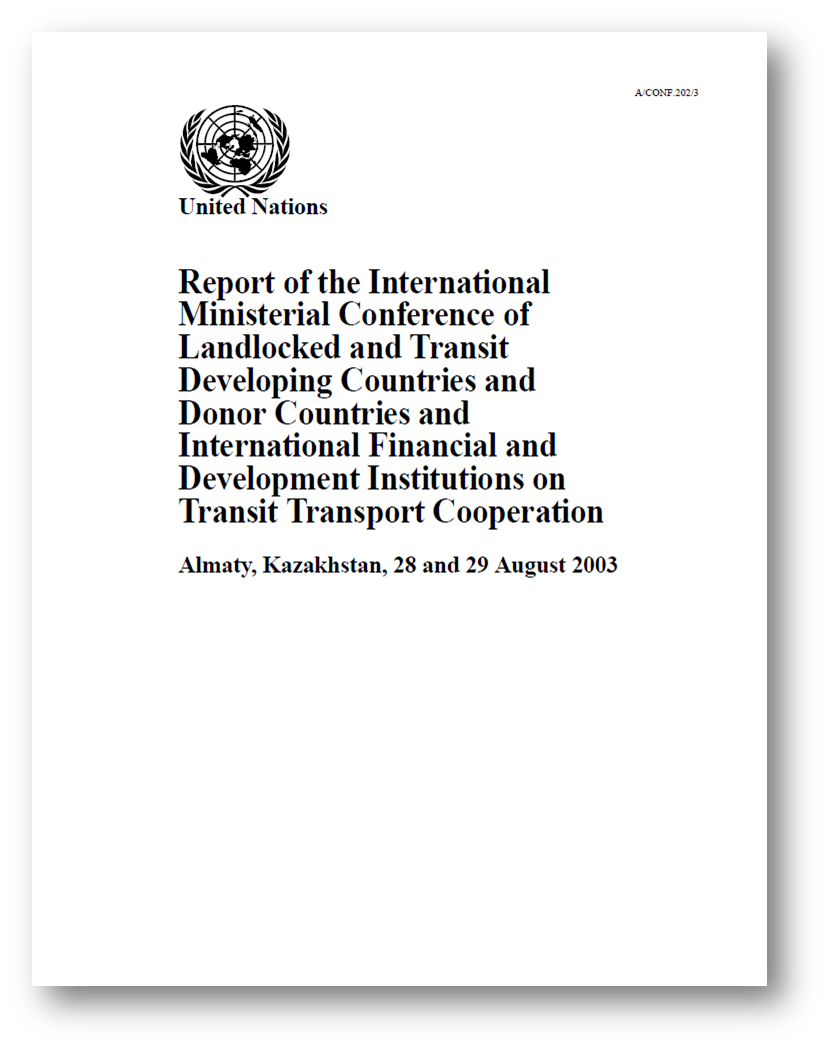
AmatiThirty-one countries belong currently to the Group of Landlocked Developing Countries: 15 are located in Africa, 12 in Asia, 2 in Latin America and 2 in Central and Eastern Europe. The lack of territorial access to the sea poses persistent challenges to growth and development of these countries and has been the main factor hindering their ability to better integrate in the global trading system. The transit of export and import goods through the territory of at least one neighboring State and the frequent change of mode of transport result in high transaction costs and reduced international competitiveness.

For more details on LLDCs visit – Landlocked Developing Countries (LLDCs)

The 2003 Almaty Programme of Action highlighted the link between the ability of LLDCs to harness their trade potential and the state of the transport infrastructure and the efficiency of trade facilitation measures in neighboring transit countries and called for international support in favor of LLDCs. The United Nations General Assembly in its resolution 66/214 of 22 December 2011 and resolution 67/222 of 3 April 2013 decided to hold a Comprehensive Ten-Year Review Conference of the Almaty Programme of Action in 2014 with a view to formulating and adopting a renewed development partnership framework for LLDCs for the next decade.

It is expected that the ten-year review will provide an opportunity for: (i) assessing progress made in establishing efficient transit transport systems in landlocked developing countries since the adoption of APoA in August 2003, and particularly after the midterm review of 2008; and (ii) agreeing on actions needed to sustain achievements and address challenges in overcoming the special problems of landlocked developing countries around the world.

It would appear that this programme very much supports the creation of inland ports connected to the seaports by means of secure and bonded facilities – within the ambit international law, i.e. WTO (Trade Facilitation Agreement) and the WCO (Revised Kyoto Convention). The question arises as to whether an inland port located in Botswana, Zimbabwe or any adjoining country be able to demand such rights where a ‘corridor’ country or country providing international seaport access to LLDCs does not observe or accept international transit principles?

Related articles

Mugabe family linked to illicit SA cigarette trade

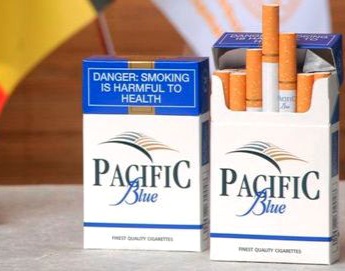
Pacific Blue_SnapseedRelatives of President Robert Mugabe are being linked to illegal tobacco smuggling networks suspected of bringing more than $48 million in contraband through South Africa’s borders, reports NewZimbabwe.com.

Harare-based Savanna Tobacco is owned by a prominent Zimbabwean businessman, Adam Molai, who is married to Sandra Mugabe, one of Mugabe’s nieces. Molai has previously worked with Sandra as co-director of the Zimbabwe Tobacco Growing Company. Savanna has allegedly moved tons of illegal tobacco into South Africa.

The company’s main brand, Pacific cigarettes, has been found in concealed consignments by police in South Africa and abroad, according to two private investigators who track tobacco busts and work for the industry to counter the trade in illicit tobacco. The products have been linked to a huge tobacco smuggling operation whose base in South Africa was shut down in 2010 by the South African Revenue Service (SARS), which is engaged in a crackdown on the country’s illegal tobacco markets.

Images taken at the scene of two busts in South Africa and one in Zimbabwe show the extent of the smuggling operation. SARS has refused to confirm or deny whether it is investigating Savanna, citing the confidentiality requirements of the Tax Administration Act.

The frequency of the busts, the methods used and the quantities of illegal Pacific cigarettes found have led sources close to the investigations to claim that Savanna has been centrally involved for at least four years. It also increases suspicions that Zimbabwe is using smuggling to keep its economy afloat. Mugabe has openly supported Savanna. A year ago, he accused rival British American Tobacco (BAT) of spying on Savanna and hijacking its trucks. “If this is what you are doing in order to kill competition and you do it in a bad way, somebody will answer for it,” Mugabe warned.

Boxes of cigarettes that can be made for as little as R1.50 are easy to slip into the local market to avoid the R13 tax a box. Whereas popular brands of cigarettes can retail at R35 a pack, illegal cigarettes sell for between R4 and R12 a pack. With margins approaching 1000%, the illicit trade has become one of the largest elements in organised crime in South Africa.

According to research commissioned by the Tobacco Institute of South Africa, which is predominantly funded by BAT, 9.5billion illegal cigarettes with a street value of about R4-billion were smoked locally last year.

Savanna has captured almost 10% of this market, according to the institute, with about 700 million of its illegal cigarettes smoked last year. Pacific’s illegal cigarettes are sold mostly on the streets of Cape Town.

In one of the biggest busts in October, 1.6million Pacific cigarettes were found hidden on a train in Plumtree. Pacific cigarettes have also been seized at the Beitbridge border post near Musina and in Boksburg, on the East Rand, during busts in November. Trucks were found carrying Pacific cigarettes in concealed compartments.

This month, a consignment of Pacific cigarettes was found hidden behind electronic goods on a truck in the Western Cape. Similar busts have been made in Mozambique and at a border post between Zambia and Namibia, according to private investigators.

Evidence from the Plumtree train bust showed that the smuggling route had its origin as Savanna’s factory in Zimbabwe and South Africa’s black market as its destination. In the Plumtree bust on October 12, Zimbabwean police confiscated 40 tons of illicit Pacific cigarettes that had come from Bulawayo. The train was said to be carrying gum poles.

Records reveal that between September 2012 and August 2013 at least 23 shipments with 44 wagons of “gum poles” had followed the same route. A number of these consignments appear to have arrived at the South African business PFC Integration. According to an investigator who has studied the operation, PFC is “not into the gum pole business at all”.


Business Guide for Developing Countries – WTO Trade Facilitation Agreement

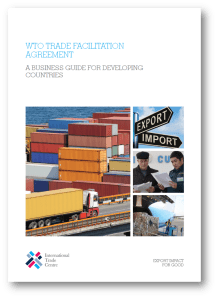
Picture2The International Trade Centre has prepared a guide to help businesses take advantage of the WTO Trade Facilitation Agreement. The agreement simplifies customs procedures, allowing businesses to become more competitive. This jargon-free guide explains the provisions with a focus on what businesses need to know to take advantage of the agreement. It will also help policy makers identify their needs for technical assistance to implement and monitor it. To download the guide – click the following link: http://www.intracen.org/wto-trade-facilitation-agreement-business-guide-for-developing-countries/.

For instance, the guide explains how the article on ‘Advance rulings’ aims to address problems with inconsistent classification of goods by customs officials and the uncertainty it creates for traders. ‘Advance rulings are binding decisions by customs…on the classification and origin of the goods in preparation for importation or exportation. Advance rulings facilitate the declaration and consequently the release and clearance process, as the classification has already been determined in the advance ruling and is binding to all customs officers for a period of time,’ the guide explains. It goes on to list in jargon-free language the obligations and the procedure imposed on customs authorities related to advance rulings.

Reducing the on-the-spot decision making authority of individual customs agents thanks to advance rulings will also reduce bribery, the guide says. Corruption continues to be a key problem for developing-country exporters, who identified it as a major constraint on exports in a recent survey conducted by ITC.

The last chapter of the guide describes how the agreement will be implemented, including the special and differential treatment provisions that developing countries may invoke. Developing countries will be able to link the implementation of the commitments to technical assistance and support from donors. WTO member states will have to explicitly apply for delays for each commitment, which will need to be approved by the WTO and the implementation schedule published.

Source: International Trade Centre

WCO Capacity Building visit to the youngest country in the world

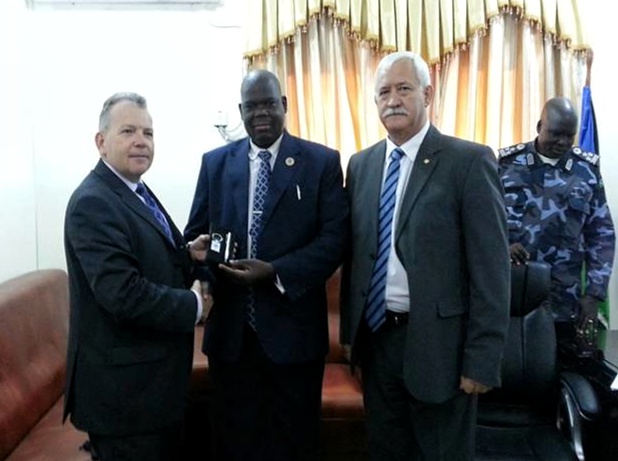
Capacity Building visit to South Sudan - SARS' representative Fanie Versveld (right).

Capacity Building visit to South Sudan – SARS’ representative Fanie Versveld (right).

End of November to beginning of December 2013, following a request from the then Customs Director-General, a small WCO expert team travelled to South Sudan to undertake a Phase 1 Diagnostic Mission under the auspices of the WCO Columbus Programme. The needs analysis was conducted by a colleague of the WCO Capacity Building Directorate along with an expert from the South African Revenue Service.

South Sudan gained its independence as recently as July 2011 and is still the youngest country in the world. Until recently it was also the newest Member country of the WCO.

It was during the course of the visit that the WCO team learnt that the Customs Director General had been replaced. A meeting was held with the new Director General and after outlining the work of the WCO and the purpose and benefit of its Capacity Building Programme it was agreed that the mission should proceed as planned.

The diagnostic team visited the Customs Headquarter in the capital city of Juba, Juba International Airport and Nimule Border Crossing Point on the border with Uganda. The team had the opportunity to meet and speak with a wide variety of motivated people from within the South Sudan Customs Service and also held informative discussions with a number of key stakeholders from the public sector, trade representatives and donor agencies.

The South Sudan Customs Service is just starting out on the road of Reform and Modernization. The diagnostic team made a series of recommendations that will help them in this regard but also identified some “quick win” activities that will assist them in building organisational confidence and commitment to the whole development process. The WCO looks forward to working with the South Sudan Customs Service again in the near future. Source: WCO


What Does the WCO think of the WTO Trade Facilitation Agreement?

The Dublin Resolution, which was issued at the conclusion of the Policy Commission meeting in Dublin, Ireland on 11 December 2013, welcomes the WTO Agreement On Trade Facilitation (the “Trade Facilitation Agreement”), as embodied in the Bali Package’s Ministerial Decision, adopted at the WTO’s Ninth Ministerial Conference in Bali, Indonesia from 3 to 7 December 2013, under the framework of the Doha Development Agenda.

The Dublin Resolution emphasises the commitment of the WCO to the efficient implementation of the Trade Facilitation Agreement.

The WCO Secretary General, Kunio Mikuriya, said that he was very pleased with the timely and affirmative action of Policy Commission, which reflects the determination to drive forward the global Customs trade facilitation agenda.

Posted by Simon Lester for http://worldtradelaw.typepad.com


What is the value of a slick customs service?

Cahir Castle Portcullis by Kevin King

Cahir Castle Portcullis by Kevin King

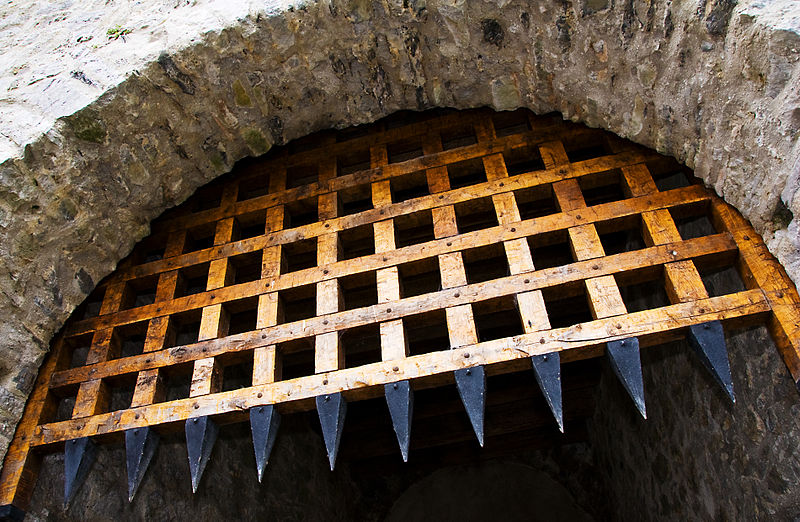
The traditional symbol of customs and borders services is the portcullis – the fortification through which a ship used to enter a port. But as developing countries are increasingly asked to recognise the benefits of liberalised trade to the detriment of their import duty revenue, how can they be helped to raise the portcullis? And is it really in their interests to do so?

With world trade growth expanding more than twice as rapidly as gross domestic product (GDP) over the past decade, says Steve Brady, director, Customs and Trade Facilitation for development consultancy Crown Agents, the potential rewards from participating in world trade are significant. “According to figures from WTO, in 2011 world merchandise exports and imports in real terms grew by over 5%. As a result, each reached over $1.8tn, the highest level in history.”

The major players working with developing country governments to help them benefit from this increase in trade include the World Bank, ICC, World Customs Organisation (WCO), IMF, UN Conference on Trade and Development (Unctad), development banks and specialist intermediaries such as Crown Agents.

A number of countries have improved their capacity as a result of international and domestic efforts, yet some are still hesitant to do so. The Centre for Customs and Excise Studies (CCES) at the University of Canberra finds that many developing country governments are heavily dependent on the revenue from import duties – in some cases this can be as high as 70% of a country’s total revenue base. The desire to protect this is understandably strong. Yet this same desire can be used to drive forward modernisation efforts, explains Professor David Widdowson, CEO of CCES. “Revenue leakage resulting from commercial fraud, poor customs and border procedures and corruption represents a major impediment to poverty reduction.”

Similarly time-consuming manual processing systems, over-regulation, or outright corruption, will discourage trade and investment and further undermine a country’s development. “In the worst cases up to 20 signatures are required to obtain customs clearance of goods, all of which require ‘informal payments’,” says Widdowson. “I have also seen examples of 15 different government agencies playing some role at the border, all acting independently.”

Guidelines or blueprints to modernise such customs and borders processes are available, for example, via the revised Kyoto convention (extolling the basic principles of automation, simplification, responsiveness to the regulation, consistency and co-ordination); the “Framework of standards to secure and facilitate global trade” developed by the WCO; and its “Columbus programme.”

Turkey is cited by Sandeep Raj Jain, economic affairs officer at the United Nations Economic and Social Commission for Asia and the Pacific (Escap), as a case study for the successful modernisation of customs systems, having consolidated 18 previously autonomous border gates and introduced a single IT clearance system, leading to an increase in tax revenues and a decrease in clearance time to the benefit of incoming and outgoing trade. Angola increased receipts sixteen-fold from $215.45m in 2000 (£148m) to $3,352m in 2011 through an improved National Customs Service and the introduction of an automated entry processing system and customs clearance Single Administrative Document.

The African Development Bank also supported post-conflict Liberia with the extension of an automated system for customs data, helping to reduce the time to clear goods at the port from 60 days to less than 10 days and increase revenue collection at three ports from about $4m a month to $10m-$12m. This, Ellen Johnson Sirleaf, president of Liberia has said, given the government additional scarce revenues to invest in the projects to improve the livelihoods of people.

Horror stories also abound of revenue loss, acting as a cautionary tale for leaving outdated customs processes untouched. A World Bank report, for example, finds that in Algeria smuggling caused a loss to the public exchequer rising from DA18bn in 2006 ($237m) to over DA61bn in 2011.

The message from the international community is that improved, automated and transparent customs services not only help eradicate theft and corruption, but also increase revenue through increased trade. Any fall in revenue from import tariffs due to signing up to bilateral free trade agreements can also be offset, says Bijal Tanna of Ernst & Young LLP: “One only has to look at the take-up of VAT by countries since the 1980s to understand that there is a consumer tax outlet to offset any loss of revenue from customs duty reductions. Back in the late 1980s, approximately 50 countries had VAT, now it is in place in over 150 countries.”

However, these arguments don’t always reach an appreciative audience. “In my experience”, says Widdowson, “economies may give lip service to the trade facilitation agenda, including entering into free trade agreements, but still expect their customs administration to collect traditional levels of duty. For example, with the introduction of free trade arrangements – hence falling duty rates – and a downturn in international trade, the Philippines continues to increase the ‘revenue targets’ of its bureau of customs, the derivation of which appears to be devoid of any analytical rigour.” (emphasis – mine)

Tanna also points to the collapse of the Doha round of the WTO negotiations heralding a breakdown in efforts to find a single global platform to drive a uniform approach to trade liberalisation. Perhaps it is the obligation of the international community to renew such efforts, alongside projects to improve customs systems in-country. Source: Original article by Tim Smedley of The Guardian