South Africa falls in 2014 global logistics rankings

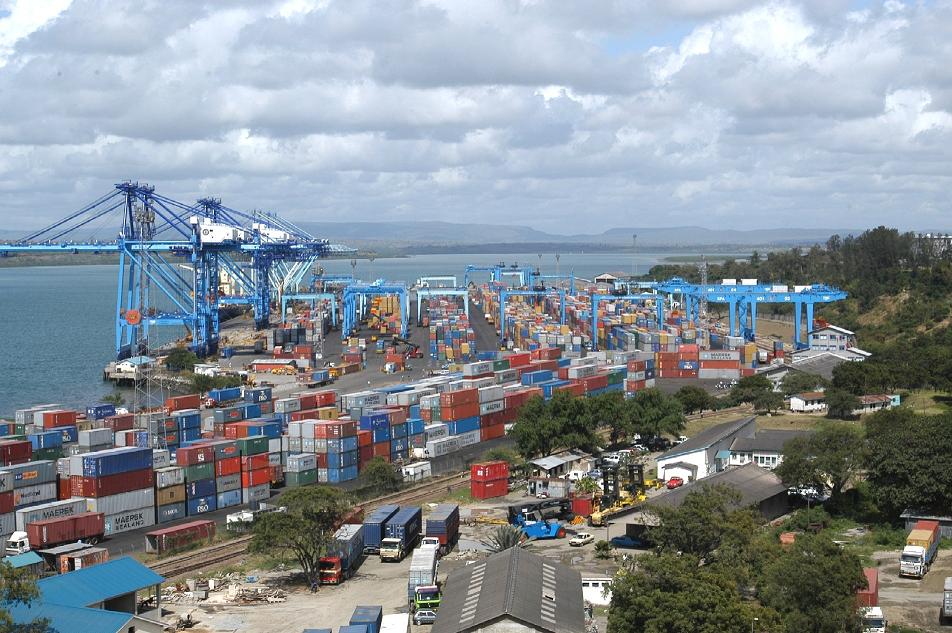
jll_year_of_the_distribution_center_wide_imageSouth Africa has been ranked number 34 out of 160 countries in the World Bank’s 2014 Logistics Performance Index (LPI), which is topped by Germany, with Somalia ranked lowest. Africa’s largest economy remained the continent’s highest placed LPI participant, but South Africa’s position was well off its 2012 ranking of 23 and its position of 28 in 2010.

In February, the World Bank argued in a separate report on South Africa that the country’s high logistics costs and price distortions were an impediment to export competitiveness. That report noted, for instance, that South Africa’s port tariffs on containers were 360% above the global average in 2012, while on bulk commodities they were 19% to 43% below the global average. Similar commodity biases existed in the area of rail freight.

But the new report, titled ‘Connecting to Compete 2014: Trade Logistics in the Global Economy’, still clustered South Africa as an “over-performing non-high-income” economy along with Malaysia (25), China (28), Thailand (35), Vietnam (48) and India (54).

The report draws on data arising from a survey of more than 1 000 logistics professionals and bases its LPI rankings on a number of trade dimensions, such as customs performance, infrastructure quality, and timeliness of shipments. Besides China, South Arica also performed above its ‘Brics’ counterparts of Brazil (65),Russia (90) and India.

Germany was followed in the top 10 by other developed economies, namely Netherlands, Belgium, the UK, Singapore,Sweden, Norway, Luxembourg, the US and Japan. Among low-income countries, Malawi, Kenya and Rwanda showed the highest performance.

The report warns that the gap between the countries that perform best and worst in trade logistics remains large, despite a slow convergence since 2007. The gap persists, the study asserts, because of the complexity of logistics-related reforms and investment in developing countries. This, despite strong recognition that poor supply-chain efficiency is the main barrier to trade integration.

However, senior transport economist and founder of the LPI project Jean-François Arvis stresses that a country cannot improve through developing infrastructure, while failing to address border management and other supply-chain issues.

Logistics performance is strongly associated with the reliability of supply chains and the predictability of service delivery for producers and exporters, the report notes, adding that supply chains are only as strong as their weakest links. They are also becoming more and more complex, often spanning many countries while remaining critical to national competitiveness.

“It’s difficult to get everything right. The projects are more complicated, with many stakeholders, and there is no more low-hanging fruit,” Arvis argues.

The report also finds that low-income, middle-income and high-income countries will also need to adopt different strategies to improve their standings in logistics performance. “Comprehensive reforms and long-term commitments from policymakers and private stakeholders will be essential. Here, the LPI provides a unique reference to better understand key trade logistics impediments worldwide.” Source: Engineering News

Related articles

Time to modernise trade rules for digital era

digital-ownershipIn the past, nations with the best ships and ports were able to establish global trade leadership and the growth that came along with it. Today, global trade has gone digital.

In the digital economy software-enabled products and services such as cloud computing and data analytics are the key drivers of growth and competitiveness. In fact, the world now invests more than $3.7 trillion (R40 trillion) on information and communications technologies a year.

In South Africa, we spend $26 billion a year and the total for the Middle East/Africa region is $228bn. However, to maximise our return on that investment, it is important for policymakers to eliminate barriers that could inhibit the continued expansion of digital trade.

It is clear that software-driven technology is transforming every sector of the global economy. For example, thanks to unprecedented processing power and vast data storage capabilities, banks can detect and prevent fraud by analyzing large numbers of transactions; doctors are now able to study historical trends in medical records to find more effective treatments; and manufacturers can pinpoint the sources of delays in global supply chains.

Against the backdrop of this kind of innovation, any country that wants to compete in today’s international marketplace must have a comprehensive digital agenda at the core of its growth and development strategy. In addition to domestic initiatives such as investment in education and skills training, or development of information technology infrastructure, policymakers can succeed in laying the groundwork for broad-based growth in the digital age if they focus on three big priorities.

First, any bilateral or multilateral trade agreement needs to facilitate the growth of innovative services such as cloud computing. As part of this, there should be clear rules that allow information to move securely across borders and prevent governments from mandating where servers must be located except in very specific situations.

Second, to promote innovation and foreign investment, continued intellectual property protection is vital and the use of voluntary, market-led technology standards – instead of country-specific criteria that force firms to jump through different technical hoops every time they enter a new local market – should be encouraged.

Third, all governments should ensure there are level playing fields for all competitors so customers have access to the best products and services the world has to offer.

At the same time, disclosures about government surveillance programmes in the US and other countries have sparked a renewed focus on data protection and personal privacy. Those concerns are worthy of debate and careful reform. But it is critically important not to conflate separate issues: We can’t let national security concerns derail digital trade.

There is precedent for navigating periods of change such as this in the global trade arena. Policymakers stood at a similar inflection point in the 1980s when they recognised the keys to growth in the coming decades would be intellectual property, services and foreign direct investment.

With foresight and hard work, they updated trade rules in the Uruguay Round of multilateral negotiations to ensure commitments were in place to provide a check against protectionist impulses. Now, as governments pursue robust growth agendas for the digital economy, it is critical we modernise trade rules again. Source: The Software Alliance (South Africa).

Vietnam Customs to Push Ahead with New e-Customs System

Picture1The Japanese-funded e-Customs system known as “VNACCS/VCIS” (Vietnam Automated Cargo and Port Consolidated System and the Vietnam Customs Information System) is set to “go live” on April 1, 2014.

Based on the NACCS/CIS of Japan, VNACCS/VCIS is intended to handle e-Declaration, e-Manifest, e-Invoice, e-Payment, e-C/O, selectivity, risk management/criteria, corporate management, goods clearance and release, supervision and inspection.

With the launch of the VNACCS/VCIS, Vietnam Customs is trying to simplify customs clearance procedures, reduce clearance time, enhance the management capacity of customs authorities in line with the standards of modern customs, as well as to cut costs and facilitate trade. VNACCS/VCIS also purports to ensure Vietnam’s compliance with the ASEAN “single window” initiative.

VNACCS/VCIS is intended to improve on the current e-Customs system. For example, the VNACCS/VCIS provides new procedures for the management of pre-clearance, clearance and post-clearance processes, adds new customs procedures such as registration of the duty exemption list, introduces a combined procedure for both commercial and non-commercial goods, simplifies procedures for low unit value goods and offers new management procedures for temporarily exported/imported goods, etc.

After the testing phase (which took place from November 2013 until the end of February 2014), users have been raising concerns regarding the VNACCS/VCIS system’s complexity. VNACCS/VCIS provides a declaration process with 109 export and 133 import data fields, compared to the current 27 export and 38 import declaration fields. Many of them are not compatible with the actual systems of companies, and appear to require from declarers an extensive knowledge of customs-related matters.

Comment – from an outsider’s perspective, besides systems testing, it would seem to appear that insufficient time has been allocated for alignment of industry systems to Vietnam Customs’ new data requirements. This, and the fact that no ‘grace period’ (waiver of sanctions or penalties) will be considered by the customs administration does not bode well for a smooth transition.

VNACCS/VCIS employs the quantity reporting mechanism in the official Units of Measures (“UOMs”), often used in international trade statistics, yet creates significant obstacles to companies that do not have compatible manufacturing, inventory planning and control systems. Vietnam Customs has stated that it will work on improving this issue.

VNACCS/VCIS also applies the declaration of customs values at the unit level. Since unit costs and unit prices used in financial systems of companies may not always be identical to declared values, companies may fail to comply with such requirement. Sanctions may be applied from day 1 of the new systems activation.

Technical difficulties are also a matter of great concerns to business community, e.g. with asset tracking. Currently under VNACCS/VCIS, reporting is limited to 7 digits, incompatible with many companies having asset tracking systems with identification numbers of up to 20 digits. To address concerns raised by the business community about the new system, Japanese experts have agreed to support Vietnam Customs 1 year after the official implementation date of the system.

There are concerns for potential risks of non-compliance for wrong declaration due to lack of an adequate understanding of VNACCS/VCIS. Vietnam Customs has rejected a proposal for “grace period” before applying sanctions upon violations, but encourages companies to actively participate in training programs organized by customs authorities to better avoid potential non-compliance risks.

Another concern is the chance of system failure which may lead to severe interruptions and delays in clearance procedures. Vietnam Customs has ensured business community that they have a back-up contingency mechanism in place to support customs procedures in the event that VNACCS/VCIS fails to operate properly. In the meantime, a new circular detailing the implementation of VNACCS/VCIS is being drafted and should come into effect by the launch date. Various business associations are still trying to find ways to mitigate the likely disruption from the sudden transition to the new system. Source: Baker & McKenzie (Vietnam)

Australia to buy US drones for border patrol

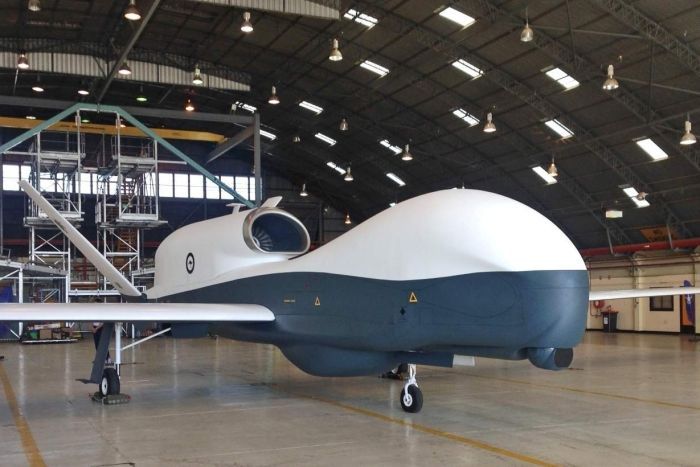
Triton drone surveillance fleet to be based at Edinburgh air force base in Adelaide (ABC News)

Triton drone surveillance fleet to be based at Edinburgh air force base in Adelaide (ABC News)

Australia today announced it will buy unmanned surveillance drones from the US to protect its borders and commercial interests.

The fleet, to be based in Adelaide, would provide the defence force “with unprecedented maritime surveillance capabilities”, PM Tony Abbott said. The drones would also be used to protect energy resources, he added. The drones, which are still being tested by the US navy, can remain airborne for up to 33 hours. The number of drones to be purchased is yet to be determined.

“We do need to have a strong defence – national security is as important as economic security when it comes to the good government of our country,” Abbott said. “Given that Australia has responsibility for something like 11% of the world’s oceans, it’s very important that we’ve got a very effective maritime surveillance capability.” The MQ-4C Triton drones, which are unmanned aerial vehicles used for surveillance, can cruise at altitudes up to 55,000 feet. The vehicle’s size is comparable to a small aircraft with a wingspan of 40 metres (131 feet).

In Australia, the drones are to be stationed at Adelaide’s air force base. Abbott said the purchase plan would boost South Australia’s economy with about A$100m ($90m, £54m) in investments. The announcement comes as Australia steps up its maritime border patrols to deter asylum seekers arriving by boat from neighboring Indonesia. Source: The Nation

New Philippines Customs Chief Cracks Down on Corruption

To fix the Bureau of Customs, President Benigno S. Aquino III needed a numbers guy, someone who could make sense of the thousands of shipments and billions of pesos passing daily through the Philippines’ ports. He turned to John P. Sevilla. Three months after taking over as commissioner in December, Mr. Sevilla told The Wall Street Journal he had been “shocked” by the Bureau’s failure to analyze the rich data it received, information that held vital clues to its endemic corruption problems.

“I’m amazed that nobody bothered to put the data together until about a month ago,” Mr. Sevilla said. “But we found out that we open up less than 1% of [shipping] containers, but of the containers that we open, 90% have problems.”

He was also incredulous that Customs lacked a single reference source to help examiners make complex calculations about duties and fees incurred by traders. One is now being compiled, Mr. Sevilla said, “to make it easier for people to do their jobs…so that they have no excuse” for undercharging importers, a common practice rewarded with illegal payments.

Customs is tasked with collecting revenue at the nation’s 17 major and 43 minor ports. But it has a history of missing targets: It pulled in 304.5 billion pesos ($6.8 billion) in 2013 — over a fifth of all government revenue, but still 35 billion shy of its goal. The under-invoicing of traded goods has cost the country $23 billion in lost tax revenue since 1990, according to a February report by Global Financial Integrity, a U.S. research firm. The Aquino administration’s keynote policy of improving governance thus made Customs a prime target for reform. A far-reaching overhaul was ordered last October, and Mr. Sevilla, a former finance undersecretary, was parachuted in soon after.

Before entering government in 2006, Mr. Sevilla held directorships at investment bank Goldman Sachs and ratings agency Standard & Poor’s, having earned degrees at Cornell and Princeton. His boss, Finance Secretary Cesar Purisima, hailed him as the right person to untangle the mess, “someone who is results-oriented.”

Not everyone was convinced: In January, Senate Minority Leader Juan Ponce Enrile said Mr. Sevilla was “in the dark” about how turn Customs around. Undeterred, the studious-looking commissioner has spent the last three months poring over reams of customs data in which the dealings of smugglers and corrupt officials have long lain hidden.

All import-export transactions were now being published online for public scrutiny, Mr. Sevilla said, “I think we’ve turned from being the most secretive government agency to being by far the most transparent.”

At the Port of Manila, one of three ports in the capital, importers and brokers crowded around glass service windows, an innovation from before Mr. Sevilla’s time designed to block access to officials and make them harder to bribe. Inside, on computers surrounded by mountains of paperwork in what remains a semi-automated operation, customs examiners placed their electronic signature on each shipment after calculating the requisite duties and fees.

The electronic signature system also predates Mr. Sevilla. The difference now, he said, is that he is actively policing it, cross-referencing signatures against undervalued shipments, and punishing the officials responsible. He said the threat of being caught was critical when front-line staff are offered bribes equivalent to their monthly salaries “a couple of times a day.”

Likewise, the credible threat that your container might be physically inspected is the best deterrent against false import declaration, Mr. Sevilla argued. But with 18,000 containers piled up at Manila International Container Port alone, the challenge is to open the right ones.

The Bureau has 3,600 staff, but aims to hire nearly 3,000 more, partly to increase the inspection rate. Around a fifth of shipments are flagged for further examination. Some of these are X-rayed and, if necessary, physically inspected.

Mr. Sevilla said he is seeking an extra 250 million pesos for more inspections after figuring out that Customs collects an average of 125,000 pesos per opened container, against a cost of 10,000 pesos for conducting the inspection — making the process “a no-brainer.”

The Bureau also regularly auctions off seized items to further boost revenues. At one such auction in mid-February, buyers snapped up everything from a smuggled Harley Davidson to batches of animal feed. Other illegal shipments are sent straight back to their point of origin, such as the 50 containers of rotting garbage — declared as “recyclable plastic” -from Canada last month.

The new regime is already producing results, Mr. Sevilla said, citing a 19.3% year-over-year increase in collections to 81.3 billion pesos in November to January. Further improvements will be needed: Customs has been tasked with collecting 408.1 billion pesos this year, far more than it has ever managed before. The true test of the Bureau’s progress under Mr. Sevilla will lie, fittingly, in the numbers. Source: The Wall Street Journal

How SA can save R18bn – by playing hard ball

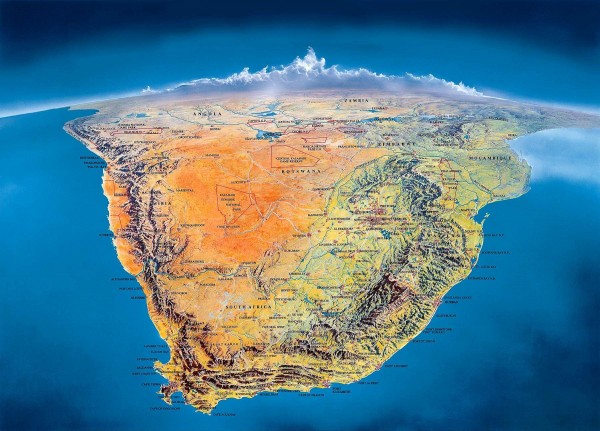
Southern_Africa_Panorama_MapSouth Africa is a member of the Southern African Customs Union (Sacu), which consists of Botswana, Lesotho, Namibia and Swaziland (BLNS), the oldest customs union in Africa but apart from this prestige, is Sacu worth the time?

In an article by Professor Roman Grynberg, he asked whether Sacu is a “dead man walking?” and I wish to follow-up on this. A recent article appearing on the World Bank’s website states that even if poor countries are neighbours, it is often more difficult for them to trade with each other than it is for them to trade with distant countries that are wealthy.

The Sacu agreement is principally about the issue of distributing customs revenue earned by the five members on their international trade with other countries. The distribution of this revenue is based on each country’s share of intra-Sacu imports and so favours the smaller members.

South Africa, for example, imports very little from within the region and so ends up paying the BLNS about R15bn to R18bn per year more than it would if Sacu did not exist.

If we are paying R15bn to R18bn per annum to be in a union with questionable benefits, why do we not exit the agreement?

For one, the SADC free trade agreement which was implemented in 2008, gives South Africa a “get out of jail free card” through providing South African exports similar but not identical market access to that available under Sacu.

We could thus “walk away from Sacu at any moment, save R15bn to R18bn and South African exports would still continue to flow across the Limpopo basin in more or less the same uninterrupted way.” (Grynberg, 2014).

Another reason, according to Grynberg, is that an “economic catastrophe” may result if South Africa exits. Swaziland and Lesotho are between 60% to 70% dependent on the Sacu for revenues, Botswana and Namibia are somewhat less dependent at 30% to 40%.

I feel though that this may be the very same reason that there will not be a major reform of the revenue-sharing formula. Would you want to cede even a third of your income?

So what should South Africa do? I think it is firstly important to note that of our SADC neighbours, South Africa earns the most from its exports to Zambia, Zimbabwe and Mozambique – none of which is in the Sacu.

This is perhaps not surprising when considering the findings of the World Bank and realising that nearly all of South Africa’s top trading partners are in the northern hemisphere.

The BLNS countries, interestingly enough, fall in the bottom 5 of our SADC trade partners and so should we worry so much about an “economic catastrophe” in the BLNS when they don’t buy our goods in any case?

What it comes down to, I feel, is that South Africa needs to play hard ball. By this I mean South Africa needs to be committed to actually exiting the Sacu agreement because it is only when the BLNS realise that we are serious and that there is the real threat of them losing 30% to 70% of their revenue that they will agree to a new revenue-sharing formula. After all, something is better than nothing. Source: Fin24

Related ‘must read’ articles

UNCTAD and International Trade Centre forge deal to assist LDCs attain Trade Facilitation compliance

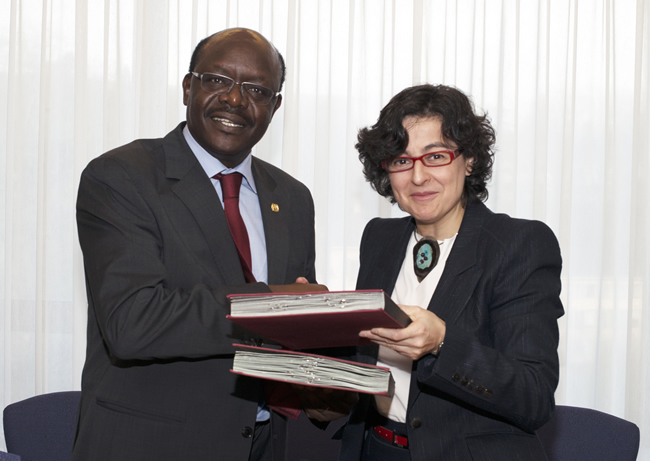
UNCTAD Secretary-General Mukhisa Kituyi (left) and the ITC"s Executive Director Arancha González, shake hands upon signing the Memorandum of Understanding. (UNCTAD)

UNCTAD Secretary-General Mukhisa Kituyi (left) and the ITC”s Executive Director Arancha González, shake hands upon signing the Memorandum of Understanding. (UNCTAD)

The United Nations Conference on Trade and Development (UNCTAD) and the International Trade Centre (ITC) have joined forces to assist developing countries in the implementation of the recent WTO Trade Facilitation Agreement reached in Bali, Indonesia. The two agencies signed a Memorandum of Understanding 4 March reaffirming this collaboration.

“The Trade Facilitation Agreement is a real opportunity for developing countries, but only if they can put its provisions into practice,” said Arancha González, ITC’s Executive Director.

“The two agencies complement each other very well and can offer meaningful support to developing countries together,” said UNCTAD Secretary-General Mukhisa Kituyi. UNCTAD already has a successful programme in building institutional capacity around effective trade facilitation, while ITC has experience in building the capacity of the private sector and increasing their export competitiveness”, he added.

The programme which the agencies will develop will focus particularly on Least Developed Countries.

Initially, the cooperation will concentrate on helping countries to identify and categorise the commitments under the Agreement in categories A, B and C and ensuring support for implementing the transparency provisions of the Agreement. These include ensuring better and easier access to information for traders; helping to develop advance rulings and rights of appeal legislation; facilitating greater predictability and reliability of procedures through simplified formalities and documentation and the use of international standards; and the adoption of single windows for traders.

“These are just some of the areas where the ITC and UNCTAD have identified clear needs in developing countries based on UNCTAD”s needs assessment programmes and the surveys undertaken by the ITC of its SME clients,” Mr. Kituyi said.

“In some cases we will need to ensure better cooperation between the public and private sector,” Ms. González said. “This is the ITC”s bread and butter: supporting a trade dialogue between business and policy makers.”

The collaboration between the two agencies is in response to a critical issue identified by developing countries in the lead-up to December’s WTO conference: whether there was enough financing and to support the necessary reforms, particularly in LDCs. This partnership will provide an opportunity to donors and other development partners to demonstrate their commitment to the implementation of global trade facilitation reform by working with UNCTAD and ITC. The agencies will collaborate with other organisations and the private sector to advance implementation of the WTO Trade Facilitation Agreement.

“The hope is that donors will see this collaborative venture between the ITC and UNCTAD, as an effective and efficient platform for helping developing countries, especially LDCs, to take advantage of the benefits an effective facilitating architecture can bring,” Mr. Kituyi said.

The private sector is also urged to explore ways that they can partner with the ITC and UNCTAD to provide their expertise to SMEs in developing countries. “Making the process of trade easier in developing countries is a plus for the global trade reality,” concluded Ms. Gonzalez, “It is a win-win situation”. Source: UNCTAD

EU Gets Tough on Counterfeit Goods

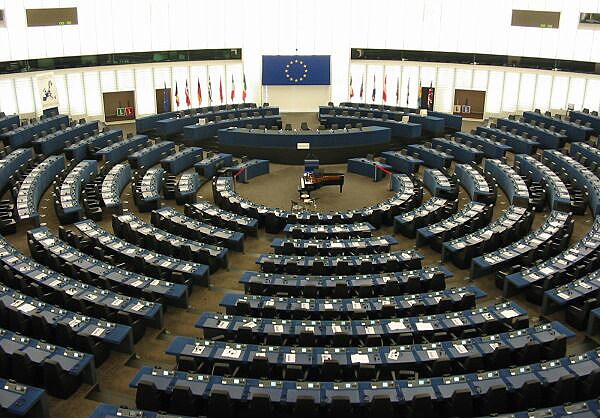
European Parliament By Cédric Puisney (via Wikipedia)

European Parliament
By Cédric Puisney
(via Wikipedia)

On 25 February 2014 the European Parliament gave its approval to the Proposal for a Directive of the Parliament and of the Council to approximate the laws of the Member States relating to trade marks (recast).

The interesting new provisions contained in the proposal include certain measures which numerous organizations and enterprises across a broad range of sectors have long been calling for, in that they are intended to put an end to the freedom of transit of counterfeit goods through the customs territory of the EU even when those goods are destined for a country outside the Union. The measures approved in this regard are, specifically, the following:

  1. The holder of the trademark right may prevent goods coming from third countries and bearing a counterfeit trademark from entering EU territory.
  2. The holder of the right may take appropriate legal steps and actions against counterfeit goods. These include the right to request national customs authorities to implement measures to detain and destroy such goods under the new customs Regulation (EU) No. 608/2013.
  3. The holder of the right may also prevent the entry into the EU of small consignments of counterfeit goods, particularly in the context of sales over the Internet.

A small consignment is defined in Regulation (EU) No. 608/2013 as a postal or express courier consignment containing three units at most or having a gross weight of less than 2 kg.

Parliament proposes that in these cases the individuals or entities who ordered the goods should be notified of the reason why the measures have been taken and similarly be informed of their legal rights vis-à-vis the consignor.

The provisions thus approved in connection with small consignments follow on from the recent judgment of the Court of Justice in case C-98/13, published on 6 February 2014, in which it was held that, even where the sale of goods for own use had taken place through a website in a non-member country, the holder of the intellectual property right could not be deprived of the protection afforded by the customs regulation and the consequent power to prevent those goods from entering the European market, without there being any need first to ascertain whether the goods had previously been the subject of an offer for sale or advertising targeting European consumers.

In conclusion, the European Parliament has taken a great step forward in the fight against counterfeiting on all fronts and not just inside its territory. Source: ELZABURU

Outlook and reliability of African ports in question

Port of Mombasa

Port of Mombasa

The reliability of African ports for import and export traffic is likely to deteriorate before getting better, according to Portoverview.com which advises importers, exporters and traders in planning their supply chain to and from the continent.

Speaking earlier this week at the Cool Logistics Conference in Cape Town, Africa. Portoverview.com’s Victor Shieh said almost 2,000 incidents were recorded on its portal over the last 16 months, with an average of one weather-related incident per day for South Africa alone.

Current congestion issues will remain a problem whilst port infrastructure is renewed over the next years. However, we see African hinterland connections beyond the terminal gates as the biggest challenge facing shippers,” Shieh emphasised.

In a study presented at the conference, road and rail construction as well as investment in port infrastructure were identified as the main positive developments recorded on the portal.

Greenfield sites along the African coast are cited as having the greatest potential to improve cargo efficiency. Projects such as the 2.5 million teu site at Lekki in Nigeria and the 5 million teu expansion at Tangier-Med, in Morocco, will require similar investments on the intermodal leg to succeed.

Recent research by SeaIntel Maritime Analysis, which is co-owner of the portal, revealed that African exporters have no more than an average 60% chance that their containers will arrive on time in Asia with the percentage falling to 55% for Europe.

“For shippers – especially ones who produce and distribute perishable products – that’s a real challenge” commented Morten Berg Thomsen, a shipping analyst at SeaIntel.

Helen Palmer, director, Sutcliffe’s Maritime, a UK-based shipping agent told Lloyd’s Loading List.com that as far as ro-ro traffic was concerned she was not aware of any serious congestion and delays into African ports

“I can’t speak for box traffic but in the case of ro-ro into ports such as Mombasa, in East Africa, transit is extremely smooth with trucks waiting on the quayside as soon as the ship’s ramp comes down. Dar es Salaam, is perhaps a little less straightforward but certainly nothing major,” she said. Source: Lloydsloaddinglist.com

Art Container brings shipping into the mainstream with #ArtBoxNZ

'Gigi' by Askew One. [Image courtesy of Aquaculture NZ.]

‘Gigi’ by Askew One. [Image courtesy of Aquaculture NZ.]

Art project commissioned by Ports of Auckland and Maersk to shed light on shipping industry. A 40-foot container emblazoned with artwork by famous street artists began its journey round the world.

The Art Container began its voyage at the Port of Auckland, filled with New Zealand Greenshell mussels on board the Maersk Bratan, bound for Philadelphia.

Commissioned by shipping giants Maersk Line and the Ports of Auckland, The Art Container project plans to promote the importance of the shipping industry.

The container features designs by famous street artists’ Askew1 and Trust Me. One side of the container features a reworked version of Trust Me’s famous ‘Greetings from Aotearoa’, originally found in Ponsonby. Askew One has supplied an original piece, titled ‘Gigi’ that covers the other.

OP Columbia’s Andrew Selby said that they were proud to be part of the venture and supply the container for its first part of the voyage: “The Art Container is a great opportunity to raise awareness of container shipping and we’re delighted to start the container off on its global journey with an export shipment of Coromandel’s finest Greenshell mussels.”

According to Aquaculture NZ, the Port of Auckland came up with the idea after the BBC described container shipping as an “invisible industry which brings you 90 percent of everything”.

In an attempt to break into the public sphere, port of Auckland’s head of communication is turning to social networking site Twitter through the #ArtBoxNZ.

Whilst the container journeys the globe, people are encouraged to photograph the colourful container and share their respective images with Maersk Line and Ports of Auckland using the hashtag #ArtBoxNZ as well as #MaerskLine and #PortsofAuckland.

Given Maersk’s impressive 111,000 Twitter followers the project should be in good hands. You can also track the progress of the container by entering the container number: MNBU3380910 at the link here. Source: Port Technology

African States urged to begin prioritising economic transformation

2014 Africa Transformation ReportThe inaugural Africa Transformation Report ranks Mauritius as the most economically transformed country out of 21 sub-Saharan African countries measured in its African Transformation Index, which takes account of a country’s economic diversification, export competitiveness, productivity, state of technology upgrading and human wellbeing.

The continent’s largest economy, South Africa, ranks second and Côte d’Ivoire third, while Nigeria, Burundi and Burkina Faso prop up the index.

The ranking has been included within a larger 207-page study, which cautions that, while many African economies are growing strongly, most economies are not transforming sufficiently to support a sustainable reduction in poverty, inequality and unemployment.

Six of the world’s fastest growing economies are currently in Africa, including Angola, Nigeria, Ethiopia, Chad, Mozambique and Rwanda, while several others are expanding at growth rates of over 6% a year. However, much of this grow is still premised on the extraction and export of natural resources and is not being broadly spread, leaving more than 80% of the continent’s labour force employed in low-productivity farming, or informal urban business activities.

Compiled over a three-year period by Ghana’s African Centre for Economic Transformation (ACET) in partnership with South Africa’s Mapungubwe Institute for Strategic Reflection (Mistra), the study urges African governments to position economic transformation ahead of growth at the centre of their economic and development policies.

Speaking at a launch in Johannesburg, lead author and ACET chief economist Dr Yaw Ansu said growth was “good” and had arisen as a result of macroeconomic reforms, better business environments and higher commodity prices.

“But economic transformation requires much more,” Ansu stressed, arguing that countries needed to diversify their production and exports, become more competitive and productive, while upgrading the technologies they employed in production processes.

ACET president Dr KY Amoako said the transformation narrative had already been accepted by the African Union in its Vision 2063, as well as by the African Development Bank and the United Nations Economic Commission for Africa. He added that the African Transformation Index provided policymakers with a quantitative measure for assessing their transformation performance and for guiding future strategies.

Mistra executive director Joel Netshitenzhe argued that to turn growth into an “actual lived experience” for Africa’s citizens there was the urgent need to form national social compacts between government, business and civil society to support transformation.

Finance Minister Pravin Gordhan emphasised the same point in his recent Budget address, when he highlighted the work being done to secure a social compact to reduce poverty and inequality and raise employment and investment. Gordhan stressed this could not be a “pact amongst elites, a coalition amongst stakeholders with vested interests. Nor can it be built on populist slogans or unrealistic promises”.

“Our history tells us that progress has to be built on a vision and strategy shared by leaders and the people – a vision founded on realism and evidence,” the Minister stressed.

Netshitenzhe also highlighted the report’s emphasis on coupling growth with social development. “In fact, rather than merely being a consequence of economic growth, a reduction in poverty and general human development can be part of the drivers of economic growth.”

The report highlights key transformation drivers as being:

  • Fostering partnerships between governments and the private sector to facilitate entrepreneurship, investment and technology upgrading.
  • Promoting exports, particularly outside of the natural resources sector.
  • Building technical knowledge and skills.
  • And, pushing ahead with regional integration.

Four transformation pathways are also highlighted, including labour-intensive manufacturing; kick-starting agroprocessing value chains, improving the management of oil, gas and minerals; and boosting tourism.

“It’s good that we are growing – we are no longer the hopeless continent. We can transform this hope into reality, but to do that governments must put transformation at the top of their agendas,” Ansu asserted.

He also called on African citizens to begin to demand transformation. “Ask your government, how come we are not diversifying? How come our productivity remains stuck? How come our technological levels and our exports are not growing?” Source: Engineering News

2 Rhinos and 30 Elephants Poached Every Day

With record levels of global ivory seizures in 2013, mostly in ports, a new Interpol report highlights the need for greater information sharing to enable a more proactive and effective law enforcement response against trafficking syndicates.

Large-scale ivory shipments – each one representing the slaughter of hundreds of elephants – point to the involvement of organized crime networks operating across multiple countries. Head of Interpol’s Environmental Security unit, David Higgins, said while there was a global recognition of the problems of elephant poaching and ivory smuggling, a more integrated approach was needed for a more effective response.

“Ivory seizures are clearly an important step in stopping this illicit trade, but this is just one part of a much bigger picture,” said Higgins. “If we are to target those individuals behind the killing of thousands of elephants every year, who are making millions at the cost of our wildlife with comparatively little risk, then we must address each and every stage of this criminal activity in a cohesive manner.

The report ‘Elephant Poaching and Ivory Trafficking in East Africa – Assessment for an effective law enforcement response’ was launched at the Canadian High Commissioner’s Residence in Nairobi, Kenya.

While poaching in Kenya has reduced due to more pressure by security agents on poachers, the country is being used as a transit route with the port of Mombasa becoming a favorite for poachers. The ivory is packaged in shipping containers for transport to the port, and interception of the majority of ivory has occurred in maritime ports with the loot hidden in shipment containers usually concealed by other lawful goods.

Uganda though a landlocked country is becoming a transit route for the ivory, mostly from Tanzania. Tanzania was the leading source of illegal ivory in the East African region last year. At the same time, the port of Mombasa accounted for the largest volume of seizures in Africa with a total of over 10 tonnes of illegal ivory intercepted between January and October 2013.

Approximately 30 elephants are killed in Tanzania daily amounting to more than 10,000 animals annually. An estimated 22,000 elephants were killed illegally continent wide in 2012.

Tanzania’s elephant population has continued to plummet in recent years and in Selous Game reserve which boasted the world second largest elephant population at 70,000 elephants in 2006, the numbers have fallen to an estimated 39,000 elephants in 2009 and currently stand at 13,084 elephants.

There is global concern about the problem. The Illegal Wildlife Trade Conference, held in London this month, agreed key actions to stamp out the illegal wildlife trade. During the conference, chaired by Foreign Secretary William Hague and attended by the Prince of Wales, the Duke of Cambridge and Prince Harry, world leaders from over forty nations vowed to help save iconic species from the brink of extinction.

The London Declaration contains commitments for practical steps to end the illegal trade in rhino horn, tiger parts and elephant tusks that fuels criminal activity worth over $19 billion each year.

Key states, including Botswana, Chad, China, Gabon, Ethiopia, Indonesia, Tanzania, and Vietnam, along with the US and Russia, have signed up to actions that will help eradicate the demand for wildlife products, strengthen law enforcement, and support the development of sustainable livelihoods for communities affected by wildlife crime. Continue reading →

Top 10 Most Used Currencies In The World

China Daily reports that China’s yuan surpassed the Swiss franc to become the seventh most-used currency in the world in January based on data provided by the global transaction services organization SWIFT.

The top 10 are:
1. US dollar
2. European euro
3. UK pound sterling
4. Japanese yen
5. Canadian dollar
6. Australian dollar
7. Chinese yuan
8. Swiss franc
9. Singapore dollar
10. Hong Kong Dollar

This slideshow requires JavaScript.

Angola’s new customs tariff expected to increase tax revenues

National Customs building in Luanda. [Photo - Lino Guimarães.]

National Customs building in Luanda. [Photo – Lino Guimarães.]

Angola’s new customs tariff, which came into effect on 1 March, is expected to increase tax revenues by around 23 billion kwanzas per year, according to Angolan news agency Angop.

Citing official figures, the agency said that the figure was a 10 percent increase on customs taxes provided by the previous tariff list, which came into effect in 2007.

The director of the Tariff and Trade department of the Angolan National Customs Service said recently that of a total of 6,651 products on the new tariff list, 2,942 are free from taxes and 1,150 products had their tariff reduced to 2 percent.

On the 2007 tariff list there were 2.576 tax-free products and 914 charged at a rate of 2 percent, of a total 6,011 products.

Amongst the items that can no longer enter the country, according to the new tariff list, are home-made medications, goods that breach copyright and industrial copyright and pornography.

The new customs tariff, which will be in place until 2017, is intended to improve circulation of Angolan goods and encourage exports. Source: macauhub

SACU revenue dependence raises concerns

Namibia-coat-of-armsA financial analyst has expressed concern about Namibia’s reliance on revenue from the Southern Africa Customs Union (SACU), saying the government needs to diversify its source of revenue.

James Cumming, Head of Research at Simonis Storm Securities told a Namibia Chamber of Commerce and Industry post budget meeting that he is concerned about over reliance of budget revenue from the SACU pool, saying 35% to 40% of tax revenue is from the SACU.

He explained that government needs to diversify its revenue sources as future adjustments to the SACU revenue formula could lead to lower revenue from this agreement.

The Minister of Finance, Saara Kuugongelwa-Amadhila, told the meeting that sources of revenue have been increasing and are expected to grow over the next three years. She said new sources of revenue have been identified with preliminary studies already underway in order to secure a consistent revenue stream in the future.

Leonard Kamwi, head of advocacy and research at the Chamber, said he was disappointed that previous budgets had failed to reconcile expenditure on education with the resulting output, which has been below par. He said it is not enough for the government to target sectors in their wholesome but rather target the prospective beneficiaries. “The budget should target specific necessary skill sets as opposed to the whole sector,” said Kamwi.

Kuugongelwa-Amadhila defended the proposed export tax on natural resources, indicating it was meant to minimise the disparities that arise from the exploitation of Namibia’s naturally endowed resources. Source: The Namibian