TFA – Africa is on the move! Why not go faster?

WTO LogoThe following article is published with the kind permission of the author, Tapia Naula who is Principal Transport Economist at African Development Bank, based in the Ivory Coast. He is an international project manager and transport economist with experience in logistics business, research and trade facilitation. This article is a must for anyone associated with or working on the TFA on the African sub-continent, and a bit of a wake up call to those countries who have as yet done little or nothing to progress their participation.

In the World TFA Cup Asia is leading Africa 72 – 35. The first scores of the WTO Trade Facilitation Agreement are out as member countries submit their Category A notifications. Initial results of the African first series are somewhat unfulfilling. Some teams are playing defensive even if attacking tactic is the only way to win.

In December 2013, WTO members concluded negotiations on a Trade Facilitation Agreement (TFA) at the Bali Ministerial Conference, as part of a wider “Bali Package”. Among trade facilitation practitioners the Agreement was received with great enthusiasm: finally there was a legal instrument, which is concrete enough to make a difference! TFA will enter into force once two-thirds of members have completed their domestic ratification process. Section I contains substantive provisions in 12 main Articles. The members are required to categorize and notify each provision of the Agreement as either A, B or C Category. The A Category commits a country to implement the provision upon entry into force of the TFA, or one year after for LDC’s. For B-Category there will be a transitional period. C-Category provisions are allowed a transitional period, technical assistance and capacity building.

First, let it be said loud and clear: the WTO TFA is an excellent collection of modern trade and transport facilitation instruments in one folder. In developing countries its implementation would mean reforms that would save time, money and efforts for regular business people and consumers. These reforms may be painful but the countries that can do it, will be the future winners of their regional competition and they will be the ones that will most benefit from joining the global value chains. TFA is the best vehicle for poverty reduction invented so far and that is why it is so important.

In August, 2015, 14 African countries and 25 Asian countries had submitted notifications for category A provisions. Asian countries had “accepted” 72 % of all the provisions as A-Category commitments on average where the respective share of the African countries is only 35 %. On Article-level African countries lag behind on every Article except one (Table 1).

In addition to the low overall share of category A-notifications, the African notifications generally look like “random picks” of sub-paragraphs, compared to many Asian members that have commonly chosen the strategy of basically accepting the whole Agreement and making exceptions for certain few paragraphs according to their particular needs.

Were African governments well-informed of the impact and substance of each paragraph – or are they just being cautious, perhaps trying to delay the final commitment? The patterns between African and Asian countries are in any case different.
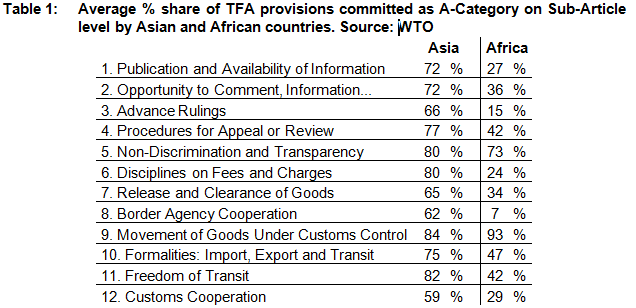
Table 1

TFA includes also “low hanging fruit” – sections that require little technical expertise to be implemented. At least some of these should have been easy for member countries to accept. “Publication and Availability of Information” is one of those sections. Access to information through internet is routine and affordable. It should not require transition periods or particular technical assistance. Donors are even competing to assist governments with such low cost and high-return activities. Still, less than one third of the African Governments notified this Article.

Here are some other peculiar findings:

  • Out of 14 African countries only Morocco accepted “Border Agency Cooperation” as A –Category provision. Three of the others countries that did not notify it are landlocked countries;
  • Only four out of 14 African countries had fully notified “Freedom of Transit.” Transit challenges in Africa are probably the single most significant source of inefficiency in trade logistics;
  • One of the foundations of modern customs management is the introduction of Risk Management. Only 3 out of 14 African countries had notified this provision;
  • Only Morocco notified Trade Facilitation Measures for Authorized Economic Operators (AEO), which gives certain privileges to traders and transport operators, who show high level of compliance to regulations. One wonders why Kenya, Uganda, Rwanda, Burundi and Tanzania did not notify it as we know that an AEO program is being piloted in the East African Community;
  • Only Senegal notified the sub-Article on Single Window, which is probably the most important one of the whole Agreement. Senegal perhaps deserves this honor – being the first truly African-based single window country – and also representing the good practice of SW management. Yet, according to the African Alliance for e-Commerce, currently there are at least 16 other single windows either already operational or under development in Africa. Why weren’t these developments recognized?

Despite the above “peculiarities” the African situation is fortunately nowhere near as somber as the A-Category notifications indicate. There are plenty of trade and transport facilitation initiatives under implementation – and Africa is indeed “on the Move.” We should on one hand side make sure that the valuable TFA Agreement is not becoming a separate formal process alongside the practical actions on the ground, but rather a framework for coaching governments in climbing up the stairs toward greater competitiveness. On the other hand, the countries should not ignore the existing achievements. A lot has been achieved in Africa in recent years and this process should go on and gain speed. Some sub-regions, which have been less successful in this field need  benchmarks, encouraging and coaching. This is where African and international organizations can play a role.

Although the direct cost of TFA implementation is relatively low, the indirect cost may be extremely high. The indirect cost concerns existing structures, which generate income for organizations and individuals, who often greatly benefit from the status quo. Some governments have entered into concessions outsourcing critical government functions such as pre-customs clearance operations and processing and submissions of declarations to customs. Western firms have efficiently seized the opportunity and negotiated deals, which guarantee profits for in many cases for decades to come. Single Windows in certain countries are good examples for these. In an unnamed Southern African country for example, humanitarian aid is exempt from taxes and duties in import. If however a UN agency for example imports a container of pharmaceuticals worth five million USD, it will have to pay for a Single Window fee of 42,500 USD! Such Ad Valorem fee arrangements are against the TFA. Such concessions are often built inside structures, which profit from the concessions and in exchange – protects its operations and continuity. This is why they are difficult to tackle. This is an example of the problematics that African policy makers must deal with when taking a position in committing in TFA provisions. It may be a whole lot more complicated than what it looks like.
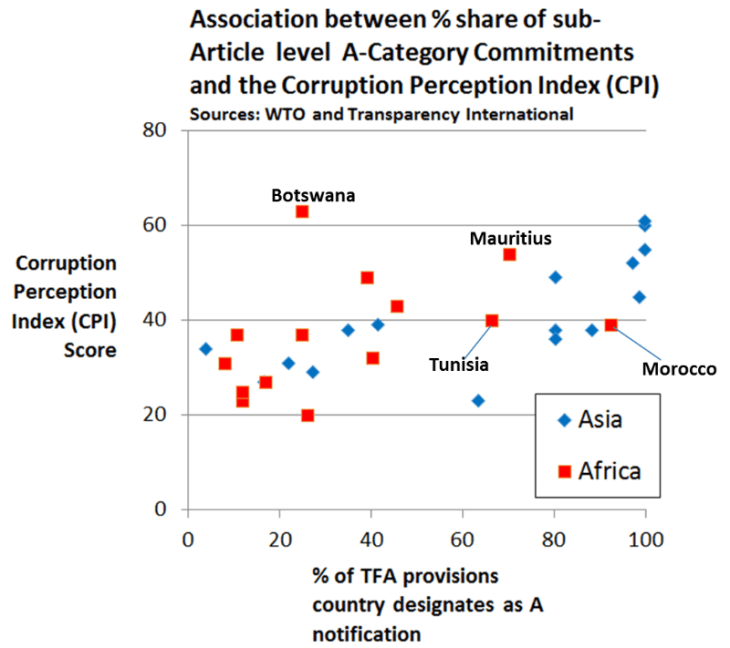
Association between % Share of Sub-Article Level A-Category Commitments and the Corruption Perception Index Score (CPI). Sources: WTO and transparency International.

The diagram above shows the association of share of the provisions that have been covered by A-Category notifications and the Corruption Perception Index (CPI) score of the countries. For African countries the correlation is moderate (correlation co-efficient: 0.42) but for Asian countries the association is strong (correlation co-efficient: 0.73). The association of the two variables is understandable: the less corruption a country has (the higher the CPI rank is), the more reforms the government is in liberty to conduct (the higher coverage of TFA as A-category Notifications).

We need to better understand the underlying reasons why policymakers cannot let reforms take off. Traditions, corruption and outdated structures are usually the biggest obstacles. These cannot be overcome by merely providing short-term technical assistance and bench-marking the world best practices but only strong political leadership can make the change. Developing partners should raise this topic on the highest political level and “live together” through the reforms with the counterparts.

The Northern Corridor (Kenya, Uganda, Rwanda) provides an encouraging example how multiple reforms can be carried out in very short time. Only two years ago it took staggering 27 days to transport a container from Mombasa Port and deliver it in Kigali, Rwanda. Today it takes only seven days. The improvement was enabled by series of reforms, which were championed by the Heads of States of the Corridor member countries. The example proves that major improvements can indeed be achieved in very short time. On the other hand, even with the most sophisticated instruments, reforms will not succeed if there the high-level ownership is not there. Author: Tapio Naula
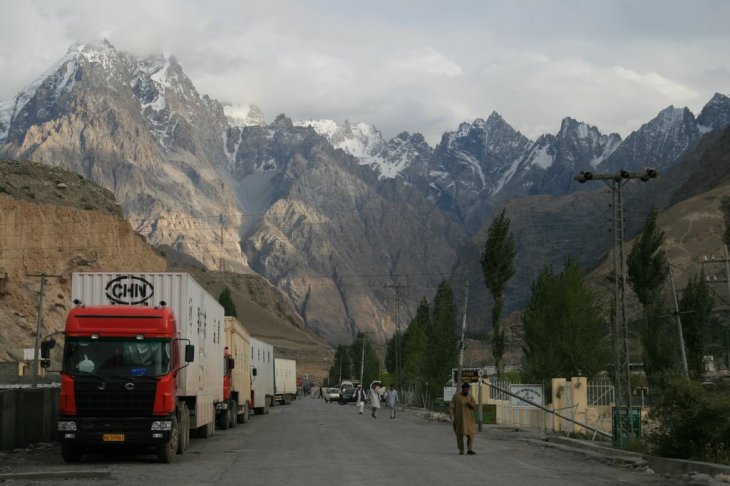
Pakistan and China Customs to accelerate establishment EDI

Sost_Pakistan_Customs_and_Chinese_TrucksPakistan Customs’ experts are in China to make further progress on the establishment of direct Electronic Data Interchange (EDI) with the trusted and neighbouring country to reduce the incidences of revenue losses.
The sources told Customs Today that Chief Customs Automation Abdul Qadir, Director Majid Yousfani, Riaz Chaudhary and Azeem from PRAL flew to China on August 9 to hold series of meetings with the Chinese counterparts to make further progress on the EDI.

The sources said, that the EDI will help access trade documents on real time basis from computers of cross-border customs stations. The directorate had exchanged the technical documents with China for EDI, the sources said, adding that the Chinese Customs had given feedback and counter proposal on the technical documents.

In order to expedite finalisation of the EDI arrangement, earlier a meeting with the Chinese Customs for exchange of data relating to the certificate of origin between the two countries was held on February 2 to 4, 2015 in Beijing. And, this is the second meeting of Pakistan Customs officers with the Chinese Customs, sources added.

It is recalled here, that Federal Board of Revenue had issued an alert regarding mis-declaration in imports from China under 50 HS Codes. The Board also showed concerns on the un-warranted concessions granted under various SROs covering preferential or free trade agreements.

The Board had advised verification of suspected Certificates of Origin directly through the commercial missions of Pakistan abroad, discouraging mis-classification of goods to obtain concessions and extending benefits only to goods which strictly matched the description provided in respective SROs.

It may be mentioned, that the export data of China customs for CY 2013 was cross matched with the import data of Pakistan Customs for same period and it transpired that in respect of 376 tariff lines the import value declared before Pakistan Customs was short by $2.437 billion recorded by China Customs as export value to Pakistan.

Moreover, in respect of 13 tariff lines the import value declared before Pakistan Customs was in excess of $829 million that that recorded by China Customs as export value to Pakistan. This is indicative of possible mis-classification of those goods which attract higher rates of duty but are cleared as goods attracting lower rates. Source: CustomsToday

CBP Launches “Know the Facts” Awareness Campaign

Know the FactsU.S. Customs and Border Protection Commissioner R. Gil Kerlikowske formally rolled out the “Know the Facts” campaign today. The campaign, launched on July 20 in Mexico, El Salvador, Guatemala, and Honduras, encourages those considering attempts to illegally enter the U.S., to “Know the Facts” and avoid embarking on the dangerous trek north only to be returned to their country.

“This campaign is designed to educate would-be travelers in Central America and Mexico about the realities of the journey north human smugglers have no regard for human life,” said CBP Commissioner R. Gil Kerlikowske. “It is critical that they are aware of the facts behind U.S. immigration policies before risking their lives. There are no ‘permisos.’”

The campaign is designed to increase awareness of U.S. immigration policies and enhanced enforcement on the U.S. border, clearly and simply stating the facts behind U.S. immigration policies. Source: USCBP

Devastation at Port of Tianjin

The BMA Bill – a little more for stakeholders to ponder over

The BMA Bill No.39058In recent months ‘Joe Public’ has witnessed developments relating to new visa requirements regarding international travel to and from South Africa. Tourism and the hospitality industry have been impacted in no small way while government has now established a committee to investigate the claims to the effect that the country’s tourism industry has been severely impacted.

It is now commercial trade’s time to consider the next set of legal requirements emanating from the Department of Home Affairs which, in the main, affect legislation under other departments and organ’s of state – in particular SARS Customs. Interested parties can find/download the document by clicking the link http://www.gpwonline.co.za/ and searching for eGazette No.39058.

In essence function of the Border Management Agency (BMA) Bill is – To provide for the establishment, organisation, regulation and control of the Border Management Agency; to provide for the transfer, assignment, and designation of law enforcement border related functions to the Border Management Agency; and to provide for matters connected thereto.

Be sure to digest the content of the Schedules to the Bill which contain the extent of the ‘meat’ and authority which the proposed Border Management Agency will exert if, or once approved. The Department of Home Affairs (DHA) invites comments to the draft Bill which must reach DHA no later than 14 September 2015.

Kenya cut flower exports rise by 11.7%

Kenya Cut Flower ExportsKenya’s cut flower exports rose by 11.7 per cent during the first quarter of this year to 136,601 tonnes. This was a remarkable growth for the sector at nine per cent in volumes and 18 per cent in value compared with the same period last year.
“This was a remarkable growth for the industry that has endured many challenges in the recent past. This calls for the government to continue creating a conducive environment for doing business,” said Kenya Flower Council chief executive officer Jane Ngige.

Vegetable exports, however, declined by 3.3 per cent from 16,600 tonnes to 16,1000 tonnes during the period under review. The agriculture, forestry and fishing sector on the other hand, expanded by 4.4 per cent compared with 2.2 per cent last year. This growth was reflected in the increased use of agricultural inputs during the quarter.

According to Kenya National Bureau of Statistics (Knbs), the country’s horticultural sector earned Sh100.8 billion last year, a six per cent growth in comparison with Sh94.7 billion earned in 2013.

This came despite the challenges that the flower industry faced in the last quarter of the year when Kenya started exporting under the European Union’s Generalised Scheme of Preferences (GSP) from October 1 to December 25 last year, following failure in the finalisation of the East African Community-European Union Economic Partnership Agreement (EPA).

Kenya remains one of the top three exporters of cut flowers in the world. The major markets are the EU, America, Australia, Russia, and Japan. Ngige said increased demand for fertilizer, a key input for agriculture sector, was notable as reflected by its import which grew by 18.4 per cent from 224,000 metric tonnes in first quarter 2014 to 265,9000 metric tonnes in the first quarter of this year.

Tea production and coffee sales declined by 27.2 per cent and 8.6 per cent, respectively. The fall in tea production was attributed to inadequate rains and frost that was reported in some tea zones. Source: Customs Today

Watch Ghana President’s reaction to Corruption

The following video is somewhat dated, but reports still abound regarding corruption within the Customs division of the Ghana Revenue Authority. The video appears to be about 4 years old. The president, John Evans Atta Mills, seen here rebuking staff at the Port of Tema, has since passed on. His message is nevertheless timeless and should be heeded by all customs officials across the continent.

EAC Compliant Companies Awarded Regional AEO Certificates

EAC CompliantThirteen compliant companies across East Africa were awarded Regional Authorized Economic Operator (AEO) certificates jointly by Partner States Commissioners of Customs and Director Customs, EAC at a ceremony held at Serena Kampala, Uganda on 24th July 2015.

The Commissioner Customs, URA Mr. Dickson Kateshumbwa who represented the URA Commissioner General was the chief guest during the award ceremony. The Chief Guest observed that with the award of Regional AEO certificate, the project had now come of age and indeed puts EAC on the global map of being the first region to implement a regional AEO programme. The Director Customs, Mr. Kenneth Bagamuhunda congratulated the thirteen companies and remarked that the AEO programme will go a long way in supporting the SCT implementation and eventually spur the growth of intra and extra trade. The SCT Coordinators recited each company profile before all the commissioners and Director Customs awarded the Regional AEO certificate to each of the awardees.

The companies were selected after meeting the set admissibility as set out in the AEO selection criteria. The awarded companies participated in the project pilot phase of the project but have continued to demonstrate and maintain high compliance to the set standards. The companies, from different sectors have continued to move consignments under the AEO scheme and in return have been offered benefits that are now currently under review to ensure they are not only tangible but are attractive enough to draw interest from other traders. Source: WCO

The SACU Utility Block – My Export is Your Entry

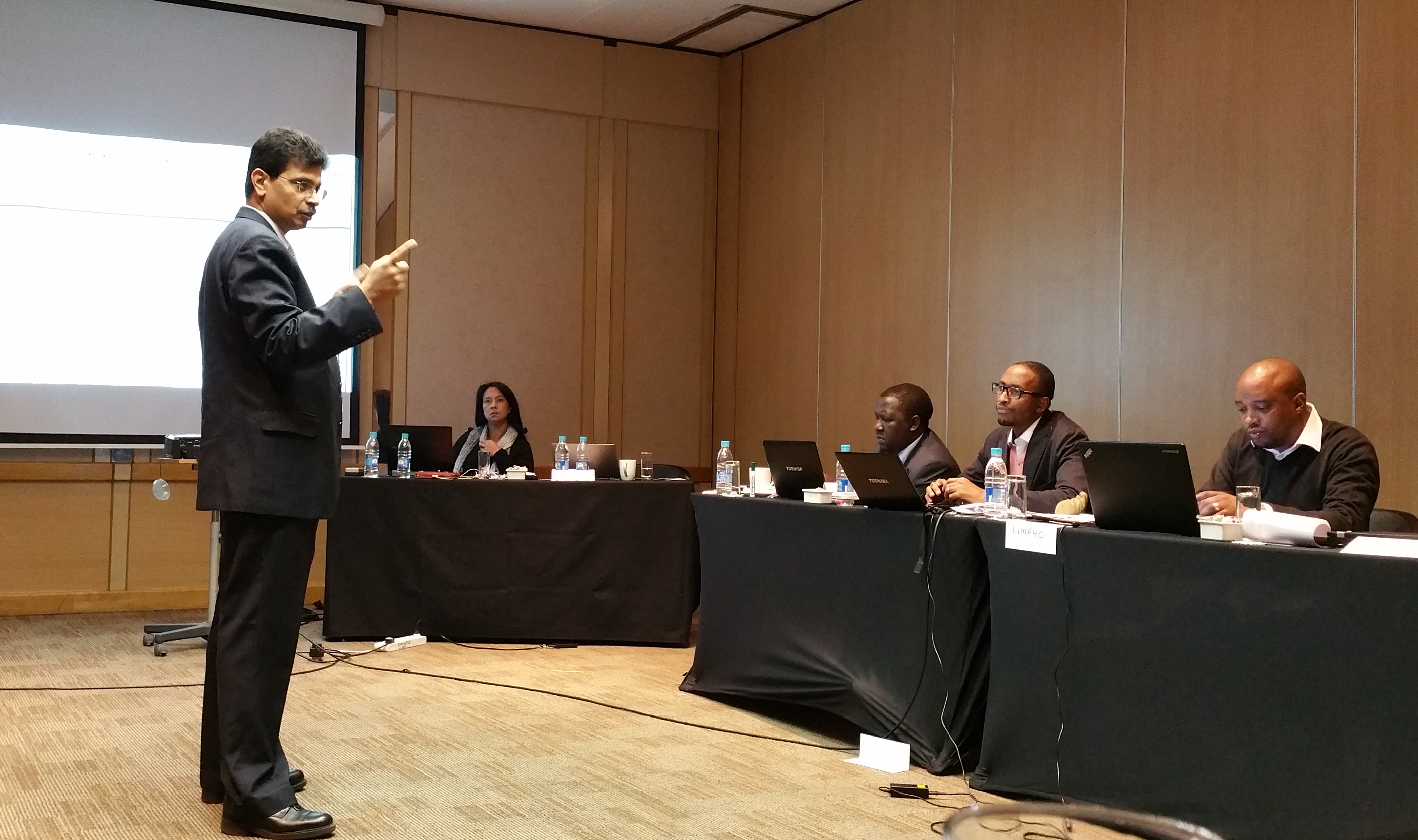
SACU IT Connectivity ConferenceRepresentatives from the Southern African Customs Union (SACU) gathered in Johannesburg, South Africa recently to refine requirements towards the development IT connectivity and electronic data exchange to facilitate cross-border customs clearance in the region. The workshop was convened by the SACU Secretariat under the sponsorship of the Swedish government and technical support from the World Customs Organisation.

Work already commenced way back in 2012 on this initiative. Progress in the main has been hampered by the legal agreement which to date not all members of the Customs Union have ratified. One of the features of this initiative, however, has been the continuity of support rendered by the WCO.

This event was indeed fortunate to secure – once again – the services of S.P. Sahu, former head of Information Technology at the WCO. After his secondment to the WCO he is now back in his home country where he is the Commissioner for Single Window based in Delhi, India.

S.P’s years of experience in both the technical and operational spheres of customs and the international supply chain enable him to articulate concepts and solutions in a manner which are practical and simple to understand. The workshop recognised the need to accelerate border processes and to this end the border process should be limited to physical examination, inspection, release; declaration processes should be done away from borders.

While simple enough in theory, the notion of clearance away from borders could pose challenges. Many of Africa’s borders – including those of a ‘One Stop’ kind – have not fully embraced the need to integrate processing and synchronize Customs activities. The challenge posed by ‘regional integration’ is one of surrendering national imperatives for a common regional good. It imposes a co-ordination of and development towards ‘regional objectives’ with the same level of purpose as national states do for their domestic agenda’s. In the case of SACU, it challenges member state’s stance on what real benefits the customs union should aspire to, beyond the mere sharing of the common revenue pool.

The outcome of the workshop resulted in a more refined, do-able scope and objective. With Mr. Sahu’s experience and guidance, the revised Utility Block (UB) speaks to all facets (legal, operational and technical) of the ‘regional agreement’ to the extent it specifies in the required detail the programme of action required on the part of the member stats as well as the SACU Secretariat. Refinement of the UB includes the removal from scope of the Release Message, Manifest Information and bond/guarantee message for the purpose of simplification of customs processes.

What remains are –

  • An Export & Transit Message – which includes the Unique Consignment Reference (UCR) validated and approved by the Export/Exit country.
  • An Arrival Confirmation/Notification Message – where the arrival date time would be when the import country recognises goods as received and places the goods under its customs procedure.
  • A Control Results Message – which includes the results of data matching, inspection and risk assessment based on agreed business rules.

In support of the above, SACU recently agreed on a framework of a UCR which must be further discussed and agreed upon by the respective member states. The UCR is a structured reference number which will be used by customs administrations of the respective member states to ‘link up’ import declaration data with the corresponding ‘export declaration’ data electronically exchanged by the export country.

Regional traders who have electronic clearance and forwarding capability will also play a role in the exchange of data through the exchange of the UCR on export and transit information with their counterparts or clients in the destination country. Once the exchange of data is operational between member states, it will be imperative for the importer to receive/obtain the UCR from the exporting country and apply it to his/her import declaration when making clearance with Customs.

The SACU Utility block will be tabled at a future Permanent Technical Committee meeting of the WCO for consideration and approval. A Utility Block is a concept structure which is proposed under the WCO’s Globally Networked Customs (GNC) initiative which seeks to aid and assist its members in the operationalisation of Mutual Administrative Assistance agreements.

AS&E ZBV Backscatter with Tx-View offers enhanced detection of metallic objects and weapons

American Science and Engineering (AS&E) has introduced the ZBV with Tx-View dual-energy transmission option for its line of Z Backscatter Van (ZBV) mobile cargo and vehicle screening systems.

Featuring new detector technology, the Tx-View for ZBV provides enhanced detection of weapons and metallic components of vehicle-borne improvised explosive devices alongside the ZBV’s Z Backscatter imaging.

Over 750 ZBV systems have been sold to date, and is used by government agencies, border authorities, law enforcement personnel, military organizations, and security agencies in more than 65 countries. The ZBV with Tx-View option adds enhanced detection capabilities and adherence to domestic and international radiation safety standards.

The new Tx-View option for ZBV allows security personnel to simultaneously acquire dual-energy transmission and Z Backscatter images of scanned cargo and vehicles for detection of threats and contraband. Dual-energy transmission imaging is designed for detection of metallic threats, such as weapons and artillery shells, while Z Backscatter imaging delivers the clarity needed to identify commonly-smuggled organic threats and contraband, such as narcotics, explosives, cigarettes, alcohol and currency. The Tx-View option is completely self-contained in a trailer for storage and transport. Source: AS&E

French Customs seizes un-exportable Picasso’s art work worth €25m

Picasso, Head of a Young WomanA painting by Pablo Picasso estimated at more than €25 million (CHF26.5 million) and considered “unexportable” by the Spanish authorities has been seized by French customs officials on a boat moored in the French island of Corsica.

“An attempt to export to Switzerland a picture by Picasso, Head of a Young Woman, through the customs office of Bastia [a town in Corsica] last Thursday attracted the attention of French officials,” customs agents said in a statement to French news agency AFP on Tuesday.

On Friday, customs officials from the Corsican town of Calvi “boarded the ship which was moored in the marina at Calvi and demanded the documents relating to the painting which it was transporting”. According to the statement, the captain was able to produce only one document assessing the painting plus a ruling, in Spanish, from May 2015 made by the Audienca Nacional, a Spanish high court which has jurisdiction over all Spanish territory and international crimes which come under the competence of Spanish courts. This ruling confirmed that the painting was a Spanish national treasure which could never leave Spain. Source: CustomsToday

IT System to Transform SA Ports into ‘smartPORTS’

At the launch of Transnet National Ports Authority's new Integrated Port Management System (IPMS) [Transnet]

At the launch of Transnet National Ports Authority’s new Integrated Port Management System (IPMS) [Transnet]

Transnet National Ports Authority’s new web-based Integrated Port Management System (IPMS) went live on 26 July at the pilot site, the Port of Durban, with the crude oil tanker, Colorado, the first to be brought into the port using the new system.

Developed by Navayuga Infotech, a company based in India, in collaboration with their South African partner Nambiti Technologies, the IPMS is a strategic project that aims to support the broader objectives of the Transnet Market Demand Strategy (MDS) in terms of efficiency and productivity.

The project will cost TNPA around R79 million for the entire system, for all eight South African ports, covering concept development, architecture, implementation and rollout.

TNPA Chief Executive, Richard Vallihu, said: “Since 2008, various feasibility studies were undertaken where we identified the need for an automated and web-based system to improve port operations, strengthen efficiencies and enhance competitiveness. This online system will help transform our ocean gateways into smartPORTs by using advanced information technology that will make them more intelligent and sustainable, while conserving resources, time, space and energy.”
The system replaces manual processes, with key port operations now set to be automated, online and in real time.

Vallihu said the IPMS was benchmarked against Malaysian and Singaporean ports which were among the world’s most efficient. The IPMS system will be a groundbreaking initiative in that for the first time in the world a system such as this is integrated across multiple ports on a single platform.

“For us as a customer-focused organisation this state-of-the-art information technology will ensure that port information and processes are transparent and easily accessible to users throughout the South African port logistics chain,” he said.

Yugen Reddy of Sharaf Shipping Agency was excited about being able to work more efficiently. “My role as an agent is to make sure that ships are in and out of the port as quick as possible because time is money. With IPMS we will be able to use our smart phones or tablets while we’re out and about to update the system and get acknowledgment from TNPA on the spot with regards to sailing or berthing of vessels,” he said.

Vessel agent, Londa Small of Thembani Shipping agreed. “I am optimistic about the IPMS system because everything’s going to be in real-time enabling quicker turnaround,” he said.

IPMS will link to Transnet Freight Rail’s Integrated Train Plan (ITP) and Train Execution Management System (TEMS). It is also integrated with global systems such as Lloyds Register, AIS (for vessel traffic management), IPOSS (for weather), EDI (Electronic Data Interchange) and SAP (for business operations, customer relations and finance).

From Durban the project team will move on to Cape Town and Saldanha, then Port Elizabeth, Ngqura and East London and finally to Richards Bay and Mossel Bay.

TNPA conducted daily intensive training for internal and external users at the Maritime School of Excellence in Durban during June. Source: Transnet

Rwanda banks on special economic zones to attract investors

Rwanda - WikipediaRwanda is wooing investors to invest in the country through building special economic zones. The Rwanda Special Economic Zones (SEZs) is a programme within the Rwanda Development Board that is designed to address domestic private sector constraints such as availability of industrial and commercial land, availability and the cost of energy, limited transport linkages, and market access among others.
Francois Kanimba, Rwandan minister of trade and industry told Xinhua on Sunday that the country was ripe for investments especially in manufacturing, service industry, tourism and hospitality, skills development among others.

“We are planning to construct SEZs economic zones across the country where investors will have the opportunity to explore the untapped potentials in Rwanda,” he said.

Kanimba said that Rwanda’s business environment is secure and the cost of doing business is friendly and the World Bank’s doing business reports have for several occasions ranked Rwanda among fastest growing economies in world that have eased the cost of doing business.

The small East African nation has so far constructed Kigali Special Economic Zone (KSEZ) located in Gasabo District within the country’s capital Kigali with phase one and two occupying 98 and 178 hectares of land respectively.

The government is now planning for phase three, which is expected to occupy 134 hectares. Phases one and two of the zone cover a surface area of 277 hectares while the third phase will cover approximately 134 hectares.

The trade zone is well equipped with tarmac roads, water and electricity rollout in all designated plots and a waste water treatment plant.

Kanimba continued that the commercial zones are designed to provide investors with industrial and commercial land, improve availability of electricity and transport linkages.

Official data show last year Rwanda attracted 500 million U.S dollars worth of investments and the government is targeting to double the investments in 2015.

According to 2014 World Bank’s Doing Business ranking, Rwanda was ranked 46 out of 189 economies surveyed globally registering improvements in the ease of obtaining construction permits, getting electricity and getting credit. Source: http://www.xinhuanet.com

Namibia Launches Trade Portal

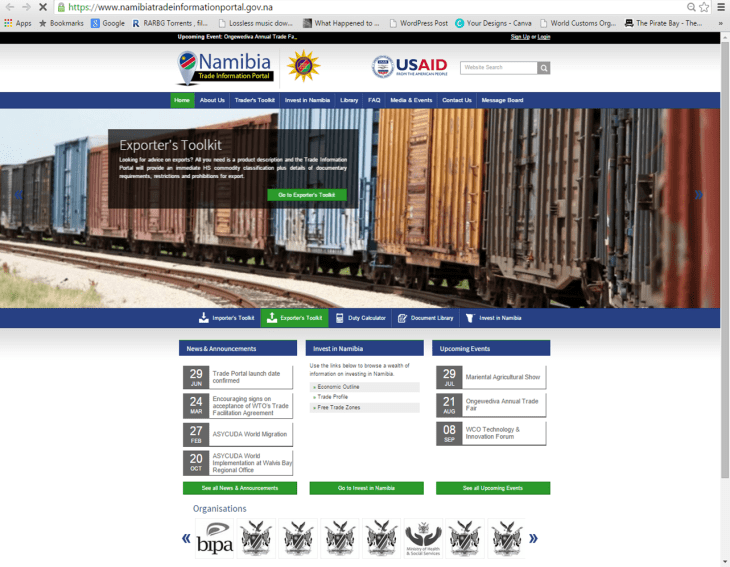
Namibian Trade PortalThe Namibia’s Ministry of Finance and Namibia’s Customs & Excise, in partnership with the U.S. government has recently launched a powerful new tool to increase and facilitate cross-border trade. The “Namibia Trade Information Portal” is a web-based platform that provides an authoritative “one-stop shop” of readily accessible trade, customs and compliance information. It is designed to significantly reduce the time and effort required for local and international traders to access current information and documentation required for doing business. The portal is the culmination of many years of collaboration between government of Namibia agencies and ministries and the U.S. government, working through the U.S. Agency for International Development (USAID) Southern Africa Trade Hub Project.

In his keynote address, Minister of Finance Calle Schlettwein said that the Trade Portal reflects the commitment of the Namibian government to build a “robust, knowledge-based society” through various modernization projects. However, he cautioned that the portal must be kept up-to-date if it is to be sustainable and relevant.

“For this reason, I strongly appeal to my fellow and counterpart ministers to designate focal points in their ministries who shall administer and avail timely updates, preferably online transmission of such information to our designated team in the Ministry of Finance who will, in turn, keep the portal updated,” Schlettwein said.

According to Namibia Trade Information Portal’s project manager, Melannie Tjijenda, the portal will save people time when they enquire about trade-related matters, so they will no longer be sent ‘from office to office.’

“International traders will now know how they can invest in Namibia,” she said, adding that this will save money on expenses like phone calls.

Tjijenda said the fact that most government websites are not regularly updated will not be the case with this portal. “When something changes, we will update it” she said, further pointing out that they have a team of content managers who will be checking and updating the content on regular basis. Source: The Namibian/USAID

Some of the World’s Crazy Customs Regulations

Barrington_Freight_Crazy_Customs_RegulationsBarrington Freight (UK) website features a humorous infographic on strange customs regulations around the world. Customs officials are the front line in preventing prohibited items from entering the country. They quiz passengers at air and sea ports, and search freight shipments for concealed goods.

Most countries share a standard list of banned items, such as guns and explosives. However, some nations are stricter than others, and there are some very unusual regulations around the world. For example, Saint Lucia bans the import of Japanese shaving brushes, thanks to an anthrax contamination scandal in the early 1900s.

From communist contraband to banned books, here are some of the most unusual customs regulations from around the world.