Dutch Customs awards Rotterdam World Gateway AEO Certification

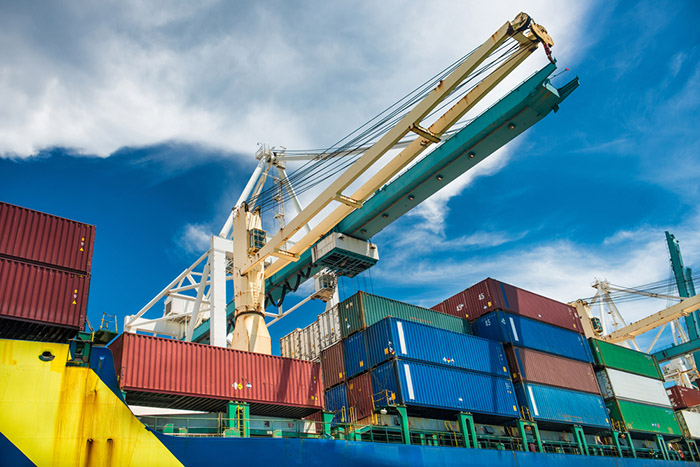
RWG-terminalRotterdam World Gateway says it is the first deep sea container terminal with minimal customs presence in the European Union. Ronald Lugthart, Managing Director of Rotterdam World Gateway,has received the definitive customs permit and AEO certificate for RWG, handed over by Anneke van den Breemer, Regional Director of customs at the port of Rotterdam.

Lugthart said: “Due to the high degree of automation at RWG, the introduction of a 100% pre-announcement procedure for containers and cargo via Portbase and the implementation of simplified customs procedures, over 95% of the administrative process is now completely digitised.

“This means that the administrative process can operate independently of the logistic process at the terminal, enabling fast and reliable handling.”Anneke van den Breemer commented: “As Dutch customs, our goal is to minimise any disruption to the logistic process caused by the required customs formalities. RWG and customs have recently been collaborating intensively.

“At the RWG terminal, optimal use is now being made of the simplified customs procedures. This is in the best interest of all parties: not just of the terminal and customs, but of freight forwarders and hauliers as well.”

By applying these simplified customs procedures, RWG is able to implement a fully automated gate process for road hauliers. This has great benefits for hauliers because no physical customs handling has to take place at the RWG terminal and thus no stop has to be made.

RWG adds that it is the first terminal in the port of Rotterdam to act as an Authorised Consignee, which means the customs transit will be automatically ended upon arrival at the terminal. This gives parties involved extra assurance that this transit has been cleared properly.

In addition to simplified customs procedures, constructive cooperation between customs and RWG has resulted in the establishment of a new scanning facility that is fully integrated into the terminal’s automated logistic process and operates 24/7.

Furthermore, nuclear radiation detection takes place for all truck and rail handling, and a high percentage of the containers arriving and departing by barge will be inspected as well.  Source: WorldCargoNews

ZIMRA – : Challenges to New Clearance Regulations

ZIMRAaaaaaaaThe implementation of the Government’s new pre-shipment regulations under the Consignment Based Conformity Assessment (CBCA) programme (essentially a fancy term for plain old pre-shipment inspection – who they trying to fool?) took off with host of challenges last Tuesday. The new regulations that were gazetted into law on 18 December last year and requires that goods be tested for conformity with required standards prior importation into Zimbabwe, went into operation on 1 March.

Government introduced the programme with the view to reduce hazardous and substandard imported products and improve customs duty collection. Bureau Veritas has been appointed by the Ministry of Industry and Commerce for the verification and the assessment of conformity of goods in exporting countries.

The new developments have seen cargo piling up on the South African side of the border with most importers failing to produce the required transitional certificate of conformity. The Shipping and Forwarding Agents Association of Zimbabwe (SFAAZ) chief executive officer, Mr Joseph Musariri, called on the government to waive the implementation of the CBCA on goods that were shipped before it became operational.

“You will note that the Zimbabwe Revenue Authority (Zimra) has failed to enforce the regulations since 18 December last year only to try and implement it this week (last week) and that has resulted in a chaotic situation.

“It is sad that cargo is piling up at Beitbridge border post where most importers are having challenges in acquiring the transitional CBCA certificates,” he said.

Mr Musariri said the government introduced the idea on 27 July last year but could not implement it since there was no legislation to that effect.

He said under the new dispensation all products regulated by the Ministry of Industry and Commerce of Zimbabwe exported into Zimbabwe must be accompanied by a CBCA certificate.

“The categories of goods regulated under the programme include the following: food and agriculture, building and civil engineering, petroleum and fuels , packaging material, electrical/electronic products, body care, automotive and transportation , clothing and textile and toys,” he said.

Mr Musariri said Zimra was now refusing to clear goods without the CBCA certificate and requesting for the conformity certificates.

“They are telling those importers to contact the nearest offices for Bureau Veritas for inspections and issuance of the requisite certificates.

“Locally destined cargo which is being shipped from various overseas markets is the worst affected and importers are incurring daily demurrage expenses of between $250 and $5000.

“In some cases duties had been paid to Zimra but now they are singing a different song,” he said.

The Minister of Industry and Commerce, Mr Mike Bimha, could not be reached for comment.

Bureau VERITAS liaison officer for Zimbabwe, Mr Tendai Malunga, said his organisation was ready for the implementation of the CBCA programme.

“We have trained various stakeholders on the new programme and are ready to roll.

“Furthermore we have hired more staff in most countries to conduct inspections and various conformity tests on the various countries exporting goods to Zimbabwe,” he said.
Source: The Herald (Zimbabwe)

WCO makes the “Technical Guidelines on Advance Rulings for Classification, Origin and Valuation” publicly available

WCO - Technical Guidelines on Advance Rulings for Classification, Origin and ValuationThe World Customs Organization (WCO) has made the “Technical Guidelines on Advance Rulings for Classification, Origin and Valuation” publicly available. These guidelines were developed in order to support the implementation of Article 3 (Advance rulings) of the Bali Ministerial Decision on the Agreement on Trade Facilitation (TFA) and shared only among the WCO Members.

The purpose of publishing this document is to further enhance the transparency of the WCO’s work in this area as well as to provide additional information to any interested party. The Technical Guidelines are available here. Source: WCO

US will not delay weighing rule

Verified Gross MassThe US Coast Guard has told American shippers that it will not delay implementation of the SOLAS Chapter VI amendment requiring containers to have a verified gross mass before they can be shipped.

The US Agriculture Transportation Coalition (AgTC), representing most of the country’s agricultural and forestry products exporters and thus accounting for a huge slice of US shipping exports, argued that confusion over the VGM could lead to business being lost and threatened supply chain turmoil.

It called for a one-year delay in implementation of the new rules, due to take effect on 1st July, to allow time for government and industry to work together to solve the problems. AgTC cited SOLAS Article VIII(b)(vii)(2), which allows for a Competent Authority [in this case the USCG] to give notice to the IMO of an intention to delay implementation of any SOLAS regulation for up to one year at any point before the entry into force.

However, at a special public meeting convened on 18th February at the offices of the Federal Maritime Commission in Washington, DC, Rear Admiral Paul Thomas, the USCG’s Assistant Commandant for Prevention Policy, said a delay to implementation would not be entertained.

Thomas pointed out that that the VGM is not a US regulation or law, but arises out of international agreement within IMO. As such it will be enforced by flag states, where ships are registered, and any signal that the US was unready or unwilling to comply with the new rule would be interpreted by flag state authorities to mean that loading US export containers on their ships is unsafe. He added that most US exports are carried on foreign flag ships.

This should be the end of the matter. However, the IMO mechanisms allow the US (or any other IMO member-state) to give notice any time up to 30th June. The US could also introduce an “AOB” paper at the next IMO MSC meeting scheduled for May.

At the meeting last week, shippers were reassured that if they used “Method 2” (VGM by calculation), they are legally entitled to rely on the container’s CSC plate as providing an accurate empty tare weight. Source: World Cargo News

WCO News – New Edition February 2016

WCO News Feb 2016Another bumper edition of customs news, views and success stories (click here to view!). Several countries showcase their modernization and digital developments under the theme “Digital Customs” from declaration management systems, carnet systems to paperless procedures for AEO’s. Nice to see an article featuring South African Customs once again.

There’s also a section featuring articles on ‘big data’. Learn about Canada’s approach to private sector stakeholder engagement. You’ll also find some interesting points of view regarding use and misuse of valuation databases and a whole lot more.  Source WCO

WCO accredited Customs Modernization Advisors and Mercator Programme Advisors

The WCO, in its effort to assist Members with Strategic Planning activities and WTO TFA implementation held two back to back accreditation workshops in Pretoria, South Africa. These events were held during the week of 1-5 February 2016 and 8-12 February 2016, were funded by the United Kingdom within the framework of the WCO-DFID ESA project and HMRC-WCO-UNCTAD project and organizationally supported by the South African Revenue Service.

24Customs officers from the WCO ESA and WCA regions participated in the workshops and were assessed against the Customs Modernization Advisors (CMAs) and Mercator Programme Advisors (MPAs) required profile through a series of testing exercises, presentations, role-plays, group activities and plenary discussions.

Participants were also required to demonstrate their knowledge and strategic application of core WCO tools and instruments and the WTO Trade Facilitation Agreement along with their potential to facilitate discussions with senior Customs and other officials in a strategic context.

At these two events 15 participants successfully completed step 1 of the accreditation process as they demonstrated their potential to become CMA’s/MPA’s during the range of workshop activities.

From the five WCO CMA/MPA accreditation events held to date a total of 41 participants have been assessed as being suitable to become CMAs and MPAs under step 1 of the accreditation process and will be invited to participate in TFA implementation support missions under the Mercator Programme in order to complete the accreditation process. It is expected that the successful candidates are made available by their Customs administrations for further support missions in the future. Source: WCO

Australia seizes $900m of liquid meth hidden in bra inserts

Aus-drug-bustAustralian law enforcement agencies have seized methylamphetamine worth AUS$1.26bn in the country’s largest-ever haul of the illicit drug in its liquid form, officials said Monday.

Four Hong Kong passport holders were arrested in Sydney last month over the import from China of 720 liters of the drug hidden in boxes of silicon bra inserts and art supplies, police said in a statement

The liquid could have made about 500kg of high-grade crystal meth, commonly known in Australia as ice, Australian Federal Police Commander Chris Sheehan said.

Officials also seized 2kg of the crystalized form of the drug.

Justice Minister Michael Keenan said the operation used information gathered through new cooperation between Australian Federal Police and China’s National Narcotics Control Commission. The Australian and Chinese agencies established a joint task force in November to investigate criminal syndicates trafficking methamphetamine.

“This largest seizure of liquid methylamphetamine to date is the result of organized criminals targeting the lucrative Australian ice market from offshore,” Keenan told reporters.

The four will appear in a Sydney court next month charged with importing and manufacturing commercial quantities of illegal drugs. Each suspect faces a potential life sentence if convicted.

Keenan said the seizure was one the largest hauls of illicit drugs in Australian history. Source: Perth News

Felixstowe to offer Container Weighing Service

Container_crane_and_spreader

Picture: Wikipedia

The Port of Felixstowe has confirmed that it will offer a container weighing service to ensure UK shippers are able to comply with the new SOLAS regulations that come into effect on 1 July 2016

The new SOLAS Chapter VI regulation requiring the shipper (or other named party in the Bill of Lading – normally a freight forwarder/NVOCC) – to supply the shipping line with a verified gross mass (VGM) declaration before the container can be loaded aboard the ship comes into force on 1st July. As widely reported, there is widespread concern that shippers will not be ready.

Commenting on the new service that Felixstowe will provide, Stephen Abraham, the port’s COO, said: “We have met with many customers and from their feedback it is clear that there is still a lot of uncertainty amongst exporters about the new rules.

“The rules have the potential to cause significant disruption to export supply chains. To help avoid this, we have decided to provide a service where export containers can be weighed at the port before being loaded. We will provide further details about how the weighing service will work in good time to ensure all exporters can be compliant by the time the new rules come into force.”

The service at the port will be available to containers arriving either by road or rail. This is important as, through its railheads, Felixstowe is the UK’s largest intermodal rail terminal; 40% of all laden export containers arrive at the port by rail.

To provide the weighing service, Felixstowe will use a spreader twistlock-based system, although the supplier of the system and the number of RTG and intermodal RMG spreaders that will be equipped with it has not been confirmed.

The UK Maritime and Coastguard Agency (MCA), which is the responsible authority for the VGM as regards UK containerised export shipments, requires all weighing equipment used to provide a VGM, whether by Method 1 or Method 2, to be calibrated to within +/- 0.1% of the true mass of the loaded container (Method 1) or by calcuation based on the sum weights of the individual cargo items being packed and associated dunnage, lashing chains, etc (Method 2).

When, at the end of 2010, the International Chamber of Shipping first launched its campaign for all containers to be weighed before ocean carriage, it was assumed that the weighing would take place in ports – naturally, as ports are where most container lifting equipment is based.

However, port operators – including, and not least, Felixstowe – successfully resisted this, which ultimately resulted in IMO formulating Method 2. While the road to IMO arriving at Method 1 and Method 2 is “history,” the key point is that port operators, freed of a legal obligation to weigh loaded export containers, are thereby free to offer a Method 1 weighing service on a commercial basis.

Irrespective of the technology employed, there are several issues around port weighing. What happens if, for example, when the port [any port, not just Felixstowe] weighs the export container for the purpose of providing the VGM and finds that the weight made the container illegal for road carriage to the port? Does the port have a legal obligation to inform the road traffic authorities [the police in the UK]; or is the onus on the shipping line, whose customer the “offending” shipper/NVOCC is?

That information is also “historic,” in the sense that in order to weigh the overloaded container in the port, it must be assumed that the truck arrived safely at the port, and that particular (unique) illegal truck trip to the export port has gone forever. The remaining problem, however, is that the VGM provided by the port may indicate that the weight of the container makes it illegal for on-carriage by road or rail in the port of unloading.

Asked to comment on this by WorldCargo News, Paul Davey, Head of Corporate Affairs, Hutchison Ports (UK), made a crucial point. “As regards legality for road carriage in all possible overseas destinations, we [at Felixstowe] would not know, for example, whether the container will leave the port of destination or is unstuffed in the port. If it leaves the port [without being unstuffed] we won’t know whether the on-carriage would be by road, rail or any other mode, so there is nothing we could do.”

This is key as it throws the real responsibility for enforcing the VGM on the carriers, who demanded compulsory weighing in the first place. They will be under a legal obligation not to accept a loaded container unless it has VGM documentation.

It follows logically that carriers know the VGM mass of all loaded containers they ship. If, on the way to destination from the port of import, due to gross overloading of the container, the truck jackknifes or overturns, with all the safety risks that entails, the carrier could be liable and open to criminal prosecution.

Thus, there can be no question of “shipper appeasement,” but it could end up in a lawyer’s free-for-all involving anyone providing the VGM if it transpires that the VGM data were incorrect. Suppose, for example, the carrier relied on VGM data provided on a commercial basis by the port of export and it transpired, following a road accident investigation in the country of import that the real weight exceeded the VGM and likely caused the accident.

As to the commercial possibilities for ports providing a VGM service, Felixstowe has not given any information on the price it will charge, but (by way of example) Yarimca in Turkey is advertising US$12 to weigh a container, according to its tariff notice.

Policy responses by port operators will vary enormously according to local context and assessment of risk and benefit. In New York/New Jersey – where loaded containers are mosly imports – Maher Terminals has advised customers that loaded export containers will not be accepted after the July 1st deadline whitout a VGM in advance, as part of the booking process.

PSA Antwerp, which is also offering a VGM service, has stated that it may, at its discretion, “strip and restuff a container so that it complies with the SOLAS requirements. The customer will pay an appropriate compensation to PSA for any such stripping/restuffing of a container and/or determining its VGM.”

The new SOLAS Ch VI imposes no obligation on terminals to weigh containers they unload. All the same, as regards imports, PSA Antwerp says: “If PSA loads a container onto a truck, it can never be held liable for additional expenses and/or fines associated with the (excess) weight of the container/truck combination.

“Any such additional expenses and/or fines will never be borne by PSA and the customer will pay an appropriate compensation to PSA for any such additional expenses and/or fines incurred by it and/or for determining the weight of the container/truck combination.” Source: WorldCargoNews

Related articles
SA – New Bills discouraging trade and investment

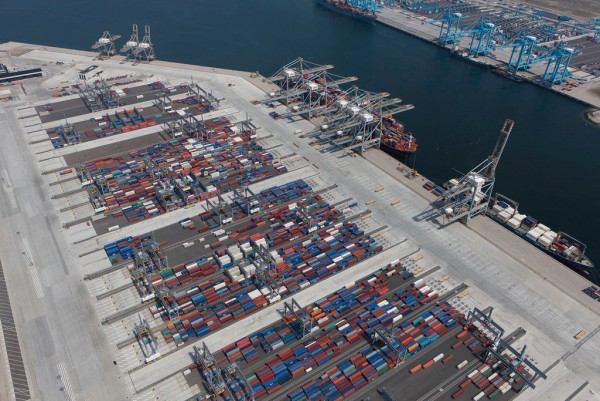
containeryardSouth Africa is moving away from a policy promoting trade and investment to one that contradicts this, a roundtable on SA-European Union (EU) trade relations heard on Tuesday.


This comes as global foreign direct investment (FDI) flows jumped 36% last year to their highest level since the global economic and financial crisis began in late 2008, but plummeted in emerging markets, especially SA.

The most recent United Nations (UN) Conference on Trade and Development global investment trends monitor shows FDI into SA fell 74% to $1.5bn last year, while FDI inflows to Africa fell 31% to about $38bn.

Central Africa and Southern Africa saw the largest declines in FDI. The end of the commodity “supercycle” and the plunge in oil prices affected new project developments drastically, the UN body said. This had also affected Brazil, Russia and China, but not India, whose economy had surged ahead of late.

Peter Draper, MD of Tutwa Consulting, which researches policy and regulatory matters in emerging markets, said the promulgation of legislation such as the private security bill and the expropriation bill, created an impression that SA was not an attractive investment destination.

“What lies behind all of that, I think, is an ideological agenda, which is not favourable to business,” he said. “Geopolitically there is no love between SA and the US and SA and the EU. (But) There is lots of love for the Brics (Brazil, Russia, India, China, SA).”

South African and international business have raised the alarm over the quiet signing into law of SA’s Promotion and Protection of Investment Bill late last year, after the government had acknowledged that it would do little to promote trade.

Meanwhile, the Department of Trade and Industry said last week that the African National Congress had directed its economic transformation subcommittee to review the trade agreements signed by SA since 1999.

It said SA’s goal in “negotiating” trade agreements was to support national development objectives, promote intra-African trade and the integration of SA into global markets. This is likely to be highly controversial after the government from 2013 unilaterally cancelled about 13 bilateral investment treaties with major EU countries, drawing warnings from the bloc that this could damage trade relations.

Investors fear the Protection of Investment Bill has diluted recourse to international arbitration over trade disputes, and enhances the possibility of expropriation. Critics also say it contradicts SA’s obligations under the Southern African Development Community’s finance and investment protocol, by undermining equitable treatment between foreign and domestic investors.

John Purchase, CE of agribusiness association Agbiz, which with Tutwa Consulting organised yesterday’s roundtable, said the bill had not answered “all those questions around the bilateral investment treaties”. Source: Business Day

East African countries set-up of cargo control unit

KRA-Customs-Transit-Control

Kenya Revenue Authority Commissioner-General John Njiraini announces the implementation of a common customs and transit cargo control framework to rid Mombasa port of corruption

Four East African countries on Tuesday agreed to fast-track implementation of a common customs and transit cargo control framework to enhance regional trade.

Commissioners-general from the Kenyan, Ugandan, Rwandan and Tanzanian revenue authorities said adoption of an excise goods management system would curb illicit trade in goods that attract excise duty across borders.

They said creation of a single regional bond for goods in transit would ease movement of cargo, with taxation being done at the first customs port of entry.

The meeting held in Nairobi supported formation of the Single Customs Territory, terming it a useful measure that will ease clearance of goods and reduce protectionist tendencies, thereby boosting business.

Implementation of the territory is being handled in three phases; the first will address bulk cargo such as fuel, wheat grain and clinker used in cement manufacturing.

Phase two will handle containerised cargo and motor vehicles, while the third will deal with intra-regional trade among countries implementing the arrangement.

The treaty for establishment of the East African Community provides that a customs union shall be the first stage in the process of economic integration.

Kenya Revenue Authority (KRA) commissioner-general John Njiraini said the recently introduced customs and border control regulations were designed to enhance revenue collection and beef up security at the entry points.

“At KRA, we have commenced the implementation of a number of revenue enhancement programmes particularly on the customs and border control front that will address security and revenue collection at all border points while enhancing swift movement of goods,” he said.

To address cargo diversion cases, the regional revenue authorities resolved that a joint programme be rolled out to reform transit goods clearance and monitoring processes. Source: DailyNation (Kenya)

Amazon.com China – approved as an NVOCC

Amazon-BoxMarket forces, competition and the desire to be ahead of the competition demonstrate how dynamic the international supply chain is being maneuvered. Amazon’s latest move is not only innovative but demonstrates just how adaptable international trade and Customs Inc. need to be in order to accommodate nuances to traditional accepted norms in global trade. For Customs, it needs to intimately understand the nature of business of its registered or licensed traders so as to properly apply risk and facilitation regimes appropriately. Recent developments in mutual recognition likewise play an important role in awarding real benefits to companies and their supply chains who undertake such global innovations.

According to the U.S. Federal Maritime Commission, Amazon.com Inc’s China arm has registered as an ocean freight forwarder, a move that will give it more control over shipping products from Chinese factories to U.S. shoppers.

The registration is the latest indication that Amazon plans to expand its logistics reach to cut costs for its retail business and potentially provide third-party logistics services to other industries.

It’s new status as a freight forwarder, or “non-vessel operating common carrier,” gives Amazon, the world’s largest online retailer, a foothold in the $350 billion a year ocean freight business. It will not operate ships but subcontract that work.

Amazon is already negotiating a deal to lease 20 jets to start an air-delivery service in the United States, the Seattle Times reported last year. The retailer bought truck trailers to add shipping capacity and started a program last year that uses a fleet of on-demand drivers to deliver packages.

“It has more and more control over the supply chain of their business and it gives them the ability to squeeze (costs) even further,” said Satish Jindel, a logistics consultant and president of SJ Consulting Group.

He added the move gives Amazon an even bigger edge against traditional U.S. retailers in negotiating lower prices for goods.

The Federal Maritime Commission, a U.S. government agency that regulates the U.S.-international ocean transportation system, said on Thursday a business named Beijing Century Joyo Courier Service Co Ltd, with the trade names Amazon China, Amazon.CN and Amazon Global Logistics China, was registered in its database to provide ocean freight services.

Amazon China submitted its registration request on Nov. 9, the commission said Thursday, and it was reviewed and registered on Nov. 13. It is the entity’s first registration.

“Amazon’s ocean freight services will be far more attractive to Chinese sellers than to American buyers. Chinese suppliers would love direct access to Amazon’s vast American customer base,” wrote Ryan Petersen, chief executive officer of Flexport, a San Francisco-based freight forwarder who first wrote about Amazon’s registration on his company blog on Thursday.

Petersen added that Amazon’s third-party merchants were unlikely to use its shipping service because it would expose key data like wholesale pricing and supplier names to a rival. Source: Reuters

Bumper year for Kenya-destined FDI

Kenya_flag_mapfDi Markets that even without the data for December, it is already clear that Kenya enjoyed a major increase in inward investment in 2015 when compared with 2014.

Greenfield investment monitor fDi Markets has tracked a bumper year for Kenya-destined FDI. Excluding retail, the monitor has recorded 78 projects between January and November 2015, a 36.84% increase compared with the whole of 2014. FDI entering Kenya during the 11 months of 2015 (for which data is available) has already surpassed that recorded for 2013, the previous multi-year high. fDi Markets is set to record 2015 as witnessing the highest number of inward FDI projects for Kenya since the it commenced tracking data in 2003.

fDi Markets has tracked the upward trend as beginning in 2007, with FDI levels increasing year on year between then and 2011. In the period between 2011 and 2014 a period of consolidation occurred in which inward investment fluctuated, with decreases recorded in 2012 and 2014. Between 2007 and 2015, fDi Markets has tracked a 766.66% increase in project numbers and a total capital investment of $14.04bn.

Kenya’s FDI resurgence in 2015 is further illustrated when compared with the rest of Africa. During 2015, Kenya attracted 12.58% of all FDI entering Africa, with only South Africa, a long-time powerhouse, attracting more, with 17.1%. This is further compounded by Nairobi attracting the most FDI on the continent at city level in 2015, beating Johannesburg, which has held this accolade since 2010.

With December’s data still to be recorded, Kenya is set to surpass previous years as a favoured destination for investment in Africa. With the implementation of proactive FDI legislation scheduled to be ratified during 2016 by Kenya’s government, further consolidation in 2016 is unlikely. Source: fDiMarkets

Revision of Correlation Tables between HS2012 and HS2017

HS_HandbookFollowing the accepted complementary amendments to the Harmonized System Nomenclature listed in the Council Recommendation of 11 June 2015, the Correlation Tables between the 2012 and 2017 versions of the HS have been revised. The revised Correlation Tables show the correlation resulting from both the amendments to the Nomenclature which have been accepted as a result of the Council Recommendation of 27 June 2014 and the complementary amendments to the Nomenclature which have been accepted as a result of the Council Recommendation of 11 June 2015.
For more details visit the WCO website.

Positive future for Electronic Bills of Lading

BIMCO E-Bill of LadingPaper bills of lading have been used throughout the world to document and effect international trade for centuries. Yet whilst the world has become increasingly digitalised the paper bill of lading has, on the whole, remained a constant feature of global trade. Its continued use is mainly due to its combination of three legal characteristics that it has developed over time: (i) it is a receipt of the goods carried; (ii) it provides evidence of the terms of the contract of carriage; and (iii) it is a document of title to the goods. It is these characteristics that have, until relatively recently, foiled attempts to replace the paper bill of lading with an electronic equivalent. However, with the inclusion of an electronic bills of lading clause in BIMCO’s NYPE 2015 time charter form, as well as the International Group of P&I Clubs’ approval of the coverage of three electronic trading systems, the dominance of the paper bill of lading may well be coming to an end.

Reed Smith LLP Ship Law blog posts an interesting article in regard to change in law and the impact of e-commerce on bills of lading.

Issues with the paper system
Whilst the paper bill of lading has been used for centuries it is not without its faults, the principal problems being that:

  • Carriers are obliged to discharge the goods carried on production of an original bill of lading: this is particularly problematic today given both the speed of transport and the fact that the cargo may be sold multiple times during carriage. As a result of this the bill of lading is often not delivered to the consignee in time, and the carrier is often required to accept a letter of indemnity. This indemnity does not, however, remove the carriers’ liability under the bill of lading and creates an additional administrative burden and cost to the trade.
  • The paper system is hugely expensive (such cost is estimated to be between 5 – 10% of the value of the goods carried each year).
  • A paper bill of lading may be forged with relative ease and carriers are liable for misdelivery against a forged bill of lading.

Benefits of an electric bill
The electronic bill of lading or e-bill, in theory, addresses many of the flaws of the paper system, bringing with it a number of advantages:

  • It can be sent around the world instantaneously, hugely lowering the administrative burden of trade (especially where cargo is subject to multiple transfers of ownership during carriage).
  • Any amendments or corrections required can be made far more efficiently and cost effectively.
  • Electronic payment systems, and related advances in security, make an electronic system considerably more secure than its paper equivalent. This is obviously subject to cyber issues.

These benefits will cut the administrative costs of trade significantly and reduce, if not eradicate, situations where carriers discharge their cargo against letters of indemnity.

So why so slow on the uptake?
One of the main reasons the widespread use of the e-bill has been slow to proliferate stems from the fact that it is not treated in the same manner, legally, as its paper equivalent. Significantly:

  • A paper bill of lading is a document of title, enabling it to be negotiated and transferred as possession of the bill is evidence of title to the goods. This is not automatically the case at law with an e-bill.
  • The Hague Rules / Hague Visby Rules (HR / HVR) apply to a contract of carriage by reference to the bill of lading, or similar document of title, and it has been less clear whether they would apply to any electronic trading system used. The solution developed to these legal obstacles is essentially a multiparty contract. This takes the form of a set of rules to which users of an electronic trading system are all required to subscribe to use that system. Such rules then set out the specific form of electronic trading documentation to be used and that the consequences of using such documentation shall mirror the position at law as if they were paper bills of lading.

This, however, means that electronic trading systems such as BOLERO, which has been in existence since the 1990s, are only able to function between their members (i.e. those that have agreed to the uniform set of rules and systems that will govern their transactions). Where a member of an electronic trading system enters into a transaction with a non-member, the electronic system cannot be utilised and a paper bill of lading is issued. This feature has limited their growth, as electronic trading systems are only really effective once they have a large number of members, but are not cost-effective for traders to join until they have a large number of members.

The present situation
The benefits of electronic trading systems are particularly tangible to container carriers (as there is often a separate bill of lading for each container carried) and as such have been utilised by liner companies before wider adoption in the industry. However, the efficiencies of electronic trading systems are not confined to the container industry alone and with members of the largest trading companies, trade finance banks, mining companies and oil majors using such systems, it is clear that they are becoming increasingly prevalent in the shipping industry as a whole.

The growth of the use of electronic trading systems in the wider shipping industry is something that BIMCO, by including an e-bills clause in its latest iteration of the NYPE form, has also recognised. In sum the new clause provides that:

  • use of an electronic trading system is at charterers’ option;
  • owners shall subscribe to the system elected by charterers, provided such a system is approved by the International Group of P&I Clubs;
  • charterers shall pay any fees incurred by owners in subscribing to such elected system; and
  • charterers shall indemnify owners for any liabilities incurred arising from the use of the elected system, so long as such liability does not arise from owners’ negligence.

The International Group of P&I Clubs have now ‘approved’ three electronic trading systems (BOLERO, essDOCS and E-title). An ‘approved’ system is one that is found to replicate the legal characteristics of a paper bill (namely (i) as a receipt; (ii) a document of title; and (iii) a contract of carriage which incorporates the HR / HVR). This means that the International Group of P&I Clubs will provide cover for any liabilities arising under carriage covered by these three electronic trading systems (or any such other subsequently ‘approved’ system), provided that such liability would also have arisen under a paper bill. However, members should be advised that risks connected with the use of a non-approved electronic trading system will not be covered.

The use of an electronic trading system does, however, lead to other risks from things such as hacking, systems collapse, e-theft and viruses, none of which are traditionally covered by P&I clubs and would need to be insured separately. In this regard, essDOCS (which is now used throughout 71 countries by over 3,300 companies) has insurance cover of up to USD $20 million per electronic bill of lading for “eRisks” resulting from an electronic crime or electronic system failure.

With the rise in usage of electronic trading systems, the recent judgment in Glencore v MSC (albeit currently under appeal) provides a timely reminder that the release of cargo should only be made in accordance with the contract evidenced by the bill of lading, even where an electronic release system for cargo is being operated. In this instance cargo was released on presentation of a PIN, despite no provisions for this in the bill of lading, two of the released consignments of cargo were misappropriated and the carrier was held liable.

The future?
With the International Group of P&I Clubs’ approval of three electronic systems, the inclusion of an electronic bills of lading clause in BIMCO’s latest NYPE form and the proliferation of the use of electronic trading systems throughout the wider shipping industry, it is clear that the use of electronic trading systems is increasing. Whilst there is no doubt that we can expect teething problems as the industry continues to adapt to such electronic trading systems, and the cyber risks they may bring, it seems that the efficiencies are too great to be ignore. Source: Ship Law log / ReedSmith

R12-million drug bust at OR Tambo Airport

SARS Customs intercepted a male traveller from Tanzania carrying narcotics worth over R12-million at OR Tambo International Airport yesterday (24 January 2016).

The bust took place when the 36-year old man, who was carrying two large suitcases, was asked to put his luggage through the Customs scanner. The scanner image revealed 10 clear plastic bags that contained a white crystal substance.

Upon investigation this turned out to be 10 bags of Ephedrine. The total weight of the consignment was 40.20 kg with an estimated street value of R12 060 000. The man has been handed over to the South African Police Service and he is expected to appear in court. Source and photos: SARS