The WCO continues its close cooperation with the World Health Organization (WHO) to contribute to the rapid cross-border movement of medical supplies and medicines needed urgently during the current COVID-19 global pandemic. Following the coordinated response adopted by the two organizations, a WHO/WCO List of Priority Medicines was released and the Joint WCO/WHO HS Classification List for COVID-19 Medical Supplieswas further updated.
The clinical characteristics of the COVID-19 and its evolution makes it challenging for the health system of many countries and shortage of medicines can worsen the situation. Potential supply chain disruptions may jeopardize the timely supply of all essential medicines, including those not directly related to COVID-19.
The List of WHO/WCO Priority Medicines for Customs Used during COVID-19 aims at assisting Customs and economic operators in classifying these medicines. The list contains the suggested HS codes for medicines used in the general medical care administered to hospitalized patients; as part of the direct treatment of the COVID-19 disease; and for which interrupted supply could result in serious health consequences.
The new list, which will now be continuously updated, is the result of an efficient collaboration between the WHO and the WCO. The medicines and active substances were compiled by the WHO taking into account various information published by National Health Authorities, scientific societies or pharmacology experts, and with suggested HS codes provided by the WCO Secretariat.
Taking into consideration the suggestions received from Members and other stakeholders, the WCO/WHO HS Classification Reference for Covid-19 Medical Supplies was once more updated with additional items that could be used during this pandemic situation. COVID-19 medical supplies list update:
Future initiative foreseen by the WCO for COVID-19 medical supplies list
The WCO is aware that some countries have used the WCO list as a reference when making their own national lists of medical supplies. In order to further facilitate trade in medical supplies and present information in a coordinated manner, the WCO is considering, for the next edition of the medical supplies list, to include links to specific national classification lists of medical supplies. Members wishing to include information on their national classification lists of medical supplies can send their links to: hs@wcoomd.org.
Further assistance in identifying essential items can be found on the website of WHO. The COVID-19 Critical Items List from the WHO can be found at:
The Secretary-General the Africa Continental Free Trade Area (AfCFTA), Mr. Wamkele Mene, yesterday announced the postponement of the implementation of the AfCFTA agreement scheduled for July 1, 2020, citing the COVID-19 pandemic.
Mene said: “It is obviously not possible to commence trade as we had intended on 1 July under the current circumstances.
“I think that’s the responsible thing to do. I don’t think it would be appropriate when people are dying to be focused on meeting the 1 July deadline. Instead all governments should be allowed to concentrate their efforts on fighting the pandemic and saving lives at home.”
Mene did not disclose the targeted implementation date, but there were strong speculations that the new commencement date might be January 2021. “The political commitment remains, the political will remains to integrate Africa’s market and to implement the agreement as was intended,” he said.
The AfCFTA was promoted as having the capacity to bring about $3.4 trillion intra-African trade with 1.3 billion people across Africa and constitute the largest new trading bloc since the World Trade Organisation was formed in 1994.
According to the Head, Division of International Economics Relations, Nigeria Institute of International Affairs (NIIA), Dr. Efem N. Ubi, the postponement of the take-off date was in order to enable African countries focus fully on surviving the threat from COVID-19.
“The focus should be on sustaining our economy and see how we can win the war against COVID-19 by managing what we have. And the most important thing for the post COVID-19 economy is for African countries to focus on the kind of education that will promote science and technology that will transit the continent from a primary producer to a manufacturing economy. The focus onward should be science, technology, agriculture and health so that Africans can produce and have things to trade among themselves,” Ubi said.
The Ghana Revenue Authority (GRA) has stated that effective June 1, 2020, all transactions related to the import and export of goods at the various ports in the country shall be processed through the Integrated Customs Management Systems (ICUMS).
The move, according to the GRA, was aimed at coordinating all import and export activities at the ports on a single platform to reduce cost in clearing and exporting of goods.
ICUMS is a new port clearing system that processes documents and payments through one window and the system is a departure from the previous system where ‘valuation and classification’ and ‘risk management and payment’ were handled by different entities.
The deployment of ICUMS, which started yesterday at the Tema Port and all other entry points, is envisaged to replace the Pre-Arrival Assessment Report (PAARS) which was being handled West Blue and the GCMS which was jointly operated by the Customs Division of GRA and GCNet.
The GRA in a press statement issued in Accra on Monday, signed by the Acting Commissioner-General, Ammishaddai Owusu-Amoah and copied to the Ghanaian Times, however, said between April 28, 2020 and May 31, 2020, transactions in respect of import and export manifest can be processed through either the ICUMS or the Ghana Customs Management System (GCMS) for the Tema Port as well as all other entry points.
“All existing transactions commencing prior to the 31st of May 2020 for which processing have not been completed in the GCMS (before or after payment of duty) shall be processed through the ICUMS,” the statement said.
The Ministry of Trade and Industry in March 2018 signed a contract with the Ghana Link Network Services Limited in collaboration with Customs UNI-PASS International Agency (CUPIA) of Korea Customs Services to introduce the UNI-PASS Systems in Ghana for a period of ten years at a cost of $40 million.
However, the Ghana Institute of Freight Forwarders (GIFF) has kicked against the government contract with Ghana Link Network Services and the implementation of the UNI-PASS system in Ghana.
According to the Institute, the GCNet and West Blue Consulting systems were superior and were working perfectly and thus there was no need for a new system.
GIFF in a situation report on the deployment of UNIPASS/ICUMS at Takoradi copied to the Minister of Trade and Industry, Alan Kyeremanteng, cited by this paper, cautioned that the nationwide implementation of the UNI-PASS system, now Integrated Customs Management System will adversely affect their operations.
“The myriad of problems facing declarants mostly due to lack of proper mapping of the process flow, inadequate training of declarants and unresolved systemic issues must be addressed,” the report said.
But government in a statement it issued a couple of weeks ago debunked reports that UNI-PASS, has no track record and the required competence to execute the work at hand and that the UNI-PASS technology had not been deployed or tested anywhere in the world was inaccurate.
“The UNI-PASS technology has been deployed successfully in Tanzania since 2015 under the name Tancis, which World Customs Organisation (WCO) has acclaimed as one of the best innovative trade facilitation systems. Cameroun, like Ghana, has deployed the same technology after successfully developing their system early this year,” the statement said.
“The decision to discontinue with the services of GCNet and other service providers was informed by the need to replace the multiplicity of vendors with a single service provider deploying an end-to-end system,” the statement said.
Source: article by Kingsley Asare, Ghanaian Times, 29 April 2020
Six Chinese fishing trawlers were detained and issued with fines after they had entered South African waters without the required permission.
The trawlers were detected entering the South African Exclusive Economic Zone (EEZ) off the Northern Cape coast on 3 April 2020, after being ordered out of Namibian waters by the Namibian authorities.
The Fishery patrol vessel, the Sarah Baartman, later intercepted the vessels off the Western Cape coast and ordered them to the outer anchorage of the Port of Cape Town. Following the interception of the vessels on 7 April, the Chinese Embassy submitted a Diplomatic Note requesting permission for the vessels to shelter in Cape Town from adverse weather conditions.
The vessels were then boarded by an integrated Operation Phakisa Initiative 5 team and inspected. No fish were found aboard and all fishing gear was stored as per the Marine Living Resources Act. All the vessels were subsequently fined for entering South African waters without permission.
Once the fines had been paid, the six trawlers were released and monitored as they transited South African waters.
Whilst off Port Elizabeth, the vessels requested permission to shelter in Algoa Bay from adverse weather conditions. The request was approved by the South African Maritime Safety Authority. After departing Algoa Bay, the vessels sailed up the coast and left South African waters late on 19 April and early on the morning of 20 April 2020.
There was no evidence of illegal activity whilst in South African waters.
During the COVID-19 lockdown period, integrated teams have been deployed under Operation Phakisa along the coast to support the national effort to protect our marine resources – on the coastline and at sea. The team, which includes enforcement officials, is checking for infringements related to the Marine Living Resources Act, the Road Traffic Act, non-compliance with COVID-19 Disaster Management regulations and other criminal activity in general.
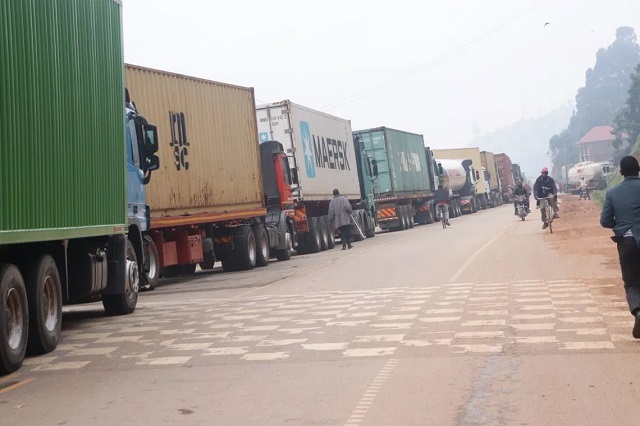
The National COVID-19 Taskforce has agreed that all trucks entering Uganda will have only one person on board for the next four weeks in a move to control the movement and exposure of Ugandans to foreign truck drivers.
The meeting which was convened yesterday decided that drivers will have to implement the relay system-where a designated driver drives to the Ugandan border and from there on, another from Uganda who has tested negative for COVID-19 continues with the rest of the journey.
For the last two weeks, truck drivers have undergone mandatory testing at the borders but have been allowed to continue with their journeys before the release of their results. In the process, the drivers who have tested positive have come into contact with several Ugandans. As of today, 18 drivers have tested positive and over 300 contacts are being monitored and traced.
With the new measures, new truck parks or stops have been designated. Drivers who have been tested for COVID-19 and are waiting for their results will stop under the surveillance of security officers to wait for their results. Once results are released, drivers who test positive will be picked up by health ministry officials while those who test negative will be allowed to continue with their journey.
Different routes will have three stops. Route one will cover drivers from Kenya. These drivers will be able to stop at either Namboole, Lukaya, Ntungamo/Ishaka and the border. Route two also from Kenya will have drivers stop in Soroti or Kamdin corner. Trucks from Tanzania travelling to Kampala will cover route three and stop in Karuma and Packwatch. Route four will cover trucks from DRC. The trucks will travel from Fortportal to Mubende and then Namboole.
All other stop points that were previously used by the trucks such as; Tororo, Mbale, Lira, Kamdin, Mbikko, Naluwerere, Lyantonde, Namawojolo, Sanga, Ruti, Migyera, Luwero have been closed. No truck is allowed to make stops there.
The new measures come following an outcry from Ugandans after several truck drivers carrying cargo from Kenya and Tanzania tested positive for COVID-19. Many had called for the closure of all border entry points.
Dr Monica Musenero, an epidemiologist and also a member of the task force says that the new measures are going to be implemented starting next week. She says that all the measures that have been set up are geared towards protecting Ugandans.
The task force also decided on reducing the number of fuel trucks that cross the border. According to Dr Musenero, railway services are going to be used to transport fuel.
“ We want to reduce the number of trucks entering the country. The railway freight services are going to be brought on board so that some things like fuel can be transported using the railway,” Dr Musenero adds.
Other measures that were discussed and passed include; the mandatory use of personal protective equipment like masks by all drivers. Also, domestic trucks should have only two people. In addition to this, freight forwarders will have to pay for testing kits to be used to test drivers.
Top diplomats from 13 countries of a cross-regional network, including Indonesia, Singapore and Canada, have agreed on key principles of keeping transportation links and supply chains open to cushion the impacts of COVID-19 on global trade and economy.
Facilitated by Canada, the informal network called the International Coordination Group on COVID-19 (ICGC) consists primarily of half of the G20 countries — Brazil, France, Germany, Italy, Mexico, South Korea, Turkey and the United Kingdom — with the addition of Morocco, Peru and Singapore. It was recently established to look for a shared commitment to “promote and protect free trade” and other selected measures to tackle COVID-19.
The fresh declaration was made by foreign ministries of ICGC in a Friday evening teleconference, after it was deliberated at a recent senior officials meeting.
Going forward, Indonesian Foreign Minister Retno LP Marsudi said, any future cooperation “must be action-oriented” which would bring tangible benefits to the general public worldwide.
The declaration, despite its nature as a non-legally binding political declaration, aims at bolstering international norms and actions in handling the COVID-19 pandemic and to manage its social economic impacts. It identified a number of areas for concrete collaborative actions, outlining commitments to maintain an open flow of trade and investment, facilitate repatriation of stranded travelers, and to look for efforts to restore the post-pandemic global economy.
“We will continue to promote and protect free trade,” the ministers said in the declaration, as quoted from a press statement on Saturday. “[…] and we agree that emergency measures designed to tackle COVID-19, if deemed necessary, must be targeted, proportionate, transparent and temporary, and that they do not create unnecessary barriers to trade or disruption to global supply chains, and are consistent with WTO [World Trade Organization] rules.”
Singapore’s Foreign Minister Vivian Balakrishnan said on Facebook on Saturday that the ICGC ministers had reiterated the importance of maintaining global connectivity, “such as transport and supply chain links, which will help all our economies recover more quickly when the pandemic eventually subsides”.
The WTO had sounded the alarm on Wednesday that global trade could plummet by a third this year due to the coronavirus pandemic, warning the deepest recession “of our lifetimes” could be on the horizon.
North America and Asia would be hardest-hit and could see their exports plunge by 40 and 36 percent respectively, while Europe and South America could see declines of more than 30 percent, the WTO said. Keeping markets open to international trade and investment would help economies recover more quickly, we will see a much faster recovery than if each country goes it alone.
Following the declaration, the ICGC would now strongly advocate for other countries to take similar steps, with South Korea leading a conversation on best practices for emerging from the COVID-19 crisis.
“The COVID-19 pandemic is a global challenge. Maintaining strong coordination with our international partners is critical to mitigate the repercussions of the ongoing challenges we face,” Canada’s Foreign Minister François-Philippe Champagne said in a statement. “Keeping people, goods and services moving is key in both addressing these issues and ensuring the transition to a strong recovery.”
Source: Article by Dian Septiari, The Jakarta Post, 19 April 2020
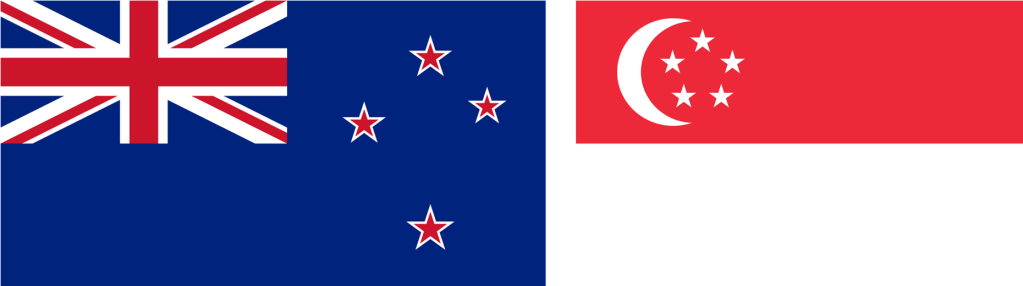
New Zealand and Singapore launched a new trade initiative to ensure supply chain connectivity and the removal of blockages to trade in alist of essential products that includes medicines, medical and surgical equipment.
“Ensuring countries have the most straightforward and cost effective access possible to the essential goods needed to respond to the Covid-19 pandemic is crucial,” Trade and Export Minister David Parker said.
David Parker and Singapore Trade and Industry Minister Chan Chun Sing said: “This new initiative builds on the joint statement issued by Singapore and New Zealand last month, which has now been joined by seven other countries.
“The Declaration setting out the initiative includes a list of Covid-19 related products for which New Zealand and Singapore undertake to remove tariffs, not to impose export restrictions and to remove non-tariff barriers. It also includes an undertaking to keep supply chains operating effectively for these products.”
There is increased global demand, in particular, for medical and hygiene products and some countries are restricting their exports of them.
This is an “open plurilateral” initiative, so other countries can join at any point, and the two ministers said they encourage others to do so as soon as possible.
“New Zealand and Singapore consider it crucial that during this pandemic, trade in vital goods such as medical supplies and food continues to flow freely. We believe that global cooperation on trade can assist in dealing with this worldwide health crisis.”
David Parker said nothing in the arrangement would prevent us ensuring we have sufficient medical equipment and supplies in New Zealand.
The Declaration includes a list of over 120 products, identified as being essential goods in combating the Covid-19 pandemic, for which participants undertake to remove tariffs. This list includes PPE equipment, medical equipment, nutritional products, medicines and hygiene supplies. The Declaration also calls for participants not to apply export restrictions on food and beverage products, and to facilitate trade in food and beverage.
SARS confirms that its new Customs Registration, Licensing and Accreditation (RLA) system will be implemented on 20 April 2020. The main objective of the rollout will be the introduction of the eFiling channel for submission of registration and licensing applications. This ensures that services continue to be available during the lockdown period in order to minimise face-to-face contact.
For a list of qualifying client types, pleaseclick here!
This first phase of implementation focuses on applications for 45 clients types only. Excise applications are not included in this implementation. In th mean time, Customs traders wishing to submit applications on the RLA system are encouraged to register for eFiling in the meantime (if not already registered). Please refer to the following guide: How to register for eFiling.
This WTO study provides a comprehensive overview of trade and tariffs imposed on medical goods in general, many of which appear to be in severe shortage as a result of the current crisis. The purpose of this note is to provide factual information on how these goods are traded globally.
The Chairperson of the WCO Private Sector Consultative Group (PSCG) submitted a paper to the WCO Secretary General outlining some observations, priorities and principles to be considered by the WCO and its Members during this unprecedented time of the COVID-19 pandemic.
These observations and recommendations are divided in four categories, namely (i) expediting the clearance of essential goods and key workers to support and maintain vital services; (ii) applying the “social distancing” principles to border processes; (iii) striving for efficiencies and simplification in all clearance procedures; and (iv) supporting business resumption and recovery.
“I greatly appreciate the useful contribution from the PSCG that merits serious consideration by Customs and other border agencies. In these challenging times, it is critical that we work even harder together in the spirit of Customs-Business partnership”, said the WCO Secretary General Dr. Kunio Mikuriya.
The PSCG was established 15 years ago with the objective of informing and advising the WCO Secretary General, the Policy Commission and WCO Members on Customs and international trade matters from the private sector perspective.
Over the past month, the PSCG, who represents a wide range of businesses and industry associations, have been holding virtual weekly meetings, with the WCO Secretary General, Deputy Secretary General and Council Chairperson in attendance. These meetings enable the Members of the group to provide status updates relevant to their respective industries, discuss the impact of the COVID-19 pandemic on international trade and the global economy, and table for discussion proposals for a course of action by the global Customs community.
In the paper, the PSCG commends the WCO for reminding the global Customs community to apply internationally agreed procedures and processes to facilitate the cross-border movement of goods, conveyances and crew. The Group also points out that the crisis has shed light on the sound work carried out by the WCO over recent years and has demonstrated the benefits and value of efficient Customs reform and modernization efforts, which the Organization has long been advocating.
The PSCG paper will contribute to the agendas of the relevant WCO working bodies in the months to come.
But for as much as shipping has changed over the decades, not much about the bill of lading (BL) has. Today, it’s pretty much the same often-paper, always-time-consuming document it ever was.
That’s why driving an eBill standard is largely considered the Holy Grail of global trade. Succeed in that, and partners up and down the supply chain would benefit from the days and weeks that paper BLs add to the process as they are printed, pouched, messengered, lost, found and waited upon.
It’s ironic because there isn’t a single aspect of the BL that couldn’t be done better digitally. To demonstrate, let’s dive into the essence of these documents and the challenges that remain to making them digital.
How does an original paper bill of lading work?
Once the vessel departs, an original BL can be issued by the ocean carrier. After the shipper endorses the original bill, it is couriered to the buyer who then needs to surrender it back to the carrier at destination as part of the cargo release process.
It sounds simple enough, but along the way the BL impacts many other processes and actions. Even before issuance, the time-consuming process from a shipping instruction to the issuance of a verified BL, many iterations and changes can occur to get the BL into an approved state.
The BL, and its critical data fields are required for customs clearance, letter of credit, change of title and other processes. One delay in any of these can result in costly extra charges.
The functions of a bill of lading were made to be done electronically
In oftentimes convoluted international shipments, the BL is the legal go-to document that facilitates negotiation, lending and risk reduction by performing three key functions:
1. It is evidence of a contract of carriage
2. It confirms receipt of goods
3. It serves as the title to the goods
So, can eBill perform these functions while maintaining the integrity and legality that’s required? The P&I Clubs think so. Today’s top eBill solutions meet these challenges through rule frameworks and advanced security measures — all while providing significant cost and time savings.
eBills can play a pivotal role — and a digital role
Carriers issue the BL, but they rely on information from shippers which may change multiple times during the booking and shipper’s instruction processes. Electronic features like structured documents make creation, approval, distribution, tracking — everything — easier than paper.
This benefits not only the shippers but the carriers, buyers, sellers and banks without having the need to continue to print out paper — which defeats the purpose
Digital does the different types of bill of lading better
There are many types of BL, reflecting the complexities of international trade. Eliminating paper is only the beginning of the ways eBills can help streamline processes related to the two main categories of BL:
Sea Waybills are sometimes referred to as “Express Release.” They have a named consignee on them but are issued without any original documents that have to be presented for the release of the cargo. Non-negotiable and non-transferable, they are usually used in three cases:
Intra-company shipments between divisions located in different countries
Shipments when no negotiations take place between the seller and the consignee
Instances when the shipper doesn’t have to submit an original BL to any party in order to secure their payment
Original BLs have different forms that all hinge on the issuance of original BL documents in some way.
· Order BLs are the most common type of BL. They enable delivery of the cargo to be made “To Order” to the bonafide holder of the BL. These types of BL are negotiable and often linked to letter of credit transactions. Often banks must verify and endorse the original BL before the cargo can be released to the buyer.
Straight BLs stipulate that the cargo may only be released to the specified consignee and only upon the surrender of an original BL.
Open BLs are negotiable and transferable. The name of the consignee can be changed with the consignee’s signature and transferred — often multiple times.
Going Digital assists in filling out the bill of lading
With shippers providing the majority of the information for a BL, completeness and correctness is crucial. eBills help guide the way. If shippers can provide bill of lading information digitally, there’s less risk of keying errors. Form fields and autofill features all speed the process and lead to time savings.
One of the challenges of going paperless with BLs from the very beginning is standards. Adhering to set data standards makes information useful for different parties within organizations and multiple supply chain partners and it enables seamless workflows from automation. Unfortunately, standards are far from being standard today.
Digital makes the information included in a BL more useful
Users look to the bill of lading as an infallible source of essential and comprehensive information like names and addresses, purchase orders or reference numbers, special delivery instructions, pickup date, description of items, packaging type, NMFC freight class and DOT hazmat designations.
eBills of lading can make this information highly transparent to supply chain partners who can use it. But like many of the benefits of eBills, this transparency hinges on adoption — if all the participants of the supply chain are rowing together digitally, it works. If not, it just makes for another manual process that may end up being even more work than paper.
With its centrality to supply chains and essentiality to digitizing global trade, it’s easy to understand why the industry has its sights set on digitizing this important document. But acceptance of the eBill remains both the goal and the greatest challenge today. That’s why getting the eBill to catch on will require successfully digitizing the entire process for eBills, too.
TradeLens, with its relationships with the world’s largest ocean carriers, is in a unique position to explore the digitization of this process at an unprecedented scale. Within an ecosystem where there’s already widespread acceptance, the potential of the eBill could finally be revealed.
Business Unity South Africa has published a Standard Operating Procedure (SOP)to provide functional guidelines for businesses importing critical supplies and essential goods into South Africa under Rebate Item 412.11 and Schedule 1(8) of the Value Added Tax Act, and includes both imports of dutiable and duty-free goods.
To respond to the unprecedented demand in medical supplies amid the current global COVID-19 pandemic around the world, and in order to help countries speed up the cross-border movement of these critical products, the WCO and the World Health Organization (WHO) joined hands to strengthen their cooperation by establishing a coordinated approach in their response to the pandemic.
As a result of this joint effort of the two organizations, the HS Classification Reference for COVID-19 Medical Supplieswas updated, in a more structured and user-friendly format, to reflect more of the products that would be required in the professional opinion and experience of the WHO in public health. The first HS classification reference for COVID-19 medical supplies, published by the WCO at the dedicated section of its website two weeks ago, was an initial response of the Secretariat to help countries in their fight against the spread of COVID-19. The initial list contained the classification of essential products needed such as COVID-19 diagnostic test kits and masks, certain protective personal equipment and medical devices such as ventilators and ECMO (extracorporeal membrane oxygenation), consumables and disinfectant products that may be used for the prevention and treatment of the disease. The latest edition expands this list to cover a greater range of medical equipment and supplies that are required as critical itemsby the WHO, such as oxygen concentrators and sample collection sets.
The list of HS-coded medical supplies was widely appreciated by stakeholders and taken into consideration by governments when preparing their responses to secure and facilitate trade in these supplies. It serves as the basis for identifying the cross-border movement of the products needed during the pandemic, applying contingent tariff and non-tariff relief policies, monitoring and combating falsified supplies, and even for taking responsive actions to address shortages.
The updated list is provided as an indicative list with a view to facilitating the classification of COVID-19 medical supplies at the international level (6 digit of the HS). Economic operators are kindly advised to consult with the relevant Customs administrations in relation to classification at domestic levels (7 or more digits) or in the event of any discrepancy between their practices and this list.





 What Happened to the Portcullis?
You must be logged in to post a comment.