Message from the WCO – International Customs Day 26 January 2014

WCO_background image POSTER_CommunicationThis year’s International Customs Day heralds the launch of the WCO Year of Communication, a year in which we, as a Customs community, move to further enhance our communication strategies and worldwide outreach programmes.

Under the slogan “Communication: sharing information for better cooperation,” we are signaling our aspiration to do more at the national, regional and international level to raise awareness of the vital role Customs plays in international trade, economic prosperity and social development.

Communication is a sharing process which fosters cooperation, and as Customs is at the centre of a network of relations, developing a sound internal and external communication strategy promotes transparency, facilitates dialogue, builds trust and ensures mutual understanding.

With our unique expertise, Customs has made great strides over recent years in achieving better visibility with national governments, international organizations, the business sector, the donor community, development banks and other international trade stakeholders.

Good communication practices by WCO Members are abundant: national Customs websites, specialized magazines, media outreach and social networks are trailblazing the way towards greater awareness of the contribution of Customs to a more resilient trade environment.

Complementing these efforts, the WCO Secretariat also has a number of communications tools to help get the word out, including the Organization’s new dynamic website, its popular and insightful WCO News magazine and our growing online social media presence.

Just as important, is the WCO’s efforts to engage as many Presidents, Ministers, leaders and international policy makers as possible in order to defend Customs’ interests, further raise its profile and create better awareness of the opportunities and challenges it faces.

It is equally imperative that we also focus on how we communicate with our stakeholders and partners, how we listen to their feedback and how we decide to respond, as this will encourage stronger support for the work we do and ensure greater buy-in to WCO strategies.

In fact, communication is a two-way process by which information and knowledge are exchanged and shared between individuals – it is not only about sending a message or passing on information, it is also about exploring, discovering, researching and generating knowledge.

As in previous years, I am fully convinced that Customs administrations and the greater Customs community will rise to the occasion, committed to actively taking the communication theme forward and thereby ensuring the success of the WCO Year of Communication.

Wishing you all a joyful International Customs Day!

Kunio Mikuriya Secretary General

WCO to develop Implementation Tool for WTO ATF

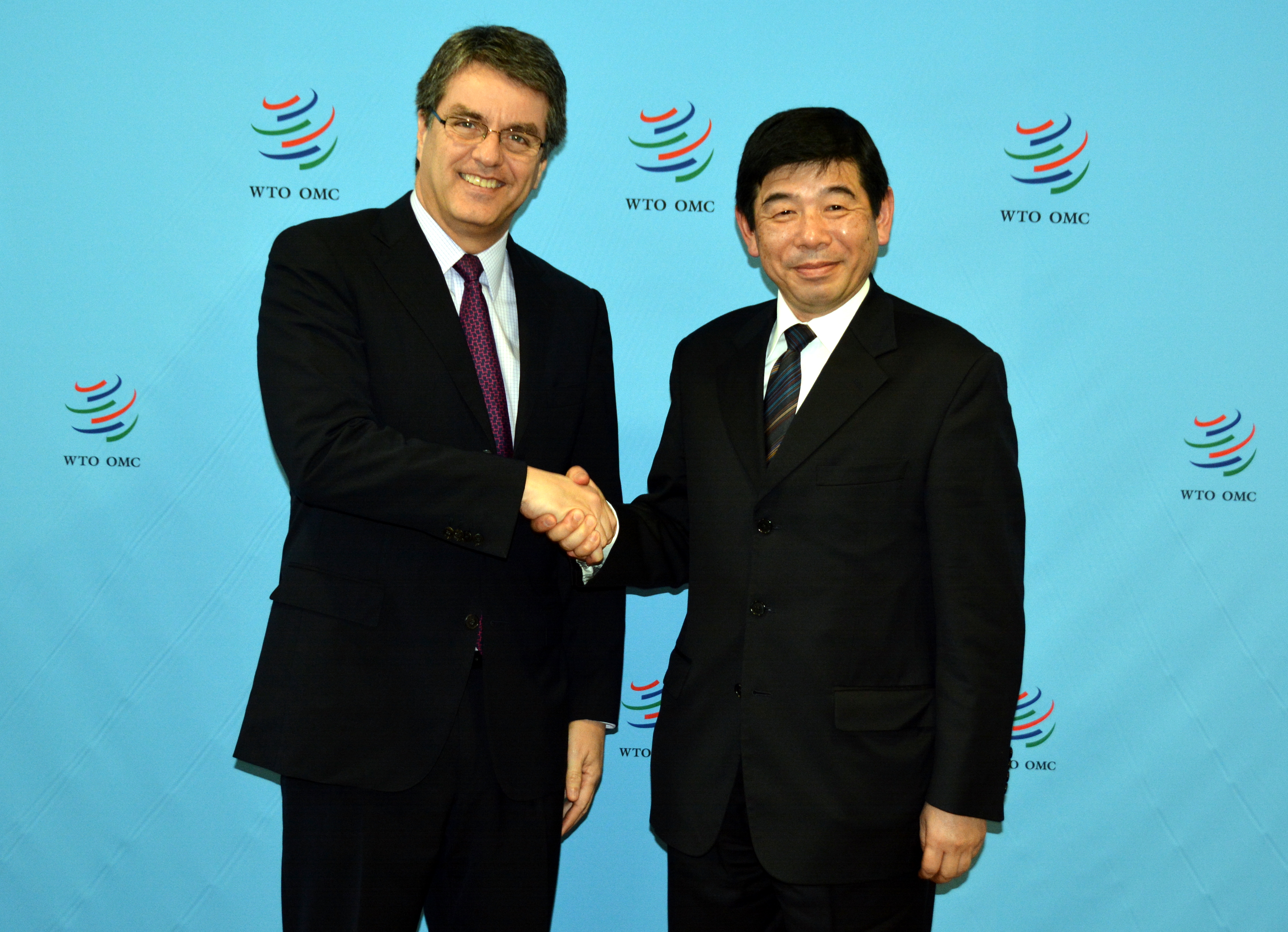
WCO and WTO leaders meet in Geneva (WCO)

WCO and WTO leaders meet in Geneva (WCO)

At the invitation of WTO Director General Roberto Azevedo, WCO Secretary General Kunio Mikuriya met with Mr. Azevedo at WTO headquarters in Geneva, Switzerland on 20 January 2014. They agreed that close cooperation between the two organizations is vital for successful implementation of the WTO Agreement on Trade Facilitation (ATF).

Secretary General Mikuriya emphasized the consistent and complementary nature between the ATF and the WCO Revised Kyoto Convention (RKC). He also described how the WCO Economic Competitiveness Package, that includes the RKC and all other Customs trade facilitation instruments, guidelines and best practices, will support implementation of ATF. Mr. Mikuriya also confirmed his readiness to involve other international organizations, development banks, donors and other stakeholders at a WCO forum to contribute to cooperation in support of the ATF.

Director General Azevedo was pleased to hear that the WCO was planning to publish an implementation tool to connect each provision of the ATF to WCO tools as well as a briefing document enabling Customs administrations to communicate with trade ministries. He expressed his willingness to leverage WCO expertise and experts for the WTO Preparatory Committee on Trade Facilitation as well as ATF needs assessment and implementation. Mr. Azevedo also suggested that the ATF provides another opportunity for the two organizations to enhance the good working relations that already exist in many areas beyond trade facilitation.

The two leaders also discussed how multilateral institutions could work on regional integration matters and agreed on the importance of adopting global standards and best practices to ensure connectivity at borders. Source: WCO

Communication: Sharing Information for Better Communication

WCO Customs Theme 2014Following a theme of logical progression over the past few years, the WCO has introduced “Communication” as this year’s theme for the 170+ Customs Administrations around the world. Last year’s theme “Innovation” set the platform for the introduction of innovative ideas and business practices, new partnerships, as well as new solutions and technologies.

While still very much in its infancy, the WCO’s Globally Networked Customs (GNC) philosophy will undoubtedly gain more and more traction as administrations iron out their national and regional aspirations and objectives.

The recent agreement on Trade Facilitation at the WTO’s conference in Bali adds further credence to the importance of the principles of the Revised Kyoto Convention (RKC). For the first time we see an attempt to fuse customs principles into a package of binding requirements.

Now, more than ever, Customs needs to work ‘collaboratively’ with all stakeholders.

With Customs and Border Agencies etching out new legal requirements, as well as organisational structures and plans, trade practitioners will likewise have to keep a watchful eye on these developments. Sometimes, not necessarily just for their own needs and obligations in their domestic markets, traders need to ensure that they keep apace with ‘destination’ Customs requirements which in these modern times are all too frequent. By opening its door to the business community, the WCO plays an ever-increasing overarching role in providing the private sector a ‘window’ to its thinking and ideology.

UN launches global campaign targeting the criminal counterfeit trade

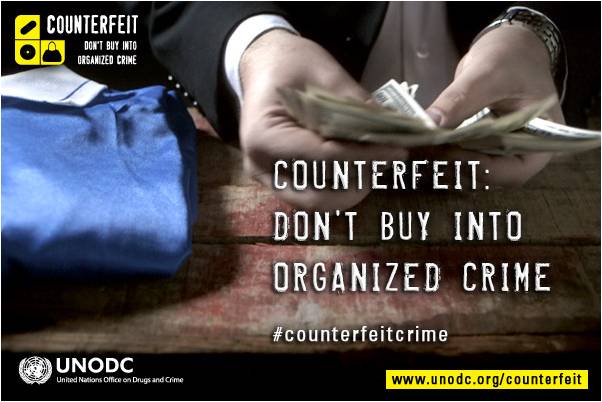
UNODC Anti-Counterfeit ImageThe World Customs Organization (WCO) welcomes the new global campaign launched by the United Nations (UN), under the auspices of the UN Office on Drugs and Crime (UNODC), to raise awareness among consumers on the dangers of counterfeit goods and their link to organized crime.

The campaign – ‘Counterfeit: Don’t buy into organized crime’ – is centred around a Public Service Announcement, entitled ‘Look Behind(click hyperlink to view), which will be shown on the NASDAQ screen in New York’s Times Square and will be aired on several international television stations, starting from 14 January.

With the aim of urging consumers to consider who and what lie behind the production of counterfeit goods, the campaign is a bid to boost understanding of the multi-faceted repercussions of this illicit trade, which according to the UNODC is worth 250 billion US dollars a year.

UNODC Executive Director, Yury Fedotov, noted that, “In comparison to other crimes such as drug trafficking, the production and distribution of counterfeit goods present a low-risk/high-profit opportunity for criminals.”

Fedotov further noted that, “Counterfeiting feeds money laundering activities and encourages corruption, and there is also evidence of some involvement or overlap with drug trafficking and other serious crimes.”

Counterfeiting is a crime that affects us all, from exploited labour being used to produce counterfeits, through to the harmful and potentially deadly dangers attached to these goods, and the links that these illicit goods have in potentially funding cross-border criminal and organized crime activities.

“With a long history of fighting counterfeiting and piracy at the national, regional and international level, the global Customs community is ready to support its United Nations partners in their efforts to raise awareness about this illicit trade activity,” said WCO Secretary General, Kunio Mikuriya.

Mikuriya further stressed that, “The WCO is firmly committed to countering the relentless attack on consumers by criminals involved in counterfeiting, as their illicit and even dangerous goods which are flooding markets across the globe pose a huge risk to public health and safety.”

Fraudulent medicines also present a serious health risk to consumers, as criminal activity in this area is big business, with the UNODC reporting that the sale of fraudulent medicines from East Asia and the Pacific to South-East Asia and Africa alone amounts to some 5 billion US dollars per year.

Criminals use similar routes and modi operandi to move counterfeit goods as they do to smuggle illicit drugs, firearms and people; in 2013, the joint UNODC/WCO Container Control Programme detected counterfeit goods in more than one-third of all seized maritime containers.

The WCO expends enormous resources on combating the counterfeit trade using a variety of means, including the organization of global enforcement operations and the introduction of IPM, a WCO tool which promotes cooperation and the sharing of information between Customs and rights holders.

Of particular relevance to the campaign is the WCO’s theme for 2014 which highlights the importance of communication and the sharing of information for better cooperation, which is highly instrumental in the fight against counterfeits in tandem with the Organization’s public and private sector partners.

Concluding, Secretary General Mikuriya took the opportunity to commend the UNODC on its latest initiative, offered his full support for the UN campaign, and urged WCO Members and Customs’ stakeholders to continue raising awareness about the perils of buying and trading counterfeit goods. For more information visit the WCO Website. Source: WCO

WCO Capacity Building visit to the youngest country in the world

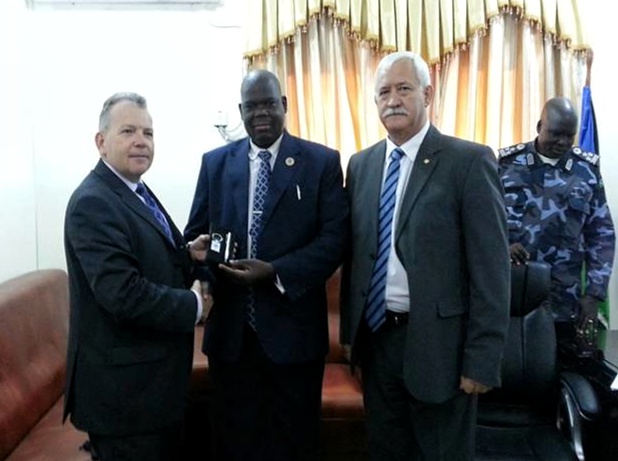
Capacity Building visit to South Sudan - SARS' representative Fanie Versveld (right).

Capacity Building visit to South Sudan – SARS’ representative Fanie Versveld (right).

End of November to beginning of December 2013, following a request from the then Customs Director-General, a small WCO expert team travelled to South Sudan to undertake a Phase 1 Diagnostic Mission under the auspices of the WCO Columbus Programme. The needs analysis was conducted by a colleague of the WCO Capacity Building Directorate along with an expert from the South African Revenue Service.

South Sudan gained its independence as recently as July 2011 and is still the youngest country in the world. Until recently it was also the newest Member country of the WCO.

It was during the course of the visit that the WCO team learnt that the Customs Director General had been replaced. A meeting was held with the new Director General and after outlining the work of the WCO and the purpose and benefit of its Capacity Building Programme it was agreed that the mission should proceed as planned.

The diagnostic team visited the Customs Headquarter in the capital city of Juba, Juba International Airport and Nimule Border Crossing Point on the border with Uganda. The team had the opportunity to meet and speak with a wide variety of motivated people from within the South Sudan Customs Service and also held informative discussions with a number of key stakeholders from the public sector, trade representatives and donor agencies.

The South Sudan Customs Service is just starting out on the road of Reform and Modernization. The diagnostic team made a series of recommendations that will help them in this regard but also identified some “quick win” activities that will assist them in building organisational confidence and commitment to the whole development process. The WCO looks forward to working with the South Sudan Customs Service again in the near future. Source: WCO


What is the value of a slick customs service?

Cahir Castle Portcullis by Kevin King

Cahir Castle Portcullis by Kevin King

The traditional symbol of customs and borders services is the portcullis – the fortification through which a ship used to enter a port. But as developing countries are increasingly asked to recognise the benefits of liberalised trade to the detriment of their import duty revenue, how can they be helped to raise the portcullis? And is it really in their interests to do so?

With world trade growth expanding more than twice as rapidly as gross domestic product (GDP) over the past decade, says Steve Brady, director, Customs and Trade Facilitation for development consultancy Crown Agents, the potential rewards from participating in world trade are significant. “According to figures from WTO, in 2011 world merchandise exports and imports in real terms grew by over 5%. As a result, each reached over $1.8tn, the highest level in history.”

The major players working with developing country governments to help them benefit from this increase in trade include the World Bank, ICC, World Customs Organisation (WCO), IMF, UN Conference on Trade and Development (Unctad), development banks and specialist intermediaries such as Crown Agents.

A number of countries have improved their capacity as a result of international and domestic efforts, yet some are still hesitant to do so. The Centre for Customs and Excise Studies (CCES) at the University of Canberra finds that many developing country governments are heavily dependent on the revenue from import duties – in some cases this can be as high as 70% of a country’s total revenue base. The desire to protect this is understandably strong. Yet this same desire can be used to drive forward modernisation efforts, explains Professor David Widdowson, CEO of CCES. “Revenue leakage resulting from commercial fraud, poor customs and border procedures and corruption represents a major impediment to poverty reduction.”

Similarly time-consuming manual processing systems, over-regulation, or outright corruption, will discourage trade and investment and further undermine a country’s development. “In the worst cases up to 20 signatures are required to obtain customs clearance of goods, all of which require ‘informal payments’,” says Widdowson. “I have also seen examples of 15 different government agencies playing some role at the border, all acting independently.”

Guidelines or blueprints to modernise such customs and borders processes are available, for example, via the revised Kyoto convention (extolling the basic principles of automation, simplification, responsiveness to the regulation, consistency and co-ordination); the “Framework of standards to secure and facilitate global trade” developed by the WCO; and its “Columbus programme.”

Turkey is cited by Sandeep Raj Jain, economic affairs officer at the United Nations Economic and Social Commission for Asia and the Pacific (Escap), as a case study for the successful modernisation of customs systems, having consolidated 18 previously autonomous border gates and introduced a single IT clearance system, leading to an increase in tax revenues and a decrease in clearance time to the benefit of incoming and outgoing trade. Angola increased receipts sixteen-fold from $215.45m in 2000 (£148m) to $3,352m in 2011 through an improved National Customs Service and the introduction of an automated entry processing system and customs clearance Single Administrative Document.

The African Development Bank also supported post-conflict Liberia with the extension of an automated system for customs data, helping to reduce the time to clear goods at the port from 60 days to less than 10 days and increase revenue collection at three ports from about $4m a month to $10m-$12m. This, Ellen Johnson Sirleaf, president of Liberia has said, given the government additional scarce revenues to invest in the projects to improve the livelihoods of people.

Horror stories also abound of revenue loss, acting as a cautionary tale for leaving outdated customs processes untouched. A World Bank report, for example, finds that in Algeria smuggling caused a loss to the public exchequer rising from DA18bn in 2006 ($237m) to over DA61bn in 2011.

The message from the international community is that improved, automated and transparent customs services not only help eradicate theft and corruption, but also increase revenue through increased trade. Any fall in revenue from import tariffs due to signing up to bilateral free trade agreements can also be offset, says Bijal Tanna of Ernst & Young LLP: “One only has to look at the take-up of VAT by countries since the 1980s to understand that there is a consumer tax outlet to offset any loss of revenue from customs duty reductions. Back in the late 1980s, approximately 50 countries had VAT, now it is in place in over 150 countries.”

However, these arguments don’t always reach an appreciative audience. “In my experience”, says Widdowson, “economies may give lip service to the trade facilitation agenda, including entering into free trade agreements, but still expect their customs administration to collect traditional levels of duty. For example, with the introduction of free trade arrangements – hence falling duty rates – and a downturn in international trade, the Philippines continues to increase the ‘revenue targets’ of its bureau of customs, the derivation of which appears to be devoid of any analytical rigour.” (emphasis – mine)

Tanna also points to the collapse of the Doha round of the WTO negotiations heralding a breakdown in efforts to find a single global platform to drive a uniform approach to trade liberalisation. Perhaps it is the obligation of the international community to renew such efforts, alongside projects to improve customs systems in-country. Source: Original article by Tim Smedley of The Guardian

Mauritius – Customs Training of Trainers Course on SADC Rules Of Origin

The SADC Rules of Origin are the cornerstone of the SADC intra-trade and serve to prevent non-SADC members benefiting from preferential tariffs. The determination of the eligibility of products to SADC origin and the granting of preferential tariffs to goods originating in the Member States is an important process in the implementation of the SADC Protocol on Trade and regional integration. Annex I of the SADC Protocol on Trade provide that goods shall be accepted as eligible for preferential treatment within the SADC market if they originate in the member States, and the qualification of such products shall be as provided in Appendix I of Annex I of the Protocol on Trade.

The 2nd Customs Training of Trainer Course was held on the SADC Rules of Origin at the World Customs Organization (WCO) Multilingual Regional Training Centre, Mauritius Revenue Authority from the 25th -30th November 2013. The objective of the training course is to establish a pool of trainers on the SADC Rules of Origin who can provide guidance and train on the subject at national level to Customs officials and relevant Stakeholders.

During his opening address, Mr Sudamo Lall, Director General of the Mauritius Revenue Authority, laid emphasis on the critical importance of the ‘Rules of Origin’ as it has ‘great impact on the duties to be collected, as businesses increasingly locate the different stages of their activities in a way that optimizes their value-addition chain’. On the other hand Mr James Lenaghan Director Customs mentioned that ‘the Rules of Origin in any Free Trade Area are of prime importance as they serve to determine which goods can benefit from preferential tariffs. This enables member states of a particular Free Trade Area to benefit from the tariffs advantages inherent to the Protocol of trade agreed within that Free Trade Area. Since Customs is the controlling agency for preferential origin, it is vital that our officers are trained to correctly apply the SADC Rules of Origin’.

During their short visit at the training workshop, the Executive Secretary ,Dr Stergomena Tax and the WCO Secretary General, Mr Kunio Mukiriya addressed the group on the importance of rules of origin as the basis for regional integration. Dr. Tax also urged the participants from all SADC Member States to cascade the knowledge gained at the Centre to their respective countries.

The SADC Customs Training of Trainers programme is being implemented in collaboration with the World Customs Organization (WCO), the Regional Office for Capacity Building (ROCB), the WCO Regional Training Centres and GIZ (Deutsche Gesellschaft für Internationale Zusammenarbeit (GIZ). Source: SADC Secretariat

Mauritius Revenue Authority – Launch of the WCO Multilingual Regional Training Centre

This slideshow requires JavaScript.

The SADC region is now equipped with a third World Customs Organization accredited Regional Training Centre in addition to the South African and Zimbabwean Regional Training Centre. The Regional Training Centres are excellent platforms for Customs to advance capacity building and to share information and best practices.

The Mauritius Revenue Authority (MRA) has been selected by the WCO to host the RTC as part of the WCO initiative to optimise resources in the region and in line with government’s objective of making of Mauritius a Knowledge Hub. The RTC represents the 25 of its kind adding to the existing Centres across the world and is the fourth one in the WCO ESA region.

The Centre will enable the WCO achieve its mission of enhancing Customs administrations in the WCO ESA region thereby helping these Customs administrations to make an important contribution to the development of international trade and to the socio-economic well-being of their country.

Under the WCO strategy the RTC has four main objectives namely: development of regionally relevant training; maintenance of specialist trainer pools; provision of specialist training at a regional level; and development and support of the WCO’s blended learning programme. Moreover, it has as task to develop and maintain annual training plans and work in partnership with the private sector to maintain effective relationships between Customs and economic operators as well as assist Member countries in their training needs.

The Mauritius RTC is equipped with English, French and Portuguese language facilities as well as an e-learning platform. The Vice-Prime Minister and Minister of Finance and Economic Development, Mr. Xavier Luc Duval, formally opened the RTC on the 25th November 2013. In his opening address, Secretary General Mikuriya commended the leadership and continued engagement of Mauritius, previously as WCO Vice-Chair for the East and Southern Africa (ESA) Region from 2011 to 2013, and now as host of an RTC. He hoped that this RTC would serve to share knowledge and strengthen the human resource network for Customs cooperation and regional integration.


WCO Classification Decisions (2013)

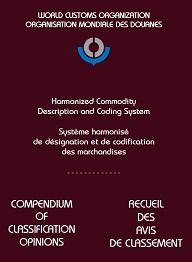
RACThe World Customs Organisation (WCO) has published the classification decisions taken at the last Session of the Harmonized System Committee (52nd Session) in September 2013 : the Classification Rulings, the Amendments to the Explanatory Notes and to the Compendium of Classification Opinions. You can locate the decisions via the following links:

Classification Rulings – HS Committee 52nd Session

Amendments to the Compendium of Classification Opinions – HS Committee 52nd Session

Amendments to the Harmonized System Explanatory Notes  – HS Committee 52nd Session

Source: WCO


Protecting U.S.-Bound Container Cargoes

Securing US Cargo - Infographic by Journal of Commerce (Click to enlarge)

Securing US Cargo – Infographic by Journal of Commerce (Click to enlarge)

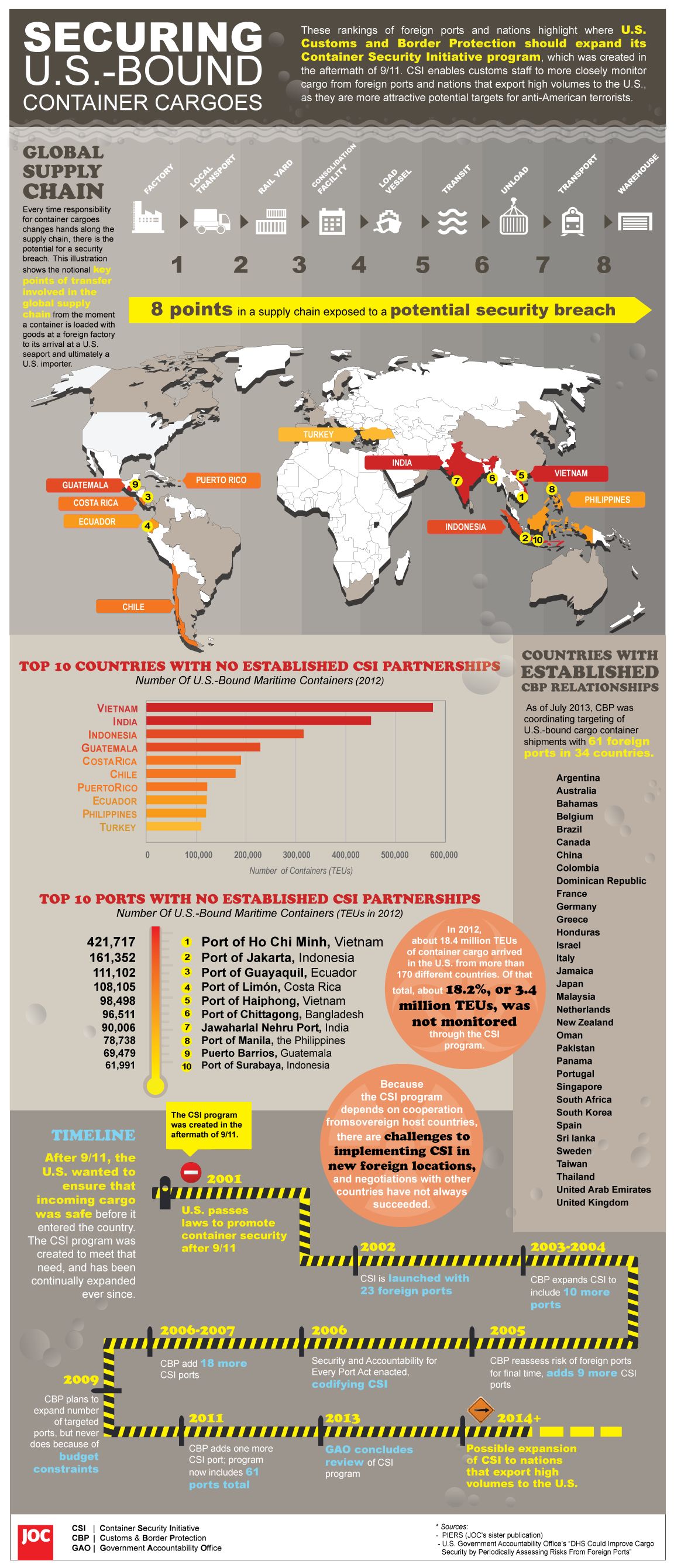
The Journal of Commerce provides a very useful infographic on the U.S. Customs and Border Protection’s efforts and initiatives in securing US – cargoes from foreign ports. While the Container Security Initiative (CSI) was one of the very first post 9/11 security initiatives it has since been supported by a number of other partnership programs involving other customs agencies and the US trade community. These have spawned many of the policies and guidelines being adopted by Customs agencies around the world where the WCO has ‘formulated’ and ‘standardised’ such requirements for broader international use, in conjunction with capacity building programs.

The U.S. Government Accountability Office has published a report, “DHS Could Improve Cargo Security by Periodically Assessing Risks From Foreign Ports,” recommending that U.S. Customs and Border Protection should continually update and expand its Container Security Initiative.

Since Sept. 11, 2001, CBP has taken steps to reduce vulnerabilities associated with U.S.-bound cargo container shipments by placing customs officials at foreign seaports to determine whether U.S.-bound shipments from those ports pose a risk of containing weapons of mass destruction or other terrorist contraband. While cargo from foreign ports and ships is critical to the U.S. economy, it can also be exploited by terrorists.

When CSI was launched in 2002, CBP initially selected 23 CSI ports largely on the basis of the volume of U.S.-bound container cargo, but it increased the number of risk factors in selected additional ports as it expanded the CSI program beginning in 2003. Through 2007, CBP added 35 ports to the CSI program based on additional criteria, such as strategic threat factors and diplomatic or political considerations. As of July 2013, CBP was coordinating targeting of U.S.-bound cargo container shipments with 61 foreign ports in 34 countries.

Cargo shipment data from PIERS, JOC’s sister publication, supports the GAO’s view that the U.S. needs to update and expand CSI in order to continue effectively monitoring incoming cargo. In particular, it appears the U.S. should form new CSI partnerships with Vietnam and India, which are the Top 2 exporters to the U.S. with no established CSI partnerships.

Although Vietnam is “relatively stable” in terms of its government, it is geographically close to Laos and Cambodia, and is therefore risky because of transshipment issues, according to Susan Kohn Ross, an attorney with Mitchell Silberberg & Knupp in Los Angeles. She also noted there has been a trend of manufacturers moving from China to Vietnam recently, as labor has become more expensive in China, resulting in more Vietnamese exports to the U.S.

Meanwhile, local uprisings in India recently have increased the country’s vulnerabilities to terrorist plans, despite the nation’s stable government, Ross said. India’s proximity to Pakistan also exposes it to terrorist groups, such as al-Qaida and the Taliban, and because Pakistan already has an established CSI partnership, terrorists might find it easier to smuggle cargo via India, she explained.

Conversely, if budgetary constraints ever force the CSI program to condense its monitoring, then CSI partnerships could perhaps be downgraded or eliminated entirely with the governments of Jamaica, Oman and Greece, which are the smallest exporters to the U.S. with established CSI connections, according to PIERS.

However, expanding and even contracting the CSI program present challenges. For example, CBP officials said in the GAO report that it is difficult to close CSI ports because removing the program from a country might negatively affect U.S. relations with the host government.

Furthermore, implementing a CSI partnership in a country exposes jurisdictional issues and regulatory differences, Ross said. For instance, the U.S. considers drugs to be a national security issue, but that’s not always the case in other countries, so prioritization of monitoring has to be worked out. Issues like which nation should pay for customs officers to be trained, or who should fix scanning equipment when it breaks, also must be resolved.

Ross further explained that it is “highly unlikely” that the federal government will ever expand CSI to cover 100 percent of all U.S. imports, an idea that CBP considered in 2009, but never implemented because of budget constraints. She said that scanning equipment is not advanced enough to expeditiously monitor all U.S.-bound cargo, and not all countries would even be willing to put CSI in place anyway.

Ultimately, nothing is foolproof, and if terrorists really wanted to wreak havoc on the U.S., they could probably more easily attack the U.S. through its borders, via Canada and Mexico, Ross said. However, CSI acts as an important deterrent, limiting the number of chances a terrorist has to harm to the U.S. Source: www.joc.com

Africa’s first regional Customs – Trade Forum

On the 8th of November 2013 in Maseru, Lesotho, the Southern African Customs Union (SACU) launched the first regional Customs – Trade Forum in Africa. The theme of the historical event was “Government and Business: partners for economic development through regional trade”. At the launch, the Minister of Finance and Chairperson of the SACU Council Leketekete V. Ketso and Minister of Trade and Industry, Cooperatives and Marketing, Sekhulumi P. Ntsoaole addressed the attendees as well as Director Capacity Building Erich Kieck from the WCO. Both ministers mentioned the funding from the Swedish International Development Cooperation Agency as a big contributor to undertake this event.

More than 30 representatives from the private sector in the SACU region attended the forum together with the five Heads of Customs and one delegate from each Member’s private sector presented their expectations on the continuous work within the Forum framework. The first working meeting of the Forum is tentatively scheduled to be held in April 2014. The event was acknowledged also by media and representatives from Lesotho Revenue Authority would discuss its importance in papers, radio and TV.

On the previous day, the 7th of November, the Steering Committee for the SACU – WCO Customs Development Program held its ninth meeting, providing guidance to the project. All project components, Interconnectivity, Risk Management/Enforcement, Legislation and Trade Partnerships were on the agenda. Source: World Customs Organisation

WCO News – October 2013 Edition

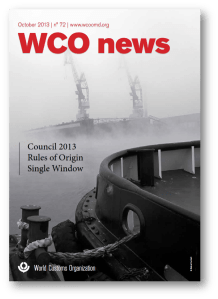
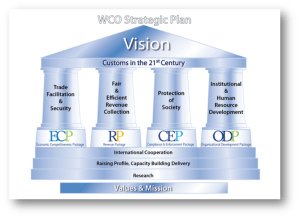
wco news 2013The latest edition of WCO News reflects on the Secretary General’s thoughts on what the WCO has done, what it will be doing, and what will impact on its work in the coming months. The WCO will actively focus its energies on it’s four strategic packages concentrating on revenue, compliance and enforcement, economic competitiveness and organizational development. Together, these packages support the adoption and application of modern Customs practices and raise awareness on the vital role of Customs in international trade.

Featured articles include –

  • From borders to boundless: the digital dilemma in Customs – it discusses two questions – How does an industry traditionally focused on physical borders remake itself for digital commerce, which inherently circumvents such borders? and, Why must Customs agencies transform to address the rise in digital goods and services?
  • Intercepting next generation threats

    For those responsible for the security of our borders, transit networks, VIPs and high-profile sites, the threat posed by more creative adversaries is compounded by the increasing frustrations of passengers and visitors, when subjected to existing security checks. The article discusses a range of ingenuity which technology nowadays provides to these adversaries, and the elements of new Terahertz imaging equipment to assist border agencies in the combat thereof.

  • Beyond the Single 

    Window (SW) – In the 20-plus years since they first opened in Singapore and Sweden, SWs have remained a central focus of border clearance strategies, even though the majority of Customs administrations have not implemented them. Although design plans vary considerably, most SW systems support an electronic data exchange model which allows for (i) Single submission of data and information; (ii) Single and synchronous processing; and (iii) Single decision-making for release and clearance. This article considers 4 best practices which governments should consider when implementing Single Window programs.

The publication also includes country case study’s on Single Window featuring Nigeria and New Zealand, Sri Lanka Customs 20 years of dedication towards conservation, a feature on Argentine Customs and many other interesting articles. To access the publication – click here! Source: WCO

Visiting the WCO’s Strategic Plan

Reality Check

The ongoing global financial and economic crisis affects governments,  organisations and citizens in different ways. It would seem that no individual or any organisation has the proverbial ‘silver bullet’ to normalise the situation either. Today, probably most Customs and Border agencies are undergoing ‘modernisation’ or some form of restructuring. Modernisation in itself implies automation or digitization of information changing the lives of the average customs (border) official as well as the expectations and predictability of service to traders and trade intermediaries around the world. 9/11 forever changed the role of Customs and for most of governments, border regulatory authorities as well. Changes in Customs have since been focussed on alignment to policy, standards and guidelines as advocated by the WCO.

WCO Startegic PlanNational adoption of these remains the foremost critical step in establishing a country’s ability to ‘connect’ with the world. A national administration should seek inclusivity of its trading community lest its modernisation be regarded as self-serving. Simultaneously, regional economic communities also seek radical change, albeit on a regionalisation level. Pressures on national (sovereign) nations develop given high-level political commitment to regionalisation, often without taking into account their respective countries’ state of readiness. This creates a false sense of commitment which results in regional failures. Behind such regional initiatives are normally a host of sponsors, purportedly with the right experts and solutions to rectify the ‘barriers’ which prevent a national state from integrating with its neighbours and global partners. Sound familiar? If so, it wouldn’t do national representatives any harm to refresh themselves with the under mentioned WCO tools and validate this in relation to the direction which their organisation is headed. These form part of the WCO’s Customs’ in the 21st Century Agenda. It is also recommended reading for the various regional economic communities (RECs) – here I refer to the African continent – who are not always au fait or fully appraised on the ‘readiness’ landscape of the member states they represent.

The Economic Competitiveness Package (ECP) (Click the hyperlink for more information) is currently a matter of high priority at the World Customs Organization (WCO). Economic competitiveness starts with trade facilitation and Customs administrations undeniably play an important role in this respect. Indeed, facilitating trade is one of the WCO’s key objectives and the Organization has contributed, through its tools and instruments as well as through technical assistance, to increasing the economic competitiveness and growth of Members.

The Revenue Package (RP) (Click the hyperlink for more information) was developed by the World Customs Organization (WCO) in response to WCO Members’ concerns in regard to falling revenue returns in the light of the global financial crisis and declining duty rates.

Significant progress has been made since the adoption of the WCO Capacity Building Strategy in 2003. However, new and emerging key strategic drivers impact on international trade and the roles and responsibilities of Customs administrations. This requires that all our capacity building efforts remain responsive and needs-driven to ensure beneficiary Customs administrations can obtain the support they need to pursue their reform and modernization. This Organisational Development Package (ODP) (Click the hyperlink for more information) outlines the basic approach of the WCO towards organizational development. It provides a simple and accessible overview of the texts, tools and instruments that relate to this topic. It refers and offers access to these resources but does not purport to capture all knowledge and practices within this extensive area.

The Compliance and Enforcement Package (CEP) (Click the hyperlink for more information) has been developed in order to assist Members to address the high-risk areas for Customs enforcement. The Customs in the 21st Century Strategy calls on Customs administrations to implement modern working methods and techniques. In this context, Customs should be equipped with the necessary tools that allow it to effectively manage supply chain risks and enforce laws and regulations in cases of non-compliance. In discharging this mandate, the WCO, in close co-operation with Members, has created an extensive library of instruments, tools, guidance materials and operational co-ordination activities to support Customs compliance and enforcement actions. These tools new form part of the CEP.


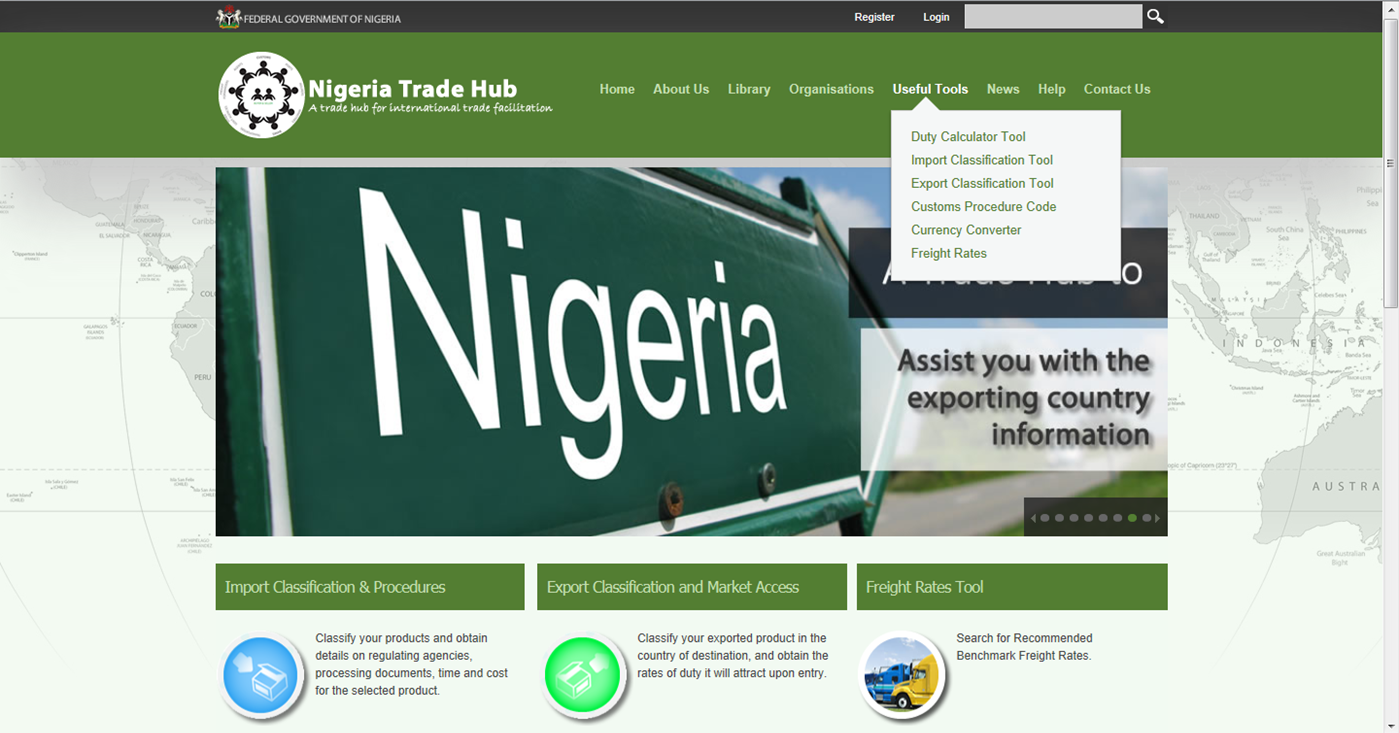
Nigeria Customs Service – Organically Developing The National Single Window

Nigeria Trade Hub 2The WCO Single Window Experts Accreditation Workshop took place on 23rd – 27th September, 2013 at Customs Border Control Training Centre (CBCTC), Seoul, Korea. The objectives of the workshop included:

  • Promoting the work of Single Window
  • Developing expertise meant for executive management
  • Developing different expertise in other technical areas of Single Window.

Developing this expertise brought about the WCO Data Model and SW accreditation Workshop as there are several areas where experts can emerge, including areas of Business processes, Legal, Data Model etc. The past efforts in capacity building served as a guide to developing the program for the workshop. The expectation included shaping assistance and building capacity in the areas of Single Window.

The participants included representatives from Nigeria, Mauritius, Chile, Singapore, Tanzania, Mexico, United Arab Emirates, Russia Federation, Saudi Arabia and Korea. Three out of the ten participants (Nigeria, Singapore, Mauritius) were accredited Co-Facilitator Status for the World Customs Organization at the end of the workshop. This demonstrates that Nigeria is certainly moving in the right direction and aligning to International Standards. Source: Nigeria Trade Hub

South Africa’s New Integrated Customs Border Management Solution

Amidst diverse expectations and feelings of excitement, anxiety and anticipation, the South African Revenue Service (SARS) migrated to its new integrated Customs and Border Management solution over the weekend of 17 August 2013. A new modern electronic solution Interfront can now rightfully claim some success even if it is an unseen component within a multi-layered, multi-technology solution of which South African Customs is now the proud owner. After 9 months of rigorous parallel testing between old and new, and a period of dedicated external testing with Service Providers of the customs business community, the decision to implement was formally agreed with trade a fortnight ago.

Interfront Customs and Border Solution (iCBS) replaces several key legacy systems, one of which has served South Africa for more than 30 years. The vast business and technical competence and skills which faithfully maintained and supported the old systems are to some extent in the wilderness now, but will hopefully find place within the new technology environment. While technology nowadays is particularly agile, and human physical placement at the coal face is under threat, organisations like SARS will always require customs technical business and policy competence to maintain the cutting edge.

There still remains an enormous amount of work to do regarding the alignment of the new clearance system with the specific guidelines, standards and principles of the WCO. With regional integration becoming more prominent on the sub-Saharan African agenda, the matter of ‘facilitation’ and ‘non-tariff barriers’ will inevitably become more prominent discussion points. Other salient features of the SAFE Framework of Standards such as Authorised Economic Operators and IT connectivity have already emerged as key developmental goals of a number of regional customs and border authorities. The timely introduction of Interfront places SARS in a pivotal position to influence and enable the required electronic linkages, crucial for the establishment of bi-lateral and multilateral trade agreements, transport corridors, and, support for ‘seamless’ multi-modal movement of cargo from port of discharged to its place of manifestation with limited intervention, based on the principles of risk management. Enjoy the Interfront video feature.