Advancing the argument for sealing cargo and tracking conveyances

South African Customs law provides for a seal integrity regime. This consists in provisions for the sealing of containerised sea cargo as well as sealable vehicles and trailers. These requirements have, however, not been formally introduced into operation due to the non-availability (until recently) of internal systems and cross-functional procedures that would link seal integrity to known entities. To explain this in more layman’s terms, it is little use implementing an onerous cargo sealing program without systems to perform risk assessment, validation of trader profiles and information exchange. It’s  like implementing non-intrusive inspection (X-ray scanning) equipment without backward integration into the Customs Risk Management  and Inspection environment and systems. It has often been stated that a customs or border security programme is a layered approach based on risk mitigation. None of the individual elements will necessarily address risk, and automation alone will likewise not accomplish the objective for safe and secure supply chains. Moreover, neither will measures adopted by Customs or the Border Agency succeed without due and necessary compliance on the part of entities operating the supply chain. It therefore requires a holistic strategy of people, policy, process and technology.

In the African context, it is surmised that the business rationale will be best accomplished with a dual approach on IT connectivity and information exchange. Under the political speak there are active attempts within SACU, SADC, COMESA and the EAC to establish electronic networks to facilitate and safeguard transit goods. Several African states are landlocked and are not readily accessible, some requiring multiple transit trips through countries from international discharge in the continent to place of final destination. National laws of each individual country in most instances provide obstacles to carriers achieving cost effective means in delivering cargoes. Over and above the laws, there exists (regrettably) the need to ‘grease palms’ without which safe passage in some instances  will not be granted. Notwithstanding the existence of customs unions and free trade areas, internal borders remain the biggest obstacle to facilitation.
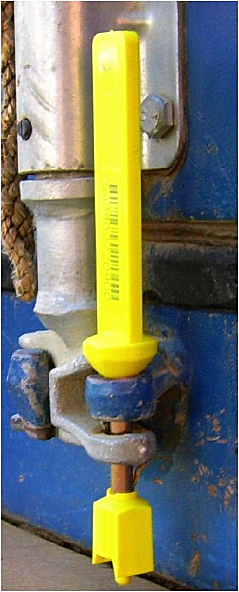
Several African logistics operators already implement track and trace technology in the vehicle and long-haul fleets. This has the dual purpose of safeguarding their assets as well as the cargoes of their clients which they convey. Since 9/11, a few customs administrations have formally adopted ISO PAS 17712 within their legislation to regulate the use of high security seals amongst cargo handlers and carriers. In most cases this mandates the use of high security ‘mechanical’ bolt seals. However, evidence suggests there is a growing trend to adopt electronic seals. Taiwan Customs for one has gone a significant way in this regard. Through technological advances and increased commercial adoption of Radio Frequency Identification (RFID) technology the costs are reducing significantly to warrant serious consideration as both a viable and cost-effective customs ‘control’ measure.

Supply chain custody using RFID as an identifier and physical security audit component – as provided for in ISO 17712 – is characterized by the following:

  • it uniquely identifies seals and associates them with the trader.
  • the seal’s unique identity and memory space can be used to write a digital signature, unique to a trader on the seal, and associating that seal with a customs declaration.
  • using customs trader registration/licensing information, together with infrastructure to read seal information at specified intervals along a route to create a ‘bread-crumb’ audit trail of the integrity of the cargo and conveyance.
  • using existing fleet management units installed in trucks to monitor seal integrity along the high risk legs of a cargo’s transit.
  • record the seal’s destruction at point of destination.

Looking forward to the future, it is not implausible for customs and border authorities to consider the use of RFID:

  • as a common token between autonomous customs systems.
  • to verify and audit that non-intrusion inspections have taken place en-route, and write that occurrence to the seal’s memory with the use of an updated digital signature issued to the customs inspection facility.
  • to create a date and time stamp of the cargo’s transit for compliance and profile classification – to confirm that transit goods have actually left the country as well as confirm arrival at destination (to prevent round tripping).
  • Lastly to archive a history of carrier’s activities for forensic and/or trend analysis.
This is a topic which certainly deserves more exposure in line with current regional developments on IT-connectivity and information exchange. A special word of thanks to Andy Brown for his contribution and insight to this post.
Related articles

Global Preferential Trade Agreement Database (GPTAD)

world-bank-logoThe World Bank International Trade Department has just launched it’s Global Preferential Trade Agreement Database (GPTAD). The GPTAD provides information on preferential trade agreements (PTAs) around the world, including agreements that have not been notified to the World Trade Organization (WTO). It is designed to help trade policy makers, scholars, and business operators better understand and navigate the world of PTAs.

The GPTAD Database contains the original text of PTAs that have been notified to the WTO as well as agreements that have not yet been notified. The database is updated on a regular basis and currently comprises more than 330 PTAs. Agreements in the database have been indexed using a classification consistent with the WTO criteria. The GPTAD is a unique online tool that allows users to search PTAs around the world by provisions or keywords and to compare provisions across multiple agreements. The database can be searched according to the following categories:

  • Duties and charges on imports
  • Quantitative restrictions on imports
  • Rules of origin
  • Sanitary and phytosanitary measures
  • Agriculture
  • Investment
  • Services
  • Dispute settlement procedures
  • Intellectual property
  • Labor
  • Environment

The Library provides the text of all agreements in their original language and archives them by key criteria. It enables users to sort PTAs by membership, date of signature, in-force status, and other key criteria. It also allows users to download and print PDF files of entire agreements.

The GPTAD is designed to be a valuable resource on PTAs for trade policy makers, scholars, and business operators around the world. To that end, the World Bank International Trade Department welcomes your input. If you are aware of bilateral or regional PTAs that are not included in the library or database, please contact us. The GPTAD is work in progress and we actively welcome and solicit your views and suggestions on how the site might be further improved and made more useful. Source: World Bank

Related website:

WCO/SACU – IT Connectivity and Data Exchange

WCO-SACU IT Interconnectivity and Data Exchange Conference

On the occasion of International Customs Day, in January earlier this year, the World Customs Organisation dedicated 2012 as the year “Connectivity”, which encapsulates people connectivity, institutional connectivity and information connectivity among the members of the global Customs community.

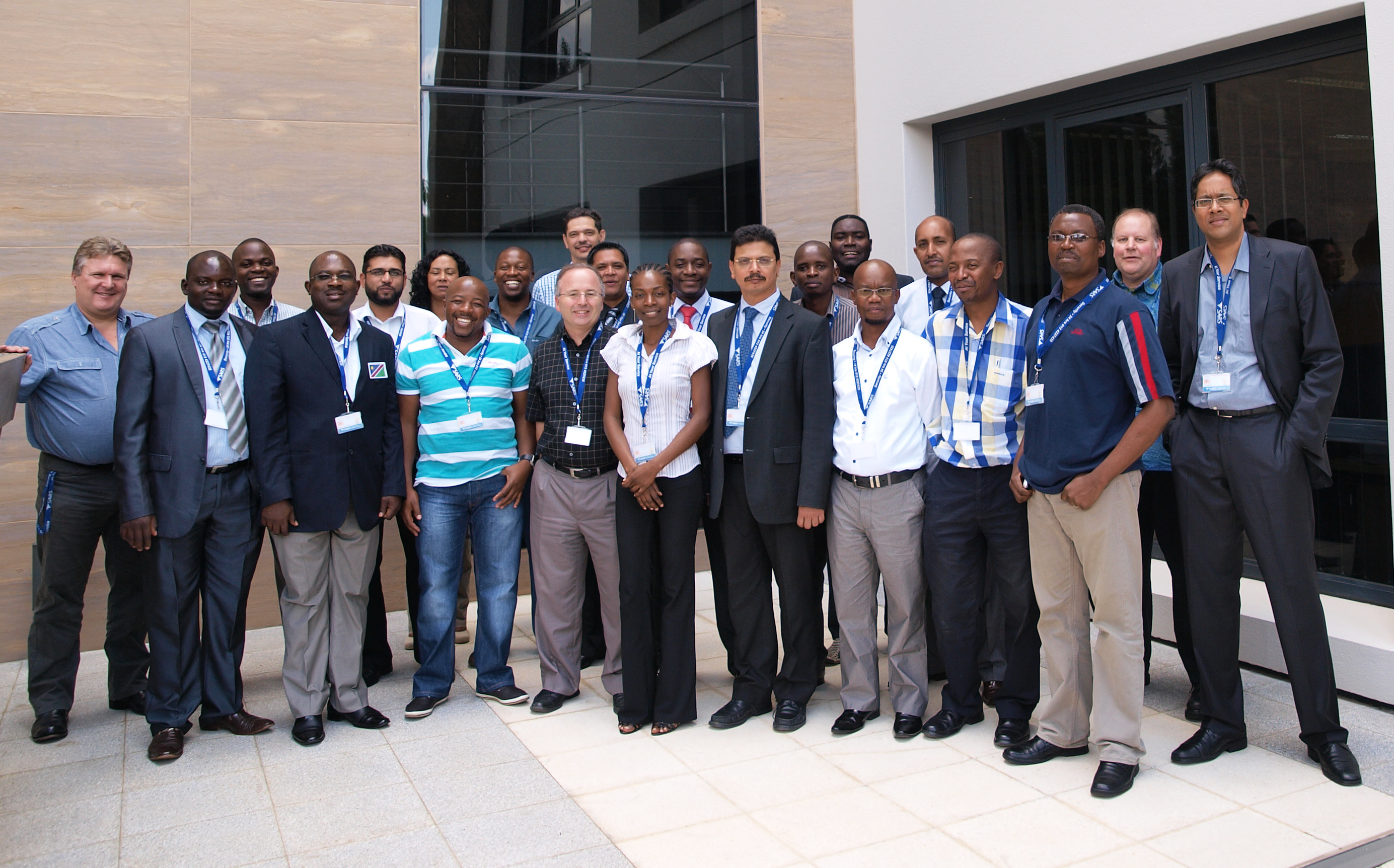
Over the last week and a half delegates from the WCO, SACU, UNCTAD, SADC and COMESA have been hosted at SARS, Pretoria to discuss and deliberate over an approach to implement ‘IT connectivity’ within the Southern African region. During the first week representatives from UNCTAD, SACU and SARS were briefed on important developments at the WCO on IT-Interconnectivity and Information Exchange. We were privileged to have Mr. Satya Prasad Sahu, Technical officer from the WCO – a leading expert in all matters of ICT in international customs matters – present the developments towards finalisation of a future international customs standard called “Globally Networked Customs” (GNC). It entails a structured approach that will enable customs authorities to formulate and document bilateral or regional ‘standards’ on a variety of Customs-to-Customs topics, for instance Authorised Economic Operators, Cross Border Information Exchange, Risk Management, etc. A representative from UNCTAD presented a synopsis of the proposed ‘cloud computing solution’ which the Trans Kalahari Corridor (TKC) plans to pilot between Namibia and Botswana along the TKC route in the next few months. During the course of this week, delegates , under the guidance of Satya, prepared a proposed approach for information exchange between members of the Southern African Customs Region. This document is based on the GNC Utility Block structure (defined by the ad Hoc Committee on Globally Networked Customs at the WCO) and served as the basis for discussion for Week 2.

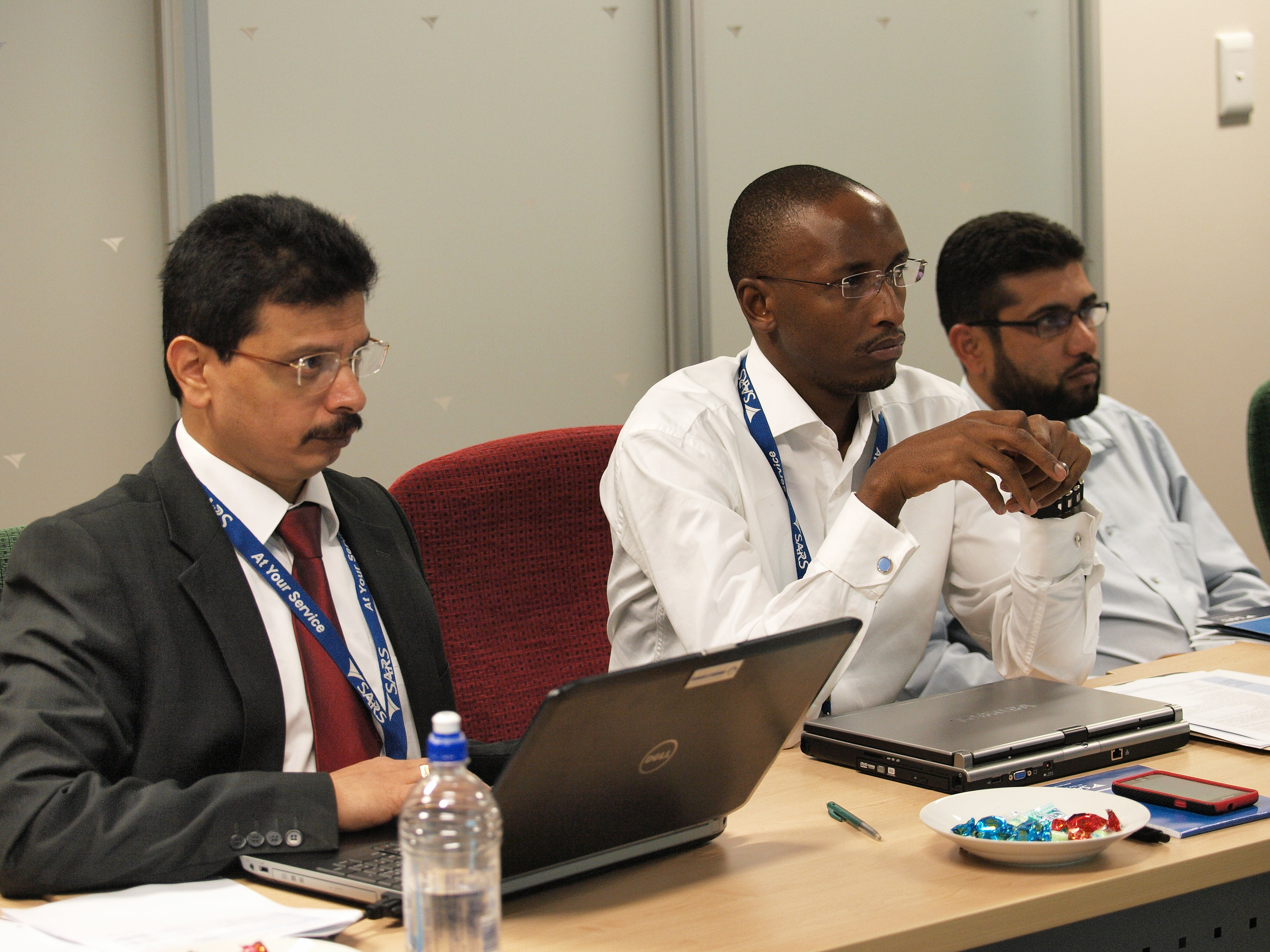
Mr. SP Sahu (WCO) and delegates from SACU SecretariatWeek 2 saw the arrival of customs and IT representatives from COMESA, SADC, UNCTAD, SACU as well as a delegation from Mozambique Customs. Mr. Sahu was invited to chair the session, given his vast experience on the subject matter as well as international experience in national and regional customs ICT programmes. Delegates were treated to various lectures on the GNC, a comprehensive overview of developments on ASYCUDA (Customs solution developed by UNCTAD), various updates from within the customs region – Botswana, Namibia, Lesotho, Swaziland, Mozambique and SARS. Beyers Theron informed delegates of ongoing developments of the SARS Customs Modernisation Programme as well as key implications for neighbouring countries. SARS presented a live demonstration of SARS’ Service Manager solution, navigating through all the functionality now available to SARS Customs officials. Of significant interest to all was the new iPod inspection tool. This technology is given prominent feature in the latest edition of WCO News.

A large portion of the week was, however, spent on deliberating the proposed scope and content of the draft Utility Block on Information Exchange in the Southern African Region. Significant progress was been made to attain first, a common understanding of the scope as well as the implications this has for participating countries. Delegates will return home with a product with which to create awareness and solicit support in their respective countries. Over the next few months SARS will engage both SACU and SADCOM (combined SADC and COMESA trading blocs) to establish firm commitments for information exchange with customs administrations in these regions. This conference is significant for SARS and South Africa as a whole as it provides a uniform, standardised and practical approach for engagement with other international trading partners. To view photographs of the conference please click here!

SA truckers – fines for cross-border permit infractions

Assuming that the RSA government favours the drive for increased inter-Africa trade and free movement of goods and conveyances, perhaps its time for transport officials to look beyond the letter of the law and automate their process.

South African truckers have been warned not to travel without their cross-border permits as they could face hefty fines. According to the Cross Border Road Transport Agency (CBRTA), trucks dispatched to the border ahead of a permit being issued could be fined as the permit has to be in the truck at all times. “According to the legislation anyone with the intent of crossing the border must be in the possession of these permits,” said CBRTA CEO Sipho Khumalo. “That means operators cannot dispatch their trucks to the border and then send the permit with a car once it has been issued later to catch up with the truck. That is against the law.” Source: FTW

Record Freight Traffic for Walvis Bay Corridors

Walvis Bay CorridorsVolumes along all the Walvis Bay Corridors have hit a record high of more than 63,000 tonnes for the month of January 2012, reports Namib Times. The report describes this as a significant growth of cargo volumes along the TransKalahari, TransCaprivi and TransCunene Corridors respectively. From a mere ten trucks a day that left the Port of Walvis Bay seven years ago to other SADC countries, more than 1,000 vehicles are now entering or leaving the Port of Walvis Bay on a monthly basis.

Although some markets such as Zimbabwe, Zambia and DRC have experienced stronger growth than the other markets, a growth factor has been seen with all the Corridor markets for the past six months. The Botswana and Gauteng (South Africa) markets are growing slowly, with the variety of commodities being expanded along these corridors. Imports and exports for Malawi via Walvis Bay are also on the increase, as this market also offers an immense possibility of attracting commodities such as tobacco to be transported via the Namibian port. The Angolan market also showed an increase during the past 6 months as more types of commodities are being transported via Walvis Bay destined for Southern Angola. Source: Namib Times

SAD story – Part 1

Die-hard SAD fan! (Tammy Joubert)We all suffer a little nostalgia at one or other point in our lives. Those die-hard legacy officials – the kind who have more than 20 years service – will most definitely have suffered, recoiled, and even repelled mass change which has occurred in the last 10-15 years in South Africa.  In the mid-2000’s the advent and replacement of the tried and tested DA500/600 series customs declaration forms by the Single Administrative Document – better known as the SAD – was unpopular to most customs officers although it was possibly welcomed by SACU cross-border traders.

A political coup had been won by some BLNS states compelling South Africa to harmonise its declaration requirements with those of fellow members, especially those operating ASYCUDA. At the time, SARS saw this compromise necessary to bring about alignment with Namibia and Botswana to facilitate the implementation of a new customs clearance dispensation for the Trans Kalahari Corridor (TKC).

The SAD is almost universally accepted by virtue of its design according to the UN Layout Key. However, why the fuss. A form is a form. Allied industry in RSA were used to the three decade old DA500/600 declaration forms which were designed infinitely better and more logical than the SAD.

None-the-less, South Africans are adaptable and accommodating to change. Following on from my recent post “SACU now a liability” it is now the SAD’s turn to stare death in the face. As it turns out, through wave upon wave of technological advances, we no longer need the SAD. At least in its paper form. In SARS case it no longer needs the SAD – period. A newer derivative (strangely not too dissimilar to the DA500/600) has now gained favour. It is known as the Customs Declaration 1 (Form CD1). However, unlike the DA and SAD forms, the CD1 will most likely never be required in printed format owing to SARS Customs preference for digitized information. Needless to say, if nothing else, the CD1 will provide a graphic representation of the EDI CUSDEC data for the customs officer. Next time, I’ll discuss the rationale behind ‘customs harmonisation’ and its non-dependency on document format. I feel for the die-hard SAD fan!

Customs Modernisation Release 3 – SACU

Saturday 11 February 2012 sees the implementation of new modernised customs procedures and formalities at South Africa’s first SACU land frontier office – Kopfontein – border between South Africa and Botswana.  While enhancements are slanted more in terms of internal SARS customs procedure, SACU traders will no doubt experience some anxiety with the transition. For the first time SARS Customs Modernisation impacts directly on traders and neighbouring Botswana Customs operational procedures in a significant way, which will fashion operations at all remaining inland border posts of the Customs Union. Over the last few months SARS has worked with trade, the Botswana customs authority as well as the business chamber in Botswana concerning the intended changes and their impact on stakeholders. The implementation ushers in cross-cutting changes for customs staff operationally, new technology as well as legal and policy changes. In the case of the latter, a further element of the draft Customs Control Bill is introduced whereby foreign business operators (importers, exporters and road carriers) must be registered with SARS to perform customs transactions in South Africa. This is perhaps the single issue which has had ramifications for parties who regularly cross the border between Botswana and South Africa. Hopefully recent iterations of notices and explanations have helped clarify the SARS requirements. (See the SARS Customs Modernisation webpage).

Other modifications and changes include –

Elimination of paper clearance documents – this is a significant departure from traditional SACU processing where all member countries have relied on the Single Administrative Document (SAD) to facilitate intra-SACU clearance. With the bulk of clearances expected to be electronic, SARS will now only print a customs notification (CN1) which will specify the status and outcome for each clearance. This the trader will use in support of customs clearance in Botswana. SARS will therefore no longer stamp and authorise hardcopy SAD500 clearance documents. Of course, there is nothing which stops a trader printing the SAD500 for cross border purposes, only SARS will no longer attest these. As concerns SARS VAT requirements, arrangements will be made for traders to submit the CN1 for purposes of VAT returns. Details on this to follow.

Electronic supporting documents – already tried and tested at sea and airports across South Africa, traders no longer need to carry on their person hard copy clearance supporting documentation , i.e. invoices, worksheets and packing lists. These are only required should SARS indicate via electronic message that a consignment requires further scrutiny. Customs brokers and traders using EDI will in most cases have the SARS e@syScan facility available on their computer systems which makes it relatively simple and easy to scan, package and submit to SARS. In the event a trader cannot perform this electronically, he may approach any of the 4 Customs Hubs (Alberton, Cape Town, Durban, and Doringkloof) across the country, to have these scanned and uploaded by SARS. Alternatively, these can of course be delivered to the border post for manual processing and finalisation of a customs intervention. Supporting documents are linked to a unique case number which SARS notifies to the trader in the event of a risk.

Clearance processing – SARS has centralised its backend processing of clearances where goods declarations are now processed off-site at one of the 4 Hubs. No longer are clearances processed at customs branch office. All goods declarations – whether electronically submitted or manually captured – are routed to a central pool for validation, verification and assessment if flagged by the risk engine. In the case of land borders all clearances once successfully processed will receive a ‘Proceed-to-border’ message implying that the road carrier may commence delivery to the border. A key feature of the new clearance process is the availability of Customs Status Codes. These codes are initiated by the customs system at specified points in the process to alert the declarant of the status of his/her transaction. These status’s also indicate the follow-up required of the declarant to bring the transaction to a state of finality.

Automated Cargo Management (ACM) – All road carriers are now required to submit their road manifests electronically, via EDI, to the Customs ACM system. For now, SARS will not electronically match the manifest against the declaration, but will monitor compliance and data quality of electronic manifest  for a period of time before initiating real-time matching and acquittal. This will invoke a significant responsibility on both trader and road remover to ensure that they both provide credible data to customs otherwise delays will occur. Upon arrival of the cargo at the border, the driver presents a printout of his electronic manifest. The manifest number is ‘checked in’ by a customs official which in seconds brings up all associated goods declarations linked to the manifest number on the system. The customs officer is able to determine the overall risk status of the vehicle. Where no risks are present a status notification (CN1) is printed for each goods declaration, and a gate pass (CN2) is handed to the driver permitting him to exit the customs controlled area. The future real-time matching will comprise a combined risk assessment of both manifest and declaration information that will result in a single risk outcome. Such risk assessment will include both fiscal and security compliance features thereby bringing SARS in line with international supply chain security standards. Going forward, risk assessment will accommodate ‘all-of-government’ requirements ensuring that all regulatory measures and associated risks are administered in a single instance obviating the need for successive, time-consuming inspections and costly delays.

Automated Customs Inspection – Following its recent introduction at the Beit Bridge border post, the new hand-held inspection tool, conveniently developed on an iPod, allows the customs border control official to electronically access, capture and upload an inspection outcome to the central customs system. This significantly improves the efficiency for this time-intensive activity where the officer can initiate a status up date electronically at the inspection site, where previously the declarant would have to wait for the outcome of the manual inspection report and release note. What’s more, the customs officer has access to the underlying clearance data and can even activate the camera function and capture visuals of suspect cargo which can be appended to an inspection case for verification by higher authority or historical reference value.

There are additional features and functionality to be introduced at Kopfontein and all remaining border posts over the next few months. These relate to improved revenue accounting, new trader registration and licensing system offering online application and approval, and a new traveller and temporary import/export processing. More about this in a future post.  For traders, the benefits of the new solution at SACU land borders aim to remove random and unwarranted intervention by customs. All activities are risk driven via a secure ‘get next’ selection function ensuring that internal integrity is maintained and only ‘risk-related’ consignments/transactions are dealt with. Please visit the SARS Modernisation webpage for all the latest updates and notices on modernisation releases.

China leads shake-up in distribution methods

Out of respect for copyright, I would encourage all logistics followers to visit this link to learn more about a significant shift occurring in the distribution of containerized goods. Some food for thought considering local conditions in South Africa which currently appear to marginalize (if not discourage) inland localisation and multi-modal distribution of goods between the hinterland and major air and sea ports in Southern Africa. Source: FT.com

Related Article

Greetings for 2012

العربية: الخريطة الهجائية لأفريقيا English: Or...

As my leave break draws to a close I thought it opportune for ‘Africans’ to maintain a positive view on developments on the continent, not that international affairs elsewhere on the globe give any cause for joy. To this I append an article “Its time for Africa” that will hopefully reinforce sentiment in both government and trade quarters on the ‘attractive’ or ‘potential’ opportunities which our continent has to offer. I look forward to a new year of interesting times and challenges. Enjoy the read.

Free Trade talks to kick continent into the future

The first round of negotiations to establish a free trade area covering 27 countries in southern and east Africa will kick off on December 8, in Nairobi. It is envisaged that the negotiations will be completed in 36 months. (Really?)

The three trade blocs involved – the Southern African Development Community (SADC), the East African Community (EAC) and the Common Market for Eastern and Southern Africa (COMESA) – decided in October 2008 in Kampala to move towards a free trade agreement.

The intention is to boost intra-regional trade because the market will be much bigger, there will be more investment flows, enhanced competitiveness and the development of cross-regional infrastructure.

Industrialisation, making goods to sell instead of selling primary products, is a possible and also necessary spin-off. Competition with older established and also bigger emerging economies might be a stumbling block initially, but the huge new market may make it possible for locally manufactured goods to compete with those imported from outside the FTA.

Close to 600 million people live in the FTA with a gross domestic product of $1 trillion – suddenly we are boxing in the same weight division as China, India, Russia, Brazil, the US and the EU. Source: All Africa.com.

BriberyComment: Heard all of this before?  It could be hoped that some positive developments will materialise from more talkshops with promises to alleviate poverty and increase Africa’s slice of the international market. While the retail and telecommunications industries have made significant inroads into Africa, manufacturing remains a moot point. Does Africa have the political will to take risks? Removing internal border controls for instance are not high priority for sovereign governments. Neither for that matter is the question of the integrity of officials who man these borders. And, neither is the matter of removing one of the key contributors to cross border fraud – the “paper customs declaration”. Nonetheless, attempts are still being made to redress these ills. Recent developments within SACU indicate a genuine move towards customs-2-customs information exchange based on the ‘Customs Inter-connectivity’ concept. More on this shortly.

Single Window, Corridors and Integrated Borders

Besides all the recent modernisation developments here at home, and abroad, there is both renewed interest and pressure on sovereign governments to push for efficiencies and cost savings relating to regional transport corridors. A case in point is the ambitious initiative involving various states of the East African Community. The Heads of State of the Tripartite (COMESA, EAC and SADC) requested an action plan to improve the efficiency of these corridors to facilitate trade, lower costs for businesses, advance regional integration, and improve the economic livelihoods of all East Africans. The Corridor Diagnostic Study is the technical foundation for that plan. See also the East African Corridors website which provides a comprehensive insight into this regional initiative.