WCO facilitates Data Model training for SARS

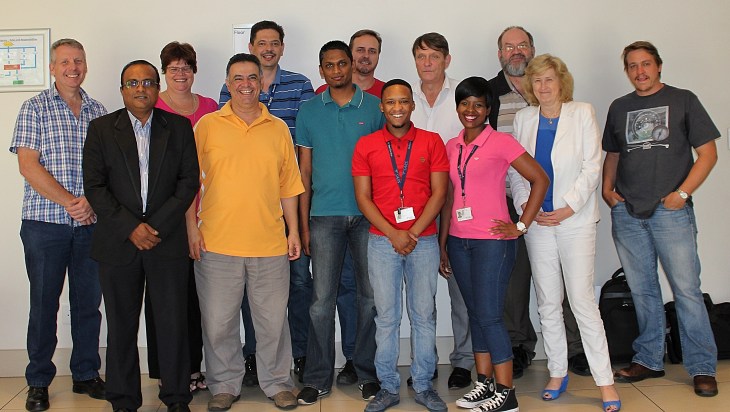
WCO Data Model Workshop, Pretoria, South Africa, Dec. 2015

SARS’ EDI and Customs Business Systems representatives with WCO Data Model facilitators Mr. Giandeo Mungroo (2nd from the left) and Ms. Sue Probert (2nd from the right) [Photo – SARS]

Officials of the South African Revenue Service (SARS) last week attended a WCO workshop on the Data Model facilitated by Ms. Sue Probert and Mr. Giandeo Mungroo. The event, held in Pretoria, South Africa was sponsored by the CCF of China as part of the WCO’s Capacity Building endeavours to promote the adoption and use of customs standards and best practice amongst it’s  member states.

The workshop was requested by SARS ahead of new technical and systems developments and requirements informed by SARS’ new Customs Control and Duty Acts. Moreover, there are also political ambition to institute a Border Management Agency for the Republic of South Africa. All of this requires that SARS Customs has a robust electronic tool to assist the organisation in mapping national data requirements according to specific needs.

Besides the use of a value added Data Model tool – GEFEG, it is imperative for the organisation to develop capacity in the knowledge and understanding of the WCO Data Model. SARS has successfully EDI (Electronic Data Interchange) for the last 15 years with various local supply chain trading partners and government agencies. Over the last few years SARS has been actively pursuing and promoting IT connectivity with regional trading partners with the express purpose to extend the benefits of eCommerce across borders.

GEFEG.FX software is used to model data formats and develop implementation guidelines for data interchange standards such as UN/EDIFACT. It is a software tool that brings together modelling, XML schema development, and editing of classic EDI standards under a unified user interface, and supports the development of multilingual implementation guidelines.

Version 3 of the WCO Data Model brought about a distinct shift towards an ‘all-of-government’ approach at international borders with the introduction of the GOVCBR (Government Cross Border Regulatory) message. The message and underlying data requirements facilitate the exchange of customs and other government regulatory information to support a Single Window environment.

WCO Data Model not only includes data sets for different customs procedures but also information needed by other Cross-border Regulatory Agencies for the cross-border release and clearance at the border. The WCO Data Model supports the implementation of a Single Window as it allows the reporting of information to all government agency through the unique way it organizes regulatory information. This instrument is already 10 years old and is seeing increased use by WCO members.

Amongst the benefits derived from the workshop, SARS staff acquired the following competencies that will not only aid their work but business user support as well –

  • Competence in operating the tool to build a source control collaborative environment to support national and regional harmonization;
  • Competence to build a base to conduct national/ regional data harmonization based on the WCO Data Model to support national Single Window implementation as well as Regional Integration;
  • Competence to build systems/ electronic interfaces between Customs and its partner government agencies including a Border Management Agency; and
  • Provide needed competence to develop, maintain and publish national and regional information packages based on the WCO Data Model.
Biggest bust of Rhino Horn at a South African airport

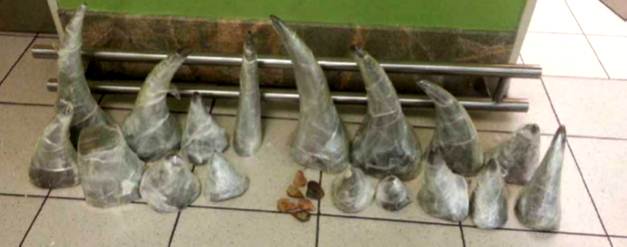
Biggest bust of Rhino Horn at a South African airportSARS Customs officers at OR Tambo International Airport (ORTIA) last week intercepted over 41kg of rhino horns – with a total value of over R4.5 million – transiting through the airport. This is the biggest ever seizure of rhino horn by the SARS Customs team at OR Tambo International, Johannesburg.

As a result of profiling two foreign nationals travelling from Maputo to Vietnam via Johannesburg,  their baggage was intercepted during a stop-over at ORTIA. A Customs detector dog “Mimmo” reacted positively to two bags. The tags found on the bags also did not correspond to the tags presented to Customs officials during the initial questioning of the passengers. This is a practice commonly found with narcotics smuggling syndicates.

The bags had a strong garlic and glue smell, (a tactic to distract detector dogs). Further to the plastic wrapped horns, the zips of the bags were also glued in an effort to keep the odour intact and to make the inspection difficult. Subsequent physical inspection of the bags by Customs officials revealed the rhino horn allegedly being smuggled by the two travellers. Source: SARS

Parliament Postpones Customs Bills

Thaba Mufamadi, chairman of Parliament’s finance committee. Picture - Financial Mail

Thaba Mufamadi, chairman of Parliament’s finance committee. Picture – Financial Mail

Parliment’s standing committee on finance (SCoF) has decided to postpone its deliberations on two draft customs-related bills until next year to allow importers and the freight-forwarding industry more time to comment on the proposals which threaten the status of City Deep as an inland port. This followed an appeal by the South African Association of Freight Forwarders that it had had insufficient time to consider the substantially revised draft Customs Control Bill and Customs Duty Bill, which required that imported goods would have to be cleared at the first point of entry.

The association, supported by a range of other business organisations, including the Johannesburg Chamber of Commerce and Industry, warned that the bills could be challenged on constitutional grounds if the process of consultation was deficient. All political parties supported the proposal by finance committee chairman Thaba Mufamadi on Wednesday that the deliberations on the bills be postponed until next year. He instructed stakeholders to make their submissions to the South African Revenue Service (SARS) by December 15.

Mr Mufamadi also took cognisance of concerns raised by Business Unity South Africa that parliamentary processes did not allow sufficient time to comment, for example, on the medium-term budget policy statement. Industry has warned of port delays and trade disruption if the proposals were to be adopted. The Customs Control Bill proposes that goods be cleared at the first port of entry into South Africa. This will mean that inland ports such as City Deep in Johannesburg would no longer be designated places of entry or exit for customs purposes. In the past, containerised cargo could move directly to inland ports on arrival in the country under cover of a manifest. A new declaration — of the nature, value, origin and duty payable on the goods — would replace the manifests.

SARS said these did not provide sufficient information to undertake a risk assessment. Another bone of contention for industry was the “extremely severe” penalties proposed in the draft Customs Duty Bill. Following the uproar about the proposals SARS offered a compromise earlier this week as a way out of the impasse. Instead of a clearance at the port of entry, a mandatory advance customs clearance of the goods three days before their arrival at the first port of entry would be required. Goods consigned to inland terminals such as City Deep would be released conditionally. The system would be tested for the whole of next year to iron out any problems.

An alternative option would be for the goods to undergo a lesser form of clearance at the first point of entry. This would still entail providing customs authorities with the same level of information on the tariff, value and origin of goods, which would be submitted by electronic data interchange. The importer would be held accountable for the information that was provided. SARS official Kosie Louw said that because this document would not have the formal status of a clearance certificate, it would not disrupt existing legal contractual arrangements, as claimed. The goods would still move CIF (cost insurance and freight) from the port to City Deep. SARS has also proposed softening the penalty provisions so that errors not resulting in any prejudice to customs revenue will be subject to penalties only after three warnings. These penalties will be discretionary and applied leniently in the first 12 months of the bill coming into force to allow business time to properly prepare for the change. An appeal process has been included. Source: Business Day Live. 

South Africa’s New Integrated Customs Border Management Solution

Amidst diverse expectations and feelings of excitement, anxiety and anticipation, the South African Revenue Service (SARS) migrated to its new integrated Customs and Border Management solution over the weekend of 17 August 2013. A new modern electronic solution Interfront can now rightfully claim some success even if it is an unseen component within a multi-layered, multi-technology solution of which South African Customs is now the proud owner. After 9 months of rigorous parallel testing between old and new, and a period of dedicated external testing with Service Providers of the customs business community, the decision to implement was formally agreed with trade a fortnight ago.

Interfront Customs and Border Solution (iCBS) replaces several key legacy systems, one of which has served South Africa for more than 30 years. The vast business and technical competence and skills which faithfully maintained and supported the old systems are to some extent in the wilderness now, but will hopefully find place within the new technology environment. While technology nowadays is particularly agile, and human physical placement at the coal face is under threat, organisations like SARS will always require customs technical business and policy competence to maintain the cutting edge.

There still remains an enormous amount of work to do regarding the alignment of the new clearance system with the specific guidelines, standards and principles of the WCO. With regional integration becoming more prominent on the sub-Saharan African agenda, the matter of ‘facilitation’ and ‘non-tariff barriers’ will inevitably become more prominent discussion points. Other salient features of the SAFE Framework of Standards such as Authorised Economic Operators and IT connectivity have already emerged as key developmental goals of a number of regional customs and border authorities. The timely introduction of Interfront places SARS in a pivotal position to influence and enable the required electronic linkages, crucial for the establishment of bi-lateral and multilateral trade agreements, transport corridors, and, support for ‘seamless’ multi-modal movement of cargo from port of discharged to its place of manifestation with limited intervention, based on the principles of risk management. Enjoy the Interfront video feature.


Port-to-Hinterland…gearing up for growth?

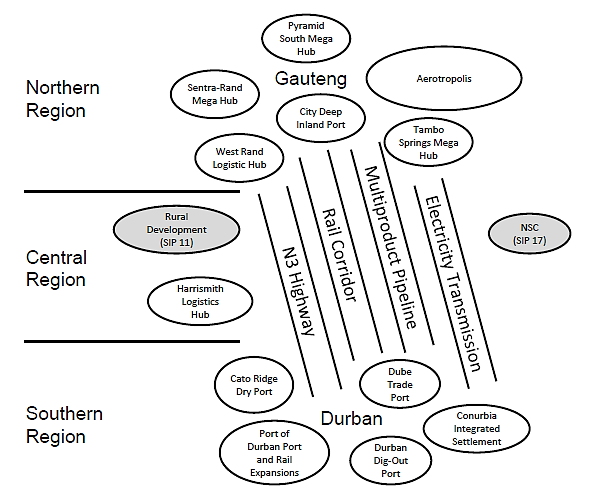
Proposed Durban-Free State-Gauteng Logistics and Industrial Corridor Plan (SIP2)

Proposed Durban-Free State-Gauteng Logistics and Industrial Corridor Plan (SIP2)

Notwithstanding on-going discontent amongst industry operators in regard to proposed legislative measures mandating customs clearance at first port of entry, the South African government (GCIS) reports that work has already commenced on a massive logistics corridor stretching between Durban and the central provinces of the Free State and Gauteng. Most of the projects that form part of the second Strategic Infrastructure Project (SIP 2), also known as the Durban-Free State-Johannesburg Logistics and Industrial Corridor, are still in the concept or pre-feasibility stage, but construction has already started on several projects.

These include:

  • the building of a R2,3 billion container terminal at City Deep
  • a R3,9 billion project to upgrade Pier 2 at the Port of Durban
  • R14,9 billion procurement of rolling stock for the rail line which will service the corridor.

Work has also started on the R250 million Harrismith logistics hub development to set up a fuel distribution depot, as well as on phase one of the new multi-product pipeline which will run between Johannesburg and Durban and transport petrol, diesel, jet fuel and gas.

The aim of these projects and others which form part of SIP 2, is to strengthen the logistics and transport corridor between South Africa’s main industrial hubs and to improve access to Durban’s export and import facilities. It is estimated that 135 000 jobs will be created in the construction of projects in the corridor. Once the projects are completed a further 85 000 jobs are expected to be created by those businesses that use the new facilities. Source: SA Government Information Service

Interested in more details regarding South Africa’s infrastructure development plan? Click here!

City Deep Inland Terminal [port] to be hit hard by Customs Bill

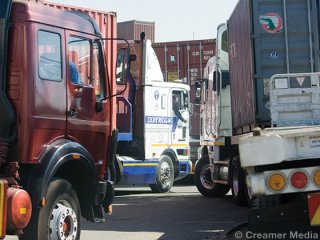
Trucks at Transnet Freight Rail's City Deep Terminal (Engineering News)

Trucks at Transnet Freight Rail’s City Deep Terminal (Engineering News)

Following up on last year’s meeting (click here!) of the minds, convened by the JCCI, a recent meeting in Johannesburg placed fresh emphasis on the dilemma which impending changes contemplated in Customs Draft Control Bill will have for the import and logistics industry in particular. The following report carried by Engineering News highlights trade’s concerns which are by no means light weight and should be addressed with some consideration before the Bills come into effect. Gauging from the content below, there is a clear disconnect between business and policy makers.

The closure of Johannesburg’s inland port seemed to be a “done deal” as Parliament deliberated the recently tabled Customs Control Bill that would leave the City Deep container depot invalid, Chamber of Commerce and Industry Johannesburg (JCCI) former president Patrick Corbin said on Friday.

The promulgation of the South African Revenue Services’ (Sars’) newly drafted Customs Control Bill, which, in conjunction with the Customs Duty Bill, would replace the current legislation governing customs operations, would have a far-reaching impact on the cost and efficiencies of doing business in South Africa and other fellow Southern African Customs Union (Sacu) countries, he added.

The Bill, which was the product of a three-year development process within the National Economic Development and Labour Council, declared that all imported goods be cleared and released at first port of entry. This was part of efforts by customs officials and government to root out any diversion and smuggling of goods, ensure greater control of goods moving across borders and eliminate risks to national security.

Speaking at the City Deep Forum, held at the JCCI’s offices in Johannesburg, Corbin noted, however, that City Deep had operated as an inland port for the past 35 years, easing the load on the country’s coastal ports, which were already strained to capacity. Despite customs officials assuring the chamber that the operations and facilities in City Deep/Kaserne would retain its licence as a container depot, he believed customs had failed to recognise the critical role City Deep had played in lowering the cost of business, easing the burden on South Africa’s ports and ensuring ease of movement of goods to neighbouring countries. As customs moved full responsibility of container clearances to the ports, port congestion, inefficiencies, shipping delays and costs would rise, and jobs would be lost and import rail volumes decreased, he noted.

Economist Mike Schussler added that the closure of the City Deep inland port operations would add costs, increase unreliability and induce “hassles”, as the Durban port did not have the capacity to handle the extra volumes and its productivity and efficiencies were “questionable” compared with other ports.

“The volume of containers going to overstay or being stopped for examination in City Deep [will] need to be handled by [the coastal] ports. If they can’t cope with the volume at the moment, how are they going to handle increased volumes,” Iprop director Dennis Trotter questioned. He noted that only the containers cleared 72 hours prior to arrival would be allocated to rail transport. Those not cleared three days before arrival would be pushed onto road transport to prevent blocking and delaying rail operations.

This, Schussler said, would also contribute – along with port tariffs and the cost of delays – to higher costs, as road transport was more expensive than rail.

He pointed out that South Africa was deemed third-highest globally in terms of transport pricing. It would also result in less rail capacity returning for export from Johannesburg, further leading to increased volumes moving by road from City Deep to Durban.

Sacu countries, such as Botswana, would also be burdened with higher costs as they relied on City Deep as an inland port. Trotter noted that the region would experience loss of revenue and resultant job losses. Over 50% of South Africa’s economy was located closer to Gauteng than the coastal ports. Johannesburg alone accounted for 34% of the economy, said Schussler, questioning the viability of removing the option of City Deep as a dry port.

However, unfazed by the impending regulations, Transnet continued to inject over R1-billion into expansion and development opportunities at City Deep/Kaserne. Corbin commented that Transnet had accepted the assurances from customs that “nothing would change and the boxes would still be able to move seamlessly once cleared.” The City of Johannesburg’s manager of transport planning Daisy Dwango said the State-owned freight group was ramping up to meet forecast demand of the City Deep/Kaserne depot.

The terminal’s capacity would be increased from the current 280 000 twenty-foot equivalent units (TEUs) a year, to 400 000 TEUs a year by 2016, increasing to 700 000 TEUs a year by 2019. Transnet aimed to eventually move to “overcapacity” of up to 1.2-million TEUs a year. Dwango said projections have indicated that by 2021, the City Deep/Kaserne terminals would handle between 900 000 and one-million TEUs a year. Source: Engineering News

SARS Customs launches its Water Wing

SARS Customs Waterwing

SARS plans to operate jet skis (such as pictured above) along its vast river borders. [Picture – SARS]

Last week four Customs officers received their qualifications from the South African Maritime Safety Authority (SAMSA) after having successfully completed their written and practical examinations. The officers who hail from the Northern Cape region will commence active patrol and enforcement operations along the northern border between South Africa and Namibia.

The SARS Water Wing skippers received their SAMSA category R certificates after completing a four-day training course at the Van Rhyn Dam in Benoni.

The officers will from next week begin patrolling the Orange River, the border between South Africa and Namibia, where there are suspected illegal trans-border transactions taking place, especially in abalone, diamonds, narcotics and rhino horn.

“These officials are now qualified skippers with category R licences which will enable them to patrol inland waters such as rivers, dams and harbours. The success of this pilot programme now enables us to actively assist in enforcing the Customs and Excise Act without being totally dependent on other departments,” said Hugo Taljaard, Senior Manager: Detector Dog Unit (Oversight).

He said that although the two jet skis will mostly be used in the Nakop area, they will also be utilised as far as Cape Town harbour in the small craft side of the harbour. There are plans to expand the unit. Customs’ first water wing boat is currently being constructed and more details about its deployment will be communicated in due course.  The jet skippers all agreed that it was quite exciting to be part of this pilot programme. “I never in my wildest dreams thought that one day I would be doing something like this,” remarked one candidate.  “Having jet skis will increase our visibility and this will serve as a deterrent to illegal trans-border traders,” added another.

Over the last 6 years SARS has steadily been increasing its visible policing and enforcement capability across the country’s vast land and sea borders. The hugely successful Detector Dog programme has attracted much national and regional attention. SARS also has plans to increase its existing non-intrusive inspection (NII) capability. Currently Durban, South Africa’s sole CSI port, is the only port with a dedicated X-ray scanning facility. Source: SARS Communications Division and self.

SARS – Modernisation milestone materialising

Interfront logo2

Its been some time since I’ve penned an article on the South African Customs Modernisation Programme. Aside from it being the SA Revenue Service’s prerogative to communicate and publish notice of its internal developments and plans, some caution always needs to be exercised observing bureaucratic protocol, ensuring that the official message is forthcoming from SARS. Given the widespread interest in the programme as well as the development of the Interfront [formerly Tatis] integrated customs border management solution (iCBMs) as a wholly owned development of South Africa, I think it not out of place to inform the public interest on this matter. Readership of this blog has an extensive global following and a specific interest in Interfront developments.

Unlike ASYCUDA, Sofix, e-Biscus, and a host of other integrated Customs-tailored business solution offerings, Interfront’s solution for SARS will not include a client user frontend. In other words, the Interfront system (iCBMs) will essentially drive declaration backend processing. This comprises a fully integrated declaration validation and processing engine, supported by a sophisticated tariff engine and duty calculator; the latter offering future web-based services for customs users. In order to compliment the SARS corporate and standardised user interface approach, the iCBMs interfaces with SARS’s revenue accounting, trader registration, risk management, and case management workflow systems. Not only does this leverage cost savings and efficiencies, but ensures a unified ‘workspace’ for all of SARS employees.

Much of the Interfront technology is therefore hidden to the customs user, with traders experiencing an identical interface with SARS Customs, as it does today. From the outset of the Customs Modernisation Programme (July 2010), the approach has followed pragmatic migration of customs electronic clearance processing – across its 30 odd legacy systems – towards an integrated clearance process that could mimic the functionality featured on the new iCBMs. The modern technology and scalability of Interfront offers the ability and agility to enhance service levels and efficiencies to another level. At the same time, operational policies and procedures have been modernised with the aim and intent of meeting the requirements contained in Customs new Control and Duty Bills.

Much of the ‘change’ experienced by both customs officers and the trade over the last 2 years has prepared the country for the eventual migration to the new system. These have been significant, and at times painful changes, not without anxiety and apprehension. Over the last 6 months an even more painstaking and taxing effort has been expended by the Customs Modernisation Team, Interfront and other service providers in addressing a seamless harmonisation and switchover of customs business from disparate legacy systems to a new customs technology platform. The “Parallel Run” has witnessed the daily comparison of customs clearance data between the old and new systems, identification and logging of disparities (bugs), modification of the two environments to ensure the same result is achieved. This has not been an easy and simple process, as any country having undergone a system switchover can attest to.

This month, February 2013, service providers to the customs industry are readying their resources to commence user testing. This implies that service providers (computer bureaus) will engage their clients to prepare test cases for submission to customs to test the new Interfront process. Given that Customs legacy systems and Interfront have been synchronised to a high level of compatibility, the process for traders should not reveal much difference to what they have experienced over the period of modernisation over the last 2 years. One area of note will be the structure and content of Customs Response messages. Traders will have to familiarise themselves and test their interpretation of these messages to ensure they perform or respond appropriately to the instructions.

Satya Prasad Sahu - Technical Officer at the WCO provided members of SACU, SADC and the EAC comprehensive guidelines for the development of the GNC Utility Block concept in Africa (February 2012)

Satya Prasad Sahu – Senior Technical Officer at the WCO provided members of SACU, SADC and the EAC comprehensive guidelines for the development of the GNC Utility Block concept in Africa (February 2012)

In terms of compliance and compatibility with international developments, the new iCBMs is engineered on the WCO Data Model. All relevant simplification processes as exemplified in the Revise Kyoto Convention are likewise factored into its design, although not all of these will be immediately available with the initial rollout. Introduction of the new Customs Control and Duty Acts will require these principles to be fully functional and operational, however.

The WCO Data Model is the pivotal design component around which most of the new system’s business and validation rules are centred. This in itself is a major achievement as it bodes well for all future ‘cross border’, customs-2-customs connectivity initiatives. In this regard SARS is well advanced in bilateral and multilateral projects with key trading partners, for example IBSA (cross-global trilateral initiative), and in Africa, we are working with SACU, SADC, COMESA and the EAC to bring about regional customs connectivity. On a bilateral basis, initiatives with Swaziland, Mozambique and Zimbabwe are developing nicely. A significant contributor to cross border/cross global customs connectivity is undoubtedly the excellent work brought about by the dedicated members of the WCO’s Globally Networked Customs adhoc workgroup. In June last year, the WCOs policy Commission unanimously endorsed the GNC architecture and Utility Block approach. African customs connectivity efforts have likewise adopted this model which ensures harmonisation and uniformity in approach, legal dispensation, data exchange, risk management and procedure. The WCO moreover plays a overseeing role in many of these GNC and capacity building initiatives across the globe – this assists greatly in sharing and learning of experiences.

I would think that the above should be sufficient to wet the appetites of customs practitioners, traders, ICT technocrats, and perhaps even legislators and bureaucrats on developments in South Africa. Subsequent to the launch of Interfront SARS will make its ideas and strategy relating to forthcoming initiatives known to trade and the business community. A Year of Innovation? Yes, and hopefully a happy tale that will bode well for the South African trade and supply chain logistics community, and some good fortune for Interfront in its business development in the region and beyond!

2012 in review

The WordPress.com stats helper monkeys prepared a 2012 annual report for “What Happened to the Portcullis?“. A special thanks to everyone who has browsed regularly, commented or contributed to this blog. I am deeply grateful and appreciative! Mike

Here’s an excerpt:

4,329 films were submitted to the 2012 Cannes Film Festival. This blog had 52,000 views in 2012. If each view were a film, this blog would power 12 Film Festivals

Click here to see the complete report.

Customs Modernisation – positive impact on Doing Business in South Africa!

South Africa ranks 39th out of 185 countries surveyed in the latest International Finance Corporation (IFC)-World Bank ‘Doing Business’ report, which was published on Tuesday.Last year, South Africa ranked 35 out of 183 countries assessed.

The country is placed above Qatar and below Israel in the Doing Business 2013 report, which covers issues such as starting a business, dealing with construction permits, getting electricity, registering property, accessing credit, protecting investors, paying taxes, trading across borders, enforcing contracts and resolving insolvency.

Singapore remains at the top of the ease-of-doing-business ranking for the seventh consecutive year, followed by Hong Kong and New Zealand. Poland improved the most in making it easier to do business, by implementing four regulatory reforms in the past year.

South Africa led the pack in terms of improving in the ease of trading across borders through its customs modernisation programme, which reduced the time, cost and documents required for international trade. “We hope that through the streamlining of procedures, we will see the growth of commerce in the country,” said coauthor of the report Santiago Croci Downes.

The Doing Business 2013 report stated that improvements in South Africa have effects throughout Southern Africa. “Since overseas goods to and from Botswana, Lesotho, Swaziland and Zimbabwe transit through South Africa, traders in these economies are also enjoying the benefits,” it stated.

Another 21 economies also implemented reforms aimed at making it easier to trade across borders in the past year. Trading across borders remains the easiest in Singapore, while it is the most difficult in Uzbekistan.

Out of the 185 economies assessed in the 2013 report, South Africa ranked 53rd for starting a business, 39th for dealing with construction permits, 79th for registering property, 10th for protecting investors, 32nd for paying taxes, 82nd for enforcing contracts and 84th for resolving insolvency.

The country ranked low, at 150, for ease of access to electricity, while it tied at the top with the UK and Malaysia for ease of access to credit. Croci Downes added that it was still too early to tell whether the recent labour unrest in the mining and transport industries would have an impact on South Africa’s ranking or on foreign direct investment .

Meanwhile, the IFC and World Bank reported that of the 50 economies making the most improvement in business regulation for domestic firms since 2005, 17 were in sub-Saharan Africa.

From June 2011 to June 2012, 28 of 46 governments in sub-Saharan Africa implemented at least one regulatory reform making it easier to do business – a total of 44 reforms.

Mauritius and South Africa were the only African economies among the top 40 in the global ranking. World Bank global indicators and analysis director Augusto Lopez-Claros said Doing Business was about smart business regulations, not necessarily fewer regulations. “We are very encouraged that so many economies in Africa are among the 50 that have made the most improvement since 2005 as captured by the Doing Business indicators.”

IFC human resources director Oumar Seydi added that lower costs of business registrations encouraged entrepreneurship, while simpler business registrations translated to greater employment opportunities in the formal sector.

“Business reforms in Africa will continue to have a strong impact on geopolitical stability. We encourage governments to go beyond their rankings. Ranking does matter, and competition is important, but that is not all that counts. What truly matters is how reforms are positively impacting growing economies,” he said.

African economies that have improved the most since 2005 include Rwanda, Burkina Faso, Mali, Sierra Leone, Ghana, Burundi, Guinea-Bissau, Senegal, Angola, Mauritius, Madagascar, Mozambique, Côte d’Ivoire, Togo, Niger, Nigeria, and São Tomé and Príncipe. Source: http://www.polity.org.za

Detector dog unit expanding its paw print across the country!

On a subject close to my heart. The National Detector Dog Unit of the South African Revenue Service (SARS) is getting a boost with more than 70 new dogs and handlers being trained to make up a number of new dog units around the country. Apart from filling a couple of current vacancies, the new recruits will form part of Detector Dog Units in Port Elizabeth, Zeerust, Mahamba, Vioolsdrift, Nakop, Maseru Bridge and an expanded Mpumalanga unit. All the additional units are expected to become operational in the first quarter of 2013.

“By next year, most of the major land, sea and air ports should have their own detector dog units (DDU),” said the senior manager of the DDU, Hugo Taljaard. “The ultimate aim is to have dog units at every port, with a total of 500 new handlers and dogs needed. However, this is a long-term (four-year) project, aimed at enhancing our non-intrusive capabilities at ports of entry to prevent cross-border smuggling.”

The SARS Detector Dog Unit has also been asked recently to assist with training in Namibia and Angola, following the assistance we gave the Mauritius Revenue Authority (MRA) to establish a Detector Dog capability. The DDU continues to see major successes countrywide, with a recent copper bust in the news last weekend.

Detector dog Umaga, an 18-month old German Shepherd, sniffed out 84kg of copper at the Beit Bridge border post during his first operation. Umaga recently completed his training as a copper sniffer dog. The copper was concealed in luggage in a trailer entering South Africa. Umaga is the second sniffer dog to be trained to sniff out copper. Milo, a five-year-old Labrador, has also already nosed out his first contraband copper. There has been an increase in the smuggling of copper wire across the border into South Africa, since copper has a much higher value here than in the other member states of the Southern African Development Community. The increase has meant that Customs has had to beef up its ability to detect contraband copper. The wire is usually concealed in compartments under trucks.

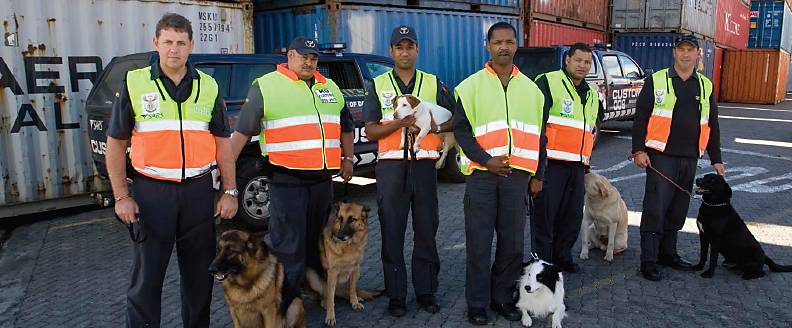
The Detector Dog Unit was the first in the world to train “dual application dogs”, Hugo explained. So instead of being trained or “imprinted” to detect only one scent, they are able to detect a combination of scents, e.g. narcotics and currency, tobacco and endangered species. Both Milo and Umaga are dual dogs and they can detect narcotics/tobacco and copper wire. The explosives detector dogs are the only dogs not dual trained due to the safety risk.

The dogs are an integral part of our Customs workforce and are seen as officers in their own right. They are therefore looked after with the utmost care and attention and are even provided with special reflector jackets, cooler jackets for the heat and dog shoes made to protect their feet from hot surfaces. Source: SARS Communications Division

Revisiting the national transit procedure – Part 2

You will recall a recent challenge by trade to SARS’ proposed implementation of mandatory clearance of national transit goods inland from port of initial discharge – refer to Revisiting the national transit procedure – Part 1.

First, some background

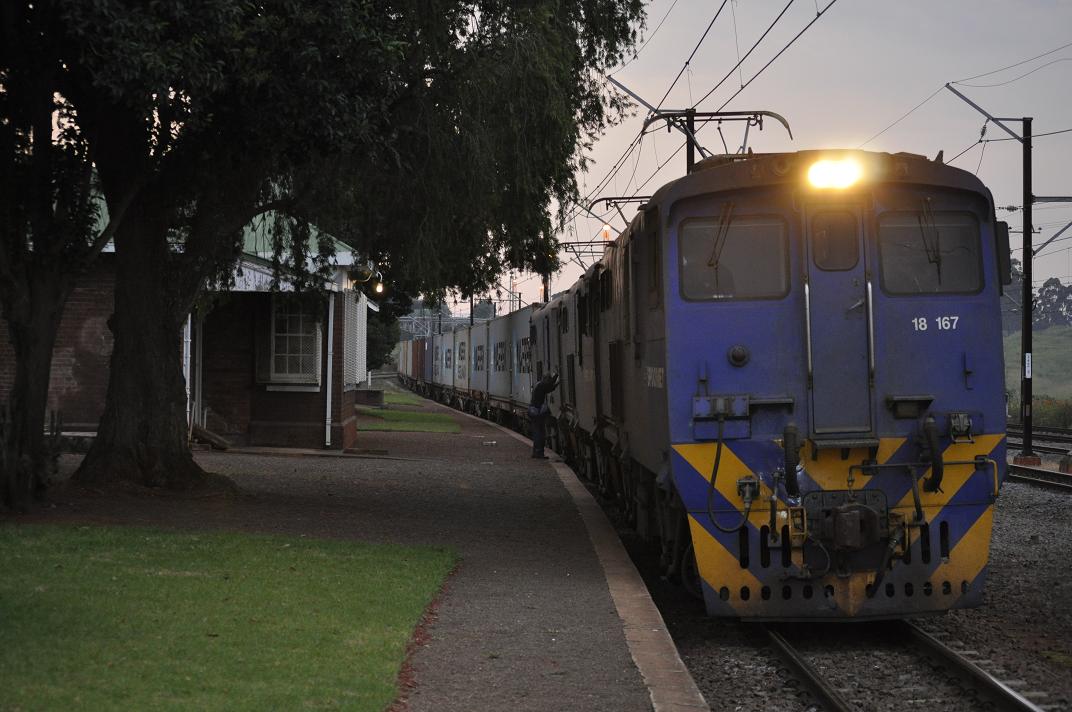
Now lets take a step back to look at the situation since the inception of containerisation in South Africa – some 30 years ago. Customs stance has always been that containerised goods manifested for onward delivery to a designated inland container terminal by rail would not require clearance upon discharge at initial port of entry. Containers were allowed to move ‘against the manifest’ (a ‘Through Bill’) to its named place of destination. This arrangement was designed to expedite the movement of containers from the port of discharge onto block trains operated by Transnet Freight Rail, formerly the South African Railways and Harbours (SAR&H) to the inland container terminal at City Deep. Since SAR&H operated both the national railway and the coastal and inland ports, the possibility of diversion was considered of little import to warrant any form of security over the movement of containers by rail. Moreover, container terminals were designed to allow the staging of trains with custom gantry cranes to load inland manifested containers within a ‘secure’ port precinct.

Over the years, rail freight lost market share to the emergence of cross-country road hauliers due to inefficiencies. The opening up of more inland terminals and supporting container unpack facilities, required Customs to review the matter. It was decided that road-hauled containers moved ‘in bond’ by road would lodge a customs clearance (backed with suitable surety) for purposes of national transit. Upon arrival of the bonded freight at destination, a formal home use declaration would be lodged with Customs. Notwithstanding the surety lodged to safeguard revenue, this has the effect of deferring payment of duties and taxes.

Diversification of container brokering, stuffing and multi-modal transport added to the complexity, with many customs administrations failing to maintain both control and understanding of the changing business model. Equally mystifying was the emergence of a new breed of ‘players’ in the shipping game. Initially there were so-called ‘approved container operators’ these being ocean carriers who at the same time leased containers. Then there were so-called non-approved container operators who brokered containers on behalf of the ocean carrier. These are more commonly known as non-vessel operating common carriers or NVOCCs. In the early days of containerisation there were basically two types of container stuffing – full container load (FCL) and less container load (LCL). The NVOCCs began ‘chartering’ space of their containers to other NVOCCs and shippers – this also helped in knocking down freight costs. This practice became known as ‘groupage’ and because such containers were filled to capacity the term FCL Groupage became a phenomenon. It is not uncommon nowadays for a single FCL Groupage container to have multiple co-loaders.

All of the above radically maximised the efficiency and distribution of cost of the cellular container, but at the same time complicated Customs ‘control’ in that it was not able to readily assess the ‘content’ and ownership of the goods conveyed in a multi-level groupage box. It also became a phenomenon for ‘customs brokers/clearing agents’ to enter this niche of the market. Customs traditionally licensed brokers for the tendering of goods declarations only. Nowadays, most brokers are also NVOCCs.  The law on the other hand provided for the hand-off of liability for container movements between the ocean carrier, container terminal operator and container depot operator. Nowhere was an NVOCC/Freight Forwarder held liable in any of this. A further phenomenon known as ‘carrier’ or ‘merchant’ haulage likewise added to the complexity and cause for concern over the uncontrolled inland movements of bonded cargoes. No doubt a disconnect in terms of Customs’ liability and the terms and conditions of international conveyance for the goods also helped create much of the confusion. Lets not even go down the INCOTERM route.

Internationally, customs administrations – under the global voice of the WCO – have conceded that the worlds administrations need to keep pace and work ‘smarter’ to address new innovations and dynamics in the international supply chain. One would need to look no further than the text of the Revised Kyoto Convention (RKC) to observe the governing body’s view on harmonisation and simplification. However, lets now consider SARS’ response in this matter.

SARS response to the Chamber of Business

Right of reply was subsequently afforded by FTW Online to SARS.

Concerns over Customs’ determination to have all goods cleared at the coast – expressed by Pat Corbin, past president of the Johannesburg Chamber of Commerce and Industry in last week’s FTW – have been addressed by SA Revenue Service.  “One of the main objectives of the Control Bill is the control of the movement of goods across South Africa’s borders to protect our citizens against health and safety risks and to protect the fiscus. “In order to effectively determine risk, SARS has to know the tariff classification, the value and the origin of imported goods. This information is not reflected on a manifest, which is why there is a requirement that all goods must be cleared at the first port of entry into the Republic.“It appears that Mr Corbin is under the impression that the requirement of clearance at the first port of entry has the effect that all goods have to be consigned to that first port of entry or as he puts it “to terminate vessel manifests at the coastal ports in all cases”. This is incorrect. “The statutory requirement to clear goods at the first port of entry and the contract of carriage have nothing to do with one another. Goods may still be consigned to, for example, City Deep or Zambia (being a landlocked country), but they will not be released to move in transit to City Deep or Zambia unless a declaration to clear the goods, containing the relevant information, is submitted and release is granted by Customs for the goods to move. The release of the goods to move will be based on the risk the consignment poses to the country.“It is definitely not the intention to clog up the ports but rather to facilitate the seamless movement of legitimate trade. If the required information is provided and the goods do not pose any risk, they will be released.”

So, where to from here?

The issue at hand concerns the issue of the ‘means’ of customs treatment of goods under national transit. In Part 3 we’ll consider a rational outcome. Complex logistics have and always will challenge ‘customs control’ and procedures. Despite the best of intentions for law not to ‘clog up the port’, one needs to consider precisely what controls the movement of physical cargo – a goods declaration or a cargo report? How influential are the guidelines, standards and recommendations of the WCO, or are they mere studies in intellectual theories?

Revisiting the national transit procedure – Part 1

FTW Online last week ran an interesting article in response to a proposed change in Customs’ policy concerning the national transit movement of containers from coastal ports to inland container terminals and depots. In February 2011, I ran an article Customs Bill – Poser for Cargo Carriers, Handlers and Reporters alluding to some of the challenges posed by this approach. The following article goes a step further, providing a trade reaction which prompts a valid question concerning the practicality and viability of the proposed change given logistical concerns. I believe that there is sufficient merit in the issues being raised which must prompt closer collaboration between the South African Revenue Service and trade entities. For now it is sufficient to present the context of the argument – for which purpose the full text of the FTW article is presented below. In Part 2, I will follow-up with SARS’ response (published in this week’s edition of the FTW) and elaborate on both view points; as well as consider the matter  on ‘raw’ analysis of the ‘cargo’ and ‘goods declaration’ elements which influence this matter. Furthermore, one needs to consider in more detail what the Revised Kyoto Convention has to say on the matter, as well as how other global agencies are dealing and treating the matter of ‘security versus facilitation’.

Customs’ determination to have all goods cleared at the coast does not bode well for the South African trade environment, Pat Corbin, past president of the Johannesburg Chamber of Commerce and Industry (JCCI), said. Speaking at the Transport forum in Johannesburg Corbin said the Customs Bills have been on the cards for several years now and while consensus had been reached on most issues in the Nedlac process, the determination of Customs to not allow for any clearing to take place at inland ports will only add more pressure to the already overburdened ports in the country. “Customs maintains that despite the changes they propose it will be business as usual. We disagree. We have severe reservations about their intention to terminate vessel manifests at the coastal ports in all cases and have called for further research to be undertaken in this regard,” said Corbin. “By terminating the manifest at the coast it has severe ramifications for moving goods from road to rail. International experience has shown when you have an inland port and you have an adequate rail service where the vessel manifest only terminates at the inland port, up to 80% of the boxes for inland regions are put on rail while only 12% land on rail if the manifest terminates at the coastal port.” Corbin said the congestion at both the port and on the road would continue and have an adverse impact on quick trade flows. “It also raises issues around the levels of custom security and control at inland ports and then the general implications on the modernisation project.” According to Corbin, government’s continued response has been that no provision exists for inland ports and that goods must be cleared at the first port of entry. “They maintain that it is about controlling goods moving across our borders and thus the requirement that all goods must be cleared at the first port of entry. The security of the supply chain plays an important role to avoid diversion or smuggling of goods,” said Corbin. “Government says that the policy change will not clog up the ports or prohibit the seamless movement of trade. Labour organizations and unions seem to agree with them.” But, Corbin said, the Johannesburg Chamber of Commerce differs and is worried about the ramifications of this dramatic change to the 35-year-old option of clearing goods at an inland port or terminal. “With this policy change all containers will have to be reconsigned after not only Customs clearance on copy documents but also critically, completion of shipping lines’ requirements ie, payment of freight, original bill of lading presentation and receiving delivery instructions prior to their issuing a delivery order.” Corbin said the issue had been addressed directly with Transnet CEO Brian Molefe on two occasions, but that he had said he accepted Customs’ assurance that nothing would change and the boxes would still be able to move seamlessly once cleared. “It is not understood that the manifest will terminate at the coast where all boxes will dwell until they can be reconsigned,” said Corbin. Source: FTW Online – “New Customs Bill ruling will put pressure on port efficiency.”

SARS issues Compliance Programme 2012/13 – 2016/17

SARS has issued its inaugural SARS Compliance Programme, a high-level overview of its plans for the next five years to further grow compliance with tax and customs legislation. More so than perhaps any other time in history, the current global economic conditions have thrust domestic resource mobilisation into the spotlight, highlighting sustainability built on a foundation of tax compliance. Countries lacking this solid base have found their room for manoeuvre in these uncertain times severely curtailed and, in some cases, completely absent. The impact of self-reliance on self-determination is self-evident.

Many tax administrations publish similar compliance programmes (including Australia, Brazil, Canada, Denmark, Netherlands, New Zealand, Poland, Spain, Sweden, Turkey, USA, UK) and SARS has based it’s Compliance Programme on their ground-breaking work. To download and read the SARS Compliance Programme, click here! For Customs specialists and trade practitioners no less than 3 priority areas involve Customs –

Illicit cigarettes: the trade in and consumption of illicit cigarettes is detrimental to the fiscus and to the health of South Africans. SARS interventions will continue to focus on clamping down on cigarettes smuggled via warehouses as well the diversion of cigarettes destined for export back into the local market. SARS also plans to modernise it’s warehousing management and acquittal system.

Undervaluation of imports in the clothing and textile industry: Undervalued imports pose a significant risk not only to the fiscus but to local industry and job creation. SARS will continue to work together with other government agencies and industry stakeholders to clamp down on this practice including through the establishment and frequent revision of a reference pricing database to detect undervaluation, increasing inspections as well as supporting an integrated border management model.

Tax Practitioners and Trader Intermediaries: Regulation of this industry will be pursued to ensure that tax practitioners and trade intermediaries are all persons of good standing, are fully tax compliant in their personal capacity and provide a high quality service and advice to their clients. SARS will also develop a rigorous risk profiling system to identify high risk practitioners and trade intermediaries.

Customs Core Skills – in danger of extinction or a casualty of progress?

The recent death of a close friend and colleague – Lester Millar – brings to mind, once again, the dire situation of a dwindling ‘knowledge base’ in the area of Customs’ core competency. In an era where most customs or border management authorities are happy to employ people with a variety of tertiary qualifications – with the idea that this alone will be sufficient to ‘arm and support’ them in the field of customs/border control and management – what happened to the skills of yesteryear which allowed both government and trade practitioners to exercise their technical abilities to agree or disagree amicably on a customs tariff or valuation interpretation that could result in thousands of rands (ZAR) going to state coffers or the retailer’s bank account?

Many would argue that with the extent of automation and modern techniques, customs core skills are no longer valid or even necessary. Indeed the extent and design of systems goes so far as removing the relevance of human intuition and decision-making. Today we have automated risk management, automated duty calculation and declaration processing, automated cargo and goods accounting, any even a call centre – so is there really a role for a Customs specialist in the 21st century? Customs Managers today have their reports and other so-called ‘empirical data’ to rely on for decision-making and strategizing. The year-end revenue rush, it-self, relies on such computer generated reports negating the need for an internal ‘think-tank’ to devise means of collecting the hidden revenue before the deadline.

For those in the trade, a similar situation exists, with some difference however. The traditional customs clearance and cargo reporting process is highly mechanised these days and if your systems are up to the task, you can rest assured staff can remain glued to their seats and screens without having to venture to the Customs House. Here too, lies a significant change. The traditional Custom House no longer exists and is basically home to the ‘Customs Frontline’ which deals with ‘physical’ intervention and other trade services. Tariff, Valuation and Origin are now confined to back-office functions accessible via a call centre or tiered response mechanisms embedded in Customs’ new automated workflow; that is, if physical or telephonic access to regional customs specialists have been removed.

Few can dispute the advantages of technology supported processes. Yet, when things go array, even the knowledgeable people have difficulty in resolving an issue. Some suggest that human discretion is dangerous and counter-productive, which perhaps is true if left to an uncouth, power-crazy customs or border control official. Yet, ‘discretion’ is a tenet most necessary for interpretative and cognitive skills which once most Customs Officials used to have.

So what is this core competency to which I refer? First of all Customs competency requires an officer to reason, interpret and apply the customs law in the “fairest” possible way based on the facts at his/her disposal. So it means the officer must have an ability to discern; importantly between right and wrong. Discernment must also take into account an acute understanding of previous/historical evidence relating to a case. For a customs official, it will be important to comprehend the rights and legal obligations of the parties concerned, as well as the documentation relating to the case/transaction. Moreover, where a case/transaction deals with a matter of ‘tariff’, or ‘valuation’ or ‘origin’ the officer must at least have the basic knowledge and skills of the internationally defined rules of interpretation in these disciplines. I say ‘at least’, because in any of the mentioned areas, it may require an expert opinion to further conclude the outcome of a matter.

While automation will take care of validation and computation to the n’th degree, storing and retrieving vast amounts of data in milliseconds, the fact remains that a competent ‘human being’ is still required to preside over a complex decision. Good systems are built on ‘rules’, not exceptions. It is the latter therefore that requires ‘customs core competency’ to resolve.

Our dear friend and colleague Lester was gifted with a phenomenal ability to distill and comprehend information. This knowledge made him one of our finest, and sadly virtually last remaining tariff experts. Add to this, a wonderful and helpful nature and willingness to serve the public – a not too common trait nowadays. Adios Lester…..since we did not fully profit from your time with us, may we at least profit from our loss!