America – shees verry beeeeg!

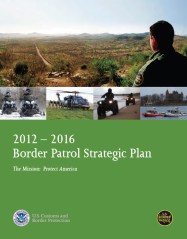
Publication of the latest USCBP Border Patrol Strategic Plan reflects and builds on the transformation of the United States’ relationships with Mexico and Canada, particularly in the areas of border management and security. The joint Declaration of Principles for the 21st-century border represents an enhanced and strengthened commitment to fundamentally restructure the way we manage our shared border. The depth and breadth of cooperation that occurs now between the United States and Mexico was unthinkable even a few years ago. Similarly, the Beyond the Border declaration between Canada and the United States has an equally significant potential in what is already our historically extraordinary relationship with Canada. These developments have created unprecedented opportunities with both Mexico and Canada, in which DHS and CBP will play a defining role, to improve our security and economic competitiveness – and CBP will play a defining role in taking advantage of those opportunities. The Border Patrol in turn is key to advancing CBP’s security agendas with Mexico and Canada, working with its law enforcement counterparts in each country to identify and mitigate threats.

The U.S. Border Patrol is a premier law enforcement organization, recognized around the world for expertise, capabilities, and professionalism. CBP’s officers and agents are the frontline, the guardians of the Nation’s borders. We honor and are proud of them, and we thank them for everything that they do to protect America and the American people. Source: CBP.gov

So there you have it – for a real dose of commercialized Customs and what it can do for the good folks in America, and anywhere else in the world for that matter, check out the strategic plan by clicking here! You’ll be forgiven if you thought you were reading an edition of Jane’s Defense & Security Intelligence & Analysis. Most customs and border management agencies around the world can only dream about such impressive kit! 

Related items

Customs Core Skills – in danger of extinction or a casualty of progress?

The recent death of a close friend and colleague – Lester Millar – brings to mind, once again, the dire situation of a dwindling ‘knowledge base’ in the area of Customs’ core competency. In an era where most customs or border management authorities are happy to employ people with a variety of tertiary qualifications – with the idea that this alone will be sufficient to ‘arm and support’ them in the field of customs/border control and management – what happened to the skills of yesteryear which allowed both government and trade practitioners to exercise their technical abilities to agree or disagree amicably on a customs tariff or valuation interpretation that could result in thousands of rands (ZAR) going to state coffers or the retailer’s bank account?

Many would argue that with the extent of automation and modern techniques, customs core skills are no longer valid or even necessary. Indeed the extent and design of systems goes so far as removing the relevance of human intuition and decision-making. Today we have automated risk management, automated duty calculation and declaration processing, automated cargo and goods accounting, any even a call centre – so is there really a role for a Customs specialist in the 21st century? Customs Managers today have their reports and other so-called ‘empirical data’ to rely on for decision-making and strategizing. The year-end revenue rush, it-self, relies on such computer generated reports negating the need for an internal ‘think-tank’ to devise means of collecting the hidden revenue before the deadline.

For those in the trade, a similar situation exists, with some difference however. The traditional customs clearance and cargo reporting process is highly mechanised these days and if your systems are up to the task, you can rest assured staff can remain glued to their seats and screens without having to venture to the Customs House. Here too, lies a significant change. The traditional Custom House no longer exists and is basically home to the ‘Customs Frontline’ which deals with ‘physical’ intervention and other trade services. Tariff, Valuation and Origin are now confined to back-office functions accessible via a call centre or tiered response mechanisms embedded in Customs’ new automated workflow; that is, if physical or telephonic access to regional customs specialists have been removed.

Few can dispute the advantages of technology supported processes. Yet, when things go array, even the knowledgeable people have difficulty in resolving an issue. Some suggest that human discretion is dangerous and counter-productive, which perhaps is true if left to an uncouth, power-crazy customs or border control official. Yet, ‘discretion’ is a tenet most necessary for interpretative and cognitive skills which once most Customs Officials used to have.

So what is this core competency to which I refer? First of all Customs competency requires an officer to reason, interpret and apply the customs law in the “fairest” possible way based on the facts at his/her disposal. So it means the officer must have an ability to discern; importantly between right and wrong. Discernment must also take into account an acute understanding of previous/historical evidence relating to a case. For a customs official, it will be important to comprehend the rights and legal obligations of the parties concerned, as well as the documentation relating to the case/transaction. Moreover, where a case/transaction deals with a matter of ‘tariff’, or ‘valuation’ or ‘origin’ the officer must at least have the basic knowledge and skills of the internationally defined rules of interpretation in these disciplines. I say ‘at least’, because in any of the mentioned areas, it may require an expert opinion to further conclude the outcome of a matter.

While automation will take care of validation and computation to the n’th degree, storing and retrieving vast amounts of data in milliseconds, the fact remains that a competent ‘human being’ is still required to preside over a complex decision. Good systems are built on ‘rules’, not exceptions. It is the latter therefore that requires ‘customs core competency’ to resolve.

Our dear friend and colleague Lester was gifted with a phenomenal ability to distill and comprehend information. This knowledge made him one of our finest, and sadly virtually last remaining tariff experts. Add to this, a wonderful and helpful nature and willingness to serve the public – a not too common trait nowadays. Adios Lester…..since we did not fully profit from your time with us, may we at least profit from our loss!
Advancing the argument for sealing cargo and tracking conveyances

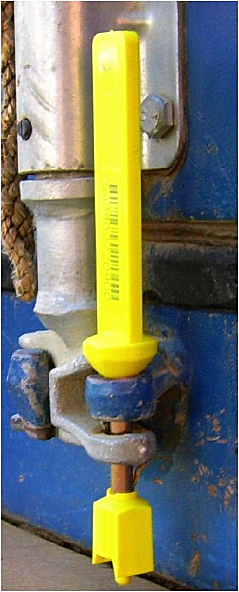
South African Customs law provides for a seal integrity regime. This consists in provisions for the sealing of containerised sea cargo as well as sealable vehicles and trailers. These requirements have, however, not been formally introduced into operation due to the non-availability (until recently) of internal systems and cross-functional procedures that would link seal integrity to known entities. To explain this in more layman’s terms, it is little use implementing an onerous cargo sealing program without systems to perform risk assessment, validation of trader profiles and information exchange. It’s  like implementing non-intrusive inspection (X-ray scanning) equipment without backward integration into the Customs Risk Management  and Inspection environment and systems. It has often been stated that a customs or border security programme is a layered approach based on risk mitigation. None of the individual elements will necessarily address risk, and automation alone will likewise not accomplish the objective for safe and secure supply chains. Moreover, neither will measures adopted by Customs or the Border Agency succeed without due and necessary compliance on the part of entities operating the supply chain. It therefore requires a holistic strategy of people, policy, process and technology.

In the African context, it is surmised that the business rationale will be best accomplished with a dual approach on IT connectivity and information exchange. Under the political speak there are active attempts within SACU, SADC, COMESA and the EAC to establish electronic networks to facilitate and safeguard transit goods. Several African states are landlocked and are not readily accessible, some requiring multiple transit trips through countries from international discharge in the continent to place of final destination. National laws of each individual country in most instances provide obstacles to carriers achieving cost effective means in delivering cargoes. Over and above the laws, there exists (regrettably) the need to ‘grease palms’ without which safe passage in some instances  will not be granted. Notwithstanding the existence of customs unions and free trade areas, internal borders remain the biggest obstacle to facilitation.

Several African logistics operators already implement track and trace technology in the vehicle and long-haul fleets. This has the dual purpose of safeguarding their assets as well as the cargoes of their clients which they convey. Since 9/11, a few customs administrations have formally adopted ISO PAS 17712 within their legislation to regulate the use of high security seals amongst cargo handlers and carriers. In most cases this mandates the use of high security ‘mechanical’ bolt seals. However, evidence suggests there is a growing trend to adopt electronic seals. Taiwan Customs for one has gone a significant way in this regard. Through technological advances and increased commercial adoption of Radio Frequency Identification (RFID) technology the costs are reducing significantly to warrant serious consideration as both a viable and cost-effective customs ‘control’ measure.

Supply chain custody using RFID as an identifier and physical security audit component – as provided for in ISO 17712 – is characterized by the following:

  • it uniquely identifies seals and associates them with the trader.
  • the seal’s unique identity and memory space can be used to write a digital signature, unique to a trader on the seal, and associating that seal with a customs declaration.
  • using customs trader registration/licensing information, together with infrastructure to read seal information at specified intervals along a route to create a ‘bread-crumb’ audit trail of the integrity of the cargo and conveyance.
  • using existing fleet management units installed in trucks to monitor seal integrity along the high risk legs of a cargo’s transit.
  • record the seal’s destruction at point of destination.

Looking forward to the future, it is not implausible for customs and border authorities to consider the use of RFID:

  • as a common token between autonomous customs systems.
  • to verify and audit that non-intrusion inspections have taken place en-route, and write that occurrence to the seal’s memory with the use of an updated digital signature issued to the customs inspection facility.
  • to create a date and time stamp of the cargo’s transit for compliance and profile classification – to confirm that transit goods have actually left the country as well as confirm arrival at destination (to prevent round tripping).
  • Lastly to archive a history of carrier’s activities for forensic and/or trend analysis.
This is a topic which certainly deserves more exposure in line with current regional developments on IT-connectivity and information exchange. A special word of thanks to Andy Brown for his contribution and insight to this post.
Related articles

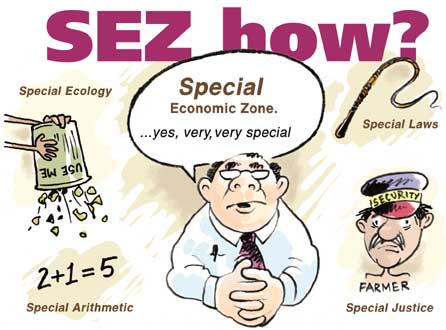
Special Economic Zones – how special?

Despite having burned its fingers with Industrial Development Zones (IDZs), which involved a few fiscal benefits (shrouded in legalese) and billions in infrastructure, Trade and Industry has gone into overdrive to push its new policy on special economic zones (SEZs). It has relaxed ‘locality’ for one, i.e. such zones need not be located in close proximity to an international port or airport. Moreover, SEZs are now being promoted to ‘compliment’ existing IDZs and not replace them as was erroneously suggested in an earlier post.

While the South African Department of Trade and Industry (the dti) is conducting public hearings on the matter, it is perhaps relevant to consider what the Free Market Foundation (FMF) – a think-tank on limited government and economic freedom – has to say on the matter. The content of the report might well attract support from some in the business community involved with manufacturing, distribution and logistics. Read the FMF’s evaluation of the dti’s SEZ Policy here!

While there are not many trade remedies available to local business many prospective requests have over the last decade been presented to establish so-called distribution centres/hubs and ‘virtual bonded warehouses’, which have not borne much fruit mainly due to the lack of a legal framework for their operation. Moreover, in government there is always a cautious resistance to liberalisation in customs and trade laws (they directly impact the fiscus) in the absence of viable risk mitigation strategies or remedies. Perhaps it has something to do with the dwindling public sector skills and experience levels available to conduct effective audits; although, the big audit firms would readily contest this and advocate the outsourcing of such function to the private sector. As the development of more sophisticated systems in SARS come on stream, ICT will no longer be an obstacle. Through increased automation comes the availability of additional human resources who can be up-skilled to perform audit work. Both Tax and Customs Modernisation programmes bare testimony to this.

The establishment of the IDZ programme (circa 2000) was fraught with inter-departmental tensions around the so-called benefits and concessions to be made available to foreign investors. The lack of a clear framework did not allow for much ‘liberalisation’ of controls and fiscal benefits. In fact the customs dispensation offered procedures and facilities to IDZs identical to that available in the national customs territory. Tax holidays and relaxed red tape are characteristic of some of the more successful SEZs around the world, as the article will attest. The dti’s latest SEZ Bill and Policy do not hint to any great length how things will be different this time round. There is however some firm calls within government to consider relaxed labour regulations – the test however lies in whether the policy makers have the appetite (or vision) to permit liberalisation in this area. I have a simple view on this matter – (i) create a favourable economic environment focusing development on SMMEs and entrepreneurship, and (ii) get the standard customs procedures and controls right through modernisation and there will be no need for ‘tax holidays’ and economic zones in this country!

WCO/SACU – IT Connectivity and Data Exchange

WCO-SACU IT Interconnectivity and Data Exchange Conference

On the occasion of International Customs Day, in January earlier this year, the World Customs Organisation dedicated 2012 as the year “Connectivity”, which encapsulates people connectivity, institutional connectivity and information connectivity among the members of the global Customs community.

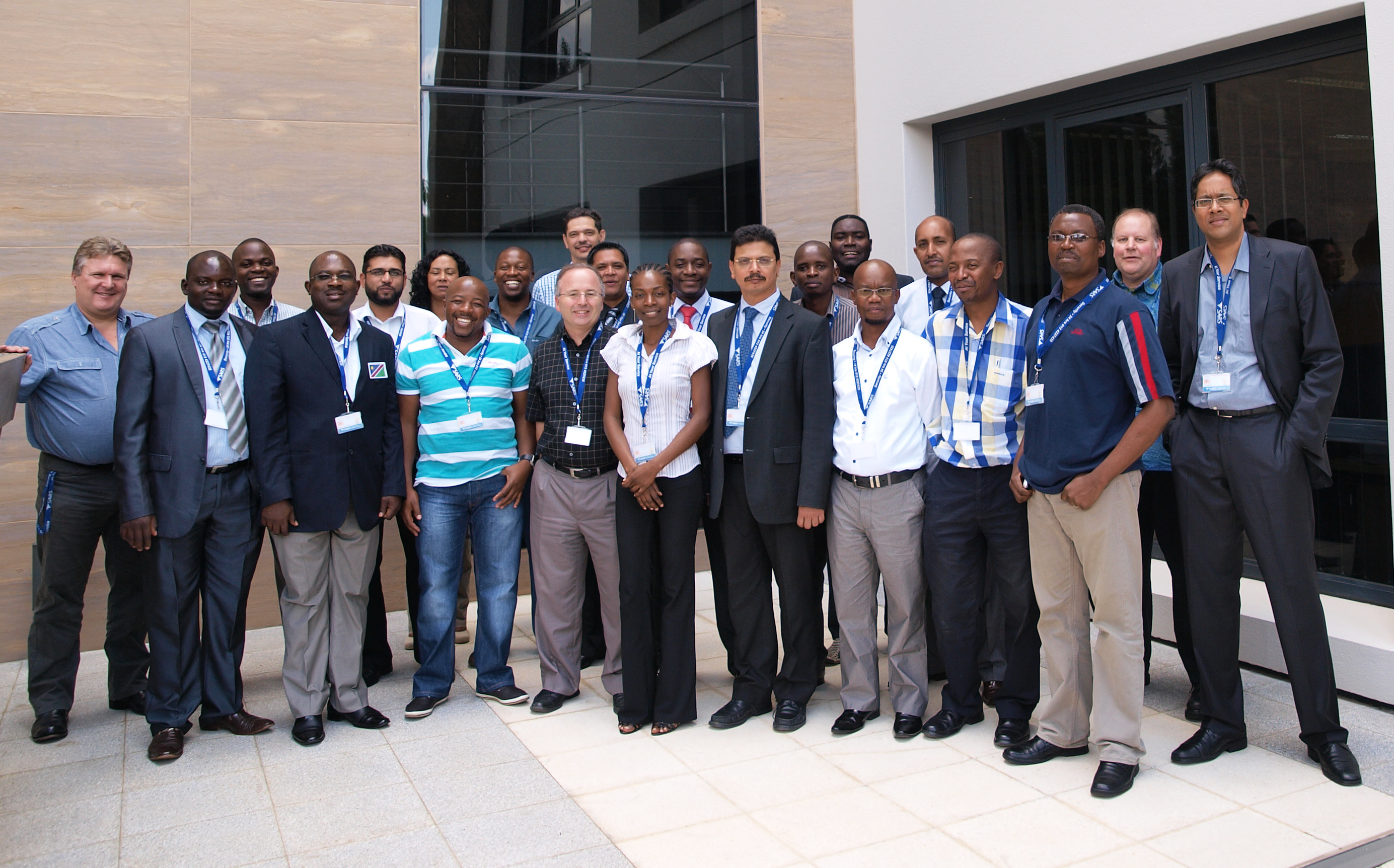
Over the last week and a half delegates from the WCO, SACU, UNCTAD, SADC and COMESA have been hosted at SARS, Pretoria to discuss and deliberate over an approach to implement ‘IT connectivity’ within the Southern African region. During the first week representatives from UNCTAD, SACU and SARS were briefed on important developments at the WCO on IT-Interconnectivity and Information Exchange. We were privileged to have Mr. Satya Prasad Sahu, Technical officer from the WCO – a leading expert in all matters of ICT in international customs matters – present the developments towards finalisation of a future international customs standard called “Globally Networked Customs” (GNC). It entails a structured approach that will enable customs authorities to formulate and document bilateral or regional ‘standards’ on a variety of Customs-to-Customs topics, for instance Authorised Economic Operators, Cross Border Information Exchange, Risk Management, etc. A representative from UNCTAD presented a synopsis of the proposed ‘cloud computing solution’ which the Trans Kalahari Corridor (TKC) plans to pilot between Namibia and Botswana along the TKC route in the next few months. During the course of this week, delegates , under the guidance of Satya, prepared a proposed approach for information exchange between members of the Southern African Customs Region. This document is based on the GNC Utility Block structure (defined by the ad Hoc Committee on Globally Networked Customs at the WCO) and served as the basis for discussion for Week 2.

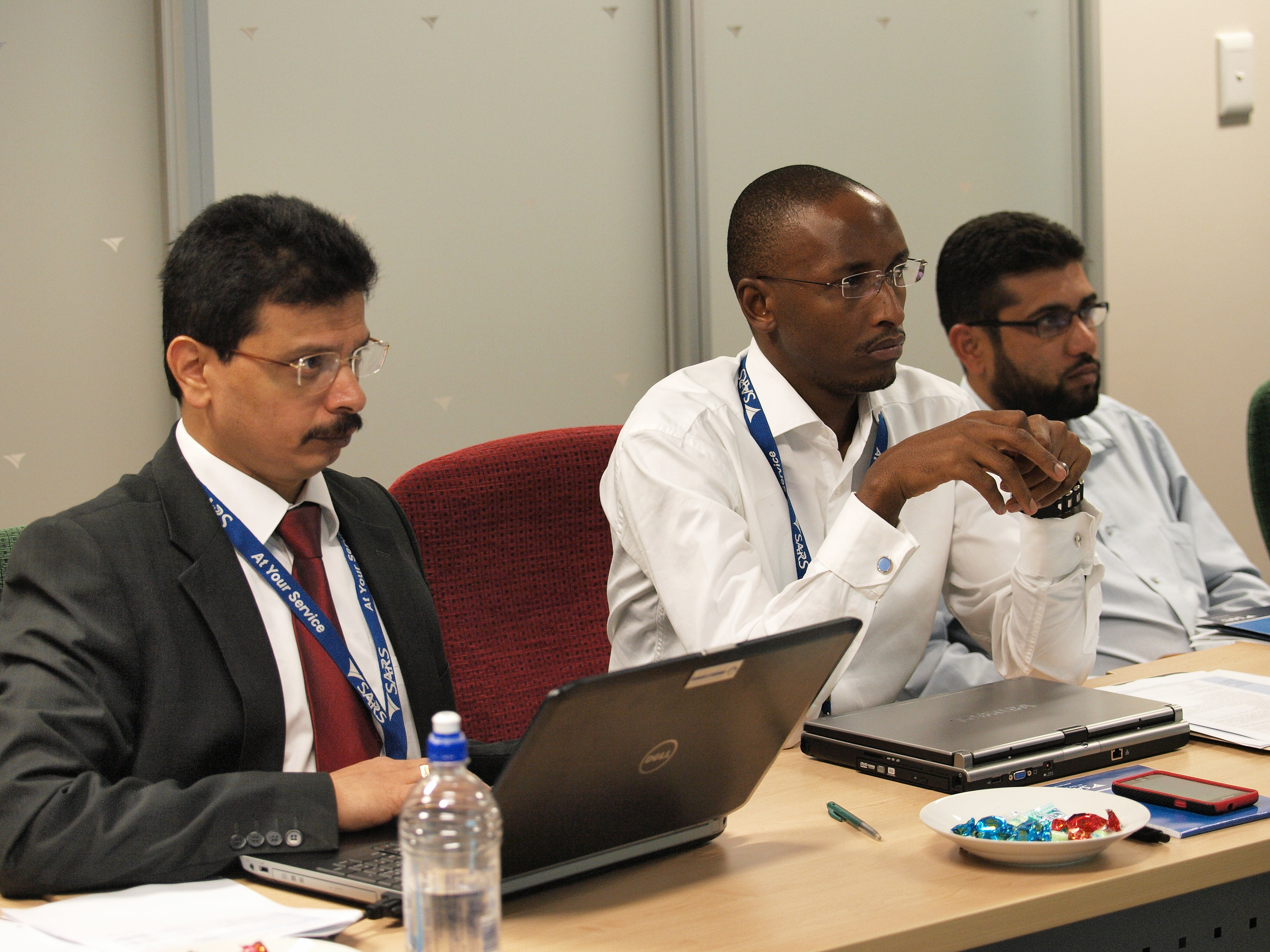
Mr. SP Sahu (WCO) and delegates from SACU SecretariatWeek 2 saw the arrival of customs and IT representatives from COMESA, SADC, UNCTAD, SACU as well as a delegation from Mozambique Customs. Mr. Sahu was invited to chair the session, given his vast experience on the subject matter as well as international experience in national and regional customs ICT programmes. Delegates were treated to various lectures on the GNC, a comprehensive overview of developments on ASYCUDA (Customs solution developed by UNCTAD), various updates from within the customs region – Botswana, Namibia, Lesotho, Swaziland, Mozambique and SARS. Beyers Theron informed delegates of ongoing developments of the SARS Customs Modernisation Programme as well as key implications for neighbouring countries. SARS presented a live demonstration of SARS’ Service Manager solution, navigating through all the functionality now available to SARS Customs officials. Of significant interest to all was the new iPod inspection tool. This technology is given prominent feature in the latest edition of WCO News.

A large portion of the week was, however, spent on deliberating the proposed scope and content of the draft Utility Block on Information Exchange in the Southern African Region. Significant progress was been made to attain first, a common understanding of the scope as well as the implications this has for participating countries. Delegates will return home with a product with which to create awareness and solicit support in their respective countries. Over the next few months SARS will engage both SACU and SADCOM (combined SADC and COMESA trading blocs) to establish firm commitments for information exchange with customs administrations in these regions. This conference is significant for SARS and South Africa as a whole as it provides a uniform, standardised and practical approach for engagement with other international trading partners. To view photographs of the conference please click here!

New Models for addressing supply chain and transport risk

Trends such as globalization, lean processes, mass travel and the geographical concentration of production have made supply chain and transport networks more efficient, but have also changed their risk profile. This World Economic Forum report, produced in collaboration with Accenture, calls for new models to address supply chain and transport risks. It highlights the urgent need to review risk management practices to keep pace with rapidly changing contingencies facing the supply chain, transport, aviation and travel sectors. Download the full report here! Source: Creamer Media

Pre-shipment Inspection (PSI) – an antiquated approach

Recently, an organisation called Global Inspection Group (GIG) has advocated PSI – an import verification system – as a solution to counteract South Africa’s trade deficit. The article Import verification would outlaw customs fraud’ alludes to the apparent success of these mechanisms in other African states to support quality and import standards in those countries, respectively. Because South Africa has no verification of imports system ‘it is easy to systematically under-declare goods’, the article states. Furthermore, it mentions that a Finance ministry would benefit from such a system ensuring the collection of the correct duties. [Really? how naive].

South Africa is a free country, and it follows that organisations will go to extremes to secure a business foothold in the country. The question is – to what length and to what end? If any ministry of finance were to rely on a PSI company, it would first disband its customs department, because there is evidently no trust in its frontline and post clearance capability.  Most governments (if not all) are pretty much aware of the broader international customs developments championed by the WCO. In recent years, the WCO has developed several diagnostic studies and programmes – with the option of donor funding if required. There would therefore be no sense or credibility in a government that would persist in pursuance of PSI services for fiscal assurance.

Any trade practitioner and supply chain operator in South Africa will readily confirm the hectic ‘change’ programme which is being pursued under Customs Modernisation. These changes and their associated systematic innovations and efficiencies are by no means the result of government capitulating in the face of illegitimate trade. No, it’s a conscious decision to take responsibility for the problem, and together with the allied trade to improve the situation.

It is therefore high time that such organisations which front themselves with the ‘be-all and end-all’ systems in Customs’ tariff and valuation appraisal rather seek a more practical and benefit-delivering model than one which not only scams governments for service and inspection fees, but also offers no benefit to trade. Included are those BOT vehicles offering governments ‘free’ cargo scanning equipment in exchange for a lucrative inspection fee. None of this is based on risk management and is purely profit focussed. The concept forgoes most if not all, the modern customs principles and standards promoted by the WCO. The buzz word is ‘Capacity Building!’

The reality in all of this should be clear. No private sector entity can replace Customs. Outsourcing in any event would require government to set up a vehicle of its own to ‘ensure’ that the outsourcer is doing his job. If there is a dearth in knowledge and skills, then it is up to government to rectify the situation.  Source: FTW Print version.

Freight forwarders’ liability is being boosted by expanding supply chains

TT Club, the international transport liability insurer, is warning that freight forwarders and other transport intermediaries face increasingly significant liability risk, particularly in emerging markets, as they take on additional supply chain services for their customers. TT Club specialises in the insurance of liabilities and equipment for multi-modal operators.

Traditional freight forwarders, who have seen the opportunity to offer extended warehousing, packaging, delivery fulfilment and even purchasing functions for shippers are not always fully aware of the liabilities for cargo loss and third-party damages that these additional tasks are opening them up to, according to Andrew Kemp, European regional director of the TT Club.

He told the Cargo and Freight Insurance Annual Conference in Moscow that as supply chains continue to develop to supply emerging markets, where the cargo owners are not always willing to invest in distribution infrastructure, the out-sourcing of such tasks will proliferate.

This could bring significant new business opportunities to companies, which had previously limited their service offerings to freight forwarding and the organisation of international transport, but these additional procedures could be complex.

“A typical new type of activity would be the packaging, for the local retail market of an item with a sales promotion attached (price discount or two for one offer). This task is straightforward in itself but brings with it risks of errors and possible damage to the items. This would be something not experienced by transport operators in the past,” he said. Source: Logisticsmanager.com

The value of risk-based Non-Intrusive Inspection

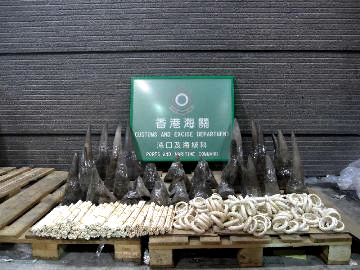
Rhino horn bust, Hong Kong CustomsOn 14 November 2011 Hong Kong Customs seized 33 rhino horns (weighing 86.54 kg), 758 ivory chopsticks (13.22 kg) and 127 ivory bracelets (9.2 kg) with a value of about 17.4 million Hong Kong dollars (over 1.6 million euro). Acting on risk assessment, a container on board a vessel arriving from Cape Town in South Africa and declared as containing “scrap plastic” was selected for inspection by Customs officers. Under x-ray examination, officers discovered the contraband concealed inside a package of plastic scrap placed at the rear end of the container.

This is one of the biggest seizures of rhino horns reported by Customs. Over the past two years, rhino horns have been seized by Customs in Belgium, China, Ireland, Kenya, Portugal, the Netherlands, South Africa and the United Kingdom.

Early November statistics from the South Africa National Parks authority show that 341 rhinos have been lost to poaching so far in 2011, compared to a record total of 333 last year. Most rhino horns are smuggled to Asia in particular China and Vietnam, where the unfounded rumour persists that rhino horn can cure cancer! This record seizure follows another made by Hong Kong Customs on 29 August 2011, when 794 pieces of African ivory tusks (1,898 kg) found inside a container were seized. Source: WCO.

A single bust like this invokes a number of things. Firstly an outrage amongst the general populace of the cruelty and greed concerned with the crime, and secondly, elation amongst law enforcement officers in making the bust. A bust such as this reinforces confidence in the initial commitment to procure inspection technology.

SARS and SARB – Closing the international trade transaction loop

SA Reserve Bank, PretoriaSince the recent implementation of the Import Verification System (IVS) by the South African Reserve Bank (SARB), local traders would have come to realise that processing a forex transaction at the local bank has come more and more under scrutiny. Why is this? For one, all import and export trade transactions processed through Customs are relayed electronically to the Reserve Bank. Historically, the Bank has been responsible to ensure that South Africa maintains good account in terms of its balance of payments, ensuring that fiscal inflows and outflows are fully and lawfully accounted for. For government to operate accurately, it needs to know exactly what is occurring in this space. On the one hand trade statistical information provides both the Bank and National Treasury vital information which informs its fiscal policies. Trade and Industry (DTI) likewise use trade statistics to maintain a grip in terms of trade policy which governs the duty structure on imported goods as well as oversee the effectiveness of various duty relief (rebate and drawback) schemes. Like all things new,  the South African importer and exporter’s experience with the local commercial bank might prove a bit tedious and painful, given the added scrutiny and awareness of bank officials. These controls are however necessary and in keeping with government’s broader objective to ensure that fiscal and trade control measures compliment new enhanced supply chain security initiatives. To this end, SARB and SARS have initiated a dedicated line of support to facilitate query resolution.

Customs and the Academia

Recommended reads for the Customs professional. Visit the WCO for the latest edition of WCO News. The main  articles  include why knowledge is the catalyst for customs excellence; an update on air cargo security and developments coWorld Customs Journalncerning HS2012. 

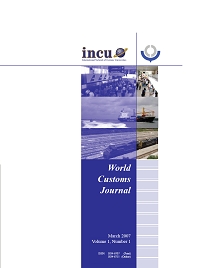
For readers and customs users requiring more academic related information, you will not be disappointed with the latest bi-annual publication of the World Customs Journal. Some very interesting papers covering AEO certification and revocation; Risk management systems and the use of data mining; Case study of Customs and other Agency role in trade facilitation initiatives in Bangladesh,  and Customs valuation compliance through corporate income tax to name but a few. You will also find the Special Report from the recent PICARD 2010 Conference held in Abu Dhabi, UAE.

Border Management ModernisationThe World Bank Border Management Modernization book  is designed to shed new light on problems related to border clearance processes by Customs and other agencies, processes which are among the most important, and problematic links in the global supply chain. In spite of widespread recognition of the need to improve the efficiency of border management regimes, Customs and other border management agencies in many countries frequently pay lip service to the trade facilitation agenda according to the authors.

The book aims to identify a range of strategies that will help officials meet their traditional control responsibilities while facilitating legitimate trade at the same time. It also provides advice to development professionals and key policy makers about what works, what does not and why. Gerard McLinden, Enrique Fanta, David Widdowson and Tom Doyle edited the new book and the WCO Secretariat contributed chapter 11 on Reform instruments, tools, and best practice approaches. For more information visit the World Bank website  http://publications.worldbank.org.

You may also acquire this publication through local site http://www.take2.co.za

Modernisation Release 2 – Industry testing to commence

Just 3 months since the first release, SARS and Customs stakeholders together with their service providers will commence testing the second phase of the Customs Modernisation Programme. The scope of this release offers some significant opportunity for improved efficiencies benefitting both customs and trade.

There are 3 key pillars for this implementation:

  1. A new case management and inspection solution will support an automated workflow between customs assessment officers and inspectors, eliminating the current manual stop and inspection process. A modern user interface has been developed and integrated with Customs’ legacy declaration processing systems. For Release 2, this interface will allow the customs officer to initiate a case, where goods are automatically risk profiled for an intervention. A ‘case’ is an electronic stop notice where the officer is able to capture inspection outcomes, as well as view supporting documents electronically submitted by traders in mitigation of a stop or detention. In addition, the system will interface with an electronic inspection booking system which aims at expediting the customs inspection process. The outcome of each stage of an inspection triggers a response to the trader advising of the status of the consignment or inspection outcome. This is a significant step forward and SARS intends that the efficiency benefits derived will directly translate into cost savings for trade.
  2. Customs E@sySCAN and E@syPACKER software solutions. Soon traders will no longer have to hand-deliver clearance supporting documents to customs manually. SARS and service providers have collaborated for over a year developing a functionality that will radically improve efficiencies and response times in regard to ‘stopped/detained’ cargoes. It will enable a customs broker, importer or exporter to upload any required trade document which customs may require in the finalisation of a customs inspection. SARS’ ‘E@sy’ software has been made free of charge to service providers for integration into their trade applications. This forms part of SARS’ overall contribution to keeping cost of compliance to a minimum. For traders not using EDI, SARS will also be offering walk-in scanning facilities at its bulk capturing centres across the country. 
  3. A new cargo management system will replace the existing Manifest Acquittal System (MAS). Cargo operators are already working with SARS to improve the level of data cleanliness. Once the level of data integrity meets an accepted level it is SARS intention to perform the matching of import and export clearance declarations against consignment level transport document information in real time. Mismatches occurring will trigger a customs case which may either take the form of a documentary check, and if necessary a physical inspection. The automatic data matching and acquittal will obviate the need for cargo reporters to print and deliver paper manifests to customs. It will also remove the obligation on reporters to submit paper manifest acquittal documents. Similarly, significant cost savings are envisaged for trade.

It is worth mentioning that some of these innovations are a world first in customs processing, and paves the way for future enhancements in support of the new Customs Duty and Control Bills.

Customs Day – let’s not forget the heroes!

While the world’s customs administrations prepare to celebrate International Customs Day, the grim reality of the fight against crime stares back at us right here in our own back yard. Just a few days ago, customs officers and investigators learnt of the sudden and tragic death of their colleague Johan Nortje, who was gunned down in his driveway in Durban. Johan was a counterfeit investigator.

It is ironic that while customs administrations spend a lot of time in developing electronic systems in the fight against crime, little thought is in fact given to the ‘risks’ facing the official on the ground. In this age of data systems, proactive risk assessment, and frontline scanning it still remains the responsibility of a ‘human’ officer to make the ‘judgement calls’ and ‘physical intervention’ where necessary. Let’s hope this incident does not go unheeded. It helps little if a lot of time and money is spent on ‘capacity building’ and there is not a plan to retain and safeguard these ‘intellectual’ interests.

Why traditional Customs’ document / information reporting standards are ‘out-dated’

Commencing with the US Container Security Initiative (CSI) in 2002, it became clear that traditional cargo and conveyance reporting was a thing of the past. Let’s face it without the events of 9/11, none of the security advances in the customs space would have been possible. Many customs administrations did not even have a formal cargo manifest reporting system. Some relied on 3rd party terminal access to carrier and airline manifest data, others interfaced with cargo community systems, but only a few placed any real relevance on a dedicated cargo management and reporting facility. Most electronic messaging formats today still rely on an electronic ‘derivative’ of some document/form or another. This perhaps is a logical departure point. However, recent developments under the banner of the WCO SAFE Framework of Standards indicate a departure from the traditional form of customs information reporting. Let’s see, the framework itself appears to delineate cargo and clearance security data elements for exports and imports. But, at the same time we see the release of version 3 of the WCO Data Model clearly advocating a single overarching electronic messaging architecture which portends to accommodate not only current EDI reporting requirements but future ‘all-of-government’ messaging in so far as it relates to the transactional clearance of import and export goods. Moving ahead into the current environment, the impending EU advance cargo reporting requirements are very similar to that of the US 24 Hour Rule. What is more interesting is the fact that the EU – through its Entry Summary Declaration (ENS) – has created a new information exchange requirement which effectively applies a combination of both clearance and cargo information. This clearly indicates that traditional forms of cargo manifest and conveyance reports/exchanges no longer fulfil customs information and risk assessment requirements. I think it is important for all shippers and operators to realise that in today’s rapidly changing environment, we can no longer speak strictly in terms of pre-arrival notifications, carrier’s manifests, house manifests, discharge lists, or customs clearances. Customs requires ‘DATA’ (not forms/documents) in order to achieve its security, fiscal and enforcement obligations; and it needs this information way in advance of what shippers and operators have become accustomed to over the last 50 years – this is in effect the ‘change’ which international supply chain operators need to embrace. Unfortunately, the developments on automated processing and risk management are not taking place uniformly across all customs administrations; hence the envisaged benefits of so-called ‘paperless clearance’ are still a pipe dream in many respects. Before the 2005 security amendment, EU Customs legislation required that goods be presented to customs authorities on arrival to the customs territory, but how that was done was left to each individual EU member state; and, there was no emphasis on safety and security or requirement of sharing of risk data among EU members. Another factor, it would seem, is that the EU (comprising 27 members), has opted for the introduction of the ENS, realising the so-called disparity and complications related to coordinating controls and sharing information between independent customs administrations. A ‘single’ country does not have to deal with this – only its own domestic requirements. For example, under the new dispensation, where a flight is destined for two EU airports, and the carrier submits the ENS to the first, Customs needs to make provision for pushing the risk information and results of control to the second country, or allowing that second country to pull the control results and ENS data from the first. Also, such a system depends on mutual recognition across all EU members of an AEO granted in one member state. Bottom line, EU traders must prepare for some chaos to occur on 1 January 2011. The new requirements will be a true litmus test of what is possible in the supply chain, as it will surely become the defacto standard in other regions in the globe. At the same time the WCO will undoubtedly observe the first wide scale application of its SAFE Framework of Standards with keen interest.