Amazon.com China – approved as an NVOCC

Amazon-BoxMarket forces, competition and the desire to be ahead of the competition demonstrate how dynamic the international supply chain is being maneuvered. Amazon’s latest move is not only innovative but demonstrates just how adaptable international trade and Customs Inc. need to be in order to accommodate nuances to traditional accepted norms in global trade. For Customs, it needs to intimately understand the nature of business of its registered or licensed traders so as to properly apply risk and facilitation regimes appropriately. Recent developments in mutual recognition likewise play an important role in awarding real benefits to companies and their supply chains who undertake such global innovations.

According to the U.S. Federal Maritime Commission, Amazon.com Inc’s China arm has registered as an ocean freight forwarder, a move that will give it more control over shipping products from Chinese factories to U.S. shoppers.

The registration is the latest indication that Amazon plans to expand its logistics reach to cut costs for its retail business and potentially provide third-party logistics services to other industries.

It’s new status as a freight forwarder, or “non-vessel operating common carrier,” gives Amazon, the world’s largest online retailer, a foothold in the $350 billion a year ocean freight business. It will not operate ships but subcontract that work.

Amazon is already negotiating a deal to lease 20 jets to start an air-delivery service in the United States, the Seattle Times reported last year. The retailer bought truck trailers to add shipping capacity and started a program last year that uses a fleet of on-demand drivers to deliver packages.

“It has more and more control over the supply chain of their business and it gives them the ability to squeeze (costs) even further,” said Satish Jindel, a logistics consultant and president of SJ Consulting Group.

He added the move gives Amazon an even bigger edge against traditional U.S. retailers in negotiating lower prices for goods.

The Federal Maritime Commission, a U.S. government agency that regulates the U.S.-international ocean transportation system, said on Thursday a business named Beijing Century Joyo Courier Service Co Ltd, with the trade names Amazon China, Amazon.CN and Amazon Global Logistics China, was registered in its database to provide ocean freight services.

Amazon China submitted its registration request on Nov. 9, the commission said Thursday, and it was reviewed and registered on Nov. 13. It is the entity’s first registration.

“Amazon’s ocean freight services will be far more attractive to Chinese sellers than to American buyers. Chinese suppliers would love direct access to Amazon’s vast American customer base,” wrote Ryan Petersen, chief executive officer of Flexport, a San Francisco-based freight forwarder who first wrote about Amazon’s registration on his company blog on Thursday.

Petersen added that Amazon’s third-party merchants were unlikely to use its shipping service because it would expose key data like wholesale pricing and supplier names to a rival. Source: Reuters

Positive future for Electronic Bills of Lading

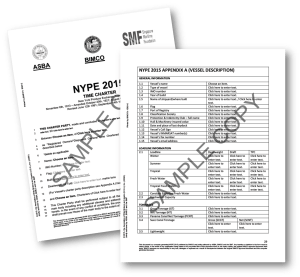
BIMCO E-Bill of LadingPaper bills of lading have been used throughout the world to document and effect international trade for centuries. Yet whilst the world has become increasingly digitalised the paper bill of lading has, on the whole, remained a constant feature of global trade. Its continued use is mainly due to its combination of three legal characteristics that it has developed over time: (i) it is a receipt of the goods carried; (ii) it provides evidence of the terms of the contract of carriage; and (iii) it is a document of title to the goods. It is these characteristics that have, until relatively recently, foiled attempts to replace the paper bill of lading with an electronic equivalent. However, with the inclusion of an electronic bills of lading clause in BIMCO’s NYPE 2015 time charter form, as well as the International Group of P&I Clubs’ approval of the coverage of three electronic trading systems, the dominance of the paper bill of lading may well be coming to an end.

Reed Smith LLP Ship Law blog posts an interesting article in regard to change in law and the impact of e-commerce on bills of lading.

Issues with the paper system
Whilst the paper bill of lading has been used for centuries it is not without its faults, the principal problems being that:

  • Carriers are obliged to discharge the goods carried on production of an original bill of lading: this is particularly problematic today given both the speed of transport and the fact that the cargo may be sold multiple times during carriage. As a result of this the bill of lading is often not delivered to the consignee in time, and the carrier is often required to accept a letter of indemnity. This indemnity does not, however, remove the carriers’ liability under the bill of lading and creates an additional administrative burden and cost to the trade.
  • The paper system is hugely expensive (such cost is estimated to be between 5 – 10% of the value of the goods carried each year).
  • A paper bill of lading may be forged with relative ease and carriers are liable for misdelivery against a forged bill of lading.

Benefits of an electric bill
The electronic bill of lading or e-bill, in theory, addresses many of the flaws of the paper system, bringing with it a number of advantages:

  • It can be sent around the world instantaneously, hugely lowering the administrative burden of trade (especially where cargo is subject to multiple transfers of ownership during carriage).
  • Any amendments or corrections required can be made far more efficiently and cost effectively.
  • Electronic payment systems, and related advances in security, make an electronic system considerably more secure than its paper equivalent. This is obviously subject to cyber issues.

These benefits will cut the administrative costs of trade significantly and reduce, if not eradicate, situations where carriers discharge their cargo against letters of indemnity.

So why so slow on the uptake?
One of the main reasons the widespread use of the e-bill has been slow to proliferate stems from the fact that it is not treated in the same manner, legally, as its paper equivalent. Significantly:

  • A paper bill of lading is a document of title, enabling it to be negotiated and transferred as possession of the bill is evidence of title to the goods. This is not automatically the case at law with an e-bill.
  • The Hague Rules / Hague Visby Rules (HR / HVR) apply to a contract of carriage by reference to the bill of lading, or similar document of title, and it has been less clear whether they would apply to any electronic trading system used. The solution developed to these legal obstacles is essentially a multiparty contract. This takes the form of a set of rules to which users of an electronic trading system are all required to subscribe to use that system. Such rules then set out the specific form of electronic trading documentation to be used and that the consequences of using such documentation shall mirror the position at law as if they were paper bills of lading.

This, however, means that electronic trading systems such as BOLERO, which has been in existence since the 1990s, are only able to function between their members (i.e. those that have agreed to the uniform set of rules and systems that will govern their transactions). Where a member of an electronic trading system enters into a transaction with a non-member, the electronic system cannot be utilised and a paper bill of lading is issued. This feature has limited their growth, as electronic trading systems are only really effective once they have a large number of members, but are not cost-effective for traders to join until they have a large number of members.

The present situation
The benefits of electronic trading systems are particularly tangible to container carriers (as there is often a separate bill of lading for each container carried) and as such have been utilised by liner companies before wider adoption in the industry. However, the efficiencies of electronic trading systems are not confined to the container industry alone and with members of the largest trading companies, trade finance banks, mining companies and oil majors using such systems, it is clear that they are becoming increasingly prevalent in the shipping industry as a whole.

The growth of the use of electronic trading systems in the wider shipping industry is something that BIMCO, by including an e-bills clause in its latest iteration of the NYPE form, has also recognised. In sum the new clause provides that:

  • use of an electronic trading system is at charterers’ option;
  • owners shall subscribe to the system elected by charterers, provided such a system is approved by the International Group of P&I Clubs;
  • charterers shall pay any fees incurred by owners in subscribing to such elected system; and
  • charterers shall indemnify owners for any liabilities incurred arising from the use of the elected system, so long as such liability does not arise from owners’ negligence.

The International Group of P&I Clubs have now ‘approved’ three electronic trading systems (BOLERO, essDOCS and E-title). An ‘approved’ system is one that is found to replicate the legal characteristics of a paper bill (namely (i) as a receipt; (ii) a document of title; and (iii) a contract of carriage which incorporates the HR / HVR). This means that the International Group of P&I Clubs will provide cover for any liabilities arising under carriage covered by these three electronic trading systems (or any such other subsequently ‘approved’ system), provided that such liability would also have arisen under a paper bill. However, members should be advised that risks connected with the use of a non-approved electronic trading system will not be covered.

The use of an electronic trading system does, however, lead to other risks from things such as hacking, systems collapse, e-theft and viruses, none of which are traditionally covered by P&I clubs and would need to be insured separately. In this regard, essDOCS (which is now used throughout 71 countries by over 3,300 companies) has insurance cover of up to USD $20 million per electronic bill of lading for “eRisks” resulting from an electronic crime or electronic system failure.

With the rise in usage of electronic trading systems, the recent judgment in Glencore v MSC (albeit currently under appeal) provides a timely reminder that the release of cargo should only be made in accordance with the contract evidenced by the bill of lading, even where an electronic release system for cargo is being operated. In this instance cargo was released on presentation of a PIN, despite no provisions for this in the bill of lading, two of the released consignments of cargo were misappropriated and the carrier was held liable.

The future?
With the International Group of P&I Clubs’ approval of three electronic systems, the inclusion of an electronic bills of lading clause in BIMCO’s latest NYPE form and the proliferation of the use of electronic trading systems throughout the wider shipping industry, it is clear that the use of electronic trading systems is increasing. Whilst there is no doubt that we can expect teething problems as the industry continues to adapt to such electronic trading systems, and the cyber risks they may bring, it seems that the efficiencies are too great to be ignore. Source: Ship Law log / ReedSmith

An interesting take on SADC developments and the lack of progress

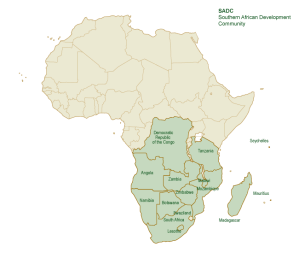
AfricaMap_SADCThe following article titled ‘Cross-border projects dependent on cost’ was recently published by Transport World Africa. It deals essentially with cross border logistics and provides an insight into regional infrastructure and logistics projects – successes, failures and their impact on transport logistics. It emphasizes the need for greater and closer public and private partnerships, but alas sovereign states appear to be more focused inwardly on their domestic affairs. 

Implementers of projects have the knack of focusing on what they know very well, often leaving out what they do not know. Usually, this comes back to bite them. An example is in the integration of leadership. Countries in the Southern African Development Community (SADC) region compete with each other for demand and capacity provision, which results in the inflated cost of logistics.

Rather, countries should work together. Integrating ports and funding is relatively easy. What is not available is integrated leadership in the region (excluding heads of various states), agreeing that SADC is ‘one country’. Logistics planning is still done at the country level, which is not practical, because then supply chains are being developed that are competing with each other. The sector should be cautious about acceleration, and about what is funded. One example is Transnet, whose plans should fit into regional plans, but right now they do not.

The softer issues in project development often go ignored, but they are at times the most important. There should be a halt to focusing mainly on mega-projects, since they take time and money, as well as resulting in complications (excluding Grand Inga). Despite this, mega projects do create a common vision for a region. Do sponsors have the capacity to support these projects? Institutional capacity is certainly needed. At the political level, southern Africa has done well, top–down approaches are there, but things go off course when there is the attempt to get others to plug-in to this.

One-stop border posts are very important. It was cautioned that the region must be careful not to follow the architecture of colonial extraction, which means focusing on intra-Africa trade rather than too great a focus on ports and exports. Government and private sector must both drive natural winners and losers in markets. There is sufficient funding and policies, but project preparation is limited. What is needed is to decide how to make hubs of excellence, and decide who is going to do what.

The high-level work has been done, but now the sector is facing an implementation challenge. Governments do not do regional integration very well. The private sector does the regional integration, and they suffer most when it does not work. Regional infrastructure will not happen unless there is public support for it. The most successful cross-border project was a PPP: the M4 toll road. This had a large economic impact.

Also, the Port of Maputo has been successful in generating income. Ports without land side integration are useless. Projects need a soft-issue mediator; otherwise there are great ideas, but no implementation. The private sector should not see itself as a messiah, but should rather have a sense of responsibility for developing supply chains. There needs to be a clear understanding of soft issues, clear legal and policy understanding, and communication. SADC has been driving the implementation of harmonisation of vehicle load management for twenty years. A mediator between the public and private sector (such as Maputo Corridor Logistics Initiative (MCLI) is absolutely necessary.

It is a stark reality how little intra-African trade there is. To address this there should be a clear target for development in future. In Namibia, there are efforts to focus on the positives in regards to transport development, even with limited resources. Namibia has been independent for 25 years; 15 years ago the Walvis Bay Corridor was created as a focus on regional integration and regional development. There are 2.2 million people in Namibia, which means a small economy.

There is no real choice but to take into consideration the region and recognise the value Namibia can add. In regards to planning, in 1995 it developed its first transport master plan, and in 2014 it developed its second transport master plan (this was twenty years apart). In February 2015, it developed a logistics master plan to develop Namibia into a logistics hub in the region. It has focused on transport modes because it has a port emphasis. It started roads development.

Currently, Namibia is building its first dual-carriage road (65 km), which is a big step for such a small economy. It would like to do more with sufficient funding. Namibia is also looking into what to do with aviation. As a whole, the country is trying to develop as an alternative trade route for southern Africa. Five to seven years ago, Walvis Bay was just a fishing port, but now R500 million is coming into Namibia’s economy through this post (from zero rand 10 years ago). Namibia is trying to create a better alternative in the SADC region. Now it is looking to focus on developing the manufacturing sector. Namibia is working with South Africa to develop partnerships (excluding transport corridors to production corridors). Continue reading →

EU fighting Customs Fraud – JRC research leads to new legislation

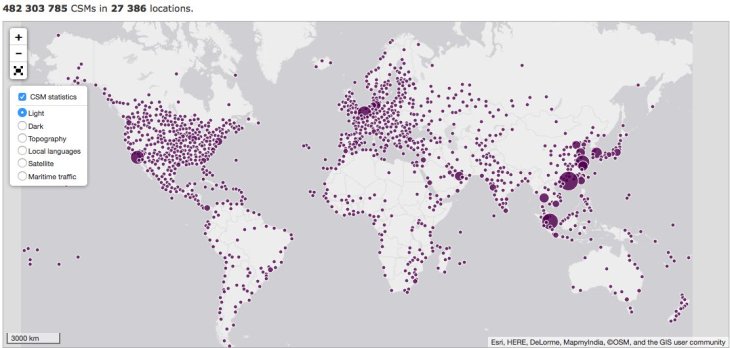
ConTraffic HomepageA new regulation adopted by the European Parliament and the Council will allow customs to access information to track the origins and routes of cargo containers arriving in the EU to support the fight against customs fraud both at EU and national level. The Joint Research Centre (JRC) has been instrumental in the conception and adoption of this legislation as it provided the scientific evidence on the importance of analysing the electronic records on cargo container traffic.

The EU customs authorities have been long aware that information on the logistics and actual routes of cargo containers arriving in Europe is valuable for the fight against customs fraud. However, they had very limited ways to obtain such information and no means to systematically analyse cargo container traffic both for fraud investigations as well as for risk analysis. On the other hand, the ocean carriers that transport the cargo containers, as well as their partners and clients, have easy on-line access to the so-called Container Status Messages (CSM): electronic records which describe the logistics and the routes followed by cargo containers.

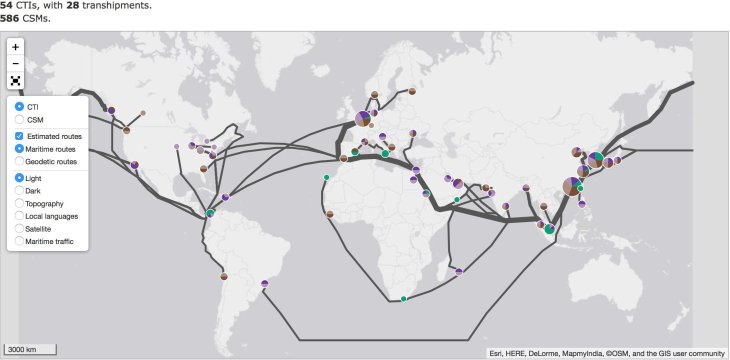
jrc-cargo-container-routes-world-mapIn collaboration with the European Anti-Fraud Office (OLAF), the JRC has worked extensively on how to exploit CSM data for customs anti-fraud purposes. The JRC proposed techniques, developed the necessary technology, and ran long-term experiments involving hundreds of EU customs officers to validate the usefulness of using CSM data. The results of this research led the Commission to bring forward a legislative proposal that would enable Member States and OLAF to systematically use CSM data for these anti-fraud purposes. It also served to convince Member States of the value of the proposed provisions.

The financial gains from the avoidance of duties, taxes, rates and quantitative limits constitute an incentive to commit fraud and allow the capacity to properly investigate in cases, such as mis-declaration of the origin of imported goods. The information extracted from the CSM data can facilitate the investigation of some types of false origin-declarations. With the new legislation an importer will no longer be able to declare – without raising suspicions – country X as dispatch/origin of goods if these were transported in a cargo container that started in country Z (as indicated by the CSM data).

jrc-csm-dataset-world-map (1)The technologies, know-how and experience in handling CSM data, developed by the JRC through its experimental ConTraffic platform, will be used by OLAF to set up the system needed to implement this new legislation applicable as from 1 September 2016. The JRC will continue to analyse large datasets of CSM records (hundreds of millions per year) as these are expected to be made available through the new legislation and will continue to support not only this new regulation but to exploit the further uses of this data notably for security and safety and real-time operations. Its focus will be on data mining, new automated analysis techniques and domain-specific visual analytics methods. Source and Images: EU Commission

TFA – Africa is on the move! Why not go faster?

WTO LogoThe following article is published with the kind permission of the author, Tapia Naula who is Principal Transport Economist at African Development Bank, based in the Ivory Coast. He is an international project manager and transport economist with experience in logistics business, research and trade facilitation. This article is a must for anyone associated with or working on the TFA on the African sub-continent, and a bit of a wake up call to those countries who have as yet done little or nothing to progress their participation.

In the World TFA Cup Asia is leading Africa 72 – 35. The first scores of the WTO Trade Facilitation Agreement are out as member countries submit their Category A notifications. Initial results of the African first series are somewhat unfulfilling. Some teams are playing defensive even if attacking tactic is the only way to win.

In December 2013, WTO members concluded negotiations on a Trade Facilitation Agreement (TFA) at the Bali Ministerial Conference, as part of a wider “Bali Package”. Among trade facilitation practitioners the Agreement was received with great enthusiasm: finally there was a legal instrument, which is concrete enough to make a difference! TFA will enter into force once two-thirds of members have completed their domestic ratification process. Section I contains substantive provisions in 12 main Articles. The members are required to categorize and notify each provision of the Agreement as either A, B or C Category. The A Category commits a country to implement the provision upon entry into force of the TFA, or one year after for LDC’s. For B-Category there will be a transitional period. C-Category provisions are allowed a transitional period, technical assistance and capacity building.

First, let it be said loud and clear: the WTO TFA is an excellent collection of modern trade and transport facilitation instruments in one folder. In developing countries its implementation would mean reforms that would save time, money and efforts for regular business people and consumers. These reforms may be painful but the countries that can do it, will be the future winners of their regional competition and they will be the ones that will most benefit from joining the global value chains. TFA is the best vehicle for poverty reduction invented so far and that is why it is so important.

In August, 2015, 14 African countries and 25 Asian countries had submitted notifications for category A provisions. Asian countries had “accepted” 72 % of all the provisions as A-Category commitments on average where the respective share of the African countries is only 35 %. On Article-level African countries lag behind on every Article except one (Table 1).

In addition to the low overall share of category A-notifications, the African notifications generally look like “random picks” of sub-paragraphs, compared to many Asian members that have commonly chosen the strategy of basically accepting the whole Agreement and making exceptions for certain few paragraphs according to their particular needs.

Were African governments well-informed of the impact and substance of each paragraph – or are they just being cautious, perhaps trying to delay the final commitment? The patterns between African and Asian countries are in any case different.
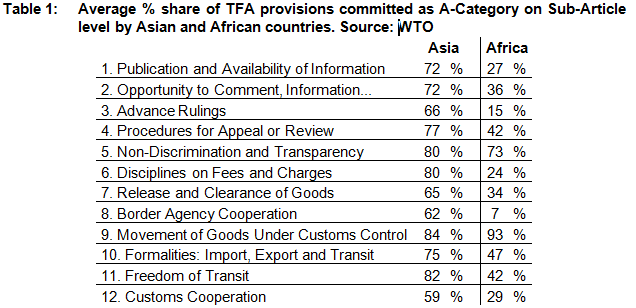
Table 1

TFA includes also “low hanging fruit” – sections that require little technical expertise to be implemented. At least some of these should have been easy for member countries to accept. “Publication and Availability of Information” is one of those sections. Access to information through internet is routine and affordable. It should not require transition periods or particular technical assistance. Donors are even competing to assist governments with such low cost and high-return activities. Still, less than one third of the African Governments notified this Article.

Here are some other peculiar findings:

  • Out of 14 African countries only Morocco accepted “Border Agency Cooperation” as A –Category provision. Three of the others countries that did not notify it are landlocked countries;
  • Only four out of 14 African countries had fully notified “Freedom of Transit.” Transit challenges in Africa are probably the single most significant source of inefficiency in trade logistics;
  • One of the foundations of modern customs management is the introduction of Risk Management. Only 3 out of 14 African countries had notified this provision;
  • Only Morocco notified Trade Facilitation Measures for Authorized Economic Operators (AEO), which gives certain privileges to traders and transport operators, who show high level of compliance to regulations. One wonders why Kenya, Uganda, Rwanda, Burundi and Tanzania did not notify it as we know that an AEO program is being piloted in the East African Community;
  • Only Senegal notified the sub-Article on Single Window, which is probably the most important one of the whole Agreement. Senegal perhaps deserves this honor – being the first truly African-based single window country – and also representing the good practice of SW management. Yet, according to the African Alliance for e-Commerce, currently there are at least 16 other single windows either already operational or under development in Africa. Why weren’t these developments recognized?

Despite the above “peculiarities” the African situation is fortunately nowhere near as somber as the A-Category notifications indicate. There are plenty of trade and transport facilitation initiatives under implementation – and Africa is indeed “on the Move.” We should on one hand side make sure that the valuable TFA Agreement is not becoming a separate formal process alongside the practical actions on the ground, but rather a framework for coaching governments in climbing up the stairs toward greater competitiveness. On the other hand, the countries should not ignore the existing achievements. A lot has been achieved in Africa in recent years and this process should go on and gain speed. Some sub-regions, which have been less successful in this field need  benchmarks, encouraging and coaching. This is where African and international organizations can play a role.

Although the direct cost of TFA implementation is relatively low, the indirect cost may be extremely high. The indirect cost concerns existing structures, which generate income for organizations and individuals, who often greatly benefit from the status quo. Some governments have entered into concessions outsourcing critical government functions such as pre-customs clearance operations and processing and submissions of declarations to customs. Western firms have efficiently seized the opportunity and negotiated deals, which guarantee profits for in many cases for decades to come. Single Windows in certain countries are good examples for these. In an unnamed Southern African country for example, humanitarian aid is exempt from taxes and duties in import. If however a UN agency for example imports a container of pharmaceuticals worth five million USD, it will have to pay for a Single Window fee of 42,500 USD! Such Ad Valorem fee arrangements are against the TFA. Such concessions are often built inside structures, which profit from the concessions and in exchange – protects its operations and continuity. This is why they are difficult to tackle. This is an example of the problematics that African policy makers must deal with when taking a position in committing in TFA provisions. It may be a whole lot more complicated than what it looks like.
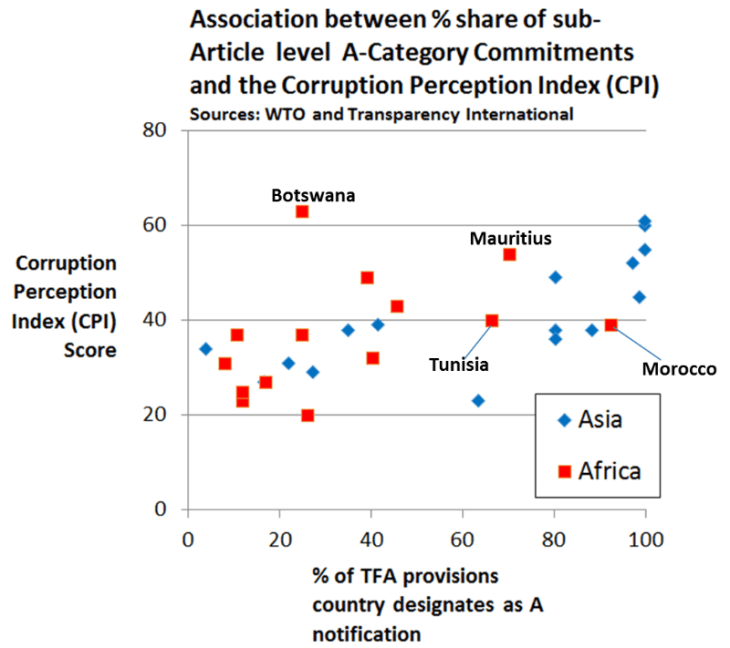
Association between % Share of Sub-Article Level A-Category Commitments and the Corruption Perception Index Score (CPI). Sources: WTO and transparency International.

The diagram above shows the association of share of the provisions that have been covered by A-Category notifications and the Corruption Perception Index (CPI) score of the countries. For African countries the correlation is moderate (correlation co-efficient: 0.42) but for Asian countries the association is strong (correlation co-efficient: 0.73). The association of the two variables is understandable: the less corruption a country has (the higher the CPI rank is), the more reforms the government is in liberty to conduct (the higher coverage of TFA as A-category Notifications).

We need to better understand the underlying reasons why policymakers cannot let reforms take off. Traditions, corruption and outdated structures are usually the biggest obstacles. These cannot be overcome by merely providing short-term technical assistance and bench-marking the world best practices but only strong political leadership can make the change. Developing partners should raise this topic on the highest political level and “live together” through the reforms with the counterparts.

The Northern Corridor (Kenya, Uganda, Rwanda) provides an encouraging example how multiple reforms can be carried out in very short time. Only two years ago it took staggering 27 days to transport a container from Mombasa Port and deliver it in Kigali, Rwanda. Today it takes only seven days. The improvement was enabled by series of reforms, which were championed by the Heads of States of the Corridor member countries. The example proves that major improvements can indeed be achieved in very short time. On the other hand, even with the most sophisticated instruments, reforms will not succeed if there the high-level ownership is not there. Author: Tapio Naula

IT System to Transform SA Ports into ‘smartPORTS’

At the launch of Transnet National Ports Authority's new Integrated Port Management System (IPMS) [Transnet]

At the launch of Transnet National Ports Authority’s new Integrated Port Management System (IPMS) [Transnet]

Transnet National Ports Authority’s new web-based Integrated Port Management System (IPMS) went live on 26 July at the pilot site, the Port of Durban, with the crude oil tanker, Colorado, the first to be brought into the port using the new system.

Developed by Navayuga Infotech, a company based in India, in collaboration with their South African partner Nambiti Technologies, the IPMS is a strategic project that aims to support the broader objectives of the Transnet Market Demand Strategy (MDS) in terms of efficiency and productivity.

The project will cost TNPA around R79 million for the entire system, for all eight South African ports, covering concept development, architecture, implementation and rollout.

TNPA Chief Executive, Richard Vallihu, said: “Since 2008, various feasibility studies were undertaken where we identified the need for an automated and web-based system to improve port operations, strengthen efficiencies and enhance competitiveness. This online system will help transform our ocean gateways into smartPORTs by using advanced information technology that will make them more intelligent and sustainable, while conserving resources, time, space and energy.”
The system replaces manual processes, with key port operations now set to be automated, online and in real time.

Vallihu said the IPMS was benchmarked against Malaysian and Singaporean ports which were among the world’s most efficient. The IPMS system will be a groundbreaking initiative in that for the first time in the world a system such as this is integrated across multiple ports on a single platform.

“For us as a customer-focused organisation this state-of-the-art information technology will ensure that port information and processes are transparent and easily accessible to users throughout the South African port logistics chain,” he said.

Yugen Reddy of Sharaf Shipping Agency was excited about being able to work more efficiently. “My role as an agent is to make sure that ships are in and out of the port as quick as possible because time is money. With IPMS we will be able to use our smart phones or tablets while we’re out and about to update the system and get acknowledgment from TNPA on the spot with regards to sailing or berthing of vessels,” he said.

Vessel agent, Londa Small of Thembani Shipping agreed. “I am optimistic about the IPMS system because everything’s going to be in real-time enabling quicker turnaround,” he said.

IPMS will link to Transnet Freight Rail’s Integrated Train Plan (ITP) and Train Execution Management System (TEMS). It is also integrated with global systems such as Lloyds Register, AIS (for vessel traffic management), IPOSS (for weather), EDI (Electronic Data Interchange) and SAP (for business operations, customer relations and finance).

From Durban the project team will move on to Cape Town and Saldanha, then Port Elizabeth, Ngqura and East London and finally to Richards Bay and Mossel Bay.

TNPA conducted daily intensive training for internal and external users at the Maritime School of Excellence in Durban during June. Source: Transnet

Freight Forwarders and 3PL’s to bear the burden of IMO Box Weighing Rules

Container weighingThe responsibility for verifying the gross weight of loaded containers under next year’s new box-weighing rules will in many cases rest with freight forwarders, logistics operators or NVOCCs, according to freight transport insurance specialist TT Club.
Welcoming the initiative of the World Shipping Council (WSC) in its recent publication of guidelines to the industry in relation to implementing the SOLAS requirements that become mandatory on 1 July 2016, TT Club noted that unlike the CTU Code, which forensically seeks to identify the chain of responsibility for everyone involved in the movement of freight, the amendment to the Safety of Life at Sea Convention (SOLAS) mandating the verification of gross mass of container overtly only names the ‘shipper’, the ‘master’ and the ‘terminal representative’, and – by implication – the competent authorities.

TT Club said the complex nature of logistics means that the term ‘shipper’ may encompass a range of people involved in the contracting, packing and transporting of cargo. However, as stated in the WSC guidance, it said the key commercial relationship in question is with the person whose name is placed on the ocean carrier’s bill of lading.

“Thus, in many cases, the responsibility for actual ‘verified’ declaration will rest with a freight forwarder, logistics operator or NVOC. This means that often reliance will have to be placed on others to have adequate certified methods to provide verified gross mass – particularly for consolidation business,” TT Club said.

It noted that of course many suppliers of homogenous shipments will already have advanced systems, which merely require some form of national certification, adding: “Apart from having a sustainable method by which the gross mass is verified, the shipper also needs to communicate it (‘signed’ meaning that there is an accountable person) in advance of the vessel’s stow plan being prepared.

“The information will be sent by the shipper to the carrier, but with joint service arrangements there may be a number of carriers involved, with one taking responsibility to consolidate the manifest information, in addition to communication with the terminal.”
It said the ‘master’ comprises a number of functions within the carrier’s organisation.

“Implicit in the SOLAS amendment is that the carrier sets in place processes that ensure that verified gross mass is available and used in planning the ship stow,” TT Club said. “Arguably, each carrier will need to amend systems and processes to capture ‘verified’ information.

“However, the simplest might be to amend the booking process, so that the gross mass information is left blank in the system until ‘verified’ data are available. This will be effective if it is clearly understood by all partner lines and terminals with whom the line communicates.”

TT Club said the explicit obligation of the master was simply that he shall not load a container for which a verified gross mass is not available. “This does not mean that one with a verified gross mass is guaranteed to be loaded, since that would derogate from the traditional rights of a master,” the insurance specialist added.

Recognising the pivotal nature of the port interface, it noted that the ‘terminal representative’ has been drawn into the new regulation as a key recipient of information for ship stow planning “and, critically, in a joint and several responsibility not to load on board a ship if a verified gross mass is not available”.

It added: “There has been considerable debate as to whether terminals need to position themselves to be able to weigh containers, not least because of the cost of creating appropriate infrastructure, and amending systems and procedures, with uncertain return on investment. In addition there are commonly incidences of containers packed at the port, in which case the terminal activities could include assisting the shipper in producing the verified gross mass.

“The SOLAS amendment places responsibility on national administrations to implement appropriate standards for calibration and ways of certifying. The overtly named parties rely on this to work smoothly and, preferably, consistently on a global basis.”
TT Club said clarity of such processes needed to be matched by consistency in enforcement. “Talk of ‘tolerances’ is disingenuous,” it said. “SOLAS calls for accuracy. Everyone appreciates that some cargo and packing material may be hygroscopic, thereby potentially increasing mass during the journey, but that need not mask fraudulent activity, nor entice over-zealous enforcement.”

It said the UK Marine Guidance Note may be instructive here, stating that enforcement action will only be volunteered where the difference between documented and actual weight exceeds a threshold. TT Club concluded: “It is suggested that key measures of success of the revised SOLAS regulation will include not only safety of containerised movements, but also free movement of boxes through all modes of surface transport, and a shift in behaviour and culture throughout the unit load industry.”

Durban dig-out port – expert cautions ‘think again’

Artistic impression - Durban Dig-out Port

Artistic impression – Durban Dig-out Port

An international ports expert has expressed serious reservations about Durban’s proposed dig-out port. He said plans for a dig-out port should be put on hold, with efforts rather directed at maximising the existing facilities and potential at Durban Harbour.

International adviser and expert on port development Jamie Simpson, of Canada, has warned Transnet and the eThekwini Municipality against pursuing the dig-out port, saying the current port has to “keep going”. Simpson was a guest speaker at a ports and cities dialogue with Durban businesses, hosted by the municipality’s Edge (Economic Development and Growth eThekwini) at the Moses Mabhida Stadium yesterday. His point of view was supported by two other speakers.

However, Transnet group strategy general manager Irvindra Naidoo was adamant that the parastatal was forging ahead with the project, saying Durban was “running out of capacity” and had to expand.

Naidoo said: “The question was: ‘Okay, do we now go off somewhere else and develop a new maritime cluster around Richards Bay or somewhere else, or do we try to embed or strengthen the cluster… (by extending) the Durban port?’ That’s what this dig-out port really is about. It’s an extension of an existing cluster.”

The port, the continent’s busiest, caters for 2.6 million TEU (twenty-foot equivalent units) a year. These result in about 8 000 daily container-related heavy vehicle movements around the Bayhead area. Transnet has repeatedly said that the port will battle to provide the capacity for future demand.

Naidoo said with a dig-out port at the old Durban International Airport site, the containers could reach 8.2 million TEU by 2040, resulting in about 17 500 heavy vehicle movements daily in the South Durban Basin.

Simpson told the panel that the move “might not be a very good solution”. He said: “In view of the likely availability of financing – a lot of uncertainty – I think the port has to keep going and develop a capital investment plan and operational improvement plans to meet demand in the next five to 10 years.”

From there, he said, the parastatal could “weigh up” whether a bigger port “makes sense in view of market conditions… and availability of finance at the time”.

The first phase of construction of the dig-out port was expected to start between 2021 and 2025. A pre-feasibility study started in 2013. To read the full article click here! Source: iol.co.za

Forbes – Top 10 Container Ports

Forbes compiled the following list of the world’s top 10 container terminals. For more information visit this link!

CMA CGM – to introduce ‘smart’ containers to its box fleet

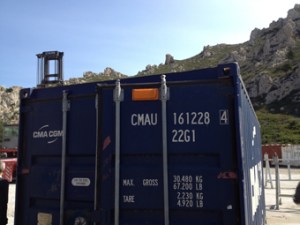
TraxensFrench shipping giant CMA CGM will start phasing in ‘smart’ containers this year, allowing the line and its customers to keep track of each box equipped with new sensors at all times. In an industry first, technology being developed with a start-up company, Traxens, would enable data on the location and condition of the container to be monitored at all times throughout a delivery.

The world’s third-largest container line and Ocean Three member said it had contributed to the capital increase of French firm Traxens that will enable CMA CGM to have access to an unprecedented amount of information on each container and offer clients what it describes as unique tracking solutions and real-time data collecting from all over the world.

Elie Zeenny, CMA CGM senior vice-president, Group IT Systems, said the technology would bring the shipping industry into a new era. This year, Traxens plans to equip the first CMA CGM containers with the patented technology so it will be possible to know in real-time not only a container’s position, but also its temperature, the vibrations it will be subjected to, any attempted burglary, the presence of traces of specific substances in the air or even the regulatory status of the cargo.

With its “4Trax” solution, Traxens offers the tracking of containers from cargo loading to their final destination, and the forwarding of data in real time to all actors in the multimodal transport chain. Traxens has also worked closely with French Customs in the development of its solution. In this regard the solution aims to record the legal status of the container (customs clearance) with the view to eradicate false declarations and counterfeits and to facilitate controls. Sources: Lloyds loading, CMA CGM and Traxens

Port of Shanghai – extends its lead as world’s busiest container port

Port of Shanghai, China [Picture: DaliyMail.co.uk]

Port of Shanghai, China [Picture: DaliyMail.co.uk]

Shanghai retained its title as the world’s busiest container port for a fifth consecutive year after widening the gap with its closest rival Singapore.

Singapore handled 33.9 million 20-foot containers last year, according to a statement posted on the Maritime & Port Authority of Singapore’s website dated Jan. 16. Last month, Shanghai said it expects to process about 35.2 million boxes in 2014. A year before, the gap between the two ports was about 1 million boxes.

Shanghai, Shenzhen and other ports in China are dominating the global container-shipping market while the facility in Ningbo overtook South Korea’s Busan last year as the world’s fifth-busiest harbor. Seven of the world’s 10 top container ports were in China in 2013, with Hong Kong coming in fourth.

Shipping companies are adding larger container ships to meet demand as economic growth helped consumers to spend more money on clothes and food. Global trade last year probably grew 3.8 percent, according to the International Monetary Fund.

Global containerized trade reached 124 million boxes in the first 11 months of 2014, an increase of 4.3 percent from 118.9 million a year ago, according to Container Trade Statistics Ltd.

Geneva-based Mediterranean Shipping Co., the world’s second-largest container shipping company, currently operates the biggest vessel that can carry 19,224 boxes between Asia and Europe. Last year, China Shipping Container Lines Co. launched a ship that could carry about 19,100 containers. Source: Bloomberg/GCaptain

High Court Stops Kenyan Mega-Port

LAPSSETKenya’s high court on Friday ordered a halt to the long-delayed development of a mega-port on the country’s northern coast for at least two weeks to allow a lawsuit lodged by local landowners over compensation to move forward.

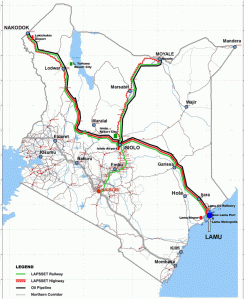
The $25.5 billion project, known as the Lamu Port-South Sudan-Ethiopia Transport (LAPSSET) project, would eventually link landlocked countries South Sudan and Ethiopia to the Indian Ocean via Kenya and include a port, new roads, a railway and a pipeline.

The LAPSSET project involves the development of a new transport corridor from the new port of Lamu through Garissa, Isiolo, Mararal, Lodwar and Lokichoggio to branch at Isiolo to Ethiopia and Southern Sudan. It will comprise of a new road network, a railway line, oil refinery at Lamu, oil pipeline, Isiolo and Lamu Airports and a free port at Lamu (Manda Bay) in addition to resort cities at the coast and in Isiolo. It will be the backbone for opening up Northern Kenya and integrating it into the national economy.

It was first conceived in the 1970s but has been gaining traction after commercial oil finds in Uganda and Kenya.

Judge Oscar Angote suspended the project and said the land compensation case would be heard on 8 December 2014. Source: Maritime Executive

Second bridge over the Zambezi River opens in Mozambique

The second bridge over the Zambezi River in Tete, which is 715 metres long and was built by a consortium of Portuguese companies, was inaugurated Wednesday, after construction began in 2011. The bridge, which connects the city of Tete to the Moatize district, which has the largest deposits of coal in Mozambique, was completed last October.

The new bridge is an integrant part of the National Road EN103, which is the main connection between Mozambique and Zimbabwe, and allows the connection of Malawi and Zambia with the Beira Port. The National Road EN103 assumes itself as the main axis connecting north-south, linking South Africa to Malawi / Zambia.

The bridge as a whole is composed by the bridge itself which crosses the Zambezi riverbed, and an access viaduct to access the bridge from the south side.

The work, costing 105 million euros, was executed by a Portuguese consortium of contractors made up of Mota-Engil, Soares da Costa and Opway and, as well as the bridge, overpass and access roads, included rebuilding 260 kilometres of roads linking Tete to the borders with Malawi and Zimbabwe.

As part of the “New Tete Bridge and Roads” concession the project was designed for movement of heavy vehicles that currently cross the Samora Machel bridge, relieving pressure on the bridge, also on the Zambezi River, which was built over 50 years ago.

The new bridge is named Kassuende in honour of a place in the district of Marávia that between 1968 and 1974 was a logistics base in Mozambique’s armed liberation struggle. Source: Macauhub & Betar.pt

FIATA 2014 Young Freight Forwarder of the Year Announced

Ms Nompumelelo Mboweni works as an Airfreight Import Controller at Bidvest Panalpina Logistics in Johannesburg [TT Club]

Ms Nompumelelo Mboweni works as an Airfreight Import Controller at Bidvest Panalpina Logistics in Johannesburg [TT Club]

The 2014 Young International Freight Forwarder of the Year (YIFFY) Award has been presented to South African forwarder Fortunate Nompumelelo Mboweni at the FIATA Annual Congress in Istanbul.

Each year at the FIATA Annual Congress the achievements of young freight forwarders from around the world are celebrated via an awards programme. TT Club is proud to have sponsored this award, now in its sixteenth year, since its foundation. The process of awarding the honour of Young Freight Forwarder of the Year (YIFFY) began earlier this year when entrants from all over the world submitted papers about a wide variety of transport and logistics projects.

These ranged from the transportation of tunnel drilling equipment to Bolivia to the delivery of a catamaran in Indonesia and from a project moving radioactive isotopes from South Africa to Namibia to the expedited deployment of a Disaster Assistance Response Team in the Philippines.

From this bewildering, yet highly professional array, the YIFFY Steering Committee selected a shortlist of four regional finalists. These four young professionals were then invited to attend the 2014 FIATA World Congress this week in Istanbul, Turkey to make a presentation on their dissertation topic.

The four regional finalists who proudly represented the future of the international freight forwarding industry in Istanbul were –

Africa/Middle East: Miss Fortunate Nompumelelo Mboweni, South Africa
Americas: Mr Douglas Whitlock, Canada
Asia-Pacific: Mr Saiful Ridhwan Bin Zulkifli, Singapore
Europe: Mr Christian Hensen, Germany

Following a comprehensive judging process, Ms Fortunate Nompumelelo Mboweni from South Africa was announced as the 2014 Young Freight Forwarder of the Year at the FIATA Congress’ opening ceremony on 13 October. Ms Nompumelelo Mboweni works as an Airfreight Import Controller at Bidvest Panalpina Logistics in Johannesburg. Andrew Kemp, TT Club’s Regional Director for Europe congratulated her and presented the award.

“I have been honoured as TT Club’s representative to be part of the selection process, and I personally was engrossed by the finalists’ presentations, which showed a considerable depth of understanding of their individual projects. I have to say all four finalists performed with flying colours at the recent final presentations; it was certainly a difficult decision to pick an overall winner. However, Fortunate prevailed and deservedly takes this year’s award,” said Kemp.

The award is presented in recognition of forwarding excellence and was established by FIATA with the support of TT Club to encourage the development of quality training in the industry and to reward young talent with additional valuable training opportunities. The TT Club has been a sponsor of the award since its inception and remains firmly committed to the importance of individual training and development within the global freight forwarding community. Source: TT Club

US Bank launches freight payment ‘first’

e-invoicingUS Bank, part of the fifth-largest commercial bank in the United States, is launching a payment solution in Europe aimed at the freight industry that it said will allow shippers to hold on to cash longer while accelerating payments to carriers.

The bank’s subsidiary, Elavon Freight Payment, claimed it was the first solution of its kind for the freight industry in Europe. In addition to allowing shippers to hold onto their money longer while accelerating payment to their carriers, it claimed the solution “offers carriers a cost-effective alternative to factoring and other financing options commonly used in Europe today”.

It said the new trade finance capability joined a suite of recent enhancements to Elavon Freight Payment that reflect Europe’s diverse business, legal and regulatory environments. “The offering provides an automated solution for some of Europe’s most labour-intensive freight-payment processing needs, including VAT support and consolidated invoice processing”, the company said. Customers can choose German, French, or English-language platforms.

“As a financial institution, Elavon Freight Payment is uniquely positioned to offer this efficient method of improving cash flow for both shippers and carriers,” said Rick Erickson, global director of Freight Payment Solutions for US Bank. “We’re excited to expand our industry-leading capabilities to a wider range of customers.”

A division of US Bank’s Corporate Payments business, Elavon Freight Payment claims to give users greater visibility into their global transport spend “and more complete, timely data with which to make business decisions”. In addition to improving processing efficiencies for European shipping operations, it said the expanded system reduces costs by automating manual processing and optimizing cash flow. Source: Lloydsloadinglist.com

Also view the following article – US bank launches e-invoice base freight payment trade finance service (www.eeiplatform.com)