Chinese ports show potential ….. and Durban too

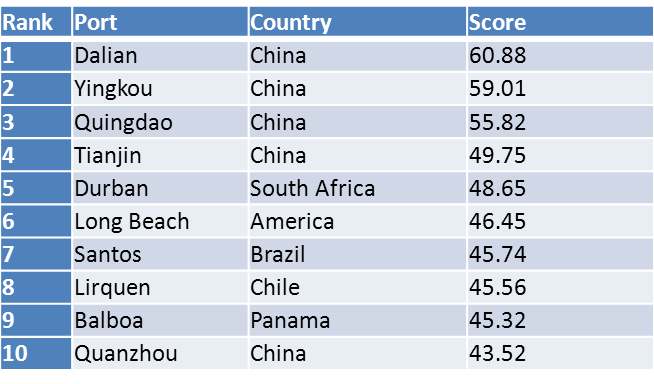
2012 World's Container Ports With Most Potential (Mercator)

2012 World’s Container Ports With Most Potential (Mercator)

According to the Shanghai International Shipping Institute’s (SISI) ‘Global Port Development Report 2012’, rapid growth in throughput has been pushing Chinese ports up the global ranking in terms of development potential.

The report also revealed that throughput in China’s ports was stable, with a growth rate of around 3% to 10%, affected by the worsening economic environment, growth in international shipping and a decrease in trade volume.

But, with global economic, trade and shipping centres moving eastward, some small and medium sized ports have recorded double digit growth (over 20% in some cases). As a result, Chinese ports, including Hong Kong, have taken up five positions among SISI’s Top 10 2012 World’s Most Potential Container Ports, nine positions among the Top 20 global container ports and 13 positions among the Top 20 global ports in terms of cargo throughput.

The report says that European ports are likely to see a return in stability, with a limited growth of less than 3%, while American and African ports may see some growth in throughput following the slow recovery of international trade volume and stronger cargo handling capacity.

City Deep Inland Terminal [port] to be hit hard by Customs Bill

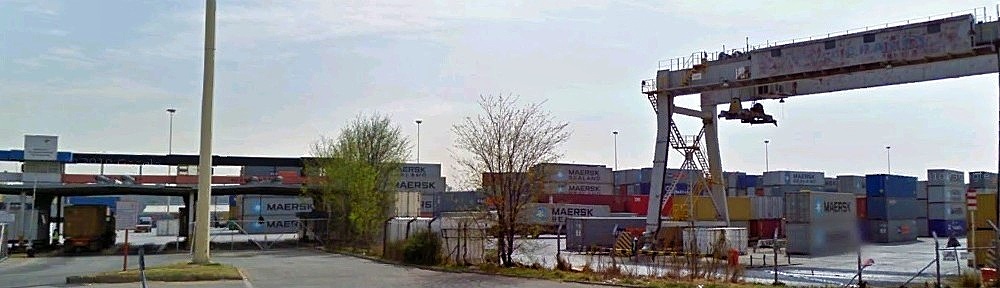
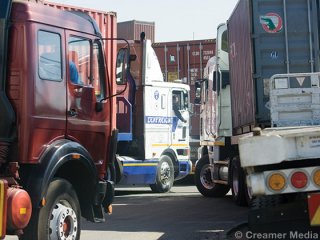
Trucks at Transnet Freight Rail's City Deep Terminal (Engineering News)

Trucks at Transnet Freight Rail’s City Deep Terminal (Engineering News)

Following up on last year’s meeting (click here!) of the minds, convened by the JCCI, a recent meeting in Johannesburg placed fresh emphasis on the dilemma which impending changes contemplated in Customs Draft Control Bill will have for the import and logistics industry in particular. The following report carried by Engineering News highlights trade’s concerns which are by no means light weight and should be addressed with some consideration before the Bills come into effect. Gauging from the content below, there is a clear disconnect between business and policy makers.

The closure of Johannesburg’s inland port seemed to be a “done deal” as Parliament deliberated the recently tabled Customs Control Bill that would leave the City Deep container depot invalid, Chamber of Commerce and Industry Johannesburg (JCCI) former president Patrick Corbin said on Friday.

The promulgation of the South African Revenue Services’ (Sars’) newly drafted Customs Control Bill, which, in conjunction with the Customs Duty Bill, would replace the current legislation governing customs operations, would have a far-reaching impact on the cost and efficiencies of doing business in South Africa and other fellow Southern African Customs Union (Sacu) countries, he added.

The Bill, which was the product of a three-year development process within the National Economic Development and Labour Council, declared that all imported goods be cleared and released at first port of entry. This was part of efforts by customs officials and government to root out any diversion and smuggling of goods, ensure greater control of goods moving across borders and eliminate risks to national security.

Speaking at the City Deep Forum, held at the JCCI’s offices in Johannesburg, Corbin noted, however, that City Deep had operated as an inland port for the past 35 years, easing the load on the country’s coastal ports, which were already strained to capacity. Despite customs officials assuring the chamber that the operations and facilities in City Deep/Kaserne would retain its licence as a container depot, he believed customs had failed to recognise the critical role City Deep had played in lowering the cost of business, easing the burden on South Africa’s ports and ensuring ease of movement of goods to neighbouring countries. As customs moved full responsibility of container clearances to the ports, port congestion, inefficiencies, shipping delays and costs would rise, and jobs would be lost and import rail volumes decreased, he noted.

Economist Mike Schussler added that the closure of the City Deep inland port operations would add costs, increase unreliability and induce “hassles”, as the Durban port did not have the capacity to handle the extra volumes and its productivity and efficiencies were “questionable” compared with other ports.

“The volume of containers going to overstay or being stopped for examination in City Deep [will] need to be handled by [the coastal] ports. If they can’t cope with the volume at the moment, how are they going to handle increased volumes,” Iprop director Dennis Trotter questioned. He noted that only the containers cleared 72 hours prior to arrival would be allocated to rail transport. Those not cleared three days before arrival would be pushed onto road transport to prevent blocking and delaying rail operations.

This, Schussler said, would also contribute – along with port tariffs and the cost of delays – to higher costs, as road transport was more expensive than rail.

He pointed out that South Africa was deemed third-highest globally in terms of transport pricing. It would also result in less rail capacity returning for export from Johannesburg, further leading to increased volumes moving by road from City Deep to Durban.

Sacu countries, such as Botswana, would also be burdened with higher costs as they relied on City Deep as an inland port. Trotter noted that the region would experience loss of revenue and resultant job losses. Over 50% of South Africa’s economy was located closer to Gauteng than the coastal ports. Johannesburg alone accounted for 34% of the economy, said Schussler, questioning the viability of removing the option of City Deep as a dry port.

However, unfazed by the impending regulations, Transnet continued to inject over R1-billion into expansion and development opportunities at City Deep/Kaserne. Corbin commented that Transnet had accepted the assurances from customs that “nothing would change and the boxes would still be able to move seamlessly once cleared.” The City of Johannesburg’s manager of transport planning Daisy Dwango said the State-owned freight group was ramping up to meet forecast demand of the City Deep/Kaserne depot.

The terminal’s capacity would be increased from the current 280 000 twenty-foot equivalent units (TEUs) a year, to 400 000 TEUs a year by 2016, increasing to 700 000 TEUs a year by 2019. Transnet aimed to eventually move to “overcapacity” of up to 1.2-million TEUs a year. Dwango said projections have indicated that by 2021, the City Deep/Kaserne terminals would handle between 900 000 and one-million TEUs a year. Source: Engineering News
Hi-tech shippers switch from air to ocean

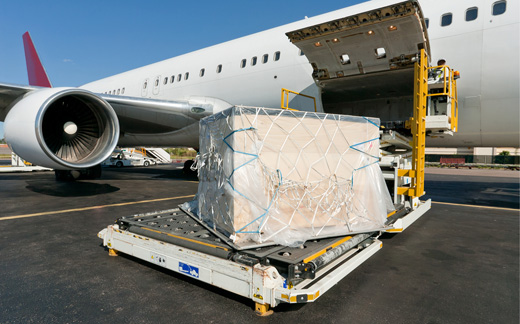
sea_freight_trackingCargo traditionally sent by air is increasingly switching to sea as shippers capitalise on the mode’s lower transport costs – a trend expected to continue over the coming years.

Lloyds List reports that several leading freight forwarders reported in their full-year results that certain cargo types — particularly hi-tech and telecoms — switched from air freight to sea freight last year.

DHL Global Forwarding CEO Roger Crook said the switch was the result of a price difference of 10 times between the two modes of transport. He said: “Obviously many companies are under cost pressure and looking to reduce total supply chain costs. Therefore, they are buying and moving by ocean freight, and particularly it is happening in the technology sector.”

Panalpina chief operating officer Karl Weyeneth said he expected the trend to continue. “There is a maximum shift you can achieve, depending on what industry you are talking about,” he said.

“But I believe that now supply chains are used to working with more ocean freight, this impact will stay for at least a couple of years, until the economy has really recovered, then it will start to shift back again.”

“We really see this as an important factor in our market for the next two to three years.”

Kuehne+Nagel (KN) chief executive Reinhard Lange said the decision on whether cargo was suitable to be switched from air to sea partly came down to the weight of the shipment. He said that if two products had the same market value, but one weighed less than the other, the overall cost impact of flying was less for the lighter cargo because air cargo costs were based on weight. He said this explained why hi-tech products had transferred to ocean freight while lighter products, such as pharmaceuticals, had, in the main, continued to utilise air freight.

The forwarders said the impact of the switch from air to ocean freight was partly to blame for a decline in air freight volumes last year, while container volumes continued to grow. In its full-year results, Panalpina saw air freight volumes decline 6% last year while ocean freight volumes grew by the same amount. Meanwhile, DHL Global Forwarding’s air freight volumes slipped 5.3% in 2012 with ocean freight increasing 4.3%, while KN saw its air freight volumes grow by 2% while ocean freight increased 6% year on year. Source: LloydsList

eAWB – Biggest achievement in standard-setting in air freight in 20 years

freightStandardization of the format for the e-AWB is expected to accelerate the industry’s move toward paperless transportation. Before this, Leger says, carriers were confronted with signing hundreds or even thousands of separate bilateral agreements with individual forwarders. He went on to describe e-AWB “the biggest achievement in standard-setting in air freight in 20 years.”

Following a year-long development process culminating in three months of trials that involved 15 carriers and eight forwarders, the IATA/FIATA Consultative Council (IFCC) endorsed the multilateral e-AWB agreement in February with some minor amendments. IATA formally adopted the agreement as its new Resolution 672 at the 35th Cargo Services Conference (CSC/35) in Doha, immediately ahead of the World Cargo Symposium. Click Here! to view the new Resolution.

The agreement was this week filed with governments, from whom IATA is seeking expedited approval in 30 days. “We hope to go live before mid-year,” Leger says. “We see e-Freight as essential for the future competitiveness of air cargo, and the e-AWB is the cornerstone of e-Freight. Agreeing the multilateral e-AWB is a game changer, and should go a long way toward reaching our target of the 20 percent e-AWB adoption rate we have set as our target for 2013.”

While early adopters in the airline community, including Cathay Pacific, Singapore Airlines, Korean Air and Singapore Airlines, overcame the logistical obstacles, they commented that having to draft separate bilaterals with forwarders would prevent wider implementation and delay the e-Freight objective.

“The standard bilateral that we initially developed, which allowed forwarders to make their own amendments, still left the industry facing extra costs but rapidly proved the concept,” Leger says. “Cathay adopted it in 2011 and then, in the middle of last year, we started work on the multilateral agreement.

“There were long discussions between carriers and forwarders as we tried to come up with an acceptable formula. This did not concern technical or operational aspects, but was more to do with what the governing law should be. Each nationality wanted to follow its own jurisdiction and consensus was necessary.”

As soon as trials began in October, Leger says the participants could see the value of the multilateral agreement. IATA hopes it will acts as the springboard for its ultimate target of 100 percent conversion to e-AWB by 2015. Source: Air Cargo World News

Debate or Mitigate?

City Deep1_SnapseedBrowsing my various sources of news I came across this article featured in the FTW Online a few weeks ago. It prompted me to post it as an item for some detailed discussion in a follow-up post. Many followers have enquired what happened to my discussion on Inland Ports and the National Transit procedure. I guess it’s now time to respond, but not just yet – perhaps after what materializes at the event below.

What will be the impact of the new Customs Bill on City Deep’s inland port status?
This is the issue to be debated at a JCCI event scheduled for March 15. “The Johannesburg Chamber has been closely involved with City Deep, our international gateway for containerised cargo, for the past 36 years,” says the JCCI’s Pat Corbin. “We have actively promoted the benefits for traders of a combined transport (multi-modal) bill of lading allowing seamless movement through the coastal ports.

“But diametrically opposed developments are taking place which could have far-reaching impact on not just the future of the dry port, the supporting logistical suppliers and local employment, but also the coastal ports and the transport mode for inland movement.”

The event will examine Transnet’s major investments in City Deep and the Durban corridor, SACD’s expanded facilities and services, and the Customs Bill – with its intended removal of inland port status. Source: FTW Online

Port Natal – Durban Harbour 40s, 50s and 60s

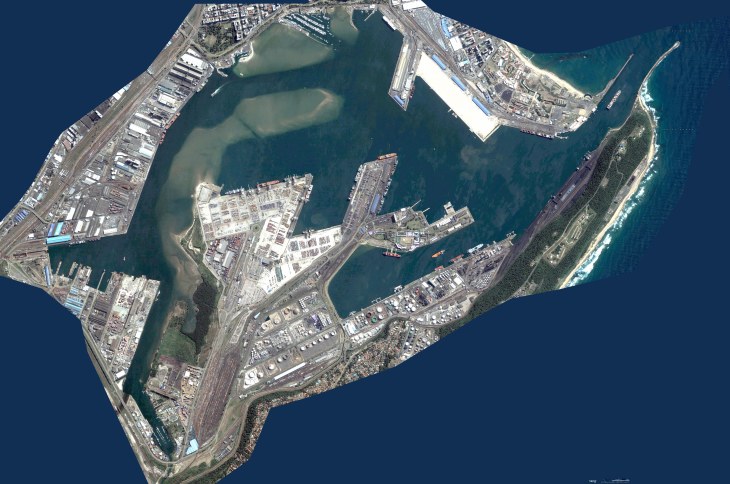
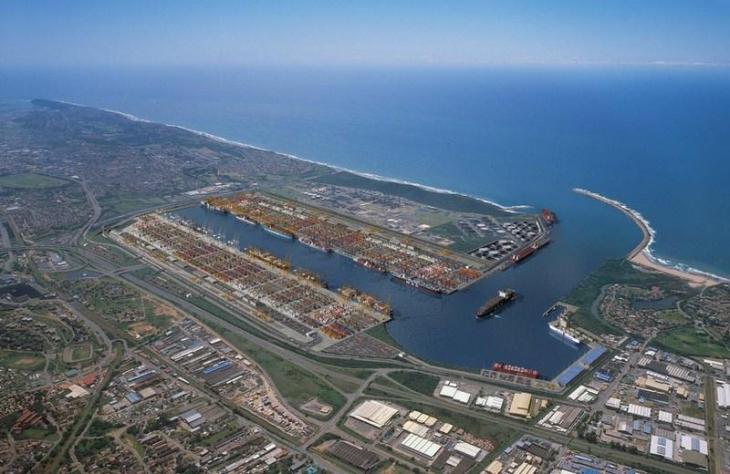
Durban_Harbour_Photo Hi-ResA tad of nostalgia? No, this is relevant and historic. Look what Africa’s busiest seaport looked like 60 (or more) years ago. I am very grateful to Lois Crawley and Cecil Gaze (fellow customs colleagues in Durban) for sharing these historic gems. For purposes of contrast see the modern-day harbour (above). Real estate in the harbour area is in short-supply and significant operational expansion over the last 10 years has placed huge strain on the road and rail networks and the surrounding industrial areas. In recent times the expansion of containerised handling facilities has radically affected the traffic flows, even in nearby residential areas such as the Bluff. With increasing demand for premium containerised port handling facilities, the old Durban airport has been sited for development of a new port, perhaps the biggest and most ambitious construction project yet in South Africa. While one can marvel at the development over what is a relatively short period of time (a generation), spare a moment and view the seemingly archaic slideshow of Durban harbour purportedly between 1940 and 1960 – which some amongst us can even remember. Enjoy!

This slideshow requires JavaScript.

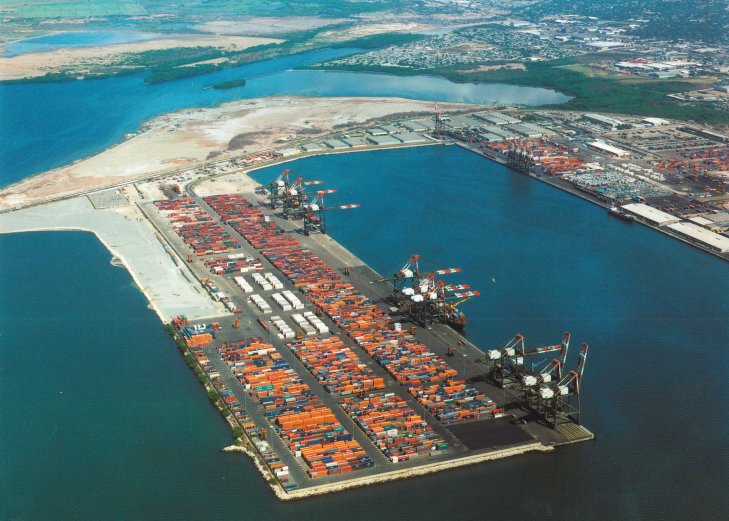
Jamaica plans global logistics hub

The Port of Kingston – ripe for development

The Port of Kingston – ripe for development

The Government of Jamaica has revealed ambitious plans to turn the Caribbean island in to a global logistics hub – and high level talks have already begun with the aim of increasing volumes of sea cargo.

Projects under discussion include developing the Port of Kingston ahead of the expansion of the Panama Canal and the development of a new commodity port to be built in eastern Jamaica which will specifically handle petroleum products, coal, minerals and grain.

At the same time, there is talk of constructing an air cargo airport to help with increased volume of boxes and the construction of large scale ship repair docks to service the increasing volume of post-panamax vessels.

Dr Eric Deans, chairman of the Logistics Task Force, said a market of 800 million people, including the USA and Brazil, can be accessed readily from Jamaica. He said trade opportunities are due to “burst wide open with the expansion of the Panama Canal scheduled to be completed in 2015; the multi-billion stimulus package by Brazil for World Cup 2014 and Olympics 2016; and the growing middle class in Latin America.”

He added that a critical aspect of the global logistics hub initiative is the broadening of bilateral collaborations with Jamaica’s global partners, and encouraging private sector investment and financing through private-public partnerships (PPPs).

Talks regarding the set-up of special economic zones are already underway with local and foreign investors.

The Jamaica Ministry of Industry, Investment and Commerce, which is spearheading the initiative, says that it will help give the country a global logistics supply chain that is able to compete with the likes of Singapore, Dubai and Rotterdam.

Perhaps this initiative could spur on our local authorities to actually move on ‘logistics hubs’ here in South Africa. While the huge expansion plans for our existing harbours, railroads are pursued, it is high time that the likes of Tamboekiesfontein, for instance, and other privately initiated transit hubs are taken seriously, and in an integrated manner to benefit commerce and trade in the Southern African region.

 Related articles

Finding the best solution for 100% container weight verification

Bromma load verification sensing technology (www.bromma.com)

Bromma load verification sensing technology (www.bromma.com)

The International Association of Ports and Harbours (IAPH) has helped the container handling industry to put focused attention on the issue of container weight verification. The IAPH and the International Shipping Organization have called for near 100 per cent container weight verification as a standard industry ‘best practice’. IAPH has recognised the value of container weight verification for both safety and operational reasons. Accurate container weights can help guide critical plans regarding stowage, and verifiable load data also serves to ensure worker safety. Lifting containers within an acceptable weight range also prevents accelerated stress on the spreader, thus extending equipment life.

The issue that organisations such as IAPH and the World Shipping Council have raised is not merely an academic one, studies of container weight indicate that there is often significant variation between listed and actual container weight. The problem is a familiar one: not everyone tells the truth about their weight, as the consequences of inaccurate weight can include equipment damage in ports, injury to workers and collapsed container stacks, among others.

The question is ‘how’, not ‘should’?

The general consensus has grown that universal container weight verification is a worthy standard, the key question has quickly begun to shift from whether we should we have a universal requirement to how we can best implement this commitment. Along these lines three general approaches might be possible.

The container crane option

The first possible approach is to utilise container cranes to meet the weighing requirement. The advantage of weight verification by cranes is that weighing occurs during the normal course of handling operations. The disadvantage of a crane-based approach is that weighing accuracy is only approximately 90-95 per cent, and cranes cannot distinguish between the weights of two containers when lifting in twin-mode. Since many terminals load and unload container ships using twin-lift/twin-20 foot spreaders, the actual weight of each of these individual containers will remain in doubt if there is a reliance on container cranes to yield this data. Also, with the emergence of the mega-ship era, more and more terminals will be looking for productivity solutions that enable more containers to be handled in each lift cycle, and so twin-handling of 40 and 20 foot containers is likely to expand in the future, thus adding to the number of containers with an uncertain weight.

The weigh bridge option

A second option for terminals would be to meet the container weight requirement through the use of weigh bridges. Unfortunately, there are multiple weaknesses in this approach.Containers can be weighed from the weigh bridge, but driving every container onto a weigh bridge will obviously add another operational step, and slow productivity. It also requires, especially at larger and busier transhipment terminals, that considerable land and transit lanes be set aside for weighing activities. In addition, there are two weight variables on the weigh bridge – the variable weight of up to 300 litres of truck fuel and the weight of the driver. Further, as with a container crane, a weigh bridge cannot distinguish between the weights of two containers, and so the weight of each individual container will always be inexact. The only way to gain a precise weight is to weigh one container at a time, and to adjust for fuel weight and driver weight variables.

The spreader twist lock option

The third option is to ascertain container weight from the spreader twist locks. For container terminals, a spreader-based weighing approach has several key advantages. Firstly, weighing from the spreader twist locks yields much more accurate information, as container weight precision is greater than 99 per cent. Secondly, unlike weigh bridges or crane-based container weighing, spreaders weigh each container separately when operating in twin-lift mode. When a Bromma spreader lifts two 20 foot containers or two 40 foot containers at a time, the spreader can provide highly accurate data on the weight of each separate container, and without any of the variables (fuel, driver) associated with the weigh bridge approach.

In addition, with a spreader-based approach you weigh containers from the spreader twist locks without adding any extra operational steps or requiring any extra space or transit lanes. Terminals simply log container weights in the normal course of lifting operations – with a warning system alerting the terminal to overloaded and eccentric containers. Container weight verification during the normal course of terminal operations is a way to accomplish the weighing mission without impairing terminal productivity, and especially at busy transhipment terminals. To read the full report, Click Here!

Source: www.porttechnology.org

How much bigger can container ships get?

Check out this superb article – click here – featured on BBC News Magazine‘s website –

What is blue, a quarter of a mile long, and taller than London’s Olympic stadium? The answer – this year’s new class of container ship, the Triple E. When it goes into service this June, it will be the largest vessel ploughing the sea. Each will contain as much steel as eight Eiffel Towers and have a capacity equivalent to 18,000 20-foot containers (TEU). If those containers were placed in Times Square in New York, they would rise above billboards, streetlights and some buildings. Or, to put it another way, they would fill more than 30 trains, each a mile long and stacked two containers high. Inside those containers, you could fit 36,000 cars or 863 million tins of baked beans.

The Triple E will not be the largest ship ever built. That accolade goes to an “ultra-large crude carrier” (ULCC) built in the 1970s, but all supertankers more than 400m (440 yards) long were scrapped years ago, some after less than a decade of service. Only a couple of shorter ULCCs are still in use. But giant container ships are still being built in large numbers – and they are still growing.

It’s 25 years since the biggest became too wide for the Panama Canal. These first “post-Panamax” ships, carrying 4,300 TEU, had roughly quarter of the capacity of the current record holder – the 16,020 TEU Marco Polo, launched in November by CMA CGM.

In the shipping industry there is already talk of a class of ship that would run aground in the Suez canal, but would just pass through another bottleneck of international trade – the Strait of Malacca, between Malaysia and Indonesia. The “Malaccamax” would carry 30,000 containers.

There are currently 163 ships on the world’s seas with a capacity over 10,000 TEU – but 120 more are on order, including Maersk’s fleet of 20 Triple Es. Source: BBC News Magazine

Keeping manifest information confidential

confidentialAn interesting and pertinent issue has been raised in the social media area on the ‘confidentiality’ of carrier information submitted to Customs. In this particular regard it relates to the practice of the US Customs and Border Protection Agency. One blogger commented “It’s kind of ironic in the U.S. for example that importers/consignees are required to submit a request to customs to opt-in to keep manifest information confidential.”

CustomsNow, a direct filing solution for US traders relates “As a common practice, importers and consignees may submit a request to US Customs, pursuant to 19 CFR 103.31, to keep manifest information confidential.  Our previous blog post on this topic  includes several tips to ensure these requests result in the broadest degree of confidentiality.”

Recently, importers and consignees who have submitted confidentiality requests have complained to CBP that confidential shipping data — party/shipper/consignee name and address — for ocean freight have nevertheless been disclosed to the public.  After reviewing the matter, Customs has determined that “improper data entry” was the cause.  To avoid this, CBP advises in a recent CSMS publication, when filing e-Manifests in ACE, “the commercial party name fields must ONLY contain commercial party name data.”  Otherwise, “…the name of the party stored in the ACE database is corrupted because it includes address data. This inaccurate party name data fails the confidentiality edits resulting in confidential business information being shared publicly. This inadvertent disclosure is tied directly to the way in which data is transmitted by users.” Additional information can be found in CBP’s CSMS #13-000064.

In South Africa, and I’m sure a great many other countries too, one just has to accept that the Customs authorities will secure such information, because they say its safe. Read the link below – cause for concern.

Air-to-sea cost differential narrows

Multimodal Freight

Just to keep them on their toes – the following will undoubtedly play a factor in many customs administration’s risk management and intel systems.

Air freight rates slipped in December as the trade returned to business-as-usual following the volume boost of earlier hi-tech product launches, according to Drewry’s new monthly report, Sea & Air Shipper Insight. Drewry’s recently launched East-West Air Freight Price Index, a weighted average of air freight rates across 21 east-west trades, fell by 1.4 points from November to reach 110.8 in December, bringing to an end four consecutive months of gains in the index. “The waning effect of new hi-tech product launches on traffic demand was the primary contributor to declining rates from Asia into North America and Europe,” said Simon Heaney, research manager at Drewry. “Drewry expects pricing on routes out of Asia to decline further, though the impact will be softened by an uptick in demand levels in advance of Chinese New Year.”

Evidence of a tentative recovery in air freight demand comes in the form of a 2% year-on-year rise (the first such increase in 16 months) in November of worldwide semiconductor sales, a traditional bellwether for air cargo. Air cargo demand could also see a temporary boost at the expense of the ocean market. With ocean currently facing capacity issues such as the looming threat of strike action at US ports and carriers cancelling voyages, some shippers, particularly those wanting to move higher-value goods, might well be tempted to shift some cargo to the air. Demand growth for air cargo has lagged behind ocean, which Drewry believes is due to a combination of shippers having access to better IT systems, leaner inventory strategies and greater faith in liner service reliability, which has been improving steadily in the last year or so.

Recent issues in the ocean sector are testing that faith, although of course shippers that do switch to air freight will have to pay a considerable premium. East-west air freight rates and comparable ocean rates have almost mirrored their ups and downs since May 2012, with air prices showing a steeper upswing since October. However, the fall in air freight pricing and a corresponding rise in container shipping rates in December sent Drewry’s east-west air freight price multiplier down 1.3 points to 11.8. The multiplier measures the relationship between the cost of shipping by air relative to sea. “Air cargo is not a viable Plan B for all shippers,” said Heaney, “but for those moving expensive goods it remains a justifiable alternative, particularly at a time when the reliability of the ocean supply chain is threatened.”  Source: Lloyds List

Pandora’s Box – Missiles in a shipping container

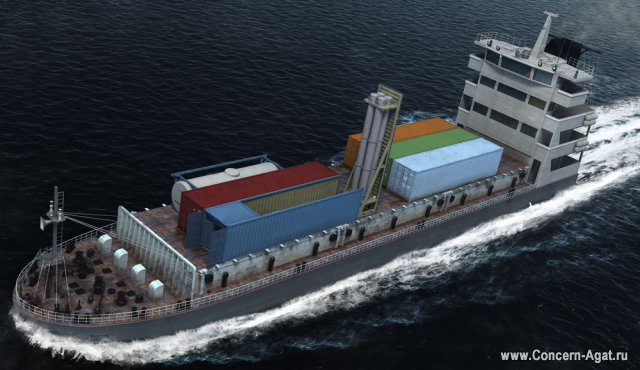
Artistic impression of the Club K Missile System

Artistic impression of the Club K Missile System

Critical Logistics, an informative blog, reported an interesting if not disturbing article on the development of a new weapon’s system which uses the ubiquity of shipping containers as it is housed in a 40-footer. It is known as the Club-K Container Missile System.

An article by concerned commentator, Lajos F. Szaszdi, (The Heritage Network) raises several valid concerns in his article “The Club-K: A Deadly “Pandora’s Box” of Cruise Missiles”, which are summarised in the following paragraphs.

[…] Fittingly, the marketing name given to the system is “Pandora’s Box.” The container-looking weapon system can be fired from a container ship, a train cart, or a container truck. By appearing externally as a simple container, the Club-K can be positioned covertly, ready to unleash a surprise attack, probably firing simultaneously from more than one container.

[…] Container ships carrying the Club-K system could be used to attack commercial shipping, particularly in choke points like the Straits of Hormuz and Malacca. These container ships would be acting like Germany’s auxiliary cruisers of the First and Second World Wars, which were armed merchant ships used for commerce raiding. Cargo ships armed with the Club-K could be equipped with Unmanned Aerial Vehicles to provide airborne Intelligence, Surveillance, Target Acquisition and Reconnaissance (ISTAR).

Even though use by Hezbollah is a possibility, the greatest potential threat could come from China, which reportedly was already interested in acquiring Club missiles for its submarines of the Type 041 Yuan class, the nuclear-powered Type 093 Shang class, and Russian-made Kilo class subs. China could load container ships with land-attack missiles, with E-Bombs for a surprise attack against Taiwan, and armed with nuclear warheads and E-Bombs to strike the port facilities used by the U.S. Navy in Singapore, the U.S. West Coast, the Panama Canal, etc. Chinese missiles could be launched from container trucks sent secretly to Mexico mixed with legitimate containers. India, another customer of the SS-N-27, could use the Club-K system against Pakistan or China as a first or second strike weapon. Iran could be another customer for the Club-K, once U.N. sanctions are lifted.

The Club-K is a highly destabilizing weapon system. Due to the nature of international trade, with millions of containers being shipped worldwide, transported by train and particularly by trucks, it would be very hard to detect, and an attack could happen at any time on any day without warning. The military and intelligence services of the U.S. and its allies must keep a close watch on this Pandora’s Box, to make sure it will never be opened in anger against them.

A promotional video of the system by (oddly named) manufacturer Concern Agat appears below. http://

For more details on the system visit their website – http://www.concern-agat.com/products/defense-products/81-concern-agat/189-club-k

Thinking Inside the Box

The fluid transition from sea to land

The fluid transition from sea to land

Here’s an interesting view on containers, presented by Alex Colas from Birkbeck University, USA. Colas highlights that containers have been fundamental drivers of global processes and have had an unprecedented effect on logistics and labour organisations. Moreover Colas demonstrates that containers as well as being transformative objects in themselves, have also transformed the way in which circulatory barriers have been overcome through seamless transitions from water to land. Containers are a worthy protagonist of material analysis in international systems and there is much room in academic discourse for the full story of the container to unfold. Herewith the link to the article Thinking Inside the Box, available on the blog – Geopolitics & Security.

Is Google moving into box tracking?

container-trackingThe US Patent and Trademark Office has granted Internet search giant Google a patent on a system for securing, monitoring and tracking containers. According to United States Patent 8284045, it describes a two-way communication system, supported by an electronic bolt seal, a network gateway, a web-based platform, and a mobile device, that allows containers to be networked for the transfer of data. Shipping containers are networked for transferring data between the shipping containers. The shipping containers include sensors for detecting conditions associated with the shipping containers. The conditions sensed by any shipping container whether transported by rail or ship is transmitted from an ad hoc network, via a gateway configured for satellite or cellular communications for example, to a container-tracking application server or equivalent computer system. The computer system is remotely located to the shipping container for central compilation, analysis, and/or display of data regarding the shipping containers.

The system describes an environmental sensor that can travel with a product within a carrier’s logistics network. The environmental sensor being configured to sense an environmental condition capable of affecting the product to generate product environment data. The system includes a scanner configured to read product environment data from the environmental sensor. The system also includes a hub control unit configured to communicate with the scanner and receive the product environment data from the scanner and determines whether the product environment data transcends a limit of exposure of the product to an environmental condition. The hub control unit is also configured to generate a transporting instruction to redirect transport of the product to an alternate destination different from its original destination if the hub control unit determines that the product environment data indicates the environmental condition of the product has transcended the limit of exposure. What a mouthful! I dare say that there are people out there that can decipher the patent content and relate to its various diagrams. If you are interested in this topic, please visit the following link – http://www.archpatent.com/patents/8284045. Also visit the Patent Buddy for similar information. Hopefully as the business case for this patent unfolds things may become a bit more clearer – and perhaps a little sinister too for some!

Durban “Dig-out” port – a flagship PPP initiative?

Artistic impression – Durban Dig-out Port

Freight and Trade Weekly (FTW) reports that a team has been assembled to sort out the funding for the new dig-out port on the old Durban International Airport site (FTW November 9, 2012) – a project that represents a potential major shot in the arm for the economy of the region and the country. The consortium is composed of the well-known Dutch port consultants, MTBS; the highly respected international engineering firm, Arup; and Durban-based lawyers,Van Velden Pike Incorporated, in association with Nichols Attorneys.

This consortium is to act as transaction advisers to Transnet, on what is, according to government, likely to be SA’s flagship public/private sector partnership initiative.That will be part of the team’s studies, according to Andrew Pike, partner in Van Velden Pike. However, the study, although started, is still very much in pre-feasibility stage, and there is obviously still no firm comment to be made on what direction the public/private element will take, he told FTW.

Further abroad, AECOM has announced (Oct 2012) that Transnet has awarded the company a US$3.4-million contract to initiate the design of the Durban Dig Out Port in South Africa. AECOM’s has experience delivering creative design services for major ports around the world, such as the New Port Project in Doha, Qatar. As part of the contract, AECOM will provide concept and pre-feasibility design services for the new port and container terminals, including all associated infrastructure relating to its operation. A critical aspect of the design will be ensuring the sustainability of the port throughout the construction phase as well as all of the operational phases of its development.

The Mercury reports that work on the multi-billion rand project is expected to commence in July 2016, with the first phase of the project completed by 2019. Development of the project is to be over a 30-year period. The construction phase will provide an estimated 64,000 jobs, while 25,000 permanent jobs are envisaged in the functioning port.

The scale and details of the project are staggering. The port will involve liquid fuel, automotive and container cargoes. The siting of the entrance to the port will require the relocation of the Shell and BO Refinery’s (Sapref) single buoy mooring. The construction of the southern breakwater alone will absorb 16% of the total cost and will require special sources of quarry stone. Environmental concerns are being taken very seriously. For example R85-million has been budgeted to relocate some 2,000 chameleons which inhabit a part of the northern section of the airport site.

Of particular significance is that without the dig-out port, Durban will stagnate as a port of call and experience decline. Already Cape Town does not have the capacity or berths deep enough to handle the new generation of 18,000 TEU ships that are due soon. Durban’s proximity to the Witwatersrand makes it the logical and preferred destination for container shipping. Studies have shown that the old airport site is ideal for the construction of a new harbour designed specifically to manage the size and volume of container shipping. Durban’s geographical location in the southern hemisphere is particularly advantageous as regards intercontinental shipments from the east to South America and beyond to the north Atlantic. Sources: FTW, AECOM, and The Mercury.