Awarding the SKA

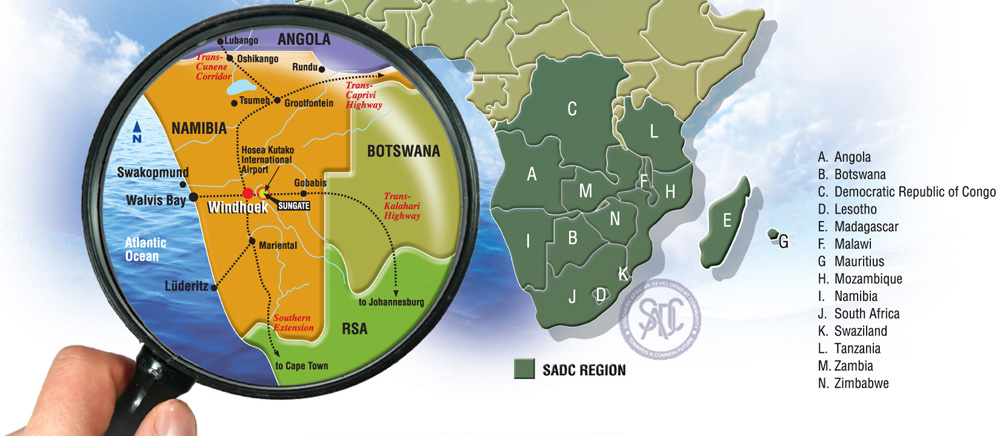
So what does the awarding of the Square Kilometre Array (SKA) and Customs have in common? Sweet blow all as far as I was concerned until a colleague of mine, Roux Raath, pointed out one of the criteria on which the award was made. Reading the actual report one realises this has more to do with the fact that six African countries will be involved and the cross border movements are foreseen to be complex in contrast to movements between Australia and NZ. Therefore, this has less to do with the South African Customs administration than the Southern African geographical environment. The report also refers to duty and tax structures and these issues should perhaps find a home with the DTI as customs does not dictate these. Nonetheless, the fact remains that certain issues have been raised and these should be considered when strategies are devised to support the SKA project.

The SKA Site Advisory Committee (SSAC) reviewed the various customs systems and duty rates, the excise tax regimes and tax rates, and related issues such as import and export processes that will impact the SKA over its lifetime. A wide range of issues was considered since the SKA involves a large multinational investment of funds, materials, and services, including the provision of scientific and technical equipment, and personnel in various remote locations.

The SSAC reviewed the issues presented by the two candidates, including details related to the six diverse South African member countries; cross-border coordination and logistical issues presented by the South African proposal; and the diverse customs, excise, and regulatory structures in the two candidate sites. The SSAC also considered the long-standing Australia–New Zealand Closer Economic Relationship Trade Agreement (ANZCERTA) free-trade and economic cooperation agreement (allowing for the free flow of goods, services, and people between the two countries) and the absence of overall free-trade agreements among the six members of the South African consortium. The SSAC also reviewed the customs, free-trade, economic, and business environments in Australia and New Zealand and considered the written confirmation from the Australian government that there will be no Goods and Services Tax (GST) payable by the SKA in Australia. On the factor of Customs & Excise, the SSAC awarded the following points for each of the contending consortia – 13.3 for ANZ and 6.7 for South Africa.

To read the full report, download here!

 Related articles

Interfront – Customs know-how and software

Forgive my exuberance and national pride, for one minute. After some years of intense re-organisation and strategization a new dynamic organization is set to spearhead ICT development in the Customs and Border Management industry. Many will know it by its previous name TATIS or TATIScms. The Cape Town based IT outfit is responsible for the intuitive customs software solution which currently operates in Luxembourg Customs. Let it be known that this is one tough space to operate and succeed in.

Africa, in particular, has  suffered the stigma of UN and World Bank ‘freebies’ by way of customs automated solutions – designed and developed by the west, on western philosophy with little concern for the longer term sustainability and development on the African continent. Before the emergence of commercial Windows-based software, African states (and most developing countries for that matter) had little option but to adopt ASYCUDA. The French colonies in the main sought franco-developed SOFIX. Bull Computers were particularly strong in this space and received great support from the French government in their ventures.

Just as the ‘power’ of the west is waning under financial and political turmoil, so developmental states and economies are looking to their own resources and expertise to fulfil their needs and destinies. A similar phenomenon occurred in the border and port control security space during the first decade of the 21st century, where the Chinese have virtually stolen international market share in NII (Cargo scanning) equipment.  Therefore the emergence of InterFront on the Customs ICT scene is both unique and timely. For more details on the new company and its partners, solutions and expertise please visit their website: http://www.interfront.co.za. Also read their corporate and product profile brochure – click here!

This week, Interfront are show-casing their solution and expertise at the WCO‘s 2012 ICT Conference in Tallinn, Estonia. With the international customs and border management relatively young and seeking stability, Interfront have a great opportunity to develop a regional and international footprint. SARS, in particular, looks forward to its new integrated customs solution; setting a new bench mark in global customs processing.

2012 WCO IT Conference and Exhibition opens in Estonia

The World Customs Organization (WCO) announced the successful opening of its 2012 IT Conference and Exhibition in Tallinn, Estonia which will run from 6-8 June 2012 with the theme: ” IT Transforms Core Business for Customs and its Stakeholders”.

The VIP opening ceremony included a special video welcoming speech by the President of the Republic of Estonia, H.E. Toomas Hendrik Ilves, and addresses by the Secretary General of the WCO, Kunio Mikuriya, and the Director General of the Estonian Tax and Customs Board, Marek Helm, co-hosts of the event.

This 11th WCO IT Conference and Exhibition which dates back to 2002 is the most important IT event on the international Customs calendar, allowing senior Customs executives from over 100 countries to meet with top trade representatives and solution providers in order to consider today’s business challenges as well as modern IT developments.

Gathering over 500 delegates together, the 2012 Conference will focus on “the Customs administration of the future” and includes a wide range of leading speakers from the Government and private sectors who will expand on the main theme of the event.

A dynamic IT exhibition complements the Conference, enabling various global systems aimed at maximum effectiveness and efficiency in modern Customs innovation to be displayed and demonstrated to participants.Source: WCO

ZIMRA, Business to form Customs Forum

The Zimbabwe Revenue Authority (ZIMRA) is working in partnership with organised businesses associations in crafting a Memorandum of Understanding, creating the Zimbabwe Customs to Business Forum, an official has said. ZIMRA’s commissioner for customs and excise Mr Happias Kuzvinzwa said last week that the forum was a platform for his organisation and business to collaborate on issues of compliance, policy, capacity building, integrity and technical engagements. He was addressing delegates at the Shipping and Forwarding Agents’ Association of Zimbabwe 8th annual conference held in Beitbridge last week. Mr Kuzvinzwa said the interim steering committee was finalising the draft MoU and terms of reference.

“The forum is a prelude to the implementation of the authorised economic operator scheme. Membership of this forum is open to the businesses affiliated to recognised associations and shall be governed through a steering committee which is a higher committee, and standing committees which are lower committees chaired and constituted by both ZIMRA and business.

“The standing committees are organised in clusters for easy management of programmes. We expect all the concerned parties to sign the MoU soon upon its finalisation” he said.

Mr Kuzvinzwa added that in line with the SAFE framework of standards, ZIMRA would soon be plotting the authorised economic operators. He said the scheme sought to reward all compliant operators in the supply chain who meet the set criteria. He added that groundwork had been done and teams will be conducting stakeholder consultations and awareness workshops next month. “I would also want to urge the freight industry to embrace as a culture and operation ethos integrity, voluntary compliance, relevant competencies, and information technology.

“Missing these industry risks is being packed into the dustbin of history as you become irrelevant and classified as non-tariff barriers.” he said. Mr Kuzvinzwa added that ZIMRA was also in the process of putting in place a border agency single window through ASYCUDAworld. He said all border agencies would be connected to the workflow process through ASYCUDAworld to ensure that respective mandates are coordinated and streamlined.

“Discussions are at an advanced stage with other border agencies on the implementation of the single window and Beitbridge has been selected to pilot the programme with ZIMRA providing computer workstations at their respective offices,” he said.

Source: The Herald (Zimbabwe)

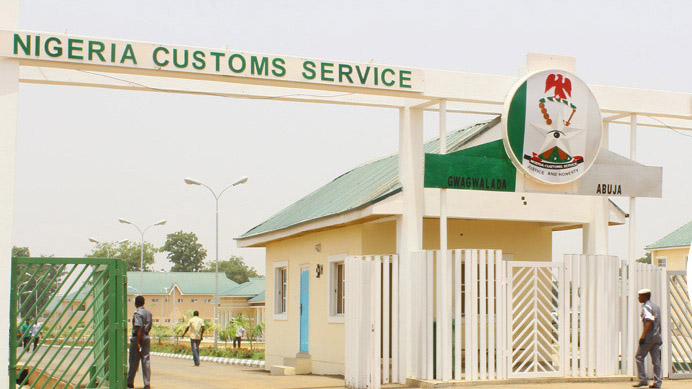
Nigeria – Single Window initiative back on track

After much controversy centering on allegations of corruption and impropriety, the Federal Government terminated the contract awarded to Single Window Systems and Technology Limited. The contract which allowed for a sole submission point for importers and exporters to lodge their documentation was unilaterally awarded by the Federal Ministry of Finance, under the Umaru Yar Adua administration, on behalf of the Nigeria Customs Service to the company registered in June 2010 with N 1m share capital.

The contract was reported to be worth N 4.5 trillion. The decision to discontinue the contract was based on an investigation by the Ministry of Finance which looked into the processes and the terms of the contract. The investigation which was approved by the President revealed that the contract breached the provisions of both the Procurement Act and the ICRC Act. Nigerian Customs received a letter of notification from the supervisory of the ministry of finance that a concession agreement had been entered between the Federal government and the Single Window System Technologies Limited, so where did the customs come into play before the contract was signed?”

Nigeria Customs Service had earlier said on the controversy, “How can a company enter such an agreement without the knowledge of the Nigeria Customs Service?” The Customs was not involved in the execution of the agreement entered by the Federal Ministry of Finance through the Former Honourable Minister of Finance; Olusegun Aganga. Therefore Nigerian Customs was not carried along by the company called Single Window System Technologies Limited. The tender was scuppered.

Recently, the Nigerian Customs Service convened a Single Window National Stakeholder Conference under the slogan – “Collaboration -Towards a Facilitated Trade Environment”. The conference and workshop took place between 23 and 26 April 2012, and was attended by several local and international delegates representing UNECE, UN/CEFACT, and donor companies German Development Company (GIZ), USAID and Crown Agents. Details concerning the launch of this event can be accessed via the following links – Conference Website and Conference Summary Report.

Comment: So what started on shaky ground has finally materialised into a fully-fledged Customs-led programme – the way it should be, and hopefully remain. Moreover, trade representatives and intermediaries will need to be an integral part of this development for it to attain success.

Source: Business News Nigeria and Valentina Mintah (Trade Facilitation Consultant).

Related articles

Africa – ready for rich pickings?

While on the theme of African economic and trade emancipation, it is interesting to consider the detailed analysis and evaluation occurring in regard to African continental readiness for information and communication technologies. One such study is the Transformation Ready or eTransform Africa programme, a joint programme of the African Development Bank and the World Bank, in partnership with the African Union. Bear in mind that the WCO and African Development Bank recently signed a cooperation agreement to enhance the capacity of Customs administrations in Africa. 

The study (Click Here!) is a series of  case studies of certain countries. The aim of the programme as a whole, as set out in the terms of reference, is to:

  • Take stock of emerging uses of ICT across sectors and of good practices in Africa and in other continents, including how ICTs are changing business models in strategic sectors.
  • Identify key ICT applications that have had significant impact in Africa or elsewhere and that have the potential of being scaled up, both from the public and private sectors.
  • Identify binding constraints that impact ICT adoption and scaling-up of effective models, such as the need to develop a regional culture of cyber security, and measures to address these constraints, including in relation to the role of different actors and stakeholders (private, public, development community, civil society, etc).
  • Commission a series of country case studies, to formulate a guide for rolling out and scaling up key applications in Africa, in each of the focus sectors, and thereby to identify opportunities for public/private partnership, as well as identifying areas where intervention can be reduced or eliminated.
  • Develop a common framework for providing support in ICT for development to countries that brings together the operations of the two Bank Groups and their respective departments.

The terms of reference for individual sectors were as follows:

  • Within each sector, identify specific opportunities and challenges in Africa that can possibly be addressed with an increased or better use of ICT. Constraints that are hindering ICT uptake and scale-up will be examined within the context of each sector/industry, including human capacity in IT skills and sustainable business models such as for public private partnerships (PPP). Further, the appropriate role of governments in the provision of priority ICT applications and services will be examined in order to maximize private sector development;
  • Undertake a quick scan of ICT applications in the different sectors and identify a few applications that have had significant impact in Africa or elsewhere and that have the potential of being scaled up. The scan should refer to a matrix of selection criteria on which to select case study countries that are considered ripe for the creation of public/private partnerships. On this basis, specific country case studies will be chosen – two to three per sector — on a representative basis, for deep dive analysis. The selection of case studies should be made in consultation with the partners and the other consultants. A workshop should be organized by the coordinator firm at an early stage in the project to finalise this selection.
  • Analyze and understand the barriers to the greater adoption and mainstreaming of ICTs. Barriers may include, for instance, low purchasing power, illiteracy, infrastructure constraints, lack of regulation, poorly functioning mobile ecosystem, power shortages, political instability etc. Identify cases/examples on how these have been dealt with;
  • Analyze and understand the enabling factors of success, including political economy, policy, institutional, human, financial and operational factors;
  • Consider the option of developing multi-country programs or special facilities that would allow fast-tracking specific programs across countries;
  • Provide guidelines on designing appropriate and sustainable ICT components for sector projects (including building effective public and private partnerships) and on evaluating the impact of these interventions; and
  • Propose a course of action on how to include ICT in policy dialogue and planning with country counterparts on sectoral development goals and priorities. Experiences and best practices from other regions will be drawn upon to define the role of the public sector, bearing in mind that government is increasingly positioned as a lead user of ICTs as well as a regulator of the sector.
Related articles

The following article provides a disturbing – some would call it conspiracy theory – on what lies in store for the continent of Africa. Perhaps the colonial days will be viewed as mild should some of the suggested schemes materialise.

TKC Pilot – linking regional Customs systems through the “Cloud”

FTW Online recently published an update on recent developments occurring along the Trans-Kalahari Corridor (TKC). It suggests that customs systems throughout the SADC region could soon be talking to each other through the Internet, if the pilot project between Namibia and Botswana is successful. During July 2011, the Southern African Trade Hub unveiled a plan to initiate a pilot programme to link the ASYCUDA systems of Namibia and Botswana via Microsoft’s Cloud Computing technology. Both Microsoft and USAID are partners in this initiative seeking to enable the two customs systems to communicate with each other through a secure portal. View the keynote presentation at the 2011 World Customs Organization IT Conference and Exhibition – Seattle, Ranga Munyaradzi (SATH) and Namibian Customs Commissioner, Bevan Simataa, were invited on-stage to elaborate on this initiative – click here!

According to Oscar Muyatwa, executive director of the Trans-Kalahari Corridor Secretariat, the initiative holds the prospect of opening up African opportunities in the United States for exports, as it is being supported by USAID as part of the African Growth and Opportunities Act (AGOA). Both Namibian and Botswana Customs officials are to be trained in Cape Town over the next few months. The TKC Secretariat believe this initiative will bring about its vision of a ‘automated corridor’. Further ahead the TKCs envisages the establishment of One Stop Border Posts (OSBPs) to reduce border dwell and transit times. Muyatwa says ‘The ‘cloud’ will maintain vast volumes of transit data that will assist future planning along the corridor as well as revenue and budgeting forecasts’. Source: FTW Online.

Comment: lest there be any confusion amongst Customs users, traders and carriers, the concept of cloud computing in the Customs sphere is very ‘clouded’ at this point. What needs to be considered is the ‘ownership’, rights to ‘access’ and ‘integrity of use’ of such information. Furthermore, as this is a first-of-its-kind initiative (in Africa at least); it would be highly recommended that the participants and developers ‘share’ details of the approach with other SACU members in order to better understand the programme. Up to this point it is very unclear how the developer has gone about the integration of customs information, for instance, since ‘users’ have not been fully involved in the scope, proof-of-concept or design of the system. 

Related articles

Hong Kong Customs Moves Forward With E-Lock Plans

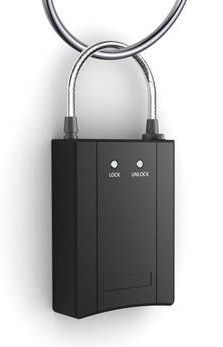
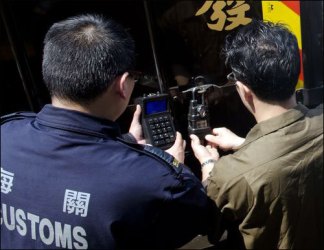
The Hong Kong Customs and Excise Department (C&ED) reports that RFID-based container locks can effectively improve the security, convenience and visibility of the customs process for cargo entering the airport. In November 2011, C&ED began testing three types of electronic locks (e-locks) in order to speed up the process of performing customs checks on containers filled with cargo. The solution, known as the Intermodal Transhipment Facilitation Scheme (ITFS), was implemented as a way to streamline the clearance of cargo passing through customs at Hong Kong International Airport for cargo destined for areas both domestic and outside of Hong Kong. The installation and consulting services were provided by the Hong Kong R&D Center for Logistics and Supply Chain Management Enabling Technologies (LSCM), according to Frank Tong, LSCM’s director of research and technology development.

An electronic lock with an active RFID tag is being used to secure freight passing through
customs and Hong Kong International Airport, ensuring that the cargo remains tamper-free,
while also expediting the clearance process.

The Hong Kong C&ED estimates that the system reduces the amount of time required for clearing each container through customs, from two to three hours down to five minutes, since customs officials can now be assured that the containers have not been opened between their inspection at the border control point and their arrival at the airport. What’s more, the agency can now collect a digital record of where each container has been, along with when it was inspected.
Cargo is loaded into freight containers or directly onto trucks—such as those operated by United Parcel Service (UPS)—in Mainland China, and is then transported to a customs control point located at the border with Hong Kong, where C&ED officials inspect the cargo and clear it for entry into Hong Kong. Following that clearance, the shipment continues on to Hong Kong International Airport’s cargo terminal, where the goods are unloaded from the container or vehicle, and are placed into an air cargo container. Once this has occurred, the cargo is moved through another customs control point at the airport, where C&ED again inspects and approves or rejects its passage.

To speed up this process, the R&D Center implemented the use of an e-lock for the customs agency, consisting of a physical lock activated by a built-in active RFID tag, designed to receive a transmission from an RFID reader that allows the lock to be opened or closed. Three types of e-locks are currently being used, provided by three different vendors: Long Sun Logistics Development Ltd, CIMC Intelligent Technology Co. and CelluWare Research Laboratory. Each of the three products employs a different frequency—433 MHz, 315 MHz and 2.4 GHz—but all comply with the ISO 17712 standard for mechanical seals designed for freight containers.

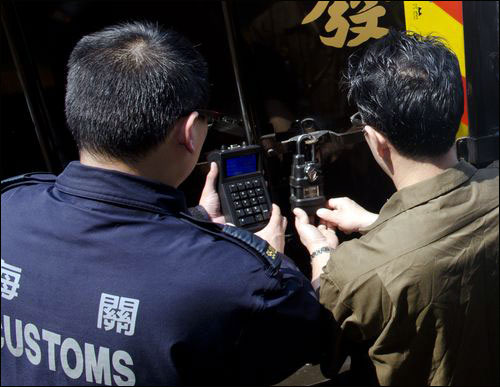
LSCM has installed fixed RFID readers (provided by the three e-lock vendors) at two border control points—Lok Ma Chau and Shenzhen Bay—as well as at Hong Kong International Airport. When a shipment first arrives at either border control point, C&ED’s staff attaches an e-lock, reads the ID number encoded on its built-in RFID tag via a handheld reader, and links that ID with the vehicle registration number of the truck transporting the container. The transporting company must pre-register each vehicle with the Hong Kong C&ED prior to its arrival; the truck’s ID number is listed in the agency’s database, and the customs official can confirm that the vehicle is, in fact, the one expected.

That data, along with the specific cargo being transported, is then stored on the Hong Kong C&ED’s integrated tracking software platform, developed by LSCM, which collects and processes the data and then displays it for customs officials when necessary. The system stores the e-lock ID number linked to the vehicle ID, and transmits instructions to the e-lock, along with a password, thereby causing it to lock. The device also requires a physical key, which remains in the driver’s possession. In this way, two actions must be completed before the container or vehicle can be unlocked: The e-lock must be electronically unlocked via a password from a customs official, and the driver must use a key to physically open the padlock.

The shipment is then transported approximately 42 kilometers (26 miles) to the airport. The e-lock comes with a built-in GPS device that tracks the vehicle’s location as it moves. In that way, the e-lock stores a record of where the vehicle has been. When the lock is later read at the airport, the back-end software compares the actual GPS data against the container’s expected route. The system can issue alerts in circumstances in which an e-lock is found to have lost a GPS signal, or, based on GPS data, the truck appears to have deviated from the intended route.

At Hong Kong International Airport, a C&ED official either selects the container for inspection, or simply instructs the system to issue an unlocking command with the matching password; the container is then brought to a site where the cargo is removed and then loaded onto an aircraft, says Steve Wai-chiu Chan, a C&ED special duties officer. If the container is selected for inspection, the e-lock remains locked. In this scenario, a truck driver would be instructed to await a C&ED officer, and would be unable to unlock the container without providing the proper password. The C&ED officer, upon arrival, would then use a handheld device to read the e-lock, instructing it to unlock by providing the necessary password.

LSCM installed a total of 38 readers at the two land border control points, five logistic hubs at the airport and a marine control point known as the Kwai Chung Customhouse, for items arriving by sea (at the Marine Cargo Terminal located at the airport). Altogether, by February of this year, 109 containers had been equipped with the e-lock device. An average of 100,000 consignments pass through the border daily, and the ITFS e-lock system is utilized for about 17 percent of that cargo.

The solution has enabled a faster customs clearance process, as well as providing a digital record of what was unlocked, and thus inspected, and when this occurred. The system also improves security, since only officers who know the proper password can access the container. Ultimately, Chan says, “it enhances the Hong Kong logistic industry’s competency and reinforces Hong Kong’s position as a world-class logistics hub.” Source: RFID Journal and a word of thanks to Andy Brown (Tenacent) for bringing the article to my attention.


South Africa – Cyber thunder in the clouds

The following article is very pertinent to any organisation or group considering cloud computing. Soft-marketing tends to delude would-be users into believing they will have full control over their data, and as such, is fully secure. Even in the international Customs and Border Management space there is lots of talk on this subject, yet very little substance. Unfortunately, organisations and individuals are slaves to the technology they use which fashions not only their work ethic but attitudes as well. It is no longer true that technology is a ‘tool’. More time and money is spent these days on technology choice than on training and education. In fact technology is so important it influences law-making and business operations, rendering human discretion obsolete in many instances. Therefore it is imperative that organisations involve business and legal experts in their systems development. 

The recent spate of hackings and electronic security breaches serves to highlight the endemic threat and associated cost of cyber crime. Globally, organisations are forced to reconsider their cyber security measures as cyber criminals become more audacious and technologically innovative. Crimes can take place in both the physical and the electronic medium, with the possibility of technology infrastructure being used as both a “subject” and an “object” of a crime.

The criminal justice system faces a number of challenges in the successful prosecution of cyber crimes. While the Electronic Communications and Transactions Act of 2002 does create a framework for criminalising cyber crimes, including hacking, it does not provide any concrete preventative measures to combat cyber crime. The technical and often remote nature of cyber crimes, including multi-jurisdictional issues where cyber criminals are operating abroad, often prevents prosecutors from being able to present viable cases and bring cyber criminals to book.

Fortunately, the South African government has acknowledged that more proactive measures are required to address the scourge of cyber crime. Cabinet has recently approved a National Cyber Security Policy published by the Department of Communication. The policy creates, among other things, a platform for the creation of a number of structures that would be responsible for analysing and responding to the threat of cyber crime with the ultimate objective of mitigating the effects of cyber crime in South Africa. The State Security Agency has been tasked with responsibility and accountability for the implementation of cyber security measures. It is hoped that this policy and the measures it intends to implement results in the prevalence of cyber crime in South Africa being effectively addressed and countered. Organisations should, in addition to any measures being taken by government, continue to carefully assess their cyber security measures proactively, including by implementing robust systems, particularly in instances where personal data is processed (which includes the collection, recording, transferring or storing of such personal information). The Protection of Personal Information Bill requires the implementation of “appropriate” security safeguards where an individual’s personal information is processed. What will be considered appropriate will need to be determined on a case by case basis and with reference to steps taken in foreign jurisdictions, which may provide guidance in interpreting this requirement.

On account of the fact that there is no way to precisely document the far reaching effects of cyber crime, individuals, organisations and government must ensure that a more cautious and prudent approach is adopted to manage security in any electronic environment. Source: SAPA

Prototype gun which can peek through walls

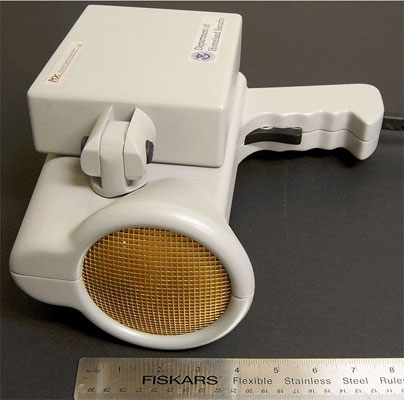
Believe it or not, devices used to see through walls are far from revolutionary. Reportedly, Physical Optics Corporation has concocted a prototype gun that utilizes the same method of viewing that a lobster does to see what’s ahead in murky waters. The LEXID (Lobster Eye X-ray Imaging Device) functions by “radiating objects with tiny amounts of X-ray energy,” subsequently allowing its user to see behind steel, wood or concrete. According to David Throckmorton, a project manager in Homeland Security’s Science and Technology division, the resulting images are beamed on a small screen and aren’t exactly drool-worthy, but they do allow one to make out a stash of weapons or a crouching enemy.

The price is unknown as it’s still a prototype, but the creators hope to make it cheap enough for exterminators and contractors to purchase and use. Note, the capability of seeing through walls is not necessarily just for use on weapons. It’s got some useful commercial applications such as pest control, where it can be built into a gun for shooting pesticide instead of a bullet. For the Customs and Border official, no doubt, there are equally varying applications of use. One could just imagine students getting into all sorts of trouble if one of these floated into the locker room.

South Africa to introduce Smartcard ID

The South African government has reaffirmed that the green barcoded identity (ID) book will be phased out and replaced with a new smartcard ID after Cabinet endorsed a Department of Home Affairs (DHA) pilot project to test the hardware and software used to produce the cards. The new card would be phased in over a period of about four years and would embrace a contactless chip, which Cabinet said was based on international trends and standards.

The smartcard solution would also be integrated with the deployment of a new National Identity System that would digitally capture biometric and biographical details of all South Africans and foreign nationals living inside South Africa. Home Affairs Minister Dr Nkosazana Dlamini Zuma reported recently that the integrated system would be linked to systems for movement control, permitting, as well as asylum seeker and refugee management.

The DHA planned to issue some 2 000 smartcard ID’s during the pilot phase, which was unveiled to lawmakers earlier in the month. The pilot phase would prioritise people applying for IDs for the first time and was likely to cost about R5-million.

The first issue of the smartcard would be free of charge, with the cost implications for reissuance yet to be determined.The test phase would enable the department to test its systems and enable government to procure the required machinery to produce the volume of cards that will be required to phase out the green barcoded ID books. No indication was given as to when a tender would be issued for the procurement of the full-scale system, or what the solution was likely to cost.

The department would collaborate with the Departments of Transport, Health and Social Development to integrate the smartcard with other official documents, such as drivers and firearm licences, social grants and those that would be associated with access to the proposed National Health Insurance scheme. Source: Creamer Media

Royal Malaysian Customs implements Smartag Solution

Smartag Solutions, a homegrown total radio frequency identification (RFID) solutions provider, will handle 1.3 million containers at all Royal Malaysian Customs (JDKM) checkpoints in Malaysia starting June.The company has entered into a two-year agreement with the government to implement and operate the Container Security and Trade Facilitation System using its RFID solutions at the JDKM checkpoints.

This is the first electronic and electrical Entry Point Project, under the 12 National Key Economic Areas to monitor containers and facilitate clearance within domestic ports and selected high volume routes. The enhancement of container security using the RFID track and trace system reduces the risk of terrorism, dangerous chemicals and contraband from reaching borders while increasing the efficiency of container movement through Customs checkpoints.

The system allows users to use the RFID seal to secure their containers when entering, leaving and moving within the country. Smartag Solutions is expected to handle 50 per cent of the total transactions at the Customs approved by JDKM, or 500,000 containers. Source: BTimes.com

Related articles

Decay in ‘morals’ – irrational and corrupt behaviour

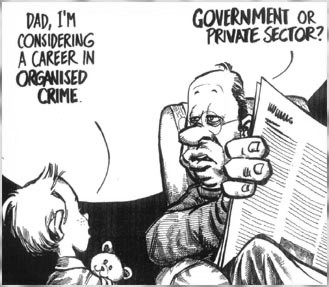
My recent post – Harbour mafia busted! – prompts a serious look at human judgement and the cause and effects of corrupt behaviour. The tragedy of the hit on Johan Nortje brings to reality the result of playing with danger. Those that will subsequently be convicted, most likely never conceived this ‘danger’ at the moment of their initial courtship with the criminal underworld. Neither did they perceive that a fellow law enforcement colleague would bear the brunt of their wrong-doing. That’s the reality of consequence of choice.

The origin of customs collection and control dates back more than 2000 years, as do attempts to undermine a country’s fiscal and economic security. Therefore the scourge of corruption is as old as the laws which gave rise to ‘controls’ at borders and ports of entry. The levying of taxes has always resulted in attempts to circumvent the payment thereof. Corruption of senior officials and politicians is the Achilles heel of poor and developing countries. It is a crime that is largely invisible but its consequences can be far reaching. It destroys confidence and morale in law enforcement structures, and robs local laborers and companies trying to etch out a decent living.

Over the centuries, and particularly the latter decades, governments and their law enforcement arms have fought against fraud in various ways. Populous countries (in the past) always had an abundance of people to staff the Customs or Border agency. Above all it was important for the government of the day to be seen as providing employment, hence a measure of comfort at election time. The close-knit command and control of port and border officials under strict observation of their respective port commanders – who in the past had ultimate control over their regions – proved effective in the main in preventing cross border crimes. However, the emergence of bootlegging and the mafia in the 1930’s (USA) proved a real challenge given that these ‘movements’ had an enormous amount of money to neutralise uncooperative customs officials and law enforcement officers. Buying the cooperation of officials left ‘blackmail’ hanging over the heads of the unfortunate officers. In many cases, breaking silence or turning state witness meant possible assassination for the individual and possibly his family as well. Yet, let it be said that such cross-border crime was very much tangible by way of the persons and the modus operandi involved. No, I’m not suggesting it was easy to contain, but it was certainly a whole lot more visible and localised for the authorities to contend with and address. Still, the manpower and the cost to deploy large task forces on the ground were inhibitive for law enforcement agencies.

Today, the world of ‘illicit goods’ is global; the operators can direct activities from the remotest parts of the world thanks to the information super-highway and all means of information and communication technology available today. Similarly, technology ensures near real-time payments to willing participants in crime. Despite this, the matter of ‘illicit goods’ remains a physical movement requiring ‘people’ to arrange and oversee transportation, and distribution to the buyer. It is a well-known fact that the movement of ‘illicit goods’ has a corresponding financial pipeline through which the profits of crime are channeled. Law enforcement has a challenge in trying to piece these activities together. This will involve cooperation of multiple agencies to bring about a result. More often than not, the selfish ambition of one or other agency overrides the collective approach to smash a syndicate. Once again its the age of key performance areas and indicators, and outcomes based initiatives which get ahead of the real issue – to neutralise an enemy. Today furthermore, unfortunately, its better to secure a huge penalty or forfeiture than to apprehend criminals and face months if not years in court – the revenue target is the primary goal. Money drives both the state and the criminal underworld.

Maybe I will be censured yet. Nonetheless, I will conclude with exercising some freedom of expression concerning views on what I believe fundamentally contributes to criminal and irrational behaviour. The democratic way of modern life has indeed perpetuated a lot of freedoms. With this, however, comes a corresponding responsibility and ability to discern between what is right or wrong. Freedom comes in both guises, sometimes simultaneously so as to confuse the mind – not unlike the ‘forbidden fruit’ in the Garden of Eden – making a choice between the right or wrong path. A flaw in democracy is that it tends to present everything in a “yes we can!” mentality. What this does is ‘challenge’ the individual or group to ‘achieve’. There might be little wrong with this, however, there are no documented guidelines on how to ‘achieve’, hence it is concluded that one must ‘achieve at all costs’. So what has this to do with corruption? The multiplicity of (false) ‘comforts’ offered by the modern world tend to excite the senses and numb the conscience. After all democracy tends to advocate equality in everything, so what can be wrong with a bit of excess, since one has freedom of choice? Wrong! unfortunately, this is the very mentality which drives ‘corrupt’ behaviour. There will always be consequences. Add to this indiscretion some measure of peer pressure, jealousy, or avarice and you have a recipe for a corrupt organisation.

The causes are multi-facetted –

  • The blatant disrespect of corporate structures in not recognising the need for staff to spend quality time with their families. (Less work = less profit and poor returns)
  • Parents too focused on personal gain or pleasing the shareholder, rather than tending to the real needs of their children to build honest citizens.
  • Ill-disciplined ‘educators’ who care little about their ‘learners’ and more about their rights!
  • Law enforcement agencies focused on revenue collection rather than law enforcement.
  • Lack of knowledge amongst politicians and heads of government agencies as to what their real mission ought to be.
  • Lack of a real support base within law enforcement agencies to deal with the threats being faced by their organisation.
  • Lack of role models in our society.

Is it little wonder then that the majority of tendencies today follow corruption? I’ve yet to note a single statesman (sorry states-person) who is morally upright. I would however like to concede that at least that maverick Prof. Jonathan Jansen (University of the Orange Freestate) is not afraid to stand up and talk straight.

Those interested in the topic of organised crime in Africa should can an interesting analysis (below) which the Internet has freely allowed me to obtain. ICT is without doubt a necessary evil!

Related articles

US Customs – Testing new way to decrease border dwell-time for travellers

In an ongoing effort to reduce wait times at the International Bridge, U.S. Customs and Border Protection Office of Field Operations will pilot a project to bring vehicles to the inspection booths in less time.
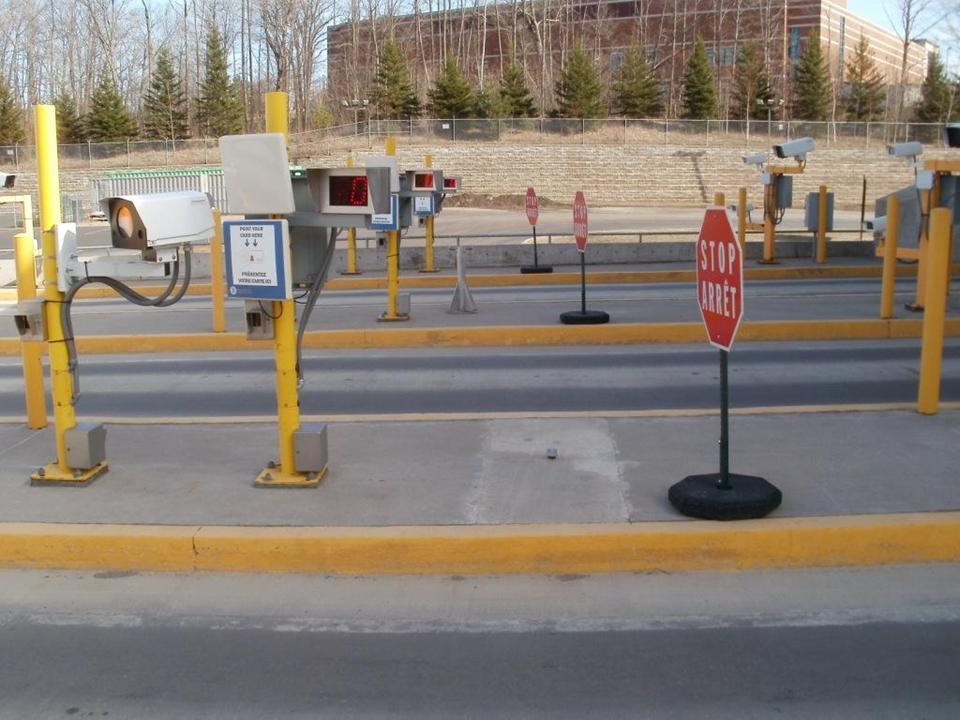
The stop signs will be placed in all three upper lanes and will shorten the “pull up” distance to the booth. This allows vehicles to queue up quicker. “Efficacy in movement is paramount to this project’s success. We are always trying to improve the flow of legitimate traffic while enforcing the laws of the United States,” said Patrick Wilson, CBP Sault Ste. Marie Assistant Port Director.

The Sault Ste Marie port of entry has a unique design that separates commercial traffic from car traffic, creating an upper and lower plaza. The focus of this project will be on the upper plaza only and will not affect the flow of traffic on the lower plaza.

Stop signs will be placed in all three upper lanes beginning Friday, April 20. The stop signs will shorten the “pull up” distance to the booth. This allows vehicles to queue up quicker. The stop signs will be placed near Radio Frequency Identification readers where the traveling public can display their Western Hemisphere Travel Initiative RFID-enabled document to pre-populate the officer’s computer screens.

CBP is testing the theory that they can process more travelers each hour by reducing the amount of time it takes each vehicle to get to the inspecting officer. This pilot project will incorporate a two-stop sign process. Upon entering the upper plaza, vehicles will be required to stop at the first existing stop sign. As the vehicle ahead clears, travelers will move to the next new stop sign and present their ID to the RFID reader. Once the vehicle at the inspection booth clears, travelers will proceed to the inspection booth.

Vehicles with trailers/campers are asked to use the lower plaza lanes so as not to impede the functionality of installed equipment. LED signage will be adjusted to notify motorists of this change.

CBP officers will direct traffic periodically during this project to help educate travelers on this new process. “We continue to look for efficiencies in our processes to improve the border crossing experience. If we can save a couple of seconds of inspection time per vehicle, the time savings should reduce each traveler’s wait,” said Assistant Port Director Wilson. Source: http://www.cbp.com

GNC – not just another acronym, but the latest Customs buzz-word

WCO - Globally Networked Customs

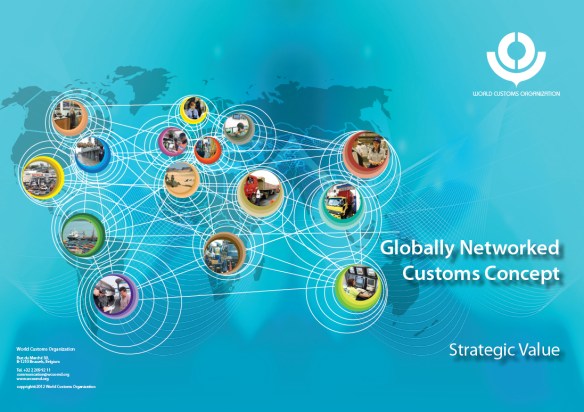
With the WCO Council Sessions later in June this year, it is opportune to discuss perhaps one of the single most important developments in Customs Inc, the “Globally Networked Customs (GNC)” concept which aims to realize connectivity, data exchange, and cooperative work amongst the world’s customs administrations.

GNC is set to play a very important role in promoting trade facilitation, enhancing trade efficiency and safeguarding trade security; it will also greatly influence international rules and the development of the customs end-to-end operational process. By and large the SAFE Framework, WCO Data Model and the Revised Kyoto Convention provide specific standards for the development and implementation of national customs legal, procedural and automated systems. It is the GNC that will in future “industrialise” and harmonise Customs-2-Customs (C2C) information exchange requirements which underpin a country’s bilateral and multilateral trade agreements.

Briefly the need for GNC arises from the exchanges of information underpinning International Agreements in the commercial domain. These take time and are costly to implement. They are all different from each other creating diversity both for Members and trade. This is because each one of these agreements is built anew, handcrafted and tailor-made to meet the needs at hand. This approach will not scale up and countries broking an increasing number of International Customs Agreements are already encountering difficulty to maintain their delivery plan in line with their international policy ambitions. Below you will find links to 2 documents explaining the GNC. More information on the GNC will be provided once approved by the WCO’s Policy Commission later on in June 2012. Source: WCO.

Related articles