French Customs seizes massive 136 kilos of ivory

Illicit IvoryFrench customs officials said they had intercepted 136 kilos of ivory shipped from the Democratic Republic of Congo en route to Vietnam — the biggest haul in nearly a decade.

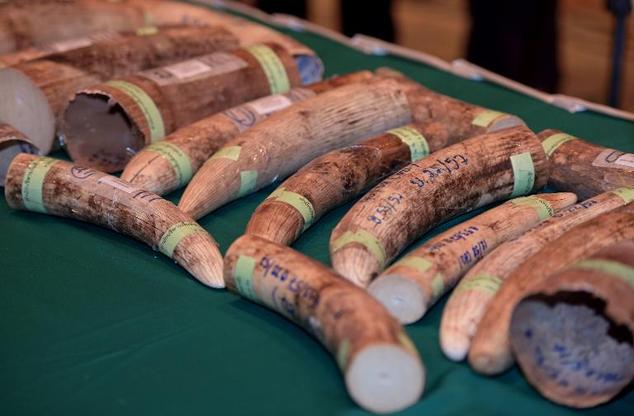
Officials at Paris’s main Charles de Gaulle airport found a dozen elephant tusks chopped into 37 pieces hidden in cases under aluminium plates, possibly to confuse scanners.

The haul is the biggest seized by French customs officials since December 2006, when 600 kilos of “white gold” was uncovered.

“This is a sadly typical case,” said airport customs official Sebastien Tiran. There’s one thing that never goes out of fashion and that’s ivory,” he told AFP.

There were “several criteria” that alerted officials to the possibility of smuggling, he explained. “The route, what is declared, documents linked to the declaration.”

Ivory ornaments are coveted in Asian countries like Vietnam, Thailand and China, and activists say Africa’s wild elephants are being pushed to extinction by the trade. Source: Customs Today

Africa losing $40bn in illegal cigarette trade

ContrabandA tobacco body has urged African governments to stamp out illegal tobacco trade, as their economies are losing billions of dollars in taxes annually. Tobacco Institute of Southern Africa (TISA) revealed that governments in the region are losing between US$20 billion and US$40 billion annually in taxes as a result of illegal tobacco trade, hence the need for collaboration among stakeholders to curb the vice.

This is contained in a statement issued by KPR Consulting Limited on Friday. “The size of the global illegal tobacco trade ranges between 330 and 660 billion cigarettes a year. These are cigarettes that are either smuggled, counterfeited or where tax is being evaded. “This equates to around six and 12 percent of global consumption, which deprives governments of between US$20 [billion] and US$40 billion a year in taxes,” the statement reads.

TISA, which is a regional body that represents tobacco traders, growers and processors, estimates illicit tobacco trade incidences in Zambia being between 20 and 30 percent. South Africa is rated among the top five countries globally when it comes to the trade in illegal cigarettes, with industry research estimating that around 23 percent of all cigarettes consumed in South Africa in 2014 were illegal. Commenting on the issue, British American Tobacco Zambia managing director Clara Mlambo cited weak penalties for criminals, poor border controls, low arrest rates and tobacco taxes creating intra-regional disparities as contributing factors.

Chinese Customs destroys half a ton of ivory worth £3m

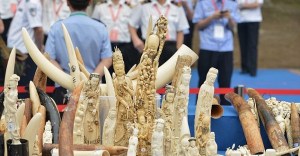
ivory2-634x330Chinese authorities destroyed more than half a tonne of confiscated ivory in Beijing here the other day. The public event, organised by the Chinese State Forestry Administration and the Customs Department, is set to display the country’s determination to ‘further protect wild animals’, according to the People’s Daily Online.

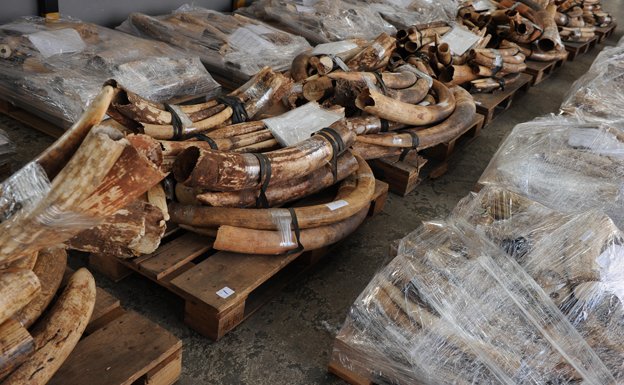
A whopping 662kg (1,460lb) of illegal ivory and ivory products were ground into powder as part of the central government’s crackdown on the illegal trade. The destroyed ivory items include thousands of ornaments, jewellery and fine art pieces. Whole elephant tusks were carved into the images of Buddhas, goddesses or Chinese landscapes.

Members of the media and diplomats were invited to attend the public destruction, which took place at Beijing Wild Animals Rescue Centre, as Chinese authorities hope to rid the country’s reputation of a global trading hub for illegal elephant tusks.

According to the country’s Forestry Administration, raw tusks sell for at least 41,667 Yuan (£4,400) per kilogram, making the total value of this destruction around £3 million. Source: Customs Today

Zimbabwe tightens border controls on imported goods

Zimbabwe-flagZimbabwe has introduced custom-control measures aimed at reducing the inflow of smuggled and inferior goods, and boosting its revenue from customs duty. Goods being exported to Zimbabwe will have to undergo consignment verification from May 16.

The government’s customs officials are also tightening up inspections at the Beitbridge border post to stem the flow of cheap, illegal goods, which Zimbabwean companies blame for their financial woes.

Executive chairman of the European Union Chamber of Commerce and Industry of Southern Africa Stefan Sakoschek said on Thursday that “the general idea is for Zimbabwe to protect its borders from substandard goods, as well as from undervaluation”.

Mr Sakoschek said the consignment-based conformity assessment programme fell within the framework of the World Trade Organisation’s technical barriers to trade as well as the regulations of the General Agreement on Tariffs and Trade.

Exporters and clearing agents have been informed of the new consignment verification measures, which will ensure conformity to standards and the value of goods declared. A certificate will be issued for the consignments for presentation to customs officials on arrival in Zimbabwe. Goods without a certificate will be refused entry.

Targeted products include food and agricultural goods, building and civil engineering products, timber and timber products, petroleum and fuel, packaging materials, electrical and electronic appliances, body care products, automotive and transportation goods, clothing and textiles, engineering equipment, mechanical appliances and toys.

Trade Law Chambers director Rian Geldenhuys said the pre-shipment verification process would entail additional costs but should not contribute to further delays in shipment. Consignment verification was widely practised especially in developing countries as a way to ensure the collection of customs duty revenue, Mr Geldenhuys said.

“Underinvoicing is a huge problem throughout the world, especially least developed and developing countries which Zimbabwe is one of,” he said.

Trade Law Centre researcher Willemien Viljoen also said the assessments would entail additional costs. Much of the effect would depend on how the conformity assessments were implemented and the standards that would be applied, Ms Viljoen said.

The Zimbabwean government has appointed well-recognised French company Bureau Veritas as the conformity assessment company for verification purposes, and has given the assurance that “compliant exporters will be able to benefit from fast-track procedures reducing systematic intervention on their frequent exports to Zimbabwe.”

Zimbabwean Industry and Commerce Minister Mike Bimha was quoted by the Zimbabwean press as saying that Zimbabwe was being “flooded with sub-standard imports which do not meet quality, safety, health and environmental standards”.

These goods had a negative effect on the country’s economic development and the competitiveness of its industries, Mr Bimha said.

In terms of its four-year agreement with Bureau Veritas the Zimbabwean government will receive monthly royalty fees equivalent to 5% of all monies received for its services. This arrangement will eventually lapse when the Zimbabwe Standards Regulatory Authority is established to monitor and control imports, exports and local goods to ensure compliance with quality, health, safety and environmental standards. Bureau Veritas operates in 140 countries and offers pre-shipment services to SA, Ethiopia, Kenya, Somalia, Uganda and Côte d’Ivoire. Source: BDLive (Reporter: Linda Ensor)

Read also the following articles, published in Zimbabwean Situation – Govt moves to tighten border controls (September 2014) as well as Zim mulls one-stop border post (November 2014) which might suggest that entry arrival procedures at Zimbabwean ports of entry may not be that expeditious given a prominent focus on revenue collection.
Dubai Customs arrests South African carrying cocaine

cocaineDubai customs arrested a woman who was trying to smuggle 2.3 kilograms cocaine in her shorts at Dubai International Airport. Customs officers stopped the 31-year-old South African passenger when she arrived at the airport’s transit terminal.

One of the officers suspected the woman passenger and took her inside a private search room as she seemed perplexed. She was reportedly found to be smuggling 16 pouches of cocaine that were secretly stitched inside her mini-shorts.

The Dubai Court of First Instance convicted the South African of smuggling cocaine in transit and jailed her for 10 years. When she appeared in court, the defendant admitted that she smuggled the substance in her clothes but maintained that she did not know that she carried a banned substance.

She confessed that she agreed to carry the substance for money [the amount was not specified] but did not realize that she was carrying cocaine. The passenger claimed in court that she had intended to take the substance to her homeland and not to Dubai. The court fined her Dh50,000 (US$13, 000) and will be deported after serving her punishment. The defendant was cited confessing to prosecutors that she smuggled the drugs via Dubai in transit. Source: customstoday.com.pk

Zimbabwean Customs seizes 48kg illicit South African gold worth R20m

goldZimbabwean Customs (ZIMRA) seized 48 kg illicit gold worth R 20 million and arrested 46 people for initial investigations. Forged gold serial-number stamps, specially designed armoured vehicles, clandestine refineries, fake customs clearance papers and documents with links to the black market.

These and other pieces of evidence are the keys that the Hawks believe link a Zimbabwean and South African gold-smuggling syndicate to scores of buyers in Europe masquerading as dealers in precious metals. For two years police have been zeroing in on the syndicate, whose roots are in illegal gold mining in Zimbabwe. Inside were 48kg of gold bars valued at R20-million.On Friday, they acted. In the early hours teams from the Hawks, the Special Task Force and Crime Intelligence raided luxury homes and farms across Gauteng and the North West.

In one of the raids police discovered a walk-in vault at a warehouse outside OR Tambo International Airport. Inside were 48kg of gold bars valued at R20-million. They were being prepared for stamping with official South African gold serial numbers designating that the metal had been officially mined and refined in the country. Police sources say the gold was to have been flown to at least three European countries at the weekend before being smelted, re-refined and distributed.

A source with knowledge of the investigation has revealed the inner workings of the syndicate, from how and where the gold is mined to how corrupt customs and mining officials facilitate the metal’s passage across borders.(Now should’nt this prompt some serious cause for concern, if true?)

“The amount this syndicate has handled is immeasurable. We have known about them for two years and in that short time we have recovered R40-million,” he said.

“They have operated both in South Africa and Zimbabwe as well as other SADC [Southern African Development Community] countries for years, well before we even discovered them”

Illegal miners in Zimbabwe supplied the syndicate. “With the instability and corruption there [South Africa?] it’s dangerous but easy. Once they have the gold, runners take it to the border where, through corrupt officials, it is smuggled across disguised as things such as household products.”

The gold was taken to farms in and around Modimolle in Limpopo where illicit refineries smelted and refined it, the source said. With the help of South African mining officials, gold clearance documentation and special serial and insignia stamps were sourced.

“Once stamped you would never know the difference. We have placed it next to legitimate bars and it looks and feels the same.” He said the gold was distributed through legitimate channels in Europe.

“Those running the syndicate know what they are doing. They are well-connected and influential businessmen with ties to Africa, Europe, the US and Asia”.

“They are linked to the gold powerhouses of the world. These are not ‘mickey-mouse’ people. They are immensely powerful and extremely well connected to some of the world’s top legal firms. Within hours of Friday’s raids lawyers were arriving at their clients’ homes and businesses.”

He said police seized hundreds of official gold clearance documents, serial stamps and other paperwork with links to mines and importers and exporters. Source and picture: CustomsToday.com

World Wildlife Day – 2015

A Kenya Wildlife Services officer stands near a burning pile of 15 tonnes of elephant ivory seized in Kenya at Nairobi National Park [Picture - Carl de Souza - AFP]

A Kenya Wildlife Services officer stands near a burning pile of 15 tonnes of elephant ivory seized in Kenya at Nairobi National Park [Picture – Carl de Souza – AFP]

Illegal Cargo – Colombia Seizes China-flagged Ship

Image - Wikimedia.org

Image – Wikimedia.org

Colombian authorities detained a vessel operated by China’s largest shipping group for illegally transporting thousands of cannon shells, around 100 tons of gunpowder and other materials used to make explosives, the attorney general’s office said.

The Da Dan Xia, operated by Cosco Shipping Co, was headed for Cuba when it was stopped on Saturday in the northern port of Cartagena, on the Caribbean coast, after the materials were detected during an inspection. The cargo was listed in the records of the 28,451dwt ship as grain products. The captain of the Hong Kong-flagged vessel had been arrested, the attorney general’s office said. China’s Foreign Ministry spokeswoman Hua Chunying said the ship was carrying ordinary military supplies to Cuba and was not in violation of any international obligations.

“It is completely normal military trade cooperation. At present, China is communicating with the parties on this matter,” Hua said.

A Cosco Shipping official in the firm’s Guangzhou head office said the ship was operated by the company but added she was unaware of the incident. Cargo documentation the captain presented did not match the load the ship was found to be carrying, Luis Gonzalez, national director of the Colombian attorney general’s office, told reporters.

“Around 100 tons of powder, 2.6 million detonators, 99 projectiles and around 3,000 cannon shells were found,” Gonzalez added.

Photographs from the prosecutor’s office showed wooden cases inside a shipping container with labels stating Chinese defense manufacturer China North Industries Group Corporation as the supplier. The company, known as Norinco, is China’s biggest arms maker. It did not immediately respond to a request for comment.

The recipient was stated as importer Tecnoimport in the Cuban capital Havana. The Cuban company could not immediately be reached for comment. A man who identified himself as the Da Dan Xia’s first officer confirmed the ship had been detained in Colombia when Reuters called the vessel’s phone number on Wednesday. Source: Maritime Executive/Reuters

Its Annual Budget time – Tobacco, Tax and the Black Market

Cigarettes+XXX+smokingThe nation awaits the 2015 Budget Speech with trepidation to know if income taxes will rise. But there is unanimous certainty there will, as per usual, be an increase in ‘Specific Excise Duties’. The only question is by how much? Taxation of cigarettes and tobacco products appears to be the path of least resistance for tax-collectors. It receives little backlash from the wider public (unlike e-tolls) and even support in some quarters.
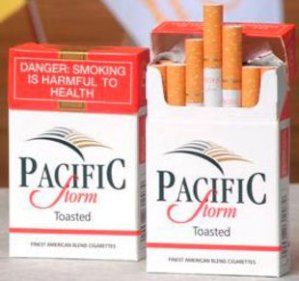
The imposition of the so-called “sin taxes” on cigarettes and liquor products, in addition to generating significant fiscal revenues, does serve an economic purpose. Unlike normal goods and “necessity” products, cigarettes are not an essential good which people need to survive. As far back as the 1700s, Adam Smith averred “Sugar, rum, and tobacco, are commodities which are nowhere necessaries of life … are therefore extremely proper subjects of taxation.” Again, the notion of the importance of tobacco to the fiscal basket is exemplified in utmost simplicity and honesty – if a politician, or an emperor in this case can be believed –

This vice brings in one hundred million francs in taxes every year. I will certainly forbid it at once – as soon as you can name a virtue that brings in as much revenue [Napoleon III (1800s) – reply when asked to ban smoking]

Despite all the furore over public health and governments efforts to decrease the demand for cigarettes, South Africa is no different to other nations – annual tobacco revenues to the state coffers amounts to around R10 Billion! Another round of sin tax increases in the upcoming budget appears inevitable, and these increases are spawning a range of unintended (but not unexpected) consequences – the illicit trade. Source: Polity.org / DNA Economics.

ZIM Police struggle to bust cigarette racket

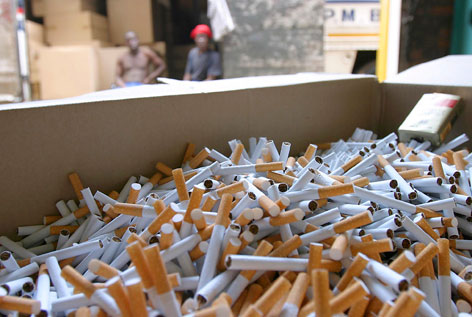
CigarettesAn intricate web of smugglers, which reportedly involves manufacturers and middlemen, has been illegally carting cigarettes worth millions of dollars out of the country over the years, prejudicing the treasury of vital revenue.

Cigarette manufacturer, Savanna, has been fingered as one of the main culprits, while multinationals like BAT have also been mentioned in the illicit cross-border trade, mainly to South Africa.

Commonly smuggled brands include Remington Gold, Madison, Sevilles, Magazine Blue, Chelsea and Pacific Blue, manufactured by Savanna – which consistently denies smuggling.

A senior police sokesperson said “Even though we don’t always talk about it, we have managed to make significant arrests and the cases have been taken to court. The arrests include smuggling attempts at undesignated spots along the border and through official exit points such as Beitbridge”

A senior customs official told The Zimbabwean that cigarette smuggling, particularly through Beitbridge and Plumtree border posts, was difficult to arrest because of corruption.

“Policing at the border posts involves several agencies, namely the police, CIO (Central Intelligence Organisation), customs and special deployments from ZIMRA (Zimbabwe Revenue Authority). The problem is that these officers work in collaboration with the smugglers and haulage trucks and other containers carrying the cigarettes are cleared without proper checking. Hefty bribes are involved and the money is too tempting to resist,” said the customs official.

“You would be amazed how wealthy these officers have become. They have bought houses, luxury cars and send their children to expensive schools – yet their regular salaries are so low,” he added.

Immigration and customs officials, who also constantly liaise with their South African and Botswana counterparts and meet physically regularly, pretend to be checking the containers but clear them without completing the task, and know what the trucks and other carriers would be ferrying.

ZIMRA has four scanners for detecting contraband and an anti-smuggling team that also uses sniffer dogs, in addition to guard soldiers posted between the Zimbabwean and South African borders.

There are about 15 regular roadblocks along the Harare-Beitbridge road and 10 between Bulawayo and Plumtree that search trucks, buses and private cars. Despite this, the smuggling continues because of the collusion among the officials, said the source.

In early January, the Ferret team, a joint operation involving Zimbabwean and South African officers, intercepted a truckload of 790 Remington Gold cigarettes worth an estimated $119,000 destined for South Africa along the Masvingo-Beitbridge road. The smugglers were caught and arrested while offloading the cartons into small trucks. Source: The Zimbabwean

Greece – Contraband Cigarettes found aboard Abandoned Ship

The MV Amaranthus moored on the west coast of Zakynthos. [Photo: Hellenic Coast Guard]

The MV Amaranthus moored on the west coast of Zakynthos. [Photo: Hellenic Coast Guard]

Authorities in Greece are trying to piece together the source of a large quantity of smuggled cigarettes found onboard an abandoned ship at the Greek island of Zakynthos.

The Hellenic Coast Guard reports that the local Port Authority found a large amount of contraband cigarettes in the cargo hold of the Palau-flagged MV Amaranthus while moored along the west coast of Ionian Sea island. No crew were onboard the ship at the time.

The ship is scheduled to be taken to the port of Zakynthos where the cigarettes will be confiscated by Border and Customs officials as investigators try to determine the owner of the ship and source of cigarettes.

The initial inspection of the ship was part of crackdown on organized crime particularly targeted towards cigarette smuggling. Source: GCaptain.com

Irish Customs seize 50 million illegal cigarettes in 10 months

Revenue officials unload the Shingle at Dublin Port after 32 million cigarettes were seized [Picture: Irish Mirror]

Revenue officials unload the Shingle at Dublin Port after 32 million cigarettes were seized [Picture: Irish Mirror]

Customs officers have scored a major victory in the battle against smugglers after seizing 50 million cigarettes in 10 months.

The Irish Mirror reports Revenue officers made 5,025 separate swoops between January and the end of October.

They also impounded 9,560kgs of tobacco in 867 operations.

The record haul makes 2014 one of the most successful to date in the war on counterfeit tobacco.

While these smuggled cigarettes would have cost the Exchequer tens of millions of euro they’re also more dangerous for smokers’ health.

And with the huge crackdown, Customs officers will be keeping up the pressure in 2015 to stub out the tobacco black market.

A Revenue spokeswoman told the Irish Mirror: “To the end of October, more than 50 million cigarettes were seized in 5,025 separate seizures while 9,560 kilogrammes of tobacco were seized in 867 seizures.

“This includes a major seizure in Drogheda in June in which officers, supported by An Garda Siochana, seized more than 32 million cigarettes and 4,500kg of water pipe tobacco.

“Combatting the illegal tobacco trade is, and will continue to be, a high priority for Revenue.

“Our work against this illegal activity includes a range of measures designed to identify and target those engaged in the supply or sale of illicit products, with a view to seizing them and prosecuting those responsible.”

Customs officials use tactics including risk analysis, profiling, intelligence and screening of cargo, vehicles, baggage and postal packages.

They also carry out random checks at retail outlets, markets and commercial shops.

The spokeswoman said: “This includes analysis of the nature and extent of the problem, developing and sharing intelligence on a national, EU and international basis.

“It also includes use of analytics and detection technologies and ensures optimum deployment of resources at points of importation.

“Revenue co-operates extensively with An Garda Siochana in combating the illicit trade, and relevant agencies in the State also work closely with their counterparts in the North, through a cross-border group on tobacco enforcement, to target organised crime groups responsible for a large proportion of the illegal tobacco market.

“In addition, cooperation takes place with other revenue administrations and with the European Anti-Fraud Office, OLAF, in the on-going programmes at international level.”

Last week, Last week, routine profiling helped customs officers seize 600,000 cigarettes at Dublin Port with a retail value of €304,000. Source: Irish Mirror

South Africa leads the Continent in Illicit Cigarette Trade

illicit cigarettesSouth Africa leads Africa in the illicit trade in tobacco and is listed among the top five illicit markets globally, according to the Tobacco Institute of Southern Africa, which represents tobacco growers, leaf merchants, processors, manufacturers, importers and exporters of tobacco products in SA.
More than R20bn in tax revenue has been lost in SA since 2010 due to the illicit trade in tobacco, the institute’s CEO, Francois van der Merwe, said on Wednesday. The problem is severe in SA, but Zambia, Namibia and Swaziland have estimated incidences of well above the global average of between 10% and 12%.

Mr van der Merwe said efforts to combat the illicit trade in tobacco were complicated by the links that the business had with transnational organised crime syndicates, some of which funded terrorism.

“The problem runs far deeper than enormous losses of fiscal income that could have been put to good use to bolster government efforts in education, infrastructure development and poverty alleviation,” said Mr van der Merwe.

He was speaking ahead of a meeting later in November of global, regional and local law enforcement, along with revenue and customs agencies in Cape Town, who will seek better ways to collaborate in addressing the illicit tobacco trade in sub-Saharan Africa.

“We have seen first hand what effective focus on combating illicit trade by government can achieve,” said Mr van der Merwe, ascribing a decrease in the illicit tobacco trade, from 31% to 23% this year, to better collaboration.

“This is in the most part due to the excellent efforts by the various law enforcement, customs and revenue, Treasury and defence departments in the South African government.”

Mr Van der Merwe said that although the declining numbers in SA were encouraging, this did not bode well for the rest of the region as organised crime was a moving target prone to shifting its focus to “easier” markets when it was under attack.

He claimed that those who traded in illicit products, whether cigarettes, alcohol, textiles or DVDs, or committed environmental crimes such as rhino poaching or abalone smuggling were most often also involved in other serious crimes and even the funding of terrorism and money laundering. Source: BDLive.co.za

Relate articles

Tanzania – Chinese ivory spree during presidential visit

Campaigners say rising demand in Asia is fuelling the poaching of elephants in Africa and the smuggling of ivory

Campaigners say rising demand in Asia is fuelling the poaching of elephants in Africa and the smuggling of ivory

Officials travelling to Tanzania with Chinese President Xi Jinping went on a buying spree for illegal ivory, an environmental activist group has said.

In a report, the Environmental Investigation Agency cited ivory merchants who said demand from the delegation in 2013 had sent prices soaring.

China denies the allegations, saying it consistently opposes poaching. Read the following blog – Tanzania – Chinese ivory spree during presidential visit. authored by Africa – News and Analysis.

Global Shipping – One of the Last ‘Wild West’ Frontiers

WindwardShipping activity across the world’s oceans is the lifeblood of the global economy, transporting billions of tons of goods annually and facilitating global commodity flows of oil, coal, grains and metals. Vessel activity is also of critical importance to Intelligence and Security agencies worldwide, as criminal and terrorist activity has become increasingly global and borderless.

And yet, the oceans remain one of the last ‘wild west’ frontiers, with limited visibility on what ships are actually doing once they leave port. AIS data, the most widely used data on ship activity worldwide, underlies decisions from Finance to Intelligence, but the data is unreliable and increasingly manipulated by the very ships it seeks to track.

And this trend is growing, fast, with little-understood and far-reaching implications worldwide.

AIS data, used routinely by decision makers across industries, is widely perceived as a reliable source of information on ship activity worldwide. Massive financial investments and critical operational decisions are based on this data.

New research from Windward reveals that AIS data has critical vulnerabilities when used to track ships, an ‘off label’ use of the system. The data is increasingly manipulated by ships that seek to conceal their identity, location or destination for economic gain or to sail under the security radar.

Manipulation practices are varied, according to Windward’s research, and range from Identity Fraud, to Obscuring Destinations, ‘Going Dark,’ Manipulating GPS, and ‘Spoofing’ AIS. Ships that manipulate AIS undermine not only their own data, but the entire maritime global picture — once some of the data is corrupt, all data is suspect.

If this kind of manipulation is occurring on ships, consider the impact of ‘cargoes/substances’ on board ‘ghost ships’. You can find the Windward Research paper “Analysis of the Magnitude and Implications of Growing Data Manipulation at Sea” as well as a poignant infographic on their website, by clicking the hyperlinks. Source: Windward.eu

Related article