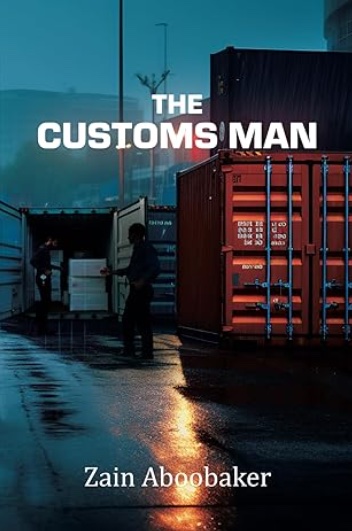
Former SARS Customs Official Turns Author – The Customs Man

The following review was authored by Wendy Jason DaCosta of the Independent on Saturday, 1 February 2025, titled” Durban author demystifies what happens in customs“.

LOVE or the law. That’s the choice a customs official has to make in The Customs Man, a gritty debut novel by Durban author Zain Aboobaker.

In the book he exposes the dark underbelly of customs’ enforcement and organised crime in South Africa, revealing layers of intrigue which are usually hidden from the public eye.

The book starts in Durban harbour but then takes readers across the country as the story picks up pace, shining a light on issues usually whispered about in dark corridors.

It tells the story of a customs official, the choices he faces every day, and his inner conflicts like whether he should protect those he loves or stick to his morals and let the law take its course.

Lovers of crime and suspense are in for a treat as corruption, betrayal, smuggling and even South Africa’s ailing clothing industry are featured in the book.

It’s clear that Aboobaker is familiar with the goings on in customs after spending nearly two decades on the inside before starting up his own consultancy.

“So it’s about 17 years on the inside and then 17 years on the outside. It’s nice to have had both views. You know, when you work inside customs, you see one side of things and you look at the law in a certain way. When you step outside it’s like looking at it from the other end of the telescope,” he revealed earlier this week.

Aboobaker told the Independent on Saturday that his career gave him the opportunity to observe people and human nature which served him well when he took up writing.

“When people are normally in a bind, when the goods are seized or they’ve been detained, they start to really get stressed and anxious, and they’re pleading and they’ll move heaven and earth.

“As soon as they have relief, you see a different human being come out of them. They forget the pain that they were in and some of them begin to get arrogant again.”

As a child he loved reading and just over 10 years ago, he looked back on his life and remembered all the colourful characters he had met along the way.

“So, it was actually just taking the characters that I met and sort of fictionalising them, and then it just got a life of its own and it morphed,” he said. He wrote the first chapter in 2013 and then left it there until his wife, Katherine, and best friend Quintas van der Merwe convinced him to continue in 2022.

“My wife says to everybody, ‘oh, Zane’s writing a book’ and so the pressure starts,” he said.

Aboobaker met Van der Merwe when he was working in Customs as head of its national Anti-Smuggling Division.

In the foreword of the book, Van der Merwe, who is a lawyer, wrote: “The author and I met working on opposite ends – he tried to catch non-compliant taxpayers, and I tried to get them off.”

Despite the rocky start, they have been firm friends for many years.

The book is filled with familiar places and relatable characters. It tells the story of Charlotte the doctor who suffers from white guilt and wants to help the community. She passes on diamonds to Georgie, the son of a fisherman who is forced to smuggle abalone after overfishing destroys his family’s livelihood. Georgie’s role is to get the diamonds out of the country.

There’s a Zimbabwean electrical engineer who smuggles cigarettes across the border and whose sister was killed during xenophobic attacks in South Africa.

“It’s a light read but there are heavy themes in it that I hope will spark debate,” said Aboobaker.

The Customs Man is available in paperback and retails for R290 on Amazon and Ike’s Bookshop in Morningside.

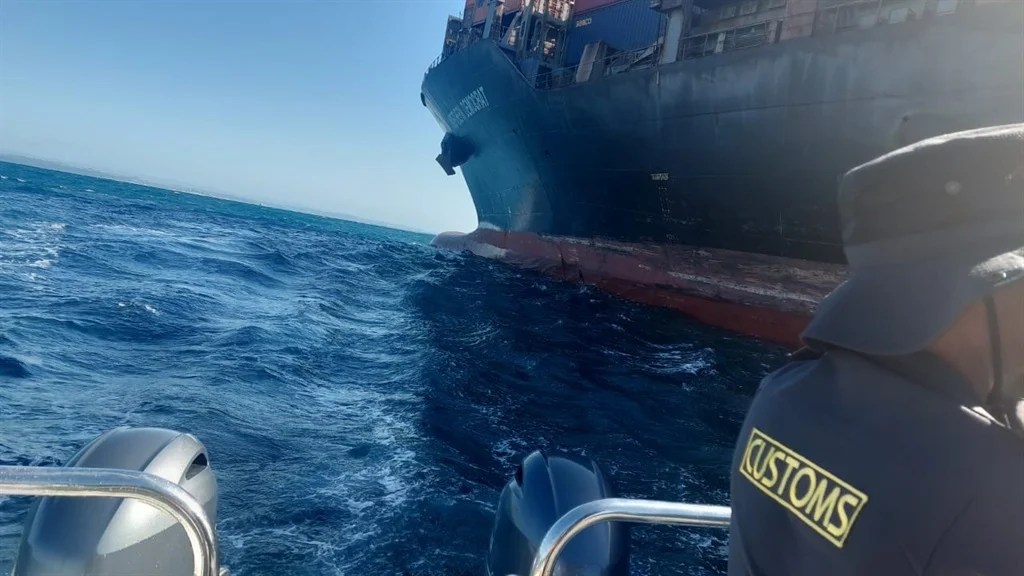
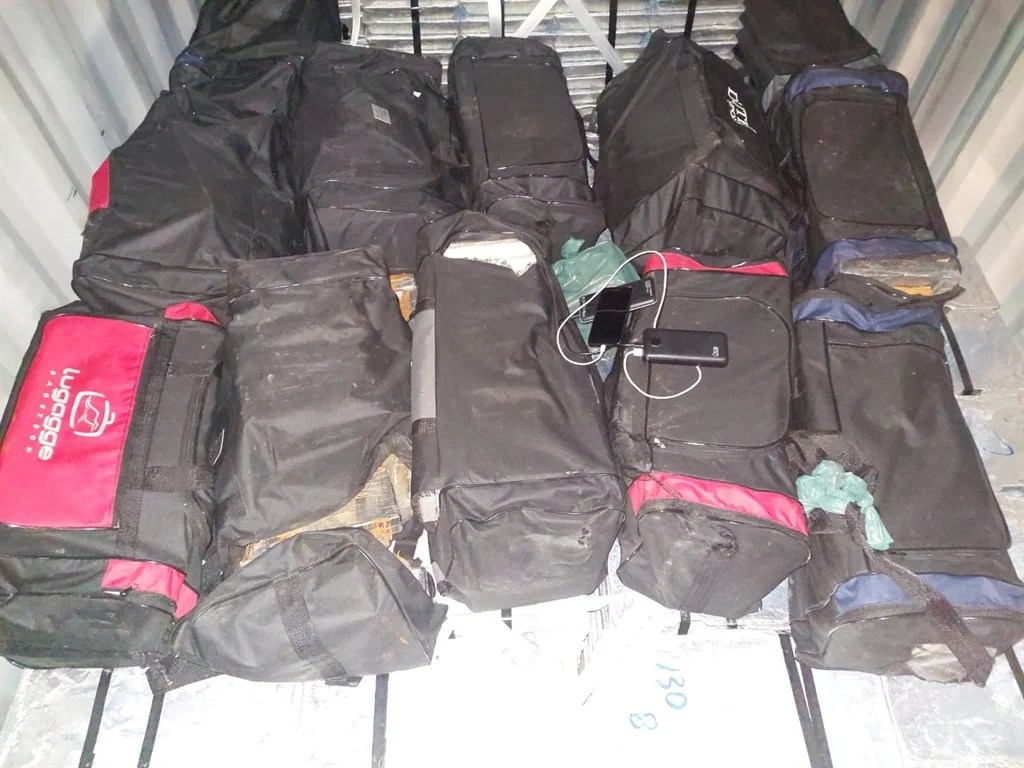
R1.3bn worth of cocaine seized at Durban harbour in dawn raid

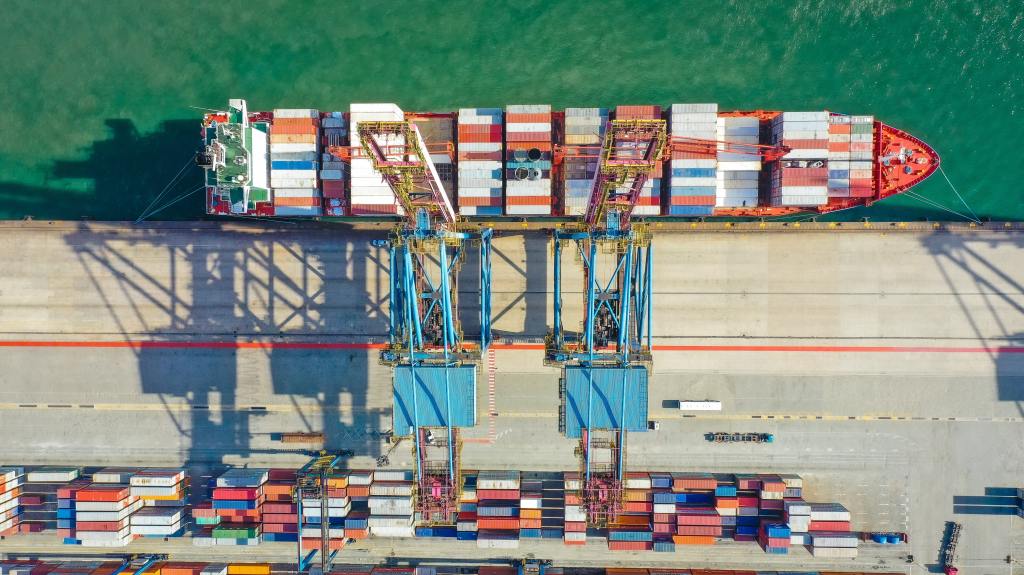
Customs officers of the SA Revenue Service and the SA Police Service (SAPS) seized some R1.3 billion worth of cocaine in an early morning raid on a container ship at the Durban harbour, SARS said in a statement on Friday morning. 

The 300kg of cocaine was found in one of the containers aboard the ship. It was detected after a week-long intelligence operation led by the SARS National Targeting Unit. 

“The SARS Marine unit, Durban Operations, South African Police Service (SAPS) Crime Intelligence and National Detective Services boarded the vessel heading from South America to secure several containers that were profiled by SARS,” SARS said. 

The containers were inspected after they were unloaded in the Durban harbour, which revealed zinc metal products and several black bags containing 378 bricks of pure cocaine. 

The illicit cargo and what appeared to be cellular tracking devices were handed over to SAPS for further investigation, SARS added.

SARS commissioner Edward Kieswetter said it there was a commitment to “fight the scourge of narcotics entering the country and destroying the lives of its users, especially the youth.”

“SARS will not tolerate these illegal activities but will rather continue to fulfil its mandate of facilitating legal trade to further economic development of our country,” he added.

Source: New24, Marelise van der Merwe dated 24 February 2023

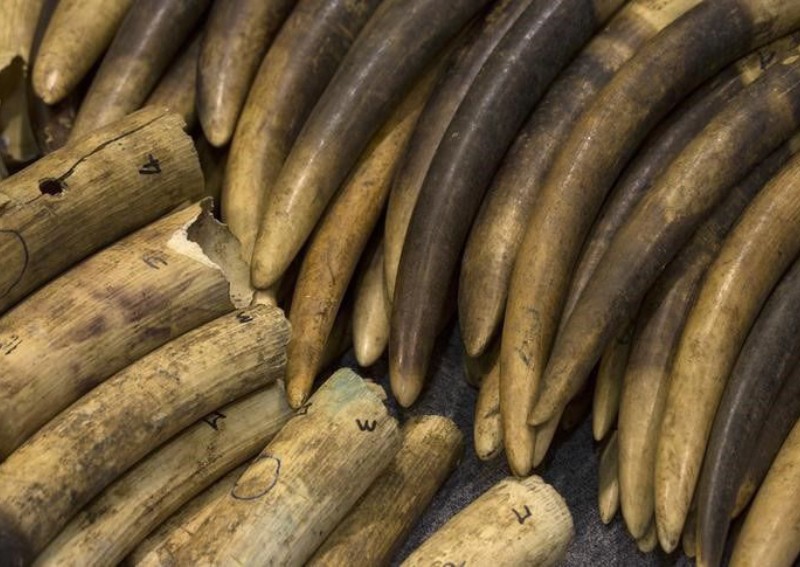
Vietnam seizes 600 kg of ivory smuggled from Africa

Vietnamese authorities have over the past week seized more than 600kg of ivory smuggled from Africa, the government said on Monday, 6 February 2023.

Trade in ivory is illegal in Vietnam but wildlife trafficking remains widespread. Other items often found smuggled into the country include pangolin scales, rhino horns and tiger carcasses.

Customs authorities in the northern port city of Haiphong on Monday found nearly 130kg of ivory hidden in a container of cow horns originated from Africa, the government said in a statement.

This followed the finding of nearly 500kg of African ivory on Thursday last week at Lach Huyen Port in the city, the government said.

This has been the largest seizure of smuggled ivory in the country in more than four years. The authorities had in October 2018 seized more than eight tonnes of ivory and pangolin scales in one of the country’s largest wildlife trafficking cases for years.

Source: Asian.com

SARS – Rhino horn found in luggage at OR Tambo International Airport

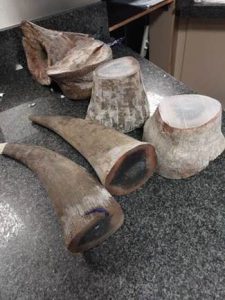
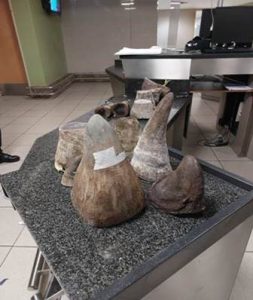
Customs officers of the South African Revenue Service (SARS), in collaboration with other government departments, intercepted the luggage of a female South African passenger at OR Tambo International Airport which contained twelve (12) pieces of rhino horn weighing  30.7 kilograms.

The interception of the rhino horn came after the SARS Customs and other government officials received a tip-off regarding a passenger travelling to Dubai.

The Customs team reacted swiftly and accompanied the female passenger to the Customs area for further Customs inspection. The two luggage bags and a box were inspected by a baggage scanner that identified irregular images suspected to be rhino horn.

This led to a physical inspection of the luggage and box in which twelve (12) pieces of rhino horn, weighing 30.7kg were found. The passenger together with the rhino horn were handed to the South African Police Service after which a criminal case was opened for further investigation.

Between July 2020 and December 2021, a total of 125 pieces of rhino horn, weighing 452 kilograms, were seized at OR Tambo International Airport.

  • December 2021: Six (6) pieces of rhino horn, weighing 4kg declared as ‘Personal Effects’, bound for China.
  • December 2021: Five (5) pieces of rhino horn, weighing 10kg declared as ‘Scanners’, bound for Malaysia.
  • July 2021; Thirty-Two (32) pieces of rhino horn, weighing 160kg declared as ‘Live Plants, bound for Malaysia.
  • February 2021: eighteen (18) pieces of rhino horn, weighing 63kg declared as ‘HP Cartridges Developers’, bound for Malaysia.
  • December 2020: seventeen (17) pieces of Rhino Horn weighing 72.4kg concealed in a geyser bound for Malaysia.
  • September 2020: six (6) pieces, weighing 4.9kg declared as “Coffee Beans”, bound for Malaysia.
  • July 2020: forty-one (41) pieces, weighing 137kg declared as “Fine Arts”, bound for Malaysia via Doha.

SARS Commissioner Edward Kieswetter expressed his sincere thanks to Customs officers and their counterparts from South African Police Service for working diligently to curb the smuggling of rhino horn and many related crimes.

He said, “We will leave no stone unturned to detect and prosecute these criminal syndicates and individuals who break the law.  SARS and the law enforcement agencies will spare no efforts to ensure they are brought to book.”

For more information, contact SarsMedia@sars.gov.za

Meta’s social media sites an “empire” for counterfeiters

Meta’s top social media platforms Facebook, Instagram and WhatsApp have become enormously successful e-commerce channels, and the counterfeiters have followed the money, says a new report by Ghostdata.

Fuelled by technological additions like Facebook Pay, the emergence of Messenger as a unified chat and sales tool and WhatsApp’s online catalogues for businesses, the social media juggernaut has become a magnet for illicit traders who make use of this new integrated functionality.

“Meta and its subsidiaries have developed a strategy increasingly aimed at becoming an e-commerce leader, thus attracting a more diversified crowd of ruthless counterfeiters,” says the report.

“In turn this has further exposed Facebook’s inability to keep under control such activities on its platforms. This controversial behaviour led to an increase of counterfeit sellers and eventually to a general user distrust still evident today,” it continues.

Meta makes much of its efforts to protect intellectual property and fight the sale and promotion of counterfeit products, saying it makes ongoing improvements to enforcement measures and reporting tools and is investing in technology to prevent counterfeit activity.

However, the report finds that “despite Meta’s security reports and legal initiatives, the effects of their supposed crackdown on these illicit activities are disappointing and insufficient.”

“At the same time, WhatsApp has become the counterfeiters’ favourite and most used tool. Particularly WhatsApp Business, an option aimed at mom-and-pop companies, is now used by 40% of such Chinese counterfeiters, surpassing even the local and wildly popular WeChat.”

Ghostdata analysts used software including textual searches and visual recognition to try to identify sellers of counterfeits on the sites from online activity, and in just 20 days came up with a total of 26,770 counterfeiters’ accounts that were active on Facebook at the end of October 2021.

“Our study revealed that each counterfeiter profile counts an average of over 1,250 friends,” says the report, adding: “a very conservative estimate indicates that counterfeiters reach about 20 million unique contacts through newsfeed and private messages.”

It will be no surprise that the vast majority of these counterfeiters found by Ghostdata seem to be operating from mainland China, although it found examples of sellers in Russia, Turkey, Indonesia, Ukraine and Brazil.

“We estimate that on Facebook and Instagram combined there are about 6,000-7,000 wholesalers from China, with an annual business turnover ranging between $1.8bn and $2.1bn,” it says, adding: “this is a quite conservative estimate.”

Luxury clothing and accessories brands were most mentioned by counterfeiters, with the list headed by Louis Vuitton – accounting for 58% of activity – followed by Chanel, Fendi, Prada and Gucci.

Source: Securing Industry, Phil Taylor, 23 February 2022

UK freeports plan raises illicit trade fears

Sergio Souza, Unsplash

The UK government has promised that a plan to create eight freeports with low-tax zones will boost the post-Brexit economy, but has also sparked fears that they could allow flows of illicit trade into the country.

The designated free-trade zones (FTZs) – due to be created at Felixstowe/Harwich, Liverpool, Hull, Southampton, London Gateway, Plymouth, Teesside and East Midlands airport – will attract investment and job creation in some hard-hit areas of the country, say backers of the proposal, headed by Chancellor Rishi Sunak.

Goods can be landed, stored, handled, manufactured or reconfigured and re-exported at freeports without being subjected to customs tariffs. In addition, companies operating inside the sites will be offered temporary tax breaks, mostly lasting five years.

In the other camp are those who point to the experience with FTZs in other parts of the world in facilitating the trade in things like counterfeit goods and drug trafficking.

In 2018, a report by the Organisation for Economic Co-Operation and Development (OECD) and the EU Intellectual Property Office found that FTZs were linked to a 5.9 per cent rise in the value of counterfeit goods exported from hosting countries.

“These results confirm the anecdotal evidence pointing to the misuse of FTZs to conduct illicit trade, and they should be a prompt for future actions,” it concluded.

Since then, the EU has started to pay more attention to the activities of the 82 FTZs within its borders post-Brexit, launching new rules to crack down on what the European Commission says is a “high incidence of corruption, tax evasion, [and] criminal activity.”

The UK government reckons it can move ahead with its freeport plan without the risk of stimulating illicit trade, based in part on the findings of a report published last year by independent research body the Royal United Services Institute for Defence and Security Studies (RUSI).

That study acknowledges the evidence of criminal activity taking place at freeports around the world, saying it most commonly takes the form of counterfeit goods, drug trafficking, smuggling of untaxed goods or trade-based money laundering.

Those dangers may be mitigated, it says, through careful risk assessment at each geographical location where freeports are established, making sure crime prevention measures are proportional to those risks, and close vetting of businesses wishing to operate in them.

The freeport operators should also be regularly placed under scrutiny to assess their effectiveness in “discharging their security-related responsibilities,” and recommendations laid out by the OECD should also be adhered to.

The latter includes making sure the authorities have access to goods and related documentation, ideally digital, in addition to screening of businesses operating in the FTZ.

In its notice for the tender for freeport operators published last November, the government says operators “must adhere to the OECD code of conduct…and the specific anti-illicit trade and security measures therein,” as well as the UK’s obligations on money laundering, terrorist funding and transparent transfer of funds.

RUSI’s research has shown that a lack of oversight in freeports provides opportunities “to manufacture, assemble, tranship, relabel and repackage illegal goods, including counterfeit medicines, electronics and fashion items.”

It also notes that ‘leakage’ is common, where goods are smuggled from a freeport into a host economy, thus avoiding relevant checks on health and safety standards, import taxes and VAT.

At least seven freeports operated in the UK between 1984 and 2012, when the government stopped renewing freeport licenses and switched its attention to “enterprise zones”, which also provide tax breaks in a bid to encourage industrial growth and community regeneration.

RUSI notes that the US does seem to be able to operate FTZs without increasing the risk of illicit trade, and says it is “reassuring that, for some parts of government at least, tackling economic crime remains top of the agenda.

Critics of the UK plan, including the opposition Labour Party, think there are other downsides as well.

One viewpoint is that rather than growing the economy, the freeports will simply move it around the country, benefitting deprived areas but providing no net gain overall.

Some also argue that the net result will be even worse – a reduction in tax contributions from industry to the treasury – with businesses elsewhere undercut by those operating within freeport. Others meanwhile are concerned that the rights of people working within the FTZs will be diluted.

“If the government thinks freeports are a magic bullet that will create hundreds of thousands of new jobs, bring billions of additional pounds to the Exchequer and radically transform an area it is mistaken,” according to Professor Catherine Barnard, deputy director of UK in a Changing Europe.

“That is not to say they should not be created but the thought they’re going to transform the wealth and prosperity of this country is simply untrue. It will help the regions that get a freeport – but possibly to the detriment of those that don’t.”

Source: Securing Industry, Phil Taylor, 10 March 2021

German and Belgian Customs Officials seize 23 tonnes of cocaine

Germany and Belgium have seized 23 tonnes of cocaine in the biggest-ever haul of the drug in Europe, German customs said Wednesday.

“The enormous amount of cocaine would have brought in several billion euros (dollars) in street sales,” the customs office said in a statement.

German officers had discovered 16 tonnes of cocaine hidden in containers from Paraguay at the port of Hamburg on Feb. 12.

Joint investigations into the stash with Dutch officers led authorities to swoop on another 7.2 tonnes in cocaine at the port of Antwerp in Belgium, German customs said.

A 28-year-old man was arrested on Tuesday in the Netherlands in connection with both the German and Dutch hauls totaling 23 tonnes, it added.

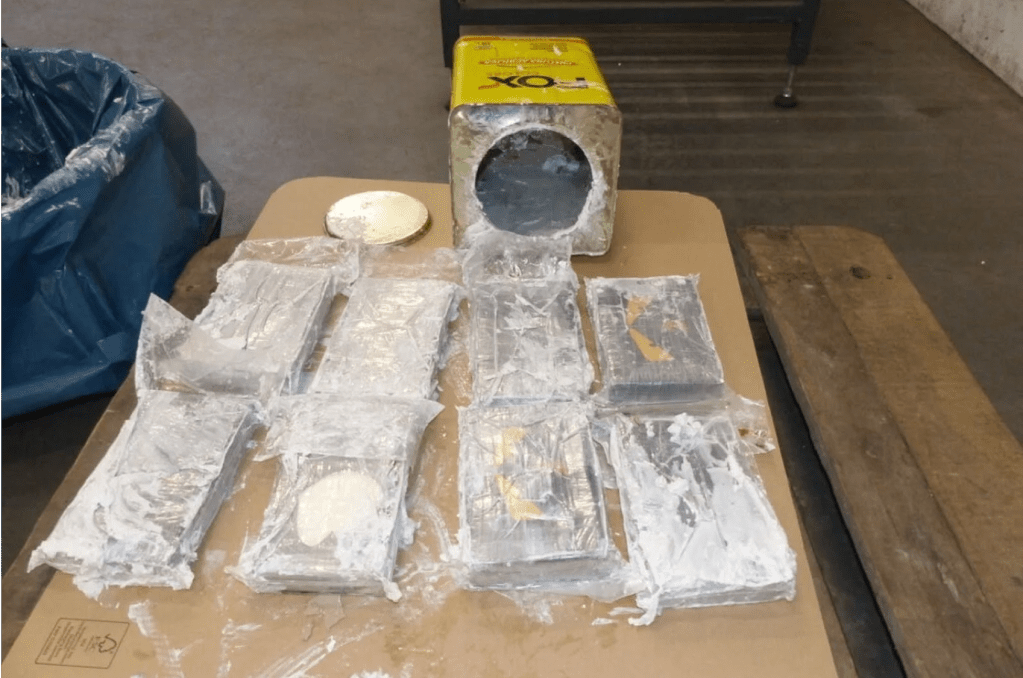
Customs officers at the busy port in Hamburg had decided to take a closer look at the Paraguayan containers after noticing “clear irregularities” with its contents – tin cans that were meant to be filled with putty.

“Beyond a layer of genuine goods packed just behind the container door, numerous tin cans were in fact filled with other goods,” said customs.

Investigators ordered the containers unloaded, and found the cocaine stash in over 1,700 tin cans.

“This is the largest amount of cocaine ever seized in Europe and one of the largest single seizures worldwide,” German customs said, referring to the Hamburg haul.

In all, 102 tonnes of cocaine headed for the European continent were intercepted last year by an international law enforcement project co-implemented by the United Nations.

Source: Daily Sabah, 24 February 2021

ICC – Controlling the zone: balancing facilitation and control to combat illicit trade in the world’s free trade zones

Photo by Noel Broda on Unsplash

Herewith a 2020 update of the ICC BASCAP report assessing the environment and highlighting trends in counterfeiting and other forms of illicit trade facilitated within free trade zones.

The Risks

Free Trade Zones (FTZs) provide significant opportunities for legitimate business and play a critical role in global trade as well as economic growth for the host nation.  However, our updated research has continued to confirm that insufficient oversight remains a major enabler of illicit activities.  Since the publication of our previous 2013 report, there have not been vast improvements in limiting criminal activities within FTZs.  In fact, the Covid-19 pandemic has increased vulnerability for abuses by criminal actors who take advantage of supply chain shortages and increased demands as well as relaxed oversight often because of such things as quarantines that have softened Customs control.

Counterfeiters use transit or transhipment of goods, through multiple, geographically diverse FTZs for no other purpose than to disguise the illicit nature of the products. Once introduced into an FTZ, counterfeit goods may undergo a series of economic operations, including assembly, manufacturing, processing, warehousing, re-packaging, and re-labelling. Once completed, the goods can be imported directly to the national territory of the hosting state or re-exported to another country for distribution or to another FTZ, where the process is repeated.

Key recommendations:

Our 2020 report promotes a set of specific policy and legislative recommendations on how to preserve and expand the benefits of FTZs for legitimate traders and protect the public and honest businesses from predatory practices. These recommendations are based on a review of the international and national legal frameworks governing FTZs, including how they are implemented and enforced.

Suggested recommendations include:

  • empowering Customs with jurisdiction over day-to-day operations within FTZs
  • strengthening relationship between Customs and FTZs
  • clarifying and declaring that FTZs remain under the jurisdiction of the national Customs authority
  • enhancing data sharing between Customs and the private sector
  • strengthening national government adherence to international conventions and implementation of international standards
  • legislatively ensuring that strict penalties are in place, including criminal sanctions where appropriate, against perpetrators of illegal activities in FTZs
  • that manufacturers and shippers recognize and use the ICC World Chambers Foundation’s International Certificates of Origin (COs) Accreditation Chain which is a program that accredits chambers of commerce issuing COs wishing to guarantee their commitment to the highest level of quality, implementing transparent and accountable issuance and verification procedures. Accredited chambers will receive a distinctive internationally recognized quality classification, reinforcing their integrity and credibility as competent trusted third parties in the issuance of COs.

Additionally, the new document also provides specific recommendations such as drawing on international agreements, lessons learned from effective and ineffective national legislation, the experience of IP rights holders, and legislative and regulatory measures to enforce intellectual property right protection in FTZs.  These specific recommendations are delineated in the report for action by the World Customs Organization, World Trade Organization, national governments, and FTZ operators. Effective implementation of the measures delineated for each of these bodies will go a long way in securing FTZs from illicit traders.

Download the Document via this hyperlink

Source: International Chamber of Commerce

SARS – Massive Rhino Horn bust worth R53-million

SARS’ Customs unit made a bust of rhino horn with an estimated value of R53 172 000, in a shipment destined for Malaysia.

While conducting manifest profiling at the courier facilities, the Customs Detector Dog Unit at O.R.Tambo International Airport selected a suspicious shipment declared as ‘HP Cartridges Developers’. 

The three-piece shipment was taken to the X-ray scanner for non-intrusive inspection, where the image analysis reflected objects resembling the shape of rhino horns. The shipment was taken for physical inspection and upon inspection of the boxes, 18 pieces of rhino horn were found concealed in traditional clothing. The goods weighed 63kg. 

This is the fourth rhino horn bust by SARS Customs at the O.R.Tambo International Airport between July 2020 and February 2021. The overall weight of the rhino horn seized in these four cases is 277.30 kg with an estimated value of R 234 114 206.

The Customs officers immediately called the Directorate of Priority Crimes Investigation (Hawks) to the scene, who confiscated the shipment for further investigation.

In his reaction to this massive seizure of the rhino horn, Commissioner Edward Kieswetter congratulated the Customs officers for their excellent work. He warned the perpetrators of crime that SARS, working with other law enforcement agencies, would spare no efforts in confronting and dealing decisively with any criminal malfeasance. Those that are involved in such egregious and merciless killing of rhinoceros and mutilating them will be brought to book.

He furthermore said, “Those who are determined to destroy the rich natural endowment of our country, which is a common treasure and heritage for all, that we should look after for future generations, will be met with unwavering commitment of our officers to enforce the law.” 

Source: South African Revenue Service, 4 February 2021

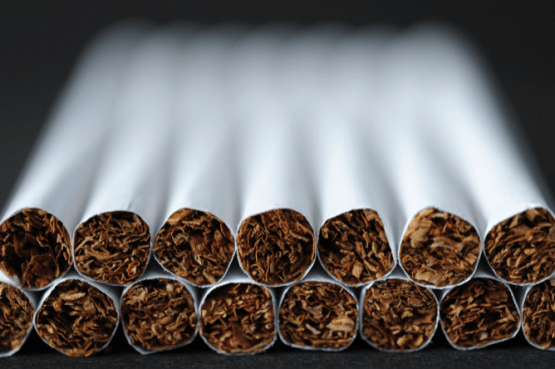
Dutch Tax Authority & EUROPOL – Big illicit tobacco bust

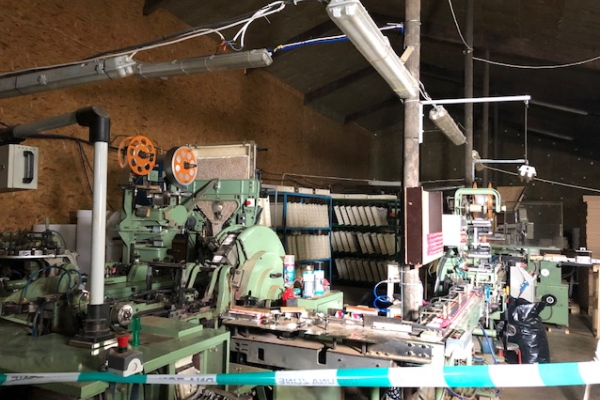
One of the largest illegal cigarette factories ever uncovered in the Netherlands has been taken offline by law enforcement, with 13 arrests.

The Europol-supported operation – led by the investigation service of the Dutch tax authorities or FIOD – concentrated on an illegal tobacco factory in West-Betuwe, south of Utrecht. Along with the 13 arrests, 3.6m cigarettes and 32 tonnes of tobacco were seized along with packaging material, cigarette paper, filters and glue.

The tax loss prevented to the Dutch state revenue for the illegal production is estimated at €6m, according to Europol, and the Dutch authorities have estimated that the machinery could potentially produce 1m cigarettes a day.

The enforcement action comes just a few weeks after an illegal tobacco factory capable of making 10m cigarettes per week was raided in the German city of Kranenburg, revealing once again the extent of illicit cigarette production within the EU.

A recent study by KPMG  found that imports of illicit cigarettes from non-EU countries such as Ukraine and Belarus declined in 2019, with law enforcement reports suggesting there are “increasing volumes from illegal factories within the EU.”

The latest raid was somewhat unusual however in that the entire production cycle took place in one factory, whereas generally production is dispersed across multiple facilities so criminals can spread the risk.

“The production is believed to have been destined for the black market in countries where the retail price of cigarettes is high,” says Europol. “The factory is presumed to have produced 18m illegal cigarettes seized abroad in recent months.”

Illicit cigarettes typically contain even higher levels of toxic ingredients such as tar, nicotine and carbon monoxide than genuine brand-name products.

They also pose a greater fire risk as they do not include designs that ensure that a lit cigarette will self-extinguish if not actively smoked.

Source: SecuringInustry.com

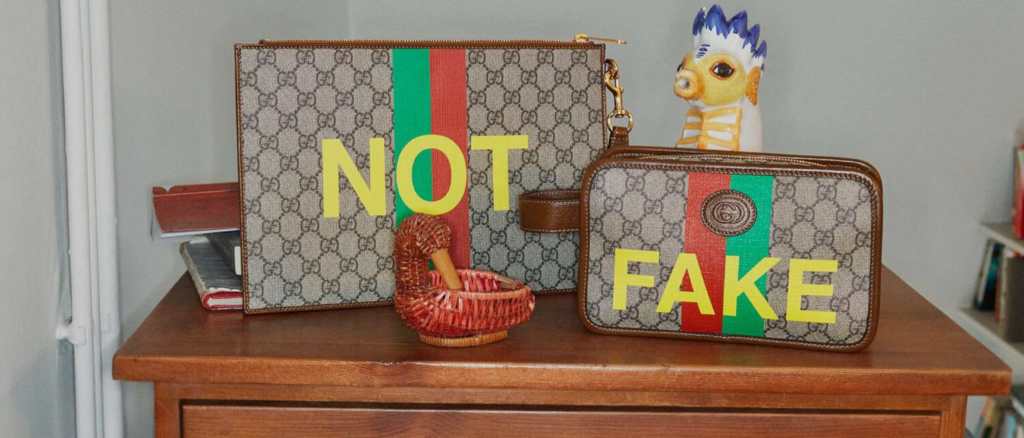
Gucci – Pokes fun at Counterfeiters with “Fake/Not” collection

Italian designer brand Gucci has been battling counterfeiting of its products for decades, and has drawn attention to the problem with a tongue-in-cheek new collection.

According to Gucci, the “Fake/Not” collection for Fall/Winter 2020 – which includes men’s and women’s wear as well as bags and shoes – “began with a print inspired by a retro appropriation of the Gucci logo featuring the bicolour stripe.”

It goes on: “Entering a new chapter, the green and red design mixes with ‘Fake/Not’—a playful commentary on the idea of imitation.”

‘Fake’ is printed in bold lettering on one side of the item – in fact, it looks a lot like the real/fake comparisons one might see in pictures online – with ‘Not’ on the other.

Source: SecuringIndustry.com

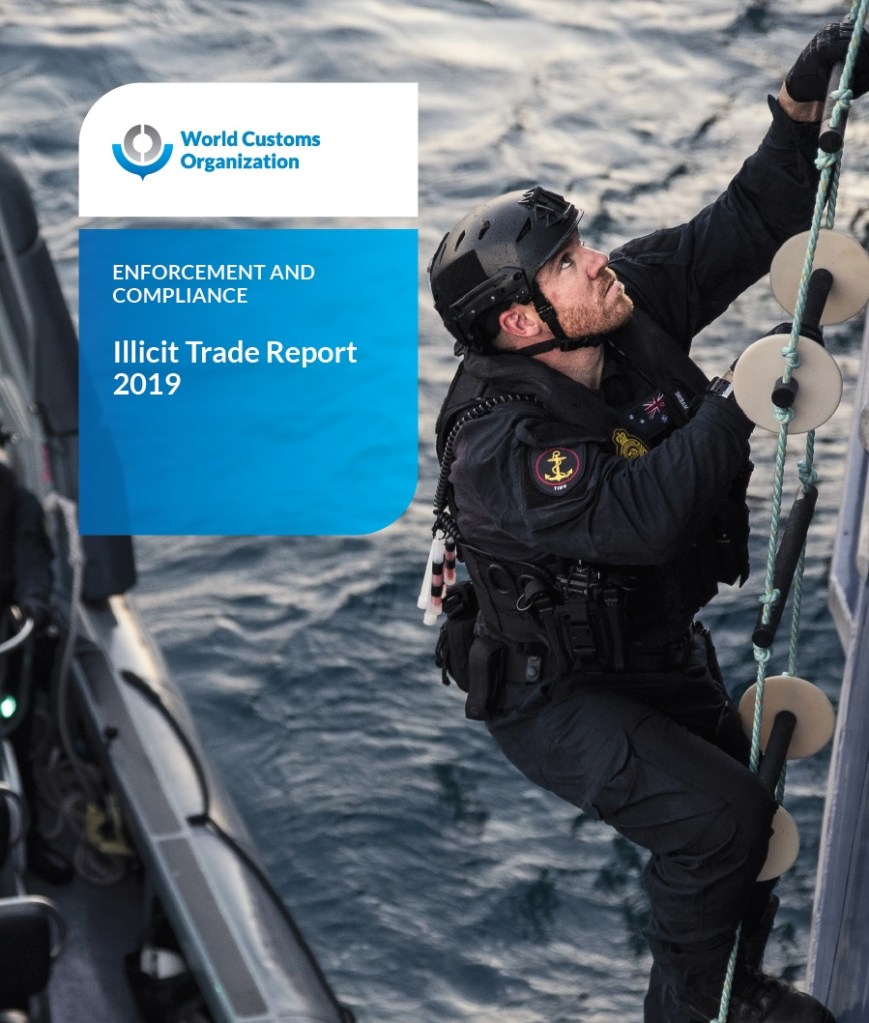
WCO 2019 Illicit Trade Report

The WCO has issued its 2019 Illicit Trade Report (ITR), an annual publication which offers a comprehensive study of illicit trade flows through an in-depth analysis of seizure data and case studies voluntarily submitted by Member Customs administrations worldwide. 

The information captured in the ITR provides essential insight into the occurrences of illicit trade, thereby assisting Customs administrations in understanding trends and patters and making enlightened decisions to secure cross-border trade. The importance of comprehensive data analysis is indisputably a key component to support effective and efficient Customs enforcement activities. 

This year, the analysis provided in this Report is based on data collected from 137 Member administrations and the report consists of six sections: Cultural Heritage; Drugs; Environment; IPR, Health and Safety; Revenue and Security. 

For the fourth year in a row, the WCO has partnered with the Center for Advanced Defense Studies (C4ADS), a Washington, D.C.-based non-profit organization dedicated to providing data-driven analysis and evidence-based reporting, thereby enriching readers’ experience with advanced data visualization technologies and enhanced data analysis.  

Access the 2019 Illicit Trade Report here! (45MB)

Source: World Customs Organisation

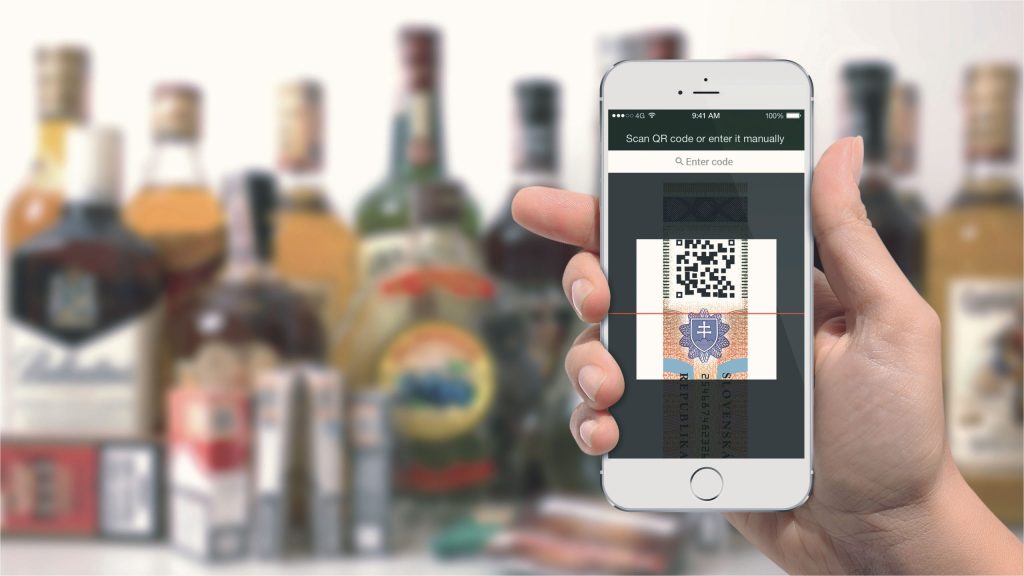
Tanzania – Electronic Tax Stamp Pushes Up Revenue By 34%

THE use of Electronic Tax Stamps (ETS) for excisable goods have contributed to a 34 percent increase in revenue collected on branded products.

Due to the increase, the Tanzania Revenue Authority (TRA) has already rolled out the second phase which saw ETS being stamped on soft and carbonated drink plus bottled water.

TRA Deputy Commissioner General, Mr Msafiri Mbibo made the remarks during the on-going 44th Dar es Salaam International Trade Fair (DITF).

Mr Mbibo said since the system was introduced it has proven success showing improvement in revenue collections in which there is an increase of 34 percent.

ETS replaces the former paper stamp system, which was cumbersome and prone to human error, allowing certain tax-related malpractices to slip through the cracks.

This is one of the government’s moves geared towards improving tax administration in the country.

“We are glad that ETS shows improvement in the collection of excise duty and Value-added Tax (VAT), in the first quarter of the 2019/20 financial year the collection rose to 35.3 per cent on domestic spirits and wines compared to the corresponding period of last year,” he noted.

The taxman garnered 25.8bn/-as excise duty and VAT from domestic spirits and wines during the first quarter of the 2018/19 fiscal year, but the amount rose to 34.96bn/- during the first quarter of the 2019/2020 financial year.

Excise duty and VAT on cigarettes rose by 5.6 percent during the first quarter of the 2019/2020 financial year compared to a similar period last year.

TRA collected 56.7bn/-as excise duty and VAT on cigarettes from July to September 2019, a 3bn/-increase from a similar period of the previous financial year.

For the soft drinks, the amount collected as excise duty and VAT during the two months of August and September 2019 was 18 percent, higher than what was garnered during a similar period in 2018.

TRA collected 16.155bn/-in excise duty and VAT on soft drinks in August and September 2018, but the amount rose to 19.05bn/-during the period between August and September 2019.

Mr Mbibo said ETS has helped to eliminate counterfeit products from the market. It is, nonetheless, a promising move by the Government, and manufacturers and intellectual property owners should have reason to smile.

Commenting on how TRA is planning to ensure the surge the tax base, Mbibo said they will continue to develop friendly tax collection mechanisms so that everyone can enjoy voluntary taxation.

ETS first phase commenced on 15 January 2019 and affected cigarettes, wines, spirits, beer and all other alcoholic beverages.

The second phase began on 1 August 2019 and applied to products such as sweetened or flavoured water and other non-alcoholic beverages, except for fruit or vegetable juice.

The Regulations require each manufacturer to install an electronic tax stamp management system.

A Swiss-based firm SICPA has been contracted by the Tanzania Revenue Authority (TRA) to install and enroll all manufacturers, producers and importers onto the system.

Source: Daily News (Tanzania), 8 July 2020

Illicit cigarette use declines in EU but production rises

The consumption of illicit cigarettes fell below 8 per cent of total cigarette use last year, but was still equivalent to nearly 39bn smokes and €9.5bn in lost tax revenues, says a new report.

The latest edition of the annual study – carried out by KPMG on behalf of tobacco giant Philip Morris International – also found that imports of illicit cigarettes from non-EU countries such as Ukraine and Belarus declined in 2019, with law enforcement reports suggesting there are “increasing volumes from illegal factories within the EU.”

Illicit ‘whites’ with no country specific labelling – i.e. legally produced cigarettes that are smuggled and traded illegally, often through free trade zones (FTZs) – remain the largest element of the counterfeit and contraband (C&C) category, representing 23.1 per cent of total EU illicit consumption or 9bn cigarettes.

Counterfeit of brands owned by manufacturers participating in empty pack surveys grew to 7.6bn cigarettes, an increase of more than 38 percent over 2018’s figure, and is the highest level ever recorded by KPMG. Counterfeit consumption was the highest in the UK and Greece.

The overall picture is one of increasing sophistication by the criminal networks behind the illicit trade, with multiple production units to compensate if one is raised, and increasingly high tech manufacturing equipment. New groups are also emerging that are focusing specifically on smuggling raw and fine cut tobacco.

“Illicit manufacturers are producing counterfeit, established and new illicit white brands to order at scale for organisations and smugglers who can arrange distribution of large volumes, either in large shipments or increasingly via high frequency, low volume shipments,” says KPMG.

Criminal groups are exploiting new distribution channels, such as rail, as it is faster than traditional shipping routes, as well as courier packages which are small and hard for law enforcement to detect, according to the report.

“The continued decline of illicit tobacco trade in the EU is a positive development and reinforces the importance of supply chain control measures, strict enforcement, and collaboration in combating this issue,” said Alvise Giustiniani, vice president of Illicit Trade Prevention at PMI.

However, while considerable efforts have taken place to stem contraband cigarettes from flowing into the EU, “we are once again seeing criminal organisations shifting their operations to stay one step ahead of anti-illicit programmes, according to the company.

Source: Phil Taylor, Securing Industry, 26 June 2020

A Triangle of Vulnerability – Illicit Trafficking off the Swahili Coast

Reports such as this should serve as intelligence for any law enforcement entity within the region as well as countries impacted by such illegal activities downstream.

A triangle of vulnerability for illicit trafficking is emerging as a key geographic space along Africa’s eastern seaboard – the Swahili coast.
At one apex of this triangle is Zanzibar, a major hub for illicit trade for decades, but one that is currently assuming greater importance. Further south, another apex is northern Mozambique. This area is experiencing significant conflict and instability, and is increasingly a key through route for the illicit trafficking of heroin into the continent and wildlife products from the interior. The final apex of the triangle is out to sea: the Comoros islands, lying 290 kilometres offshore from northern Mozambique and north-east of Madagascar. Comoros is not yet a major trafficking hub, but perennial political instability and its connections into the wider sub-regional trafficking economy make it uniquely vulnerable as illicit trade continues to evolve along the wider Swahili coastal region. These three apexes are linked by illicit economies and trade routes which take little heed of modern political boundaries.

Two main factors underlie the illicit markets that form the primary focus of this study. First, the powerful market demand for illicit wildlife products from Asia (and China in particular), and second, the steady growth in the volumes of heroin moving down the coast, with landings being made further and further south. The Indian Ocean islands themselves have long had serious challenges with heroin trafficking and use, and these are being exacerbated. Developments in Zanzibar, northern Mozambique and Comoros will have a crucial impact on wider patterns of trafficking and trade across the Swahili coast as a whole. For example, as we doc- ument the trade in endangered species from Madagascar which flows to Zanzibar and Comoros, Madagascar is also seen as a potential risk area for an increase in heroin trafficking.

At the time of writing, the impact of COVID-19 in the wider region was just becoming clearer as countries entered lockdown and began to restrict some forms of trade. The effect of these developments on the illicit political economy will still unfold in time to come.

Source: A Triangle of Vulnerability – Illicit Trafficking off the Swahili Coast authored by Alastair Nelson, June 2020

Also read: The Heroin Coast