Insight behind the WCO Data Model

WCODMV3 Technical BrochureGovernments around the world have realized that rapid economic growth cannot be achieved in an environment where international trade processes are inefficient and cumbersome. Over the past two decades, serious attention has been devoted to the modernization of international trade and cross-border regulatory procedures. Countries have committed substantial resources to national projects in the areas of customs automation and Electronic Data Interchange (EDI) infrastructure.

Electronic ‘Single Window’ services delivery is now being demanded in several countries. Based on the principle of joined-up government services, the ‘Single Window’ environment has the potential to deliver transformational advantages to business by simplifying and unifying touch-points between members of the trade and the different government departments involved in cross-border regulatory procedures. In addition, new demands on supply chain security and facilitation have emerged, leading to the establishment of the WCO SAFE Framework of Standards.

This booklet provides a brief introduction to WCO Data Model Version 3.0. It explains the scope of the Model, its relationship with other international instruments such as the Revised Kyoto Convention, and its alignment with widely used international standards. The booklet is aimed at project leaders and Information Technology architects from Customs administrations and other cross-border regulatory agencies. The World Customs Organization hopes that this booklet will create a proper understanding of the value of the WCO Data Model as an indispensable instrument in projects that address modernization of regulatory agencies including Customs. Source: WCO.

Please visit: http://wcoomdpublications.org/data-model-3.html for pricing and conditions of online WCO Data Model usage and support. Available for Customs administrations and Trade Practitioners.

Related article

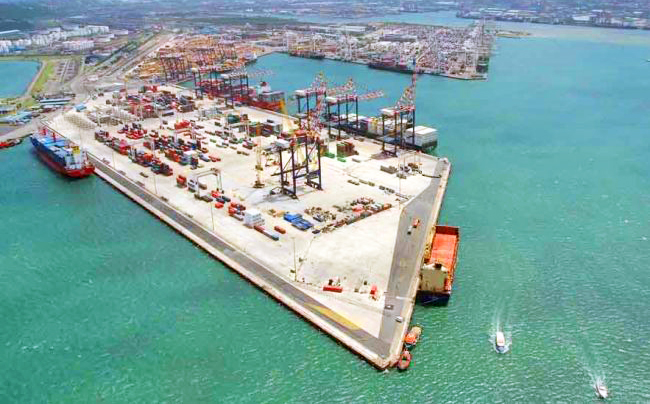
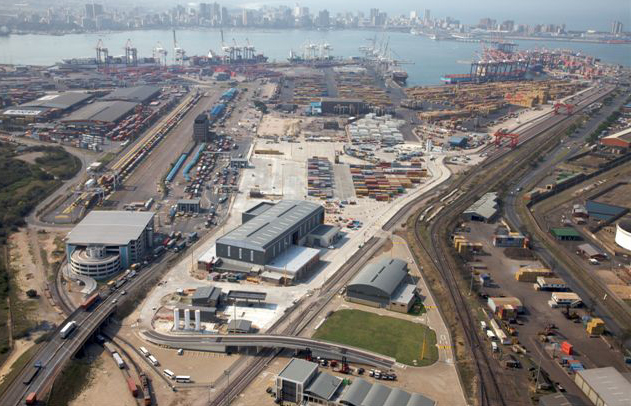
Cargo Dwell Time in Durban

An acquaintance in the forwarding industry brought this working paper to my attention. Titled “Cargo Dwell Time in Durban“, it is very useful reading for logistics operators, Customs and government agencies, and policy makers. The object of the working paper attempts to identify the main reasons why cargo dwell time in Durban port has dramatically reduced in the past decade to a current average of between 3 and 4 days. A major customs reform; changes in port storage tariffs coupled with strict enforcement; massive investments in infrastructure and equipment; and changing customer behavior through contractualization between the port operator and shipping lines or between customs, importers, and brokers have all played a major role. The main lesson for Sub-Saharan Africa that can be drawn from Durban is that cargo dwell time is mainly a function of the characteristics of the private sector, but it is the onus of public sector players, such as customs and the port authority, to put pressure on the private sector to make more efficient use of the port and reduce cargo dwell time. The Working Paper is the product of the World Bank’s Africa Region, Transport Unit, being part of a larger effort  to provide open access to its research and make a contribution to development policy discussions around the world. Policy Research Working Papers are also posted on the Web at http://econ.worldbank.org

Related articles

TPT’s Pre-advice for Export Containers

Durban Container TerminalIt has been enquired by some whether or not Transnet‘s Pre-Advice for Export Container’s initiative is aligned with SARS Customs Modernisation. First of all its important to delineate the process and requirement. Transnet Port Terminal’s Pre-Advice is an electronic exchange (COPARN) between the carrier and TPT. As such it is an arrangement which satisfies the Terminal’s advance reporting requirements of impending export container delivery to a container terminal. In time it will feed Customs’ gate-in reporting requirements.

From a Customs perspective, this initiative is an important development which fills another piece of the supply chain puzzle. As such it is not in contradiction to anything planned for by SARS – rather its somewhat ahead of Customs at this point in time. It is just not possible to synchronise inter-departmental and inter-company project developments. Each has its own financial/procurement cycles and operational deliverables, and in certain cases legal prescription. At the same time it is true that supply chain operators bear the brunt of untimely and non-coordinated initiatives. Nonetheless, they are important while at the same time vital for the country’s future economic growth and stability.

Automated Cargo Management – Whipping up Industry Awareness

Following the recent posts on this subject, SARS took to ‘walking the talk’ this week. Over the last month a significant increase in registrations with Customs as well as vast improvements in successful electronic manifest data submission has occurred, mainly in the sea freight industry, however. This week’s initiative took the campaign to the hub of air cargo in southern africa – Oliver Tambo International Airport. Meetings were arranged with various stakeholders and industry bodies to reinforce customs cargo reporting requirements. The campaign was intended to offer an alternative approach to the usual formalities of the bi-monthly modernisation meetings. If necessary, further campaigns will be undertaken leading up to the mandatory enforcement of electronic manifest and cargo report submission for air and sea cargo operators in the very near future. SARS will soon be announcing a final cut-off date for voluntary registration for ACM and electronic submission, after which punitive measures will be introduced. Watch the Customs modernisation webpage for further details.

Mandatory EDI Submission – SARS engages Cargo Manifest Providers

Some 8 years since the initial implementation of the Manifest Acquittal System (MAS), SARS has recently engaged cargo manifest providers with a fresh urgency to prepare themselves for the impending mandatory requirements for the filing of cargo reports to Customs. The legislation has been in place for several years and a fully revamped cargo management system has since been developed by SARS. Cargo Reporters (shipping lines, airlines, ships agents, terminal operators, freight forwarders, consolidation/deconsolidation agents, depot operators, ground handling agents) are now called upon to ensure that their systems are able to meet the cargo reporting requirements of SARS. (The EDI Mapping requirements for CUSCAR is now available on the SARS website).

The first imperative is to ensure the integrity of data reported to SARS. Once this is at a satisfactory level, SARS will commence the matching of cargo and customs clearance information. Not unlike other customs jurisdictions, the availability of ‘clean data’ from both cargo reporters and declarant’s is imperative to facilitate manifest matching, risk assessment and the release of goods.

A further phase will thereafter introduce measures to ensure that South Africa meets its obligations in terms of the WCO SAFE Framework of Standards. This may require some modification to

  • Data reporting requirements via EDI,
  • Some changes to legislation,
  • Introduction of formal licensing of cargo operators, and
  • Introduction of a seal integrity programme as part of the aforementioned licensing arrangement.

SARS has prioritized air and sea modalities (imports only) for initial implementation, with rail and road modes to follow. The priority not only includes cargo reporting (manifest) requirements but also other reports such as vessel call notifications and advices, discharge lists, gate-in and gate out reports, and cargo outturn reports.

SARS cargo management system will be available for test purposes to all cargo reporters as of 1 March 2011. A period of at least 2 months has been contemplated for such testing, with live implementation occurring in May 2011.

Freight Forwarders and Brokers – a US perspective

Of all supply chain operators, the brokers and freight forwarders undoubtedly have the most challenging business – highly competitive and so dependant on the activities and integrity of all other logistics players. For an interesting analysis of the US environment you will find the following white paper both interesting and thought-provoking.

10 Best Practices and Recommendations for customs brokerage and freight forwarding

Why traditional Customs’ document / information reporting standards are ‘out-dated’

Commencing with the US Container Security Initiative (CSI) in 2002, it became clear that traditional cargo and conveyance reporting was a thing of the past. Let’s face it without the events of 9/11, none of the security advances in the customs space would have been possible. Many customs administrations did not even have a formal cargo manifest reporting system. Some relied on 3rd party terminal access to carrier and airline manifest data, others interfaced with cargo community systems, but only a few placed any real relevance on a dedicated cargo management and reporting facility. Most electronic messaging formats today still rely on an electronic ‘derivative’ of some document/form or another. This perhaps is a logical departure point. However, recent developments under the banner of the WCO SAFE Framework of Standards indicate a departure from the traditional form of customs information reporting. Let’s see, the framework itself appears to delineate cargo and clearance security data elements for exports and imports. But, at the same time we see the release of version 3 of the WCO Data Model clearly advocating a single overarching electronic messaging architecture which portends to accommodate not only current EDI reporting requirements but future ‘all-of-government’ messaging in so far as it relates to the transactional clearance of import and export goods. Moving ahead into the current environment, the impending EU advance cargo reporting requirements are very similar to that of the US 24 Hour Rule. What is more interesting is the fact that the EU – through its Entry Summary Declaration (ENS) – has created a new information exchange requirement which effectively applies a combination of both clearance and cargo information. This clearly indicates that traditional forms of cargo manifest and conveyance reports/exchanges no longer fulfil customs information and risk assessment requirements. I think it is important for all shippers and operators to realise that in today’s rapidly changing environment, we can no longer speak strictly in terms of pre-arrival notifications, carrier’s manifests, house manifests, discharge lists, or customs clearances. Customs requires ‘DATA’ (not forms/documents) in order to achieve its security, fiscal and enforcement obligations; and it needs this information way in advance of what shippers and operators have become accustomed to over the last 50 years – this is in effect the ‘change’ which international supply chain operators need to embrace. Unfortunately, the developments on automated processing and risk management are not taking place uniformly across all customs administrations; hence the envisaged benefits of so-called ‘paperless clearance’ are still a pipe dream in many respects. Before the 2005 security amendment, EU Customs legislation required that goods be presented to customs authorities on arrival to the customs territory, but how that was done was left to each individual EU member state; and, there was no emphasis on safety and security or requirement of sharing of risk data among EU members. Another factor, it would seem, is that the EU (comprising 27 members), has opted for the introduction of the ENS, realising the so-called disparity and complications related to coordinating controls and sharing information between independent customs administrations. A ‘single’ country does not have to deal with this – only its own domestic requirements. For example, under the new dispensation, where a flight is destined for two EU airports, and the carrier submits the ENS to the first, Customs needs to make provision for pushing the risk information and results of control to the second country, or allowing that second country to pull the control results and ENS data from the first. Also, such a system depends on mutual recognition across all EU members of an AEO granted in one member state. Bottom line, EU traders must prepare for some chaos to occur on 1 January 2011. The new requirements will be a true litmus test of what is possible in the supply chain, as it will surely become the defacto standard in other regions in the globe. At the same time the WCO will undoubtedly observe the first wide scale application of its SAFE Framework of Standards with keen interest.
WCO Data Model V.3 available online!

The WCO Data Model 3 is a maximum set of carefully combined and harmonized data requirements derived from cross-border regulation. These requirements are mutually supportive and are updated on a regular basis to meet the procedural and legal needs of cross-border regulatory agencies such as customs, controlling export, import and transit transactions. The WCO Data Model 3 is only available online, by the means of an annual subscription which will enable you to – (a) Have access to a database of knowledge through a FAQ module, and (b) Ask any question directly to the WCO Data Model 3’s Project Managers.

Please visit: http://wcoomdpublications.org/data-model-3.html for pricing and conditions.

The Supply Chain is a Scary Place – World Trade Magazine

The Supply Chain is a Scary Place – THIS MONTH’S ISSUE – World Trade.

Downloads

Please visit the new “Downloads” tab for available documents. In the coming weeks, more specific information in support of the Customs Modernisation Programme will be provided. Please feel free to use this content in a respectable manner, i.e. for training and research purposes.

EDI is Dead – Long Live EDI!

SARS Customs mainstream communication channel with the South African business community has received a major boost, with the installation of a new EDI Gateway. This forms part of SARS’ commitment – relating to increasing demands on its ICT architecture – to meet the rapid increase in B2G (business-to-government) electronic transaction exchanges. Currently for every import, export or cross border declaration transactions, there are a minimum of 2 EDI interchanges per consignment – a Customs declaration message (CUSDEC), and a Customs response message (CUSRES).
Once cargo reports (cargo manifests and cargo notifications) are all being received electronically this average will increase substantially. The future customs clearance process envisages a totally paperless environment. Therefore, any instruction or notification regarding an import or export transaction will need to be handled via electronic messaging between Customs and the Trader. This implies significant more data storage and a reliable network ensuring continuity of business. At present trade declaration (SAD500) volumes are in the region of about 4, 3 million per annum. The need for high-volume / real-time processing is therefore a no-brainer.
The Customs Modernisation Programme (CMP) has undertaken a number of initiatives in regard to maintaining pace with world trends. It is currently reviewing its data models; consolidating import, export and cross border modes; and aligning all its data requirements with the WCO Data Model version 3. Combined with envisaged changes being brought about through the introduction of clearance within Customs Procedures, SARS’s desire is to adequately meet the demands of trade and its accession obligations regarding the WCO Revised Kyoto Convention. In the near future, Customs Response and Cargo Report data requirements will be aligned and consolidated in similar manner. This alignment therefore puts SARS in a position to consider a future migration path – the adoption of the Government Cross Border Regulatory message (GOVCBR).