Former SARS Customs Official Turns Author – The Customs Man

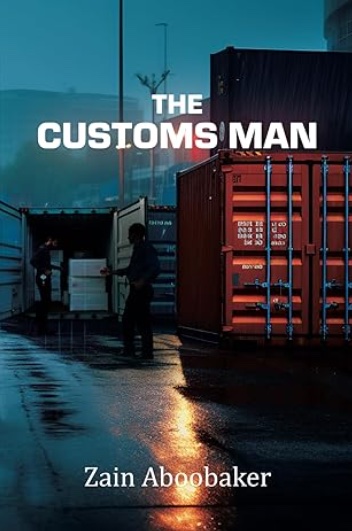
The following review was authored by Wendy Jason DaCosta of the Independent on Saturday, 1 February 2025, titled” Durban author demystifies what happens in customs“.

LOVE or the law. That’s the choice a customs official has to make in The Customs Man, a gritty debut novel by Durban author Zain Aboobaker.

In the book he exposes the dark underbelly of customs’ enforcement and organised crime in South Africa, revealing layers of intrigue which are usually hidden from the public eye.

The book starts in Durban harbour but then takes readers across the country as the story picks up pace, shining a light on issues usually whispered about in dark corridors.

It tells the story of a customs official, the choices he faces every day, and his inner conflicts like whether he should protect those he loves or stick to his morals and let the law take its course.

Lovers of crime and suspense are in for a treat as corruption, betrayal, smuggling and even South Africa’s ailing clothing industry are featured in the book.

It’s clear that Aboobaker is familiar with the goings on in customs after spending nearly two decades on the inside before starting up his own consultancy.

“So it’s about 17 years on the inside and then 17 years on the outside. It’s nice to have had both views. You know, when you work inside customs, you see one side of things and you look at the law in a certain way. When you step outside it’s like looking at it from the other end of the telescope,” he revealed earlier this week.

Aboobaker told the Independent on Saturday that his career gave him the opportunity to observe people and human nature which served him well when he took up writing.

“When people are normally in a bind, when the goods are seized or they’ve been detained, they start to really get stressed and anxious, and they’re pleading and they’ll move heaven and earth.

“As soon as they have relief, you see a different human being come out of them. They forget the pain that they were in and some of them begin to get arrogant again.”

As a child he loved reading and just over 10 years ago, he looked back on his life and remembered all the colourful characters he had met along the way.

“So, it was actually just taking the characters that I met and sort of fictionalising them, and then it just got a life of its own and it morphed,” he said. He wrote the first chapter in 2013 and then left it there until his wife, Katherine, and best friend Quintas van der Merwe convinced him to continue in 2022.

“My wife says to everybody, ‘oh, Zane’s writing a book’ and so the pressure starts,” he said.

Aboobaker met Van der Merwe when he was working in Customs as head of its national Anti-Smuggling Division.

In the foreword of the book, Van der Merwe, who is a lawyer, wrote: “The author and I met working on opposite ends – he tried to catch non-compliant taxpayers, and I tried to get them off.”

Despite the rocky start, they have been firm friends for many years.

The book is filled with familiar places and relatable characters. It tells the story of Charlotte the doctor who suffers from white guilt and wants to help the community. She passes on diamonds to Georgie, the son of a fisherman who is forced to smuggle abalone after overfishing destroys his family’s livelihood. Georgie’s role is to get the diamonds out of the country.

There’s a Zimbabwean electrical engineer who smuggles cigarettes across the border and whose sister was killed during xenophobic attacks in South Africa.

“It’s a light read but there are heavy themes in it that I hope will spark debate,” said Aboobaker.

The Customs Man is available in paperback and retails for R290 on Amazon and Ike’s Bookshop in Morningside.
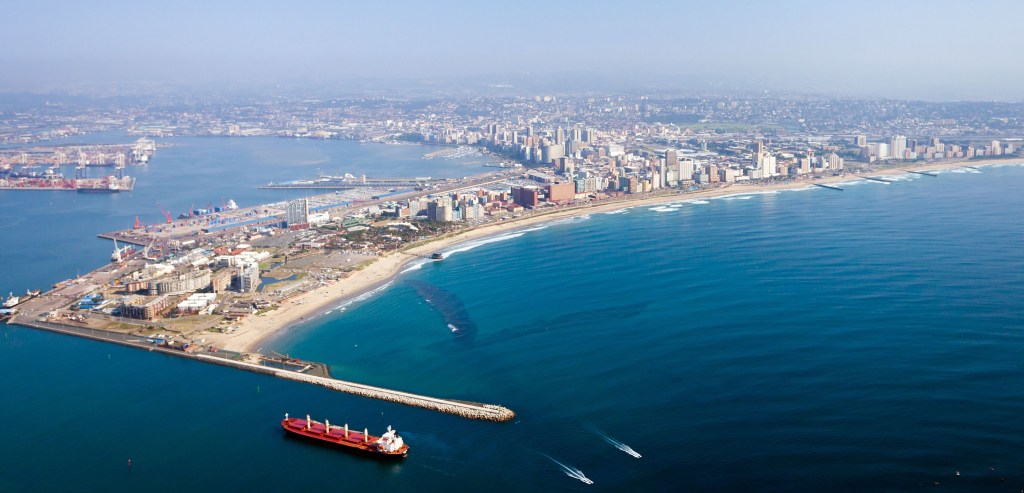
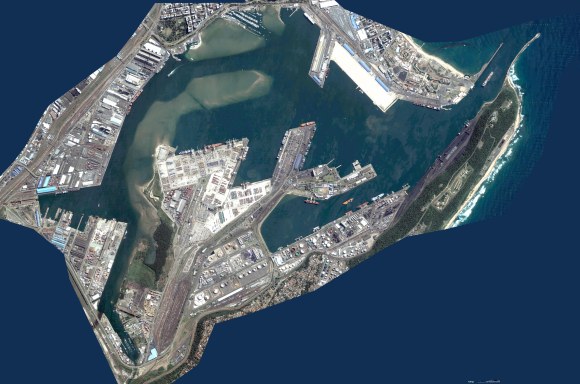
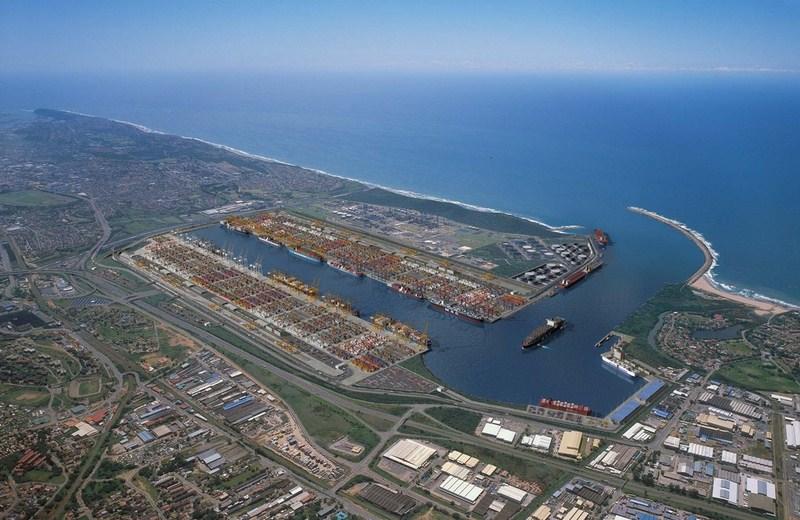
Port of Durban – to be partially privatised

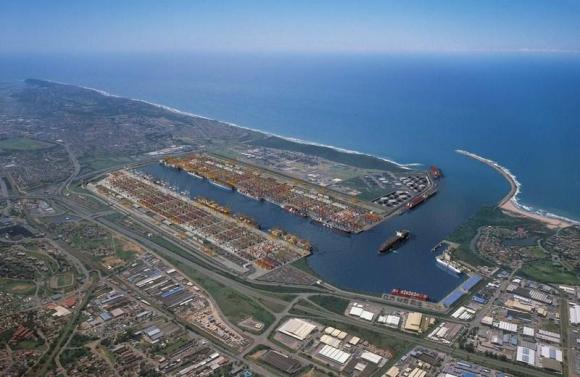
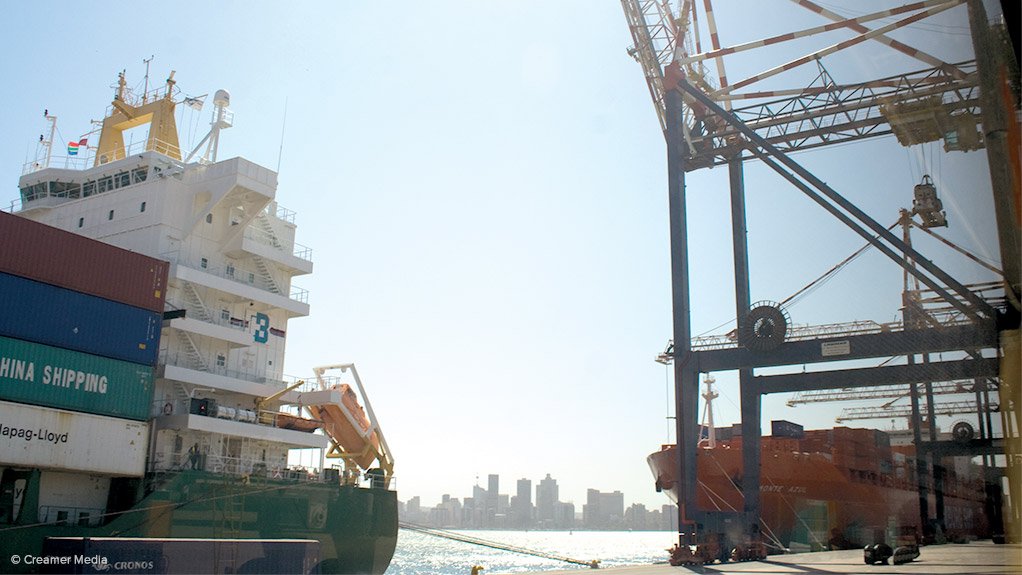
View of Durban city and harbour, South Africa – Hongqi Zhang

Africa’s biggest harbour will be partly owned and operated by the Philippines’ International Container Terminal Services Inc., a first for South Africa’s national ports company.

The company, ICTSI, has been selected as an equity partner to run and expand Durban Container Terminal Pier 2.

Almost three-quarters of the freight volume moved through the eastern port goes through the terminal, accounting for 46% of South Africa’s total port traffic, according to state logistics company Transnet.

This agreement “is a key catalyst for repositioning the Port of Durban as a container hub port,” Transnet said in a statement on Monday.

South Africa is seeking to boost private participation in its ports, the poor performance of which is a drag on the economy. In a 2021 World Bank index of container port performance, Durban ranked 364th out of 370, and two other Transnet ports were in the bottom 10.

Transnet will own a 50% plus one share in a new company that will manage the terminal for 25 years and will seek to boost its annual capacity to 2.8 million twenty-foot equivalent units, or TEU’s, from 2 million, it said. 

Ultimately Transnet wants to boost Durban’s total container capacity to 11.4 million TEUs from 3.3 million.
ICTSI, which operates terminals across six continents, was one of six bidders for the contract, Transnet said. It didn’t specify whether ICTSI will pay for its stake or whether it will have to fund the expansion.

An announcement on the port of Ngqura will follow, Transnet said.

Source: Bloomberg/Daily Investor dated 17 July 2023

R1.3bn worth of cocaine seized at Durban harbour in dawn raid

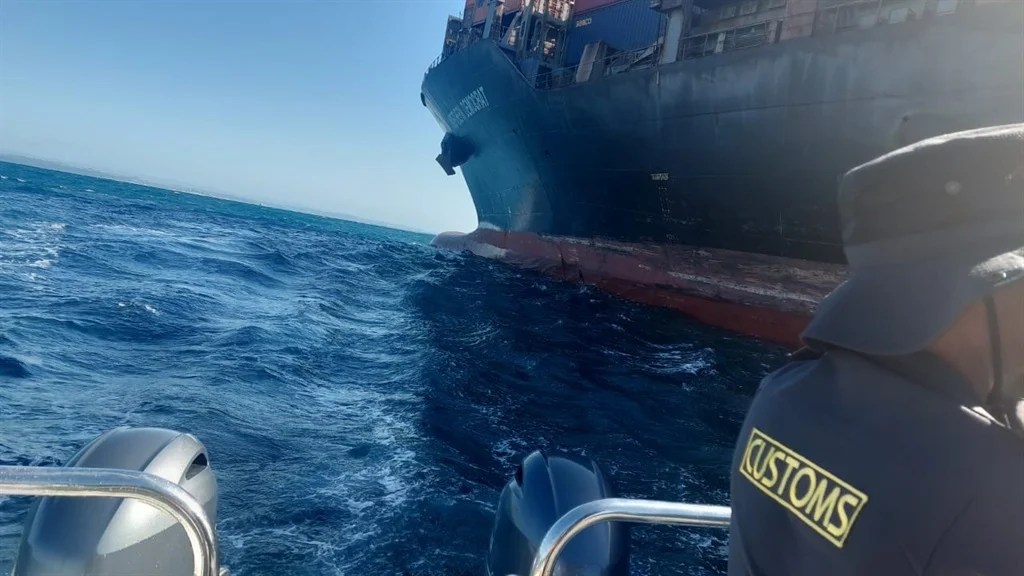
Customs officers of the SA Revenue Service and the SA Police Service (SAPS) seized some R1.3 billion worth of cocaine in an early morning raid on a container ship at the Durban harbour, SARS said in a statement on Friday morning. 

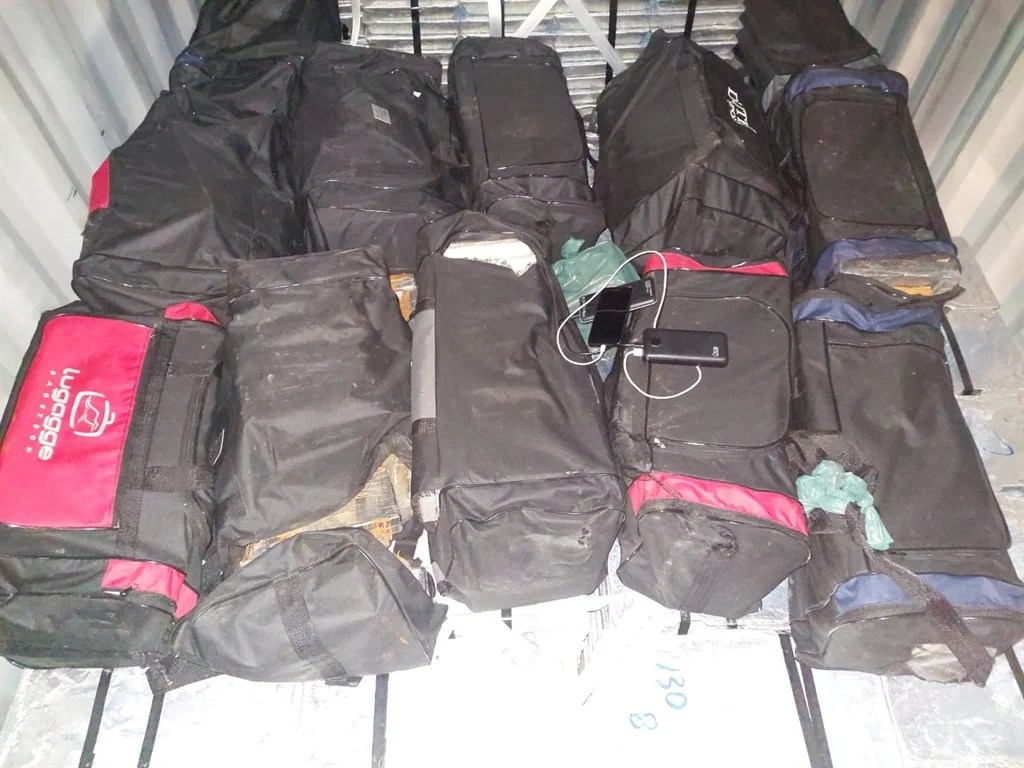
The 300kg of cocaine was found in one of the containers aboard the ship. It was detected after a week-long intelligence operation led by the SARS National Targeting Unit. 

“The SARS Marine unit, Durban Operations, South African Police Service (SAPS) Crime Intelligence and National Detective Services boarded the vessel heading from South America to secure several containers that were profiled by SARS,” SARS said. 

The containers were inspected after they were unloaded in the Durban harbour, which revealed zinc metal products and several black bags containing 378 bricks of pure cocaine. 

The illicit cargo and what appeared to be cellular tracking devices were handed over to SAPS for further investigation, SARS added.

SARS commissioner Edward Kieswetter said it there was a commitment to “fight the scourge of narcotics entering the country and destroying the lives of its users, especially the youth.”

“SARS will not tolerate these illegal activities but will rather continue to fulfil its mandate of facilitating legal trade to further economic development of our country,” he added.

Source: New24, Marelise van der Merwe dated 24 February 2023

Durban dig-out port – expert cautions ‘think again’

Artistic impression - Durban Dig-out Port

Artistic impression – Durban Dig-out Port

An international ports expert has expressed serious reservations about Durban’s proposed dig-out port. He said plans for a dig-out port should be put on hold, with efforts rather directed at maximising the existing facilities and potential at Durban Harbour.

International adviser and expert on port development Jamie Simpson, of Canada, has warned Transnet and the eThekwini Municipality against pursuing the dig-out port, saying the current port has to “keep going”. Simpson was a guest speaker at a ports and cities dialogue with Durban businesses, hosted by the municipality’s Edge (Economic Development and Growth eThekwini) at the Moses Mabhida Stadium yesterday. His point of view was supported by two other speakers.

However, Transnet group strategy general manager Irvindra Naidoo was adamant that the parastatal was forging ahead with the project, saying Durban was “running out of capacity” and had to expand.

Naidoo said: “The question was: ‘Okay, do we now go off somewhere else and develop a new maritime cluster around Richards Bay or somewhere else, or do we try to embed or strengthen the cluster… (by extending) the Durban port?’ That’s what this dig-out port really is about. It’s an extension of an existing cluster.”

The port, the continent’s busiest, caters for 2.6 million TEU (twenty-foot equivalent units) a year. These result in about 8 000 daily container-related heavy vehicle movements around the Bayhead area. Transnet has repeatedly said that the port will battle to provide the capacity for future demand.

Naidoo said with a dig-out port at the old Durban International Airport site, the containers could reach 8.2 million TEU by 2040, resulting in about 17 500 heavy vehicle movements daily in the South Durban Basin.

Simpson told the panel that the move “might not be a very good solution”. He said: “In view of the likely availability of financing – a lot of uncertainty – I think the port has to keep going and develop a capital investment plan and operational improvement plans to meet demand in the next five to 10 years.”

From there, he said, the parastatal could “weigh up” whether a bigger port “makes sense in view of market conditions… and availability of finance at the time”.

The first phase of construction of the dig-out port was expected to start between 2021 and 2025. A pre-feasibility study started in 2013. To read the full article click here! Source: iol.co.za

Durban dig-out port plan likely to be delayed

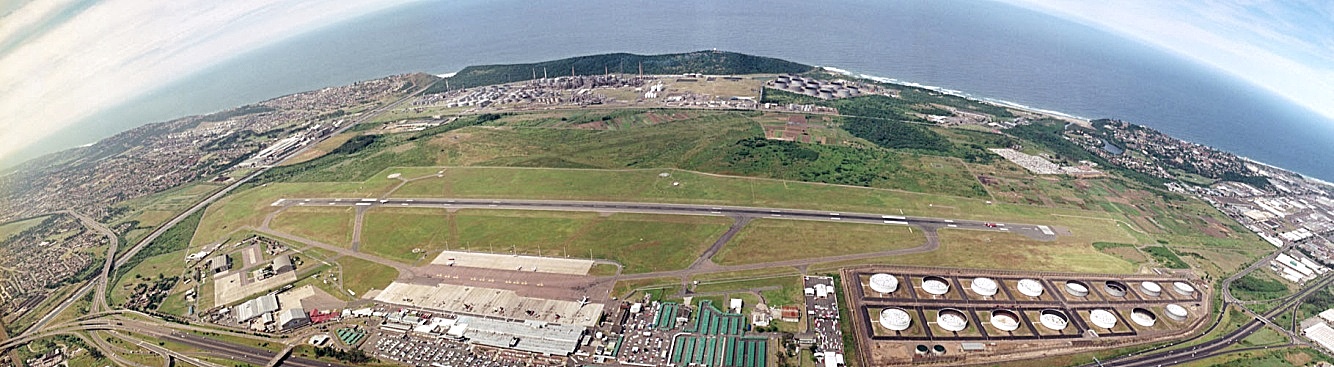
Old Durban airport - site for new Dig Out Port (Picture credit: ACSA)

Old Durban airport – site for new Dig Out Port (Picture credit: ACSA)

The first phase of Durban’s dig-out port, which was expected to generate hundreds of jobs and turn the city into the shipping hub of Africa, would not be ready by 2020 as planned, and the current harbour might have to be expanded to provide a short-term solution. This emerged at a KZN Freight Task Group meeting recently where Transnet dig-out port programme director Marc Descoins admitted that a new completion date was being investigated.

‘The actual start date of the new port is uncertain as we are still in the early design phase,’ Descoins said last night. Technical issues, such as the requirements for the construction of a new single buoy mooring to replace the existing one, were affecting timelines. Other factors affecting the development were being re-examined, but Descoins did not give further reasons for the delay.

Transnet was still tracking demand forecasts to ensure that capacity creation was aligned to demand, he said. Nevertheless it had other plans for port expansion to ensure capacity met this demand. If an alternative could be found to expand the capacity of the port, the dig-out port project at the old airport site could be set back by a few years, he said.

However, a previously discussed option – the expansion of the current port into the Bayhead area – was ruled out by Descoins, as complex problems involved in developing the area as an additional container terminal would take at least 15 years to resolve. Engineering and technical businesses in Bayhead did not appear shocked at the news yesterday, saying they knew expansion in the area would not happen.

One of the most seriously considered – and quickest – options would be for the container terminal on Pier 1 to be expanded in the direction of Salisbury Island. This would also provide Durban with increased container capacity. A decision on this could be made soon, but if this option was decided on, the dig-out port might be even further delayed as Transnet would not develop both projects and create unnecessary capacity in the short term.

However, the dig-out port project would not be cancelled, and preparations at the old airport site would continue, Descoins said. Transnet had warned that without the dig-out port Durban would not be able to meet medium- and long-term shipping capacity demand. The project would increase the volume of container trade at the Port of Durban from the current 2.69 million twenty-foot equivalent units (TEUs) to between 9 million and 12 million TEUs over 30 years.

Durban was also the first choice for a port upgrade because of its good infrastructure, although the road and rail systems need to be considerably upgraded. Completion of the feasibility study was scheduled for the end of 2015 followed by a four-year construction phase. The first ships were expected to come into the port in 2020. For this to have been achieved groundwork would have had to begin by the end of 2016. Transnet bought the old airport land in 2012 for R1.85 billion. Building the port was expected to cost R75bn to R100bn over the next 30 years.

Desmond D’Sa, chairman of the South Durban Community Environmental Alliance, was pleased with the delay, but said the project should be abandoned.

‘Why do we even need another port? It is only going to become another white elephant like the Coega Industrial Development Zone in the Eastern Cape.

‘This is all about people with big pockets, and the extra time will only allow corruption.’

Durban Chamber of Commerce and Industry chief executive Andrew Layman said imports and exports from the harbour were not accelerating as much as expected.

‘This is reflected in the international trading market. South Africa is not the flavour of the month.’

There had always been plans for expansion of the current harbour, he said.

‘This is because ships are bigger these days – it needs to be deepened and widened. So I don’t think it is a case of one or the other.

‘The need for the dig-out port is not as imminent as originally thought, and money is probably not as readily available either.’

Layman said it was not ‘a train smash’ as jobs had not been created yet, but it was unfortunate that job creation would be delayed.

‘It is understandable that it would be further delayed in the current climate.

‘It would be pre-emptive to start construction as the system still needs a lot of work, such as our tariffs, which are higher than most ports around the world, and our service delivery.’ Source: The Mercury

Related articles

Durban Harbour – a Pictorial History from 1835 to the Present Day

During December 2013, I received a fabulous book from a business acquaintance. Titled ‘Durban Harbour’, this special souvenir issue tells the fascinating history of Durban Harbour from 1835 to the present day. It reveals the extraordinary engineering skills and resilience that shaped Durban harbour into the largest and busiest harbour on the African continent and a major player in Global trade.

Recently another milestone was achieved for Durban harbour with the arrival in Durban of the largest container ship to dock in South African waters the MSC Sola – a giant of 131,771 tons and capable of carrying 11,660 containers, with a length of three and a half rugby fields. The ship’s visit to Durban was as a result of the widening and deepening of the port in 2010. See post – Durban awaiting arrival of 11, 660 TEU container ship.

But the story of Durban as a viable deepwater port is weaved in rich history and as Durban harbour approaches its second century – it is also time to toast the entrepreneurs for their innovation and the workers, harbour pilots, tug and train crews who played such a vital part in the day to day operations of the harbour.

For more information regarding the publication, and details of purchasing it visit the author, Stuart Freedman’s website – History of Durban Harbour.

Related articles

Reconstruction and deepening project at Durban’s Maydon Wharf

Transnet moves ahead with Maydon Wharf upgrade plan. (Picture credit:  Duane Daws, Creamer Media)

Transnet moves ahead with Maydon Wharf upgrade plan. (Picture credit: Duane Daws, Creamer Media)

Port Technology reports that the IMO’s stricter sulphur emission standards are likely to have a profound impact on the maritime industry. With this in mind, PTI’s sixtieth edition pays a particular focus to the challenges ahead if LNG is to become the shipping fuel of the future and if this is the most viable option for shipping lines vying to meet these new regulations. Elsewhere, we have contributions form Drewry, Liftech consultants and a host of key industry experts, engineers and analysts.

The Port of Durban is situated on the east coast of South Africa, in the KwaZulu- Natal Province. The port is the busiest on the African continent, and the biggest in terms of container capacity with 44 percent of South Africa’s break-bulk cargo and 61 percent of all containerised cargo flowing through it. In 2010 alone, the port handled 2.5 million TEU.

The port has 57 berths and is protected by the north and south breakwaters, which are 335 metres and 700 metres long respectively. It was developed primarily for import cargo but over the years, cargo flows have changed significantly and exports have become more important. Over 4,000 commercial vessels now call at the port each year.

The Maydon Wharf terminal

The Maydon Wharf multi-purpose terminal (MPT) handles a variety of containerised, break-bulk and bulk cargo, and specialises in the handling of specific commodities. The terminal also handles both import and export containers, taking it to an average of 15,000 TEU. It has an annual throughput of more than one million tonnes of break-bulk and neobulk commodities. The Maydon Wharf area consists of 15 berths and the MPT operates principally between berths eight and 13.

Transnet National Ports Authority (TNPA) has initiated an extensive upgrade of the infrastructure at the port. One of the major projects is to rebuild and deepen seven of the 15 berths in the Maydon Wharf area. The new quays will be able to accommodate larger vessels and provide suitable load-carrying capacity for the handling of cargos over the berths. Source: Port Technology

Parliament Postpones Customs Bills

Thaba Mufamadi, chairman of Parliament’s finance committee. Picture - Financial Mail

Thaba Mufamadi, chairman of Parliament’s finance committee. Picture – Financial Mail

Parliment’s standing committee on finance (SCoF) has decided to postpone its deliberations on two draft customs-related bills until next year to allow importers and the freight-forwarding industry more time to comment on the proposals which threaten the status of City Deep as an inland port. This followed an appeal by the South African Association of Freight Forwarders that it had had insufficient time to consider the substantially revised draft Customs Control Bill and Customs Duty Bill, which required that imported goods would have to be cleared at the first point of entry.

The association, supported by a range of other business organisations, including the Johannesburg Chamber of Commerce and Industry, warned that the bills could be challenged on constitutional grounds if the process of consultation was deficient. All political parties supported the proposal by finance committee chairman Thaba Mufamadi on Wednesday that the deliberations on the bills be postponed until next year. He instructed stakeholders to make their submissions to the South African Revenue Service (SARS) by December 15.

Mr Mufamadi also took cognisance of concerns raised by Business Unity South Africa that parliamentary processes did not allow sufficient time to comment, for example, on the medium-term budget policy statement. Industry has warned of port delays and trade disruption if the proposals were to be adopted. The Customs Control Bill proposes that goods be cleared at the first port of entry into South Africa. This will mean that inland ports such as City Deep in Johannesburg would no longer be designated places of entry or exit for customs purposes. In the past, containerised cargo could move directly to inland ports on arrival in the country under cover of a manifest. A new declaration — of the nature, value, origin and duty payable on the goods — would replace the manifests.

SARS said these did not provide sufficient information to undertake a risk assessment. Another bone of contention for industry was the “extremely severe” penalties proposed in the draft Customs Duty Bill. Following the uproar about the proposals SARS offered a compromise earlier this week as a way out of the impasse. Instead of a clearance at the port of entry, a mandatory advance customs clearance of the goods three days before their arrival at the first port of entry would be required. Goods consigned to inland terminals such as City Deep would be released conditionally. The system would be tested for the whole of next year to iron out any problems.

An alternative option would be for the goods to undergo a lesser form of clearance at the first point of entry. This would still entail providing customs authorities with the same level of information on the tariff, value and origin of goods, which would be submitted by electronic data interchange. The importer would be held accountable for the information that was provided. SARS official Kosie Louw said that because this document would not have the formal status of a clearance certificate, it would not disrupt existing legal contractual arrangements, as claimed. The goods would still move CIF (cost insurance and freight) from the port to City Deep. SARS has also proposed softening the penalty provisions so that errors not resulting in any prejudice to customs revenue will be subject to penalties only after three warnings. These penalties will be discretionary and applied leniently in the first 12 months of the bill coming into force to allow business time to properly prepare for the change. An appeal process has been included. Source: Business Day Live. 

Port-to-Hinterland…gearing up for growth?

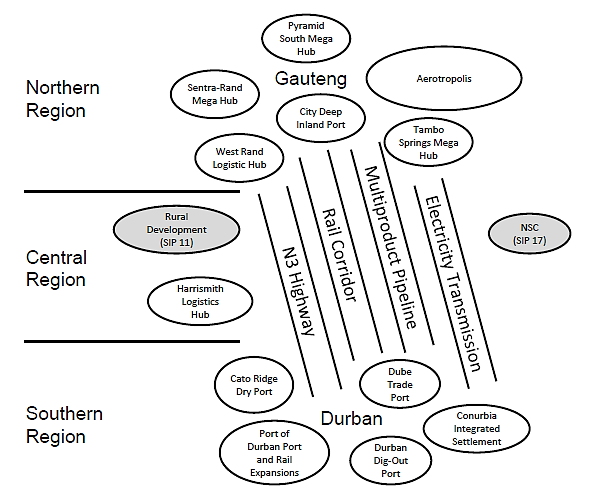
Proposed Durban-Free State-Gauteng Logistics and Industrial Corridor Plan (SIP2)

Proposed Durban-Free State-Gauteng Logistics and Industrial Corridor Plan (SIP2)

Notwithstanding on-going discontent amongst industry operators in regard to proposed legislative measures mandating customs clearance at first port of entry, the South African government (GCIS) reports that work has already commenced on a massive logistics corridor stretching between Durban and the central provinces of the Free State and Gauteng. Most of the projects that form part of the second Strategic Infrastructure Project (SIP 2), also known as the Durban-Free State-Johannesburg Logistics and Industrial Corridor, are still in the concept or pre-feasibility stage, but construction has already started on several projects.

These include:

  • the building of a R2,3 billion container terminal at City Deep
  • a R3,9 billion project to upgrade Pier 2 at the Port of Durban
  • R14,9 billion procurement of rolling stock for the rail line which will service the corridor.

Work has also started on the R250 million Harrismith logistics hub development to set up a fuel distribution depot, as well as on phase one of the new multi-product pipeline which will run between Johannesburg and Durban and transport petrol, diesel, jet fuel and gas.

The aim of these projects and others which form part of SIP 2, is to strengthen the logistics and transport corridor between South Africa’s main industrial hubs and to improve access to Durban’s export and import facilities. It is estimated that 135 000 jobs will be created in the construction of projects in the corridor. Once the projects are completed a further 85 000 jobs are expected to be created by those businesses that use the new facilities. Source: SA Government Information Service

Interested in more details regarding South Africa’s infrastructure development plan? Click here!

Durban Dig-Out Port – First Stakeholder Engagement Concluded

Old Durban airport - site for new Dig Out Port (Picture credit: ACSA)

Old Durban airport – site for new Dig Out Port (Picture credit: ACSA)

Transnet has concluded the first in a series of early stakeholder engagement sessions with local organisations on the proposed Durban dig-out port project. If built, the new port will be to the south of Durban on the site of the former Durban International Airport and 15 minutes by car from the existing port. It has been proposed that it will consist of 16 container berths, three Ro-Ro berths for the automotive business, and several oil and product tanker berths.

The engagement sessions just concluded form an integral part of the project’s concept phase which includes the development of a Sustainable Port Development Framework (SPDF) that will inform all future designs as well as operations. Transnet commenced with high-level technical and environmental studies in 2012 as part of the proposed Durban dig-out port project process. The current concept phase is scheduled to conclude in July this year, and comprises the generation of a number of technical design options.

The engagement sessions involved key representatives from local business, property, environmental and civic associations who met in order to comment on a discussion document which was distributed to them in mid-February 2013. The discussion document included important information on the background to, and process involved in, validating the viability of constructing a major container port on the site of the old Durban International Airport.

The sessions were held at various public venues and were facilitated by an independent sustainability consultancy. All feedback obtained during the engagement sessions was captured and will be factored into the development of the SPDF which will ensure the effective implementation of sustainability objectives throughout the life cycle of the proposed port project.

Along with promoting the long-term sustainability and operational excellence of the port, the framework also seeks to integrate environmental and social principles into the planning process. The series of engagement sessions, which will continue throughout the project’s lifespan, will also form part of the Department of Transport’s requirement for engagement during the strategic level environmental assessment as part of the legislative requirement for the promulgation of the port.

The process of moving from the current concept phase through the pre-feasibility and feasibility phases, and finally to actual implementation is anticipated to take approximately four years. The next phase, which is the pre-feasibility phase, is expected to proceed in July this year when the viability of the preferred design option will be thoroughly investigated.

The proposed port forms a key pillar of Government’s Strategic Integrated Projects (SIPs) to upgrade the Durban-Free State-Gauteng Freight Corridor (otherwise known as SIP2 in the National Infrastructure Plan). Source: Ports.co.za

MSC ship sets Durban Container Terminal record

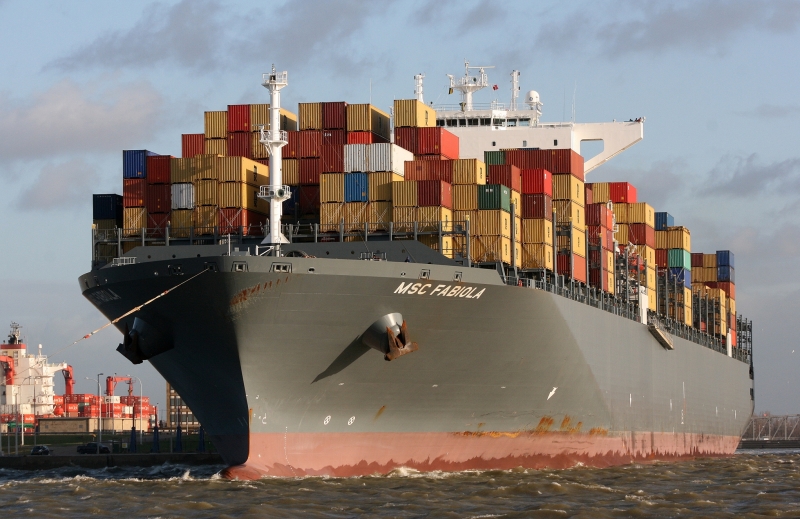
MSC Fabiola - sets new record for Durban container vessel capacity

MSC Fabiola – sets new record for Durban container vessel handling capacity


The visit to Durban, a fortnight ago, of the MSC FABIOLA has again raised the limit in terms of container ship sizes to call at the port. The previous largest box ship to call at Durban was the 11,660-TEU MSC Luciana, whereas MSC Fabiola can carry up to 12,562-TEU.

Obviously the ship was not fully laden otherwise the port would not have been able to accommodate the ship. The deepest berths at the Durban Container Terminal are 12.8m and those at Pier 1 are about the same.

MSC Fabiola is a charter vessel and is currently deployed on MSC’s pendulum service between Northern Europe and Singapore via Durban, Cape Town and Ngqura. The rotation is Northern Europe ports, Cape Town, Ngqura, Durban, Singapore, Durban, Ngqura, Northern Europe.

The next objective to aim at is to have the 14,000-TEU box ships deployed on the South African service, defying all previous projections, as indeed has been the case with the 12,500-TEU MSC Fabiola.

Of course, the main obstacle in having these post panamax ships calling at Durban is that the country’s main container port lacks a deepwater berth. This is despite the entrance channel having been dredged and widened several years ago to -19m decreasing to – 16.5m in the harbour inside entrance. In the process South Africa has once again been exposed by rapidly moving circumstances and questions need to be asked as to why the process of providing Durban with deep water berths is being delayed. Source: SAPorts.co.za

Chinese ports show potential ….. and Durban too

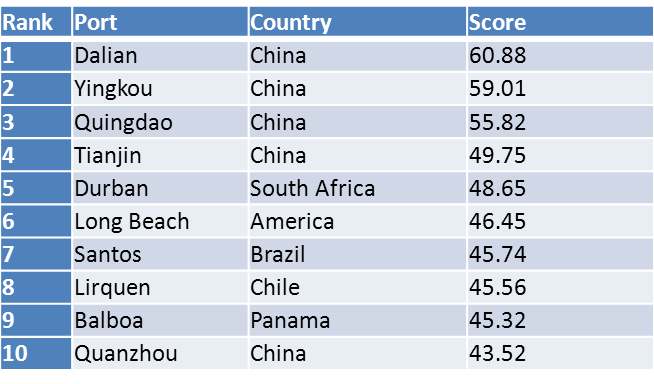
2012 World's Container Ports With Most Potential (Mercator)

2012 World’s Container Ports With Most Potential (Mercator)

According to the Shanghai International Shipping Institute’s (SISI) ‘Global Port Development Report 2012’, rapid growth in throughput has been pushing Chinese ports up the global ranking in terms of development potential.

The report also revealed that throughput in China’s ports was stable, with a growth rate of around 3% to 10%, affected by the worsening economic environment, growth in international shipping and a decrease in trade volume.

But, with global economic, trade and shipping centres moving eastward, some small and medium sized ports have recorded double digit growth (over 20% in some cases). As a result, Chinese ports, including Hong Kong, have taken up five positions among SISI’s Top 10 2012 World’s Most Potential Container Ports, nine positions among the Top 20 global container ports and 13 positions among the Top 20 global ports in terms of cargo throughput.

The report says that European ports are likely to see a return in stability, with a limited growth of less than 3%, while American and African ports may see some growth in throughput following the slow recovery of international trade volume and stronger cargo handling capacity.

Port Natal – Durban Harbour 40s, 50s and 60s

Durban_Harbour_Photo Hi-ResA tad of nostalgia? No, this is relevant and historic. Look what Africa’s busiest seaport looked like 60 (or more) years ago. I am very grateful to Lois Crawley and Cecil Gaze (fellow customs colleagues in Durban) for sharing these historic gems. For purposes of contrast see the modern-day harbour (above). Real estate in the harbour area is in short-supply and significant operational expansion over the last 10 years has placed huge strain on the road and rail networks and the surrounding industrial areas. In recent times the expansion of containerised handling facilities has radically affected the traffic flows, even in nearby residential areas such as the Bluff. With increasing demand for premium containerised port handling facilities, the old Durban airport has been sited for development of a new port, perhaps the biggest and most ambitious construction project yet in South Africa. While one can marvel at the development over what is a relatively short period of time (a generation), spare a moment and view the seemingly archaic slideshow of Durban harbour purportedly between 1940 and 1960 – which some amongst us can even remember. Enjoy!

This slideshow requires JavaScript.

Durban “Dig-out” port – a flagship PPP initiative?

Artistic impression – Durban Dig-out Port

Freight and Trade Weekly (FTW) reports that a team has been assembled to sort out the funding for the new dig-out port on the old Durban International Airport site (FTW November 9, 2012) – a project that represents a potential major shot in the arm for the economy of the region and the country. The consortium is composed of the well-known Dutch port consultants, MTBS; the highly respected international engineering firm, Arup; and Durban-based lawyers,Van Velden Pike Incorporated, in association with Nichols Attorneys.

This consortium is to act as transaction advisers to Transnet, on what is, according to government, likely to be SA’s flagship public/private sector partnership initiative.That will be part of the team’s studies, according to Andrew Pike, partner in Van Velden Pike. However, the study, although started, is still very much in pre-feasibility stage, and there is obviously still no firm comment to be made on what direction the public/private element will take, he told FTW.

Further abroad, AECOM has announced (Oct 2012) that Transnet has awarded the company a US$3.4-million contract to initiate the design of the Durban Dig Out Port in South Africa. AECOM’s has experience delivering creative design services for major ports around the world, such as the New Port Project in Doha, Qatar. As part of the contract, AECOM will provide concept and pre-feasibility design services for the new port and container terminals, including all associated infrastructure relating to its operation. A critical aspect of the design will be ensuring the sustainability of the port throughout the construction phase as well as all of the operational phases of its development.

The Mercury reports that work on the multi-billion rand project is expected to commence in July 2016, with the first phase of the project completed by 2019. Development of the project is to be over a 30-year period. The construction phase will provide an estimated 64,000 jobs, while 25,000 permanent jobs are envisaged in the functioning port.

The scale and details of the project are staggering. The port will involve liquid fuel, automotive and container cargoes. The siting of the entrance to the port will require the relocation of the Shell and BO Refinery’s (Sapref) single buoy mooring. The construction of the southern breakwater alone will absorb 16% of the total cost and will require special sources of quarry stone. Environmental concerns are being taken very seriously. For example R85-million has been budgeted to relocate some 2,000 chameleons which inhabit a part of the northern section of the airport site.

Of particular significance is that without the dig-out port, Durban will stagnate as a port of call and experience decline. Already Cape Town does not have the capacity or berths deep enough to handle the new generation of 18,000 TEU ships that are due soon. Durban’s proximity to the Witwatersrand makes it the logical and preferred destination for container shipping. Studies have shown that the old airport site is ideal for the construction of a new harbour designed specifically to manage the size and volume of container shipping. Durban’s geographical location in the southern hemisphere is particularly advantageous as regards intercontinental shipments from the east to South America and beyond to the north Atlantic. Sources: FTW, AECOM, and The Mercury.


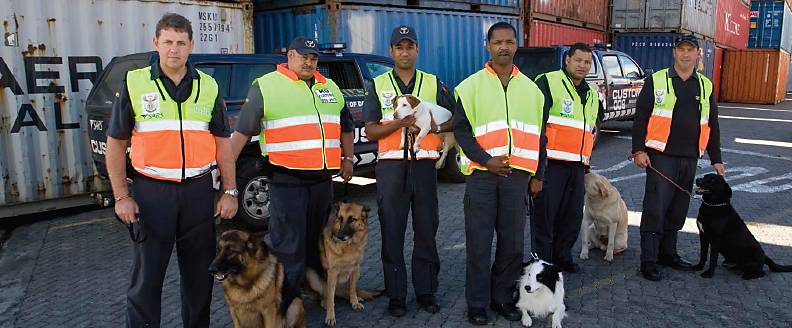
Detector dog unit expanding its paw print across the country!

On a subject close to my heart. The National Detector Dog Unit of the South African Revenue Service (SARS) is getting a boost with more than 70 new dogs and handlers being trained to make up a number of new dog units around the country. Apart from filling a couple of current vacancies, the new recruits will form part of Detector Dog Units in Port Elizabeth, Zeerust, Mahamba, Vioolsdrift, Nakop, Maseru Bridge and an expanded Mpumalanga unit. All the additional units are expected to become operational in the first quarter of 2013.

“By next year, most of the major land, sea and air ports should have their own detector dog units (DDU),” said the senior manager of the DDU, Hugo Taljaard. “The ultimate aim is to have dog units at every port, with a total of 500 new handlers and dogs needed. However, this is a long-term (four-year) project, aimed at enhancing our non-intrusive capabilities at ports of entry to prevent cross-border smuggling.”

The SARS Detector Dog Unit has also been asked recently to assist with training in Namibia and Angola, following the assistance we gave the Mauritius Revenue Authority (MRA) to establish a Detector Dog capability. The DDU continues to see major successes countrywide, with a recent copper bust in the news last weekend.

Detector dog Umaga, an 18-month old German Shepherd, sniffed out 84kg of copper at the Beit Bridge border post during his first operation. Umaga recently completed his training as a copper sniffer dog. The copper was concealed in luggage in a trailer entering South Africa. Umaga is the second sniffer dog to be trained to sniff out copper. Milo, a five-year-old Labrador, has also already nosed out his first contraband copper. There has been an increase in the smuggling of copper wire across the border into South Africa, since copper has a much higher value here than in the other member states of the Southern African Development Community. The increase has meant that Customs has had to beef up its ability to detect contraband copper. The wire is usually concealed in compartments under trucks.

The Detector Dog Unit was the first in the world to train “dual application dogs”, Hugo explained. So instead of being trained or “imprinted” to detect only one scent, they are able to detect a combination of scents, e.g. narcotics and currency, tobacco and endangered species. Both Milo and Umaga are dual dogs and they can detect narcotics/tobacco and copper wire. The explosives detector dogs are the only dogs not dual trained due to the safety risk.

The dogs are an integral part of our Customs workforce and are seen as officers in their own right. They are therefore looked after with the utmost care and attention and are even provided with special reflector jackets, cooler jackets for the heat and dog shoes made to protect their feet from hot surfaces. Source: SARS Communications Division