Burden of proof – cross-border data exchange

The continuous development in international communication media together with the never ending expansion of the global trade arena have impacted both positively and negatively on international contractual dispute resolution. It is common cause that once a dispute has been characterised as of a contractual nature and the lex fori has been established, the next step is to ascertain which law is the lex causa or so called “Proper Law” of the agreement.

This article is focused on the assertion of the proper law of an agreement, after it has been established that the lex fori is South African law, in situations where parties  electronically concluded an agreement and whilst doing so omitted to exercise their autonomy to record the law which they are intent on governing the agreement, alternatively in situations where one cannot establish whether the parties contemplated and tacitly implied that a specific legal system would govern the agreement at the time when their agreement was concluded when the lex fori was already established as South African law. Read the full paper here!

Nigeria Customs acquires sophisticated Smith-Heimanns fixed scanner

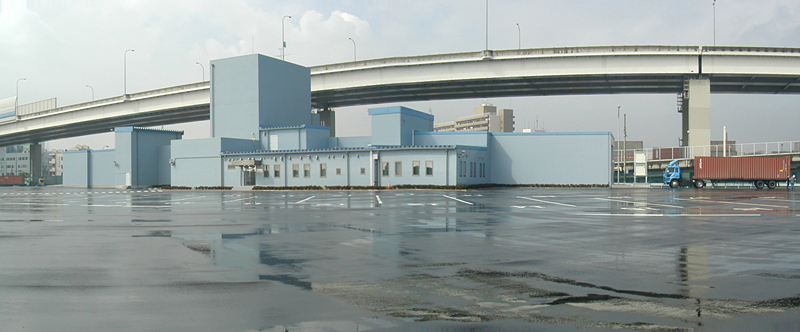
HCVS Fixed X-Ray scanning tunnelSecurity solutions specialist Smiths Detection has received a multi-million Euro order from Nigeria for its dual view, high energy X-ray container scanner, which includes a state-of-the-art material discrimination system. The order was placed by Global Scan systems Ltd and forms part of the Destination Inspection Programme (DIP) established by the Nigerian Ministry of Finance for the Customs Authorities of Nigeria. The stationary scanner, which will be the most advanced system of its kind in West Africa, will be deployed at the customs and border checkpoint between Nigeria and Benin.

The HCVS (Heimann Cargo Vision System) with material discrimination features X-ray images that distinguish between organic and inorganic substances. The associated colour coding greatly helps in the detection of threat objects such as weapons, explosives and drugs.

The HCVS is the most powerful tool in Smiths Detection’s cargo inspection product portfolio. It is permanently installed on a dedicated site, providing a swift and non-intrusive inspection procedure for every part of fully loaded trucks and containers

Technical features of the scanner
• Stationary X-ray system for the inspection of fully loaded trucks and containers
• State-of-the-art technology for outstanding image quality
• Ideal for maritime ports, border crossings and airports dealing with heavy traffic
• Easy and fast processing with low staffing requirements
• viZual technology for real organic/inorganic material discrimination
• Top of the line system for manifest verification
• Detection capacity reaching 100%
Optional Features
• Automatic Radioactive Material Detection (ARD)
• Discrimination high energy
• Single of dual view technology
• Single or dual tunnel version
• Available in 6MeV & 9MeV (Mega electron volt)

Source: Smiths Detection

Zimbabwe Industry slams ASYCUDA

With much talk of intra-African trade, perhaps its a good time to consider increased collaboration between customs administrations regarding modernisation initiatives. It helps little for trade if the system only works on one side of the border. The case in point demonstrates a painful realization of too little mediation with stakeholders.

THE Zimbabwe Revenue Authority‘s introduction of the latest version of an automated customs clearance management system has brought industry to its knees as goods in transit are stuck at the country’s ports. The system challenges at Zimbabwe’s ports is particularly worrisome for importers as the majority are set to close shop today for the festive season. ASYCUDA is an acronym for Automated System for Customs Data, an automated customs clearance management system.

The Shipping and Forwarding Agents’ Association of Zimbabwe (Sfaaz) held a crisis meeting in Harare, where they intended to engage the Ministry of Finance and Zimra officials who had been invited. Ministry of Finance and Zimra officials were, however, conspicuous by their absence. Sfaaz chairman Mr Phanuel Gukwe said the system, whose implementation commenced in October, had significantly slowed down clearance procedures. “There is perennial breakdown of operations at most ports, which means no imports are coming out of Zimra, funds are locked in prepayment accounts and turnaround of bill of entries is taking up to two weeks instead of the normal three hours.

“Contrary to expectations when Zimra proposed the system, the situation at ports has worsened drastically,” he said. The situation at the country’s ports, which is now in its third month, might have implications on the revenue collection targets for the fourth quarter, especially in terms of excise duty, import duty and customs tax.

Questions sent to Zimra were unanswered by the time of publication yesterday. ASYCUDA 2.3 was the earliest version to be introduced in Zimbabwe in 1992 and was upgraded to versions 2.5 and 2.7. ASYCUDA++ later came on board in the form of version 1.15 and 1.18. Currently, Zimra is rolling out ASYCUDA World version 4.0.21 to over 14 stations.

Mr Gukwe said Zimra had ignored the association’s earlier proposal to stagger the implementation of the new system. “We had proposed to Zimra to follow the example of South Africa, which undertook to implement the system at limited ports at a time, but they rather chose to go wholesale. Zimra also ignored us when we pressed them for a fallback system to be put in place,” he said.

The Wednesday crisis meeting, that was emotionally charged, saw importers level a range of accusations against Zimra. Some said Zimra had only two examining officers at some border posts, which means the slow clearance was an issue not just of failure in connectivity but also manpower shortages. It was also observed that when clients of local importers called Zimra to find out about the system challenges, Zimra officials were telling them that problems with the system had since been rectified, a situation that was portraying the local importers in bad light.

“I do not think it is legal for Zimra officials to be discussing these matters with our clients, they should only communicate with those who put in the bill of entry,” said one Sfaaz member. Others accused Zimra for being nonchalant. “Zimra should be taking responsibility on this matter. They could have at least eased our plight by arranging for the reduction or waiving of storage fees. We are paying some serious money for storage for weeks on end, which is driving up our landing costs,” said an importer.

Observers warn that if the problem continues, it could have wider repercussions on the economy, which is still a net importer of most goods. Meanwhile, Sfaaz officials were yesterday engaged in a closed door meeting with top Zimra officials over the matter. Source: The Herald (Zimbabwe)

Pre-shipment Inspection (PSI) – an antiquated approach

Recently, an organisation called Global Inspection Group (GIG) has advocated PSI – an import verification system – as a solution to counteract South Africa’s trade deficit. The article Import verification would outlaw customs fraud’ alludes to the apparent success of these mechanisms in other African states to support quality and import standards in those countries, respectively. Because South Africa has no verification of imports system ‘it is easy to systematically under-declare goods’, the article states. Furthermore, it mentions that a Finance ministry would benefit from such a system ensuring the collection of the correct duties. [Really? how naive].

South Africa is a free country, and it follows that organisations will go to extremes to secure a business foothold in the country. The question is – to what length and to what end? If any ministry of finance were to rely on a PSI company, it would first disband its customs department, because there is evidently no trust in its frontline and post clearance capability.  Most governments (if not all) are pretty much aware of the broader international customs developments championed by the WCO. In recent years, the WCO has developed several diagnostic studies and programmes – with the option of donor funding if required. There would therefore be no sense or credibility in a government that would persist in pursuance of PSI services for fiscal assurance.

Any trade practitioner and supply chain operator in South Africa will readily confirm the hectic ‘change’ programme which is being pursued under Customs Modernisation. These changes and their associated systematic innovations and efficiencies are by no means the result of government capitulating in the face of illegitimate trade. No, it’s a conscious decision to take responsibility for the problem, and together with the allied trade to improve the situation.

It is therefore high time that such organisations which front themselves with the ‘be-all and end-all’ systems in Customs’ tariff and valuation appraisal rather seek a more practical and benefit-delivering model than one which not only scams governments for service and inspection fees, but also offers no benefit to trade. Included are those BOT vehicles offering governments ‘free’ cargo scanning equipment in exchange for a lucrative inspection fee. None of this is based on risk management and is purely profit focussed. The concept forgoes most if not all, the modern customs principles and standards promoted by the WCO. The buzz word is ‘Capacity Building!’

The reality in all of this should be clear. No private sector entity can replace Customs. Outsourcing in any event would require government to set up a vehicle of its own to ‘ensure’ that the outsourcer is doing his job. If there is a dearth in knowledge and skills, then it is up to government to rectify the situation.  Source: FTW Print version.

WCO – 2012 is the year of Connectivity

WCO 60 Years AnniversarySecretary General of the WCO, Kunio Mikuriya, is pleased to announce that 2012 will be dedicated to promoting connectivity, including enhanced cooperation and communication, under the slogan “Borders divide, Customs connects”.

“Connectivity encompasses people-to-people, institutional, and information linkages that underpin and facilitate the achievement of Customs’ main goals,” said the Secretary General. “This theme is particularly relevant as the WCO prepares to commemorate its 60th anniversary in 2012,” he added.

The Year of Connectivity will be launched on International Customs Day, celebrated annually by the global Customs community on 26 January in honour of the inaugural session of the Customs Co-operation Council (CCC) which took place on 26 January 1953.

In 1994, the CCC adopted the informal working name “World Customs Organization” to better reflect its worldwide growth in membership which now totals 177 Customs administrations.

Customs and its stakeholders are urged to be innovative and creative in taking forward the connectivity theme in all its facets throughout 2012. The WCO invites the Customs community to diarise 26 January. Source WCO.

Latest Edition – World Customs Journal

Just in time for the Christmas holiday break! A new edition of the World Customs Journal is now available and, per usual, offers a number of excellent papers on current issues and demands facing Customs and Border Control agencies. Professor David Widdowson, editor-in-chief, and head of the Centre for Customs & Excise Studies (CCES) at the University of Canberra, Australia makes some poignant remarks about customs education, research and the application thereof in the modern world –

World Customs Journal - Sept 2011“one very clear message for me is the need to ensure that our research remains demand-driven rather than supply-driven, otherwise it won’t be valued or, worse still, it won’t even be read by those who could potentially benefit from it. In this regard, there is a need to monitor the effectiveness of what we do – to what extent is the theory being translated into practice? To what extent are academic efforts and activities found to be useful by the WCO and its member administrations? To what extent are research findings being applied in a practical sense? This is, in itself, a fertile area for future research.”

These are very pertinent views given the volume of students undertaking these courses, who in many cases work in customs environments (at home) which are seemingly both oblivious and ignorant to the importance of academic knowledge and human intellect. With so much importance and bias on the ICT nowadays, the technical skills and attributes of what makes a good customs and border control official are relegated to secondary importance. Please read the articles

Related article

SARS Customs officials graduate

Customs Canberra Graduates 2011Twenty-four SARS officials, including senior managers and team leaders, were awarded certificates, diplomas and degrees by the University of Canberra following their successful completion of International Customs Law and Administration programmes. Professor Creck Buyonge of the University of Canberra and members of the SARS executive attended the ceremony. The graduates, from HR, Customs Operations, Customs Border management and Legal and Policy, were presented with their awards by Professor Buyonge and SARS executives at a special ceremony. (Creck Buyonge regularly authors articles on customs developments in Africa for WCONews)

Professor Creck Buyongi - Canberra UniversityProfessor Buyonge, who heads up the programme, said the ceremony was a special moment for the graduates and the culmination of their hard work and commitment. He thanked SARS for the support given to the candidates and said that this showed how SARS values its people.

The postgraduate courses offered by the Canberra University are for people who wish to pursue a career in customs and border management. They cater for current and future managers of customs administrations and other trade professionals who wish to expand their knowledge of international trade and customs issues. The courses provide the necessary skills and knowledge to help organisations meet the demands of today’s dynamic global economy. The latest theory and practice in international trade, customs and excise management, and ongoing research activities, ensure that the courses reflect the business of customs. No pre-existing legal qualification or experience is required to undertake these courses. Check out the University of Canberra website at http://customscentre.canberra.edu.au/ Source: SARSNews.

USCBP Receives 2nd Unmanned Aircraft System

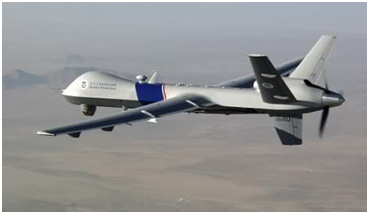
U.S. Customs and Border Protection received a second Unmanned Aircraft System Predator-B at the Naval Air Security Operations Centre in Corpus Christi, Texas—the first of two UAS’s funded through the Southwest Border Security Bill Supplemental. The UAS will provide critical aerial surveillance for U.S. Border Patrol agents stationed along the Texas-Mexico border.

The CBP UAS Program operates Predator-Bs from operation centres in Arizona and Texas which allows CBP to deploy unmanned aircraft along the Southwest border from the eastern tip of California across the common Mexican land borders of Arizona, New Mexico and Texas.

The UAS Operations Centre in Corpus Christi supports counter-drug operations in the Western Caribbean and Eastern Pacific, disaster relief and humanitarian support in the Gulf Coast region, and rapid deployment throughout the southern tier of the U.S. and the Western Hemisphere.

View a videofile – http://www.dvidshub.net/video/embed/105254

Since its inception, the CBP UAS program has flown more than 11,500 UAS hours supporting border security operations and disaster relief and emergency response, including various state governments and the Federal Emergency Management Agency. These border security efforts have led to the seizure of approximately 46,600 pounds of illicit drugs and the detention of approximately 7,500 individuals suspected in engaging in illegal activity along the Southwest Border. Source: CBP

WCO News – October 2011 Edition

WCOnews October 2011An eagerly awaited edition of the WCO news magazine once again promises loads of insight into the Customs world. This edition includes – per usual – a variety of topics, amongst which –

  • The Secretary General of the WCO shares his thoughts on global threats and the need to remain vigilant and responsive.
  • Latest developments in WCO areas of work: compliance and enforcement, procedures and facilitation, capacity building and tariff and trade affairs.
  • How the WCO and UNCTAD work together to foster international trade.
  • Using controlled deliveries to combat wildlife crime.
  • Knowledge and dialogue – the focus of the Open Day for Trade and the Knowledge Academy.
  • PICARD Conference promotes research-based knowledge.

There also interesting articles from around the world –

  • East and Southern Africa benefits from new MBA with Customs specialization.
  • New Zealand Customs Service’s role in natural disaster relief.
  • Engaging the trading community in Customs modernization: the Brazilian experience.

The WCO’s website now also features some new stuff, and in particular ‘scholars’ are encouraged to try out some of the ‘free’ e-learning courses. These are not just for the privilege of customs officers. The WCO has been working hard with trade organisations to provide ‘industry wide’ courses and programmes for the trade professional. Source: WCO

9/11 – The Significance for Customs

The tenth anniversary of 9/11 recalls a day of infamy for many, particularly those who lost loved ones, not to mention the sheer audacity and questionable motives of the respective attacks. It also marked a distinct period of change in the Customs, international travel and trade environments. For one, there is a not a single person involved in any of the above who has not felt the effects of a ‘shake up’. It is therefore relevant to recount this event and reflect on the explicit impact which the attacks in New York would have for Customs officers, worldwide.

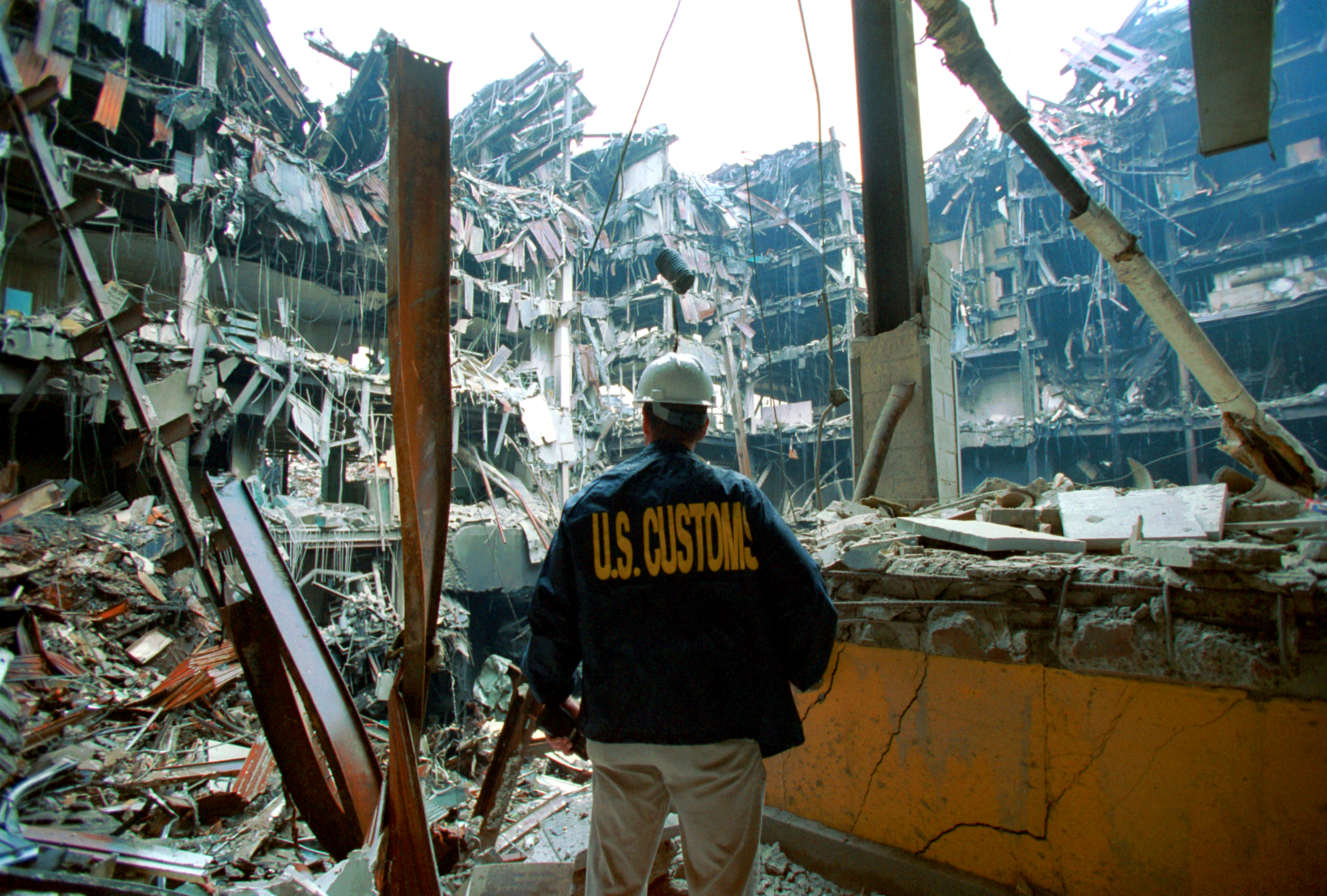
WTC 6, an eight storey building –known as Custom House – was home to 760 officers of the US Customs Service. It was situated adjacent to the North Tower. Within 12 minutes of the first plane hitting the North Tower at about 8:46 am, all occupants (WTC 6) were safely evacuated. Stephen Barr of the Washington Post noted in an article titled, “Knowing the Drill Saved Lives at New York’s Customs House” on 18 September 2001 that ‘Federal agencies demonstrated coolheaded leadership during the crisis. Because of practice sessions held several times a year, employees knew what to do and where to go. In a day marked by unbelievable horror and confusion, old-fashioned fire drills helped one band of office workers to escape’.

Beneath the plaza level of US Customs House (WTC 6) was a large underground garage, separated off from the rest of the complex’s underground area and guarded under tight security. This was where the various government services parked their bomb-proofed cars and armoured limousines, counterfeit taxi cabs and telephone company trucks used for undercover surveillance and covert operations, specialized vans and other vehicles.

New York Customs House (WTC6) - AfterThe evacuation of WTC 6 was indeed timely, because at 9:04am a massive explosion shook the building, bellowing a huge plume of smoke 550 feet into the air. When the North Tower fell, the US Customs House (WTC 6) was crushed and totally incinerated. Much of the underground levels beneath it were also destroyed.

The Commissioner designate, Robert C. Bonner, commented “The sudden disruption to such a large and important area of Customs’ operations threatened to compromise the immediate security of ports of entry in the New York area and the integrity of ongoing Customs investigations and trade and enforcement activities. We faced an immediate need to relocate all 800 employees and to allow them to resume their work quickly so they could focus on border security. These men and women responded heroically to the challenge, setting up a temporary operations center within hours at nearby JFK airport. And, within three weeks of the attacks, they succeeded in relocating our New York Customs Office into new office space in Manhattan”. Click here to view the full testimony of Robert Bonner to the National Commission on Terrorist Attacks.

Customs evidence amongst the rubbleIn the months to follow, significant developments resulted in the institution of the Department of Homeland Security – the merger of the US Customs and Immigration Services – a gargantuan displacement of some 140 000 federal officials. (For SARS Customs officials – ours is but a picnic!). The full implications of 9/11 were to be felt by the international community in 2002 with the implementation of several ‘security/anti-terrorism’ measures that have undoubtedly changed the focus, intent of all customs administrations worldwide. Click here to visit the 9/11 image gallery.

New Zealand Time Release Study 2010

NZ Time Release Study 2010Besides rugby, the Kiwis also do Customs pretty well. It is clear that Customs administrations outside of a revenue authority model can place more time and emphasis on the things that are meaningful. Perhaps South Africa will soon attain this level of performance reporting. Before this however, the ability of the impacted parties to report both spontaneously and reliably is a given.

The trading community are directly impacted by the response times. Not only does it affect whether or not storage and demurrage might occur, it also (more importantly) affects their local and international reputation as suppliers of choice. One of the methods used for the review of clearance procedures is to measure the average time taken between the arrival of the goods and their release. This facilitates Customs to identify both the problem areas and potential corrective actions to increase their efficiency. The use of automation and other sophisticated selectivity methods  allow Customs to improve compliance and at the same time improve facilitation for the majority of low risk goods.

The time required to release goods is also increasingly becoming the measure by which the international trading community assesses the effectiveness of a Customs administration. The WCO Time Release Study provides guidance for a Customs administration on the best way to apply this method of internal review.

Shakeup!

Unpacking of the Customs draft Bills reveals more and more surprises – despite the fact that there is still no site of the subordinate rules. Without any shadow of doubt, the ‘clearing and forwarding industry’ will be hardest effected by the ‘change’.  Why is this? Well there are a number of factors.

Firstly, this industry has always faced the immediate brunt of the law. Customs historical focus on the goods declaration – to ensure optimum revenue collection – has always relied on a high degree of competence and compliance from this sector.  As mentioned before, ITC has made significant inroads in this industry to the extent that specialisation in qualified entry clerks (for instance) is no longer an attribute in this sector. Consequential developments, and in particular, the creation of an deferment scheme gave ‘clearing agents’ even more flexibility to manage cash flow and minimise administrative burden. Several clerks and runners either lost their jobs or were otherwise absorbed in the company.  The first round of accreditation also gave forwarding brokers some leverage to accrue their client base. This did however prove ineffective from a compliance point of view especially where shady shippers merely used brokers for their apparent accreditation. Many brokers did however institute due diligence mechanisms to vet existing and prospective clients to ensure their own credibility and compliance with SARS.

Secondly, the specialised skills in valuation, tariff and trade remedies became more difficult to hold onto. This expertise will be found now mostly in the big ‘audit firms’. Still, the larger forwarding houses have retained some of these skills as it is vital to their overall service offerings to local conglomerates and multi-national clients.

Thirdly, the emergence of ITC service providers has likewise created a niche industry that for all intents and purposes seeks increased business knowledge and understanding of the customs compliance regime. Growth in this sector can be attributed to an organic increase in the need to service a greater and more mechanised supply chain. This has been particularly beneficial to the Customs Modernisation Programme as these entities have been relied on to champion the ICT change externally for Customs.

Naturally, the ‘clearing and forwarding’ sector will bound to feel some pain, as there would appear to be no less emphasis of Customs’ pressure on them to maintain ‘seemingly impossible’ levels of compliance. Forwarders would also no doubt feel some level of grievance in that there is still no visibility of parity in the supply chain. By this I mean the allocation and expectation of binding agreements (legal obligations) by SARS on other supply chain operators – carriers, transit sheds, terminals, etc.  Truthfully, this is being done albeit slow and tedious.

Change, despite all the anxiety it creates, brings about opportunity. My wish is that all parties recognise this and make the best of the situation, irrespective of the challenges. In this latter regard challenges relate to the mercenary-like approach of some role-players versus, honesty and business acumen of others. In todays’ world, being scrupulous and morally right does not always translate into being successful or prosperous. Modernisation implies that everyone changes! Some casualties are inevitable.

Next up: We’ll discuss the attributes of the bills in terms of liability, compliance and punitive measures.

Mandatory reporting of Cargo Carrier Code

On Sunday, 31 July 2011, SARS will implement a stepping stone towards full cargo/declaration matching and acquittal. All goods declarations must reflect a valid cargo carrier code as part of the house waybill number data field.  The requirement was implemented successfully in the sea cargo environment some years ago with the launch of the old Manifest Acquittal System; the challenge now lies largely within the air cargo community.

The ‘House Waybill” data field comprises two parts – The first part must reflect the Cargo Carrier Code (Eight-digit Alpha Numeric Code). This is the code assigned by the Automated Cargo Management (ACM) system to the entity who issued the House Bill of Lading e.g. the Groupage Operator or his appointed agent in the Republic. The second part must reflect the actual number of the transport document.

By way of faciliatory gesture to legitimate importers who may be blissfully unaware of the non-compliance of their forwarding agent / carrier, SARS will allow the insertion of a specific code “ZZZ99999” for non-compliant cargo reporters. This code must only be used in the event the cargo reporter is not registered with SARS for submission of cargo reports to ACM. The facility is a temporary measure which will be withdrawn after a short period.

In the event a declarant inserts the aforementioned code, the associated declaration will be selected by the customs system for scrutiny by a customs official. In order to remedy any delay to an otherwise legitimate import, the unregistered cargo reporter must immediately identify themselves to SARS by way of disclosing their company name and contact details to enable SARS to expedite registration of the entity for ACM compliance. The sooner this is accomplished the quicker the importer can obtain release if there is no further outstanding impediment.

Subsequent registration of the non-compliant carrier could also result in the imposition of a penalty against the entity concerned. Therefore as of 31 July 2011, declarants will need to be more vigilant concerning the status/standing of their local forwarding agent in regard to compliance with SARS reporting requirements. Once the temporary dispensation above is withdrawn, the effect of a customs intervention will directly impact on the release of an importer’s goods.

Freight forwarders, Customs Brokers and Service Providers are urged to make their clients and business partners aware of the new developments to mitigate disappointment.  For more information refer to the SARS Modernisation webpage.

WCO Knowledge Academy 2011

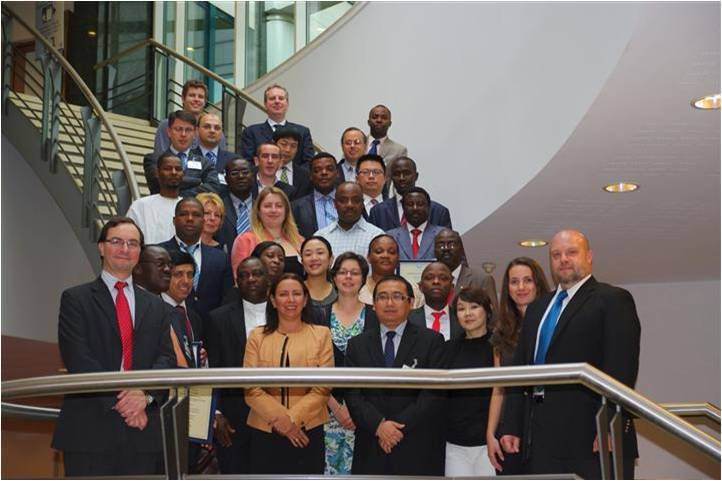
WCO Knowledge Academy 2011After an absence of almost a decade, the WCO convened a Knowledge Academy at its headquarters in Brussels. It took place right after the WCO Open Day for Trade, and ran for eight days, between 28 June and 8 July 2011. Over 50 delegates from both the private sector and WCO Member administrations travelled to Brussels from all parts of the world to attend the Academy. One of these was local systems architect, Anton Eccles (E-Tradex) based in Cape Town.

A total of 11 modules were offered focussing on key areas of WCO work, namely tariff and trade affairs (HS 2012, Rules of Origin, Valuation, Transfer Pricing), and facilitation and enforcement (WCO Data Model, AEO/SAFE, Risk Management). Following classroom activities participants travelled to the Port of Rotterdam for a presentation by Dutch Customs followed by a boat tour. This visit provided participants with the opportunity to see Customs procedures that were discussed and analyzed during the Academy in actual operation.

Thirty-four speakers, trainers and facilitators were involved: 17 were WCO staff members and they were joined by 17 external experts who were invited to address participants in either plenary sessions or during one of the training courses. Speakers included experts from three international organizations: the World Trade Organization (WTO); the International Monetary Fund (IMF); and the Organization for Economic Co-operation and Development (OECD).

In review, Anton maintains “the course was excellent and we had access to some really knowledgeable people. I think it was a good place to get an overall view of where the world of customs and global trade is moving too. Besides the course itself, the opportunity to share some experiences with people from other countries really gives you a good perspective what we do in South Africa”. The next Knowledge Academy is planned for July 2012.

South African visitors also attended the Trade Open Day.  Louise Wiggett (E-Tradex) and Mark Goodger (GMLS) stressed the importance of good partnerships between customs and trade. Both parties cannot operate effectively in their own capacity and it is only by joining forces that international trade can flow in a compliant, operationally effective and cost effective manner. 

To view a selection of photos from the WCO Council Session 2011, click here!

USCBP commits to CTPAT Mutual Recognition Agreements

The Customs-Trade Partnership Against Terrorism (C-TPAT) is a voluntary public-private supply chain security initiative. C-TPAT members – including importers, carriers, consolidators, licensed customs brokers, and manufacturers – voluntarily adhere to cargo security standards in exchange for a range of benefits, such as reduced CBP inspections and priority border processing.

C-TPAT Mutual Recognition (MR) Arrangements facilitate bilateral trade by extending reciprocal recognition to qualifying foreign customs programs, thereby enabling members of the foreign programs to receive the benefits of C-TPAT membership. MR Arrangements indicate that security requirements, standards, and verification procedures of foreign industry partnership programs are substantially equivalent to those of C-TPAT.

CBP currently has MR Arrangements with only five countries: Canada, Japan, Jordan, New Zealand, and South Korea. These five countries have accounted for about 20 percent of US trade since 2004.

CBP has indicated that it is committed to growing the number of C-TPAT MR Arrangements. In December 2010, at a Transatlantic Economic Council meeting, US and EU officials discussed the possibility of implementing a MR Arrangement between the United States and the European Union by October 31, 2011.

In a June 2011 report, the US Chamber of Commerce called for CBP to develop a MR Arrangement with Mexico.

You can read up more in the fact file on  USCBP Mutual Recognition Agreements and for a non-US perspective, you will find an excellent essay on Mutual Recognition of AEOs which I found on the World Customs Journal website.