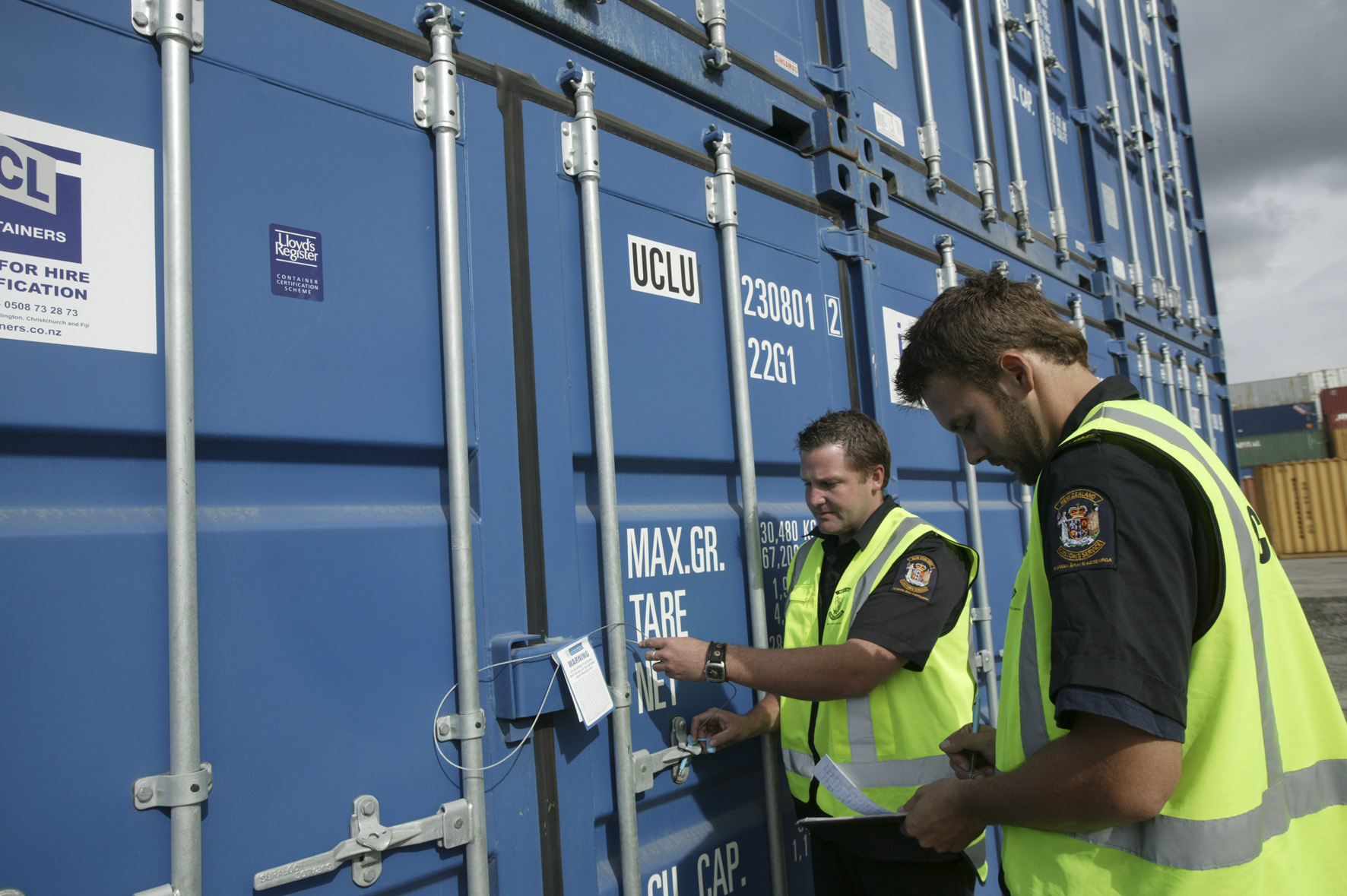
Customs Core Skills – in danger of extinction or a casualty of progress?

The recent death of a close friend and colleague – Lester Millar – brings to mind, once again, the dire situation of a dwindling ‘knowledge base’ in the area of Customs’ core competency. In an era where most customs or border management authorities are happy to employ people with a variety of tertiary qualifications – with the idea that this alone will be sufficient to ‘arm and support’ them in the field of customs/border control and management – what happened to the skills of yesteryear which allowed both government and trade practitioners to exercise their technical abilities to agree or disagree amicably on a customs tariff or valuation interpretation that could result in thousands of rands (ZAR) going to state coffers or the retailer’s bank account?

Many would argue that with the extent of automation and modern techniques, customs core skills are no longer valid or even necessary. Indeed the extent and design of systems goes so far as removing the relevance of human intuition and decision-making. Today we have automated risk management, automated duty calculation and declaration processing, automated cargo and goods accounting, any even a call centre – so is there really a role for a Customs specialist in the 21st century? Customs Managers today have their reports and other so-called ‘empirical data’ to rely on for decision-making and strategizing. The year-end revenue rush, it-self, relies on such computer generated reports negating the need for an internal ‘think-tank’ to devise means of collecting the hidden revenue before the deadline.

For those in the trade, a similar situation exists, with some difference however. The traditional customs clearance and cargo reporting process is highly mechanised these days and if your systems are up to the task, you can rest assured staff can remain glued to their seats and screens without having to venture to the Customs House. Here too, lies a significant change. The traditional Custom House no longer exists and is basically home to the ‘Customs Frontline’ which deals with ‘physical’ intervention and other trade services. Tariff, Valuation and Origin are now confined to back-office functions accessible via a call centre or tiered response mechanisms embedded in Customs’ new automated workflow; that is, if physical or telephonic access to regional customs specialists have been removed.

Few can dispute the advantages of technology supported processes. Yet, when things go array, even the knowledgeable people have difficulty in resolving an issue. Some suggest that human discretion is dangerous and counter-productive, which perhaps is true if left to an uncouth, power-crazy customs or border control official. Yet, ‘discretion’ is a tenet most necessary for interpretative and cognitive skills which once most Customs Officials used to have.

So what is this core competency to which I refer? First of all Customs competency requires an officer to reason, interpret and apply the customs law in the “fairest” possible way based on the facts at his/her disposal. So it means the officer must have an ability to discern; importantly between right and wrong. Discernment must also take into account an acute understanding of previous/historical evidence relating to a case. For a customs official, it will be important to comprehend the rights and legal obligations of the parties concerned, as well as the documentation relating to the case/transaction. Moreover, where a case/transaction deals with a matter of ‘tariff’, or ‘valuation’ or ‘origin’ the officer must at least have the basic knowledge and skills of the internationally defined rules of interpretation in these disciplines. I say ‘at least’, because in any of the mentioned areas, it may require an expert opinion to further conclude the outcome of a matter.

While automation will take care of validation and computation to the n’th degree, storing and retrieving vast amounts of data in milliseconds, the fact remains that a competent ‘human being’ is still required to preside over a complex decision. Good systems are built on ‘rules’, not exceptions. It is the latter therefore that requires ‘customs core competency’ to resolve.

Our dear friend and colleague Lester was gifted with a phenomenal ability to distill and comprehend information. This knowledge made him one of our finest, and sadly virtually last remaining tariff experts. Add to this, a wonderful and helpful nature and willingness to serve the public – a not too common trait nowadays. Adios Lester…..since we did not fully profit from your time with us, may we at least profit from our loss!

Ethiopia Customs Authority – RFID programme under review

Officials at the Ethiopian Revenues & Customs Authority (ERCA) have made a turnaround on their earlier plan to compel IT companies to raise 20 million Br in capital if they are to be registered to supply devises for electronic cargo tracking. Troubled by an increasing practice of pilfering goods on the Addis Abeba to Djibouti transport corridor, the ERCA hired an US-based company for 2.5 million dollars to establish an electronic monitoring system. HI-G-TEK developed the system using Radio Frequency Identification (RFID), which will help customs officials get real-time information on the activities of trucks to and from Djibouti port. There are around 10,000 trucks with varying carrying capacities, of which half are fuel transporting vehicles. A trucking company has to pay around 20,000 Br, including installation fees, to get the devices in each truck under its fleet.

The US company has installed the system in the six selected stations along the corridor and trained around 30 officers of the Authority. However, the system is yet to be functional, for every truck on the highway should be fitted with electronic tracking devices to be supplied by IT vendors certified by the Authority. In order to be certified, a company is required to have 20 million Br in capital, produce a performance bond worth two million Birr, and have a five-year contract with major IT suppliers, according to the directive issued by the ERCA to regulate the new system. No vendor has been certified, yet, for many see the requirement to raise such lofty capital as an impediment. So far, GCS Tracking Plc, Global Tracking Plc, Ramsea Industrial Solution Plc, and FC Tracking are the companies that have applied to get into the business. The companies are to supply the seals, locks, and compact readers as well as GPRS modems to identify locations of the cargoes.

Subsequent to complaints from the IT industry, legal experts at the ERCA are busying themselves, studying the experiences of other countries, which they hope will be used for possible amendments. However, these experts are divided over the proposition to reduce by half the current capital requirement, while others argue that a performance bond is enough, according to sources. Surprised to hear about the amendment, Zelalem Dagna, managing director of Global Tracking Plc, sees the change as an appropriate move by the ERCA. However, he still claims that the requirement for a two million Birr performance bond should not be removed but be determined on a project basis.

Officials at the ERCA, which is enforcing the current requirements, however, declined to comment. The Authority is also negotiating with the Ministry of Transport (MoT), which is implementing a fleet management system that will also monitor and indicate the whereabouts of trucks, negotiating with the Authority to interface the two systems. Most of the devices used for both systems are the same, thus can run with a single subscriber identification module (SIM) card, transferring all data for the respective institution, according to an electrical engineer at the ERCA. He is concerned that failure to interface the systems would allow transport companies to jack up prices, which he fears would trickle down to the end user.

By all accounts it seems like the initiative was launched on impulse and a whim without prior consultation with stakeholders. Per usual it’s the consultants who have scored out of this. Source: Addis Fortune

Special Economic Zones – how special?

Despite having burned its fingers with Industrial Development Zones (IDZs), which involved a few fiscal benefits (shrouded in legalese) and billions in infrastructure, Trade and Industry has gone into overdrive to push its new policy on special economic zones (SEZs). It has relaxed ‘locality’ for one, i.e. such zones need not be located in close proximity to an international port or airport. Moreover, SEZs are now being promoted to ‘compliment’ existing IDZs and not replace them as was erroneously suggested in an earlier post.

While the South African Department of Trade and Industry (the dti) is conducting public hearings on the matter, it is perhaps relevant to consider what the Free Market Foundation (FMF) – a think-tank on limited government and economic freedom – has to say on the matter. The content of the report might well attract support from some in the business community involved with manufacturing, distribution and logistics. Read the FMF’s evaluation of the dti’s SEZ Policy here!

While there are not many trade remedies available to local business many prospective requests have over the last decade been presented to establish so-called distribution centres/hubs and ‘virtual bonded warehouses’, which have not borne much fruit mainly due to the lack of a legal framework for their operation. Moreover, in government there is always a cautious resistance to liberalisation in customs and trade laws (they directly impact the fiscus) in the absence of viable risk mitigation strategies or remedies. Perhaps it has something to do with the dwindling public sector skills and experience levels available to conduct effective audits; although, the big audit firms would readily contest this and advocate the outsourcing of such function to the private sector. As the development of more sophisticated systems in SARS come on stream, ICT will no longer be an obstacle. Through increased automation comes the availability of additional human resources who can be up-skilled to perform audit work. Both Tax and Customs Modernisation programmes bare testimony to this.

The establishment of the IDZ programme (circa 2000) was fraught with inter-departmental tensions around the so-called benefits and concessions to be made available to foreign investors. The lack of a clear framework did not allow for much ‘liberalisation’ of controls and fiscal benefits. In fact the customs dispensation offered procedures and facilities to IDZs identical to that available in the national customs territory. Tax holidays and relaxed red tape are characteristic of some of the more successful SEZs around the world, as the article will attest. The dti’s latest SEZ Bill and Policy do not hint to any great length how things will be different this time round. There is however some firm calls within government to consider relaxed labour regulations – the test however lies in whether the policy makers have the appetite (or vision) to permit liberalisation in this area. I have a simple view on this matter – (i) create a favourable economic environment focusing development on SMMEs and entrepreneurship, and (ii) get the standard customs procedures and controls right through modernisation and there will be no need for ‘tax holidays’ and economic zones in this country!

WCO/SACU – IT Connectivity and Data Exchange

WCO-SACU IT Interconnectivity and Data Exchange Conference

On the occasion of International Customs Day, in January earlier this year, the World Customs Organisation dedicated 2012 as the year “Connectivity”, which encapsulates people connectivity, institutional connectivity and information connectivity among the members of the global Customs community.

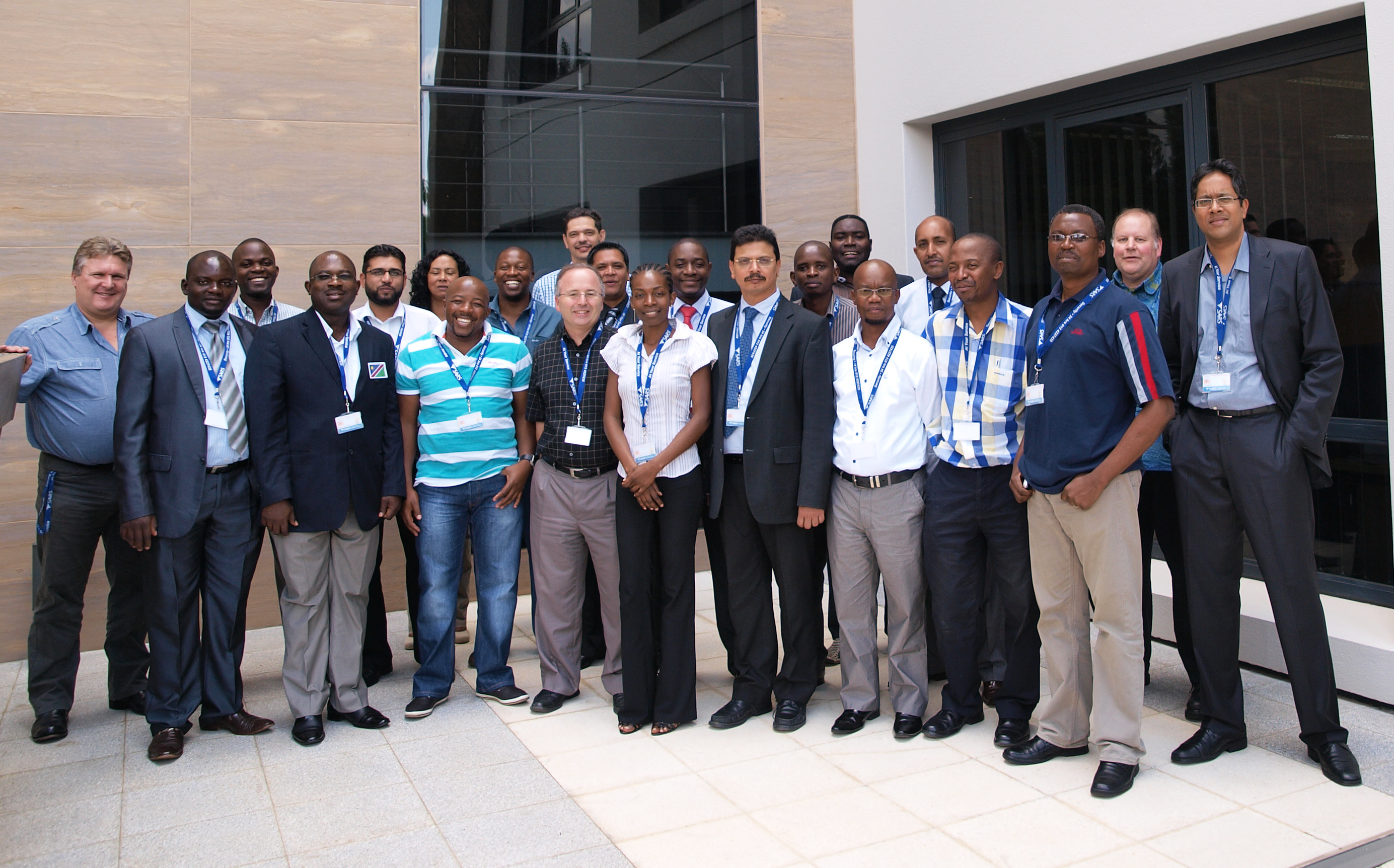
Over the last week and a half delegates from the WCO, SACU, UNCTAD, SADC and COMESA have been hosted at SARS, Pretoria to discuss and deliberate over an approach to implement ‘IT connectivity’ within the Southern African region. During the first week representatives from UNCTAD, SACU and SARS were briefed on important developments at the WCO on IT-Interconnectivity and Information Exchange. We were privileged to have Mr. Satya Prasad Sahu, Technical officer from the WCO – a leading expert in all matters of ICT in international customs matters – present the developments towards finalisation of a future international customs standard called “Globally Networked Customs” (GNC). It entails a structured approach that will enable customs authorities to formulate and document bilateral or regional ‘standards’ on a variety of Customs-to-Customs topics, for instance Authorised Economic Operators, Cross Border Information Exchange, Risk Management, etc. A representative from UNCTAD presented a synopsis of the proposed ‘cloud computing solution’ which the Trans Kalahari Corridor (TKC) plans to pilot between Namibia and Botswana along the TKC route in the next few months. During the course of this week, delegates , under the guidance of Satya, prepared a proposed approach for information exchange between members of the Southern African Customs Region. This document is based on the GNC Utility Block structure (defined by the ad Hoc Committee on Globally Networked Customs at the WCO) and served as the basis for discussion for Week 2.

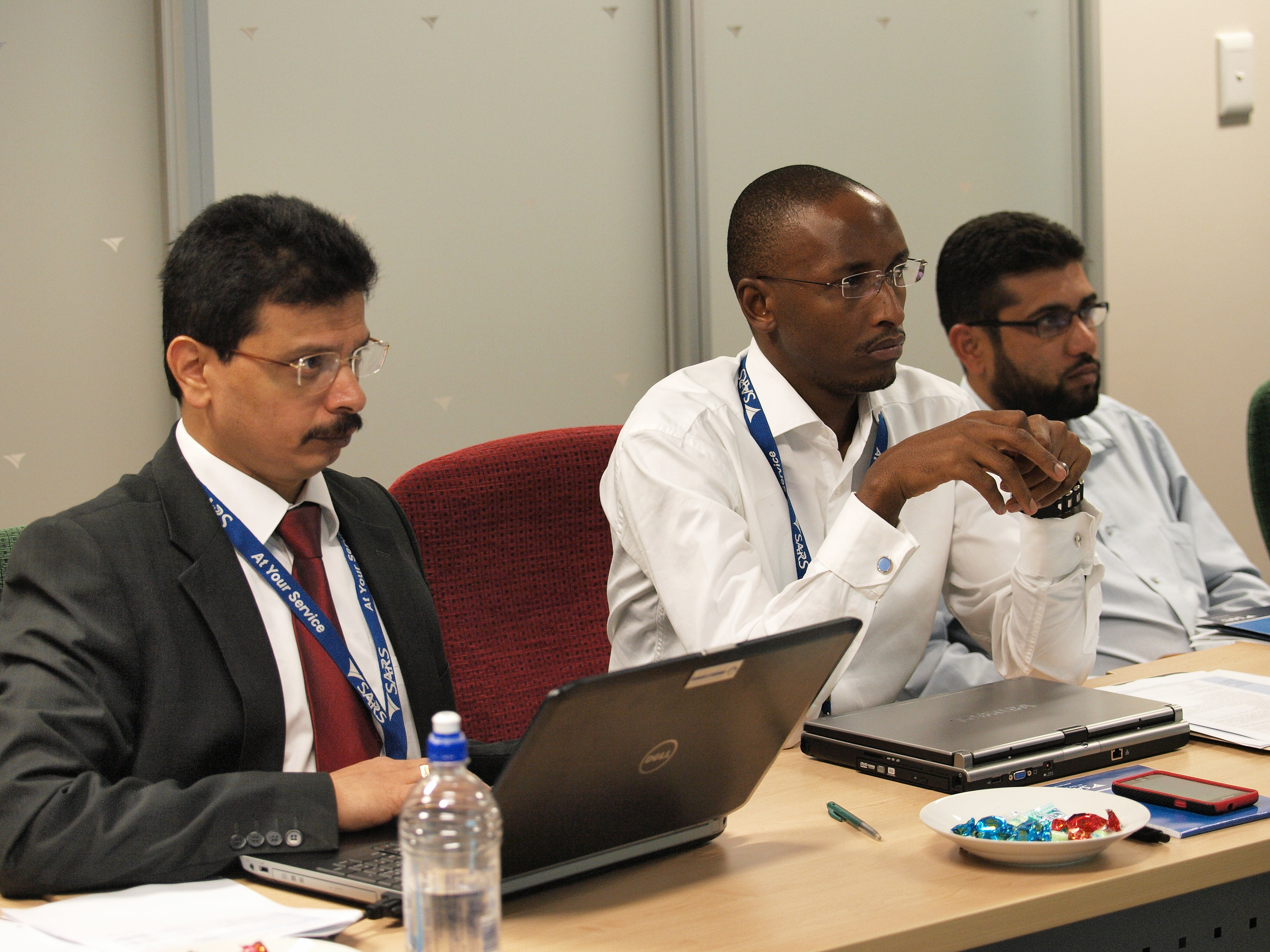
Mr. SP Sahu (WCO) and delegates from SACU SecretariatWeek 2 saw the arrival of customs and IT representatives from COMESA, SADC, UNCTAD, SACU as well as a delegation from Mozambique Customs. Mr. Sahu was invited to chair the session, given his vast experience on the subject matter as well as international experience in national and regional customs ICT programmes. Delegates were treated to various lectures on the GNC, a comprehensive overview of developments on ASYCUDA (Customs solution developed by UNCTAD), various updates from within the customs region – Botswana, Namibia, Lesotho, Swaziland, Mozambique and SARS. Beyers Theron informed delegates of ongoing developments of the SARS Customs Modernisation Programme as well as key implications for neighbouring countries. SARS presented a live demonstration of SARS’ Service Manager solution, navigating through all the functionality now available to SARS Customs officials. Of significant interest to all was the new iPod inspection tool. This technology is given prominent feature in the latest edition of WCO News.

A large portion of the week was, however, spent on deliberating the proposed scope and content of the draft Utility Block on Information Exchange in the Southern African Region. Significant progress was been made to attain first, a common understanding of the scope as well as the implications this has for participating countries. Delegates will return home with a product with which to create awareness and solicit support in their respective countries. Over the next few months SARS will engage both SACU and SADCOM (combined SADC and COMESA trading blocs) to establish firm commitments for information exchange with customs administrations in these regions. This conference is significant for SARS and South Africa as a whole as it provides a uniform, standardised and practical approach for engagement with other international trading partners. To view photographs of the conference please click here!

SAD Story – Part 2

What is clear in regard to modern day business is the fact that ‘harmonisation’ in the international supply chain is essentially built around ‘data’. E-commerce has been around for decades, plagued by incompatibilities in messaging standards, and computer software, network and hardware architecture. However, one of the key inhibitors has been organisations and administrations having to adhere to domestic ‘dated’ legislation and so-called standard operating procedures – seemingly difficult to change, and worst of all suggesting that law has to adapt!

A lot has had to do with the means of information presentation (format) and conveyance (physical versus electronic) rather than the actual information itself. Standards such as the UN Layout key sought to standardise or align international trade and customs documentation with the view to simplifying cross-border trade and regulatory requirements. In other words, each international trade document being a logical ‘copy and augmentation’ of a preceding document.  This argument is still indeed valid. The generally accepted principle of Customs Administrations is to maximise its leverage of latent information in the supply chain and augment this with national (domestic) regulatory requirements – within a structured format.

The Single Administrative Document (SAD) was itself borne out of this need. The layout found acceptance with UNCTAD’s ASYCUDA which used it as a marketing tool (in the 1990’s) in promoting ‘What-You-See-Is-What-You-Get’ (WYSIWYG). It certainly provided a compelling argument for under-developed countries seeking first-time customs automation. Yet, the promise of compatibility with other systems and neighbouring customs administrations has not lived up to this promise.

Simultaneous to document harmonisation, we find development of the Customs data model, initially the work of the Group of 7 (G7) nations at the United Nations. Its mandate was to simplify and standardize Customs procedures Customs procedures. In 2002, the WCO took over this responsibility and after further refinement the G7 version became version 1 of the WCO Customs Data Model. Once more a logical progression lead to the inclusion of security and other government regulatory requirements. This has culminated in the recent release of WCO Data Model 3. Take note the word “Customs” is missing from the title, indicating that Version 3 gives effect to its culminating EDI message standard – Government Cross Border Regulatory (GOVCBR) message – an all inclusive message standard which proposes to accommodate ALL government regulatory reporting requirements.

Big deal! So what does this mean? The WCO’s intent behind GOVCBR is as follows –

  • Promoting safe and secure borders by establishing a common platform for regulatory data exchange enabling early sharing of information.
  • Helping co-operating export and import Customs to offer authorized traders end end-to to- end premium procedures and simple integrated treatment of the total transaction.
  • Contributing to rapid release.
  • Elimination redundant and repetitive data submitted by the carrier and the importer.
  • Reducing the amount of data required to be presented at time of release.
  • Reducing compliance costs.
  • Promoting greater Customs Co-operation.

Undertaking such development is no simple matter, although a decision in this direction is a no brainer! Over a decade’s work in the EDI space in South Africa is certainly not lost. Most of the trade’s electronic goods declaration and cargo reporting requirements remain intact, all be they require re-alignment to meet Data Model 3 standard. Over and above this, the matter of government regulatory requirements (permits, certificates, prohibitions and restrictions, letters of authority, etc.) will require more ‘political will’ to ensure that all authorities administering regulations over the importation and exportation of goods are brought into the ‘electronic space’. Some traction is already evident here largely thanks to ITAC and SA Reserve Bank willingness and capability to collaborate. In time all remaining authorities will be brought on board to ensure a true ‘paperless’ clearance process.

So, I digress somewhat from the discussion on the SAD. However, the bottom line for all customs and border authorities, traders and intermediaries is that ‘harmonisation’ of the supply chain operation follows the principal and secondary data required to administer ALL controls via a process of risk assessment, to facilitate release including any intervention required to ensure the compliance of import and export goods. As such even legislative requirements need to enable ‘harmonisation’ to occur otherwise we end up with a non-tariff barrier, uncertainty in decision-making, and a business community unable to capitalise on regional and international market opportunities. Positively, the draft SA Customs Control Bill makes abundant reference to reporting – of the electronic kind.

In Part 3, I will discuss regional ‘integration’ and the desire for end-to-end transit clearance harmonisation.

World’s fastest train scanner – Rapiscan

Rail Scanner, Port of RotterdamYesterday, 15 February, the world’s fastest train scanner was opened in the port of Rotterdam with the installation and commissioning of a Rapiscan Eagle® R60 rail scanner, on behalf of Dutch Customs. It produces images of a good quality while the train is running up to 60 kilometres per hour. The Eagle R60’s 6 MeV X-ray imaging system penetrates dense and densely-packed cargo. Installations in other countries operate at a train speed of 30 kilometres. Dutch Customs selects containers on the basis of a risk analysis. The scanner checks trains out of the European hinterland into the port of Rotterdam. Here, the containers are loaded on vessels for export outside the European Union. The scanning installation is located at the Maasvlakte area, near to the N15 motorway on one side and the Steinweg Steel Terminal on the other. Capable of detecting and identifying a wide range of threats and suspect materials, including contraband goods, drugs, weapons and explosives, as well as radioactive material, the Eagle R60 is a high energy rail inspection system, which can efficiently scan cargo containers as they travel at speeds of up to sixty kilometers per hour. When the train scanner is fully integrated in Custom’s processes, a container will only be taken out of the logistic process if the scanning image provides ground for it.  Source: Ministry of Finance /Customs, Netherlands.

SAD story – Part 1

Die-hard SAD fan! (Tammy Joubert)We all suffer a little nostalgia at one or other point in our lives. Those die-hard legacy officials – the kind who have more than 20 years service – will most definitely have suffered, recoiled, and even repelled mass change which has occurred in the last 10-15 years in South Africa.  In the mid-2000’s the advent and replacement of the tried and tested DA500/600 series customs declaration forms by the Single Administrative Document – better known as the SAD – was unpopular to most customs officers although it was possibly welcomed by SACU cross-border traders.

A political coup had been won by some BLNS states compelling South Africa to harmonise its declaration requirements with those of fellow members, especially those operating ASYCUDA. At the time, SARS saw this compromise necessary to bring about alignment with Namibia and Botswana to facilitate the implementation of a new customs clearance dispensation for the Trans Kalahari Corridor (TKC).

The SAD is almost universally accepted by virtue of its design according to the UN Layout Key. However, why the fuss. A form is a form. Allied industry in RSA were used to the three decade old DA500/600 declaration forms which were designed infinitely better and more logical than the SAD.

None-the-less, South Africans are adaptable and accommodating to change. Following on from my recent post “SACU now a liability” it is now the SAD’s turn to stare death in the face. As it turns out, through wave upon wave of technological advances, we no longer need the SAD. At least in its paper form. In SARS case it no longer needs the SAD – period. A newer derivative (strangely not too dissimilar to the DA500/600) has now gained favour. It is known as the Customs Declaration 1 (Form CD1). However, unlike the DA and SAD forms, the CD1 will most likely never be required in printed format owing to SARS Customs preference for digitized information. Needless to say, if nothing else, the CD1 will provide a graphic representation of the EDI CUSDEC data for the customs officer. Next time, I’ll discuss the rationale behind ‘customs harmonisation’ and its non-dependency on document format. I feel for the die-hard SAD fan!

Customs Modernisation Release 3 – SACU

Saturday 11 February 2012 sees the implementation of new modernised customs procedures and formalities at South Africa’s first SACU land frontier office – Kopfontein – border between South Africa and Botswana.  While enhancements are slanted more in terms of internal SARS customs procedure, SACU traders will no doubt experience some anxiety with the transition. For the first time SARS Customs Modernisation impacts directly on traders and neighbouring Botswana Customs operational procedures in a significant way, which will fashion operations at all remaining inland border posts of the Customs Union. Over the last few months SARS has worked with trade, the Botswana customs authority as well as the business chamber in Botswana concerning the intended changes and their impact on stakeholders. The implementation ushers in cross-cutting changes for customs staff operationally, new technology as well as legal and policy changes. In the case of the latter, a further element of the draft Customs Control Bill is introduced whereby foreign business operators (importers, exporters and road carriers) must be registered with SARS to perform customs transactions in South Africa. This is perhaps the single issue which has had ramifications for parties who regularly cross the border between Botswana and South Africa. Hopefully recent iterations of notices and explanations have helped clarify the SARS requirements. (See the SARS Customs Modernisation webpage).

Other modifications and changes include –

Elimination of paper clearance documents – this is a significant departure from traditional SACU processing where all member countries have relied on the Single Administrative Document (SAD) to facilitate intra-SACU clearance. With the bulk of clearances expected to be electronic, SARS will now only print a customs notification (CN1) which will specify the status and outcome for each clearance. This the trader will use in support of customs clearance in Botswana. SARS will therefore no longer stamp and authorise hardcopy SAD500 clearance documents. Of course, there is nothing which stops a trader printing the SAD500 for cross border purposes, only SARS will no longer attest these. As concerns SARS VAT requirements, arrangements will be made for traders to submit the CN1 for purposes of VAT returns. Details on this to follow.

Electronic supporting documents – already tried and tested at sea and airports across South Africa, traders no longer need to carry on their person hard copy clearance supporting documentation , i.e. invoices, worksheets and packing lists. These are only required should SARS indicate via electronic message that a consignment requires further scrutiny. Customs brokers and traders using EDI will in most cases have the SARS e@syScan facility available on their computer systems which makes it relatively simple and easy to scan, package and submit to SARS. In the event a trader cannot perform this electronically, he may approach any of the 4 Customs Hubs (Alberton, Cape Town, Durban, and Doringkloof) across the country, to have these scanned and uploaded by SARS. Alternatively, these can of course be delivered to the border post for manual processing and finalisation of a customs intervention. Supporting documents are linked to a unique case number which SARS notifies to the trader in the event of a risk.

Clearance processing – SARS has centralised its backend processing of clearances where goods declarations are now processed off-site at one of the 4 Hubs. No longer are clearances processed at customs branch office. All goods declarations – whether electronically submitted or manually captured – are routed to a central pool for validation, verification and assessment if flagged by the risk engine. In the case of land borders all clearances once successfully processed will receive a ‘Proceed-to-border’ message implying that the road carrier may commence delivery to the border. A key feature of the new clearance process is the availability of Customs Status Codes. These codes are initiated by the customs system at specified points in the process to alert the declarant of the status of his/her transaction. These status’s also indicate the follow-up required of the declarant to bring the transaction to a state of finality.

Automated Cargo Management (ACM) – All road carriers are now required to submit their road manifests electronically, via EDI, to the Customs ACM system. For now, SARS will not electronically match the manifest against the declaration, but will monitor compliance and data quality of electronic manifest  for a period of time before initiating real-time matching and acquittal. This will invoke a significant responsibility on both trader and road remover to ensure that they both provide credible data to customs otherwise delays will occur. Upon arrival of the cargo at the border, the driver presents a printout of his electronic manifest. The manifest number is ‘checked in’ by a customs official which in seconds brings up all associated goods declarations linked to the manifest number on the system. The customs officer is able to determine the overall risk status of the vehicle. Where no risks are present a status notification (CN1) is printed for each goods declaration, and a gate pass (CN2) is handed to the driver permitting him to exit the customs controlled area. The future real-time matching will comprise a combined risk assessment of both manifest and declaration information that will result in a single risk outcome. Such risk assessment will include both fiscal and security compliance features thereby bringing SARS in line with international supply chain security standards. Going forward, risk assessment will accommodate ‘all-of-government’ requirements ensuring that all regulatory measures and associated risks are administered in a single instance obviating the need for successive, time-consuming inspections and costly delays.

Automated Customs Inspection – Following its recent introduction at the Beit Bridge border post, the new hand-held inspection tool, conveniently developed on an iPod, allows the customs border control official to electronically access, capture and upload an inspection outcome to the central customs system. This significantly improves the efficiency for this time-intensive activity where the officer can initiate a status up date electronically at the inspection site, where previously the declarant would have to wait for the outcome of the manual inspection report and release note. What’s more, the customs officer has access to the underlying clearance data and can even activate the camera function and capture visuals of suspect cargo which can be appended to an inspection case for verification by higher authority or historical reference value.

There are additional features and functionality to be introduced at Kopfontein and all remaining border posts over the next few months. These relate to improved revenue accounting, new trader registration and licensing system offering online application and approval, and a new traveller and temporary import/export processing. More about this in a future post.  For traders, the benefits of the new solution at SACU land borders aim to remove random and unwarranted intervention by customs. All activities are risk driven via a secure ‘get next’ selection function ensuring that internal integrity is maintained and only ‘risk-related’ consignments/transactions are dealt with. Please visit the SARS Modernisation webpage for all the latest updates and notices on modernisation releases.

CBP – An ode in modesty

There’s nothing like beating the breast and extolling the homeland’s unselfish generosity for the benefit of mankind, or am I being facetious? Today’s post on the US Customs and Border Protection‘s website titled “CBP Leads World Customs Organization on Natural Disaster Responsiveness” , is a case in point. The reader is left in no doubt as to who was responsible for recent developments that provide for a Customs role in natural disasters. I read with interest New Zealand Customs‘ role in the Christchurch earthquakes last year – very understated and with empathy for the survivors. The WCO consists over 177 affiliated customs administrations / border agencies each of whom make some form of contribution to it’s various committees and resulting accords or standards. So what if CBP made a major contribution, its a cheap shot to boast at the expense of others who might also have contributed, if not to the same extent. Read the article here!

African Bank and WCO create partnership to strengthen customs administrations

Brussels, 30, January 2012 – The African Development Bank (AfDB) and the World Customs Organization (WCO) will work together, to enhance the capacity of Customs administrations in Africa. This declaration was made today in Addis Ababa, Ethiopia, during the signing ceremony of a comprehensive Memorandum of Understanding, on the margins of the 18th African UnionSummit. The summit, which is taking place in Ethiopia from 23-30 January, is focusing on boosting intra-African trade – an area in which Customs administrations can play a vital role in strengthening national and regional economies in Africa.

The enhanced cooperation between AfDB and the WCO will help advance the economic development of African countries by assisting Customs administrations in their reform and modernization efforts.

The partnership includes collaboration in identifying, developing and implementing Customs capacity building projects by observing internationally agreed best practices and supporting Customs cooperation and regional integration in Africa. For the full article follow this link or the WCO News feed below in the left margin.

International Customs Day 2012

Borders Divide, Customs Connects” is the theme for this years international Customs Day celebrations, highlighting the central and integral role of Customs administration in the global trade supply chain. As the World Customs Organization prepares to celebrate its 60th anniversary this year, it is only fitting that  this opportunity is used to acknowledge the heritage that the founders of the Customs Co-operation Council bestowed on us, namely the importance of cooperation, particularly the value of inter-connectedness among Customs and its partners. For the official WCO International Customs Day 2012 poster click here!

For the international Customs community, connectivity connotes a vision of arrangements worldwide that support the smooth and lawful flow of goods, services, people, technologies, capital, culture, and ideas. It galvanizes the establishment of partnerships, the preparation of research, the sharing of knowledge, and the delivery of capacity building. Connectivity thus paves the way for community protection, modernization, and economic development. Connectivity encapsulates strengthened coordination, cooperation, and communication between Customs administrations, with other government agencies and institutions, and with the private sector, at national, regional and international levels.

Because borders are synonymous with division, the main challenge for Customs administrations is to identify and pursue the best methods to increase connectivity, which refers to people-to-people, institutional, and information linkages, that underpin and facilitate the achievement of objectives.

In fact, Connectivity is a natural progression from previous International Customs Day themes: Knowledge in 2011, particularly the sharing of knowledge to enhance the effectiveness and efficiency of Customs authorities; Customs-Business Partnerships in 2010, with a focus on supporting and improving the connective, working relationships between Customs and the private sector; and Environment Protection in 2009, underscoring the need for coordinated border management to save our natural heritage.

It is, of course, important to emphasize that connectivity encompasses three main pillars:

  • people connectivity, which includes a partnership with the business sector, and knowledge and professionalism;
  • institutional connectivity, which includes Customs-to-Customs connectivity and Customs-to-other government agency connectivity; and
  • information connectivity, which acts as an enabler and includes Globally Networked Customs, the electronic Single Window, and technology and knowledge solutions.

Here at home in South Africa, SARS Commissioner Oupa Magashula confirmed SARS’ proud history as a “connected” organisation fulfilling its Customs mandate –

  • We connect with our partners in business, those who drive the international supply chain, to provide them with a world-class service offering that will enhance their competitiveness in the global marketplace.
  • We connect across Government administrations and agencies that collectively form the regulatory and physical frontline of this country, working towards enhanced facilitation and security for the country, its economy and society.
  • We connect with our counterparts in Customs administration around the world on matters ranging from the sharing of best practice to active cooperation on improved Customs administration to the combating of Customs fraud and illicit trade.
  • We connect within our region, on the continent and beyond to work towards greater integration and cooperation, ensuring that the benefits of global trade enhance the economic and social well-being not only of South Africa, but of our neighbours and the continent as well.

Sources: WCO and SARS.

US launches National Strategy for Global Supply Chain Security

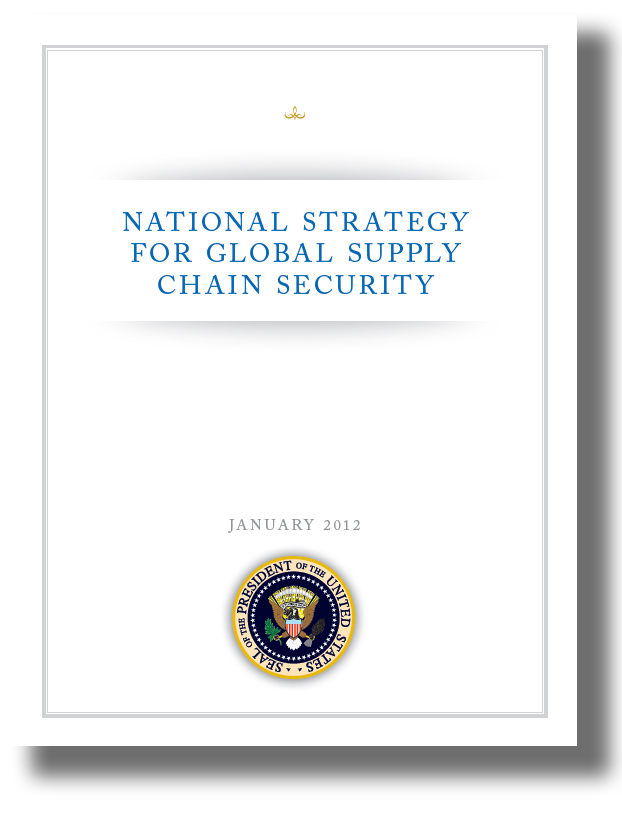
U.S. Secretary of Homeland Security Janet Napolitano unveiled  the Obama administration’s National Strategy for Global Supply Chain Security at the World Economic Forum in Davos, Switzerland yesterday (25 January). The Department of Homeland Security (DHS) is committed to facilitating legitimate trade and travel, while preventing terrorists from exploiting supply chains, protecting transportation systems from attacks and disruptions, and increasing the resilience of global supply chains.

The National Strategy for Global Supply Chain Security outlines clear goals to promote the efficient and secure movement of goods and foster a resilient supply chain system. It also provides guidance for the U.S. government and crucial domestic, international, public and private stakeholders who share a common interest in the security and resiliency of the global supply chain. (Why call it a “National” strategy when it impacts the international community?)

DHS works with leaders from global shipping companies and the International Air Transport Association (IATA) on developing preventative measures, including terrorism awareness training for employees and vetting personnel with access to cargo. Fulfilling a requirement of the 9/11 Act, 100 percent of high risk cargo on international flights bound for the United States is screened.

In addition, through the Container Security Initiative currently operational in over 50 foreign seaports in Europe, North, Central and South America, Africa, the Middle East, and throughout Asia, U.S. Customs and Border Protection helps our partner countries identify and screen U.S.-bound maritime containers before they reach the U.S..

Following the release of the National Strategy for Global Supply Chain Security, DHS and the Department of State will lead a six month engagement period with the international community and industry stakeholders to solicit feedback and specific recommendations on how to implement the Strategy in a cost-effective and collaborative manner. You can find the Strategy by clicking here! Also, for a summary of the strategy in presentation format, click here! We wait with bated breath to find out whats going to be new here, besides more onerous reporting requirements!

Source: US Press Secretary and The White House Blog.

New Zealand releases trade implementation guidelines for GOVCBR

New Zealand Customs ServiceThe New Zealand Customs Service has recently released draft guidelines for it’s Trade Single Window (TSW), which is currently under development. This will require all potential users to be able to send and receive electronic messages. The introduction of the TSW therefore means that organisations will need to submit lodgement messages that meet the WCO3 data model. Current message format for import entries, export entries, inward and outward cargo reports, will be accepted for 18 months after TSW is introduced (likely to be in the first quarter of 2013). However, following that 18-month period, all users of TSW will need to have adopted the new NZ WCO version 3 data model for messages.

New Zealand Customs expects that some users of TSW may adopt the new messages earlier to take advantage of the benefits, which include the ability to submit cargo manifest and Customs data in one message.To understand the new messages, a draft set of message implementation guidelines is now available for consultation and feedback from software developers and companies intending to use the TSW on the following draft messages:

  • Advance Notice of Arrival
  • Advance Notice of Departure
  • Cargo Report Export
  • Excise Declaration
  • Inward Cargo Report
  • Import Declaration
  • Outward Cargo Report
  • Border Agency Response Message.

Message implantation guidelines for the new export declaration is still be drafted, and will be made available as soon as possible.

Five main government agencies operate at the border – the Customs Service, the Ministry of Agriculture and Forestry, the Department of Labour, the Ministry of Transport, and the Department of Internal Affairs. With the participation of almost 20 other associated agencies, they work to prevent the traffic of prohibited goods and materials in and out of the country. They also collect government revenue, promote travel and trade, support New Zealand’s national interests, and uphold international laws and agreements. Now, as the border sector grows more complex and volumes of goods and travellers increase, a new era of inter-agency collaboration aims for more control, easier flows, and greater efficiency. Source – New Zealand Customs Service

Heartless!

Fellow blogger ZIMDEV paints a bleak picture for casual cross border traders – Cross border trade has been the lifeline for many unemployed Zimbabweans who make a living buying and selling goods from various neighbouring countries. Late last year, the Zimbabwean government together with the Zimbabwe Revenue authority have introduces a ban on the use of the $300 rebate on most goods. The new tariffs are quite steep and leave no room for profit for the traders. Cross border traders, fed the nation when Zimbabwean shops were empty. They travel across borders, bringing in goods that are not available in Zimbabwe and play a vital role in the economy. One visit to Beitbridge will prove just how vital the cross border trade is to Zimbabwe. It is disheartening to see the government’s reaction to cross border trade.

Instead of enabling and facilitating trade, the government is stifling and discouraging trade and enterprise. Importers of blankets, footwear, refrigerators, stoves and other electrical gadgets now pay 40% of the purchasing price plus a flat rate of US$5 per unit as duty. Government is also now charging between 10% and 25% duty on basic commodities such as maize meal, cooking oil, potato chips, baked beans and mixed fruit jam. The consignment of goods is also charged according to the weight of the goods, each kilo being charged at $3. Cross border trade has been dealt a heavy blow.

While continental and regional efforts wax lyrical about future ‘free trade’ in the Africa, domestic efforts and policy appear to be in contradiction, or perhaps the political utterances at regional trade and AU conferences are mere hot air!  Read the full article here! Surely this should be a case for closer diplomatic collaboration between Zimbabwe and its neighbours, or are the ‘cross border traders’ the enemy?