Nigeria – Single Window initiative back on track

After much controversy centering on allegations of corruption and impropriety, the Federal Government terminated the contract awarded to Single Window Systems and Technology Limited. The contract which allowed for a sole submission point for importers and exporters to lodge their documentation was unilaterally awarded by the Federal Ministry of Finance, under the Umaru Yar Adua administration, on behalf of the Nigeria Customs Service to the company registered in June 2010 with N 1m share capital.

The contract was reported to be worth N 4.5 trillion. The decision to discontinue the contract was based on an investigation by the Ministry of Finance which looked into the processes and the terms of the contract. The investigation which was approved by the President revealed that the contract breached the provisions of both the Procurement Act and the ICRC Act. Nigerian Customs received a letter of notification from the supervisory of the ministry of finance that a concession agreement had been entered between the Federal government and the Single Window System Technologies Limited, so where did the customs come into play before the contract was signed?”

Nigeria Customs Service had earlier said on the controversy, “How can a company enter such an agreement without the knowledge of the Nigeria Customs Service?” The Customs was not involved in the execution of the agreement entered by the Federal Ministry of Finance through the Former Honourable Minister of Finance; Olusegun Aganga. Therefore Nigerian Customs was not carried along by the company called Single Window System Technologies Limited. The tender was scuppered.

Recently, the Nigerian Customs Service convened a Single Window National Stakeholder Conference under the slogan – “Collaboration -Towards a Facilitated Trade Environment”. The conference and workshop took place between 23 and 26 April 2012, and was attended by several local and international delegates representing UNECE, UN/CEFACT, and donor companies German Development Company (GIZ), USAID and Crown Agents. Details concerning the launch of this event can be accessed via the following links – Conference Website and Conference Summary Report.

Comment: So what started on shaky ground has finally materialised into a fully-fledged Customs-led programme – the way it should be, and hopefully remain. Moreover, trade representatives and intermediaries will need to be an integral part of this development for it to attain success.

Source: Business News Nigeria and Valentina Mintah (Trade Facilitation Consultant).

Related articles

East Africa – Harmonisation of Border Procedures

Operations of all agencies working at border posts should be harmonised if the East African countries are to easily facilitate movement of goods and persons at their borders, Trade Mark East Africa (TMEA) has said. TMEA is a multi-donor funded agency that provides support for increased regional trade and economic integration in East Africa.

It takes a trader importing goods from the EAC member countries an average of 30 minutes to process documents, at the Gatuna/Katuna border. Border agencies need to collaborate on planning, monitoring, organisation and other related activities to ease the movement of traders, according to Theo Lyimo, TMEA’s director of Integrated Border Management and One Stop Border Posts.

This was at the sidelines of a one-day workshop on the establishment of the Integrated Border Management Concept and presentation on the final design of Kagitumba One Stop Border Post facilities. “Integrated border management should have a system controlling all the agencies at the borders and this will help to eliminate all trade challenges affecting the region including high prices of products, high costs of transport and others,” he noted. He cited the Chirundu Integrated border management between Zambia and Zimbabwe which he said had totally cleared trade barriers between the two countries.

However, though the One Stop Border Post (OSBP) had been introduced at some borders of the EAC member countries, they are yet to yield the expected results as traders still encounter some challenges.

The establishment of Integrated Border Management has been recognised as one of the ten building blocks of Customs in the 21st Century, a new strategic perspective and policy agreed upon by heads of the world’s customs administrations to shape the role of Customs in the current century, a century with unique demands.

Better border management entails coordination and cooperation among all the relevant authorities and agencies involved in border regulatory requirements,” said Tusabe Jane Nkubana, chairman of the exporters association, welcomed the border management saying that traders have always been affected by delays at the border posts leading to an increase in the cost of goods.

Delays at the borders are some of the non-tariff barriers affecting us in the region, and if the operations of agencies are harmonised, this would reduce on the time we spend clearing goods at the borders. Transport costs in East Africa are regarded amongst the highest in the world damaging the region’s ability to trade competitively in the international market, according to economic experts. Source: AllAfrica.com

Border Posts, Checkpoints and Intra-African Trade

You may recall earlier this year the African Development Bank and the WCO agreed to a partnership to advance the economic development of African countries by assisting Customs administrations in their reform and modernization efforts.

The AfDB’s regional infrastructure financing and the WCO’s technical Customs expertise will complement each other and improve the efficiency of our efforts to facilitate trade which includes collaboration in identifying, developing and implementing Customs capacity building initiatives by observing internationally agreed best practice and supporting Customs cooperation and regional integration in Africa.

In addition, the partnership will seek to promote a knowledge partnership, including research and knowledge sharing in areas of common interest, as well as close institutional dialogue to ensure a coherent approach and to identify comparative advantages as well as complementarities between the WCO and AfDB. Customs professionals, trans-national transporters and trade practitioners will find the featured article of some interest. It provides a synopsis of the key inhibitors for trade on the continent, and will hopefully mobilise “African expertise” in the provision of solutions and capacity building initiatives.

GNC – not just another acronym, but the latest Customs buzz-word

WCO - Globally Networked Customs

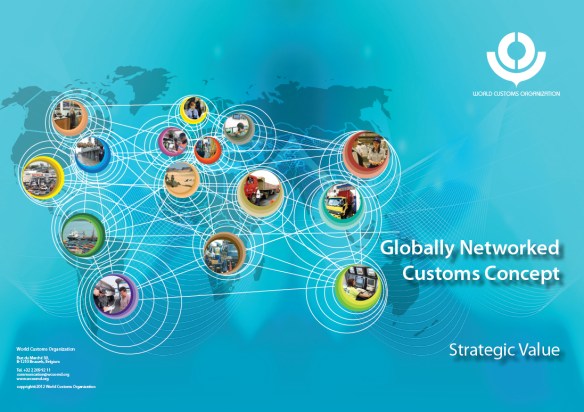
With the WCO Council Sessions later in June this year, it is opportune to discuss perhaps one of the single most important developments in Customs Inc, the “Globally Networked Customs (GNC)” concept which aims to realize connectivity, data exchange, and cooperative work amongst the world’s customs administrations.

GNC is set to play a very important role in promoting trade facilitation, enhancing trade efficiency and safeguarding trade security; it will also greatly influence international rules and the development of the customs end-to-end operational process. By and large the SAFE Framework, WCO Data Model and the Revised Kyoto Convention provide specific standards for the development and implementation of national customs legal, procedural and automated systems. It is the GNC that will in future “industrialise” and harmonise Customs-2-Customs (C2C) information exchange requirements which underpin a country’s bilateral and multilateral trade agreements.

Briefly the need for GNC arises from the exchanges of information underpinning International Agreements in the commercial domain. These take time and are costly to implement. They are all different from each other creating diversity both for Members and trade. This is because each one of these agreements is built anew, handcrafted and tailor-made to meet the needs at hand. This approach will not scale up and countries broking an increasing number of International Customs Agreements are already encountering difficulty to maintain their delivery plan in line with their international policy ambitions. Below you will find links to 2 documents explaining the GNC. More information on the GNC will be provided once approved by the WCO’s Policy Commission later on in June 2012. Source: WCO.

Related articles

WCO/SACU – IT Connectivity and Data Exchange

WCO-SACU IT Interconnectivity and Data Exchange Conference

On the occasion of International Customs Day, in January earlier this year, the World Customs Organisation dedicated 2012 as the year “Connectivity”, which encapsulates people connectivity, institutional connectivity and information connectivity among the members of the global Customs community.

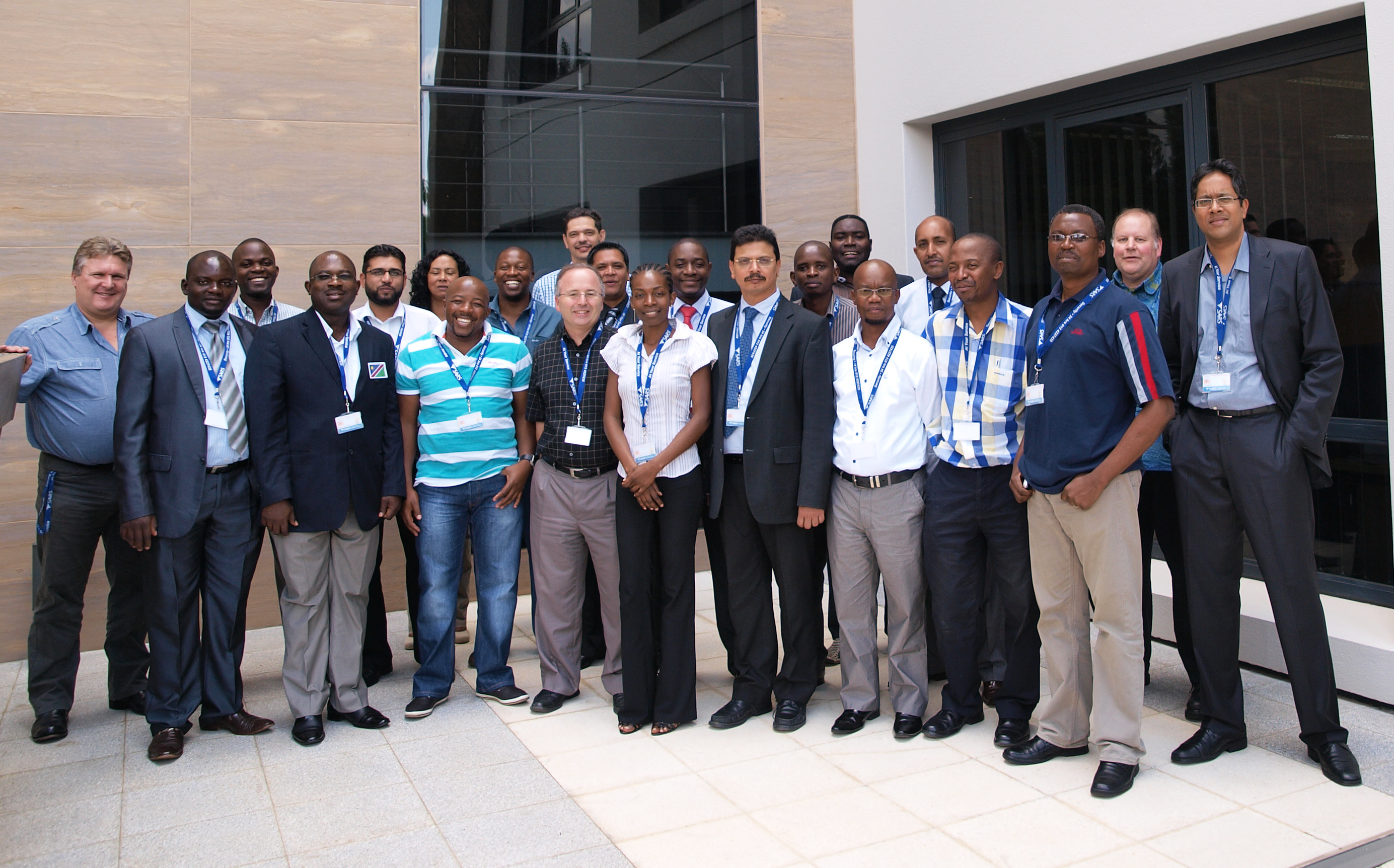
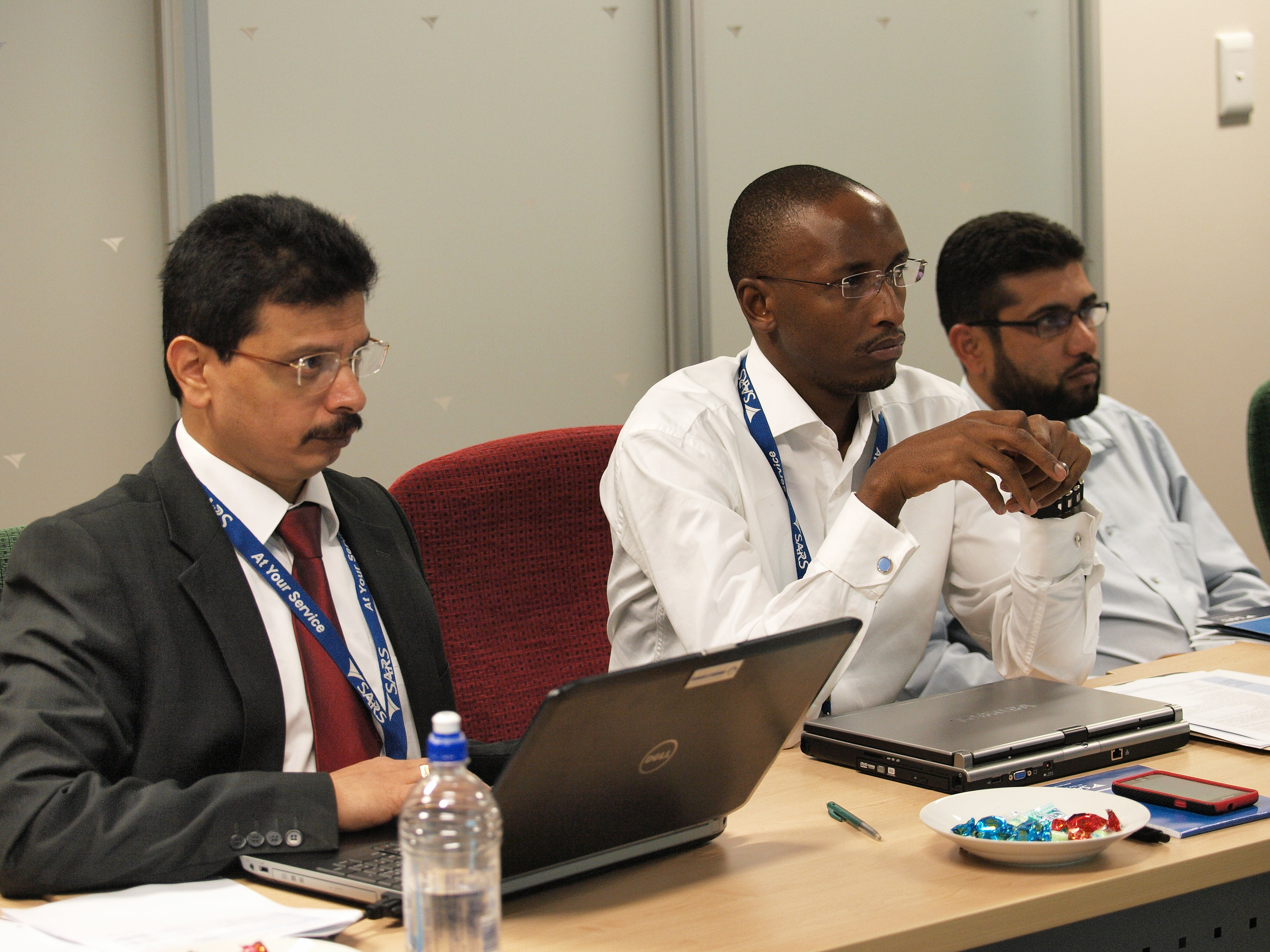
Over the last week and a half delegates from the WCO, SACU, UNCTAD, SADC and COMESA have been hosted at SARS, Pretoria to discuss and deliberate over an approach to implement ‘IT connectivity’ within the Southern African region. During the first week representatives from UNCTAD, SACU and SARS were briefed on important developments at the WCO on IT-Interconnectivity and Information Exchange. We were privileged to have Mr. Satya Prasad Sahu, Technical officer from the WCO – a leading expert in all matters of ICT in international customs matters – present the developments towards finalisation of a future international customs standard called “Globally Networked Customs” (GNC). It entails a structured approach that will enable customs authorities to formulate and document bilateral or regional ‘standards’ on a variety of Customs-to-Customs topics, for instance Authorised Economic Operators, Cross Border Information Exchange, Risk Management, etc. A representative from UNCTAD presented a synopsis of the proposed ‘cloud computing solution’ which the Trans Kalahari Corridor (TKC) plans to pilot between Namibia and Botswana along the TKC route in the next few months. During the course of this week, delegates , under the guidance of Satya, prepared a proposed approach for information exchange between members of the Southern African Customs Region. This document is based on the GNC Utility Block structure (defined by the ad Hoc Committee on Globally Networked Customs at the WCO) and served as the basis for discussion for Week 2.

Mr. SP Sahu (WCO) and delegates from SACU SecretariatWeek 2 saw the arrival of customs and IT representatives from COMESA, SADC, UNCTAD, SACU as well as a delegation from Mozambique Customs. Mr. Sahu was invited to chair the session, given his vast experience on the subject matter as well as international experience in national and regional customs ICT programmes. Delegates were treated to various lectures on the GNC, a comprehensive overview of developments on ASYCUDA (Customs solution developed by UNCTAD), various updates from within the customs region – Botswana, Namibia, Lesotho, Swaziland, Mozambique and SARS. Beyers Theron informed delegates of ongoing developments of the SARS Customs Modernisation Programme as well as key implications for neighbouring countries. SARS presented a live demonstration of SARS’ Service Manager solution, navigating through all the functionality now available to SARS Customs officials. Of significant interest to all was the new iPod inspection tool. This technology is given prominent feature in the latest edition of WCO News.

A large portion of the week was, however, spent on deliberating the proposed scope and content of the draft Utility Block on Information Exchange in the Southern African Region. Significant progress was been made to attain first, a common understanding of the scope as well as the implications this has for participating countries. Delegates will return home with a product with which to create awareness and solicit support in their respective countries. Over the next few months SARS will engage both SACU and SADCOM (combined SADC and COMESA trading blocs) to establish firm commitments for information exchange with customs administrations in these regions. This conference is significant for SARS and South Africa as a whole as it provides a uniform, standardised and practical approach for engagement with other international trading partners. To view photographs of the conference please click here!

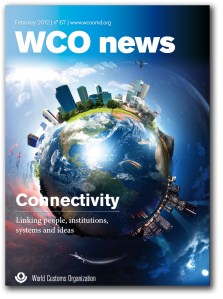
WCO News – February 2012 Edition

WCONews Edition February 2012Herewith a link to the latest edition of WCO News, providing a wealth of customs news and developments from across the globe. This edition focuses almost entirely on regional initiatives involving C-2-C information exchange. On pages 20 to 22 you’ll read about new developments emerging on customs inter-connectivity and information exchange in the Southern African Region. At this time, a conference lead by the WCO, involving representatives from UNCTAD, SACU, SADC and COMESA and SARS is taking place in Pretoria to establish a firm framework for introduction of customs information exchange. I will devote a dedicated article on these developments shortly, as this has implications for the business community as well. Also, don’t miss the feature on South Africa’s modernisation developments, pages 29 and 30. Besides the usual editorials this edition includes –

  • WCO Secretary General launches Year of Connectivity.
  • Evolving technology landscape and its impact on Customs.
  • Latest developments in Latin America, Southern Africa and Europe.
  • West Africa implements airport task forces to fight drug trafficking.
  • South Africa to roll out mobile Customs controls.
  • Operation “Short Circuit” successes and challenges.
  • WCO Tariff and Trade Affairs Directorate

Financial pinch affects CBP’s modernisation and developmental capacity

The US Bureau for Customs and Border Protection  has money to run commercial trade processing system (ACE) but not expand it. Customs and Border Protection has US $140 million to operate and maintain a commercial trade processing system, but there’s no money in the 2012 budget to further develop the program. The lack of development money, particularly for the simplified entry process, has caused concern amongst business community members. Simplified entry is something that Customs and the trade community are looking for to further automate import processing and lower transaction costs. Source: USCBP

SAD Story – Part 2

What is clear in regard to modern day business is the fact that ‘harmonisation’ in the international supply chain is essentially built around ‘data’. E-commerce has been around for decades, plagued by incompatibilities in messaging standards, and computer software, network and hardware architecture. However, one of the key inhibitors has been organisations and administrations having to adhere to domestic ‘dated’ legislation and so-called standard operating procedures – seemingly difficult to change, and worst of all suggesting that law has to adapt!

A lot has had to do with the means of information presentation (format) and conveyance (physical versus electronic) rather than the actual information itself. Standards such as the UN Layout key sought to standardise or align international trade and customs documentation with the view to simplifying cross-border trade and regulatory requirements. In other words, each international trade document being a logical ‘copy and augmentation’ of a preceding document.  This argument is still indeed valid. The generally accepted principle of Customs Administrations is to maximise its leverage of latent information in the supply chain and augment this with national (domestic) regulatory requirements – within a structured format.

The Single Administrative Document (SAD) was itself borne out of this need. The layout found acceptance with UNCTAD’s ASYCUDA which used it as a marketing tool (in the 1990’s) in promoting ‘What-You-See-Is-What-You-Get’ (WYSIWYG). It certainly provided a compelling argument for under-developed countries seeking first-time customs automation. Yet, the promise of compatibility with other systems and neighbouring customs administrations has not lived up to this promise.

Simultaneous to document harmonisation, we find development of the Customs data model, initially the work of the Group of 7 (G7) nations at the United Nations. Its mandate was to simplify and standardize Customs procedures Customs procedures. In 2002, the WCO took over this responsibility and after further refinement the G7 version became version 1 of the WCO Customs Data Model. Once more a logical progression lead to the inclusion of security and other government regulatory requirements. This has culminated in the recent release of WCO Data Model 3. Take note the word “Customs” is missing from the title, indicating that Version 3 gives effect to its culminating EDI message standard – Government Cross Border Regulatory (GOVCBR) message – an all inclusive message standard which proposes to accommodate ALL government regulatory reporting requirements.

Big deal! So what does this mean? The WCO’s intent behind GOVCBR is as follows –

  • Promoting safe and secure borders by establishing a common platform for regulatory data exchange enabling early sharing of information.
  • Helping co-operating export and import Customs to offer authorized traders end end-to to- end premium procedures and simple integrated treatment of the total transaction.
  • Contributing to rapid release.
  • Elimination redundant and repetitive data submitted by the carrier and the importer.
  • Reducing the amount of data required to be presented at time of release.
  • Reducing compliance costs.
  • Promoting greater Customs Co-operation.

Undertaking such development is no simple matter, although a decision in this direction is a no brainer! Over a decade’s work in the EDI space in South Africa is certainly not lost. Most of the trade’s electronic goods declaration and cargo reporting requirements remain intact, all be they require re-alignment to meet Data Model 3 standard. Over and above this, the matter of government regulatory requirements (permits, certificates, prohibitions and restrictions, letters of authority, etc.) will require more ‘political will’ to ensure that all authorities administering regulations over the importation and exportation of goods are brought into the ‘electronic space’. Some traction is already evident here largely thanks to ITAC and SA Reserve Bank willingness and capability to collaborate. In time all remaining authorities will be brought on board to ensure a true ‘paperless’ clearance process.

So, I digress somewhat from the discussion on the SAD. However, the bottom line for all customs and border authorities, traders and intermediaries is that ‘harmonisation’ of the supply chain operation follows the principal and secondary data required to administer ALL controls via a process of risk assessment, to facilitate release including any intervention required to ensure the compliance of import and export goods. As such even legislative requirements need to enable ‘harmonisation’ to occur otherwise we end up with a non-tariff barrier, uncertainty in decision-making, and a business community unable to capitalise on regional and international market opportunities. Positively, the draft SA Customs Control Bill makes abundant reference to reporting – of the electronic kind.

In Part 3, I will discuss regional ‘integration’ and the desire for end-to-end transit clearance harmonisation.

SAD story – Part 1

Die-hard SAD fan! (Tammy Joubert)We all suffer a little nostalgia at one or other point in our lives. Those die-hard legacy officials – the kind who have more than 20 years service – will most definitely have suffered, recoiled, and even repelled mass change which has occurred in the last 10-15 years in South Africa.  In the mid-2000’s the advent and replacement of the tried and tested DA500/600 series customs declaration forms by the Single Administrative Document – better known as the SAD – was unpopular to most customs officers although it was possibly welcomed by SACU cross-border traders.

A political coup had been won by some BLNS states compelling South Africa to harmonise its declaration requirements with those of fellow members, especially those operating ASYCUDA. At the time, SARS saw this compromise necessary to bring about alignment with Namibia and Botswana to facilitate the implementation of a new customs clearance dispensation for the Trans Kalahari Corridor (TKC).

The SAD is almost universally accepted by virtue of its design according to the UN Layout Key. However, why the fuss. A form is a form. Allied industry in RSA were used to the three decade old DA500/600 declaration forms which were designed infinitely better and more logical than the SAD.

None-the-less, South Africans are adaptable and accommodating to change. Following on from my recent post “SACU now a liability” it is now the SAD’s turn to stare death in the face. As it turns out, through wave upon wave of technological advances, we no longer need the SAD. At least in its paper form. In SARS case it no longer needs the SAD – period. A newer derivative (strangely not too dissimilar to the DA500/600) has now gained favour. It is known as the Customs Declaration 1 (Form CD1). However, unlike the DA and SAD forms, the CD1 will most likely never be required in printed format owing to SARS Customs preference for digitized information. Needless to say, if nothing else, the CD1 will provide a graphic representation of the EDI CUSDEC data for the customs officer. Next time, I’ll discuss the rationale behind ‘customs harmonisation’ and its non-dependency on document format. I feel for the die-hard SAD fan!

Customs Modernisation Release 3 – SACU

Saturday 11 February 2012 sees the implementation of new modernised customs procedures and formalities at South Africa’s first SACU land frontier office – Kopfontein – border between South Africa and Botswana.  While enhancements are slanted more in terms of internal SARS customs procedure, SACU traders will no doubt experience some anxiety with the transition. For the first time SARS Customs Modernisation impacts directly on traders and neighbouring Botswana Customs operational procedures in a significant way, which will fashion operations at all remaining inland border posts of the Customs Union. Over the last few months SARS has worked with trade, the Botswana customs authority as well as the business chamber in Botswana concerning the intended changes and their impact on stakeholders. The implementation ushers in cross-cutting changes for customs staff operationally, new technology as well as legal and policy changes. In the case of the latter, a further element of the draft Customs Control Bill is introduced whereby foreign business operators (importers, exporters and road carriers) must be registered with SARS to perform customs transactions in South Africa. This is perhaps the single issue which has had ramifications for parties who regularly cross the border between Botswana and South Africa. Hopefully recent iterations of notices and explanations have helped clarify the SARS requirements. (See the SARS Customs Modernisation webpage).

Other modifications and changes include –

Elimination of paper clearance documents – this is a significant departure from traditional SACU processing where all member countries have relied on the Single Administrative Document (SAD) to facilitate intra-SACU clearance. With the bulk of clearances expected to be electronic, SARS will now only print a customs notification (CN1) which will specify the status and outcome for each clearance. This the trader will use in support of customs clearance in Botswana. SARS will therefore no longer stamp and authorise hardcopy SAD500 clearance documents. Of course, there is nothing which stops a trader printing the SAD500 for cross border purposes, only SARS will no longer attest these. As concerns SARS VAT requirements, arrangements will be made for traders to submit the CN1 for purposes of VAT returns. Details on this to follow.

Electronic supporting documents – already tried and tested at sea and airports across South Africa, traders no longer need to carry on their person hard copy clearance supporting documentation , i.e. invoices, worksheets and packing lists. These are only required should SARS indicate via electronic message that a consignment requires further scrutiny. Customs brokers and traders using EDI will in most cases have the SARS e@syScan facility available on their computer systems which makes it relatively simple and easy to scan, package and submit to SARS. In the event a trader cannot perform this electronically, he may approach any of the 4 Customs Hubs (Alberton, Cape Town, Durban, and Doringkloof) across the country, to have these scanned and uploaded by SARS. Alternatively, these can of course be delivered to the border post for manual processing and finalisation of a customs intervention. Supporting documents are linked to a unique case number which SARS notifies to the trader in the event of a risk.

Clearance processing – SARS has centralised its backend processing of clearances where goods declarations are now processed off-site at one of the 4 Hubs. No longer are clearances processed at customs branch office. All goods declarations – whether electronically submitted or manually captured – are routed to a central pool for validation, verification and assessment if flagged by the risk engine. In the case of land borders all clearances once successfully processed will receive a ‘Proceed-to-border’ message implying that the road carrier may commence delivery to the border. A key feature of the new clearance process is the availability of Customs Status Codes. These codes are initiated by the customs system at specified points in the process to alert the declarant of the status of his/her transaction. These status’s also indicate the follow-up required of the declarant to bring the transaction to a state of finality.

Automated Cargo Management (ACM) – All road carriers are now required to submit their road manifests electronically, via EDI, to the Customs ACM system. For now, SARS will not electronically match the manifest against the declaration, but will monitor compliance and data quality of electronic manifest  for a period of time before initiating real-time matching and acquittal. This will invoke a significant responsibility on both trader and road remover to ensure that they both provide credible data to customs otherwise delays will occur. Upon arrival of the cargo at the border, the driver presents a printout of his electronic manifest. The manifest number is ‘checked in’ by a customs official which in seconds brings up all associated goods declarations linked to the manifest number on the system. The customs officer is able to determine the overall risk status of the vehicle. Where no risks are present a status notification (CN1) is printed for each goods declaration, and a gate pass (CN2) is handed to the driver permitting him to exit the customs controlled area. The future real-time matching will comprise a combined risk assessment of both manifest and declaration information that will result in a single risk outcome. Such risk assessment will include both fiscal and security compliance features thereby bringing SARS in line with international supply chain security standards. Going forward, risk assessment will accommodate ‘all-of-government’ requirements ensuring that all regulatory measures and associated risks are administered in a single instance obviating the need for successive, time-consuming inspections and costly delays.

Automated Customs Inspection – Following its recent introduction at the Beit Bridge border post, the new hand-held inspection tool, conveniently developed on an iPod, allows the customs border control official to electronically access, capture and upload an inspection outcome to the central customs system. This significantly improves the efficiency for this time-intensive activity where the officer can initiate a status up date electronically at the inspection site, where previously the declarant would have to wait for the outcome of the manual inspection report and release note. What’s more, the customs officer has access to the underlying clearance data and can even activate the camera function and capture visuals of suspect cargo which can be appended to an inspection case for verification by higher authority or historical reference value.

There are additional features and functionality to be introduced at Kopfontein and all remaining border posts over the next few months. These relate to improved revenue accounting, new trader registration and licensing system offering online application and approval, and a new traveller and temporary import/export processing. More about this in a future post.  For traders, the benefits of the new solution at SACU land borders aim to remove random and unwarranted intervention by customs. All activities are risk driven via a secure ‘get next’ selection function ensuring that internal integrity is maintained and only ‘risk-related’ consignments/transactions are dealt with. Please visit the SARS Modernisation webpage for all the latest updates and notices on modernisation releases.

African Bank and WCO create partnership to strengthen customs administrations

Brussels, 30, January 2012 – The African Development Bank (AfDB) and the World Customs Organization (WCO) will work together, to enhance the capacity of Customs administrations in Africa. This declaration was made today in Addis Ababa, Ethiopia, during the signing ceremony of a comprehensive Memorandum of Understanding, on the margins of the 18th African UnionSummit. The summit, which is taking place in Ethiopia from 23-30 January, is focusing on boosting intra-African trade – an area in which Customs administrations can play a vital role in strengthening national and regional economies in Africa.

The enhanced cooperation between AfDB and the WCO will help advance the economic development of African countries by assisting Customs administrations in their reform and modernization efforts.

The partnership includes collaboration in identifying, developing and implementing Customs capacity building projects by observing internationally agreed best practices and supporting Customs cooperation and regional integration in Africa. For the full article follow this link or the WCO News feed below in the left margin.

Zimbabwe Industry slams ASYCUDA

With much talk of intra-African trade, perhaps its a good time to consider increased collaboration between customs administrations regarding modernisation initiatives. It helps little for trade if the system only works on one side of the border. The case in point demonstrates a painful realization of too little mediation with stakeholders.

THE Zimbabwe Revenue Authority‘s introduction of the latest version of an automated customs clearance management system has brought industry to its knees as goods in transit are stuck at the country’s ports. The system challenges at Zimbabwe’s ports is particularly worrisome for importers as the majority are set to close shop today for the festive season. ASYCUDA is an acronym for Automated System for Customs Data, an automated customs clearance management system.

The Shipping and Forwarding Agents’ Association of Zimbabwe (Sfaaz) held a crisis meeting in Harare, where they intended to engage the Ministry of Finance and Zimra officials who had been invited. Ministry of Finance and Zimra officials were, however, conspicuous by their absence. Sfaaz chairman Mr Phanuel Gukwe said the system, whose implementation commenced in October, had significantly slowed down clearance procedures. “There is perennial breakdown of operations at most ports, which means no imports are coming out of Zimra, funds are locked in prepayment accounts and turnaround of bill of entries is taking up to two weeks instead of the normal three hours.

“Contrary to expectations when Zimra proposed the system, the situation at ports has worsened drastically,” he said. The situation at the country’s ports, which is now in its third month, might have implications on the revenue collection targets for the fourth quarter, especially in terms of excise duty, import duty and customs tax.

Questions sent to Zimra were unanswered by the time of publication yesterday. ASYCUDA 2.3 was the earliest version to be introduced in Zimbabwe in 1992 and was upgraded to versions 2.5 and 2.7. ASYCUDA++ later came on board in the form of version 1.15 and 1.18. Currently, Zimra is rolling out ASYCUDA World version 4.0.21 to over 14 stations.

Mr Gukwe said Zimra had ignored the association’s earlier proposal to stagger the implementation of the new system. “We had proposed to Zimra to follow the example of South Africa, which undertook to implement the system at limited ports at a time, but they rather chose to go wholesale. Zimra also ignored us when we pressed them for a fallback system to be put in place,” he said.

The Wednesday crisis meeting, that was emotionally charged, saw importers level a range of accusations against Zimra. Some said Zimra had only two examining officers at some border posts, which means the slow clearance was an issue not just of failure in connectivity but also manpower shortages. It was also observed that when clients of local importers called Zimra to find out about the system challenges, Zimra officials were telling them that problems with the system had since been rectified, a situation that was portraying the local importers in bad light.

“I do not think it is legal for Zimra officials to be discussing these matters with our clients, they should only communicate with those who put in the bill of entry,” said one Sfaaz member. Others accused Zimra for being nonchalant. “Zimra should be taking responsibility on this matter. They could have at least eased our plight by arranging for the reduction or waiving of storage fees. We are paying some serious money for storage for weeks on end, which is driving up our landing costs,” said an importer.

Observers warn that if the problem continues, it could have wider repercussions on the economy, which is still a net importer of most goods. Meanwhile, Sfaaz officials were yesterday engaged in a closed door meeting with top Zimra officials over the matter. Source: The Herald (Zimbabwe)

Pre-shipment Inspection (PSI) – an antiquated approach

Recently, an organisation called Global Inspection Group (GIG) has advocated PSI – an import verification system – as a solution to counteract South Africa’s trade deficit. The article Import verification would outlaw customs fraud’ alludes to the apparent success of these mechanisms in other African states to support quality and import standards in those countries, respectively. Because South Africa has no verification of imports system ‘it is easy to systematically under-declare goods’, the article states. Furthermore, it mentions that a Finance ministry would benefit from such a system ensuring the collection of the correct duties. [Really? how naive].

South Africa is a free country, and it follows that organisations will go to extremes to secure a business foothold in the country. The question is – to what length and to what end? If any ministry of finance were to rely on a PSI company, it would first disband its customs department, because there is evidently no trust in its frontline and post clearance capability.  Most governments (if not all) are pretty much aware of the broader international customs developments championed by the WCO. In recent years, the WCO has developed several diagnostic studies and programmes – with the option of donor funding if required. There would therefore be no sense or credibility in a government that would persist in pursuance of PSI services for fiscal assurance.

Any trade practitioner and supply chain operator in South Africa will readily confirm the hectic ‘change’ programme which is being pursued under Customs Modernisation. These changes and their associated systematic innovations and efficiencies are by no means the result of government capitulating in the face of illegitimate trade. No, it’s a conscious decision to take responsibility for the problem, and together with the allied trade to improve the situation.

It is therefore high time that such organisations which front themselves with the ‘be-all and end-all’ systems in Customs’ tariff and valuation appraisal rather seek a more practical and benefit-delivering model than one which not only scams governments for service and inspection fees, but also offers no benefit to trade. Included are those BOT vehicles offering governments ‘free’ cargo scanning equipment in exchange for a lucrative inspection fee. None of this is based on risk management and is purely profit focussed. The concept forgoes most if not all, the modern customs principles and standards promoted by the WCO. The buzz word is ‘Capacity Building!’

The reality in all of this should be clear. No private sector entity can replace Customs. Outsourcing in any event would require government to set up a vehicle of its own to ‘ensure’ that the outsourcer is doing his job. If there is a dearth in knowledge and skills, then it is up to government to rectify the situation.  Source: FTW Print version.

New Mozambique Customs System will reduce processing time

Customs processing times for goods imported into Mozambique will be lowered from the current minimum of three days to just a few hours with the introduction of a modern customs processing system, Mozambican daily newspaper Notícias reported.

Known as the Single Electronic Window, the new tool is made up of two computer systems – the integrated customs management system and the operators’ mechanism.

Via the Single Electronic Window importers are able to submit the customs declaration and pay all fees via a retail bank before the actual unloading of the goods, which will reduce their processing time.

Rosário Fernandes, chair of the Mozambican Tributary Authority said that the transmission network for the Single Window (Janela Única), managed by MCNet (Mozambique Community Network), would show the cargo manifest and customs declaration from carriers or owners of the goods, processing, payments inspection and management of the output of imported goods.

MCNet is 60 percent-owned by the Escopil Internacional and SGS Moçambique consortium and by the State and Confederation of Economic Associations (CTA), each with a 20 percent stake. Source: macauhub