International Shipping Federations take on Counterfeit Goods Trade

bascap

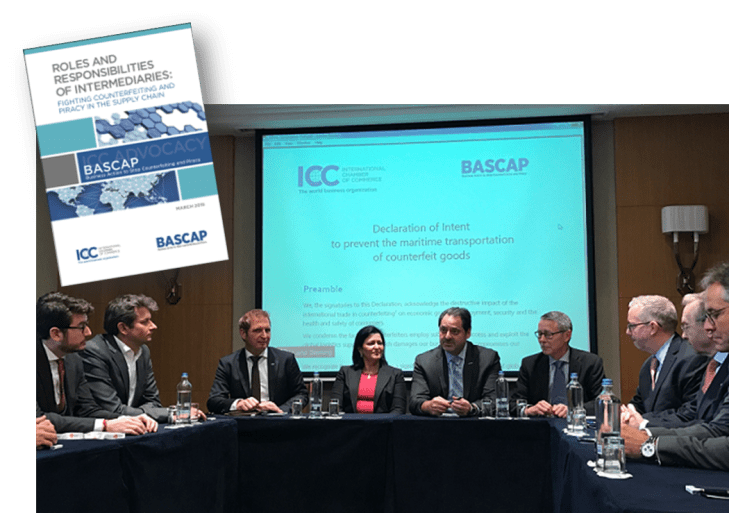
Leaders from global shipping firms, freight forwarders, brand owners whose products are counterfeited and industry organizations representing both industries signed a joint Declaration of Intent to Prevent the Maritime Transport of Counterfeit Goods in Brussels last week.

The event marked the first time the global shipping industry and brand owners have made a public commitment to work together to stop the transport of counterfeit goods on shipping vessels.

Initial signatories include the leading global shipping firms and freight forwarders and ten major multinational brand manufacturers, along with the International Federation of Freight Forwarders Associations (FIATA), and the International Chamber of Commerce’s (ICC) Business Action to Stop Counterfeiting and Piracy (BASCAP) and Commercial Crime Service (CCS).

More transporters, brand owners and their industry associations are expected to join the voluntary initiative as awareness grows.

According to the United Nations Office on Drugs and Crime, about 90 percent of all international trade is moved around the world in more than 500 million containers on 89,000 maritime vessels. While this represents approximately 90 percent of all international trade, UNODC says that less than two percent of these containers are inspected to verify their contents. This results in enormous opportunities for criminal networks to abuse this critical supply chain channel to transport huge volumes of counterfeit products affecting virtually every product sector.

According to a recent OECD/EUIPO report, $461 billion in counterfeit goods moved through international trade in 2013, with almost 10 percent being shipped on maritime vessels.

Maersk Line and CMA CGM Group, two of the largest global transport companies with approximately half of all global shipping, and Kuehne and Nagel and Expeditors, two of the leading freight forwarding and logistics companies with total revenues of more than $27 billion, were the first in their industries to sign the Declaration.

The non-binding Declaration acknowledges the “destructive impact” of counterfeits on international trade. It calls on the maritime transport industry to address it “through continuous proactive measures, and corporate social responsibility principles.” The Declaration includes a zero tolerance policy on counterfeiting, strict supply chain controls and other due diligence checks to stop business cooperation with those suspected of dealing in the counterfeit trade.

This commitment paves the way for new voluntary collaboration programs between intermediaries and brand owners to stop abuse of the global supply chain by counterfeiters.

“We are proud to be among the first in our industry to sign this historic Declaration,” said Michael Jul Hansen, Customs and Trade Compliance Lead for Maersk Line. “Maersk has been a leader in taking steps to prevent the use of our vessels for the shipment of counterfeit and other illicit goods, and this Declaration is a reaffirmation of our intent to do everything we can to ensure our ships are counterfeit free.”

The Declaration is a direct reaction to the concerns of brand owners that vessels transporting their legitimate products were also being exploited by criminal networks to transport fake versions. This phenomenon was summarized in a landmark report on the Role and Responsibilities of Intermediaries: Fighting Counterfeiting and Piracy in the Supply Chain, published in 2015 by BASCAP. Following publication of the report, BASCAP organized a working group of its members to initiate a cross-sector dialogue with the transport industry to discuss ways to work together to find voluntary solutions. Source: Maritime Executive 
Why dogs’ noses out-sniff the most advanced bomb detectors

detector-dog-fotorezekne-depositphotos

In 2010, after spending six years and $19 billion on research to develop better bomb detecting technology, Pentagon officials admitted that dogs’ noses were still superior to their most sophisticated technology. Now scientists say the reason for this might lie simply in the way they sniff.

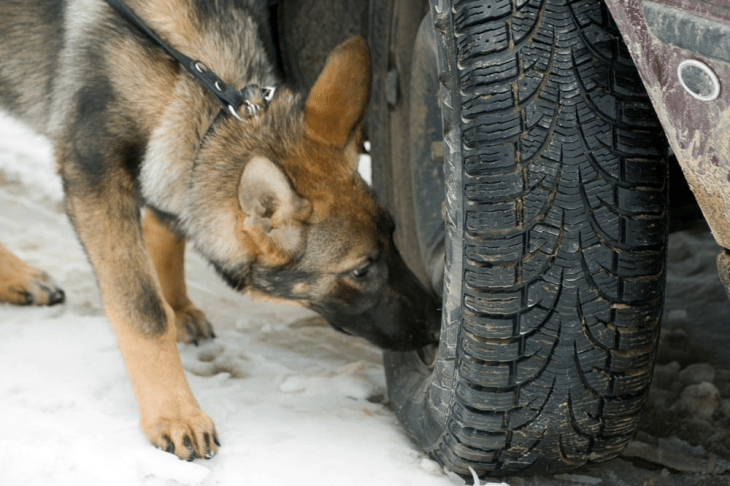
In her book Inside of a Dog, Alexandra Horowitz, an assistant of psychology at Barnard College, offers an analogy to show just how powerful a dog’s sense of smell is: while we might be able to tell if a teaspoon of sugar has been added to our coffee, place the same amount in a million gallons of water (roughly the equivalent of two Olympic-sized pools) and a dog would most likely be able to detect it.

This ability to single out and pick up even the faintest of odors is what makes dogs invaluable as bomb detectors. They can detect trace explosives in crowded settings such as airports and public transit areas, as well as odorless chemicals like TNT.

However training pooches to be effective bomb detectors is expensive and time-intensive. While all dogs have a superior sense of smell, not every breed is trainable. Hence the on-going quest to develop an e-nose that can equip bomb detectors with the canal physiology of dogs.

In the latest development in this arena, researchers at the National Institute of Standards and Technology (NIST), the Massachusetts Institute of Technology’s Lincoln Laboratory and the US Food and Drug Administration have found that the way a dog sniffs could shed light on how to improve trace detection capabilities.

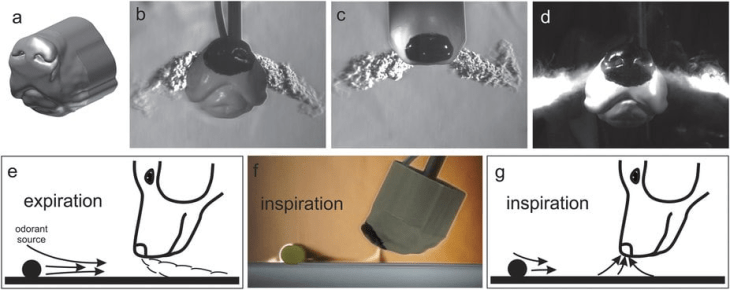
While we don’t differentiate between breathing and smelling, a dog, with its far more complex nasal system, treats them as two separate functions. According to Matt Staymates, a mechanical engineer at NIST, apart from having a complex olfactory system, the key to what makes dogs so good at sniffing out bombs is, well, in its sniff. This is a two part-process and key to this is what happens when it exhales.

Breathing and smelling are treated as two separate functions in a dog’s nose. When it inhales, the air is channeled into two different paths and when it exhales, the air exits through the sides of its nose so that the exiting air doesn’t interfere with its ability to smell. As counterintuitive as it might sound, when it exhales, the outgoing air jets “entrain—or draw in—vapor-laden air toward the nostrils. During inhalation, the entrained air is pulled into each nostril.”

detector-dog-fotorezekne-depositphotos2

Using a 3D model of a Labrador retriever’s (one of the most commonly used breeds in bomb detection) nose to mimic how dogs sniff, and together with the help of schlieren imaging – a technique used for imaging the flow of air around objects – and high-speed video, Staymates and his team were able to confirm the above conjecture.

In their first set of experiments, they found that compared with trace-detection devices that rely on continuous suction, the artificial dog nose was four times better 10 cm (3.9 inches) away from the vapor source and 18 times better at a stand-off distance of 20 cm (7.9 inches).

When they integrated it with a commercially available vapor detector, the switch, which enabled it to sniff like a dog rather than inhale in its standard 10-second intervals, improved its ability to detect odors by a factor of 16 at a stand-off distance of 4 cm (1.6 inches).

This research team is not the first to study how the canine sniffing abilities can be used to develop a better bomb detector. In 1997, the Defense Advanced Research Projects Agency launched the Dog’s Nose program for this purpose. One of the technologies to emerge from it was a chemical explosives detector called Fido, which was modelled after the canine nasal physiology.

However while there have been various attempts to develop a canine e-nose over the years, the results, while promising, have not yet resulted in a breakthrough for the industry. Reliability as well as the ability to detect things at a distance remain a challenge and while this latest study confirms yet again the dog’s remarkable olfactory prowess, it is “just a piece of the puzzle,” as Staymates notes. “There’s lots more to be learned and to emulate as we work to improve the sensitivity, accuracy and speed of trace-detection technology.” Source: National Institute of Standards and Technology NIST 

Singapore destroys 8 tonnes of illegal ivory

Singapore on Monday crushed and burnt almost eight tonnes of ivory confiscated over two years to try to deter smugglers as activists called for tighter enforcement.

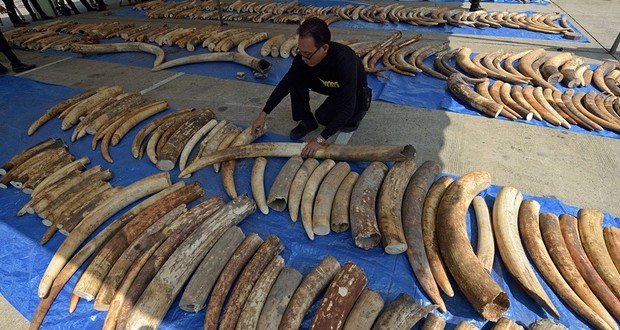
Over 2,700 elephant tusks weighing 7.9 tonnes were fed into an industrial rock crusher before incineration.

It was the fist time seized ivory had been destroyed in Singapore, the Agri-Food and Veterinary Authority said in a statement. Previous hauls were returned to the originating country, donated to museums or kept for education.

The tusks, estimated to be worth Sg$13 million ($9.6 million), were seized on four separate occasions between January 2014 and December 2015. In May 2015 some 2,000 tusks were found hidden in a shipment of tea leaves from Kenya.

“The public destruction of ivory sends a strong message that Singapore condemns illegal wildlife trade. By crushing the ivory, we ensure it does not re-enter the ivory market,” said Desmond Lee, a senior minister of state in the interior and national development ministry.

Singapore can do more to enforce strict anti-trafficking laws, said WWF-Singapore communications director Kim Stengert.

“There are illegal wildlife shipments caught in other ports after they came through Singapore. So we definitely need to step up efforts to enforce the strict rules,” he said.

The ivory trade has been banned since 1989 by the Convention on International Trade in Endangered Species, of which Singapore is a signatory. Source: AFP News

R12-million drug bust at OR Tambo Airport

SARS Customs intercepted a male traveller from Tanzania carrying narcotics worth over R12-million at OR Tambo International Airport yesterday (24 January 2016).

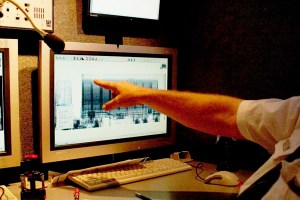
The bust took place when the 36-year old man, who was carrying two large suitcases, was asked to put his luggage through the Customs scanner. The scanner image revealed 10 clear plastic bags that contained a white crystal substance.

Upon investigation this turned out to be 10 bags of Ephedrine. The total weight of the consignment was 40.20 kg with an estimated street value of R12 060 000. The man has been handed over to the South African Police Service and he is expected to appear in court. Source and photos: SARS

Authorities discover Sophisticated ‘Super’ Drug Tunnel between California and Mexico

Authorities on both sides of the US-Mexico border have shut the 10th drug-smuggling tunnel to San Diego in more than a decade, a passageway Mexican authorities on Thursday attributed to the cartel of fugitive kingpin Joaquin “El Chapo” Guzman.

A sophisticated, super tunnel was discovered by federal officials Wednesday night near San Diego, leading to the arrest of 22 people and confiscation of 12 tons of marijuana estimated at $6 million.

The tunnel, originating from the Mexican border city of Tijuana, is about eight football fields in length, with the last quarter-mile crossing US territory before ending beneath a carpet warehouse in the busy Otay Mesa industrial district of San Diego, US and Mexican officials said.

The tunnel was uncovered through intelligence gathered by US federal agents who infiltrated a Mexican drug-smuggling ring during the past six months, according to Laura Duffy, the US Attorney in San Diego.

It marked the 10th subterranean passageway from Mexico to Otay Mesa discovered since 2002. Like those and dozens of others found along the nearly 3 200km border in the last decade, the latest tunnel was equipped with lighting, ventilation and a rail system for moving goods, authorities said.

Two Mexican government security officials, speaking on condition of anonymity, told Reuters the latest passage belonged to the Guzman-led Sinaloa drug cartel.

Duffy said US officials were less certain that Sinaloa was behind the new tunnel, based on the comparatively unfinished, dangerous nature of the tunnel shaft on the US side.

“We usually see ladders going down and staircases,” she said.

“This particular tunnel drops 32 to 35 feet straight down.”

Duffy said US federal agents moved to seize control of the tunnel on its north end on Wednesday after a shipment of 2 tons of marijuana arrived there, and six men were arrested, two of whom were to be arraigned on federal drug-smuggling charges on Thursday.

Mexican agents seized 10 tons of marijuana awaiting shipment through the passage at the Tijuana side, and authorities expect to find more contraband when a thorough search of the tunnel is made, Duffy said.

Guzman, the world’s most wanted drug trafficker, escaped in July from a Mexican maximum-security prison through a mile-long tunnel that surfaced right inside his cell.

His escape sparked a massive manhunt, and Mexico’s government said on Friday that Guzman had suffered injuries to his face and leg after recently beating a hasty retreat from security forces. Source: IOL

Kenya – Drugs Found on Auto Carrier in Port of Mombasa

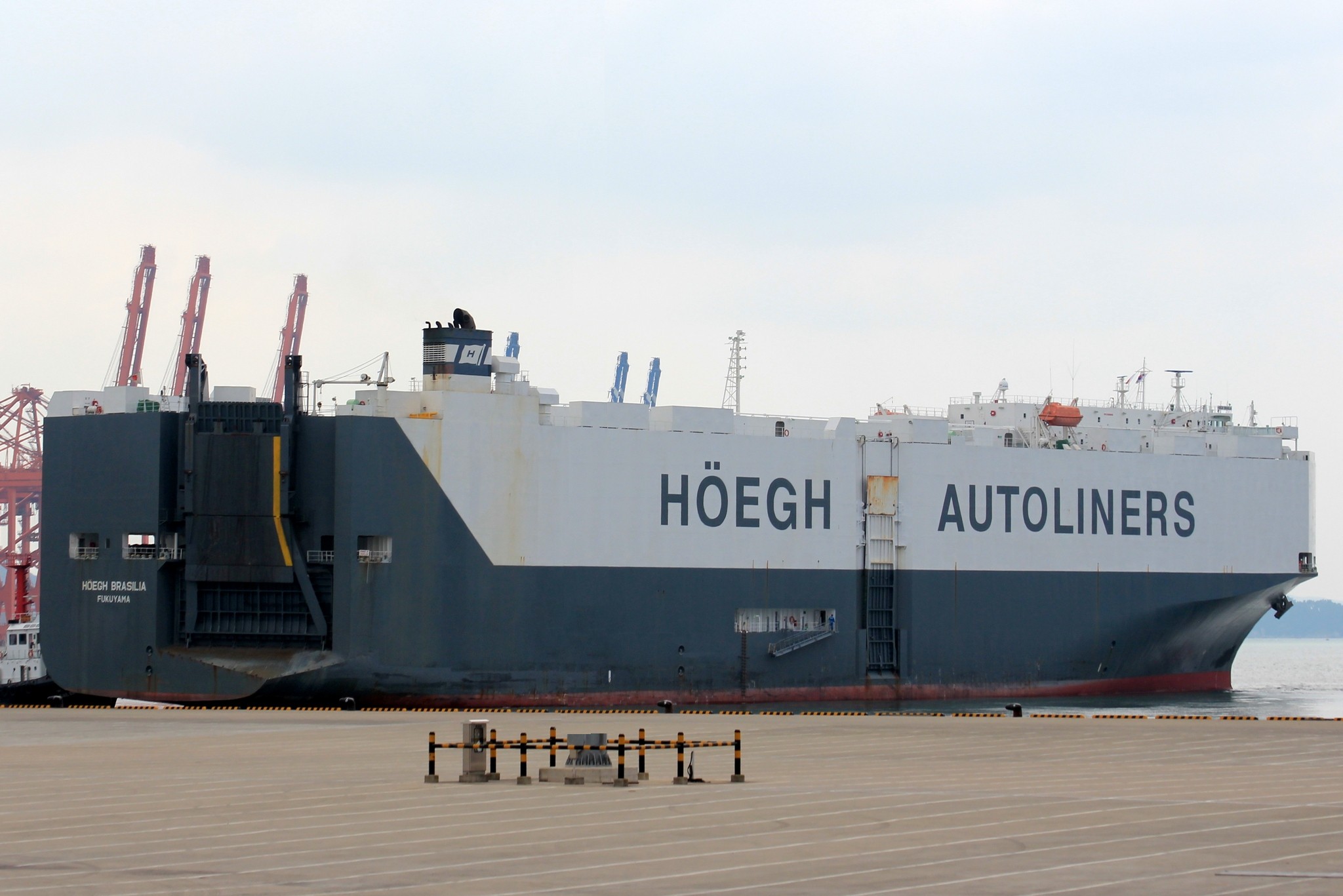
hoeghKenyan and U.S. authorities found drugs aboard the Höegh Autoliners “Pure Car/Truck Carrier” (PCTC), which was detained at Port Mombasa on September 17. The crew of the ship has been arrested and currently being questioned by authorities.

According to authorities, cocaine was found inside the tires of three military trucks aboard the Hoegh Transporter, a Singapore-flagged car carrier.

Kenyan officials raided the vessel after receiving a tip from the U.S. Federal Bureau of Investigation (FBI) that the vessel had been loaded with the coke at India’s Port of Mumbai.

Kenyan soldiers and security personnel shut down the port for hours before seizing the ship and halting operations. Mombasa, which is Africa’s largest port, serves as the main gateway for imports and exports in the region.

East Africa is a major shipping route for Afghan narcotics bound for Europe. Maritime forces have been unable to curb the flow of drug transport in the region.

The Höegh Transporter was built in 1999 and was transporting nearly 4,000 vehicles, including about 250, which are to be used for peacekeeping missions in South Sudan. Source: Maritime Executive

SARS R78 million Airport Cash Bust

Johannesburg – They [smugglers] had cash stashed in 11 pieces of luggage including four backpacks – R78 million destined for the United Arab Emirates.

But eagle-eyed customs officials at OR Tambo International Airport were on to them and confiscated the bags with R23m and $3.775m in notes.

On the same day, R50m worth of cocaine stashed in hair product bottles was seized at the same airport, in one of the biggest crime-busting days at OR Tambo.

On Monday, SA Revenue Service (Sars) officials said five people had been arrested after being caught with the undeclared cash as they were about to leave South Africa.

“Risk profiling earlier by Sars custom officials identified the passengers, and led to their apprehension as they boarded the aircraft at 9.45pm.

“Upon noticing the officials, the passengers retreated and headed back to the entrance of the boarding gate. At this point, officials closed the boarding gate door and the passengers were compelled to wait for the Sars officials,” Sars said.

When asked whether they had any currency, one of the passengers apparently said he had R100 000 and that the other members of the group had currency with them.

“The five individuals were escorted back to immigration at international arrivals, booked back into South Africa and escorted to customs.”

Sars spokesperson Luther Lebelo said the bags with the cash had been handed over to the SA Reserve Bank.

“The matter has been handed over to the SA Reserve Bank for further investigations. Once the bank is satisfied that there is an element of criminality, they can take the matter to the police,” he said.

The arrests on Friday – details of which were released on Tuesday – followed a R50m drug bust at the airport. National police spokesman Brigadier Vishnu Naidoo said the consignment of cocaine, weighing about 143kg, was one of the largest drug recoveries at a South African port of entry.

“The drugs were hidden in 147 hair products bottles and were found during a routine inspection at the cargo section. The consignment arrived from Brazil, and information displayed on the cargo indicated it was in transit to Cotonou, Benin, in West Africa,” he said.

Other drug busts at OR Tambo over the past month include:

  • The confiscation of 60 000 Viagra tablets with a street value of R6m at the airport’s mailing centre.
  • Cocaine weighing 3.46kg and valued at R993 020, found in the backpack of a passenger in transit from Sao Paulo and headed for Lagos, Nigeria.
  • Sixty-five packages of crystal meth valued at R4.2m, confiscated while being loaded into a bakkie in the cargo area.
  • Heroin valued at R201 810 destined for Spain and Ireland, discovered along with 2kg of cannabis at the airport’s mailing centre.

Source: The Star

US Customs seizes fake Gucci and Louis Vuitton handbags

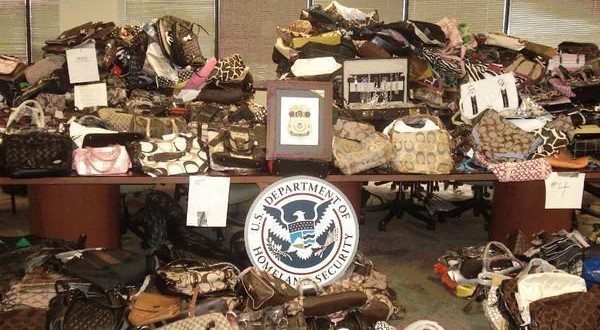
USCP Counterfeit stuffThousands of counterfeit designer handbags have been uncovered by federal officers in a shipping container at Miami’s seaport.

Customs and Border Protection officials say a recent review confirmed there were 1,200 fake Gucci handbags and 1,195 Louis Vuitton handbags in the container. The bags were initially seized Aug. 19 in a shipment from China.

Authorities say the handbags are worth more than $1 million if sold as legitimate.

Investigators began examining cartons containing the handbags after noting that they were not declared on any import documents. The shipment included 825 other cartons of clothes, shoes and similar apparel.

Last year CBP seized more than 23,000 counterfeit items nationally worth about $1.2 billion.

Customs Vietnam make 2nd huge Ivory Bust in a fortnight

Vietnam Custom ivory seizureCustoms officers in central Vietnam have seized a tonne of ivory and four tonnes of the scaly hide of the pangolin, according to authorities today.

Officials found the contraband on Tuesday inside a shipping container labelled as carrying red beans from Malaysia that arrived at the central port city of Da Nang on Aug 10.

“This is the largest amount of ivory and pangolin smuggling we have discovered in Da Nang,” Dang Van Toan, the port’s head of customs, told the German Press Agency.

The pangolin is an endangered type of armoured anteater found in parts of Asia and Africa. The flesh is sold as an exclusive, but illegal, meat, and the hide is used for traditional medicine and fashion.

The weight of the hides found this week corresponds to around 4,000 individuals, Le Xuan Canh, former head of the Institute of Ecology and Biological Resources, told DPA. Tuesday’s haul brings to nearly eight tonnes the total of tusks, horns and hide from endangered species impounded over the past two weeks in Da Nang.

Last Friday the port’s customs officers seized more than two tonnes of elephant tusks. Eight days earlier they confiscated nearly a tonne of elephant tusks and rhinoceros horns, authorities said.

The three shipments were posted to two local companies, which have denied any knowledge of the smuggling, said Pham Van Thieng, deputy head of the central region’s anti-smuggling team.

Trafficking of endangered species and their parts violates international law. Like elephant ivory and rhino horn, pangolin is considered a sign of status among some of Vietnam’s wealthy elite.

SA Man uses cats as cover to smuggle £1.2m drugs at Heathrow Airport

A man who used pet cats as a cover to smuggle drugs valued at £1.2m into the country through Heathrow Airport has been jailed. A London-born dual national, Scott Parker, living in Benoni, Gauteng in South Africa, was handed a seven-and-a-half year prison sentence for smuggling heroin, when he appeared at Isleworth Crown Court on June 18, according to the National Crime Agency (NCA).

The 43-year-old, who worked for a company which transports animals, pleaded guilty to attempting to import a class A drug, the NCA added.

He was arrested by the NCA on November 21 last year, at the Heathrow Animal Reception Centre, after staff alerted the Border Force of a crate used to transport animals from Johannesburg which was unusually heavy when empty.

Officers examined the crates and found compartments containing packages of the class A drug in the base, the NCA said. Forensic tests showed the packages consisted of around 9k of high purity heroin, which if cut and sold in the UK would have a street vale of around £1.2m.

The cats were reunited with their owners, who were completely unaware their animals had been used as a front for smuggling.
Ian Truby, from the NCA’s Border Investigation Team at Heathrow, said: “This was a highly unusual attempt to bring a substantial quantity of class A drugs into the UK.

“Parker thought he would avoid our attention. But the Heathrow Animal Reception Centre staff were vigilant and our investigation showed that he knew the drugs were there. Source: Customs Today

Sniffing out trouble at SA ports

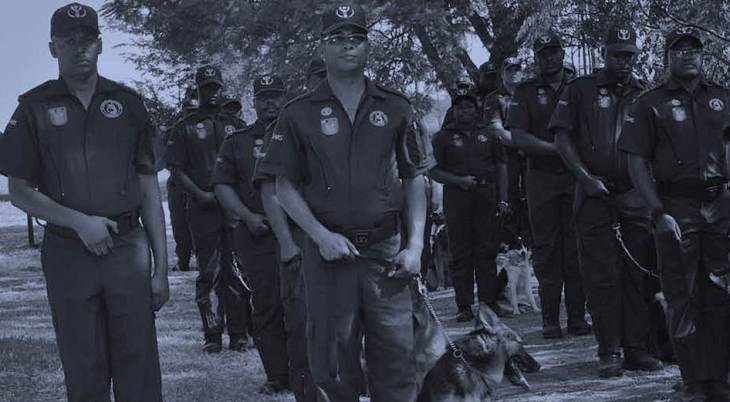
SARS DDU2A gruelling four months of training came to an end during May 2015 as 33 Customs officers and their detector dogs graduated from the SARS Detector Dog Training Academy. A graduation ceremony was held in Pretoria. It was the culmination of a training course where officers were, together with their canine charges, were trained in the finer aspects of the detection of illegal substances and goods in vehicles, vessels, aircraft, containers, cargo, mail, rail, luggage and buildings.
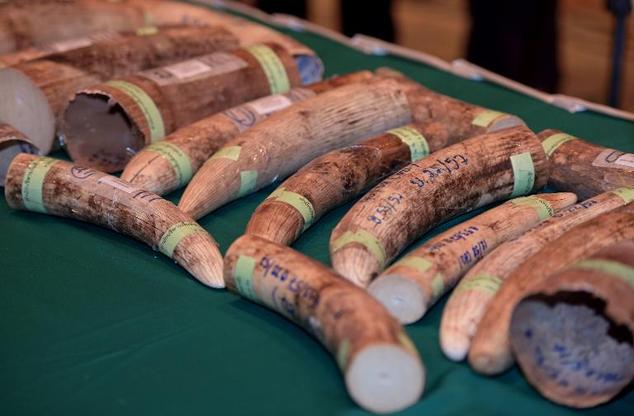
“The substances that they would be able to detect are explosives, firearms and ammunition in addition to narcotics such as cocaine, heroin, cannabis, mandrax, crystal meth and ecstasy,” states Hugo Taljaard, Senior Manager for the Detector Dog Unit (DDU). “They will also be able to find rhino horn, ivory, wet or dry abalone, crayfish and lion bones. This also extends to currency, tobacco products, copper wire and cell phones,” he added.

The training began in January 2015 and covered both practical and physical aspects. The following modules were accomplished during the development programme:

  1. Bonding and socialisation phase with the dog.
  2. Imprinting of substances.
  3. Paramilitary Drill – Salute and Compliment.
  4. Practical search and detect training on vehicles, vessels, aircraft, containers, cargo, mail, rail, luggage and buildings
  5. Physical training – dog and handling – Theoretical training on identification and handling of narcotics and endangered species; Dog conditioning process; Basic animal behavior; and General dog care.
  6. Change of environment training at land ports of entry.
  7. Formal assessment.

After this training, detector dog units will be established in Mpumalanga (Lebombo Detector Dog Unit), Northern Cape (Nakop Detector Dog Unit), and Northern Cape (Vioolsdrif Detector Dog Unit) to support SARS’ strategic objective to increase customs compliance at ports of entry.

Currently, all SARS DDU recruitment is sourced from within the organisation.

Visit the Servamus website (a community-based safety and security website and magazine) for an article published on Customs Detector Dog Unit – “Sniffing out trouble at SA ports” (May 2015 Edition). Source: SARS and Servamus.co.za

Related articles

French Customs seizes massive 136 kilos of ivory

Illicit IvoryFrench customs officials said they had intercepted 136 kilos of ivory shipped from the Democratic Republic of Congo en route to Vietnam — the biggest haul in nearly a decade.

Officials at Paris’s main Charles de Gaulle airport found a dozen elephant tusks chopped into 37 pieces hidden in cases under aluminium plates, possibly to confuse scanners.

The haul is the biggest seized by French customs officials since December 2006, when 600 kilos of “white gold” was uncovered.

“This is a sadly typical case,” said airport customs official Sebastien Tiran. There’s one thing that never goes out of fashion and that’s ivory,” he told AFP.

There were “several criteria” that alerted officials to the possibility of smuggling, he explained. “The route, what is declared, documents linked to the declaration.”

Ivory ornaments are coveted in Asian countries like Vietnam, Thailand and China, and activists say Africa’s wild elephants are being pushed to extinction by the trade. Source: Customs Today

Hong Kong Customs seizes 1.1m sticks of illicit cigarettes worth $3.1m

securityHong Kong Customs mounted a special operation at Lok Ma Chau Control Point to combat organised cigarette smuggling activities. About 1.1 million sticks of suspected illicit cigarettes with a market value of about $3.1 million and duty potential of about $2.2 million were seized. A 52-year-old male driver was arrested and the vehicle used for conveying the suspected illicit cigarettes was detained.
Customs officers here the other day intercepted an incoming container truck declared to be empty at Lok Ma Chau Control Point.

After X-ray examination and thorough inspection by Customs officers, about 1.1 million sticks of suspected illicit cigarettes in 83 carton boxes were found inside a false compartment of the container. The cigarettes were sorted and packed according to orders placed with a view to quick delivery to buyers.

A Customs spokesman said today (June 5), “The operation showed the effectiveness of the enforcement strategy, especially the escalated enforcement actions against smuggling activities at source. Customs will continue to carry out stringent enforcement action against all illicit cigarette activities.”

Under the Import and Export Ordinance, smuggling is a serious offense. The maximum penalty is a fine of $2 million and imprisonment for seven years. Source: CustomsToday

Chinese Customs destroys half a ton of ivory worth £3m

ivory2-634x330Chinese authorities destroyed more than half a tonne of confiscated ivory in Beijing here the other day. The public event, organised by the Chinese State Forestry Administration and the Customs Department, is set to display the country’s determination to ‘further protect wild animals’, according to the People’s Daily Online.

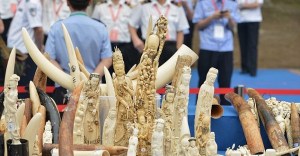
A whopping 662kg (1,460lb) of illegal ivory and ivory products were ground into powder as part of the central government’s crackdown on the illegal trade. The destroyed ivory items include thousands of ornaments, jewellery and fine art pieces. Whole elephant tusks were carved into the images of Buddhas, goddesses or Chinese landscapes.

Members of the media and diplomats were invited to attend the public destruction, which took place at Beijing Wild Animals Rescue Centre, as Chinese authorities hope to rid the country’s reputation of a global trading hub for illegal elephant tusks.

According to the country’s Forestry Administration, raw tusks sell for at least 41,667 Yuan (£4,400) per kilogram, making the total value of this destruction around £3 million. Source: Customs Today

Two Zimbabweans appear in Namibian court over cigarette smuggling

Namibian police inspect over 1,000 boxes of impounded cigarettes at a roadblock in Rundu [Coastweek]

Namibian police inspect over 1,000 boxes of impounded cigarettes at a roadblock in Rundu [Coastweek]

Two suspects have appeared in a Namibian regional court Monday in connection with more than 1,000 cartons of cigarettes confiscated by the police Thursday last week.The two, both said to be Zimbabweans, appeared before a Rundu Magistrate in the northern Kavango region after their arrest over the 11.3 million Namibian dollars (940,000 U.S. dollars) cigarette contraband destined for South Africa.

The two were each charged with two counts of contravening the Custom and Excise Act 20 of 1998 and non-declaration of goods upon entering Namibia as well as the Prevention of Organized Crime Act 29 of 2004 of money laundering.

The accused persons were not asked to plead and their case was then postponed to July 8 for further police investigation. Acting on a tip-off, customs officials and the police raided two trucks en-route to South Africa and discovered 1,130 boxes that were hidden in fuel tankers. Source: http://www.spyghana.com/